Medicine is a continuously evolving field, constantly learning from previous experience and improving. This is all the more true in the wartime trauma environment where resources are limited, conditions are austere, and time is either too short or too long. Our brothers and sisters ashore learned through Viet Nam and the early days of Iraq and Afghanistan that combat injuries will become combat fatalities unless personnel on the scene can stabilize the wounded for treatment by a higher echelon of care. As we consider a return to great power conflict and war at sea, our maritime forces should avail themselves of these lessons in order to prevent unnecessary losses of life in future combat.
A Revolution in Combat First Aid
Some wounds are almost always unrecoverable – penetrating head traumas, catastrophic injury to the thoracic cavity, or incapacitation of the central nervous system for instance. However, 20th century conflicts demonstrated that there are significant numbers of preventable battlefield deaths caused by two easily stabilized conditions: bleeding out (exsanguination) and sucking chest wounds (tension pneumothorax). Within one oft-cited research category (infantry casualties in Viet Nam), nearly 60 percent of preventable casualties were from exsanguination due to extremity bleeding and about 33 percent from tension pneumothorax.1
Fast-forward to the mid-1990s when special operation forces (SOF) medical providers began implementing a program known as “Tactical Combat Casualty Care” (TCCC). Their objective was to increase survivability amongst SOF elements by improving the trauma intervention capability and equipment of several, if not all, team members. Specifically, a greater emphasis was placed on controlling bleeding through properly employed tourniquets or hemostatic agents and alleviation of tension pneumothorax through needle decompression. As OIF and OEF repeatedly validated the effectiveness of TCCC in the SOF community, the training proliferated to conventional forces, becoming a cornerstone of modern deployment readiness. Consequently (and alongside other field medicine advances), the rate of service members being killed in action or ultimately dying of wounds is a fraction of previous conflicts.
Combat at sea will be somewhat different. For instance, penetrating trauma from discrete projectiles (e.g., bullets) will not be as prevalent as in land warfare, but similar wounds resulting from shrapnel or fragmentation will likely be common. Numerous additional and relevant mechanisms of injury are also possible during a surface combat scenario. Consider detonation of an anti-ship cruise missile close aboard or within the skin of the ship resulting in primary and secondary blast injuries, burns, blunt force trauma, as well as neurologic injuries without other outward signs of injury – all conditions similar to those seen aboard USS Cole.2 Individual crewmembers’ ability to intervene and stabilize some of these cases will no doubt improve survival rates as well as assist in maintaining combat effectiveness.
Behind the Times
While large deck warships (e.g. CVN, LHD) deploy with embarked top-of-the-line medical teams, the majority of the U.S. fleet does not. Cruisers and destroyers routinely put to sea with a well-trained independent duty corpsman (IDC, aka “Doc”) as the primary provider assisted by 1-2 junior corpsmen and a cadre of stretcher-bearers. LCS medical manning is even more constrained, usually a single IDC aided by a smaller number of stretcher-bearers. This has been an adequate arrangement for steady state surface operations (and the inspection-centric training cycles) of the past 30 years, but will not be sufficient if the fleet finds itself once again in a shooting war.
Outside of in-rate training for Corpsmen – which has already incorporated trauma lessons from Iraq, Afghanistan, etc.– first aid training aboard surface vessels has yet to advance much beyond U.S. civilian standards of care (basic first aid, CPR, and BLS). These standards do not account for the priority of combat operations over medical treatment, the increased lethality of combat and the shipboard environment, or extended timelines from point of injury to definitive care facilities (factors that led to TCCC’s inception). According to one Chief with extensive expeditionary experience and who has facilitated antiterrorism/ force protection (AT/FP) assessments of East Coast warships over the past three years, “Concepts of direct pressure, pressure points, and proper use of tourniquets are just not a thing out there.” Another Chief was told separately that pressure point manipulation for arterial bleeding was too advanced for shipboard use.
Surface force equipage has seen some TCCC-based upgrades in the past few years – better chest seals, hemostatic agents, and cricothyrotomy kits were improvements cited by a current IDC. However, mass casualty stations and first aid boxes are often still filled with antiquated equipment: less effective elastic tourniquets, basic gauze, medical tape, etc. While still helpful, there are better and more efficient tools available in the joint inventory. Additionally, if one were to ask a first tour junior officer or Sailor about an Individual First Aid Kit (IFAK), one might well receive a description of the small boxes commonly found at commercial retailers rather than a vital piece of military kit. These life saving pouches are not a standard-issue item and are often only present aboard vessels whose 1) whose Doc has encountered them (and their importance) elsewhere, and 2) whose discretionary budgets have permitted some quantity of acquisition (e.g. for armed watch standers).
What is most beneficial to the surface force, however, is the fact that casualty management is already practiced as part of general quarters, main space fire, or dedicated mass casualty drills. Rest assured, medical providers and corpsmen are thinking about these matters even when the rest of us are not. Additionally, Doc already has that cadre of stretcher-bearers who have been given an introduction to treating injuries, and there is already a system of pre-staged equipment outside of sickbay. These factors provide a ready-made infrastructure for the surface force to improve on.
TCCC for Tomorrow
The current medical manning construct aboard small deck warships has been adequate for non-combat operations in the post-Cold War era. The force is well-positioned to stabilize the occasional industrial traumas that can occur aboard vessels, or to manage larger groups of minor injuries. Since the 1990s, true tests of our readiness to simultaneously manage trauma and combat have been blessedly few: Cole in 2000 and Firebolt in 2004. Even then, both events were instantaneous and permitted crews to address medical emergencies without having to continue combat operations. That is an unlikely luxury during a strait transit actively contested by small boat swarms, or an open ocean patrol under enemy missile, torpedo, or gun attacks.
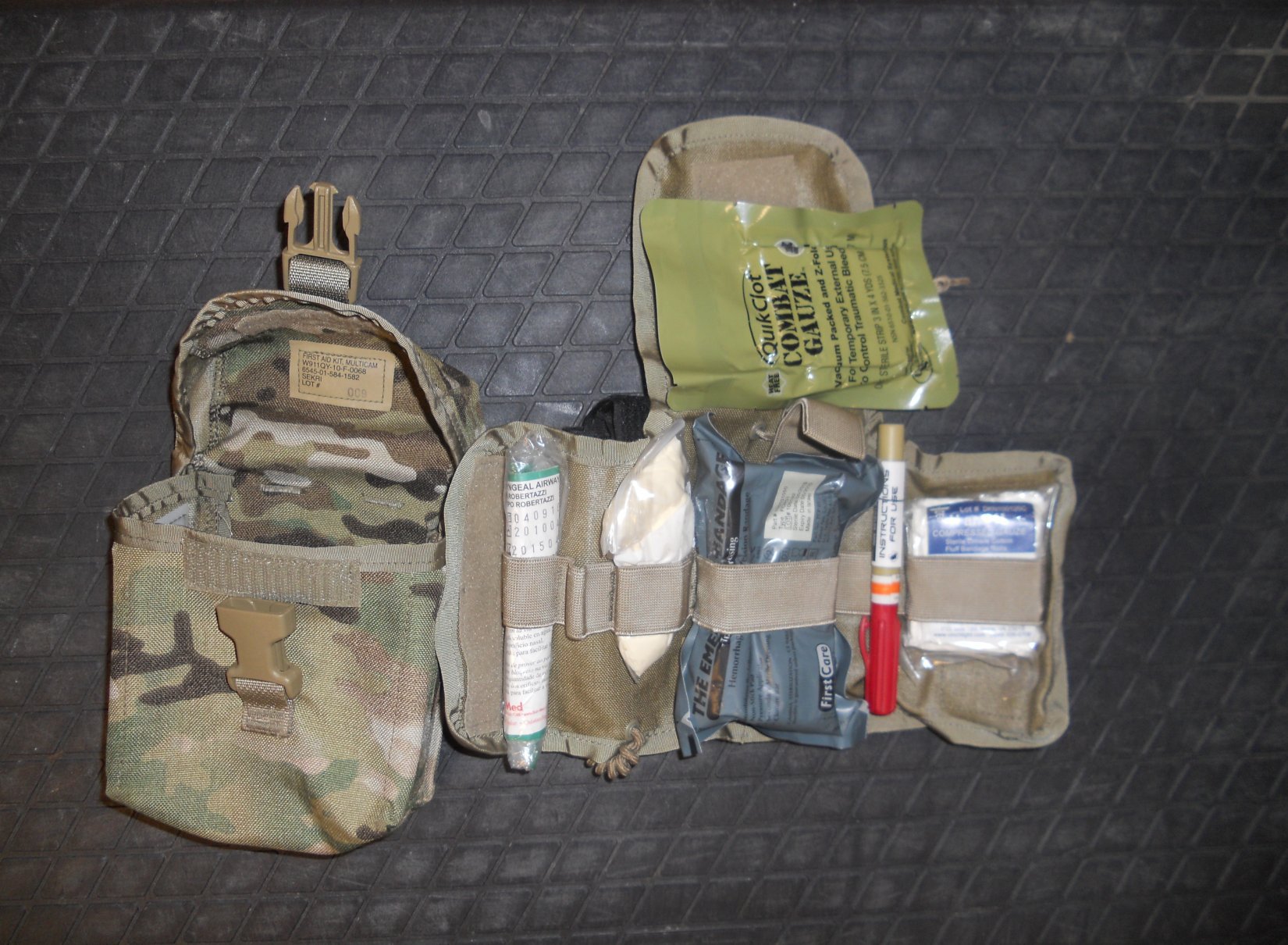
The most fundamental change brought by TCCC was the universal carriage of an IFAKalong with the training to use its contents. The kit itself contains the basic material to control traumatic bleeding, decompress a tension pneumothorax, and otherwise stabilize the service member until better care arrives or they are medically evacuated. The training aspect of this cannot be emphasized enough: classroom introduction to principles and equipment followed by periodic drills under varying levels of stress. Every Sailor afloat should don an IFAK with their general quarters kit, and be practiced on its use under stressful circumstances – i.e., loud, difficult, and strenuous– as part of combat drills.
An IFAK kit. (Defensereview.com)
In addition to IFAKs and training for the entire crew, the fleet needs to upgrade stretcher-bearer training from basic first aid to contemporary TCCC standards. Numerous curricula are already available to the fleet as well as training aids that have been developed through years of preparing ground troops. Similarly, mass casualty boxes and aid stations should be standardized with contents that will enable these TCCC-trained stretcher-bearers to implement the training they received. In deference to the different wound mechanisms likely to be seen in maritime combat, burn care supplies (e.g., Waterjel) should figure prominently in these kits.
Conclusion
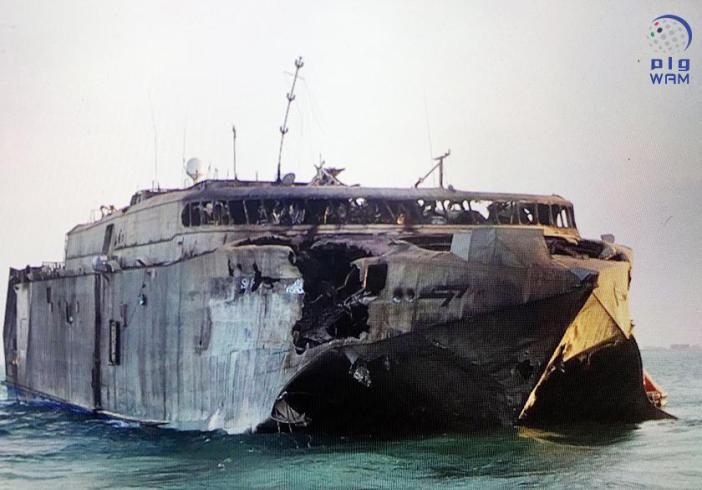
What if the missiles fired in the Red Sea at Mason, Nitze, and Ponce had found their mark? Those reportedSilkworm variants carry 300-500kg warheads. Would we instead be discussing a case study in TCCC rather than a recommendation? A smaller successor, the C-802 (160-300kg warhead), had recently struck the Swift while in service with the Emirati Navy and although casualty reports were minimal to none, photos of the damage (note the destroyed pilot house) make that assertion unlikely. It took collisions aboard Fitzgerald and McCain to give traction to problems long known to surface warriors and re-order some priorities. We do not need to suffer another such tragedy in order to update our ability to manage combat trauma at sea.
HSV 2 SWIFT, chartered by the U.S. Military Sealift Command from 2008-2013 and the UAE since 2015, was struck in October 2016 by a suspected C-802 variant resulting in the damage shown above. (Emirates News Agency)
Time will always be in short supply, thus prioritization is paramount in preparing crews to go to war. If we are returning to an emphasis on maritime warfighting, then we must be competent at more than just navigation and engineering. Like damage control, TCCC and other individual combat skills should be regarded as fundamental aspects of modern naval service – one more way in which we equip the man (and woman) rather than just man the equipment. The training, tools, and resources for TCCC are already available through the Navy’s medical and logistics systems, the surface force need only take heed of it.
Alan Cummings graduated from Jacksonville University with a BS in Physics. He served previously as a surface warfare officer aboard a destroyer, embedded with a USMC infantry battalion, and as a Riverine Detachment OIC. He is currently stationed as an intelligence officer at U.S. Southern Command The views expressed here are his own and in no way reflect the official position of the U.S. Navy, Department of Defense, or any agency of the U.S. Government.
CIMSEC is committed to keeping our content FREE FOREVER. Please consider donating to our annual campaign now so we can continue to provide free content.
References
1.Champion et al; “A Profile of Combat Injury”, The Journal of TRAUMA Injury, Infection, and Critical Care; Volume 54, Number 5, May 2003
2. Davis et al; “Distribution and Care of Shipboard Blast Injuries (USS Cole DDG 67)”, The Journal of TRAUMA Injury, Infection, and Critical Care; Volume 55, Number 6, December 2003
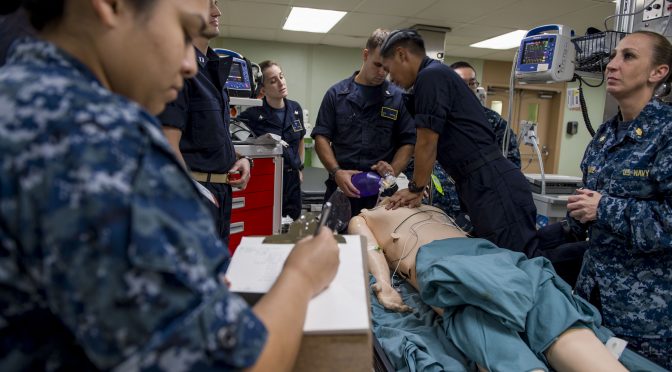
Featured Image: Sailors aboard the hospital ship USNS Comfort (T-AH 20) participate in medical training as the ship got
underway in preparation to respond to potential tasking following the destruction caused by Hurricane Matthew in the
Caribbean and southern U.S. east coast. (U.S. Navy photograph by Petty Officer First Class Marcus L. Stanley)
Articles Due: March 5, 2018
Week Dates: March 12–March 16, 2018 Article Length: 1000-3000 Words Submit to: Nextwar@cimsec.org
The U.S. Naval War College’s Institute for Future Warfare Studies is partnering with CIMSEC to solicit articles putting forth concepts for warfare on and from the seabed as part of the larger maritime battle.
While the broad matter of economics and sea lines of communications should drive a national and Navy interest in securing the seabed, the transformative nature of warfare on and from the seabed should capture the imagination and be of concern to the Navy.
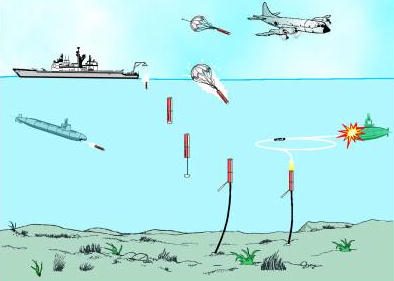
Systems operating from the ocean seabed – to include unmanned systems, mini-submersibles, smart mines, special forces, and others – will one day be deployed against surface, air, and land systems and not just traditional undersea forces – adding yet another dimension to cross- or multi-domain warfare. Navies will be forced to consider not only the role of the seabed and undersea forces in seabed combat, but also how effects from the seabed can shape the behavior of forces on the surface, in the air, and on land.
At its heart, the assumption of U. S. undersea supremacy based on owning the top 1,000 feet of the water column will become invalid, ineffective, and wrong, just as aviators once assumed air supremacy was assured from owning airspace above 30,000 feet. Similarly, the Submarine Force will have to abandon its traditional assumptions about how operating within the undersea domain enhances survivability. Seabed threats may mean the U.S. Navy could have to fight its way out of CONUS home waters before it could project power abroad, and allow adversaries to persistently threaten the U.S. Navy’s flanks and rear support areas. Warfare under the sea may come to look more like tunnel warfare of World War One or suppression of enemy air defenses in Syria than ASW of the Cold War.
The seabed has already long suffered from neglect by the U. S. Navy. For example, modern sea mines can already project power from the seabed with little to no warning, but since the end of the Cold War the Navy and the Submarine Force “whistled past the graveyard” and routinely dismissed the threat from sea mines out of hand. This neglect was reflected in continual lack of substantive funding related to USN mine warfare capabilities and associated tactical development. This trend continued even as more U.S. warships were sunk or damaged in the aftermath of WWII by sea mines than by any other weapon while potential adversaries have tens of thousands of mines. Weapons on the seabed exacerbate the problem even more.
Illustration of how a CAPTOR smart mine functions. (via U.S. Militaria forum)
Nations and commercial entities can be expected to routinely map seabed terrain to support their interests and activities. Available seafloor bathymetry may become comparable to a typical topographic map available in hard copy. This level of detail will facilitate planning for and the placement of systems on the ocean floor, especially with a focus on ensuring they could not be readily detected or attacked. Weapons and supplies could be hidden in seabed caves, trenches, and other geographical features within the complicated seabed landscape.
The threat posed by systems operating from this part of the maritime environment will only grow with technological change and proliferation. The impending proliferation of commercially-developed undersea and seabed systems will make these systems readily available to anyone with even a modest amount of funding. These systems had long ago departed being a resource only for a rich nation-state or billionaires intent on finding the resting place of sunken ships.
Authors are invited to write on the tactical and operational challenges, and potential solutions, that may emerge as maritime warfare expands onto the seabed. How can the Navy’s future force adapt to this coming reality? Authors should send their submissions to Nextwar@cimsec.org.
Professor William G. Glenney, IV, is a researcher in the Institute for Future Warfare Studies at the U. S. Naval War College.
The views presented here are personal and do not reflect official positions of the Naval War College, DON or DOD.
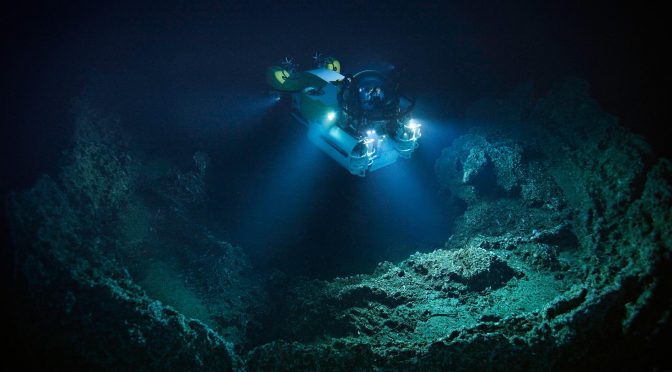
Featured Image: Undersea submersible (Brian Skerry, National Geographic Creative)
The 2017 back-to-back collisions of two Navy destroyers led to much speculation about the role of cyberphysical interference in the disasters. As the senior officer representing the U.S. Navy engineering community during the USS McCain cyber assessment, it is clear that we do not yet have the basic tools to definitively answer the question, “were we hacked or did we break it?”
Cyberphysical systems are the backbone of the global infrastructure we rely on for transportation, power, and clean water, and are growing at an exponential rate. The deep integration of physical and software components is not without risks and most industries are technically and organizationally unprepared to conduct forensic examinations. The ability to trust cyberphysical systems is dependent on our ability to definitively identify and remedy cyber interference, which is dependent on our understanding of how data flows impact the physical world.
There are broad lessons from the USS McCain cyber assessment that highlight the type of forensics needed to build and sustain cyberphysical infrastructure around the globe. In order to prevent and respond to future cyberphysical events, whether malicious or accidental, the Navy and organizations dependent on cyberphysical systems must establish post-event procedures for cyber forensic investigations, develop trusted images, and integrate threat intelligence with engineering teams.
Post-event Procedures
Post-incident shipboard forensic examination is a unique activity that is separate and distinct from cybersecurity evaluations or responses to network intrusion or malware. Typically, when cybersecurity operations centers observe malicious communications or indications of compromise within their operating network, they have a clear map of the network and key pieces of information, such as an initiating IP address or malware signatures, from which to begin the forensic mission. They start by identifying and classifying malware on the offending endpoint and can take immediate actions to observe the adversary in their system and identify what is being targeted, while simultaneously acting to clean and quarantine the network.
In stark contrast, post-incident cyberphysical assessment requires an undirected baseline on a variety of media, including hard drives from voyage management systems, machinery control stations, and IT network endpoints. Greatly complicating post-incident response is the fact that many segments of the network will likely be shut off by design or physically destroyed by the casualty itself. The task of cyber forensic teams is essentially the equivalent of trying to determine why a building collapsed without blueprints, physical access to the structure, or any data on what happened immediately prior to the collapse.
The technical understanding and research required to define standard operating procedures for shipboard cyber forensic investigations do not currently exist. While the task of developing a comprehensive approach to shipboard cyber forensics is daunting, the military has experience developing specialty training paradigms, such as submarine navigation and tactical aviation. Hunting a cyber adversary in industrial control systems is a complex task requiring unique operational and tactical expertise. An achievable near-term milestone would be to create procedures for an attack surface assessment for a routine pre-planned mission, which could provide a test-bed for developing more comprehensive procedures, as well as a better understanding of capabilities and gaps.
Trusted Images
All ships operate three main networks: the voyage network that supports the safe navigation of the vessel, the engineering network that controls propulsion along with material handling and auxiliary systems, and the administrative network that supports business operations and crew welfare needs. U.S. Navy vessels also have a combat systems network. The interconnectedness of operational and information technology networks means that traditional information technology tools and perimeter-based security solutions are inadequate for cyberphysical systems. For example, the addition of even simple PKI security can overwhelm the processing power of installed cyberphysical processors and cause a system crash instead of preventing unauthorized access. Additionally, in order for systems like GPS to function, the system must allow access to all properly formatted traffic, rendering perimeter defense insufficient. Security for complex cyberphysical systems requires capturing data flows and developing contextually aware algorithms to understand the dynamics during shipboard operations.
To generate network situational awareness sophisticated enough to do cyber forensics, the team will need to search for electronic anomalies across a wide range of interconnected systems. A key component of anomaly detection is the availability of normal baseline operating data, or trusted images, that can be used for comparison. These critical datasets of trusted images do not currently exist. Trusted images must be generated to include a catalog of datasets of network traffic, disk images, embedded firmware, and in-memory processes.
1. Network Traffic: A common attack vector is to find a computer that has communications access over an unauthenticated network, which issues commands to another system connected to the network (i.e. malware in a water purification system issuing rudder commands). Cyberphysical forensics require network traffic analysis tools to accurately identify known hosts on the network and highlight anomalous traffic. If the trusted images repository contained traffic signatures for every authorized talker on the network, it would allow forensic teams to efficiently identify unauthorized hosts issuing malicious commands.
2. Disk Images: Every console on the ship has a disk that contains its operating system and key programs. These disks must be compared against trusted images to determine if the software loaded onto the hard drives contains malicious code that was not deployed with the original systems.
3. Embedded Firmware: Many local control units contain permanent software programmed into read-only memory that acts as the device’s complete software system, performing the full complement of control functions. These devices are typically part of larger mechanical systems and manufactured for specific real-time computing requirements with limited security controls. Firmware hacks give attackers control of systems that persist through updates. Forensic teams will need data about the firmware in the trusted image repository for comparison.
4. In-memory Processes: Finally, advanced malware can load itself into the memory of a computer and erase the artifacts of its existence from a drive. Identifying and isolating malware of this nature will require in-memory tools, training, and trusted images.
In addition to the known trusted images, future forensic analysis would benefit from representative datasets for malicious behavior. Similar to acoustic intelligence databases that allow the classification of adversary submarines, a database of malicious cyber patterns would allow categorization of anomalies that do not match the trusted images. This is a substantial task that will require constant updating as configurations change. However, there are near-term milestones, such as the development of shipboard network monitoring tools and the generation of reference datasets that would substantively improve shipboard cybersecurity.
Organizational Integration
As future shipboard assessment teams work to confirm or refute the presence of cyber interference, they will need the assistance of a cyber intel support team to validate assumptions about their findings aboard the vessel. The basic flow established in the USS McCain investigation was to look at the physical systems involved in causing the collision (i.e. propulsion, steering) and then begin looking for cyberattack vectors to those systems.
Ruling out cyber interference requires evidence of absence, which can be uniquely challenging. In order to refute a particular attack vector, coordination with a cyber intel support detachment is essential to understanding the range of possible cyberattack scenarios for a particular physical effect. For example, advanced cyber effects could be delivered over a radiofrequency pathway. Therefore, cyber investigators will need to understand the electromagnetic environment the ship is operating within, as recorded in national systems, and give access to analysts capable of identifying anomalies in the signal pathway.
Shipboard assessment and cyber intel support teams each have specific sets of expertise necessary to understand the full suite of cyberattack vectors and their potential impacts on shipboard systems. Cyberattack tactics are constantly changing and the highest levels of technical expertise and security clearance are required to keep abreast of the potential methods to penetrate networks and attack industrial control systems. Cyber intel teams will never have the engineering expertise to understand the full range of potential physical impacts on shipboard systems. As was demonstrated with Stuxnet and the attack on the Ukrainian power grid, the most successful cyberphysical attacks exploit the organizational gap between engineering and cyber teams.
Organizational constructs for cyberphysical systems will never be straightforward because cyber risk cuts horizontally across engineering systems and traditional intelligence activities. Organizational integration between the cyber and engineering communities must be practiced and continually refined in order to prevent and respond to cyberphysical interference. A near-term milestone would be to execute joint training exercises between the cyber intel and engineering communities in order to promote cross-disciplinary understanding and begin to build out the template for future organizational integration.
Conclusion
Network connectivity in industrial control systems has revolutionized the way humans interact with physical systems and ushered in a new era of capabilities from energy generation to manufacturing to warfighting. These advancements are not without risks, and to avoid cyberphysical catastrophe, the development of tools to ensure resilience, security, and safety must keep pace. Shipboard forensics provide a prime example of the current gaps in our ability to understand, monitor, and protect cyberphysical systems. The lessons learned from the forensic examination of the USS McCain can provide the foundation for the procedures, data, and organizational constructs required to create modern tools to monitor and protect cyberphysical systems.
Zac Staples had a 22-year career in the United States Navy as a surface warfare officer specializing in electronic warfare. His final tour was as the Director of the Center for Cyber Warfare at the Naval Postgraduate School, where he led inter-disciplinary research and development teams exploring cyber capability development. Zac holds a B.S. in engineering from the U.S. Naval Academy, a Masters in National Security Affairs from the Naval Postgraduate School, and is a distinguished graduate of the Naval War College.
Maura Sullivan specializes in systemic risks and data-driven emerging technologies. Maura was the Chief of Strategy and Innovation at the U.S. Department of the Navy, where she developed and implemented the strategic roadmap for emerging cyberphysical technologies. Previously, Maura led a start-up within the global catastrophe risk company, RMS, developing software and consulting solutions for managing systemic risks for financial and insurance markets. She was a White House Fellow, has a Ph.D. in epidemiology from Emory University and a B.S and M.S. in earth systems from Stanford University.
Zachary Staples (USN, Retired) and Maura Sullivan, PhD are the co-founders of Fathom5, a maritime cybersecurity company.
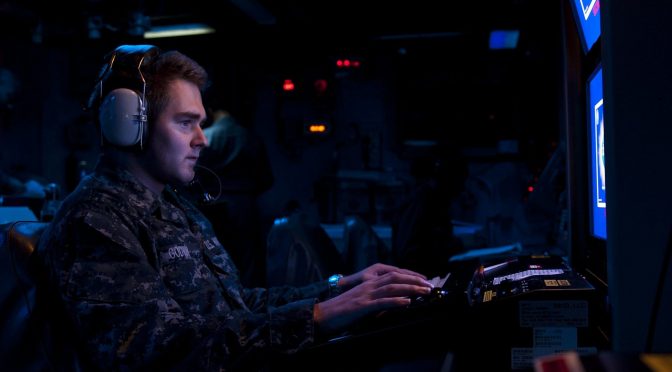
Featured Image: Operations Specialist 3rd Class Daniel Godwin, from Milton, Fla., stands watch in the Combat Information Center aboard the aircraft carrier USS Enterprise (CVN 65). (U.S. Navy photo)
In 2018 the United States remains engaged worldwide. The 2017 National Security Strategy addresses the wide-range of threats to the security and prosperity of United States.1 These threats range from high-end peer competitors such as China and Russia, to rogue regimes such as North Korea and Iran, to the ongoing threat of terrorism represented by such groups as ISIL. In a preview of the National Security Strategy at the December 2017 Reagan National Defense Forum, National Security Advisor General H.R. McMaster highlighted these threats and reconfirmed the previous administration’s “4+1” strategy, naming the four countries – Russia, China, Iran and North Korea—and the “+1” — terrorists, particularly ISIL — as urgent threats that the United States must deal with today.2
The U.S. military is dealing with this threat landscape by deploying forces worldwide at an unprecedented rate. And in most cases, it is naval strike forces, represented by carrier strike groups centered on nuclear-powered aircraft carriers, and expeditionary strike groups built around large-deck amphibious ships, that are the forces of choice for dealing with crises worldwide.
For decades, when a crisis emerged anywhere on the globe, the first question a U.S. president asked was, “Where are the carriers?” Today, that question is still asked, but increasingly, the question has morphed into, “Where are the expeditionary strike groups?” The reasons for this focus on expeditionary strike groups are clear. These naval expeditionary formations have been the ones used extensively for a wide-array of missions short of war, from anti-piracy patrols, to personnel evacuation, to humanitarian assistance and disaster relief. And where tensions lead to hostilities, these forces are the only ones that give the U.S. military a forcible entry option.
During the past decade-and-a-half of wars in the Middle East and South Asia, the U.S. Marine Corps was used extensively as a land force and did not frequently deploy aboard U.S. Navy amphibious ships. Now the Marine Corps is largely disengaged from those conflicts and is, in the words of a former commandant of the U.S. Marine Corps, “Returning to its amphibious roots.”3 As this occurs, the Navy-Marine Corps team is looking to new technology to complement and enhance the capabilities its amphibious ships bring to the fight.
Because of their “Swiss Army Knife” utility, U.S. naval expeditionary forces have remained relatively robust even as the size of the U.S. Navy has shrunk from 594 ships in 1987 to 272 ships in early 2018. Naval expeditionary strike groups comprise a substantial percentage of the U.S. Navy’s current fleet. And the blueprint for the future fleet the U.S. Navy is building maintains, and even increases, that percentage of amphibious ships.4
However, ships are increasingly expensive and U.S. Navy-Marine Corps expeditionary forces have been proactive in looking to new technology to add capability to their ships. One of the technologies that offer the most promise in this regard is that of unmanned systems. The reasons for embracing unmanned systems stem from their ability to reduce the risk to human life in high-threat areas, to deliver persistent surveillance over areas of interest, and to provide options to warfighters that derive from the inherent advantages of unmanned technologies—especially their ability to operate autonomously.
The importance of unmanned systems to the U.S. Navy’s future has been highlighted in a series of documents, ranging from the 2015 A Cooperative Strategy for 21st Century Seapower, to the 2016 A Design for Maintaining Maritime Superiority, to the 2017 Chief of Naval Operations’ The Future Navy white paper. The Future Navy paper presents a compelling case for the rapid integration of unmanned systems into the Navy Fleet, noting, in part:
“There is no question that unmanned systems must also be an integral part of the future fleet. The advantages such systems offer are even greater when they incorporate autonomy and machine learning….Shifting more heavily to unmanned surface, undersea, and aircraft will help us to further drive down unit costs.”5
The U.S. Navy’s commitment to and growing dependence on unmanned systems is also seen in the Navy’s official Force Structure Assessment of December 2016, as well as in a series of “Future Fleet Architecture Studies.” In each of these studies—one by the Chief of Naval Operations staff, one by the MITRE Corporation, and one by the Center for Strategic and Budgetary Assessments—the proposed Navy future fleet architecture had large numbers of air, surface, and subsurface unmanned systems as part of the Navy force structure. Indeed, these reports highlight the fact that the attributes unmanned systems can bring to the U.S. Navy Fleet circa 2030 have the potential to be truly transformational.6
The Navy Project Team, Report to Congress: Alternative Future Fleet Platform Architecture Study is an example of the Navy’s vision for the increasing use of unmanned systems. This study notes that under a distributed fleet architecture, ships would deploy with many more unmanned surface (USV) and air (UAV) vehicles, and submarines would employ more unmanned underwater vehicles (UUVs). The distributed Fleet would also include large, self-deployable independent USVs and UUVs, increasing unmanned deployed presence to approximately 50 platforms.
This distributed Fleet study calls out specific numbers of unmanned systems that would complement the manned platforms projected to be part of the U.S. Navy inventory by 2030:
255 Conventional take-off UAVs
157 Vertical take-off UAVs
88 Unmanned surface vehicles
183 Medium unmanned underwater vehicles
48 Large unmanned underwater vehicles
By any measure the number of air, surface, and subsurface unmanned vehicles envisioned in the Navy alternative architecture studies represents not only a step-increase in the number of unmanned systems in the Fleet today, but also vastly more unmanned systems than current Navy plans call for. But it is one thing to state the aspiration for more unmanned systems in the Fleet, and quite another to develop and deploy them. There are compelling reasons why naval expeditionary forces have been proactive in experimenting with emerging unmanned systems.
Testing and Evaluating Unmanned Systems
While the U.S. Navy and Marine Corps have embraced unmanned systems of all types into their force structures, and a wide-range of studies looking at the makeup of the Sea Services in the future have endorsed this shift, it is the Navy-Marine Corps expeditionary forces that have been the most active in evaluating a wide variety of unmanned systems in various exercises, experiments, and demonstrations. Part of the reason for this accelerated evaluation of emerging unmanned systems is the fact that, unlike carrier strike groups that have access to unmanned platforms such as MQ-4C Triton and MQ-8 Fire Scout, expeditionary strike groups are not similarly equipped.
While several such exercises, experiments, and demonstrations occurred in 2017, two of the most prominent, based on the scope of the events, as well as the number of new technologies introduced, were the Ship-to-Shore Maneuver Exploration and Experimentation (S2ME2) Advanced Naval Technology Exercise (ANTX), and Bold Alligator 2017. These events highlighted the potential of unmanned naval systems to be force-multipliers for expeditionary strike groups.
S2ME2 ANTX provided an opportunity to demonstrate emerging, innovative technology that could be used to address gaps in capabilities for naval expeditionary strike groups. As there are few missions that are more hazardous to the Navy-Marine Corps team than putting troops ashore in the face of a prepared enemy force, the experiment focused specifically on exploring the operational impact of advanced unmanned maritime systems on the amphibious ship-to-shore mission.
For the amphibious assault mission, UAVs are useful—but are extremely vulnerable to enemy air defenses. UUVs are useful as well, but the underwater medium makes control of these assets at distance problematic. For these reasons, S2ME2 ANTX focused heavily on unmanned surface vehicles to conduct real-time ISR (intelligence, surveillance, and reconnaissance) and IPB (intelligence preparation of the battlespace) missions. These are critical missions that have traditionally been done by our warfighters, but ones that put them at extreme risk.
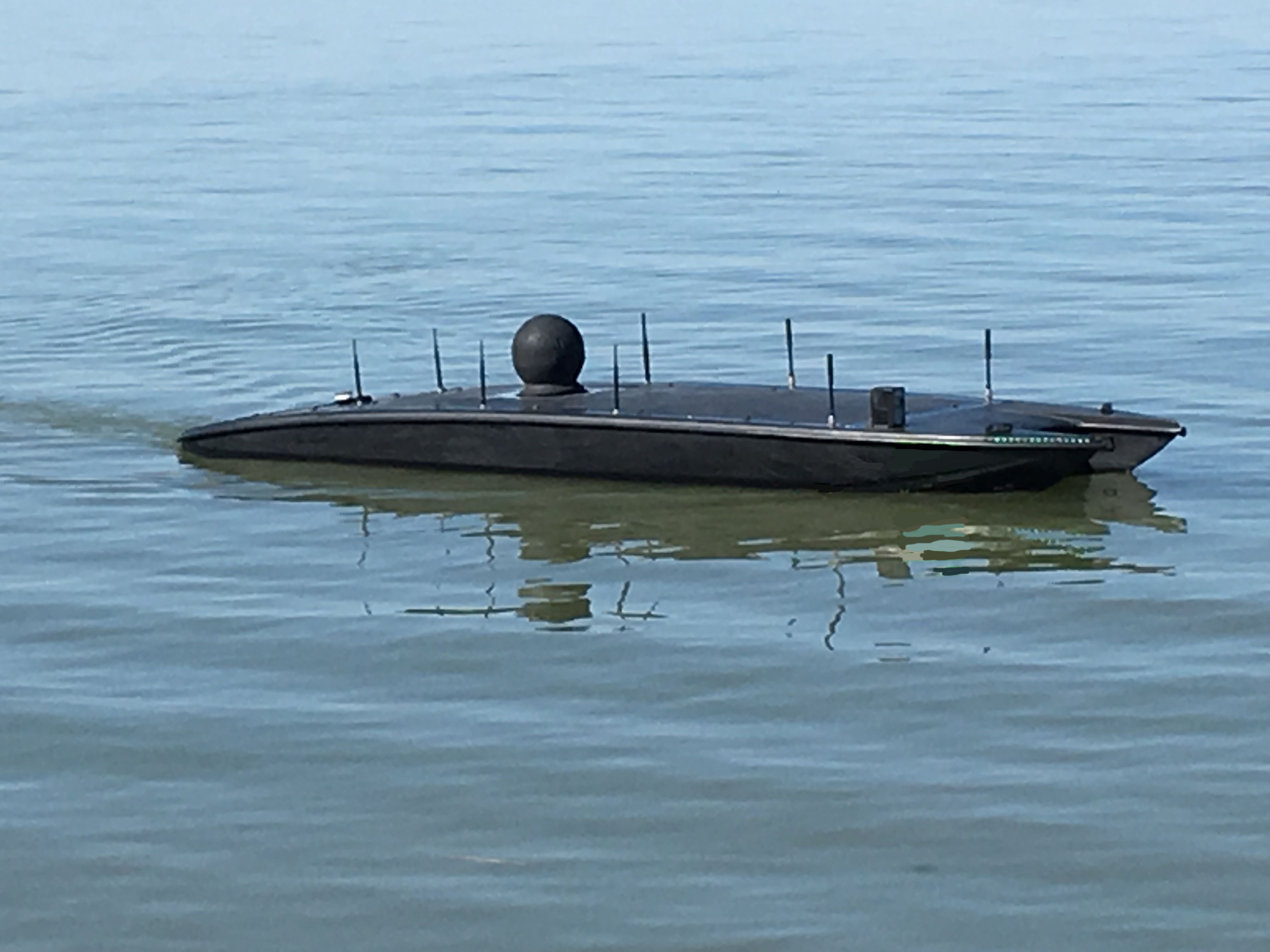
Close up of USV operating during S2ME2; note the low-profile and stealthy characteristics (Photo courtesy of Mr. Jack Rowley).
In an October 2017 interview with U.S. Naval Institute News, the deputy assistant secretary of the Navy for research, development, test and evaluation, William Bray, stressed the importance of using unmanned systems in the ISR and IPB roles:
“Responding to a threat today means using unmanned systems to collect data and then delivering that information to surface ships, submarines, and aircraft. The challenge is delivering this data quickly and in formats allowing for quick action.”7
During the assault phase of S2ME2 ANTX, the expeditionary commander used a USV to thwart enemy defenses. For this event, he used an eight-foot man-portable MANTAS USV (one of a family of stealthy, low profile, USVs) that swam undetected into the “enemy harbor” (the Del Mar Boat Basin on the Southern California coast), and relayed information to the amphibious force command center using its TASKER C2 system. Once this ISR mission was complete, the MANTAS USV was driven to the surf zone to provide IPB on obstacle location, beach gradient, water conditions and other information crucial to planners.
Unmanned surface vehicle (MANTAS) operating in the surf zone during the S2ME2 exercise (Photo courtesy of Mr. Jack Rowley).
Carly Jackson, SPAWAR Systems Center Pacific’s director of prototyping for Information Warfare and one of the organizers of S2ME2, explained the key element of the exercise was to demonstrate new technology developed in rapid response to real-world problems facing the Fleet:
“This is a relatively new construct where we use the Navy’s organic labs and warfare centers to bring together emerging technologies and innovation to solve a very specific fleet force fighting problem. It’s focused on ‘first wave’ and mainly focused on unmanned systems with a big emphasis on intelligence gathering, surveillance, and reconnaissance.”8
The CHIPS interview article discussed the technologies on display and in demonstration at the S2ME2 ANTX event, especially networked autonomous air and maritime vehicles and ISR technologies. Tracy Conroy, SPAWAR Systems Center Pacific’s experimentation director, noted, “The innovative technology of unmanned vehicles offers a way to gather information that ultimately may help save lives. We take less of a risk of losing a Marine or Navy SEAL.”
S2ME2 ANTX was a precursor to Bold Alligator 2017, the annual Navy-Marine Corps expeditionary exercise. Bold Alligator 2017 was a live, scenario-driven exercise designed to demonstrate maritime and amphibious force capabilities, and was focused on planning and conducting amphibious operations, as well as evaluating new technologies that support the expeditionary force.9
Bold Alligator 2017 encompassed a substantial geographic area in the Virginia and North Carolina OPAREAS. The mission command center was located at Naval Station Norfolk, Virginia. The amphibious force and other units operated eastward of North and South Onslow Beaches, Camp Lejeune, North Carolina. For the littoral mission, some expeditionary units operated in the Intracoastal Waterway near Camp Lejeune.
The Bold Alligator 2017 scope was modified in the wake of Hurricanes Harvey, Irma and Maria, as many of the assets scheduled to participate were used for humanitarian assistance and disaster relief. The exercise featured a smaller number of amphibious forces but did include a carrier strike group.10 The 2nd Marine Expeditionary Brigade (MEB) orchestrated events and was embarked aboard USS Arlington (LPD-24), USS Fort McHenry (LSD-43), and USS Gunston Hall (LSD-44).
The 2nd MEB used a large (12-foot) MANTAS USV, equipped with a Gyro Stabilized SeaFLIR230 EO/IR Camera and a BlueView M900 Forward Looking Imaging Sonar to provide ISR and IPB for the amphibious assault. The sonar was employed to provide bottom imaging of the surf zone, looking for objects and obstacles—especially mine-like objects—that could pose a hazard to the landing craft–LCACs and LCUs–as they moved through the surf zone and onto the beach.
The early phases of Bold Alligator 2017 were dedicated to long-range reconnaissance. Operators at exercise command center at Naval Station Norfolk drove the six-foot and 12-foot MANTAS USVs off North and South Onslow Beaches, as well as up and into the Intracoastal Waterway. Both MANTAS USVs streamed live, high-resolution video and sonar images to the command center. The video images showed vehicles, personnel, and other objects on the beaches and in the Intracoastal Waterway, and the sonar images provided surf-zone bottom analysis and located objects and obstacles that could provide a hazard during the assault phase.
Bold Alligator 2017 underscored the importance of surface unmanned systems to provide real-time ISR and IPB early in the operation. This allowed planners to orchestrate the amphibious assault to ensure that the LCACs or LCUs passing through the surf zone and onto the beach did not encounter mines or other objects that could disable—or even destroy—these assault craft. Providing decision makers not on-scene with the confidence to order the assault was a critical capability and one that will likely be evaluated again in future amphibious exercises such as RIMPAC 2018, Valiant Shield 2018, Talisman Saber 2018, Bold Alligator 2018 and Cobra Gold, among others.
Navy Commitment to Unmanned Maritime Systems
One of the major challenges to the Navy making a substantial commitment to unmanned maritime systems is the fact that they are relatively new and their development has been “under the radar” for all but a few professionals in the science and technology (S&T), research and development (R&D), requirements, and acquisition communities. This lack of familiarity creates a high bar for unmanned naval systems in particular. A DoD Unmanned Systems Integrated Roadmap provided a window into the magnitude of this challenge:
“Creation of substantive autonomous systems/platforms within each domain will create resourcing and leadership challenges for all the services, while challenging their respective warfighter culture as well…Trust of unmanned systems is still in its infancy in ground and maritime systems….Unmanned systems are still a relatively new concept….As a result; there is a fear of new and unproven technology.”11
In spite of these concerns—or maybe because of them—the Naval Sea Systems Command and Navy laboratories have been accelerating the development of USVs and UUVs. The Navy has partnered with industry to develop, field, and test a family of USVs and UUVs such as the Medium Displacement Unmanned Surface Vehicle (“Sea Hunter”), MANTAS next-generation unmanned surface vessels, the Large Displacement Unmanned Underwater Vehicle (LDUUV), and others.
Indeed, this initial prototype testing has been so successful that the Department of the Navy has begun to provide increased support for USVs and UUVs and has established program guidance for many of these systems important to the Navy and Marine Corps. This programmatic commitment is reflected in the 2017 Navy Program Guide as well as in the 2017 Marine Corps Concepts and Programs publications. Both show a commitment to unmanned systems programs.12
In September 2017, Captain Jon Rucker, the program manager of the Navy program office (PMS-406) with stewardship over unmanned maritime systems (unmanned surface vehicles and unmanned underwater vehicles), discussed his programs with USNI News. The title of the article, “Navy Racing to Test, Field, Unmanned Maritime Vehicles for Future Ships,” captured the essence of where unmanned maritime systems will fit in tomorrow’s Navy, as well as the Navy-after-next. Captain Rucker shared:
“In addition to these programs of record, the Navy and Marine Corps have been testing as many unmanned vehicle prototypes as they can, hoping to see the art of the possible for unmanned systems taking on new mission sets. Many of these systems being tested are small surface and underwater vehicles that can be tested by the dozens at tech demonstrations or by operating units.”13
While the Navy is committed to several programs of record for large unmanned maritime systems such as the Knifefish UUV, the Common Unmanned Surface Vehicle (CUSV), the Large Displacement UUV (LDUUV) and Extra Large UUV (XLUUV), and the Anti-Submarine Warfare Continuous Trail Unmanned Vessel (ACTUV) vehicle (since renamed the Medium Displacement USV [MDUSV] and also called Sea Hunter), the Navy also sees great potential in expanding the scope of unmanned maritime systems testing:
“Rucker said a lot of the small unmanned vehicles are used to extend the reach of a mission through aiding in communications or reconnaissance. None have become programs of record yet, but PMS 406 is monitoring their development and their participation in events like the Ship-to-Shore Maneuver Exploration and Experimentation Advanced Naval Technology Exercise, which featured several small UUVs and USVs.”14
The ship-to-shore movement of an expeditionary assault force remains the most hazardous mission for any navy. Real-time ISR and IPB will spell the difference between victory and defeat. For this reason, the types of unmanned systems the Navy and Marine Corps should acquire are those systems that directly support our expeditionary forces. This suggests a need for unmanned surface systems to complement expeditionary naval formations. Indeed, USVs might well be the bridge to the Navy-after-next.
Captain George Galdorisi (USN – retired) is a career naval aviator whose thirty years of active duty service included four command tours and five years as a carrier strike group chief of staff. He began his writing career in 1978 with an article in U.S. Naval Institute Proceedings. He is the Director of Strategic Assessments and Technical Futures at the Navy’s Command and Control Center of Excellence in San Diego, California.
The views presented are those of the author, and do not reflect the views of the Department of the Navy or Department of Defense.
Correction: Two pictures and a paragraph were removed by request.
References
[1] National Security Strategy of the United States of America (Washington, D.C.: The White House, December 2017) accessed at: https://www.whitehouse.gov/wp-content/uploads/2017/12/NSS-Final-12-18-2017-0905-2.pdf.
[2] There are many summaries of this important national security event. For one of the most comprehensive, see Jerry Hendrix, “Little Peace, and Our Strength is Ebbing: A Report from the Reagan National Defense Forum,” National Review, December 4, 2017, accessed at: http://www.nationalreview.com/article/454308/us-national-security-reagan-national-defense-forum-offered-little-hope.
[3] Otto Kreisher, “U.S. Marine Corps Is Getting Back to Its Amphibious Roots,” Defense Media Network, November 8, 2012, accessed at: https://www.defensemedianetwork.com/stories/return-to-the-sea/.
[4] For a most comprehensive summary of U.S. Navy shipbuilding plans, see Ron O’Rourke Navy Force Structure and Shipbuilding Plans: Background and Issues for Congress (Washington, D.C.: Congressional Research Service, November 22, 2017).
[5] The Future Navy (Washington, D.C.: Department of the Navy, May 2017) accessed at: http://www.navy.mil/navydata/people/cno/Richardson/Resource/TheFutureNavy.pdf. See also, 2018 U.S. Marine Corps S&T Strategic Plan (Quantico, VA: U.S. Marine Corps Warfighting Lab, 2018) for the U.S. Marine Corps emphasis on unmanned systems, especially man-unmanned teaming.
[6] See, for example, Navy Project Team, Report to Congress: Alternative Future Fleet Platform Architecture Study, October 27, 2016, MITRE, Navy Future Fleet Platform Architecture Study, July 1, 2016, and CSBA, Restoring American Seapower: A New Fleet Architecture for the United States Navy, January 23, 2017.
[7] Ben Werner, “Sea Combat in High-End Environments Necessitates Open Architecture Technologies,” USNI News, October 19, 2017, accessed at: https://news.usni.org/2017/10/19/open-architecture-systems-design-is-key-to-navy-evolution?utm_source=USNI+News&utm_campaign=b535e84233-USNI_NEWS_DAILY&utm_medium=email&utm_term=0_0dd4a1450b-b535e84233-230420609&mc_cid=b535e84233&mc_eid=157ead4942
[8] Patric Petrie, “Navy Lab Demonstrates High-Tech Solutions in Response to Real-World Challenges at ANTX17,” CHIPS Magazine Online, May 5, 2017, accessed at http://www.doncio.navy.mil/CHIPS/ArticleDetails.aspx?id=8989.
[9] Information on Bold Alligator 2017 is available on the U.S. Navy website at: http://www.navy.mil/submit/display.asp?story_id=102852.
[10] Phone interview with Lieutenant Commander Wisbeck, Commander, Fleet Forces Command, Public Affairs Office, November 28, 2017.
[11] FY 2009-2034 Unmanned Systems Integrated Roadmap, pp. 39-41.
[12] See, 2017 Navy Program Guide, accessed at: http://www.navy.mil/strategic/npg17.pdf, and 2017 Marine Corps Concepts and Programs accessed at: https://marinecorpsconceptsandprograms.com/.
[13] Megan Eckstein, “Navy Racing to Test, Field, Unmanned Maritime Vehicles for Future Ships,” USNI News, September 21, 2017, accessed at: https://news.usni.org/2017/09/21/navy-racing-test-field-unmanned-maritime-vehicles-future-ships?utm_source=USNI+News&utm_campaign=fb4495a428-USNI_NEWS_DAILY&utm_medium=email&utm_term=0_0dd4a1450b-fb4495a428-230420609&mc_cid=fb4495a428&mc_eid=157ead4942
[14] “Navy Racing to Test, Field, Unmanned Maritime Vehicles for Future Ships.”
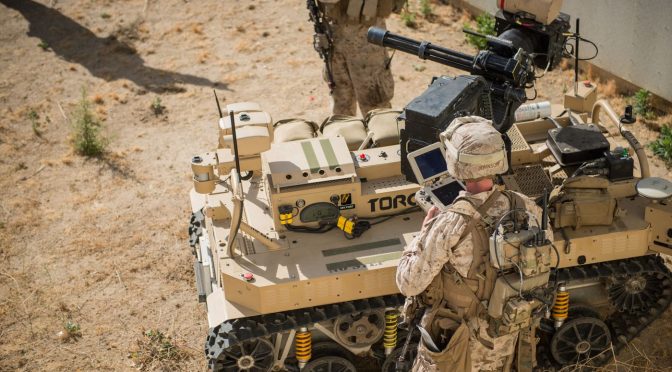
Featured Image: Marines with 3rd Battalion, 5th Marine Regiment prepare a Weaponized Multi-Utility Tactical Transport vehicle for a patrol at Marine Corps Base Camp Pendleton, Calif., July 13, 2016. (USMC photo by Lance Cpl. Julien Rodarte)