Category Archives: Capability Analysis

Analyzing Specific Naval and Maritime Platforms

Flashpoint China, Chinese Air Power and Regional Security

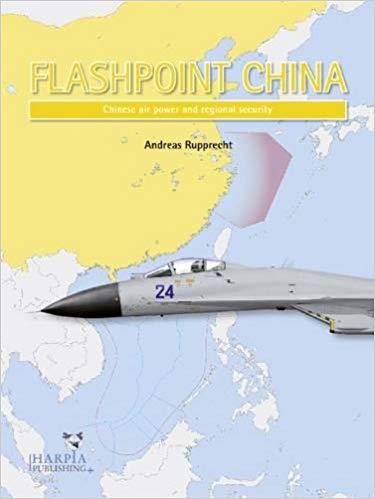
Rupprecht, Andreas. Flashpoint China, Chinese Air Power and Regional Security. Houston: Harpia Publishing, 2016. 80pp. $23.45
By Lieutenant Commander David Barr, USN

Introduction

Since his rise to power six years ago, thousands of analysts and policymakers across the globe have attempted to understand the intentions of, and the mechanisms employed toward, General Secretary of the Communist Party of China Xi Jinping’s seemingly expansionist vision for China. That vision, dubbed “The Chinese Dream” by Xi in 2012, solidified his plan for “the great rejuvenation of the Chinese nation.” Although arguably vaguely defined, “The Chinese Dream” has been viewed by some as Xi’s call for rising Chinese influence on the international stage – economically, politically, diplomatically, scientifically, and militarily, i.e., China’s “grand strategy.”

In support of this vision, Xi has embarked on a multitude of political and military reforms and now, backed by one of the world’s most technologically-advanced militaries, Xi is ready to thrust his revitalized China further onto the world stage. During his opening speech to nearly 2,300 party delegates and dignitaries at the October 2017 19th National Congress of the Communist Party of China, Xi publicly described the extraordinary complexity of China’s domestic and foreign policy challenges and opportunities: “Currently, conditions domestically and abroad are undergoing deep and complicated changes. Our country is in an important period of strategic opportunity in its development. The outlook is extremely bright; the challenges are also extremely grim.”1

In his new book, Flashpoint China, Chinese Air Power and Regional Security, Andreas Rupprecht, author of Modern Chinese Warplanes: Combat Aircraft and Units of the Chinese Air Force and Naval Aviation, attempts to break out of his comfort zone and succinctly capture the complexities of Chinese foreign policy and the geopolitical environment of the Asia-Pacific Region. The content of Flashpoint China is predominantly focused on Chinese regional security issues; however, in his introductory paragraph, Rupprecht states the goal of Flashpoint China is to “draw upon” Modern Chinese Warplanes and “offer an overview of potential military conflicts along the borders of the People’s Republic of China (PRC).”2 This is a laudable goal, for even attempting to synopsize the complexity of Chinese military history and foreign relations in a mere eighty pages would challenge the most knowledgeable defense and foreign relations expert. Yet for the most part, Rupprecht succeeds. There are some content areas however that could benefit from further research and development.

Following the introduction, Rupprecht utilizes Chapters Two through Five to succinctly introduce the various foreign policy concerns for China in each of its five Theater Commands. Each chapter opens with a succinct description of the nuanced histories behind each foreign policy concern, provides an overview of PLAAF and PLANAF capabilities available to each Theater Command, and closes with well-structured charts of each Theater Command’s PLAAF and PLANAF order of battle. It is through this structured approach that Rupprecht meets his goal of drawing upon Modern Chinese Warplanes and answering the following question: If conflict were to occur at any of the flashpoints, what People’s Liberation Army Air Force (PLAAF) and PLA Naval Air Force (PLANAF) units and platforms are likely to be involved?

Over the last two to three decades China’s entire military force has undergone a rapid and unprecedented military modernization campaign designed to transform it into a regionally-dominant and globally-significant force. To further tie his two books together however, Rupprecht would be remiss to not include an update of what has transpired within and across the PLA between the books’ publication dates (2012 and 2016, respectively) in the introductory section of Flashpoint China, specifically how PLA reforms and the subsequent establishment of the five Theater Commands have affected the PLAAF and PLANAF. Additionally, Rupprecht briefly describes concepts such as China’s “active defense strategy” and “anti-access /aerial denial (A2/AD)” (what the Chinese refer to as “counter-intervention”) capabilities. Counter-intervention represents how China plans to “deny the U.S. [or other foreign] military the ability to operate in China’s littoral waters in case of a crisis.”3 Collectively, these organizational, doctrinal, and operational changes should weigh heavily in a book of this nature yet Rupprecht does not fully incorporate their significance in his work. To do this, the author would need to answer the following question: How would PLAAF and PLANAF platforms and capabilities likely be employed to prevent U.S. or other regional forces from intervening in a conflict at any of the flashpoints?

Some of these geographical areas and issues carry a higher military priority for China. According to the U.S. Office of the Secretary of Defense (OSD) in its 2017 Annual Report to Congress, “Taiwan remains the PLA’s main “strategic direction,” one of the geographic areas the leadership identifies as endowed with strategic importance [and represents a “core interest” of China]. Other focus areas include the East China Sea [ECS], the South China Sea [SCS], and China’s borders with India and North Korea.”4 And as the strategic importance of a geographical area increases for China so does its allocation of PLA assets.

For example, the richness and variety of the geopolitical concerns involving the countries presented in Chapter Two of Flashpoint China (Japan, Russia, Democratic People’s Republic of Korea (DPRK), and South Korea), provide significant examples of historical, current, and potential military conflict for China; however, in Chapter Two Rupprecht doesn’t reflect on the order of  strategic priority and therefore the military significance of the Northern and Central Theater Commands. Instead, Chapter Two opens with a very brief paragraph regarding Mongolia, thereby dampening the impact of the chapter’s “flashpoint” narrative.

Additionally, the sovereignty dispute over the Senkaku/Diaoyu Islands in the ECS dominates the military significance of China’s foreign policy vis-à-vis Japan; however, Rupprecht merely allocates a single sentence to the situation: “The dispute over the Senkaku Islands – known as the Diaoyu Islands in China – is meanwhile a matter of heated rhetoric and near-open hostility.”5 Since the historical dispute took a dramatic leap forward in April 2012 following the Japanese purchase of three of the eight islets from their private owner, the PLA’s Eastern Theater Command has assumed primary responsibility for this flashpoint area. Unfortunately, Chapter Two mistakenly assigns PLA responsibility for China’s ongoing dilemma with Japan in the ECS to the Northern and Central Theater Commands: “The PLA subordinates responsibility for Japan and the Korean peninsula to the Northern Theater Command and to the Central Theater Command.”6 When the purchase was made public, the PLA immediately began regularly deploying maritime and airborne patrols from Eastern Theater Command bases into the ECS to assert jurisdiction and sovereignty over the islands. Additionally, as Rupprecht alludes to on page 25, in November 2013, China declared the establishment of its first air defense identification zone (ADIZ) over the ECS which included the area over the disputed islands. Subsequently, both the PLAAF and PLANAF established routine airborne patrol patterns and the use of ECS airspace and the straits of the Ryukyu Islands to conduct long-range, integrated strike training with PLA Navy (PLAN) assets in the western Philippine Sea.
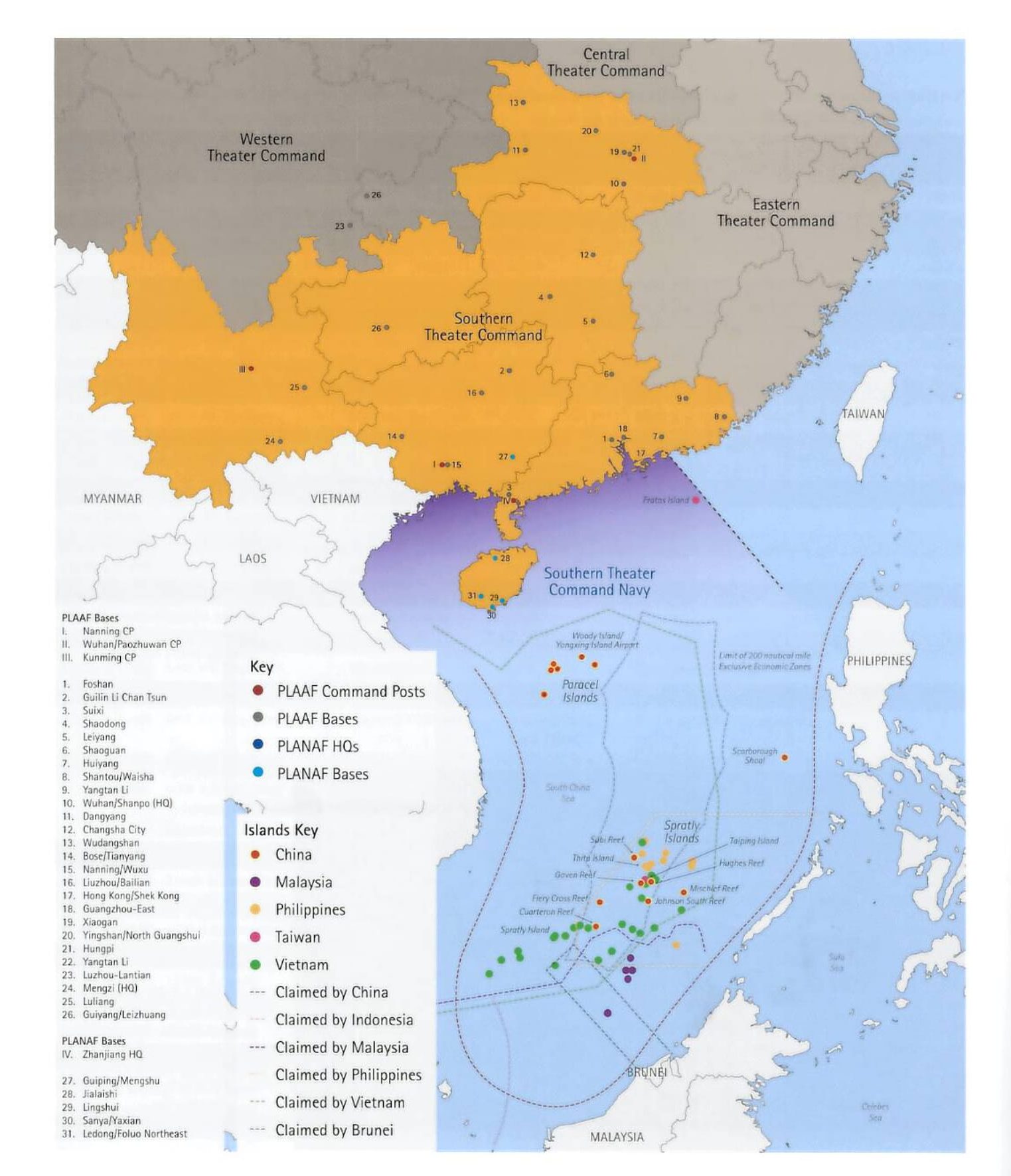
A map of the Southern Theater Command’s Area of Responsibility (from Flashpoint China, Chinese Air Power and Regional Security, Click to Expand)

Additionally in Chapter Two, Rupprecht aptly describes the history of Sino-Russian relations: “For years, relations between China and Russia have been described as a ‘tightrope walk’, and have frequently oscillated between close friendship and war.”7 However, the author fails to capture the significance of the military connection between Russia and China, especially as it relates to Rupprecht’s stated theme for this book, for China’s military modernization arguably started with mass acquisitions of Russian military technologies in the early 1990s. Over the ensuing decades, China embarked on a widespread effort to acquire Russian military technologies, reverse-engineer that technology, and then indigenously mass-produce similar technologies adapted to Chinese specifications. That period however may be rapidly coming to a close as many China analysts assess that China has now transitioned from a Russian technology-dependent force to a truly indigenous production force. In fact, China’s most recent procurement of Russia’s technologically-advanced Su-35 FLANKER S fighter aircraft and S-400 strategic-level surface-to-air missile (SAM) system, touched on by Rupprecht on page 18, may be the last significant items on China’s military hardware shopping list.

Another example is found in Chapter Three which Rupprecht opens by stating, “The issue of Taiwan is a very special one for the PRC, and certainly the top priority in regard to the PLA’s modernization drive. This is clearly indicated by the official order of protocol, which lists the responsible Eastern Theater Command first.”8 Although the Eastern Theater may have primary responsibility for the Taiwan issue, the extraordinary political, strategic, and economic significance of the Taiwan dispute represents a “core interest” of China. This fact cannot be overstated. The entire essence of Chinese military modernization efforts over the recent decades have been in direct support of the possible requirement to take back Taiwan by force should alternative means of reunification prove fruitless. As Chinese Communist Party legitimacy would ride on the success or failure of a PLA campaign to “liberate” Taiwan, an effort of this magnitude would involve PLAAF and PLANAF assets from multiple Theater Commands, something Rupprecht’s narrative and order-of-battle charts do not capture.

The geography, the respective sovereignty claims, and the strategic and operational scope of each Theater Command’s responsibilities matter greatly with respect to China and its ambitions. Each chapter ends with a wonderful map that provides a highly informative, geographical illustration of each respective theater. The geographical impact of each chapter’s flashpoints may be better served however by moving each chapter’s map to the beginning of the chapters rather than the end.

Rupprecht’s best work is reflected in Chapter Four. China’s sovereignty claims and the controversial Chinese land reclamation and infrastructure construction activity in the Spratly Islands in the South China Sea (SCS) presented in Chapter Four are definitely the most contentious issues facing the Southern Theater Command. And here Rupprecht does not disappoint. The author allocates numerous pages to both describe and illustrate the significance of the SCS dispute to China, its regional neighbors, and the U.S. Just as in Modern Chinese Warplanes, Rupprecht has included spectacular, colored photographs of various Chinese aircraft into Flashpoint China. Various PLAAF and PLANAF fighters, reconnaissance and transport aircraft, along with unmanned aerial vehicles (UAV) are presented in wonderful detail throughout the book. Chapter Four however is especially unique for its inclusion of vivid photographs of China’s land reclamation and infrastructure construction activity in the Spratly Islands.
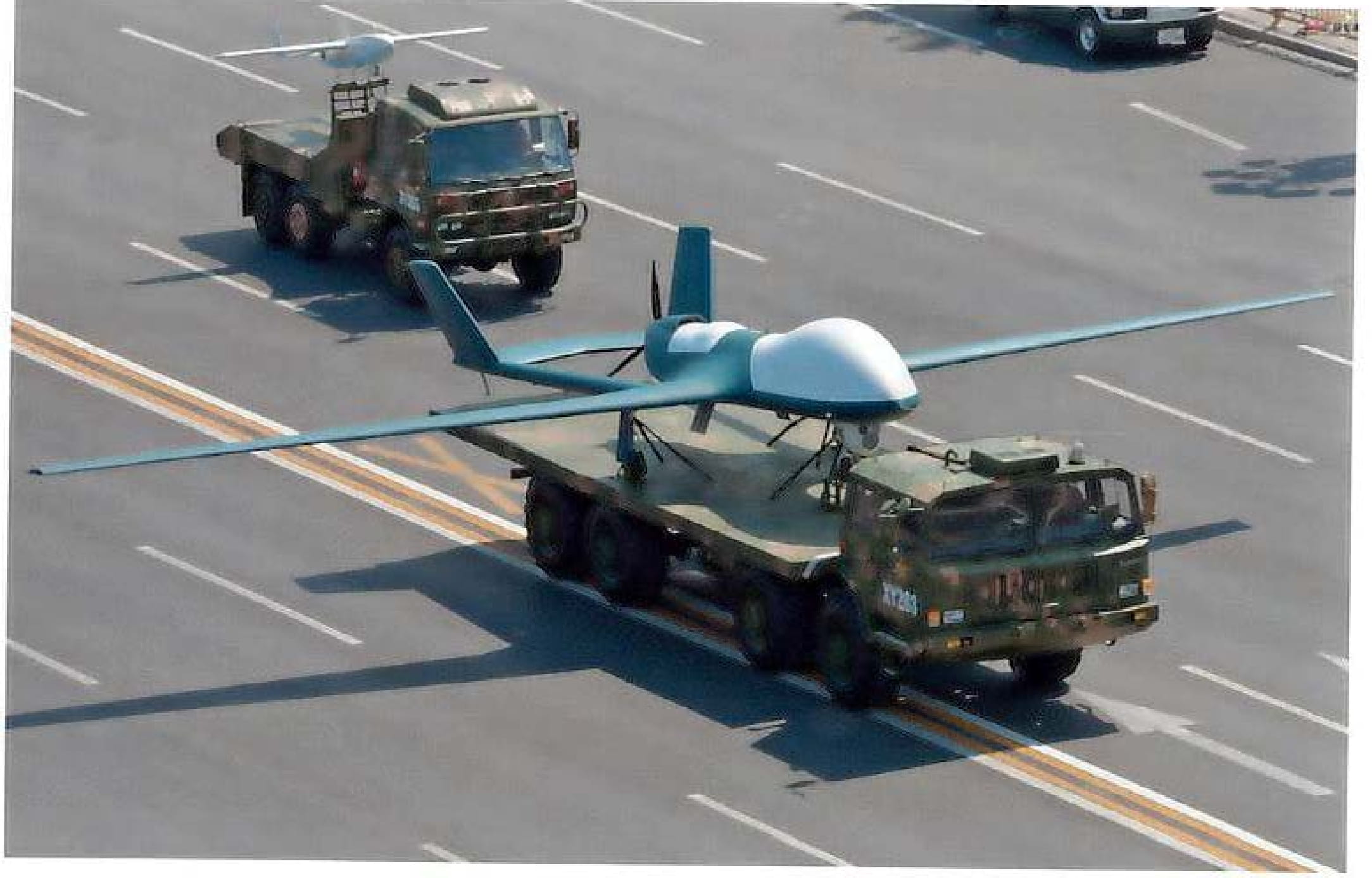
A UAV is showcased in a Chinese military parade (Flashpoint China, Chinese Air Power and Regional Security)

How Chinese, U.S., and regional neighbors approach this issue politically, diplomatically, and militarily carries significant strategic, operational, and tactical implications. History has proven how a single tactical event in the region can carry immediate and substantial strategic implications. For example, the infamous EP-3 incident of 2001 provides just one example of how tactical miscommunication and miscalculation can have significant strategic implications.9 These type of airborne interactions continue on a regular basis as U.S. reconnaissance aircraft operate in international airspace over the SCS. Chinese fighter aircraft routinely intercept the U.S. aircraft, sometimes operating outside the assessed bounds of safe airmanship. Japanese fighters also come into regular contact with Chinese aircraft, regularly scrambling to check Chinese airspace incursions over the ECS and through the Ryukyu Straits. These tactical events often receive attention from the government and military leaders of the respective countries and occasionally result in public demarches.

In a book of this nature, each SCS claimant country deserves its own dedicated section as China’s rise has forced each country’s government to reassess their national security and military means with some countries making substantial increases in their military expenditures. For example, Vietnam is “in the process of addressing its limitations with respect to combating modern threat scenarios with its existing obsolete equipment, and has embarked on military modernization plans over the last few years.”10 Additionally, the 02 May – 15 August 2014 Hai Yeng Shi You 981 oil rig standoff (also referred to as the “CNOOC-981 incident”) provides a real-world event which not only illustrated the contentiousness of the SCS claims between China and Vietnam, but also revealed an operational reaction from the PLA, with specific operational responses from both the PLAAF and PLANAF.11

Finally, the most impactful flashpoint for China in the Western Theater, presented in Chapter Five, regards India. Typically the issue between the two countries revolves around unresolved border disputes; however, much to India’s chagrin, China also continues to advance its military-to-military relationship with India’s rival, Pakistan. This is especially relevant for Rupprecht’s efforts within Flashpoint China as Pakistan’s Air Force and China’s PLAAF conducted the sixth consecutive iteration of the annual “Shaheen” series of joint exercises in 2017. Since its inception in 2011, the Shaheen exercise series has consistently grown in complexity and scope, incorporating a wider variety of PLAAF aircraft and platforms such as multi-role fighters, fighter-bombers, airborne warning and control system (AWACS) aircraft, and surface-to-air missile crews and radar operators.

Conclusion

In Flashpoint China Andreas Rupprecht ambitiously attempts to couple the highly complex geopolitical environment surrounding modern day China with the PLAAF and PLANAF’s ever-evolving order of battle and force projection capabilities – an assignment with which even the most renowned scholars would struggle, especially within the allotment of so few pages. Via the well-structured narrative and fabulous photographs, Flashpoint China goes a long way in tackling the question of what PLAAF and PLANAF assets could China bring to the fight should a military conflict occur at any of the presented flashpoints. Readers however would have certainly enjoyed reading the author’s assessment of how might the PLA use its air power in support of Chinese military intervention into these contentious hotbeds. But this may have to wait for another day. Still, if brevity of space and time were the only options available to the author, then Flashpoint China can certainly prove useful as is. However, with even some minor content and structural improvements, the book could prove irreplaceable.

LCDR David Barr is a career intelligence officer and currently serves as instructor with the National Intelligence University’s College of Strategic Intelligence. All statements of facts, analysis, or opinion are the author’s and do not reflect the official policy or position of the National Intelligence University, the Department of Defense or any of its components, or the U.S. government.

References

1. Buckley, Chris. “Xi Jinping Opens China’s Party Congress, His Hold Tighter Than Ever”; The New York Times; 17 October 2017. https://www.nytimes.com/2017/10/17/world/asia/xi-jinping-communist-party-china.html

2. Rupprecht, Andreas. Flashpoint China, Chinese Air Power and Regional Security. Houston: Harpia Publishing, 2016. p. 9.

3. Ibid. p. 15.

4. OSD. Annual Report to Congress: “Military and Security Developments Involving the People’s Republic of China 2017,” OSD, (Annual Report, OSD 2017)

5. Rupprecht, Andreas. Flashpoint China, Chinese Air Power and Regional Security. Houston: Harpia Publishing, 2016. p. 21.

6. Ibid. p. 21.

7. Ibid. P. 17.

8. Ibid. p. 31.

9. Rosenthal, Elisabeth. “U.S. Plane in China After It Collides with Chinese Jet”; The New York Times; 02 April 2001. http://www.nytimes.com/2001/04/02/world/us-plane-in-china-after-it-collides-with-chinese-jet.html

10. Wood, Laura. “Future of the Vietnam Defense Industry to 2022 – Market Attractiveness, Competitive Landscape and Forecasts – Research and Markets”. Business Wire; 04 October 2017. https://www.businesswire.com/news/home/20171004006043/en/Future-Vietnam-Defense-Industry-2022—Market

11. Thayer, Carl. “4 Reasons China Removed Oil Rig HYSY-981 Sooner Than Planned”. The Diplomat; 22 July 2014. https://thediplomat.com/2014/07/4-reasons-china-removed-oil-rig-hysy-981-sooner-than-planned/

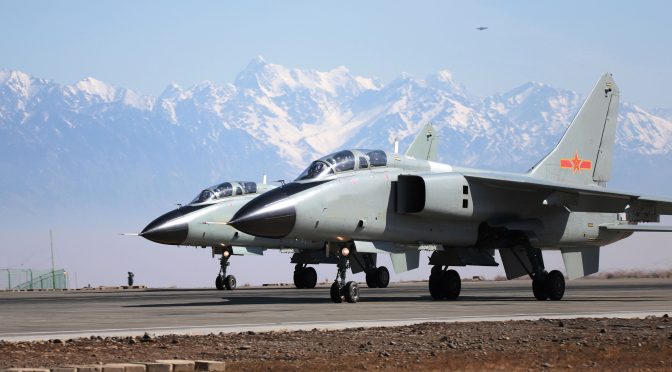
Featured Image: Two JH-7 fighter bombers attached to an aviation brigade of the air force under the PLA Western Theater Command taxi abreast on the runway before takeoff for a sortie near the Tianshan Mountains in late March, 2018. (eng.chinamil.com.cn/Photo by Wang Xiaofei)
Insights from the National Training Center’s Opposing Force, Pt. 3

Read Part One, Part Two of this series.

By Colonel John D. Rosenberger

It Is How the OPFOR Prepares for Combat Operations

How a unit prepares to execute its mission directly affects the battle outcome. The OPFOR has learned this and devotes most of its available time preparing for battle, not planning.

Once the operations order is issued, the preparation phase for combat begins. The regimental commander gives everybody a ten minute break; then all commanders return and backbrief him, which assures the commander that all subordinate commanders clearly understand what he expects them to do and achieve, when he expects them to do it, and where he expects them to do it. In short, he checks to ensure all subordinate commanders understand his intent.

Immediately after backbriefs, the regimental staff assembles and conducts staff rehearsals of each course of action. The chief of staff leads a mapboard exercise, placed flat with all staff officers surrounding, and they literally fight each battle from beginning to end, reviewing the employment and synchronization of every element of the combined-arms team, by phase of the operation. They rehearse every action each staff officer will take, and every action they must supervise for the commander during the battle given any course of action.

For example, they rehearse when and where rockets and close air support will be employed against high-payoff targets during Phase I fires, what positions they must occupy to place the batteries within range, when they must move to occupy in sufficient time to accomplish their task, and the number of volleys required to achieve expected effects. They rehearse when and where scatterable minefields will be employed to ensure reserves are interdicted prior to the enemy commander’s decision to commit them. They rehearse where artillery batteries from the division artillery group must be positioned, and the trigger point for shooting nonpersistent chemicals against forces at the point of penetration, just prior to closure of the forward detachment. They rehearse when the jamming systems will begin jamming enemy fire support FM nets to achieve maximum disruption and force protection. Watch this process and it’s easy to see why OPFOR staffs are considered an element of combat power whose performance is key to success. It is their hard work in the planning and preparation phases which sets conditions for synchronization of the combined-arms team, and ensures it is preserved during battle.

While this is going on, subordinate commanders are back at their units issuing oral operations orders to their units, with every vehicle commander in attendance, always supported by hastily constructed terrain boards which facilitate quick visualization of what they are expected to do, and how they will do it.

Seven to eight hours after the regimental order is issued, the regiment conducts a regimental combined-arms rehearsal-a disciplined battle drill that affords the opportunity to conduct detailed rehearsals of at least two, usually three, courses of action in a two-hour period. Attendants are the regimental commander and staff, all commanders of subordinate units, and all team commanders in the regimental reconnaissance company. The chief of operations directs the rehearsal, the chief of staff adjudicates the outcome of engagements by phase, and the regimental commander observes intently to ensure synchronization is correct, his intent is clearly understood, and all units are doing exactly what he expects them to do, when and where he expects them to do it.

The rehearsal is conducted on a large-scale terrain board, configured to scale, with known and expected enemy forces indicated by markers, and all regimental graphic control measures. On the board are the chief of reconnaissance, chief of rockets and artillery, chief of air direction, chief of signal, and all subordinate commanders-only those leaders who command and direct forces in battle. The rehearsal always begins with a detailed depiction of how the reconnaissance company will conduct their tasks to achieve their purpose. Recon team leaders physically move along the infiltration routes they’ve chosen, describing their actions en route, the observation posts they will establish, what critical information they will acquire, and the fire support targets they are responsible for shooting. Once it is clear to all how observation of the regiment’s entire battlespace will be established, the rest of the combined-arms team follows and briefs their actions in detail, beginning with their statement of task and purpose.

The value of this rehearsal method cannot be overemphasized. It is critical to successful accomplishment of the mission. While the operations order and graphics may be clear, the battle really doesn’t come to life in the minds of subordinate leaders until they rehearse together as a team. In the rehearsal, they can visualize the employment of the entire combined-arms team, understand the key elements of synchronization that must be achieved, and clearly see how their unit fits into the operational concept relative to their teammates. Everybody knows what everybody else is doing. This produces a powerful synergy, seldom matched by their opponents.

Finally, after the regimental rehearsal, subordinate commanders return to their units and conduct their own detailed rehearsals with every leader in their unit present, not just the officers. All vehicle/crew commanders participate in the unit rehearsal. This technique guarantees complete knowledge of the operation through the ranks of the unit, and ensures the execution of the mission is not affected by loss of the company commander, platoon leaders or platoon sergeants. In fact, it is not uncommon to find a junior sergeant or corporal commanding a platoon or a company at the end of a battle, organizing his remaining force on the objective.

Meanwhile, and equally important, as the officers work through the orders and rehearsal process, the NCOs across the regiment are conducting detailed inspections of their equipment and soldiers ensuring both are prepared for combat. Hundreds of things are checked and double-checked to ensure all is ready: fluid levels, track tension, radios, fire control systems, maps and graphics, nightvision devices, boresight, ammunition, weapons, the list goes on.

The point to this discussion is that extensive and detailed preparation for combat, conducted by the officers and NCOs of an organization, is also indispensable to achieving the full combat potential of a unit. Incidentally, this preparatory process is seldom embedded with discipline throughout the brigade task forces the OPFOR oppose-another substantial advantage the OPFOR enjoys. Here’s the final reason.

It Is How the OPFOR Executes and Controls Combat Operations

Although their planning and preparation techniques and procedures create the ability for the OPFOR to win their battles before they fight them, there are certain techniques employed during the execution of battle which also serve as means of achieving the full combat potential of the combined-aims team. First and foremost is the regiment’s aggressive conduct of reconnaissance and surveillance operations.

The first condition any commander must set on the battlefield, if he wants to win, is the ability to see through the depths of the battlefield. If any reconnaissance team fails to reach its assigned observation post, a replacement team is immediately dispatched to replace it, or other teams are repositioned to reestablish coverage of that portion of the battlefield. In contrast, the brigade task forces they oppose are inadequately equipped with reconnaissance capability and have been for years. Brigades have never been provided the reconnaissance forces and capabilities necessary to establish and maintain complete and continual observation of their battlespace. From the OPFOR’s perspective, it’s the most serious organizational flaw and warfighting deficiency in our brigade task forces today. The OPFOR knows, through hard experience, that effective reconnaissance and surveillance are the key to success during execution of the battle, and remain the most powerful of many advantages they enjoy over their opponents.

Equally as important as reconnaissance, the OPFOR establishes multiple FM radio retransmission teams on terrain which will ensure FM communications capability is provided through the depth and width of the battlespace. Immediate, responsive FM communications are absolutely required to sustain common situational awareness, prevent fratricide, preserve flexibility, control the tempo of operations, and preserve synchronization of the combined-arms team in the close fight. If you can’t talk, you can’t fight on the modem battlefield. It makes no difference if you can see the battlefield in perfect detail. Forces at the tactical level of war cannot be accurately employed without sustained, reliable, instantaneous real-time communications.

Another key to the remarkable synchronization the OPFOR is able to achieve, and consequently its overwhelming combat power, is the use of a small staff to control the combined-arms team, and preserve synchronization. Positioned forward, working out of a one-vehicle command post, off one map, are the chief of staff, chief of reconnaissance, chief of rockets and artillery, and chief of air direction. This small team, the same team that planned and rehearsed the operation, orchestrates the entire battle, thereby freeing the regimental commander to move to a position where he can see the critical events unfold on the battlefield, see his decision points, and control the employment of his force as the situation develops. This technique of command and control-a small, mobile staff, armed with near-perfect situational awareness, empowered to direct the combined-arms team – virtually ensures the regimental commander can operate at a tempo of decisionmaking his opponent cannot match, and a level of synchronization his opponent cannot match.

Having said this, nothing is quite so influential to the outcome of a battle as the constant crosstalk between all commanders and the regimental staff. Listen to the regimental battle command net during a fight, and what you hear is a constant exchange of information between subordinate commanders. Occasionally, you will hear the regimental commander on the net, usually to seek clarification, or get specific information required to make his anticipated decisions, or issue the one or two decisions he must make during the course of battle. Most of the time, you will hear adjacent and following commanders talking to one another describing the enemy and friendly situation as it unfolds on the battlefield. Often, you will hear regimental reconnaissance leaders passing them critical information about enemy actions. That’s it. The regimental commander spends most of his time eavesdropping on his net, tracking the progress of the fight from the voices of his most trusted agents, his commanders on the ground. The chief of staff does the same thing, picking up his cues from commanders’ descriptions, and directing employment of lethal and nonlethal fires at the time and place required to set conditions for their success.

This cross-talk between commanders and staff is the principal reason the OPFOR is able to sustain accurate, real-time situational awareness of what’s happening on the battlefield. Nothing is more important during the execution of battle, amid the smoke, confusion and chaos. If a commander can see his battlefield, see the strength and disposition of his enemy, and see the strength and disposition of his own forces in near-real time, he can’t be whipped, if he has a speck of tactical competence and the forces available to win. Moreover, cross-talk virtually eliminates fratricide within the combined-arms team. Through eavesdropping, everyone knows where everyone else is located on the battlefield.

And finally, when all else fails, when subordinate units lose communications, when the key leaders are killed or injured, all units continue to fight guided by the commander’s intent-the overarching concept of what all must do to achieve success. Commander’s intent is an indispensable means of imposing control on the battlefield. Many battles are won each year based solely on adherence to commander’s intent, stated up front in the planning process, and reiterated to all leaders in the preparation phase. Leaders know what to do, what must be accomplished, and they do it, despite the fact they can’t talk to their commander.

In sum, techniques for imposing control and maintaining common situational awareness during the execution of operations are also key to achieving the full combat potential of a combined-arms team. It is disturbing that few of these techniques are observed or routinely practiced by brigade combined-arms teams the OPFOR opposes. This takes lots of training as one team under actual field conditions. Our brigade task forces do not have the opportunity under the conditions we serve in today.

Implications for Our Army and Landpower in the 21st Century

How does the 11th Armored Cavalry Regiment (the OPFOR) develop and sustain its ability to fight and defeat its opponents in almost every battle at the National Training Center? How does the regiment, fighting with 1960s-1970s technology, routinely defeat brigade task forces equipped with the most modem weapon systems and technology our Army can provide? How can the regiment do it given the same soldiers, the same personnel turbulence (about 40 percent turnover each year), the same leader development challenges, and the oldest fighting equipment in the active Army? There are the answers. There are the insights. From my perspective, the implications for our Army today and into the 21st century are profound. Why? Because the conditions which have afforded the opportunity for the OPFOR at NTC to achieve its full combat potential do not exist in our active Army today.

As an Army, we don’t organize the way we intend to fight. We have decided to bring the full weight and combat power of the combined-aims team to bear at brigade level, yet we don’t organize the brigade as a combined-aims team. It doesn’t matter that much for peacekeeping and humanitarian operations, but it matters in combat. It’s the only way to achieve the full combat potential of the enormous investments we’ve made in combat systems and capabilities. Although nobody can match us on the current battlefield, we’re far less effective than we can be.

We don’t train anymore with the rigor and frequency in the field necessary to develop and sustain full combat potential. Shortage of money, shortage of time, shortage of leaders and soldiers, peacekeeping operations and other factors conspire against us and deny us the ability to train soldiers, leaders and units at the frequency necessary to develop and sustain proficiency in mission essential tasks. For that matter, we don’t measure our combat readiness in terms of our ability to accomplish our mission-essential tasks, which is a direct function of the frequency with which we train. We measure it in terms of the number of leaders and soldiers we have, the amount of equipment we have, the maintenance posture of equipment, and available training resources. Granted these are components of readiness, but it is training that tums these resources into combat capability, and it’s the frequency of training that develops and sustains a unit’s full combat potential.

We don’t train and certify that combat-arms commanders and their staffs at battalion and brigade level have the knowledge, skill, ability and intuition to employ a combined-arms team in combat before we place them in those critical positions. None must prove their competence through objective examination of any kind. It’s not a requirement for selection. Moreover, we have no training programs within our Army which will develop and provide our soldiers fully competent combined-arms commanders, S-2s (intelligence officers), S-3s (operations officers), S-4s (logistics officers), fire support officers, and other key members of combined-arms battalion and brigade staffs. It’s ironic. We wouldn’t let a surgeon touch us with a knife unless we were absolutely sure he or she had earned the credentials and was certified competent and skilled by tough, rigorous board certification. Yet we entrust the lives of our soldiers to officers who are not required to undergo equivalent competency evaluation. Consequently, we are far from being what we can be and need to be to achieve the full combat potential of the soldiers we lead.

We teach our officers to plan combat operations, but we don’t teach commander and staff teams how to win our battles before we fight them, nor how to set conditions for effective synchronization of the combined-arms team during the planning process. At advance courses, Combined Alms and Services Staff School (CAS3), and Command and General Staff College (CGSC) we teach officers how to conduct METI-T analysis and write a five-paragraph order, complete with a dozen annexes, but we don’t teach them how to synchronize employment of the combined-arms team-the most critical outcome which must emerge from the planning process; the thing that brings the full combat potential of the force to bear on the battlefield. Nor do we train and teach the critical preparation and execution techniques the OPFOR has learned and continues to employ, which are really nothing more than what our best warfighting units learned to do in combat throughout the last half of this century. We’re good, but we can be better.

Also implied in this essay is the pressing need for our Army to develop new organizational, resource and training strategies which can restore or create the conditions we need to achieve our full combat potential in the years ahead. In short, we must strive to create the same conditions the OPFOR enjoys-conditions which have become unique in the force. No positive enhancement in our combat capability will occur unless we do. It matters little if we throw Crusader gun systems, the tactical internet or Comanche helicopters into the force. They will lie there only as combat potential. Their effective employment and effectiveness on the battlefield will hinge upon a couple of imperatives. First, it will hinge upon mastery of the fundamentals of warfighting at crew and small-unit level, the opportunity to learn these fundamentals under realistic field conditions, and training at the frequency necessary to develop and sustain performance standards. In turn, this demands and compels us to change the way we measure combat readiness. Second, it will hinge upon combined-arms commanders and staffs who possess a proven complement of tactical knowledge, skill, ability and intuition, derived through long experience. We will have to change the way we develop and train combined-arms commanders and warfighting staffs.

In conclusion, in the context of this essay the 11th Armored Cavalry Regiment-the Opposing Force at the NTC- serves only as an example of what our Army can be and illuminates many of the components of warfighting necessary for a combined-arms team to achieve its full combat potential at the tactical level of war. You can choose to dismiss, agree with or dispute these things. But one thing is certain. If we ignore the insights provided by the soldiers and leaders of our OPFOR regiment these past few years, then we will be far less than we can be. We will fall far short of our full combat potential, and we just might jeopardize our landpower dominance in the years ahead. Let’s roll up our sleeves.

Colonel Rosenberger is currently serving as Commander, 11th Armored Cavalry Regiment, Fort Irwin, CA.

The above was originally published by the Association of the U.S. Army’s Institute for Land Warfare Studies as a part of its Landpower Essay Series. Read it in its original form here.

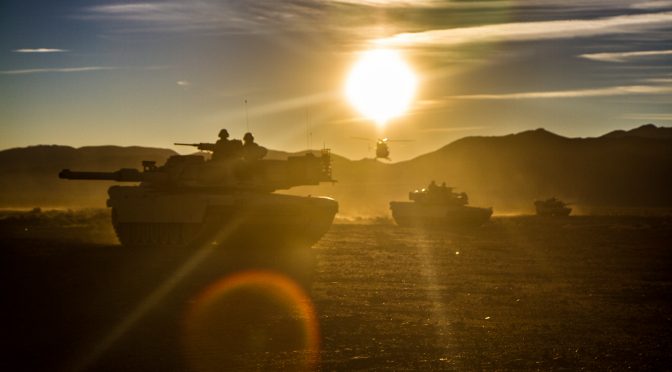
Featured Image: Troopers of the 11th Armored Cavalry Regiment perform coordinated training operations in support of highlighting the U.S. Army to the Fox Sports Network on 26 OCT, 2013 here at Fort Irwin, Calif. (Photo taken by Capt. Chad E. Cooper, 11th Armored Cavalry Regiment Public Affairs Officer)

Should the U.S. Arm Ukraine with Anti-Ship Missiles?

By Mykola Bielieskov

When it comes to U.S. military-technical assistance for Ukraine in the context of Russian aggression, sharing the Javelin anti-tank guided missile with the Ukrainian Ground Forces is what is typically mentioned. And at the beginning of March 2018 the U.S. State Department gave its approval for the provision of this kind of weaponry to Kyiv. There is nothing surprising in this, since the land forces of Ukraine bear the main burden of confronting and deterring further Russian aggression. However, today it is necessary to start talking about the needs of the other branches of the Armed Forces of Ukraine given the challenges facing them.

A Navy Adrift

The situation in the Ukrainian Navy is close to a catastrophic one. The Russian Federation’s occupation of the Crimea in 2014 especially negatively affected the fighting capabilities of the Ukrainian Navy as nearly 80 percent of the fleet was lost due to capture and defection. In fact, four corvettes (Lutsk, Khmelnitsky, Ternopil, Prydniprov’ia), two minesweepers (Chernigiv, Cherkasy), the large landing ship Konstantin Olshansky, and the submarine Zaporozhye were captured by Russian forces. In addition, Russian occupants captured and never returned up to 15 auxiliary vessels.

The urgent need for platforms in the Ukrainian Navy could be solved by Western country transfers to Kyiv of older ships, which are decommissioned or near retirement. Actually, from time-to-time this idea is voiced by certain American experts. The U.S. government, among other things, is ready to provide the Ukrainian Navy with two coastal guards ships of the Island class. They, in contrast to Ukrainian artillery boats of the Gyurza-M class, have better seaworthiness and greater autonomy. However, the simple transfer of platforms can only partly solve the problems the Ukrainian Navy faces today. Getting Western ships can solve the problem with minesweepers or auxiliary vessels. However, the main question remains unaddressed: how could the Ukrainian Navy counter attempts by the Russian Federation to use its domination of the Black Sea for further aggression?

As the result of Russian aggression Ukraine lost in Crimea ground-based anti-ship platforms, which were armed with Termit anti-ship cruise missiles. Similarly, after the Crimea occupation, the missile boat Pryluky was returned to Ukrainian authorities but lacked its two Termit anti-ship missiles.

Today the Ukrainian Navy is not able to properly counteract possible attempts by the Russian Black Sea Fleet to carry out an amphibious landing operation. In this contest it is necessary to recall that in 2014-2015 the Security Service of Ukraine exposed and broke down covert attempts to create the so-called secessionist Bessarabian People’s Republic. This fictional republic was going to be based on territories of a southern part of the Odessa oblast. In the event of the establishment of this illicit territory, the Russian Black Sea Fleet would have had the opportunity to freely land the necessary troops and to maintain sea lines of communication with a new pseudo-state bordering western Ukraine along with occupied Crimea. Ukraine in this case could not have prevented such contingencies, since the Navy does not have the necessary anti-ship capabilities to destroy combat and landing enemy vessels.

Although Ukraine is developing its own anti-ship cruise missile Neptune, the first public test of which took place in late January 2018, the system is still nascent. The relevant sea-based risks and threats for Ukraine still exist. In addition, the question is how many Neptune missiles Ukraine will be able to purchase annually for their Navy, given that the entire budget for modernization and procurement of equipment is only $600 million this fiscal year.

As a result, it is urgently necessary to start a dialogue on the possibility of transfer to Ukraine of American Harpoon anti-ship missiles with the necessary equipment for guidance and data exchange systems. The U.S. military budget for 2018 FY provides for the allocation of up to $200 million to enhance Ukraine’s defense capabilities, including the possibility of using these funds for purchase of coastal defense radars, minelayers, minesweepers, and littoral ships. This document captures a change in the paradigm of thinking and awareness in the Pentagon of Ukraine’s vulnerability to threats from the sea. However, as has been said above, only vessels or even radar systems will not be enough to remedy the shortfall.

The U.S. Navy is currently developing new generations of anti-ship missiles (LRASM, Tomahawk, and SM-6 anti-ship variants) that have much longer range than the current Harpoon anti-ship missile. However, in the context of a closed sea like the Black Sea, it will be enough for Ukrainian Navy to deploy the latest modification of the Harpoon missile – the Block II ER+. The radius of this modification is up to 134 nautical miles or 250 km. It is notable that the Ukrainian anti-ship missile “Neptune” will have a similar range. It is also indicative that Finland is considering the Harpoon Block II ER + as the main weapon for the future four frigates of the 2020 project, which will operate in the similarly constrained Baltic Sea.

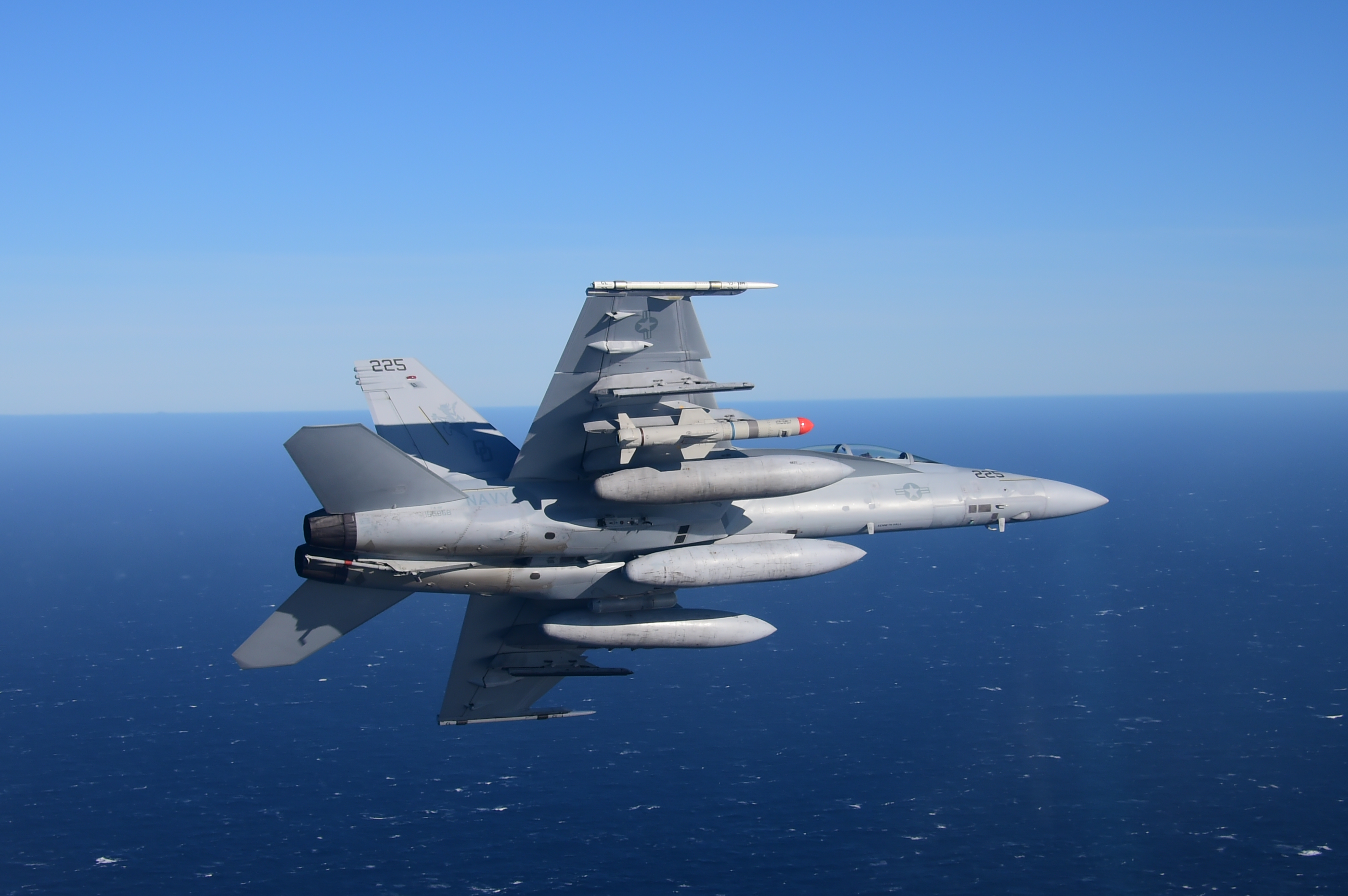
An F/A-18 carries the new Harpoon Block II+ missile during a free flight test Nov. 18 at Point Mugu’s Sea Range in California. The Navy plans to deliver the Block II+ variant to the fleet in 2017. (U.S. Navy photo)

The transfer to Ukraine of Harpoon Block II ER+ anti-ship cruise missiles and related equipment, together with their installation on future fleet and land-based anti-ship platforms, will not only eliminate significant gaps in the country’s defense capabilities. It will also help secure the safety of maritime trade, on which the economy of Ukraine depends critically. This decision will allow the United States to solve several important security issues in the Black Sea region at once. All this happens when the U.S. Navy has the smallest number of ships in almost a century (283 ships), and it faces the need for a permanent presence in numerous parts across the world’s oceans, including the Black Sea Basin. Strengthening the capabilities of the Ukrainian Navy will reduce the need for such presence. In addition, strengthening the anti-ship component of the Ukrainian armed forces will make its Navy a truly important component in any joint NATO Black Sea Fleet, an idea which has been discussed for several years. Today, the Ukrainian Navy cannot actually be an effective contributor to the joint efforts of the littoral states to contain the Russian Federation in the Black Sea basin. Ultimately, the presence of Harpoon Block II ER+ missiles together with the necessary radars and information exchange systems with other NATO countries will enable, in practice, to enhance the interoperability of the Ukrainian armed forces with NATO partners. In this way, it will contribute to the Euro-Atlantic integration of Ukraine and the fulfillment of the tasks of the Strategic Defense Bulletin.

Conclusion

Ukraine today, given the need of countering threats from the sea, is in a situation where the need for U.S. anti-ship missiles is much more important than obtaining Javelin ATGMs. The U.S. Defense Department’s budget for 2018 FY records the understanding that Washington should help Ukraine counteract not only land-based but also maritime threats that are actually much sharper, given the current state of the Ukrainian Navy. However, only the acquisition of appropriate anti-ship missiles such as the Harpoon Block II ER+ will enable the Ukrainian Navy to effectively counter the growing capabilities of the Russian Federation in the Black Sea. Such a bold decision will strengthen security in this part of the world, reduce the need for the United States to be constantly present, and make Ukraine a true contributor to Black Sea security.

Mykola Bielieskov is the Deputy Executive Director at the Institute of World Policy.

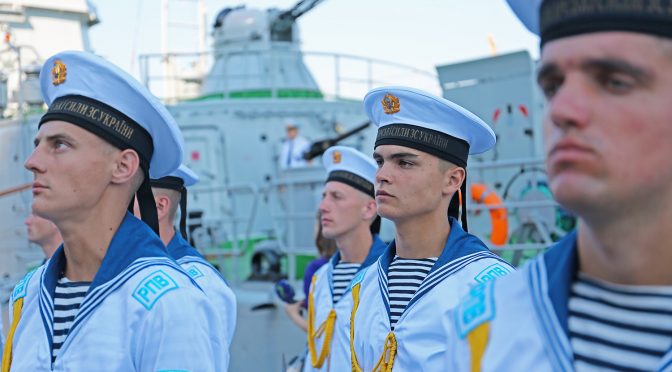
Featured Image: Day of the Ukranian Navy Ceremony, July 2016. (Ministry of Defence of Ukraine)

Insights from the National Training Center’s Opposing Force, Pt. 2

Read Part One of this series here.

By Colonel John D. Rosenberger

It Is How Commanders Become Masters of the Art and Science of Battle Command

The OPFOR regimental commander (alternately the 1st and 2nd Squadron commanders), the regimental staff, and motorized rifle battalion commanders set conditions for effective employment of the regimental combined-arms team. Their ability to do it is a function of their mastery of the art of battle command, as we now call it. Indeed, the regiment can fight no better than the regimental commander’s ability to see the terrain, see the enemy, see himself, and see the battle unfold in his mind. Granted, the ability to inspire and motivate soldiers, the ability to impose his will, tenacity, compassion, patience, and so forth are also important. But these are elements of effective leadership, not tactical competence.

Commanders and battle staff in the OPFOR quickly develop the ability to see the terrain and its effects on combat operations. By that, I mean the map talks to them. They see more than the Go and No Go terrain, key terrain, or decisive terrain. They see and envision the effects of terrain on the enemy’s ability and their own ability to move, generate momentum, disperse, mass, observe, deploy, shoot, or protect the force. They can envision, at a glance, where the enemy would be most vulnerable to the diverse capabilities of their force or where terrain provides them an opportunity to seize the initiative or control the tempo of the battle. Equally important, they can perceive where terrain would restrict or constrain the employment of their combined-arms team.

On a higher plane of thinking, they can see how to use the terrain to create conditions where the enemy would be vulnerable to the fires they can bring to bear. In other words, they can see, within their battlespace, where the enemy would be most vulnerable to destruction by close air support, delayed by artillery-delivered minefields, vulnerable to antitank fires, blocked, turned, disrupted or fixed by obstacles, disrupted by jamming, or where terrain would provide them a relative firepower advantage in the close fight. Armed with these skills, they can shape the battlefield to set conditions for success – the adept use of terrain to control the tempo of battle, create favorable force ratios, create vulnerabilities, optimize the effects of their own capabilities, control the enemy’s direction of movement, and protect the force.

Additionally, OPFOR commanders develop a masterful ability to see the enemy. They can envision with remarkable clarity how the enemy commander would employ his combined-arms team. They can envision the sequential and simultaneous actions and combat systems the enemy commander would use to shape his battlefield for success. They can perceive the critical tasks the enemy commander has to accomplish, how he will probably employ his combined-arms team to accomplish the tasks, or how the enemy commander will seize and retain the initiative. As the battle unfolds in their minds, they can immediately recognize the high-value and high-payoff targets and when those targets would be most vulnerable to attack by the capabilities of the OPFOR combined-arms team. They can easily visualize the rate of enemy movement, the organization and depth of his formations, and the location of high-payoff targets. Even more important, they can see which combat functions or capabilities have to be attacked to disrupt the synchronization of the enemy’s combined-arms team – the first step to victory under combat conditions.

Commanders can also see themselves. By that, I mean they are expert in the capabilities and limitations of every system in their combined-arms team. They have mastered the science of warfighting. Moreover, they know how and when these capabilities can be used most effectively against the enemy. For example, they know the type and volume of artillery munitions required to achieve the effects they want, the range of various artillery munitions, and every gun’s sustained rate of fire. Consequently, they know how many batteries are required, where they should be placed relative to the target, and the time required to shoot the munitions necessary to produce the desired effects. They also know the time required to shift a battalion of artillery from one target to the next, the actual occupation times of their artillery battalions, and an artillery battalion’s rate of movement relative to the terrain. Consequently, they can create effective sequential and simultaneous engagements throughout the depths of the battlefield and decide when to move to protect the force and when to move to sustain fire support through the depth of the operation.

The OPFOR commanders also know the capabilities and limitations of their collection and jamming teams, comprised of soldiers with an unparalleled ability to protect the force and change the outcome of battle. Consequently, they know how and where to establish a baseline to obtain accurate direction-finding, radio intercept, and effective jamming. More important, they master the ability to focus and use these capabilities to answer their priority intelligence requirements and to jam the enemy when he is most vulnerable to its effects.

Commanders are also expert in the employment of obstacles. They have a keen sense of what their engineers can realistically accomplish. For example, they know how long it takes their engineer company, given their manning and level of training, to install an effective blocking or turning obstacle, the quantity of material required, the man-hours required, the transportation involved, the number of fighting positions they can realistically dig in the time available, and so on. Armed with this mastery of the science of warfighting, they can easily envision how to effectively employ these engineer capabilities to shape the battlefield, protect the force, and establish conditions for success in the deep and close fights.

At the same time, commanders develop and possess the ability to see themselves from the enemy commander’s perspective. They can almost read their opponent’s mind. They have the cognitive ability to recognize where they are strong and where they are weak from the enemy commander’s point of view. Moreover, they are adept at perceiving their own vulnerabilities and recognize their exposure. Coupled with real-time human intelligence (HUMINT), this ability lifts the curtain of uncertainty off the battlefield, exposes the enemy’s most likely course of action, and illuminates weakness and vulnerabilities in their opponent’s fighting posture. Finally, OPFOR commanders learn to think in terms of force protection. By that, I mean they learn to fight the battle in their minds and immediately discern the active and passive measures necessary to protect the force. They do not think simply in terms of safety, radio listening silence, raising the air defense warning status, repositioning of reserves, and so forth. They take passive and active measures to protect their forces from observation by air and ground reconnaissance systems, electronic location, thermal detection systems, the effects of enemy indirect and direct fire systems, special munitions, fratricide, and the effects of weather, disease, and injury.

When you are up against combined-arms commanders like these, it doesn’t get any tougher. The point is that it takes these kinds of commanders and staffs to bring a unit to its full combat potential. They are simply indispensable. The problem is that conditions required to develop combined-arms commanders and staffs of this caliber do not exist within the remainder of our Army. These kinds of commanders and staffs are developed through constant study and application of the art and science of warfighting, terrain walks, situational training exercises, repetitive opportunities to fight and learn from their mistakes in the field, not in simulations, and most important of all, repetitive combat-like experiences which develop battlefield intuition – an immediate feel for the battlefield situation and what must be done to win. Unfortunately, these conditions don’t exist for soldiers and leaders anywhere else in the Army today. This is an insightful lesson the OPFOR provides as we ponder how to maintain landpower dominance in the Army of the 21st century. But again, this is only a partial answer to the questions. Here’s another reason.

It Is How the OPFOR Plans Combat Operations

The truth be known, the OPFOR wins its battles before it fights them. Very few battles ever unfold in a way substantially different from what the OPFOR team envisioned or planned to accomplish. Moreover, the incomparable ability of the OPFOR to get every dog in the fight at the right time at the right place is legendary. The reason? The OPFOR has learned how to set conditions for synchronization of the combined-arms team in the planning process, and learned how to preserve it during execution of battle as the situation evolves. The conditions for victory are set by their planning process. It’s safe to say that no leader in the OPFOR would agree with the old adage that plans change at the first contact with the enemy, or that planning is a rather useless endeavor and performance in execution is really what matters.

The regimental orders process is a disciplined battle drill, characterized by strict time management. It follows the same military decision-making process outlined in FM 101-5 Staff Organization and Operations. Complete METT-T (mission/enemy/terrain/troops/time available) analysis is the foundation, and no shortcuts are taken. The regimental staff, working as a team, prepares detailed enemy situational templates which graphically depict the enemy’s most likely course of action, array, and presentation of forces on the battlefield, and probable locations of high-payoff targets, such as fire direction radars, artillery units, command posts, aircraft rearming and refueling points, or reserves. Once this analysis is presented, the regimental commander conducts his own commander’s estimate of the situation, visualizes the battle unfolding in his mind, sees it unfold on the terrain, then develops several courses of action for employment of his combined-arms team that will ensure defeat of his opponent.

From this analysis and visualization, the commander develops his commander’s intent, and he spends a lot of time ensuring he gets this right. He issues his intent by first stating the task and purpose the regiment must achieve. Next, he describes in clear doctrinal language the few critical tasks which must be accomplished sequentially, some simultaneously, in order to win. He wraps this up by describing the end state he wants the force to achieve – what success looks like when the fight is over.

Next, he issues planning guidance to his staff – guidance which clearly describes how he wants the combined-arms team employed, his critical information requirements by phase, how he wants to shape the battlefield for success, the means he wants to use to control the tempo of battle, and the effects he expects at critical times and locations in the fight. After just a couple of months in the saddle, a regimental commander can do this in minutes. It becomes intuitive. As a minimum, he will direct his staff to deliberately wargame three courses of action, sometimes four.

With these things in hand, the chief of staff assembles the staff and conducts a detailed, deliberate wargame of each course of action – the most important step in the planning process. Why? The deliberate wargaming process sets conditions for employment and synchronization of the combined-arms team to produce the effects and outcome the commander expects. Moreover, the wargaming process produces the few critical products necessary to employ and control the force: the operations order, with specific task and purpose assigned to each unit; the reconnaissance and surveillance plan; a synchronization matrix for each course of action (the score for the orchestra); movement and positioning plans for the artillery groups; and operational graphics. Interestingly, the targeting process is embedded in the wargame, so as another outcome, the staff produces the plan for simultaneous and sequential attack of enemy high-payoff targets through the depths of the battlefield.

A distinguishing feature of this planning process is the control imposed by the plan, and the synchronization which stems from it. At the regimental level, the plan tells every member of the combined-arms team what to do, when to do it, and where do it – but never how. As the OPFOR has learned, synchronization cannot be achieved any other way. Synergy of the combined-arms team cannot be created in other way.

The process used by the OPFOR is much like writing a score for an orchestra. In an orchestra, if the trumpets, the flutes, and the violins play whatever notes they want, when they want, you get nothing but noise. The musical score (synchronization matrix) specifies which instruments will play what notes, when in relation to other instruments, and where in the sequence of time. If done properly, you get Beethoven’s 5th Symphony. The same goes for military operations. Consider motorized rifle battalions, artillery groups, close air support, and jamming systems as instruments of war. Firm control is required at regimental level to ensure all capabilities are employed at the right time and place for maximum effect. On the other hand, down at the maneuver company level, much less control is imposed and initiative is prized, once the unit makes direct fire contact. In short, this planning and synchronization process is how the OPFOR achieves its full combat potential during the execution of battle. But there are other significant factors that differ from most units they oppose.

Take the operations order: Only one written operations order is published for the regimental combined-arms team which addresses multiple courses of action. Tasks to subordinate units are always expressed in the form of task and purpose. Only one set of graphics is produced and every leader in the regiment, from top to bottom, uses this one set of graphics. Subordinate units do not develop their own, unique graphics. In other words, every member of the combined-arms team is looking at the same sheet of music. Subordinate commanders issue oral operations orders, based on a clear understanding of what they have to do, when they have to do it, and where they have to do it.

The graphics are a wonder of simplicity. Only a few graphic control measures are used: report lines, lines of maneuver, artillery/rocket fire boxes and targets, smoke lines, firing lines, and air battle positions. That’s it. Fire boxes, or firing lines, are used as battlefield reference points to adjust direction of maneuver, identify current locations, or shoot artillery. This technique of controlling forces is the source of the impressive flexibility the regiment is able to achieve in every battle. It’s the principal reason the regiment is able to quickly change direction and shift the main effort, sustain common situational awareness throughout its battlespace, and preclude fratricide. In sum, the regiment’s planning process lies at the heart of its ability to achieve its full combat potential. Nonetheless, it is only a partial answer to the questions at hand. There is another good reason.

Read Part Three here.

Colonel Rosenberger is currently serving as Commander, 11th Armored Cavalry Regiment, Fort Irwin, CA.

The above was originally published by the Association of the U.S. Army’s Institute for Land Warfare Studies as a part of its Landpower Essay Series. Read it in its original form here.

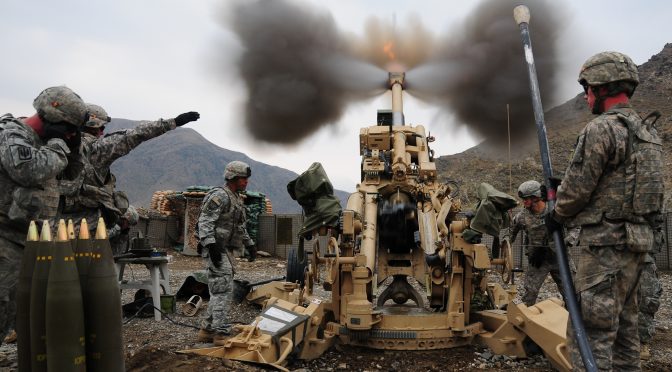
Featured Image: Soldiers use the M777 howitzer to fire high explosive munitions in support of Operation Enduring Freedom in 2008. (Photo Credit: Courtesy photo)