Category Archives: Capability Analysis

Analyzing Specific Naval and Maritime Platforms

Insights from the National Training Center’s Opposing Force, Pt. 1

By Colonel John D. Rosenberger

Few in our Army would dispute the assertion that the 11th Armored Cavalry Regiment, the Opposing Force (OPFOR) at the National Training Center (NTC) is, very good at what they do. The commanders and soldiers in the OPFOR are seldom defeated in battle. For years, this unit has been the anvil upon which we have hammered and forged the combat power of our Army. Have you ever wondered how they do it?

How does OPFOR develop and sustain its ability to fight and defeat its opponents in almost every battle at the National Training Center? How does the regiment, fighting with 1960s-1970s technology, routinely defeat brigade task forces equipped with the most modem weapon systems and technology our Army can provide? How can the regiment do it given the same soldiers, the same personnel turbulence (about 40 percent turnover each year), the same leader development challenges, and the oldest fighting equipment in the active Army?

It’s my premise in this essay that these are not trivial questions, simply answered by the fact that the regiment has the opportunity to train and fight more frequently, or that the OPFOR knows the terrain. Just the opposite: I believe the answers to these questions are critically important to a force projection Army that is growing ever smaller, and they are absolutely key to achieving the full combat potential of Force XXI and the Army.

Realization of Combat Potential

Bottom line up front: It’s my conclusion, after fighting against it, observing it for 12 years and now commanding the OPFOR, that the fundamental reason this remarkable military organization is able to dominate its opponents is because the OPFOR has achieved the combat potential residing in its doctrine, organization, training methods, leaders, soldiers, and the capabilities of its equipment. The brigade task forces they oppose have not. Moreover, they cannot achieve their full combat potential, given existing conditions within our Army today. Understanding this premise, and the disparity, must begin with a discussion of how the OPFOR is organized.

It Is How the OPFOR Is Organized

Fundamentally, the warfighting ability of the OPFOR stems from how it is organized. It is organized as a combined-arms team. It lives together as a combined-arms team, it trains as a combined-arms team, and it fights as a combined-arms team all the time. It is not a collection of units, thrown together on an ad hoc basis from various divisions and installations, who have never trained together, or a collection of units within a division which task organize and train infrequently as a brigade combat team.

On the battlefield, habitual fighting, training and support relationships matter. They matter a lot in combat, and historically, the most combat effective organizations our Army has ever put on a battlefield share this organizational characteristic. Our military history is replete with examples. This comes as no surprise to those who know and understand what it takes to win in combat – teamwork, mutual trust and absolute confidence in every member of the team. To achieve these essential feelings, combat, combat support and combat service support units have to train and fight together as one team for long periods of time.

Habitual team relationships foster incomparable teamwork, a prerequisite to success on any modern battlefield, where multiple units, with multiple capabilities, must be artfully integrated and employed simultaneously. A football analogy works well to describe this critical dynamic.

In the great professional football teams, because they live together, train together and play together, every member of the team understands every other role and responsibility and every member knows the others’ capabilities and limitations. In every play (battle), every player has a specific task and purpose to achieve; he knows when and where his task must be achieved in order to set conditions for success. Equally important, he also understands what every other member of the team will do, when he will do it, and where he will do it. This common understanding develops an incredible sense of unity and purpose, and the most powerful effect of all, a common visualization of the play (battle) and how it will unfold. Each player sees how he fits in the big picture, thereby giving him a sense of purpose. Having a sense of purpose, and knowing your team is counting on you to do your job, produces a powerful motivation to succeed. Moreover, the plays executed by a professional team are a display of artful synchronization, achieved through constant, repetitive practice as a team – something completely unachievable by any other means. This same kind of teamwork is at the heart of the OPFOR’s performance, and historically, the performance of our best combat units.

Habitual team organizations also foster mutual trust and confidence throughout the force. Nobody in combat is comfortable fighting with strangers, fighting with an ad hoc collection of units whose leadership and capabilities are not proven and known. Mutual trust and confidence are absolutely critical in combat. When a team lives together, trains together and fights together all the time, leaders and units get to know one another very well. They learn who they can count on, who can do the job. They learn who can pull their weight. They immediately recognize the others’ voices on the radio: they are talking to friends and comrades. They learn to trust one another, and from this trust comes an unshakable confidence. Though confidence is intangible, that’s what wins in combat, and that’s what brigade task forces are up against in the OPFOR at the NTC. It is a tremendous advantage.

In contrast, the brigade task forces the OPFOR opposes each month are not, by Table of Organization and Equipment (TO&E), organized as combined-arms teams. Instead, they are a temporary or ad hoc collection of units from different divisions or installations, thrown together for training, who have not had the opportunity to train together or to train as one team at the frequency necessary to develop their full combat potential. They are strangers, trying to do their best but handicapped by a variety of conditions that do not foster or develop the kind of teamwork the OPFOR brings to the battlefield. Consequently, it’s like a neighborhood pick-up team stepping on the field with the Denver Broncos.

In sum, the OPFOR provides us an important warfighting insight. Habitual combined-arms organizations (combined-arms teams that live together and train together permanently vs. temporarily) are fundamental to achieving the full combat potential of a force. But this is only a partial answer to the question.

It Is How the OPFOR Trains

The training program and methods employed by the OPFOR to sustain proficiency in mission essential tasks are the catalysts for its success – the way you take potential and turn it into capability. Notably, these methods differ from the training methods employed by the brigade task forces they oppose.

The regiment trains and adheres to proven doctrine, tactics, techniques, and procedures honed through years of trial and experience. Only three bedrock training manuals are used: U.S. Army Training and Doctrine Command (TRADOC) Pamphlet 350-16 on OPFOR Doctrine, the Regimental Tactical Standing Operating Procedures, and the Motorized Rifle Company Handbook. These three manuals serve as the blueprint for success. They establish clear performance standards and expectations. They foster simplicity in training, a common understanding of how we fight as a team and, consequently, an incomparable unity of effort during performance of combat missions. Every trooper learns how to fight from the pages of these three manuals.

There is nothing fancy about how the OPFOR trains. Bottom line: The OPFOR stays focused on the fundamentals of warfighting at the tactical level of war. The entire training program is designed to sustain mastery of a few fundamental tasks and battle drills at each level of command – individual to regiment. For example, the first thing an OPFOR soldier or leader is taught is how to use terrain and all its features to accomplish the mission. Terrain walks are the bread and butter of the training program-low cost, but the most influential training tool in the kit bag. Learn how to see the terrain and how to use it, and you can’t be whipped.

Motorized rifle, antitank, engineer, military intelligence, air defense and tank companies constantly practice only a handful of battle drills – those actions on the battlefield which assure dominance in the close, direct fire fight. Tank and mechanized infantry platoons continually practice set-move techniques, providing overwatch for one another as they bound from one intervisibility line to the next. Regimental battle staffs constantly practice a set of planning and wargaming drills which set near-perfect conditions for synchronization of the combined-arms teams. Blocking and tackling – the fundamentals – that’s what the regiment trains to do. By staying focused on the fundamentals, units are able to achieve the full capabilities and effectiveness of their combat systems on the battlefield.

As to training methods, the OPFOR adheres religiously to the training doctrine and methods espoused in Anny Field Manual (FM) 25-10 I, Training the Force – the entire process. Individuals and units are trained and measured against established performance standards at every level. After-action reviews are always conducted, and if an individual or unit fails to meet the standards, they retrain and execute the task until standards are met, plain and simple. Time is always allocated for retraining. The regiment trains until standards are met all the time. It’s an ingrained habit. Moreover, and this is a critical point, the regiment trains to perform individual and mission-essential tasks at the frequency necessary to sustain performance standards. Nothing is more important to developing full combat potential in the kind of Army we have, than training soldiers, leaders and units at the frequency necessary to sustain performance standards. Why is that?

Simple: Every unit in our Army faces two enemies every day, enemies which sap the combat potential of the force. First, as a result of how we man the Army, every year we turn over about 40 percent of the unit at every level. For the 11th Armored Cavalry Regiment, that’s about 1,000 new noncommissioned officers (NCOs) and soldiers we have to train and prepare to fight as members of the team. We’re continuously in the business of training new soldiers and leaders. Second, warfighting is an extremely complex business these days, with complex tasks to learn and master. And because we’re human, we forget how to do things as time goes by. The more complex the task, the sooner we forget how to do it. It follows, then, that the more complex the task, the more frequently you need to train. For these two reasons we’re constantly training new soldiers and we forget how to do things – the frequency of training individual, leader and unit tasks is absolutely critical to developing and sustaining full combat potential. In other words, get the frequency right, and you can sustain high levels of performance. Within our Army today, for a host of reasons – lack of money to train at the right frequency, lack of time, shortages of leaders and soldiers, installation support, and peacekeeping missions – brigade task forces, unlike the OPFOR, do not have the opportunity to train under tough, realistic field conditions at the frequency required to develop, much less sustain, their full combat potential at every level within the organization. It shows on the battlefields at NTC.

Perhaps the most influential and discriminating difference between the OPFOR and the brigade task forces they fight is the leader certification program. Unlike the units they face, the OPFOR confirms that every soldier and every leader possesses the knowledge, skill and ability to perform his/her duties before they are permitted to fight with the regiment. Every soldier and leader is compelled to undergo a rigorous series of written exams, oral exams, terrain walks, apprenticeships and hands-on demonstrations of their knowledge, skill and ability before they are allowed to fight or lead. That’s right – every soldier and leader, from section to regimental level, is tested and must prove they can execute their individual and leader tasks.

Platoon sergeants, platoon leaders, and company commanders must demonstrate their ability to execute their platoon and company march formations and battle drills, and to orchestrate fire support. The regimental chief of reconnaissance must demonstrate an absolute mastery of intelligence preparation of the battlefield. The regimental chief of staff must demonstrate his ability to conduct deliberate wargaming and set conditions for synchronization of the combined-arms teams. The regimental commander must demonstrate his ability to see the terrain and how to use it, see the enemy, see himself, and visualize how to shape his battlefield and effectively employ every capability of the combined-arms team to defeat his opponent. Only when the commander is assured of a leader’s tactical and technical competence, through testing and examination, is the subordinate leader permitted to serve in his position. This is a process foreign to the remainder of our Army, and in my opinion, at the root of the performance differential we continue to observe here at the NTC. It is a glaring disparity.

The point of all this? These training methods, and the opportunity to train repetitively, are the way the OPFOR is able to achieve and sustain its full combat potential. Unfortunately, the conditions necessary to implement this proved training strategy and methodology, the training resources, and opportunity for the remainder of our Army do not exist. Units at home station do not have the money, time, and other resources necessary to train at the frequency required to develop and sustain proficiency in mission-essential tasks, platoon to brigade level. As an Army we do not train and confirm that battalion and brigade staff officers are competent to perform those duties before they assume their duties. For that matter, combined-arms battalion and brigade commanders are not required to prove and demonstrate a mastery of battle command skills and tactical competence before being placed in command. It is not, and has not been, a prerequisite for command selection. It shows at the NTC, year after year.

To sum up, the OPFOR provides us another important warfighting insight: How you train soldiers, leaders and units, and the frequency of training, are key to achieving the full combat potential of a force. But again, this is only a partial answer to the questions. There is another important reason.

Read Part Two here.

Colonel Rosenberger is currently serving as Commander, 11th Armored Cavalry Regiment, Fort Irwin, CA.

The above was originally published by the Association of the U.S. Army’s Institute for Land Warfare Studies as a part of its Landpower Essay Series. Read it in its original form here.

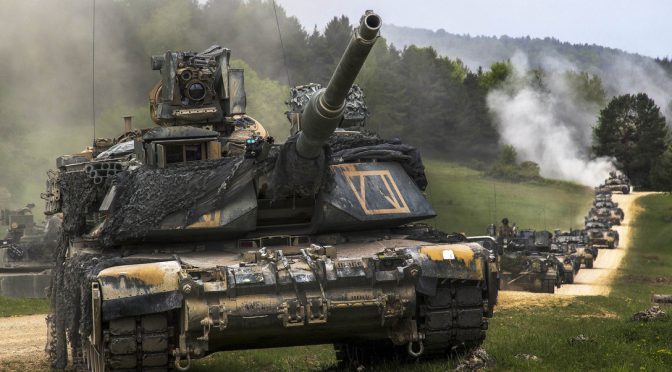
Featured Image: A U.S. Army armored element from Company A, 1st Battalion, 63rd Armor Regiment “Dragons”, 2nd Armored Brigade Combat Team, 1st Infantry Division, Fort Riley, Kansas, performs a strategic convoy maneuver during Combined Resolve X at the Hohenfels Training Area, Germany, May 2, 2018. (U.S. Army photo by Spc. Andrew McNeil / 22nd Mobile Public Affairs Detachment)
Call for Articles: Bringing Back Sea Control

By Dmitry Filipoff

Articles Due: September 3, 2018
Week Dates: September 10-14, 2018

Article Length: 1000-3000 words 
Submit to: Nextwar@cimsec.org

Great power competition is back, and with it new demands for capability and deterrence. After years of focusing on power projection and low-end missions, many first rate navies have allowed high-end skillsets to erode. As security priorities shift, navies too must change. 

One vital mission for winning and deterring great power conflict is sea control, the ability to secure command of the seas. Today sea control has morphed into something of enormous complexity. It can be a convoluted contest, with platforms and payloads projecting influence across multiple domains. Navies are ever more reliant on electronic effects for warfighting functions, turning cyberspace and electronic warfare into pivotal battlegrounds for sea control. Sea control is the sum of many elements of oceanic warfare, requiring diverse skills and tactics.

In spite of technological change, sea control will remain an important mission so long as the oceans remain crucial to human progress. It is the vital prerequisite for projecting power and securing access via the maritime domain. It can enable blockades and commerce raiding, allowing a navy to exert tremendous pressure on a nation’s vitality. Sea control is a mission as timeless as naval power itself, and one deserving of thorough preparation.

How can the navies of today revitalize their sea control capabilities? How can they become proficient in high-end missions and tactics? What will achieving sea control require, and how best to use it once attained? Authors are encouraged to consider these questions and more as navies around the world reconsider their development in the context of renewed great power competition. 

Dmitry Filipoff is CIMSEC’s Director of Online Content. Contact him at Nextwar@cimsec.org

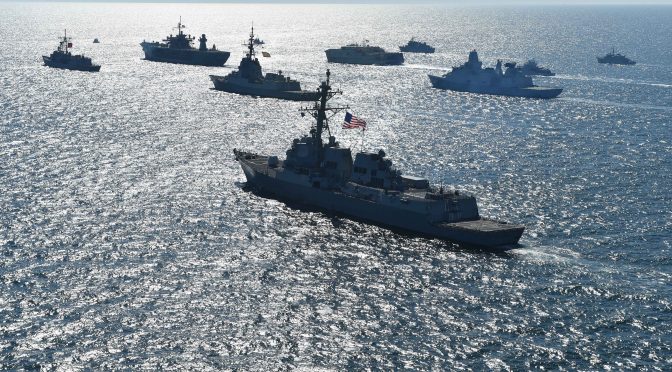
Featured Image: BALTIC SEA (June 9, 2018) Thirty maritime unit ships from 12 nations maneuver in close formation for a photo exercise during Exercise Baltic Operations (BALTOPS) 2018 in the Baltic Sea. (U.S. Navy photo by Mass Communication Specialist 1st Class Justin Stumberg/Released)

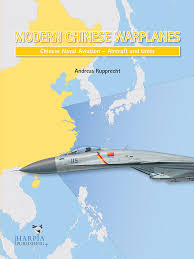
Modern Chinese Warplanes: Chinese Naval Aviation – Aircraft and Units

Rupprecht, Andreas. Modern Chinese Warplanes: Chinese Naval Aviation – Aircraft and Units Houston: Harpia Publishing, 2018. 80pp. $29.95

By Lieutenant Commander David Barr, USN

In the introduction of his latest installment regarding modern Chinese combat aircraft, Andreas Rupprecht correctly assesses the rapid and expansive scope of Chinese air power modernization: “The amount of ‘recent changes’ especially in doctrine, training, and force structure are so numerous that they would easily surpass the available space within one volume, it was decided to separate the naval air component from the regular Air Force and Army Aviation.”1 His thoughtful and deliberate efforts paid off.  In Modern Chinese Warplanes: Chinese Naval Aviation – Aircraft and Units, Rupprecht wisely focuses his efforts solely on Chinese naval aviation, and in the effort, masterfully delivers its stated purpose to “provide an extensively illustrated compact yet comprehensive directory, with in-depth analysis of the organization and equipment of modern Chinese naval air power.”2

In Chapter 1, Rupprecht succinctly explains the origins and history of Chinese naval aviation or what is modernly referred to as the People’s Liberation Army Naval Air Force (PLANAF). By reading pages 11-14, one will gain an educational understanding of how the PLA historically placed the PLANAF at a lower priority than that of the more prominent and mightier PLA Air Force (PLAAF). And how, like many a younger sibling throughout history, the PLANAF had to make due from hand-me-downs from its bigger brother. Rupprecht dedicates the remainder of the chapter to his assessment of the PLANAF’s future which he briefly describes as “relatively bright” and further predicts that the PLANAF “will probably be the largest beneficiaries of the recent reform and modernization.”3

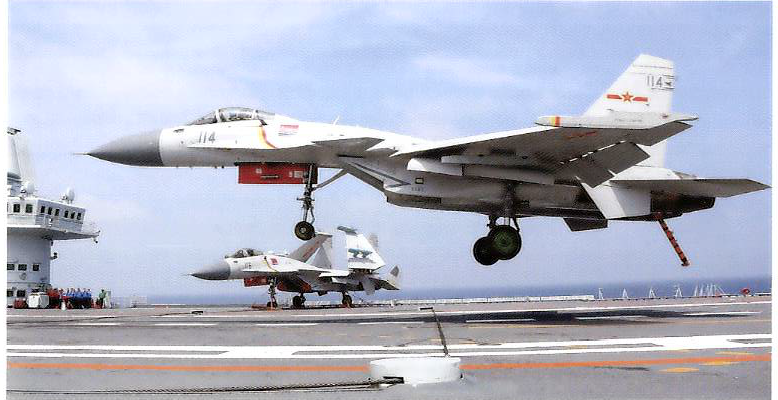
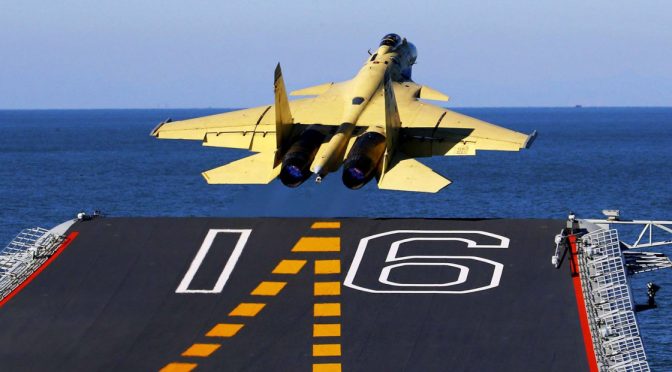
J-15 landing on Chinese carrier CV-16. (Photo from Modern Chinese Warplanes: Chinese Naval Aviation – Aircraft and Units)

The “recent reform and modernization” to which Rupprecht refers is part of an ongoing and widespread PLA force modernization program which focuses on giving the PLA capabilities to conduct what Chinese military strategists call informatized, integrated joint operations. China’s 2015 defense white paper, released by the State Council Information Office of the People’s Republic of China, directs the PLA to “win informatized local wars” with emphasis on struggle in the maritime domain. Additionally, the white paper addresses the need for further development of PLA Navy (PLAN) capabilities in the face of an expanding mission set, stating the PLAN will shift its focus from “offshore waters defense” to the combination of “offshore waters defense” with “open seas protection.”4 This grander vision for the PLAN aligns with China’s perceived need to protect what it considers its “core interests” – safeguarding its national territorial sovereignty and maritime rights and interests in order to ensure Chinese economic and social development. Toward this end, as Rupprecht’s explains through Andrew Erickson in Chapter 6: “The PLAN is more likely to develop a limited power projection that enhances China’s ability to defend its regional interests; to protect expanding overseas interests; to perform non-traditional security missions.”5 It would seem logical therefore to assess that the PLANAF represents a growth industry for the PLAN over the coming decades.

In Chapters 2 through 5 of Modern Chinese Warplanes: Chinese Naval Aviation – Aircraft and Units Rupprecht offers a solid description of how the PLA is slowly and methodically improving the power projection capabilities and training of its naval aviation combat arm. Chapter 2 briefly provides a helpful explanation of aircraft markings and the serial number system utilized by the PLANAF for its various platforms. Chapter 3 supplies ample information regarding new aircraft variants, improved avionics and sensors, and refueling capabilities of the latest PLANAF fighters, fighter-bombers, bombers, transport, special mission aircraft, helicopters, and unmanned aerial vehicles (UAV). Chapter 4 couples the aircraft with ordnance, offering insight into the latest PLANAF air-to-air missiles (AAM), air-to-surface missiles (ASM), guided bombs, electronic warfare (EW) and targeting pods, as well as torpedoes. And, as has become his calling card and his books’ pièce de résistance, Rupprecht once again supports his text with numerous colorful and vivid photographs of the platforms described.

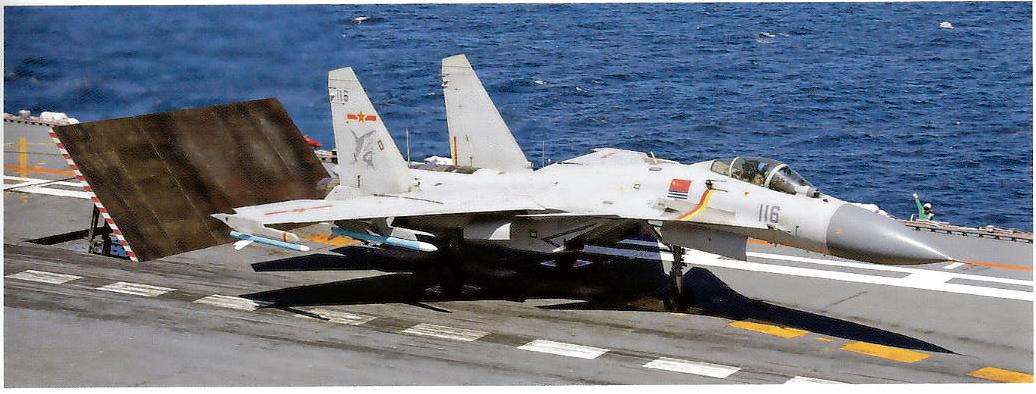
J-15 preparing to take off from CV-16 (Photo from Modern Chinese Warplanes: Chinese Naval Aviation – Aircraft and Units)

At the beginning of Chapter 5, Rupprecht alludes to the notion of “the greatest technology is only as good as the person (or pilot) using it” by stating “the latest developments in tactics and training are probably even more important for the future outcome of any potential operational use” and explains that both the PLAAF and PLANAF have developed less-scripted and more realistic and integrated training for each arm’s respective pilots over the past decade.6 The rest of Chapter 5 outlines the evolution of PLANAF pilot qualifications, training regimens, and platform transition timelines – a critical, yet not widely understood facet of the PLANAF’s modernization effort.

Rupprecht saves the most intriguing issues and subsequently his best writing for Chapters 6 and 7.  Chapter 6, at only four pages long, provides a concise yet wonderful synopsis of the current and future developments within China’s aircraft carrier program.  Most of the chapter’s pages focus solely on the current status and future projections of China’s current aircraft carriers (CV-16, Type 002, and Type 003) and not the associated air wing which currently uses the J-15 multi-role fighter as its centerpiece (best described in Chapter 3). It remains to be seen if the PLAN defines “air wing” like the United States Navy. If so, then a PLAN air wing will theoretically be composed of various airborne platforms that conduct a variety of missions including airborne early warning (such as the KJ-600 featured on page 29), electronic warfare, in-flight refueling, and other specialized aircraft.

The most absorbing content of Chapter 6 (and possibly the book itself) can be found on pages 52-53 in a section entitled “Future Fleet Size and Operational Options.”  Here, Rupprecht’s words echo the sentiments of the late United States naval officer and strategist, Alfred Thayer Mahan, who consistently argued in the late 19th Century that the United States had a maritime destiny and it could only achieve its national greatness through control of the seas. Addressing similar strategic maritime ambitions of the PLA and the role that a viable aircraft carrier fleet could provide toward achieving those ambitions, Rupprecht states, “A carrier fleet is therefore a consequence of China’s rising ambitions both in terms of the role the country wants to play on the international stage, its role as a premier export nation and, more importantly, its role as a regional power. In order to be able to project these ambitions at any time, a spatially and temporally limited ‘Sea Control’ will be required and a carrier fleet will be a significant tool in building its power projection capabilities.”7

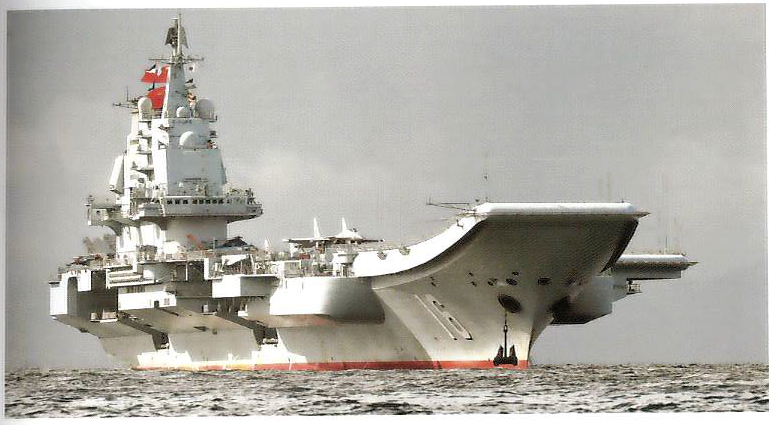
Chinese carrier Liaoning (CV-16) (Photo from Modern Chinese Warplanes: Chinese Naval Aviation – Aircraft and Units)

Chapter 7, entitled “Naval Aviation Order of Battle (March 2018)”, provides much more than a tabular depiction of the PLANAF’s order of battle (OOB), as the title suggests. Just as he did in his 2012 Modern Chinese Warplanes: Combat Aircraft and Units of the Chinese Air Force and Naval Aviation, Rupprecht effectively describes and illustrates, via well-structured text and vibrant pictures and charts, both the operational missions and geographical responsibilities of the three Theater Commands that have a corresponding Fleet Naval Aviation Headquarters (Eastern, Southern, and Northern) thus capturing the growing operational impact of the PLANAF. 

Most intriguingly however, on pages 58-60, Rupprecht provides a brief yet highly insightful assessment of the PLANAF’s seemingly inevitable evolution toward developing into a true “blue water” force.  It is here, in this author’s opinion, in combination with pages 52-53 of Chapter 6 previously mentioned, that Rupprecht captures the very essence of the book for these are the pages that present the strategic and operational impetus of why the PLA is continuing down its path of remarkable military modernization – an effort that may leave it as one of the world’s most dominant military forces. This larger strategic context is far too important to get lost in the pages of latter chapters. It may have been better for this level of analysis to be presented and expanded upon in Chapter 1 if not the introduction.

I applaud and endorse Rupprecht’s decision to narrow the scope of Modern Chinese Warplanes: Chinese Naval Aviation – Aircraft and Units in order to focus solely on the naval aviation component of the PLA.  During a time of a growing perception of a major great power competition between the United States and China, his work is both highly relevant and exceptionally timely.  For any military enthusiast or analyst looking to expand his or her understanding of Chinese naval aviation and how it fits into the PLA’s larger regional and global ambitions, this book provides ample substance and striking illustrations. I equally anticipate reading Rupprecht’s other 2018 work entitled Carrier Aviation in the 21st Century: Aircraft Carriers and Their Units in Detail (as mentioned on page 51) and hope he continues to produce these “extensively illustrated compact yet comprehensive” works of art.8

LCDR David Barr is a career intelligence officer and currently serves as instructor with the National Intelligence University’s College of Strategic Intelligence. All statements of facts, analysis, or opinion are the author’s and do not reflect the official policy or position of the National Intelligence University, the Department of Defense or any of its components, or the U.S. government.

References

1. Rupprecht, Andreas. Modern Chinese Warplanes: Chinese Naval Aviation – Aircraft and Units. Houston: Harpia Publishing, 2018. p. 7.

2. Ibid. p. 7.

3. Ibid. p. 14.

4. “China’s Military Strategy,” State Council Information Office of the People’s Republic of China, May 2015. 

5. Rupprecht, Andreas. Modern Chinese Warplanes: Chinese Naval Aviation – Aircraft and Units. Houston: Harpia Publishing, 2018. p. 53.

6. Ibid. p. 45.

7. Ibid. P. 53.

8. Ibid. p. 7.

Featured Image: Chinese Shenyang J-15 Flying Shark (via USNI News)

A New Gap in the High North and Forward Defense Against Russian Naval Power

By Steve Wills, CNA Analyst

The stand-up of a new NATO Maritime headquarters in Norfolk, Virginia, the re-establishment of the U.S. Navy’s East Coast-based Second Fleet and the prospect for a new NATO Maritime Strategy this year have again fueled interest in naval warfare in the wider Atlantic Ocean. One of the most commonly mentioned landmarks in this emerging environment is the iconic Greenland, Iceland, United Kingdom (GIUK) gap. The scene of the German battleship Bismarck’s passage to the Atlantic and the transit highway of early Russian ballistic missile submarines to their patrol stations near the United States and Europe, the GIUK Gap is synonymous with naval warfare in the Atlantic. Unfortunately, current references to the GIUK gap harken back to a different time and strategic situation that is markedly different from the situation today.

Despite early assessments that the Soviet Union was going to target the sea lines of communication (SLOC) crossing the Atlantic, the Soviets never intended to make interdiction of Atlantic convoys a priority mission. Defense of their ballistic missile submarines, countering Allied aircraft carrier battle groups, and littoral defense and support to the Soviet Army were always their main priorities. Today’s much smaller Russian Navy has similar missions and strategic geography, but now boasts long range cruise missile armament.

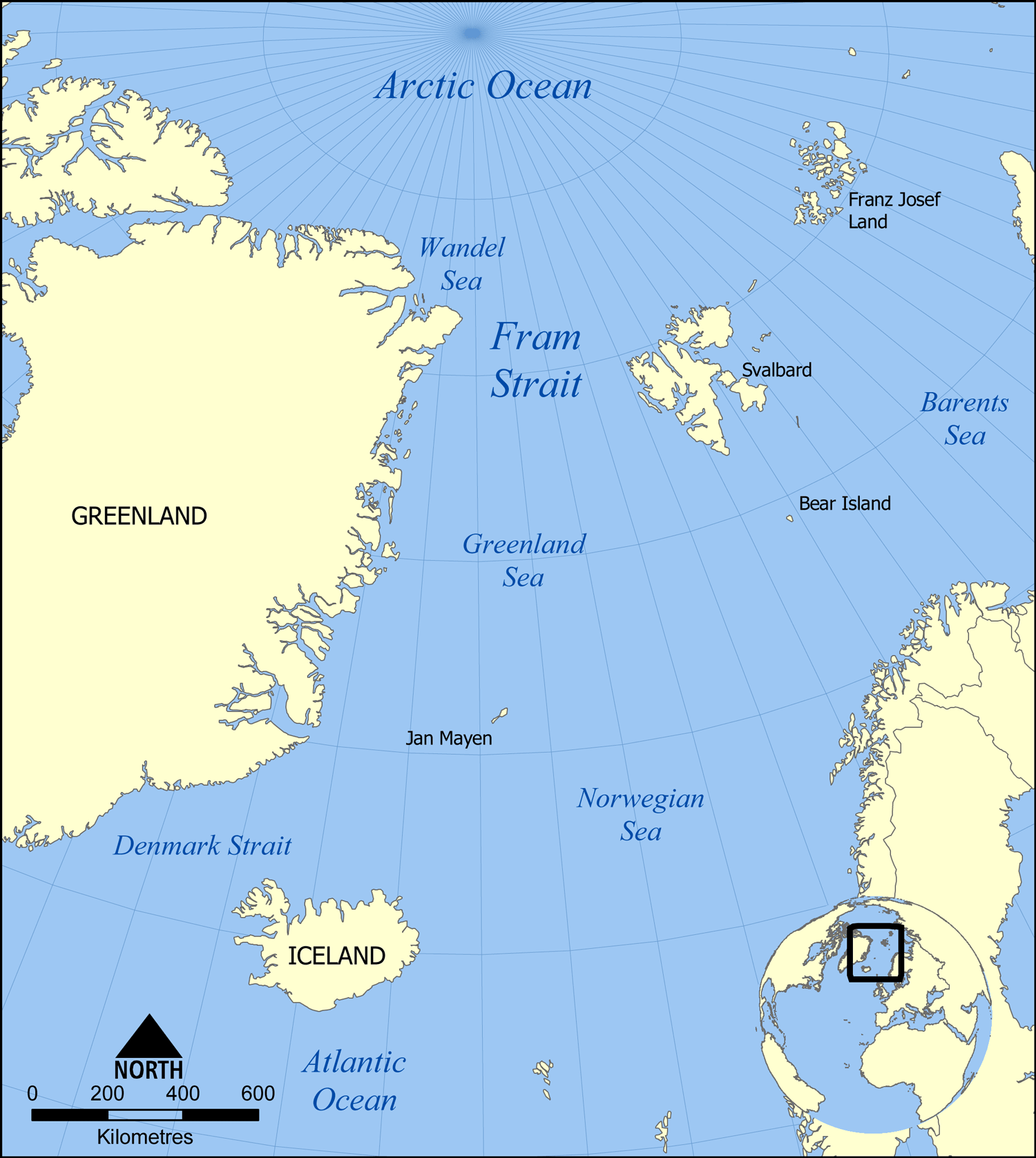
The NATO Alliance must return to a deterrent posture similar to that of the Cold War in order to prevent potential Russian aggression, but the locus of action is much further north than Iceland. The real “Gap” where NATO must focus its deterrent action is the Greenland, Svalbard, North Cape line at the northern limit of the Norwegian and Greenland Seas. It is again time to consider deterrent action and potential naval warfare in the “High North.”

Never the GIUK Gap Anyway

While important in the Second World War and perhaps the early and middle Cold War, the GIUK Gap did not have the same geographic significance in the late 1970s and 1980s. While earlier Russian ballistic missile submarines (SSBNs) had to first sail close to the U.S. coast and then to the middle Atlantic in order to launch their weapons, the advent of the Delta and Typhoon classes with improved sub-launched ballistic missiles (SLBMs) allowed Soviet missile boats to launch their weapons from the safety of Soviet littoral waters. Intelligence gathered by U.S. and Allied sources in the late 1970s suggested that rather than conduct a rerun of the failed German U-boat campaigns of the World Wars, Soviet submarines were to be deployed in a largely defensive posture close to the Soviet homeland. Earlier work by the Center for Naval Analyses had suggested that Soviet attack subs would be prepared to defend their own SSBNs, attack U.S. Navy carrier battle groups, and perhaps venture forth to attack U.S. SSBNs. But attacking logistics and commerce on the Atlantic SLOCs was a fourth-priority mission at best.

The High North region.

By the 1980s, the U.S. Navy was planning, in the event of a failure of deterrence, to take the war to the Soviet littoral waters and homeland. This was a global effort that included U.S. and Allied action against the Soviets in the Atlantic, Pacific, and Arctic Oceans, and the Mediterranean, Baltic, and Black Seas. U.S. submarines would stalk and sink their Soviet counterparts and SSBNs while U.S. carrier battle groups would attack Soviet bases on the Kola Peninsula (as well as other locations around the periphery of the Soviet state) to prevent a correlation of forces that allowed for a successful Soviet land attack in Central Germany.

A series of exercises begun in the early 1950s at the dawn of NATO’s existence had exercised both naval attacks on the Soviet homeland and the defense of Atlantic SLOCs, but the exercise effort moved into high gear in the 1980s. The advent of the aggressive Maritime Strategy meant the Navy would no longer focus on just the defense of SLOCs as it had been told during the Carter administration. Encouraged by Reagan administration Navy Secretary John Lehman and led by experienced flag officers such as Admirals “Ace” Lyons, and “Hammerin Hank” Mustin, a string of aggressive naval exercises in both the Atlantic and “high north” practiced to defend Norway, drive the Soviets back to their home waters, and attack their bases on the Kola peninsula. Instrumented by the SOSUS system and patrolled by aircraft based in Iceland, the GIUK Gap was a strong symbolic barrier, but it was at best the southern signpost of a war to be fought much further to the north. The late Cold War focus on the maritime high north put Norway on both Brussels’s and Washington’s military strategic maps in an unprecedented way.”

The Reality of New Great Power Competition in the High North

The return of a revanchist Russia to the business of great power competition after a quarter century of decline has brought back Norway and its adjacent seas into U.S. and NATO strategic focus. The Russian Navy submarine force is less than a fifth of the size of its Soviet forebear. Many of these units will soon be ready for retirement, and are spread over four fleets. Despite those handicaps, Russian units are now equipped with the 3M-54 (Kaliber) cruise missile, which significantly extends Russian combat capability. This is also why the Russian Navy’s mission set now includes an emphasis on non-nuclear deterrence.

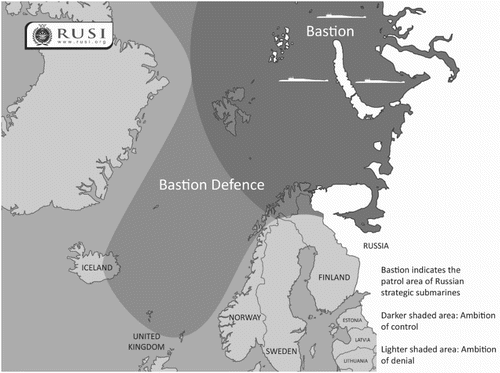
Soviet forces operating within their “bastion” defenses in the Barents Sea during the Cold War had to come south in order to engage NATO maritime forces and lacked a land attack cruise missile capability. Today’s Russian Navy can remain within its Barents bastion and still launch accurate attacks against ships in the Norwegian Sea and NATO land targets without leaving these protected waters. If the Russians do leave their bastions it would most likely be on raiding missions enabled by land attack cruise missiles. Russia has a long tradition of raiding for short-term tactical and longer-term strategic gain, and such operations could manifest themselves in the maritime environment.

Possible zones of Russian bastion defense. (RUSI)

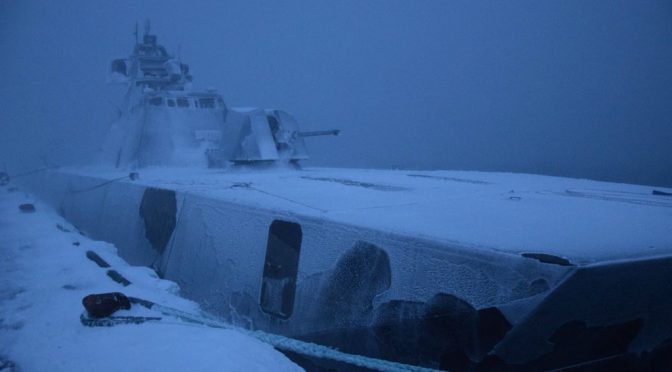
NATO faces significant challenges in dealing with this renewed Russian threat. The Alliance’s naval forces are significantly smaller than during the Cold War and the United States Navy is less than half the size of its 1980s counterpart. Norwegian naval force structure is shrinking and even with planned qualitative improvements will not alone be sufficient for potential naval combat in the High North. Norway is set to significantly reduce its surface force through a planned decommissioning of its Skjold-class missile corvettes and remaining mine warfare ships in the next several years. The reductions are necessary in order to pay for new German-built submarines, P-8 Maritime patrol aircraft (MPA), and F-35A aircraft. The submarines and MPA purchases are appropriate force structure for potential combat in the Norwegian Sea south of Svalbard and north of Iceland, but reductions will result in a lack of surface patrol units necessary for maintaining sea control.

The F35A can support sea control, but may be occupied elsewhere in defense of Norwegian shore-based infrastructure. For example, the Russian Air Force has launched a number of mock attacks on the Norwegian Joint Command Center at Bodo in recent years and F-35 aircraft may be largely focused on the defense of Norwegian C4I infrastructure. The Norwegian Coast Guard which contributes significantly to patrol efforts in the region has decreased in strength from 31 to 15 units from 1992 to the present. These Coast Guard units are also lightly armed and insufficient for contesting and retaining sea control in the region.

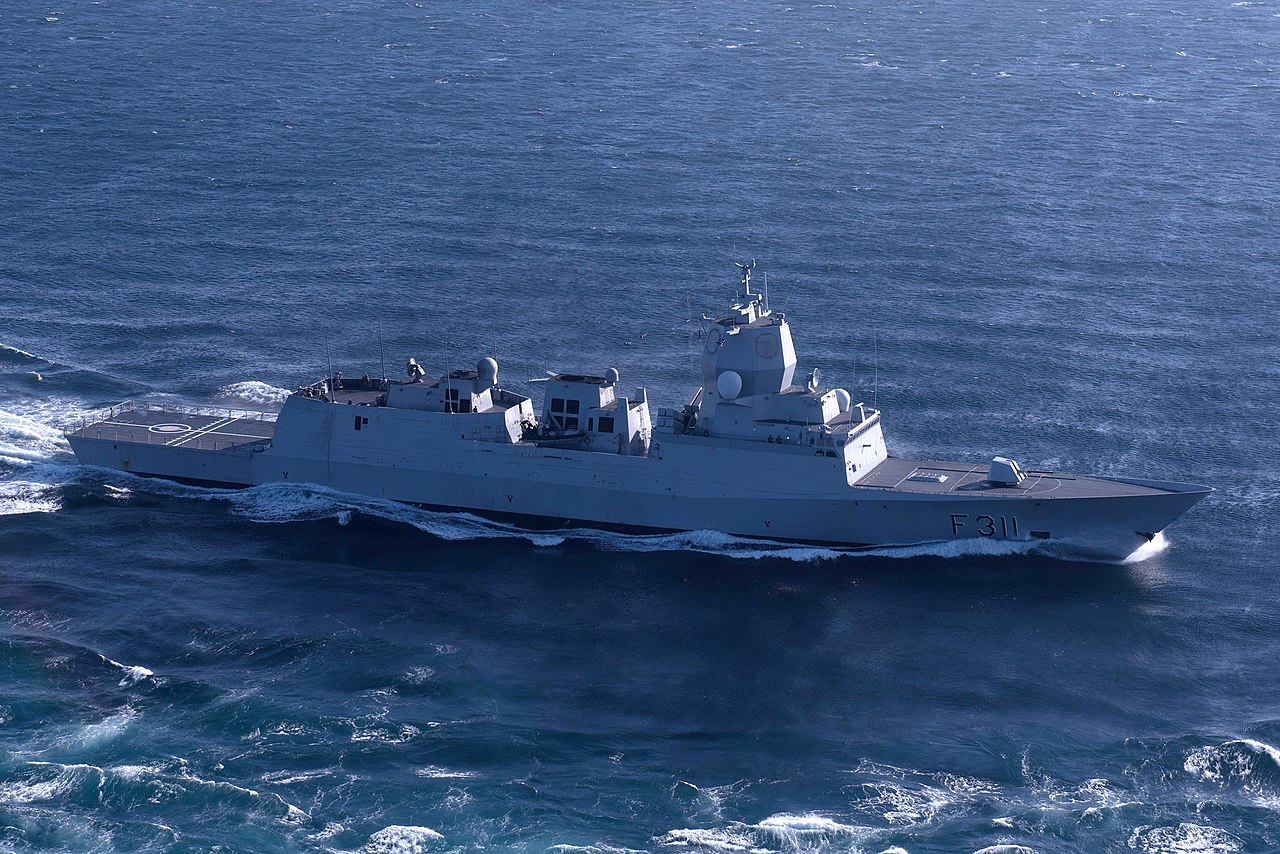
The only significant Norwegian surface force structure in the next decade is likely to be the AEGIS Nansen-class frigates. These ships are capable multipurpose surface combatants, but their small numbers will require a significant commitment of NATO forces to the Norwegian Sea early in a conflict with Russia to ensure that Russian units, especially nuclear attack submarines, do not transit the Norwegian Sea “SLOC” to the North Atlantic. A key element of the Nansen’s antisubmarine capability, the NH90 helicopter, has failed to deliver on its promised number of flight hours. While there may be enough helicopters for the frigates, there are no NH 90 helos with which to equip the Norwegian Coast Guard for its mission of Norwegian and Greenland Sea patrol and surveillance. The Norwegian Joint force is growing in capability, but even with improvements in air and subsurface units it likely cannot prevent passage of Russian Northern Fleet submarines through the Norwegian Sea.

The Royal Norwegian Navy frigate KNM Roald Amundsen (F311) underway in the Atlantic Ocean on 16 February 2018 as part of the U.S. Navy’s Harry S. Truman Carrier Strike Group (HSTCSG) while conducting its composite training unit exercise (COMPTUEX). (U.S. Navy photo by Mass Communication Specialist 2nd Class Scott Swofford)

Organizing for Maritime War in the High North

Once just the remote operating grounds of Russian ballistic missile subs, the Eastern Barents and Arctic Seas can now serve as bases for cruise missile platforms to threaten NATO units and land-based targets in and facing the Norwegian Sea. The NATO Alliance is moving in the right direction by reinstituting an Atlantic Maritime headquarters but more must be done to prepare for a conflict in the High North.

Increased Alliance submarine operations in the Norwegian, Barents and Arctic Seas serve to operationalize those headquarters changes. The North Atlantic SLOCs are important, but the Russians are not looking at the mid-Atlantic except for perhaps targets of opportunity. Joint and combined Allied activities that make use of the numerous air and port facilities around the Norwegian and Greenland Seas should be the main focus of JFC Norfolk. A NATO Joint Task Force (JTF) element, perhaps forward deployed afloat or ashore, may need to be present in the immediate area to direct operations.

Unmanned systems technology holds the promise of mobile, underwater detection grids that unlike the Cold War SOSUS nets can move themselves to better identify and localize submerged targets. The Norwegian and Greenland Seas are NATO lakes and receding sea ice has made for a wider and more open battlespace that allows for greater use of shore-based facilities in the region over a longer portion of the year. Small surface combatants such as the U.S. FFG(X) and LCS might operate in conjunction with unmanned units and maritime patrol aircraft and submarines to conduct a regional joint and combined antisubmarine warfare campaign.

Conclusion

A revanchist Russia does not directly threaten North Atlantic sea lines of communication, and the place to deter or engage them won’t be the GIUK gap. NATO must prepare to deter and if necessary engage Russian naval forces in the High North long before these units can get into range of resupply ships or NATO nation port facilities on the European mainland. The Alliance has taken positive steps to meet this renewed maritime challenge, but must not be haunted by U-boat and Soviet ghosts from past Atlantic wars. The place to respond to a new Russian naval threat is close to its home base and not astride critical transatlantic communication routes.

Steven Wills is a Research Analyst at CNA, a research organization in Arlington, VA, and an expert in U.S. Navy strategy and policy. He is a Ph.D. military historian from Ohio University and a retired surface warfare officer. These views are his own and are presented in a personal capacity.

Featured Image: Norweigan Navy Skjold-class corvette.