Category Archives: Capability Analysis

Analyzing Specific Naval and Maritime Platforms

F-35 Fanboy Makes His Case

By Dave Schroeder

Fair warning: what follows is commentary about the F-35. However, this isn’t going to be a very popular commentary, as it doesn’t follow suit with the endless stream of recent articles, opinions, and blog posts making the F-35 out to be the worst debacle in the history of the militaries of the world. On top of those you’d expect, even automotive and IT blogs have piled on.

People who have no idea how government acquisition works, nor the purpose of the Joint Strike Fighter program — or even some who do, among many with ideological axes to grind — relish trashing the F-35, always managing to include “trillion dollar” (or more) somewhere in the title of the latest article to lambast the plane.

The F-35 is a multirole fighter that is designed to replace nearly every fighter in not just the Air Force inventory, but the Navy and Marine Corps as well: the F-16, F/A-18, AV-8B, and A-10, and to augment and partially replace the F-15 and F-22. The F-35 lifetime cost will be less than that of all the diverse platforms it is replacing — and their own eventually needed replacements.

China devoted significant national espionage resources to stealing everything they could about the F-35, and implementing much of what they stole in the J-31/F-60 and J-20, China’s own next-generation multipurpose stealth fighters. This theft added years of delays and hundreds of millions of additional redesign dollars to F-35 development.

[youtube http://www.youtube.com/watch?v=CSZr58hH_cI]
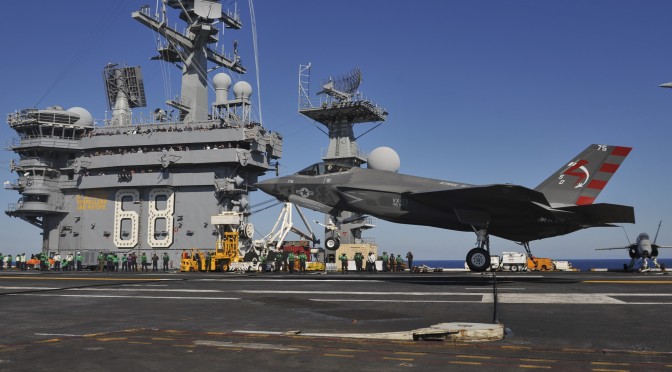
Navy test pilot LT Chris Tabert takes off in F-35C test aircraft CF-3 in the first launch of the carrier variant of the Joint Strike Fighter from the Navy’s new electromagnetic aircraft launch system, set to install on USS Gerald R. Ford (CVN-78).

If anything, the F-35 suffers from being a “jack of all trades, master of none” — which is itself a bit of an overstatement — but we also can’t afford the alternative of follow-on replacement for all existing platforms. And for all the delays, we still have aircraft in the inventory to serve our needs for the next 10-20 years. Articles oversimplifying sensor deficiencies in the first generation, software issues with its 25mm cannon (the gun remains on schedule), or the oft-quoted 2008 RAND report, apparently choose overlook the reality that it’s not going to be instantaneously better in every respect than every aircraft it is replacing, and may never replace aircraft like the A-10 for close air support.

The F-35 development process is no more disorganized than any other USG activity, and if you want to look for people protecting special interests, it’s not with the F-35 — ironically, it’s with those protecting all of the myriad legacy platforms, and all of the countless different contractors and interests involved with not just the aircraft, but all of the subsystems made by even more contractors, all of whom want to protect their interests, and which are served quite well by a non-stop stream of articles and slickly-produced videos slamming the F-35.

NASA’s James Webb Space Telescope was originally to cost $500 million, and is now expected to cost $8.8 billion and will be over a decade late. Shall we cancel it? Or take the pragmatic approach when the purpose of the mission is important and no reasonable alternatives exist? This isn’t a problem with just DOD acquisition. It’s the reality in which we live.
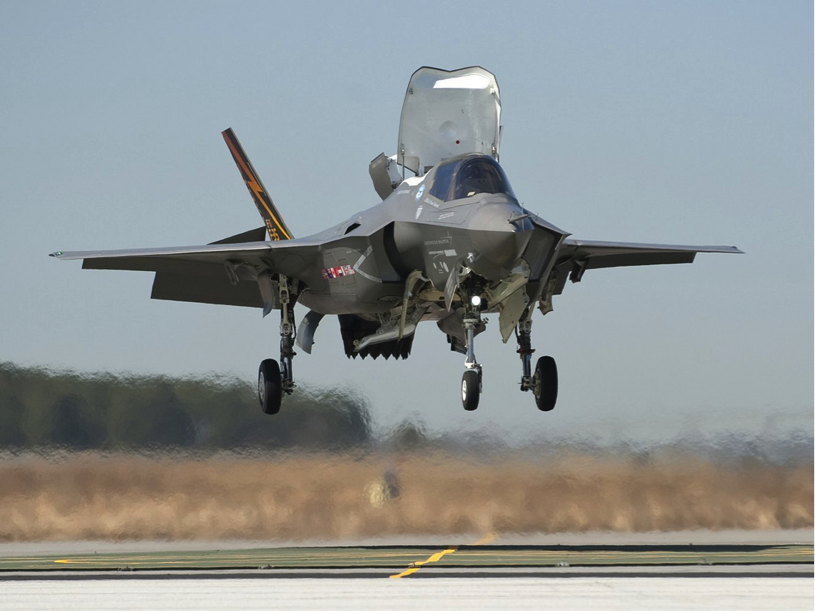
A F-35B hovers during testing.

One of the reasons the JSF program, and the F-35, came into being is precisely because we won’t be able to afford maintaining and creating replacements for a half-dozen or more disparate aircraft tailor-made for specific services and missions.

The F-35 itself is actually three different aircraft built around the same basic airframe, engine, and systems. The F-35A is the Air Force air attack variant, the F-35B is the VSTOL Marine Corps variant, and the F-35C is the Navy carrier-based variant. If we had already retired every plane the F-35 is supposed to be replacing, there might be cause for concern. But as it stands, we have retired none, and won’t until the F-35 can begin to act in their stead.

The A-10, for instance, has found new life over the last 12 years in close air support roles, primarily in Iraq and Afghanistan, and is often held out as an either/or proposition against the F-35. No one ever claimed that the F-35 was a drop-in replacement for an aircraft like the A-10, and no one could have predicted the success the A-10 would again find in environments not envisioned when the JSF program came into being — though some of this success is overstated, claims otherwise notwithstanding. The Air Force is faced with difficult resource prioritization choices; if the A-10 is that critical, keep it. The debate on the future of CAS isn’t dead.
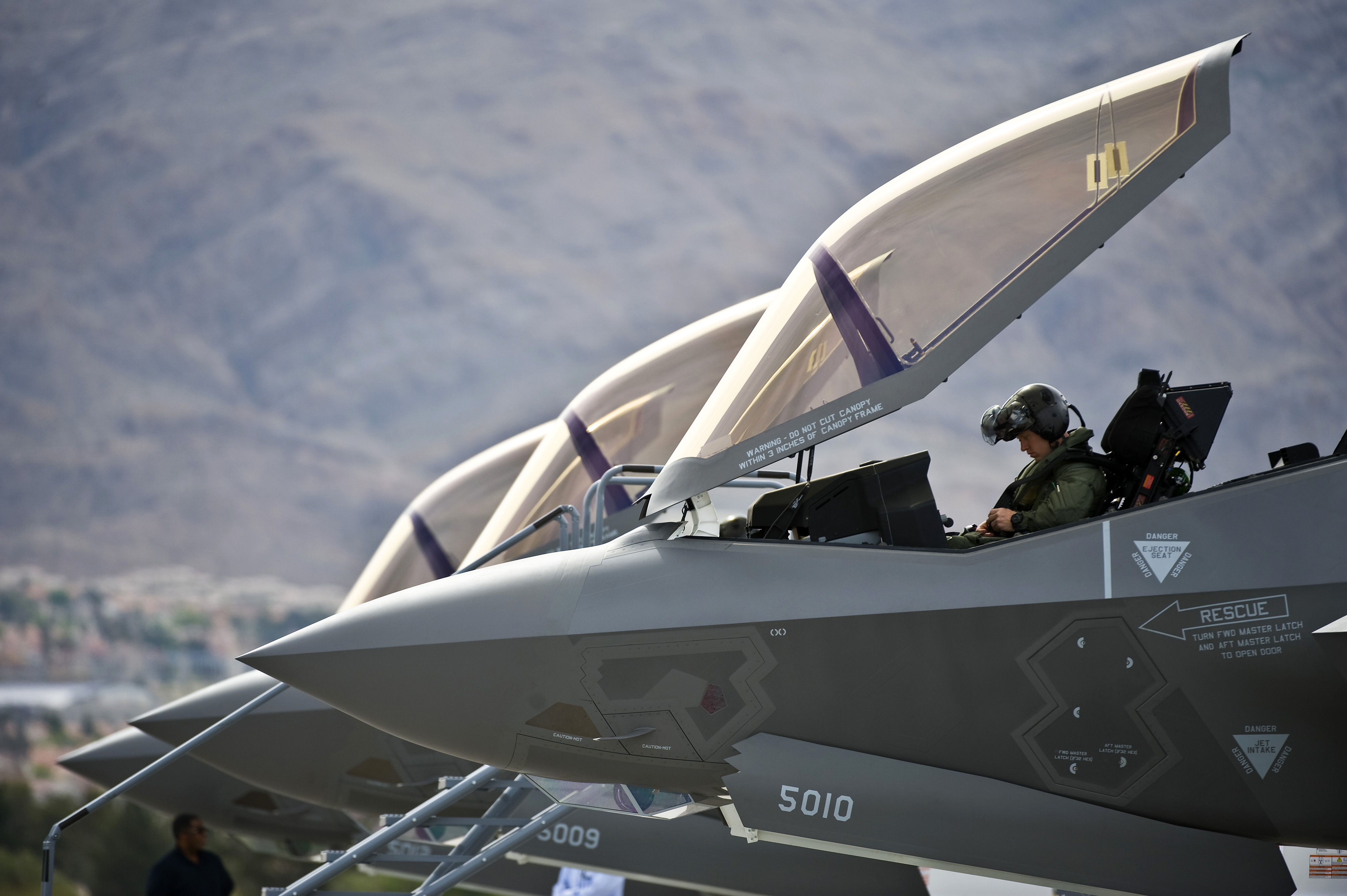
U.S. Air Force Capt. Brad Matherne, a pilot with the 422nd Test and Evaluation Squadron, conducts preflight checks inside an F-35A Lightning II aircraft before its first operational training mission April 4, 2013, at Nellis AFB, NV.

If there are questions as to why we even need a fifth-generation manned multirole fighter with the rise of unmanned systems, cyber, and so on, the answer is an easy one: China and Russia both developed fifth-generation fighters, and the purpose of these aircraft isn’t only in a direct war between the US and either of those nations, but for US or allied military activity in a fight with any other nation using Chinese or Russian military equipment, or being protected by China or Russia. You don’t bring a knife to a gun fight.

The F-35 isn’t just a US platform: it will also be used by the UK, Canada, Australia, Italy, the Netherlands, Denmark, Norway, Israel, Turkey, Singapore, and perhaps other nations. And the fact is, this is not only our fifth-generation manned fighter, it is likely the last. We cannot afford to have separate systems replace all or even most of the platforms the F-35 is replacing, nor can we simply decide to forgo replacements and extend the life of existing platforms by decades.

The F-35 is our nation’s next generation fighter, and it’s here to stay.

[youtube http://www.youtube.com/watch?v=Ki86x1WKPmE]
F-35B ship suitability testing in 2011 aboard USS Wasp (LHD-1)

Dave Schroeder serves as an Information Warfare Officer in the US Navy, and as a tech geek at the University of Wisconsin—Madison. He holds a master’s degree in Information Warfare, and is a graduate of the Naval Postgraduate School (NPS). He also manages the Navy IDC Self Synchronization effort. When not defending the F-35, he enjoys arguing on the internet. Follow @daveschroeder and @IDCsync.
Peeling Back the Layers: A New Concept for Air Defense

By Bryan Clark

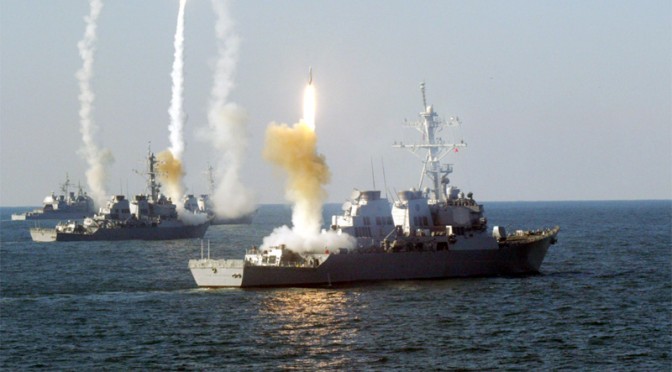
The newest concept being forwarded by U.S. Navy surface fleet leaders is “distributed lethality”, in which almost every combatant and noncombatant surface ship would wield offensive missiles such as the Naval Strike Missile (NSM) or Long Range Anti-ship Missile (LRASM). The concept’s central idea is that deploying a large number of U.S. ships able to threaten enemy ships, aircraft, or shore facilities will create a potentially unmanageable targeting problem for potential adversaries. This, it is argued, could deter opponents from pursuing aggression and in conflict could compel adversaries to increase their defensive efforts, constrain their maneuver, and spend valuable time finding and defeating U.S. forces in detail.

Implementing this concept should start with the Navy’s surface combatants, rather than its numerous unarmed non-combatant ships. Arming the Navy’s more than 60 logistics and support ships with offensive missiles and providing them the command and control systems to coordinate their fires will be costly. And once equipped, these noncombatant ships will become more attractive targets while not being better able to protect themselves unless further investments are made in defensive systems. In the end, offensive operations could distract noncombatant ships from their primary missions and reduce the endurance of combatants that depend on them for fuel and to conduct less stressing missions such as training and counter-piracy.

Given the challenges in using supply and support ships for offensive missions, the first step to implement distributed lethality should be to ensure all the Navy’s surface warships are able to conduct offensive operations. These consist of amphibious ships and surface combatants.

The fleet’s approximately 30 amphibious ships conduct offensive operations using their main battery of embarked Marines, which could be complemented with offensive missiles. The best way to do this would be with vertical launch system (VLS) magazines. While amphibious ships have more defensive systems than non-combatant ships, they still may not be sufficient for some environments. Since a VLS can host a wide range of missiles, it would enable an amphibious ship to increase either its offensive or defensive weapons capacity based on the intended mission and threat environment.

The most important element of the fleet for distributed lethality, however, will be the Navy’s 140 surface combatants (88 large surface combatants and 52 small surface combatants, based on the Navy’s force structure requirement). These ships already have some defensive and command and control capabilities to protect themselves and coordinate offensive operations. But they all lack offensive capacity because of their configuration (in the case of small combatants) or air defense concept (in the case of large surface combatants)

Restoring surface combatant lethality

Small surface combatants such as minesweepers, patrol craft, and Littoral Combat Ships (LCS) have only a few short-range offensive weapons. The stated intent of surface fleet leaders is to augment these on LCS with long-range surface-to-surface missile launchers, but the launcher being considered is specific to a weapon such as NSM, rather than a more versatile VLS array. As with amphibious ships, LCS may need to increase its defensive capacity if it is pursuing more offensive operations. A VLS magazine would enable LCS to load more defensive missiles along with offensive weapons, with the additional benefit of being able to protect a nearby ship from air threats as an escort–a capability it lacks today.

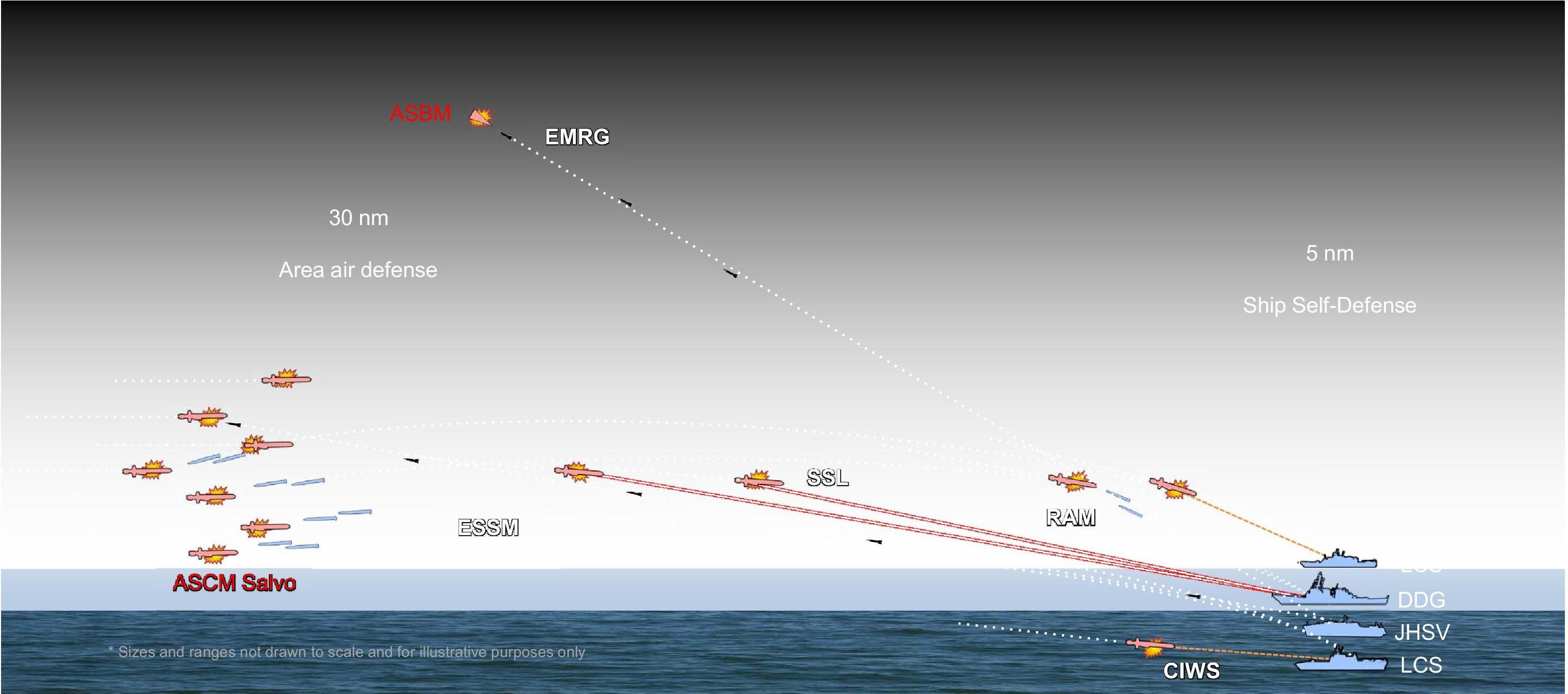
Large surface combatants such as cruisers (CG) and destroyers (DDG) have VLS magazines, but are unable to make room in them for more offensive missiles because of the surface fleet’s current air defense approach. This approach is designed to engage enemy aircraft and missiles in multiple layers starting from long range (from 50 nm to more than 100 miles) through medium range (about 10–30 miles) to short range (less than about 5 miles). Each layer is serviced by a different set of interceptors, with those for the long-range layer (e.g., SM-2 and SM-6) being the largest and most preferentially used. Electronic warfare jammers and decoys are also used from medium to short range, but only after interceptors have been unsuccessfully expended against incoming missiles.

This layered air defense scheme puts surface combatants on the wrong end of weapon and cost exchanges. Using today’s standard shot doctrine of “shoot, shoot, look, shoot” (SS-L-S) the complete 96-cell VLS capacity of a DDG (if all devoted to air defense) would be consumed against fewer than fifty ASCMs—missiles that would cost the enemy about two percent the price of a DDG.

Better long-range interceptors will not improve the weapon exchange and only exacerbate the Navy’s cost disadvantage. The SM-6 interceptor that entered service last year is faster, longer range, more maneuverable, and has a better seeker than the Cold War-era SM-2 but costs about $4 million compared to $680,000 for an SM-2. Meanwhile a typical advanced ASCM costs about $2-3 million. Given a SS-L-S firing doctrine, each defensive engagement using SM-6s will cost two to four times that of the ASCM it is intended to defeat.

A new air defense approach

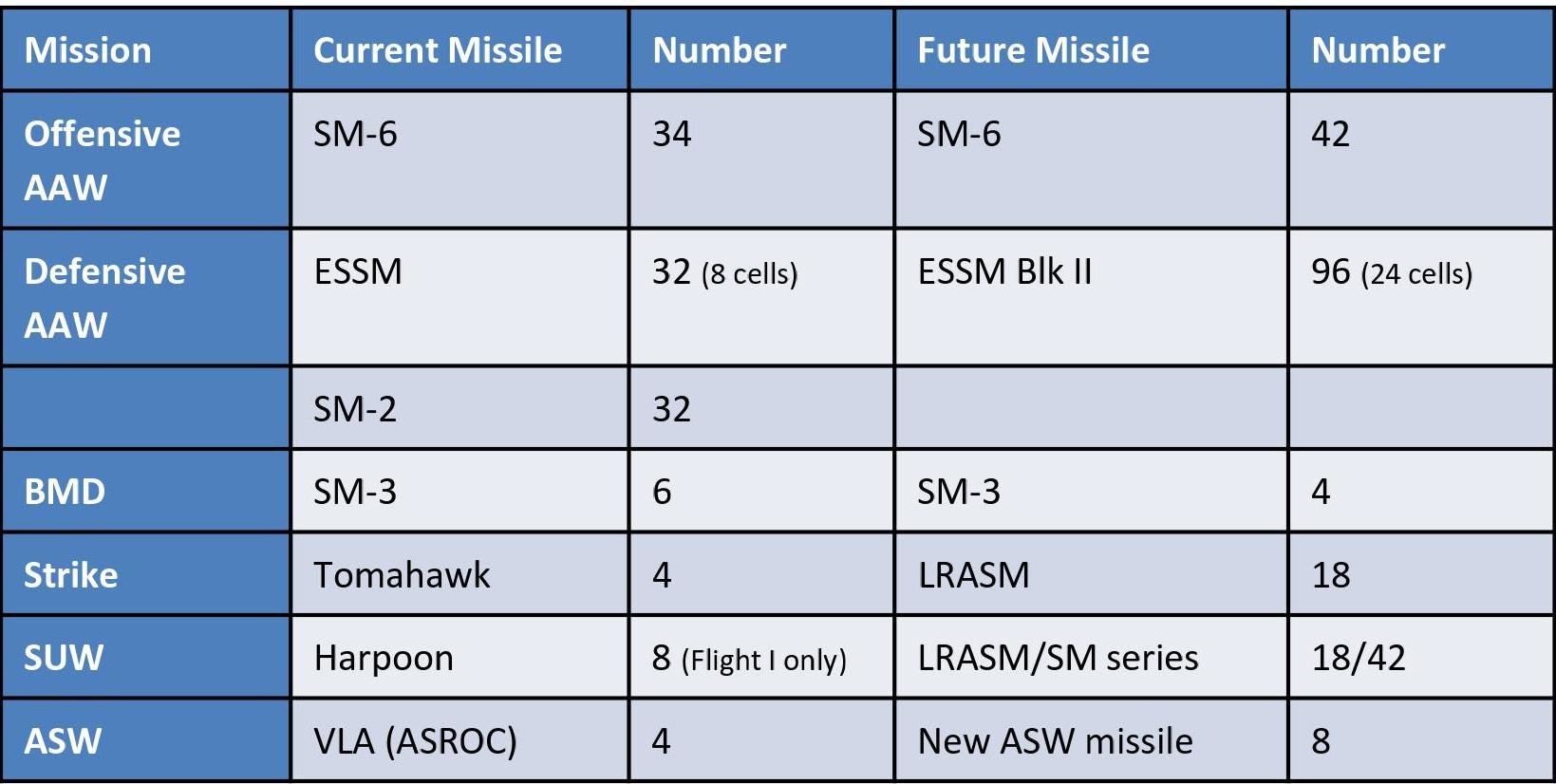
The size of VLS magazines cannot be changed; therefore making VLS cells available for offensive weapons will require either using fewer air defense interceptors or getting more interceptors into each VLS cell. The Navy could use fewer air defense interceptors by changing its shot doctrine to S-L-S. The SM-6 shows improvements in interceptor lethality are possible and could eventually make a S-L-S doctrine viable. But a S-L-S doctrine will still require initial engagements to occur far enough away to allow a second engagement before the incoming ASCM hits the ship. This will require large, long-range interceptors such as SM-6 that take up a whole VLS cell and over-the-horizon (OTH) targeting from another ship or an aircraft. In the end a shift to S-L-S would only double air defense capacity at best and may not free up many VLS cells for offensive missiles.

Alternatively, the Navy could fit more interceptors into fewer VLS cells by shifting to a shorter-range air defense scheme. Shorter-range weapons such as the Evolved Sea Sparrow (ESSM) Block 2 that will debut in 2020 are smaller than longer-range interceptors and can exploit the same lethality improvements as SM-6 to achieve a high probability of defeating incoming ASCMs. The ESSM fits four to a VLS cell–quadrupling air defense capacity–while it’s range will be about 10-30 miles. It would thus engage incoming ASCMs at about the same range as electronic warfare (EW) jamming, deception, and decoy systems (depending on the ASCM’s altitude). This will make it possible for EW to reduce the number of interceptors expended, compared to today’s scheme in which EW is only used after interceptors have failed.

clark-1
New defensive AAW scheme. Click to expand. (Graphic via CSBA)

A 10-30 mile air defense scheme will also prepare the surface fleet to integrate new weapons such as lasers and electromagnetic railguns (EMRG) that will likely be mature in the early to mid-2020s. While these weapons cannot fully replace interceptors, they could enable the Navy to shift additional VLS capacity to offensive missiles. The shipboard lasers expected in this timeframe would be effective against ASCMs out to a range of about 10 miles while an EMRG will be able to engage incoming ASCMs out to about 30 miles. At longer ranges, the unpowered EMRG projectile will take too long to reach an incoming ASCM, which could maneuver and cause the EMRG to miss.

The resulting air defense scheme would consist of lasers, EMRGs, interceptors (e.g., ESSM), and EW systems engaging incoming missiles in a dense layer 10–30 miles away from the ship. This is far enough away for a surface combatant to protect another ship while each ship’s self-defense systems would engage “leakers” at 2–5 miles. Automated decision aids that match air defense systems to incoming missiles will be an essential element of this scheme since multiple systems will be engaging incoming missiles at the same approximate range. These aids are inherent to the Aegis combat system, but would have to be upgraded to incorporate new weapons such as lasers and EMRGs

clark 2
Evolved VLS loadout with proposed weapons changes. (Graphic via CSBA)

Offensive anti-air warfare (AAW) is the other side of this new air defense approach. While air defense shifts to 10-30 miles using weapons such as ESSM and lasers, longer-range interceptors such as SM-2 and SM-6 would focus on shooting down enemy aircraft before they can launch ASCM attacks. SM-6s, in particular, can engage enemy aircraft outside their ASCM range and are much less expensive than the aircraft they will destroy, producing a more advantageous cost exchange than using SM-6 against enemy ASCMs. Further, enemy aircraft generally fly at higher altitudes than ASCMs, enabling them to be detected farther away by shipboard radars whose visibility is limited by the horizon.

If the surface fleet is to implement distributed lethality, the place to start is with surface combatants. Today they lack the offensive capacity to pose a significant threat to enemy navies. Obtaining that capacity from the surface fleet’s main battery, the VLS magazine, will require that the Navy revisit fundamental aspects of how it fights. The alternative will be to continue devoting increasing portions of its weapons capacity to defense, and concepts such as distributed lethality will only exist in the pages of professional journals.

Bryan Clark is a Senior Fellow at the Center for Strategic and Budgetary Assessments. This post is adapted from his recent report “Commanding the Seas: A Plan to Reinvigorate U.S. Navy Surface Warfare.”

An ASEAN Maritime Alliance?

The year 2014 brought new tensions to the South China Sea, particularly as Chinese authorities sought to establish a series of island-like structures in the midst of the disputed Spratly Islands. Such provocative actions, however, are unlikely to generate sufficient political will among the other countries of the region to establish a Political-Security Community under the auspices of the Association of South East Asian Nations (ASEAN) by the 2015 deadline. But were this collection of ten countries to pool their resources into a security community or even a security alliance, it would be an impressive force and a potential deterrent to aggression in the South China Sea.

In particular, it is worthwhile noting the relative strength of ASEAN coastal defence forces. Some member states, such as Indonesia, possess respectable ‘blue water’ navies, that is to say, they have larger vessels capable of operating in deep waters and engaging in long-range standing battles. Other ASEAN countries, such as the Philippines, have considerable ‘brown water’ navies,  forces consisting of small patrol boats which can cruise inland waterways and the shallow waters that weave between tight-knit island chains. But the varied nature of the waters disputed in the South China Sea particularly requires the flexibility offered by corvettes.

Generally, corvettes fall between the Royal Canadian Navy’s Halifax-class frigates and Kingston-class coastal defence vessels in size. But there is much debate as to what constitutes a contemporary corvette. For example, the Royal Omani Navy calls its Khareef-class vessels ‘corvettes’ even though the displacement of each vessel in the class is approximately 2,660 tons. Recent advancements in shipbuilding have also allowed the US Navy to introduce new vessels with substantial displacement but with shallower drafts, meaning the new USS Liberty can approach closer to coastlines than the similarly sized but older Oliver Hazard Perry-class frigates.

For the purposes of this analysis, only those vessels with a displacement greater than 100 tons but less than 1,700 tons will be considered corvettes. China’s maritime forces, the People’s Liberation Army Navy (PLAN),  has a substantial number of vessels in this range deployed to Hong Kong and a network of naval bases off the South China Sea. 12 Jiangdao-class corvettes (1,440 tons) are the workhorses of this maritime presence in the region and China may possibly add 3 more vessels of this class by the end of 2015. Beyond the Jiangdao-class corvettes, PLAN’s southern presence includes six Houjian-class missile boats (520 tons) and approximately 80 other missile boats and gunboats of various classes and ranging in displacement from 200 to 480 tons each. This vastly exceeds the quantity and quality of vessels any individual Southeast Asian country could bring to bear in a conflict. But ASEAN’s combined maritime forces could meet the challenge presented by a limited PLAN offensive.

Brunei in particular has emerged as a promising new maritime actor in the region, even actively participating in the 2014 edition of the Rim of the Pacific Exercise (RIMPAC). The Royal Brunei Navy acquired four specially built Darussalam-class offshore patrol ships (1,625 tonnes) from the German shipbuilder Luerssen-Werft, which replaced Brunei’s previous coastal defence workhorse, the Waspada-class fast attack craft (200 tonnes). The Waspada-class vessels have since been decommissioned and donated to Indonesia to be used for training purposes. The introduction of the Darussalam-class greatly upgrades Brunei’s defence capabilities and it will be of interest for Southeast Asian observers to see how Brunei further pursues the modernization of its forces.

The Republic of Singapore Navy has much in the way of heavier frigates and submarines to defend its unique position by the Strait of Malacca, one of the world’s most significant shipping routes. Its corvette-like vessels are also impressive, six Victory-class corvettes (600 tonnes) and 12 Fearless-class offshore patrol ships (500 tonnes), but they are certainly not as new as some of the vessels boasted by Singapore’s neighbours. The Victory-class was acquired in 1990-1991 while the Fearless-class was introduced between 1996 and 1998. Therefore, it will also be of interest to see whether Singapore seeks to obtain any newer vessels which can serve as a bridge in capabilities between the Victory-class corvettes and the heavier Formidable-class frigates.

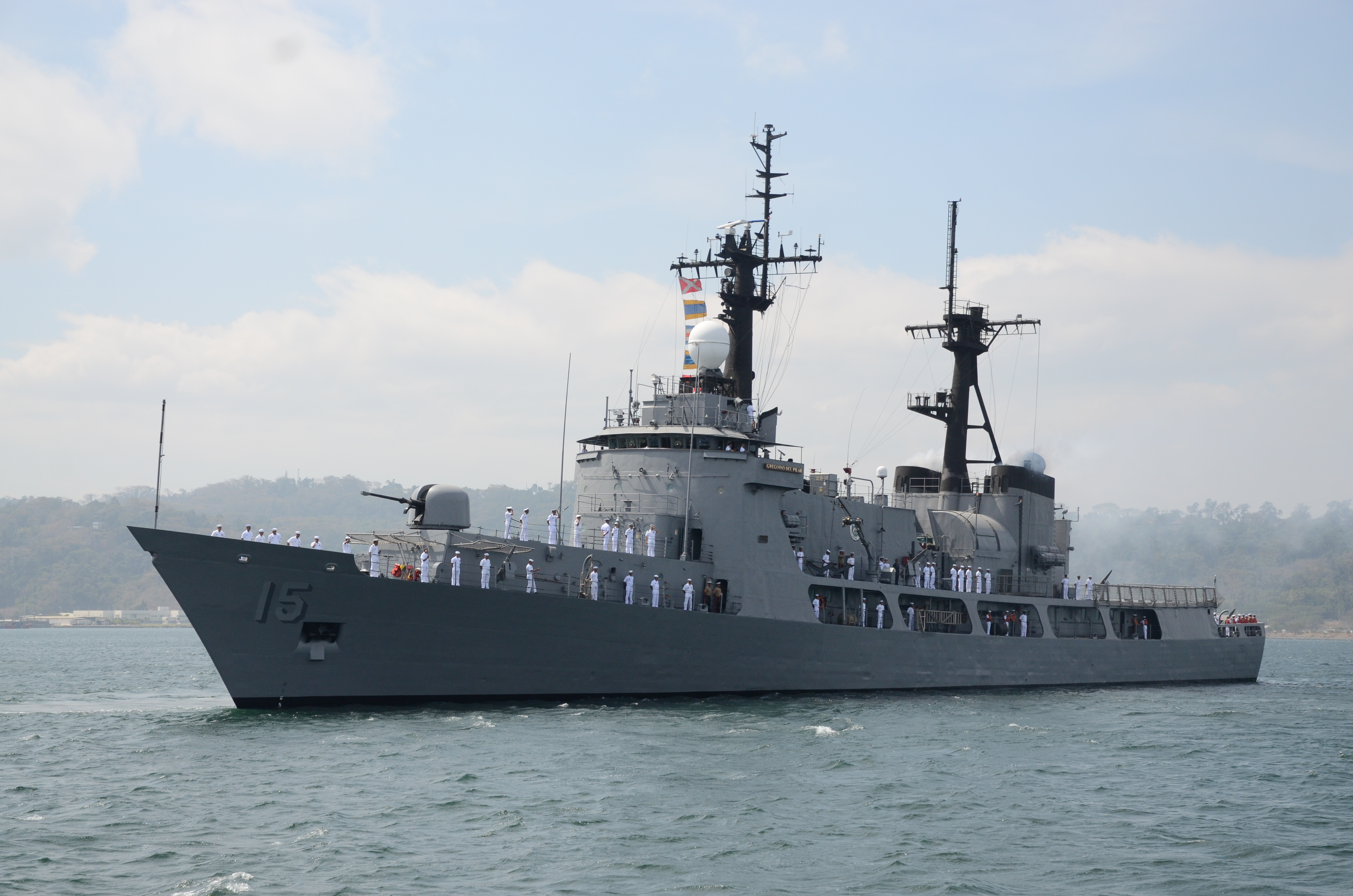
dsc_5220It is Thailand, the Philippines, and Indonesia that boast the largest complements of corvettes in the region, however. The Royal Thai Navy’s coastal defence is led by two Tapi-class corvettes (1,200 tons) and two Pattani-class offshore patrol ships (1,460 tons), which are joined by two Ratanakosin-class corvettes (960 tons), three Khamrosin-class corvettes (630 tons), three Hua Hin-class patrol boats (600 tons), six PSMM Mark 5-class patrol boats (300 tons), and 18 smaller patrol boats and fast attack boats of varying capabilities but all rather aged. The Philippines and Indonesia both have vast island chains within their respective territories, requiring corvettes and smaller patrol vessels just as much for counter-trafficking and counter-piracy operations as for countering conventional maritime forces. The Philippine Navy possesses one Pohang-class corvette (1,200 tons), two Rizal-class corvettes (1,250 tons), nine Miguel Malvar-class corvettes (900 tons), and three Emilio Jacinto-class corvettes (700 tons). Indonesia tops out ASEAN’s array of corvettes with three Fatahillah-class corvettes (1,450 tons), 16 Kapitan Patimura-class corvettes (950 tons), and 65 other missile boats and gunboats with a displacement of approximately 100-250 tons.

Yet it is unclear how much of their forces Indonesia or the Philippines would be able to deploy in the midst of a South China Sea conflict. As mentioned previously, many of these vessels have been used practically as inland patrol vessels. There are also some potential weak links in the chain should ASEAN establish some form of formalized maritime alliance. The Royal Malaysian Navy only offers four Laksamana-class corvettes (675 tons) and an array of 16 smaller missile boats and gun boats that could generally only be used to harass Chinese forces. Burma certainly has an impressive force in its own right – consisting of three domestically produced Anawratha-class corvettes (1,100 tons), six Houxin-class missile boats (500 tons), 10 5 Series-class missile boats (500 tons), and 15 Hainan-class gunboats (450 tons), but the military junta has already demonstrated that it will remain aloof from territorial disputes in the South China Sea and generally supports China’s policy toward Southeast Asia.

The Royal Cambodian Navy is in shambles, consisting solely of five outdated Turya-class torpedo boats (250 tons), five Stenka-class patrol boats (250 tons), and a lone Shershen-class fast attack boat (175 tons). But Cambodian authorities would be just as disinclined to engage in defence sharing as their Burmese counterparts. During Cambodia’s 2012 ASEAN chairmanship, Cambodian officials consistently interfered in efforts by other ASEAN member states to reach a common position on the South China Sea’s territorial disputes. Given the understanding on security issues shared between Cambodian and Chinese officials, as well as China’s status as Cambodia’s largest source of foreign investment and aid, it is apparent that Cambodia has relatively no need for the security guarantees ASEAN could provide as a regional counter-balance to China.

Vietnam is the unpredictable factor in the region. The Vietnam People’s Navy has a few corvettes of its own, including a Pauk-class corvette (580 tons), eight Tarantul-class corvettes (540 tons), and 23 patrol ships with displacements ranging from 200 to 375 tons. The Vietnamese government has also ordered two more TT-400TP gunboats (450 tons) from domestic shipbuilders with delivery expected in late 2015 or early 2016. This leaves Vietnam with a force perhaps not as sizable as that of Indonesia or the Philippines but with greater capacity to intervene should China seek to settle territorial disputes with Vietnam by force.

As Malaysia will hold the 2015 Chairmanship of ASEAN, the prospects for a maritime force in support of the bloc’s proposed Political-Security Community will depend to some degree on whether Malaysian officials will be willing to show leadership. If Malaysia looks to acquire new vessels and insists on placing maritime security on the agenda of upcoming ASEAN meetings, some arrangement could be struck by the end of the year. But this will require artful diplomacy, especially in the face of Burmese and Cambodian opposition. With Malaysian officials speaking predominantly about the need for a single market in the region and promoting a conclusion to negotiations regarding the Regional Comprehensive Economic Partnership, such a drive for maritime security may not be forthcoming.

Paul Pryce is a Research Analyst at the Atlantic Council of Canada. His research interests are diverse and include maritime security, NATO affairs, and African regional integration.

This article can be found in its original form at the  
NATO Council of Canada and was republished by permission.

LCS Versus the Danish Strawman

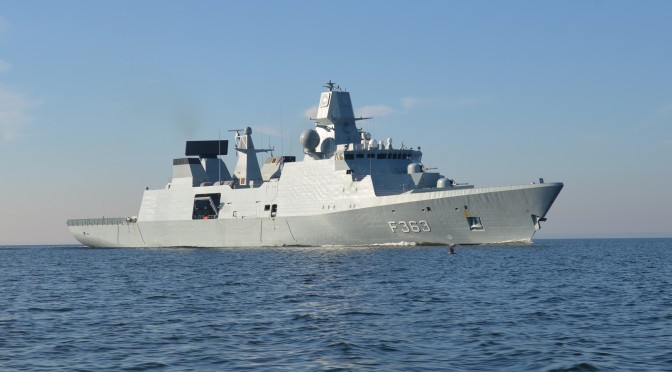
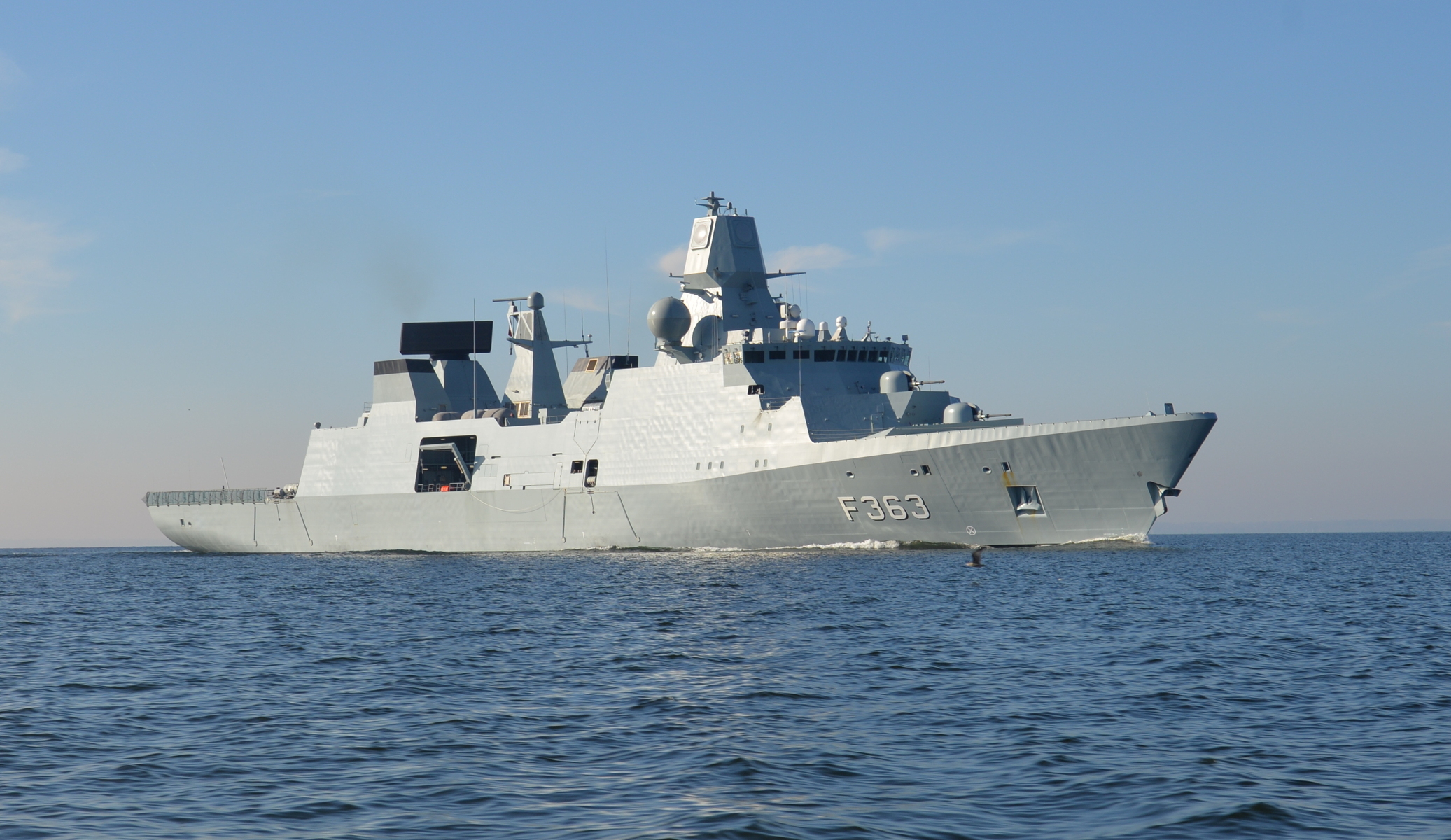
nils juel 2Many critics have assailed the Littoral Combatant Ship (LCS) program for its high cost in comparison with foreign, supposedly better armed and equipped equivalents. The Danish Iver Huitfeldt and Absalon class frigates are often cited as examples of cheaper, more capable small combatants in comparison with LCS. These claims are not well researched and are based on isolated points of data rather than any systemic analysis. Other nations may be able to build relatively cheap warships, but hidden factors not discussed by critics, rather than U.S. shipbuilding and general acquisition deficiencies make this possible. The Danish Navy, in conjunction with corporate giant A.P. Moeller have produced an outstanding series of warships, but a direct comparison between them with the LCS is one of apples verses oranges. It’s time to stop using this inaccurate strawman argument against LCS.

[otw_shortcode_button href=”https://cimsec.org/buying-cimsec-war-bonds/18115″ size=”medium” icon_position=”right” shape=”round” color_class=”otw-blue”]Donate to CIMSEC![/otw_shortcode_button]

The direct comparison of the Danish frigates to LCS is highly misleading due to significant differences in Danish shipbuilding practice and financial accounting. The Danish “StanFlex” system of “plug and play” weapons, sensors and equipment (including cranes!) officially separates these components from the advertised cost of the ship. A 2006 RAND report on the rise in warship costs specifically identified such systems as the principal drivers of warship cost inflation. The Danish concept of separating these more costly systems from their hull gives the appearance of a much less expensive warship. The ships were often accepted by the Danish Navy in an incomplete condition. The Danish Nils Juel, for example, was delivered in 2014 with 76mm guns scavenged from decommissioned ships. Danish figures suggest that the Iver Huitfeldt program used $209 million in reused equipment from scrapped vessels. Reuse, however, could not meet all system requirements. The planned 127mm (5 inch) gun system was deemed too expensive at $50 million a copy. The ship’s close-in weapon system mount was actually a dummy, wooden weapon due to a lack of certification. While equipped with a MK 41 vertical launch missile system (VLS), the ship deployed to the fall 2014 U.S. Bold Alligator exercise without the system certified for use or weapons purchased for eventual outfitting. That same reporting indicated that the ship was delivered with its damage control system incomplete and lacking a secondary steering control center. Much of the ship is built to merchant ship standards which are not as robust as those traditionally provided to warships. In addition, the Danish ship was forced to take on nearly 20 extra crew members when the lean 100 person complement was found insufficient for operational needs.

The Absalon class is more akin to a heavily armed, limited load amphibious ship rather than a surface combatant. It combines a number of warfare and expeditionary capabilities on a single hull, but excels at none of them. It is also significantly slower (at 24 knots maximum speed) than most other surface combatants. Both Absalon and her sister Esbern Snare were also delivered without their full installation of weapons and sensors. In the case of Absalon, this process took over three years. The Danish Navy has been open in regards to these conditions. U.S. advocates of adopting the Absalon or Iver Huitfeldt classes almost always overlook them.

The LCS, by contrast is delivered with significant systems such as its 57mm gun and point defense missile system incorporated into the overall cost. Scavenging of weapons from previous U.S. ships is extremely difficult due to a constant process of upgrades over time. Weapon systems, like ships also have service lives and U.S. ships being decommissioned often have equally aged weapons and supporting electrical, hydraulic and mechanical systems that make a re-installation not cost effective. Unlike the Absalon class which is not equipped to master any one warfare area in any of its configurations, the LCS can be exclusively equipped to master one such discipline. It is purposely designed to operate in tailored flotillas designed to mitigate the risks incurred by one ship like Absalon. Critics often fail to note that both Iver Huitfeldt and Absalon are nearly twice the size of LCS.  Neither has the speed requirements that drove initial LCS design considerations. The size difference alone may explain the Danish ships’ much longer endurance. These differences in Danish and U.S. practices make comparisons difficult at best.

Finally, the Danish Navy contracted the building of both the Iver Huitfeldt and Absalon classes to a single firm, the A.P. Moeller Corporation. This multinational giant derives the vast bulk of its earnings from the more stable commercial market and its warship business is not dependent on government orders, which causes instability and cost overruns in its production process. By contrast, U.S. LCS shipbuilders Lockheed Martin and Austal serve government interests much more than private ones and are more dependent on government contracts to maintain stability in their operations. The 2006 RAND report also identified this process of divided warship construction as another factor in the increased cost of surface combatants.

The LCS program has been beset with a number of technological and systemic problems since its inception that have slowed the program’s progress and likely contributed to some cost overruns. On the surface, the Iver Huitfeldt and Absalon class frigates would appear to be cost effective alternatives to the LCS. Deeper investigation, however, reveals how the Danes achieved these substantially lower figures by separating higher cost equipment from that of the platform, scavenging weapons from decommissioned ships, accepting incomplete warships for service, and purchasing these vessels from a single, robust commercial shipbuilder not dependent on or affected by unstable government ship acquisition processes. In summary, these classes meet Denmark’s needs, but are an unsuitable substitute for U.S. Navy small combatants. LCS critics, however, should not use the Danish ships as strawman LCS substitutes. It is a most unequal comparison.

Steve Wills is a retired surface warfare officer and a PhD student in military history at Ohio University. His focus areas are modern U.S. naval and military reorganization efforts and British naval strategy and policy from 1889-1941. 

[otw_shortcode_button href=”https://cimsec.org/buying-cimsec-war-bonds/18115″ size=”medium” icon_position=”right” shape=”round” color_class=”otw-blue”]Donate to CIMSEC![/otw_shortcode_button]