Tag Archives: Russia

RIMPAC 2014 – The Ins and Outs

On June 26th, one of the world’s largest and most significant naval exercises began in and around Hawaii. Rim of the Pacific (RIMPAC) is a biannual event led by the United States Navy and usually involves maritime forces from more than n Pacific countries, including Canada. Although the exercises have been held consistently since 1971, this year’s edition promises to have an unprecedented impact on military and strategic affairs in the Asia-Pacific region.
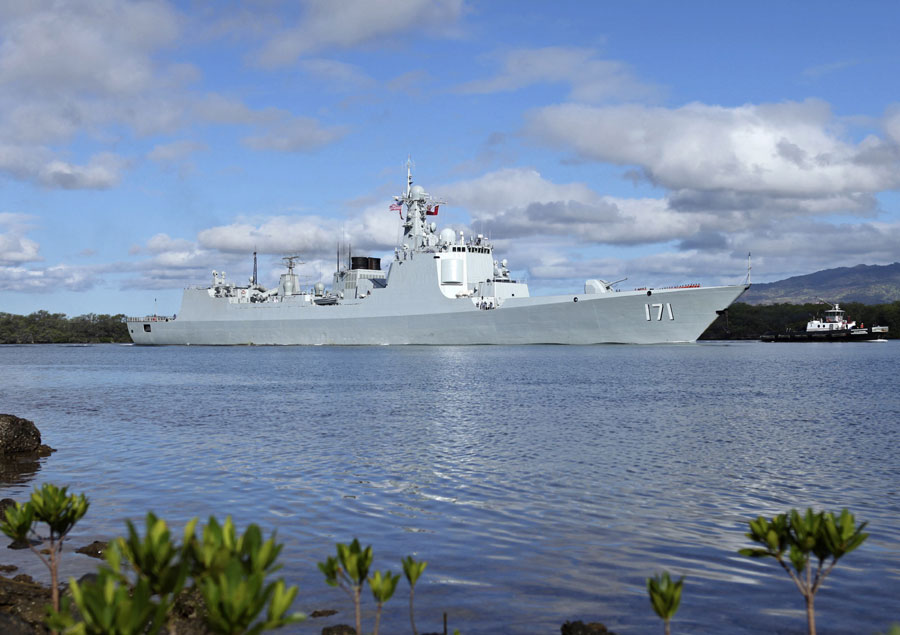
Chinese People's Liberation Army Navy (PLAN) destroyer Haikou (171) at Joint Base Pearl Harbor-Hickam in Hawaii
Chinese People’s Liberation Army Navy (PLAN) destroyer Haikou (171) at Joint Base Pearl Harbor-Hickam in Hawaii

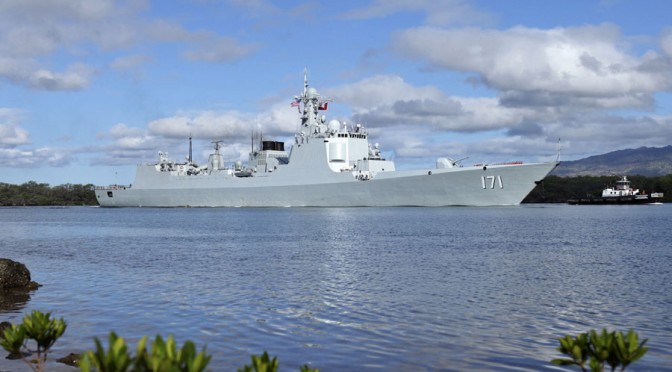
Of particular note, 2014 marks the first time China participates in RIMPAC. Previous editions have involved regional neighbours, like Japan and South Korea, but curiously excluded the People’s Liberation Army Navy (PLAN). Early this year, as planning was underway for the upcoming edition of RIMPAC, the US extended an invitation to China for the first time. However, the fallout from the Shangri-La Dialogue in Singapore on May 31-June 1 left considerable doubt that China would accept the invitation. It therefore came as a surprise when China formally accepted the invitation one week after the heated debate in Singapore. In a move that could help reduce regional tensions, four PLAN vessels have participated in the exercise, serving alongside ships from other participating countries, like Japan, the Philippines, and Canada.

This is also the first RIMPAC exercise for the small Southeast Asian state of Brunei. The Royal Brunei Navy is a rather small force, especially in comparison to the impressive naval might of nearby Singapore, but it has contributed two off-shore patrol vessels. These smaller ships, the KDB Darussalam and KDB Darulaman, are also Brunei’s newest acquisitions and so RIMPAC is viewed as an opportunity to test out their capabilities in simulations of large-scale maritime combat operations.

With Brunei, participation in RIMPAC increases among Association of Southeast Asian Nations (ASEAN) members to six out of ten, indicating a willingness by the bloc to become more actively involved in Pacific security. The four member states not participating in 2014 either lack the capacity to participate, such as landlocked Laos, or they were not invited to participate, such as the despotic regime in Burma.

While China and Brunei are in this year, Russia is out. In 2012, Russian maritime forces joined RIMPAC for the first time. Three vessels took part, led by the destroyer RFS Panteleyev, which had previously served alongside NATO forces as part of Operation Ocean Shield. But with tensions rising over Russia’s actions in Ukraine, no invitation was extended to join RIMPAC in 2014.

In May 2014, Russia and China held a large-scale joint naval exercise of their own in the East China Sea, but Russia has otherwise been left isolated in Pacific military affairs since the Crimean crisis. Aside from supplying Vietnam with new submarines and other vessels, Russia has scant opportunities to build security ties with the countries of Southeast Asia, stalling any effort by Vladimir Putin to pivot eastward. This suggests that any ‘soft power’ influence Russia may have had is now in severe decline, with many governments in the region reluctant to trust or engage with Putin.
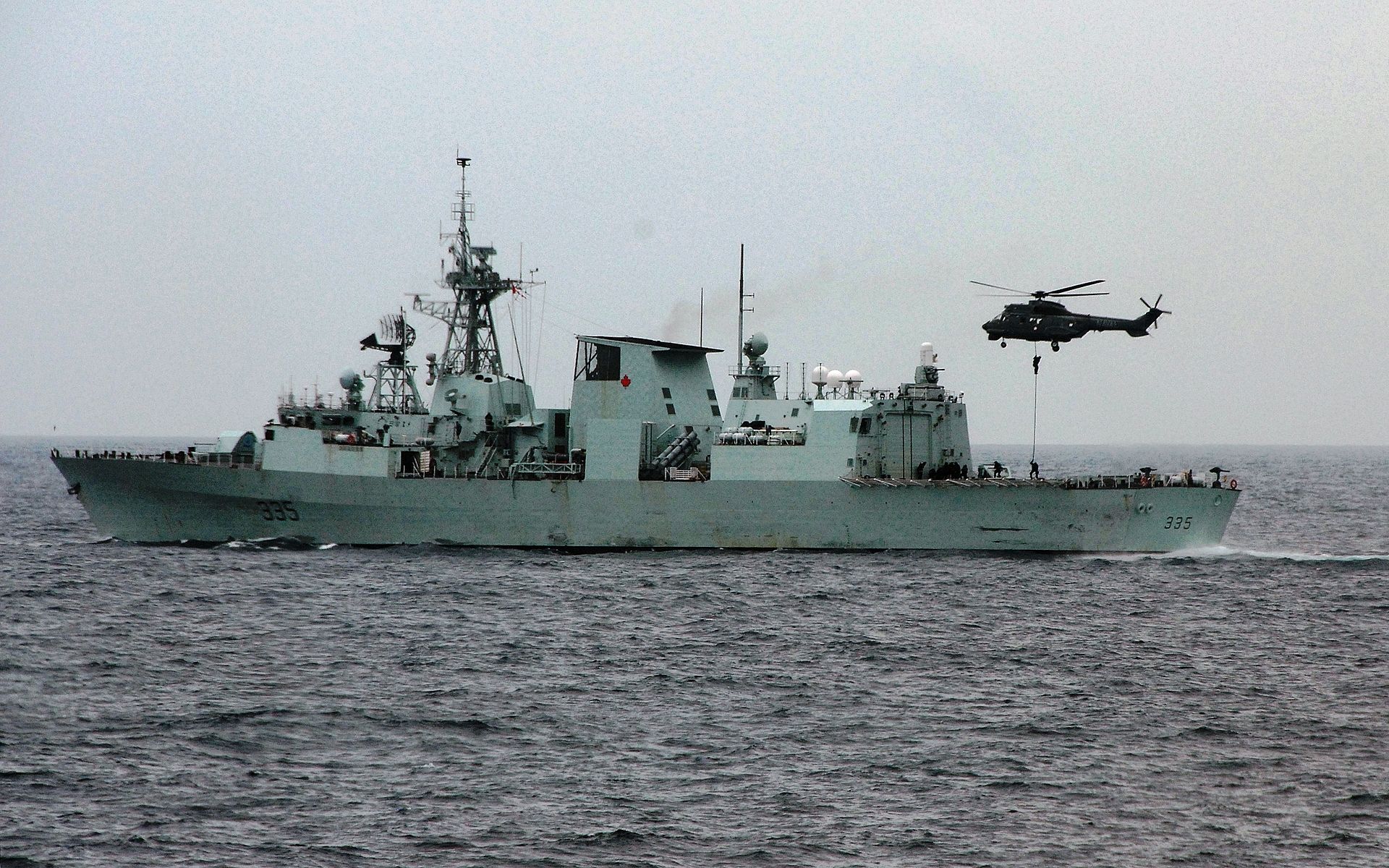
HMCS Calgary (FFH 335)

RIMPAC 2014 is also a significant opportunity for Canada to demonstrate its capacity to become a major player in the Pacific. This has clearly not been lost on Canadian defence officials as there is a considerably increased contribution from Canada as compared to 2012, despite the fact that many Royal Canadian Navy vessels are either undergoing repairs or are being retrofitted. This time, Canada’s fleet is led by the HMCS Calgary, a Halifax-class frigate, joined by a Victoria-class submarine and two Kingston-class patrol vessels. As RIMPAC is a combined arms exercise, Canada has also sent an infantry company from the Third Battalion, Princess Patricia’s Canadian Light Infantry to act as marines, while a Royal Canadian Air Force component will be deployed that includes eight CF-18 Hornets.

By involving all three elements of the Canadian Forces, it will be possible to demonstrate Canada’s ability to participate meaningfully in a multilateral intervention in the Pacific. As tensions between countries in the Asia-Pacific region are enflamed, discussion surrounding the potential for a Pacific equivalent to NATO occasionally surfaces. By showing leadership through RIMPAC and developing interoperability with countries ranging from Brunei to China, Canada secures a place at the table for itself in case those discussions ever turn serious.

Paul Pryce is a Research Analyst at the NATO Council of Canada and CIMSEC’s Director of Social Media. With degrees in political science from universities in both Canada and Estonia, he has previously worked as a Research Fellow at the OSCE Parliamentary Assembly and an Associate Fellow at the Latvian Institute of International Affairs. His research interests are diverse and include maritime security, NATO affairs, and African regional integration.


Disclaimer:

Any views or opinions expressed in this article are solely those of the authors and the news agencies and do not necessarily represent those of the NATO Council of Canada. This article is published for information purposes only.

This post appeared at the NATO Council of Canada in its original form and was cross-posted by permission.

The Quebec Wars

Daniel S. Matthews brings us this fourth article for our Sacking of Rome Series.

It is the unexpected turns that vex empires the most. Rome did not expect Hannibal to cross the Alps, the French did not expect the dramatic events of Quiberon Bay, the British had their guns pointed the wrong way at Singapore, we were not prepared for World War III to start in Canada.

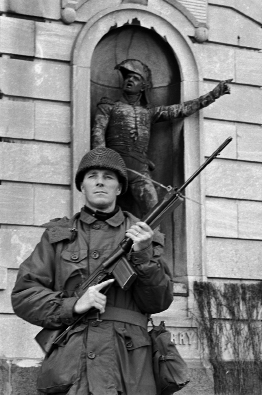
Matthews-1            Thought of Canada being the region where the sparks for World War III will be struck may not seem likely, but there is one area where a foreign foe could surprise the West: Quebec. If Quebec were to secede from Canada, two unsettling possibilities could occur. The first is that Canada could go to war with its wayward province. The second is that some power like China or Russia could build an alliance with Quebec. While such possibilities are unlikely, there are means of defense.
The Canadian Civil War


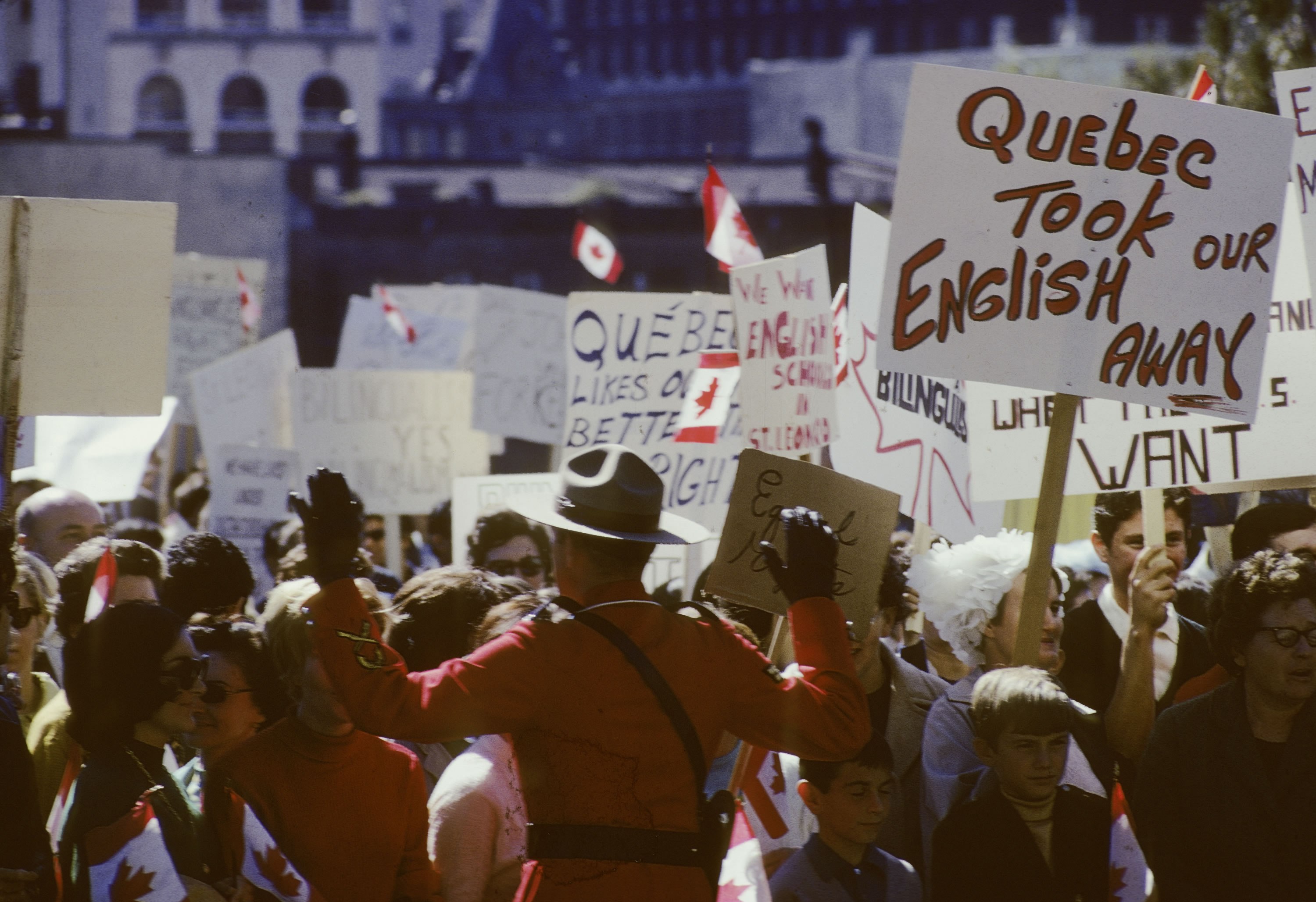
If Quebec were to secede from Canada, there are several points that could spark a civil war between the two. The least likely would be national pride. There are several economic reasons that could provide the tinder for war. Quebec controls the mouth of the St. Lawrence River, and Quebec could use that control to wage economic war with Western Canada. In addition, Quebec possesses significant reserves of natural resources that currently contribute to the North American economy on a free basis. An independent Quebec would change that. Finally, Canada proper would become a split country, with a third of Canadian provinces being geographically separated from the Capital. In light of the fact that no state wants to be divided, and Canada already has several fluttering independence movements, the urge to prevent further dissolution will be strong.


While it is true that Canada does not have a large military, and Quebec has none, it is not impossible for war to break out. The Quebec separatists have used violence before, most notably with the murder of Quebec Labour Minister Pierre Laporte, and it would be easy for a semi-independent Quebec to buy arms on the international market.


If Canada did get involved in civil war with Quebec, there are several options open to both sides if the war drags on. Canada could invoke Article 5 of the NATO treaty, which could split NATO as France has traditionally expressed support for Francophone Quebec. It is unlikely Britain would be unconcerned with a core Commonwealth state being embroiled in civil war; especially depending on how the vote for Scottish independence goes this year. The United States would be committed, as they are deeply intertwined with Canada at every level.


States like Russia, China, or Iran could use the distraction of a civil war in the very center of the Anglosphere to press their boundaries with the Western Alliance. Furthermore, they could start supporting the Quebec rebels, either directly or through third party means. If the war was presaged by an internationally recognized referendum, then Russia or China could take the position that they are upholding international norms, and paint the Western states in a negative light. Attempts at arming the rebels or openly supporting them would directly threaten the fundamental security of the United States, as it would provide a foothold on the continent from which hostile states could threaten the United States.


The Bear and the Dragon in Quebec

Matthews-2

While the first scenario of a successful Quebec independence movement immediately descending into world war is unlikely, the far more dangerous one of an independent Quebec making allies with states hostile to the West is possible. An independent Quebec would have the full ability to make alliances with foreign powers, and it is unlikely they would be readily welcomed into NATO, NAFTA, or other treaties with the Western powers. Canada would put pressure on any attempts to allow Quebec a seat at the table, and European countries would be wary of admitting Quebec, as it could fuel separatist movements within their own countries.


In addition, the United States would not want the possibility of Canada dissolving, even if most of the providences would likely join the United States. This method of amalgamation would be undesirable, if for no other reason than there is no guarantee that each section of Canada would join the US, and a unified Canada is better for the US than a series of states on its northern border. The dissolution of Canada could also embolden separatist movements in the United States.


Given the internal danger to Western countries an independent Quebec would present, it is likely that Quebec would be forced to look for friends elsewhere. Russia and China are the most likely candidates. Both countries would be interested in the natural resources of Quebec. China and Russia would also both enjoy the prospects of helping to develop Quebec’s Arctic resources. In addition, the possibility of a military alliance with Quebec would present an opportunity not present since Alaska became part of the United States; a land connection to the United States.


Right now the Anglosphere is protected by its island status, with no major hostile powers sharing a land border with any member. An independent Quebec would be courted by hostile powers to allow such a chance thought. Russia would view it as retaliation for NATO expanding into the Baltics, Poland, and developing close relations with Ukraine and Georgia. China would view it as a chance to have a mirror for the US alliances in China’s First Island Chain, with the added bonus of a large land connection to the American heartland, as opposed to the slender one that the US has against China on the Korean peninsula. The presence of a near-peer competitor with bases on the North American heartland would greatly reduce the flexibility of Western countries as they exert their influence on the world. Such a situation would be more bothersome to the United States and its allies than the Zimmerman telegram of a century ago, or the presence of Soviet missiles in Cuba half a century ago. It would have the same effect as Germany’s race to rival Britain on the high seas before World War I.


Possible Western Responses


Despite the perils presented by an independent Quebec, there are steps that the US and its allies can take to mitigate the dangers. The easiest remedy would be to continue the integration of the US and Canada, so that Quebec does not have economic or cultural incentives to break away. In addition, the West should focus more on promoting its unifying cultural values internally to provide less fuel for separatist movements. The US and Canada should also do more to encourage English proficiency, to increase the bonds of unity within and between both countries.


Internationally, the West should focus less on supporting the forms of Western states, elections being a key issue, and more on cultural reforms such as the acceptance of the loyal opposition, freedom of the press, and the like. Encouraging every group that wanted its own state did not work well for the peace, freedom, and stability of Europe from 1815 to 1939; it is not going to work well elsewhere. Such an approach would help cement the cultural idea that it is undesirable for states to break up along ethnic lines.


Finally, if Quebec does become independent, the West must make every effort to keep them within the Western sphere of influence. The United States should immediately offer closer association with the rest of Canada to stress the message of unity. An independent Quebec can be offered membership in the trade agreements that the Western nations have with one another and limited military exchange. Alternatively, a Canadian confederacy could be proposed where Quebec has almost total control over domestic affairs, but for international relations, it would still be part of Canada.


Militarily, Quebec already has more ties with Western countries, as they have served in the unified Canadian armed forces since that country was formed. Quebec citizens have served alongside the armed forces of other Western nations and have developed close ties; therefore, they would likely want to maintain those bonds. This should be encouraged.


As a final point, if hostile foreign powers do make inroads to an independent Quebec, the US should step up integration with its allies militarily and economically so to prevent further wedges being driven between the parts of the alliance. Alliances are easier to break apart than unified countries, and neither Russia nor China would want to face a unified power stretching from Japan to Eastern Europe.

Lieutenant Daniel S. Matthews is currently assigned to Marine Corps University, preparing to take over the role as Naval Gunfire Liaison Officer for III MEF. He has served in a wide range of sea and shore billets. LT Matthews is a native of Warrenton, Virginia, and graduated from Old Dominion University in 2007.

Nordic NATO Nominees

Until recently, it was hard to imagine Sweden joining NATO. With long traditions of neutrality, Sweden and Finland had distanced themselves from the main military centers of Europe. The reason for neutrality is succinctly explained in the introduction to the book Navies in Northern Waters 1721-2000: “The present situation is a further illustration of the long-standing conflict between the legal and power-oriented approaches to disputes in the region,” with the Swedes and Finns aligned with the former. In 1994 Sweden joined Partnership for Peace (PfP) as a framework to cooperate with NATO. Still insisting on its place as a militarily non-aligned country, the Swedish Mission to NATO states that “by participating in PfP, Sweden wishes to contribute to the construction of a Euro-Atlantic structure for a safer and more secure Europe.”

Public Swedish support for joining NATO remained limited, with about 50% against as of mid-April, but supporters of this idea increased their share from 17% to 29% last year alone. In the same article we find important opinion of Finland’s Prime Minister Jyrki Katainen who said “that both Finland and Sweden should consider joining Nato when the time is right.” A small Finnish step in this direction is that this year the nation agreed to a Memorandum of Understanding with NATO, while Sweden and Finland are increasing military cooperation with each other under a landmark pact. So what caused both Nordic countries to begin reevaluate their positions? Prof. Mearsheimer in his book The Tragedy of Great Power Politics wrote:

When a state surveys its environment to determine which states pose a threat to its survival, it focuses mainly on the offensive capabilities of potential rival, not their intentions.

Living near mighty military power means that one lives in a state of permanent insecurity, so what one hopes for are benign intentions. The war in Georgia ignited doubt about one particular neighbor, but Ukraine has forced caution to give way to fear. If one can’t hide by flying “under the radar” of a big power, then what remains is to ally with another power. Appeasement doesn’t have a good track record during Europe’s last 100 years. But as Jan Joel Andersson explains in the Foreign Affairs article “Nordic NATO,” both countries need public buy-in for the solution before joining the Alliance. Although skeptical, Scandinavians seem to slowly appreciate this path and support for the idea is growing. The article lists good arguments, both political and military, for Sweden and Finland to join NATO from the Alliance’s perspective. In fact, this would be a geostrategic loss for Russia, greater probably than the gain of Crimea. From a purely military point of view, the following excerpt is critical for understanding the regional stability the additions would aid:

Even more important, Sweden and Finland’s formal inclusion in the alliance would finally allow NATO to treat the entire Arctic-Nordic-Baltic region as one integrated military-strategic area for defense planning and logistical purposes, which would make the alliance much more able to defend Estonia, Latvia, and Lithuania against Russia.

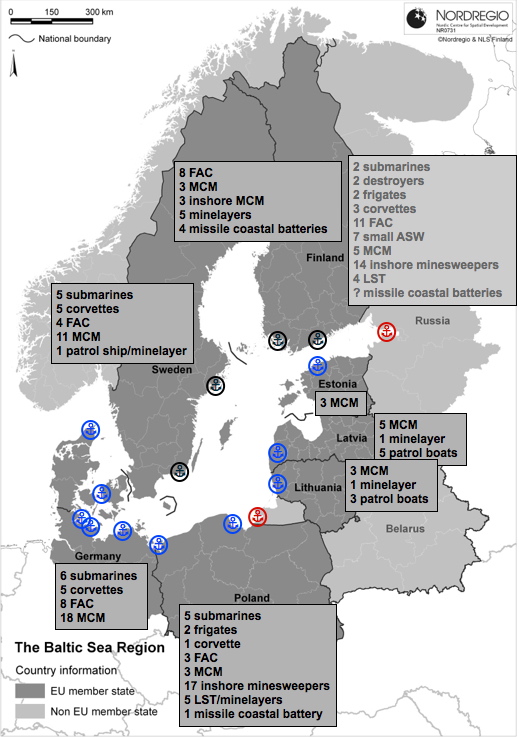
It’s worthwhile to take a look at a map, especially to highlight the maritime and naval aspects of this story.

BalticInfographic_001

In the current situation, the Baltics represent a relatively narrow strip of land, lightly defended and not offering defense-in-depth. Any sustained reinforcements could come only from sea, which would require sea control. The main NATO naval forces would likely operate from bases in Germany and Swinoujscie in western Poland, as Gdynia and Klajpeda could be put at risk by ground operations. Although it would be possible to organize a successful blockade of any opposing naval forces using the Alliance advantage in submarines, light surface forces would have tough time overcoming land-based air forces and coastal batteries. Using Adm. J.C. Wylie’s terminology, the geography of the region strongly favors sequential warfare on land instead of cumulative naval warfare for which there would be no time assuming the desire to defend the Baltics.

Swedish access to NATO would alter these considerations significantly, bringing a few additional benefits to the more-realistic defense of the Baltics:

  • Norway would no longer be an “isolated” NATO member, as its depth of defense increases.
  • Baltic Sea control could be achieved and maintained by local navies with limited support from the United States.

There are two other aspects to consider, however. For Finland, Sweden’s joining NATO would only increase its isolation as the only neutral country in the region. The preference for a sequential land warfare strategy would expose Finland for greater risk. The situation would not be so different from that of the Black Sea. Therefore the best would be a common decision of both Sweden and Finland, even if it complicates matters.It is difficult to imagine synchronization of political willingness in such sensitive area, but growing cooperation between Nordic countries could be helpful. Nordic Defence Cooperation initiative, including Sweden, Finland, Norway, Denmark and Iceland, although mostly focused on military efficiency includes already mix of NATO and EU countries, and active participation of both Finland and Sweden with NATO lower technical barriers of access. The key point remains public support for such idea, but as it was mentioned already, such support and acceptance seems to slowly grow.

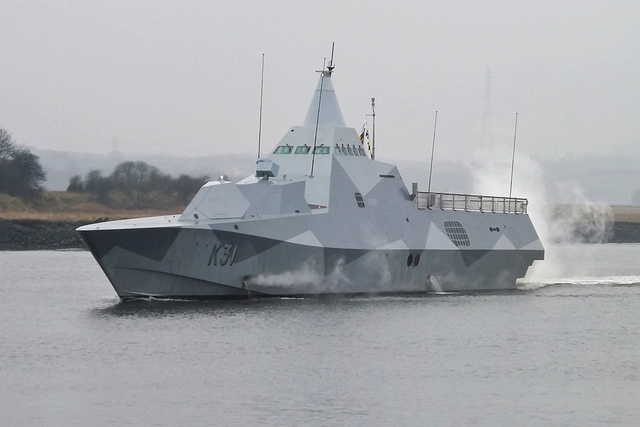
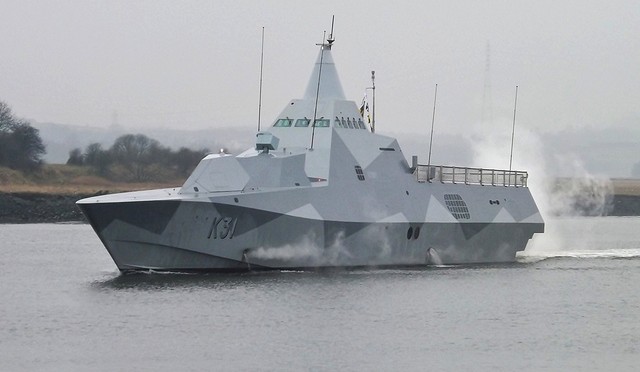
8643086211_cef286772e_zAnother issue is the opportunity to evaluate/reevaluate the concept of the U.S. Navy’s littoral combat ship (LCS) and/or its successor in the Baltic Sea security environment. Two different scenarios including Nordic countries offer very different operational possibilities. In today’s state of things, the LCS lacks offensive power of anti-ship cruise missile (ASCM). Meanwhile, pondering anti-air defense leads to the dilemma the best defined by Swedish designers of the Visby corvette – “invincible or invisible”. However, in the case of the Nordic countries belonging to NATO, LCS’s anti-submarine warfare (ASW) and mine counter-measure (MCM) capabilities would be very much appreciated. In the May issue of the U.S. Naval Institute’s Proceedings, Adm. Walter E. Carter offers some remarks on future forces in his article “Sea Power in the Precision-Missile Age:”

Based on the preceding analysis, it appears that the most significant forces for future warfare at sea include:

  • Platforms employing standoff ordinance that penetrate high-end defenses;
  • Platforms with an emphasis on offensive firepower to prevail at sea;
  • Mobile and low-observable platforms and logistics, readily dispersed, and heavily protected or hidden by decoys, obscurants, RF jammers, and signature control; and
  • Forces minimally reliant on RF networks to be employed against high-end opponents using pre-planned responses and low-data-rate, secure, and sporadic communications.

Conversely, less relevant forces of the future will include:

  • Those dependent on fixed bases;
  • Platforms within enemy missile ranges that have large signatures and are thus readily targetable;
  • Systems dependent upon long-distance, high-data-rate RF networks;
  • Platforms that must penetrate high-end defenses to deliver ordnance; and
  • Platforms whose primary means of survival rests on active defense (i.e. shooting missiles with missiles).

While this analysis seems to be a perfect description of Pacific scenarios, a narrow sea like the Baltic invites further elaboration as this environment offers little room for stand-off or escape from inference from shore based-capabilities. Striking an enemy’s shore would incentivize small, stealthy, and unmanned platforms, but keeping sea lines of communications open in the same area would be difficult without classic surface forces. So the question remains open as to how survivable these light surface forces would be in restricted waters. And in the case of submarines the weak point in narrow waters is still the naval base from which they operate.

Przemek Krajewski alias Viribus Unitis is a blogger In Poland. His area of interest is the context, purpose, and structure of navies – and promoting discussion on these subjects in his country.

NATO’s Pivot to Russia: Cold War 2.0 at Sea?

Putin’s annexation of the Crimea shifts NATO’s focus back to Europe. Therefrom, maritime security’s relevance for the Alliance will suffer. Nevertheless, Russia’s new assertiveness has massive impact on NATO’s maritime priorities. Other than expeditionary missions, European homewaters are now the theaters of concern.


All Opportunities Gone


After the Cold War, NATO was never threatening Russia, but rather sent dozens of cooperation offers to Moscow. Moreover, if Russia would sincerely have seeked NATO membership, Putin would fly to NATO’s September Summit. However, in NATO, Russia would never have been eye-on-eye with the US, but rather would have found itself on a level with Germany, France and the UK. Thus, Russia would never have found the global prestige and geopolitical influence it was looking for. That is the real reason why Russia never joined the Alliance. Since 1991, there were many opportunities for naval cooperation between NATO and Russia.

In Partnership for Peace (since 1994) and the NATO-Russia Council (since 2002), the Alliance reached out to Moscow, aiming to work closer together at sea. Positively, some of these opportunities turned into reality. NATO and Russia were working together in the Mediterranean (Med’) in Operation Active Endeavour to combat terrorism and in the Indian Ocean to combat piracy. Moreover, the planned, but cancelled joint naval mission to protect the destruction of Syria’s chemical weapons has shown the potential for increased cooperation. However, with the annexation of the Crimea, these opportunities ceased to exist.

Step up Black Sea Presence

Ukraine has no significant navy anymore. Instead, Ukraine’s warships were taken over by Russia, which makes Moscow’s navy, by numbers, larger than the US Navy. However, due to the warships’ poor quality, this increase in naval power does not present a game changer. Surely, a plus for Putin’s navy is that Sevastopol will remain a Russian naval base for decades.

Black Sea (Source: Wikipedia Commons)

After Sevastopol is lost, Ukraine’s only significant port left is Odessa. NATO’s response should be to support Ukraine in keeping at least a small navy. Moreover, NATO should give a guarantee that, in case of further Russian aggression, Ukrainian ships can find shelter in Romania, Bulgaria, Turkey or Greece. In addition, SNMGs and SNMCMGs should pay regular visits to Odessa; on the one hand for partnership with Ukraine and on the other hand as show of force to Russia. Trips to Georgia should go along.

Like it or not – The Bosporus has become a bargaining chip. NATO should make contingency plans how to close the Bosporus for Russian warships, should Russia invade Eastern Ukraine or Moldova. NATO must make clear to Russia that a price to pay for further annexation of territories would the loss of access through the Bosporus.France, Please Cancel the Mistral Deal

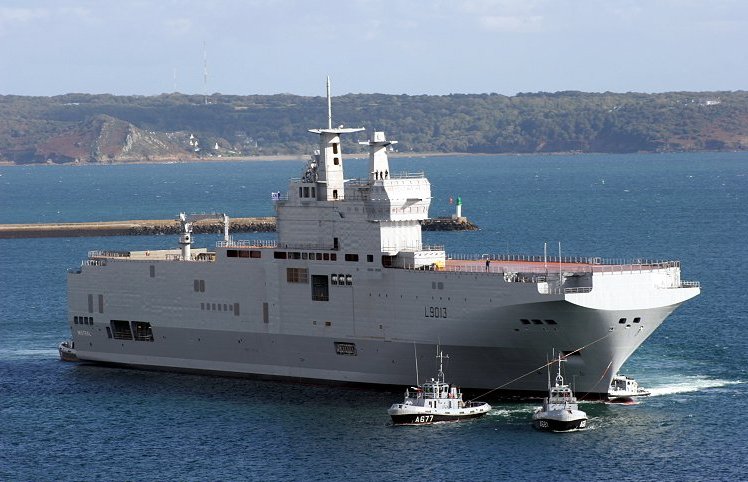
French Mistral LHD. (Source: Wikipedia Commons)

Russia could have done military campaigns like Georgia 2008 or Crimea 2014 much easier with one of the Mistrals. One of these LHD would also be useful for Russia’s navy in campaigns against Moldova, with regard to Gagauzia and Transnistria, or even against Estonia, because the Mistrals can serve as a platform for command and control, attack helicopters and landing troops.

That Russia announced to base its Mistrals in the Pacific does not mean that they will operate there. For its Syria show-of-force, Russia deployed warships from its Pacific Fleet to the Med’.

Regarding the military balance in Europe, France would do its allies a disservice, if it would deliver the Mistrals to Putin. Instead, these vessels should remain either in Europe or in a like-minded country. Options where to sell the ships could be South Korea, Japan, Singapore, Brazil, Turkey, South Africa or India; countries, which are looking for new LHD.


An even better idea comes from Jeff Lightfoot. He argues that “NATO should buy the Mistrals“. Like AWACS and AGS, the Mistrals could become a shared NATO asset. Although I fully support Lightfoot’s arguments for a NATO-nization of the Mistrals, I disagree with him about how to do that. After NRF and EU-Battlegroups failed, NATO’s Standing Maritime Groups are the only multinational units with combat capabilities, which ever really worked. Moreover, Europe was carrying most of the burdens in the SNMG, which face a serious of lack amphibious capabilities. Thus, the Mistral purchase should be mostly funded by the Europeans. Germany, Norway, the Netherlands, Denmark, Poland and Belgium could go for “NATO Mistral 1”, while the US, Canada, Spain, Italy, Portugal and Turkey could go for “NATO Mistral 2”. A NATO LHD in the Baltic or Black Sea would send clear message to Russia. Deployments to the Med’ or Indian Ocean would help to pursue Western maritime interests.
Sustain Superiority in the Baltic and the Med
Baltic Sea (Source: Wikipedia Commons)

With the entry of the Baltic Countries and Poland into NATO and EU, the Baltic Sea was a solely political issue, not worth military considerations. This has changed, too. However, this does not mean that we are on the brink of war. Nevertheless, NATO needs to make plans how to deter Russia from threatening the Baltic Countries from the sea. The Alliance must make sure that its naval superiority in Baltic remains clear. Deploying an SNMCMG to the Baltic and regular naval exercises, such as BALTOPS (non-NATO), are efforts worth doing. Moreover, Sweden and Finland should join NATO. Both countries would bring great contributions to NATO and their membership would even increase Russia’s isolation in the Baltic Sea.

Russia is no partner for cooperation in the Med’ anymore. Beside the consequences of Crimea, Russia’s show-of-force in the Eastern Med to cover Syria made clear that Putin is willing to use naval power in missions targeted against Western interests. In consequence, the Europeans have to prevent – politically – that Russia opens new naval bases in the Med’, for example in Cyprus or Egypt. EU member Cyprus must receive the clear message from Brussels that a Russian base on Cyrus is unacceptable. In addition, NATO should closely monitor all Russian naval activities in the Med’ and make plans about how to deal with them in case of further Russian aggression. Moreover, NATO states should close their ports for Russian ships to be replenished.
We Need Nuclear Deterrence
Ohio-Class SSBN, US Navy (Source: Wikipedia Commons)
Besides guaranteeing NATO’s future, Putin’s Crimea annexation also ends the American and British debates about the need for a sea-based nuclear deterrent. The argument for retiring the SSBN was that state-to-state conflict was unlikely and, therefore, nuclear deterrence was outdated. However, sea-based nuclear deterrence provides the minimum of global stability we need to prevent devastating state-to-state conflict. Where could the conflict with Russia go, if global zero was reality? What would prevent Putin from sending Russian tanks through Tallinn via Riga to Vilnius? Surely not statements from Berlin to keep the diplomatic hotlines open.

No matter about the massive unpopularity – Europe will need the nuclear umbrella provided by the US, UK and France. We are not yet back in the pre-1989 times. There is not yet a Cold War 2.0 at sea. However, if we forget the lessons learned of nuclear and conventional deterrence, we may find ourselves in exactly these situations much sooner than we think.

NATO-Building Starts at Home

NATO’s pivot to Russia will shift attention away from the maritime domain back to the continent. Armies and air forces will receive, once again, much more attention than navies. While Putin’s aggression increased the importance of NATO for its member states, maritime security’s relevance for member states and, therefore, for the Alliance will decrease. In consequence, theaters like the Persian Gulf and the Indian Ocean will become of much less concern for NATO.

In case the Crimea Crisis did not happen, NATO, to sustain its relevance, would probably have looked for new maritime tasks in the Med’, Gulf of Guinea and the Indian Ocean, maybe even in Southeast Asia. However, thanks to Putin, we will find NATO’s warships deployed back in the Baltic and the Black Sea. Given Operation Ocean Shield ends this year, we will not see NATO back in the Indian Ocean very soon; except maybe for a few friendly port visits. After Crimea and with Putin’s hands on Eastern Ukraine and Moldova, NATO’s debates about partners across the globe and global alliance are finally dead.

In response to Putin, NATO-building begins at home. We need NATO’s Public Diplomacy Division, fully focused on the Alliance’s core business, reaching out to the member states’ ordinary taxpayers. The changing European security environment requires an emphasis on the big messages: Defense, deterrence and security. Thus, zeitgeist-motivated campaigns should be stopped. In these times, NATO must tell the people what armies, air forces really are for and how our soldiers serve their countries and our Alliance.

Felix Seidler is a fellow at the Institute for Security Policy, University of Kiel, Germany, and runs the site Seidlers-Sicherheitspolitik.net (Seidler’s Security Policy).

Follow Felix on Twitter: @SeidersSiPo