Tag Archives: Russia

October Member Round-Up Part One

By Sam Cohen

Welcome to Part One of the October 2015 Member Round-Up, covering the first two weeks of the month. Over the past two weeks CIMSEC members have examined several international maritime security issues, including the U.S. South China Sea Initiative, Russian military operations in Syria and the Mediterranean Sea, the strategic importance of the Arctic and aspects of the U.S. Navy’s procurement strategy.

Beginning the Round-Up at The Diplomat, Ankit Panda discusses the changes made by the Senate to the National Defense Authorization Act 2016 (NDAA 2016). The bill’s new features include Taiwan among a list of countries that will receive financial and military assistance from the U.S. for operations in the South China Sea. Additionally, the NDAA 2016 outlines the new U.S. South China Sea Initiative, which aims to increase maritime security and maritime domain awareness for foreign countries in the region. Also for The Diplomat, Ankit Panda shares a second article where he discusses Chinese coast guard operations near the disputed Senkaku/ Diaoyu Islands. These operations have substantially increased East China Sea tensions as the Chinese coast guard continues to enter Japanese territorial waters to support their claim over the islands.

ADM. James Stavridis in an interview with Bloomberg Business discusses the U.S. government’s position towards the artificial islands being constructed in the South China Sea. ADM. Stavridis states that from the U.S. perspective the islands will not affect freedom of navigation (FON) considering the islands represent international sea and air space and not sovereign Chinese territory.

Leaving the Asia-Pacific, ADM. Stavridis speaks with Bloomberg News concerning Russian and U.S. operations within Syria and the Mediterranean Sea. He explains that both countries’ naval and air forces in the region have not established deconfliction processes meaning their local command structures are not communicating with each other. In addition, ADM. Stavridis states that the U.S. will need to prioritize ISIS over other security objectives in the region, a strategy that will consist of significant increases in ground force deployments in Iraq and eventually Syria.

Chuck Hill, for his Coast Guard Blog, discuses the recent cruise missile attacks launched by Russian naval forces from the Caspian Sea against targets throughout Syria. Mr. Hill identifies that these attacks demonstrate Russian surface combatant capabilities similar to that of a U.S. Tomahawk cruise missile being launched from a U.S. vessel. Further to this, Mr. Hill explains that the Russian vessels launching the attacks resemble less-lethal equivalents in the U.S. Navy, revealing that Russian naval forces are practicing distributed lethality while the U.S. Navy is still deliberating over its implementation.

Sam LaGrone, at U.S. Naval Institute News, also discusses the expanding Russian operations within Syria. Mr. LaGrone analyzes the deployment of a Black Sea-based Russian surface action group to the Eastern Mediterranean to provide an air defense bubble in support of Russian fighters striking targets in Syria. These deployments are in addition to the arrival of a Russian surveillance ship as well as several Russian amphibious assault ships in the region.

Dave Majumdar, for The National Interest, discusses features of the U.S. Navy’s plan to acquire rail-guns, lasers and nuclear power across the entire future surface combatant fleet. Mr. Majumdar identifies that the future Navy warship will require large amounts of eclectic power to run advanced systems including power-hungry radar systems and energy weapons. Additionally, the current DD-51 and Ticonderoga-class hull-forms will need to be replaced to allow for developing guided-missile destroyers to be equipped with Raytheon’s AN/SPY-6 Air and Missile Defense Radar.

To conclude Part One of the October Round-Up, Chuck Hill for his Coast Guard Blog analyzes the U.S. Navy’s decision to commit to the selection of the Longbow Hellfire missile as a provisional weapon system to offer offensive capabilities for Littoral Combat Ships. Mr. Hill explains that the Longbow Hellfire missile system will be extremely effective against highly maneuverable and high speed fast-attack craft and if deployed in large volumes, can also be effective against larger surface threats.

Members at CIMSEC were also active elsewhere during the first part of October:

At CIMSEC we encourage members to continue writing, either here on the NextWar blog or through other means. You can assist us by emailing your works to dmp@cimsec.org.

Sam Cohen is currently studying Honors Specialization Political Science at Western University in Canada. His interests are in the fields of strategic studies and defense policy and management.


Protraction: A 21st Century Flavor of Deterrence

This interview originally appeared on the Small Wars Journal website and was republished with permission. You may find the interview in its original form here

Interview with Jim Thomas (CSBA) conducted by Octavian Manea

Jim Thomas is Vice President and Director of Studies at the Center for Strategic and Budgetary Assessments (CSBA). He served for thirteen years in a variety of policy, planning and resource analysis posts in the Department of Defense, culminating in his dual appointment as Deputy Assistant Secretary of Defense for Resources and Plans and Acting Deputy Assistant Secretary of Defense for Strategy. In these capacities, he was responsible for the development of defense strategy, conventional force planning, resource assessment, and the oversight of war plans. He spearheaded the 2005-2006 Quadrennial Defense Review (QDR), and was the principal author of the QDR report to Congress.

During the last sequences of the Cold War, the US and NATO emphasized new capabilities and new operational concepts – Assault Breaker, Air Land Battle, Follow-On Forces Attack. What role did these elements have in changing Soviet perceptions about the military balance, including restoring a credible deterrence on the NATO’s Central Front?

Four things stand out as contributing to allied success in influencing the military balance in the early 1980s.

The first and probably the most important was political: allied solidarity. The Alliance successfully deployed highly controversial systems like Pershing 2 to force the Soviet Union back to the negotiating table on intermediate nuclear forces. Showing the alliance solidarity surprised the Soviet leaders and made the situation more difficult for them. Soviet leaders had high hopes that peace movements in Western Europe would scuttle any such deal and they were dead wrong.

The second is financial: beginning in the last year of the Carter Administration and continuing into, and intensifying during the Reagan Administration, decisions were taken to increase military spending. The so-called Reagan rearmament began and continued throughout the 1980s as an effort to outspend the Warsaw Pact forces.

The third is the development of new operational concepts, the American Air Land Battle concept and NATO’s complementary Follow-On Forces Attack, which emphasized being able to hold at risk second echelon forces, to “look deep and shoot deep.”

And that leads to the fourth element: technology. A DARPA initiative called Assault Breaker that was designed to harness advanced technologies that would allow for the implementation of Air Land Battle. It was the R&D centerpiece of a new technological investment strategy and the second offset strategy launched by Harold Brown and Bill Perry during the Carter Administration focusing on three technological areas: precision warfare, low observable aircraft, and the ability to use micro-processors to create the datalinks between sensors, controllers and shooters. Assault Breaker helped to spur development of new airborne sensors, networking, stealthy strike aircraft, and precision guided munitions.

All these trends were observed in Moscow. In 1984, Marshal Ogarkov, the chief of the Soviet General Staff, acknowledged that the so-called reconnaissance strike complex was emerging and that it offered a new revolution in military affairs beyond the nuclear revolution in which conventional weaponry with precision guidance could assume some roles that were previously monopolized by nuclear forces. He was also very pessimistic about the ability of the Soviet military and its defense industry to keep pace with these developments. This military pessimism converged with also changing political currents in Moscow. It wasn’t a decisive factor, but I think it contributed to the decisions made by the Soviet political leadership in the late 1980s to seek a better relationship with the West and try to reduce military competition, which increasingly was seen as a losing proposition.

How do Russia’s contemporary A2/AD capabilities change the security landscape in Europe?

First, Russia has some very capable air and sea denial systems. Russia’s ability not only to protect its own airspace but also to deny the use of airspace over the territory of NATO frontline states in a crisis or conflict has improved dramatically. This poses real problems to the Alliance especially if NATO continues to maintain a defense in depth posture with only lightly defended frontline states.

Second, since the end of the Cold War and especially since the NATO-Russia Founding Act and the adoption of the so called 3 No’s [“no intention, no plan and no reason to deploy nuclear weapons on the territory of new members”], the alliance relied on expeditionary, so-called rapid reaction forces that in a crisis or conflict would be dispatched from the more Western countries of NATO to reinforce the Eastern frontline states. But in the presence of advanced Russian air and sea denial systems this may be very difficult. In a crisis it may be in fact destabilizing to deploy NATO forces eastwards and in conflict it could be even suicidal as transport aircraft and ships, not to mention receiving ports and airbases would be vulnerable to Russian surface-to-air, anti-ship and land-attack missiles.

Third, there is this intermingling of anti-access/area denial capabilities that can essentially check conventional power-projection by other traditional militaries to reinforce frontline allies and at the same time this greater emphasis on non-linear/sub-conventional operations as emphasized by Valery Gerasimov, chief of the Russian general staff. These two types of endeavors really work hand in glove. It is this non-linear warfare area where NATO has been quite slow in terms of both defense (how it addresses these threats) as well as how it too might opportunistically exploit these similar approaches. The same can be said when it comes to A2/AD: how can the frontline states emulate or mimic some of the A2/AD approaches others are adopting to create an effective bear trap. And NATO countries also need to rethink the so called 3 NOs. It may be past time to return to a forward defense posture and permanently station US and other allied forces on the territory of the frontline states. We shouldn’t wait until the next crisis to move in this direction.

Is it accidental that revisionist powers in the Middle East, Far East and Europe are projecting their anti-status-quo interests at a time when they are feeling more confident in their own A2/AD capabilities and their ability to keep at bay traditional power projection?

Definitionally, the intention of a revisionist power is to challenge the status-quo and try to maximize its power and expand its sphere of influence. The character of revisionism is different across the three regions. Many in Europe were surprised by Putin’s annexation of Crimea because they took for granted the borders that were established at the end of the Cold War and that were perceived as indisputable as opposed to the situations in Middle East or maritime Asia.

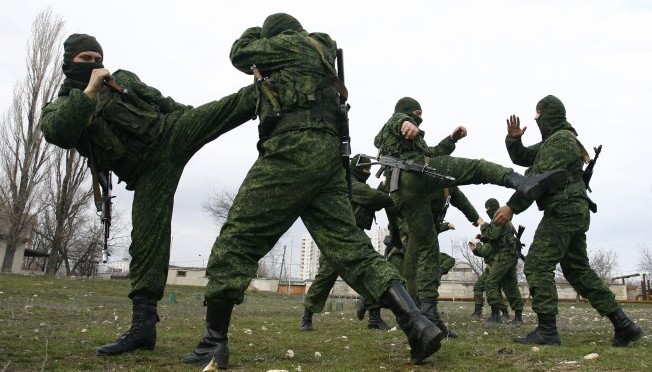
All these revisionist powers appear less hesitant about employing irregular operations as a surrogate or as a complement to traditional military power projection. Especially when confronting other great powers, the ambiguous nature of irregular actions undertaken not by uniform soldiers, but by fishermen, by civilian protesters or by “little green men” offers a more insidious form of power projection.

Is this an incentivize for a revisionist power that had the intent, and now increasingly the capabilities and the ability, to wage low cost irregular warfare campaigns under an A2/AD umbrella?

Yes, that appears to be the case. Anti-access/area denial at the conventional level buys time and space for revisionist powers to conduct salami-slicing creeping aggression or coercion underneath whether it is in Crimea, in East China Sea, or in the future in the Middle East. Anti-access capabilities can enable conventional or unconventional forms of power projection by providing the umbrella to protect them from conventional counter-attacks especially during movements.

Rather than seeing the irregular gambit as a form of warfare distinct from conventional warfare, the revisionist powers appear to integrate these concepts in ways that combine different approaches. They are able to combine anti-access and area-denial, conventional capabilities with these irregular and sub-conventional capabilities in very effective combinations. These combinations could be differentially applied depending on the circumstances and their specific objectives at any time whether it is in Georgia, Ukraine or perhaps the Baltics or Moldova in the future. The anti-access/area-denial capabilities allow them to hold off conventional military forces and create an umbrella underneath which they can use their sub-conventional capabilities.

Do nuclear weapons have an A2/AD role? Can a nuclear umbrella play the role of an A2/AD umbrella underneath which a revisionist power can employ conventional or sub-conventional forces?

Nuclear weapons are sort of the original A2/AD threat. States that have them tend to be far more effective in dissuading others not to get too close or to think twice before attacking. Coupled with conventional A2/AD capabilities, Russia’s posture poses a vexing problem for allied planners. The range of Russia’s conventional air defense, anti-ship, and land-attack missiles blankets large portions of some frontline allies like the Baltics. Russia has declared that any attack against its territory could invite nuclear retaliation. Thus, its nuclear forces may be perceived as providing some form of sanctuary for its western conventional A2/AD capabilities.

Does NATO need a new updated 21st century Air Land Battle doctrine? How should NATO be re-postured for a security environment where parts of its territories are covered by the competitor’s A2/AD umbrella?

For NATO, the highest priority should be improving local defense of the countries on the frontline. I like Wess Mitchell and Jakub Grygiel’s proposal to establish a preclusive defense posture. Frontline states with assistance from their allies need to develop their own air, sea, land denial capabilities to negate and reduce the risks posed by the Russian conventional force aggression.

At the same time, NATO needs to develop an irregular dimension or irregular characteristics to Alliance deterrence to complement the conventional and nuclear forces. We need to expand the capacity of all NATO frontline states to conduct popular resistance, a defense that is highly irregular in its characteristics and holds out in particular a much greater risk of protracted warfare, denying quick wins for potential adversaries. We want to raise the costs dramatically for any potential aggression against NATO states and hold out the prospect of conflict widening while buying time for allies to respond and avoiding any fait-accompli on the ground. The emphasis should be put on the small highly distributed irregular resistance forces, prepositioned concealed weapons and clandestine support networks and auxiliaries. Modern guerilla forces armed with short-range man and truck portable guided rockets, guided artillery, guided mortars can conduct very rapid and very lethal maneuvers, ambushes and sabotages. We talk a lot about deterrence by denial and deterrence by punishment, but I think increasingly in the 21st century we must talk in terms of deterrence via protraction.

Should NATO have the ability to put in danger the Russian anti-access/area-denial capabilities more along the lines of the Air-Sea battle concept articulated in East Asia?

In Europe, the frontline states should make themselves indigestible and at the same time, NATO should expand its conventional strike capabilities, kinetic and non-kinetic, while preserving its nuclear options for escalation control. We want to demonstrate that there can be no possibility of aggression against NATO frontline states whether that would be classic armed conflict or would be subtle, insidious forms of subversion. We have to demonstrate unquestionable intolerance for the full range of threats that could be posed.

How should emphasis on defense modernization look like for a country like Romania exposed to the Russian A2/AD capabilities and in a time when the Black Sea is rapidly becoming a Russian A2/AD lake?

The sine-qua-non should probably be land, air, sea denial capabilities with greater emphasis on ground based air and coastal defenses, as well as distributed anti-tank weapons and mines. Romania has to return to its history and reintroduce its unique concept of popular resistance. In the long term, it may be an option to build a small fleet of coastal submarines as an asymmetric sea denial force.

This interview was published in the context of the Romania Energy Center project “Black Sea in Access Denial Age”, a project co-financed by the North Atlantic Treaty Organization (NATO). To read more, go to http://www.roec.biz/bsad/

September Member Round-Up Part Two

Welcome to Part Two of the September 2015 Member Round-Up, covering the last two weeks of the month. In the past two weeks CIMSEC members have analyzed several international maritime security issues, including the aircraft carrier’s future in the U.S. Navy, Russian military deployments in Syria and the strategic alliance between India and the U.S. regarding security in the Asia-Pacific.

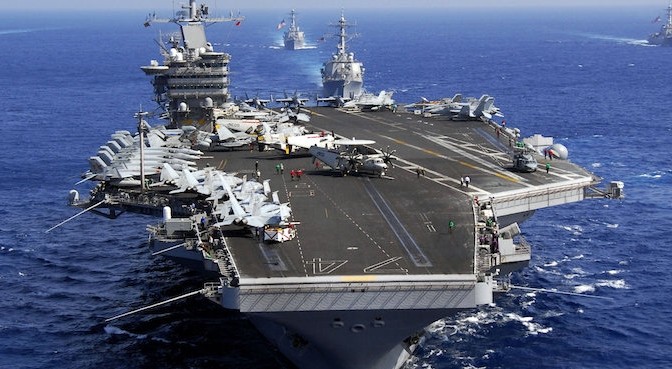
Beginning the Round-up at The War on the Rocks, Bryan McGrath discusses the effectiveness the aircraft carrier brings to the U.S. Navy’s high-end warfare contingency planning despite the mounting number of threats the carrier faces in potential conflict zones. Mr. McGrath explains that in addition to retaining the important traditional contributions the carrier provides to U.S. surface operations, it will also be a primary element of American tactical airpower in any high-end conflict and therefore must remain at the center of the Navy’s force structure.

Focusing on the Asia-Pacific region, Ankit Panda for The Diplomat discusses China’s first indigenously built aircraft carrier along with certain specifications including the ship’s length and width. Mr. Panda identifies that the carrier is significantly smaller than most U.S. carriers, however, it will certainly be able to provide the PLA-N with critical features for enhancing the country’s anti-access/ area-denial strategy. Also at The Diplomat, Mr. Panda examines the ability for the growing strategic and commercial bilateral relationship between the U.S. and India to increase regional stability in the Asia-Pacific by preventing piracy, terrorism and nuclear/ conventional weapon proliferation.

ADM. James Stavridis, for Foreign Policy, provides a geopolitical analysis on maritime Asia where he describes the artificial islands China has constructed as “unsinkable aircraft carriers” and considers their strategic ability to become long-term forward deployed airfields in the South China Sea. ADM Stavridis provides an explanation of how these unique airbases can alter the current dynamic of competing U.S. and Chinese forces in the region.

Leaving the Asia-Pacific region, ADM Stavridis speaks with Defense One regarding the deployment of Russian forces to Syria to assist the Assad regime. ADM. Stavridis explains that Syria has become a high-risk operation region considering Russian and U.S. forces have not established strategic or tactical levels of communication for deconfliction. Additionally, ADM. Stavridis identifies that the stationing of Russian missile-carrying ships as well as SA-22 air-defense systems on Syria’s coastline could limit U.S. areas of operation and add tension to an already hostile environment.

Staying in the Middle East, Chuck Hill for his Coast Guard Blog discusses the United Arab Emirates (UAE) acquisition of the SeaHake mod-4 Extended Range torpedo. Mr. Hill explains that the UAE acquiring the world’s longest-range torpedo will substantially increase their standoff capabilities in the Persian Gulf by allowing them to attack Iranian Kilo-class submarines inside their naval bases on the Iranian coastline in a potential conflict.

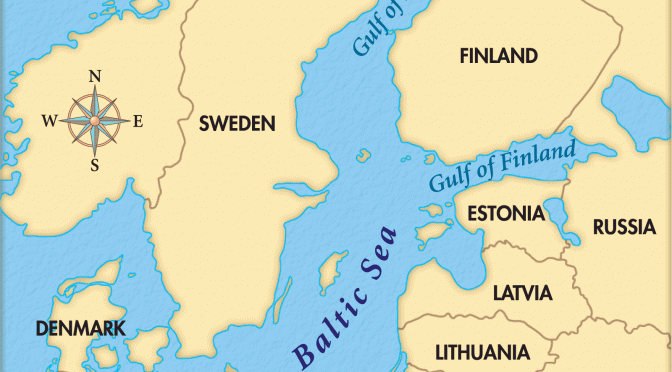
Also for his Coast Guard Blog and to conclude part two of the September Member Round-up, Chuck Hill discusses Poland’s acquisition plan to receive at least three Offshore Patrol Cutters (OPCs) starting in 2017. Considering significant Russian-NATO tensions throughout Eastern Europe and the Baltic Sea region, these “Czapla” OPC’s will resemble war ready Polish forces as the ships will have mine-countermeasure capabilities and a wide range of advanced weapon systems.

Members at CIMSEC were also active elsewhere during the second part of September:

At CIMSEC we encourage members to continue writing, either here on the NextWar blog or through other means. You can assist us by emailing your works to dmp@cimsec.org.