By: Kiara Earle and Trevor Parkes
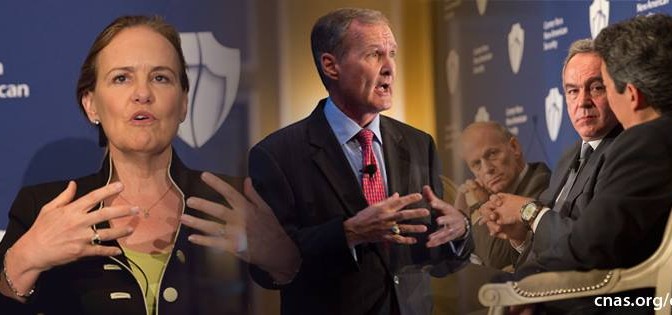
On Wednesday June 11, employees of various national security focused companies, agencies, and armed forces branches packed in alongside academics, enthusiasts and students for the eighth annual Center for New American Security’s National Security Conference. The crowd talked excitedly around the coffee and pastry table in anticipation of the day including panels and presentations on topics from U.S. leadership in the world to the future of the defense industry to robotics on the battlefield, all headlined by addresses from Congressman Paul Ryan and National Security Advisor Susan Rice.
What Does the World Expect from U.S. Leadership?
The opening panel featured Dr. Zhu Feng, German Diplomat Wolfgang Ischinger, and General Amos Yadlin (Ret.), with Judy Woodruff as moderator. The panel inquired about the role of the U.S. in the world, what it should be doing in the years to come, and strategies of implementation for its foreign policy.
Dr. Feng spoke on the positives of United States leadership in the East Asian region, and the threat of a rising China. Much of the media proclaims China as the greatest modern rival to U.S. primacy, but the U.S. should not be too concerned because China has little soft power, and is “free riding” on U.S. primacy.
Expressing the sentiment that “America is not listening to us, but listening in on us,” Diplomat Ischinger emphasized the necessity to re-establish trust between Europe and the U.S. As many of the international institutions experience gridlock, the U.S. should lead an initiative to reform these institutions.
General Yadlin commented on U.S. leadership’s hesitance and critiqued its effect on U.S. diplomacy. According to the General, diplomacy becomes ineffective once military action is taken off the table. However, military action should not include occupation of a country. For U.S. diplomacy to be more effective, U.S. leadership needs to gain a clear direction.
Each panelist was very insightful, and their contributions to the panel gave a clear regional perspective of U.S. leadership continuing, at least, for the next few years.
A Strategy for Renewal
Congressman Paul Ryan said the United States must rebuild lost credibility by improving three sources of our strength: our allies, our military, and our economy. U.S. credibility with our allies has been shaken by President Obama’s announcement that troops will leave Afghanistan in 2016 and recognition of the Palestinian Authority government including Hamas. We should be pressing NATO countries to invest in a coordinated set of capabilities, make a stand in Eastern Europe, and beef up our Pacific fleet with the refueled U.S.S. George Washington. In regards to the military, the Budget Control Act made progress against the deficit but slashed the defense budget, leaving obsolete equipment and a lack of funding to build technology for tomorrow’s threats.
To strengthen our economy, and therefore our military, we must reform entitlements, balance the budget, and pay off the national debt which is “the greatest threat to American leadership.” Congressman Ryan commented on China’s aggression; China “isn’t trying to bend the rules—it’s trying to rewrite them altogether. It’s stealing our intellectual property. It’s attacking our companies. It’s promoting crony capitalism.” The US has to improve ties with China’s neighbors and show China “it doesn’t pay to break the rules.” In conclusion Congressman Ryan described himself as Jack Kemp once did, a heavily armed dove, and proclaimed “we constantly renew our strength so we don’t have to use it.”[i]
Creative Disruption: Strategy, Technology and the Future Defense Industry
Panelists, former Deputy Secretary of Defense William J. Lynn III and Admiral James Stavridis (Ret.), with Ben FitzGerald moderating, discussed the future of the defense industry. The message this panel sent to its audience is that the world is changing, and the defense industry, whether it wants to or not, is changing with it.
Violent extremism and religious warfare increasingly threaten global security as rogue states and terrorist groups are changing warfare itself. The Department of Defense needs to reform in order to confront these changes. Admiral Stavridis expressed that some of these changes need to occur by investing more in DoD people. By investing in language and culture, people within the DoD should be better equipped to approach complex security challenges.
Former Deputy Secretary Lynn shared the same sentiment of reform. Currently, the U.S. is superior in many fields, such as cyber. The heavy dependence on cyber technology, however, has created a major vulnerability to critical infrastructure that the U.S. government needs to address. Evolving strategic challenges threaten U.S. infrastructure, as well as its competitive advantage.
Strategic Risk and Military Power: A Briefing to the Next President
Panelists, General James E. Cartwright (Ret.), CNAS CEO Michele Flournoy, and Roger Zakheim, briefed the 45th president on the strategic risks that will be faced in 2016. Each panelist presented their reports on how the president should strategically approach new risks and challenges. The common theme from their reports emphasized ensuring the U.S. would be better equipped with confronting threats posed by non-state actors. These plans would require not only reform in the DoD’s capabilities and structure, but a more comprehensive economic strategy set by Congress.
Risk and Opportunity in Indo-Pacific Asia
Ambassador R. Nicholas Burns, Dr. David F. Gordon, Stephanie Kleine-Ahlbrandt, Vikram J. Singh, and General James D. Thurman (Ret.) gathered together with moderator Dr. Patrick Cronin to discuss the risk and opportunities that exist for the U.S. in Indo-Pacific Asia. The instability of the DPRK was discussed, along with the economic rise of China in the region. China, however, was also discussed as an opportune partner for the U.S. The panel touched on ASEAN, its potential for highly effective regional governance, and the inefficiencies that limit the organization. Each panelist shone a different light highlighting various relationships that affect the region and U.S. interests. The panel collectively expressed that the U.S. has an important role within the region, but this role must work to keep the peace without trying to dominate other countries.
Keynote Address by Ambassador Susan Rice
National Security Advisor Susan Rice echoed President Obama’s West Point Speech and explained that it was not a matter of if the United States would lead the world, but how it would. The U.S. must continue to take a leading role in mobilizing coalitions to handle the toughest problems in the international community such as bringing economic sanctions down on Russia in response to its annexation of Crimea, updating our defense strategies with South Korea and Japan, funding counter-terrorism efforts worldwide, sending humanitarian aid to Syria, and working on a nuclear agreement with Iran. In addition, National Security Advisor Rice touched on a wide range of issues from stopping disease outbreaks, reversing climate change, and protecting internet security and openness.
Mobilizing coalitions also allows for expanding shared prosperity through trade partnerships, private investment, and achieving the Millennium Development Goals. Finally, coalitions help reinforce universal values that protect human rights, dignity, and health and pressure abusive countries. National Security Advisor Rice ended by saying “we are stronger still when we mobilize the world on behalf of our common security and common humanity…and that is what’s required to shape a new chapter of American leadership.”[ii]
Visualizing Today’s Veterans Population and Forecasting the Issues of Tomorrow
If the Veterans Administration had seen CNAS Director of the Military, Veterans, and Society Program Phillip Carter’s visualization of the US Veterans Population it might not be a thorn in the Obama administration’s side today. Director Carter’s project uses data and calculations to show where the veterans population lives, a population projection, what area gets what funding, and how the projection can change given the chance of future conflict. These visualizations show that some counties receive way less or more funding than needed and can help make predictions on what services will be needed in the future. Given that the VA is under intense scrutiny, Vietnam veterans are hitting the retirement age, and a decade long war is winding down, this information is going to become invaluable as the country moves forward.
Robotics on the Battlefield: The Coming Swarm
Featuring a display of unmanned aircraft, underwater and surface vehicles, and land robotic units taking part in a military operation the Project Director of CNAS’ 20YY Warfare Initiative Paul Scharre laid out the future of robotics on the battlefield. If a pilot found himself in a fight for his life a swarm of unmanned aircraft could tip the scales. If a carrier was targeted by long range missiles unmanned vessels carrying anti-missile rockets could protect the ship. If a landing force faced opposition unmanned robotic units could take the beach without suffering casualties. Although these projects are still a few years and millions of dollars from deploying, swarming robotics may be the way to overwhelm future challenges with superior numbers and technology while avoiding human casualties.
Energy, Iran and the Future of Gulf Security
The panel of the Honorable Stephen Hadley, CNAS Director of Energy, Environment and Security Program Elizabeth Rosenberg, and Ambassador Dennis Ross discussed continued American involvement in the Middle East. As long as it produces the best crude oil in the world, terrorist groups threaten peace, and Iran defends its nuclear program, America will have a reason to invest interest. Oil levels worldwide will fluctuate as the shale boom starts and will be exacerbated if Libya and Iran are able to export on the world market. As Syria is in civil war and Iraq is primed for sectarian violence ISIS has carved out a state for itself, threatening the region. Looming large is the fact that a nuclear agreement with Iran may not be reached any time soon. Stability in the Middle East is not in the immediate future and, although the Obama Administration has heralded a Pivot to Asia, it should be prepared to continue its Middle East focus simultaneously.
[i] For Paul Ryan’s Speech see: http://paulryan.house.gov/news/documentsingle.aspx?DocumentID=384106#.U6DyDPldWSo
[ii] For Susan Rice’s Speech see: http://www.whitehouse.gov/the-press-office/2014/06/11/remarks-national-security-advisor-susan-e-rice-keynote-address-center-ne


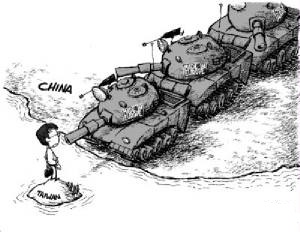
 Dean Cheng joins us to discuss China. Like a flourless brownie, this podcast is dense and delicious. We hit China’s goals and perspectives: From the Chinese “status quo”, to the South China Sea, to India, to the use of crises as policy tools. If you want to see behind the headlines, this is your podcast.