Time to Re-Task, Downsize, and Re-Engineer the SSN, Part 1

By Duane J. Truitt

The U.S. Navy is faced with several big challenges in maintaining undersea warfare dominance – the domain of the fast attack nuclear submarine or “SSN.”

These challenges include the reemergence of a near peer naval threat that is a direct challenge to the entire U.S. Navy, including our SSN force. The current and growing undersea threat includes both advanced technology attack submarines (including nuclear, diesel-electric, and air independent propulsion variants) with advanced torpedoes and cruise missiles, and much increased numbers of adversary submarines, particularly in the Indo-Pacific theater. Another challenge comes from the rapidly escalating procurement and sustainment costs of ever-larger and more complex U.S. SSNs since the end of the Cold War.

These two challenges have resulted in a very large immediate deficit in U.S. SSN numbers,1 if not capabilities, that is expected to continue for decades. The Navy’s current planned way out seems to be to simply hope for the best, that the funding will materialize to build many more of today’s very large and expensive SSNs. That plan is increasingly seen as unlikely if not impossible given existing serious constraints on U.S. defense spending.

This situation is not unique to the submarine force. The Navy’s overall force structure assessment (FSA) is undergoing a significant revision due for release later this year.2 Navy leaders including outgoing CNO ADM John Richardson and VADM Bill Merz have stated on multiple occasions that the surface fleet is going to evolve with many more small surface combatants, with enhanced capabilities, and many fewer large surface combatants. Admiral Merz stated:

“You may see the evolution over time where frigates start replacing destroyers, the Large Surface Combatant starts replacing destroyers, and in the end, as the destroyers blend away, you’re going to get this healthier mix of small and large surface combatants.”

What is driving this mix to an overall surface fleet weighted toward smaller vessels? Cost. The cost to build, and then the cost to operate and maintain vessels is necessitating this shift from the current generation of surface warships dominated by large surface combatants. The same cost factors also inhibit submarine construction and operations, too. This is in fact a rebalancing in the age-old naval argument of capability versus capacity. The rebalancing is made possible by emerging technologies that allow the Navy to package enhanced capability into smaller hull forms, and to take advantage of new capabilities in cheap yet capable unmanned vessels. Yet today, the U.S. Navy still has no “small subsurface combatant” – just the very large Virginia-class SSNs that are evolving into even larger and more expensive hulls with the Block 5 and subsequent block versions.

The U.S. has relied on its total undersea dominance for nearly three decades since the collapse of the Soviet Union, but that dominance is already fading, and is projected to flip upside down within the next decade. While perversely, due to the projected retirement of the rest of the aging Los Angeles-class SSNs, U.S. submarine forces will continue to fall over the same period, from 51 boats today to a projected 42 within a decade. The principle reason for the inability to build and operate the much larger SSN fleet of 66 subs that the Navy now says it needs is lack of funding. Some suggest that the answer is extending the service lives (SLEPing) of the Los Angeles-class boats, but that is not a practical solution, even in the short term, let alone the long term, since the maintenance burden for very old submarines is much higher than for new vessels. SLEPing old SSNs would only exacerbate the existing near-crisis of maintaining our these SSNs in operable condition.

Some say our small SSN fleet size is also due to a lack of “industrial capacity,” but the ability of the United States of America to ramp up its industrial capacity in times of severe military need is clearly proven in actual U.S. history throughout both World War Two, and during the long Cold War. If the funds to build all the subs that we need are actually made available, American industry will almost certainly respond, and ramp up accordingly, as proven time and time again. Make the construction dollars available on a predictable, multi-year contracting basis, and existing yards will open new lines, and/or new yards will be built, workers trained, and supply chains expanded.

In the 1960s through the mid-1970s there were six U.S. shipyards building SSNs and SSBNs, and in just 13 years of production the yards produced 39 boats, an average of three per year while at the same time producing 31 boats in multiple classes of Polaris and Poseidon SSBNs over just a five-year period. That came to on average of more than nine nuke submarines delivered per year at its peak in the mid-1960s.

As to the dollars needed for an expanded SSN fleet, the current full construction cost of a Virginia-class Block 5 SSN with Virginia Payload Module (VPM) stands at $3.2 billion in 2018 dollars. For comparison, the Sturgeon class-SSNs were built in the late 1960s for approx. $130 million each – in 2019 dollars that would be approximately $726 million – about a fourth of the cost of a Block 5 Virginia boat.

These behemoth Block 5 Virginia SSNs, at approximately 10,000 tons submerged, are more than twice the displacement of Cold War SSNs in the Skipjack-class, Permit-class, and the numerically large Sturgeon-class boats (4,300 tons submerged displacement). And to make matters more challenging, current naval plans for the next generation SSN, now dubbed “New SSN”3 suggest an even larger attack submarine, perhaps 12,000 tons and likely to cost $4 billion to $6 billion or more in 2018 dollars (and not entering the fleet for a decade or more) to build, and similarly expensive to operate. The Seawolf-class of SSNs were of approximately the same displacement, and the very high cost associated with building and operating the Seawolf SSNs encouraged limiting the class of boats to three hulls after the end of the Cold War.
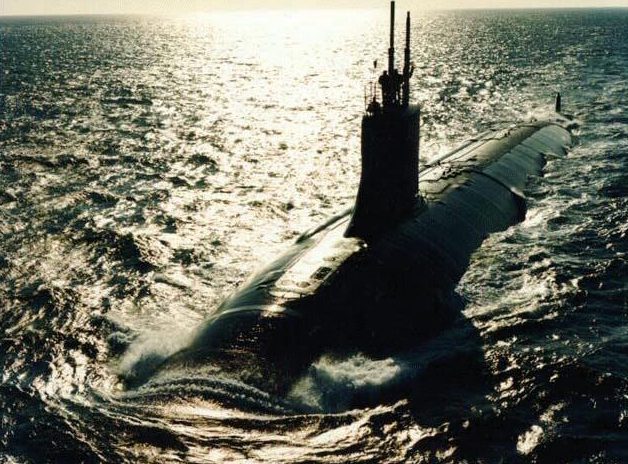
The attack submarine Seawolf (SSN-21) conducts her first at-sea trial operation, following her early morning departure 3 July 1996, from the Naval Submarine Base, Groton, Conn. (General Dynamics photo)

Note that not only does raw displacement drive up the construction cost of a SSN (the rule of thumb is you pay for ships by the ton), but it also drives up the lifetime operating costs of the SSN. Manning a Block 5 Virginia-class SSN with its 42 vertical launch cells requires a crew of approximately 140 officers and sailors, as compared to the  99 officers and sailors of a Sturgeon-class SSN. 

So why are the current class American SSNs so large?

The answer includes land attack – the new mission assigned to SSNs by the Navy in the aftermath of the end of the Cold War, with the virtually overnight disappearance of its main naval adversary, the Soviet Navy. By the early to mid 1990s the U.S. Navy was busy retiring aged-out Cold War boats by the dozens and was still building as replacements the last Los Angeles-class SSNs. These boats were larger than their predecessors, primarily to make them faster and capable of keeping up as escorts with CVN carrier battle groups and later on, carrier strike groups. Such high cruising speeds were not a requirement for anti-shipping warfare (both ASW and anti-surface ship) and ISR – the two primary missions of Cold War era SSNs.

Later on, the more advanced Virginia SSNs – as a smaller, cheaper, and slightly reduced capability version of the small class of Seawolf SSNs – came along by the mid-2000s, adding length, tonnage, and  vertical launch tubes capable of putting up as many as 12 Tomahawk missiles (a similar vertical launch tube arrangement by then had also been added to some of the last Los Angeles-class boats). However, those post-Cold War Tomahawks on SSNs were not, like their Cold War predecessors, equipped to engage moving naval targets as long range anti-ship missiles, but instead were Tomahawk Land Attack Missiles (TLAM), capable only of engaging fixed land targets. The Navy was also busy deploying large numbers of TLAMs on large surface combatants, both Ticonderoga-class cruisers and Arleigh Burke-class destroyers, for the same deep strike land attack mission the Navy had taken on in the 1990s and beyond.

The latest Block 5 Virginias add a new “Virginia Payload Module” that adds yet another 84-foot section to the hull aft of the sail containing four more vertical launchers carrying as many as 28 additional TLAMs for land attack. The stated purpose of the VPM was to attempt to make up for the planned retirement of four SSGNs (converted Ohio-class SSBNs that were “denuclearized” per the START strategic nuclear arms reduction treaty). But of course that conversion of SSBN to SSGN was a “make work” solution for the resulting excess Ohio SSBNs above treaty limits, which has now begat a “make work” mission for SSNs. All of which bloats the boat itself and makes it much more expensive to build and operate.

Adopting the deep strike land attack mission was an understandable response to the drastic and virtually overnight elimination of a significant near peer naval threat in the 1990s. Thus the Navy and its supporters in Congress converted the navy virtually overnight to a deep strike land attack force in order to become more relevant to evolving national security interests, but at the expense of full-spectrum competence. Otherwise, naval leaders and proponents feared an even more drastic fleet reduction than the 50 percent cut that was actually made after the end of the Cold War.

This “keep the Navy relevant in the Post Cold War era” mindset was also aided and abetted by the Intermediate Range Nuclear Forces (INF) Treaty of 1987 limits on “land based” intermediate range cruise missiles (IRCM) that strangely did not apply to “surface launched” (i.e., naval platforms). (Both the U.S. and Russia have now withdrawn from this treaty, effective later this year.) In any event, INF encouraged both the Russian and U.S. navies to deploy large numbers of land attack cruise missiles on surface warships.

Clearly a lot has changed since the Post Cold War-era began. The U.S. military today is no longer simply tasked with combating low-capability insurgent forces in various and sundry developing nations often situated well inland, nor does the INF treaty apply as of this year either.

With the well-documented fast growing maritime threat posed especially by China (whose fleet of attack submarines is currently estimated to number over 70 vessels, and is expected to continue to grow at a rapid rate thereafter), as well as a resurgent Russian Navy, the world of naval warfare has now transformed from a low threat environment into a serious challenge to U.S. naval dominance. The U.S. Navy now has a clear and overriding mission – to deter and if necessary fight and win a naval war against capable near peer forces. Projecting sea power ashore continues as a U.S. Navy mission, but that mission is best and most cost-effectively performed by naval aircraft (both carrier-based and land-based), not by submarines. Given all of the above factors, then, and the fact that naval shipbuilding budgets are constrained, including demands to simultaneously recapitalize aging CVNs and Ohio-class SSBNs, the Navy must go back to the drawing boards.
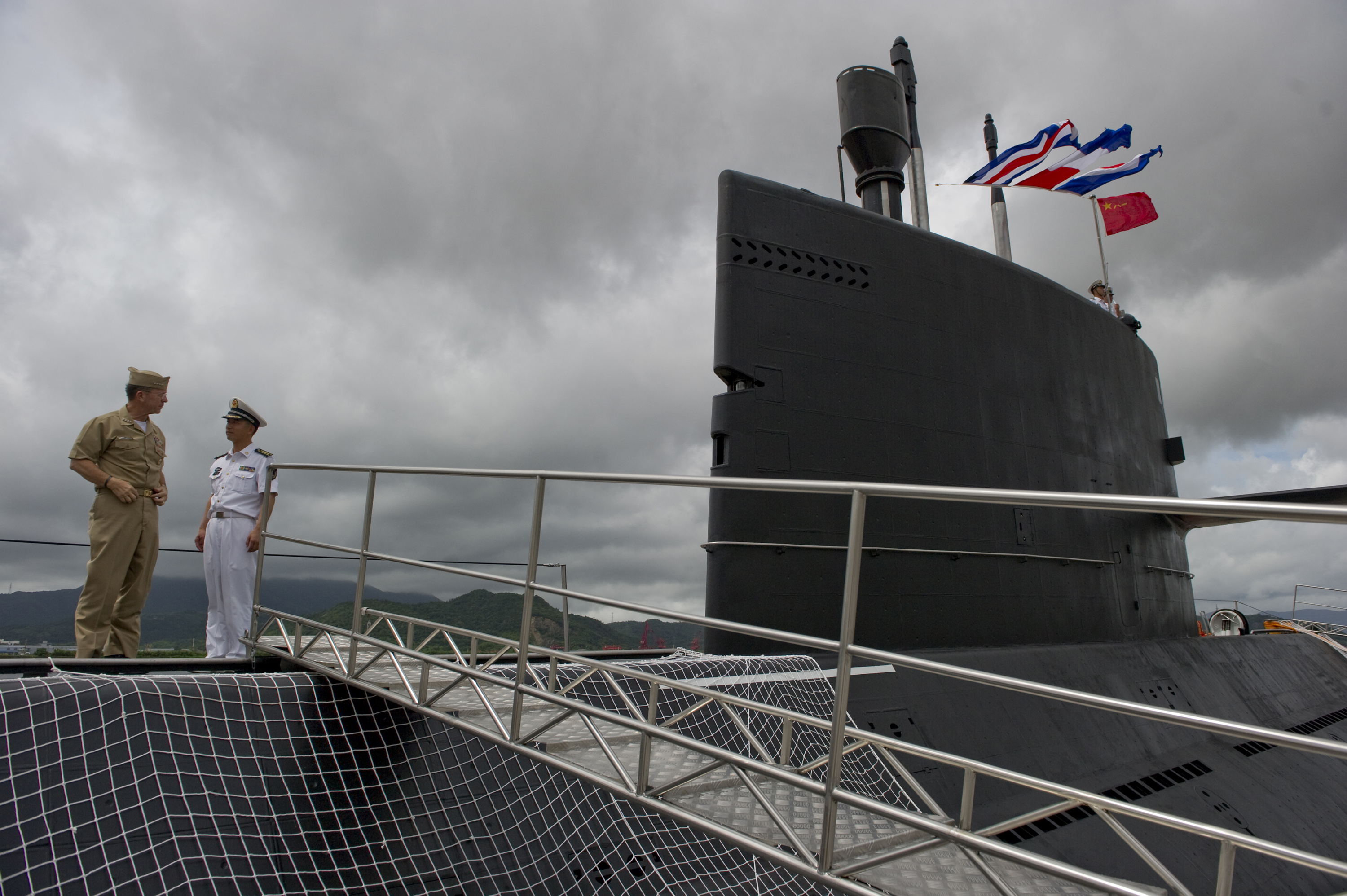
Chairman of the Joint Chiefs of Staff Adm. Mike Mullen visits the Chinese People’s Liberation Army-Navy submarine Yuan at the Zhoushan Naval Base in China on July 13, 2011. (DoD photo by Mass Communication Specialist 1st Class Chad J. McNeeley/Released)

The Navy should consider designing a new SSN that is smaller and cheaper, and focused entirely on the anti-shipping and ISR roles – the historic roles of the SSN throughout the Cold War – with particular attention paid to building and operating many more new boats at a far faster build rate.

Size as measured in tons displacement, however, is not the only requirement and means of controlling cost – there is also the matter of modernization and capability.  Obviously the technologies available today are far more advanced compared to those available in the 1960s and 1970s when the bulk of our Cold War era SSN fleet was built. For example, the later generations of U.S. submarines incorporated new propulsors – pump jets, rather than the older and noisier seven-bladed open screws on the Cold War era boats. Better sensors are also going into today’s boats, both sonars and “above the water” sensors, with photonic masts rather than periscopes, which allows more efficient interior hull design and better distribution of sensor data to various locations within the crew area. Better electronic warfare capabilities are also part of today’s fleet, and cyber warfare is increasingly a key area of focus in the 21st century.

Better weapons are also available today, although advancements in deployed submarine-launched weaponry have clearly lagged behind both our adversaries and even of USN surface forces and naval air wings in recent years. Existing SSNs are still using the old Mk 48 ADCAP 21-inch torpedo first deployed in the mid-1970s, though significantly upgraded over the decades. But as of today the only submarine-launched anti-ship cruise missile available is still the old Harpoon Block 1C that was developed in the 1970s, and as of today only one of our existing SSNs has even re-integrated the Harpoon, as of last year. A new “Maritime Strike Tomahawk” refit kit is slated to become available in 2021 which will provide a new very long range ASCM capability to both submarines and surface warships with VLS. Perhaps other existing ASCMs such as the new Naval Strike Missile, now slated for deployment on LCS and FFGX, can and may also be integrated onto U.S. submarines, along with LRASM in the coming years.

Additionally, it should also be recognized that for purposes of anti-submarine warfare which was the primary role of the Cold War SSN, and which is now becoming a priority again, the Mk48 ADCAP torpedo is likely “overkill” for use against submerged submarines. The power of a 650 pound warhead on the Mk 48 certainly is helpful for attacking large surface ships, with the ability to literally break a ship in half when detonated under the keel. Submerged submarines, however, do not require such explosive power because of the effect of submergence sea pressure.

The lightweight ASW torpedoes such as the Mk 46 and Mk 54 (12.75 inches diameter by 8 feet 6 inches long, and weighing just 508 pounds vs. 21 inches, 19 feet, and 3,695 pounds respectively for a Mk 48) have for decades been in use by the US Navy and our NATO allies deployed on surface warships and ASW aircraft. The lightweight torpedoes have warheads with weights of slightly less than 100 pounds – demonstrably sufficient to sink a submerged submarine. Indeed, one of the most effective ASW weapons in WWII, the “hedgehog,” had a much smaller warhead of just 35 pounds of TORPEX. It was demonstrated that typically only one or two hedgehog detonations were needed to sink a submerged submarine.
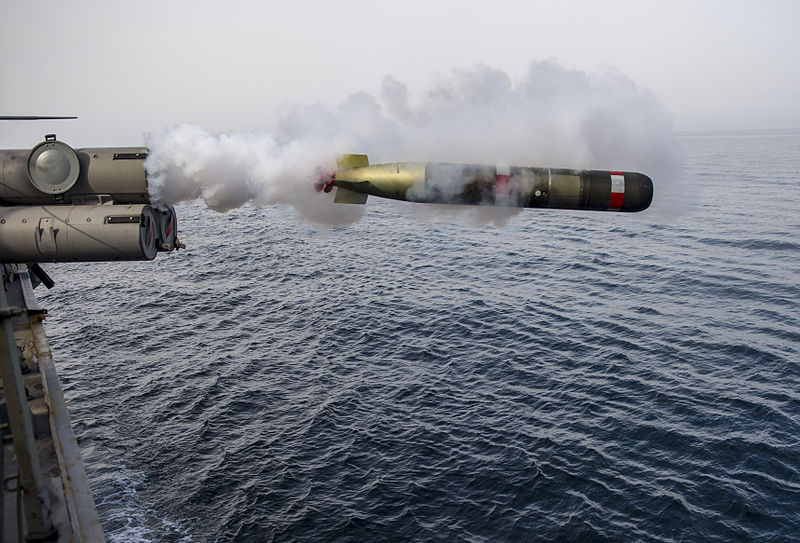
An exercise Mark 54 Mod 0 torpedo is launched from the U.S. Navy Arleigh Burke-class guided-missile destroyer USS Roosevelt (DDG-80). (U.S. Navy Photo by Mass Communication Specialist 2nd Class Justin Wolpert)

Therefore, the Navy needs to give strong consideration to adapting existing lightweight ASW torpedoes to our next generation of SSNs. Doing so would facilitate the ASW capability of our SSNs while significantly increasing the sub’s capacity to store and deploy much smaller torpedoes. Not as a total replacement for the Mk 48, but rather, as a supplement to the Mk 48 to enable much larger total magazine depth without increasing the displacement of the submarine, to accommodate the ability to attack both surface ships and submarines. Instead of just four 21-inch torpedo tubes on a Virginia-class boat, a combination of 21 inch and 13 inch horizontal tubes optimized for a typical mission profile could work very well.

Finally, whatever combination of horizontal tubes and torpedoes is determined optimal, the weapons themselves need to continue to be updated to the latest technological capabilities as to sensors, self-contained computing (and artificial intelligence) as necessary to track and target submarines and defeat enemy countermeasures, and improved warheads. Hard kill anti-torpedo torpedoes as well as other torpedo countermeasures are also a prime area of development that needs to continue, despite a recent setback with the CAT weapon systems deployed on CVNs.

Nuclear propulsion technology is also advanced today over the old Cold War power plants. The latest generation of naval nuclear reactors as used on the new Ford class CVNs known as the A1B reactor are much more automated and simplified than the previous plants, allowing the highly trained and certified nuclear plant operator crew size to be cut in half as compared to the 1960s era reactors of the Nimitz class CVNs.4 Even more revolutionary nuclear power plant designs are going to be available to submarine designers in the next decade.

Similar technological opportunities abound to more heavily automate every work process throughout the next generation submarines, including artificial intelligence capabilities, and thus can significantly reduce overall crew manning requirements in a submarine. This has already been achieved on the latest surface combatants including the Ford CVNs and the Zumwalt DDGs, which respectively achieved overall manning reductions of 33 percent and 50 percent over their predecessor classes. A similar reduction in SSN crew size also ought to be achievable using the same design approaches and modern automation technology. Reductions in crew size also lead to reductions in hull volume.

Additional technology “insertions” are also available in other areas of submarine design that should be able to create significant impacts in both cost reduction as well as improving the capabilities of our next gen SSNs.

Conclusion

In consequence of all of the considerations described above, it is clear that NAVSEA needs to undertake a project to re-engineer the next generation of SSNs. Navy leadership has publicly stated its intent to reconfigure the surface fleet to significantly reduce the ratio of large surface combatants (LSCs) to small surface combatants (SSCs). The Navy now needs to similarly reconfigure the SSN fleet in favor of smaller boats optimized for sea control over long-range land attack. They must reject the bloated SSN(X) concept which is more of the same, but bigger and more expensive, and go for a new class of SSN that is far smaller and cheaper and thus affordable in much larger numbers than currently planned submarines. 

Mr. Truitt is a veteran Cold War-era SSN sailor, qualified nuclear reactor operator, and civilian nuclear test engineer. He is also a degreed civil engineer, environmental scientist, and civil/environmental project manager with extensive experience at both naval and civilian nuclear facilities as well as military and civilian facilities development. His interest today as an author is in forward-looking military preparedness and improvements in both capacity and capability of U.S. naval forces.

Notes

1. USNI News, Ben Werner, March 27, 2019: “Indo-PACOM Commander Says Only Half of Sub Requests are Met”

2. USNI News, Megan Eckstein, April 8, 2019: “Navy Sees No Easy Answer to Balance Future Surface Fleet”.

3. USNI News, Megan Eckstein, May 13, 2019: “Virginia Block VI Subs Will Focus on Special Operations, Unmanned”

4. A1B Reactor; https://www.globalsecurity.org/military/systems/ship/systems/a1b.htm

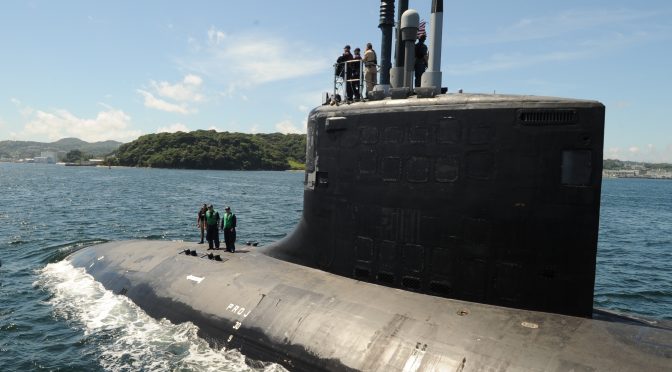
Featured Image: YOKOSUKA, Japan (Sept. 3, 2010) The Virginia-class attack submarine USS Hawaii (SSN 776) transits Tokyo Bay on the way to Fleet Activities Yokosuka, marking the first time in the history of the U.S. 7th Fleet that a Virginia-class submarine visited the region. This is Hawaii’s first scheduled deployment to the western Pacific Ocean. (U.S. Navy photo by Lt. Lara Bollinger/Released)
Navy Culture Must Be Adapted to Fit the Information Age

By Lieutenant Commander Travis D. Howard, USN

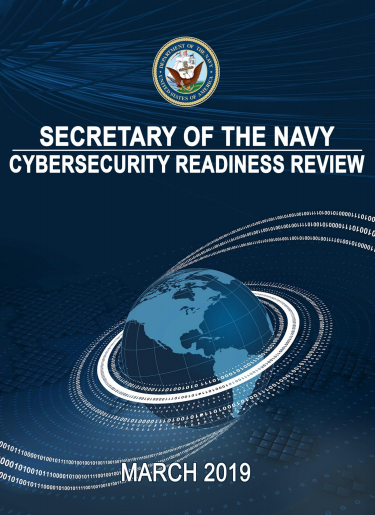
A recent independent review of the Navy’s cybersecurity posture, completed in March 2019, was predictably harsh on our Navy’s current culture, people, structure, processes, and resourcing to address cybersecurity.1 For many of us within the Information Warfare discipline, much of this report does not come as a shock, but it does lay bare our cultural, structural, and procedural problems that the Navy has been struggling with since the turn of the century.

The 76th Secretary of the Navy, Richard V. Spencer, should be applauded for enabling open and honest dialogue on the key issues of this report by releasing it for public comment and professional discourse. The review found that the Navy was not “optimally focused, organized, [nor] resourced” for cyberwar.2 Such transparency has been the hallmark of the naval service for centuries, and is largely the reason why such robust professional forums such as the United States Naval Institute (USNI) and the Center for International Maritime Security (CIMSEC) continue to thrive.

The report was particularly critical of the Navy’s culture, stating that the Navy is “preparing to win some future kinetic battle, while it is losing the current global, counter-force, counter-value, cyberwar.”3 The report goes on to recommend that the highest levels of Navy leadership adjust the service’s cultural landscape to become more information-centric, rather than platform-centric. This excerpt is particularly vexing:

“Navies must become information enterprises who happen to operate on, over, under, and from the sea; a vast difference from a 355 ship mindset.”4

In truth, the Navy that acts as an information enterprise and the Navy that pursues the tenants of traditional naval warfare as laid out by naval doctrine are not mutually exclusive. Our drive toward a bigger, better, and more ready Navy, aligned to the National Defense Strategy, requires a naval culture ready for high-end conflict but active and engaged in all levels of conflict below lethal combat. The adoption of information enterprise core principles certainly has a place in our doctrine; in fact, it’s already there but lacks proper execution and widespread cultural adoption as a core competency across all warfare communities. Navy culture can be adapted to better fit the information age, but it will take the entire Navy to do it and not just a single community of effort.

Information is Already in our Doctrine, but Prioritization Must Improve

The 31st Chief of Naval Operations (CNO), Admiral John Richardson, released a Design for Maintaining Maritime Superiority shortly after assuming his role, and recently released an update (Design 2.0) to compliment the 2018 National Defense Strategy. The CNO put information warfare at the center of his strategic thinking, and challenged the Navy’s operational and resourcing arms to “adapt to this reality and respond with urgency.”5 But this change in the security environment wasn’t new to this CNO, in fact, it was foreseen decades ago by thinkers like CAPT (ret.) Wayne P. Hughes, a venerated naval tactician and professor emeritus at the Graduate School of Operations and Information Sciences of the Naval Postgraduate School. Early versions of Hughes’ Fleet Tactics and Coastal Combat, required reading in graduate-level naval officer training, placed information, rapid adoption of technology, and intelligence at the forefront of effective maritime operations in the modern age.6

If we’ve valued information in warfighting all along, then why are we failing to adapt our naval culture to the Information Age? The Cybersecurity Readiness Review cuts straight to the point: “… cybersecurity continues to be seen largely as an ‘IT issue’ or ‘someone else’s problem.’”7 In our haste to stand up a community of practice to do all the cyber things we, as a Navy, failed to make the necessary cultural changes that should have accompanied it.

Why hasn’t the growth of the Information Warfare Community focused the Navy’s culture appropriately? After all, creating such specialized warfare communities has always worked well in the past, as any aviator can attest to. Truthfully, the problem is bigger than just one community; the subsequent decades saw the rise of global information technology as central to nearly everything we do, and every Sailor now uses the network as a primary on-the-job resource. The loss of email, web browsing, and support systems that handle tasks from personnel to logistics can and does result in work stoppage; any assertions to the contrary, that workarounds or manual methods still exist, do not accept the reality of the situation.

Cultural change is long overdue, and just like a Marine or Soldier learns how to handle their weapon safely and effectively from day one, we must now train and mentor our Sailors to use the network in the same vein. No more can we flippantly say “we have people for that” when faced with information management and cybersecurity problems, putting effort into modernizing complex systems and enhancing Information Warfare’s lethality, while ignoring the power a single negligent user could wield to bring it all down. It’s all hands on deck now, or the Navy faces the very real possibility of fumbling the opening stages of the next kinetic fight.

Security is Already an Inherent Part of Navy Culture

The good news is that information security is already an intrinsic part of being a member of the armed forces, uniformed or civil service. Security clearances, safe handling procedures for classified information, and cryptography practices like two-person integrity have been trained into the workforce for decades. Protecting information is as much a part of our culture as operating weapons systems or driving warships.

The Navy’s training machine should find ways to leverage this existing culture of compliance to incorporate dynamic and repetitive ways to reach all Sailors at all stages of development – from boot camp to C school, from initial officer training to graduate school, focused on making each Sailor a harder target for information exploitation. Each engagement should be tailored to fit the environment and to complement subject matter: initial user training should teach how to report spear-phishing, practice OPSEC on social media (and how to spot adversarial attempts to collect against them), and recognizing unusual activity on a network workstation. A more senior Sailor in C-school might learn how to look at cybersecurity from a supervisory perspective, managing a work center and a group of network assets, and how to spot and report insider threats both malicious and negligent. An officer in a naval graduate program, such as at NPS or the Naval War College, would take advanced threat briefings on adversarial activity targeting rank-and-file users on the network, and how to incorporate such threat information into wargaming to inform the strategic and operational levels of war.

Some of these actions are already in the works, but the emphasis should be on how to engage Sailors in multi-faceted, multi-media ways, and repetition is critical. Seeing the same concept in different ways, in different case studies, reinforces better behavior. The Navy is no stranger to this training method: we are masters at repetitive drills to train crews to accomplish complex actions in combat. Reinforcement of this behavior cannot come fast enough. Incidents attributed to negligent network users are on the rise, and cost organizations millions of dollars a year.8 The Navy is no exception: category-4 incidents (improper usage) are too common.

Ultimately, the objective should be a Sailor who understands cyber hygiene and proper use of the network as a primary on-the-job tool, just as well as any Soldier or Marine knows his or her rifle. Sailors go to sea aboard complex warships with integrated networked systems that run everything from Hull, Mechanical, and Electrical (HM&E) systems to combat systems and weapons employment. The computer is our rifle, why shouldn’t we learn how to use it more safely and effectively?

Keys to Success

Cultural change is hard, but lessons learned from our past, best practices from the private sector, and good old fashioned invasive leadership (the kind the Navy does very well) can adjust the ship’s rudder and speed before we find ourselves much further in shoal water.

Top level leadership must set the conditions for success, but they have to believe in it themselves. Our Sailors can easily tell when a leader doesn’t fully commit to action, paying lip service but nothing beyond it. They are also hungry to follow a leader who has a passion for what they do. To effect change, passionate leaders need to take center stage with the authority and resources necessary to translate change into action at the deckplate level. When a Sailor sees a top-level message about a desired change, then sees that change actually happening in their workspace, it becomes real for them. Let’s also trust them to understand the threats, rather than keeping the “scary” threat briefs at the senior levels.

Successes must be celebrated, but failures must have real consequences. It’s time to get serious about stopping insider threats, specifically negligent insiders. Too often the conversation about insider threats goes to the criminal and malicious insiders, ignoring the most common root of user-based attack vectors. Our Sailors must be better informed through regular threat briefings, training on how to spot abnormal activity on the network, and clear, standardized reporting procedures when faced with phishing and other types of user-targeted attacks. Those who report suspicious activity resulting in corrective action should be rewarded. Likewise, those who blatantly ignore established cyber hygiene practices and procedures must face real consequences on a scale similar to cryptographic incidents or unattended secure spaces. This will be painful, but necessary to set our user culture right.

Effective training begets cultural change. We must take advantage of new and innovative training methods to enrich our schoolhouses with multimedia experiences that will reshape the force and resonate with our new generation of Sailors. The annual Cybersecurity Challenge should be retired, its effectiveness has been questionable at best, and replaced with the same level of rigor that we used to attack no-fail topics like sexual assault prevention. With the stand-up of a Director of Warfighting Development (N7), and the lines of effort within the CNO’s Design 2.0 rife with high-velocity learning concepts, the near-future landscape to make this sea change looks promising.9

Conclusion

The Navy has spent the better part of 30 years struggling to adopt an information-centric mindset, and the good news is that operational forces have come a long way in embracing the importance of information in warfare, and how it permeates all other warfare areas. Yet our culture still has a long way to go to break the now dangerously misguided notion that information management and cybersecurity are something that “we have people for” and doesn’t concern every non-IW Sailor. The IW Community has come a long way and can do a lot to further the Navy’s lethality in space, cyberspace, and the electromagnetic spectrum, but it can’t fix an entire Navy’s cultural resistance to change without strong assistance.

Secretary Spencer, in his letter introducing the public release of the 2019 Cybersecurity Readiness Review, noted that “the report highlights the value of data and the need to modify our business and data hygiene processes in order to protect data as a resource.”10 He highlighted that cross-functional groups were already underway to address the findings in the report, and surely the machinations of the Navy Headquarters are more than capable of making the necessary changes to the Navy’s “policy, processes, and resources needed to enhance cyber defense and increase resiliency.”11 But culture, that’s all of us, and we must be biased toward change and improvement. We are the generation of naval professionals who must adapt to this reality and respond with urgency.

Lieutenant Commander Howard is an Information Warfare Officer, information professional, assigned to the staff of the Chief of Naval Operations in Washington DC. A prior enlisted IT and Surface Warfare Officer, his last operational assignment was as the Combat Systems Information Officer aboard USS ESSEX (LHD 2) in San Diego, CA.

References

[1] The Hon. Michael J. Bayer, Mr. John M. B. O’Connor, Mr. Ronald S. Moultrie, Mr. William H. Swanson. Secretary of the Navy Cybersecurity Readiness Review (CSRR), March 2019. https://www.navy.mil/strategic/CyberSecurityReview.pdf

[2] Ibid

[3] Ibid

[4] Ibid

[5] Chief of Naval Operations, December 2018. Design for Maintaining Maritime Superiority, Version 2.0. https://www.navy.mil/navydata/people/cno/Richardson/Resource/Design_2.0.pdf. p. 3

[6] Wayne P. Hughes, 2000. Fleet Tactics and Coastal Combat. Annapolis, MD: Naval Institute Press.

[7] Bayer, et al., CSRR 2019, p. 12

[8] Security Magazine, Apr 24, 2019. “What’s the Average Cost of an Insider Threat?” https://www.businesswire.com/news/home/20180424005342/en/Research-Ponemon-Institute-ObserveITReveals-Insider-Threat

[9] CNO, Design 2.0, p. 13

[10] Secretary of the Navy, 12 Mar 2019. Letter accompanying public release of the CSRR 2019. https://www.navy.mil/strategic/SECNAVCybersecurityLetter.pdf.

[11] Ibid.

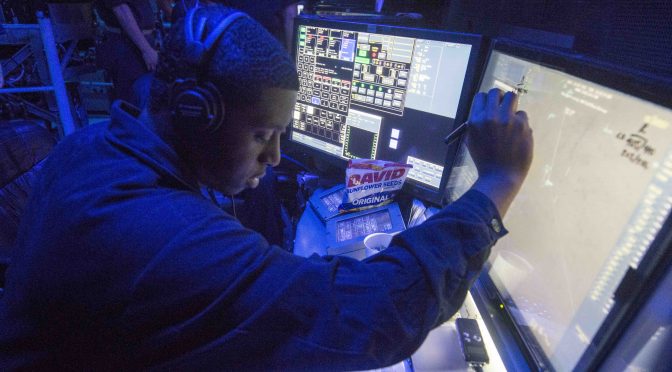
Featured Image: U.S. 7TH FLEET AREA OF OPERATIONS (Oct. 16, 2015) Operations Specialist 1st Class Keith Tatum, from Americus, Georgia, stands watch in the Combat Information Center (CIC) aboard the guided-missile cruiser USS Normandy (CG 60) during an air-defense exercise as a part of the joint exercise Malabar 2015. Malabar is a continuing series of complex, high-end warfighting exercises conducted to advance multi-national maritime relationships and mutual security. Normandy is deployed to the U.S. 7th Fleet area of operations as part of a worldwide deployment. (U.S. Navy photo by Mass Communication Specialist 3rd Class Justin R. DiNiro/Released)

The Case for Maritime Security in an Era of Great Power Competition

By Joshua Tallis

“Maritime security.” The phrase, and the nebulous set of missions that loosely fall underneath it, came into expanded use in the decades after September 11, including in U.S. strategic documents. Even during the height of interest in maritime security, however—say, around 2007 and the publication of A Cooperative Strategy for 21st Century Seapower—it was not clear how those missions could or should be prioritized with respect to other strategic challenges. As the Department of Defense, and the Navy with it, reorients to great power competition, it will only become easier for those questions to slide into the background. And yet, as we will see below, historical trends and emerging patterns will conspire to keep the littorals at the forefront of policymaker’s minds. Alongside the renewed focus on traditional adversaries, therefore, operations in green and brown waters driven by unconventional threats will likely play an enduring role in U.S. foreign policy.

In his book Out of the Mountains, counterinsurgency strategist David Kilcullen sets out a compelling argument for taking the littorals seriously. Kilcullen’s argument is focused on events ashore, but his articulation of the global drivers shaping the littorals can be made equally valuable for the seaward end of the domain. The premise underlying these drivers is based on one simple principle: conflict happens where people are.1 So, where are the people?

In response, Kilcullen identifies four “megatrends” of demography and economic geography that suggest where we will find most of the world’s population in the coming decades. “Rapid population growth, accelerating urbanization, littoralization (the tendency for things to cluster on the coastlines), and increasing connectedness” all suggest that populations are concentrating in networked, urban, dense, littoral communities.2 UN estimates project that by 2050 at least two-thirds of the global population (which is projected to reach 9.8 billion) will likely live in cities, a great many of whom will end up in slums (where about a billion people already call home). Moreover, much of this urban expansion—most of which will be coastal—will take place across the global South, often where governments are least prepared to receive it. The populations of the Caribbean and Latin America could grow by more than 130 million people; Africa may see its population expand by more than a billion; and Asia will see a growth of at least 800 million according to mean estimates from the United Nations.

To give an indication of scale, consider the following. In one generation, the world’s poorest cities will absorb most of a population increase equal to all the population growth ever recorded in human history through the year 1960.3 That is sure to produce astounding institutional strains, ones that will inevitably stress already fragile municipal governments. And we need not wait for 2050 to see these statistics in action. Today, half of the world’s population lives within about thirty miles of a coast, and three-quarters of large cities are on the water. To those and other cities, nearly 1.5 million people migrate to every week, which explains why urban areas are soon expected to absorb almost all new population growth.4

But how is demography dangerous? The answer comes from how urban communities respond to the pressures of these trends. Research suggests that when a city doubles in size, it produces, on average, “fifteen percent higher wages, fifteen percent more fancy restaurants, but also fifteen percent more [HIV/AIDS] cases, and fifteen percent more violent crime. Everything scales up by fifteen percent when you double the size.”5 In cities already straining their respective systems, cities like Lagos or Mumbai or San Pedro Sula, the consequences of a 15 percent spike in crime or HIV/AIDS rates act on preexisting stressors like poverty, climate change, and political violence, which can precipitate disorder. In the most extreme cases, the impact of these magnified stressors might even cause a metropolis to turn “feral.” In the Naval War College Review, Richard Norton defines a feral city as “a metropolis with a population of more than a million people in a state the government of which has lost the ability to maintain the rule of law within the city’s boundaries yet remains a functioning actor in the greater international system.”6 John Sullivan and Adam Elkus describe the feral city as a place without any meaningful presence of legitimate authority, where “the architecture consists entirely of slums, and power is a complex process negotiated through violence by differing factions.”7 Norton noted at the time that only Mogadishu truly exemplified his criteria of a feral city. Yet, several cities then contained feral pockets characteristic of Norton’s theory. In such pockets, segments of an urban sprawl may exist outside the reach of the government. A Proceedings article by Matthew Frick as well as a New York Times piece both cite São Paulo, Mexico City, and Johannesburg (the Times also adds Karachi) as examples of modern cities with components that could be described as feral.Frick even explicitly links these feral cities to maritime security by arguing that they are echoes of the pirate havens of the 18th century, when raiders similarly leverage ungoverned spaces as bases of operation. In feral cities or pockets, the legitimate governing fabric of the urban area erodes as the stress of an oversized population pushes it past the ability to cope with the pressures of crime, poverty, and health. Such violence perpetuates the cycle of urban exclusion that created it, precipitating yet more political, social, economic, and infrastructure neglect.9

The collapse or erosion of local governance creates a power and services vacuum. That power vacuum creates disorder from which people naturally crave a reprieve. In turn, the local actor that can produce a sense of order and stability is frequently adopted as a surrogate government. Inevitably, these surrogates are not peaceful neighborhood watch groups. Kilcullen’s concept of “competitive control” posits that the surrogates most likely to survive in these environments are those that can act across a spectrum of power ranging from soft to coercive.10 Without soft power, the allure of an institutionalized set of normative community rules, the population is denied the sense of order it demands. Under such a rules-based system, a neighborhood is likely to tolerate a measure of violence because it can be predicted and avoided. Without violence, a competitor will find it easy to supplant the surrogate. What we are left with is a void filled by organized gangs, terrorists, militias, or criminal networks that manipulate a feral city’s disorder to establish fortifications within neighborhoods that often come to depend on them. In Kingston, Jamaica, garrison neighborhoods offer one such example where these districts are made loyal to gang leaders because of their dominant role in the local informal justice system and economy.11 We are left facing an amorphous hybrid threat, what John Sullivan calls “criminal insurgents,” or the melding of criminal syndicates with the direct political control of territory.12 When such groups offer residents enough of a sense of fair and predictable order, many are willing to tolerate their presence.

So far, however, violent nonstate groups and feral cities would appear a danger largely within their own neighborhoods, far from concerning the United States, and certainly not U.S. maritime services. What brings these groups and populations into the international maritime orbit is Kilcullen’s final megatrend—connectedness. Crowded, poor, coastal zones may turn feral, but feral regions do not implode. Instead, they remain connected with the world around them through the Internet, ports, airports, diaspora communities, and other connective tissues. Thus, with all the implications of such connectedness, even a feral region remains a dynamic, strategic, and significant actor in the international arena. This connectedness allows the feral elements of a community to interact with licit and illicit trade and information flows, offering local actors the capacity to directly impact events across the country and, potentially, the globe.13 The same pathways that facilitate normal trade and migration likewise enable illicit transfers such as the smuggling of narcotics, people, and weapons; human trafficking; terrorism; and piracy. This connectedness is what gives rise to the potential for actions a world away, events like protests or acts of political violence, to have a rapid and meaningful consequence across domains, from cyberspace to the sea. September 11 was a dramatic example of the extreme consequences of this networked, globalized connectivity of local violence to the international system. What we have increasingly seen in the intervening two decades, thanks in part to the explosive growth in technologies that connect all of us, is that this ladder between local and international is only strengthening. As a result, in the sphere of nonstate threats, “the distinction between war and crime, between domestic and international affairs” almost disappears.14

As the line blurs between war and crime, the capacity for the return to great power competition to focus minds on a singular, important challenge may simultaneously make it more attractive for strategists to circumvent planning for these opaque, nontraditional challenges. History, however, suggests that would be a mistake. What is remarkable about the pattern of unconventional conflict is its irreverence for the preferences of policymakers.15 Lyndon Johnson was eventually subsumed by a troop escalation in Vietnam despite his clear domestic policy agenda. Bill Clinton, after reluctance to act in the Balkans and Rwanda, ultimately sent troops to Bosnia, Kosovo, Macedonia, Haiti, and Liberia. While candidate George W. Bush dismissed interest in stability operations, President Bush launched two prolonged, large-scale counterinsurgency campaigns and led NATO into its largest stabilization mission ever.16 As President Obama initiated his pivot to Asia, he was still negotiating the drawdown of two land wars while conflicts simmered (and flared), inter alia, in Syria, Yemen, Somalia, Iraq, Mali, Nigeria, and the Congo. Now President Trump, despite obvious isolationist impulses, has struggled to extricate U.S. forces from Afghanistan and Syria in practice. “American policy makers clearly don’t like irregular operations, and the U.S. military isn’t much interested in them, either,” but as the demographic and economic geographic trends discussed above suggest, they will likely continue to present policymakers with difficult choices.17

Any attempt to predict the exact nature of a future threat or conflict is a fool’s errand. To borrow a metaphor from Kilcullen, much like how climate modeling cannot say whether it will rain or snow next week, the projections above say little about the near-term conflict forecast. Yet, just as with climate models, such forecasts “do suggest a range of conditions—a set of system parameters, or a ‘conflict climate’—within which [future] wars will arise.”18

These projections illustrate trends. And while those trends do not say much about what happens tomorrow or the day after, they speak volumes about the forces steadily reshaping our world. These forecasts are unequivocally telling us that dense, networked, and littoral communities are an emerging global force. How maritime forces meet (or fail to meet) the challenges associated with that rise will be dictated by their attentiveness to the unique constraints of securing muddy waters.

Joshua Tallis is the author of The War for Muddy Waters: Pirates, Terrorists, Traffickers, and Maritime Insecurity, from which the above passage is adapted. He is a research scientist at the Center for Naval Analyses and holds a PhD in international relations from the University of St Andrews.

References

[1] David Kilcullen, Out of the Mountains: The Coming Age of the Urban Guerrilla (London: Hurst, 2013), 239.

[2] Ibid., 25.

[3] Ibid., 29.

[4] Ibid., 29.

[5] Ibid., 247.

[6] Richard Norton, “Feral Cities,” Naval War College Review 56, no. 4 (2003): 98.

[7] John Sullivan and Adam Elkus, “Postcard from Mumbai: Modern Urban Siege,” Small Wars Journal, February 16, 2009, 8.

[9] Kilcullen, Out of the Mountains, 40.

[10] Ibid., 114.

[11] Ibid., 89, 93.

[12] Sullivan and Elkus, “Postcard from Mumbai.”

[13] Kilcullen, 45.

[14] Ibid., 99.

[15] Ibid., 24.

[16] Ibid., 24.

[17] Ibid., 24.

[18] Ibid., 27.

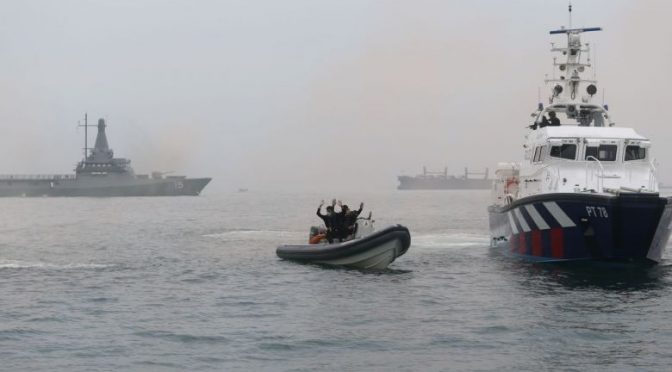
Featured Image: A Republic of Singapore Navy Littoral Mission Vessel (background, far left), and the Police Coast Guard’s patrol interdiction boat (at right) intercepting a mock terrorists’ speedboat in Singapore waters off Changi Coast Road during a demonstration for Exercise Highcrest. (PHOTO: LIANHE ZAOBAO)

A Tale of Three Speeches: How Xi Jinping’s 40th Anniversary Speech Marks A Departure

This article originally featured on China Leadership Monitor and is republished with permission. It originally published under the title, “A Tale of Three Speeches: How Xi’s Speech Marking the 40th Anniversary of Reform and Opening Differs from those of Jiang Zemin and Hu Jintao.” Read it in its original form here.

By Minxin Pei

Xi Jinping’s speech marking the 40th anniversary of reform and opening on December 18, 2018 recapitulates the substantial ideological and policy changes he has initiated since coming to power in late 2012.  A comparison of this speech with speeches by Jiang Zemin and Hu Jintao on the 20th and 30th anniversary of reform and opening respectively reveals significant differences in terms of ideological rhetoric and substantive policy issues.  Whereas the speeches by Jiang and Hu adhere to the basic ideological and policy guidelines established by Deng Xiaoping, Xi Jinping’s speech underscores his personal authority and political vision.  Most significantly, Xi’s speech emphasizes the supremacy of Communist Party centralized and unified strongman rule and China’s bold and expansive role in international affairs.  The uncompromising tone of his speech suggests that it is unlikely that Xi will make substantial changes to his domestic and foreign policies despite the strong headwinds both domestically and internationally.

Parsing speeches by top Chinese leaders for clues about their ideological leanings and policy preferences recalls the now much-derided Kremlinology.  The torrent of information pouring out of China in the post-Mao reform era casts doubts about the utility of textual analysis.  Yet, as the Chinese Communist Party (CCP) under General Secretary Xi Jinping increases the intensity of its control over the flow of information, scrutiny of the language in pronouncements by the top leaders is likely to provide useful insights into their ideological mindsets and policy priorities 

The speech delivered by General Secretary Xi Jinping on December 18, 2018, commemorating the 40th anniversary of the Third Plenum of the 11th CCP Congress, is a case in point.1  During the six years since becoming party leader, Xi has instituted radical policy changes affecting the distribution of power, security for ruling elites, ideology, state-society relations, and foreign policy.  An implicit rule of Chinese politics is that such changes must be elevated to a new political narrative and accorded fresh ideological legitimacy in a carefully crafted political speech delivered on a key occasion, such as a national CCP congress or an anniversary of a major historic event. The political symbolism and substance of Xi’s speech marking the 40th anniversary of reform and opening cannot be overstated.  Jiang Zemin and Hu Jintao, Xi’s two immediate predecessors, also delivered highly publicized speeches celebrating, respectively, the 20th and 30th anniversary of the historic Third Plenum of the 11th CCP Congress.

On the surface, these anniversary speeches may not appear to be fertile ground for mining evidence of the differences between the ideas and policies of successive top leaders during the post-Deng era.  However, despite their dry language, they nevertheless yield useful clues about the personal, ideological, and policy differences among  different generations of top leaders because such high-profile anniversary speeches are drafted by an assigned writing team and typically undergo several revisions to ensure that the speeches both fully and accurately reflect the thinking of the top leadership.  The final draft is reviewed, edited, and approved by the top leader himself.

In the following pages, we will dissect the rhetorical and substantive differences between Xi’s speech on December 18th and the speeches by Jiang Zemin and Hu Jintao on similar occasions in 1998 and 2008.2  We first examine the subtle differences in their references to key terms and in their phraseology to both describe past policies and leaders and to spell out the party’s bottom-line positions on reform.  We then focus on the noteworthy differences in the policy statements contained in these speeches.  Specifically, such statements are included in the section devoted to “lessons learned” from the previous decades.  In reality, these lessons, typically numbering about ten points, not only summarize the leader’s own interpretation of the achievements of the previous decades but also describe the guiding principles for future domestic and foreign policies.  We conclude with an analysis of the implications of the observed differences between Xi’s speech and those of his two predecessors.

Rhetorical Differences

High-profile speeches by top leaders follow implicit rhetorical rules.  In particular, they are supposed to make obligatory references to the official ideology and the past leaders and their achievements.   The CCP’s fundamental political principles and policies, such as those expressed in 1979 by Deng Xiaoping (the so-called four “cardinal principles”), must also be reiterated.3 On the whole, the rhetoric in the three speeches under examination may not seem significantly different in these respects.  Nevertheless, we can still detect subtle and non-trivial rhetorical differences that indicate how Xi Jinping regards his own status in the pantheon of CCP leaders.

Despite the obligatory nature of such references, the frequency of invoking the orthodox Communist ideology as well as previous Chinese leaders and their ideological doctrines can serve as a useful proxy for the degree of ideological legitimacy the present leader attaches to the orthodox ideology and to his predecessors.  A speaker who believes that his policies are more faithful to the orthodox ideology and to the doctrines of his predecessors will more frequently refer to the said ideology, doctrine, and leader.  When there are fewer such references, the speaker is generally less ideologically beholden to former doctrines and leaders.  It is also reasonable to assume that the leader who makes the least number of references to his predecessors is implicitly hoping to highlight his own status and contributions.

Based on this assumption, an examination of the number of references to Marxism-Leninism, Mao, and Deng Xiaoping in the three speeches under examination would reveal substantial differences in how Jiang, Hu, and Xi perceived their ideological faithfulness.  Of the three speeches, each leader made about the same number of references to Mao (four for Jiang, and five each for Hu and Xi).  This may suggest that all three leaders were aware of the potential political peril of excessive references and homage to Mao’s ideas and legacy.  Nevertheless, a close reading of the assessment of Mao in the three speeches reveals subtle and important differences between Xi and his two predecessors.

In the speeches by Jiang and Hu, the assessments of Mao’s contributions are almost identical—both brief and even perfunctory.  There is no hint of rethinking the Maoist legacy. By comparison, Xi’s speech represents perhaps the most important—and positive -—revision of Mao’s legacy. Xi not only devotes more space (one long paragraph) to describe Mao’s achievements but also adds key terms to put a positive spin on the disastrous Maoist period.  The most notable section reads, “In the process of exploration, despite serious detours, the party gained unique and original theoretical results and monumental achievements, providing precious experience, theoretical preparations, and material foundations for creating Chinese-style socialism in the near historic era.” (在探索过程中,虽然经历了严重曲折,但党在社会主义革命和建设中取得的独创性理论成果和巨大成就,为在新的历史时期开创中国特色社会主义提供了宝贵经验、理论准备、物质基础).4 Critically, Xi’s speech portrays the Maoist period positively as a “process of exploration” — a far cry from the phrase “the decade of calamities” (十年浩劫) that the party usually uses to describe the Cultural Revolution.  Additionally, by linking the “theoretical” and “material” achievements of the Maoist period to the “new historic era,” Xi’s speech endorses the view that the Maoist period and the post-Maoist period are inseparable and cannot be used to “negate one another,” a point that Xi first advanced in January 2013.5 

In terms of references to Marxism-Leninism, Hu’s speech contains the most references to Marxism-Leninism (24), whereas Jiang and Xi invoke Marxism-Leninism ten times and eight times, respectively.  As for Deng, Jiang makes 18 references to him whereas Hu and Xi refer to him eight and six times respectively.  These notable differences in invocating the sources of ideological legitimacy and inspiration may be interpreted as Jiang’s desire to be seen as Deng’s faithful heir whereas Hu may have been seeking to present himself as a more faithful adherent to orthodox Marxism-Leninism.  In the case of Xi, he appears to be far more confident in presenting himself as a leader less dependent on the traditional sources of ideological legitimacy.

Xi’s efforts to set himself apart from his two immediate predecessors are also apparent in other parts of his speech.  For example, norms of modesty and political constraints probably prevented Jiang and Hu from lauding the achievements of their first terms, as there exist no such references.  But Xi’s speech contains a long section listing the accomplishments of his first term.  A rhetorical deference to the previous leaders is notably different as well.  Both Jiang and Hu specifically salute the achievements of their immediate predecessors.6 In contrast, Xi does not salute the achievements under Hu’s leadership.  In referring to previous leaders, both Jiang and Hu use two key phrases, “collective leadership” (集体领导) and “as its core” (核心) to describe their predecessors.  Xi replaces “as its core” with “as its main representative” (为主要代表) when referring to Mao, Deng, Jiang, and Hu.  The key phrase “collective leadership” has completely disappeared from Xi’s speech.

These rhetorical changes were evidently designed to signal Xi’s power and status.  Because the official Chinese media never drops the phrase “as its core” when describing Xi’s position in the party, any removal of this phrase from descriptions of his predecessors may suggest that Xi occupies a truly unique position.  The elimination of the phrase “collective leadership” from his speech also underscores today’s political reality of strongman rule at the apex of party leadership today.

Substantive Differences

Xi’s speech also differs from those by Jiang and Hu on key ideological and policy issues. 

1. Interpreting the past and setting the direction for the future

In the second half of the anniversary speech, each leader lists the most important policies pursued by the party and credit these policies with bringing about the achievements of the prior decades.  A quick examination shows how Xi differs from his predecessors in this regard.  Jiang and Hu credit the same principle—Marxism-Leninism—as the most important factor contributing to the party’s accomplishments.  In contrast, Xi singles out the supremacy of the party and “centralized unified leadership of the party” (党的集中统一领导) as the most important factors, relegating Marxism-Leninism to third place.7 Whereas Jiang and Hu focus on the application of Marxism-Leninism to China’s reality, in a full paragraph Xi amplifies the supremacy of the party.  In this paragraph, which sets the direction “for the road ahead” (前进道路上), Xi emphasizes “we must strengthen the “four consciousness” and “four self-confidence” and “resolutely safeguard the authority and centralized leadership” firm adherence to the party center’s authority and centralized unified leadership”—code words demanding loyalty to his leadership (two of the four types of “consciousness” are “consciousness of the rules and consciousness of compliance.8 Since “firm adherence to the authority of the party center and to centralized unified leadership” clearly implies loyalty to Xi, the elevation of centralized personal leadership to the top political principles is a significant departure from the collective leadership under Jiang and Hu.  Notably, Xi appears to justify centralized personal leadership by invoking the dangers lurking in the future.  In the same paragraph, he warns that there “will certainly be various risks and challenges, even an encounter with perilous storms” (惊涛骇浪)—a phrase that has led many analysts to wonder about his meaning.9 

We can also gain a better understanding of Xi’s emphasis on the supremacy of the party by comparing how his speech treats the sensitive topic of political reform limits. In the speeches by Jiang and Hu marking the anniversary of reform and opening, the two Chinese leaders pay only lip service to reform of the political system (政治体制改革), a task initially introduced by Deng in the early 1980s.  Jiang devotes a full paragraph to political reform and declares that the party will “actively, gradually, and appropriately promote” such a reform.  One key lesson or successful policy listed in Hu’s speech is the “combination of promotion of economic foundations and reform of the super-structure and the continuous promotion of reform of the political system.”

Remarkably, in Xi’s speech, the key phrase, “political system reform,” appears only once—in the section summarizing the achievements of the past four decades.  In the most important section listing the key policies contributing to the party’s success and the guiding principles for the future, not only does the phrase “political system reform” completely disappear but there is also no equivalent section dealing with any future reform of key political institutions.

Equally remarkable is Xi’s emphatic statement on the boundaries of reform.  To be sure, both Jiang and Hu set such boundaries in their speeches.  Comparatively, however, Jiang uses the least harsh language to spell out what kinds of reforms the party will tolerate.  He insists that the party will not “shaken, weaken, or discard” (动摇,削弱和丢掉) these reforms at any time; we must adhere to “socialist democratic politics with Chinese characteristics,” and not copy “the mode of the West’s political system should not be copied” (照搬西方的政治制度模式).  In Hu’s speech, the language setting the boundaries of reform seems harsher as he describes a reform path that will result in a fundamental change in the party’s status and as an” evil path toward replacing flags” (改旗易帜的邪路), even though he balances this language with a declaration that the party will not return to a path of self-imposed isolation and ossification (封闭僵化的老路).10 

In the first section of Xi’s speech summarizing the party’s past successes, he repeats Hu’s language about not returning to a path of isolation and ossification or embarking on an evil path leading to a loss of power.  More notably, in spelling out the future direction in the same section, he presents the clearest marker about what can and what cannot be reformed .  In answering his own question of “what changed, how to change” must be based on “how to reform the socialist system with Chinese characteristics.” Xi declares: “We will resolutely reform what should and can be reformed, but we will resolutely not reform what should not be and cannot be reformed” (该改的、能改的我们坚决改,不该改的、不能改的坚决不改).11 

2. Definition of Chinese socialism today

Since the CCP’s 13th Congress in 1987, arguably the most liberal congress in CCP history, the party has defined Chinese socialism as the “initial stage of socialism.”  Jiang Zemin’s 1998 speech emphasizes that “China today is and will for a long time continue to be at the initial stage of socialism” (当今中国还处在并将长期处在社会主义初级阶段). Hu Jintao’s speech ten years later reiterates this line and elaborates on its meaning—as long as China remains at the initial stage of socialism, it will prioritize economic development, maintain reform and opening, and focus on domestic priorities.12 Significantly, in Xi Jinping’s speech the “initial stage of socialism” is formally replaced by “socialism with Chinese characteristics for a new era” (新时代中国特色社会主义).13  This semantic change, easy to miss, has profound ideological and policy implications.  Ideologically, it authorizes Xi’s political vision and ideas, now collectively known as “the thought on socialism with Chinese characteristics for a new era” (新时代中国特色社会主义思想), with the status of the party’s new guiding principles.  Substantively, this new formulation also justifies Xi’ vision of China as a great world power and his ambitious foreign-policy agenda.  Although his anniversary speech does not elaborate on this vision, it is fully developed in his political report to the CCP’s 19th Congress in late 2017.  The overall task of this “new era,” as Xi declares in his political report, is to “realize socialist modernization and the great rejuvenation of the Chinese nation and . . . build a . . . great modern socialist country.”14  The most important policy implication in the difference between the “initial stage” and the “new era” is that China will have a new objective—seeking to be a global superpower.

3. Foreign policy and relations with the outside world

Probably the most notable policy difference between Xi’s speech and those of his predecessors is his foreign-policy vision.  In both tone and substance, Jiang’s speech reiterates the well-known foreign-policy guidelines established by Deng.  A subtle but significant deviation from Deng’s foreign policy can already be detected in Hu’s speech, which contains code language indicating a more defiant stance toward the United States, but by and large Hu remains defensive and cautious in nature.  In comparison, Xi’s speech unambiguously demonstrates a far more ambitious and proactive foreign policy, representing a fundamental departure from the foreign policy enunciated by Jiang some twenty years earlier.

For example, Jiang emphasizes that “The primary task of our external work is for peace and to serve socialist modernization” (我们对外工作的首要任务,就是争取和平,为社会主义现代化建设服务).  Jiang then practically repeats Deng’s foreign policy dicta— when “handling international affairs, it is essential to adhere to the principle of observing things soberly, dealing with problems calmly, doing what ought to be done, and never meeting them head-on so that we can seize opportunities to develop ourselves, accomplish the work at home” (坚持按照冷静观察、沉着应付、有所作为、决不当头的方针处理国际事务,以利抓住时机发展自己,把国内的事情办好). Hu attempts to strike a balance between adhering to the Dengist principle of subordinating foreign policy to domestic development and extending Chinese external influence as Chinese power and interests had greatly expanded since 1998.15 Hu calls to “make all-round plans for the overall domestic and international situations” (统筹好国内国际两个大局) and he adds a coded language suggesting a more assertive foreign policy aimed at challenging American unipolarity.  Hu’s foreign-policy objectives include to ”actively promote world multipolarization, promote democratization in international relations, respect variety in the world, and oppose hegemonism and power politics” (积极促进世界多极化、推进国际关系民主化,尊重世界多样性,反对霸权主义和强权政治). Compared with Jiang’s speech, which contains only the code phrase “opposition to hegemonism,” Hu’s speech presents a substantive departure from the Dengist foreign policy.  Nevertheless, the tone and content of Hu’s foreign-policy principles and objectives are defensive and do not indicate an expansive vision for future Chinese foreign policy.

The second half of Xi Jinping’s speech includes a section dealing with foreign policy.  This section indicates how much has changed in the Chinese foreign-policy vision and objectives during the two decades since Jiang’s speech.  It is difficult to detect traces of Deng’s foreign-policy principles.  In setting China’s foreign-policy course, Xi reiterates some of Hu’s coded language, but he is much more emphatic.  He declares that: “We must respect the right to choose the path of development of peoples, the maintenance of international fairness and justice, promote the democratization of international relations, against his own will on others, oppose interference in other countries’ internal affairs, against bullying” (我们要尊重各国人民自主选择发展道路的权利,维护国际公平正义,倡导国际关系民主化,反对把自己的意志强加于人,反对干涉别国内政,反对以强凌弱). The most striking part in this section is Xi’s unequivocal endorsement of a bold vision of China’s international role in general and of a long-term objective to reshape international relations.  As a “responsible great power,” China will “play the role of a responsible big country, support of the majority of developing countries, and actively participate in the global governance system reform and construction” (支持广大发展中国家发展,积极参与全球治理体系改革和建设).   He further stresses the long-term strategic importance of his signature program, the Belt and Road Initiative (BRI).  According to Xi, China … “will use the BRI as a major foundation of its new foreign policy to create, with others, a new platform of international cooperation” (我们要以共建 “一带一路” 为重点,同各方一道打造国际合作新平台).16

So What?

What do these observed and, in most cases, significant differences tell us about Xi’s ideological and policy preferences and agenda? 

For starters, this comparative exercise illustrates the nature and pace of changes in political vision and policy during the last two decades.  If there are subtle but real differences in Hu’s speech as compared to Jiang’s, the differences are largely evolutionary in nature.  But the same cannot be said of Xi’s speech, which represents a radical departure from the speeches by his predecessors in terms of both tone and substance.  For those familiar with the speaking styles of the three leaders, it is not difficult to notice that whereas the speeches by Jiang and Hu appear to be mainly the work of writing teams, Xi’s speech bears his own rhetorical identifiers and personal touches, in particular the use of direct quotes and classical idioms as well as the choice of poetic and lofty language.

What this may imply is that, taken as a whole, Xi’s speech should leave no doubt that the radical transformation of the Chinese political system from collective leadership to strongman rule and the resultant policy changes are here to stay.  We can further note that Jiang and Hu presented their respective speeches under far more favorable domestic and international circumstances, whereas Xi delivered his speech amid mounting domestic challenges and a fundamentally different external environment—the raging trade war and a possible cold war with the United States.  The firmness of Xi’s tone and the reiteration of his signature policies indicate a low probability of a fundamental policy shift in Beijing despite growing doubts about the sustainability of the current path.

Minxin Pei, editor of China Leadership Monitor, is Tom and Margot Pritzker ’72 Professor of Government and director of the Keck Center for International and Strategic Studies at Claremont McKenna College. He is also non-resident senior fellow at the German Marshall Fund of the United States. Pei has published in Foreign Affairs, Foreign Policy, The New York Times, the Financial Times, the Wall Street Journal, Project Syndicate, Fortune.com, Nikkei Asian Review, and many scholarly journals and edited volumes. He is the author of China’s Crony Capitalism: The Dynamics of Regime Decay (Harvard, 2016); China’s Trapped Transition: The Limits of Developmental Autocracy (Harvard, 2006), and From Reform to Revolution: The Demise of Communism in China and the Soviet Union (Harvard, 1994). Pei formerly was senior associate at the Carnegie Endowment for International Peace (1999–2009) and assistant professor of politics at Princeton University (1992–1998). He currently holds the Library of Congress Chair in U.S.-China Relations.​

Notes

[1]习近平:在庆祝改革开放40周年大会上的讲话, December 18, 2018, at

http://www.xinhuanet.com/politics/leaders/2018-12/18/c_1123872025.htm

[2] Jiang and Hu’s speeches can be accessed at the following links: Jiang Zemin, November 7, 2008, at http://theory.people.com.cn/GB/40557/138172/138173/8302188.html;  Hu Jintao, December 18, 2008, at

http://www.chinanews.com/gn/news/2008/12-18/1492872.shtml

[3] The four cardinal principles established by Deng are “uphold the socialist path, uphold the people’s democratic dictatorship, uphold the leadership of the Chinese Communist Party, and uphold Mao Zedong Thought and Marxism-Leninism.”

[4] The official translation is “In the exploration process, although experienced serious twists and turns, but the original party theoretical results achieved in socialist revolution and construction and great achievements, and creating socialism with Chinese characteristics in the new historical period has provided valuable experience, theoretical preparation, substance basis.”  Because official translation is often awkward and even inaccurate or incomplete, I use my own translation in the main text where I believe the official translation is wrong or inaccurate,  but I will note  the official translation in the endnote.  This will apply to all the translations in this essay.

[5] 中国共产党新闻网, 习近平“两个不能否定”是实现“中国梦”的科学论断, May 10, 201e, at

http://cpc.people.com.cn/n/2013/0510/c241220-21441140.html

[6] Jiang also said: “We deeply miss Comrade Deng Xiaoping, the chief architect of our country’s reform, opening, and modernization” (我们深切怀念我国改革开放和现代化建设的总设计师邓小平同志). But this sentence is missing from the official translation.

 Hu said: “We must extend a lofty salute to the party’s third-generation central leadership collective with Comrade Jiang Zemin as the core” (我们要向以江泽民同志为核心的党的第三代中央领导集体致以崇高的敬意). 

[7] The official translation of (党的集中统一领导) is “the Party’s centralized leadership.”

[8] The original Chinese phrases describing the four types of “consciousness” are政治意识、大局意识、核心意识、看齐意识 (consciousness of social responsibility, consciousness of rules, consciousness of dedication, and consciousness of integrity; the four types of self-confidence (中国特色社会主义道路自信、理论自信、制度自信、文化自信) can be translated as self-confidence in the socialist path with Chinese characteristics, self-confidence in the theoretical systemic regime, and self-confidence in the culture.

[9] The official translation of this section is “the future will certainly face the challenges of this kind of risk, even unimaginable encounter stormy sea”

[10] The official translation is :rigid and doctrinaire” for 改旗易帜的邪路 and “the old path of developing a closed country” for 封闭僵化的老路.

[11] The official translation appears to make no sense since it reads “We can change the resolute reform, reform should not be reform determined not to change.”

[12] Hu’s language is: “我们党作出我国仍处于并将长期处于社会主义初级阶段的科学论断,形成了党在社会主义初级阶段的基本路线,这就是:领导和团结全国各族人民,以经济建设为中心,坚持四项基本原则,坚持改革开放,自力更生,艰苦创业,为把我国建设成为富强民主文明和谐的社会主义现代化国家而奋斗.”

[13] It should be noted that in his political report to the 19th CCP Congress in October 2017, Xi Jinping appeared to be advancing his concept of a “new era” without completely jettisoning the established party line on “the initial stage.” After describing what the “new era” means, Xi mentions the “initial stage” by noting that “the basic dimension of the Chinese context—that our country is still and will long remain in the primary stage of socialism—has not changed” (我国仍处于并将长期处于社会主义初级阶段的基本国情没有变).  However, in his speech on December 18, 2018, Xi does not repeat the latter language. 习近平在中国共产党第十九次全国代表大会上的报告, October 27, 2017, at

http://www.xinhuanet.com//politics/19cpcnc/2017-10/27/c_1121867529.htm

[14] “总任务是实现社会主义现代化和中华民族伟大复兴,在全面建成小康社会的基础上,分两步走在本世纪中叶建成富强民主文明和谐美丽的社会主义现代化强国,” ibid.

[15] Chinese GDP, which was less than 12 percent of U.S. GDP in dollar terms in 1998, was approaching 40 percent of U.S. GDP in 2008.  More importantly, the global financial crisis of 2008 appeared to offer Beijing a golden opportunity to play a more activist role in international affairs.

[16] Intriguingly, the official translation omits this section about BRI “We will use the BRI as a major foundation of its new foreign policy to create, with others, a new platform of international cooperation” (我们要以共建 “一带一路” 为重点,同各方一道打造国际合作新平台).

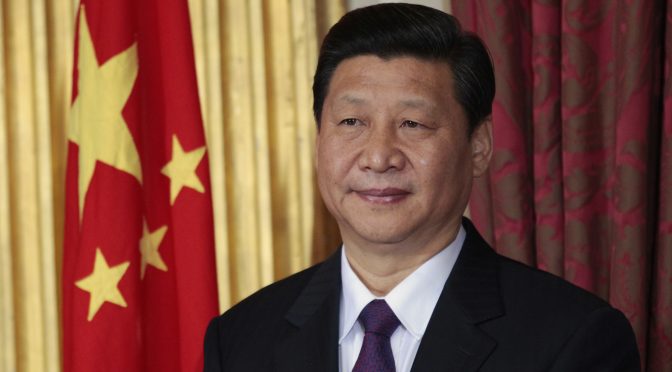
Featured Image: China Vice-President Xi Jinping stands during a trade agreement ceremony between the two countries at Dublin Castle in Dublin, Ireland February 19, 2012. (Reuters/David Moir)

Fostering the Discussion on Securing the Seas.