Category Archives: Strategic Outlook

Predictions and forecasting.

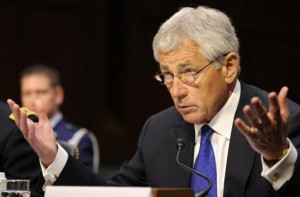
Hagel’s Sequestration Speech: A Warning, Not a Plan

There is no other hand...
There is no other hand…

Before his appointment as U.S. Secretary of Defense, concerns existed that Chuck Hagel was a proponent of the massive cuts envisioned for the DoD as part of Sequestration. With his Statement on Strategic Choices and Management Review (SCMR) (31/07/13), the Secretary has made it very clear that he is no bedfellow of austerity.

Followers of security policy have already drawn out two possible paths from the Secretary’s words. However, the real thrust of the speech was that these were not options, as he sums up in his closing:

The inescapable conclusion is that letting sequester-level cuts persist would be a huge strategic miscalculation that would not be in our country’s best interests…


It is the responsibility of our nation’s leaders to work together to replace the mindless and irresponsible policy of sequestration.  It is unworthy of the service and sacrifice of our nation’s men and women in uniform and their families.  And even as we confront tough fiscal realities, our decisions must always be worthy of the sacrifices we ask America’s sons and daughters to make for our country.”

At multiple points within his piece, the Secretary reiterates that Sequestration cuts are not only damaging, but roughly impossible:

The review showed that the “in-between” budget scenario we evaluated would “bend” our defense strategy in important ways, and sequester-level cuts would “break” some parts of the strategy, no matter how the cuts were made.  Under sequester-level cuts, our military options and flexibility will be severely constrained…


Unlike the private sector, the federal government, and the Defense Department in particular – simply does not have the option of quickly shutting down excess facilities, eliminating entire organizations and operations, or shutting massive numbers of employees – at least not in a responsible, moral, and legal way…


In closing, one of the most striking conclusions of the Strategic Choices and Management Review is that if DoD combines all the reductions I’ve described, including significant cuts to the military’s size and capability – the savings fall well short of meeting sequester-level cuts, particularly during the first five years of these steep, decade-long reductions.”

That is to say, even if we break the back of our armed forces, we still fall short of the required austerity. The original intent of Sequestration, as an “impossible scenario,” is unfortunately coming to pass – not in possibility but in functionality.

The reality is that the real portion from which the cuts must come is the compensation that consumes “roughly half of the DoD budget,” but even then…

The efficiencies in compensation reforms identified in the review – even the most aggressive changes – still leave DoD some $350 billion to $400 billion short of the $500 billion in cuts required by sequestration over the next ten years.  The review had to take a hard look at changes to our force structure and modernization plans.”

The most worrisome reality check laid down by the Secretary is that if Sequestration is not rescinded for DoD, the reforms suggested will require the agreement of a recalcitrant Congress that was more than willing to execute Sequestration, but unwilling to bear the political consequences of the actions they’ve forced. Most likely, that scenario will only lead us deeper down the strategically damaging rabbit-hole:

These shortfalls will be even larger if Congress is unwilling to enact changes to compensation or adopt other management reforms and infrastructure cuts we’ve proposed in our Fiscal Year 2014 budget.  Opposition to these proposals must be engaged and overcome, or we will be forced to take even more draconian steps in the future.”

The Secretary has not, through the SCMR’s response to Sequestration, put down a viable plan for the future. He has set down a warning of what is to come. Let us hope that warning is heeded.

Matt Hipple is a surface warfare officer in the U.S. Navy.  The opinions and views expressed in this post are his alone and are presented in his personal capacity.  They do not necessarily represent the views of U.S. Department of Defense or the U.S. Navy.
Should NATO Pay Attention to the South Atlantic?

Does a NATO-Colombia partnership make sense? Is cooperation with Brazil realistic? Will NATO be needed to fight piracy in the Gulf of Guinea? Has NATO any role to play in the wider South Atlantic area?


Membership for Colombia?

Recently, Colombia’s president suggested that his country could become NATO member. However, although the Colombian government eventually back-pedaled, a new NATO-Colombia partnership is on the table. For what purpose would Colombia want to join NATO? NATO’s European expeditionary capabilities are shrinking without an end in sight. Hence, NATO as a whole would not have been able to give a credible defense guarantee for Colombia. Only the US can do that, but Washington and Bogota would not need NATO to accomplish that.


Officially, NATO says that there is an “open channel for future cooperation” with Colombia. In diplomatic language, such words could mean anything. If the idea does not die in the next months, we will probably see only talks. During NATO-Colombia talks, status-quo and collective defense oriented member states would oppose any measures lifting NATO-Colombia cooperation to a strategic level. Nevertheless, working level efforts and engagement such as training and education would probably not get a veto, as NATO already has working level contacts worldwide.


Unfortunately, a working level cooperation between NATO and Colombia does not have much to offer. Colombian forces could contribute to NATO missions as Argentina did on the Balkans in the 1990s. Due to political exhaustion and austerity the era of large-scale NATO missions is coming to an end. Thus, Colombia will not get an opportunity to decide whether to contribute or not. Any NATO-Colombia partnership would just include the unspectacular – but useful – measures NATO is doing with all other partners: training, education, best practices sharing, et. al. In consequence, do not expect much with political worth from a NATO-Colombia partnership.

 
Partnership with Brazil?

Brazil wants Western powers to stay out of its sphere of influence in the Southern Hemisphere. Moreover, the US would be reluctant to give a less capable NATO roles in South America. There would be no benefit for Washington. Thus, there are few real prospects of a substantial NATO-Brazil partnership. Cyber-Security may be an issue of common concern. Certainly, any publicly known NATO-Brazil cyber-cooperation would provoke debates nobody needs and reactions by third parties such as China.


Nevertheless, there is one area where Brazil could have an interest in NATO. This is AWACS. In the past, at major events, such as the Greek Olympics 2004 or the European Championship in Poland and Ukraine 2012, NATO’s AWACS planes have helped to coordinate air traffic and to monitor the airspace. Brazil is going to host the World Cup 2014 and the Olympics 2016, but is lacking sufficient AWACS capabilities. NATO could help out, but Brazil would have to ask.


What we will surely see is an increasing outreach from NATO member states to Brazil. Beside Portugal (remember the common history) and the US, Germany has a “strategic partnership” with Brazil, which has not delivered anything strategic, yet. Moreover, before 2030 Brazil is going to replace its aging aircraft carrier. As the country is unable to build one on its own, Britain and France may be candidates where Brazil could go for carrier-shopping. Otherwise, China will be happy to deliver.

 
Counter-piracy in the Gulf of Guinea

Regarding piracy, the situation in the Gulf of Aden is getting better, while the problem in the Gulf of Guinea is worsening. Right now, the Western African piracy is only taking place in the littorals, not on the high seas. Thus, it is now appears up to those  littoral  states to solve their problems in their territorial waters and exclusive economic zones.


A new NATO operation would only have to be considered once the pirates reach the Atlantic’s high seas. However, international attention for the problem is already there. The international community has gained counter-piracy experience from the western Indian Ocean. Do not expect a NATO-particular mission soon; the problem may already dealt with. Moreover, even if the Western African pirates would turn high seas, it is far from sure that austerity-suffering NATO would take on that job. Some national states (France, Britain, Portugal, USA) could try to act on their own or countries like Brazil would try to underline their global ambitions with action.


Perspectives

With an eye on geopolitics, the South Atlantic is on a calm track due to the lack of great power conflict. Today Brazil is facing a social and economic crisis. However, World Cup and Olympics will do their share to bring Brazil’s politicians, people and economy back on a good track. The only plausible scenario for a great power conflict is – in the long term – a triangle of competition between the US, China and Brazil; the latter as a swing state. China’s attention in the South Atlantic is growing and the US will not stay passive.


Nevertheless, the there is no role and therefore no need to for NATO to reach out to the wider Southern Atlantic area. Secretary General Rasmussen has traveled around the world during his time in office. As far as I know, he has never visited South America. Please leave it like that. There are more important areas, like the Eastern Mediterranean, to which NATO should pay attention.
Felix Seidler is a PhD candidate at the Institute for Security Policy, University of Kiel, Germany, and a German security affairs writer. This article appeared in original form at his website, Seidlers Sicherheitspolitik.

A Future for Canadian Submarines? Costs, Capabilities, and Interests

By Andrew Chisholm

Canada’s submarine fleet often sparks debate, over its high maintenance costs and over whether Canada needs submarines at all. Going forward, that debate must center on how costs, capabilities, and Canadian interests align with one another.

Canada’s Victoria-class submarine fleet has been controversial since its inception. Most recently, a report by Michael Byers and Stewart Webb argues that the time has come to either phase out the program or commit to a robust discussion of how to replace the fleet. Critics cite a disappointing history of expensive repairs, time lost, and a tragic fire. Supporters insist that the boats provide important capabilities, and Navy planners have sought to get the ball rolling on acquiring new subs sometime after 2020. Going forward, debate over the current fleet and its potential replacement should include all of those elements, but focus on how they align with one another: whether submarines provide the right capabilities at the right price to serve Canada’s national interests.

Costs

The subs were launched in the late 1980s and early 1990s, laid aside by the UK in 1994, purchased by Canada in 1998, and delivered between 2000 and 2004. Canada undertook their first real refit after years sitting in saltwater, ending in significant cost overruns. Tragically, during its cross-Atlantic voyage a fire broke out on HMCS Chicoutimi resulting in the death of a Sailor and deferral of Chicoutimi’s repairs to 2010.

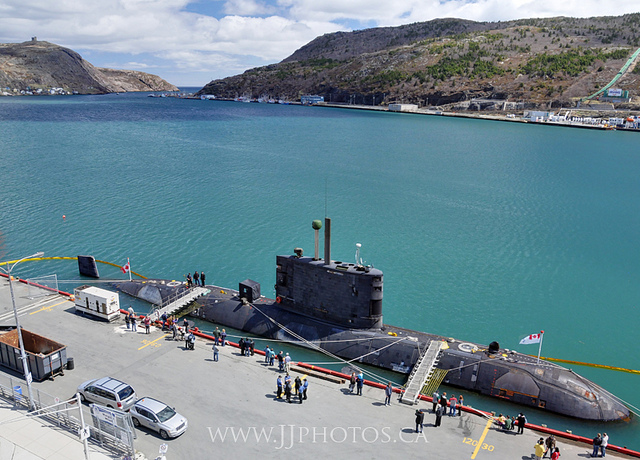
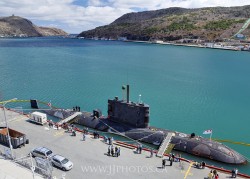
Since 2003, the boats have spent a combined total of 1131 days at sea (less than 33% of the time). HMCS Corner Brook remains in maintenance (to be completed in 2016) begun after she ran aground during exercises in 2011, and despite a recent $209-million refit HMCS Windsor is restricted to operations in Canadian waters until one engine is removed and replaced late this summer.

The HMCS Corner Brook at sea, sort of

Nevertheless, the fleet is scheduled to reach “steady state,” (two subs at high readiness, one at standard readiness, and one in refit) with the completion of Chicoutimi’s repairs at the end of 2013. As one retired Admiral says, the fleet may be turning a corner and Canada now able to reap some benefits.

With regard to replacing the fleet, Byers and Webb note the three main options, ranging in cost (depending on capabilities) from $365 million to $950 million per ship. They also note that replacement subs would be new, off-the-shelf (but built in Canada) and unlikely to have similar maintenance problems and costs.

Interests and Capabilities

The Canadian interests for which submarines could be relevant can be divided into three categories: the defense of Canada and North America, support of Canadian expeditionary deployments, and support of Canada’s interest in global maritime stability.

First, regarding the defense of Canada and North America, proponents argue that submarines provide the ability to covertly carry out coastal sovereignty and surveillance patrols, including in the Arctic. But as Byers and Webb point out, in Canadian waters at least, these functions can be performed better (and cheaper) by aircraft and drones, combined with surface-craft for enforcement. Also, the Victoria Class has no under-ice capability, although new subs likely would.

Second, submarines could support certain expeditionary deployments. The current fleet can provide security for other naval platforms, their covert surveillance and intelligence gathering capabilities would be valuable, and they can enhance the activities of special operations forces. New subs could have the capability to hit land targets with guided missiles launched from offshore, as American and British boats did in support of NATO’s Libyan operation in 2011.

Supporting global maritime stability is a key interest for Canada as it relies heavily on sea-borne trade, even with the United States. More broadly, Canada has long worked to entrench and expand global trade, which is heavily sea-reliant. As its government seeks to expand trade relations with Europe, Asia, and Latin America the importance of commercial sea routes, and therefore of global maritime stability, will only increase for Canada.

This is particularly the case in the quintessentially maritime Asia Pacific region where China in particular is driving growth in economic and military power. Byers and Stewart argue that because of its global trading links, including with Canada, China is unlikely to engage in conflict, so investing in submarines based on the slim probability of Canadian engagement in such a conflict may be unwise. But according to Elinor Sloan, “Horizon 2050: A strategic concept for Canada’s navy,” the document presumed to be guiding future naval platform acquisitions, views maritime inter-state competition in the region with concern.

As I outlined in a previous article, territorial disputes, great power strategy, and nationalist emotions in Asia Pacific create a volatile mix. In this environment conventional deterrence and power projection will play an important role, either in maintaining stability or in actual conflict. The potential for a Canadian submarine presence in such Asia Pacific roles was forecast by HMCS Victoria’s participation in the US-led Rim of the Pacific, 2012 exercise.

In this vein, as Commander Craven notes, submarines provide access to areas denied to other forces and serve as a credible deterrent against almost all forces, including other states’ sea-borne power projection platforms. They can also serve in a power projection role, especially around shipping “choke points” and littoral areas. To be sure, surface ships can perform these roles (and others that submarines cannot), but they lack the tactical and psychological advantages of stealthy subs.

Conclusion

Debate concerning Canada’s submarine fleet and its possible renewal will consider many factors, from costs to capabilities and interests. The final decision must be made based on how those factors align with each other. Submarines provide many capabilities, but they are not necessarily the only platforms that do, and may or may not be the most efficient platforms in the doing. I am not qualified to judge whether submarines are the ideal platform for Canada to secure its interests as efficiently as possible, but that discussion of balance must be the center of debate going forward.

Andrew Chisholm is a Junior Research Fellow at the Atlantic Council of Canada. He recently graduated from the University of King’s College with a B.A., Combined Honours, in Political Science and History, and studied Conflict Resolution at the Rothberg International School at Hebrew University in Jerusalem. Andrew focuses his writing on contemporary Canadian foreign, defence, and security policy. His wider interests include sovereignty and governance, international diplomacy, and emerging security threats. Contact: andrewmchisholm@gmail.com

Does Seapower Pay?

Daniel Drezner is an International Politics professor at Tufts University with an informative and entertaining blog at Foreign Policy.  He recently published an article in the journal International Security asking whether “military primacy yields direct economic benefits.”

This is an important issue for seapower advocates, with organizations like the U.S. Navy traditionally claiming that American dominance at sea is part of the bedrock foundation of a smoothly running international economic system.  The 2007 Cooperative Strategy for 21st Century Seapower argues that the “maritime domain…carries the lifeblood of a global system that links every country on earth,” and that “United States seapower will be globally postured to secure our homeland and citizens from direct attack and to advance our interests around the world that relies on free transit through increasingly urbanized littoral regions.”  

The 2010 Naval Operations Concept similarly envisions U.S. naval forces that “effectively conduct the full range of maritime security operations and are instrumental in building the capacity, proficiency and interoperability of partners and allies that share our aspiration to achieve security throughout the maritime commons.”

The current strategy document for the U.S. sea services, a Cooperative Strategy for 21st Century Seapower
The current strategy document for the U.S. sea services, A Cooperative Strategy for 21st Century Seapower

Drezner examines three potential ways in which a state’s military primacy could provide tangible benefits:

1. Geoeconomic Favoritism: “Military preeminence” may spur private sector investment both domestically and from abroad, as “all else being equal, a country is far more likely to attract foreign capital if it is secure from foreign invasion.”

2. Geopolitical Favoritism: Weaker states may “provide voluntary economic concessions to the dominant security actor.”

3. The Public Goods Benefit of Military Primacy: Military “primacy facilitates the creation of global public goods” with “a wide range of international relations theorists” claiming “that a liberal hegemon is a necessary and sufficient condition for the creation of an open global economic order.”

The particular potential benefits of U.S. seapower in its current, globally-deployed state would most likely be realized in terms of the “Public Goods Benefit.”  The particular hypothesis which Drezner is trying to test here is whether “by acting as a guarantor of the peace in hotspots such as the Middle East and Pacific Rim, the United States keeps the international system humming along-which in turn yields significant benefits to the United States itself.”

In terms of concrete examples of how the U.S. military has secured the global economy by protecting the sea-lanes, Drezner cites naval operations in the Middle East, an area of both political instability and significant economic importance due to the need to securely ship oil out of the region as well as the recent multi-national campaign against Somali pirates.  However, he then proceeds to question whether naval or military power can be credited with minimizing energy market disruptions or defeating piracy, pointing out that “world oil markets” can be relatively resilient and are capable of adjusting to severe price changes, and that “improved private security on board” merchant shipping may have been a more important factor in the decreased threat from Somali pirates.  With his focus being military power in general, however, he does not provide a detailed discussion of seapower’s role in the global economy other than his brief discussion of oil and piracy.

Keeping the trucks rollin'
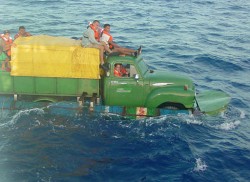
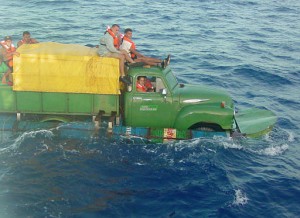
                          Keeping the trucks rollin’

Drezner claims that if “unipolarity” and military primacy worked as predicted, China should have been “pacified” by the various manifestations of U.S. policy towards the Far East as part of the the 2011 “pivot,” but instead has acted increasingly aggressive towards its neighbors.  Unaddressed in this article, yet probably at the top of the list of factors impacting and/or justifying continued U.S. naval hegemony in the Pacific, is the tangible impact of growing Chinese strength afloat.  It is often assumed by China-phobes that a China with a strong navy acting assertively in regards to its claims over the surrounding oceans would be bad for the international system (presumably through somehow limiting freedom of navigation in the region), hence justifying continued American military presence in the Pacific.  However, there is no empirical evidence to prove that case yet (because it has not happened), and advocates of both sides are forced to rely on hypotheticals.  Drezner has asked the right macro-level questions, but it is unclear if there is specific enough data to generate a definitive answer regarding the tangible benefits of specifically American (or Chinese) naval primacy in East Asia.

Drezner concludes that military primacy is an important resource for a Great Power, but that “military preeminence” alone  does not produce “significant economic gains.”  Although primacy can be an “an important adjunct to the creation of an open global economy and the reduction of militarized disputes and security rivalries,” a hegemon whose economic strength is declining may not be capable of reaping the benefits of the economic system it has established and protected.

While members of the sea services or naval enthusiasts generally embrace the notion that seapower is an important element of protecting the international system and prosperity both at home and abroad as undisputed truth and gospel, the jury is still out on whether military power is always worthwhile in economic terms, and Drezner questions those often reflexive assumptions here.  In an era of budget uncertainty, the Navy needs to have good tangible answers to justify its continued existence when these types of questions are asked in the future.

Lieutenant Commander Mark Munson is a Naval Intelligence officer currently serving on the OPNAV staff.  He has previously served at Naval Special Warfare Group FOUR, the Office of Naval Intelligence, and onboard USS Essex (LHD 2).  The views expressed are solely those of the author and do not reflect the official viewpoints or policies of the Department of Defense or the U.S. Government.