Category Archives: Strategic Outlook

Predictions and forecasting.

Egyptian Instability and Suez Canal Security (Part I)

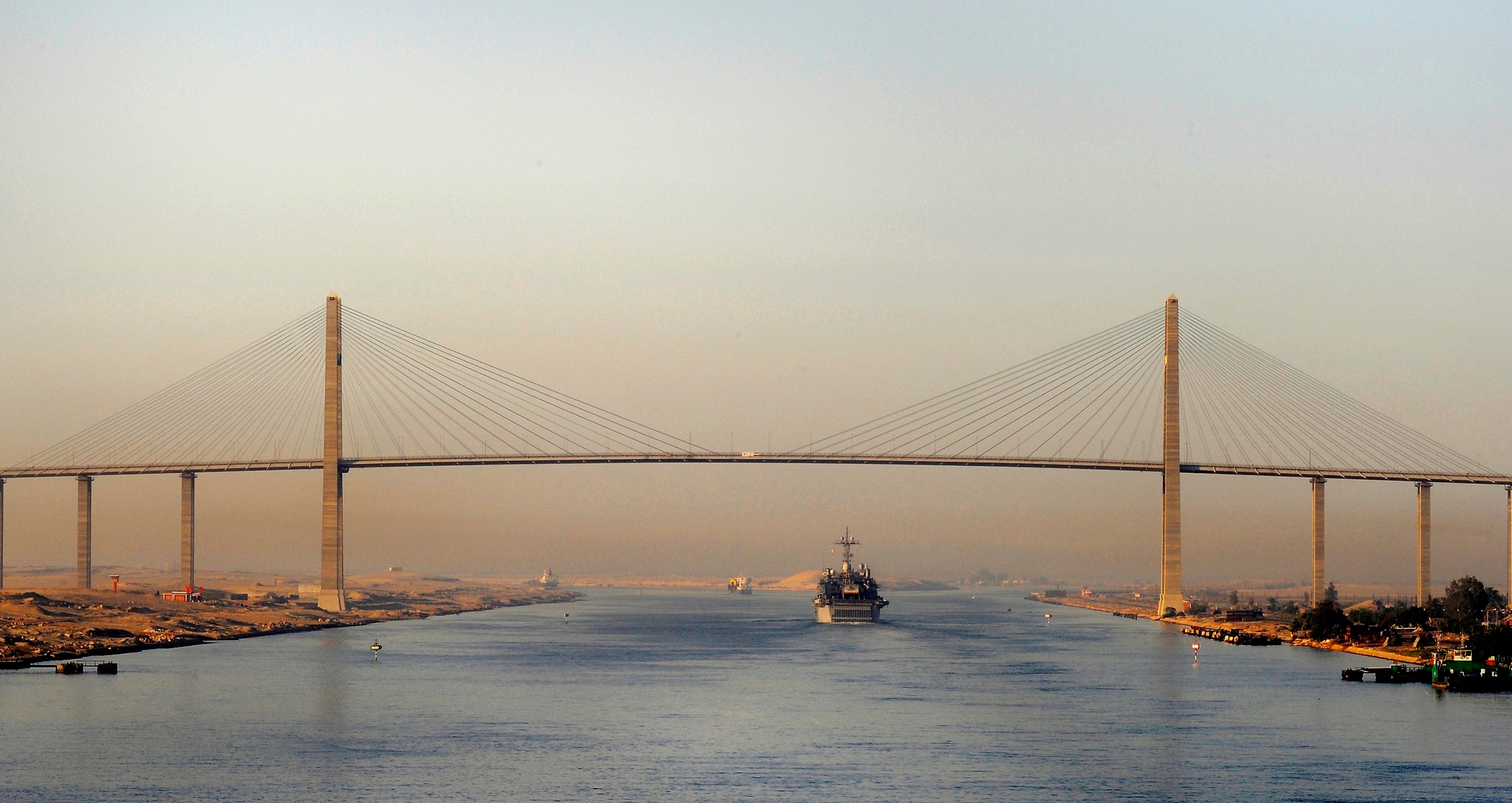
Calm waters in a restless country. Can it last?

The following article is special to our International Maritime Shipping Week. While we often discuss the threats to maritime shipping, this week looks at dangers arising from such global trade, and possible mitigations.

As months of massive opposition protests culminated on July 3, 2013 in a military coup against Egyptian President Mohamed Morsi, the eyes of the commercial maritime industry were fixated on the Suez Canal. Though the general report from the vital waterway is ‘business as usual,’ the political and security situation in Egypt remains incredibly fluid. In the restless Sinai Peninsula, militant groups have seized a perceived moment of weakness to launch a fresh round of attacks against Egyptian authorities. In the major cities, including those along the Canal, pro- and anti-Morsi demonstrations and security crackdowns have turned violent, resulting in hundreds of deaths. Military deployments have been increased in the Canal Zone, but the balance between security and efficiency is a delicate one.

As an exercise in speculative analysis, this article examines the questions of who might attempt to shut down the Suez Canal, while the second installment will assess how such an objective could be achieved. Of particular relevance for International Maritime Shipping Week, is the possibility that a vessel transiting the Canal might unwittingly become a pawn in a scheme to close it.

Potential Perpetrators

There is no shortage of local and regional groups hostile to Egypt’s interim military government. As the military’s legitimacy and public support is largely based on the relative stability it provides, an attack on the Suez Canal would serve to undermine and embarrass the interim government, demonstrating to the world that the military is unable to protect the country’s vital interests. That said, the integral boost that Canal revenues provide to the Egyptian economy—accounting for some 2.5% of GDP—makes it unlikely that a political actor with aspirations to govern the country, such as the Muslim Brotherhood, would publically seek to disrupt the Suez Canal.

Riding West from Sinai

Militants in the Sinai Peninsula—a mix of local Bedouins, Palestinians arriving from Gaza, and handful of foreign jihadists—have engaged in low-level conflict with the Egyptian state for decades, but have dramatically escalated their attacks since Morsi’s ousting. The targets of militant attacks are usually symbols of Egypt’s political and military authority in the Peninsula, including security checkpoints, police stations, administrative buildings and army camps. Militants have also struck at critical infrastructure such as oil pipelines to Israel and Jordan, power stations, and the airport at El-Arish. An influx of weapons looted from Libya and the function of Gaza as a smuggling hub has meant that Sinai militants are increasingly well armed, brandishing unguided missiles, RPGs, mortars, and guided anti-tank and anti-aircraft weapons.

Egyptian security checkpoints and military outposts are now subject to near daily attacks by Sinai militants.

As the Egyptian army attempts to crackdown on the militants, there are several indicators that Sinai insurgents may attempt to broaden their campaign and target the Canal Zone. On July 8, armed gunmen attacked the Port Said traffic police directorate and the city’s western seaport in a series of drive-by shootings that mirrored those seen in northeast Sinai. On June 25, a rocket fired from central Sinai landed in an empty area east of the Canal in what Egyptian officials speculate may have been a military drill by an insurgent group. It was also reported that another inaccurate rocket launch in early July was an attempt to hit oil installations in the city of Suez. In addition, Egyptian military sources claim that a cache of Iranian-sourced Fajr-5 rockets seized in Sinai on August 9 were part of a plot to attack Suez Canal facilities.

Forcing a closure of the Canal would be incredibly difficult, but options for disruption are many (see Part II). Regional security expert Ehud Yaari notes that even a lone jihadist in the Sinai could fire an anti-tank missile or RPG at a ship moving slowly through the Suez Canal. This would be unlikely to block the Canal, but may result in delays, increased insurance premiums, and demands for hazard pay for shipping companies.

An Escalating Circle of Political Violence

Two weeks ago, this author assessed that “there is a very low probability that the Muslim Brotherhood will abandon its current strategy of sit-ins and protests in favor of armed revolt against the military.” Recent events, however, have increased the likelihood of political violence spilling over into the Canal Zone. Clashes between Morsi supporters and security forces that left some 80 dead on July 26 were in fact only a preview of the carnage witnessed on August 14, when a police effort to clear protest camps in Cairo was backed by army units firing automatic weapons and sniper rifles. By August 15, the Egyptian ministry of health had recorded 525 dead, but other estimates put it hundreds higher. This event is likely to prove a watershed moment for Egypt and has already resulted in violent blowback from Brotherhood supporters.
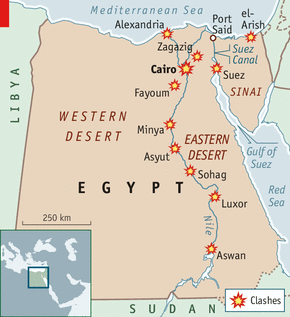
Sites of the clashes between protesters and security forces (The Economist)

Egypt’s interior ministry claims that 43 policemen were killed during the clashes, four of them captured and summarily executed in the village of Kerdasa near Cairo. Muslim Brotherhood supporters stormed government buildings in Cairo and Suez city, while violent mobs also set fire to some 18 Christian churches across the country.

Now facing an imposed nighttime curfew and state of emergency declaration, the official line from the Muslim Brotherhood leadership is to continue with demonstrations and marches.  “We will rise and rise again until we push the military back into the barracks and restore democracy,” tweeted Brotherhood spokesman Gehad El-Haddad.

The longer this cycle of protest and repression continues, the harder it will be for the Brotherhood’s leaders to prevent its members from engaging in violent acts. There are reports that some Islamists have fled mainland Egypt to join the insurrection currently waged in the Sinai. Other protest groups have threatened to block roads and railways, and attack security directorates and public facilities if the military continues to break up sit-ins or gatherings. These types of actions will have a direct effect on Canal operations. GAC Egypt, a shipping service provider, recently recommended that transiting vessels suspend crew changes and logistical deliveries until further notice.

The worst-case scenario for the Suez Canal would be if individual Islamists become so frustrated with the Egyptian government that they resort to economic destabilization by disrupting the Canal. It is also possible that continued military violence against Islamist protestors could lead other political groups, such as the Salafists (ultra-conservative Islamists), to abandon mainstream politics in favor of armed conflict.  If such groups flee the political system, it could equate to targeted attacks against the backbone of the Egyptian economy: the Suez Canal, the Suez-Mediterranean (SUMED) oil pipeline and tourist centers.
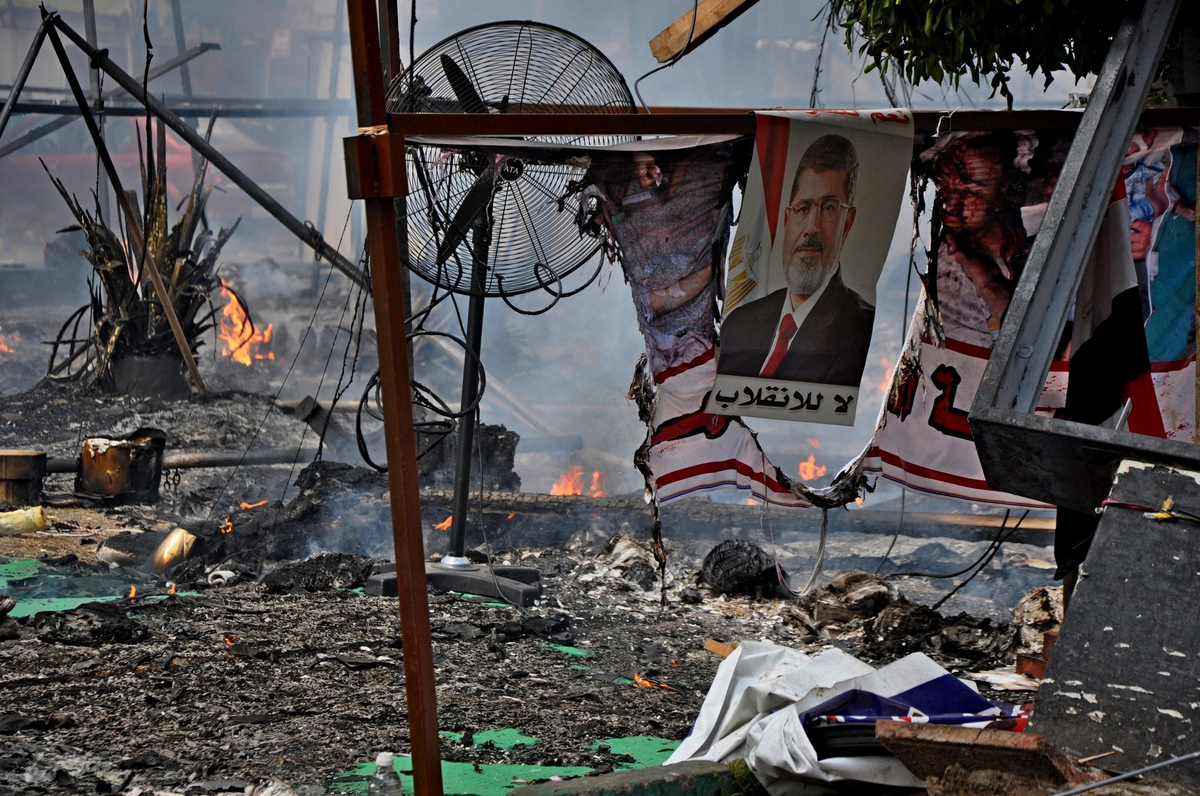
A protest camp cleared, but the battle for Egypt rages on

Eyes on the Canal

Though Canal traffic remains normal, the political violence that has spread to the Canal cities of Port Said, Ismailia and Suez is of great worry for the Suez Canal Authority (SCA) and Egypt’s military government. Reinforcements from the army, navy, and air force have been sent to secure the entire length of the waterway. There are also unconfirmed reports that the SCA raised the Canal’s security level to “extreme emergency” following the August 14 massacre. The exact nature of this perceived threat—including possible targets for attack and potential impacts of worst-case scenarios—will be the focus of this briefing’s second installment.

This article contains excerpts from the Delex Maritime Analysis Center’s “Suez Canal Security Tracker” series, co-authored by Delex analysts James Bridger and Jonathan Zinger. For more information about this product offering, please contact jbridger@delex.com
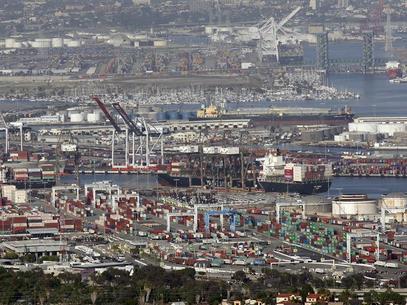
A National Strategy for Global Supply Chain Security

The following article is special to our International Maritime Shipping Week. While we often discuss the threats to maritime shipping, this week looks at dangers arising from such global trade, and possible mitigations.

At what cost certainty?
                                   Certainty at what cost?

Last year, the Obama Administration released its first-ever National Strategy for Global Supply Chain Security. As stated, the main goals of the strategy are to promote the efficient and secure movement of goods and foster a resilient supply chain. Maintaining a secure and resilient supply chain is certainly critical to ensuring the prosperity of the United States’ economy. However, existing legislation governing maritime cargo transit and port security directly contradicts the goals of this strategy.

In 2007, Congress mandated that 100 percent of the approximately 32,000 cargo containers entering U.S. ports each day be screened. The feasibility of this mandate has been questioned by security experts from day one.

In seeking to establish a workable alternative, Congress should consider supply chain realities in fostering a risk-based approach to maritime cargo security.

Given the extensive economic importance of the maritime supply chain, the vulnerability of maritime cargo to terrorist and other malicious attacks has long been a concern. With this concern heightened after 9/11, Congress and the Administration moved to create a risk-based approach to strengthen maritime security centered on analyzing cargo attributes, such as contents and origin of the cargo container, to single out high-risk cargo for further inspection.

By 2006, however, Congress turned sharply away from the risk-based approach with the passage of the Security and Accountability for Every Port Act, which called for testing the feasibility of scanning 100 percent of U.S.-bound cargo, a requirement that was fulfilled though the creation of the Secure Freight Initiative pilot program.

While the program showed that “scanning U.S.-bound maritime containers is possible on a limited scale,” major challenges existed in expanding 100-percent scanning to all 700 international maritime ports handling U.S.-bound cargo. These findings, however, would be disregarded, and Congress moved to mandate that 100 percent of all U.S.-bound maritime cargo be scanned by July 1, 2012—prior even to the pilot program’s completion.

Proponents of the 100-percent mandate have pointed to the supposed success of mandating 100-percent screening of air cargo. Besides the fact that this screening was limited to domestic cargo—screening of U.S.-bound international cargo proved much more difficult—and that a significantly greater volume of cargo transits through the maritime supply chain, another critical difference is that the air cargo security mandate called for the 100-percent screening of all cargo, whereas the maritime cargo mandate calls for 100 percent scanning.

While screening calls for cargo to be assessed for risk on the basis of contents, origin, and other attributes, scanning means that each of the approximately 10.7 million maritime cargo security containers entering U.S. ports each year must be physically scanned. The growth of maritime cargo containerization in recent decades means that typical maritime cargo containers often measure some 40 feet in length. One key issue regarding screening maritime cargo is, therefore, one of scale. While the basic technology exists to effectively screen cargo containers, the expanded technology necessary to perform this function on the larger forms of containerized cargo largely does not.

Cost and infrastructure are also important factors. A single x-ray scanner, the most common technology used for cargo screening, can have a price tag of $4.5 million, plus an estimated annual operating cost of $200,000, not to mention the roughly $600,000 per year for the personnel required to run the equipment and examine the results. Likewise, the mere placement of scanners can also cause logistical problems, as many ports were not built with natural bottlenecks through which all cargo passes. With today’s economy relying heavily on the timely and efficient movement of goods, such delays could amount to around $500 billion in total profit loss. And once scanning technology is installed, it may encounter multiple problems, such as incompatibility with previous technologies, outages due to weather, and insufficient communication infrastructure to transmit electronic data to the U.S. National Targeting Center-Cargo, where it is assessed.

A large part of the post-9/11 anxiety regarding maritime cargo security has centered on the “nuke in a suitcase” scenario, an extremely low probability event. The vast majority of cargo traveling through the maritime supply chain consists of legitimate goods. The 100-percent maritime screening mandate, however, fails to recognize this reality and instead treats every piece of cargo as a genuine threat.

Congress should rethink the 100-percent cargo security mandate and instead return to a risk-based approach to cargo security, centered on analyzing manifests and other data, to single-out only high-risk cargo for further inspection. Ensuring the security and prosperity of the maritime supply chain is simply too important for Congress not to get this right.

Emil Maine is a National Security Research Assistant at the Heritage Foundation, where he conducts independent research on U.S. defense posture. The views and opinions expressed in this article are his own.

Why the United States Won’t Need Troops in Afghanistan After 2014

U.S.-soldiers-returning-from-Afghanistan-300x198
U.S. soldiers board an Air Force C-130 as they depart Afghanistan. Image: U.S. Department of Defense

General Joseph Dunford, the International Security Assistance Force (ISAF) commander, recently told the New York Times that America’s “presence post-2014 is necessary for the gains we have made to date to be sustainable.” His reasoning was that although the Afghan National Security Forces (ANSF) are bearing the brunt of fighting, “at the end of 2014, [they] won’t be completely independent” operationally and logistically.

Since the Obama Administration is already considering either a “zero option”—whereby there will be no American troops after 2014—or an earlier withdrawal, General Dunford’s plea for America’s continued involvement in Afghanistan will not likely be taken seriously. For one, according to a recent Washington Post-ABC News poll, 67 percent of Americans surveyed believe that the Afghan War is not worth fighting. Moreover, the recent video conference between President Obama and President Karzai proved that their relationship has deteriorated considerably due to lack of trust and miscommunication.

bilde
A U.S. Army captain, center, speaks with an Afghan army officer, left, during a patrol break June 15 in Afghanistan’s Najgarhar province. (Sgt. Margaret Taylor/U.S. Army)

Yet, the issue of what the United States should do in Afghanistan is still intensely debated among foreign policy mavens. Dov S. Zakheim, a former Department of Defense official, argues that the “nature of commitment in absence of a troop presence” may deal a blow to ISAF’s nation-building efforts in Afghanistan, and may even take away “incentives” from the Taliban “to pursue talks with the Afghan government.” Ryan Evans, Assistant Director of the Center for the National Interest, also sees the strained relationship between the Obama and Karzai administrations as “a consequence of larger problems in the U.S.-Afghan relationship…[which] stem[med] from President Obama’s misprioritization of U.S. aims in Afghanistan.” While Evans does not rule out a settlement with the Taliban, he believes that it must be done in such a way that does not “obfuscate” America’s continued presence in Afghanistan past 2014 to contain terrorist networks and to provide stability in Af-Pak. To these arguments must also be added another possible “game-changer.” In the wake of Hassan Rowhani’s landslide victory as Iran’s new president, some foreign policy experts now envision a positive shift in favor of America’s primacy in the Greater Middle East, and to a lesser extent, its prosecution of the “War against Terror.”

Whatever the case may be, two things are clear. First, in the face of grim fiscal realities, the United States must fight smarter to contain terrorist networks. Second, the United States should allow the Afghan people to figure out for themselves how they want to live.

With respect to the first, the United States can successfully contain terrorist networks without massive troop presence in Af-Pak. In the face of drastic sequestration cuts in the upcoming fiscal years, it makes sense to work with whosoever will rule Afghanistan while adopting selective targeting of America’s adversaries. Thus, in addition to unilaterally employing SOF (Special Operations Forces) and UAVs (Unmanned Aerial Vehicles) to track and kill terrorists, the United States can establish a good rapport with the Taliban regime, assuming it maintains a power base, by “limiting Pakistani influence in Afghanistan.”

As regards the second, according to Afghan journalist Ahmad Shafi, Afghan people have, thanks in no small measure to the American occupation, become integrated into the global community and have, therefore, become more sophisticated and cognizant of global affairs. In fact, Shafi wrote in June that while the Western media likes to “embellish” the threat of an impending civil war, most Afghans “‘beg to differ en masse’ on the magnitude of threat posed…by a bunch of violent extremists, whose grim visions are so far away from the realities of today’s Afghanistan.” One reason for this “discrepancy” between Western media perceptions and those of Afghan citizens, according to Shafi, is due to “radically different” political dynamics at play whereby the warlords and the Taliban find it “increasingly difficult” to connect with the new generation of Afghan citizens most of whom are under the age of 25. Simply stated, it is too early to draw conclusions about the supposedly ominous fate awaiting our Ngo Dinh Diem in Kabul or ordinary Afghan citizens.

Despite the gloomy assessment by General Dunford that the United States needs to extend its troop commitment past the 2014 deadline, there is little reason to worry. True, as Zachary Keck argues, “there are no ideal conclusions to the Afghan conflict available” at present. Nevertheless, the much-feared Taliban takeover may or may not take place. And even if the Taliban successfully returns to power, one way or the other, the United States can work with the fundamentalist regime to contain the international terrorist network. As to the now-common comparisons between a possible Taliban takeover and those of the North Vietnamese and Khmer Rouge victories in April 1975, only time can tell how the events will unfold. In the end, no matter the outcome, the Afghan citizens, as with Vietnamese and Cambodians before them, will sort out their own fate.

This article was originally published in its original form in the Georgetown Journal of International Affairs and was cross-posted by permission. Read the original post here.

Jeong Lee is a freelance international security blogger living in Pusan, South Korea and is also a Contributing Analyst for Wikistrat’s Asia-Pacific Desk. Lee’s writings have appeared on various online publications, including East Asia Forum, the Georgetown Journal of International Affairs and the USNI Blog.

Dire Straits: ASEAN and Piracy

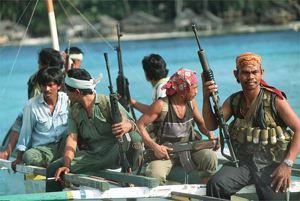
IndonesiaAmid reports of hijackings and narrow escapes by merchant vessels in the Gulf of Guinea, West African piracy has begun to capture international attention. Meanwhile, NATO’s Operation Ocean Shield and the EU’s Atalanta maintain presence with other international partners in the Gulf of Aden, securing a crucial trade route against the threat of Somali piracy. However, the waterways of Southeast Asia are now almost entirely absent from the Western media narrative regarding the threat posed by piracy to international trade. This comes as some surprise, since piracy in this part of the world is very much on the rise.

According to the International Maritime Bureau (IMB), 57 attacks were reported in Southeast Asia during the first six months of 2013. Of the 297 pirate attacks that took place in 2012, 81 were perpetrated in Indonesia’s coastal waters alone, surpassing the 75 attacks that occurred in the Gulf of Aden the same year. This resurgence of Southeast Asian piracy is placing significant stress upon the shipping industry, generating new expenses and placing human lives at risk.

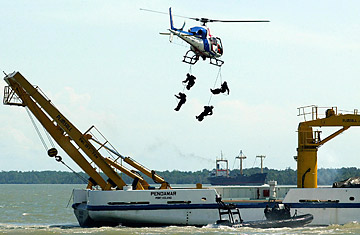
Malaysian special forces abseil onto a vessel from a police helicopter during an antipiracy demonstration in the Strait of Malacca (Jimin Lai / AFP)
Malaysian special forces abseil onto a vessel from a police helicopter during a counter-piracy demonstration in the Strait of Malacca (Jimin Lai / AFP)

It is little wonder that this region has become the latest hot spot for pirate activity. It is estimated that approximately one-third of global crude oil and over half of global liquefied natural gas pass through the Strait of Malacca and the South China Sea each year. In fact, roughly one-third of global trade passes through the Strait of Malacca, making it one of the most vital waterways to the world economy. Yet despite its strategic significance, there have been only limited efforts to secure the flow of goods and fuel through the Strait. In 2004, an informal arrangement was established between the naval forces of Indonesia, Malaysia, Thailand, and Singapore to cooperate on counter-piracy operations. In 2006, when Indonesian authorities expressed concern that they lacked the capabilities necessary to patrol Indonesia’s own territorial waters, the Indian Navy and Indian Coast Guard agreed to contribute vessels and crews to counter-piracy efforts on a limited basis.

For some years, this multinational arrangement saw success in reducing both the frequency and intensity of regional piracy, particularly in the Strait of Malacca. Unfortunately, these successes, rather than motivating further security cooperation, seem to have contributed to a certain degree of complacency. In April 2011, the Chief of the Malaysian Defence Forces was quoted claiming that the multinational collaboration had brought a complete end to piracy in the Strait. This does not mesh with the aforementioned increase in attacks over recent years.

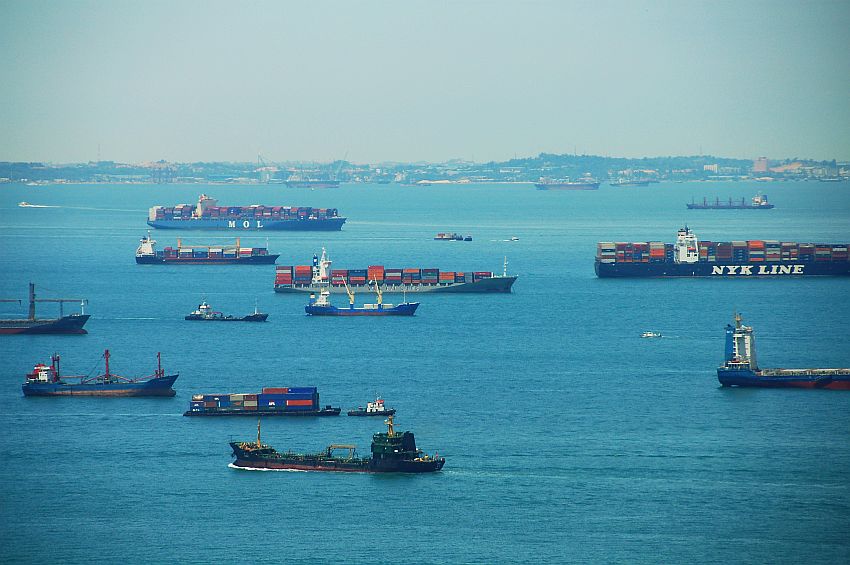
An Anchorage off Singapore
The Singaporean anchorages, plump with potential piracy victims.

The current situation presents both a powerful motive and an opportunity for pirates to prey on shipping in the Strait of Malacca – the value and volume of shipping is considerable, and the lack of a formal counter-piracy framework in the region leaves patrolling disjointed. In place of the current multinational collaboration, an intensive counter-piracy program on the part of the Association of Southeast Asian Nations (ASEAN) might better discourage pirate activity. ASEAN, whose membership comprises ten countries, has embarked on an effort to establish a functioning political-security community by 2015. The lack of an effective ASEAN response to a conflict in the Malaysian region of Sabah during the early months of 2013 has cast some doubts as to whether the necessary level of security integration can be achieved by the 2015 deadline. But regardless of whether the ASEAN member states can fully realize their integrationist ambitions, the attendant reform process may present the perfect setting in which to adopt a shared counter-piracy strategy, exchange best practices, and commit to a plan that will see the Strait of Malacca consistently and effectively patrolled by the naval forces of ASEAN member states.

Southeast Asian governments have been striving to position their region as a major economic hub, and the success of these efforts will depend in large part on whether international audiences see ASEAN integration as credible. Piracy in the Strait of Malacca is precisely the kind of challenge ASEAN can address through collective action, demonstrating that needed credibility. Continued complacency, on the other hand, will only contribute to a deepening crisis, undermining ASEAN once again and harming prospects for regional economic growth by fueling organized crime. With an ASEAN Summit set to take place in Brunei Darussalam this October, it is imperative that piracy make it onto the agenda.

Paul Pryce is a Junior Research Fellow at the Atlantic Council of Canada. With degrees in political science from universities on both sides of the pond, he has previously worked in conflict resolution as a Research Fellow with the OSCE Parliamentary Assembly and as an infantryman in the Canadian Forces. His current research interests include African security issues and NATO-Russia relations.