Category Archives: Global Analysis

A Geographical Breakdown of What’s Going on in the World

President Charles Stewart and the Making of American Naval Power

Alternate History Topic Week

By Claude Berube

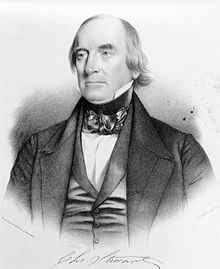
Having just completed his latest assignment as Commodore of the Home Squadron, Charles Stewart had returned to his intermittent business interests that had afforded opportunities to officers without orders.  He had seen the flyers, his stately image emblazoned above the appeals for him to run for president of the United States.  At the behest of fellow Philadelphian merchants, he agreed to join them in Baltimore where both the Whigs and Democrats held their conventions.  Henry Clay was already certain to be the Whig nominee; the fight for the Democratic nomination was far more complex.

Martin van Buren’s lock began to falter based on his position on slavery and opposition to the annexation of Texas.  War of 1812 hero Lewis Cass supported annexation.  There were other contenders: James Buchanan, John C. Calhoun, and Silas Wright.  In the background was the decidedly non-political hero of the War with the French in 1798, the Barbary War, and the War of 1812.  Van Buren was gone by the seventh ballot.  Massachusetts delegate George Bancroft offered Speaker of the House James Knox Polk as a running mate for Van Buren or Stewart.  Polk’s supporters vowed to endorse Stewart if he selected Polk as his vice president.

The matter was offered to Stewart at a dinner.  He said nothing, appearing unusually nervous and fidgety.  This was the moment of decision.  If he turned them away, there would never be another opportunity and he would return to his estate in Bordentown to live out his days as the chance for another sea command – particularly as he had already been commodore of the Mediterranean, Pacific and Home Squadrons – was unlikely. 

“If nominated,” he finally said, “I will accept.” His nomination was immediately reported by Samuel Morse’s new telegraph.

With Jackson’s protégé, Polk, by his side, and the delegates from Pennsylvania and New York committing to the ticket, the northern and western states soon followed suit.  The sixty-six year old Stewart provided a heroic narrative for the newspapers, much as Jackson’s army experience had vaulted him into the presidency.  In the general election, Polk’s Tennessee roots offset Clay’s enough for Stewart to be elected president.

Though his vice president kept pushing an agenda to annex Texas and secure the northwestern territories, Stewart was resistant to fighting on too many fronts for a nation with a small army and navy. He named his friend and navalist James Fenimore Cooper Secretary of the Navy, a move not unprecedented since another of the literary Knickerbocker Group James Kirke Paulding, had held the same position under Van Buren.  Cooper’s extensive non-fiction writing in the previous decade about building up the fleet convinced Stewart that he was the right man for his administration. Stewart focused his administration on building and modernizing the navy and providing new markets for the merchant fleet.  Westward expansion held no interest to the sailor-president. 

Naming Matthew Perry America’s first admiral, Stewart had read his 1839 report on the navies of Europe.  A young French ship designer had also come to his attention.  The days of wooden frigates and ships of the line designed by Stewart’s former colleagues, the Humphreys, were passing.  Stewart realized that the country had to make a leap forward if it was to become a great power.  He hired Henri Dupuy de Lome, a French ship designer proposing an iron-hulled-screw-driven frigate.  Together with Commodore James Barron, who had designed a steam-powered tri-hulled ram ship in the 1830s, and a young engineer Charles Ellet proposing his own ram ship, the team built a new naval force.

In late 1845, Stewart sent his Secretary of State Richard Rush, a former Minister to Great Britain, to issue demands of the British Empire including accepting U.S. terms on the Oregon Territory.  Rush and Stewart alone remained from their Philadelphia schoolyard from where two other friends perished – first Richard Somers at Tripoli and then Stephen Decatur in a duel.  Stewart built a coalition of those defeated by the Royal Navy that had allowed it to rule the seas.  Spain had a small navy with some ships that remained in harbor since the days of Trafalgar.  But France offered Stewart more hope.

In 1836, Louis-Napoleon, the nephew of Bonaparte, had attempted a coup.  Failing that, he sailed for the United States.  He met in New York with the elite including generals and naval officers.  He vowed to poet Fitz-Greene Halleck – one of the Knickerbockers – that he would become Emperor.  He was welcomed at the Naval Lyceum at the Brooklyn Navy Yard then he traveled to Bordentown where his uncle Joseph – the dethroned King of Spain – had exiled himself.   Here Louis-Napoleon became acquainted with Stewart and his family.  Stewart funded Napoleon in 1845 to overthrow the government then sent his own son, Charles Tudor Stewart, as emissary to the throne of Napoleon III.

England rebuked Rush and when he returned, Stewart asked for a declaration of war.

Queen Victoria, Prime Minister Robert Peel by her side, sent the British Fleet under the aged Admiral of the Fleet James Hawkins-Whitshed off to the Americas to put the upstart nation down quickly, lest other nations be inspired by their defiance.  The Royal Navy hadn’t been defeated in forty years and its wooden walls would not fail now.  Its objective was the Chesapeake Bay where transport ships would land in Norfolk, Baltimore, and up the Potomac River to Washington.

A recognized Constitutionalist, Stewart had averted a war with Algiers in 1805 when he pointed out to the squadron’s Commodore that only Congress could declare war and again in 1815 when notified that the Treaty of Ghent had been signed pressed the crew of the Constitution to continue its wartime footing since only the Senate could ratify a treaty – and there had been no such news.   It allowed him just a few weeks later his greatest victory of the USS Constitution over the HMS Cyane and HMS Levant. Now, he followed the Constitution again while anti-British fervor in Congress overwhelmingly supported a third war for American independence and reduce England’s control of the oceans and the trade it dominated.  He also knew Article II, Section 2 of the Constitution which stated that the President shall be Commander in Chief of the Army and Navy.  He would lead the fleet.
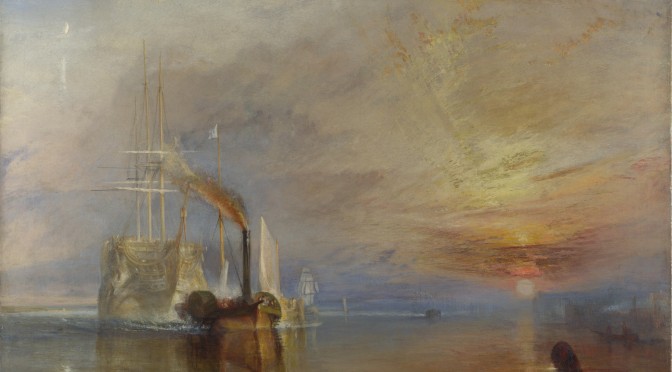
pic 2

Perry objected as the honor should have been his as Admiral until Stewart divided the fleet.  One squadron under Perry steamed south from Baltimore toward Norfolk.  The English fleet of nearly one hundred ships sailed slowly into the mouth of the Chesapeake toward the unmistakable plumes steamships to the north.  Stewart’s fleet waited in Gosport.  Thirty years before, Stewart was in command of USS Constellation and was prevented from getting underway because of Admiral Sir John Warren’s squadron.  This new British fleet had several steamships, but no ironclads.  Unfortunately the British, who had always been prone to overpowering their ships at the risk of maneuverability, sent their expedited screw-propelled ships-of-the-line like the QUEEN and ALBION classes at the head of the fleet.

Perry’s squadron was the first to fire upon the fleet while Stewart’s squadron of iron-clad ram ships steamed east into the heart of British fleet.  Ships of the line and frigates were holed one after the other while others fell to Perry’s barrage.  A quarter of the fleet, including most of the transports, tried to escape to the Atlantic, but soon encountered a joint French-Spanish fleet at the mouth of the Chesapeake.  The remaining ships surrendered without firing a shot.  In just a few hours with the Battle of the Chesapeake, Stewart had achieved the greatest maritime victory since Trafalgar.

England soon sent diplomats to negotiate a peace.   During negotiations, Stewart provided aid to his son-in-law, John Parnell, to foster a rebellion in Ireland as Napoleon III became more active in the English Channel.  The Peel government acquiesced to Stewart’s primary demand and lost not only claims to the Oregon territory but all of Canada.  Stewart had doubled the size of the country in a short war, secured a western coast for the country with additional ports, increased the number of free states, and assured additional pro-Stewart members of Congress in the 1846 election. 

Stewart was able to turn to domestic issues, particularly that of slavery which continued to politically divide the country.  With the addition of the new northern states, Stewart had enough support in Congress to outlaw slavery, fomenting revolt in the South.  Stewart averted a civil war by listening to his vice president who for years had been advocating Texas annexation and a war with Mexico.

Encouraged by Stewart’s stance, Napoleon III launched an invasion of Mexico claiming the right of free trade was being denied by President Farias and then Santa Anna.  Stewart announced support for France as he ordered squadrons to support US operations in Texas and California.  After a long-standing feud with General Winfield Scott (Stewart’s marriage of proposal to Maria Mayo, Scott’s eventual wife, was rebuked,) Stewart appointed General Zachary Taylor to command the Army.

Within two months, the US controlled all of Mexico’s territory north of the Rio Grande while France controlled all territories to the south.  The final battle occurred outside Mexico City where the French defeated and killed Santa Anna on the fifth of May, 1847, a day still celebrated in 21st century France as “Cinque de Mai.”  With this war concluded, Stewart dispatched a squadron under Commodore John Aulick to open trade with Japan and expand trade with China.

After the First Franco-American Coalition War, Stewart knew he could not avert a civil war with pro-slavery and states’ rights forces demanding that Texas and the new territories become slave-holding states.  While Congress debated the Great Compromise of 1848, Stewart took preemptive action and sent the fleet under Commodore David Conner to secure southern ports and Admiral Perry into New Orleans to take the Mississippi River.  Taylor took his army and advanced them on all federal arsenals and depots before the southern states could organize. 

The south began a guerilla campaign led by a young hero of the Coalition War, Robert E. Lee.  But Lee, an engineer accustomed to large troop operations was either by temperament or experience unable to conduct the only warfare option available to the south.  Within four months, Lee’s Raiders and their associated militias were captured with the loss of nearly one thousand Union troops.  Stewart was criticized for such a costly operation but soon found favor from both the north and south with the Stewart Proviso.  A delegation composed of Stewart, Henry Clay, John C. Calhoun, Lewis Cass, Stephen Douglas, and Nicholas Trist, agreed that: 1) slavery would be abolished in the United States, 2) any freed slaves would be offered five acres of land in the new Canadian states, 3) federal occupation of the port cities would end, and 4) the former slave states would receive exclusive trade rights due to the recent agreements in southeast Asia.

Having gained control of most of North America fulfilling his party’s dreams of Manifest Destiny, diminishing the role of the world’s superpower, increased America’s geopolitical position, and enriching the country – particularly the South which enjoyed unprecedented riches, enabled Stewart to easily defeat his opponent in the 1848 election, the Whig nominee Winfield Scott.  The Free Soil Party dissolved before the election because of the resolution of slavery.

His first term marked by rapid military operations and overtures to both Europe and Asia, Stewart’s second term soon took advantage of the European Revolutions of 1848.  Stewart’s son-in-law John Parnell took control of an independent Ireland as his wife gave birth to their son, Charles Stewart Parnell.  Stewart formed global squadrons to secure America’s interests and expand commerce in South America and Africa as European powers yielded what little control they had in the wake of the revolutions.

In 1852, the seventy-four year old chose to run for a final, third term.  James Fenimore Cooper remained one of his closest cabinet members and penned a major treatise on the American navy’s global imperative.  The tome was advanced by Stewart in his third inaugural address and embraced by Congress which supported the Naval Expansion Act of 1853 assuring construction of the largest fleet in the world and ensuring global security for nearly sixty years.

Claude Berube is the co-author of “A Call to the Sea: Captain Charles Stewart of the USS Constitution” and has taught in the Political Science and History Departments since 2005.  His latest novel, “SYREN’S SONG,” will be published in November by Naval Institute Press.
Examining the Flaws of the South China Sea Code of Conduct

By Ching Chang

The South China Sea has turned into a hotspot for potential regional conflicts in recent years. Nonetheless, parties concerned have already tried their best efforts to establish certain mechanisms to prevent crisis and reduce tension together. The first significant initiative was the “Declaration on the Conduct of Parties in the South China Sea”, known as the DOC, signed by all the members of the ASEAN and the People’s Republic of China on November 4, 2002.

 Although the Article Ten of the DOC explicitly noted with “The Parties concerned reaffirm that the adoption of a code of conduct in the South China Sea would further promote peace and stability in the region and agree to work, on the basis of consensus, towards the eventual attainment of this objective.”, yet no substantial progress has been achieved since then. On July 20, 2011, another joint statement signed by the ASEAN members states and the PRC known as the “Guidelines for the Implementation of the DOC” was noted as another milestone for “embodying their collective commitment to promoting peace, stability and mutual trust and to ensuring the peaceful resolution of disputes in the South China Sea.” Nonetheless, the Code of Conduct was never mentioned by the later established guidelines. It may also imply the actual pessimistic situation for formulating the South China Sea Code of Conduct.

According to the present structure for negotiating the South China Sea Code of Conduct, there are several arrangements that can be challenged since they may eventually undermine the legitimacy of the COC as an effective mechanism to affect behaviors of every party involved in theSouth China Sea.

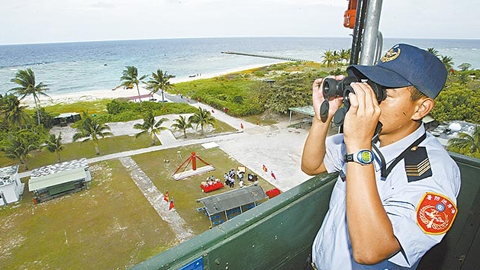
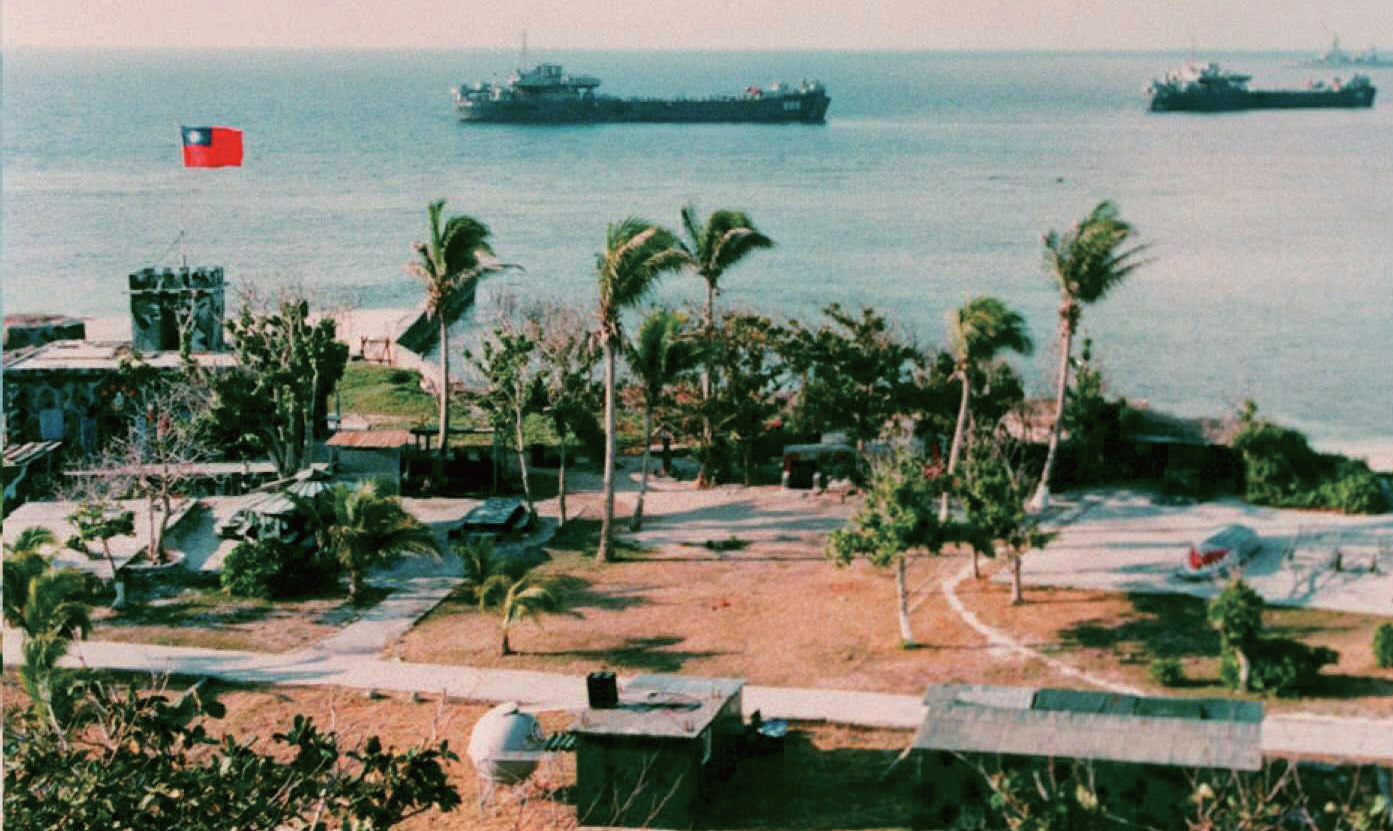
 First, the Republic of China now in Taiwan was never invited to join the COC negotiation process. It is obviously opposed by Beijing for negating the ROC presence in the international community. And all ASEAN members follow the “one China” policy as the prior condition when they established the diplomatic relationship with the PRC. It is not surprised to see that the ROC is excluded from the collective effort so far. Nonetheless, the ROC is not only a claimant of the territories and waters of the South China Se,. Taipei is a substantial occupant of a major island, Tai-Ping Island, in the South China Sea. Further, Taiwan also actively conducts various maritime activities in the South China Sea. Without Taipei’s involvement and consent, how can the South China Sea Code of Conduct be a meaningful mechanism to assure the stability and peace in the South China Sea?

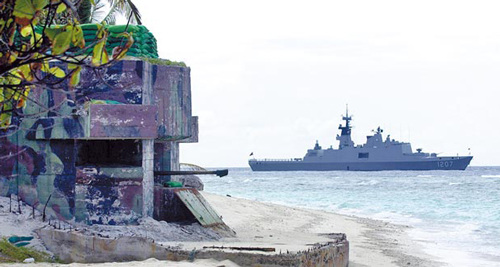
The ROC Coast Guard stationed in the South China Sea.

Compared to Myanmar, Thailand, Cambodia, Singapore and Laos, the Republic of China should have more reasons to be involved in the negotiation process since all these ASEAN states noted above are not adjacent to the South China Sea at all. Taipei should also have the better reason than Jakarta to sit together with other claimants of the territories in the South China Sea since Indonesia is not even a claimant but only concerned of its Economic Exclusive Zone. Although Beijing frequently implies that all Taipei’s privileges and interests in the South China Sea will be guaranteed by the People’s Republic of China, the proposal has never been accepted by Taipei. Any assurance like this will not be recognized by ASEAN member states.

Second, nations’ individual interests in the South China Sea have not been totally covered by the negotiation process. As addressed by the Article Nine of the DOC, “The Parties encourage other countries to respect the principles contained in this Declaration;” how can we expect that states never involved in the negotiation process of the future South China Sea COC can be constrained by a mechanism that they never explicitly accept. Many states use the South China Sea as major sea lanes of communication to serve their maritime interests and supporting their national economic welfare. If we expect the South China Sea COC to be a meaningful document to assure the peace and stability in the South China Sea, it should allow more states to be involved in the codification process and even subsequently signing and ratifying the international decree.

Tai-ping Island in the South China Sea is substantially stationed by the ROC garrison forces after World War II.

Based on the flaws already mentioned, the author would like to propose a “Multi-chaptered South China Sea Code of Conduct” in order to make this document can be more sensible and functional also. The South China Sea Code of Conduct should be categorized into several chapters according to participants’ conditions. In another word, it should be modularized by function and status accordingly.

Those who are concerned with the situations in the South China Sea are encouraged to read the contents of the “Declaration on the Conduct of Parties in the South China Sea” and the “Guidelines for the Implementation of the DOC.” It is obvious that many terms are totally irrelevant to some ASEAN member states since they have no position to engage with those activities. To some extent, these ASEAN member states are so innocent to be kidnapped into a process that may not serve their true interests simply because of the plot to use ASEAN to balance the PRC in the South China Sea. On the other hand, for many states actually involved into activities in the South China Sea, the negotiation process does not consider preparing a document for them to participate so that establishing constraints on their behaviors or activities in the South China Sea is unlikely.

A multi-chaptered South China Sea Code of Conduct may allow states using the South China Sea for whatever reason to choose those chapters they would like to sign and promise to follow the code accordingly. Several chapters like environmental protection, fishery regulation, search and rescue, scientific research, climate report, oceanographic survey, anti-piracy and smuggling, nature preservation, sewage and waste process, navigation aid and regulation can be easily established with no controversy. For those codes that intentionally restrict behaviors enhancing future territory claim position, we should consider to replace the term of “claimants” into “occupants” so reducing the de jure proclamation by more objectively expressing the de facto statement.

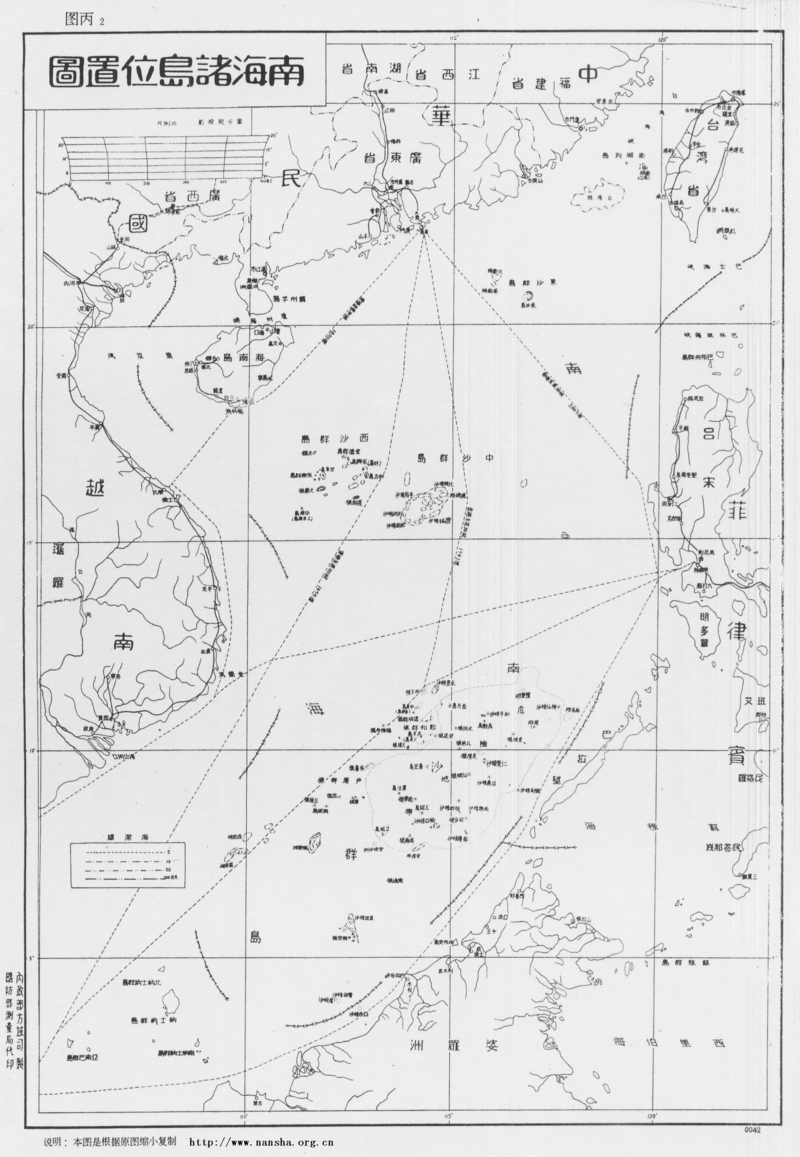
Eleven dash line map the territory and waters in the South China Sea published by the Republic of China in 1946.

This may be the only way to accommodate the Republic of China in Taipei and have it join this mechanism but not provoking Beijing. Beijing is very sensitive to anyone who violates the one China principle by accepting any term that may imply “Two Chinas” or “One China, One Taiwan.” Taipei has no intention to use the South China Sea Code of Conduct as a stage to irritate Beijing. Adopting the term of occupants to replace claimants may allow the specific chapter to be a description of realities in the South China Sea but not a statement of expressing political aspirations. The author would like to remind all the readers that without the Republic of China, the South China Sea Code of Conduct is only a self-deceived paper. Without all other states actually involved in the maritime activities in the South China Sea to promise following the terms noted in the chapters they choose to sign, the South China Sea Code of Conduct cannot be meaningful.

Chang Ching is a Research Fellow with the Society for Strategic Studies, Republic of China. The views expressed in this article are his own.

A Bill Too Far? Japan’s Security Legislation and East Asian Security Dynamics

By Justin Chock

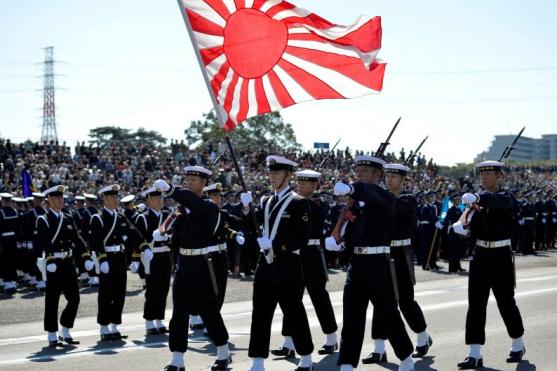
Recently, Japan’s parliament approved a set of historic bills: Japan is no longer limited to only defending its own military hardware, and is now able to use its Japan Self-Defense Force (JSDF) to assist its allies whether through military action or logistical support. The original restriction stems from Article 9 of Japan’s constitution, stating that “the Japanese people forever renounce war as a sovereign right of the nation and the threat or use of force as means of settling international disputes.” These bills now reinterpret that passage.

The first bill, as explained by the Japan Times, amends ten laws, and includes lifting the previous restrictions on the JSDF’s collective self-defense capability (the ability to defend an ally under attack rather than one’s own units). Collective self-defense will be limited to three conditions however: Japan, or a close ally, must be attacked with a result threatening Japan’s survival and posing a clear danger to people; force must be the only appropriate means available to repel the attack; and the force is the necessary minimum to negate the aforementioned threat.

The second bill is a permanent law that allows Japan to deploy the JSDF overseas to support UN-authorized military operations by providing logistic support (which Japan previously conducted with the US).

But now that the long-anticipated bills are through, how does this change the strategic calculus in East Asia? Will the maritime territorial disputes over the Senkaku/Diaoyu Islands or the South China Sea ignite over a stronger, more capable Japan?

I argue that while the bills strengthen Japan’s alliances, especially the US-Japan Alliance, this change will not lead to conflict as the bill’s opponents suggest.

From Renouncing War to Proactive Peace

A brief look at the history of Japan’s pacifist constitution is in order for understanding these recent developments. During the US occupation of Japan following World War II, America held two complimentary worries in East Asia: a remilitarized Japan and the onset of the cold war, including a stronger Soviet Union and the increasingly popular Japanese Socialist Party. The solution to both concerns was to maintain an American foothold in Japan as was the same in Germany.

But the US presence was in many ways, like the European case, invited; both General MacArthur and the newly appointed Prime Minister, Kujiro Shidehara, agreed that the introduction of the Article 9 peace clause to Japan’s new constitution would be to the benefit of all (although the originator of the idea is still under dispute). Japanese foreign policy soon adapted to Article 9, as seen by Japan’s newly elected government under Prime Minster Shigeru Yoshida. His “Yoshida Doctrine” relied on the US for security while Japan focused on its economy, and subsequent administrations did not stray far from this baseline (for example, the “Fukuda Doctrine” reiterated Japan’s peaceful orientation while adding a focus on development assistance).

But the most recent framework for Japan’s foreign policy, the “Abe Doctrine,” took a dramatic shift. Under Prime Minster Abe, Japan would no longer be held back by concerns over remilitarization, and would deepen engagement with the US while globally emphasizing “value-oriented” diplomacy. Japan as a “Proactive Contributor to Peace” expanded its defense organizations in various ways during the previous few years through the second-ever update of the US-Japan Defense Cooperation Guidelines (since its last version in 1997), the creation of a National Security Council modeling the American version, the update of the Japan National Defense Program Guidelines, and the recent expansion of Japan’s Defense Equipment and Technology Transfer program, among many other initiatives.

But the projects named above, as expansive for Japan’s defense policy as they were, all came in 2013. Even the 2015 bills were simply a formality to an already accepted change in interpretation by the Japanese cabinet in July 2014, and as noted earlier, there are many restrictions with the bills that keep the JSDF within its typical roles. Thus Japan’s security apparatus was already significantly transformed before any voting took place in the parliament, and the bills are not in and of themselves groundbreaking when seen in the backdrop of all of the other recent changes.

The Chinese Dragon’s Puff?

Supporters in Japan often argue that the bills are necessary in light of China’s growth as an Asian power, to include its military modernization and increasingly assertive foreign policy. So as a response, will China view the Japanese bills as the beginning of a security dilemma with its neighbor and force an East Asian arms race?

The answer is “not likely.” China’s response was actually quite muted. The Chinese government’s solemn but simple “urge” seems beneath its regional power standing, especially when directed to a country that some don’t even rank in the Top 5 militaries in Asia, and even more so when the US comparatively receives “strong opposition” for simply publishing a routine, annual report on China’s Military and Security developments.

But China’s restrained statement supports the idea that, despite anti-Japanese nationalistic protests and extravagant military parades commemorating WWII (read: “War of Resistance Against Japanese Aggression”), China’s focus isn’t Japan. If anything, the US and its Southeast Asian partners like the Philippines are China’s true focus with artificial island building in the South China Sea and ships sailing within 12 nautical miles of the US coast in Alaska.

So if China isn’t overly concerned with these bills nor with Japan itself, what do they, if anything, mean for Asia-Pacific security?

Shifting Security Tides?

First, the bills seem to make few changes to the JSDF’s defensive orientation. As noted earlier, the reinterpretation has already been in effect for a year, and although much has happened since July 2014, the JSDF’s operations have remained fairly routine. With the bills, the options for military action increase, but the probability of their implementation remains quite low and only toward the higher-end of the spectrum of conflict. Fears of a remilitarized Japan that stem from the post-WWII era seem similarly unlikely at this point, and a Sino-Japanese arms race seems similarly unlikely given China’s minimal response.

Second however, Japan’s international involvement will become increasingly global in nature in the “proactive” way that Abe hopes. The legal opening to participate in UN operations will allow Japan to send troops to a wider expanse of the globe as a part of these peacekeeping missions. Similarly, seeing the bills as strength for the US-Japan alliance could lead decision makers to begin the proposed joint patrols in the South China Sea, a move to China’s dismay. Japan playing a larger military role in the Asia-Pacific would, in theory, provide a counterweight to recent increases in Chinese military power (although perhaps the upcoming troop reduction is signaling the end of this growth), but it could just as easily create opportunities for friction that lead to an undesired crisis. The implications of a more proactive Japan are up to the future, but the idea of Japan operating in a wider expanse of the globe is quite certain.

Third, the US-Japan Alliance is receiving a legal and psychological upgrade. In addition to Japan’s new capabilities to include intercepting a missile bound for a US warship, the legislation mitigates America’s historic complaint of Japan not pulling its weight in the alliance. In addition, working alongside JSDF forces during UN operations or increased bilateral training supporting a stronger US-Japan Alliance will have a psychological effect on these countries. Trust is already increasing, as 2015 Pew polls show, “two-thirds of Americans trust Japan a great deal or a fair amount and three-quarters of Japanese say they trust the United States.” This trust will only increase as the two forces work even closer together.

Lastly, the political process for reinterpretation is somewhat worrying from a Japanese domestic legal order standpoint. The current bills still came at a substantial political cost; PM Abe’s approval rating now stands at 40 percent, with his disapproval rating at 47 percent. The bill’s disapproval rating was 54 percent (although the cause was linked to a perceived lack of explanation from the government) with only 31 percent approving, and protests outside the building further demonstrated the depth of opposition. The resulting physical “scuffle” within the parliament itself during the signing was also rare for Japanese politics. Despite all of the pushback, the bills still passed, once again demonstrating how Japan is historically adept at reinterpreting rather than amending its constitution. Technically speaking however, the constitution’s Article 96 outlines the amendment process, and requires both a two-thirds vote in the parliament and a majority vote by the public, with no such amendment ever occurring in the constitution’s history. While these current bills maintain the East Asian balance of power, future legislation may go too far; the potential still exists for a future government to reinterpret the constitution through this same process in a way that inadvertently starts a security dilemma.

Admittedly though, reinterpretations aren’t inherently bad. Reading a strict, literal interpretation of Article 9’s stipulation that “land, sea, and air forces… will never be maintained” would have rendered the JSDF unconstitutional a long time ago. Yet the reinterpretation (or rather the “self-defense” title) leading to their creation turned out to be the right decision as the JSDF continues to prove itself in numerous ways to be an incredibly beneficial force (the discussion of the JSDF itself to be saved for another day). Thus on the point of reinterpretations, the responsibility will be up to the Japanese public and government to continue striking just the right balance of force to maintain security for all.

Only time will tell whether the bills will make Abe’s “proactive contribution to peace” or create regional friction. But despite the domestic uproar in Japan over the bills’ passage, the Asia-Pacific relations as a whole looks set to proceed on its prior course.

Justin Chock is currently an MPhil in International Relations student at Oxford University. The views expressed in this article are his own.

Egypt’s Acquisition of the Mistral Amphibious Assault Ship: An Operational Analysis

By Ben Ho Wan Beng

Introduction

The protracted “What happens to France’s two unwanted Mistrals” saga has seemingly drawn to a close with the agreement by Egypt late last month to acquire the highly capable amphibious assault ships (LHDs) for a total of €950 million. A number of commentators have argued that the rationale behind this eyebrow-raising decision is for Egypt to attain a maritime power-projection capability so as to hedge against rising Islamist violence in the region and a resurgent Iran. Indeed, one prominent defense journalist wrote of Egypt using the French-made Mistrals to quell trouble in neighboring hot-spots. In the same vein, another commentator spoke of the vessels giving their owners the ability to conduct expeditionary missions with significant ground and aerial assets.

That being said, the aforementioned statements are based on the assumption that Cairo would be able to effectively deploy the two ships in the first place. This is highly contentious, at least in the near term, for a number of reasons. They include Egypt’s dearth of experience in large amphibious-vessel and naval aviation operations, among others.

The Mistral’s Capabilities

Defense analysts often speak of the Mistral in glowing terms. Indeed, much has been made of the platform offering almost the same capabilities as the United States Navy’s potent Wasp-class LHD, but at only one-sixth the cost and crew size. And even though France officially calls the Mistral a bâtiments de projection et de commandement, or “projection and command ship,” it can also perform several other roles such as amphibious/heliborne assault and humanitarian

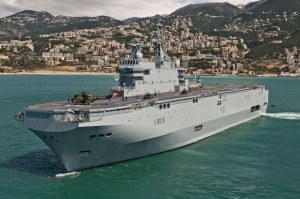
France's Mistral-class Dixmude warship in Jounieh bay, Lebanon. (Source: Wikicommons)
France’s Mistral-class Dixmude warship in Jounieh bay, Lebanon. (Source: Wikicommons)

assistance and disaster relief. With 69 beds for patients, it can even act as a hospital ship. An important component of the Mistral is its air wing, which consists either of 16 heavy or 35 light helicopters. It can also accommodate 450 troops (900 for surge operations), four small landing craft or two hovercraft, and a 40-strong Leclerc main battle tank (MBT) unit.

In recent years, France has put its Mistrals to good use in support of its foreign policy. For instance, during the 2006 Lebanon War, the lead ship of its class, the Mistral, was involved in the evacuation of French citizens from the Levant nation. Two years later, the same vessel provided humanitarian aid supplies, albeit indirectly, to victims of Cyclone Nargis in Myanmar. And in 2011, the Tonnerre was deployed with Tigre helicopter gunships off the Libyan coast to support France’s military intervention in that North African country.

Assessment

Ship Handling:

At first glance, therefore, the introduction of the Mistral into Egypt’s order of battle would seem to boost considerably the latter’s expeditionary capabilities. However, a more critical assessment  reveals that this would not be the case. Firstly, Egypt simply lacks the experience and know-how in handling a vessel like the Mistral. Warships are highly intricate technological entities. As cited in Seapower: A Guide for the Twenty-first Century (Routledge, 2013):

To… operate [warships] requires a mass of technical, industrial and professional skills, ashore and afloat, and a sophisticated system of management to mold them into an effective whole… Ships can be constructed relatively quickly, but the skills and capabilities which make up an effective navy can only be built up with long years of investment.

Indeed, Cairo’s experience in handling warships is limited warships significantly smaller than Mistral. The Egyptian military’s current largest amphibians are its three Polnochnys. This Polish-made landing ship is some 70 meters long and displaces 830 tons; in stark contrast, the corresponding figures for the Mistral are 200 meters and 21,000 tons. Furthermore, the mainstays of the Egyptian surface fleet – the formerly Knox- and Perry-class frigates procured from the U.S. Navy ­– are around 4,000 tons in displacement. Even the largest warship currently in Egyptian service is nowhere near the specifications of the Mistral. Egypt’s sole FREMM frigate, which is 140 meters long and displaces 6,000 tons, was commissioned into service only in June this year.

This dearth of experience in operating a large and complex multi-purpose naval platform like the Mistral would arguably be exacerbated by a failing that plagues most Arab militaries: their personnel’s deficiency in terms of technical skills. In Arabs at War: Military Effectiveness, 1948-1991 (University of Nebraska Press, 2004) Kenneth M. Pollack maintains that Arab armed forces, including Egypt’s, often show an inability to fully exploit the capabilities of the military hardware they possess. The Middle East defense expert adds that this lack of technical skills and other military weaknesses of the Arabs are likely to persist.

Then again, even First-World countries with highly educated citizens who are familiar with advanced technology can struggle with regard to operating LHDs. The time-frame in which Australia hopes that HMAS Canberra will achieve initial operational capability (IOC) and final operational capability (FOC) is illuminative of the challenges Egypt might face with its Mistrals. The Canberra – the lead ship of a new LHD class – was commissioned last November, and Australia is working towards its IOC and FOC to be attained in late 2015 and late 2017 respectively. In other words, Australia is hoping that HMAS Canberra will only be fully deployable a good three years after its commissioning.

That being said, media reports state the Mistrals will be delivered to Egypt in March next year and that their future crews have already begun training. To be certain, nobody will claim that Cairo could get its LHDs up and running within a meager six months. However, Egypt’s technical deficiency means that it could take a longer than than Australia to achieve operational capability with their LHD platforms. Furthermore, it must be noted that the Royal Australian Navy possesses some institutional knowledge in handling flat-tops, having operated light carriers during the Cold War. In stark contrast, Egyptian expertise in this area is essentially zilch. The crew of the two Mistrals will therefore need significant assistance from France and also Russia, as there are several Russian systems on-board the vessels.

Amphibious Operations:

A key mission the Mistral is expected to carry out is amphibious operations, and specialist skills and training are essential to the success of such endeavors, according to esteemed naval commentator Geoffrey Till.  Though Egypt has a small marine force, a Stratfor analysis suggests it is not proficient enough to deploy optimally from the Mistral. This particular report, however, does

Amphibious Operations aboard a Mistral during Exercise LION MISTRAL in 2014.

not differentiate between the scales of amphibious operations to be conducted. Does it apply for large- or small-scale landings? It is certainly true that Cairo lacks experience in major amphibious operations. As a matter of fact, a Jane’s report argues that the Egyptian military cannot conduct “unilateral, opposed beach landings”, adding that it can only perform small-scale amphibious operations such as infiltrating special forces teams. Such an assessment is hardly surprising considering the fact the Polnochny landing craft can carry a maximum of 180 soldiers and six MBTs, while the Egyptian navy’s other amphibious asset, the Vydra landing craft of which it has nine, can deploy only 100 troops or three MBTs.

However, the Mistral is not built solely for major troop landings, but a range of missions scalable for different objectives. Indeed, Middle East security expert Ahmed S. Hashim believes that the platform would be used extensively for special forces ­­missions to combat Islamist extremism in the region. Such small-scale operations usually involve helicopters, but Egypt does not have the requisite experience vis-à-vis missions of this nature that are launched from ships at sea.

Sea-Based Aviation

This shortfall is manifested in the fact that Egypt’s sea-based aviation experience consists merely of operating an anti-submarine warfare helicopter or two from each of its formerly Perry- and Knox-class frigates. To be sure, the flight-deck and hangar-bay choreography on helicopter carriers like the Mistral is not as complex as that on regular flat-tops. That being said, operations involving several ship-borne helicopters – the Mistral has six launch spots on its flight deck for them ­– are nevertheless challenging, even more so for a navy with limited experience in sea-based aviation like

Flight Ops aboard Mistral during LION MISTRAL 2014.

Egypt’s. To compound matters, the Arab nation will have to train the crew for the navalized Ka-52K helicopters – an asset currently not in its order of battle – which could be procured for deployment on the Mistrals.

Integrated Task Force Operations

Finally, the Egyptians do not have any experience organizing their warships into task forces centered on a capital unit like the Mistral. The LHD makes for an inviting target for adversaries and hence has to be screened by consorts such as frigates and other surface craft as part of a task force. Having a fully operational entity of this sort, however, requires the Egyptians to imbibe the intricacies of maritime task force operations, and this would involve learning from scratch the doctrinal and technical expertise critical to such endeavors. For instance, each component of such a task force will have to train and operate together so as to improve their ability to fight as a coherent whole.

Much has been said about the uphill task the People’s Liberation Army-Navy, which had no experience with flat-tops prior to the commissioning of the Liaoning, is facing in creating a viable aircraft carrier battle group, and the consensus is that this could become a possibility only after several years of concerted effort. The same goes for any Egyptian Mistral task force becoming an effective fighting force. The Egyptian fleet’s lack of operational experience as a whole further complicates the issue. Indeed, it was only tangentially involved in the various Middle Eastern conflicts during the Cold War. In the post-Cold War period, Egyptian warships have been largely placed in the back-burner and have not even joined international peacekeeping missions.

Conclusion

Rounding up, Egypt’s acquisition of the Mistral seems to mark a quantum leap in its capacity to project force; the platform offers multiple capabilities previously unavailable to Cairo. Nonetheless, Egypt is unlikely to utilize the Mistral optimally because of its lack of experience in such crucial areas like handling such a sizable and complex vessel, ship-borne helicopter operations, and integrated naval task force maneuvers. With these in mind, it would be an extremely steep learning curve for Egypt vis-à-vis her most ambitious naval acquisition so far. While most nations, including advanced ones, also struggle with regard to adopting new military technology, Egypt’s case is especially pronounced considering its people’s general lack of technical proficiency.

Going forward, there has been talk of the Egyptian Mistrals operating with Saudi units as part of a joint Arab force; after all, Saudi money is believed to be behind the procurement of these platforms. However, “jointness” is difficult to achieve even between the service arms of a particular country, let alone with another country. Such an arrangement, if it ever materializes, is likely to further complicate Egyptian Mistral operations.

In the final analysis, it is worth noting that countries that are able to operate effectively aviation-capable platforms like the Mistral belong at least to the category of nations regarded as “medium powers”. Think Japan with its Izumo-class “helicopter destroyers” and South Korea with its Dokdos. This invariably raises the following question: was the Egyptian Mistral acquisition grounded in operational realities, or was it an vainglorious decision conditioned by the fact that large amphibious warfare ships are so du jour nowadays? During the Second World War, there was a famous saying in Japanese naval circles that went: “The three great follies of the world are the Great Wall of China, the Pyramids and the battleship Yamato.” In the near future, could this statement be modified to include the Mistral? Based on the current state of affairs, it is highly probable.

Ben Ho Wan Beng is a Senior Analyst with the Military Studies Programme at Singapore’s S. Rajaratnam School of International Studies; he obtained his master’s degree in strategic studies from the same institution. He would like to express his heartfelt gratitude to colleague Colin Koh Swee Lean for providing his insights on this article. Ben can be reached at iswbho@ntu.edu.sg.