Category Archives: Global Analysis

A Geographical Breakdown of What’s Going on in the World

Friends from Afar: U.S. and South Korea Coast Guards Help South America Combat IUU Fishing

The Southern Tide

Written by Wilder Alejandro Sanchez, The Southern Tide addresses maritime security issues throughout Latin America and the Caribbean. It discusses the challenges regional navies face including limited defense budgets, inter-state tensions, and transnational crimes. It also examines how these challenges influence current and future defense strategies, platform acquisitions, and relations with global powers.

“We focus on partnerships…Our partners want to work with us. They want the advantage of the United States education, training, exercises and military equipment. It’s the best in the world. And so it’s up to us to deliver that in a way that’s relevant and also provides a return on investment for American taxpayer. So that is our focus.” –Navy Adm. Craig S. Faller, commander of U.S. Southern Command, before the Senate Armed Services Committee July 9, 2019.

By Wilder Alejandro Sanchez

Introduction

A deployment by the U.S. Coast Guard cutter Stone (WMSL-758) to the South Atlantic, and two coast guard patrol vessels donated by the Korea Coast Guard (KCG) to the Ecuadorian Navy, are some of the latest initiatives by South America’s partners to help regional navies combat illegal, unreported, and unregulated (IUU) fishing. As large, extra-hemispheric fishing fleets continue to actively operate close to South American waters, often crossing into the Exclusive Economic Zones (EEZs) of regional states, navies require additional ships and the physical presence of partner navies to combat these crimes. In the vast waters of the South Pacific and South Atlantic, every ship counts.

The Current Status of the Extra-Regional Fleet

IUU is a constant problem across Latin American waters, both in the South Pacific and South Atlantic. At the time of this writing, the large, extra-hemispheric fishing fleet that operated in international waters close to Ecuador’s EEZ (see the author’s October 16, 2020 commentary “TIAR 21: Maritime security, the TIAR, and IUU fishing in the Western Hemisphere”) has crossed to the South Atlantic. The fleet gained international notoriety when it operated close to the Galapagos Islands, close to Ecuador, in mid-2020.

It has since then voyaged south, passing by Peru and Chile. After monitoring the fleet as it navigated close to its waters, the Chilean Navy reported that some 233 extra-hemispheric fishing vessels, mostly Chinese but also from South Korea and other nations, have crossed the Magellan Strait and Cape Horn to reach the South Atlantic. 

The U.S. Coast Guard Helps South American Partners 

The U.S. Coast Guard has deployed its new Legend-class cutter Stone to the South Atlantic to cooperate with the navies of Guyana, Brazil, Uruguay, Argentina, as well as Portugal, to help combat IUU fishing.

Stone departed from the U.S. in late December and has already passed by Guyana, where it carried out maneuvers with the coast guards of Guyana to combat IUU fishing in the area as part of Operation Southern Cross. In engaging with Brazil, the crew of the Stone “conducted engagements and training on communications and law enforcement procedures at the Mocangue Naval Complex in Rio de Janeiro. At sea, Stone worked with the patrol vessel Guaiba and the offshore patrol vessel Amazonas to patrol jointly and practice maneuvering together,” explained the U.S. Coast Guard to the author. Stone docked in Montevideo, Uruguay, in late January.
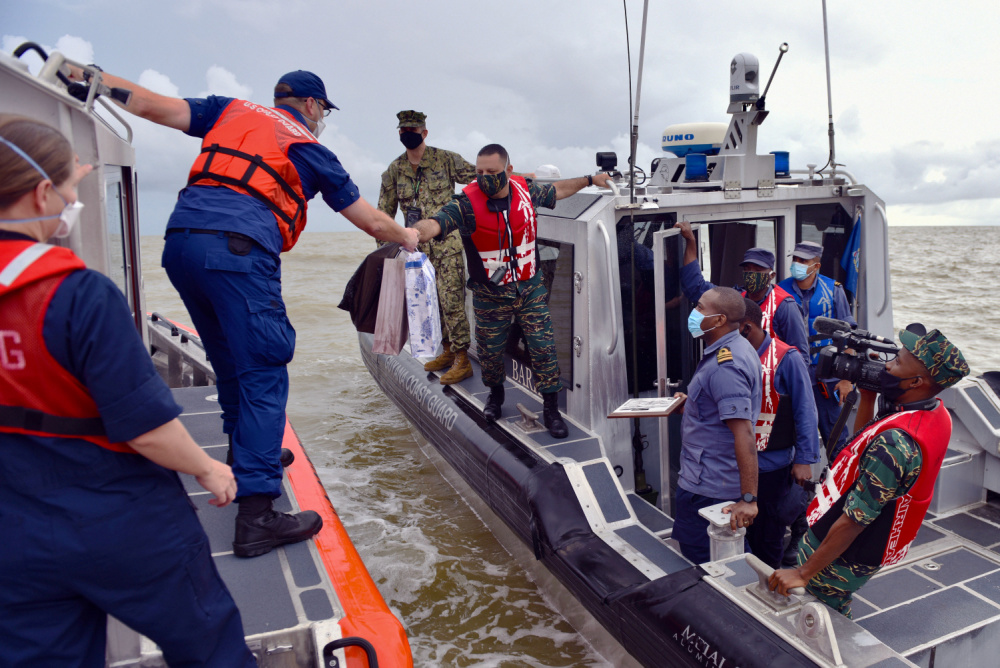
U.S. Coast Guard Lt. Cmdr. Jason McCarthey, operations officer of the USCGC Stone (WMSL 758), exchanges gifts with members of the Guyana Coast Guard off the coast of Guyana on Jan. 9, 2021. After enacting a bilateral agreement on Sep. 18, 2020, the U.S. Coast Guard and Guyana Coast Guard completed their first cooperative training exercise to practice combating illicit marine traffic. (U.S. Coast Guard photo by Petty Officer 3rd Class John Hightower) KCG retired Coast Guard ships are loaded onto a transport for delivery to Ecuador (Korean Coast Guard photo)

For Latin American states, it is always helpful when a (modern) vessel from one of its partners travels to the region to provide assistance with surveillance and, if necessary, interception operations of suspicious vessels that may be engaged in activities like IUU fishing, smuggling narcotics, among other maritime crimes. However, vessels like Stone cannot be in the South Atlantic perpetually, and so it is up to regional navies to cooperate with each other and improve their capacities to combat these crimes.

The Importance of Ports in the Fight Against IUU Fishing

A spokesperson from the State Department’s Bureau of Western Hemisphere Affairs explained to the author that the U.S. government “supports and promotes the implementation of the Agreement on Port State Measures (PSMA), a groundbreaking treaty designed to ensure catch from illegal, unreported, and unregulated (IUU) fishing vessels cannot be offloaded in ports and enter the global market.” If implemented in an effective manner, “the PSMA can ​close gaps and weak points so that fishing vessels conducting IUU fishing activities have minimal opportunities to circumvent the rules,” the spokesperson explained. South American countries like Chile, Ecuador, Guyana, Peru, and Uruguay are already parties to the PSMA.

Uruguay is an interesting case study of efforts to combat IUU fishing. The country has very limited naval assets and a vast sea that is plagued by IUU fishing (see the author’s October 12, 2016 commentary for CIMSEC: “The UNCLCS Ruling and the Future of the Uruguayan Navy”). Therefore, in a positive development, “the government of Uruguay, consistent with the Port State Measures Agreement, will require certification from all large fishing ships to demonstrate they have not been engaged in illegal, unreported, and unregulated fishing by requiring Vessel Monitoring System (VMS) location data. Uruguay is also increasing the number of its fishing vessel inspectors by 33 percent,” explained the Bureau to the author. The announcement was made during the 25-27 January visit of Stone to the South American nation.

Moreover, it is worth noting that Washington has an “ongoing multiyear partnership in the Caribbean with the [Food and Agriculture Organization] to support PSMA implementation and other instruments to combat IUU fishing in the Bahamas, Guyana, Jamaica, the Dominican Republic, and Trinidad and Tobago.” Extra-hemispheric fishing fleets (e.g. from China) do not operate in Caribbean waters, but the region still has to combat IUU fishing. Therefore, support from the U.S., particularly via the U.S. Coast Guard, but also from other agencies, is key to protecting Caribbean marine life.

The KCG Ecuadorian-Partnership

In mid-December, the Ecuadorian Navy presented its two new secondhand patrol boats. The vessels were operated by the Korean Coast Guard from the early 1990s until they were decommissioned in 2019 and 2020. The Haeuri-class vessels have an overall length of 54 meters, a displacement of 300 tons, and were manufactured by Hyundai Heavy Industries.

The two ships were transported from South Korea to Ecuador aboard the general cargo ship Atlantic Harmony; they departed South Korea in mid-November and arrived in mid-December. It is expected that the vessels will be commissioned into the fleet in early 2021.
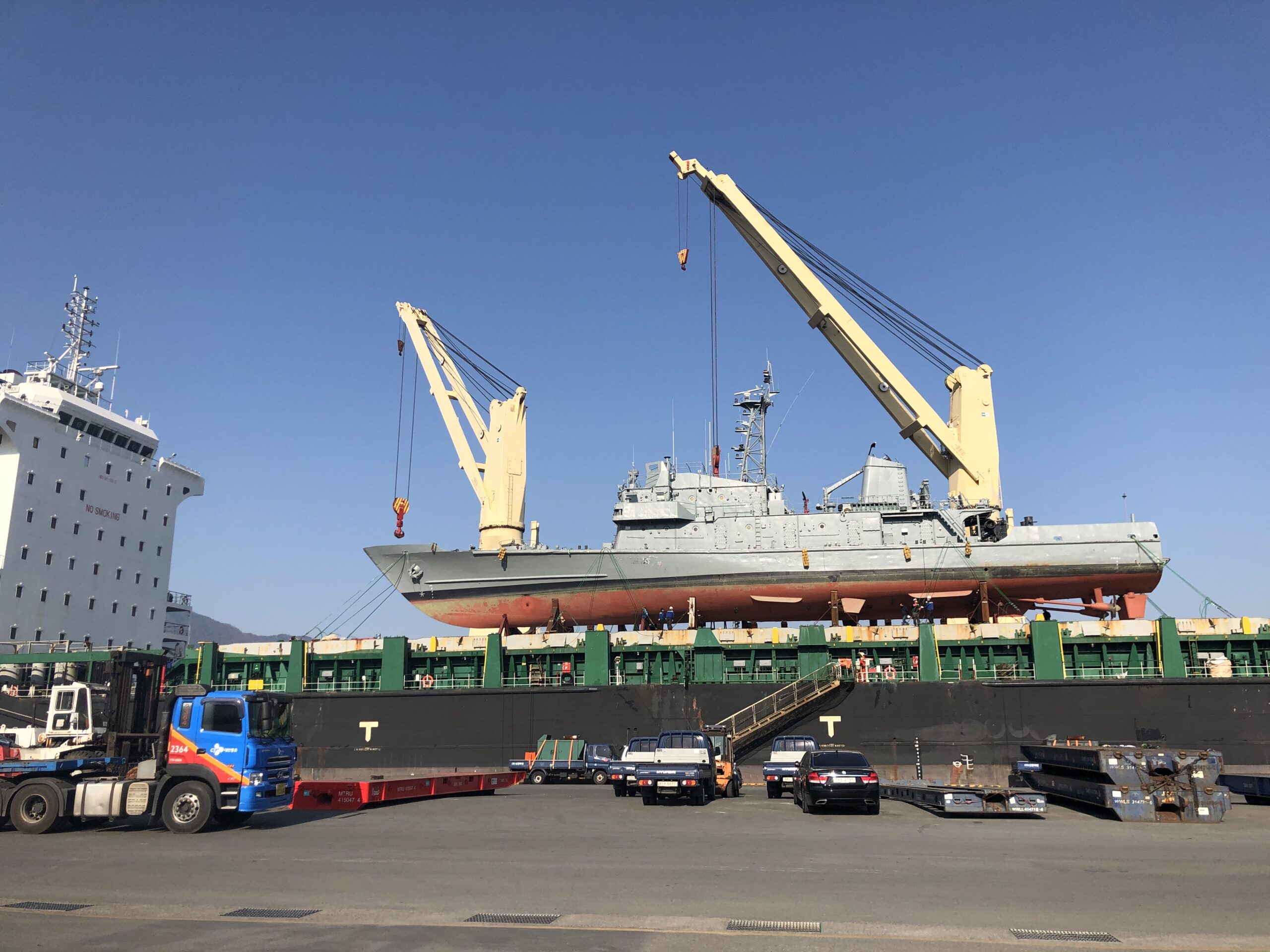
Retired Korean Coast Guard ships are loaded onto a transport for delivery to Ecuador (Korean Coast Guard photo)

Prior to their commissioning, maintenance for the new ships will be provided by the Ecuadorian state-run shipyard ASTINAVE, a shipyard spokesperson explained to the author. The shipyard’s operations, like building new vessels and maintaining the rest of the fleet, make ASTINAVE a critical pillar of the country’s defense strategy, the spokesperson explained.

The two ships are a welcome addition to the Ecuadorian fleet for patrol operations. In fact, according to reports, the ships will be utilized to patrol the Galapagos Islands in order to protect these natural reserves from IUU fishing.

In a statement, Commissioner General of the Korea Coast Guard Kim Hong Hee highlighted the importance of this transfer: “previously, the vessels 302 and 303 had successfully completed the missions of protecting the marine resources and safeguarding the maritime sovereignty surrounding the Jeju island, South Korea. They will be once again serving the cause after arriving at the Guayaquil Port of Ecuador.”
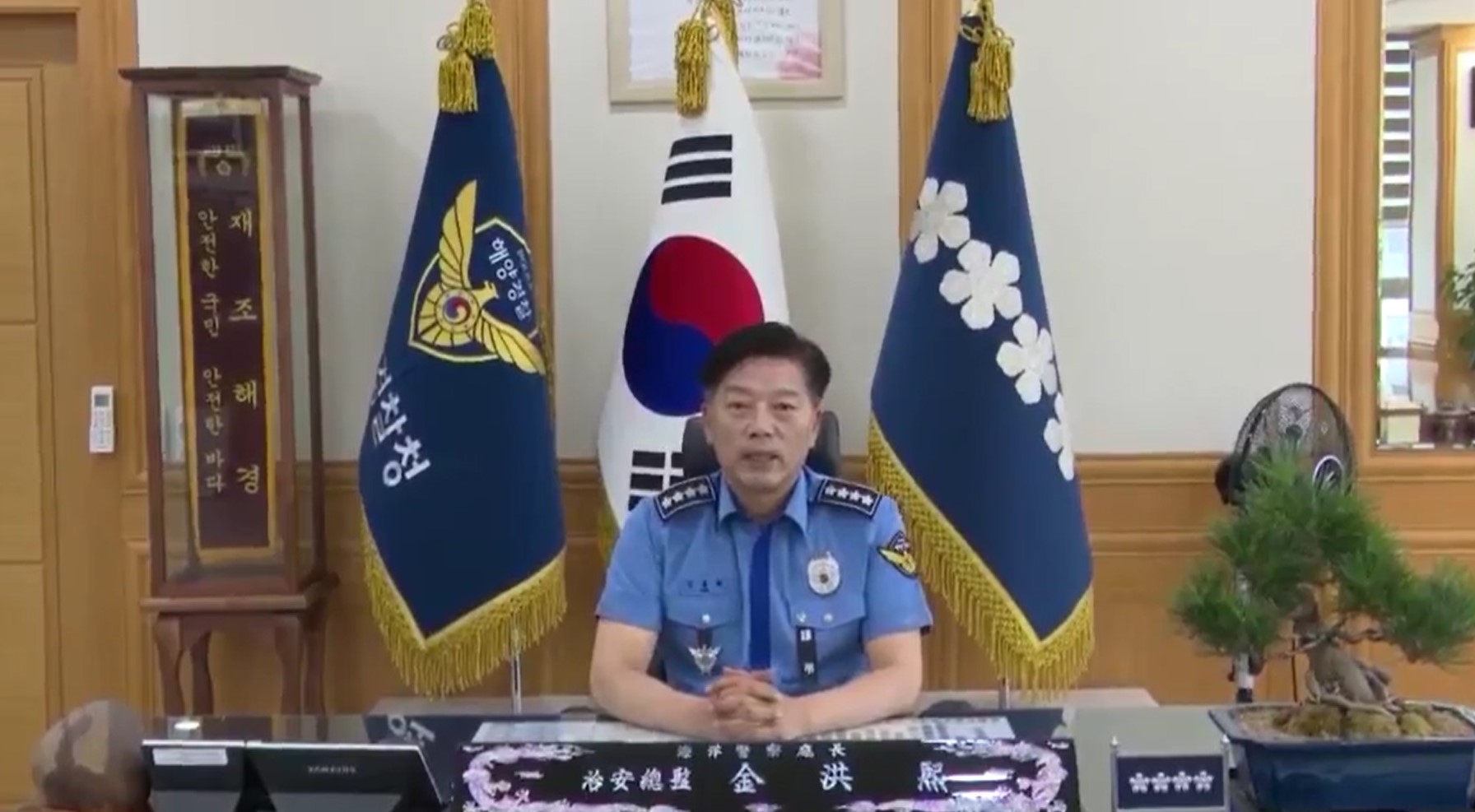
Commissioner General of the Korea Coast Guard Kim Hong Hee (Korean Coast Guard photo)

Final Thoughts

Illegal, unreported, and unregulated fishing is a global problem that requires short- and long-term strategies, including greater cooperation between the governments of nations whose waters are constantly suffering from predatory fishing. This is the case of many Latin American nations, as navies are monitoring their EEZs to locate, shadow, and if necessary, intercept extra-hemispheric fishing vessels.

In 2020, a major international fishing fleet of over 300 vessels, many of them from China, made global headlines as they operated close to the cherished Galapagos Islands. However, while global media attention has moved on to other issues, the fleet is still close to South American waters, with some 233 vessels reportedly crossing from the South Pacific to the South Atlantic. The vast number of fishing vessels means that regional navies require more ships, not to mention more maritime patrol aircraft, to maintain a vigilant presence across vast bodies of water.

This is why the deployment of the U.S. Coast Guard cutter Stone, in addition to other support provided by Washington, and the donation by the Korea Coast Guard to the Ecuadorian Navy of two decommissioned patrol vessels, are welcome developments. “I hope that the two patrol vessels will become invaluable assets for Ecuador, which is also affected by the spread of the coronavirus, contributing to protecting the Galapagos islands designated as one of the UNESCO Natural Heritage sites,” commented KCG Commissioner General Kim Hong Hee in November as Atlantic Harmony departed for Latin America.

As extra-hemispheric fishing fleets will continue to operate in a predatory manner close, if not within the EEZs of South American nations, greater cooperation and an active physical presence in these vast waters will remain mandatory.

Wilder Alejandro Sánchez is an analyst who focuses on international security and geopolitics. The views expressed in this article belong to the author alone and do not necessarily reflect those of any institutions with which the author is associated.

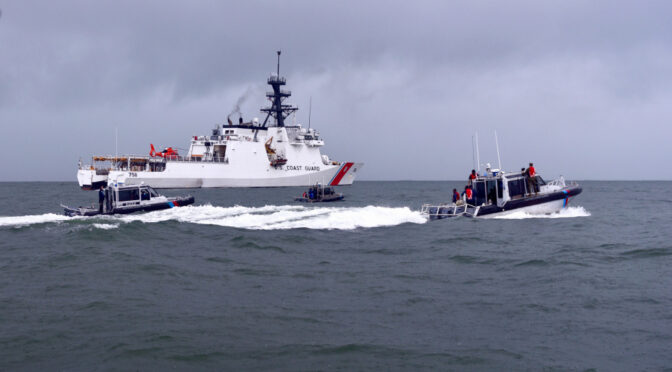
Featured Image: Guyana Coast Guard small boats patrol alongside the USCGC Stone (WMSL 758) off Guyana’s coast on Jan. 9, 2021. (U.S. Coast Guard photo by Petty Officer 3rd Class John Hightower)
Improve U.S. Maritime Posture in Europe Through Strategic Realignment

By Colin Barnard 

In July 2020, senior U.S. military leaders announced a realignment of the U.S. strategic posture in Europe, projecting the movement of troops and materiel from various locations in Germany to elsewhere in Europe and back to the United States. General Tod Wolters, commander of U.S. European Command (EUCOM) and NATO’s Supreme Headquarters Allied Powers Europe (SHAPE), argued the realignment enhances deterrence against Russia. Conversely, a former commander of EUCOM and SHAPE, retired Admiral Jim Stavridis, called the realignment a “victory for Putin.” 

With President Biden’s defense team set to review the realignment during the 120-day period granted under the 2021 National Defense Authorization Act, it is worth evaluating, which, if either, of the above statements is correct. I argue that the planned realignment should go forward, but only if it includes improvements to the U.S. maritime posture, including: additional forward basing for U.S. warships, better collaboration with NATO on maritime domain awareness, and more U.S. foreign area officers embedded in the NATO command and force structures.

The Benefits of Realignment

The potential benefits of the planned realignment should be easy for the Biden team to identify. Relocating EUCOM headquarters from Germany to near SHAPE’s headquarters in Belgium would, as General Wolters stated, “improve the speed and clarity of…decision making and promote greater operational alignment” of U.S. and NATO forces. Currently, General Wolters has to fly between these two headquarters just to address his staffs in person. While this is merely an inconvenience in peacetime, it is an unnecessary burden that could be dangerous during crisis or conflict.

Another benefit is the movement of air forces from Germany to Italy, closer to their parent headquarters and in a better position for operations across the Black Sea region and the Mediterranean. Russia’s continued presence in Ukraine, Georgia, and Syria, and its expanding footprint in Libya, warrant attention from both U.S. and NATO forces in Europe and highlight the need to think beyond the traditional notion of a front line with Russia that only faces eastward. 

Perhaps the greatest benefit of the realignment, however, is the movement of 1,000 troops to Poland, raising the total U.S. troop presence there to 5,500. Defense cooperation between the United States and Poland—a key NATO ally that borders the Russian exclave of Kaliningrad and the infamous Suwalki Gap, and has an important coastline on the Baltic Sea—is crucial for deterring Russia. Additionally, the United States has recently improved on defense cooperation agreements with Sweden, Finland, Ukraine, and Georgia. 

Along with these bilateral agreements, Biden’s team should also consider NATO’s collective deterrence efforts—for example, two forward presence initiatives implemented by NATO in 2016, which placed four battalion-sized battlegroups in Estonia, Latvia, Lithuania, and Poland. 

What is still inadequate in U.S. bilateral and NATO deterrence efforts, however, is the maritime domain. Deterrence and defense against Russia require more than just ground troops. It is a multi-domain effort requiring significant maritime forces.

The Maritime Domain

Russia is first and foremost a land power, but it is increasingly focused on naval modernization and stand-off capabilities designed to challenge the international order at sea, and neither the United States nor NATO are keeping pace. Fortunately, the most recent U.S. maritime strategy acknowledges this reality and emphasizes the importance of U.S. maritime presence and power projection to compete with Russia. Surprisingly, however, the realignment does not call for a fixed number of U.S. maritime assets in Europe, nor for additional forward naval bases to support them.

The realignment does not entail any reduction in U.S. maritime presence either, which is actually anticipated to increase in the near future—most notably via two Arleigh Burke-class destroyers joining the four already stationed in Rota, Spain. These destroyers, along with NATO’s Standing Naval Forces, are at the forefront of daily competition with Russia in the Eastern Mediterranean, Black, Baltic, and Barents Seas. But the realignment does not address the remaining inadequacies of the U.S. maritime posture in Europe, something the Biden team now has time to correct. 

Before noting these inadequacies, it is worth mentioning that NATO members are making significant strides to improve their naval forces, and the United States has increased its naval deployments in support of NATO objectives, leading Standing NATO Maritime Group 1 for all of 2019, sailing its forward-deployed destroyers regularly into the Black Sea to reassure NATO allies and partners, and, most recently, sailing three destroyers into the Barents Sea for the first time since the end of the Cold War. 

Last year, retired Admiral James Foggo, former commander of U.S. naval forces in Europe, highlighted the challenge Russia poses in the maritime domain, indicating that more remains to be done. The European theater needs more U.S. naval forces, for which the realignment should account. While the Biden team should and will seek a broad range of input regarding the realignment, three recommendations for addressing the currently inadequate U.S. maritime posture in Europe are included below.

Recommendations

1. Forward Basing 

The Black, Baltic, and Barents Seas are areas of increasing naval competition with Russia, but U.S. naval forces can only access the first two via chokepoints, and all three lie far away from existing U.S. naval bases and logistical sites. While it is important for NATO member and partner states bordering these bodies of water to improve their own naval forces, the forward basing of U.S. naval forces nearby, specifically small surface combatants (such as the future Constellation-class frigate), would yield the United States and NATO important advantages over Russia.

First, forward-based U.S. surface forces would be able to develop sufficient interoperability with NATO allies and partner naval forces operating in the Black, Baltics, and Barents Seas, which is critical for integrating as one force during crisis or conflict. Outside of crisis or conflict, this interoperability is important for the United States and NATO to perform low-end maritime security tasks necessary for maintaining “good order at sea,” identified by Joshua Tallis at the Center for Naval Analyses and the new U.S. maritime strategy as a central part to winning strategic competition. 

Second, the logistical sites required to sustain forward-based forces would be critical during a crisis or conflict. Existing U.S. logistical sites, such as those in Spain, Italy, and Crete, lie too far from these bodies of water, and supplying forces within them would require transit via potentially contested chokepoints. Forward-based forces able to fight on day one, and sustain the fight with nearby logistical sites, would be a credible deterrent against Russia. These forces would be well poised to shape the maritime battlespace, protect sea lines of communication, and keep chokepoints open.

While forward basing would be possible in or close to the Baltic and Barents Seas, the Montreux Convention prevents the United States and any other non-littoral state from permanently stationing naval forces in the Black Sea. Nevertheless, much could be done to improve the maritime posture in the Black Sea short of forward basing U.S. naval forces there. One particularly creative idea proposed by Luke Coffey of The Heritage Foundation is for Danubian states such as Germany to sail warships for longer durations in the Black Sea using the Danube River to reset the time limits of Montreux, and potentially for non-Danubian states to do the same using the Danube-Black Sea Canal.

2. Maritime Domain Awareness

U.S. maritime domain awareness (MDA) in Europe also requires improvement. Defined as “the effective understanding of anything associated with the global maritime domain that could impact the security, safety, economy, or environment of the United States,” global MDA requires significant collaboration among allies and partners, but currently even regional collaboration on MDA within NATO is inadequate. An exhaustive list of recommendations designed to improve U.S. collaboration with NATO is beyond the scope of this article, but two specific suggestions are worth noting.

First, the United States and NATO need to identify and acquire the capabilities required for effective MDA of the European theater as an alliance. Collaboration is only possible if those collaborating have the capabilities to do so. These capabilities need not only be military, though military platforms are certainly a crucial part of MDA. Commercial services and open-source methods for tracking vessels of interest at sea—ideally that avoid national classification issues, which often prevent effective intelligence sharing—are also needed. 

Second, the United States and NATO need to establish a more direct link to events at sea instead of relying on maritime fusion centers (MFCs), which are agencies and processes designed to connect commercial and governmental maritime actors. While crucial for collating and disseminating information related to safety and security incidents, such as search and rescue or piracy, MFCs are only as good as the information they receive. One way to establish a more direct link to the biggest maritime actor of all—merchant vessels—is through the states and organizations that flag and insure them, such as Norway and the Norwegian Shipowners’ Mutual War Risks Insurance Association. 

Among the many services the association offers its 453 members, encompassing 3,391 merchant vessels and offshore rigs, are intelligence reports generated by its Intelligence and Operations Center (IOC) after a security incident occurs. Some of the first and most accurate intelligence available after the Iranian Revolutionary Guard Corps attacked merchant vessels in 2019 came from the IOC, as Norwegian-flagged vessels were damaged in two of the attacks. Though the Norwegian example is perhaps unique, identifying and developing voluntary linkages with similar organizations across Europe would go a long way to improve U.S. and NATO MDA.

3. Foreign Area Officers

Finally, U.S. Navy foreign area officers (FAOs) should be better utilized to synergize U.S. bilateral and NATO capacity building and deterrence efforts in the maritime domain. FAOs are the U.S. military’s international engagement professionals, working across the globe in U.S. embassies, military headquarters, and on battlefields to develop and maintain critical relationships with allies and partners, to include facilitating defense and security cooperation agreements. While every branch of the U.S. military has FAOs assigned to the NATO alliance, the U.S. Navy should dedicate more. 

NATO as an organization relies on bilateral agreements between individual NATO members and key partners such as Sweden, Finland, Ukraine, and Georgia to build capacity and improve its deterrence posture in the maritime domain. However, a gap in information sharing exists between the predominantly non-American officers at NATO and their American counterparts, even though they are all working on engagements with the same partners. While the details of finalized U.S. bilateral agreements eventually make their way to NATO, the lack of real-time synchronization severely impedes NATO efforts to plan and exercise based on these agreements. 

The simplest solution to bridge this gap is to embed more U.S. Navy FAOs within the NATO command and force structures. In the command structure, U.S. Navy FAOs are already present at two of NATO’s joint force commands, but NATO’s theater maritime command does not have a single U.S. Navy FAO on staff. In the force structure, Navy FAOs could be attached to European maritime headquarters that are capable of providing the maritime component command for the NATO Response Forces in the event of crisis or conflict. Adding more FAOs to the line officers (e.g., surface, aviation, submarine, etc.) already at these headquarters would provide more regional focus and expertise than line officers alone.

These NATO-focused FAOs would not work alongside a country team in a U.S. embassy or contributing to strategic and operational planning at a U.S. military headquarters, but they would gain valuable experience in support of European national and NATO exercises, operations, and planning groups, which would pay dividends when serving in traditional FAO billets. Though spread across the European theater, these FAOs would interact with each other regularly during exercises and at workshops and meetings. They would be a vast network into which American Embassies and the U.S. EUCOM, 2nd Fleet, and 6th Fleet headquarters could tap at any time. 

Conclusion

U.S. military presence in Europe continues to be necessary, but what that presence looks like, and where it is, should always be subject to reassessment. Security environments are not static, nor are the threats within them. During its review of the realignment, Biden’s team should keep a multi-domain focus when determining the right mix of forces forward deployed in Europe while taking into account existing NATO deterrence initiatives and the challenges posed by Russia at sea. 

A U.S. strategic posture realignment in Europe should go forward as long as the U.S. maritime posture in Europe improves as a result. Increasing forward basing for U.S. warships, collaborating better with NATO on MDA, and embedding more U.S. FAOs in the NATO command and force structures will enhance deterrence against Russia even more than General Wolters stated. Contrary to Admiral Stavridis’ statement, it would be a nightmare for Putin rather than a victory.

Colin Barnard is a U.S. Navy foreign area officer currently in training for an exchange with the German Navy. He was formerly a staff operations and plans officer at NATO Maritime Command in the U.K. In addition to publishing for the U.S. Naval Institute’s Proceedings and the Center for International Maritime Security, he is a PhD student at King’s College London with a focus on European maritime security. The views expressed in this publication are the author’s and do not imply endorsement by the U.S. Defense Department or U.S. Navy.

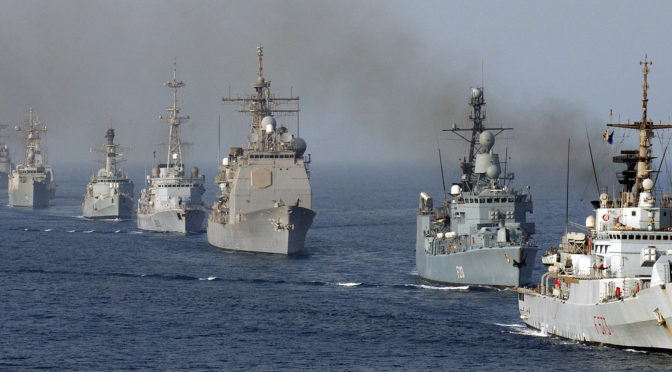
Featured Image: NATO Standing Maritime Groups operating in the Mediterranean (NATO)

The U.S. Needs an Official Sixth Fleet History, and the Europeans Do Too

By Sebastian Bruns 

Part of U.S. Naval Forces Europe and U.S. European Command, the Sixth Fleet is the principal organizing body for American naval activities in and around Europe. In 2020, the United States Sixth Fleet, one of three numbered fleets designated specifically for American forward naval presence, celebrated its 70th anniversary. U.S. naval presence in Europe goes even further back than that. In the early 19th century, the Barbary pirates of Northern Africa constituted one of the pivotal founding memories for the American sea services. U.S. presence in the region continued over the centuries. In 1946, President Harry Truman dispatched the battleship USS Missouri to Turkey in a show of force in the emerging post-World War II order. 

The Sixth Fleet area of responsibility includes, inter alia, the Mediterranean, the Black Sea, the Norwegian Sea, the Baltic Sea, and the North Sea. It also includes the eastern Atlantic Ocean, although that responsibility is shared with the recently reactivated U.S. Second Fleet based in Norfolk, Virginia. Additionally, Sixth Fleet operations from Naples, Italy, cover vast stretches of the African coast, excluding those that are part of the area of responsibility of the U.S. Fifth Fleet based in Manama, Bahrain. 

The Fifth Fleet and the third forward-based establishment, the U.S. Seventh Fleet in Yokosuka, Japan, have been the subjects of official naval history publications.1 These explore the history of American institutionalized naval activity in the region in question and provide policy-makers a grasp on the opportunities for and challenges to U.S. naval forward presence. The Sixth Fleet and U.S. Naval Forces Europe are conspicuously absent from that canon.

Emblem of United States Sixth Fleet (U.S. Navy)

In fairness, the Sixth Fleet suffered a significant downgrade of geostrategic significance after 1991. With the demise of the Soviet Navy and American political interest shifting first to troop reduction and then to other areas of the world, Europe became somewhat of a secondary operating theatre. This is not to say that the U.S. Navy and its allies did not field substantial maritime assets for crises and armed conflicts such as Operations Desert Storm (1991), Sharp Guard in the Adriatic (1993-1995), and Odyssey Dawn in Libya (2011). 

In Northern Europe, maritime operations that had been a cornerstone of the 1980s maritime strategy all but ceased. Illustratively, American naval commitment to the annual exercise Baltic Operations – or Baltops – waxed and waned.2 For the American public and its naval planners, the Persian Gulf and the Taiwan Strait featured much higher on the agenda than operating areas around the European peninsula. 

In line with the changing international security environment, American troop presence in Europe was significantly reduced. At the same time, most European countries also massively decreased the size, and often the capabilities, of their armed forces. The objective: cashing in on an assumed “peace dividend” and reflecting the changing character of armed conflict they confronted. Instead of Soviet submarines or Warsaw Pact amphibious forces, it was the Balkan Wars of the 1990s and the counterterrorism and counterinsurgency land wars of the 2000s that occupied American and European planners’ minds. European navies often bore the brunt of the cutbacks and resource allocations involved and are only slowly recovering.3

However, Russia’s annexation of Crimea and the ensuing war in Eastern Ukraine, the disintegrating Middle East with the Syrian civil war, the rise and fall of the Islamic State, and widespread instability in all of Northern Africa coupled with sea-borne mass migration and refugees are just some of the significant developments of the 2010s that have thrust Europe – and the importance of the U.S. Sixth Fleet – back on center stage of international security politics. Russian undersea activity in the Mediterranean and on the northern flank is creating massive headaches for those who engage in the somewhat lost art of anti-submarine warfare. The Baltic Sea region is now considering Crimean scenarios in its backyard. 

The strategic geography of Europe has evolved, but so has the Russian naval posture thanks to Russia’s embrace of hybrid or gray-zone tactics. To make matters even more challenging, China has significantly upped its influence on Europe. Beijing promises economic benefits by way of digitalization and its Belt and Road Initiative. Critical European maritime infrastructure has also been in the focus of Chinese state-owned businesses, and the People’s Liberation Army Navy (PLAN) is making regular port calls to European waters. It also conducts naval exercises with the Russian Navy in the Baltic and Black Seas.4

Finally, another significant problem stems from within the North Atlantic Treaty Organization (NATO) itself. Alliance coherence has suffered over the years from diverging interests in member states, competition for influence, lackluster defense spending, and those global challenges that defy traditional nation-state capacities: migration, climate change, and the COVID-19 pandemic. American troop presence, and the reduction thereof, was used as a bargaining chip by President Donald Trump as recently as 2020 in order to punish Germany and to reward other member states.

This goes to show how little the importance of American military presence in Europe is understood on either side of the Atlantic. This is particularly the case for U.S. naval forces that have quietly gone about expanding their forward presence and rotational deployments. Still, comparatively little literature exists in the public domain about American naval engagement in and with Europe. An official, unclassified history of the Sixth Fleet would go a long way to provide policy-makers and the public with information about the bigger picture of naval cooperation and U.S. Navy activities in Europe. 

USS Ross (DDG 71)
USS Ross (DDG 71) moored pierside in Rota, Spain March 29, 2017. Ross, an Arleigh Burke-class guided-missile destroyer, forward-deployed to Rota, Spain, is conducting naval operations in the U.S. 6th Fleet area of operations in support of U.S. national security interests in Europe and Africa. (U.S. Navy photo by Mass Communication Specialist 3rd Class Robert S. Price)

It would also be immensely helpful for those defense specialists in Europe that seek to work with the incoming Biden/Harris administration. After all, the annual Baltops exercise has seen a significant uptick in U.S. Navy visibility (the 2019 maneuver was commanded by Vice Admiral Andrew Lewis, Commander, U.S. Second Fleet), but American naval presence is rarely contextualized or studied. Four ballistic missile defense destroyers of the Arleigh-Burke-class are now forward-stationed in Rota, Spain, complemented by Aegis Ashore installations in Romania and Poland. These trends, as well as those adverse challenges described above, are likely to continue in one form or another. 

It is highly unlikely that this year, 75 years after the Missouri’s trip to Turkey, will be commemorated with a similar U.S. naval deployment – due to the absence of battleships in the American warship inventory, the raging pandemic, and the divide in Turkish-American and Turkish-NATO relations in the wake of President Recep Tayyip Erdoğan’s politics. It should, however, signal the start to an honest effort conceptualizing American naval presence and seapower in Europe. It is as important for Americans as it is for Europeans.     

Dr. Bruns heads the Center for Maritime Strategy & Security (CMSS) at the Institute for Security Policy at the University of Kiel. His work focuses on naval strategy and the German and U.S. navies. Together with Sarandis Papadopoulos, he has recently published Conceptualizing Maritime & Naval Strategy. Festschrift for Captain Peter M. Swartz, United States Navy, retired (Nomos, 2020). He is the 2021-2022 Fulbright McCain Fellow at the US Naval Academy.

Endnotes

1 Robert Schneller, “Anchor of Resolve. A History of U.S. Naval Forces Central Command/Fifth Fleet”, Naval Historical Center, Washington, D.C. 2007; Edward Marolda, “Ready Seapower. A History of the U.S. Seventh Fleet”, Naval History and Heritage Command, Washington, D.C. 2012. 

2 See Ryan French & Peter Dombrowski, “Exercise BALTOPS: Reassurance and Deterrence in a Contested Littoral”, in Beatrice Heuser, Tormod Heier and Guillaume Lasconjarias (eds.), Military Exercises: Political Messaging and Strategic Impact. NATO Defence College: Rome 2018, pp.187-212. 

3 See Jeremy Stöhs, The Decline of European Naval Forces. Challenges to Sea Power in an Age of Fiscal Austerity and Political Uncertainty. USNI Press: Annapolis 2018. 

4 See Sebastian Bruns & Sarah Kirchberger, “The PLA Navy in the Baltic Sea. A View from Kiel”, Center for International Maritime Security (CIMSEC), 16 August 2017. 

Featured Image: Ships assigned to Combined Task Force One Five Zero (CTF-150) assemble in a formation for a photo exercise. (U.S. Navy photo by Photographer’s Mate 1st Class Bart Bauer.)

TIAR 21: Maritime security, the TIAR, and IUU fishing in the Western Hemisphere

The Southern Tide

Written by Wilder Alejandro Sanchez, The Southern Tide addresses maritime security issues throughout Latin America and the Caribbean. It discusses the challenges regional navies face including limited defense budgets, inter-state tensions, and transnational crimes. It also examines how these challenges influence current and future defense strategies, platform acquisitions, and relations with global powers.

“We focus on partnerships…Our partners want to work with us. They want the advantage of the United States education, training, exercises and military equipment. It’s the best in the world. And so it’s up to us to deliver that in a way that’s relevant and also provides a return on investment for American taxpayer. So that is our focus.” –Navy Adm. Craig S. Faller, commander of U.S. Southern Command, before the Senate Armed Services Committee July 9, 2019.

By Wilder Alejandro Sanchez

Introduction

An international fishing fleet is currently sailing through international waters in the South Pacific, passing close to Ecuador and Peru, and it is currently sailing close to Chile en route to Antarctica The navies of these countries are on alert and governments are sharing information to monitor the fleet.

In light of this development, what more can regional governments do to jointly combat illegal, unreported, or unregulated (IUU) fishing? One tool in the region’s arsenal could be amended in order to combat this particular type of threat: the Inter-American Reciprocal Assistance Treaty (Tratado Inter-Americano de Asistencia Recíproca: TIAR), more commonly known as the Rio Treaty as or the Rio Pact. 

Extra-Hemispheric Fishing

For months, a multinational fishing fleet of around 300 ships has operated in the South Pacific, close to the territorial waters of South American nations. Several of these vessels have been identified as originating from the People’s Republic of China, but it is unclear if the majority of vessels are Chinese.

The author recently discussed the fleet in an August 14 commentary for CIMSEC (“The Ecuadorian Navy’s Constant Struggle Against IUU Fishing”) when the vessels crossed international waters between Ecuador and the Galapagos Islands, which are part of Ecuador. At the time of this writing, the fleet is heading south, and has already passed through international waters close to Peru. At the time of writing, the fleet is passing close to Chile’s territorial waters

Regional navies are actively monitoring the fleet. The Peruvian navy announced, via Communique 08/2020, that is has deployed a King Air B200 aircraft, the coastal patrol vessel Rio Cañete, in addition to other units for surveillance and patrol operations. Similarly, Chile’s general maritime directorate (Dirección General del Territorio Marítimo y Marina Mercante: DIRECTEMAR) has explained that it is aware of the fleet sailing southward, as “every year, some of these ships cross our  coasts and then cross the Magellan Strait,” as they chase maritime life, including squid. The directorate similarly stated that it is ready to deploy units to monitor the fleet. 

Nevertheless, given the vast size of the fishing fleet and limited maritime and aerial assets that the Ecuadorian, Peruvian, and Chilean navies and air forces possess, it is unclear if any vessels have managed to cross, or will cross in the future, into the waters of these countries to carry out illegal fishing activities.

The U.S. government has taken a more active role regarding this situation, especially given that at least several dozen vessels are Chinese. For example, the U.S. embassy in Peru issued an alert via Twitter about the “Chinese fishing fleet” operating close to Peruvian waters. Previously, the National Security Council tweeted that it “stands with President Lenin [Moreno] ….against any direct aggression, directed towards their economic and environmental sovereignty,” when the fleet passed near Ecuador.

Enter The TIAR

At this point, it is worth discussing what other legal tools regional governments possess to face the problem of predatory fishing from extra-hemispheric fishing fleets. Several of these ships come from China, Taiwan, the Philippines, among other Asian nations. They travel to South Pacific waters (and other bodies of water across the world) since their own territorial waters have been over-fished and depleted. The aforementioned TIAR could be reformed to more effectively combat IUU fishing.

A brief historical summary is necessary: “the most immediate foundations of the Inter-American Treaty of Reciprocal Assistance go back to, at least, the Declaration of Lima of December 24, 1938,” explained a scholar to the author. In other words, while the Rio Pact is often associated with the Cold War, the idea of collaboration and hemispheric solidarity predates this period of history.

The TIAR was created in 1947 and is known for Article 3, a clause that calls for collective security should one of its members be attacked. The Treaty has been invoked around 20 times since its inception, such as to support the U.S. blockade against Cuba during the missile crisis. The treaty was also invoked after the 9/11 attacks.

Most recently, in late 2019, parties to TIAR invoked it as part of a regional strategy to pressure the regime of President Nicolas Maduro in Venezuela. It is important to stress that TIAR’s collective security clause was not invoked to justify some type of joint military operation against Venezuela. Rather, the treaty was activated to apply sanctions on individuals associated with President Maduro’s administration.

Bolivia, Ecuador, Nicaragua, Mexico, and Venezuela have withdrawn from TIAR. However, Venezuela returned by decision of interim President Juan Guaido, but President Nicolas Maduro, whose government has de facto control of the country, is against it.

TIAR 21: Looking Forward

TIAR was designed with a focus on inter-state wars and extra-hemispheric aggressions. The document was revised and amended in 1975, but the overall objective remains the same. With that said, there are sections that could potentially be interpreted as referring to IUU fishing.

For example, Article 5 explains how the TIAR’s council can meet if there is “a conflict or serious event that might endanger the peace of America,” while Article 9 mentions how “the sending by or on behalf of a State of armed bands, groups, irregulars or mercenaries, which carry out acts of armed force against another State.” Similarly, Article 11 mentions how “the High Contracting Parties recognize that, for the maintenance of peace and security in the Hemisphere, collective economic security for the development of the Member States of the Organization of American States must also be guaranteed.” It goes without saying that economic security for coastal nations includes the fishing industry.

While none of these articles mentions IUU by name, or directly addresses transnational, non-traditional security threats such as illegal fishing, it could be argued that the spirit of some of these articles touches on this problem. The fact that TIAR has been invoked to apply sanctions against the Maduro government already serves as precedent for the Treaty being utilized to address issues that are not directly linked to military aggressions by extra-hemispheric powers.

Another possibility is that the TIAR could be reformed and expanded to include non-traditional security threats like IUU fishing. This new version could be a combination of the existing document and other international agreements that deal with maritime issues, like the UN Convention on the Law of the Sea. This new document could be called TIAR 21, in that it should be updated to address 21st century Western Hemispheric security threats and challenges. Ideally, parties to TIAR 21 could activate it when, for example, a large extra-hemispheric fishing is operating close to their borders, so neighboring states can deploy naval assets to support patrol operations in territorial waters and exclusive economic zones.

There are several issues to keep in mind when it comes to updating the TIAR to include IUU fishing. One question is whether TIAR 21 could only be activated to deal with extra-hemispheric fishing vessels. There is a fair amount of intra-hemispheric IUU fishing in the region. For example, the Royal Bahamas Defence Force apprehended two Dominican poaching vessels in its waters in mid-September. Thus, it would be problematic if Western Hemispheric countries activate TIAR 21 against one another to combat intra-regional IUU fishing.

Similarly, what would activating TIAR 21 mean exactly when it comes to IUU fishing? Ideally, regional navies could be deployed to monitor extra-hemispheric fishing fleets. It is logical to assume that at some point, some of these vessels will enter into the territorial waters of Ecuador, Peru, Chile or Argentina, as such incidents have repeatedly occurred in the past. Thus, by activating TIAR 21, a government could request that other governments deploy vessel or aerial assets to assist with monitoring this fishing fleet, and intervene if necessary if one crosses into its own territorial waters.

This proposal is not without precedents. Thanks to the Shiprider Agreements the U.S. has signed with several Caribbean nations, an officer from Jamaica, for example, can sail in  a U.S. Coast Guard (USCG) vessel and be able to apprehend a vessel operating in Jamaica’s territorial waters. The Jamaican law enforcement officer is the individual actually making the arrest, even if he is the sole Jamaican aboard a USCG ship.

Nevertheless, this proposal is also problematic, as there are historical animosities throughout Latin America that may prevent countries from wanting to allow the vessels of other navies in their territorial waters without an escort. There is also the problem of regional navies not having sufficient assets to deploy to assist a fellow navy, even if requested. This is another issue that will have to be addressed, but the general concept is that greater cooperation amongst South American navies and air forces is needed to combat extra-hemispheric, non-traditional security threats.

Finally, it is worth noting that international organizations, not just individual governments, have offered their support to South America as regional nations deal with the latest fishing fleet crossing the South Pacific. For example, in late September, representatives from the United Nations met virtually with government officials from Ecuador to discuss how the UN can help Quito protect the rich biodiversity of the Galapagos Islands. Similarly, the Permanent Commission for the South Pacific (Comisión Permanente del Pacífico Sur: CPPS), which has Chile, Colombia, Ecuador, and Peru as members, issued a declaration on August 5 calling for greater cooperation and exchange of information to address the presence of international fleets in the region and the dangers of overfishing.

In other words, there are several mechanisms already trying to help combat IUU fishing, but apart from information sharing, more actual vessels in the water are needed to monitor and, if necessary, intercept, these fishing vessels.

Conclusion

Looking forward, the Organization of American States, under which TIAR operates, and its member states should consider reviewing and upgrading TIAR and updating it into an agreement that can help Western Hemisphere states  addresses 21st century threats, thereby creating a  “TIAR 21.” 

When discussing maritime security, there is a natural tendency to primarily focus on the number and sophistication of maritime and aerial assets, followed by overall strategies that navies, combined with other services, can carry out to combat an aggressor. However, it is important to also think even farther “outside of the box,” and discuss the legal documents and arrangements that governments can utilize to obtain international support to protect maritime territory from major threats like illegal, unreported, or unregulated fishing.

Wilder Alejandro Sánchez is an analyst who focuses on international security and geopolitics. The views expressed in this article belong the author alone and do not necessarily reflect those of any institutions with which the author is associated.

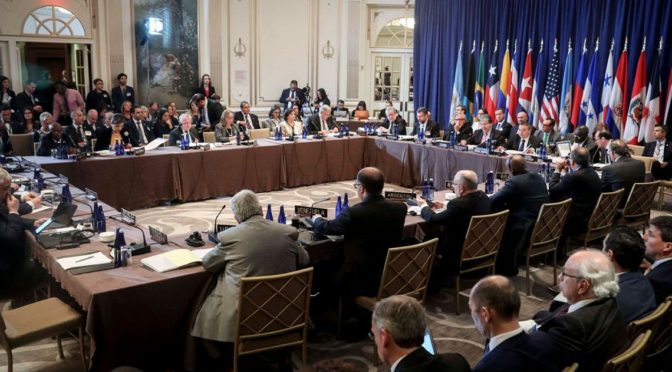
Featured Image: Members of the Rio Treaty meet to discuss possible sanctions on Venezuela, Monday, September 23, 2019, in New York (Photo via AP/Bebeto Matthews)