Category Archives: Global Analysis

A Geographical Breakdown of What’s Going on in the World

A Comparative View of the Ancient and 21st Century Maritime Silk Roads

By Mohid Iftikhar and Dr. Faizullah Abbasi

From a historical perspective, the term Silk Road was not commonly used until it was coined by German Geographer Ferdinand von Richthofen in 1877. The ancient Silk Road continues to captivate various fields of study including history, sociology, archeology, politics, and international relations. In a general sense, the Silk Road is known as a series of routes that connected Asia, Europe and Africa, both through land and the sea. The 20th Century brought about various debates for the Silk Road and its revival. In 2013, Chinese Presient Xi Jinping advocated for the revival of the New Silk Road under objectives of regional cooperation and harmony. The 21st Century Maritime Silk Road is a revitalized phenomenon under the ancient concept that promotes globalization under the principles of peace, mutual economic benefits, and sustainable development in the maritime sphere. This article aims to offer a comparative view between the ancient and 21st Century Maritime Silk Road.

Ancient Maritime Silk Road

In the book “The Silk Road: Travel, Trade, War and Faith” Whitefield and Williams (2004) argue that some discrepancy exists with regard to names and places associated to the Silk Road. Any form of text relating to the Silk Road is on account of human narratives, where myths play an equally important role. Exchange between civilizations (religion art, trade, etc.) has contributed to this variety of viewpoints. One of the most integral elements of the Silk Road was the maritime domain. The ancient maritime Silk Road emerged as a new economic architecture that was beyond trade, embryonic to social interaction, political dependence, and a shift in power relations. However, counterintuitive arguments have been introduced in the 20th century from scholars that reflect upon dimensions of imperialism.

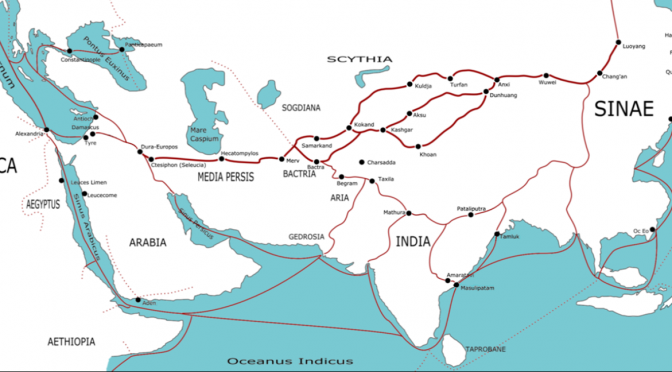
Geographically, the ancient maritime Silk Road had two routes, one from China to the East China Sea linking to the Korean peninsula, and the second from China to South China Sea, Southeast Asia, South Asia, Arabian Sea, Indian Ocean and the Persian Gulf. Archeological evidence suggests maritime transportation dates back to thousands of years before inception of the Silk Road.  However, the seaborne trade routes for the Silk Road strengthened during the time of Han Dynasty in China.  In an article by Koh (2015) “21st Century Maritime Silk Road,” it is suggested that one important aspect of the ancient maritime Silk Road was freedom and autonomy of navigation, which remains the prime reason for exploration of the seas and close contact of civilizations leading to cooperation and trade.

Until the 7th Century, land routes were preferred and profitable. It was an era where Chinese, Romans and Parthians flourished. But later, new powers emerged, and Arabs played a central role in the rise of the maritime Silk Road.  The maritime route gained favor over land due to the capacity for greater volume of shipments and relative safety compared to the looting and thefts on land routes. Historical notes on the ancient maritime Silk Road define constituents of peace beyond commerce. Hence art, culture, and religion were the key factors for co-existence and tolerance amongst various civilizations. But there were noticeable drawbacks to the ancient maritime Silk Road, including unpredictable weather and harsh storms that vanished wreckage of ships. Further, there were dangerous straits which were crucial in relation to navigational expertise and control for power, and later the rise in piracy emerged as a result of Mongol dominance of the Silk Road.

The 21st Century Maritime Silk Road
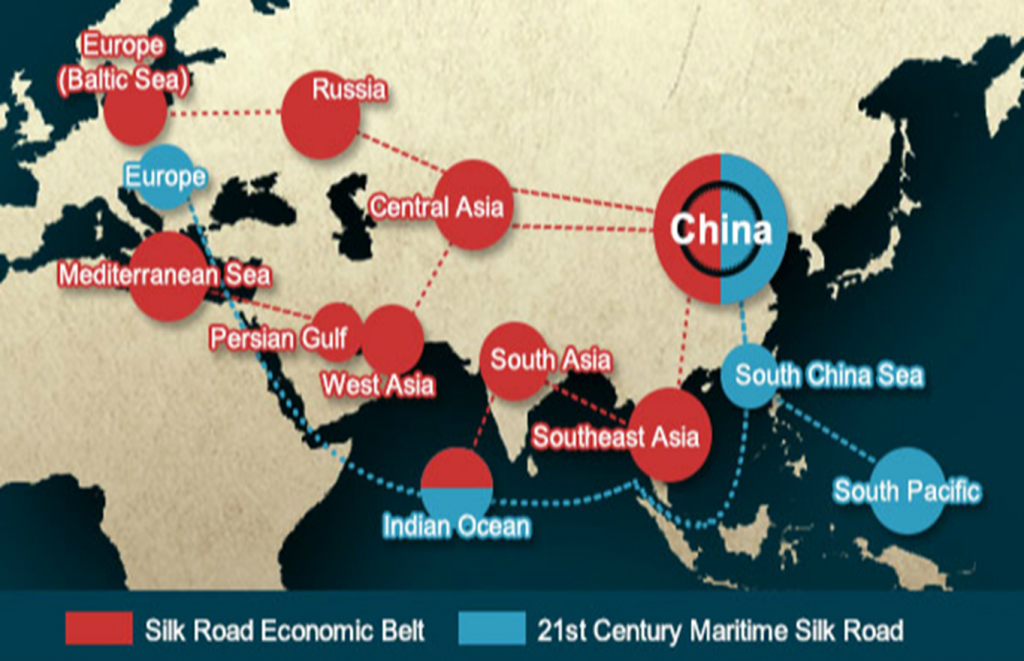
MSR

The 21st Century Maritime Silk “Road” (MSR) will begin from China, moving on to the South China Sea and then Southeast Asia, the Indian Ocean, Africa, and Europe. The southern extension of the route offers access to the South Pacific. According to the National Development and Reform Commission of China (2015), the New Silk Road is based on five principles of the United Nations charter: mutual respect, mutual non-aggression, mutual non-interference, equality and mutual benefit, and peaceful coexistence. The MSR would play a vital role for development in the seas through regional cooperation based on infrastructure development, financial integration, free trade, and scientific and human exchanges. The same is supported by academic literature and government reports that how the MSR may evolve newer patterns of regional trade and diplomacy.

China’s ambitions support a multilateral approach under international relations where cooperation is promoted on common interests. On similar lines, many experts have raised speculations towards ownership, governance, geo-politics, and prevailing conflicts in the South China Sea.  Can initiatives such as the Asian Infrastructure Investment Bank (AIIB) indicate practical steps from China that defy perceptions limiting political constructs towards hegemony? What is important to understand in today’s context is that development and harmony would fail through a bilateral or a unilateral approach.  Collaboration between states through the MSR not only produces economic gains, but results in greater exchange between societies that will promote culture rooted in harmony and cooperation.

A comparative view of the Ancient and 21st Century Maritime Silk Road includes varying perspectives. However, common grounds are based on principles of economic exchanges through  peace in a humanistic approach that strengthens regional integration through cooperation and cultural avenues. The significant difference for MSR today falls under freedom of navigation. International laws and regulations have defined boundaries, which was not the case in ancient times. Another prominent facet of ancient times was the draw of exploration of the seas. Civilizations wanted to get in contact for trade, prosperity, and learning. What remains a question with regard to today’s geo-political dynamics is the following: can great powers co-exist, especially with today’s complex political dynamics? The rhetorical debate over the 21st Century Maritime Silk Road has ambiguities, but participating nations from Europe, Africa and Asia must realize the need for an integrated network. Like ancient times, states need their economic expertise to be promoted, which not only manifests itself in monetary value, but also in mutually cooperative societies that may initiate a sustainable track towards global peace.

Mohid Iftikhar has a Masters of Philosophy in Peace & Conflict Studies from National Defence University, Pakistan and a Bachelors in Business Administration from University of Southern Queensland, Australia. He has completed a short course on Defence & Security Management in collaboration with Defence Academy, UK, Cranfield University and NDU, PK.  He is a member of Center for International Maritime Security and Associate member, the Corbett Centre for Maritime Policy Studies, King’s College London. At present he is a Deputy Director at Center of Innovation, Research, Creativity, Learning & Entrepreneurship (CIRCLE) at Dawood University of Engineering & Technology Pakistan. His views are his own.

Dr. Faizullah Abbasi has a Masters in Production Management and Manufacturing Technology from Strathclyde, UK, and PhD from University of Sheffield, UK. He is a distinguished Professor and expert on Industrial Growth and Oil and Gas Development. Currently, he is the Vice Chancellor Dawood University of Engineering & Technology Pakistan. His views are his own.
Book Review: Piracy and Armed Robbery at Sea

Robin Geiss and Anna Petrig. Piracy and Armed Robbery at Sea: The Legal Framework for Counter-Piracy Operations in Somalia and the Gulf of Aden. Oxford University Press, 2011. 340 pp. $110 


9780199609529

By Alex Calvo

The Law of Counter-Piracy Operations: From Hollywood films to some Chinese popular perceptions of their Eastern neighbors, piracy and pirates retain a powerful hold in contemporary culture. However, it is their most recent incarnation in areas like the Gulf of Guinea, the Malacca Straits, and the Horn of Africa, that is carefully followed by anybody involved in maritime affairs, from ship owners and operators to naval officers and international lawyers. Among other aspects of piracy, the legal regime of pirates and operations against them is of the foremost importance, and therefore any volume devoted to them proves a welcome addition to the literature on the sea and what Julius Caesar labeled as “hostis humani generis,” or the enemies of humankind. This is exactly what Piracy and Armed Robbery at Sea purports to be, and actually is: a single-volume treaty on the law applicable to counter-piracy operations, with a regional focus on Somalia and the Gulf of Aden. The book achieves the goals of providing a comprehensive approach to the subject, with plenty of primary sources, case law where applicable, and legal commentary on controversial or unclear aspects. While readers may note the absence of topics such as the rights of victims, the ransom industry, and non-Western legislation, this does not detract from the overall quality of the work, which furthermore contains a number of sources in its appendixes which can be very useful to the practitioner.

[otw_shortcode_button href=”https://cimsec.org/buying-cimsec-war-bonds/18115″ size=”medium” icon_position=”right” shape=”round” color_class=”otw-blue”]Donate to CIMSEC![/otw_shortcode_button]

As clear from the title, the subtitle, and introduction, this book seeks to provide the reader with a detailed explanation of the different legal regulations and principles under which piracy is fought in one of the corners of the world where it is most pervasive, and which, crisscrossed by myriad SLOCs (sea lanes of communication), no major power can ignore it. In connection to this, the first aspect of the text we should note is that this is indeed a law book, and perhaps more accurately a “black letter law” book, in the sense that it focuses on positive law, with just the minimum amount of social, economic, and other considerations provided in Chapter one and later interspersed in the text. When the authors delve outside the strict borders of the law, it is to better explain the rationale behind legal rules, a good example being their discussion of judicial and prison capacity in- countries like Kenya (p. 174-179) and the Seychelles, which supports and complements their explanation of the agreements signed between them and the European Union for the local trial and imprisonment of pirates. Having said that, they also discuss possible future developments of the law, such as specialized international tribunals to deal with piracy (p. 179-184).

A second important characteristic we may stress is the logical fashion in which the text is divided into parts, and then subdivided into chapters, which very much aids for the reader who wishes to go through the text from beginning to end, and those who prefer to go straight to one of the issues discussed in the volume. A third strong point is that, while focused on positive law, the authors stop to discuss areas where applicable rules may not be clear or even be controversial, providing a summary of arguments and their own views. An example is the practice of embarking law-enforcement personnel from one country on a naval (or state) ship of another, with the associated legal complexities.

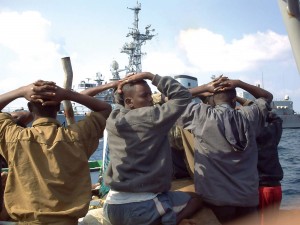
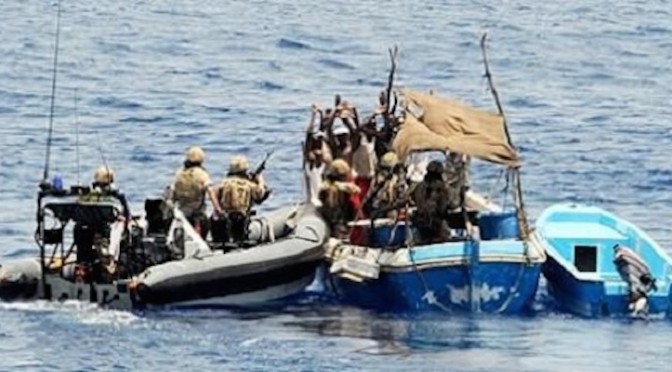
This photo taken Sunday, Jan. 4, 2009 provided by French Defense Minister shows suspected pirates arrested by Marine commandos of the French Navy in the Gulf of Aden, off Somalia coasts. French government officials say the Jean de Vienne intercepted and captured 19 pirates Sunday as they tried to take over two cargo ships, one Croatian and the other Panamian. French Navy vessel Jean de Vienne is seen on background. (AP Photo/French Navy/French Defense Minister/HO)

The Book’s Strong Points: The text provides a comprehensive look at applicable legislation and extensive discussion of unclear aspects. As noted, the authors make an extensive effort to cover the different legal aspects of the fight against piracy, adding their commentary and summaries of other views where positive law is unclear or developing. Examples include three possible interpretations of Article 105 UNCLOS, providing universal or limited criminal jurisdiction, a conflict-of-law rule, or a reaffirmation “that prosecution is based on domestic criminal law and procedure” (p. 149-151), and a discussion of the differences between transfers and extradition, noting how generally speaking “in the piracy context, the change in custody is not brought about by the formal means of extradition” and “transfers in the piracy context do not fulfill the characteristics of deportations or exclusions.” (p. 192-194)

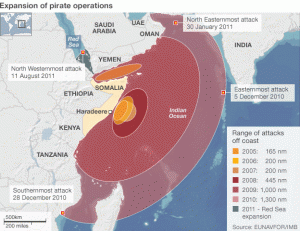
The Expanding Range of Somali Piracy

Three gaps: Non-Western Views, Piracy Victims, and the Ransom Industry and Middlemen

There are three aspects that, if incorporated in future editions of the book, may make this work even more complete. First of all, we should note a lack of Chinese, Indian, Japanese, Russian, and South Korean views, even though all these countries contribute to the struggle against piracy in the Horn of Africa. It would be interesting to find some legal commentary, domestic legislation, or actual cases, from these jurisdictions. Second, we cannot fail but note a complete and utter disregard for piracy victims, who are basically absent from the text. While the death penalty, torture, and the principle of “non-refoulement” are dealt with extensively (p. 210-220), there is no discussion of reparations for victims, and of their procedural standing other than when serving as a connection point for states to exercise jurisdiction.

The authors’ concern with the human rights of alleged and convicted pirates is commendable, and so is their extensive treatment of those rights in their book, but caring about the rights of the accused should not be seen as incompatible with at least providing some cursory explanation of those of the victims. Finally, another notable absence is that of the “middlemen” and more widely the “industry” managing ransoms, and their possible criminal liabilities. No look at the legal framework of the fight against piracy is complete without an examination of the rules and practice designed to strangle their finance, but despite the subject occasionally emerging in the pages of the book, there is no section specifically dealing with it. Is it perhaps too sensitive?

Conclusions: It is a useful and quite comprehensive study, though suffering from some gaps. We can thus conclude that this is a book that anybody interested in piracy and counter-piracy operations, the law of the sea, and more generally maritime and naval affairs, will find useful, both as a detailed introduction to the legal rules applicable to counter-piracy operations, and as a reference work. It is to be hoped, however, that future editions incorporate non-Western views, victims’ rights, and the law applicable to pirate financing.

Alex Calvo is a guest professor at Nagoya University (Japan) focusing on security and defence policy, international law, and military history in the Indian-Pacific Ocean. Region. A member of the Center for International Maritime Security (CIMSEC) and Taiwan’s South China Sea Think-Tank, he is currently writing a book about Asia’s role and contribution to the Allied victory in the Great War. He tweets @Alex__Calvo and his work can be found here.

[otw_shortcode_button href=”https://cimsec.org/buying-cimsec-war-bonds/18115″ size=”medium” icon_position=”right” shape=”round” color_class=”otw-blue”]Donate to CIMSEC![/otw_shortcode_button]

A Call for an EU Auxiliary Navy – under German Leadership

By Dr. Sebastian Bruns

A popular quote reads “A ship in port is safe. But that’s not what ships are made for.” Correspondingly, one could quip “Navies are very good in constabulary tasks. But that’s not what they’re maintained for,” echoing noted political scientist Samuel Huntington in the process. More than sixty years ago, Huntington wrote about the purpose of naval forces in the early Cold War, yet some of his thoughts have an enduring value for 2016. In the Mediterranean, not one but two naval task groups are working hard to contain a humanitarian crisis at sea. While their service is admirable and strictly necessary, even as it is only a drop in a bucket, naval capabilities which are in high demand elsewhere are bound in a mission that is only a secondary role for navies. Instead, Germany should lead the way in investing in an EU auxiliary force.

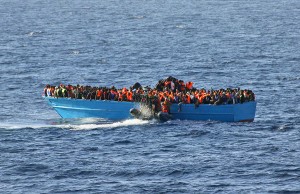
A crowded boat with migrants awaits rescue by EU NAVFOR MED.

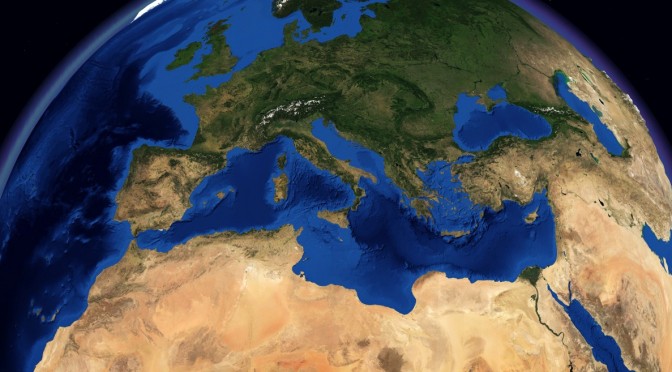
In May 2015, the German Navy began participating in the search and rescue mission in the Central Mediterranean north of the Libyan coast, dubbed EU NAVFOR MED (Operation “Sophia”) shortly thereafter. The pressure to act had become unbearable for political decision-makers in Berlin and Brussels after yet another devastating humanitarian catastrophe which occurred somewhere on the High Seas between Libya and Italy. An overloaded boat sank during the night of 18/19 April, costing the lives of up to 800 migrants. Hundreds others had perished in the Mediterranean during the months before. Following a European Council decision and a parliamentary green light, the German Navy dispatched the frigate Hessen (F221) and the combat support ship Berlin (A1411) to provide a presence north of Libyan territorial waters. At the time, both ships were operating off the Horn of Africa and in the Easter Mediterranean to provide the German Navy with an operational reserve. Hessen and Berlin joined a number of other EU vessels, which ranged from warships to auxiliary and coast guard ships. EU NAVFOR MED was just the latest mission that the German government engaged its shrinking military forces in; on the maritime domain alone, Germany is continuously involved in naval operations in the central Mediterranean (ACTIVE ENDEAVOUR, since 2002), off the coast of Lebanon (UNIFIL, since 2006), and on the Horn of Africa (EU NAVFOR Atalanta, since 2008). German Navy participation in one or often two of the four Standing NATO Maritime Groups, exercises, training, and out-of-the-schedule naval operations such as providing cover for the destruction of Syrian chemical weapons at sea in 2014 have added pressure to (wo)men and material.

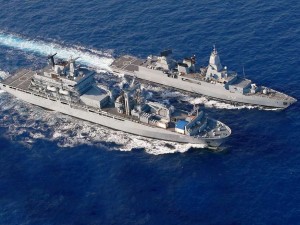
Combat support ship Berlin and frigate Hessen steam side by side in the initital provision of humanitarian assistance on the Southern flank.

Cue: Queen, “Under Pressure”

Since the summer of 2015, rotating up to two ships in and out of the EU NAVFOR MED mission – such as the Berlin’s sister ship Frankfurt (A1412), or the tender Werra (A514) – put a truly severe strain on German military-operational planning. It goes without saying that adapting these venerable warships and supply vessels, which are optimized for many things other than housing, feeding, and medically caring for hundreds of castaways on board, has put a strain on the Deutsche Marine. The noble task of saving lives at sea has challenged the well-trained crews of the ships, but it hardly obscured the fundamental problem that more than two decades of defense budget cuts, strategic disorientation, and a larger disinterest in all things hard power by the German public (and most of its political masters) have caused. By default, the German Navy has turned into a low-end, operationally-minded force, where high intensity should be a design guide.

The German Navy’s dilemma, at 16,000 people and just 62 vessels at the smallest it has ever been by a December 2015 count, was illustrated best right before Christmas. In response to the November attacks in Paris, the frigate Augsburg (F213) was re-assigned from EU NAVFOR MED to provide air defense for the French aircraft carrier Charles de Gaulle in the Eastern Mediterranean and Persian Gulf. The mine hunter Weilheim (M1059), en route to return from UNIFIL to its homeport on the Baltic Sea right in time for the holidays (and probably the least-capable vessel to offer space for potentially hundreds of migrants), was tasked to remain in the Central Mediterranean. It joined the corvette Ludwigshafen am Rhein (F264), another warship tasked with a humanitarian assistance task that was hardly envisioned by strategic and operational planners in Berlin and Rostock, site of the naval command. Samuel Huntington, who warned that navies should concentrate on providing high end options and not be used for low-end missions, would probably turn over in his grave. This is not to say that other countries did not have their own challenges in providing assets to the mission, but some of them are better equipped to attend to low-end missions. The Royal Navy, for instance, dispatched HMS Enterprise (H88), a multi-role hydrographic oceanographic vessel.

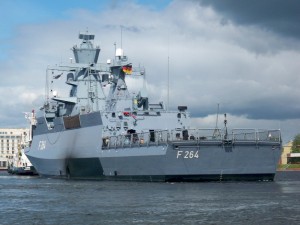
The corvette Ludwigshafen am Rhein is currently part of Germany's contribution to EU NAVFOR MED. Germany's naval missions can sometimes be as complicated as its ship-naming policy.
The corvette Ludwigshafen am Rhein is currently part of Germany’s contribution to EU NAVFOR MED. Germany’s naval missions can sometimes be as complicated as its ship-naming policy.

When all you have is a hammer, every problem looks like a nail

In February 2016, the German Navy is still tied up in the EU NAVFOR MED. Privately owned platforms such as the Phoenix, operated by the Malta-based Migrant Offshore Aid Station (MOAS), and two vessels operated by Doctors without Borders (Medicines Sans Frontiers, MSF), the offshore supply ships Bourbon Argos and Dignity 1, have also at some point joined the operation (although they are not integrated into the EU force). At the same time, the Aegean Sea, which offers the shortest distance between Turkey and Greece, has moved into focus for human trafficking. The cold of winter has hardly deterred the refugees from mounting unseaworthy dinghies, rubber boats, or derelict fishery vessels that the criminal networks of human traffickers operate. In response, NATO stepped in and dispatched its Standing NATO Maritime Group 2 (SNMG2). The task force is commanded by the German rear admiral Jörg Klein and currently consists of the German Navy combat support Ship Bonn (A1413) and four frigates from Turkey, Italy, Greece, and Canada. As the New York Times noted in an article on 11 February,

“while the hastily made decision reflected the growing urgency of the situation, it was not clear that it would have much practical effect on the flow of refugees fleeing Syria’s five-year civil war: The alliance said it would not seek to block the often rickety and overcrowded migrant vessels or turn them back, and military officials were scrambling to determine precisely what role their warships would play.”

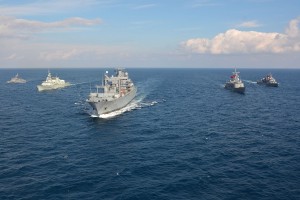
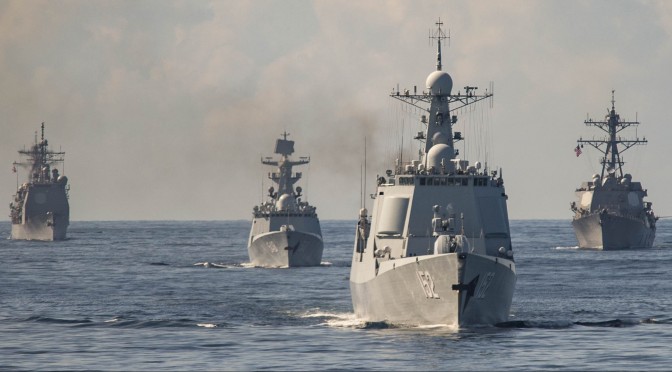
Standing NATO Maritime Group 2, seen here steaming in formation, is currently tasked with operating on the Aegan Sea refugee route.

A European Auxiliary Navy

Granted, the political leverage for European integration is low at the moment. The European Union is struggling to fend off tendencies that call not for an ever closer union, but in fact work towards dismantling some of the EU’s accomplishments in the wake of the refugee crisis. Still, with security and defense in increasing demand, including maritime security from on Europe’s southern flank, there need to be fresh ideas that can be operationalized quickly. In the face of the deteriorating relations between the West and Russia and the disintegrating Middle East, warships should contribute to the more robust stance against political aggression and hard threats, thus focusing on more of their core tasks (no doubt requiring doctrinal and conceptual re-assessments in some European capitals). This would give NATO a stronger role, and leave the EU to take care of the low-end maritime task. It could thus serve as an example of burden-sharing between the two entities.

Germany could play a leadership role in drawing up a European auxiliary navy, reenergizing the European spirit of cooperation in the process. Such a task force could have a number of political advantages. First, it would send a strong signal that European nations are willing to work together to address the ramifications of maritime trafficking. Second, Germany would address calls from inside and outside to do more. As a maritime nation with strong normative impulses, the Federal Republic would also demonstrate to the electorate (long weary of military engagement) that it is aware of the utility of naval forces in crisis response. Naturally, German investment into an auxiliary EU navy should not come at the expense of more robust naval tasks with the German Navy, but these could be better tailored if the combat support ships, frigates, and corvettes need not be used in lesser operations. Third, if and when the current migrant crisis ebbs, the European auxiliary navy could concentrate on the public diplomacy role of naval forces, providing anything from humanitarian assistance to the provision of medical services on goodwill tours around the world (like the U.S. Navy and the Chinese PLAN routinely do already). This auxiliary navy could also lend a hand to regional coastal and constabulary navies and coast guards (e.g. in West or East Africa) to train and exercise.

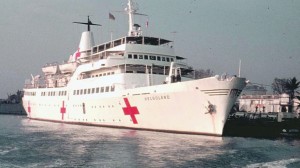
The last dedicated German hospital ship was the MS Helgoland, which saw extensive action in Saigon (South Vietnam) between 1966 and 1972. The ship was operated by the German Red Cross.

To this end, it is strictly necessary to inject some fresh thinking into how such as force could be tailored. It is imperative that an idea such as this can be put into action rather quickly before being brought to grinding snail speed by bureaucrats in Brussels or Berlin. First, one should look at the market of commercial vessels. Ro/Ro ships or offshore supply ships are available, usually even on short notice. They could be painted gray or white, manned by a mixed civilian-military crew, and quickly form the backbone of an auxiliary navy.

The Royal Navy used the Ro/Ro vessel Atlantic Conveyor in the 1982 campaign to retake the Falkland Islands from Argentina. The makeshift helicopter and Harrier carrier was sunk by Argentine forces in the course of the conflict.

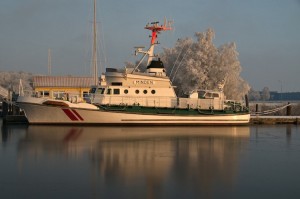
Other opportunities arise as well. The offshore patrol vessel L’Adroit (P725) is a demonstrator vessel built by French shipbuilder DCNS and was placed at the disposal of the French Navy for three years, a period that is now drawing to a close. The ship could be introduced as a French contribution to the auxiliary navy, which need not limit itself to state-run ships. If done properly, NGOs like SOS Mediterranee could be integrated (the non-profit organization operates the MS Aquarius, a former German fishery protection vessel). The former rescue cruiser Minden, built in 1985 and serviced by volunteers from the German Maritime Search and Rescue Service, will join what is already emerging as a multinational, civilian, and military task force in the Mediterranean.

The former SAR cruiser Minden, for thirty years operated in the North Sea and Baltic Sea by an NGO, will soon begin rescue operations in the Mediterranean.

In the medium term, one could consider the charter of vessels which could be converted quickly as dedicated hospital ships, also crewed by civilian mariners and military. A logistics ship would also come in handy, as well as a simplistic command platform. To provide range, ships taken up from trade (not such a novel concept after all) could be selected if they provide the opportunity to operate reconnaissance drones or helicopters. In the long term, there are even further ideas that could be floated. For example, the 2016 German federal budget has earmarked the procurement of three new patrol vessels for the Bundespolizei See, Germany’s quasi Coast Guard. It is entirely plausible that these ships could also be detached as part of the EU’s auxiliary fleet, akin to NATO’s SNMGs – that is, if Germany politically resolves its constitutional conflict between police and military jurisdiction and respective responsibilities. To go even further, the German Navy is currently in the early stages of procuring the future multi-role combat ship MKS180, designed as a modular warship. Is it too far-fetched to consider adding a civilian variant, a MKS180CIV, for the auxiliary “Great EU White Fleet”?

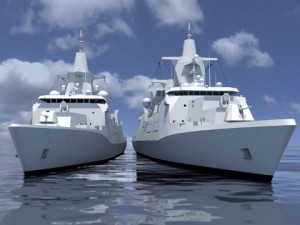
The German Navy's next project: Multi-role combat ships MKS180 (artist conception).
The German Navy’s next project: Multi-role combat ships MKS180 (artist conception).

To be clear: Such an auxiliary navy would have to be organized, trained, and equipped properly. This requires financial and political investments. The task force, more of a 10-ship navy than a 100- or even 1000-ship navy, would provide a vision for European cooperation. EU or United Nations mandates would be desirable. It appears that it is also a much more sensible road leading to further defense and security cooperation than political soap-box oratories about the need for a European army could ever do. Politically and operationally, it could provide Berlin with a sense of regaining some degree of initiative when it comes to maritime security.

Sebastian Bruns directs the Center for Naval Strategy and Security at the Institute for Security Policy, University of Kiel (Germany). He is the editor of “The Routledge Handbook of Naval Strategy and Security” (Routledge: London 2016). 

Distributed Lethality: China is Doing it Right

Distributed Lethality Topic Week

By Alan Cummings

Distributed lethality is about “increasing individual warship lethality and then combining surface warships in innovative ways.” We can add some 21st Century flair to the details, but the premise remains the essence of warships since time immemorial: go to sea and kill your enemy. Frankly, the U.S. Navy’s (USN’s) surface fleet is playing catch-up after the post-Cold War/ low-naval-threats era of the 1990s and 2000s. The fact that we needed to verify the value of capable warships with “a rigorous program of analytics” and numerous war games seems a poignant expression of the tactical and bureaucratic disconnect in the past decades. So for now, check out China and the People’s Liberation Army (Navy) (PLA(N)) if you want an example of Distributed Lethality in action.

The PLA(N) began building modern warships in the 1990s when they laid the keels for their first Luhu, Luhai, and Jiangwei-class vessels. Those vessels and every class of surface combatant since have counted anti-ship cruise missiles (ASCMs) as their primary armament. Which is to say they were each deadly in the anti-surface warfare (ASuW) arena from day one. Ironically, as China was ramping up production of lethal surface combatants, the U.S. was ramping down. The last Arleigh Burke to incorporate the RGM-84 HARPOON (USS Porter, DDG 78) slid off the blocks in 1997 and every U.S. destroyer built since has been oriented around air defense. What little ASuW capability these later destroyers have is reliant on firing an SM-2 missile designed for air warfare in a secondary ASuW mode.

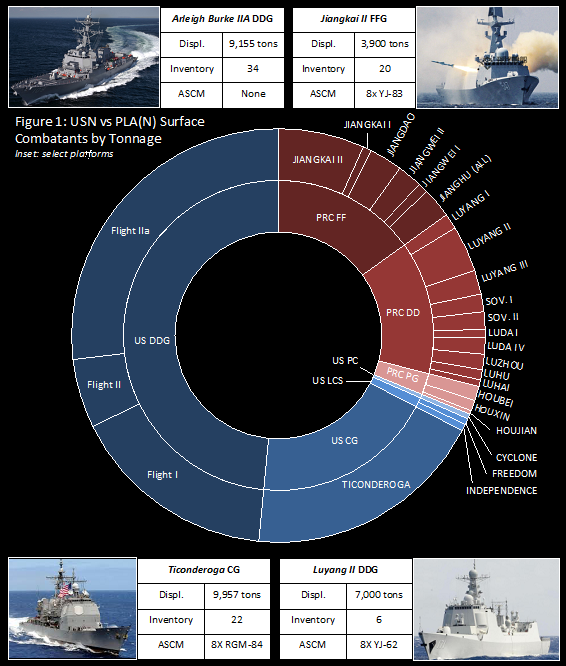
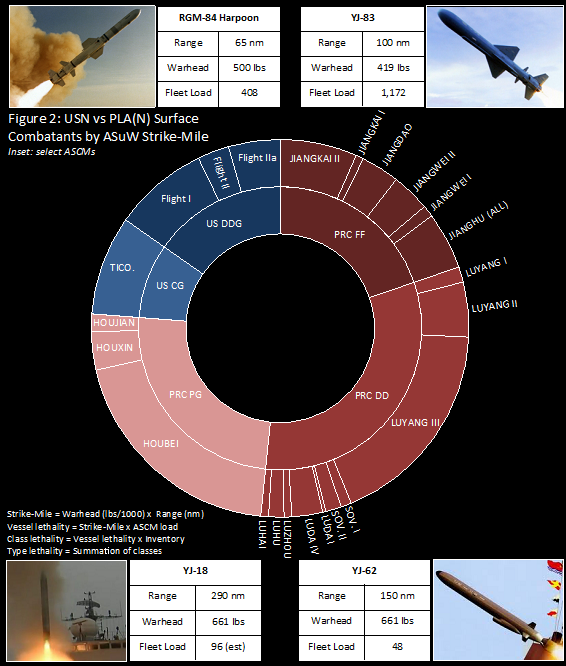
Fast forward to 2015, and you have two comparisons of the USN and PLA(N)- first by tonnage, then by strike-mile lethality.

Chart 1
USN vs PLA(N) Surface Combatants by Tonnage
chae
USN vs PLA(N) Surface Combatants by ASuW Strike-Mile

As you can see, the USN may have the edge in tonnage but the PLA(N) takes the prize for lethality. It turns out the PLA(N) also has more hulls- which means their tonnage and armament are more, wait for it, distributed.  Granted, a lot of that distribution resides in their Houbei PTGs. But if you’re focused on regional sea control, say like the South China Sea and Western Pacific, then those low-cost/high-lethality combatants are the perfect thing to disperse across contested locations, key transit areas, and chokepoints.

Today’s bottom line is that the PLA(N) can field more ASCMs and a wider variety of platforms than the USN. For most of the PLA(N), that lethality comes in the form of a warship with at least four YJ-83s, each delivering a 419-lbs warhead up to 100NM (some vessels have ASCMs with even longer ranges, like the YJ-18 and YJ-62). This means combatants with YJ-83s can hold a 200NM-diameter circle (or 31,400NM2) at risk of lethal effects. The Spratly Islands for example claim 120,000NM2; strategic distribution of a four-ship PLA(N) surface action group (SAG) gives ASCM coverage to 125,600NM2.  Raising the hull count or employing multiple SAGs makes the situation all the more frightening. Cue these vessels with rough targeting data (a.k.a. maritime domain awareness) from a Fiery Cross-based patrol aircraft and the PLA(N) has a full-blown system of distributed lethality.

Holding short of a war at sea, PLA(N) combatants are the muscle behind China’s maritime presence and influence operations. PLA General Zhang Zhaozhong implied this in early 2013, calling it a “cabbage strategy” to surround contested maritime claims (like Second Thomas Shoal) with layers of civilian, government, and military vessels. Then in 2014, PLA(N) vessels helped escort the Haiyang Shiyou 981 drilling rig in 2014 despite Chinese statements to the contrary. Talk about “combining surface warships in innovative ways,” China is using them as part of a layered politico-military offense to advance their maritime claims, one that easily transitions to combat operations if things deteriorate.

Implementing distributed lethality requires sound doctrine and a practiced C2 structure. That’s where the USN carries the advantage (for now) while we implement expedients like the modified TLAM and SM-6. However, much of our doctrine is either available via open source research or may have been compromised by cyber warfare. For example, the majority of our own textbook on “Surface Tactics 101” is available via a quick Google search for MTP-1D (the Multinational Maritime Tactical Signal and Maneuvering Book). Paired with the equally available NWP 3-56 Composite Warfare Doctrine, and five minutes of Google research has provided the fundamentals of distributed tactics.

Whether the PLA(N) has incorporated U.S. C2 doctrine or developed a native system is likely hidden in classified reporting. However, we can look at broader open source examples to evaluate how practiced they are at operating warships together. For instance, rehearsals of combat resupply demonstrate coordination amongst combatants and the entire logistics train. Recent exercises with Russia, Australia, and the U.S.  illustrate that the PLA(N) has become a capable partner for live fire exercises, amphibious landings, and maneuvering drills amongst other evolutions. I was once told that the key to combat at sea is showing up to the right location, on time, with weapons and radios that work (which may have been borrowed from someone else). I believe that is a valid definition, particularly in the context of distributed lethality, and one that the PLA(N) appears to be meeting.

If one is inclined to dismiss exercises and drills as liable to heavy scripting, then the PLA(N)’s blue water deployments show their C2 abilities are no fluke. These complicated operations (and the C2 required for them) are one snapshot in an evolution of PLA(N) doctrine that runs concurrent with their progress in warship technology. Even the larger Chinese defense organization is adapting to facilitate coordinated operations. Two of the five newly inaugurated theater commands will likely be tasked with maritime-centric missions in the East and South China Seas. More important than today’s snapshot, these trends indicate where China wants to take their C2 ability tomorrow. So what do these strategic moves mean for distributed tactics? If China has the C2 infrastructure, logistics support, and trust in its commanders to operate independently around the world then it stands to reason they can operate together in China’s near abroad.

Which brings up my last point on distributed lethality in the PLA(N): they win by implementing it locally. Warships from China’s East Sea Fleet at Ningbo need to cover 400NM to be in the disputed Senkaku Islands, while South Sea Fleet ships from Zhanjiang are 700NM from the Spratly Islands. PLA(N) vessels can cycle through combat patrols, maintenance periods, training evolutions, and resupply hops in 1/3 the distance a U.S. destroyer covers transiting from San Diego to Hawaii. Meanwhile, the USN still needs the missiles, variety of hulls (small, medium, and large combatants), and regional partners to make distributed lethality work in the Asia Pacific. China need only cast off lines.

Tactics come down to your ability to shoot, move, and communicate. Most of the USN surface fleet can move and communicate around the world, but can’t authoritatively prosecute a surface engagement. The PLA(N) is working on the skills to communicate in a coordinated attack, but they can move with ease in their near seas and they designed their surface combatants as shooters from the beginning. Both sides have identified where they are and where they want to go as far as tactical capability (which, for good or ill, seems to be similar places). So which challenge is easier- learning C2, or refitting and retraining a fleet? I guess the race is on.

Alan Cummings commissioned from Jacksonville University in 2007 and served as a Surface Warfare Officer in the USN until 2013. The opinions here are his own and do not represent the position of the U.S. government. Some material used here is drawn from research being considered for publication elsewhere. Original data is available via valid requests submitted to nextwar@cimsec.org.