Category Archives: Global Analysis

A Geographical Breakdown of What’s Going on in the World

The U.S.-Philippines Alliance in Context

By Usman Javed

“Alliance does not mean love, any more than war means hate.” The words of Francis Parker Yockey accurately suggest that states build relationships with other states to advance mutual interests. The U.S.-Philippines alliance is no exception. Though the very close relationship between the two countries has experienced some hiccups recently, this article suggests that the mutual interests of both states are substantial enough to sustain cooperation between the two countries.

Forging Alliances 

For the majority of American history, the lawmakers of the country were apt in following George Washington’s advice on foreign affairs: “It is our true policy to steer clear of permanent alliance with any portion of the foreign world.” As a result, for the first 165 years of its existence, the U.S. did not form any alliances with the exception of France during the revolutionary war. However, a completely different course has been taken since WWII, when the U.S. became heavily involved in global affairs. With the preeminence of transnational organizations and multi-party international treaties such as the United Nations and the North Atlantic Treaty Organization, Washington made numerous alliances. To this end, Washington’s isolationist policy was replaced by a highly inclusive and internationalist one.

However, there has been another noticeable episode in the United States’ relationships with its allies. From Europe to the Middle East and the Asia-Pacific, relationships with countries that at one point seemed politically untouchable have increasingly become vulnerable. The past few years have seen some uneasy episodes with Saudi Arabia, Israel, Turkey, the UK, and Japan. In that sense, the Philippines is only the latest chapter in the recent history of weakening partnerships.

Friend of the Philippines

The U.S.-Philippines relationship has been historically strong and is often categorized as a special relationship. It has seen its evolution from conflict to partnership to friction to re-emergence. Yet despite its unsettling history, the relationship between the two countries has been on the rise in recent years. The Enhanced Defense Cooperation Agreement between the Philippines and the United States signed on April 28, 2014 not only gave U.S. access to select Philippines bases, but also allowed the Philippines access to American ships and planes. In addition, the Philippines was set to gain invaluable training and assistance lessons to defend its sovereignty, which included more than $41 million – or almost 85 percent of the $49.72 million total amount this year of the Maritime Security Initiative funding for capacity-building initiatives in Southeast Asian states near the South China Sea. Philippines is also the largest recipient of U.S. assistance in Asia. The U.S. Agency for International Development (USAID) has facilitated more than $5 billion in infrastructure investments since 2013.

Though the relationship has been very close over the past few years, the election of Philippine President Rodrigo Duterte in June 2016 has instilled doubt in the future of the U.S.-Philippine alliance. In October 2016, Duterte announced a Philippines separation from the U.S. in favor of a closer relationship with China. The State Department, baffled by Duterte’s suggestion, said that it would seek an explanation of what the Philippines leader meant. This initial exchange was only the beginning of what became a series of episodes leading to an uneasy relationship between the two countries.

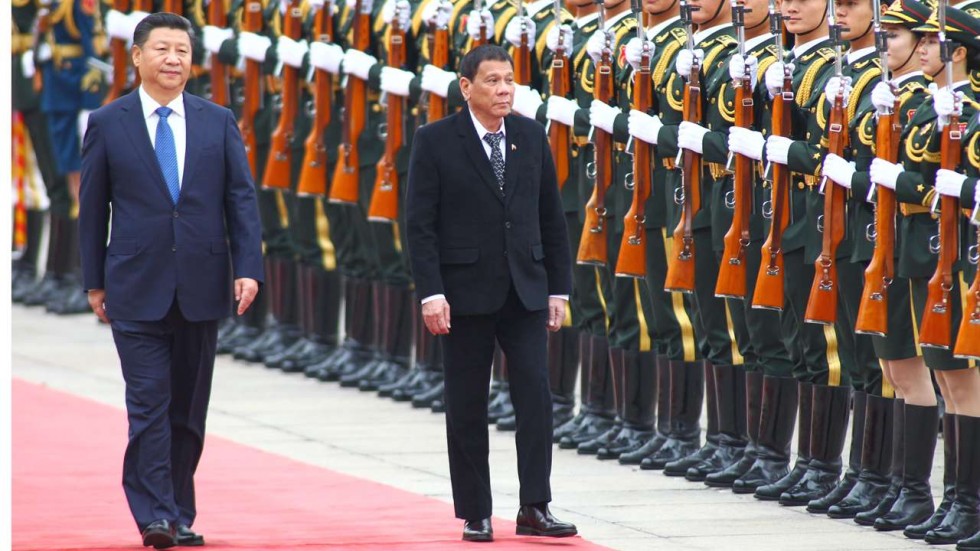
President Xi Jinping (left) pictured with Rodrigo Duterte as they inspect an honor guard in Beijing. (Photo: Simon Song)

However, despite heavy rhetoric and passionate speeches, it is unlikely that the world has seen an end to the decades-old alliance. The reason is simply that the practical advantage of such an arrangement is beneficial to both the U.S. and the Philippines, and both countries are better off in cooperation than in discord.

Enduring Interests and Ties

Though the President of the Philippines wants to exercise an “independent foreign policy,” the reality is that the country is still heavily dependent on the U.S., especially in the matter of defense. As one of the region’s weakest militaries, the Armed Forces of the Philippines (AFP) rely significantly on the U.S. to address its security challenges, including tension in the South China Sea, terrorism, and natural disasters. Even domestically, the AFP will not look too favorably upon an isolationist policy towards Washington. The military plays an instrumental role in the security of the country and is vital for peace processes with communist rebels and insurgent groups. Duterte would not go far in achieving his objectives unless the basic security condition is met. For that, he is much better off having the U.S. on his side.

A fundamental question remains unanswered by Duterte or his aides: which country would the Philippines turn to for help if it chooses to end its bond with Washington? Granted, there have been some talks with China and Russia, but it is unlikely either of the two countries will be able to fill a void as big as the U.S. Dependence on China would be problematic for the Philippines due to the disputed territorial claims, especially when China’s ambitions over the South China Sea have been described as the biggest threat to Philippines sovereignty. Moreover, the early proposals of buying equipment from China and Russia have already seen some pushback in the defense circles both privately and publicly.

Practically speaking, even if there is a genuine desire to escape any relations with the U.S., the wise policy would be to incrementally remove its dependence on Washington instead of revolutionary-style revisionism. This would allow the Philippines some time to become more self-sustaining as well as to forge alliances with other countries. However, such an arrangement may take several years for Manila and can certainly not be achieved in the six-year term of Duterte.  

There is already elite and bureaucratic resistance to Duterte. For instance, the Defense secretary, Delfin Lorenzana, has voiced clear support for the U.S. mutual defense treaty. Moreover, separation from the U.S. is also going against the local public, which has long been heavily in favor of the U.S. According to the Pew Research Center, 92 percent of respondents in the Philippines said they had a favorable view of the United States. In comparison, only 54 percent said they regarded China favorably.

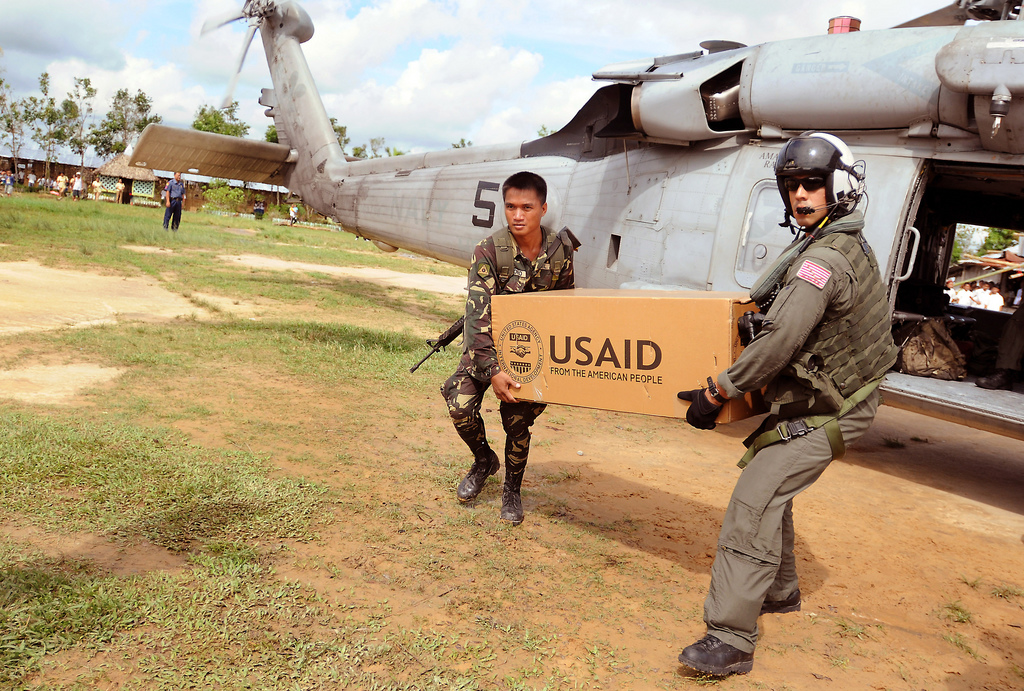
Petty Officer 2nd Class Anthony Chavez, a native of San Bernardino, Calif., works with a soldier from the Armed forces of the Philippines to move relief supplies to a school on the Panay Island in the wake of Typhoon Fengshen.  (U.S. Navy photo by Senior Chief Mass Communication Specialist Spike Call)

Economically, Japan, a strong American ally, is the largest trading partner of Philippines followed by China, the U.S., and Singapore. The Philippines exports 42.7 percent of all its exports to the U.S., Japan, and Singapore, compared to only 10.5 percent to China. The Philippines imports 16.1 percent of its total imports from China, while almost all the remaining imports are from the U.S. and its allies.  

These realities have at least in part been recognized by Duterte. For instance, though he initially called for the withdrawal of U.S. troops from the nation’s south, he later conceded that the country would need U.S. presence for the South China Sea. His aides have also accepted that the existing treaties would also remain enact.

Conclusion

The Philippines, Southeast Asia’s oldest democracy, is an important trade and security partner for the U.S. The Philippines has grown to become one of Southeast Asia’s strongest growing economies with GDP growth of about six percent a year and trade with the U.S. at $18 billion last year. If the Philippines aligns itself with China, Washington will struggle to hold the “first island chain” in the Western Pacific that encompasses “the Japanese archipelago, the Ryukyus, Taiwan, and the Philippine archipelago.” Defending the first island chain has been an important U.S. foreign policy objective since the Cold War and Washington is unlikely to change that policy given its significance for deterrence. Freedom of navigation in the South China Sea is a contentious issue where $5.3 trillion in goods is estimated to pass through the South China sea annually, including $1.2 trillion in U.S. trade. With the Philippines no longer on its side, the U.S. Navy would find it much harder to protect important sea lanes and sustain military operations.

The U.S.-Philippines alliance may have suffered but it is certainly not dead. Both countries gain a strategic advantage by being in such a relationship. Ups and downs are a natural course for alliances and the U.S.-Philippines relationship is no exception to the rule. It is possible that some change may occur in the conduct of the relationship, but sooner or later both countries will realize it is better to remain in such an arrangement, even if they do not see eye to eye, than to stray to a path unknown.

Usman Javed holds an MPhil from the Judge Business School from the University of Cambridge. As the author of several articles, editorials, reports and media publications, he has presented his research at a number of conferences. His work experience includes working for the World Bank, consulting for a number of start-ups in the UK, Asia-Pacific, and North America and co-founding an Ed-Tech start-up.

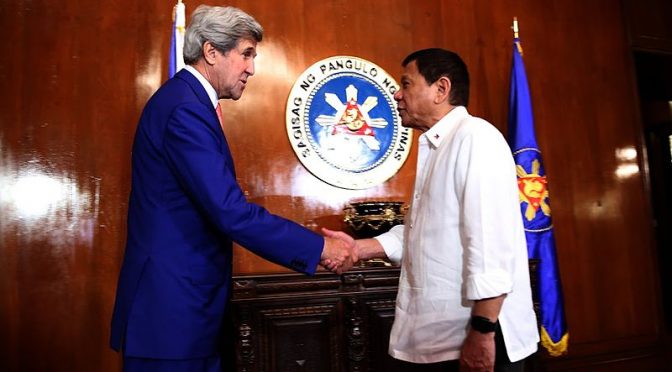
Featured Image: President Rodrigo R. Duterte meets with U.S. Secretary of State John F. Kerry during a courtesy call at Malacañan Palace on July 27, 2016. (Philippines Presidential Communications Operations Office)

Exponaval 2016 and Latin America’s Arms Fairs

The Southern Tide

Written by W. Alejandro Sanchez, The Southern Tide addresses maritime security issues throughout Latin America and the Caribbean. It discusses the challenges regional navies face including limited defense budgets, inter-state tensions, and transnational crimes. It also examines how these challenges influence current and future defense strategies, platform acquisitions, and relations with global powers.

“The security environment in Latin America and the Caribbean is characterized by complex, diverse, and non-traditional challenges to U.S. interests.” Admiral Kurt W. Tidd, Commander, U.S. Southern Command, before the 114th Congress Senate Armed Services Committee, 10 March 2016.

By W. Alejandro Sanchez

Chile organized the 10th Exponaval exhibition from 29 November – 2 December. The arms fair brought dozens of defense companies to northern Chile, where they showcased their latest maritime defense technology with the hope of securing new contracts. Arms fairs are a common event in the defense industry and they regularly take place in locations across the world, hence the success of Exponaval is particularly relevant as it will help Chile, and Latin America, cement its place in the global arms fair circuit.

Exponaval 2016

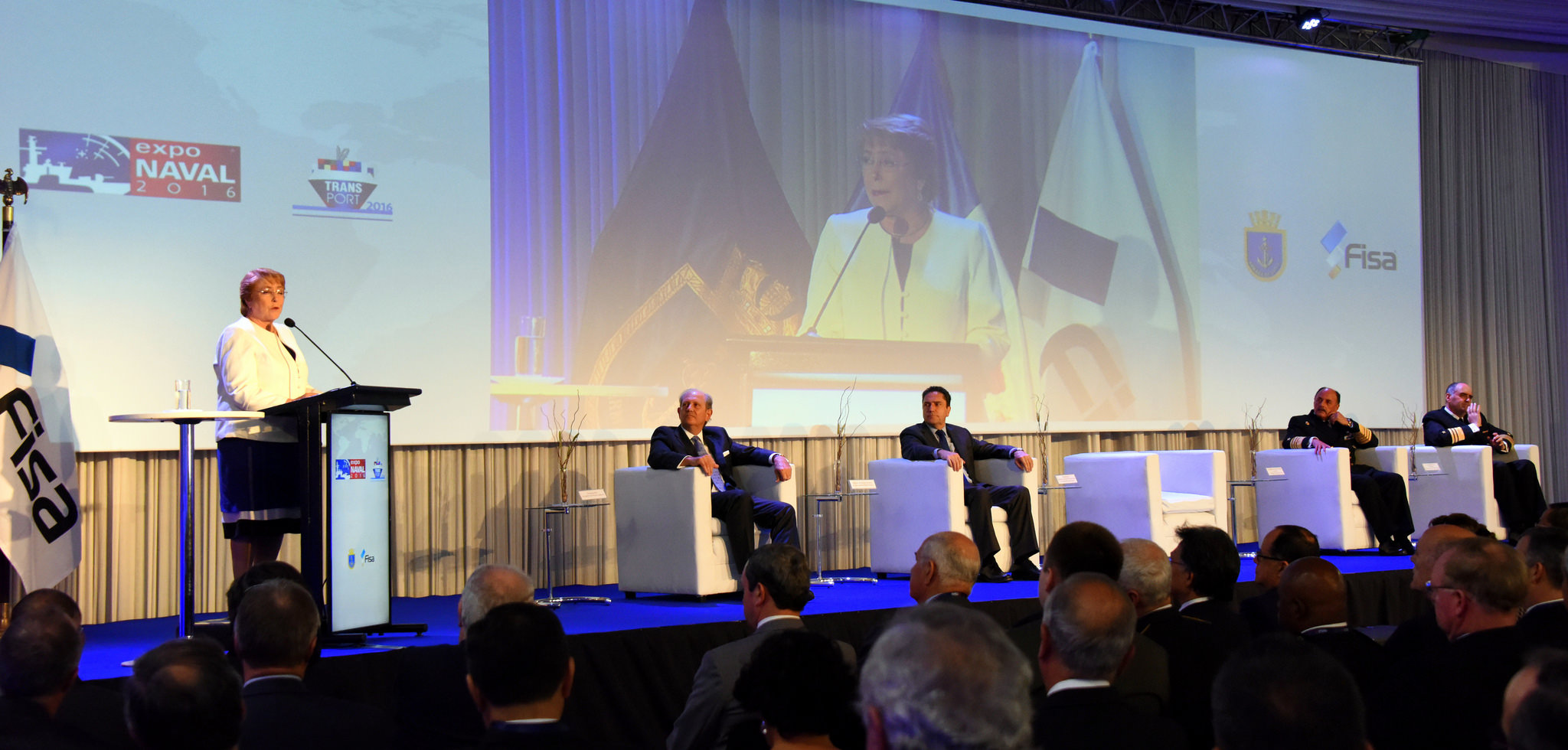
The Chilean government and Navy give great importance to Exponaval (full name Exhibición y Conferencia Internacional Naval y Marítima para Latinoamérica) as exemplified by the participation of President Michelle Bachelet, who gave a speech on 29 November to officially open the arms fair. The country’s defense minister and military authorities were also present. Unsurprisingly, during her speech, President Bachelet took a moment to praise her nation’s state-run shipyard Astilleros de la Marina (ASMAR) as it is constructing, with support from the Canadian company Vard, a new ice breaker for the Navy, which is scheduled to be completed in 2018. Exponaval 2016 was held at the at the Concon naval base in Viña del Mar, northern Chile. It is also important to note that the recent arms fair was actually a two in one event, as  the 10th Exponaval was also the 5th Trans-Port (full name, Exhibición de la Industria Marítima Portuaria para Latinoamérica), an exhibit of port industries in Latin America.

President of Chile, Michelle Bachelet, delivers remarks at Exponaval 2016 (Exponaval photo)

As for the type of technology that was exhibited, some examples include Russia’s Rosoboronexport, which displayed “Project 12150 Mangust fast patrol boats, the Varshavyanka-class (Project 636) submarines and Amur 1650 class submarines among other vehicles.” A number of British companies were also present, as Mercopress news agency explains that “companies exhibiting on the Department of Trade’s Defence and Security Organisation’s stand include: Leafield, SEA, MOD Disposals Agency and Ultra Electronics. Other UK companies exhibiting include BAE Systems, MBDA, Qinetiq, Kelvin Hughes, Lloyds Register and Thales.”

Additionally, there were also important developments among Latin American maritime defense industries. Case in point, a representative from Colombia’s Corporación de Ciencia y Tecnología para el Desarrollo de la Industria Naval Marítima y Fluvial (COTECMAR) told the defense news agency IHS Jane’s that “a joint programme between Brazil, Colombia, and Peru to develop a new river patrol ship is now under way, with design work expected to conclude in the second half of 2017.” The project dates back to 2015, but it is an important development that there is already a (still somewhat distant) deadline for the completion of the design.

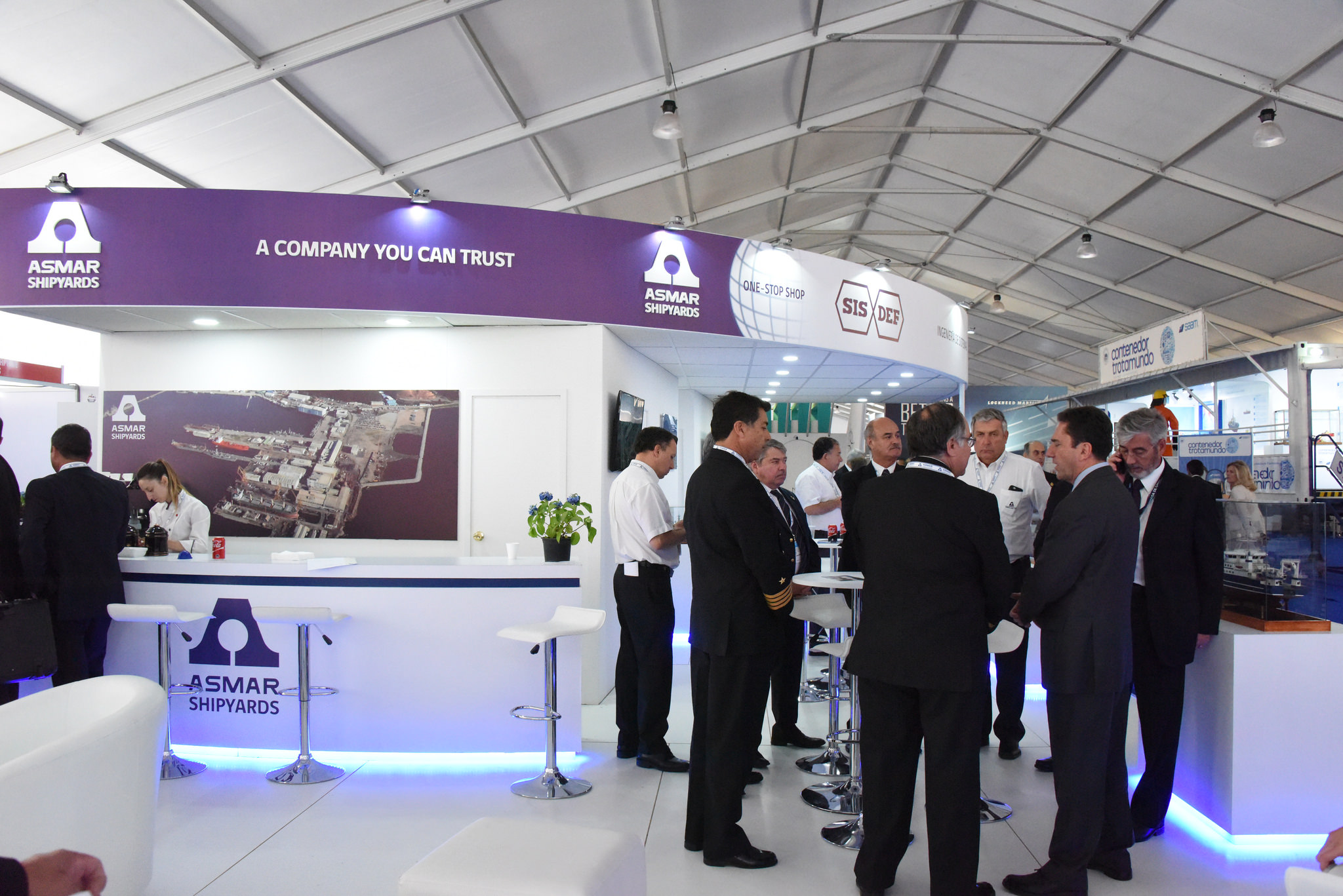
Apart from the sales booths, there were several technical presentations via which experts shared their knowledge. According to Exponaval, the presentations included representatives from renowned defense companies like Navantia, MBDA Missile Systems, SAAB Group as well as Chile’s ASMAR.

Booth of Chilean state-owned shipyard ASMAR (Exponaval 2016 photo)

Even more, the Chilean Navy had  prominent participation in the fair, as it carried out exercises for the audience. This included a simulation in Valparaiso Bay of a vessel carrying radioactive material that is taken over by terrorists, where Chilean naval forces demonstrated how they would react to this hypothetical crisis.

Other Latin American Arms Fairs

It is worth noting that other Latin American countries also have arms fairs, though Exponaval stands out as it focuses on maritime defense technology. For example, Chile organizes another arms fair for aerial technology, the FIDAE-International Air & Space Fair (Feria Internacional del Aire y del Espacio). As for other regional states, Brazil organizes the LAAD Security–Feira Internacional de Segurança Pública e Corporativa (International Fair of Public and Corporate Security); Colombia has the Expodefensa International Fair of Defense and Security (Feria Internacional de Defensa y Seguridad); while Peru organizes the SITDEF–International Show for Defense Technology and Disaster Prevention (Salon Internacional de Tecnologia para la Defensa y Prevencion de Desastres).

Like with Exponaval, other governments and militaries provide support for these fairs in their respective nations. For example, while Exponaval 2016 took place at the Concon naval base, SITDEF 2017 will reportedly be held at the Peruvian Army’s headquarters in Lima.

Significance

What is the importance of Latin America organizing arms fairs? This author would argue that the main objective is to demonstrate that Latin America should not be regarded as a sole importer of military technology, but also a producer and a “showcase center” where deals can be made. President Bachelet voiced a similar idea in her welcome message as she stressed how this arms fair “allows a meeting between [suppliers] from the naval defense and maritime industry with official delegations from Latin American navies and the port agencies from other countries.”

In a 22 August commentary for CIMSEC entitled “The Rise of the Latin American Shipyard” the author discussed how various Latin American nations are constructing their own naval platforms and are even attempting to sell them to foreign customers. Since said commentary was published there have been new developments in the region: Colombia’s COTECMAR has signed a contract with Honduras and another one with Panama for logistic multipurpose vessels; Peru’s Servicios Industriales de la Marina (SIMA) has reached an agreement with Bolivia to sell its navy a riverine hospital ship; finally Ecuador’s shipyard Astilleros Navales Ecuatorianos (ASTINAVE) on 10 November “announced it is to construct three passenger boats for the Panama Canal Authority.”

Hence, regional arms fairs are particularly important for Latin American defense industries as they they allow for opportunity to showcase their products to regional navies and international firms in order to attract future sales. The aforementioned deals by ASTINAVE, COTECMAR and SIMA highlight that intra-regional naval platforms sales are already happening, and future arms fairs will benefit these companies in their eternal quest for new customers; hence it should not come as a surprise that SIMA and COTECMAR were present in Exponaval.

This brings us to the obvious question: to what extent do the exhibitions and meetings made during these arms fairs, such as Exponaval, result in actual contracts? Exponaval naturally summarized the recent fair as a success, explaining how over 140 company experts gave presentations, while putting the number of attendees at over nine thousand visits. Additionally, regional navies deployed some of their platforms, including Argentina’s corvette Robinson; Brazil’s Niteroi-class frigate Constitucion; Mexico’s patrol vessel Centenario de la Revolución; while the United Kingdom deployed the frigate HMS Portland and the tanker RFA Gold Rover.

As for contracts, Exponaval’s declared in a statement that deals were made for more than USD $800 million, but “this amount is related to the projects that the participating navies have in development for the next few years.” Hence, we will have to wait and see if in the coming months announcements are made about contracts between Latin American navies and maritime defense companies, and whether they can be traced back to Exponaval 2016.

Final Thoughts

The Exponaval 2016 arms fair which recently took place in northern Chile should be regarded as a success for local government and maritime forces. It was reportedly well-structured, with over a hundred companies showcasing their maritime defense products, it hosted thousands of visitors, and even featured visiting warships from friendly nations. Santiago also demonstrated the accomplishments of its state-run shipyard ASMAR as well as the professionalism of its naval forces. Ultimately, we will have to wait to see if, indeed, Exponaval (not to mention other Latin American defense fairs) can reliably serve as a place where suppliers and customers can meet and ultimately reach sales agreements.

W. Alejandro Sanchez is a researcher who focuses on geopolitical, military, and cyber security issues in the Western Hemisphere. Follow him on Twitter: @W_Alex_Sanchez.

The views presented in this essay are the sole responsibility of the author and do not necessarily reflect those of any institutions with which the author is associated.

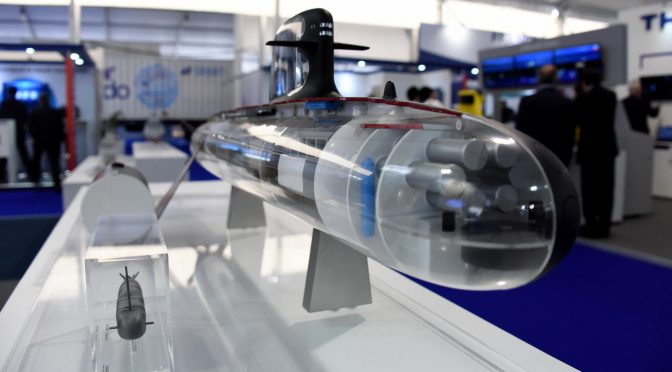
Featured Image: Model submarine at Exponaval 2016 (Exponaval 2016 photo)

Chinese Naval Shipbuilding: An Ambitious and Uncertain Course

Andrew S. Erickson, ed. Chinese Naval Shipbuilding: An Ambitious and Uncertain Course. Naval Institute Press, 2016 pp 376. $39.95

chinesenavalshipbuilding

By Michael DeBoer

Chinese Naval Shipbuilding Capability: An Uncertain Course, adds the most recent volume to Dr. Andrew Erickson’s excellent edited collections on the increase of the People’s Republic’s military, economic, and industrial power published by the Naval Institute Press. Erickson’s credentials include a professorship in strategy at the Naval War College, a research associateship at Harvard’s Fairbank School for Chinese Studies, and a regular congressional witness on areas pertaining to Chinese capabilities and strategy. He is a giant in the field. The work combines seventeen articles written by thirty-two authors, among them storied names such as CRS naval analyst Ronald O’Rourke and former former Director of Intelligence and Information Operations (N2) for U.S. Pacific Fleet CAPT James Fanell (ret). The volume provides a nuanced and insightful view of a major Chinese strategic investment, its shipbuilding industry, and is required reading for anyone, academic or laymen, trying to understand the associated capabilities and implications of the People’s Republic’s maritime rise.

The three hundred-forty-page tome is broken into five sections, describing the PRC’s shipbuilding industry’s foundation and resources, infrastructure, approach to naval architecture and design, remaining challenges, and a section which provides strategic conclusions and predictions for the future of American naval and maritime power. The articles are easily readable, each approximately ten to fifteen pages of crisp, synthesized content, with end notes allowing readers to further explore the author’s research, although most references are translated from Mandarin Chinese. The works also feature multiple graphs, tables, and illustrations, providing further resources for students and researchers. While each article provides fascinating insights into the past, present, and future of Chinese shipbuilding, four areas of study especially stood out as enjoyable, informative, and useful.

First, Christopher P. Carlson and Jack Bianchi’s Chapter I review of the People’s Republic’s naval and maritime history from the formation of the communist state to Xi Jinping provides a concise review of the People’s Liberation Army Navy’s (PLAN) strategic development. Carlson and Bianchi first review the PLAN’s operational shift from Near Coast Defense, to Near Seas Active Defense, and finally to Near Seas Defense and Far Seas Operations, as the PLAN’s resources, capabilities, and objectives adapted to match the nation’s goals. The pair provide an excellent linkage between China’s strategic situation since Mao’s victory and the requirements of PLAN platforms as the force shifted from a coastal force to a limited blue water force and finally to a force intended to defend Chinese interests on both the near and far seas. This evolution brought an increase in the complexity and technical sophistication to the Chinese military shipbuilding industry.

Second, Leigh Ann Ragland-Luce and John Costello provide insight into a major limitation of Chinese military shipbuilding: combat electronics. Ragland-Luce and Costello point out that, while PLAN hull and mechanical systems are regularly manufactured using modern industry standards such as modular construction, the PLAN remains unable to field a top-tier indigenously developed combat control system. The authors use the Jiangkai-II (054A)-class guided missile frigate, a modern warship by any standard, whose combat control system (CCS) is based upon the French TAVITAC, vice a comparable Chinese design. This potential lack of integration between the French CCS and developing Chinese weapons and sensor systems might well prove a combat handicap for PLAN forces in future conflicts. Similarly, editor Andrew Erickson with Jonathan Ray and Robert T. Forte provide an excellent dissertation on the limitations of Chinese propulsion plant designs. According to the trio, the PLAN appears proficient in coastal diesel submarine propulsion technologies. The PLAN effectively integrates Sterling Engine Air Independent Propulsion (AIP) systems into its Yuan-class diesel-electric boats (SSPs), and it leads research into safe Lithium-Ion battery storage systems, potentially increasing coastal submarine endurance. It still lags considerably in both modern integrated surface propulsion plants and nuclear powered propulsion designs.

Third, the work uses present shipbuilding capacity to extrapolate future PLAN capability and force structure. CAPT James Fanell (ret) and Scott Cheney-Peters (Founder of CIMSEC) provide a realistic warning regarding the long-term challenge of Chinese strategic depth in military shipbuilding. Ronald O’Rourke caps the work with a set of implications for the U.S. Navy if PLAN force structure continues to expand.

Fourth, the work also provides an excellent overview of the curious public-private nature of an industry. The ten-year old split of Chinese shipbuilding into competitive public-private corporations Chinese State Shipbuilding Company (CSSC) and Chinese Industrial Shipbuilding Company (CSIC), induced formidable challenges to reintegrate as demand for commercial Chinese-built shipping demand drops and the People’s Republic attempts to cut excess overhead in its public ventures. The work also appropriately conveys the confusing and byzantine structure of the Chinese military-industrial complex, broken into multiple institutes and directorates with potentially overlapping responsibilities.

The edition could have improved by better integration between authors. Several articles re-visit the growth of PLAN naval strategy over the PRC’s history, which becomes redundant. Secondly, in some cases, it is difficult at times to compare Chinese shipbuilding structure and practices to those of other industries worldwide. Is China’s anticipated post-merger structure in line with other shipbuilding industries? The work does not, at times, draw clear comparisons.

Overall, Chinese Naval Shipbuilding provides a very useful window into an area of intense Communist Party strategic investment. The work gives the reader an excellent overview of the industry as a whole, overlapped with strategic context and geopolitical implications. As discussed, the volume also provides a unique look at the industry’s challenges, including increased engineering costs, poor integration with modern combat systems, and challenges in surface ship engineering plants and nuclear propulsion technologies. Nuanced and complex, it describes both the accomplishments of an industry that now leads the world in commercial tonnage produced, but also lags behind in critical areas mastered by much smaller and less-rich nations. Erickson’s volume is a worthy addition to his series and an enjoyable read.


Read CIMSEC’s interview with editor Dr. Andrew Erickson on this book here.

Michael DeBoer is a U.S. naval officer. The views herein are his alone and do not represent the views of the Department of Defense, the Department of the Navy, or any other organization.

Featured Image: China’s first indigenously produced aircraft carrier CV-17/001A under construction at Dalian shipyard. (CJDBY.net)

Indo-Sri Lanka Fishery Conflict: An Impediment to Development and Human Security

This article originally featured at the Pathfinder Foundation and is republished with permission. Read it in its original form here. 

By Bernard Goonetilleke, Chairman & Admiral Dr. Jayanath Colombage, Director Centre for India -Sri Lanka Initiatives of the Pathfinder Foundation

Introduction: Fish do not respect boundaries but humans should!

India and Sri Lanka are two neighboring Indian Ocean states. A shallow and narrow strip of sea called the ‘Palk Bay’ and the ‘Gulf of Mannar’ separates the two countries. There is a clearly demarcated, mutually agreed upon and legally binding International Maritime Boundary Line (IMBL), separating the territorial waters of the two countries. There are binding commonalities in the form of linguistic, cultural, religious and vocational, between Tamil Nadu and the Northern Province of Sri Lanka. Until the signing of IMBL agreements in 1974 and 1976, fishermen from coastal districts of both countries used this sea, mainly for traditional fishing. There was a harmonious coexistence between these communities for a long time. However, Tamil Nadu fishermen changed their fishing methods in the late 1970s and upgraded to steel hulled fishing vessels and engaged in bottom-trawling in order to boost production. Continuous bottom trawling on the Indian side of the IMBL resulted in depleting fish stocks therein. Gradually, these trawlers began to cross over to the Sri Lankan side of the IMBL. The newly introduced Indian trawlers were much bigger and more powerful than traditional craft, as they had to trawl and recover nets heavy with the catch. The fishermen of northern Sri Lanka found it extremely difficult to venture in to the sea during the days when Indian trawlers were poaching, as they feared damage to their boats and fishing gear, as well as safety for their lives.

During the time of the conflict, the Sri Lankan government was compelled to restrict fishing by local fishermen in the north and the east due to security concerns. However, the Indian trawlers continued to bottom trawl in Sri Lankan waters regardless, at times coming 2-3 nautical miles off the Sri Lankan coast. This situation was effectively exploited by the Liberation Tigers of Tamil Eelam (LTTE), who used Indian trawlers to ferry their cadres, fuel, explosives; mainly from the southern Indian coast to northern, north-western and north-eastern coasts of Sri Lanka. However, the number of Indian trawlers operating in Sri Lankan waters was relatively less during this period, as they feared misidentification as LTTE agents by the Sri Lanka Navy. With the end of the conflict in Sri Lanka, and the gradual resettlement of displaced personnel, local fishermen wished to recommence their livelihood activities and what they encountered was a large hostile Tamil Nadu trawler fleet plundering their resources. With the fishery conflict gaining a new significance, both governments continued discussions at various levels to find an amicable long lasting solution. However, to-date, there has been no solution or even a common agreement of the issues affecting fishermen from both countries.

Legal Implications and Illegal, Unreported, Unregulated (IUU) Fishing

According to the United Nations Food and Agriculture Organization (FAO), International Plan of Action to Prevent, Deter and Eliminate Illegal, Unreported and Unregulated fishing (FAO, 2001):

Illegal fishing refers to activities: Conducted by national or foreign vessels in waters under the jurisdiction of a State, without the permission of that State, or in contravention of its laws and regulations;

Unreported fishing refers to fishing activities: Which have not been reported, or have been misreported, to the relevant national authority, in contravention of national laws and regulations; or

Unregulated fishing refers to fishing activities: In areas or for fish stocks in relation to which there are no applicable conservation or management measures and where such fishing activities are conducted in a manner inconsistent with State responsibilities for the conservation of living marine resources under international law.

From the above definition, it can be seen that Indian fishermen engage in IUU fishing in every aspect and they are clearly violating the UNCLOS, which permits only the right to innocent passage in another state’s territorial waters. According to Gunasekera (2016), “Article 19.2 (i) of the UNCLOS makes proviso for any ‘fishing activities’ by foreign vessels to be regarded as an act of prejudice towards peace, good order or security of the coastal state, thereby confirming that such passage is not innocent.” Further, Tamil Nadu fishermen do not declare the catch and location, and carry out their activities in contravention of state responsibility to conservation of living marine resources by engaging in destructive bottom trawling.

The United Nations Development Summit in September 2015, adopted UN Resolution 70/1, “Transforming our world: The 2030 Agenda for Sustainable Development.” The basis for this resolution was the understanding that global resources in the oceans should be carefully managed for a sustainable future, as the oceans are key in making the earth habitable for humankind. The main objective of Goal 14 of this agenda, ‘Life Below Water’ is to “conserve and sustainably use oceans, seas and marine resources for sustainable development” (UN, 2015).
The spirit of this resolution is clearly applicable to the Indo-Sri Lanka fishery conflict. The UN has set a target year as 2020 to end IUU fishing. The UN resolution also talks about conservation and sustainable use of oceans as per international law as reflected in UNCLOS, and encouraging sustainable artisan fishing. India and Sri Lanka being member states of the UN committed to sustainable development and should abide by this resolution.

Sovereignty of Kachchativu Island

The two governments concluded two IMBL agreements with a view to maintaining cordial relations. They could be termed as landmark agreements, which came into force even before the UNCLOS. Tamil Nadu maintains that the island of Kachchativu was ‘ceded’ to Sri Lanka by the 1974 agreement without the consent of the state, for which it has sought legal remedy. However, the central government maintains that these two agreements are binding. As per Gunasekera (2016), “By virtue of the Agreement entered between the two countries in 1974 regarding the boundary in historic waters between the two countries and related issues, the delimitation process has taken place on grounds of fairness and equity more than the application of the principle of ‘equidistance’ though the final outcome justified the latter.” Hence, sovereignty and exclusive jurisdiction of Kachchativu clearly falls under Sri Lanka. Based on historical facts, the Government of Sri Lanka has maintained that the island was administered by then Ceylon and has been under its jurisdiction even during the time of the Portuguese and later the British. There is evidence to suggest that Surveyor of the Government of India treated the island as part of then Ceylon, as far back as 1876 (Ministry of Foreign Affairs, Sri Lanka, 2008).

Tamil Nadu has consistently maintained that the main issue for this conflict is the ceding of this uninhabited island to Sri Lanka. However, the fact of the matter is that Kachchativu was never ‘ceded’ by India. Instead, India recognized that the island belonged to Sri Lanka. The island of Kachchativu is closer to the landmass of Sri Lanka by one nautical mile than that of India. Tamil Nadu politicians also accuse that the Sri Lankan Navy and Coast Guard harass Tamil Nadu fishermen, who accidentally drift across the IMBL closer to Kachchativu. However, the Indian Coast Guard, filing an affidavit in Chennai High Court, stated that the Indian fishermen are crossing IMBL into Sri Lankan waters for better fish catch as fishery resources are depleted on the Indian side of the IMBL. They also used banned methods of fishing and the Sri Lanka Navy does not cross the IMBL to the Indian side (Indian Coast Guard, 2015). No further argument is necessary, as this statement has come from the most authoritative source in India, which is tasked with the responsibility to guard the IMBL and Indian territorial waters. This affidavit also nullifies the claim often made by Indian fishermen that the Sri Lanka Navy is harassing them, when they are fishing in the Indian waters.

Whenever the Sri Lankan side detains fishermen and their boats engaged in poaching, Tamil Nadu political leaders blame New Delhi for ceding Kachchativu to Sri Lanka, as if that was the core of the dispute. Is Kachchativu Island the real issue in this conflict? Do fishermen from South India accidentally drift across the IMBL in to Sri Lankan side? Do they engage in illegal trawling only around Kachchativu?

The Tamil Nadu fishermen are experts in navigation and know their position well. Besides, most of these trawlers are now fitted with Global Positioning Systems (GPS). However, it has to be highlighted that Indian fishermen are not fishing only around Kachchativu island but come 2-3 nautical miles from the coastal city of Pesali in Mannar island, which is, in fact, 17.5 nautical miles from the IMBL and South West of the Delft island, which is about 11.5 nautical miles from the IMBL (Admiralty Chart, 1987). These two locations are long distances away from the IMBL and Kachchativu and deep inside Sri Lankan territorial waters. Therefore, it can be convincingly concluded that the issue of Kachchativu is only a cover to justify destructive fishing being carried out by Indian trawlers well within Sri Lankan territorial waters to sustain the multimillion-dollar prawn export industry. There are allegations of double standards adopted by the European Union on this clear case of IUU fishing. Although the EU has stated that it is ‘working to close the loopholes that allow illegal operators in the fisheries sector to profit from their activities,’ it has not taken any action to ban export of illegally caught prawns to its member states by India. However, the EU was quick to ban fish exports from Sri Lanka over allegations of IUU fishing though the ban is now removed (Wijedasa, 2015). Of late, northern fishermen have begun to fault the Sri Lanka government for not taking the matter with the EU forcefully.

Fishermen’s Livelihood Issue

Quite often the state of Tamil Nadu argues that their ‘poor fishermen’ are suffering due to enforcement measures undertaken by the Sri Lankan government. However, it is noteworthy that almost all persons, who are engaged in bottom trawling, are contracted employees. It is alleged that the trawlers are actually owned by large-scale businessmen, who are often close to the political elite of the state. Suryanarayan highlights this fact by saying “quick returns from prawns attracted many from non-fishing communities to invest in this profitable venture. As a result, numerous fishermen became daily wage labourers” (2016). A measure of this fact can also be seen from the increased number of trawlers in the three South Indian districts of the Palk Bay (Thanjavur, Pudukkottai and Rameshwaram), from 1568 in 1986 to 3339 in 2000 (Suryanarayan, 2016). All these trawlers engage in bottom trawling in Sri Lanka waters. Prawns have become a multimillion-dollar industry; mainly for exporting to the USA, Japan and Western Europe.

However, when the Sri Lankan authorities arrest a minute percentage of these trawlers for poaching in its territorial waters, and subject offenders to judicial processes, there are huge protests in Tamil Nadu and letters are written to the central government demanding intervention. In order to maintain goodwill between the two neighbors, the government of Sri Lanka releases offenders and their boats are handed over to the Indian Coast Guard at the IMBL at regular intervals. This procedure has become a routine occurrence and is not an effective deterrent at all as they return to engage in poaching no sooner they are released. Enforcement measures such as burning or blowing up captured fishing vessels as being practiced by Australia and Indonesia, are not implemented so as not to adversely affect bilateral relations with India when they capture vessels engaged in IUU fishing in their territorial waters. However, a step in the right direction is that due to severity of poaching, Sri Lanka has refused the demand made at the November negotiations in New Delhi for the release of hundreds of boats it has seized.

Traditional and Human Security Implications

During its heydays, LTTE employed Indian fishing trawlers either seized or hired, to transport war-fighting materials and their cadres, initially between the two coasts and at latter stages to carry out ship to shore transfers. Such activity posed a serious security threat, as the LTTE was able to engage in near-conventional battles using long range artillery and mortar pieces. The conflict ended in May 2009 with the defeat of the LTTE. Although there has not been a resurgence of the organization, there were several attempts by certain segments of the Tamil Diaspora to revive hostilities in Sri Lanka. Against such a backdrop, large number of Indian fishing trawlers coming very close to Sri Lankan coast on a regular basis could lead to serious security implications, should the LTTE decide to revive their violent organization. Further, frequent smuggling of narcotic drugs into Sri Lanka from South India are using Indian trawlers to carry out this illegal trade.

The northern Sri Lankan fishermen engage in most sustainable methods of fishing, employing traditional artisanal methods. They do not operate multi-day fishing vessels, unlike their southern counterparts. They use small boats and venture in to the ocean for short periods, usually not more than 24 hours.

However, large steel hulled Indian trawlers practice bottom trawling, which is considered as one of the most destructive methods of fishing. Bottom trawlers are called “hoovers of the ocean” and “bulldozers mowing down fish and other benthic species” (Suryanarayan, 2016). If this bulldozing of the Sri Lanka Ocean is continued, soon there will be hardly any fish to catch. Bottom trawling scrapes the sea bed, disturbs the marine environment, damages age old corals, affect the growth of planktons and finally affect the reef fish, prawns and other types on benthic marine species, which could result in ‘habitat degradation.’ The majority of the northern coastal population of Sri Lanka depends on fishing or fishery related industry. That is the only livelihood activity they have ever known. If that source of livelihood is destroyed, there will be huge economic, social and political consequences affecting human security.

Progress of High level and Fishermen level Discussions

Traditionally, the Indian side had made it a practice to demand that representatives of fishermen from the two countries should meet and discuss all issues relating to the dispute, to which Sri Lankan authorities seem to agree, despite the fact the issue required negotiation between the two governments and not between offenders and victims. Recently however, representatives of Sri Lankan fishermen have been firm against the systematic exploitation of fisheries resources by their Indian counterparts. During the most recent encounter in New Delhi on November 2, 2016, after a gap of nearly one and half years, Sri Lankan fishermen refused to agree to the demand made by their Tamil Nadu counterparts to fish in Sri Lankan waters for 83 days in a year for three consecutive years as a grace period before they switch into deep sea fishing as an alternative way out of the Indo-Lanka poaching issue (Sunday Times, November 13, 2016).

The Sri Lankan fishermen have been adamant that they would not agree to continuation of illegal poaching and bottom trawling in their waters and had insisted that Tamil Nadu fishermen should stop engaging in such activity forthwith. The Sri Lankan fishermen also demanded compensation for the losses incurred due to poaching and bottom trawling, prior to moving ahead of further talks (The Hindu, 2016). Further, they had pointed out that Tamil Nadu fishermen were engaged in IUU fishing, and threatened to take the matter up in international forums to bring pressure against the illegal activities practiced by them for decades. The stand taken by the Sri Lankan fishermen, who are the victims of IUU fishing, is genuine as it is their livelihood at stake. It is the responsibility of the Indian government to adopt measures to address the livelihood issue of its citizens and, allocate adequate resources help them in their transition from bottom trawling to deep-sea fishing.

Aftermath of the inconclusive fishermen’s talks, the Sri Lankan Foreign Minister and Aquatic Resources Development Minister met with Indian External Affairs Minister and Minister of Agriculture and Farmers’ Welfare, to discuss possible measures to find solutions to the fishery conflict (Lanka Business Online, 2016). This is the first time the two foreign ministers actively participated in fishery talks, which is a clear indication of the commitment of both governments to find a lasting solution. Whilst the details of the discussions are not published, it is reported that they agreed to set up a Joint Working Group (JWG) on Fisheries to meet every three months and a meeting between Ministers of Fisheries every six months. The first Ministerial Meeting was held on January 2, 2017 in Colombo.

Among the several issues to be taken up by the JWG are for “expediting the transition towards ending the practice of bottom trawling at the earliest,” which patently lacks a time bound commitment. Other tasks of the JWG would be to work out modalities for Standard Operating Procedures for handing over apprehended fishermen and ascertain possibilities of cooperation on joint patrolling (Lanka Business Online, 2016).

Conclusion and The Way Forward

Diplomatic initiatives, JWGs and fishermen to fishermen talks have not seen the desired results for the last several decades. There is no common understanding between the two sides, one driven by profits and greed, and the other by poverty and desolateness. Whilst the Sri Lanka side maintains that poaching and bottom trawling by Indian trawlers should not be permitted, the Indian side is demanding licensing, limiting the number of trawlers and days, thereby not harming their fishermen in Sri Lankan waters.

The law enforcement authorities on both sides of the IMBL are forced to restrain themselves due to political pressure wielded by Tamil Nadu business interests. The hostile attitude of Tamil Nadu towards Sri Lanka mainly rests around this dispute, which could result in adversely affecting the excellent bi-lateral relations between the two countries. The solution to the problem is not to permit Tamil Nadu business interests to profit from their illegal activities. Unless a firm position is taken by Sri Lanka with regard to violation of its territorial waters, engaging in illegal bottom trawling by way of stepped up arrests and non-return of fishing vessels may continue. It is clear that poaching in the Palk Bay area and the Gulf of Mannar would continue for some time, while the marine environment is systematically destroyed to a point of no return. However, the ongoing dispute should not result in physical harm to the Tamil Nadu fishermen, due to the failure of authorities concerned to address the dispute in a timely manner.

Both sides should accede that this is a livelihood issue affecting thousands of families on both sides of the divide. It has also to be recognized that taking care of livelihood issues of citizens is a responsibility of the respective governments, who should find solutions to issues affecting bilateral relations without resorting to prevarication. As Suriyanarayanan points out, there are some positive measures being undertaken by the state of Tamil Nadu. There is a planned buy-back arrangement of trawlers, provide alternative livelihood for fishermen engaged in trawling and to construct tuna long liners. Through incentives and persuasion, affected fishermen could be encouraged to switch over to deep sea fishing in the Indian EEZ and international waters or engage in other vocations. However, sincerity, effectiveness and timely implementation of these measures are yet to be ascertained (Suryanarayan, 2016).

Sri Lanka’s concern is whether the fragile marine ecosystem in the Palk Bay would survive until these measures are implemented effectively. There is a need for Sri Lanka to embark on scientific research on the subject area to ascertain the real damage caused by bottom trawling and the resultant impact on the fisheries in the Palk Bay in order to gather sufficient data from primary and secondary sources, make an assessment of the cost of annual losses due to poaching, and be ready to present a incontrovertible case to India. A research station in the island of Kachchativu manned by the National Aquatic Resources Research & Development Agency (NARA) personnel could be entrusted with this task. A joint mechanism for investigation of alleged offences and joint patrolling by both countries merits consideration. If all efforts fail in finding an amicable solution, the government of Sri Lanka should be ready to refer the dispute to the appropriate international authorities on the strength of UN resolution 70/1, Goal 14: ‘to conserve and sustainably use oceans and marine resources for sustainable development.’


References 

Admiralty Chart Number 1584- Trincomalee to Point Calimere (2010)
Indian Coast Guard (2015) Indian Fishermen Indulge in illegal acts in Lankan Waters. Available at: [LINK=http://www.dnaindia.com/india/report-indian-fishermen-indulge-in-illegal-acts-in-lankan-waters-says-coast-guard-2081178.]http://www.dnaindia.com/india/report-indian-fishermen-indulge-in-illegal-acts-in-lankan-waters-says-coast-guard-2081178.[/LINK] \[Accessed: 24th Sep 2016]
Lanka Business Online (2016). Indo-Sri Lanka have held ministerial level talks to find solutions to fishermen’s issues. 07 Nov 2016. Available at: [LINK=http://www.lankabusinessonline.com/india-sri-lanka-hold-ministerial-talks-on-fishermen/]http://www.lankabusinessonline.com/india-sri-lanka-hold-ministerial-talks-on-fishermen/[/LINK] \[Accessed: 9 Nov 2016]
Suryanarayan, V. (2016) The India Sri Lanka Fisheries Dispute: Creating a Win-Win in the Palk Bay. Available at: [LINK=http://carnegieendowment.org/2016/09/09/india-sri-lanka-fisheries-dispute-creating-win-win-in-palk-bay-pub-64538]http://carnegieendowment.org/2016/09/09/india-sri-lanka-fisheries-dispute-creating-win-win-in-palk-bay-pub-64538[/LINK] \[Accessed: 25th Sep 2016]
Sustainable Development Goals: 17 goals to transform our world. UN Available at: [LINK=http://www.un.org/sustainabledevelopment/oceans/]http://www.un.org/sustainabledevelopment/oceans/[/LINK] \[Accessed: 24th Sep 2016]
The Hindu (2016). Indo-Sri Lanka Fishermen talks end in Stalemate, The Hindu, 02 Nov 2016. Available at: [LINK=http://www.thehindu.com/news/national/indosri-lanka-fishermen-talks-end-in-stalemate/article9296510.ece]http://www.thehindu.com/news/national/indosri-lanka-fishermen-talks-end-in-stalemate/article9296510.ece[/LINK] \[Accessed: 10th Nov 2016]
The Maritime Border Between Sri Lanka and India Stand Settled, (2008). Ministry of Foreign Affairs, Sri Lanka. Available at: [LINK=http://www.mfa.gov.lk/index.php/en/component/content/1396?task=view]http://www.mfa.gov.lk/index.php/en/component/content/1396?task=view[/LINK] \[Accessed:25th Sep 2016]
Saikia, J. and Stepanova, E. (2009) Terrorism: Patterns of Internationalization. SAGE publications, New Delhi
Wijedasa, N. (2015) Politics bedevils solution to Palk bay Poaching, Sunday Times, 20th Dec 2015, Available at: [LINK=http://www.sundaytimes.lk/151220/news/politics-bedevils-solution-to-palk-bay-poaching-176067.html]http://www.sundaytimes.lk/151220/news/politics-bedevils-solution-to-palk-bay-poaching-176067.html[/LINK] Accessed: 25th Sep 2016

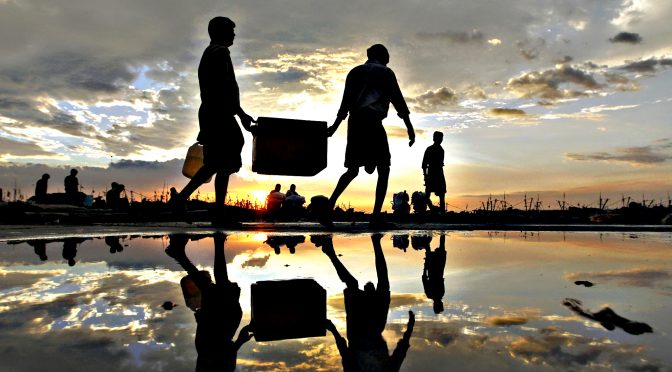
Featured Image: Fishermen carry a box filled with fishes at a fishing harbor in the southern Indian city of Chennai. (Babu/Reuters)