Articles Due: November 22, 2017
Week Dates: November 27 – December 1, 2017 Article Length: 1000-3500Words Submit to: Nextwar@cimsec.org
As China’s economic power has grown, so too has its diplomatic and military might. President Xi Jinping, in his opening speech before the 19th National Congress of the Communist Party of China, stated that China will “stand proudly among the nations of the world” and “become a leading global power.” This ambition includes building a “world-class” military.
China’s deepening economic relationships across the world has lifted many other nations. New relationships are forming, especially due to its ambitious One Belt One Road initiative. But China’s foreign policy has taken on greater prominence for international security, especially in regard to disputes over sovereignty, the rule sets that govern the world’s commons, and the increasingly volatile situation on the Korean peninsula.
Authors are encouraged to analyze these issues and more as China’s defense and foreign policy yields more expansive and impactful implications.
Dmitry Filipoff is CIMSEC’s Director of Online Content. Contact him at Nextwar@cimsec.org.
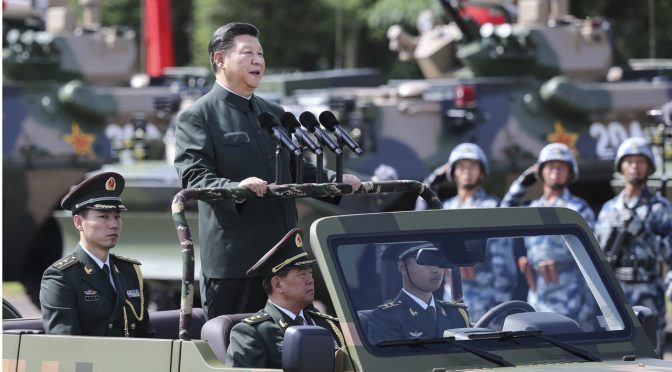
Featured Image: China’s President Xi Jinping at a military parade in Hong Kong. (Sam Tsang/South China Morning Post)
The Nineteenth National Congress of the Chinese Communist Party will be held on October 18, 2017. As many China political observers already know, the Communist Party National Congress itself and the First Plenary Session of the Nineteenth National Congress of the Communist Party of China that gathers immediately after the National Congress will be the defining event for the reallocation of power for the next five years.
This National Congress will select new membership for the Central Committee, the Central Commission for Discipline Inspection, and the subsequent First Session of the Central Committee will select Politburo, Politburo Standing Committee, and party Secretariat members. It will also decide on the members of the Military Commission of the Central Committee, in addition to leadership selection such as the General Secretary. Additionally, many states that are tightly associated or affected by future Chinese political maneuvers are concerned about whether any new policy will also be formulated through the same mechanisms.
This article will provide certain credible references as the basis to judge the possibility of revising existing policies by scrutinizing the institutions of these two meetings and reviewing actual practices of previous similar meetings. Whether these two meetings can become platforms for substantial policy discussion, debate, and reconciliation is the core matter that needs to be understood in order to identify any PRC policy revision and grasp a more overt picture of how the Chinese Communist Party manages their political and power transitions. Yet this still might not be necessarily implying any immediate policy shifts and adjustments.
Examining the Nature from the Institutions
It is necessary to review the Chinese Communist Party Constitution to understand the nature of the National Congress of the Chinese Communist Party. According to Article 19 of the Constitution:
“The functions and powers of the National Congress of the Party are as follows: 1. To hear and examine the reports of the Central Committee; 2. To hear and examine the reports of the Central Commission for Discipline Inspection; 3. To discuss and decide on major questions concerning the Party; 4. To revise the Constitution of the Party; 5. To elect the Central Committee; and 6. To elect the Central Commission for Discipline Inspection.”
As we review the meeting records of previous Chinese Communist Party National Congresses, we may notice that all six functions and powers have been well exercised except the third one which is, “To discuss and decide on major questions concerning the Party.” This is actually the only function that contains the possibility of formulating or revising policies, yet it is rarely utilized in previous congressional agendas. The first and the second functions are fundamentally a top-down model of political communication and the examination process is in essence a formality conducted by applauding. The fourth function is focused on internal institutions by setting operational rules within the party and hardly associated with any policy toward the outside world. And finally, the fifth and the sixth functions are basically serving the purpose of internal power reallocation. We therefore hardly find any trace of substantial policy formulation.
Nonetheless, the first function of the Party General Secretary is to identify certain elaborations and interpretations of policies. For instance, Hu Jintao, in his capacity as the General Secretary of the Central Committee of the Communist Party of China, delivered his report to the Eighteenth National Congress of the Communist Party of China titled, “Firmly March on the Path of Socialism with Chinese Characteristics and Strive to Complete the Building of a Moderately Prosperous Society in all Respects” (堅定不移沿著中國特色社會主義道路前進,為全面建成小康社會而奮鬥) on Nov 8, 2012, is a typical case of identifying the contents of PRC’s policies.
The major portion of this policy report may address domestic issues. Nevertheless, contents mainly within several chapters of this report such as the Chapter IX, “Accelerating the Modernization of National Defense and the Armed Forces” (加快推進國防和軍隊現代化), Chapter X, “Enriching the Practice of ‘One Country, Two Systems’ and Advancing China’s Reunification” (豐富”一國兩制”實踐和推進祖國統一) and Chapter XI, “Continuing to Promote the Noble Cause of Peace and Development of Mankind” (繼續促進人類和平與發展的崇高事業) may naturally trigger concerns from international audiences.
There are several features we should address here to remind the readers that these statements within the report are not the result of policy formulation process contained by the meeting agenda. First, the contents of the report are concluded from the actual practices during the period of the previous Central Committee still in power. The perspectives are more or less retrospective and relatively less prospective in nature. Second, it is a report delivered by the party General Secretary of the past five-year term Central Committee. Unless the same General Secretary of the party extends for another term for five years, power may pass to new leadership right after the party National Congress. Although there certain elements of policy continuity may exist, the contents revealed by the report are no assurance for their applicability in the future.
And last, it is a unilateral political communication, not a multilateral discussion at all. It therefore could not be a result of a policy review occurred within the National Congress itself. We may expect Xi Jinping will follow the same modus operandi to conclude all his achievements in his previous five-year term and mention still valid policies for his next term. The possibility of declaring new policy is relatively low since no proper policy review is likely to happen in this enormous political gathering. There also is no meeting agenda to accommodate any provisional policy proposal.
As for the First Plenary Session of the Nineteenth National Congress expected to be held right after the National Congress, its main mission at this period is to select new leadership for the party, not revise or promulgate new policies. According to Article 22 of the present Constitution of the Chinese Communist Party:
“The Political Bureau, the Standing Committee of the Political Bureau and the General Secretary of the Central Committee of the Party are elected by the Central Committee in plenary session. The General Secretary of the Central Committee must be a member of the Standing Committee of the Political Bureau. When the Central Committee is not in session, the Political Bureau and its Standing Committee exercise the functions and powers of the Central Committee. The Secretariat of the Central Committee is the working body of the Political Bureau of the Central Committee and its Standing Committee.
The members of the Secretariat are nominated by the Standing Committee of the Political Bureau of the Central Committee and are subject to endorsement by the Central Committee in plenary session. The General Secretary of the Central Committee is responsible for convening the meetings of the Political Bureau and its Standing Committee and presides over the work of the Secretariat. The members of the Military Commission of the Central Committee are decided on by the Central Committee.”
It is also noted at the end of the same article that, “The central leading bodies and leaders elected by each Central Committee shall, when the next National Congress is in session, continue to preside over the Party’s day-to-day work until the new central leading bodies and leaders are elected by the next Central Committee.”
Obviously, the power rearrangement is the major concern for the First Plenary Session of the Chinese Communist Party Nineteenth National Congress. Although it is clearly noted in Article 21 of the present Chinese Communist Party Constitution, “…The Central Committee of the Party meets in plenary session at least once a year, and such sessions are convened by its Political Bureau. The Political Bureau reports its work to these sessions and accepts their oversight,” it is not always practical to conduct these for the First Plenary Session of each party National Congress since the members of the Central Committee and the Politburo are newly elected at the moment. We therefore may expect that no policy review and reformulation process will be exercised during the coming First Plenary Session of the Chinese Communist Party Nineteenth National Congress.
Assessing Meeting Practices
Reviewing actual meeting practices, we may also assess whether the Chinese Communist Party National Congress and its subsequent First Plenary Session of the Central Committee can be a platform for policy revision and formulation. As many political observers have already concluded, although the Chinese Communist Party National Congress and the Central Committee are theoretically the highest political power mechanism as noted by Article 10, Point 3 of the CCP Constitution: “The highest leading body of the Party is the National Congress and the Central Committee elected by it,” all the important decisions including personnel arrangements and policy stances are generally settled before the actual meetings. After all, the actual political practices are the consequences jointly achieved by political institutions and political culture together. Hidden rules in human societies always exist.
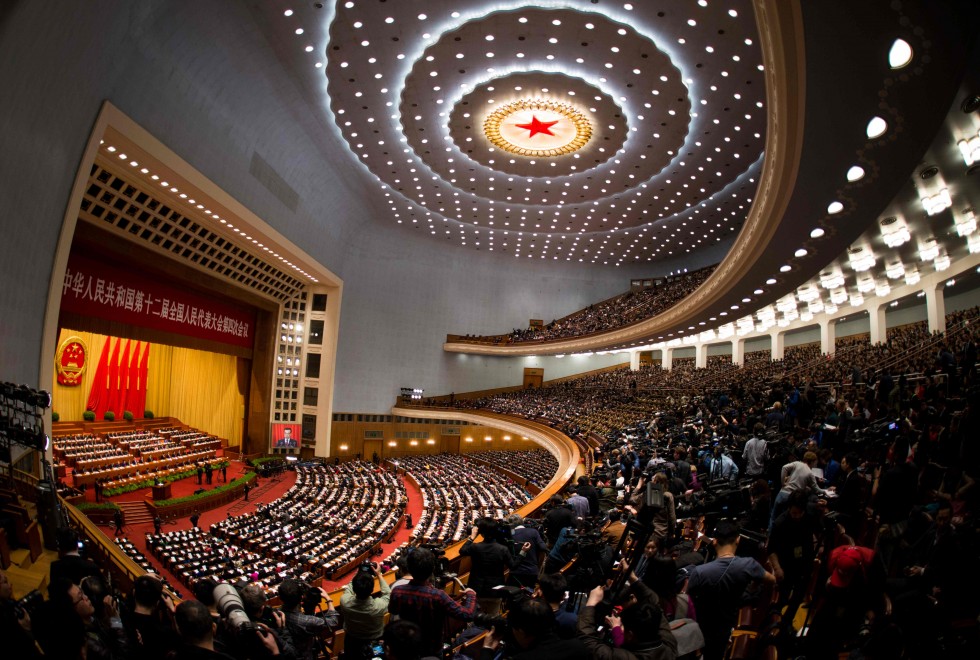
Premier Li Keqiang delivers a speech during the National People’s Congress in the Great Hall of the People in Beijing. (AFP)
So far, the Chinese Communist Party has persistently tried to keep a harmonic and systematic power transition process since Deng Xiaoping in the mid-1980s though this political design was still unavoidably disrupted by the Tiananmen Square incident in 1989. The routine CCP National Congress may always attract international media attention simply because it has the capacity to present the major leadership shift every ten years in its even number term gatherings. On the other hand, the CCP National Congress will also reveal the future political leadership by promoting young generations to key party posts for preparing to shoulder the duties of leadership in those odd number party assemblies of the national level like this time.
Given the size of congregation, well over two thousand including voting delegates plus specially-invited delegates who are retired seniors but granted equal delegate privileges for the CCP National Congress in the previous two terms. As for the Central Committee, its full members and alternate members are generally selected from the leadership of provinces, direct-governed municipalities and autonomous regions, top brass of the People’s Liberation Army, operational theater and major staff establishments of the Central Military Commission, leadership at the minister level of the State Council and CCP administration apparatus, as well from the leadership of state-owned enterprises or state-sponsored institutions. No meaningful and substantial policy reconciliation process can be managed within a meeting of such a complicated composition and with members from so diversified backgrounds. And this is exactly the reason why we had never seen any PRC’s policy shift after those CCP National Congresses for power reshuffles and their subsequent First Session of the Central Committee.
Predicting Policy Orientation from Personnel Structures
As noted above, the nature of the CCP National Congress and its subsequent Session of the Central Committee is power reorganization and transition, personnel reallocation and revisions to party institutions as necessary. These two meetings are by no means an appropriate or useful venue for policy review, discussion, debate, and formulation. Although certain traces of policies can be identified from those political reports, most of the contents in these political statements are retrospective but less prospective.
Nonetheless, policies are defined and designed by those holding the legitimate positions in the decision-making systems. Fresh arrangements of PRC’s personnel structure in various dimensions can be the catalysts for formulating new policies towards the external world. Those states that have deep concerns about how new Chinese policies will affect their interests have the opportunity to observe these decision-makers, and their selection, through these two political conferences. Even though we should remember that it always takes two for tango, many policies are the resultof interactions and not unilaterally decided. For those cases whereBeijing does not have full capacity to dominate all future developments, it is hard to precisely expect how Beijing may react to outside challenges with any specific policy.
We should also remember that the process of negotiating personnel arrangements before these two party meetings among the party leadership may also practically reflect the significant political positions that will eventually affect policies. Many active political figures may not be promoted in these party meetings as many international observers would expect. Those PRC government officials who are not assigned any party posts are encountering the dead end of their political future.
Those who expect any PRC policy revision towards any specific objective or aspect after the coming Nineteenth Chinese Communist Party National Congress and the following First Plenary Session of its Central Committee should reconsider the nature of these political events before jumping prematurely into conclusions. Without knowing the result of power sharing arrangements, how can we fairly foresee the future Chinese policy? As we have no idea of the general characteristics and power structure of the PRC’s leadership over the next five years, how can anyone tell what will possibly be the results of their policy review and revision process?
It takes time for the new echelon of the PRC leadership to review the present policies before any future revision. That nothing regarding policy can be really determined immediately after the power transition is the best advice that we should keep in mind. And of course, no reliable or credible predictions of PRC’s future policies can be made before these two meetings, either.
Dr. Ching Chang was a line officer in the Republic of China Navy for more than thirty years. As a very productive commentator on Chinese military affairs, he is recognized as a leading expert on the People’s Liberation Army with unique insights on its military thinking.
Featured Image: The ceiling of the 10,000-seat auditorium in China’s Great Hall of the People. (Wikimedia Commons)
The following two-part series will analyze the maritime dimension of competition between Ukraine and Russia in the Sea of Azov. Part 1 analyzed strategic interests, developments, and geography in the Sea of Azov along with probable Russian avenues of aggression. Part 2 will devise potential asymmetric naval capabilities and strategies for the Ukrainian Navy to employ.
By Jason Y. Osuga
Three Approaches to Building a Credible Deterrent
The primary job of any country’s military is to defend the nation from foreign attacks. The Ukrainian military must prevent further encroachment of its territory by Russia. Ukraine should consider three approaches to its nation’s defense. First, Ukraine should develop an effective asymmetric navy and coastal defense to counter the much stronger Russian conventional navy. An asymmetric navy can disrupt naval operations of a conventional fleet through the use of guerrilla tactics at sea. An asymmetric navy is also cheaper to build compared to a conventional navy which requires an enormous amount of resources and time to build. All these efforts could prove futile against a greater and stronger-willed adversary intent on defeating Ukraine in war. However, if Ukraine is able to raise the potential costs and increase enough risk, Russian leadership may think twice about conducting further encroachments on Ukrainian sea and land territories.
Second, the Ukrainian Navy and Army must adopt a joint strategy of conducting sea denial operations against Russian attempts to gain sea control. The Army and Navy must develop a joint sea denial doctrine and train together to prevent Russian forces from achieving sea control and chokepoint control of Kerch Strait. Ukraine’s sea denial strategy should focus on attacking the Russian center of gravity (COG) by weakening the functions that enable the COG to operate. Finally, the Ukrainian Navy should consider establishing a naval base in Mariupol and forward-deploying part of its fleet to the Sea of Azov (SOA). The patrol fleet would act as a deterrent against Russian encroachment in eastern Ukraine. Forward-basing cuts down on deployment time from Odessa, Ukraine’s only naval base of any significance following the loss of Sevastopol. Ukraine should also set up supply depots along the Azov coast to mitigate vulnerability of a singular dependence on Mariupol.
Asymmetric Naval Forces and Guerrilla Warfare at Sea
The backbone of an asymmetric navy is a sizeable fleet of small patrol crafts, missile boats, and mine-laying vessels. Small boats are necessary for speed and presenting a small target for the adversary. Hence, a large quantity of small boats is necessary to present a challenge through a swarm effect. During the Iran-Iraq war of the 1980s, Iran learned that large naval vessels are vulnerable to air and missile attacks from a conventionally superior foe, which confirmed the efficacy of small boat operations and spurred interest in missile-armed fast-attack crafts (FAC).1 Iran expanded the use of swarm tactics that formed the foundation of its approach to asymmetric naval warfare.2 Investment in an asymmetric navy composed of small craft is more cost-effective compared to building large surface combatants in addition to presenting a more elusive target. The shallow water environment precludes friendly or enemy deep-draft capital warships and submarines from operating in the SOA. It is the shallowest sea in the world with a mean depth of just 10 meters. Just as Iran developed asymmetric tactics to deal with a larger and more sophisticated U.S. Navy, so can Ukraine develop asymmetric tactics against a larger and more sophisticated Russian Navy.
For defense of the SOA, the Ukrainian Navy should consider investing in Anti-Surface Warfare (ASUW), Coastal Defense (CD), Mine Warfare (MIW), and military pay, housing, and training.
Anti-Surface Warfare (ASUW)
The Ukrainian Navy should focus on building numerous anti-ship cruise missile (ASCM)-capable Patrol Boats (PB), Patrol Crafts (PC), and Guided-Missile Patrol Crafts (PTG). These small boats form the backbone of an asymmetric navy. Speed is a key requirement for these small boats to be able to employ shoot-and-scoot tactics. These vessels must be able to achieve minimum of 35 knots sustainable speed. In addition, these vessels must have long endurance to remain at sea for long periods of time. Frequent return to home-port to resupply makes the vessels more vulnerable. Therefore, vessels must have large storage capacity for provisions and fuel, relative to the size of the expected operating environment. To take on provisions, small crafts should be able to operate from inlets and small ports along the Azov coast. Therefore, another critical requirement is a low draft to operate in the SOA. Another potential solution could be small Rigid Hull Inflatable Boats (RHIB)-like crafts with powerful outboard engines. These 11-meter boats are capable of high speed, low draft, and are suitable for calm seas operations in the SOA. Under the Foreign Military Sales program in 2015, the US Navy delivered five 7/11-meter RHIBs produced by Willard Marine.3 This transfer fulfills speed and low draft requirements in the shallow littorals. Ukraine should continue to build a more robust surface patrol capability.
Maintenance, crew manning, and armaments are other important considerations. The future asymmetric fleet must be easy to maintain by using interchangeable parts that already exist in Ukraine’s defense infrastructure. Crew manning should be minimal to allow for crew rotation, training conducted on similar platforms, and manned by small increases to the overall manning level of the Ukrainian Navy. As for armaments, vessels should have 57-mm or 30-mm gun for self-defense and fire support, and perhaps .50 caliber (12.7mm) crew-served weapons for future interoperability with NATO.
These vessels’ main armament, however, should be ASCMs due to their longer range and lethality. The Ukraine Navy should incorporate the newly developed Neptune missile system on PCs, PTGs, and PBs when it passes all operational testing and evaluations.4 The two Gurza-M class armored patrol boats introduced to the Navy in 2015, with a further 20 planned by 2020, is a promising step in the right direction.5 However, these boats should have an ASCM capability. Otherwise, these new vessels risk being out-gunned and out-ranged. Such vessels would only be capable of conducting law enforcement operations in peacetime but inadequate in conducting sea denial operations in war.
Another area of needed attention is the modernization of C4ISR, strengthening cyber networks, and growing a professional cyber force in the Ukrainian military. All the investments in asymmetrical hardware would not be completely effective in combat unless they are tied to a modern, resilient battle network. Ukraine must elevate cyber to strengthen networks and the C2 of the fleet. The U.S. should provide training and support to standing up Ukrainian cyber defense efforts through rotational training, NATO exercises, and foreign military sales and support.
Coastal Defense (CD)
The Ukrainian Army, not the Navy, should develop and operate Coastal Defense Cruise Missile (CDCM) battalions. The Army has deeper funding and manning levels to be able to better integrate this additional mission. Other nations employ this model. Namely, the Japan Ground Self Defense Force is responsible for operating/employing CDCMs against enemy ships. Giving the coastal defense mission to the Army will lessen the burden on the Navy and allow it focus on sea denial operations while the Army supports these efforts from the littorals. Command and control between Army and Navy units is paramount to ensure target coordination. Modern C4ISR networks should aid target cueing. The Army can organize mobile battalions to employ shoot-and-scoot tactics from concealed positions against the enemy fleet at sea. If the new Neptune ASCM passes operational testing and evaluation, Ukraine can mass-produce these ASCMs to achieve economy of scale and equip Army CDCM battalions. Ukraine has a naval infantry arm which could also take on the coastal defense mission. However, the Army should operate the CDCMs over the naval infantry because the latter is a mobile strike fighting force, while the Army has broader experience and funding support for artillery and related mission areas.
Helicopter-Based ASUW Capability
Helicopters should possess an air-to-surface anti-ship missile capability to complement the surface fleet and coastal defense ASCM capabilities. This strategy completes the triad of anti-ship missile forces operating from land, air, and sea. Helicopters can operate from unprepared airfields, an advantage over fixed-wing aircraft which require a longer, prepared runway. Helicopters can hover at low altitudes for longer periods of time – a suitable platform for conducting ASUW from the air. Ukraine should attempt to fit the indigenous Neptune missile on helicopters to field a formidable anti-ship platform in the SOA littoral.
Mine Warfare (MIW)
Ukraine should develop a defensive mine warfare capability to protect the Ukrainian coastline as well as to have the ability to conduct chokepoint denial operations. Bottom, moored, and influence mines should be adapted to the shallow operating environment of the SOA. In addition, the Ukrainian Navy should invest in mine-clearing capabilities to counter potential Russian mining of SOA and the Kerch Strait. An unmanned mine-clearing capability is likely more economical than sweepers with a crew of 30 personnel. NATO countries should help Ukraine obtain an affordable mine-clearing capability. Such a defense-oriented system would not threaten Russia. Furthermore, providing this level of support does not cross the threshold that would require a NATO membership for Ukraine.
Pay, Housing, and Training
Finally, improvements in the morale intangibles are indispensable for building a modern navy. Ukraine must increase military wages and expand access to housing which cuts to the root of persistent low morale. Only then can Ukraine begin to turn the tide on poor job performance, recruiting, retention, and even defections. A robust training program is also necessary to be effective in asymmetric warfare. Old ammunition stockpiles should be renewed for safe training and operations. Above all, training should emphasize the Ukrainian joint force ability to defend the SOA with no help from other countries, in line with geopolitical realities. In addition, exercises with NATO provide invaluable interoperability and high quality training opportunities, and thus should be continued.
Joint Sea Denial Strategy
Ukraine should animate the above fleet investments with a cohesive joint doctrine to conduct sea denial operations. The goal of sea denial is to prevent sea control, and therefore, preventing Russia from using the sea to do harm through amphibious landings, blockade, and fires against shore defenses.7 Currently, Ukraine has local control only along its coast and cities such as Mariupol and Berdyansk. Patrols and coastal surveillance should ensure that no suspicious vessels operate near the littorals. Russian Special Forces may operate close to the littorals on civilian vessels feigning as fishermen or conducting commercial shipping. Through exercises that focus on interoperability, U.S. and NATO Navies can provide training on maritime interdiction and patrol operations to develop doctrines to help Ukraine defend its borders from the seaborne equivalent of Russia’s little green men.
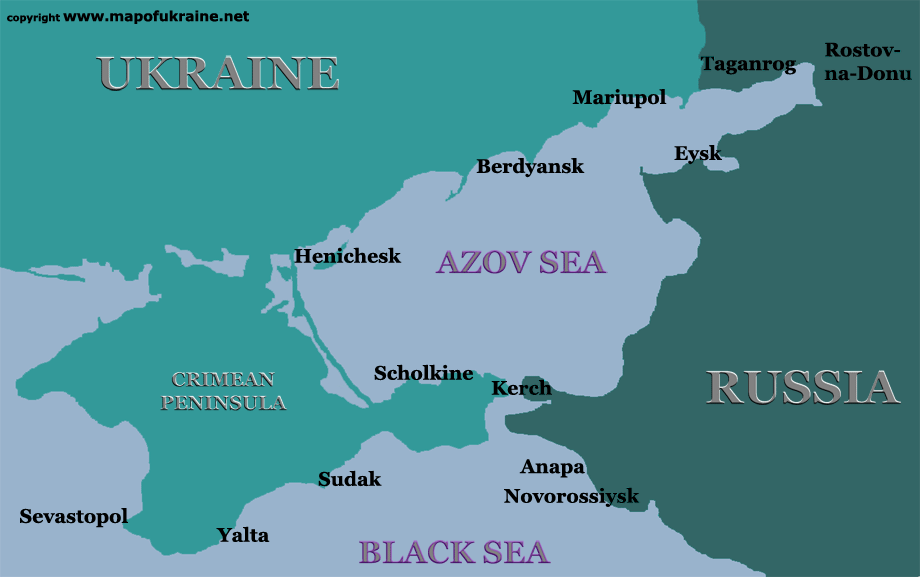
A map of the Azov Sea (mapofukraine.net)
In wartime, Ukrainian forces should focus their attack on the Russian Special Forces, ground, and amphibious forces on military or commercial transports. Thus, the primary focus of effort for Ukrainian surface combatants, CDCMs, and helicopters should be concentration of fires on transports carrying Russian troops and Special Forces to deny seaborne invasion and infiltration. If Russian surface combatants are protecting the transports, Ukraine must threaten those combatants to strip away protection. The secondary target is to weaken enemy sustainment by attacking supply ships and commercial vessels carrying materiel. Tertiary targets should be enemy operational fires capabilities, i.e., ships with naval gun fire support, Russian air support, and artillery. Ukraine forces should jam enemy communications to prevent effective C2 and weaken enemy intelligence gathering efforts through operational deception.
Ukraine Chokepoint Denial Operations
Eventually in wartime, Ukraine must try to deny Russia’s ability to control the Kerch Strait through chokepoint denial operations. The Ukrainian Navy must use its asymmetric fleet with swarm tactics, surprise, and concentration of force against the Russian fleet when they are most vulnerable coming through the Kerch Strait. This will likely be a large missile engagement; therefore, the side with more firepower that presents the most elusive targets will win. If Ukraine is unsuccessful in preventing Russia from closing the Strait, Russia will be able to control the OPTEMPO in the SOA and isolate eastern Ukraine while threatening vital coastal cities such as Mariupol. Dividing Ukrainian forces will lead to a quick and eventual defeat, resulting in Russian dominance in the SOA. Russia’s commercial interests, sea mineral resources, and Crimea’s rear area will be secure from foreign threats. This is Russia’s desired end state, which Ukraine must prevent through sea denial and choke-point denial operations.
Mariupol Naval Base
The last part of the strategy is to establish a naval base in Mariupol and forward deploy a part of its asymmetric fleet to help defend it. Mariupol is Russia’s ultimate operational objective in a scenario that seeks to connect Crimea and Russia. For Ukraine, Mariupol is its theater-strategic center of gravity in preventing Russia from annexing the Priazovye region. Since the loss of Sevastopol to Russia, the Ukrainian Navy has only one operational base in Odessa. Currently, there are no Navy bases east of the Crimean Peninsula. Therefore, Ukraine should consider establishing a naval base in Mariupol as it is the most favorable city with natural harbors, a sizeable population, and an industrial base to sustain a moderate naval and Sea Guard force. Establishing a naval base in Mariupol will enhance the ability to safeguard maritime rights in SOA during peacetime and conduct sea denial operations during wartime. The Sea Guard also already has a base in Mariupol. Co-location of the Navy and Sea Guard with shared use of repair and logistics facilities would alleviate resource constraints while investing in resilience in the form of resupply points and depots along the Azov coast and inlets to support replenishment. An over-reliance on Mariupol creates a singular vulnerability to attack, as seen in separatists’ offensives against Mariupol in 2014/15. Ukraine must diversify risk by spreading out resupply capabilities throughout the Azov coast.
Finally, Ukraine should station about one-third of the Ukrainian Navy assets in Mariupol. This balance would be favorable to have enough economy of scale and concentration of force to conduct effective patrols and have a deterrent effect against the adversary. Critics may point to the fact that forward-deploying a large percentage of Ukraine’s fleet in the SOA would be akin to trapping the fleet if Russia closes the Kerch Strait. That is the reason why Ukraine should not deploy more than one-third of its fleet to Mariupol. If Russia establishes control of SOA and closes the Kerch Strait, the SOA fleet would be trapped in; however, Ukraine would still possess two-thirds of its fleet in Odessa as an operational reserve for a possible future counterattack. Nevertheless, one-third of the Ukrainian fleet patrolling the SOA is a marked improvement from the current situation, which is a weak, sporadic, or virtually non-existent presence in the SOA. Forward presence would be a step in the right direction to show resolve and stave off potential encroachment of Ukrainian territory.
Counterargument
Why build an asymmetric fleet and position over a third of its force to the frontlines? After all, this action may provoke a Russian reaction. In addition, an ill-conceived asymmetric navy will not deter a determined and capable Russia from further encroaching on Ukrainian territory. Western sanctions and fear of diplomatic reprisals have so far deterred Russia and separatists from taking over Mariupol. Russia will not be able to brook further sanctions on its already fragile economy. Thus, Russia will weigh the risk versus the rewards, and decide that it is not in Russia’s interest to take actions that would further result in crippling sanctions on its economy. Therefore, Ukraine should spend its precious resources elsewhere to help its citizens. Furthermore, any resources spent on the Ukrainian military should continue to prioritize the army and air force which are doing the lion-share of fighting in the Donbas region.
However, sanctions have seldom deterred Russian actions. Russia’s honor, prestige, and the importance of holding Crimea far outweigh the risks of sanctions and how the international community will regard such an action. If Russia cannot resupply Crimea adequately, the fear of potentially losing Crimea will force Russia to take measures to ensure Crimea’s survival by building a land corridor to Russia. Russia will factor the Ukrainian Army’s relative strength over the Ukrainian Navy’s weakness. If Ukraine takes no action to prioritize and strengthen its naval and coastal defense forces, the power vacuum left in the SOA will tempt Russia to regain its former territory via the sea. What would become of the Ukrainian government’s legitimacy when it cannot defend its country again from foreign attacks, including those from the maritime domain? The risks of inaction are greater than they appear.
Conclusion
Following Crimea’s seizure, Ukraine continues to face threats of Russian encroachment on its territory. Russian designs are based on geopolitical needs for resources, consolidation of gains, and resupply of Crimea via a land corridor linking to Russia. Supported by historical narratives of “Novorossiya,”8Russia will time the invasion by hybrid forces when Ukraine is weak and the international community’s attention divided. As in the case of Crimea, seizure of the Azov coast will be swift, probably led by “little green men” using plausible deniability and supported by separatist forces from Donbas region.
Ukraine has three main ways to counter future Russian aggression in the SOA: develop an asymmetric force, conduct joint sea denial operations, and forward deploy forces to defend Mariupol. Ukraine must implement this strategy immediately. The risk of inaction is too great for Ukrainian territorial sovereignty. In the end, Russia’s overwhelming military power may be too much for a small, underfunded Ukrainian military. The idea, though, is to introduce enough risk to deter Russia from further aggression against Ukraine. The answer lies with the Ukrainian people which strategy they should pursue.
LCDR Jason Yuki Osuga is a graduate of Johns Hopkins University’s School of Advanced International Studies (SAIS) Europe Center and the U.S. Naval War College. This essay was written for the Joint Military Operations course at NWC.
These views are presented in a personal capacity and do not necessarily reflect the views of any government agency.
References
1. Fariborz Haghshenass, “Iran’s Doctrine of Asymmetric Naval Warfare.” Washington Institute, December 21, 2006. Accessed October 1, 2016, http://www.washingtoninstitute.org/policy-analysis/view/irans-doctrine-of-asymmetric-naval-warfare.
2. Ibid.
3. “CCD Contracts and Technical Briefs,” NAVSEA Combatant Craft Division, August 15, 2015, 30.
4. “Ukraine Develops New ‘Neptune’ Anti-Ship Missile Complex,” Info-News. May 17, 2016. Accessed October 9, 2016. http://info-news.eu/ukraine-develops-new-neptune-anti-ship-missile-complexe/.
5. Eugene Garden, “Ukraine Plans for 20 New Patrol Boats,” Shephard Media, March 8, 2016. Accessed October 9, 2016. https://www.shephardmedia.com/news/imps-news/ukraine-plans-20-new-patrol-boats/.
6. “Ukraine Develops New ‘Neptune’ Anti-Ship Missile Complex,” Info-News.
7. Geoffrey Till, Seapower: A Guide for the 21st Century, (New York: Routledge, 2013), 152.
9. Kirill Mikhailov, “5 Facts About “Novorossiya” You Won’t Learn in a Russian History Class,” Euromaidan Press, October 17, 2014. Accessed 01 Oct 2016, http://euromaidanpress.com/2014/10/17/5-facts-about-novorossiya-you-wont-learn-in-a-russian-history-class/#arvlbdata.
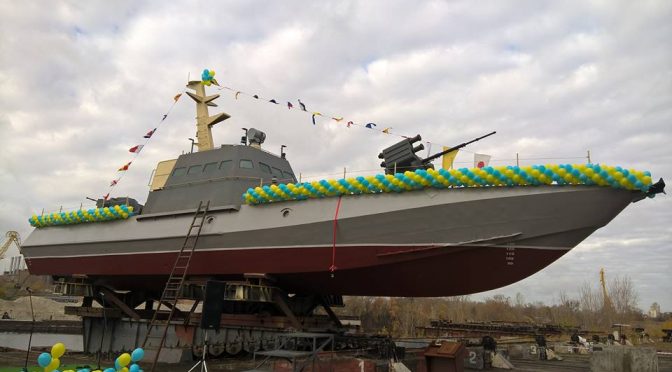
Featured Image: Gurza-M (Project 58155) small boat of the Ukrainian Navy. (Ministry of Defense of Ukraine)
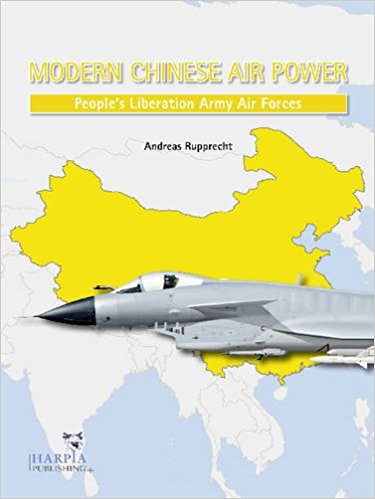
Over the past two decades, the term “modernization” has been widely used by foreign affairs experts, military and political leaders, and intelligence analysts to describe the startling rapidity of the Chinese military’s rise from an arguably primitive force to one of the most technologically-advanced militaries in the world. In his article, “China: A Threat or a Challenge: Its Air Power Potential”, Indian Air Marshall RS Bedi describes modernization as “a dynamic process to keep abreast with the latest” (Bedi, p3). By applying lessons learned from its military actions against U.S. forces during the Korean War and observations made during later conflicts such as Operation Desert Shield/Desert Storm, NATO operations in the Balkans, and Operations Enduring Freedom and Iraqi Freedom, the PLA have kept abreast of the significant role of airpower in modern warfare. Accordingly, both the People’s Liberation Army Air Force (PLAAF) and People’s Liberation Army Naval Air Force (PLANAF) have quickly progressed through this “dynamic process” and have emerged as a force capable of countering American and regional neighbor land- and sea-based airpower, including aircraft carriers, cruise missiles, and long-range bombers. Via informative writing and a litany of glorious, colored and black & white photographs, Modern Chinese Warplanes leads readers along the PLA air forces’ progressive path toward today’s modernized force. Chock full of vivid and informative photographs, readers are immediately transfixed. To invoke a classic adage, if a picture speaks a thousand words, then even a cursory flip through the pages reveals a stunning, photographic summary and leaves the reader eager to investigate the accompanying text.
The first chapter of Modern Chinese Warplanes is dedicated to describing the origins, progressions, and even setbacks of both the PLAAF and the PLANAF, thus providing succinct yet informative context toward understanding how remarkable the modernization of China’s air forces has been. Although the PLAAF and PLANAF were established in 1949 and 1952 respectively, it could be argued that the modernization of today’s force was born from the compelling wake-up call presented to Chinese Communist Party (CCP) and People’s Liberation Army (PLA) leadership during the 1991 U.S.-led military operations in Iraq. Using Rupprecht and Cooper’s description, U.S. operations in Iraq “shocked the PLA into the realization that it had to become capable of engaging in high-tech warfare or otherwise face the certainty of falling ever further behind other modern militaries.” This marked a momentous shift in Chinese national military strategy and the subsequent 1993 issuance of the “The Military Strategic Guidelines for the New Period” by the CCP and PLA. Thus, if 1993 can be considered the start of China’s current military modernization period, the mere 24-year rise in military capabilities of the PLA, arguably now on par with the world’s leading military forces, is even more remarkable.
After Chapter 1’s useful historical context, Rupprecht and Cooper use Chapters 2 through 6 to succinctly present the book’s stated objective: to provide “a summary of the Chinese air arms as they are today, what equipment they operate, and how this equipment is organized.” Chapters two and three both describe and illustrate China’s modern combat aircraft, combat support aircraft, and associated armament. Chapter two’s introductory pages aptly describe Chinese aviation nomenclature and unique designations but then seemingly gloss over China’s numerous aircraft manufacturing companies. Admittedly this area is outside the scope of Modern Chinese Warplanes; however, readers seeking additional information regarding Chinese aircraft manufacturing companies would benefit by combining this book with The Chinese Air Force; Evolving Concepts, Roles, and Capabilities by National Defense University Press (Hallion). The remainder of Chapters two and three however, present information that is well-researched and effectively organized into an almost encyclopedic presentation of each aircraft’s unique characteristics, performance parameters, and weaponry. The vibrant pictures and charts are wonderfully placed and provide ample relevance. An especially intriguing inclusion within Chapter 2, especially to military analysts and aircraft enthusiasts, is the sections entitled “Future” at the conclusion of each aircraft’s narrative. These paragraphs provide the reader with tantalizing hints regarding future aircraft developments, variants, and designations – details that would need to be expounded upon in a possible update. Additionally, Chapter four provides a highly-informative explanation of PLA aircraft markings and serial number systems – information neither readily available nor widely understood.
The only thing going against Modern Chinese Warplanes is time, for today the term “modern,” as the book’s title implies, is especially fleeting regarding the modernization of the Chinese military and its air forces. Since the book’s 2012 publication date, further reflected in the 2012 Order of Battle in chapters five and six, numerous changes have occurred within China’s political and military structures that, if the authors and publisher do not address, will quickly render this book irrelevant: In November 2012, Xi Jinping assumed China’s presidency and chairmanship of the Central Military Commission (CMC), quickly embarking on a campaign to reorganize the PLA, including restructuring the existing military regions. This effort was realized in February 2016 as the seven military regions described in Modern Chinese Warplanes were reorganized into five theater commands – a reorganization which also affected the subordinate command structures (Wuthnow). Additionally, in 2013–2014, China initiated substantial dredging and land reclamation projects in the Spratly and Paracel Islands.
These efforts continued, despite international backlash and in the face of a ruling by an international tribunal in The Hague in July 2016 which officially stated that China’s expansive claim to sovereignty over the waters of the South China Sea (SCS) had no legal basis. Today, these projects have resulted in three highly-functional artificial islands which are strategically located in the southern portion of the SCS and are fully capable of hosting Chinese military aircraft (Kyodo). Furthermore and more specifically, the PLA has accelerated its 4th and 5th-generation aircraft and armament development programs; therefore, many of the programs or technologies only hinted at within the pages of Modern Chinese Warplanes such as the Chengdu J-20 stealth fighter, Shenyang J-15 aircraft carrier-based fighter, and the Xian Y-20 heavy transport aircraft have rapidly progressed to the point of entering service in the PLAAF and/or PLANAF (Adams).
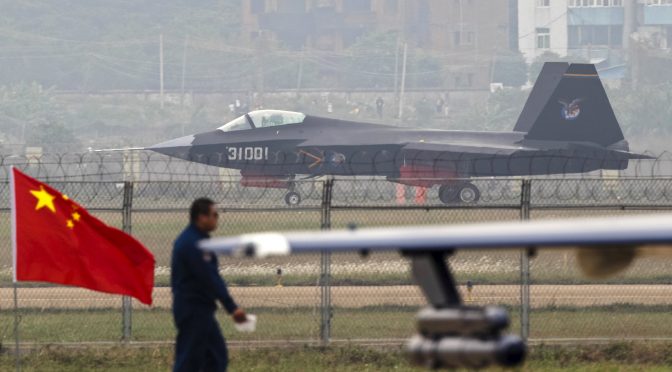
Finally, the PLA continues to initiate or expand military aviation and armament developmental programs. Modern Chinese Warplanes needs to be updated to further reflect the ongoing advances in PLAAF and PLANAF aviation platforms and technologies such as the Shenyang J-31 “Gyrfalcon”/”Falcon Hawk” stealth fighter (Fisher), the CJ-20 long-range land-attack cruise missile (LACM), and the YJ-12 long-range anti-ship cruise missile (ASCM) (Roblin).
In Modern Chinese Warplanes, the authors do not dive deep into foreign affairs or military strategy, nor do they embark on theorizing on how the aircraft are or will be operationally integrated into the PLA – foreign affairs experts, military analysts, and political strategists will find little usefulness here. Readers seeking to expand into air power operational integration would benefit by also reading Chapter five of China’s Near Seas Combat Capabilities by Peter Dutton, Andrew Erickson, and Ryan Martinson (Dutton). However, military analysts, history buffs, and even aircraft model aficionados will discover a wonderful and colorful addition to their collection – as a quick reference or an immersive interlude – likely resulting in many dog-eared pages. For any military enthusiast looking to expand his or her knowledge of modern Chinese aviation, this book is certainly a handy reference; however, it should not stand on its own but rather serve as a springboard toward additional research. If not already in the works, this reader personally hopes the authors and publisher collaborate and embark on revised editions that includes updated information and equally stunning photographs so that the 2012 version of Modern Chinese Warplanes will not be lost to the annals of time but rather, much like the PLA itself, will continue “in a process of sustained reform and modernization.”
LCDR David Barr is a career intelligence officer and currently within the Directorate for Intelligence and Information Operations for U.S. Pacific Fleet. His opinions do not represent those of the U.S. Government, Department of Defense, or the Department of the Navy.
References
Adams, Eric. “China’s New Fighter Jet Can’t Touch the US Planes It Rips Off”; Wired; 07 NOV 2016. https://www.wired.com/2016/11/china-j-20-fighter-jet/
Bedi, R.S. “China: A Threat or a Challenge: Its Air Power Potential”; Indian Defense Review; 08 March 2017. http://www.indiandefencereview.com/print/?print_post_id=35227
Dutton, Peter, Andrew S. Erickson, and Ryan Martinson. China’s Near Seas Combat Capabilities. Newport: U.S. Naval War College; China Maritime Studies, 2014.
Fisher, Richard D Jr. “New details emerge on Shenyang FC-31 fifth-generation export fighter”; IHS Jane’s Defence Weekly; 09 NOV 2016. http://www.janes.com/article/65359/new-details-emerge-on-shenyang-fc-31-fifth-generation-export-fighter
Hallion, Richard, P., Roger Cliff, and Phillip C. Saunders. The Chinese Air Force: Evolving Concepts, Roles, and Capabilities. Washington, D.C.: National Defense University Press, 2012.
Kyodo News. “China tests 2 more airfields in South China Sea”; posted 14 July 2016. http://news.abs-cbn.com/overseas/07/14/16/china-tests-2-more-airfields-in-south-china-sea
Roblin, Sebastien. “China’s H-6 Bomber: Everything You Want to Know about Beijing’s ‘B-52’ Circling Taiwan”; The National Interest; 18 DEC 2016. http://nationalinterest.org/blog/the-buzz/chinas-h-6-bomber-everything-you-want-know-about-beijings-b-18772
Rupprecht, Andreas, and Tom Cooper. Modern Chinese Warplanes: Combat Aircraft and Units of the Chinese Air Force and Naval Aviation. Houston: Harpia Publishing, 2012.
Wuthnow, Joel and Phillip C. Saunders. “Chinese Military Reform in the Age of Xi Jinping: Drivers, Challenges, and Implications”; National Defense University Press; March 2017. http://ndupress.ndu.edu/Portals/68/Documents/stratperspective/china/ChinaPerspectives-10.pdf?ver=2017-03-21-152018-430
Featured Image: A J-31 stealth fighter (background) of the Chinese People’s Liberation Army Air Force lands on a runway after a flying performance at the 10th China International Aviation and Aerospace Exhibition in Zhuhai, Guangdong province, in this November 11, 2014 file photo. (Reuters/Alex Lee)