Category Archives: Global Analysis

A Geographical Breakdown of What’s Going on in the World

A Beginner’s Naval Intelligence Reading List

By Mark Munson

While the very topic of naval intelligence may seem to imply secrecy, there is a substantial literature on the topic available to the general reader. While many of the books below may be well known to many in the field, they remain a useful start for the uninitiated:

Patrick Beesley’s two books about British efforts to collect, analyze, and use intelligence, particularly in support of the fight against German submarine warfare, are the best places to start for anyone interested in the practical application of intelligence at sea. Very Special Intelligence: The Story of the Admiralty’s Operational Intelligence Centre, 1939-1945 discusses the Second World War, while Room 40: British Naval Intelligence 1914-1918 covers the First World War. In both books Beesley contrasts the performance of these organizations during the two wars (the sharing and use of intelligence was much better during the Second World War). The discussion of British Naval Intelligence’s involvement in the famous Zimmermann Telegram and the subsequent U.S. entry into the First World War is fascinating.

The recommendation of John Keegan’s Intelligence in War may seem a little too obvious and on the nose, but his chapters on intelligence during the age of sail, the First World War, and the Battles of the Atlantic and Midway during the Second World War are one of the best summations of how wireless communications largely created what naval intelligence practitioners call OPINTEL (operational intelligence). Before wireless communications navies conducted “scouting” and “reconnaissance,” but intelligence as we understand it today largely results from the wireless revolution.

Christopher Ford and David Rosenberg’s The Admiral’s Advantage: U.S. Navy Operational Intelligence in World War II and the Cold War is a flawed book, in large part because this slim volume uses the excuse of many of its sources still being classified to justify the general lack of detail and substance devoted to its subject. Having said that, it’s virtually the only source available to a general audience that explains the post-Second World War history of U.S. Navy intelligence. Among the more interesting claims it makes is that the U.S. Navy’s famous Maritime Strategy of the 1980s was directly informed by a detailed understanding of Soviet naval doctrine by American intelligence analysts.

Colonel John Hughes-Wilson’s Military Intelligence Blunders and Cover-Ups features regularly in military and academic courses on intelligence. Discussion of Indications and Warning failures include chapters on Pearl Harbor, the 1973 October/Yom Kippur/Ramadan War, and the Falklands.

“Eddie” Layton and “Joe” Rochefort are two figures considered among the founding heroes of the U.S. Navy’s Intelligence and Information Warfare communities, respectively. Layton (he retired as a Rear Admiral) was the Pacific Fleet’s intelligence officer during the Second World War (both during the Pearl Harbor disaster and the later American victories in the Pacific) while Rochefort led the codebreaking effort that enabled the American victory at Midway. Layton’s autobiography And I was There as well as the recently published biography, Joe Rochefort’s War, offer insight into how a few surface line officers in the inter-war period began to specialize in intelligence-related duties. Of note, both Layton and Rochefort participated in a program that sent them to Japan for several years to learn the language and culture first-hand, an investment that seems to have paid off.

U.S. Naval Intelligence has been one of the many elements of the intelligence community supporting the various aspects of what used to be called the Global War on Terrorism. Mark Bowden is probably the most well-known author covering the special operations world over the fifteen years. While Black Hawk Down is his most famous book, Killing Pablo: The Hunt for the World’s Greatest Outlaw offers another look at the formative years of the current U.S. Special Operations complex and how intelligence is collected and used to target individuals. He’s also written articles for the Atlantic on the 2006 killing of Abu Musab Zarqawi in Iraq, American Special Operations in the Philippines, and counter-drug operations in Colombia.

For those interested in film treatments of intelligence in support of counter-terrorism the obvious choice is probably Zero Dark Thirty. My choice, however, is John Malkovich’s adaptation of Nicholas Shakespeare’s the Dancer Upstairs, a fictionalized depiction of the hunt for Abimael Guzmán, the leader of Peru’s Marxist Sendoro Luminoso Maoist guerrillas in the 1980s and 90s (both the book and film are excellent).

Lieutenant Commander Mark Munson is a Naval Intelligence officer currently serving on the OPNAV staff. He has previously served at Naval Special Warfare Group FOUR, the Office of Naval Intelligence, and onboard USS Essex (LHD 2). The views expressed are solely those of the author and do not reflect the official viewpoints or policies of the Department of Defense or the US Government.

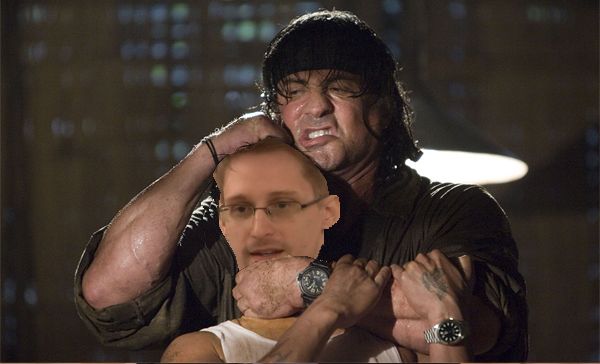
Time to Wake Up: Snowden’s Cost

THIS ARTICLE WAS ORIGINALLY PRINTED ON MAR 30, 2014 AND IS BEING RE-PRINTED FOR “CHALLENGES OF INTELLIGENCE COLLECTION WEEK.”

Regardless of how you feel about Edward Snowden’s domestic surveillance program revelations, it’s time to get real about the cost we are paying for Snowden’s leaks about America’s signals intelligence programs. In a conversation a few months ago with a very senior former US intelligence official, I was struck by their apocalyptic assessment of the damage Snowden’s leaks had caused America’s intelligence capabilities. While he naturally considered the domestic concerns overblown, he was even more upset at Snowden undoing of decades of groundbreaking American work securing our own communications and spying on foreign governments.

Success in signals intelligence relies almost entirely on the opponent not knowing where and how he is being spied upon. As soon as your methods are discovered, your opponent can evade your espionage or, even worse, spoof you with false intelligence. Be detailing the methods that the US uses to spy on other countries, Snowden’s revelations immediately and directly limited the NSA’s capabilities. We are just now beginning to see the fruit of that.

The Crimean crisis has revealed tremendous gaps in American SIGINT and comms against the very country in which Snowden happened to take asylum. Just over a year after Snowden’s releases, it is no coincidence. Now, I don’t mean to give Snowden all the credit – the Russians have maintained aggressive measures against American SIGINT since at least the mid 2000s. But it is not clear that, before the Snowden revelations, they were certain how effective their countermeasures were. By laying bare the sorts of measures the NSA has honed to break open world communications, Snowden has given the Russian military and IC exactly what it needs to craft communications in the American blindspot. Thus, the American intelligence community was blindsided by the Crimean invasion – while they observed the Russian military buildup, the lack of an increase in comms traffic lulled them into a false sense of optimism. Thanks to Snowden, the Russians could be confident that their countermeasures would be effective.

There is another piece of this puzzle that has been troubling me; Over the past year, there have been a number of alarming communications security breeches that have embarrassed US, EU, and Ukrainian officials in ways very convenient for the ongoing Russian information war. Now, I can’t speak to the sources of the EU and Ukrainian leaks (I wouldn’t want to deprive some poor GRU operative his due!), but I was very alarmed by the US breech. Senior (and even not-so-senior) US officials working in the Former Soviet Union are subject to very strict regulations around communications. Now, it’s possible of course that Victoria Nuland and Amb. Pyatt made some error. But this isn’t the first rodeo for either of them: Nuland is the former ambassador to NATO, and Amb. Pyatt is a career FSO with decades of experience working in sensitive areas, including at the IAEA. We know that Nuland was surprised by the leak, calling it “pretty impressive tradecraft.”

There are two likely scenarios of how these communication leaks happened; both of them alarming. The first possibility is that the conversation was had in the clear on an embassy line. Intercepting embassy communications still involves a level of tradecraft above merely intercepting something over Ukraine’s telecoms network, and embassy comms being intercepted indicates a dire but not surprising familiarity with our diplomatic communications system. Nonetheless, such a breech would indicate that our diplomats had not necessarily followed protocol. The more alarming possibility is that the secure line itself was compromised. Prior to Snowden, such a breach was nigh unthinkable. But, prior to his time at the NSA, Snowden worked for the CIA…securing their communications from foreign postings. Now, I’m not suggesting that Snowden is sitting in Lubyanka Square hacking American comms. But it should scare the hell out of us that someone so intimately involved in securing American communications in addition to building American SIGINT capacities now relies on the generosity of his Russian hosts for his breakfast, lunch, and dinner.

It is possible that Snowden could compromise American intelligence in ways he is not even aware; was Snowden really clever enough to completely prevent the Russians from peeking into his document archive? Is he really smart enough to detect whether some of the security problems he might work on for his Russian clients might not actually be FSB tricks to get him to divulge how an American cryptographer might approach security? What frightens me is not the possibility that Snowden is maliciously working against the US. But the Russian intelligence community has access to people who are smarter than he is, are better hackers than him, and are world-class manipulators. Snowden’s naïveté has already harmed the US, but his hubris is positioned to do even more damage, and damage that we will not know the extent of until it is too late.

I realize that this line of analysis has a certain Ian Fleming-ish feel to it; a US cryptanalyst absconds to Russia, and a year later, American SIGINT begins to experience unusual failures and breeches. But that is the reality we are living in, and we need to wake up to it. The damage Snowden has done to America’s information security and intelligence capabilities is not hypothetical and hypothesized. It is real, it is urgent, it is extensive, and it is just starting.

Jon is a 2013 Healy Scholar, a MPhil in International Relations candidate at University of Oxford, and a Research Assistant at Georgetown University. 

Sea Control 42: Asian-Pacific Fighters in Iraq and Syria

seacontrol2This week, Sea Control Asia Pacific turns its focus to foreign fighters returning from Iraq and Syria. Natalie Sambhi, of the Australian Strategic Policy Institute, interviews Andrew Zammit, a researcher at Monash University’s Global Terrorism Research Centre (GTReC), and Levi West, a lecturer in terrorism and National Security and course coordinator for Masters of Terrorism & Security Studies at Charles Sturt University. Both guests discuss the ways in which foreign fighters returning from the Middle East impact on Australian and regional security and on the global jihadist movement. Both Andrew and Levi also discuss the role of social media.
 DOWNLOAD: Sea Control 42 – Asian-Pacific Fighters in Iraq and Syria

Remember, subscribe on iTunes or Stitcher Stream Radio. Leave a comment and rate five stars!

SUMMARY: CNAS National Security Conference

By: Kiara Earle and Trevor Parkes

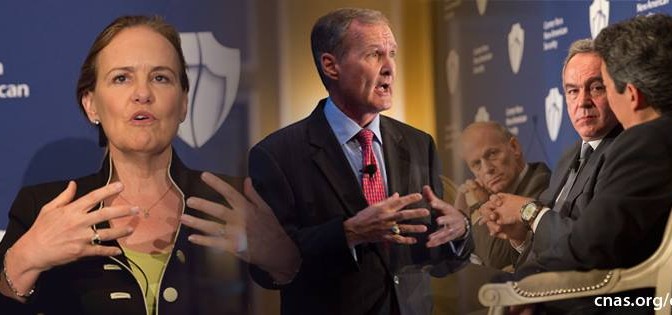
On Wednesday June 11, employees of various national security focused companies, agencies, and armed forces branches packed in alongside academics, enthusiasts and students for the eighth annual Center for New American Security’s National Security Conference.  The crowd talked excitedly around the coffee and pastry table in anticipation of the day including panels and presentations on topics from U.S. leadership in the world to the future of the defense industry to robotics on the battlefield, all headlined by addresses from Congressman Paul Ryan and National Security Advisor Susan Rice.

What Does the World Expect from U.S. Leadership?

The opening panel featured Dr. Zhu Feng, German Diplomat Wolfgang Ischinger, and General Amos Yadlin (Ret.), with Judy Woodruff as moderator.  The panel inquired about the role of the U.S. in the world, what it should be doing in the years to come, and strategies of implementation for its foreign policy.

Dr. Feng spoke on the positives of United States leadership in the East Asian region, and the threat of a rising China.  Much of the media proclaims China as the greatest modern rival to U.S. primacy, but the U.S. should not be too concerned because China has little soft power, and is “free riding” on U.S. primacy.

Expressing the sentiment that “America is not listening to us, but listening in on us,” Diplomat Ischinger emphasized the necessity to re-establish trust between Europe and the U.S.  As many of the international institutions experience gridlock, the U.S. should lead an initiative to reform these institutions.

General Yadlin commented on U.S. leadership’s hesitance and critiqued its effect on U.S. diplomacy.  According to the General, diplomacy becomes ineffective once military action is taken off the table.  However, military action should not include occupation of a country.  For U.S. diplomacy to be more effective, U.S. leadership needs to gain a clear direction.

Each panelist was very insightful, and their contributions to the panel gave a clear regional perspective of U.S. leadership continuing, at least, for the next few years.

A Strategy for Renewal

Congressman Paul Ryan said the United States must rebuild lost credibility by improving three sources of our strength: our allies, our military, and our economy.  U.S. credibility with our allies has been shaken by President Obama’s announcement that troops will leave Afghanistan in 2016 and recognition of the Palestinian Authority government including Hamas. We should be pressing NATO countries to invest in a coordinated set of capabilities, make a stand in Eastern Europe, and beef up our Pacific fleet with the refueled U.S.S. George Washington. In regards to the military, the Budget Control Act made progress against the deficit but slashed the defense budget, leaving obsolete equipment and a lack of funding to build technology for tomorrow’s threats.

To strengthen our economy, and therefore our military, we must reform entitlements, balance the budget, and pay off the national debt which is “the greatest threat to American leadership.” Congressman Ryan commented on China’s aggression; China “isn’t trying to bend the rules—it’s trying to rewrite them altogether. It’s stealing our intellectual property. It’s attacking our companies. It’s promoting crony capitalism.” The US has to improve ties with China’s neighbors and show China “it doesn’t pay to break the rules.”  In conclusion Congressman Ryan described himself as Jack Kemp once did, a heavily armed dove, and proclaimed “we constantly renew our strength so we don’t have to use it.”[i]

Creative Disruption: Strategy, Technology and the Future Defense Industry

Panelists, former Deputy Secretary of Defense William J. Lynn III and Admiral James Stavridis (Ret.), with Ben FitzGerald moderating, discussed the future of the defense industry.  The message this panel sent to its audience is that the world is changing, and the defense industry, whether it wants to or not, is changing with it.

Violent extremism and religious warfare increasingly threaten global security as rogue states and terrorist groups are changing warfare itself.  The Department of Defense needs to reform in order to confront these changes.  Admiral Stavridis expressed that some of these changes need to occur by investing more in DoD people.  By investing in language and culture, people within the DoD should be better equipped to approach complex security challenges.

Former Deputy Secretary Lynn shared the same sentiment of reform.  Currently, the U.S. is superior in many fields, such as cyber.  The heavy dependence on cyber technology, however, has created a major vulnerability to critical infrastructure that the U.S. government needs to address.  Evolving strategic challenges threaten U.S. infrastructure, as well as its competitive advantage.

Strategic Risk and Military Power: A Briefing to the Next President

Panelists, General James E. Cartwright (Ret.), CNAS CEO Michele Flournoy, and Roger Zakheim, briefed the 45th president on the strategic risks that will be faced in 2016.  Each panelist presented their reports on how the president should strategically approach new risks and challenges.  The common theme from their reports emphasized ensuring the U.S. would be better equipped with confronting threats posed by non-state actors.  These plans would require not only reform in the DoD’s capabilities and structure, but a more comprehensive economic strategy set by Congress.

Risk and Opportunity in Indo-Pacific Asia

Ambassador R. Nicholas Burns, Dr. David F. Gordon, Stephanie Kleine-Ahlbrandt, Vikram J. Singh, and General James D. Thurman (Ret.) gathered together with moderator Dr. Patrick Cronin to discuss the risk and opportunities that exist for the U.S. in Indo-Pacific Asia.  The instability of the DPRK was discussed, along with the economic rise of China in the region.  China, however, was also discussed as an opportune partner for the U.S.  The panel touched on ASEAN, its potential for highly effective regional governance, and the inefficiencies that limit the organization.  Each panelist shone a different light highlighting various relationships that affect the region and U.S. interests.  The panel collectively expressed that the U.S. has an important role within the region, but this role must work to keep the peace without trying to dominate other countries.

Keynote Address by Ambassador Susan Rice

National Security Advisor Susan Rice echoed President Obama’s West Point Speech and explained that it was not a matter of if the United States would lead the world, but how it would. The U.S. must continue to take a leading role in mobilizing coalitions to handle the toughest problems in the international community such as bringing economic sanctions down on Russia in response to its annexation of Crimea, updating our defense strategies with South Korea and Japan, funding counter-terrorism efforts worldwide, sending humanitarian aid to Syria, and working on a nuclear agreement with Iran.  In addition, National Security Advisor Rice touched on a wide range of issues from stopping disease outbreaks, reversing climate change, and protecting internet security and openness.

Mobilizing coalitions also allows for expanding shared prosperity through trade partnerships, private investment, and achieving the Millennium Development Goals. Finally, coalitions help reinforce universal values that protect human rights, dignity, and health and pressure abusive countries.  National Security Advisor Rice ended by saying “we are stronger still when we mobilize the world on behalf of our common security and common humanity…and that is what’s required to shape a new chapter of American leadership.”[ii]

Visualizing Today’s Veterans Population and Forecasting the Issues of Tomorrow

If the Veterans Administration had seen CNAS Director of the Military, Veterans, and Society Program Phillip Carter’s visualization of the US Veterans Population it might not be a thorn in the Obama administration’s side today.  Director Carter’s project uses data and calculations to show where the veterans population lives, a population projection, what area gets what funding, and how the projection can change given the chance of future conflict. These visualizations show that some counties receive way less or more funding than needed and can help make predictions on what services will be needed in the future.  Given that the VA is under intense scrutiny, Vietnam veterans are hitting the retirement age, and a decade long war is winding down, this information is going to become invaluable as the country moves forward.

Robotics on the Battlefield: The Coming Swarm

Featuring a display of unmanned aircraft, underwater and surface vehicles, and land robotic units taking part in a military operation the Project Director of CNAS’ 20YY Warfare Initiative Paul Scharre laid out the future of robotics on the battlefield.  If a pilot found himself in a fight for his life a swarm of unmanned aircraft could tip the scales.  If a carrier was targeted by long range missiles unmanned vessels carrying anti-missile rockets could protect the ship.  If a landing force faced opposition unmanned robotic units could take the beach without suffering casualties.  Although these projects are still a few years and millions of dollars from deploying, swarming robotics may be the way to overwhelm future challenges with superior numbers and technology while avoiding human casualties.

Energy, Iran and the Future of Gulf Security

The panel of the Honorable Stephen Hadley, CNAS Director of Energy, Environment and Security Program Elizabeth Rosenberg, and Ambassador Dennis Ross discussed continued American involvement in the Middle East. As long as it produces the best crude oil in the world, terrorist groups threaten peace, and Iran defends its nuclear program, America will have a reason to invest interest.  Oil levels worldwide will fluctuate as the shale boom starts and will be exacerbated if Libya and Iran are able to export on the world market.  As Syria is in civil war and Iraq is primed for sectarian violence ISIS has carved out a state for itself, threatening the region.  Looming large is the fact that a nuclear agreement with Iran may not be reached any time soon.   Stability in the Middle East is not in the immediate future and, although the Obama Administration has heralded a Pivot to Asia, it should be prepared to continue its Middle East focus simultaneously.

[i] For Paul Ryan’s Speech see: http://paulryan.house.gov/news/documentsingle.aspx?DocumentID=384106#.U6DyDPldWSo

[ii] For Susan Rice’s Speech see: http://www.whitehouse.gov/the-press-office/2014/06/11/remarks-national-security-advisor-susan-e-rice-keynote-address-center-ne