Category Archives: Global Analysis

A Geographical Breakdown of What’s Going on in the World

LCS Survivability Debate: By the Numbers

Both Doyle Hodges and Chuck Hill have recently commented on Littoral Combat Ship (LCS) survivability in light of World War II damage reports, responding to Steven Wills’ opinion piece at USNI News (which he followed up yesterday).  The genesis of their response appears to be Wills’ claim:

“Small warships are historically unsurvivable in combat. They have a shorter floodable length, reduced reserve buoyancy and more likely to be affected by fire and smoke damage than larger combatants.”

Unfortunately, both authors have interpreted the data differently, and some clarification is in order.

In analysis of survivability, it is important to look at three facets as defined by the US Navy:

  • susceptibility, the capability of the ship to avoid and/or defeat an attack;
  • vulnerability, the capability of the ship to withstand initial damage effects and to continue to perform assigned primary missions;
  • recoverability,  the capability of the ship, after initial damage effects, to take emergency action to contain and control damage, prevent loss of a damaged ship, and restore primary mission capabilities.

The data from World War II damage reports, along with an understanding of the US Navy inventory at the time, allows us to calculate a value for overall susceptibility of the various ship types during the war.  The damage reports also allow us to measure the combined vulnerability and recoverability of those ships that reported significant damage.

Hill calculated an overall measure of survivability based on the number of each ship type existing at the beginning of the war, which Hodges correctly notes is an insufficient baseline due to additional production during the war.  By using data from Table I of the damage summary, he overstates the overall risk of loss in each type of ship.  I offer the following so that an accurate baseline can be used to inform future discussions of survivability.

In the area of susceptibility, the damage summary, combined with the available construction data, shows significant variability by ship type and year.   In the table below, total inventory of DD and larger combatants is shown for each year, in aggregate and by class, as well as the total of newly commissioned ships for that year.  The susceptibility is the number of damage reports (including lost) divided by the total number of ships available in that year.  This still overstates susceptibility a bit, since not all new ships were available for the entire year, but it still serves a useful purpose.

Note that the total of damage and loss reports, not ships damaged, is used below.  Thus the CV susceptibility of 125% is not really a mistake, but an artifact of the method.  In 1942, Enterprise filed three war damage reports, Saratoga two, and Yorktown one in addition to the losses of Lexington, Yorktown, Wasp and Hornet.

Year and Type Starting Inventory Newly Commissioned Total
Reports
Susceptibility
1942 167 102 91 33.8%
BB 17 0 12 70.6%
CA 18 0 16 88.9%
CL 19 9 9 32.1%
CV 7 1 10 125.0%
CVE 5 14 0 0.0%
CVL 0 0 0 0.0%
DD 101 78 44 24.6%
1943 231 186 45 10.8%
BB 15 2 0 0.0%
CA 13 4 2 11.8%
CL 26 7 9 27.3%
CV 4 6 1 10.0%
CVE 19 25 1 2.3%
CVL 0 9 1 11.1%
DD 154 133 31 10.8%
1944 403 133 110 20.5%
BB 17 2 10 52.6%
CA 16 1 3 17.6%
CL 32 11 12 27.9%
CV 10 10 11 55.0%
CVE 43 33 12 15.8%
CVL 9 0 3 0%
DD 276 76 59 22.7%

The outcome of each damaging event recorded in the summary gives us an estimate of the vulnerability and recoverability for each ship type.  Here we see a clear relationship between size and ability to take punishment.  I’ve separated the traditional surface combatants from the carriers for clarity.

Type Damage Reports Loss Reports Total Probability of Loss | Given Damage
BB 20 2 22 9.1%
CA 15 6 21 28.6%
CL 27 3 30 10.0%
DD 87 47 134 35.1%
DE 9 7 16 43.8%
CV 18 4 22 18.2%
CVL 3 1 4 25.0%
CVE 9 4 13 30.8%

At the surface, there appears to be a disparity between CA and CL loss rates.   However, this is most likely a function of displacement rather than ship type, as all six of the CAs lost through 1944 were Treaty Cruisers of less than 10,000 tons.

In reviewing these data as it relates to LCS survivability, I think we have to be somewhat cautious.  The general trend, showing that smaller ships are generally more vulnerable to (or less recoverable from) significant damage, confirms Wills in part.  While smaller warships are indeed, less survivable, they are not unsurvivable.  Because of their large numbers and lesser value as a target, the small destroyers were damaged less frequently than the larger surface combatants.  They relied more heavily than their capital ship brothers on the susceptibility leg of the survivability triangle.  Damaging events that were survivable by bigger ships were often fatal to the destroyers, because the bigger ships were more resilient and possessed a deeper capability for damage control.

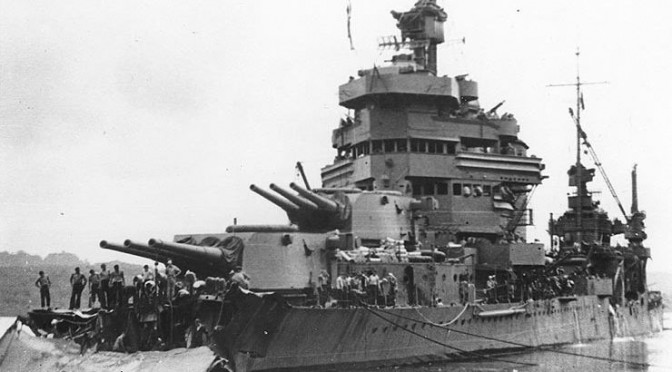
The same will be true in the US Navy fleet of the 2020s, where Arleigh Burke destroyers will be much more capable of taking a hit than Littoral Combat Ships.  No modern ship, and especially no small ship, will survive as an effective combatant in the event of a major damaging event, like a torpedo, mine, or cruise missile attack.  Even though the ship might not be a total loss, it will be out of action for significant period of time after that event.  Look no further than USS Chancellorsville if you believe otherwise.

Ken Adams is a former US Navy Surface Warfare Officer with experience in amphibious ships and staffs, a battleship tour in USS Iowa, and as a tactics instructor for the Royal Saudi Navy. He is currently an operations analyst for a large defense contractor, for whom he is not authorized to speak.
Members’ Roundup Part 12

Welcome back to another edition of the Member roundup, where we provide the wider community an opportunity to examine some of the works produced by CIMSECians that have featured elsewhere. Being a professional also involves in discussing the future of one’s chosen field. Topics that feature regularly in this series include analysis of geopolitical trends and  military technology. This week, however, we have several contributions that discuss issues faced when writing about the future of one’s own organization or service.

CIMSECians Roger Misso and Chris O’Keefe write, in Proceedings, about the challenges for junior officers to share their thoughts in writing about the future of the Naval service. It is clear that this is not a new problem and the authors refer to historical examples of how their predecessors handled the problem. Misso and Keefe present their views on the issue but argue, most importantly, that all levels should be able to write on all topics, whether it be the mundane or the controversial, without fear of it affecting their careers.

For further information on this topic I recommend starting with James Fallows’ recent roundup of articles by military reformers. Misso and O’Keefe’s article is one of those mentioned in the post, as well as several other CIMSECians  You can access the article over at The Atlantic. Additionally, our very own Matthew Hipple, provides his own riposte to Fallows’ writings on the matter. Without wallowing in the problems, he provides practical suggestions for any JO who believes they have something constructive to say. You can access Matthew’s response here.

James Stavridis, of the Fletcher School, writes about the geopolitical changes occurring in Europe and the need for the United States not to neglect that part of the world. The economic situation, declining military power in European States, and a resurgence of Russia are all areas of concerns when viewed individually. As a whole, however, they all present strategic challenges for the United States if it fails to assist its European friends. You can access his article here.

A hot topic amongst analysts and students of strategic studies is the state of the U.S. nuclear arsenal. It is becoming increasingly expensive to sustain the ageing warheads and the delivery platforms and experts are debating the best way forward. Over at The Daily Beast Dave Majumdar reports that the Pentagon will spend upwards of $300 billion to update current nuclear capability, as well as acquiring new delivery methods and even a new ICBM. You can access his article here.

Chuck Hill returns this week with several updates and you can access them over on Chuck’s blog. One of his latest posts provides a look into Small Warship Survivability, and examines historical examples of surface combatant losses. This article is a must-read for anyone interested in the LCS survivability debate.

For a wider reading list this weekend, we suggest checking out Natalie Sambhi’s roundup on The Strategist blog. For those who are unfamiliar, it is Australian Strategic Policy Institute’s official blog. You can access Natalie’s posts here.

Finally, over at The National Interest Zachary Keck continues to push out update after update on all things military and foreign affairs. Articles include a possible submarine deal between India and Japan, and how low oil prices could make Russia more unpredictable. You can access all of his latest articles here.

At CIMSEC we encourage members to continue writing, either here on the NextWar blog or through other means. You can assist us by emailing your works to dmp@cimsec.org.

The Brazilian Navy: Green Water or Blue?

Although much attention has been directed toward the uncertain fate of the Mistral-class amphibious assault ships that were being built in Saint-Nazaire, France for export to Russia, there has been considerably less reporting on Brazil’s quiet naval expansion. The Brazilian Navy has frequently been dubbed a ‘green-water’ force to distinguish it from conventional ‘blue-water’ or ‘brown-water’ navies. Whereas a blue-water navy is concerned with operations on the high seas and engaging in far-ranging expeditions, brown-water navies are geared toward patrolling the shallow waters of the coastline or riverine warfare. Green-water navies, however, mix both capabilities, focusing mainly on securing a country’s littorals but also retaining the ability to venture out into the deep waters of the oceans.

For several decades, this green-water label has been accurate to the Brazilian Navy. Although possessing a vast array of inland patrol ships and river troop transports to exert sovereignty over Brazil’s many rivers and drainage basins, the Brazilian Navy also boasts the BNS Sao Paulo, a Clemenceau-class aircraft carrier purchased from France in 2000. But there has recently been a shift in Brazil’s maritime priorities, suggesting that it may soon be more accurate to regard the Brazilian Navy as a blue-water force with some lingering vestiges of brown-water capabilities. Begun under Luiz Inacio Lula da Silva, President of Brazil from 2003 until 2011, and intensified under the Dilma Rouseff’s current government, Brazil has been on a shopping spree for military hardware. Although this has included procuring 36 Gripen NG multirole fighter aircraft from Saab for use by the Brazilian Air Force, much of the recent contracts have pertained to the purchase of vessels intended to modernize the Brazilian Navy. Brazil’s five Type 209 diesel-electric attack submarines, acquired from Howaldtswerke-Deutsche Werft, will be joined by four Scorpène-class diesel-electric attack submarines to be built domestically with completion of the first vessel expected in 2017.

In March 2013, Brazil’s President Dilma Rousseff inaugurated a domestic shipyard at which Brazil’s first nuclear-powered submarine – the fittingly named BNS Alvaro Alberto – will be built with French support. Delivery of the completed vessel is not expected until 2025 but the success of the project would bring Brazil into a very small club of countries with operational nuclear-powered submarines: the United States, United Kingdom, France, Russia, India, and China.S34 Tikuna

The Barroso-class corvette commissioned in late 2008 also seems to have inspired a new series of ships for the Brazilian Navy. The domestic shipbuilder Arsenal de Marinha do Rio de Janeiro has been contracted to build four vessels based on the design of the Barroso-class but with “stealth capabilities” and which will possess both anti-ship and anti-air armaments. Delivery of the first of these new stealth corvettes is expected in 2019 and as such many specific details about the design are currently unknown. Furthermore, delivery of two new Macaé-class offshore patrol vessels is expected in 2015, while an additional two will be delivered in 2016-2017, bringing Brazil’s fleet of these patrol vessels to seven in total.

But why is there this rapid buildup in maritime forces for Brazil? To some degree, these new procurement projects are intended to offset the Brazilian Navy’s diminished capabilities following the retirement of 21 vessels between 1996 and 2005. This would not explain the focus on vessels with longer-range expeditionary capabilities, though. Some observers may attribute the acquisition of ships with capabilities clearly not intended for the patrol of inland waterways, such as the new “stealth-capable” Barroso-class corvettes, to the threat posed by Guinea-Bissau’s instability. That Lusophone West African country, which has been dubbed a “narco-state”, has been a major hub in the international drug trade; Colombian cocaine often makes its way to Guinea-Bissau from the Brazilian coast, only to then be exported onward to Europe. But President José Mário Vaz, who was elected by a decisive margin to lead Guinea-Bissau in May 2014, has quickly moved to crackdown on corruption in the Bissau-Guinean military and seems set to make counter-trafficking a priority during his term in office. Even if Brazilian policymakers believe it may be necessary to exert a stronger presence in the South Atlantic to discourage narcotics trafficking, a nuclear-powered attack submarine is not at all the right tool for the task.

Rather, it seems most likely that there are two principal factors motivating Brazil’s naval procurement projects. With regard to BNS Alvaro Alberto and the potential acquisition of a second aircraft carrier, Brazil craves the prestige of at least appearing to be the leading maritime power in the Southern Hemisphere. Participation in major international maritime exercises, such as the IBSAMAR series conducted jointly with Indian and South African forces, are intended to promote a view of Brazil as a power that ought to be respected and consulted, particularly as Brazilian policymakers continue to pursue a permanent seat for their country on the United Nations Security Council. More importantly, however, the shipbuilding projects on which Brazil has embarked are intended to build up domestic industry and contribute to economic growth.

Brazil is already attracting considerable interest as a shipbuilder. In September 2014, the Angolan Navy placed an order for seven Macaé-class offshore patrol vessels, with four to be built at Brazilian shipyards. Over the past several years, Brazil has exported various vessels and equipment for use by the Namibian Navy. Equatorial Guinea has expressed its intent to acquire a Barroso-class corvette from Brazil for counter-piracy purposes. The A-29 Super Tucano, a turboprop aircraft intended for close air support and aerial reconnaissance, is produced by Brazilian manufacturer Embraer and has been exported for use in roughly a dozen national air forces. If Brazilian industry is successful in producing submarines and stealth corvettes, demand for Brazilian military hardware will only grow, generating impressive revenue and creating many jobs.

 Of concern, however, are Brazil’s long-term intentions with regard to the construction of BNS Alvaro Alberto. There are few navies in the world with the infrastructure and know-how necessary to successfully operate one or more aircraft carriers; after all, the club of those countries with aircraft carriers in service is limited to just nine. But the export of nuclear-powered attack submarines would undermine the international community’s non-proliferation treaty and could potentially harm international peace and stability. The Islamic Republic of Iran has been rumored to occasionally entertain plans to obtain a nuclear-powered submarine, while the Democratic People’s Republic of Korea has allegedly expressed a private interest in obtaining Soviet-era nuclear-powered submarines from the Russian Federation. This is not to say that Brazilian authorities would consider exporting such vessels to Iran, North Korea or other such regimes, but there is certainly a market for future submarines modelled on BNS Alvaro Alberto. It will be necessary to keep a very close eye on the Brazilian shipbuilding and nuclear industries in the 2030s, especially as domestic demand for this class of vessel is satisfied. 

To obtain a deeper understanding of Brazil’s long-term strategic goals and to perhaps exert some degree of influence over Brazilian arms exports, it would be advisable for NATO to seek a partnership with the country. In August 2013, a partnership was established between NATO and Colombia, demonstrating that the Alliance certainly is interested in security affairs in the South Atlantic. Brazil could also contribute much know-how to NATO members, especially as the Alliance attempts to find its place post-Afghanistan. Clearly, there is much work to be done in the area of trust-building if such a partnership is to be found prior to the expected completion of BNS Alvaro Alberto: as Colombian officials visited with NATO counterparts to discuss the partnership, Brazilian policymakers were among those Latin American figures who condemned Colombia for the initiative.

Partnering with Brazil will be very challenging diplomatically, but it is an effort that must be made. This rising power will soon find itself with a blue-water navy and, as such, military vessels flying the Brazilian ensign will become an increasingly frequent sight in the South Atlantic.

Paul Pryce is a Junior Research Fellow at the Atlantic Council of Canada. This article can be found in its original form at Offiziere.ch. 

Violent Political Decay in Yemen: An Iranian Challenge of Saudi Regional Superiority

20120827-dust-fullFacilitating the passage of 11% of the world’s petroleum annually, the juncture of the Gulf of Aden and the Red Sea manifests compelling geopolitical and strategic value for global economies. With an increased naval presence in the Red Sea, the Saudi Royal family has sought to develop a backdoor for crude oil export thus minimizing Iran’s ability to manipulate oil markets with threatening rhetoric in blocking the Strait of Hormuz.

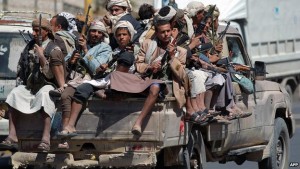
This week’s continuing revolution in Yemen represents a significant change to the political and economic landscape, which dictates the power-share and balance dynamics once centered exclusively in the Persian Gulf. Launching an offensive in February of 2014, the Houthis, a Shi’a tribe from the northwest border-region of Yemen, made significant gains by September of 2014 in securing key terrain just 10-miles north of Yemen’s capital, the El Rahaba International Airport. With the overrunning of the Yemeni presidential compound in January 2015 followed by the resignation of President Hadi, a move formally rejected by the Yemeni parliament, the country has experienced severe political decay.

In the wake of the Houthis’ offense, the Yemeni political insurgent faction known as the Southern Separatist Movement, or simply al-Harik, has also declared independence inciting violence in the streets of their self-declared capital in the city of Aden. With various factions vying for sovereignty in Yemen, questions arise regarding who stands to benefit from Yemen’s dissent into chaos.

The collapse of the Yemeni government will significantly destabilize an already volatile region. With the introduction of a Shi’a confederation in Sana’a, and al-Harik declaring independence in Aden, Saudi Arabia will be forced to address an increase of Yemeni refugees fleeing an impending ethnic conflict. Moreover, instability on Saudi Arabia’s southern border comes at a time when an ambiguous low-intensity conflict rages on their northern border between adoles_77728280_77725922cent Iraqi forces and fighters of the well-funded Islamic State of Iraq and Syria (ISIS). A cause for concern, the rapidly degrading situation along Saudi’s Iraqi border has resulted in the refunding of a once dormant public service project erecting a fence to prohibit the flood of refugees.

In the wake of Daash leader Abu Bakr al-Baghdadi’s recent calls to attack targets inside of Saudi Arabia, the challenge to protect and defend the Kingdom, and to preserve Mecca as a religious icon for Muslims worldwide, has expounded tenfold. Requiring Saudi officials to react simultaneously to threats against both internal and external state formations, Iran single handily stands to gain from this test of Saudi’s regional superiority.


The timing of the Houthi rebellion in Yemen has been impeccable, consummating at the moment of King Abdullah bin Abdulaziz’s death in Jeddah, amidst struggling Saudi economic markets leaving the Kingdom reeling under the pressure of state guaranteed oil subsidies, and at a critical time of escalated political violence in Iraq. Recent events in Iraq and Yemen challenging Saudi Arabia’s ability to guarantee regional stability, appeal to a Persian Gulf regional security complex argument lending significant motivation and intent to subversive Iranian security policy designed to rebuke Saudi regional superiority. Inspiring multiple security dilemmas simultaneously, a subversive Iranian offensive waged by proxy would look suspiciously similar to the current state of affairs.

Though the timing and efficiency of the Houthis’ coup indicates a calculated and decisive military action, without empirical evidence connecting the Ayatollah to destabilizing trends in Yemen, Iranian stoking of regional instability is circumstantial at best. It appears however, that after near-term security challenges are addressed, Saudi Arabia will have to negotiate with a budding Shi’a presence strategically located at the adjoining fulcrum of the Red Sea and the Gulf of Aden. With the possibility of an Iranian backed Shi’a government in control of the southern sea-lanes allowing passage to 21,000 seafaring vessels annually, this would imply Persian influence over Saudi’s backdoor to global economic prosperity in the coming decade.


Captain William Allen is a US Marine currently serving as company commander of A Co. 4th Combat Engineer Battalion, 4th Marine Division. Graduating from Columbia University’s Middle East Institute with a masters in Islamic Studies, Captain Allen is a Fellow with the Truman National Security Project and is currently serving as the Joseph S. Nye National Security Intern at the Center for a New American Security with their Technology and National Security Program. Captain Allen’s writings can be found in the Small Wars Journal and the International Relations and Security Network at ETH Zurich. The views expressed in his writing are his alone.