Category Archives: Asia-Pacific

Analysis relating to USPACOM.

Vietnam Is Changing… And So Is the Balance of Power in Asia

This article originally featured at The Diplomat, and was republished with permission. The following is an excerpt, read the article in its original form here

By Carl Thayer

On September 15, Vietnam’s political log jam suddenly burst with the simultaneous launch of a website dedicated to preparations for the twelfth national party congress and the release of the draft Political Report and Socio-Economic Plan for 2016-2020.

The Vietnamese public has been given until the end of October to send in comments on the draft policy documents.

Key policy documents are usually released well in advance of a national congress. For example, the draft Political Report and Five-Year Socio-Economic Plan were released nine months before the eleventh national party congress in January 2011. This time only four months remain to complete preparations for the twelfth congress scheduled for January 2016.

Prior to the launch of the website and release of key policy documents, Vietnam’s preparations for the twelfth party congress had been particularly low key. Although leadership selection was discussed at the eleventh plenary meeting of the party Central Committee that met in May no announcements were made.

Observers in Hanoi report that the Central Committee may reconvene in October to resolve the impasse over leadership with a further session planned for November if consensus cannot be reached.

Media reports suggest there are two main contenders for the post of party Secretary General – Prime Minister Nguyen Tan Dung and his long-term rival President Truong Tan Sang. Both are southerners. The post of party leader has traditionally gone to a northerner.

If the party Central Committee cannot reach consensus there are two likely possibilities. The first possibility is that both candidates will stand down and retire from politics and the next party leader will be chosen from among the members of the current Politburo who are eligible for election at the congress.

The second possibility could see the incumbent party leader, Nguyen Phu Trong, reappointed on the understanding that he would make way for another leader before his five-year term in office expired. This solution would mirror the decision by the eighth party congress in 1996 to re-appoint Do Muoi as party Secretary General on the understanding he would step down before mid-term. Do Muoi was replaced by Le Kha Phieu in late 1997.

When Vietnam enters its political season in advance of a national party congress current events are subject to intense scrutiny by political observers to discern which way the winds are blowing. This year is no exception.

Read the rest here. 

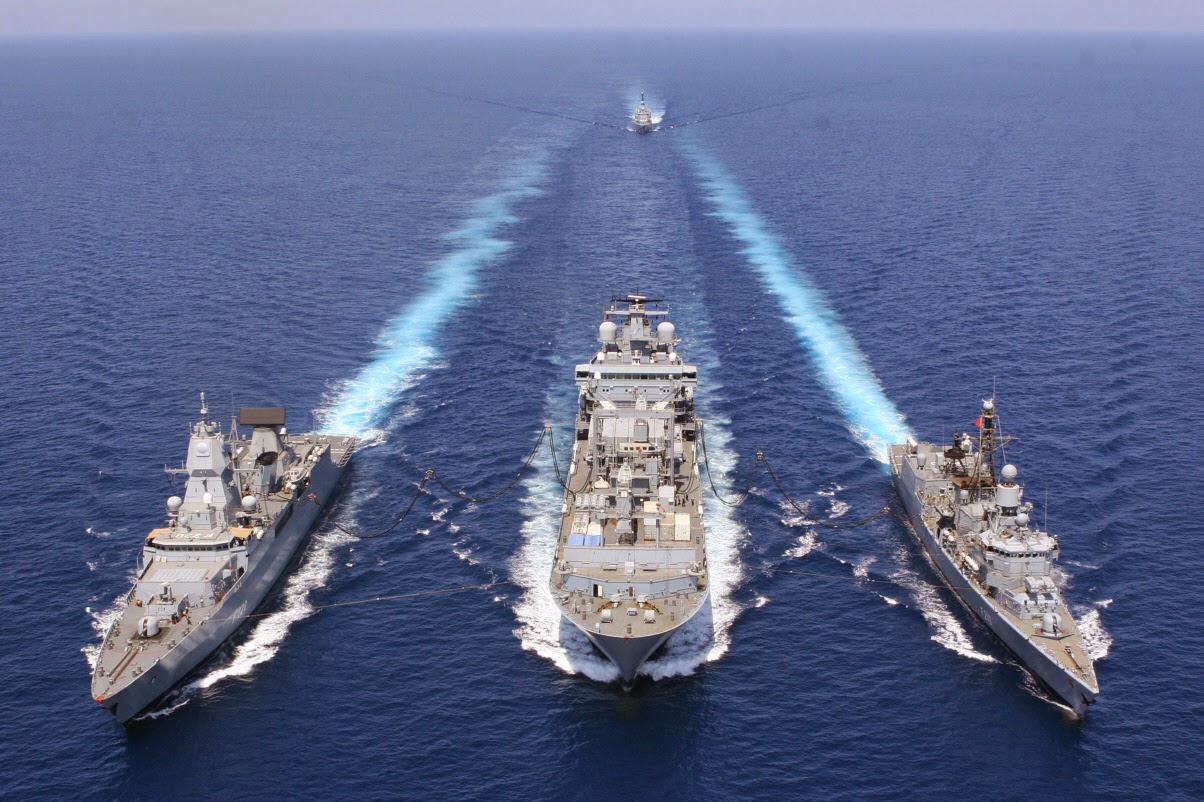
German flotilla

A Few Notes on FONOPS In the South China Sea

By Scott Cheney-Peters


After months of speculation and signaling the U.S. has undertaken Freedom of Navigation Operations (FONOPS) to protest the claimed rights of Chinese-occupied “artificial islands” in the South China Sea at Subi and Mischief Reef by sending the USS Lassen within 12nm of the reefs. Several of our colleagues and members have written recently about the context, the legal aspects, the recent history, and response to the FONOPS. I recommend reading them all but wanted to offer a few additional thoughts below:

File photo of the US Navy guided-missile destroyer USS Lassen underway in the Pacific OceanThis was a necessary move to both reassure America’s allies and partners in the region of America’s commitment and to uphold common sense interpretations of the UN Convention on the Law of the Sea (UNCLOS). What many pieces of analysis gloss over is that even though UNCLOS is pretty clear that the reclamation doesn’t turn reefs into islands or give them the rights of islands, interpretations of international law – if contested – must be backed up by words and actions. Otherwise the counter-vailing view gains acceptance as customary international law.

The reported several-years’ pause in conducting these types of freedom of navigation operations (FONOPS) in the South China Sea may have been done to try and convince the Chinese to stand-down from their position. Not being privy to the internal administration deliberations I’m not sure if there was a good reason why it took so long to change course and resume FONOPS, but the delay created the risk that the resumption would create a major incident. This is why shortly before it occurred it appeared that the US was trying to prevent surprise from contributing to the risk of an incident by not only warning of the pending FONOPS but very specifically identifying which ship would conduct it and where.

While necessary for the reasons stated above, these FONOPS are unlikely to change the situation unless the Chinese overreact, something I don’t expect to happen. This doesn’t mean China will do nothing, however, and their response may consist of one or more approaches. One thing Chinese officials have long hinted at before the FONOPS occurred was that they would be used as justification for pre-planned actions, such as declaring an ADIZ over the South China Sea or the “militarization” of the reclaimed islands. Another possible action is mirroring the supposed provocation of the American FONOPS by conducting something perceived by the Chinese to be similar – such as additional transits near Alaska. Direct responses to further FONOPS will likely include shadowing of US naval vessels by Chinese naval vessels, as occurred with the LASSEN, and could include electronic or physical interference, as indicated by Chinese media – both much more dangerous and likely to escalate the situation.

Lastly, U.S. officials reportedly indicate that additional FONOPS will be conducted to protest Vietnamese and Philippines excessive claims in the coming weeks. These are not new protests, nor are FON activities in various forms limited to the region but in fact are used to protest claimed excessive maritime rights around the world, from Ecuador to India.

Scott Cheney-Peters is a surface warfare officer in the U.S. Navy Reserve and founder and Chairman of the Center for International Maritime Security (CIMSEC). He is a graduate of Georgetown University and the U.S. Naval War College, a member of the Truman National Security Project, and a CNAS Next-Generation National Security Fellow.

President McCormack and the Vietnam War

Alternate History Topic Week

By Ben Lamont

President John W. McCormack assumed office on November 23, 1963, less than twenty-four hours after the assassination of John F. Kennedy, following the accidental killing of Lyndon B. Johnson by a Secret Service agent. Born into a Boston family of Irish immigrants and a lawyer by training, McCormack served in the U.S. Army during the final years of World War One and began his long political career shortly after returning. He was first elected to the U.S. House of Representatives in 1928.

McCormack was a staunch democrat and supporter of the New Deal. In the lead up to World War Two, he rose to prominence as chair of the Special Committee on Un-American Activities, which sought  to unmask U.S. citizens with Nazi or communist ties. McCormack also played a key role in the passage, in the face of isolationist resistance, of the Selective Training and Service Act of 1940, which initiated the first peacetime conscription in U.S. history.

Speaker of the House John W. McCormack (D-Massachusettes) (standing), addresses those attending a luncheon at the US Capitol honoring top Department of Defense executives. Left to right are Congressman George H. Mahon (D-Texas), committee chairman of the US House of Representatives Appropriations Committee; General (GEN) Earle G. Wheeler, Chairman, US Army Joint Chiefs of Staff; Secretary of Defense Robert S. McNamara and Congressman McCormack.

Despite having served in the House of Representatives since 1928, McCormack came into the Oval Office with relatively little foreign policy expertise. As a result, McCormack was initially deferential to the stable of charismatic foreign policy advisors he inherited from President Kennedy: Secretary of State Dean Rusk, Secretary of Defense William McNamara, CIA Director John McCone, National Security Advisor McGeorge Bundy, and Chairman of the Joint Chiefs of Staff General Maxwell Taylor.

While managing the ongoing strategic competition with the Soviet Union always loomed, during his time in office McCormack’s foreign policy agenda was dominated by the war in Vietnam, which was at a crossroads when he arrived. Based on the advice of Bundy and others, McCormack authorized the deployment of hundreds more U.S. military advisers during the first few months of his presidency.

In the midst of the 1964 election cycle (McCormack won the Democratic primary virtually unopposed), the Gulf of Tonkin incident made Vietnam an election issue. McCormack sought and won the passage of the Gulf of Tonkin Resolution in part to project an image of strength in the face of accusations by his rival in the general election, Barry Goldwater, that he wasn’t doing enough to roll back communist expansion. The resolution granted McCormack greater authority over how to use U.S. military force, which he used to deepen U.S. engagement in Vietnam over the following year. McCormack won the 1964 presidential election against Goldwater easily.

Over the next two years however, McCormack grew increasingly uncomfortable with U.S. involvement in Vietnam. A veteran and staunch Catholic, McCormack wrote to the widows and families of hundreds of service members who were killed in Vietnam over the course of his presidency. These interactions had a profound effect on McCormack, and his willingness to commit U.S. soldiers to the conflict began to erode in the winter of 1965-66, as U.S. casualties mounted.

U.S. troop levels in Vietnam reached a peak of 200,000 in the summer of 1966, which McCormack reduced to 40,000 by the spring of 1967. In his public speeches, McCormack cited his concern for veterans and his faith as the reasons behind his decision to disengage from Vietnam. McCormack was particularly affected by the activist Julia Moore, who brought attention how after the Battle of Ia Drang, widows were notified of their husbands’ deaths via telegrams delivered by cab drivers.

In late January 1968, around the time of the Tet holiday, North Vietnamese Army and Viet Cong forces launched major attacks against the weakened U.S. positions that remained in Vietnam. Around three thousand Marines stationed at Khe Sanh Combat Base, close to the DMZ with North Vietnam, came under siege and had to be airlifted out under intense enemy fire. U.S. and South Vietnamese Army forces fell back to the perimeter of the Capital Military District around Saigon.

Although the U.S. government sought to portray the agreements between the United States and North Vietnam that McCormack oversaw as ceasefires, they were widely viewed as articles of surrender, and allowed U.S. forces to retreat from South Vietnam relatively peacefully in the latter half of 1968.

McCormack took massive criticism for his decisions from foreign policy hawks who believed that he had capitulated to the Soviet Union and communism. During the 1968 presidential race, McCormack’s opponent Richard Nixon hammered McCormack on the issue of Vietnam. While Nixon publicly championed the idea of “peace with honor”, The New York Times reported that Nixon called McCormack a “traitor” in a private speech to Republican donors a few months before the election.

After winning the 1968 election, President Nixon appointed a special task force to investigate the reasons behind America’s defeat in Vietnam, which became known as the Gates Commission after its chairman, former Secretary of Defense Thomas Gates. The Gates Commission was highly critical of President McCormack’s decision-making during the war and recommended that the responsibility of commander-in-chief should be shared by the president and the Joint Chiefs of Staff, rather than be the sole prerogative of the president. However the recommendations never materialized because of concerns about their constitutional legality.

After leaving the White House, McCormack became a fellow at Boston College, where he wrote a memoir of his long career entitled “Leadership in Turmoil”. He died in 1975.

Ben Lamont works in the Asia program at The German Marshall Fund of the United States.