Category Archives: Capability Analysis

Analyzing Specific Naval and Maritime Platforms

The Network as the Capital Ship

Future Capital Ship Topic Week

By Robert C. Rubel

Introduction

From the galleasses at the Battle of Lepanto to the aircraft carriers of today, the capital ship has been that ship type that is capable of defeating all other types. That is the general and simplistic definition of the term, but to speculate on the future capital ship, we must understand the underlying characteristics of a capital ship and its role in fleet architecture and design. We will start with the ship itself and then move outward to its context and implications for maritime strategy.

The Core of the Fleet

The adjective “capital” is used because the ships to which it has applied have been the biggest and most expensive of the naval vessels of their day. This was the case due to the armament they carried; the most and biggest guns available and later the most and most capable aircraft. Whether smooth bore cannon versus rams, number of guns available for a broadside or the caliber of rifled guns, the name of the game has been weight of fire and hitting at distance. The protection of capital ships required significant amounts of investment, first in armor, then in escorts. The expense and the difficulty of building capital ships meant that they were the least numerous ship type. However, their number was important in determining overall naval power. Generally, the capital ship inventory of the most powerful navies was in the dozens.

The physical characteristics just discussed had a powerful influence on fleet design and by extension on maritime strategy. The capital ship was the tool by which a nation could contend for command of the sea, either globally or regionally. Thus a nation’s fleet was designed around the capital ship in various ways.

First, they had to be supported by a variety of lesser ship types that performed functions such as scouting and protection. In this sense the capital ship was the pivot of fleet design. Given the existence of other, potentially hostile capital ship fleets, distribution of capital ships was a key issue. If there was a sea invasion threat to the nation, a “home fleet” of capital ships was necessary. On the other hand, depending on the threats to a nation’s maritime commerce, there was frequently a need to deploy capital ships, individually or in small squadrons, to counter or eliminate these threats, but that raised the danger that they would be caught by a larger force and destroyed. The British concept of the battle cruiser, a heavily armed but lightly armored and fast ship, was intended to address this dilemma. As additional threats such as the torpedo boat, submarine, and aircraft emerged, additional protective measures had to be taken such as escorts and design changes including torpedo bulges and dense anti-aircraft secondary batteries.

The capital ship has been the ultimate arbiter of command of the sea, both in war and peace. Command of the sea can be most usefully thought of as the balance of strength among contending navies. The navy with command of the sea is free to disperse its forces to exercise control in various localities and more broadly, has various strategic options open to it that are closed to the navy and nation that has lost command. The expense of capital ships and their consequent relative scarcity, the time required to replace losses and their intimate connection with command of the sea, coupled with the strategic importance of such command, led national leaders and admirals to be cautious about committing their capital ship fleets to the test of battle. Even a small perceived imbalance of power has caused admirals to try and avoid pitched battle; like going “all in” in Poker, one must be very confident of one’s hand.1 Thus decisive naval battles have been rare and most of those that have occurred involved the weaker force being surprised, cornered or forced into battle by their national leader.

Since the age of sail, the capital ship has been the unit of measure for naval power. When a nation seeks great power status, it starts building a powerful navy, this being true even of historically continental powers such as Germany, the Soviet Union, and now China. This has produced naval arms races and wars. The Washington Naval Treaty of 1922 was an attempt to suppress naval arms races by limiting the total tonnage of warships and imposing a hiatus on building capital ships among the U.S., Great Britain, France, Italy, and Japan.
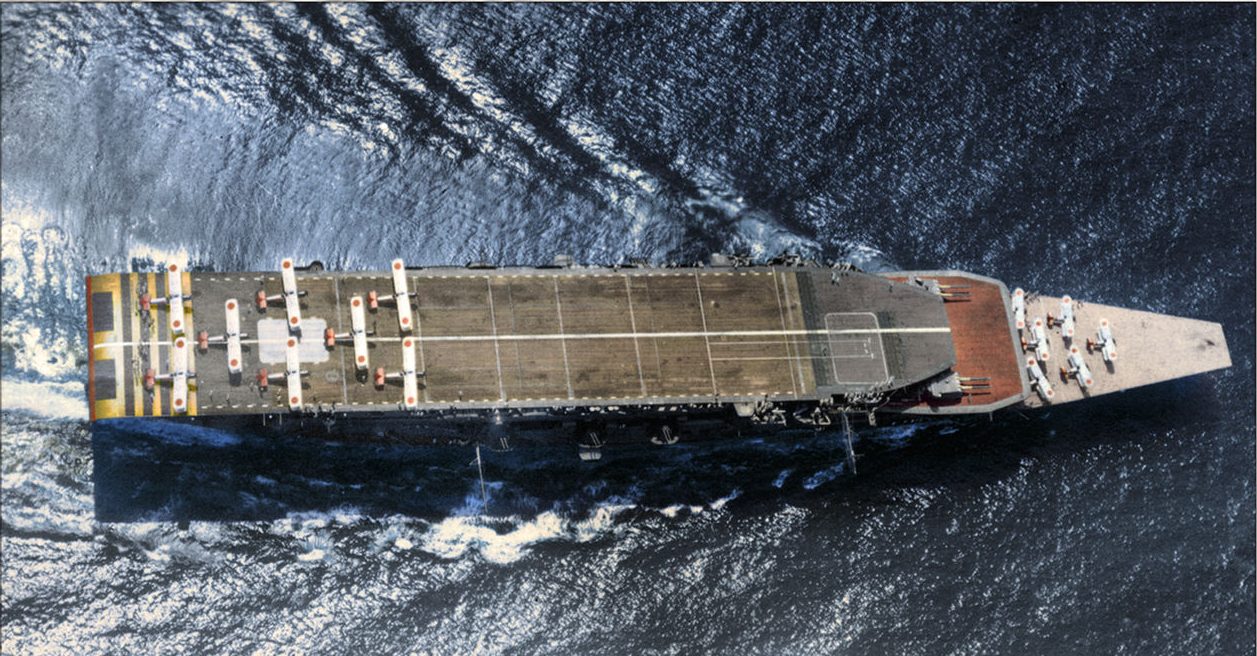
Imperial Japanese Navy aircraft carrier Kaga (Colorized by Lootoko, Jr.)

After World War II, the U.S. Navy found itself with near absolute global command of the sea but retained a significant number of its capital ships for the purpose of exercising command of the sea in peacetime. Such exercise consisted of deploying carrier battle groups around the periphery of Eurasia in order to enforce the international order the U.S. desired. In this case the necessary number of capital ships became a function of the combination of deployment demands, maintenance requirements, training, and personnel tempo. 

Capital Capabilities

The large deck aircraft carrier has been the capital ship since the start of World War II. Its hold on this status is based on the effectiveness and utility of its embarked tactical aircraft. The question is whether it will retain that status or be replaced by something else. We will take on this question based on the characteristics and factors that have been discussed.

Let’s start with weapons. The advent of micro circuitry, new forms of sensing and artificial intelligence have transformed missiles, in all their forms, into perhaps the dominant and decisive type of weapon at sea, both for offense and defense. Most ship types carry them and countries such as China have developed land-based ballistic missiles of very long range that can seek ships. Advanced surface-to-air missile systems now constitute a lethal threat to any aircraft except  perhaps those possessing the most advanced stealth technology. Modern anti-ship missiles are increasingly sophisticated and hard to defend against.

All of this has difficult if not dire implications for the continued status of the aircraft carrier as capital ship. Certainly, additional measures can be taken to enhance the defense of both tactical aircraft and the carrier, but these will add to the expense of the total system to the point that it could outweigh the value of the offensive capability it possesses. At that point, according to George Friedman, it becomes “senile.”2 If indeed the missile becomes the key weapon, many different ship types can carry them, for both war at sea and shore bombardment. The question then becomes whether missiles are best concentrated in a large “arsenal ship” or distributed out among a lot of different ships. If concentrated in a few large hulls, it is possible that these “missile battleships” (BBM?) would be the new capital ship. Such concentration would certainly make it easier to coordinate missile salvos.

However, looking beyond the ship itself reveals some factors that militate against concentration. The first is the inherent risk in concentrating offensive firepower in a single ship. Vice Admiral Arthur Cebrowski articulated the concept of tactical stability which states that as we pack more offensive capability into a ship, there is a point at which its defensive capability ceases to increase proportionately. At that point, escorts are needed.3 Moreover, if a task force has a key capability installed on one or a few ships, their loss would neutralize the whole force, and thus it is tactically vulnerable and subject to catastrophic failure rather than graceful degradation. For this reason, the Navy is developing the concept of distributed lethality: mounting offensive missiles on as many ships as possible in order to complicate enemy targeting and reducing the risk of catastrophic degradation to the force as a whole. 

Another issue is the distribution dilemma. For today’s Navy, it takes two forms: global and regional. Globally, having only ten available aircraft carriers limits the presence the U.S. can generate in multiple regions simultaneously. Moreover, strategic adjustments to deployment patterns must be made on the basis of carrier groups, which is a rather coarse methodology, sort of like trying to draw a precise, detailed picture with a large-tipped magic marker. Regionally, deploying carrier groups must “starburst” into individually operating ships to accommodate all the Geographic Combatant Commander’s engagement commitments. This prevents routine training to maintain combat readiness skills and of course opens individual ships, especially the carrier, to surprise attack. There is also the risk involved in operating carriers in the threatened littoral. This risk is manifest not only at the tactical level in which attacks are more likely to be successful, but in the strategic risk of losing a precious capital ship. Again, the emerging concept of distributed lethality promises a way to avoid or at least moderate the dilemmas and risks.4

The emergence of the missile as the “weapon of decision” both at sea and ashore has a couple major implications. First, since missiles can be mounted on almost anything, the relationship between ship size and characteristics and weapon power is broken. It would seem to make little difference if a salvo of missiles is launched from a single ship or many. Second, the distribution of offensive power among a lot of different ships promises to reduce both operational and strategic risk in various ways and eases the distribution dilemmas.5 This would seem to spell doom to the capital ship concept, and in this writer’s opinion, it does, at least in the conventional sense of a single ship type.

There is, however, another way to look at the matter. The key capability of a capital ship has been to deliver a superior weight of fire at a longer range than anything else. Certainly, our “BBM” would have plenty of missiles to fire, but that is not enough. Those missiles must be fed targeting information to be of any use. International law doesn’t permit firing missiles down a line of bearing and letting them open up their sensors at a certain point and hit the juiciest-looking contact. That makes them “indiscriminate” and therefore illegal. So, without targeting, the BBM or any missile ship intending to fire over the horizon, is useless.
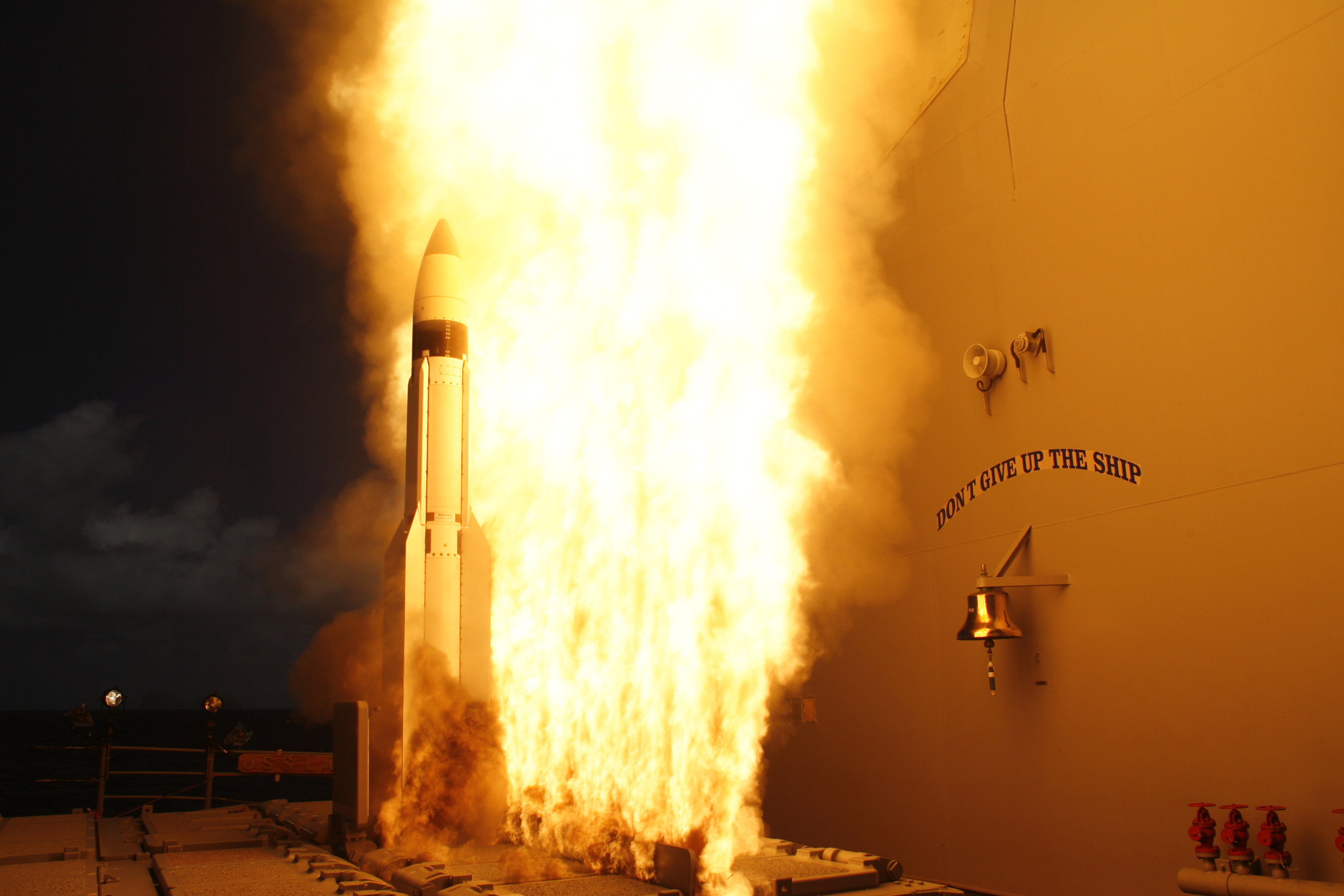
Guided missile cruiser USS Lake Erie (CG 70), during a joint Missile Defense Agency, U.S. Navy ballistic missile flight test.  (U.S. Navy photo)

Missiles are getting smarter, but there are a couple of reasons that it is tactically and operationally inadvisable to just light off a salvo with incomplete targeting and identification. First, if facing sophisticated defenses, the salvo must be timed precisely to saturate or at least confuse defenses so that at least some missiles get through. Second, missiles themselves will likely be at least somewhat scarce resources and so must be used efficiently. To achieve both objectives, an area-wide network of sensors, processing and decision making must exist beyond the hulls of the fleet. Granted, individual ships will have their own targeting capabilities, but these likely will not be sufficient for getting full kinetic range from their missiles.

Merging Capital Ship and Networked Force Concepts

Putting it all together, it seems useful to regard the fleet battle force network as the future equivalent of the capital ship. It and it alone allows the delivery of a useful weight of fire at long range in a naval fight. The application of the capital ship term may not be absolutely necessary, but it does confer some useful organizational effects.

First, if the network becomes the pivot of fleet design, certain new perspectives emerge. A key one is a fresh understanding of how existing and potential ship types relate to each other. There isn’t room in this essay to tease out all of these threads, but there are several insights that can be mentioned.

First, since the network consists of physical nodes and connectors (sensors, communication relays, etc.) it must receive physical as well as cyber protection. This is an important potential new role for aircraft carriers. Using a new air wing composition, the carriers can provide air superiority over distributed lethality forces and protect airborne assets like P-8s and Tritons, provide communications relay in the event that satellites are knocked out, and perhaps provide targeting services to missile ships. Thus, carriers would become escorts for the network. An advantage of this new function is that they would not have to operate as close in to the enemy shore as they would if their air wings constituted the key offensive strike capability and the risk to aircraft is reduced. This would allow carriers to remain viable and useful for the foreseeable future.

Second, since physical concentration would not be necessary for combat effectiveness, the risks associated with the regional distribution dilemma would be substantially avoided. Globally, since combat power would be distributed among a larger number of ships, a finer strategic distribution picture could be drawn, assuming that each forward fleet has its own battle force network established.

A network-enabled distributed lethality force would also mitigate the strategic risks associated with the traditional capital ship concept, especially in an era of renewed naval competition. A fight for command of the sea using such a force would not necessarily entail an “all in” decision, providing some strategic decision making flexibility for fleet commanders. Crises or perhaps limited conflicts that occur within the range arcs of major power denial systems could produce a risk dilemma for the U.S. if its offensive power remains concentrated in traditional capital ships. This is precisely what, for instance, the Chinese hope to create if conflict breaks out over any of their contested island claims or even war on the Korean Peninsula.

Missile technology appears to give a decisive edge to the tactical offensive at sea – the historically normal state of affairs. In the early years of the Pacific War, aircraft carriers dealt with this condition by attempting to strike effectively first, the paradigm being the Battle of Midway. However, if the enemy’s offensive power (missiles, say) is dispersed and hidden, then such a remedy is unavailable. Thus capital ships, in attempting to intervene in some littoral conflict would be excessively vulnerable; that is, their loss would be incommensurate with the strategic gains promised by the operation. Capital ships should only be risked when the potential strategic gain, usually command of the sea, is worth such risk. The point is that in the emerging world it may not be worthwhile to employ traditional capital ships even when regional command of the sea is at risk, as they could be lost without prospect of meaningful gain. Network-enabled flotillas would substantially obviate the dilemma.6

Without going into the murky world of cyber warfare, it is worthwhile to point out that the network has offensive and defensive potential beyond supporting missile warfare. Offensive cyber attacks can disrupt enemy command and control and targeting. It would make sense to have such capabilities inside the lifelines of a fleet battle force network in order to achieve effective coordination with missile and other forces. In terms of network design, we may yet be in the “pre-Dreadnought era” awaiting that breakthrough concept that makes all other approaches obsolete. Applying the capital ship framework to the battle force network may help us develop or at least recognize that breakthrough when it comes along.

There are other capital ship-related concepts such as staying powerthat could be useful when applied to the design and operation of battle force networks. Capital ships were built to take hits and still fight. Obviously no ship can endure multiple hits indefinitely, so the notion of staying power helped designers figure out how much protection was needed and make the necessary tradeoffs with armament, speed, sea keeping, magazine capacity, etc. How long the ship needed to hang in there was a valuable determination and so it might be with the network. Staying power might not be measured in minutes as it was with battleships, but some other criterion such as confidence or available bandwidth might be adopted.

Conclusion

This article does not advocate reducing the number of aircraft carriers or for constructing any new class of ship; the designation of the battle force network as the modern instantiation of the capital ship is a way of establishing a new logic that underpins fleet design. If fleet design is regarded as the prerequisite and precursor to fleet architecture, the logic of network-enabled missile warfare will clarify what kinds and numbers of ships the Navy should have.8 There are, of course, many other considerations and influences on fleet architecture, but achieving institutional focus via the network as capital ship concept would go a long way in helping the Navy rapidly enhance its offensive lethality and use its available resources efficiently.

Emerging technology and shifting geopolitical conditions are changing how naval warfare will be conducted in the future. The U.S. Navy must adapt or find itself strategically outmaneuvered. Effective adaptation will require more than updates to current ship types; it will require totally new approaches to fleet design. Instead of thinking outside the box, it might help the Navy to think outside the hull.9 Adopting the network-as-capital ship idea is one way to do that.

Professor Emeritus Rubel is retired but serves as an advisor to the CNO on fleet design and architecture. He spent thirty years on active duty as a light attack and strike fighter aviator. After leaving active duty he joined the faculty of the U.S. Naval War College, serving as Chairman of the Wargaming Department and later Dean of the Center for Naval Warfare Studies. In 2006 he designed and led the War College project to develop the concepts that resulted in the 2007 Cooperative Strategy for 21st Century Seapower. He has published over thirty articles and book chapters dealing with maritime strategy, operational art and naval aviation.

1. Alfred Thayer Mahan, Lessons of the War With Spain and Other Articles, (Boston, Little, Brown and Co., 1899), p. 31. Mahan discusses the effect of the loss of a single ship on the naval balance with Spain before the war.

2. George and Meredeth Friedman, The Future of War, (New York: St. Martin’s Griffin, 1996), p. 26 and Chapter 8, “The Aircraft Carrier as Midwife,” pp 180-204.

3. Wayne P. Hughes Jr, Fleet Tactics and Coastal Combat, (Annapolis, MD: US Naval Institute Press, 2000), pp. 286-291. Prof. Hughes influenced Admiral Cebrowski’s thinking, and the discussion of massing  for defense on the cited pages provides a more in-depth look at the logic of instability.

4. Robert C. Rubel, “Deconstructing Nimitz’s Principle of Calculated Risk,” Naval War College Review, Autumn 2015, (Newport, RI: Naval War College Press), pp. 31-45. The article contains a detailed discussion of the various risks and distribution dilemmas inherent to aircraft carriers using the Battle of Midway as a case study.

5. Hughes. Chapter 11, “Modern Tactics and Operations,” pp. 266-309. Prof. Hughes offers a detailed and mathematical discussion of modern missile combat through the lens of operations research.

6. Rubel, “Cede No Water: Naval Strategy, the Littorals and Flotillas,” Proceedings, September 2013, (Annapolis, MD: US Naval Institute), pp. 40-45.

7. Hughes, pp. 268-274.

8. Hughes, “The New Navy Fighting Machine: A Study of the Connections Between Contemporary Policy, Strategy, Sea Power, Naval Operations, and the Composition of the United States Fleet” (Monterey, CA: Naval Postgraduate School).

9. Rubel, “Think Outside the Hull,” Proceedings, June 2017, (Annapolis, MD: US Naval Institute), pp. 42-45.

Featured Image: USS Yorktown (CV-10) Crew stands at attention as the National Ensign is raised, during commissioning ceremonies at the Norfolk Navy Yard, Virginia, 15 April 1943. (Photographed by Lieutenant Charles Kerlee, USNR. Official U.S. Navy Photograph, now in the collections of the National Archives)
Future Capital Ship Topic Week Kicks Off on CIMSEC

By Dmitry Filipoff

This week CIMSEC will be featuring articles that discuss future capital ship concepts in response to a Call for Articles from the U.S. Naval War College’s Institute for Future Warfare StudiesBelow is a list of articles featuring during the topic week that will be updated as the topic week rolls out and as prospective authors finalize additional publications.

The Network as the Capital Ship by Robert Rubel
Swarming Sea Mines: Capital Capability? by Zachary Kallenborn
Return of the Sea Control Ship by Pete Pagano
An Information Dominance Carrier for Distributed War at Sea by Dmitry Filipoff
Capital Ship 2035: The Mission Command Vessel (MCV) by Harry Bennett
Pitfalls in New Capital Ship Creation by Steve Wills
Capital Uncertainty by J. Overton

Dmitry Filipoff is CIMSEC’s Director of Online Content. Contact him at Nextwar@cimsec.org.

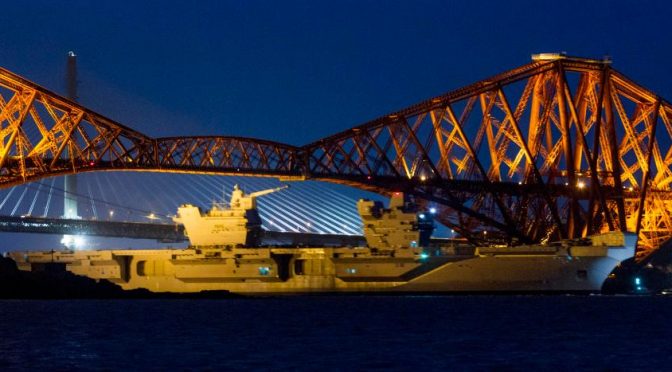
Featured Image: British aircraft carrier HMS Queen Elizabeth II sails under the Forth Bridge. (Katielee Arrowsmith/SWNS.com)

Narco Submarines: A Problem That Will Not Sink

The Southern Tide

Written by W. Alejandro Sanchez, The Southern Tide addresses maritime security issues throughout Latin America and the Caribbean. It discusses the challenges regional navies face including limited defense budgets, inter-state tensions, and transnational crimes. It also examines how these challenges influence current and future defense strategies, platform acquisitions, and relations with global powers.

“The security environment in Latin America and the Caribbean is characterized by complex, diverse, and non-traditional challenges to U.S. interests.” Admiral Kurt W. Tidd, Commander, U.S. Southern Command, before the 114th Congress Senate Armed Services Committee, 10 March 2016.

By W. Alejandro Sanchez

In the past year a number of narco submarines have been seized in several Latin American states. Narco submarines continue to be a problem as hemispheric security forces combat drug trafficking. Unfortunately for every narco sub that is seized, another is under construction. While recent successful operations should be applauded, combating narco subs needs a regional strategy of its own.

This commentary is a continuation of previous articles published by CIMSEC on this issue: “An Update on Narco Submarines and Maritime Law Enforcement Agencies’ Efforts to Thwart their Operational Effectiveness,” “Narco submarines: Drug Cartels’ Innovative Technology,” as well as the author’s “U.S. Southcom vs Caribbean Narco Pirates.” The incidents mentioned in this commentary will focus on events that have occurred over the past year. (The colloquial term “narco sub” will be utilized for these platforms, though we will later do a more thorough analysis of their characteristics.)

Recent Narco Sub Incidents

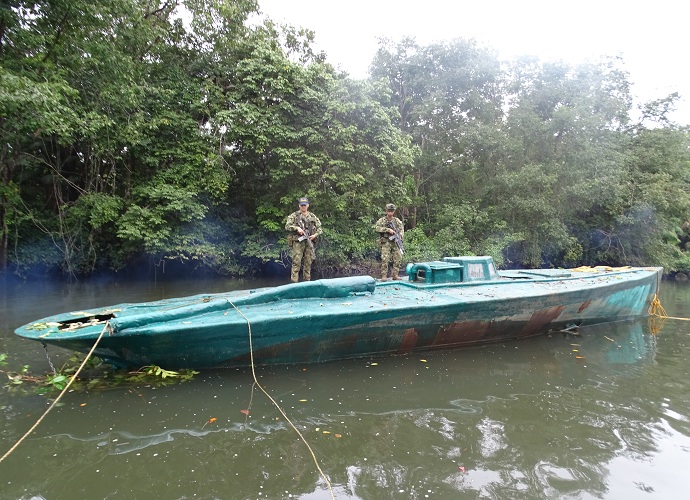
In recent months, several narco submarines have been seized in various Latin American states. For example, on 5 August, Ecuadoran marines located one in the Las Delicias area, close to the border with Colombia. For Colombia, a narco sub was seized in an operation by army and naval personnel in the San Juan and Baudó Rivers in the Choco department in late July. The platform, which was carrying approximately four tons of cocaine, was apparently manufactured by ELN rebels. The Colombian Navy explained that this was the first time a narco sub was operating in a river, and that it probably took some five to six months to be constructed. Not long after, in mid-August, the Colombian Navy located yet another narco sub, this time in the Nariño department and with the capacity to transport up to four tons of drugs. This one measured 14 meters, with a diesel motor and propellers, the Navy explained in a communiqué.

On the Ecuadorian Colombian border, the Colombian National Navy located and seized a submarine that had the capacity and autonomy to transport approximately five tons of cocaine. (Colombian National Navy photo)

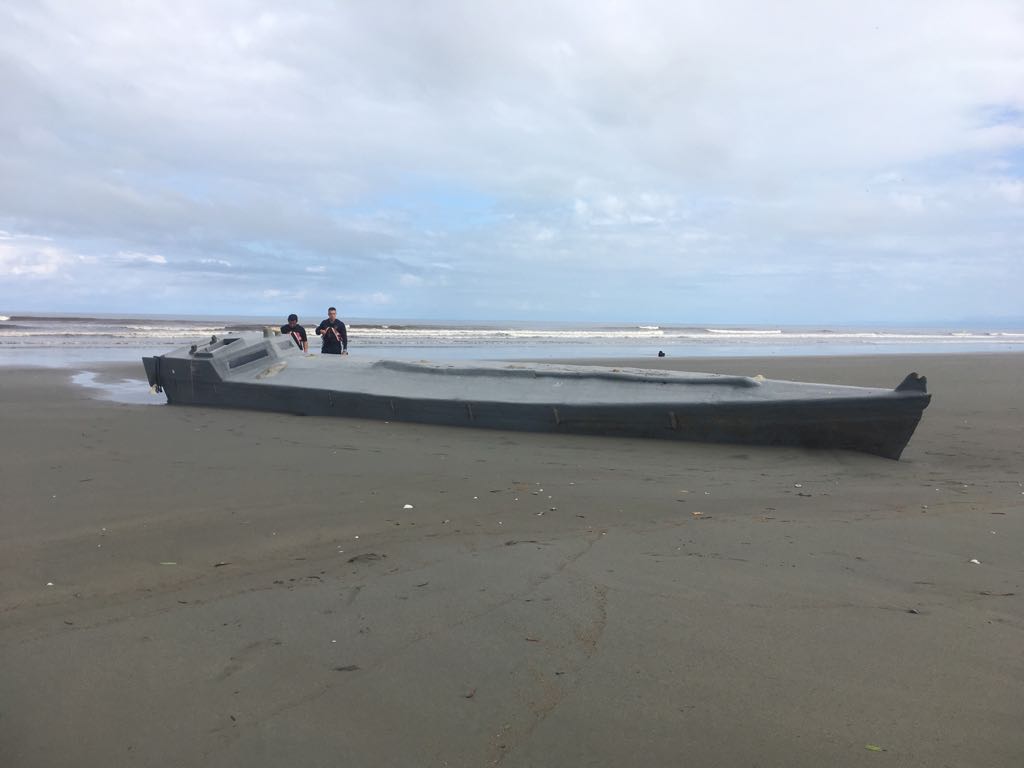
Narco subs have also been located in Central America. For example, a narco sub, reportedly 16 meters in length and capable of transporting up to five tons of drugs, was found in Guatemala in mid-April. Months later, in late July, the Costa Rican Coast Guard found a similar illegal platform on a beach. Local authorities believe that the vessel, with the capacity to transport up to four tons of drugs, had a motor problem and was discarded by the crew, until it washed ashore and got stuck in the sand.

Catching Them At Sea

The aforementioned examples highlight one fact. So far, the vast majority of narco-platforms are captured in the mainland (meaning either on dry land or “docked” in some body of water), either before they depart or upon arriving to their destination.

As far as the author has been able to find, in the past couple of years, there have only been a couple of narco subs intercepted in open waters. One was in July 2015, when during a “joint operation, the U.S. Navy, U.S. Coast Guard, and assets from the Customs and Border Protection Office of Air and Marine, intercepted a “narco submarine” off the coast of El Salvador,” Business Insider explains. The platform was carrying over 16,000 pounds of cocaine.

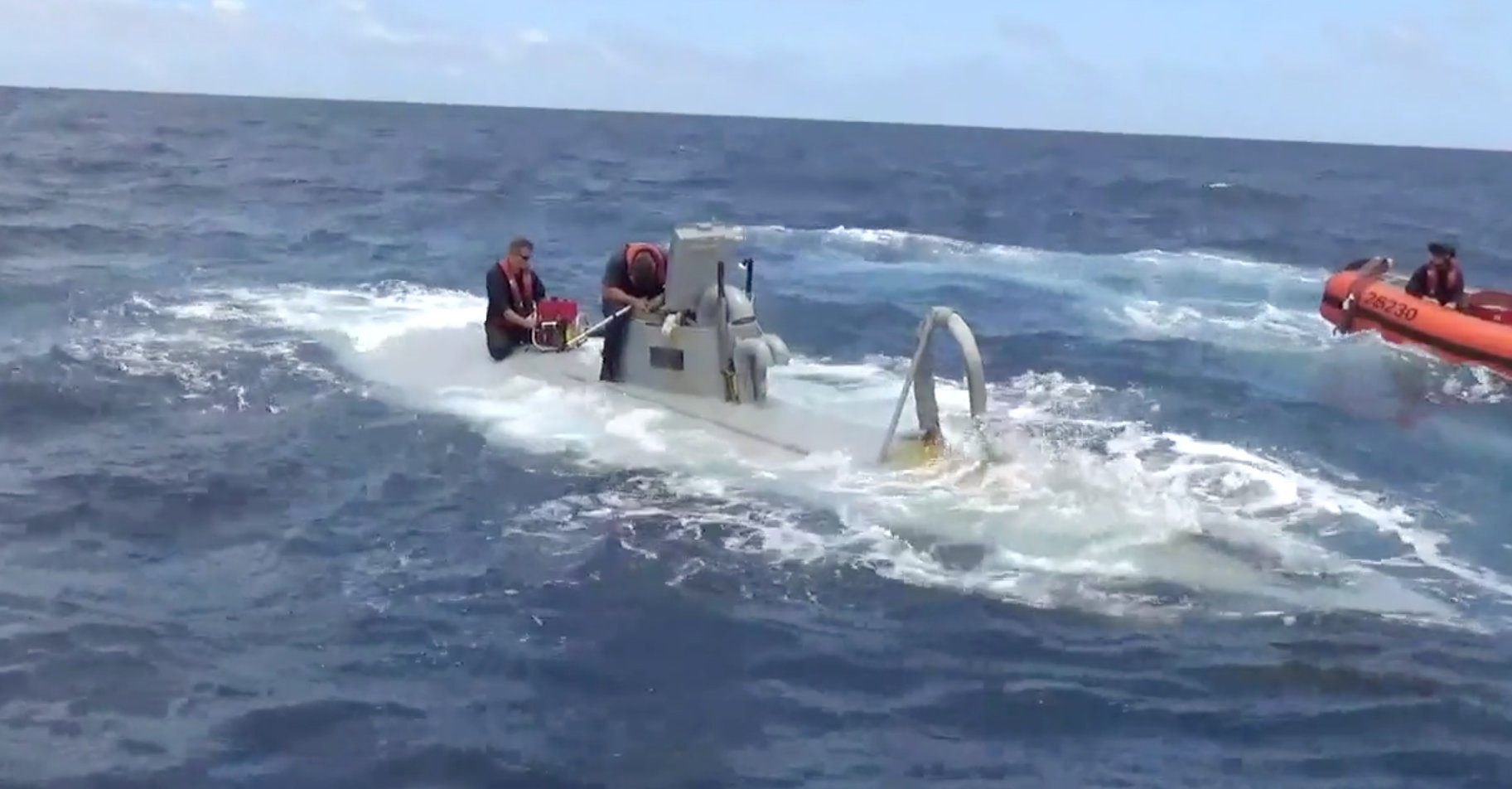
U.S. Coast Guardsmen board a narco sub as part of a drug seizure in September 2016. (U.S. Coast Guard photo)

More recently, in early September 2016, the U.S. Coast Guard Cutter Waesche intercepted a narco sub in the Pacific Ocean off the Central American coast. The Cutter reportedly launched two vessels and an armed helicopter in pursuit. U.S. personnel caught up with the sub, apprehended five suspects, and thwarted a scuttling attempt by pumping water out of the interior of the sub.” By preventing the sinking of the sub, the USCG seized more than 5,600 pounds of cocaine, with an estimated value of USD$73 million.

Who Finds The Narco Subs?

Nowadays, several Latin American and Caribbean navies and coast guards are undergoing a modernization process, which includes the acquisition of new platforms. For example, Colombia and Mexico are domestically manufacturing new fleets of patrol vessels. Christian Ehrlich, a director of intelligence for Riskop, a Mexican Strategic intelligence and risk control company explained to the author that  the Mexican Navy is in the process of adding Damen Sigma 10514 frigates to its fleet, “this will provide a decisive boost to Mexico’s Maritime Domain Awareness but unfortunately it will be some time before this system has an acceptable operational level” (construction for the first of the new frigates commenced in mid-August). Meanwhile The Bahamas is in the final stretch of its ambitious Sandy Bottom Project, via which it is obtaining a fleet of different patrol boats from Damen Group. Similarly, in late June IHS Jane’s reported that Louisiana-based shipbuilder Metal Shark and Damen will construct near coastal patrol vessels (NCPVs) for regional U.S. partners like “the Dominican Republic, El Salvador, Honduras, Costa Rica, Guatemala.” It is worth noting that Mr. Ehrlich, remarked how Mexico possesses aircraft like CASA CN—235 and Beechcraft King Air 350ER for ISR; Colombia also possesses similar assets.

Nevertheless, in spite of more modern navies and coast guards, locating narco subs at sea continues to be a problem. In an interview with the author, Gustavo Fallas, a journalist for the Costa Rican daily La Nacion, explained that “[Costa Rica] depends on the Americans to combat [narco submarines]. In 2006 we detained a submersible with three tons [of drugs] and it was thanks to an American frigate. In 2012 we chased another one in the Caribbean, and it was also after the Americans alerted us. For those reasons it is vital to have U.S. aid to locate these platforms.” Mr. Fallas added that Costa Rica must create a shield (meaning more vessels, radars, personnel) to prevent drug traffickers from using the country as a warehouse or transit path for drugs.

Unfortunately, Randy Pestana, a policy analyst at Florida International University’s Jack D. Gordon Institute for Public Policy, has a gloomy assessment about regional naval forces vis-à-vis narco subs. Mr. Pestana explained to the author how “relying on partner nations to stop, slow, or detain these shipments is difficult in itself as they do not have the necessary tools to do so unless provided by the U.S.” Of a similar opinion is Mr. Ehrlich, who stated to the author that “there isn’t a navy or coast guard in Central America with the [necessary platforms] to detect, follow and interdict [narco submarines].” 

In other words, Central American navies will continue to rely on the U.S. (be it SOUTCHOM or the Coast Guard) to monitor maritime areas in order to combat, among other threats, narco submarines. This is problematic, since, as Mr. Pestana remarked, even U.S. security agencies have limits to their abilities, particularly nowadays when the U.S. has other security operations and geopolitical concerns around the globe. Furthermore, there is the problematic and ever-present red tape, namely, “the inability of the U.S. to respond to an identified narco submarine without permission from higher leadership. This often led to the narco submarine to either get away, or move out of the U.S. areas of operation,” the FIU expert explained.

How To Find A Narco Sub

Locating a narco submarine at sea is a tricky business. In an interview with the author, Mario Pedreros, a retired Chilean Naval officer and an expert in airborne maritime patrol, provided an excellent analysis on this problem.

As previously mentioned, the term narco submarine is commonly utilized for these vessels, however they are not really submarines. As Mr. Pedreros explains, these platforms are semi-submersibles, meaning that they cannot go completely underwater, and if they can do so, it is for brief periods of time. (“Narco submarine” is still a catchier name than “narco-semi-submersible” though). However, even if these vessels cannot fully dive, they are nonetheless difficult to locate at sea. Mr. Pedreros explained how some of these platforms have electronic motors, which makes them more silent than diesel engines, making them harder to find with passive sonar. “When it comes to semi-submersibles, utilizing  sonar is not very efficient,” Mr. Pedreros concludes. Adding to the problem is that the vessel is pretty small, and “once at sea, the submersibles have 20 percent of their structure above the surface,” making them hard to pinpoint by radar.

A narco submarine found by the Costan Rican Coast Guard (MSP)

Mr. Pedreros recommended maritime patrol aircraft (MPA) as an ideal tool to combat narco submarines at sea, as these aircraft possess superior sensors and radars for intelligence, surveillance, and reconnaissance. Obviously, locating the target is only part of the solution, because then it has to be intercepted. “The aircraft must work with together with a vessel to capture the submersible. In other words, there are three components in this process: an aircraft (MPA), a vessel, and a light boat that can board the submersible and detain the crew,” the retired Chilean Naval officer explained. As previously discussed, various Latin American and Caribbean navies are acquiring OPVs with attached light boats, while Colombia and Mexico have platforms for maritime patrol, fulfilling the requirements by Mr. Pedreros; what is needed is greater multinational support, apart from additional platforms. 

The Future of the Narco Sub

It would be naïve to assume that recent successful operations by regional security forces will convince drug traffickers to stop investing in narco submarines. There is simply too much money to be made in drugs, and the subs cost only around USD$1 million to manufacture. Even if five narco subs are stopped, drug traffickers only need one or two successful deliveries to make up for their losses.

Moreover, recently seized narco subs show they are becoming more technologically advanced, including bigger in size so they can transport greater quantities of contraband. The narco sub seized in mid-July in Choco had space for a crew of four, measured 9 meters in length by 4 wide, had radars, stabilizers, ballast weights and was powered by over 100 batteries, according to the Colombian daily El Colombiano.

Indeed, the (brief) history of narco subs shows a trend towards modernization, particularly as drug lords are always looking for new methods to transport drugs, from Cessna aircraft and go-fast boats during the Pablo Escobar era to drones and narco subs nowadays (though of course, narcos continue to utilize the former as well). Mr. Pestana drives this home remarking how “top drug traffickers are relatively smart and have a good grasp on technology and history.” Moreover, the attractive wages narco-organizations can afford to pay means that they can hire “former engineers or other trade workers,” as Mr. Pestana explains, to continuously improve previous designs.

Final Thoughts

From a scholarly point of view, the appearance of the narco sub is a fascinating development as it highlights drug traffickers’ ingenuity as they continuously think of new ways of transporting their contraband. Unfortunately, this represents an ongoing problem for regional security forces, as new narco subs become more technologically advanced. Unfortunately, even though many narco subs have been stopped, it only takes one successful trip to make a large profit.

In spite of several successful operations, combating narco submarines requires both a multiagency and multinational strategy of its own. Mr. Ehlrich stresses the necessity to disrupt the construction of these platforms (which requires cooperation between police and military units). As for when narco submarines are at sea, the Greater Central American region requires united front, such as a regional anti-narco submarine task force. By combining resources, in which member states can contribute platforms to create the three-platform interception teams that Mr. Pedreros described, this unit would ideally be more successful at locating narco subs at sea, and not just in inland waterways. This will decrease the region’s dependency on the U.S., which Mr. Pestana and Mr. Fallas highlighted.

Unfortunately, narco submarines are a problem that will not sink, hence new strategies are needed in order to combat them more efficiently.

W. Alejandro Sanchez is a researcher who focuses on geopolitical, military and cyber security issues in the Western Hemisphere. Follow him on Twitter: @W_Alex_Sanchez

The author would like to thank the various experts that contributed to this commentary:

Christian J. Ehrlich, Director of Intelligence, Riskop; External Analyst, Mexican Navy

Gustavo Fallas, Journalist, La Nacion (Costa Rica)

Mario Pedreros, a retired Chilean Navy Officer, expert in aero-maritime patrol. He participated as a Tactical Coordinator Officer (TACCO) in different missions overseas onboard Chilean Navy P-3 Orion aircrafts. Missions include Anti Submarine Warfare, Anti Surface Warfare, Anti Terrorism missions and Search and Rescue operations. He is currently based in Washington, DC. doing consulting for several Defense and Security companies.

Randy Pestana, Policy Analyst, Jack D. Gordon Institute for Public Policy, Florida International University

The views presented in this essay are the sole responsibility of the author and do not necessarily reflect those of any institutions with which the author is associated.

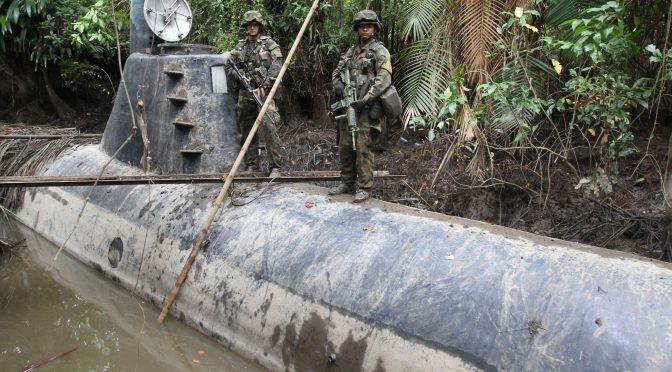
Featured Image: Members of the Colombian Navy stand guard on a seized submarine built by drug smugglers in a makeshift shipyard in Timbiqui, Cauca department. Colombian authorities said the submersible craft was to be used to transport 8 tons of cocaine into Mexico. (REUTERS/Jaime Saldarriaga)

Chinese UAV Development and Implications for Joint Operations

By Brandon Hughes

Drone Diplomacy

On December 15, 2016, a United States Navy (USN) unmanned underwater vehicle (UUV) was seized by the Chinese People’s Liberation Army Navy (PLAN) about 80 miles from Subic Bay, Philippines (Global Times, December 17, 2016). This was met with quick negotiations and the agreed return of the $150,000 research drone following complaints to Beijing. The then President-elect, Donald Trump, condemned the action from his twitter feed and responded, “Keep it!”, further escalating the situation and casting an unknown shadow on the future of the U.S.-China relationship (Reuters, December 18, 2016). Almost immediately, the seemingly mundane deployment of UUVs and unmanned aerial vehicles (UAVs) in the South China Sea became a potential flashpoint in the ever-contentious territorial disputes.

Countering President Trump’s South China Sea endeavors is a legislative move by Beijing to require all foreign submersibles transiting in China’s claimed territorial waters to travel on the surface and or be subject to confiscation (China News Service, February 15, 2017). The proposed change to the 1984 China Maritime Traffic Safety Law compares to China’s East China Sea Air Defense Identification Zone (ADIZ), set up in 2013. Codifying domestic maritime law further adds a layer of validity in the event a UAV or UUV is captured while patrolling in a disputed area. Assuming a more severe response is unlikely from the U.S., Beijing may use the law as an excuse to reduce unmanned foreign Intelligence, Surveillance, and Reconnaissance (ISR) assets in its periphery, regardless of international opinion.

While demonizing foreign ISR activities, China continues to bolster its own ISR efforts for deployment in maritime disputes, foreign surveillance, and warfighting capacity. Advances in armed/unarmed and stealth UAVs will further integrate UAVs into the Chinese People’s Liberation Army (PLA) joint forces array. Advances such as satellite data-link systems not only extend the range of these assets, but also allow for a more seamless integration of command and control (C2). This further enhances relatively low cost and low risk surveillance mechanisms.

UAVs are already an emerging capability within the PLA, law enforcement, and civil agencies and are playing a more prominent role in operations. Real-world testing will refine the PLA doctrinal use of these systems. Control, direction of development, and interoperability in joint operations are all questions yet to be answered. Developing an understanding of how these systems are incorporated into the PLA force structure may give insight into developing doctrine and political considerations. A clear understanding of both may support a potential framework for de-escalating unmanned vehicle incidents between nations where China has interests.

Deployment

On January 20th, 2017, the Chinese North Sea Fleet (NSF) received a request for help with a distress call initiated from the rescue center in Jiangsu Province to aid in the search and rescue of 13 crew members aboard a Chinese fishing boat that sank around 6 am that morning. The PLAN NSF dispatched two navy frigates, the ‘Suzhou’ and ‘Ji’an’ to the East China Sea to search for the crew of the lost fishing vessel, named the Liaoda Zhongyu 15126. What made this search-and-rescue effort unique was the announcement that a surveillance UAV (make unknown) aided in the search.

The deployment of a UAV with two naval frigates, in coordination with a maritime rescue center, demonstrates the multi-functionality and capability of China’s UAVs. Additionally, it is likely the UAV was deployed from a non-naval platform due to the size of the helicopter deck and lack of hangar on a ‘Suzhou’ and ‘Ji’an’, both Type 056/056A corvettes (Janes, November 3, 2016; Navy Recognition, March 18, 2013). This proof of concept highlights the interoperability of air, land, and sea assets coordinating for a common purpose. What is unknown, specifically, is where the UAV was launched, who controlled it, and whether it was using a line-of-sight (LOS) or extended control system.

China’s 40th Jiangdao-class (Type 056/056A) corvette shortly before being launched on 28 October at the Huangpu shipyard in Guangzhou. (fyjs.cn)

Capitalizing on peacetime operations validates control and communication hand-offs and will integrate intelligence platforms, such as the PLAN’s newest electronic surveillance ship, the Kay Yangxin (开阳星 ), vastly expanding the reach of Chinese ISR. Additionally, integration of satellite-linked communication packages, utilizing the domestic constellation of GPS satellites known as the Beidou, or Compass, will continue to improve UAV navigation and targeting systems. These improved navigation and satellite aids will be integrated into existing UAV datalink systems and developed with future ISR systems in mind.

Command Guidance

The use of UAVs for military and ISR purposes can have unintended political and military consequences. The PLA command structure has always focused around centralization to retain political power over the military. It is fair to assume that the guidelines for deployment of UAVs used for strategic intelligence missions are developed at a high level. On November 26, 2015, President Xi Jinping rolled out one of the many updates to the Soviet-style military system that was part of a recent effort to make the PLA more efficient. According to Yue Gang, a retired Colonel in the PLA’s General Staff Department, placing all branches of the military under a “Joint Military Command” was the “biggest military overhaul since the 1950s.” On February 1, 2016, a few months after Yue Gang’s comments, China’s Defense Ministry Spokesman Yang Yujun stated that the PLA was consolidating seven military regions into five theater commands, a move likely to streamline C2 (China Military Online, February 2, 2016). The theater commands will be presided over by the Central Military Commission for overall military administration (See China Brief, February 4, 2016 and February 23, 2016).

Centralizing and reducing the number of commands will allow for each individual military component to focus on their own training objectives (China Military Online, February 2, 2016). This concept promotes component independence to enhance capability, but doesn’t talk to efforts to enhance integration of forces in joint military exercises. The logistical and financial burden of large-scale exercises naturally limit the frequency of exercises each region can conduct per year. What is not clear, yet important to understand for a high-end conflict, is how joint operations between military regions will be executed. Chinese Defense Ministry Spokesman Yang Yuju added that the new structure allows for the commands to have more decision-making power in responding to threats and requesting CMC support. (China Military Online, February 2, 2016).

Utilizing UAVs in regional operations to patrol disputed regions indicates that tactical control would be conducted at the highest level by a chief staff at a joint command center, but more likely relegated to a lower echelon headquarters element closer to the front lines. These lower-tiered units are likely bound by the strict left and right limits on where they patrol. Advances in simultaneous satellite data-link systems will allow for a more seamless handoff of ISR/strike assets between commands in a robust communications environment. The fielding of enhanced and interoperable satellite communications is likely to bolster the deployment of UAVs and further integrate them into PLA doctrine by supporting the “offshore waters defense” and “open seas protection” missions, as outlined in the PLA’s 2015 White Paper on Military Strategy (China Military Online, May 26, 2015).

Direct operational control of the PLA’s UAVs is generally given to the commander of the next higher echelon or to a commander on the ground. UAV technicians depicted on Chinese military websites tend to hold the ranks of junior non-commissioned officers E-5/OR-5 (Sergeant) to O- 2/OF-1 (First Lieutenant). This is similar to certain units of the United States Army, where platforms are directly controlled by enlisted and warrant officers. However, just like the U.S., guidance and direction is usually “tasked down” by a higher echelon, and UAVs with a strike package will likely be controlled or employed by officers under orders from above.

UAV units in the PLA are likely to be attached to a reconnaissance or communications company. Likewise, the PLA Air Force (PLAAF) and PLA Navy (PLAN) will likely have UAV-specific units. Advancements in communication will enable various command levels (i.e. company, battalion, brigade) to simultaneously pull UAV feeds and give guidance to the operator. Based on the size of various exercises, the training indicates UAV control is given down to the lowest level of command but under extremely strict guidance. Additionally, the authority to deploy or strike is likely to be held at the regional command level or higher. Specific rules of engagement are unknown, but those authorities will be developed through trial and error during a high-intensity conflict.

Interoperability

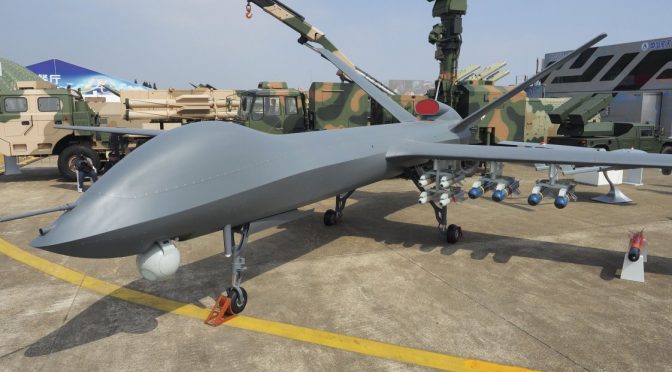
Communications infrastructure improvements are evident in the development of over-the-horizon satellite datalink programs and communication relays. The CH-5 “Rainbow” (Cai Hong) drone, for example, resembles a U.S. Atomic General MQ-9 “Reaper” and is made to function with data systems capable of integrating with previous CH-4 and CH-3 models (Global Times, November 3, 2016). The newest model is capable of 250 km line-of-sight datalink, with up to 2000 km communications range when linked into a secure satellite (Janes, November 7, 2016).

It is likely that improvements in interoperability will be shared among service branches. Recent developments in Ku-Band UAV data-link systems, highlighted during the 11th China International Aviation and Aerospace Exposition in November 2016, will further synchronize intelligence sharing and over-the-horizon control of armed and unarmed UAVs (Taihainet.com, November 2, 2016).

PLA Signal Units already train on implementing UAV communication relays (China Military Online, April 8, 2016). Exercises like these indicate a desire to increase the interoperability in a joint environment. UAVs with relay packages will improve functionality beyond ISR & strike platforms. Units traversing austere environments or maritime domains could utilize UAV coverage to extend the range of VHF or HF radios to direct artillery or missile strikes from greater distances. If keyed to the same encrypted channels, these transmissions could be tracked at multiple command levels.

Joined with a UAV satellite datalink, ground or air communications could be relayed from thousands of kilometers away. At the same time, a Tactical Operations Center (TOC) could directly receive transmissions before passing UAV control to a ground force commander. In a South China Sea or East China Sea contingency, UAVs could link unofficial maritime militias (dubbed “Little Blue Men”) via VHF to Chinese Coast Guard Vessels or Naval ships. These messages could also be relayed to PLA Rocket Force units in the event of an anti-access area denial (A2AD) campaign.

Capping off China’s already enormous communication infrastructure is the implementation of dedicated fiber-optic cables, most likely linking garrisoned units and alternate sites to leadership nodes. Future use technologies such as “quantum encryption” for both fiber-optic and satellite based communication platforms could lead to uninhibited communication during a military scenario (The Telegraph, November 7, 2014; Xinhua, August 16, 2016).

Functionality 

Based on the use of Chinese UAVs overseas and in recent exercises, UAVs will continue to be utilized on military deployments in the South China Sea for patrol and ISR support. In the event of a contingency operation or the implementation of an A2/AD strategy, UAVs will likely be used for targeting efforts, battle damage assessments, and small scale engagements. Against a low-tech opponent, the UAV offers an asymmetric advantage. However, the use of UAVs for something other than ISR would be greatly contested by more modern powers. UAVs are generally slow, loud, and observable by modern radar. Many larger UAVs can carry EW packages, although there is little information on how the datalink systems handle EW interference. Ventures in stealth technology, such as the “Anjian/ Dark Sword,” (暗剑) and “Lijian/ Sharp sword” (利剑) projects, would increase Beijing’s UAV survivability and first strike capability if deployed in a contingency operation (Mil.Sohu.com, November, 24, 2013). However, a large-scale deployment of stealth UAV assets is not likely in the near future due to cost and material constraints.

To reduce the risk of high-intensity engagements, China may expand its reliance on UAVs to harass U.S., Taiwanese, Japanese, Philippine, and Vietnamese vessels. Additionally, UAVs may be utilized abroad in the prosecution of transnational threats. So far, China has stuck to a no-strike policy against individuals, although it was considered as an option to prosecute a drug kingpin hiding out in Northeast Myanmar (Global Times, February 19, 2016). The “Rainbow/Cai Hong” variant and “Yilong / Pterodactyl,” made by Chengdu Aircraft Design & Research Institute (CADI), represent some of the more well-known commercial ventures used by the PLAAF (PLA Air Force) and sold on the global market. These variants are often used for ISR in counter-insurgency and counterterrorism operations (The Diplomat, October 6, 2016; Airforce-technology.com, no date).

Strike capability, aided by satellite datalink systems, is another growing capability of China’s UAV programs (Popular Science, June 8, 2016). In late 2015, the Iraqi army released images from a UAV strike against an insurgent element utilizing the Chinese-made export variant “Rainbow 4” (彩虹 4) running on a Window’s XP platform (Sohu.com, January 2, 2016; Popular Science, December 15, 2015). PLA UAVs already patrol border regions, conduct maritime patrols, and assist in geological surveys and disaster relief.

The arrival of off-the-shelf UAVs contributes to the growing integration of dual-use platforms. Technology and imagination are the only limits to the growing UAV industry. Additionally, the export of high-end military UAVs will only continue to grow as they are cheaper than U.S. models and growing in capability. The profit from these sales will certainly aid research and development efforts in creating a near-peer equivalent to the U.S. systems. For a struggling African nation held hostage by rebels (e.g. Nigeria) or an established U.S. ally in the Middle East (e.g. Jordan), the purchase of UAVs at a relatively low price will increase good will and allow for an operational environment to refine each platform’s own capability (The Diplomat, October 6, 2016; The Daily Caller, December 2, 2016).

Conclusion

UAVs for military operations are not new, however, improvements in lethal payloads, targeting, and ISR capabilities will change the role in which UAVs are utilized. Considering China’s own drone diplomacy, the deployment of UAVs is as much a political statement as it is a tactical platform. State-run media has highlighted the successes of its drone program but has not been clear on who, or at what command level, operational control of UAVs is granted. Due to Beijing’s standing policy against lethal targeting, release authority is most likely relegated to the Central Military Commission, or even President Xi himself.

The extent that doctrine has been developed in planning for a high or low-intensity conflict is still unclear. The advent of satellite data-links and communication relays means the tactical control of UAVs may be seamlessly transferred between commanders. The rapid development of UAVs will continue to be integrated into the joint forces array but must be done as part of an overall doctrine and C4ISR infrastructure. Failure to exercise their UAVs in a joint environment will affect combined arms operations and reduce the PLA’s ability to synchronize modern technology with centralized command decisions and rigid doctrine.

Brandon Hughes is the founder of FAO Global, a specialized research firm, and the Senior Regional Analyst-Asia for Planet Risk. He has previously worked with the U.S. Army, the Carnegie-Tsinghua Center for Global Policy, and Asia Society. He is a combat veteran and has conducted research on a wide variety of regional conflicts and foreign affairs. Brandon holds a Masters of Law in International Relations from Tsinghua University, Beijing and has extensive overseas experience focused on international security and U.S.-China relations. He can be reached via email at DC@FAOGLOBAL.com.

Featured Image: CASC’s CH-5 strike-capable UAV made its inaugural public appearance at Airshow China 2016 (IHS/Kelvin Wong)