There are many ways of attempting to estimate the nature of naval surface warfare in the next quarter century or so. Some are based on systematic and relatively sophisticated extensions of perceived trends. Others are dependent upon a variety of projected scenarios of various types. All are just personal judgments or prejudices, if I may call them that. And all are highly suspect—as must be any projection into the future, the degree of uncertainty increasing with the length of the forecast.
The following thoughts are the product of my own prejudices, based on observations and exposures to the thoughts and arguments of many others. I shall therefore simply set them forth without trying to repeat the arguments that have led to them, other than noting that they contain the following basic assumptions:
There will be no major naval war within the period discussed.
There will be no major technological surprises during the period.
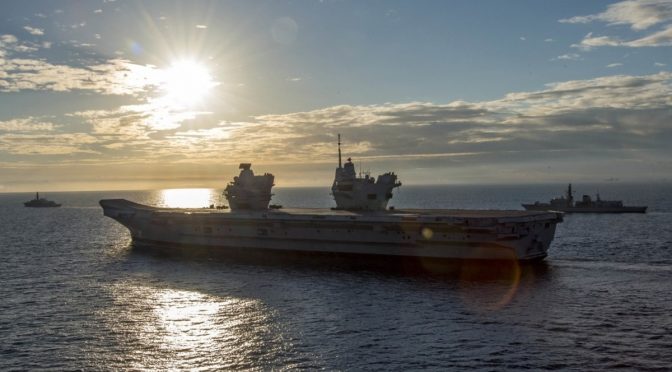
Prejudice No. 1: There will be a U. S. surface Navy in the year 2000 and beyond. This is based on the simple fact that we have a very substantial capital investment in our current fleet. Prudence is going to require that we protect this investment by whatever steps seem to be most cost-effective, whether this means retrofitting of new equipment, continued procurement of new versions of existing equipment, or the procurement of totally new systems. It is to be expected that any new element of the fleet—ship, plane, weapon, or equipment—will be introduced because it has some clearly apparent way of operating in concert with the existing elements to enhance their capability. If it has additional characteristics that permit it to perform new and unspecified missions, these characteristics will be developed in an evolutionary manner. The tendency to look at proposed systems as a total replacement for existing ones on an all-or-nothing basis has been the source of a lot of unrealistic projections in the past. Many of these projections have been associated with the Navy V/STOL (vertical and short takeoff and landing) aircraft program. The measure by which any system proposed for Navy use within the next 20-25 years will be judged, unless events demonstrate the wisdom of selecting some other criterion, is how capability of the current battle group built around the large carrier can be maintained or improved in the face of perceived threats.
“The Action Phase is the period from the arrival of the amphibious force in the operational area, through the accomplishment of the mission and the termination of the amphibious operation.” –JP 3-02
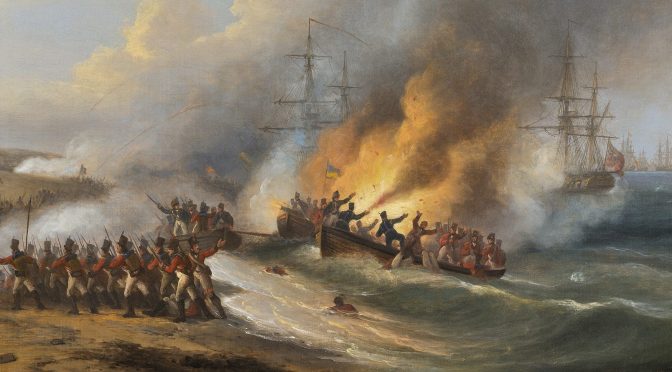
At 2 am, 5,500 troops climbed down into their boats to begin the assault on the French-held Aboukir Peninsula in 1801. Some of the boats had to row six miles to form up, delaying the assault from dawn until almost 9 am. As the boats approached the beach they could see the French troops and artillery in the sand dunes to their front, and artillery from the fort to their right started to fire. Embarked in one of the boats for the assault was Lieutenant Aeneas Anderson who stated, “Never was there a more trying moment.” As the troops crammed into the heavily loaded landing craft were vulnerable to fire the French managed to sink several craft. Some of the men in the boats were killed by round shot or drowning, while many were rescued from the water by boats tasked with SAR.1 Naval gunfire support was provided by Royal Navy bomb vessels Tartarus and Fury, two gunboats, and three armed launches.2 These vessels took station on the flanks and supported the landings by attacking Aboukir Castle on the right flank.
As the initial wave landed they formed up in the water. Soldiers of the 40th and 23rd Regiments charged ahead to capture the high sand dune in their front. On the left, 200 French cavalry charged the Coldstream Guard still forming up in knee-deep water, but the cavalry were repulsed by a well-timed volley fired by the 48th. The sharp action of twenty minutes secured a British beachhead at Aboukir. In a span of 5 minutes the British had landed 5,000 troops and formed for battle on a beach. After 15 minutes the British had driven off entrenched French forces and captured six cannons.3
British casualties had been heavy. Out of an initial landing force of 5,000, the Royal Navy had lost 97 officers and men killed or wounded, while the army had lost 625 killed, wounded, or missing and presumed drowned.4 Despite the heavy losses, British morale soared. General Menou had so doubted the ability of the British to establish a beachhead that he had only sent a detachment of 2,000 to defend against the landing instead of a larger force. French prisoners stated, “They had no fear that a landing could succeed.”5 General Menou expected the French army would have to fight on three fronts in Egypt. The army continued to fight a numerically superior yet qualitatively inferior Ottoman army east of Suez. The French expected this British force to land somewhere near Alexandria, and for another British force from India to land somewhere on the Red Sea coast. The British exploited Lake Aboukir and Aboukir Bay as a highway transporting water, supplies, and armed launches to provide naval gunfire support to the forward edge of battle. With the beachhead secured, General Abercromby’s forces advanced from Aboukir toward Alexandria.
On the 13th of March, the French attacked the British at Mandara, but well-positioned British troops repulsed the French. After two British victories, the local Arabs began to sell provisions to the army, reducing the reliance on provisions provided from the ships.6
On the 21st of March the French attacked again. General Abercrombie, leader of the British expeditionary force, was mortally wounded in the battle and died aboard the flagship instructing his staff to return the soldier’s blanket he was carried to the ship in. The French retired into the city of Alexandria. The British then left a force to besiege the city while another force pressed up the Nile to capture Cairo and link up with soldiers from India. On 16 August, Captain Cochrane and General Coote executed a second landing west of Alexandria to completely surround the city. On 29 August, 1801, General Menou’s besieged army surrendered.
Command and Control
Modern U.S. amphibious doctrine supports a Commander, Amphibious Task Force (CATF) and a Commander, Landing Force. Both commanders will draft an establishing directive to outline priorities and define who will be the supported and supporting commander throughout the phases of the operation. Throughout an amphibious operation the supported commander will change based on what is going on. For example, during an amphibious assault, the CATF will remain the supported commander until the CLF has established a defensible beachhead ashore.7 The CLF will then assume the role of supported commander and the CATF will continue to support, typically with logistics until relieved.
Throughout this campaign, there was less CATF/CLF coordination than desired. The first objective of the expedition was to capture the Spanish fleet at anchor in Cadiz. Despite both commanders’ amphibious experience the objective was not met. Lord Keith dithered over whether to support the landings or not, and he “could not be answerable for the winds.”8 If winds were from the southwest the fleet would be scattered. Unlike in modern doctrine where the CATF is the supported commander until the CLF has a defendable beachhead, Lord Keith felt his duty and responsibility done once the fleet was anchored in the correct operational area. This lack of interest meant that on the scheduled day of the landings there was both a shortage of landing craft and massive confusion when those craft did not go to the correct ships to pick up troops. Eventually, the decision was made to cancel those landings.9
The day after the landings were scheduled to happen, the southwest winds blew the fleet off Cadiz. If the landing force had been caught half ashore and half at sea, the landing force ashore would have been destroyed and the Egyptian campaign possibly never would have commenced. The lack of proper planning, of rehearsals, and Lord Keith’s continued unwillingness to make a decision about the landing created great tension between the army and the navy. Resentment among the army was so high that General Abercromby wrote to Secretary Dundas. Lord Keith received a letter from the First Sea Lord suggesting he remain in Gibraltar, and let another admiral oversee the Egyptian expedition.10 Good natured General Abercromby understood that part of his role as CLF was to calm the waters between the landing force and the naval force to ensure unity of effort. Today, the CATF and CLF embark aboard the same ship, however General Abercromby and Lord Keith were embarked on separate ships, and the First Sea Lord insinuated that this was the cause of tension between the two. Space aboard ship was the likely culprit in why the two commanders were embarked separately.
Lord Keith’s top priority was the location of the French fleet, and whether the French Navy would attempt to disrupt the landings. This question caused real problems for Lord Keith. The risk was real as Lord Nelson won the battle of Aboukir Bay in 1798 when a large portion of the French crews had been ashore. The army required over half the sailors in the fleet to support their operations ashore, and the transports would be so undermanned as to be unable to work the ships while the boat crews were away. 3,339 sailors served in Lord Keith’s fleet; 545 of those sailors were expected to serve ashore, and a further 820 were expected to serve in the boats ferrying supplies to the army.11 Aboukir Bay provided an anchorage, but it was no safe haven in a storm. Lack of sailors also increased the risk of shipwrecks in storms and defeat in battle if the French fleet appeared. With the ships half-manned, Lord Keith doubted that in a crisis those sailors could rejoin the fleet prior to an engagement with the French. Lord Keith wrote, “I am convinced that were I to withdraw a man, the troops would re-embark and charge the failure to me.” Despite Lord Keith’s misgivings, fleet support ashore enabled British victory.
Conclusion
This campaign provides an excellent study of the difficulties of planning an amphibious operation. One will never have all the intelligence desired and one will have to make decisions based off very incomplete or inaccurate data. In London, poor intelligence and an ill-defined mission risked the expedition before it even set sail. At sea and on land the British forces demonstrated their resolve and flexibility in overcoming adversity and the French to secure Egypt. The seven weeks spent training while waiting for Ottoman support demonstrated the importance of rehearsals in preparation for an amphibious assault. The confusion of the Cadiz expedition was replaced with calm, discipline, and order. The daily training in ship-to-shore movement and forming lines from landing craft enabled the landing force to conduct an opposed landing against entrenched infantry utilizing linear musket-age tactics.
Throughout the campaign the Royal Navy provided naval fire support and logistics support to the army. Fleet support enabled the execution of the campaign, but the most important asset the expedition had was General Abercromby. His attention to detail, emphasis on training, and tactful ability to work with Lord Keith, despite the Admiral’s foibles, ensured the successful execution of the campaign.
LT Jason Lancaster is a U.S. Navy Surface Warfare Officer. He is currently the Weapons Officer aboard USS STOUT (DDG 55). He holds a Masters degree in History from the University of Tulsa. His views are his alone and do not represent the stance of any U.S. government department or agency.
References
[1] Anderson, pg 222.
[2] Thomas Walsh andW.W. Knollys, The Cockade in the Sand,(Leonaur, 2014), pg 62.
Anderson, Aeneas. Journal of the Forces which sailed from the Downs on a Secret Expedition. London: Wilson and Co. of the Oriental Press, 1802.
Bartlett, Merrill L., ed. Assault From the Sea: Essays on the History of Amphibious Warfare. Annapolis, Maryland: Naval Institute Press, 1983.
Faden, William. “A detail of a plan of the Operations of the British Forces in Egypt from the landing in Aboukir Bay on th 8th of March to the Battle of Alexandria March 21st inclusive.” Wikimedia Commons. https://en.wikipedia.org/wiki/Battle_of_Mandora#/media/File:Faden_1801_alexandria_battle_detail.jpg. London, 1801.
Fortescue, J. W. A History of the British Army. Vol. IV. London: Macmillan and Co. Limited, 1915.
Glover, Richard. Peninsular Preparation 1795-1809. Cambridge: Cambridge University Press, 1963.
Joint Publication 3-02 Amphibious Operations. Washington DC: Office of the Secretary of Defense, 2014.
Life of Sir R. Abercromby. Liverpool: J. Fowler, Market Place, Ormskirk, 1806.
Loutherbourg, Philip James de. “The landing of British troops at Aboukir, 8 March 1801.” Wikimedia Commons. https://commons.wikimedia.org/wiki/File:The_landing_of_British_troops_at_Aboukir,_8_March_1801.jpg. London, n.d.
Lowry, James. Fiddlers and Whores: The Candid Memoirs of a Surgeon in Nelson’s Fleet. Edited by John Millyard. London: Chatham Publishing, 2006.
Mackesy, Piers. British Victory in Egypt The End of Napoleon’s Conquest. London: Tauris Parke, 2010.
Moiret, Joseph-Marie. Memoirs of Napoleon’s Egyptian Expedition 1798-1801. Edited by Rosemary Brindle. Translated by Rosemary Brindle. Mechanicsburg, PA: Stackpole Books, 2001.
Molyneaux, Thomas More. Conjunct expeditions: or expeditions that have been carried on jointly by the fleet and army. London: ECCO Print Editions, 1759.
Moore, John. The Diary of Sir John Moore. Edited by J.F. Maurice. II vols. London: Edward Arnold, 1904.
Porter, Robert Ker. A Correct Account of the Battle of Alexandria. New York: Southwick and Hardcastle, 1804.
Walsh, Thomas, and W. W. Knollys. The Cockade in the Sand: The Defeat of Napoleon’s Egyptian Campaign. Leonaur, 2014.
Wilson, Sir Robert Thomas. Narrative of the British Expedition to Egypt. Dublin: W. Corbett, 1803.
Featured Image: Brigade of Guards Landing at Aboukir, March 8, 1801. Thomas Luny, 1759-1837.
When war broke out between Japan and China in 1894, few expected a Japanese victory. Qing China had undergone its period of self-strengthening and modernization for much longer than the Japanese Meiji modernization period, had invested more money in its naval programs and platforms, and the Japanese Navy was supposedly outmatched both qualitatively and quantitatively. However, at the Battle off the Yalu River the Japanese defeated the Qing Northern Fleet in a decisive battle. So what went wrong in Qing self-strengthening? What left the Chinese so vastly unprepared for naval conflict?
Upon a close review of both primary and secondary sources, three key answers emerge. Firstly, the lack of a unified Chinese Navy under the Qing Empire proved fatal in the First Sino-Japanese War. Second, corruption and inefficiency in the institutions of the self-strengthening movement ensured poor commanders and a lack of equipment in the Beiyang Fleet. Finally, Japan’s unified command, professional officer corps, rigorous training, and use of French Jeune Ecole tactics won the day.
Naval Power and Combat in the Sino-Japanese War
Li Hongzhang, the Chinese scholar, diplomat, and military leader, remains a critical figure in understanding the self-strengthening movement in China. He led modernization efforts across the Qing Empire, setting an example through his own Huai Army and the Beiyang (Northern) Fleet. Regional armies and fleets like the Huai and Beiyang soon became the model on which the Qing Empire built its new armed forces in the wake of the Taiping Rebellion. This practice would prove to have fatal consequences during both the Sino-French and Sino-Japanese Wars as factional politics would override any sense of national duty in the Northern and Southern Qing Fleets.
On paper, the Qing Navy dwarfed that of the Japanese in 1894. The total size of the Chinese fleet at the time was “about 65 large ships and 43 torpedo boats.”1 By contrast the Japanese could boast just “32 warships and 23 torpedo boats.”2 These numbers bely the true strength of each fleet however, as “China’s navy still had a fourfold division in the Beiyang, Nanyang, Fujian, and Guangdong Fleets.”3 This division was foolhardy for several reasons. For one, it meant that the Chinese were never able to apply overwhelming force or superiority in numbers during battle. Despite the fact that the Beiyang Fleet was the largest of the regional fleets, and technically could match the size of the Japanese Navy, during the decisive Battle off the Yalu River, the Japanese had an 11 to 10 numerical advantage.4
The biggest problem the division created was that each fleet was regionally loyal and lacked loyalty to a central command or state. During the Sino-French War, the Qing Southern Fleet was annihilated by a French surprise attack. The Beiyang Fleet did little to help the Southern Fleet in this predicament, as “Li Hongzhang only sent two of the ships requested from his Beiyang fleet, and he withdrew these from the battle by asserting that the Japanese threat in Korea mandated their return north.”5 While this may have seemed a prudent maneuver at the time, allowing Li to protect two of his modern ships from senseless destruction, it cost him in the future. Just as the Beiyang Fleet had protected its own ships during the Sino-French war, in the Sino-Japanese war “the Nanyang officers now got their revenge on the Northern Fleet by keeping the Southern Fleet out of war with Japan for the most part.”6
Factionalism went beyond simply Northern versus Southern Fleet rivalries, as it even existed within the fleets themselves. Regional factions seem to have particularly irked Ding Ruchang, Li Hongzhang’s commander-in-chief of the Beiyang Fleet, where “there were many officers from Fukien in the navy, Ting Ju-ch’an (Ding Ruchang), being a Huai-chun man and being placed above them, found that his actions were constantly being circumscribed.”7 This reflects the latent issues of the regional army system as it created centers of power aside from the Emperor or the state. This in turn meant that there was a lack of loyalty, discipline, and efficiency in the fleet, all flaws that were exposed in the Battle off the Yalu River.
Another major issue faced by the Beiyang Navy was the corruption rampant in the late Qing empire. This was a major disappointment, since to many observers, the institutions behind the Self-Strengthening movement were initially very successful. The Japanese only began producing large scale warships some 15 years after the Qing successfully did so at the Jiangnan Shipyard. Even then those ships produced in Japan could not compete with those produced at Jiangnan where “In terms of armaments, those manufactured at the Jiangnan Arsenal were by and large superior to Japan’s.”8 The Fuzhou Shipyard, located further south, was even bigger, and where Dr. Benjamin Elman even refers to it as “probably the leading industrial venture in late Qing.”9 However, this success was not to last. Chinese regional leaders were skeptical of Li Hongzhang and the naval board, and refused to pay anything more than the bare minimum required for the basic maintenance of the fleet. They were wary of the naval board because, “its ineffectual Manchu director, Prince Chu’un, and his successor, Prince Ch’ing were unable to administer its funds properly and could not prevent the Empress Dowager from diverting the funds for other purposes.”10 Another observer commented that “the Admiralty has had big sums paid to it yearly the last ten years and ought to have a balance of 36,000,000 taels, and lo! It has not a penny, having allowed the Empress Dowager to draw on it for the many whims she has been indulging in.”11
Worse still was the impact the corruption within the Qing government had on the commanders of the Beiyang fleet, particularly those in command at the Battle off the Yalu. Even before the war this appeared to be a common concern amongst observers of Asian naval affairs, with one newspaper article commenting that the commander-in-chief of the fleet, Admiral Ding Ruchang, was not adequately trained for his role, “Ting (Ding), whose knowledge of naval matters does not fit him to do any of the real work.”12 Another article states that when compared to Japanese officers, the officers of the Beiyang fleet “labored and still labors under disadvantages arising out of birth, habit, and system.”13 The Qing Empire’s insistence on maintaining Chinese essence while embracing Western characteristics meant that soldiers and sailors remained undervalued in society, while Confucian scholars with little experience in war or tactics found themselves in positions of leadership. These ideas are reflected in secondary sources as well, with one going so far as to say that “Li Huang-Chang had characteristically staffed it (the Beiyang fleet) with ‘needy relatives and greedy henchmen.’”14 While the aforementioned article does seem to take a Japanese viewpoint, the author is correct in noting that Admiral Ding had no experience as a naval commander regardless of his past as an excellent cavalry commander under Li. In the end, the author’s label of Ding as “gallant but incompetent” seems to be fair.15
The ordnance supply officer for the Beiyang Fleet was Li Hongzhang’s son-in-law, Chang P’ei-lun, who Professor Wiliam Lockwood refered to as a “champion swindler.”16 He describes the cost of Chang’s corruption, whose ordnance department regularly filled shells with sand, and “When the shooting began, the Chinese fleet found that its total supply of ammunition amounted to fourteen shells per gun. Two 7,000-ton ironclads had only three shells in all for their 10-inch guns.”17 Benjamin Elman also notes that the Chinese were “hampered by woeful shortages of ammunition” at the Battle off the Yalu and that “Some were filled through the black market with cement rather than explosives.” Elman argues that this “suggests serious corruption problems in Li Hongzhang’s supply command.”18 Not only did this corruption limit the Chinese fleet’s ability to fire its guns during the battle, but having a limited number of shells also prevents effective live-fire gunnery training.
Japanese cruiser Matsushima pictured in 1896. Matsushima served as flagship of the Japanese Union Fleet at the Battle of the Yalu River. (Wikimedia Commons)
This lack of practice was certainly reflected in the opening exchanges of the battle, as the Chinese opened fire first, “The Chinese Admiral opened fire at a range of 6,000 meters (about three and three-quarters miles), the shot on both sides falling short, the effective range being around 5,000 meters.”19 The primary armaments of the main Chinese battleships fired 197 rounds, and scored just 10 hits.20 When they did hit, they knocked the Japanese flagship out of the battle, but they simply did not hit often enough to have a decisive impact. Overall, the Chinese fleet “scored about 10 percent of her tries. The Japanese, on the other hand, with their quick-firers scored about 15 percent of their tries.”21 While the Japanese ratio does not at first look overwhelmingly favorable, the Japanese guns had three times the rate of fire of their Chinese opponents, meaning that they were more accurate even as they fired many more shots.22
In perhaps the most staggering display of outright corruption, at the commencement of hostilities between China and Japan, Elman tells of an observer who noted that Chinese ships had about half their crews, while the salaries for the crews were still being paid in full.23 These gross indiscretions helped doom the Beiyang fleet at the Battle off the Yalu River. Underequipped, undertrained, understaffed, and with the wrong men at the helm, the battle could only go one way.
What is staggering is that for every institutional shortcoming suffered by the Chinese, the Japanese could point to an institutional success. While the Qing were unable to coordinate or consolidate their forces under a single command, the Japanese fleet was always unified, and trained extensively together as a single fighting force. This goes a long way to explaining the contrast in the conduct of the two fleets during the battle. While the Chinese opened fire from the extreme range of 6,000 meters, a Japanese account holds that the Japanese fleet held its fire until it had closed the distance to just 3,000 meters. Furthermore, the Japanese carefully coordinated their fire, “All the big guns on the Japanese vessels were directed towards the upper decks of the Ting Yuen (Dingyuan) and the Chen Yuen (Zhenyuan), the rest of the Chinese ships being fired at with guns of smaller caliber.”24 This tactical decision showed remarkable forethought on the part of Japanese commanders who knew their lighter weaponry could not hope to penetrate the armor belt of the two Chinese battleships. Although it is likely these sources were carefully checked by the Japanese government (who provided the authors with sources and documents), this tactic is borne out as fact by the reports which indicate that Admiral Ting was injured in the early stages in the battle, as Japanese fire crashed into the bridge of his ship and took out the signals mast, leaving him unable to communicate with the rest of the fleet.
Battle map of the fleet combat action at the Yalu River, 1894. By J. Hart, based on sketch by Philo N. McGiffin, 1895. (Wikimedia Commons)
The Japanese remained steadfastly disciplined throughout the battle while chaos reigned in the Chinese formations. This is due to the fact that while the Chinese had neither the funds nor the supplies for extensive training the Japanese prepared for war by “incessant training at sea. Special importance was devoted to gunnery, torpedo work, and steaming efficiency.”25 Another major failing of the Chinese fleet was the reluctance to create a true naval academy and professional officer corps. The Japanese did not hesitate to do so, forming a naval school in 1866. The Japanese naval academy had existed for nearly thirty years by the time the Sino-Japanese War began. Using graduates from the school Japan had built a professional officer corps, and could count on well-trained commanders throughout the fleet.
Chinese officers on the other hand, could boast of no such training. While some, like Captain Deng Shichang of the Zhiyuan, (who was recognized for his heroic conduct during the battle) had spent time overseas evaluating foreign fleets, they constituted a small minority, negating their impact in the chaos of battle. The vast majority of Chinese officers were trained in the Fuzhou arsenal, and “some observers described the Fuzhou-trained officers as cowards.”26
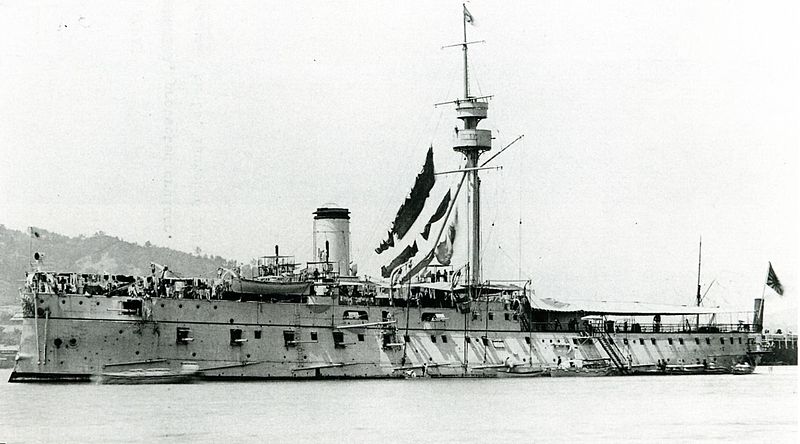
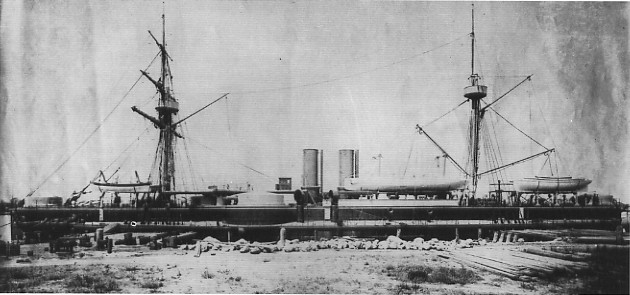
Chinese battleship Ting Yuen which participated in the Battle of the Yalu River. (Wikimedia Commons)
Many naval scholars suggest the Chinese focused too heavily on building ships while neglecting the training of their sailors. “The material growth continued at a rate more impressive than that of the Japanese Navy, obscuring the fact that the Chinese were doing little right other than acquiring more warships.”27 In Power at Sea, Lisle Rose attacks the Chinese mindset more directly, “China had chosen to concentrate on material power, Japan on the intelligence of its men behind the guns and in the engine rooms.”28 Perhaps the Chinese determination to adopt Western technology but maintain a Chinese essence blinded their mindset in this instance. The Japanese had no such pretensions, and strove to learn as much as possible about French Jeune Ecole tactics. Designed to help smaller fleets confronting a numerically and technologically superior enemy, these tactics were perfect for the young Japanese Navy. The Battle off the Yalu should be viewed as a textbook example of the Jeune Ecole in use against a quantitatively superior fleet.
Conclusion
The picture which emerges after an examination of the two fleets on the day of the Battle off the Yalu River yields up a stark contrast. The Chinese had more ships, thicker armor, and bigger guns, but were led by corrupt and incompetent officers, faced a dire shortage of ammunition, and had no overall strategy or tactics. Against them was a far smaller Japanese navy, designed and built around a cutting edge strategy taught to them by French officers, with a professional officer corps and years of extensive training at sea under their belts.
During the period from 1850-1941 practically every naval officer and expert was writing about the “decisive battle” that would invariably occur on the high seas in the next great war, where one fleet’s massive battleships would meet the others, and the two would go toe to toe just as Nelson and Villeneuve had at Trafalgar. This “decisive battle” seldom occurred however, with opportunities missed at Jutland, Heligoland Bight, Doggers Bank, Leyte Gulf, and more. But this decisive meeting of capital ships did occur at the Battle of the Yalu River and the Battle of Tsushima. This makes the Battle of the Yalu River one of the most fascinating moments in naval history.
The question of why the Qing failed despite their extensive modernization efforts and why Japan was so much more successful has occupied the minds of many historians throughout the years. Perhaps we have an answer in the form of Chinese failure to consolidate their regional fleets, rampant corruption, poor training, and inadequate personnel. These deficiencies were all exposed by a superior Japanese Navy off the Yalu River in the final, decisive battle of the Sino-Japanese War.
Aidan Clarke is an undergraduate student at Furman University, double majoring in History and Politics and International Affairs, with an interest in naval affairs. He has previously researched the U.S.-Soviet naval showdown during the Yom Kippur War, and is currently conducting a research project on the Russo-Japanese War.
The author would like to thank Dr. Lane Harris of the Furman University History Department for his assistance on the research and writing of this paper.
References
1. Elman, Benjamin A. “Naval Warfare and the Refraction of China’s Self-Strengthening Reforms into Scientific and Technological Failure, 1865-1895.” Modern Asian Studies, vol. 38, no. 2, May 2004, pp. 283-326. JSTOR. Accessed 3 Dec. 2017.
2. Ibid.
3. Ibid.
4. Herbert, Hilary A. “The Fight off the Yalu River.” The North American Review, vol. 159, no. 456, Nov. 1894, pp. 513-28. JSTOR. Accessed 3 Dec. 2017.
5. Elman, Benjamin A. “Naval Warfare and the Refraction of China’s Self-Strengthening Reforms into Scientific and Technological Failure, 1865-1895.” Modern Asian Studies, vol. 38, no. 2, May 2004, pp. 283-326. JSTOR. Accessed 3 Dec. 2017.
6. Ibid.
7. Spector, Stanley. Li Hung-Chang and the Huai Army. Washington UP, 1964.
8. Elman, Benjamin A. “Naval Warfare and the Refraction of China’s Self-Strengthening Reforms into Scientific and Technological Failure, 1865-1895.” Modern Asian Studies, vol. 38, no. 2, May 2004, pp. 283-326. JSTOR. Accessed 3 Dec. 2017.
9. Ibid.
10. Spector, Stanley. Li Hung-Chang and the Huai Army. Washington UP, 1964.
11. Ibid.
12. “THE SOUTHERN CRUISE OP THE PEIYANG SQUADRON.” The North – China Herald and Supreme Court & Consular Gazette (1870-1941) [Shanghai], 6 June 1890. ProQuest Historical Newspapers. Accessed 3 Dec. 2017.
13.“THE PEIYANG SQUADRON.” The North – China Herald and Supreme Court & Consular Gazette (1870-1941) [Shanghai], 29 June 1894. ProQuest Historical Newspapers. Accessed 3 Dec. 2017.
14. Lockwood, William W. “Japan’s Response to the West: The Contrast with China.” World Politics, vol. 9, no. 1, Oct. 1956, pp. 37-54. JSTOR. Accessed 3 Dec. 2017.
15. Ibid.
16. Ibid.
17. Ibid.
18. Elman, Benjamin A. “Naval Warfare and the Refraction of China’s Self-Strengthening Reforms into Scientific and Technological Failure, 1865-1895.” Modern Asian Studies, vol. 38, no. 2, May 2004, pp. 283-326. JSTOR. Accessed 3 Dec. 2017.
19. “Summary of News: LATEST INTELLIGENCE HANDS OFF! RUSSIA IS FIRM LOCAL NEWS FROM HOME THE BATTLE OF PINGYANG THE NAVAL FIGHT AT THE YALOO THE MOOR APOLOGISES LOCAL NEWS FROM HOME TO REASSURE JAPAN BAD NEWS FROM ST. PETERSBURG THE MILITARY CONTRIBUTION OF THE STRAITS SETTLEMENTS THE JAPANESE AT HAIYUENTAO THREATENING NEWS THE NAVAL FIGHT OFF THE YALOO GREAT FIRE AT MANILA THE NAVAL FIGHT AT THE YALOO THE SAFETY OF THE TRANSPORTS THE NAVAL FIGHT AT THE YALOO.” The North – China Herald and Supreme Court & Consular Gazette (1870-1941) [Shanghai], 28 Sept. 1894. ProQuest Historical Newspapers. Accessed 3 Dec. 2017.
20. Elman, Benjamin A. “Naval Warfare and the Refraction of China’s Self-Strengthening Reforms into Scientific and Technological Failure, 1865-1895.” Modern Asian Studies, vol. 38, no. 2, May 2004, pp. 283-326. JSTOR. Accessed 3 Dec. 2017.
21. Ibid.
22. Ibid.
23. Ibid.
24. Eastlake, Frederick Warrington, and Yamada Yoshi-Aki. Heroic Japan: A History of the War between China and Japan. London, Sampson, Low, Marston, & Company, 1897.
25. Rose, Lisle A. The Age of Navalism, 1890-1918. Missouri UP, 2007. 3 vols.
26. Elman, Benjamin A. “Naval Warfare and the Refraction of China’s Self-Strengthening Reforms into Scientific and Technological Failure, 1865-1895.” Modern Asian Studies, vol. 38, no. 2, May 2004, pp. 283-326. JSTOR. Accessed 3 Dec. 2017.
27. Sondhaus, Lawrence. Naval Warfare, 1815-1914. E-book, New York, Routledge, 2000. Warfare and History.
28. Rose, Lisle A. The Age of Navalism, 1890-1918. Missouri UP, 2007. 3 vols.
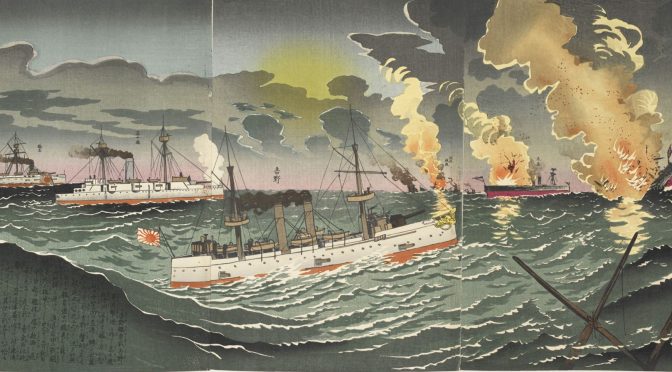
Featured Image: The Battle of the Yalu River by Kobayashi Kiyoshi. (Wikimedia Commons)
Technology adoption moves in fits and starts. The developing world cannot be forced into accepting new technology, but it can be enabled, and often in a surprising manner. A recent example is the leap in communications technology. During the 20th Century most of the world developed a robust network of terrestrial-based telecommunications based primarily on the ubiquitous land-line telephone system. Without this infrastructure in place Sub-Saharan African countries were largely left behind at the start of the information revolution. But at the turn of the new century something interesting happened. Rather than retroactively building an archaic phone system Africans embraced mobile phone technology. From 1999 through 2004 the number of mobile subscribers in Africa eclipsed those of other continents, increasing at a rate of 58 percent annually. Asia, the second fastest area of saturation, grew at only 34 percent during that time. The explosive growth of mobile phones and more recently smart phones across practically every African city and village has liberated economies and facilitated the free flow of information. This technology also enabled Africans to lead the world in mobile money payment solutions, bypassing increasingly obsolete banking systems.
Today, Africans have another opportunity to leap ahead in technology to protect one of their most important areas of commerce – their coastal seas. Africa’s maritime economy is absolutely critical to the continent’s growth and prosperity during the next few decades. On the edge of the Eastern Atlantic the Gulf of Guinea is bordered by eight West African nations, and is an extremely important economic driver. More than 450 million Africans derive commercial benefit from this body of water. The region contains 50.4 billion barrels of proven petroleum reserves and has produced up to 5.5 million barrels of oil per day. Additionally, over 90 percent of foreign imports and exports cross the Gulf of Guinea making it the region’s key connector to the global economy.
Favorable demographics and industrious populations put coastal Africans in a position to prosper, but an increase in illegal fishing activities and piracy since the early 2000s has severely impeded this potential. The growth in acts of piracy and armed robbery at sea in the Gulf of Guinea from 2000 onward points to the challenges faced by West African states.
According to Quartz Africa, illegal fishing activities in the region have a negative economic impact of $2-3 billion annually. “Fish stocks are not restricted to national boundaries, and that is why the solutions to end the overfishing of West Africa’s waters can only come from joint efforts between the countries of the region,” Ahmed Diame, Greenpeace’s Africa Oceans campaigner, said in a statement. Marine pollution, human, and narcotics trafficking are also major issues facing the region.
Due to the economic impact of illicit activities in and around West Africa a Summit of the Gulf of Guinea heads of state and government was held in 2013 in Yaoundé, Cameroon. This resulted in the adoption of the Yaoundé Declaration on Gulf of Guinea Security. Two key resolutions contained in the Declaration were the creation of an inter-regional Coordination Centre on Maritime Safety and Security for Central and West Africa, headquartered in Yaoundé, and the implementation of a new Code of Conduct Concerning the Prevention and Repression of Piracy, Armed Robbery Against Ships, and Illegal Maritime Activities in West and Central Africa. Adoption of this agreement has laid the foundation for critical information sharing and resource cooperation that can be used to combat piracy, illegal fishing, and other illicit activities in the Gulf of Guinea.
Though the Code of Conduct established an architecture for maritime security in the region, without enforcement on the water, diplomatic efforts are largely impotent. Key to enforcement is the ability to identify, track, and prosecute nefarious actors on the high seas and in coastal areas. So-called maritime domain awareness is gradually improving in the area, but current options for maritime surveillance are limited. The largest local navies have offshore patrol vessels capable of multi-day over-the-horizon operations, but even these vessels have limited enforcement capacity. Patrol vessels face maintenance issues and fuel scarcity. Shore-based radar systems at best reach out 30 or 40 nautical miles, but are plagued by power and maintenance issues. Moreover, a shore-based radar, even with signals correlated from vessels transmitting on the Automatic Identification System, only provides knowledge that a contact is afloat, not necessarily any evidence to illicit actions.
Latin American navies face similar maritime challenges to those in Africa and have learned that airborne surveillance is simply the best way to locate, track, identify, and classify surface maritime targets involved in illicit or illegal activity. A retired senior naval officer from the region related a study in the Caribbean narcotics transit zone to one of the authors that compared different surveillance mechanisms for the 11,000 square nautical mile area. The probability of detecting a surface target within six hours rose from only five percent with a surface asset to 95 percent when maritime patrol aircraft were included. Only a handful of coastal African countries have fixed-wing maritime patrol aircraft and helicopters, but these aircraft face similar issues to surface assets with fuel costs and mechanical readiness resulting in limited flight time on station.
Drone Solutions to African Maritime Insecurity
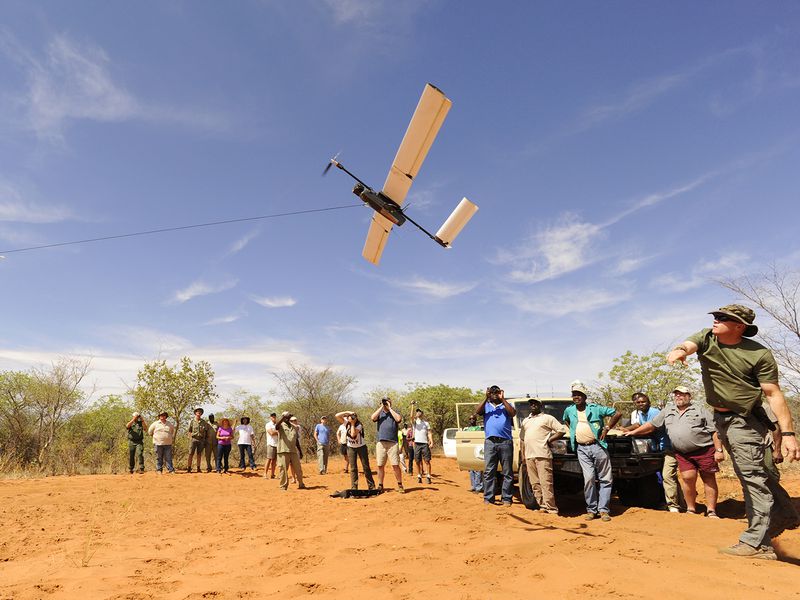
Unmanned aerial systems (UAS), or drones, as they are known colloquially, provide a way for African navies and coast guards to greatly enhance maritime security in a relatively inexpensive manner, similar to the ways mobile telephony revolutionized communications on the continent. Similar to the evolution of computing power outlined by Moore’s law tactical UAS are rapidly growing in capabilities while decreasing in cost. Improvements in sensors, endurance, and payload are advancing quickly. For any solution, acquisition cost, maintainability, and infrastructure required are key factors to be considered. The cost per flying hour of most UAS is negligible compared to their manned counterparts. Today’s fixed and rotary-wing systems, whether specifically designed for military use or for commercial applications, can be adapted for surveillance in a maritime environment without much additional cost.
Because each country has unique requirements and budgets no single UAS solution is appropriate. Maritime drones can be based ashore or on coastal patrol vessels. One viable option for countries with limited resources involves services contracted by Western Partners, a model which has already been proven in the region for other applications. Alternatively, the Yaoundé Code of Conduct provides a framework for a possible shared model. This agreement can provide the timely sharing of critical information ascertained by maritime surveillance and reconnaissance systems to aid in the enforcement of the maritime laws and agreements in the region. Contractor-operated drones could be allocated across countries by leadership in the five Zones delineated by the Code. Multinational cooperation on maritime security has already been tested in the annual Obangame Express exercise and during real-world counterpiracy operations. Understanding that not all countries have the investment capability to purchase their own stand-alone systems, consideration could be given to sharing the initial investment costs between countries. The logistics of system placement and asset availability would have to be determined by the participating countries themselves but the benefit of such a program would positively impact the entire region economically, enhance interoperability, and assist in regional stability.
Drones are already being operated across Africa by Africans. Zambia recently purchased Hermes 450 unmanned aerial vehicles for counter-poaching operations. There are also African unmanned systems flying surveillance missions over areas plagued by violent extremists groups. UAS are even being used to transport blood and medical supplies across the continent’s vast rural landscapes. Shifting these assets over water is a natural progression. One concern about using UAS is airspace deconfliction. However, this problem is minimized because there is little to no civil aviation in most parts of Africa. Additionally, most maritime UAS would be flying primarily at low altitudes over water from coastal bases.
Conclusion
The leap-ahead capabilities that unmanned surveillance aircraft could provide to coastal security around Africa are clearly evident. African navies with adequate resources should make acquisition of unmanned air systems a priority. Likewise, western foreign military assistance programs should focus on providing contracted or organic unmanned aircraft capabilities.
Captain Rawley, a surface warfare officer, and Lieutenant Commander Patmon, a naval aviator, are assigned to the U.S. Navy’s Sixth Fleet’s Maritime Partnership Program detachment responsible for helping West African countries enhance their maritime security. The opinions in this article are those of the authors alone and do not officially represent the U.S. Navy or any other organization
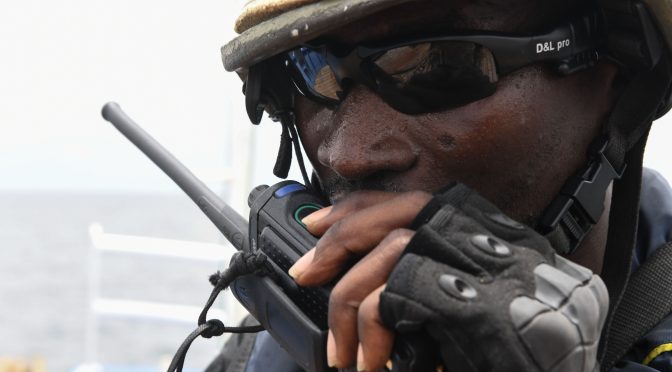
Featured Image: GULF OF GUINEA (March 26, 2018) A visit board search and seizure team member from the Ghanaian special boat service communicates with his team during a search aboard a target vessel during exercise Obangame Express 2018, March 26. (U.S. Navy photo by Mass Communication Specialist 1st Class Theron J. Godbold/Released)