Tag Archives: United States

The Challenge of Non-Lethal Force at Sea

This year’s CIMSEC HQ Christmas party featured a number of ‘unofficial’ polls on the main naval developments of 2014 and prospects for 2015 (the results of which can be found in CIMSEC’s Twitter feed). These provided a most interesting glimpse both of recent events and of what the immediate future may hold in store. Needless to say, 2014 has indeed been an eventful year in the maritime domain, not least in the Indian Ocean-Pacific Region.

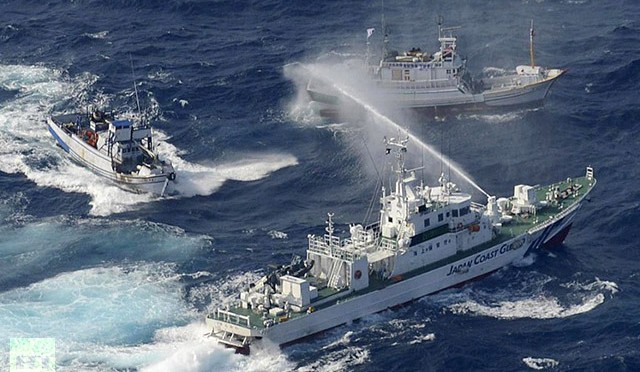
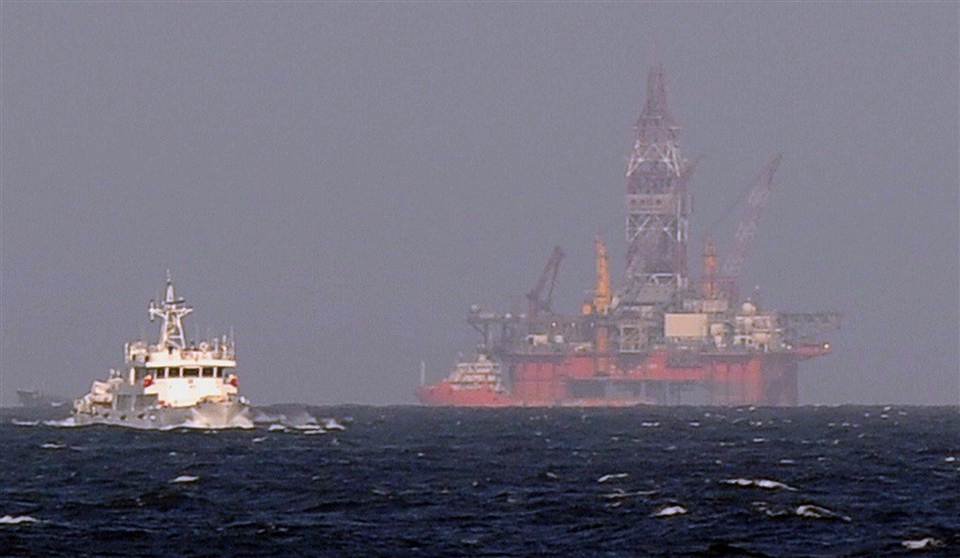
JAPAN-TAIWAN-CHINA-DIPLOMACY-DISPUTEOne of the main challenges of the year, highlighted in the polls, is how to respond to the use of non-lethal force, that is to coercion by means of a limited amount of violence, designed to gradually expand control over disputed bodies of water without leading to casualties or a major reaction by the victim country and other maritime democracies with a stake in freedom of navigation and the rule of law at sea (also known as “Salami Slicing). This non-lethal force approach usually features coastguards, other state agencies, oil rigs, and civilian vessels (mainly trawlers) in lieu of navies. The difference is often rather academic however, due to the size, capabilities, and numbers of some of the vessels involved. Equipped with modern communication technologies these forces are bound together not just by institutional links but also subsidies, participation in part-time militias, extreme nationalism, and an integrated whole-of-government approach to the maritime domain. They operate in the grey areas between peace and war, naval warfare and law enforcement, public security and private enterprise, and have made significant advances in areas like the South China Sea. The use of ramming by these forces, rather than firing, is a reminder of ancient times, yet state of the art of technology is still very much in display.

While Beijing’s inability or unwillingness to take a Bismarck-like step by step, divide and rule approach to expansion has helped usher a new era of regional cooperation, contributing to the U.S.-Vietnamese reconciliation and Japan’s normalization as a military power, unless naval planning is geared toward the whole spectrum of conflict, including undeclared non-lethal wars, we risk preparing for a conflict that will never come, losing instead the one that actually takes place. We should never forget that, as the saying goes, the enemy has a vote too.

Two brief historical references may prove useful. First, the roots of President John F. Kennedy’s insistence on developing a strong counterinsurgency capability lied in the previous administration, but it ultimately derived from a recognition that it was not credible to threaten to employ nuclear weapons or massive conventional forces against every single instance of aggression (“trip wire approach”). Similarly, it is not credible to threaten naval war against any attack on freedom of navigation or against any grab of maritime territory. A revisionist power aware of this may react by adopting the gradual “Salami-slicing strategy” approach, pushing, never carrying out any individual action likely to trigger in and by itself an armed response.

Faced with such strategy, and taking into account China’s extensive economic connections with the United States and other major powers, the prospects of conventional force being employed to stop Beijing’s expansion seem rather slim. This is not to say that the modernization of nuclear weapons and the continued reinforcement of traditional naval power should be neglected. However, these two legs should be accompanied by a third one, giving rise to a whole-spectrum capability able to withstand any challenge to peace and security in the Indian Pacific-Ocean Region, freedom of navigation, and the rule of law at sea.
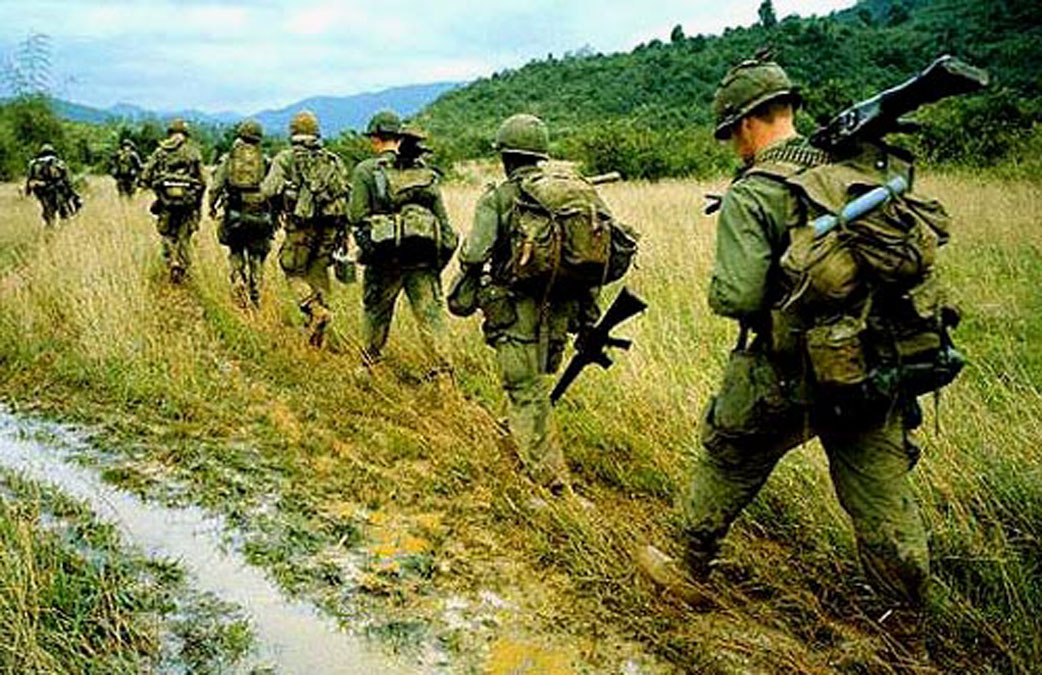
p3A second useful historical reference may be the United States’ Vietnam, or Second Indochina, War. Almost half a century later, historians still debate why the Republic of Vietnam, the United States, and their allies did not prevail. One major school of thought argues that it was self-imposed restrictions, in other words a failure to wage a more total kind of war, which doomed Allied efforts. As evidence, they point out that it was conventional troops, not guerrillas, which delivered the coup de grace to South Vietnam in 1975. Another major school of thought argues that it was the failure to master counterinsurgency, and more widely nation-building, that ultimately doomed the efforts to save the Republic of Vietnam. Without entering this debate, we may perhaps note that in Vietnam it was not just conventional or insurgent forces that one faced, but both, and that any lasting victory required prevailing against the two.

Furthermore, while some restrictions may seem or even plainly be irrational and self-defeating, simply criticizing them leads nowhere. The military cannot live in a fantasy land where total war is the rule and limits are few. Historically this has not been the case, and also because in today’s complex web of international relations and extensive economic connections, any “tripwire” or “massive retaliation” strategy is unlikely to enjoy the necessary political support and thus deterrence credibility. Therefore, the need to be flexible and able to deal with very different scenarios simultaneously is one of the great lessons from that controversial war, and one equally applicable on land and at sea. It is, to mention a relevant example, one of the inspirations behind the U.S. Marine Corps’ “Three Block War” concept.

For the disputed maritime spaces in the Pacific this means that countries in the region and other interested parties such as the United States need to develop a full capability spectrum. With conventional naval warfare on one extreme, it must extend to non-lethal violent clashes on the other, and cover all intermediate scenarios. This must be the underlying rationale for acquisitions, doctrine, regional cooperation, and training. It will of course require an additional effort from everyone involved, but there is simply no alternative.
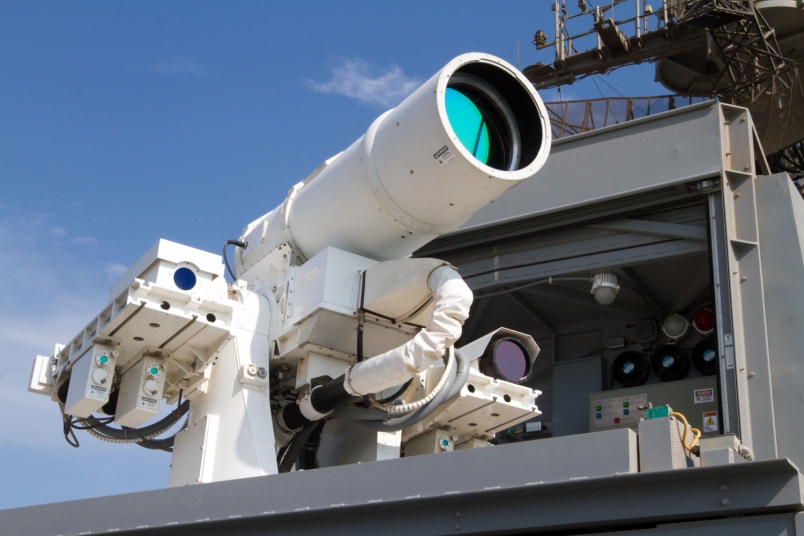
LaserSome of the weapons systems currently in development hold great promise in the event of hostilities breaking out, but there is no realistic prospect of their use being authorized short of a major conflict, a scenario that right now seems remote. Just to show how remote, a comparison with Russia is useful: replicating the sort of sanctions directed at the Kremlin is simply unimaginable, and has never been suggested when discussing Chinese expansionism (although there is indeed a discrete trend away from FDI in China by countries like Japan). In other words, lasers, just to give an example, are great, and their development surely must continue, but they will not stop a trawler fleet or an oil rig, simply because the necessary permission to fire will never come.

This does not mean that there is no way to counter such tactics. Coast guard capacity building, one of the main pillars of Japan’s security and defense cooperation with the Philippines and Vietnam, is a major step in that direction. It should not be seen, however, as an isolated step, but rather as one of many to be taken in the coming years. What we face is a long, undeclared, mixed, war at sea. A war without great battles or big names, without campaign medals, a war where many advanced weapons systems will merely be silent witnesses. It will be one, however, whose ultimate impact on future generations will be as great as many of its more heroic, spectacular, counterparts. A war that maritime democracies cannot afford to lose.

Alex Calvo is a guest professor at Nagoya University in Japan and focuses on security and defence policy, international law, and military history in the Indian-Pacific Ocean Region. He tweets at @Alex__Calvo and his work “China’s Air Defense Identification Zone: Concept, Issues at Stake and Regional Impact” is available at the Naval War College Press Working Papers.
China’s Nine-Dashed Line Faces Renewed Assault

By Scott Cheney-Peters

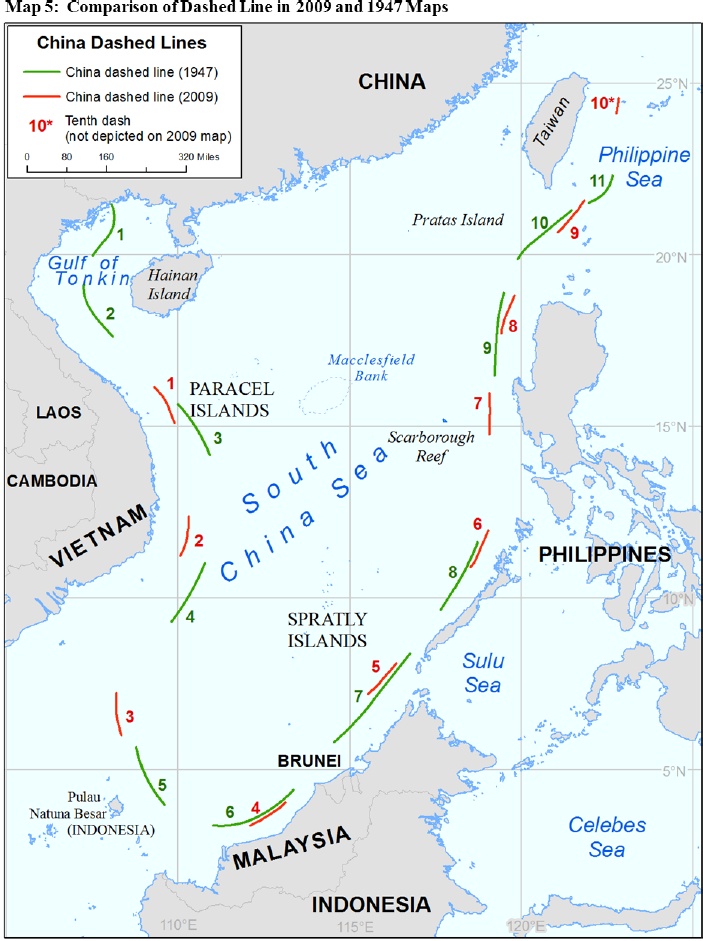
China’s ambiguous claim to the South China Sea, approximately demarcated by a series of hash marks known as the “nine-dashed line,” faced objections from an expanding number of parties over the past two weeks. While a challenge from the United States came from an unsurprising source, actions by Indonesia and Vietnam were unexpected in their tone and timing.

8-e48b8c470eOn December 5th, the U.S. State Department released its analysis of the compatibility of China’s nine-dashed line with international law. The report attempted to set aside the issue of sovereignty and explore “several possible interpretations of the dashed-line claim and the extent to which those interpretations are consistent with the international law of the sea.” The analysis found that as a demarcation of claims to land features within the line and their conferred maritime territory, the least expansive interpretation, the claim is consistent with international law but reiterated that ultimate sovereignty is subject to resolution with the other claimants.

As a national boundary, the report went on, the line “would not have a proper legal basis under the law of the sea,” due to its unilateral nature and its inconsistent distance from land features that could confer maritime territory. Alternately, although many commentators have indicated China bases its claims on “historic” rights pre-dating the UN Convention on the Law of the Sea (UNCLOS) of 1982, the report argued that the history China points to does not fit the narrow “category of historic claims recognized” in UNCLOS under which historic rights may be conferred. Lastly, the report noted that as China has filed no formal claim supporting its nine-dashed line, the ambiguity over the exact nature and location of the line itself undermines under international law China’s argument that it possesses maritime rights to the circumscribed waters, concluding:

“For these reasons, unless China clarifies that the dashed-line claim reflects only a claim to islands within that line and any maritime zones that are generated from those land features in accordance with the international law of the sea, as reflected in the LOS Convention, its dashed-line claim does not accord with the international law of the sea.”

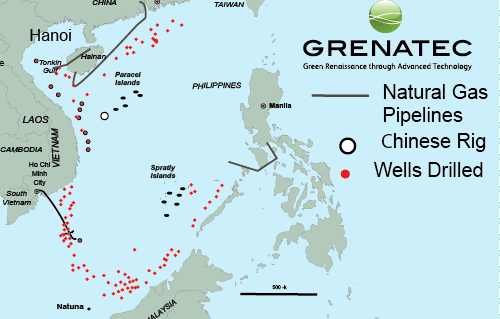
Although such analysis reflects prior U.S. policy positions, less expected were the pointed signals from Indonesia, which has built a reputation as a mediator among ASEAN states in dealing with China and striven to downplay the overlap by the nine-dashed line of its own claimed exclusive economic zone in the South China Sea from Natuna Island. On Tuesday at the think tank Center for Strategic and International Studies (CSIS) in Washington, senior Indonesian presidential advisor Luhut Binsar Panjaitan emphasized that the country was “very firm” that its “sovereignty cannot be negotiated,” while stressing the importance of dialogue to peacefully manage matters. Further, in response to a question from an audience member, Panjaitan stated (56:00 mark in the video below) that the development of gas fields offshore Natuna in cooperation with Chevron would “give a signal to China, ‘you cannot play a game here because of the presence of the U.S.’” Meanwhile Indonesian Maritime Affairs and Fisheries Minister Susi Pudjiastuti noted that after sinking Vietnamese vessels the Indonesian Navy said it had captured illegally fishing she was considering sinking 5 Thai and 22 Chinese vessels also caught.

As Prashanth Parameswaran notes at The Diplomat, Indonesia is playing a balancing act – seeking at the same time to protect its sovereign interests as it attempts to align new president Joko Widodo (Jokowi)’s “Maritime Axis”/“Maritime Fulcrum” initiative with Xi Jinping’s “Maritime Silk Road” and play a leading role in China’s Asian Infrastructure Investment Bank. To some observers, sinking the Thai and Chinese boats is now necessary to preserve Indonesia’s image of impartiality, while others believe such action may be redundant if China heeds the warning that such behavior will no longer be tolerated.

Vietnam too took surprise action over the nine-dashed line, in a move long-mooted but unexpected in its timing. Vietnam’s foreign ministry announced last week that it had filed papers with the Hague arbitral tribunal overseeing the case submitted by the Philippines, asking that its rights and interests be considered in the ruling. Vietnam supported the Philippines position arguing that China’s nine-dashed line is “without legal basis.” While a regional source in The South China Morning Post noted that the action was as much about protecting “Vietnamese interests vis-à-vis the Philippines as it is directed against China,” and Professor Carlyle Thayer described it as “a cheap way of getting into the back door without joining the Philippines’ case,” Thayer also told Bloomberg News that it “raises the stature of the case in the eyes of the arbitrational tribunal.”

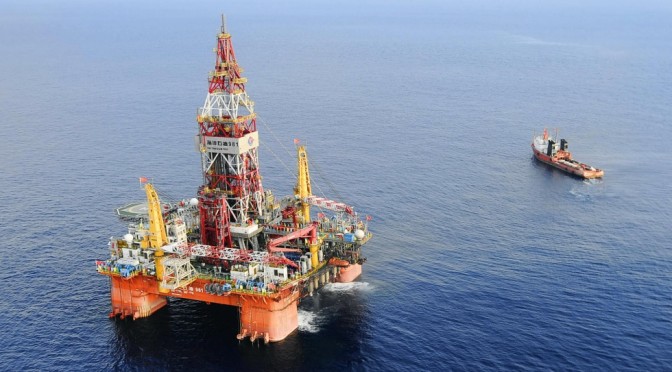
China-Vietnam-RigIf the actions taken by the United States, Indonesia, and Vietnam were surprising, China’s reactions were not. On December 7th, China’s Ministry of Foreign Affairs released a white paper of its own on the Philippines’ arbitration case. The document states that China’s policy, as established in its 2006 statement on UNCLOS ratification, is to exclude maritime delimitation from compulsory arbitration. Additionally, the paper says that while the current arbitration is ostensibly about the compatibility of China’s nine-dashed line with international law, “the essence of the subject-matter” deals with a mater of maritime delimitation and territorial sovereignty. The paper goes on to say that until the matter of sovereignty of the land features in the South China Sea is conclusively settled it is impossible to determine the extent to which China’s claims exceed international law.

In effect, China is taking the position that only after it has conducted and conclude bilateral sovereignty negotiations will its nine-dashed line be open to critique. While the foreign ministry may be right that the Philippines is attempting to force the issue of territorial sovereignty, its argument that this prevents scrutiny of the nine-dashed line’s accordance with international law rings hollow.

At the end of the day, China has repeatedly stated, and its new policy paper affirms, that it will “neither accept nor participate in the arbitration” initiated by the Philippines. Chinese Foreign Ministry Spokesman Hong Lei likewise remarked of Vietnam’s filing with the tribunal that “China will never accept such a claim.” So it is prudent to ask what benefit will come of the legal maneuvers. Some, such as Richard Javad Heydarian, a political-science professor at De La Salle University, point to the economic harm already incurred by the Philippines in opportunity costs and the danger of having created a worse domestic and international environment for settling the disputes. Yet given the lengthening list of states willing to stake a legal position on the matter and the moral weight of a potential court ruling, China can claim and attempt to enforce what it wants, but it will be increasingly clear that it is doing so in contravention of international law.

Scott Cheney-Peters is a surface warfare officer in the U.S. Navy Reserve and the former editor of Surface Warfare magazine. He is the founder and president of the Center for International Maritime Security (CIMSEC), a graduate of Georgetown University and the U.S. Naval War College, and a member of the Truman National Security Project’s Defense Council.

A Feast of Cabbage and Salami: Part I – The Vocabulary of Asian Maritime Disputes

This is the first installment in a series of primers produced in partnership with The Diplomat.

“Words have meanings.” It’s easy to dismiss this statement as a truism. But words – and their meanings – do hold particular import in the multi-layered realm of maritime territorial disputes, where the distinction between a rock and an island can mean the difference between hundreds of square miles of Exclusive Economic Zone. At times, usage of words has itself opened new fronts in conflicts as nationalist fights over place names in textbooks have shown. Those wishing to understand and accurately describe maritime Asia’s long-standing territorial disputes must wade through a colorful and evolving vocabulary. So, in an effort to help bring clarity to the lexicon we offer this guide to common terms in use.

A Starter Legalese

conven1U.N. Convention on the Law of the Sea (UNCLOS): UNCLOS is the international agreement that resulted from the Third UN Conference on the Law of the Sea from 1973-1982. It establishes the maritime zones that divide the modern seas, and the rights and sovereignty of states within them. It also provides means for determining sovereignty within disputed areas. The United States has neither signed nor ratified UNCLOS but regards all but several clauses relating to the International Seabed Authority as customary international law that it therefore follows. Several additional key international terms below are defined in UNCLOS. A full reading of the Convention is highly recommended for any serious student of international affairs to gain a better appreciation of the nuances of the terms than can be spelled out here:

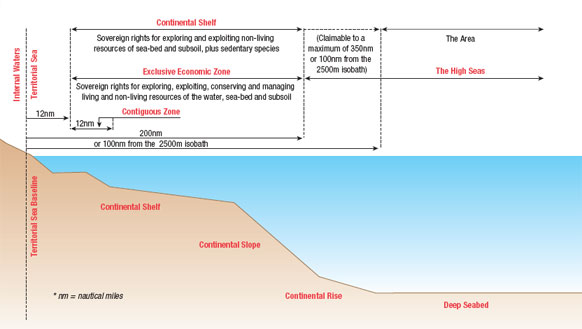
Territorial Waters: Extends 12nm from a country’s internationally agreed upon baseline. A coastal state has full sovereignty over its territorial waters, but other states’ vessels (including military, but not aircraft) enjoy the Right of Innocent Passage through these waters so long as their passage is “continuous and expeditious,” and not “prejudicial to the peace, good order or security of the coastal State.” For example naval vessels cannot engage in spying during the transit and submarines must transit surfaced. A similar concept is that of Transit Passage, enabling the “continuous and expeditious” passage of all ships and aircraft through most international straits, as well as archipelagic states’ sea lane passages (straits formed by two islands of the same state).

Contiguous Zone: Extends from 12nm out to 24nm from a country’s baseline. Coastal states here enjoy rights limited to “customs, fiscal, immigration [and] sanitary laws and regulations.”

Exclusive Economic Zone (EEZ): Extends 200nm out from the baseline, wherein a state enjoys exclusive rights to natural resources such as fish and oil. States may also enjoy some resource exploitation rights in the seabed and subsoil beyond the EEZ depending on the lay of the Continental Shelf.

Artificial Islands: Of importance due to recent activity in the South China Sea, “Artificial islands, installations and structures do not possess the status of islands. They have no territorial sea of their own, and their presence does not affect the delimitation of the territorial sea, the exclusive economic zone or the continental shelf.”

High Seas: Anything beyond a state’s EEZ. “No State may validly purport to subject any part of the high seas to its sovereignty.” The high seas are sometimes also referred to synonymously as International Waters, but this latter term is not well defined as it can also be used for everything outside a nation’s territorial waters. Note: Per UNCLOS, Piracy can technically occur only on the high seas or “in a place outside the jurisdiction of any state,” such as the waters of a failed state. This is why reporting of piracy statistics can be inaccurate unless it uses the term Piracy and Armed Robbery to capture piracy occurring within a nation’s EEZ.

maritime-eng

The Freedom of Navigation: The overarching right of ships (and aircraft with Freedom of Overflight) to transit the sea unimpeded except as restricted by international law. Some states, such as China, claim rights not afforded to it by UNCLOS or customary international law, namely the ability to restrict activities of military assets and aircraft not inbound within its contiguous zone and EEZ (see for example the recent dispute over the right of U.S. P-8 Poseidon aircraft to fly outside of its territorial waters). The United States conducts Freedom of Navigation operations to register its non-concurrence with China’s position on territorial rights, thereby preventing it from becoming accepted customary international law.

ITLOS (International Tribunal for the Law of the Sea): Established by UNCLOS, its mandate is to “adjudicate disputes arising out of the interpretation and application of the Convention.” The Philippines has a case before the tribunal asking it to declare China’s Nine-Dash Line not in accordance with UNCLOS (and therefore not a valid basis for its South China Sea claims) – the ruling is expected in the next two years, but China is not taking part in the proceedings and has indicated it will not abide by the ruling.

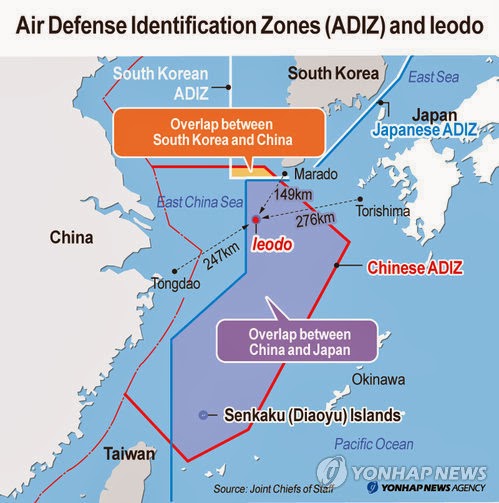
Air Defense Identification Zone (ADIZ): According to Foreign Affairs, an ADIZ is “a publicly defined area extending beyond national territory in which unidentified aircraft are liable to be interrogated and, if necessary, intercepted for identification before they cross into sovereign airspace.” An ADIZ is not covered by any international agreement and does not confer any sovereignty over airspace or water, but has arguably become a part of customary international law due to its growing usage and acceptance. The rules China stipulated with its establishment of an ADIZ in the East China Sea in late 2013 however garnered widespread criticism and non-observation due to its surprise announcement and application to those flights not intending to enter sovereign airspace.

2013-09-12-BZSSR

Conduct for Unplanned Encounters at Sea (CUES): CUES provides a set of non-binding “safety procedures, a basic communication plan and basic maneuvering instructions” when naval vessels and aircraft unexpectedly encounter each other at sea. It was agreed upon at the 14th Western Pacific Naval Symposium in April 2014, and while a code of conduct CUES should not be confused with the much-discussed and as yet elusive ASEAN Code of Conduct below.

Code of Conduct (CoC): In 2002, the member states of ASEAN and China signed a voluntary Declaration on the Conduct (DoC) of parties in the South China Sea “to resolve their territorial and jurisdictional disputes by peaceful means, without resorting to the threat or use of force, through friendly consultations and negotiations by sovereign states directly concerned.” This was to be the precursor to a binding CoC, but as Carl Thayer ably documents implementation of the CoC was kept in check for a decade by China and focus on Guidelines to Implement the DoC, which were approved in 2012. However, promises in the DoC such as to refrain from then uninhabited maritime features and to handle differences in a constructive manner have since been violated by actions including several parties’ ongoing construction and expansion on features under their control. As a result of this and because the Guidelines have been removed as the focus by adoption, many ASEAN states, with the Philippines foremost among them, have returned attention to reaching agreement on a legally binding CoC. There have been recent indications that China may be willing to soon start serious discussions about the Code of Conduct, but it is unclear whether it will be willing to accede to (let alone adhere to) any potent enforcement mechanisms.

A Strategic Buffet

Cabbage Strategy: In a television interview in May, People’s Liberation Army (PLA) Maj. Gen. Zhang Zhaozhong described China’s approach towards securing control over and defending the Scarborough Shoal, after reneging on an agreement with the United States whereby both they and the Philippines would back down from a standoff in 2012:

Surrounding a contested area with so many boats — fishermen, fishing administration ships, marine surveillance ships, navy warships — that “the island is thus wrapped layer by layer like a cabbage.”

140527-china-vietnam-5a_7de94800443e43ddcb5c34b519f8b5e8.nbcnews-ux-960-600Analysts note this approach forces those opposing China’s actions to contend not only with layers of capabilities but also rules of engagement and public relations issues such as would arise from a confrontation between naval vessels facing fishing boats at the outermost layer. A more recent example of this layered approach occurred this summer with the arrival of a CNOOC oil rig in Vietnam’s claimed EEZ.

Salami Tactics (A.K.A. Salami Slicing): This term was coined by Hungary’s Cold War Communist ruler Matyas Rokosi to depict his party’s rise to power in the 1940s. The emphasis is on incremental action. In the initial usage it described the piecemeal isolation and destruction of right wing, and then moderate political forces. In maritime Asia it has come to be used to describe China’s incremental actions to assert sovereignty over areas of disputed territory. A key aspect of Salami Tactics is the underpinning rationale that the individual actions will be judged too small or inconsequential by themselves to provoke reaction strong enough to stop further moves.

The Three Warfares: The Three Warfares is a concept of information warfare developed by the PLA and formally approved by China in 2003aimed at preconditioning key areas of competition in its favor.” The U.S. DoD defined the three as:

  1. Psychological Warfare: Undermining “an enemy’s ability to conduct combat operations” by “deterring, shocking, and demoralizing enemy military personnel and supporting civilian populations.”
  2. Media Warfare: “Influencing domestic and international public opinion to build support for China’s military actions and dissuade an adversary from pursuing actions contrary to China’s interests.”
  3. Legal Warfare (also known as Lawfare): Using “international and domestic law to claim the legal high ground or assert Chinese interests. It can be employed to hamstring an adversary’s operational freedom and shape the operational space.” This type of warfare is also tied to attempts at building international support.

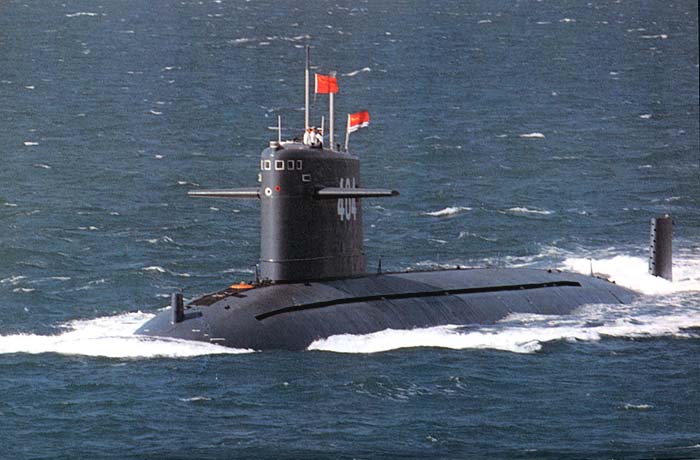
Chinas-Nuclear-SubmarinesAnti-Access / Area Denial (A2/AD): describes the challenges military forces face in operating in an area. According to the U.S. DoD A2 affects movement to a theater: “action intended to slow deployment of friendly forces into a theater or cause forces to operate from distances.” AD, meanwhile, affects maneuver within a theater: “action intended to impede friendly operations within areas where an adversary cannot or will not prevent access.” Advances in weapons such as mines, torpedoes, submarines, and anti-ship missiles are commonly cited examples of those that can be used for A2/AD.

Air-Sea Battle (ASB): A warfare concept designed by the United States military to counter A2/AD challenges and ensure freedom of action by trying to “integrate the Services [primarily the Navy and Air Force] in new and creative ways.” ASB is not a “strategy or operational plan for a specific region or adversary.” There has been much debate and confusion about ASB, in part because it requires the development and balancing of new complimentary capabilities, many of them classified.

Offshore Control: A strategy for the United States to win in the event of a conflict with China put forward in 2012 by USMC Col. T.X. Hammes (Ret.). In Offshore Control, the United States focuses on bringing economic pressures to bear via a tailored blockade, working with and defending partners along the first island chain rather than strikes against mainland China.

Four Respects: The Four Respects is a new term fellow The Diplomat contributor Jiye Ki, based on remarks made by Chinese Foreign Minister Wang Yi earlier in September. They are the four guiding principles by which Wang says South China Sea negotiations should proceed, namely:

  1. The dispute over the Spratlys “is a problem left over by history,” and that “handling the dispute should first of all respect historical facts.”
  2. “Respect international laws” on territorial disputes and UNCLOS.
  3. Direct dialogue and consultation between the countries involved should be respected as it has proven to be the most effective way to solve the dispute.
  4. Respect efforts that China and ASEAN have made to jointly maintain peace and stability. Wang says China hopes countries outside the area can play constructive roles.

Mutual Economic Obliteration Worldwide (MEOW): A term coined by yours truly to describe the deterrent effect of the threat of economic side-effects of a conflict between the United States and China on their actions towards each other.

See any we missed? Part 2 will cover the Geography of Asian Maritime Disputes

Scott Cheney-Peters is a surface warfare officer in the U.S. Navy Reserve and the former editor of Surface Warfare magazine. He is the founder and president of the Center for International Maritime Security (CIMSEC), a graduate of Georgetown University and the U.S. Naval War College, and a member of the Truman National Security Project’s Defense Council.