Tag Archives: United States

Sea Control 53 – Indonesian Security Policy

seacontrol-birthday

Happy Birthday CIMSEC! In celebration of CIMSEC’s first birthday, Sea Control Asia Pacific is bringing you a special podcast with an all-star cast. On the sidelines of the Conference of Australian and Indonesian Youth, Natalie Sambhi, of the Australian Strategic Policy Institute, hosts an in-depth discussion with Lieutenant General (rtd) Agus Widjojo (Indonesian Army), Brigadier General (rtd) Gary Hogan (Australian Army) and Jim Della-Giacoma (former head of International Crisis Group operations in Southeast Asia) on Indonesia’s defence and security, and maritime security in the region.

DOWNLOAD: Indonesian Security Policy

The podcast covers Indonesia’s security priorities, strategic communications and defence diplomacy, Asia Pacific cooperation on the South China Sea, naval modernisation, and US–Indonesia relations.

For some background of the events of 1965 mentioned by the guests, see here.


Base for The P-8? The View from Malaysia

There’s been a fair bit of reporting regarding U.S. Chief of Naval Operations Admiral Greenert’s supposed remarks that Malaysia was offering a base in East Malaysia for deploying US Navy P-8s. Despite the U.S. Navy clarifying his remarks and saying they’ve been taken out of a context, the “base offer” seems too good a story for the U.S. media to pass on. Unfortunately many of the reports miss the dynamics of how U.S.-Malaysia military cooperation actually works, as to anyone familiar with such the notion of Malaysia allowing the United States to regularly stage surveillance missions out of its airbases is fairly laughable.

The fact is, except under the ambit of the Five Power Defence Arrangement, every military cooperation activity by Malaysia with a foreign country is agreed to on a case-by-case basis. So the United States would have to ask for approval for, at a minimum, every deployment with no guarantee that Malaysia will approve. It might be hard for those outside the military-defence circle here to accept but military cooperation activities between Malaysia and other countries can often ad-hoc based on opportunities provided by a deployment that takes place close to or in the vicinity of Malaysia. For instance, last year when the U.S.S. Boxer was transiting through the Malacca Straits with no engagement activity or exercises with Malaysia planned, the United States then decided to offer to fly Malaysian military and defence officials via V-22 Ospreys to the ship to see U.S. Marines capabilities onboard and engage in briefings and discussions, an offer which was then accepted. Similarly in June last year, when the French LPD F.N.S. Tonnerre was on a deployment tour in the region, France put in a request to Malaysia’s Joint Force Headquarters (JFHQ) for an amphibious landing exercise but JFHQ declined, saying it was tied up with the ongoing CARAT 2013 exercise with the United States but referred the French to the Malaysian Army Headquarters who could accommodate the request.

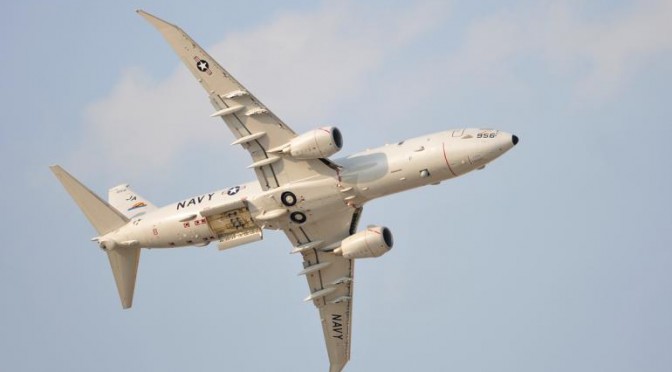
800px-P_8A_touches_down_at_Pax_RiverThese two examples illustrate that Malaysia’s military cooperation activities with other countries are often on an as-and-when basis, rather than occurring as part of a highly formalized arrangement. As Malaysia wishes to preserve its ambit of neutrality, any activity has to be offered in such a manner so that Malaysia can decide whether to allow it based on such criteria and whether the timing is suitable – requests to do something during the fasting month of Ramadan or the Eid Fitri celebration period for instance are typically going to be denied.

Indeed at the Asian Naval Warfare Conference in Kuala Lumpur on September 10, which was open to the media although very little media showed up, Vice Adm. Robert Thomas, Commander U.S. 7th Fleet, directly addressed the matter:

“There’s no formal treaty with respect to Malaysia as far as military operations. In fact, we conduct operations with the Malaysian military on a case-by-case basis, when permission is granted. We have a lot of subject matter exchanges including in the maritime patrol reconnaissance aircraft area so we’re doing more and more work in that regard, but that is not a formal policy document that says ‘hey, this is what we’re going to do and this is when we’re going to do it,’ this is really Admiral Kamarul [Vice Admiral Kamarulzaman, Deputy Royal Malaysian Navy (RMN) Chief who was the senior RMN officer at the conference] and Robert Thomas saying, ‘hey what about this,’ and ‘can we get diplomatic clearance and permission to go work these exercises and this training.’”

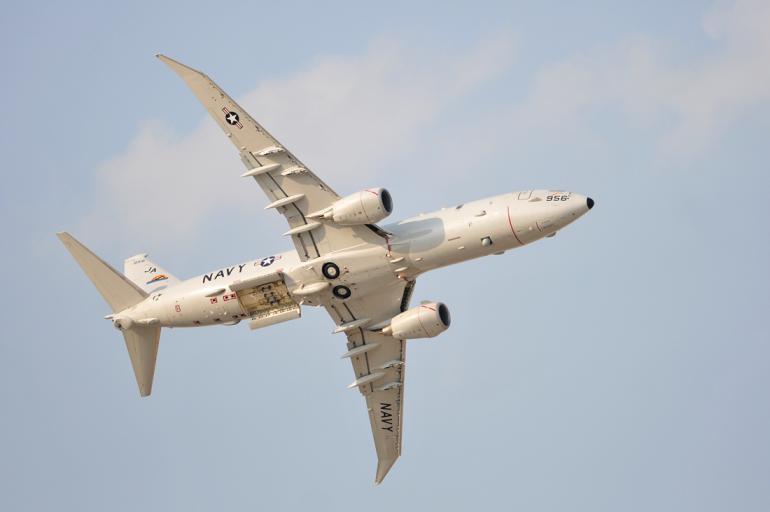
And it’s not as if P-8s, or for that matter P-3 Orions, have not flown in and out of RMAF bases in the past in East Malaysia. Check out any Malaysian planespotting forum and you’ll see plenty of evidence, all related to cooperation activity and exercises between Malaysia and the United States. Part of the reason the United States is keen to have the P-8 Poseidon go to Malaysia is to highlight its capabilities to the Malaysian military given that Malaysia has long had an outstanding requirement for a long-range maritime patrol aircraft, and the P-8 could fill it.

Which raises another point, the ready assumption that anything to do with U.S. surveillance aircraft in East Malaysia has to be in regard to China. The fact is that Malaysia also has concerns on the state of security on the east coast of the state of Sabah in East Malaysia, which since last year’s incursion by Sulu separatists has also been plagued by cross-border kidnappings by various groups from the Philippines so a P-8 or P-3 going to East Malaysia may not necessarily be doing surveillance in an area where China operates. It’s not surprising that when the United States offers a chance for Malaysian personnel to fly aboard and see the P-8’s capabilities, Malaysia would opt to use the familiarization flight to gauge how it performs in an area where the country expects to do the bulk of its maritime surveillance mission.

p-8-weapons-bayStill, for some in the media it makes a nice story to say that Malaysia is offering the United States a base to stage P-8 flights as an attempt to counterbalance China and in response to Chinese maneuvers near East Malaysia and its waters. But the reality is that the Malaysian government hasn’t very much changed its position that it can resolve issues diplomatically with China. The New York Times report quoting “a senior Asian diplomat” saying that Malaysia has been in discussion with the United States on such has to be considered in context. There are some Asian countries that might see it as advantageous to draw a wedge between Malaysia and China, and thus tell the media something that may not be true for such a purpose. It also illustrates the danger of relying on a single source to determine the truth.

The Malaysian government is very much aware of how stretched the Malaysian Armed Forces are to cover the area in question. Allowing the United States to set up in East Malaysia for the purpose of monitoring China would only provoke the Chinese to step up their activities in the area, further taxing the RMN and RMAF, which makes it counter-productive, without mentioning the (domestic) political infeasibility. Unfortunately this type of context is seldom visible to those writing from Washington or New York, leading to narrative displaced from reality.

Dzirhan Mahadzir is a freelance defence journalist based in Malaysia and a regular writer on the Malaysian military and defence developments in Malaysia for a number of international defence publications groups including IHS Janes, Shephard Media, Mönch Publishing Group and Ventura Media.

Playing Wild Cards in the SCS

Earlier this month I had the opportunity to attend a South China Sea simulation held by the International Peace and Security Institute at John Hopkins University’s School of Advanced International Studies in Washington, D.C. Over at the ASPI’s The Strategist I detail some lessons from the simulated negotiations over developing a joint communique. In the run-up to the exercise I asked colleagues on Twitter and in the CIMSEC Facebook group to suggest “wild cards” that could be played to shake-up the talks. Unfortunately many of these turned out to be outside my bounds as a country representative from Vietnam (or really any country’s representative) to enact.  

But, not one to let their creative thinking go to waste, I thought I’d take a moment to assess their likelihood of impacting and altering the negotiations in a fundamental way. These are not judgments on the likelihood of whether such a scenario will occur – many are rather improbable, but they are after all called “wild” cards for a reason.

China’s South China Sea claim near the Natunas becomes a “pricklier” issue for Indonesia
Impact: Medium: A shift in Indonesia’s public position on whether it has an official dispute would add to the moral “weight” of those similarly embroiled, but it’s unclear China would alter its focus on bilateral negotiations as a result. Indonesia would lose something of its mantle of an impartial regional moderator. Taking it a step further and filing a case (or threatening to) with the International Tribunal on the Law of the Sea (ITLOS) would potentially be more impactful as leverage.  

China “discovers” a link between Uighur and Moro terrorists in the Philippines
Impact: Low: If it doesn’t move beyond rhetoric or international arrest warrants, but China could use such a claim to spook the Philippines (and counter-insurgency American military advisors) into thinking it the link may be used as pretext for unilateral action in defense of its interests.

China instigates a coup in the Philippines, followed by pro-Chinese government
Impact: High: A pro-Chinese government would potentially seek accommodation on disputed areas and be more willing to cede claims – whether territorial or for resource exploitation. 

Wild CardChina tries to split claimants by making deal with Philippines but pressing Vietnam
Impact: Medium: While the opposite is probably more likely, if China settled its claims with the Philippines it could try to isolate Vietnam and exert greater leverage for concessions in an ultimate deal over resources and/or sovereignty. Unlike the Philippines, Vietnam sits outside of American treaty obligations and de-linking the issue from an American treaty could also remove some of the incentives for the United States to be as actively involved in resolution of the dispute.  

Chinese PLA hackers hold NYSE hostage
Impact: Low: The stock exchange has tools to suspend trading and minimize the impacts of a disruption while fixing the breaches. Public outcry could force the United States into a tougher negotiating posture.

Algae bloom wipes out fishing stocks and forces fishing fleets into others’ EEZs
Impact: Low: What would be the resultant effects and actions are essentially already ongoing.

ITLOS decides in favor of Philippines
Impact: Medium: Unlikely to alter China’s negotiating position, but would add to moral authority of other claimants and could cause outside parties to back the Philippines or file their own ITLOS claims.

Philippines attempts to ground another ship while China attempts to stop them
Impact: Medium: Depends on the outcome of these attempts and any casualties, but would alter focus of the negotiations and potentially provide Philippines leverage to get China to stop its own construction. 

Vietnamese vessels attack a Chinese rig / Chinese attack and sink a Philippines rig
Impact: Medium: Although Vietnam and Chinese non-naval vessels have tangled in limited engagements over China’s placement of a rig this summer, the destruction of a rig or a large number of casualties would greatly increase tensions. If these were followed by ultimatums they could back negotiators into corners, although the difference in outcome would still likely not be much different from the above scenario.

U.S. starts reporting SCS naval/civil dispositions to news orgs in real time
Impact: Low: The greater transparency would likely have little impact on the talks, but could provide negotiators a common point of reference (and I for one would enjoy tracking the movements).

Peace suddenly breaks out
Impact: High: Certainly changes everything.

“Three Warfares,” Yankee Style
Impact: Medium: If the United States tries to play to media, psychological, and legal warfare it could encourage the other claimants to make ITLOS cases, sign UNCLOS itself (presuming of course it could pass Congress), and declare that it will actively enforce ITLOS ruling when decided as pertains to treaty ally Philippines. On the media front, popular American television show Deadliest Catch could film its next season in the South China Sea, while a psychological approach could threaten to inundate disputed territory with the sounds of Justin Bieber. Combined, these approaches may make Chinese team more willing to negotiate…or just more resentful.

Thanks to Dan Hartnett, Bryan McGrath, Chris Rawley, Armando Heredia, M. Taylor Fravel, Theresa Fallon, Craig Hooper, Natalie Sambhi, and Doug Gates for their inputs.


Lessons from History: Carthage & Transport Supremacy

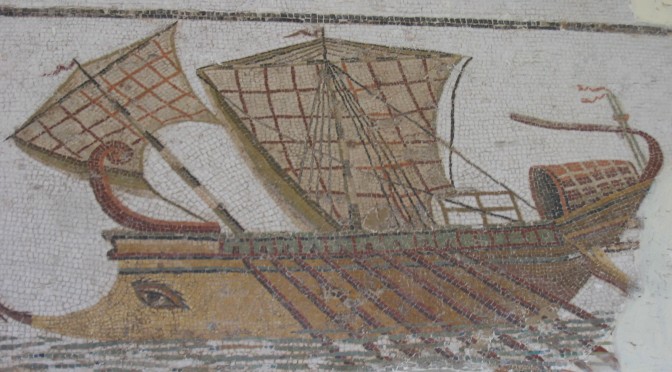
The role of the United States in contingency operations is changing. In all of the large-scale international interventions of the past few years, namely Libya, Mali, and the Central African Republic, the United States’ contributions consisted primarily of transport capacity in both the seas and the skies to bring foreign ground forces to the conflict. This trend appears unprecedented for a global power to pursue its interests but, as the saying goes, there is nothing new under the sun. The ancient maritime power of Carthage utilized the same strategy effectively in the fourth century B.C

For those who are unfamiliar, Carthage was a preeminent maritime power for hundreds of years in the Mediterranean. Pre-saging Alfred Thayer Mahan and 19th century European colonial powers, Carthage embraced an empire not built by massive land holdings but by a disparate collection of trading spheres, ranging from Spain to Sicily, connected by the era’s most powerful navy. There were very few powers that could challenge them on the open seas, making the Western Mediterranean a Carthaginian lake by which it could generate wealth.

Most people know the Carthaginians as the enemies of Rome in the era of Hannibal but that was not always the case. Up until their first dramatic clash in the thirdcentury B.C., the Romans and Carthaginians were allies were allies of convenience. The Carthaginians faced consistent incursions from Numidians in North Africa and colonial wars with the Greeks in Sicily while the Romans had to contend with Greek colonies and restive Samnites to their south. This culminated in the early fourth century B.C. when the Carthaginians used their navy to transport Roman legions to the south to fight their common Greek enemies. Carthage did not have to sacrifice any men to achieve their foreign policy objectives and the Romans, without naval lift, would have spent a much longer time marching their army south through dangerous territory. The Carthaginians were thus able to find manpower to handle operations they could not undertake and the Romans gained rapid mobility. Both sides profited from the arrangement.
  
The United States is in a similar position in the modern as Carthage was in the ancient world. The United States has unmatched transport capacity in both the maritime and air domains, evidenced in all possible measures: numbers of sea/air transport vehicles, total cargo capacity, and experience in deployment logistics. Many other nations have tactical transports but very few others have either the numbers of strategic-level transports or the financial resources necessary to support long deployments. This situation gives the United States a unique position to influence global deployment of forces; it offers a quasi-veto to undesirable deployments and a force-multiplier for operations that it wants to see conducted.
 
While the United States has unmatched transport capacity, there are a host of reasons why the United States cannot project its power simultaneously to tackle every global crisis: ongoing operations in Afghanistan, a lack of popular support for committing troops overseas, and tightening budgets restrict the United States. Carthage had similar limitations, due primarily to budgets and the mercenary make-up of their armed forces, which they circumvented in their wars against the Greeks by leveraging Roman manpower. The United States is already doing the same for France in Mali and the United Nations in the Central African Republic.
 
The story of transport supremacy did not end well for Carthage. In the First Punic War, fought a scant few years after the common war against the Greeks, the Romans raised a substantial navy and challenged Carthage’s dominance on the seas. Defeat in that war, combined with the defeats in the Second and Third Punic wars, would spell the end of Carthage’s empire. While the Carthaginians ushered in their doom by providing transport supremacy to their eventual conquerors, the United States is in no such risk of the same, allowing it to leverage the policy without stoking an existential threat to its existence.
 
The future looks bright for those with transport supremacy.
 
Matthew Merighi is a civilian employee with the United States Air Force. His views do not reflect those of the United States Government, Department of Defense, or Air Force.