Tag Archives: Leadership

Is There A Military Millennial Problem? Twelve Responses to CDR Darcie Cunningham

By Matt Hipple

In the most recent edition of Proceedings, CDR Darcie Cunningham, USCG, describes what she sees as the strategic challenge of cultural friction between millennial expectations and the rigors of professional military duties in an article titled, “Millennials Bring a New Mentality: Does It Fit?

Now, mind you, I can be pretty dismissive of my own Millennial generation at times, but the reality is that our newest generation of Sailors are professional, courteous and – based on the fact we are the most kick-ass navy on the planet – doing a damn fine job. For the USCG, the service of the author, I’m often jealous of the exotic, far-afield deployments of their Mobile Training Teams and the challenging mission they do with our partners. As a Patrol Coastal guy the Gulf, I was glad to have the WP’s there to carry some of the load. Here at home? The response during Hurricane season is always a testament to the Sailors of the Coast Guard.  Is there REALLY a strategic “millennial culture” problem or are we using the idea to run away from our REAL problems?

To answer the first part of that question, I will endeavor to respond to 12 major points posed by CDR Darcie Cunningham. I hope this better frames the reality of the “millennial issue.”

Iron Dome is an advanced defense system, designed for quick detection, discrimination and interception of rockets & mortar threats with ranges of up to and over 70 km and against aircraft, helicopters, UAVs and PGMs.

1. “This generation has me questioning how they can acclimate to the highly traditional, structured U.S. military.”

To the cognitive bias about “traditional (&) structured” – let’s talk about a generation in “general” terms being able to acclimate to those traditions and structures. The article is right – the millennial generation cannot row for days on end and do not like the sound of leather drums. I also find the horned helmet a bit heavy and the hamlets we burn down a bit boring. I also do not feel it necessary to fire cannon salutes upon the departure of the CO’s dinghy – I would note that getting Non-Combat Expenditure Allocation (NCEA) can be a pain, and I’d like to maximize the ammunition I have for training. I would also likely die if subjected to liberal use of lashings. Barring that, I would then likely chafe at the idea of paying for my commission or being rejected due to my family’s social standing. I also do not have the disdain for my steam plant engineers that other Union Officers have. Finally, I do not, in fact, know how to splice a mainbrace.  That said, we do power some of our ships by rending apart the very base material of the universe. The ships that burn boring ol’ dead dinosaurs can shoot a bullet down with another bullet in space. You take what you can get, I guess.

Iron Dome is effective in all weather conditions, including low clouds, rain, dust storms or fog.

2. “The younger generation postures to work only the bare minimum number of hours required. Additionally, they continuously request more time off in the form of early liberty, shorter workdays, the ability to go home after an office luncheon, and so on.

With greatly decreased crew sizes and 8-10 month deployments, can we REALLY complain when people try to get some extra leave in? Can we even claim they “work less”? Long-gone are the times of a 300+ DDG crew and a rope-yarn day. Is this “extra” time off, or just normal requests that are now a bigger deal due to the normal workload.  Now, that said, if there is time for an “office luncheon”, likely there is nothing critical going on and no reason to stay around the office for tradition.

Srlsy bro? Passed over AGAIN?

3. Upon hearing they would not be in-zone for promotion or advancement in a given year, these younger members declare they are fed up with the service and wish to resign. They have an expectation of accelerated advancement through the organization, without regard for the value that experience provides to those in leadership positions. 

People complaining about being looked over for promotion would seem completely in-line with reactions since the time some random Athenian strategos was looked over for command during the Peloponnesian War.

Iron Dome uses a unique interceptor with a special warhead that detonates the targets in the air within seconds. The system can handle multiple threats simultaneously and efficiently.

4. There are an increased number of negative confrontations between very junior members and senior leadership. Rather than saying “Yes Sir” or “Yes Chief” when tasked with a project or simple task, our newer members frequently question why they have to do it.

First, we now have different mechanisms of enforcement. Before my time, there was the threat of getting roughed up – that no longer exists. Naturally – mechanisms  exist in NJP, counseling, discussion where appropriate, etc… but threats & violence were damn scary, and likely without it there will be naturally more friction than before – and a good thing too BECAUSE…

Alfred Thayer Mahan, first great strategist of the Modern US Navy.

Our systems are increasingly based on technical knowledge that decision makers will not have without prior in-depth training. There will be no more Da Vinci-like experts of all things. Where once it was possible to master the knowledge of a ship in 10 years – it can now be a challenge to truly master the nature of some single systems in 20. While belligerence is not excusable, is all this actually belligerence from the subordinate or sensitivity from the superior? I’ve seen some Petty Officers forced to get pretty bellicose in order to avert a  stubborn lurch towards disaster.  Once in awhile, I was the one lurching – and thank God for their candidness! These are motivated, intelligent, and dedicated folks. Maybe part of leadership is to know when that “why” or “what” comes from a place of honesty – I find it is not for the purpose of avoidance or excuse, but a desire to understand or improve. It’s an opportunity.

If I may, I would also quote Alex Smith’s lovely post at the USNI Blog, the “Call of the Deep.” In it, he notes, “Mahan’s diary as a junior officer is a fascinating read. Many of his entries lament about his fear of drinking too much and his abhorrence of superior officers. ‘The Captain has annoyed me, and I have felt and spoken angrily and sullenly.'” Oh, that rascal millennial and his complaints – and a diary? Pshaw!

The Iron Dome provides robust, yet selective defense. Its ability to discriminate between threats headed towards the defended area and those that will fall into the sea or open fields reduces costs and limits unnecessary interceptor launches.

5. Customs and courtesies are eroding. Juniors are no longer smartly saluting seniors or verbally acknowledging higher ranks. On an almost daily basis, I hear, “Hi, how’s it going?” 

There is some truth here. Perhaps we can be a bit more informal at times. It’s not a deadly sin, if a sin at all, but I suppose there are places where we could shore things up a bit. I, for one, do find more use in candid superior-subordinate engagements that usually lead to a bit more informality. That said, once I leave my office for lunch, I am pretty much saluting until I get back indoors if there is heavy foot traffic.  I don’t see any slack in the saluting department and, personally, I like it. It allows me to salute back- which is the part I like. Call me a romantic.

6. Texting is becoming the primary mode of communication. It has already become a means of jumping the chain of command as a condoned communication tool.

Before we start, let us be clear about the problems here – “Jumping the chain of command” is not a “texting” problem. That is like saying a negligent discharge is a “bullet” problem. We shall touch on both.

To jumping the chain of command: Do we really see that much? I would say no. Let’s not stop there, however. When we do, is it always so bad? Is the problem one of people being sneaky or people trying to get things done in a timely manner. We all read the message-to-Garcia story as MIDN – is an hour of work-stoppage waiting for approval acceptable in an already daunting pile of PMS and repair issues? Of course, we do have an increasingly large number of supervisors and mangers running in parallel… perhaps an up-tick in “jumping the chain of command” is a natural side-effect of the increased number of bosses and not a symptom of generational issues?

To texting: there was a time when Sailors crossed the brow and didn’t come back until the next day – or Monday. There was no command expectation to have a cellphone leash at all times. In fact, many commands now require Sailors to have cellphones so they can be recalled. Texting is a short, to-the-point communication that can be sent to the entire command’s pocket – the ability to “leave a text” so someone comes in after a major casualty or maybe just a quick tool for finding people in one’s work-center. Sounds like a success for readiness.
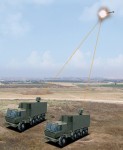
Unveiled at the 2014 Singapore Air Show and expected to enter service in 2015, the Iron Beam is designed to destroy short-range rockets, artillery, and mortars too small for the Iron Dome system to intercept effectively.

7. We must educate them on the importance of patience in our systems.. If this doesn’t sit well with a young member, he or she should be subtly reminded of the current economy and associated unemployment rate. 

A subtle reminder that if many of our management methods were used in a competitive market, our company would be exterminated within months. Anyone who clung to these systems because they were “what we had”, advocating for them merely because they were what they knew, would be quickly fired. Anyone who could think critically about these issues would be well on their way to success (though, granted, those who just complained about them endlessly would ALSO probably be fired). Must we automatically ascribe selfishness to the folks who think we can do better? If our service members expect our world-class military to function on a world-class level, good on them! If we say we’re the best, we should want to be the best.

8. They need to be “course-corrected” immediately if they show signs of insubordination or disrespect.

This happens every day – I have seen it, done it, and had it done to me. It is correct and appropriate. However, we must be careful to realize that, while the line may be fuzzy, informality is not “disrespect” and disagreement is not “insubordination” – the latter especially.

9. We must get back to basics. Customs and courtesies are the foundation of our military traditions.
(later)
While I embrace the fact that we have a new generation that’s better educated, technologically astute, and poised to preserve our nation’s liberties, I also hope we can find a middle ground that will capitalize on their strengths and preserve our proud traditions.

We defend the constitution; we fight and win our nations wars – THAT is our “basic”. THAT is our foundation. THAT is our #1 priority. In Norfolk, there is a stand that claims to hold the lovely wooden helm from the USS MAINE – replaced for metal as our relationship with Spain began to strain. The customs and courtesies that change with time and tide as we pursue the mission are for us to decide and are of secondary importance.

As for where that tradition comes from, from E-1 to O-9, we all take part in creating a service-wide culture that merges tomorrow’s yesterday with ours. This gets at the subtle problem with the turn of phrase used here. Customs and Courtesies are not the foundation of our military tradition. Our military tradition is defined by our customs and courtesies.  The article is right – things have changed. They always have. Harness that and use it – many of these things have changed for a reason. Tradition is not something we keep preserved in a jar passed to us in perfect form from the first Sailor. From our youngest SN with his iPad to our flush-faced comrades in the Continental Navy after a night of grog – each of Sailor in their own time is creating tradition for the next generation.

10. They also need positive feedback early and often. Little gestures such as going to their offices and offering accolades for jobs well done gives encouraging reinforcement and the feedback for which they hunger….

I’ll be the first to admit there are many things about my generation I cannot stand, though I reject that this characterization is correct for our warfighters – but, let’s entertain a small kernel of truth here. Why DO millennials sometimes engage in such childish shenanigans?

It’s this very perspective that enables nonsense. No, don’t treat your grown-up, educated subordinates like children; they are not gentle flowers. Do not create the self-fulfilling prophecy by choosing the easy, comfortable route of leadership by coddling and participation trophies. What they’re looking for is constructive input – good and bad- not blind accolades.

11. And finally . . . this needs to be said: We must be prepared for the tough conversation. Will they truly be able to adapt to the service?

Truly realize who we are talking about. These are uniformed service members who joined up in wartime to make a difference – what they’re looking for is knowledge and relevance, not a fight with their boss or some empty accolade. It is a mature desire, one informed by a drive to defend our way of life, in the best way they can, at potentially shattering cost.

12. “If millennials are more focused on what’s in it for them, they may not be the right fit.”
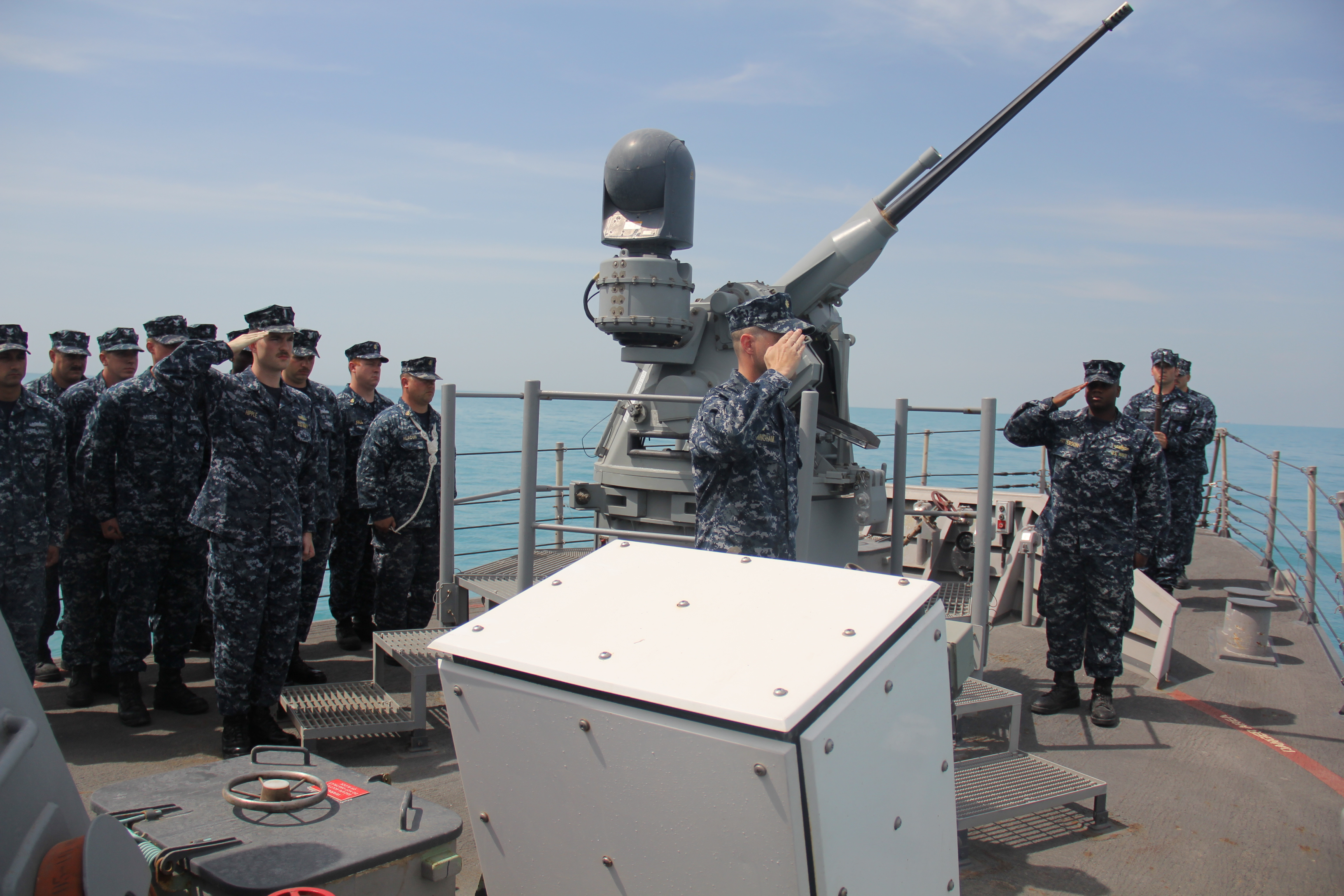
130424-n-tr469-014
24 APR 2012 – USS FIREBOLT, in the Northern Gulf, honors the ultimate sacrifice of Navy Petty Officer 1st Class Michael Pernaselli; Navy Petty Officer 2nd Class Christopher Watts and Coast Guard Petty Officer 3rd Class Nathan Bruckenthal: killed in a terrorist attack during operations to defend ABOT and KAAOT.

I may have neither risked nor sacrificed as much as many of my friends who served on the front lines of the Global War on Terror, but I did serve on the USS FIREBOLT and refurbished the 3 stars embedded in the floor of the mess decks. From the 2004 terrorist attack on ABOT and KAAOT, one of those stars belongs to DC3 Nathan Bruckenthal, first USCG wartime casualty since Vietnam. He didn’t ask what was in it for him.

Millions have gone out to the front lines of our global war against terror and not asked what was in it for them. Thousands have not come back – they did it for what was in it for us, the ones that live. They are all Americans, but one could throw a superficial label like “millennial” on many.  Remember, when we write these kinds of articles, we are talking about leading people who, in the course of war, will have to kill – and some may have to die – in the service of their country. This kind of “millennial this” and “millennial that” talk doesn’t match that reality. This kind of talk is NOT what -we- should have “in it for them.”

I by no means think the purpose of this article was to ignore the great work of our shipmates, the ultimate sacrifice of our comrades, or the potential of so many others to bear that burden as well – but nevertheless, this kind of sentiment ultimately ignores it.

Matthew Hipple is a naval officer by choice and millennial by cruel twist of fate.
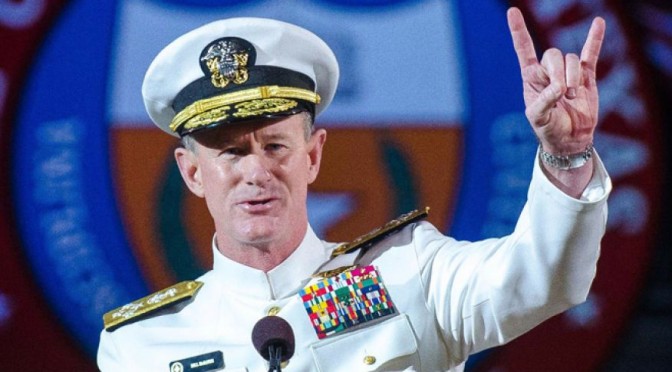
The Legacy of Adm. William McRaven

The most impressive intellectual leader working today is a one Bill McRaven.

By Robert Caruso

William McRaven is the most charismatic military leader since Fleet Admiral Chester Nimitz.

Perhaps more than any other serving officer, McRaven has postured the US Armed Forces to be better prepared when conflicts arise. He is the most accomplished flag or general officer of our time.

The future of what the U.S. armed forces looks like is uncertain, but one constant will be the mark McRaven has left. He is preparing to retire as the head of U.S. Special Operations Command, the nerve center of the effort to combat terrorism and other threats in the unlit spaces. While the past decade has been dominated by Iraq and Afghanistan, the United States cannot take its eyes off the threat of transnational terrorism nor the special activities of a Russia, Iran, or China.

To combat those threats, McRaven, his staff, and his counterparts have engaged willing nations the world over in building capacity, strengthening capabilities, and solidifying partnerships.

All national security professionals should know that more than any other serving officer, McRaven has postured the force to be better prepared when conflicts arise.

He holds the title of “Bull Frog”— the active-duty UDT/SEAL operator with the longest period of cumulative service.

SOCOM recently stood up J-3I, an operations directorate focused exclusively on international cooperation under McRaven’s guidance. A global network of special operations forces will be imperative to the future fight, as the nation increasingly turns to a global network of partners to combat a global network of threats.

Concurrently, he has increased SOF’s stature in Washington and established a framework to lead the interagency in the fight against globally dispersed networks.

During his time leading Joint Special Operations Command (JSOC), Naval Surface Warfare Center Crane stood up a customer advocate shop, devoted to resourcing special operations forces—a trend the rest of the sprawling Pentagon equities took to replicating with gusto.

When then-Secretary of State Hilary Clinton wanted to boast of the United States’ success at hacking al Qaeda, she took to the stage at the annual special operations conference, introduced by McRaven.

It was his deputy, Air Force General Marshall Webb, who is featured in the iconic White house situation room photo the night Osama bin Laden was killed.

McRaven is a proponent of the joint approach: early on in the global war on terror, the Pentagon “merged the two commando teams and headquartered the reflagged Task Force 121[McRaven] in Baghdad,” reported The Washington Post.

Indeed, the forces under McRaven’s command time and again revolutionized the way technology was used to win the fight. Much of modern social analysis and mapping techniques, as well as Palantir’s tools and software like Analyst’s Notebook and Webee instant messaging, owe their success with government to organizations he led during his career. And if that wasn’t enough, his 1993 thesis,”The Theory of Special Operations”, is required reading across government.

Many career FBI personnel believe this thesis revolutionized the way FBI looks at counterterrorism. It is considered such a seminal work that Coast Guard special operations forces created a doctrinal foundation based almost exclusively on its contents. In 2012, the President and the Secretary of Defense released new defense strategic guidance, emphasizing the need to rebalance toward the Pacific. But the majority of the crises that the United States will be called on respond to won’t always be in Asia. Globally postured and forward deployed, McRaven has left an indelible mark on the Armed Forces that stabilized the Government of the Philippines, defeated the Islamic Courts Union, captured Saddam, and killed bin Ladin.

In 2012, the President and the Secretary of Defense released new defense strategic guidance, emphasizing the need to rebalance toward the Pacific. But the majority of the crises that the United States will be called on respond to won’t always be in Asia. Globally postured and forward deployed, the Navy that once fielded thousands of river rats to fight in Vietnam and put Seabees on the ground in Afghanistan will be called upon again and again to augment special operations forces. SOCOM will play a large part in the execution, with or without a SEAL at the helm.

As McRaven first said in his June 2011 testimony: “The world’s strategic environment has evolved toward one that is characterized more by irregular warfare activity rather than major nation state warfare […] we must confront this ‘new normal’ and posture our forces to be successful in it.”

The U.S. armed forces and a grateful nation are better prepared to face those challenges because of McRaven’s contributions.

Robert Caruso is a veteran of the United States Navy and served in the Office of the Secretary of Defense at the Department of Defense, in the Bureau of Diplomatic Security at the Department of State and as a contractor for the Department of the Army. He is an Associate Editor at CIMSEC, and concurrently serves as the Tampa Chapter President.

Our Debating Military: Here, If You’re Looking

“Not a military voice is heard calling for thoughtful, substantive change.”

-William S. Lind, “An Officer Corps That Can’t Score”

Will, “hello,” suffice? William S. Lind’s suggestion at The American Conservative Magazine that the Officer Corps is in a blind, intellectual death spiral is weighty indeed, but ignores the vast body of debate going on in the junior and senior ranks of our nation’s military. Rather than our officer corps living in a bubble, perhaps some of those discussing the internal debate of the military writ-large need to reach out of their bubble to see the rich discussion happening -right now-.

“Even junior officers inhabit a world where they hear only endless, hyperbolic praise of “the world’s greatest military ever.” They feed this swill to each other and expect it from everyone else. If they don’t get it, they become angry.”

-William S. Lind, “An Officer Corps That Can’t Score”

Mr. Lind accuses our Officer Corps of a hollow, cavalier attitude that would suggest they neither recognize nor wrestle with the threats of tomorrow or the mistakes of today. Ask any moderately informed officer on their thoughts about cyber-war, the F-35, LCS, insurgency, the utility of carriers, the proliferation of anti-ship cruise-missiles, etc.. and the opinions will be heated and varied. The Center for International Maritime Security has featured an entire week debating the merits of the Navy’s,“Air Sea Battle,” concept. The United States Naval Institute archives decades of articles relating to the debate over carriers. Small Wars Journal is a running testament to the continued debate over insurgency and irregular ground conflicts. There are also sometimes-anonymous outlets, like the Sailor Bob forum, Information Dissemination, or the wild wonderful world of Commander Salamander’s blog; they are quite popular in -light- of the often unique and critical perspective taken by writers.

The self-hate created by my blog's criticism is overwhelming me!
The self-hate generated by my awareness of challenges to US might is overwhelming me!

The majority of these articles are written by officers, with the approval or non-interference of their leadership. Of course, not all military leadership is necessarily embracing criticism, but that is natural to any top-down organization. We’ve made great strides. The Navy released the Balisle Report on its critical issues with maintenance. CDR Snodgrass’ 24 page study on retention is now a topic of wide debate encouraged by VADM Moran, Chief of Naval Personnel. If, as Mr.Lind describes, our officer corps had a comical “hulk-smash” reaction to suggestions of US Military weaknesses or institutional flaws, we’d have long ago beaten ourselves to rubble in the haze of an insatiable rage.

“What defines a professional—historically there were only three professions, law, medicine, and theology—is that he has read, studied, and knows the literature of his field. The vast majority of our officers read no serious military history or theory.”

-William S. Lind, “An Officer Corps That Can’t Score”

Gen. Mattis says we should have a 2000 year old brain... so we can shred triple-neck guitars.
Gen. Mattis says we should have a 2000 year old brain… so we can shred triple-neck guitars.

Mr.Lind suggests that our modern-day officers live in a historical desert, in which the lessons of yester-year are lost. I would suggest those doubters of the military’s historical memory look to the USS PONCE and the Navy’s re-embrace of sea-basing. Thomas J Cutler’s “Brown Water, Black Beret” is an excellent primer on the historical lessons the Navy is re-applying. Perhaps we might highlight the Navy and Marine Corps’ dual scholar-heroes of ADM Stavridis (ret) and Gen Mattis (ret): admired for both their acumen in the field and their rarely equaled study of the history of conflict

Mahan, ideating before it was cool. Photo-shop Credit: Matt Hipple

Perhaps Mr.Lind is disappointed in our lack of engagement with Mahan, in which case I would direct him to LCDR Benjamin Armstrong’s book, “21st Century Mahan.” Perhaps Clausewitz is our flaw? The Army and Air Force officers writing at “The Bridge” would likely demolish THAT center of gravity, if the snarky Doctrine Man doesn’t get there first. Perhaps we have not learned the importance of innovation from history! The military’s 3-D printing labs located around the country would likely raise their eyebrows in bemusement.

A Cleveland native myself, I understand how far Hampton Roads is from Mr.Lind’s home on the Northern Shore. However, anyone like Mr.Lind who doubts the military, officer or enlisted, is interested in tackling the issues should make every attempt to visit the June Defense Entrepreneurs Forum (DEFx) Conference in Norfolk. From flag officers to those who paint the flagstaff, the gamut of our service will be on location, out of uniform, debating our technical and institutional challenges in an unofficial and free forum. He may even meet some members of the CNO’s Rapid Innovation Cell (CRIC). If Norfolk is a bridge to far, I’d encourage the doubters to sign up for membership at the Center for International Maritime Security. We have weekly meetings in DC where we talk about everything from Professional Military Education to drone operations.

Courtesy of CIMSEC author, Nicolas di Leonardo.

The military is by no means perfect, but such imperfection is what drives the debate that both officers and enlisted are engaging in on a daily basis. Mr.Lind suggests interesting structural reform to better cultivate leadership in our officers. However he cites the need for such reforms based on a decrepit caricature of an officer corps the US Military is not saddled with. If one hasn’t, as a USNI author once told me, “done one’s homework,” ideas fall flat. There IS a debate happening in America’s Officer Corps, an educational and engaging one. We’re not too hard to find if you look.


Matthew Hipple is an active duty officer in the United States Navy. He is the editor of the NEXTWAR blog at the Center for International Maritime Security, host of the Sea Control podcast, and a writer for USNI’s Proceedings, War on the Rocks, and other forums. He would like to also give a nod to his friends at the Defense Entrepreneurs Forum, The Bridge, Doctrine Man, Athena Project, CDR Salamander Blog, Information Dissemination, Small Wars Journal, CRIC, and others who did not realize that they, like he, apparently do not exist.

21st-Century Education of a Naval Officer

It has been 135 years since Alfred Thayer Mahan first became a published author. His 1879 essay on naval education won third prize in the inaugural United States Naval Institute “General Prize Essay Contest,” appearing in what was then known as The Record of the United States Naval Institute. Recently re-printed in LCDR Benjamin Armstrong’s book 21st Century Mahan:  Sound Military Conclusions for the Modern Era, his words remain a prescient reminder of what it takes to educate young naval professionals.

Blinded With Science

cheers
Solves all the things!?

In the late nineteenth century, the burgeoning fields of steam power and advanced naval armament had “dazzled” military thinkers. Failing to fully appreciate the scope of their power, Navy leaders instituted a strenuous, technically-focused curriculum at the Naval Academy that drove young men to become engineers or other technical “specialists” in order to harness the wonders of modern science. A midshipman’s schedule was heavy with science, engineering, and technical courses at the expense of English, foreign language, and other studies of the humanities.

This movement puzzled Mahan. He viewed the education of a naval officer as principally involving morals, duty, discipline, and general professional knowledge. Required technical knowledge was only “that which enables him to discharge his many duties intelligently and thoroughly.”1 Mahan eschewed the technical specialist role, writing “that the knowledge sufficient to run and care for marine steam engines can be acquired by men of very little education is a matter of daily experience.”2

Nearly one and a half centuries later, we still find ourselves dazzled by science. Drones, cyber warfare, and other transformational technologies have led Admirals and Generals alike to clamor for officers grounded firmly in math and science. In the October 2012 issue of Proceedings, Vice Admiral Nancy Brown, USN (ret), Captain Danelle Barrett, USN, and Lieutenant Commander Jesse Castillo, USN wrote that “to build the kind of force necessary to excel in the cybersphere, the Navy’s entire man, train, and equip paradigm must be revamped to produce a new kind of officer equipped for the task: a cyber-warfare officer.”3 This belief runs counter to the moral education advocated by Mahan. Again, we are “dazzled” by the complexity of the cybersphere, and feel that we must need a completely new set of officers to fill this role. Such drastic changes may create cyber specialists, but they do not necessarily create professional naval officers.

STEM or the Fruit?

As the face of naval education, the United States Naval Academy claims that their “academic program is focused especially on science, technology, engineering, and mathematics (STEM), in order to meet the current and future highly technical needs of the Navy. Graduates who are proficient in scientific inquiry, logical reasoning and problem solving will provide an officer corps ready to lead in each warfare community of the Navy and Marine Corps.” 4

During the 1980s and early 1990s, the Naval Academy was required to graduate between 70% and 80% of officers with technical majors.5 After dropping this requirement for much of the 1990s and 2000s, Naval Academy Superintendent Vice Admiral Michael Miller announced the re-establishment of a STEM “benchmark” in 2011.6 For the Class of 2013, this meant that at least 65% of midshipmen had to choose a STEM major in order to satisfy “the needs of the Naval Service.”7

The number of STEM graduates will continue to dwarf other Naval Academy graduates—regardless of any specific percentage requirement—because the institution has developed one of the finest undergraduate engineering programs in the country. This is an academic success story, and it will rightly attract midshipmen interested in the field. However, scholastic achievement and professional naval education are often two different topics.

As in Mahan’s day, our enlisted sailors prove that the principles of aerodynamics, missile mechanics, and electrical systems can be learned without college degrees and officer commissions. By overemphasizing the technical knowledge necessary from her officer corps, “the naval system of our country has continued to surround a simple enough practical matter…with a glamour of science and difficulty which does not exist.”8

Not only that, but credence in cold calculation over tactical intelligence has led current naval officers such as LT Matthew Hipple to observe that “critical inspections are becoming choreographed executions of checklists, nothing more than theater to check blocks in a PowerPoint presentation.”9 When we trust formulas and checklists more than our own people, we are allowing our reliance on the wonders of science to erode our warfighting force.

Ethics or Equations?

Today, we are confronted by many allegations of corruption and impropriety from our officer ranks. A search of the word “fired” on the Navy Times website returns a plethora of reasons for high-ranking naval officers being relieved of duty in just the past two months:

-Poor command climate
-Drunk driving
-Adultery
-Bribery
-Sexual assault
-Forcing female sailors to march down the pier carrying bags of their own feces

The words of Alfred Thayer Mahan are truer today than they ever have been: “No amount of mental caliber, far less any mere knowledge, can compensate for a deficiency in moral force in our profession.”10

Midshipmen today are focused on Physics, Calculus, Electrical Engineering, Steam, Boats, and a host of other technical courses as part of their “core curriculum”; the level of accumulated knowledge required to achieve a bachelor’s of science degree is immense. Courses such as Naval History, Ethics, and Leadership are almost an afterthought in the average study day. Currently, midshipman are only required to take four credit hours of Naval History and Warfare, seven credit hours of Leadership, eight credit hours of Seamanship and Navigation, three credit hours of Ethics, and two credit hours of Naval Law during their entire four years in Annapolis.11 This amounts to an average of approximately 17% of a midshipman’s total credit hours—more of an annoyance than an actual course of study—but a majority of their professional responsibilities as officers.

In a February 2012 piece written for Proceedings, Commander Michael Junge, USN writes that, “[the naval officer’s] mind needs to be developed to see patterns in technology and human behavior, to understand that not everything needs to be (or can easily be) reduced to ones and zeroes, and to be able to draw on historical examples to inform the present.”12 Similarly, Mahan believed that “the studious and scientific intellect is not that which most readily attaches itself to a naval life…and the attempt to combine the two has upon the whole been a failure, except where it has succeeded in reducing both to mediocrity in the individual.”13

The failure of our leaders to be fully inculcated to the history and ethics of our profession has led to an embarrassing spate of public dismissals and a lack of trust in naval leaders. Overemphasis on technical knowledge—at the expense of a moral and professional education—negatively impacts the development of the kind of naval leadership our country deserves.

A Mahanian Fix

9781612512433_0
Droppin’ the mic.

The need to reform naval education has been evident since Alfred Thayer Mahan first wrote that essay in 1879. The crux of academic thinking today centers around the notion that advanced warships and aircraft require deeply technical junior officers. However, as Junge points out, “While the civilian world once held the same idea that technical degrees were required in technical fields, recent research turns the concept on its head. In a survey of 652 U.S.-born chief executive officers and heads of product engineering at 502 technology companies, only 37 percent held degrees in engineering or computer technology, and only 2 percent held them in mathematics. The majority held degrees as diverse as business, accounting, finance, health care, and arts and the humanities.”14

The naval officer corps must return to a study of its roots. The surest way to do this is to turn our focus away from technical acumen as our primary undergraduate goal, and instead commission officers who are as savvy about their history, traditions, and tactics as they are about their Thermodynamics homework. There are three essential changes that must be adopted:

– Eliminate the requirement for specific percentages of STEM majors.

The Naval Academy already has a reputation for STEM excellence and will continue to attract some of the top technical undergraduates in the country. But a recent CNO dictate mandating “not less than 85 percent of incoming officers will come from [STEM majors]” places our focus on academic specialization rather than developing a lifetime of moral and professional learning in our officer corps.15

– Make Naval History, Ethics, and Leadership classes mandatory all four years.

Additionally, these courses should comprise no less than four credit hours per semester, accounting for approximately 33% of a midshipman’s total credit hours over four years. This sends the signal that these classes are essential to the development of naval professionals and a proud officer corps that is aware of its history.

-Make the final year’s Naval History, Ethics, and Leadership requirement an “Elective.”

In order to tailor the academic experience, offering classes on the history, ethics, and leadership specific to the warfare community each midshipman service-selects would be an excellent primer for their first fleet experience. This would serve as a fitting complement to the second-semester Practicum class already required for all 1/C midshipmen.

Several centuries before Mahan, Roman Emperor Marcus Aurelius wrote, “a man then must stand erect, not be kept erect by others.”16 The moral fiber of our officer corps—not the stealth of our warplanes or the accuracy of our weapon systems—is the most important aspect of our Navy. A rigid focus on engineering and science, though both upstanding fields of study, cannot alone produce officers of “a very high order of character.” At the undergraduate level, simply graduating technicians is not in line with the Naval Academy’s stated mission “to develop midshipmen morally, mentally, and physically.” An emphasis on Mahan’s moral and professional education, with a firm grounding in history, ethics, and leadership, can drastically improve our officer corps.

LT Roger L. Misso is a Naval Flight Officer (NFO) in the E-2C Hawkeye and former director of the Naval Academy Foreign Affairs Conference (NAFAC). The opinions and views expressed in this post are his alone and are presented in his personal capacity. They do not necessarily represent the views of his squadron, the Navy, or the Department of Defense.


1 Mahan, Alfred Thayer. 21st Century Mahan: Sound Military Conclusions for the Modern Era. Ed. Benjamin F. Armstrong. Annapolis, MD: Naval Institute Press, 2013.

2 Ibid.

3 Brown, Nancy, Danelle Barrett, and Jesse Castillo. “Creating Cyber Warriors.” Proceedings. Oct 2012. http://www.usni.org/magazines/proceedings/2012-10/creating-cyber-warriors

4 “Academics: Majors and Courses.” United States Naval Academy. http://www.usna.edu/Academics/Majors-and-Courses/index.php.

5 “Naval Academy Hopes to Meet Math and Science Goal.” Associated Press. 3 Aug 2011. http://baltimore.cbslocal.com/2011/08/03/naval-academy-hopes-to-meet-math-and-science-goal/

6 Ibid.

7 “Academics: Majors and Courses.”

8 21st Century Mahan.

9 Hipple, Matthew. “’Choreographed’ Training is Dancing with the Devil.” Proceedings. April 2012. http://www.usni.org/magazines/proceedings/2012-04/nobody-asked-me-%E2%80%98choreographed%E2%80%99-training-dancing

10 21st Century Mahan.

11 “Academics: Majors and Courses.”

12 Junge, Michael. “So Much Strategy, So Little Strategic Direction.” Proceedings. Feb 2012. http://www.usni.org/magazines/proceedings/2012-02/so-much-strategy-so-little-strategic-direction

13 21st Century Mahan.

14 “So Much Strategy, So Little Strategic Direction.”

15 Smith, Alexander P. “Don’t Say Goodbye to Intellectual Diversity.” Proceedings. Dec 2013. http://www.usni.org/magazines/proceedings/2013-12/nobody-asked-me-don%E2%80%99t-say-goodbye-intellectual-diversity

16 Aurelius, Marcus. Meditations. Dover Publications, 1997.