Tag Archives: India

Maritime Silk Road: Through a New Periscope

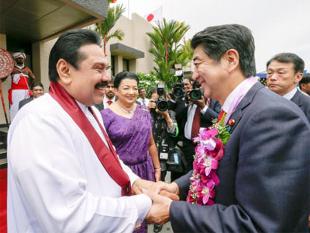
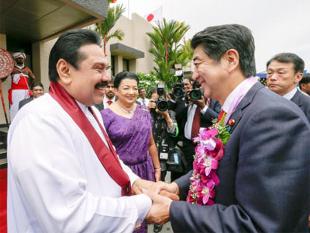
It was the Maldives’s turn to receive a sermon on the Maritime Silk Road (MSR) from China. Chinese President Xi Jinping invited Maldivian President Abdulla Yameen to participate in the 21st Century MSR, expand cooperation in tourism, trade and infrastructure, and enhance maritime cooperation. Apparently Yameen assured Xi that his country would “respond to the Chinese initiative.” Ali Hameed, former vice foreign minister of the Maldives, too had stated that the MSR was of interest to the Maldives. Earlier, Xi had approached Sri Lanka to consider the MSR, and Colombo indicated that it would actively examine the proposal. The MSR was also raised during Indian Vice President Hamid Ansari’s visit to China a few months ago.

Unlike in Sri Lanka and the Maldives, the MSR has sent the Indian strategic community into a tizzy. A number of articles, commentaries, op eds, discussions and sound bites have concluded that the MSR is nothing but a Chinese ploy to get a naval ‘foothold’ in the Indian Ocean and reflects China’s creeping influence in the region. These reactions are quite natural given that China has aggressively pursued the agenda of building maritime infrastructure in friendly countries such as Pakistan (Gwadar), Sri Lanka (Hambantota) and now the Maldives – that are seen as bases/facilities to support People’s Liberation Army Navy’s future operations in the Indian Ocean and also the Chinese attempt to ‘encircle’ India.

However, it will be useful to examine the MSR through the prism of maritime infrastructure development and explore if India can leverage the MSR to its advantage. China has developed a sophisticated concept of marine economy that has been facilitated by its long coastline. Nearly 40 per cent of the Chinese population, 5 per cent of cities, 70 per cent of GDP, 84 per cent of direct foreign investment and export products are generated within 200 km of coast. In 1998, the Chinese government published a White Paper on marine economy which identified twenty different sectors for the development of the national economy. The China Ocean Information Center announced that the marine output in 2013 grew 7.6 per cent year on year to 5.43 trillion Yuan ($ 876 billion) accounting for 9.5 per cent of the national economy. In essence, the coastal provinces have contributed substantially to the overall national strength in terms of economic growth and play an important role in developing an export-oriented economy.

Today, China figures among the top countries in shipbuilding, ports (particularly container cargo), shipping, development of offshore resources, inland waterways, marine leisure tourism, and not to forget it is one of the top suppliers of human resources who are employed by international shipping companies.
mahinda-rajapakse-backs-chinas-maritime-silk-road-projectChina’s shipbuilding capacity is notable and is supported by plentiful of cheap labour and domestic ancillary industry which is endowed with exceptional engineering skills. Seven of the top ten global container ports are in China and the Chinese shipping fleet of 6,427 vessels ranks second behind Japan with 8,357 ships. Similar successes are seen in China’s fisheries production which is projected to reach about 69 metric tonnes by 2022 and it will continue to be top world exporter with 10 metric tonnes by 2022. Likewise, China ranked third as a tourist destination in 2012. The coastal regions are dotted with marinas, water sport parks and beach resorts and Sanya, Qingdao and Xiamen are home to the growing yacht and luxury boating industry.

These capabilities have been built over the past few decades and has placed China among the major maritime powers of the world and top Asian maritime powers – beating both Japan and South Korea. China is leveraging these capabilities and offering to develop maritime infrastructure in friendly countries that are willing to accept the offer – which at times makes an attractive investment opportunity, and can help these exploit the seas to enhance economic growth, and ensure food and energy security.

There is a sea change in the maritime strategic thinking of China and India. While the former has harnessed the seas to build its power potential, the latter needs to undertake a strategic evaluation of its maritime potential. India needs to make major policy changes to develop maritime infrastructure, offshore resources and exploit these on a sustainable basis. Although India is pursuing the path of building a modern three-dimensional navy with nuclear submarines, a new appreciation of the multifaceted maritime economic activity needs New Delhi’s attention.

India lacks maritime infrastructure and technology to exploit offshore marine organic, mineral and hydrocarbon resources that are critical to ensure sustained economic growth – which is high on the current government’s agenda. It would therefore be prudent to understand the MSR through the prism of an opportunity.

Dr Vijay Sakhuja is the Director, National Maritime Foundation, New Delhi. The views expressed are those of the author and do not reflect the official policy or position of the Indian Navy or National Maritime Foundation. He can be reached at director.nmf@gmail.com. This article was cross-posted by permission and appeared in its original form at the Institute of Peace and Conflict Studies

The Mumbai Attack: Terrorism from the Sea

This is an article in our first “Non Navies” Series.

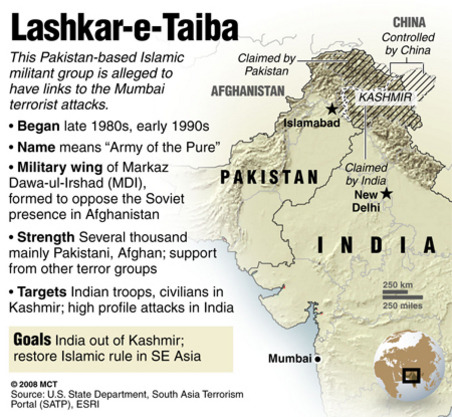
Nearly six years ago, Pakistani terrorists from Lashkar-e-Taiba (LeT, meaning Army of the Righteous) launched a sophisticated raid on the Indian port of Mumbai. Ten LeT operatives held the city captive from 26-29 November 2008, killing 164 people and injuring more than 300 others. Fascinating in its counterterrorism aspects, the Mumbai attack is particularly noteworthy for those of us in maritime professions because of how they got there: by sea. LeT highlighted in detail how an irregular organization can circumvent landward control measures by turning to the maritime environment.

A pre-26/11 U.S. Department of State fact sheet on Lashkar-e-Taiba.

Violent extremist organizations (VEOs) such as LeT succeed in irregular warfare by going where government authority is absent or insufficient. The Indo-Pak coast is no exception. The expansive region has supported the livelihood of fishermen and merchants for centuries, making it a permeable environment where minimal government presence was (and remains) tolerant of transient craft. Such an environment offers myriad advantages compared to overland routes where government checkpoints and patrols are far more rigorous. VEOs continue to pursue these overland routes for infiltration or smuggling, but LeT minimized the chance of their high-stakes attack being interdicted by Indian authorities when they chose to come by sea.

The raid itself wasn’t the first iteration of LeT’s maritime infiltration. For example, in late-2006/ early-2007 eight operatives rendezvoused at sea with Indian LeT members aboard an unidentified fishing vessel and returned with them to reconnoiter Mumbai. This gave them ample opportunity to assess the coastal pattern of life, including security presence and traffic density, as well as to gather imagery of everything from landing sites to target location from the perspective of the raiding party. Once ashore they split into two-man teams, just as the raiding party would do, observing the area by travelling from safehouse to safehouse. They were not discovered during the seaborne infiltration nor during the reconnaissance of Mumbai. However, two of the eight were arrested in March 2007 by the Jammu & Kashmir police (Jammu & Kashmir being a state in northern India). During interrogation the two suspects gave specific information about their infiltration of Mumbai as well as LeT’s desire to use the sea as a routine ingress. Neither this shot-across-the-bow nor corroborating intelligence provided by U.S. and Indian agencies proved sufficient to energize India’s maritime security agencies.

After more than a year of training on the Mangla Dam reservoir in Kashmir, the raiding party departed Karachi on 21 November 2008 aboard motor vessel HUSSEINI. They spotted the Indian fishing vessel KUBER two days later in Pakistani waters. Though their plan had been to hijack a Mumbai-based craft in Indian waters, KUBER’s Indian registry enticed them to seize it as an early opportunity. They were able to come alongside, possibly by feigning distress, and quickly commandeeredthe fishing boat. The raiding party embarked KUBER and transferred all of her crew except the master to HUSSEINI. The raiders started towards Mumbai after the equipment was moved aboard and HUSSEINI returned to Karachi. The four fishermen taken from KUBER were executed, their bodies left adrift on the sea.

The transit to Mumbai was filled with map reconnaissance, table-top rehearsals, equipment prep, as well as probable comms checks and intel updates from LeT’s ad hoc operations center in Pakistan. KUBER arrived off the coast of Mumbai unscathed and unaddressed by maritime authorities on the evening of 26 November. The master was bound and his throat slit. The raiding party assembled their inflatable Gemini boats (counts vary from one to three), transferred their equipment and began the 4 NM insert under cover of darkness. KUBER was left adrift with a GPS, satellite phone, and other materials that would prove instrumental in developing the backstory during the subsequent investigation.

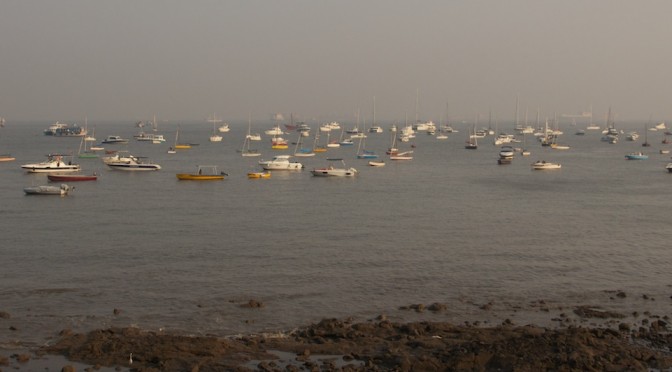
It’s unknown where the inflatable craft parted company (assuming there was more than one), but multiple beach landing sites were used. In the truest sense of camouflage, the boat(s) were not colored black and green to blend into the night, but bright yellow to blend

One of the boats used by LeT to insert into Mumbai.

into the menagerie of local craft- undoubtedly a result of the early reconnaissance. At one site the operatives cheerfully claimed to be college students. At the other site they responded gruffly to locals, telling them to mind their own business, possibly even displaying their weapons. They continued unhindered in both cases, abandoned their craft on the beach, and shortly thereafter waltzed into history as executioners in a horrific raid.

To recap: LeT reconnoitered by sea, trained on Pakistan’s inland waterways, departed a major sea port (Karachi), hijacked a fishing vessel illegally operating in Pakistani waters/EEZ, transited unmolested across 500 NM of Indo-Pak littorals, amphibiously inserted into the Mumbai metropolis unchallenged, and came ashore unnoticed save for a handful of local fishermen accustomed to illicit maritime activity.

LeT violated the Indo-Pak littorals with impunity and conducted a raid heralded as a wake up call for maritime terrorism. This raid indeed required a great deal of competence, but VEOs embracing riverine or littoral waters as a maneuver space should not have come as any surprise. Then and now, the Niger River Delta and the Gulf of Guinea were abused by criminal organizations on a daily basis; Philippine waters were plagued by Abu Sayyaf; Colombian Riverines routinely battled the FARC and AUF; and in the U.S.’s backyard were organizations trafficking drugs, money, and violence through the Caribbean, Western Pacific, and Rio Grande. Oceans and waterways are indeed the vital connective tissue of the world, but they are open for both legitimate and illegitimate business alike.

So how do nations prevent VEOs from gaining an advantage in the maritime domain? First, by viewing the fight against irregular enemies as more than a footnote to the Mahanian themes used to define influential maritime powers. Thirteen years of war in Iraq and Afghanistan have taught our landward compatriots a valuable lesson: maneuver warfare is on the back-burner and irregular adversaries are in. The world’s maritime agencies must adapt that lesson themselves or risk learning its reality firsthand in the aftermath of attacks like Mumbai, the USS COLE, or SUPERFERRY 14.

One way of adapting that lesson would be borrowing two key themes from counterinsurgency: presence and engagement. Simply put, government authority must be present to win. That’s easier said than done when talking about enormous littoral and riverine areas. The key must then be cooperation. Within a country, that means developing a culture of partnership amongst government agencies (e.g. Customs, Coast Guard, local law enforcement) to supplement each other’s presence and intelligence efforts. No one agency can be everywhere, but a network of agencies can cover waterspace far more effectively. That cooperation and partnership must also be extended across national borders since, as we have seen, VEOs are not bound by such borders. Here we can find a blend of Mahanian themes and irregular fights- countries who can project seapower beyond their local shores can train and enable

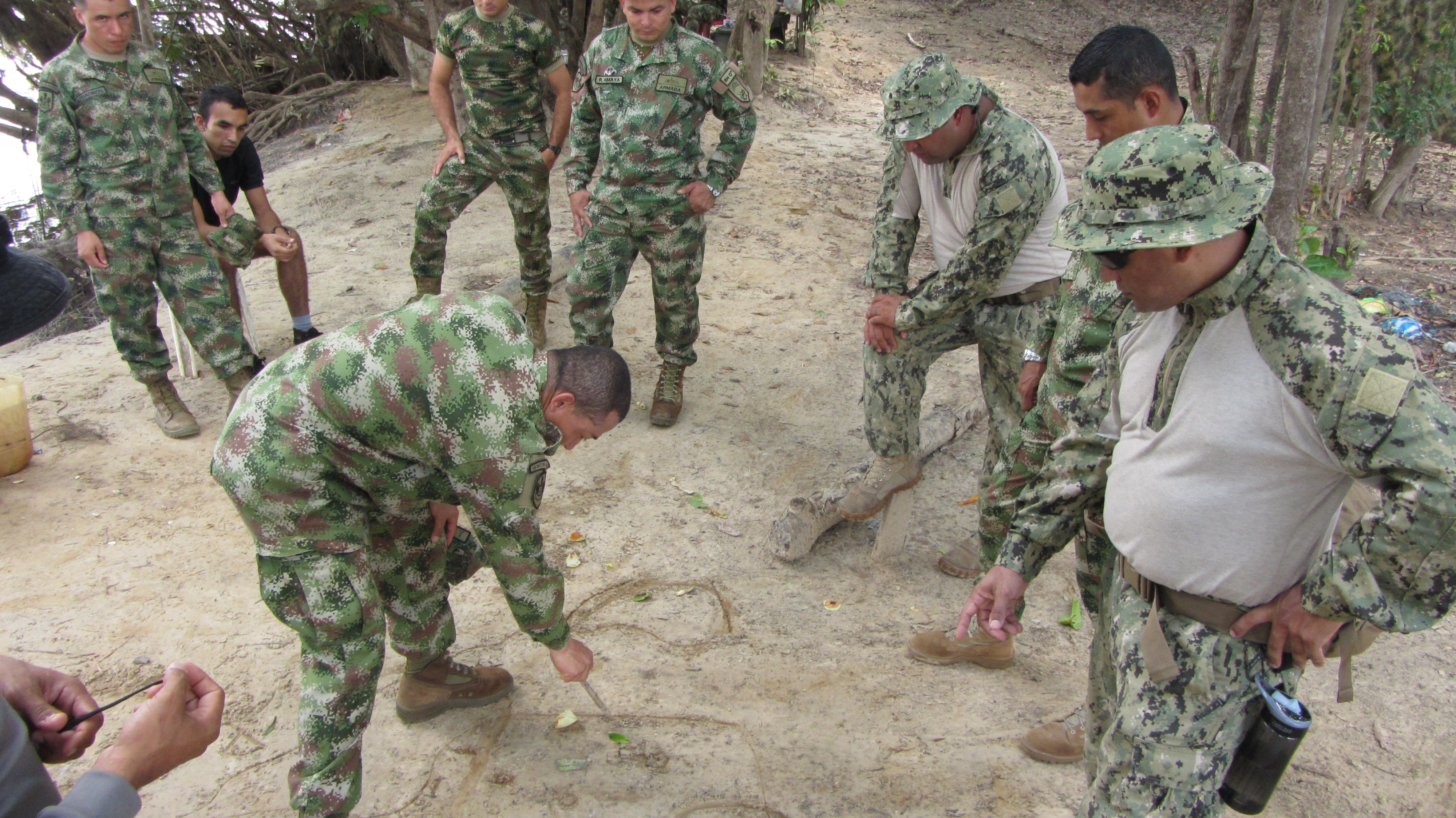
U.S. Navy Riverines discuss tactics with their Colombian counterparts using a hasty terrain model.

the local seapower partner nations, thereby strengthening both. But they must have the right tools (i.e., riverine and littoral units) with the mindset for the job, neither of which can be best employed until irregular warfare moves beyond its footnote status.

Next, local maritime communities must be engaged. The fishing and merchant culture which was mentioned earlier as giving rise to the permeable maritime environment may be the best asset for monitoring it. These tradesmen have numerous networks, both formal and informal, that if partnered with or sourced by human intelligence professionals may reveal nefarious activity (e.g., combat training on Mangla reservoir or strangers who are out of place in Mumbai). Additionally, reliable engagement builds trust, which in turn builds security by aligning the interests of local communities and lawful government for mutual benefit. If the government is the trusted partner of the community, then this is precisely anathema to the VEOs which wish to destablize the community or exploit the disconnect from government to conceal their operations.

VEOs and irregular warfare in the maritime domain are not up-and-coming prospects, they have been here for some time. High-visibility attacks such as the Mumbai raid bring them to the foreground every so often, but after the 24-hour news cycle returns to mundane matters these VEOs continue to skillfully exploit the world’s waterways. There is, frankly, nothing new about what has been said here. But for the time being, these suggestions bear reiterating so we can fuel the discussion and move the ball forward.

Alan Cummings is a 2007 graduate of Jacksonville University. He served previously as a surface warfare officer aboard a destroyer, embedded with a USMC infantry battalion, and as a Riverine Detachment OIC. The views expressed here are his own and in no way reflect the official position of the U.S. Navy. 

Sea Control 41: The View From China

seacontrol2Dean Cheng joins us to discuss China. Like a flourless brownie, this podcast is dense and delicious. We hit China’s goals and perspectives: From the Chinese “status quo”, to the South China Sea, to India, to the use of crises as policy tools. If you want to see behind the headlines, this is your podcast.
DOWNLOAD: Sea Control 41 – The View from China

Remember, subscribe on iTunes or Stitcher Stream Radio. Leave a comment and rate five stars!

India’s Role in the Indo-Pacific

“What is India’s role in the Indo-Pacific?” “Does India have a national interest at stake in the South China Sea?” “How should India shape its maritime relationship with China?”

Last week I had the opportunity to travel to India to take part in an engaging three-day conference on maritime security in the Indo-Pacific, joining two other CIMSEC members in Chennai and Kochi. While the above questions of India’s maritime strategic future were not the theme of the conference (that being Sea Change: Evolving Maritime Geopolitics in the Indo-Pacific Region), they were frequent points of discussion, only natural given the event’s location and the preponderance of preeminent Indian minds. While I’ll focus here on these conversations, the conference’s top-notch organizers from the Observer Research Foundation (ORF) and Stimson Center are publishing a collection of the papers presented, on an array of topics, which should make for stimulating reading. I’m grateful to the organizers for inviting me, and the U.S. Consulate Chennai for sponsoring the event.1

I’m also grateful for the effort these organizations made to bring together scholars and practitioners from the United States, China, Japan, Australia, the United Kingdom, Indonesia, the Philippines, and India to consider the challenges and opportunities in the Indo-Pacific from a variety of perspectives. These representatives from the fields of maritime shipping, offshore energy, geopolitics, international law, private maritime security, and fisheries and climate sciences had the chance to share and contest ideas in a cross-disciplinary approach. And contest they did.

juObservers and attendees of similar events will be familiar with the contentious dynamic that can develop between Chinese and Japanese or Chinese and American representatives, as highlighted at the Shangri-La Dialogue in Singapore earlier in the month. In India, Dr. Liu Zongyi of the Shanghai Institutes for International Studies (SIIS) carried China’s banner. Some of the feistiest exchanges involved his assertions that the United States had previously agreed to Chiang Kai-Shek’s claims to the South China Sea and that there were no maritime disputes in the South China Sea prior to U.S. involvement in the region in the 1960s-70s – the former rebuffed by a personal account of the post-War discussions with Chiang relayed by U.S. Pacific Fleet’s Director for Plans and Policy, W.J. Wesley. As for Liu’s latter argument, South China Sea claimants on all sides have produced a multitude of historical documents stretching back centuries, but if he was referring to the start of a more active phase of the disputes he may have the timing more accurate. Yet China’s seizure of the Paracels from South Vietnamese forces in 1974, killing 70, is probably not what he meant as an illustration of U.S. trouble-making.

In spite of these disagreements over China’s positions, the conference to its credit maintained a cordial atmosphere, with several presenters touting the benefits of establishing personal connections and dialogue over beers or cocktails – the benefits to which many CIMSEC chapters can attest. The organizers’ ringing of a concierge bell to mercilessly keep panelists to their allotted time also built a sense of shared sacrifice against a common enemy. Even by continuing to press his country’s positions Liu won some professional empathy for resoluteness in the face of near-universal criticism.

For it was near-universal. If anything surprised me at the conference it was that the Indian panelists and presenters also openly disparaged both Chinese claims and their actions in the South China Sea. The 9-dash line came in for particularly sharp treatment, with one analyst noting that by the same basis of drawing lines in the water Spain could claim all lands 370 leagues west of the Cape Verde islands – with a treaty to back it up. Yet a consensus on the merits of the issues doesn’t mean India will take action. Indian participants led a robust discussion and were of divided opinion as to whether India had a national interest in getting involved in these disputes on the eastern end of the Indo-Pacific.

To be fair, it was not only China that came in for criticism. During Q+A segments Indian audience members asked why the United States is focused on destabilizing China, whether it should be viewing the region through a Cold War lens, and whether the Rebalance to the Pacific is waning. None of these questions reflect the reality or the logic of U.S. goals in the region, but they do highlight some existing perceptions.

Dr. Liu’s view of India’s role was clearer, arguing “a swing state and hedge is the best choice,” and describing newly elected Indian Prime Minister Narendra Modi in The Global Times last month as having a chance to become “India’s Nixon,” and bring about closer ties with China. The outreach to India was oddly tinged with scare tactics, however, as Liu claimed “If China was crushed, India will become the target of the U.S.,” based on a remark former Secretary of Defense Leon Panetta made calling India an “emerging threat.” Even a Pakistani newspaper acknowledged this slip-up as a gaffe.

For their part, many of the Indian representatives saw opportunities to increase already growing maritime cooperation in the region while weighing the risks of increased Chinese activity in the Indo-Pacific. Inspector General Satya Sharma, of the Indian Navy, touted India’s sustained and close cooperation with several counter-piracy efforts from East Africa to Singapore and room for closer Coast Guard collaboration in the near abroad. ORF’s Manoj Joshi and Madras Christian College’s Dr. Lawrence Prabhakar explored ways India could build its own deterrent power in the context of increased risk from increased contact with China at sea.  Prabhakar further stated that India would continue to focus primarily on bilateral relationships with regional powers, but noted several instances of developing trilateral engagements, including the upcoming Malabar exercise with the United States and Japan. At the same time, ORF’s Dr. P.K. Ghosh cautioned against expecting India to “play the role of headmaster” in setting the agendas of its neighbors at the west end of the Indo-Pacific.

article-0-1EC45E6C00000578-448_966x490Taken as a whole, the workshop was more productive than most with its focus on presenting not only challenges but also the potential means to mitigate them. By the time I presented my paper on U.S. Maritime Security Relationships and Partnerships in the Indo-Pacific I had coalesced some ideas around a concept raised by retired Vice Admiral Hideaki Kaneda earlier in the day on “webs of maritime collaboration,” specifically creating linkages between such structures as maritime domain awareness and info-sharing agreements for counter-piracy and EEZ enforcement. For despite the focus of this article on some of the more contentious issues in the conference2 there were in fact large areas of agreement and mutual concern – from the need to protect sea lanes to the projected impacts of climate change on coastal regions and ports to the benefits of collaborative humanitarian assistance / disaster response (HA/DR). As noted yesterday at The Diplomat, there’s a real need for workshops such as these, where participants talk with each other and not just at each other, to bring productive dialogue to the region.3


Scott Cheney-Peters is a surface warfare officer in the U.S. Navy Reserve and the former editor of Surface Warfare magazine. He is the founder and president of the Center for International Maritime Security (CIMSEC), a graduate of Georgetown University and the U.S. Naval War College, and a member of the Truman National Security Project’s Defense Council.

1. Fittingly, it was held as Monsoon rains began to lash southern India during the 5th anniversary of the precursor article to Robert Kaplan’s book of the same name, discussing India’s role in the region.

2. In addition to the more academic debates over the scope and history of the term “Indo-Pacific.”

3. And well worth cramming one’s 6’3″ frame into 40+ hours of coach flight.