Tag Archives: China Coast Guard

Charting a Course: Addressing Chinese Maritime Coercion Around Taiwan

By Anthony Marco and Nils Peterson

On September 13th, 2025, a Chinese Coast Guard (CCG) vessel entered the restricted waters around the Republic of China’s (ROC) Dongsha Atoll, also known as the Pratas Island, located approximately 400 kilometers southwest of the ROC’s main island of Taiwan. The CCG intrusion prompted a swift response from the ROC’s Coast Guard Administration (CGA), which consisted of a CGA vessel chasing the CCG intruder from the area. Over the next four days, the CCG mounted four separate incursions into the restricted waters around Dongsha, a worsening symptom of a wider Chinese Communist Party (CCP) maritime gray zone campaign against the ROC in which the CCG has a prominent tool of coercion.

This article employs the Office of the Director of National Intelligence’s (ODNI) definition of gray zone coercion, the “deliberate use of coercive or subversive instruments of power by, or on behalf of, a state to achieve its political or security goals at the expense of others, in ways that exceed or exploit gaps in international norms but are intended to remain below the perceived threshold for direct armed conflict.”

The ongoing coercion by the Chinese Coast Guard (CCG) aims to erode the ROC’s sovereignty by sending a message to the international community that the CCP has both the capability and the will to exert control over the waters near Taiwan, but this activity also threatens the United States’ national security interests. It is in America’s interest that the ROC remains a political entity distinct from the People’s Republic of China (PRC) for two primary reasons. First, at the operational level, Taiwan is a key maritime terrain in the First Island Chain or FIC, forming the foundation of American strategy in East Asia to counter the CCP’s territorial revisionist ambitions from a geographic standpoint. Second, at the strategic level, a CCP takeover of Taiwan would severely undermine the confidence of key regional and treaty allies, such as Japan and the Philippines, in the United States’ ability to defend them against further CCP aggression.

In the immediate term, CCG gray zone activity also displays the potential to endanger hard US economic interests by threatening major sea lines of communication (SLOCs) that enter the Taiwanese main island’s major ports at Kaohsiung, Keelung, Mailao, Taichung, and Taipei. Taiwan produces over 90% of advanced semiconductor chips and is the seventh-largest merchandise trading partner of the United States, underscoring the importance of SLOCs entering Taiwan for American economic welfare.

If the PRC expands its gray zone maritime activity in a manner that threatens SLOCs, potentially leading to a maritime quarantine of Taiwan, this presents the US and its Pacific partners with the decision of whether to employ a military response. Recognizing, at a minimum, the economic damage and escalatory risks tied to potential CCP attempts at threatening the vitality of SLOCs, it behooves American policymakers to take steps to deter the expansion of this CCG-spearheaded maritime gray zone campaign.

The Nature of the CCG Threat

Over the past two years, the CCP has taken substantial steps to intensify its maritime gray zone campaign in ROC waters. In February 2024, a Chinese motorboat violated Kinmen’s restricted waters, prompting a CGA-mounted chase, which resulted in the deaths of two Chinese nationals when their boat capsized. The PRC has since used the incident to justify mounting a concerted effort to undermine ROC territorial sovereignty over the Kinmen Islands and Matsu Islands–located four miles and six miles off the coast of the People’s Republic of China, respectively–by routinely dispatching CCG vessels that violate the islands’ restricted waters: CCG activity reached a total of 85 violations around Kinmen in September 2025.

While Kinmen and Matsu lie just a short boat ride away from the PRC mainland, the CCP’s effort to undermine ROC territorial sovereignty has more recently extended to Dongsha. According to the CGA, an “unprecedented” flotilla of Chinese fishing vessels, numbering six “mother ships” and 29 “smaller boats,” entered restricted ROC waters around Dongsha on February 15th, 2025, prompting a swift response from local CGA vessels.

During this incident, a CCG vessel violated Dongsha’s restricted waters by attempting to intervene in the CGA’s law enforcement response. Since this incident, the CCG has sought to normalize this activity with consistent intrusions into the waters around Donghsa. Although Dongsha, like Kinmen and Matsu, lies on the ROC periphery, its recent targeting by the CCG is demonstrative of a graduated coercive campaign.

The CCG has also recently demonstrated its capacity to perform in a role that is specifically more dangerous to US interests. In a noticeable departure from past practice, the CCG, in what appears to be a PRC attempt to hybridize a potential blockade, debuted in PLA live-fire exercises around Taiwan during Joint Sword 2024-A in May 2024. This was followed up by Joint Sword 2024-B in October 2024, featuring approximately seventeen CCG vessels circumnavigating the Taiwanese main island as part of coordinated blockading drills with the PLAN.

During Joint Sword 2025-B, this year’s inaugural exercises in February, the CCG played a higher profile role that included carrying out mock vessel boardings and inspections–suggestive of potential actions that would interdict commercial shipping, a cardinal feature during a blockade or gray zone “quarantine”–in addition to violating, for the first time, the Taiwanese main island’s 24 nautical mile contiguous area.

Although the CCP has not yet made a serious effort to dispute SLOCs to Taiwan, its multi-pronged gray zone activities suggest an intensifying trend that makes this a growing concern for the future. One potential route entails mounting infrequent CCG patrols of SLOCs that evolve into routine patrols, activities the CCP has attempted to normalize in other places through consistent effort, justified under the auspices of a contrived or provoked maritime incident. Patrols could evolve into the boarding and inspection of international commercial vessels, setting the conditions for a partial or full and temporary or indefinite maritime quarantine of the main island.

From a US standpoint, whether such gray zone maritime activity forms a deliberate, calibrated irregular warfare strategy to achieve unification non-kinetically or broadly aims to isolate Taiwan economically and politically, wherever and whenever the PRC can, any attempt to threaten SLOCs in this manner jeopardizes hard US and partner-nation interests. Thus, taking preventive measures to preserve SLOCs prior to PRC efforts to sever them is necessary, especially since attempting to roll back the latter’s efforts after the fact is more difficult and could risk a more dangerous escalation.

Policy Recommendations

The US Government (USG) should pursue a nested set of policy goals to address the CCG threat to American interests. At the operational level in the immediate term, the objective should be to deter CCG activity that would threaten American SLOCs. At the political level in the immediate term, the USG should accept the unpleasant reality that the existing CCG activity erodes ROC sovereignty, as it lacks the capacity to substantially roll back CCG presence. At the operational and political levels in the future, the objective should be to have a coalition prepared to deter a PRC maritime quarantine of Taiwan.

These policy goals rest on three key assumptions; if any of these is invalidated, the recommendations would no longer hold. First, the CCP does not deploy CCG assets in such numbers that they overwhelm our capacity to defend key SLOCs. Second, the CCP continues its salami-slicing strategy to degrade the operational environment around Taiwan, which involves minimizing direct confrontation between the PLA and foreign coast guard assets in waters that the party views as its own. Third, the CCP leadership thinks it still has time to achieve its political objective to gain control of Taiwan and therefore decides it does not now need to launch a maritime quarantine, blockade, or invasion.

The ROC, on its own, will likely struggle to preserve SLOCs. During a 2024 House Subcommittee Hearing on Transportation and Maritime Security, Senior Policy Researcher at the RAND Corporation, Captain Eric M. Cooper, USCG (Ret.), estimated that there are a total of 700 CCG vessels operating in the Indo-Pacific. The entirety of the CCG’s complement is not dedicated to gray zone activity against Taiwan, but it has a growing presence deep in the South China and East China Seas. The CGA, on the other hand, maintains a smaller, but not insignificant force of approximately 250 vessels. Since 2018, the CGA has implemented a ten year indigenous shipbuilding program, with a target goal of 141 newly constructed vessels, but it remains and will remain overmatched by the sheer quantitative advantage retained by the CCG. Thus, it is unreasonable to expect the CGA to adequately deter potential CCG activity that jeopardizes SLOCs.

Recognizing the vulnerability of SLOCs, the US Coast Guard (USCG) is uniquely positioned to preserve them. Already, throughout the Indo-Pacific, the USG maintains a series of bilateral Maritime Law Enforcement Agreements (MLEA) that authorize the USCG to carry out activities such as conducting legally protected patrols to help safeguard a partner country’s maritime security.

Traditionally, bilateral MLEAs stipulate that the USCG dispatch personnel and or vessels to assist in maritime law enforcement within a partner country’s territorial waters (12 nautical miles), contiguous zone (24 nautical miles), and EEZs (200 nautical miles). For example, as provisioned under a bilateral MLEA, the USCG boarded six vessels illegally fishing within the Cook Islands’ EEZ this past June. The USCG also conducts maritime law enforcement exercises with regional partner countries.

In June 2024, the USCG trained alongside the Philippine Coast Guard (PCG) in the South China Sea to buttress the latter’s law enforcement and search and rescue capabilities. The USCG has also scaled up exercises in the Indo-Pacific region into trilateral events: in June 2025, the USCG, PCG, and Japanese Coast Guard (JCG) participated in drills outside Japan’s territorial waters for the first time. According to the senior participating USCG officer, Captain Brian Krautler, “By operating together, we strengthen our collective forces, ensuring readiness against threats to maritime safety and security.”

With the specific intent of maintaining SLOCs entering Taiwan, the USCG should seek to replicate similar activity with the CGA as would be provisioned in a bilateral MLEA. The USCG already has a pre-existing cooperative relationship with the CGA that is guided by a Memorandum of Understanding (MOU), signed between the American Institute in Taiwan (AIT) and the Taiwan Economic and Cultural Representative Office (TECRO) in March 2021. Under this MOU, the USCG and CGA formed a Coast Guard Working Group (CGWG) to establish a common understanding of maritime security priorities and advance cooperation between the USCG and CGA. In addition to the dialogues within the CGWG, instances of security cooperation have occurred. For example, in 2024, the USCG dispatched an International Port Security (IPS) Program team to Taiwan to exchange knowledge with CGA officials regarding how to enhance maritime cybersecurity and general port security.

Despite these positive developments, current USCG and CGA cooperation is inadequate, with it being limited to informal bilateral talks, workshops, and occasional practice sharing. Thus, the MOU should be updated to deepen security cooperation or an unofficial agreement, akin to a bilateral MLEA, established that extends USCG authorities in ROC waters, specifically granting the USCG the ability to conduct patrols along SLOCs, sending a clear message to the CCP that the US will protect its interests.

In line with past practice, whenever the US deepens security cooperation with the ROC, the CCP will likely vehemently protest such a move; however, given the recognizable and public economic interests at stake in preserving SLOCs, the USG should frame USCG presence patrols in Taiwanese waters within the context of that specific end rather than communicating an intent to buttress ROC claims to sovereignty, although this would be an undeniably favorable byproduct.

It must be acknowledged that, compared to the CCG, the current and near-term potential force posture of the USCG in the region is problematic. Presently, the USCG has eight vessels forward deployed in the region and possesses another 79 vessels capable of serving in the region, but this would practically amount to the USCG’s entire inventory of high seas vessels. Despite this modest vessel count, the USCG could afford to apportion a couple of cutters and a handful of smaller craft, based on existing deployments in the Indo-Pacific region, communicating the USG’s resolve concerning the preservation of SLOCs.

A comprehensive analysis is warranted to assess the impact this deployment would have on other USCG priorities in the theater. Still, such deployments would communicate the USG’s resolve to preserve SLOCs. This is especially the case due to the escalatory risks the CCP would incur by contemplating a confrontation with a USCG vessel performing its duties. The USG could also establish a shiprider agreement, a type of MLEA, with the CGA, permitting USCG personnel to board CGA vessels: the USG maintains twelve such agreements with regional partners such as Papua New Guinea and the Republic of Vanuatu. Although typically partner force personnel board USCG vessels, USCG personnel have boarded Royal Navy vessels under a shiprider arrangement, which can be replicated with the CGA.

Moreover, the USG should seek ways to internationalize any USCG efforts to preserve SLOCs entering Taiwan. USCG Captain (Ret.) Eric Cooper has made compelling arguments for the establishment of a multilateral maritime law enforcement task force in the form of the US-led Bahrain Combined Maritime Force (CMF). Headquartered in Bahrain and consisting of 46 participating countries, the CMF maintains maritime security in major waterways around the Middle East. Organizing a task force akin to a CMF with the aim of preserving Taiwan’s SLOCs could include countries like Japan and the Philippines, especially when considering these two countries’ significant economic interests linked to these SLOCs and their recent combined participation in USCG-led exercises.

If these recommendations are implemented, the following would be benchmarks to measure success: In the immediate future, the continued absence of CCG vessels in key SLOCs. In the longer term, a stable rotational presence of up to three USCG cutters and between five and ten smaller craft regularly operating in the Indo-Pacific, particularly in areas proximate to Taiwan, in conjunction with a CMF-style task force.

The deteriorating security situation around Taiwan due to the CCP-initiated gray zone coercion shows no signs of improvement in the near future. In addition, the United States no longer enjoys being the unrivalled seafaring power in East Asia. In this security environment, the creative employment of USCG assets and personnel in combination with regional partner countries becomes an important policy pathway toward achieving American national interests.

Anthony Marco is a First Lieutenant in the U.S. Army and holds a BS from the United States Military Academy at West Point and an MA from Reichman University as an Anna Sobol Levy Scholar. He also serves as a special advisor on the Irregular Warfare Initiative’s Proxies and Partners Special Project.

Nils Peterson is a Marshall Scholar studying for an MA in Taiwan Studies at the School of Oriental and African Studies and holds a BA in History and Chinese from the University of Wisconsin-Madison. He previously led the China Team at the Institute for the Study of War as a War Studies Fellow.

The views and opinions presented herein are those of the author and do not necessarily represent the views of DoD or the Army. Appearance of, or reference to, any commercial products or services does not constitute DoD or Army endorsement of those products or services. The appearance of external hyperlinks does not constitute DoD or Army endorsement of the linked websites, or the information, products or services therein.

Featured Image: The Wanshan Vessel formation conduct towing exercises in waters off Huangyan Dao in South China Sea in July, 2024. (China Coast Guard photo)
Andrew S. Erickson and Ryan D. Martinson Discuss China’s Maritime Gray Zone Operations

By Dmitry Filipoff

On March 15th, the Naval Institute Press will publish China’s Maritime Gray Zone Operations, a volume edited by professors Andrew S. Erickson and Ryan D. Martinson from the Naval War College’s China Maritime Studies Institute. CIMSEC recently reached out to Erickson and Martinson about their latest work.

Q: What was the genesis of your book?

Erickson: In the last decade or so, China has dramatically expanded its control and influence over strategically important parts of maritime East Asia. It has done so despite opposition from regional states, including the United States, and without firing a shot. Others have examined this topic, but we found that much of the public analysis and discussion was not grounded in solid mastery of the available Chinese sources—even though China tends to be much more transparent in Chinese. We also recognized a general lack of understanding about the two organizations on the front lines of Beijing’s seaward expansion: the China Coast Guard (CCG) and the People’s Armed Forces Maritime Militia (PAFMM). This volume grew out of a conference we held in Newport in May 2017 to address some of these issues. It contains contributions from world-leading subject matter experts, with a wide range of commercial, technical, government, and scholarly experience and expertise. We’re honored to receive endorsements from top leaders in sea power, strategy, and policy: former Chief of Naval Operations Admiral Gary Roughead, former Secretary of the Navy J. William Middendorf, Harvard Professor Stephen Rosen, former Japan Maritime Self-Defense Force Fleet Commander-in-Chief Vice Admiral Yoji Koda, Dr. James Carafano of the Heritage Foundation, and former Pentagon Director of Net Assessment Andrew Marshall.

Q: The title of your book is China’s Maritime Gray Zone Operations. How does the term “gray zone” apply here?

Martinson: We usually prefer to use Chinese concepts when talking about Chinese behavior, and Chinese strategist do not generally use the term “gray zone.” But we think that the concept nicely captures the essence of the Chinese approach. We were inspired by the important work done by RAND analyst Michael Mazarr, who contributed a chapter to the volume. In his view, gray zone strategies have three primary characteristics. They seek to alter the status quo. They do so gradually. And they employ “unconventional” elements of state power. Today, a large proportion of Chinese-claimed maritime space is controlled or contested by other countries. This is the status quo that Beijing seeks to alter. Its campaign to assert control over these areas has progressed over a number of years. Clearly, then, Chinese leaders are in no rush to achieve their objectives. And while China’s Navy plays a very important role in this strategy, it is not the chief protagonist. 

Q: Who, then, are the chief actors?

Martinson: The CCG and the PAFMM perform the vast majority of Chinese maritime gray zone operations. Chinese strategists and spokespeople frame their actions as righteous efforts to protect China’s “maritime rights and interests.” The CCG uses law enforcement as a pretext for activities to assert Beijing’s prerogatives in disputed maritime space. PAFMM personnel are often disguised as civilian mariners, especially fishermen. Most do fish, at least some of the time. But they can be activated to conduct rights protection operations. And a new elite subcomponent is paid handsomely to engage in sovereignty promotion missions fulltime without fishing at all. Meanwhile, the PLA Navy also plays a role in disputed waters, serving what Chinese strategists call a “backstop” function. It discourages foreign countries from pushing back too forcefully and stands ready over the horizon to come to the aid of China’s gray zone forces should the situation escalate.

Q: Most readers will have heard about the China Coast Guard, but fewer may be familiar with the PAFMM. How is the PAFMM organized?

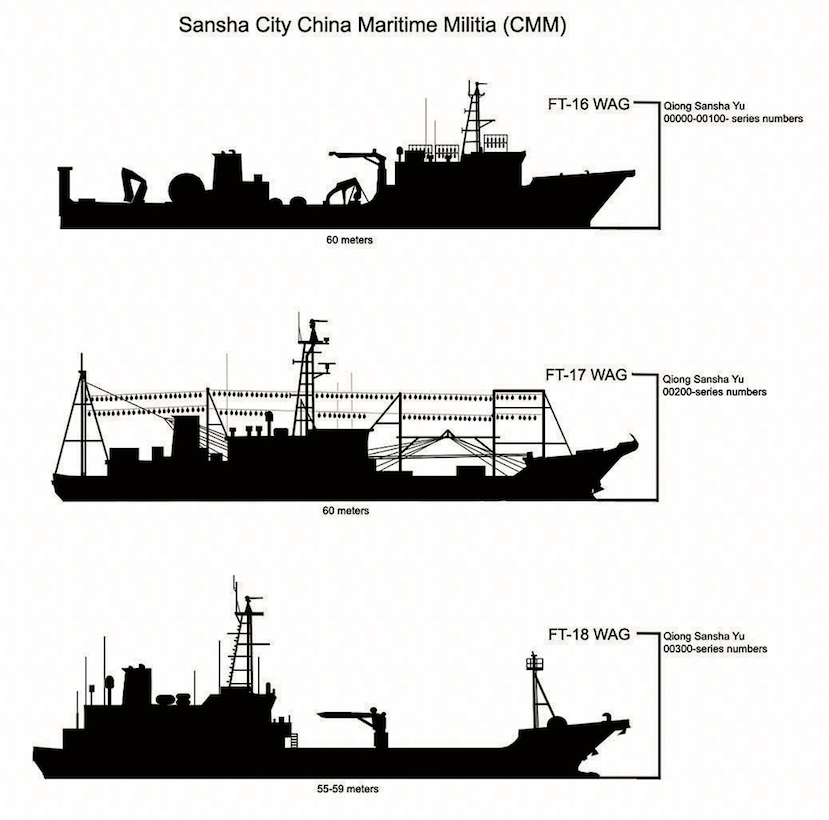
Erickson: The PAFMM is a state-organized, developed, and controlled force operating under a direct military chain of command. This component of China’s armed forces is locally supported, but answers to China’s centralized military bureaucracy, headed by Commander-in-Chief Xi Jinping himself. While most retain day jobs, militiamen are organized into military units and receive military training, sometimes from China’s Navy. In recent years, there has been a push to professionalize the PAFMM. The Sansha City Maritime Militia, headquartered on Woody Island in the Paracels, is the model for a professional militia force. It is outfitted with seven dozen large new ships that resemble fishing trawlers but are actually purpose-built for gray zone operations. Lacking fishing responsibilities, personnel train for manifold peacetime and wartime contingencies, including with light arms, and deploy regularly to disputed South China Sea areas, even during fishing moratoriums.

Three types of maritime militia vessels depicted in the Office of Naval Intelligence’s China’s People’s Liberation Army Navy (PLAN), Coast Guard, and Government Maritime Forces 2018 Recognition and Identification Guide. (Office of Naval Intelligence)

There are no solid numbers publicly available on the size of China’s maritime militia, but it is clearly the world’s largest. In fact, it is virtually the only one charged with involvement in sovereignty disputes: only Vietnam, one of the very last countries politically and bureaucratically similar to China, is known to have a similar force with a similar mission. China’s maritime militia draws on the world’s largest fishing fleet, incorporating through formal registration a portion of its thousands of fishing vessels, and the thousands of people who work aboard them as well as in other marine industries. The PAFMM thus recruits from the world’s largest fishing industry. According to China’s 2016 Fisheries Yearbook, China’s fishing industry employs 20,169,600 workers, mostly in traditional fishing practices, industry processing, and coastal aquaculture. Those who actually fish “on the water” number 1,753,618. They operate 187,200 “marine fishing vessels.” An unknown portion of these are militia boats. To give a sense of the size and distribution of PAFMM forces, our volume includes figures showing the location of leading militia units in two major maritime provinces: Hainan and Zhejiang.

Q: How is the CCG organized for gray zone operations?

Martinson: When we held the conference in 2017, the CCG was in the midst of a major organizational reform. It was only set up in 2013, the result of a decision to combine four different maritime law enforcement agencies. Before 2013, most rights protection operations were conducted by two civilian agencies: China Marine Surveillance and Fisheries Law Enforcement. They did not cooperate well with each other. Moreover, neither had any real policing powers. After the CCG was created, it became clear that Beijing intended to transform it into a military organization. In early 2018, Beijing announced a decision to transfer the CCG from the State Oceanic Administration to the People’s Armed Police. At about the same time, the People’s Armed Police was placed under the control of the Central Military Commission. So, like the PAFMM, it is now a component of China’s armed forces. Moreover, CCG officers now have the authority to detain and charge foreign mariners for criminal offenses simply for being present in disputed areas of the East China Sea and South China Sea (although they have yet to use this authority in practice).

Q: How is the CCG equipped to assert China’s maritime claims?

Martinson: When Beijing’s gray zone campaign began in earnest in 2006, China’s maritime law enforcement forces were fairly weak. They owned few oceangoing cutters, and many of those that they did own were elderly vessels handed down from the PLA Navy or the country’s oceanographic research fleet. They were not purpose-built for “rights protection” missions. In recent years, however, Beijing has invested heavily in new platforms for the CCG. Today, China has by far the world’s largest coast guard, operating more maritime law enforcement vessels than the coast guards of all its regional neighbors combined. As the chapter by Joshua Hickey, Andrew Erickson, and Henry Holst points out, the CCG owns more than 220 ships over 500 tons, far surpassing Japan (with around 80 coast guard hulls over 500 tons), the United States (with around 50), and South Korea (with around 45). At over 10,000 tons full load, the CCG’s two Zhaotou-class patrol ships are the world’s largest coast guard vessels. The authors project that in 2020 China’s coast guard could have 260 ships capable of operating offshore (i.e., larger than 500 tons). Drawing from lessons learned while operating in disputed areas in the East and South China Seas, recent classes of Chinese coast guard vessels have seen major qualitative improvements. They are larger, faster, more maneuverable, and have enhanced firepower. Many CCG vessels are now armed with 30 mm and 76 mm cannons.

Q: It appears that these gray zone forces and operations are heavily focused on sovereignty disputes such as in the East and South China Seas. Are they also pursuing other goals and lines of effort?

Erickson: That is correct. The vast majority of maritime gray zone activities involve efforts to assert Chinese control and influence over disputed maritime space in what Chinese strategists term the “Near Seas.” When conducting rights protection operations, these forces help Beijing enforce its policies regarding which kinds of activities can and cannot take place in Chinese-claimed areas. The CCG and PAFMM intimidate and harass foreign civilians attempting to use the ocean for economic purposes, such as fishing and oil/gas development. Since at least 2011, for instance, China’s coast guard and militia forces have been charged with preventing Vietnam from developing offshore hydrocarbon reserves in its own Exclusive Economic Zone (EEZ), part of which overlaps with China’s sweeping nine-dash line claim. China’s gray zone forces also protect Chinese civilians operating “legally” in Chinese-claimed maritime space. The 2014 defense of Chinese drilling rig HYSY-981, discussed in detail in our volume, is a classic case of this type of gray zone operation. By controlling maritime space, China’s gray zone forces can also determine who can and cannot access disputed features. Since 2012, for instance, Chinese coast guard and militia forces have upheld Chinese control over Scarborough Reef. Today, Filipino fishermen can only operate there with China’s permission.

Q: What are some of the tactics employed by China’s gray zone forces?

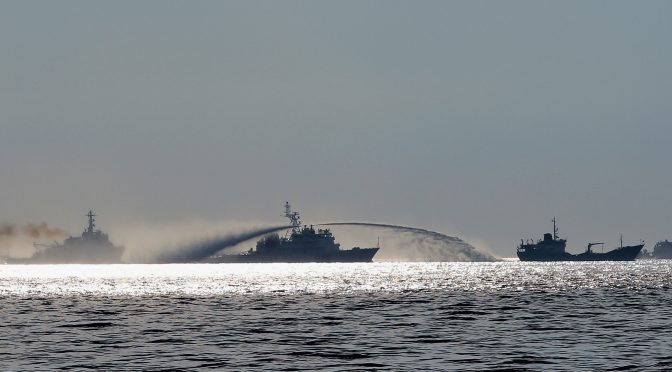
Erickson: Most CCG cutters are unarmed, and PAFMM vessels are minimally armed at most. They assert Chinese prerogatives through employment of a range of nonlethal tactics. In many cases, Chinese gray zone ships are themselves the weapon: they bump, ram, and physically obstruct the moments of other vessels. They also employ powerful water cannons to damage sensitive equipment aboard foreign ships and flood their power plants. Foreign states are often helpless to respond because China has the region’s most powerful navy, which gives it escalation dominance.

Q: How have regional states reacted to Chinese maritime gray zone operations? Have some had more effective responses than others?

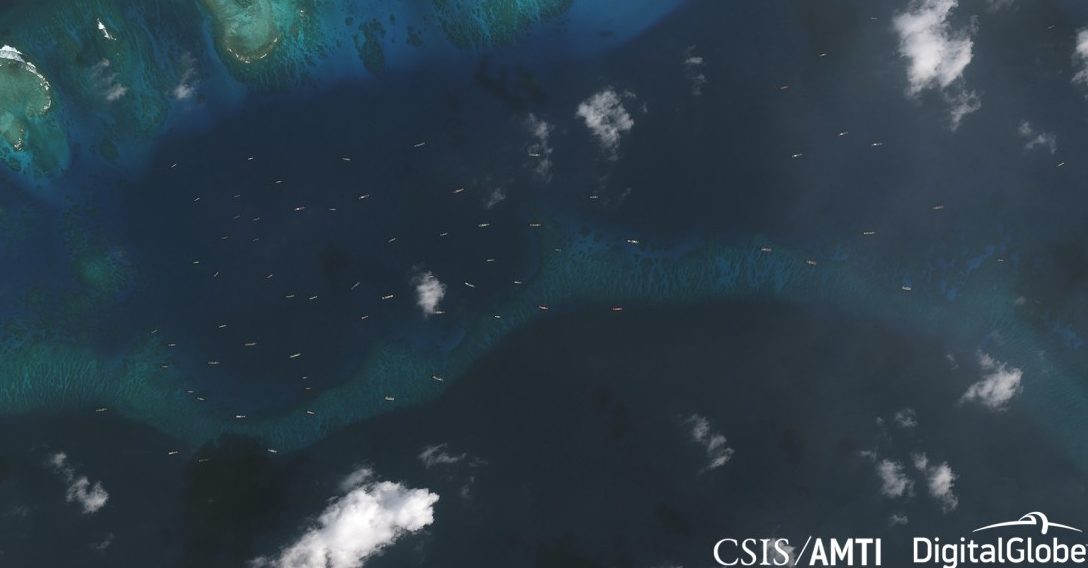
Martinson: Regional states have not presented China with a united front. They have each handled Chinese encroachments differently. China’s strongest neighboring sea power, Japan has taken the most vigorous actions. As Adam Liff outlines in his chapter, it has bolstered its naval and coast guard forces along its southern islands. It has also taken bold steps to publicize China’s gray zone actions. Vietnam has been a model of pushback against Beijing’s maritime expansion, as Bernard Moreland recounts in his chapter. But even its resistance has limits. In July 2017, Beijing likely used gray zone forces to compel Hanoi to cancel plans to develop oil and gas in its own EEZ, in cooperation with a Spanish company. Other states have taken a much more conciliatory approach to China’s incursions in the South China Sea. The Philippines, for example, is apparently acquiescing to Beijing’s desire to jointly develop disputed parts of the South China Sea—areas that a 2016 arbitration ruling clearly place under Philippine jurisdiction. Meanwhile, China continues to push Manila in other ways. Philippine supply shipments to Second Thomas Shoal are still subject to harassment. China has recently concentrated a fleet of gray zone forces just off the coast of Philippine-occupied Thitu Island, in an apparent effort to pressure Manila to discontinue long-planned repairs and updates to its facilities there.

Chinese fishing vessels massed off Philippine-occupied Thitu Island in January 2019. (CSIS/AMTI, DigitalGlobe)

At the same time, China itself continues to develop reclaimed land at Mischief Reef, a mostly submerged feature which because of its location clearly belongs to the Philippines. For its part, Malaysia has not publicly opposed Chinese incursions in its jurisdictional waters. But it is apparently proceeding with plans to develop seabed resources near the Chinese-claimed Luconia Shoals. Chinese coast guard vessels patrol the area, but have not forced a cessation of exploratory drilling operations—including those conducted by the Japanese-owned drilling rig Hakuryu 5 in February 2018. This story will be worth following, as Malaysia makes decisions about next steps. In 2016, Indonesia took robust actions to crack down on Chinese fishing activities near the southern part of the nine-dash line, northeast of its Natuna Islands. Things have been fairly quiet in the years since, perhaps because CCG vessels are escorting the fishing fleet to the area.

Q: It seems like China’s gray zone strategy is more often directed at other countries. Why is this topic important for U.S. national security?

Erickson: The U.S. Navy has also been targeted by China’s gray zone forces. U.S. Navy special mission ships such as the USNS Bowditch, USNS Impeccable, USNS Effective, USNS Victorious, and USNS Howard O. Lorenzen have been shadowed and harassed, victims of China’s erratically-enforced opposition to foreign naval activities within its claimed EEZ. To be sure, China’s gray zone campaign is largely targeted at other territorial claimants, but two of these countries—Japan and the Philippines—are U.S. allies. Washington’s robust alliance with Tokyo, in particular, is critical to American presence and peace preservation in a vital but vulnerable region. Chinese bullying behavior threatens to undermine these alliances and could trigger direct American military intervention if China’s gray zone operations were to escalate into armed attack. Moreover, as Jonathan Odom points out in his chapter, China’s activities violate important international conventions and norms. This means they are weakening key pillars of the international maritime order, and with it the global system on which peace and prosperity depend. In many cases China’s gray zone forces are used to assert maritime claims that have no basis in international law.

Q: And how can the U.S. Navy, as a more high-end force, better handle these sorts of Chinese paramilitary forces without risking escalation?

Martinson: If the United States wants to be effectual, it must do more to expose China’s gray zone activities, and it must accept a degree of risk in opposing them more strongly. China’s gray zone activities cannot be easily deterred, because each individual act is calculated to fall below American red lines. If Washington wants to get serious about countering China’s gray zone expansion, it must do more than conduct “presence” and “freedom of navigation” operations—which appear to sit at the heart of the current approach. The former cannot deter Beijing from taking tactical actions in the gray zone. The latter does little to defend the interests of allies and partners. In our concluding chapter, we suggest ways that the U.S. Navy can do more to help them protect their legitimate interests and defend the legal norms and conventions that China’s behavior threatens to erode. In short, the United States should be out there with them, operating on the front lines of China’s seaward expansion. To that end, it must develop a range of nonlethal tactics that it can use to achieve local effects without resorting to use of force.

Dr. Andrew S. Erickson is a Professor of Strategy in the China Maritime Studies Institute and the recipient of the inaugural Civilian Faculty Research Excellence Award at the Naval War College. He is an Associate in Research at Harvard University’s John King Fairbank Center for Chinese Studies and a member of the Council on Foreign Relations. In 2013, while deployed in the Pacific as a Regional Security Education Program scholar aboard USS Nimitz, he delivered twenty-five hours of presentations. Erickson is the author of Chinese Anti-Ship Ballistic Missile Development (Jamestown Foundation/Brookings Institution Press, 2013). He received his Ph.D. from Princeton University. Erickson blogs at www.andrewerickson.com.

Ryan D. Martinson is a researcher in the China Maritime Studies Institute at the U.S. Naval War College. He holds a master’s degree from the Fletcher School of Law and Diplomacy at Tufts University and a bachelor’s of science from Union College. Martinson has also studied at Fudan University, the Beijing Language and Culture University, and the Hopkins-Nanjing Center. The views expressed are those of the authors and do not reflect the official policy or position of the U.S. Navy, the Department of Defense, or the U.S. Government.

Dmitry Filipoff is CIMSEC’s Director of Online Content. Contact him at Content@cimsec.org.

Featured Image: A China Coast Guard ship uses a water cannon to harass a Vietnamese law enforcement vessel near the disputed Paracel Islands on May 27, 2014. (Photo by The Asahi Shimbun)