Tag Archives: Canada

The Canadian Armed Forces and the Arctic: Maintaining a Suitable and Sustainable Role

This piece was originally published by the Conference for Defense Associations Institute. It may be read in its original form here.

In this new CDA Institute Analysis, Adam MacDonald looks at the military requirements for Canada in the Arctic, concluding that the capabilities need to be suitable for the security environment and financially sustainable given other defence commitments. The following is an excerpt of the Analysis.

rsz macdonald analysis may 2016coverDue to its increasing accessibility resulting from climate change, the Arctic could become a contested and militarized arena in which states within the region and beyond attempt to secure and gain access to lucrative shipping routes and resources. Such an eventuality poses particular challenges to Canadian sovereignty and security. Stemming from such a characterization, the Harper government had long prioritized the Arctic as a defence issue, raising the spectre that Canadian sovereignty in the North could be irrevocably compromised – we either ‘use it or lose it.’

While silent on which potential adversaries were threatening to usurp Canadian ownership, the Harper government sought to restore a military presence in the Arctic by “placing more boots on the Arctic tundra, more ships in the icy water and a better eye-in-the-sky.” In his 2005 campaign, in particular, Harper promised a litany of Arctic-specific defence projects to rectify the Canadian Armed Forces (CAF) dearth of presence and operational experience in the region. The promotion of the ‘sovereignty at risk’ narrative seemed to justify the construction of a robust and permanent military presence in the Arctic. In reality, however, Canada requires a different type of military presence and capability suite than commonly perceived (or advocated).

Canada’s security challenges in the North do not emanate from a military threat but are rather largely constabulary in nature. Defending sovereignty is the perennial duty of the military but in the Arctic there is no credible, state-based threat capable of challenging Canadian ownership of its waters and territories, with a few exceptions which are well managed. Despite its sometimes fiery rhetoric, the former Conservative government’s various Arctic policy documents reflected such an appreciation of the threat environment. With the near absence of state-based threats, military requirement in the Arctic need to be suitable for this particular security environment and sustainable given the operating challenges of the region, as well as other competing military priorities.

At present, the military is focusing their Arctic efforts on increasing domain awareness via surveillance and maintaining a light regional footprint to facilitate Northern operations and, when required, support the deployment of southern based-units which are increasingly training in the North, often in conjunction with other security agencies and regional partners. Deploying large contingents of combat capable forces is ill-advised given the nature of the threat, prohibitively expensive given the harsh operating environment (especially the High Arctic), and potentially compromising other missions and mandates by drawing resources away.

The Arctic Security Environment

With the end of the Cold War, the strategic importance of the Arctic diminished significantly allowing for the construction of regional forums dedicated towards common interests, specifically climate research. Rapidly changing environmental conditions, however, are transforming the Arctic landscape by increasing accessibility to human activity to an unprecedented level. Amongst this uncertainty, issues of ownership and access have fueled the development of a narrative of the Arctic as moving away from a politically stable region to one of high geopolitical importance characterized by growing complexity, competition, and perhaps even rivalry. In such a narrative, the current regional architecture is simply unable to adjust and accommodate the expected scramble for resources and political influence.

Not surprisingly, a popular theme has been the growing ‘militarization’ of the Arctic over the past decade. There is no denying that all Arctic states are augmenting their military capabilities in their northern territories, including the stationing of combat-capable units. As one commentator has remarked, “we may be entering the first stages of an Arctic arms race, in which competition and conflict may overwhelm our desires and rhetoric to have a cooperative régime for the developing circumpolar world.” The augmenting presence, capability development, and employment of military forces in the Arctic is an emerging reality, but their use is, by and large, within recognized national borders and waters.

Moreover, they are largely focused on exercising sovereign control to ensure compliance with state laws, border control, and search and rescue. Retaining combat forces to defend against state-based threats in the Arctic is a marginal requirement at this time. Arctic countries are more concerned about increasing their domain awareness in parts of their jurisdictions characterized by large geographic areas, small and sparse populations, and a lack of infrastructure, surveillance, and response capacities.

The flurry of recent Russian military projects in the Arctic, including icebreaker construction and the re-activation of air and army bases on their northern islands, are in part aimed at establishing unquestioned ownership of the Northern Sea Route, regardless of legal objections by the US that the waters constitute an international strait. This is not to suggest that developing a war-fighting capacity in the Arctic is not an objective of Moscow. However, domestic political calculations and constabulary requirements have heavily shaped the makeup and operational nature of military developments thus far in the region. Some military developments in the Arctic, furthermore, are based on larger, extra-regional factors. Modernization of the Russian Northern Fleet, for instance, is designed to upgrade their nuclear submarine deterrent and for global operations. Similarly, the US ground-based interceptors in Alaska are meant to counter a missile attack from a rogue state, specifically North Korea.

Most commentators are quick to assert that militarization is becoming a dominant force driving regional politics, but are at a loss in not only providing an operational definition (e.g., what does ‘militarization’ mean?) but also in explaining how this process will contribute to the destabilization of the region beyond simplistic narratives (Russia versus NATO; non-Arctic states versus Arctic states). There are no territorial disputes in the Arctic, with the exception of the relatively benign dispute over Hans Island between Canada and Denmark, and there is no evidence to suggest Russia or any other Arctic nation is moving to employ military forces over contested Extended Exclusive Economic Zones (EEZ) or to gain unobstructed access to polar shipping routes.

Click here to read the rest of the CDA Institute Analysis.

Adam P. MacDonald is an academic based in Halifax, Nova Scotia specializing in geopolitical developments in the Arctic and East Asia. He is a regular contributor to the Canadian Naval Review, East Asia Forum and Frontline Defence.

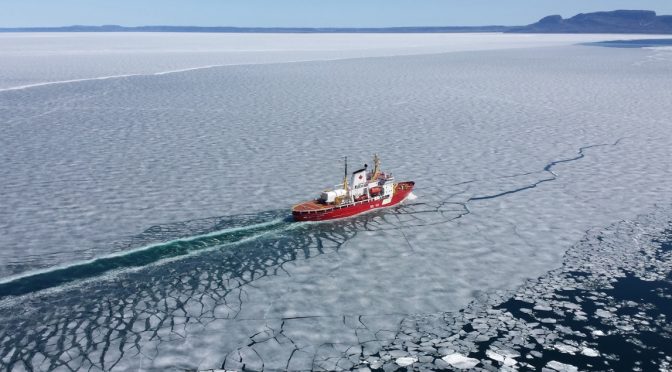
Featured Image: Canadian Coast Guard Icebreaker. Photo: Lucie Lefrancois. 
Members’ Roundup: April 2016

By Sam Cohen

Welcome to the April 2016 members’ roundup. Over the past month CIMSEC members have examined several international maritime security issues, including the strategic implications of China’s land creation in the South China Sea, Russia and China’s testing and deployment of offensive hypersonic weapons, the U.S. Navy’s development of the Next Generation Air Dominance (NGAD) program, India’s maritime ambitions in the Asia-Pacific and finally, increasing maritime tensions between African coastal countrie,s and the resulting naval build-up taking place on the continent.

Beginning the roundup in the Asia-Pacific, Lauren Dickey for the Asia Unbound Series at the Council on Foreign Relations analyzes the current political turmoil challenging the stability of Taiwan’s government. Ms. Dickey explains that Taiwan’s ruling Kuomintang (KMT) party has retreated from an agreement with the country’s opposition Democratic Progressive Party (DPP) to conduct an item-by-item review of a service trade pact arranged with mainland China. The resulting breakout of severe protests by citizens, unions, and the DPP have demonstrate the harmful affects approval of the trade pact would have on Taiwan, including an increase in Beijing’s influence over domestic Taiwanese policy and the ability for large corporations to increase control over Taiwanese industry at the expense of local enterprises. Ms. Dickey highlights the perspective that the KMT party’s decision is one that has and will continue to challenge democratic principles within Taiwan while also creating a public atmosphere non-conducive to cooperative cross-strait relations.

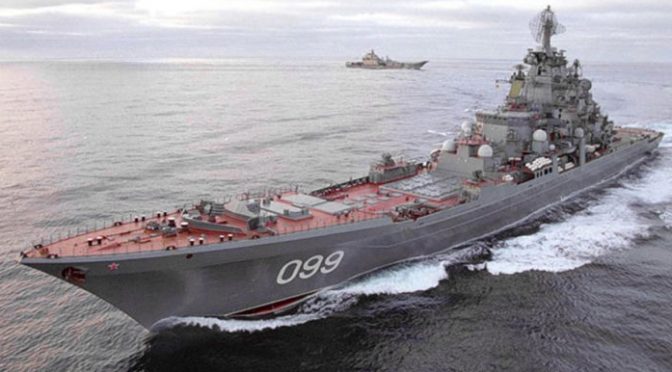
Kyle Mizokami, at Popular Mechanics, discusses the test of China’s new hypersonic weapon, the DF-ZF, at the Wuzhai missile test center in central China. The DF-ZF is likely launched by a DF-21 IRBM, which releases a Hypersonic Glide Vehicle (HGV) just before leaving the atmosphere. Mr. Mizokami explains how the HGV released in the upper atmosphere is capable of travelling at speeds from 4000-7000 miles an hour making it difficult to intercept and capable of reaching almost any target in the world within an hour. In a second article at Popular Mechanics, Mr. Mizokami continues the discussion on hypersonic weapons with Russia’s continued development of its Zircon anti-ship missile. He explains how the missile will increase the surface warfare capabilities of Russia’s aging battlecruisers by providing a new offensive capacity capable of penetrating sophisticated air-defense systems. Dave Majumdar, at the National Interest, also discusses the technicalities and implications of Russia’s development of the Zircon anti-ship missile, which you can find here.    

Harry Kazianis, at The National Interest, highlights China’s primary strategic objective in the South China Sea; that Beijing views complete control of the waters from Taiwan to Malaysia as imperative to supporting regional Chinese sovereignty. Mr. Kazianis notes that Beijing has used a process of incremental aggression throughout the region to slowly, and perhaps unnoticeably, challenge the status-quo maintained by the U.S. with the ultimate goal of achieving regional hegemony. However, as outlined by Mr. Kazianis, there is potential for the U.S. and regional allies to limit and even halt this Chinese aggression at Scarborough Shoal just West of the Philippines, where the U.S. has already begun operations with A-10 Warthogs and Sikorsky HH-60 helicopters providing air and maritime situational awareness to local forces while also articulating to China that reclaiming the reef will not be tolerated.

In a second article at The National Interest, Mr. Kazianis provides a list of different methods for confronting Chinese antagonism in the South China Sea, including a joint U.S. and allied A2/AD strategy, utilizing media and communications to demonstrate a clear U.S. regional objective and lawfare – the notion that the U.S. and regional allies should coordinate legal actions and claims against China to maximize their effectiveness.

James Goldrick, at The Interpreter, discusses the impact China’s artificial island construction in the South China Sea will have on peace and stability in the region when combined with its aggressive territorial claims under a pretense of sovereign rights. He outlines how China’s objective of creating a safe haven for its naval forces in the region will collide with the national interests of the rest of maritime Southeast Asia. He suggests that Beijing should adapt a more sensitive approach to their regional claims as to not risk international, kinetic conflict.

Alex Calvo, for the University of Nottingham’s China Policy Institute Blog, examines the sinking of a Chinese fishing vessel by an Argentinian Coast Guard vessel and highlights the incidents’ significance should China succeed in breaking out of the First Island Chain and seek an expanded posture in the Southern Atlantic. He notes that China operates the world’s largest long-distance fishing fleet and its interaction with foreign nations and their waters should merit appropriate attention considering how similar fishing related events have contributed to an increasingly tense political and security environment in the East and South China Seas.

To conclude the April 2016 Members’ Roundup, Paul Pryce at Offiziere discusses Africa’s rapidly growing naval forces in relation to the rise of piracy threats in the Gulf of Aden and the Gulf Guinea while also noting an increase in maritime boundary disputes rooted in contested off-shore oil deposits. While identifying several examples, Mr. Pryce notes increased tensions between Ghana and Cote d’Ivoire and the corresponding procurement of 40 patrol vessels by Ivorian defense officials in response as a primary example of the new arms-race on the continent. He also mentions the procurement of three HIS 32 interceptor patrol vessels and three Ocean Eagle 43 OPVs by the Mozambican Navy in addition to the procurement of seven Macaé-class OPVs by Angola.

Members at CIMSEC were active elsewhere during the month of April:

At CIMSEC we encourage members to continue writing, either here on CIMSEC or through other means. You can assist us by emailing your works to dmp@cimsec.org.

Sam Cohen is currently studying Honors Specialization Political Science at Western University in Canada. His interests are in the fields of strategic studies, international law and defense policy.

The National Shipbuilding Procurement Strategy: An Assessment

This article originally featured on the Conference for Defense Associations Institute. It may be read in its original form here

CDA Institute guest contributor Tom Ring, a Senior Fellow at uOttawa’s Graduate School of Public and International Affairs, comments on some of the challenges facing the National Shipbuilding Procurement Strategy.

With some observers and pundits clamouring for the National Shipbuilding Procurement Strategy to be completely scrapped, we should take the time to examine where we are and indeed whether the program is failing to meet its objectives. In a detailed analysis recently published by the Canadian Global Affairs Institute, the conclusion reached tells a very different story. This blog post provides a short summary of the issues that I explored more fully in the above paper, and concludes with identification of some of the very real challenges involved in implementing such a complex undertaking.

In 2006, the federal Government made a bold strategic decision – it would use the renewal of the Navy and Coast Guard fleets to rebuild Canada’s shipbuilding industry. The concept became the National Shipbuilding Procurement Strategy (NSPS). The economic benefits of this construction would accrue not only to the shipyards which eventually won the bidding process. Ancillary benefits would also be received by the hundreds and thousands of suppliers in this decades-long, multibillion dollar commitment.

Rather than the well-trodden practice of shipyards bidding on a project-by-project basis, they would bid on the entire package, one for the combat package, the other for the non-combat package. There would be two winners among Canada’s five shipyards capable of doing this work, meaning that there would be three losers. This was not how shipbuilding procurement had ever been done.

Much has been written recently about the NSPS, not all of which has been favourable. To be sure, any initiative that has the goals and ambitions of the NSPS will be (and ought to be) subject to considerable scrutiny. Healthy public debate on matters of important public policy is vital to democracy. Differing points of view and outright opposition should be a welcome part of a debate on an issue as important as the NSPS. Let me briefly outline the original goals of NSPS and assess where we are in achieving them.

Goal 1 – Rebuild the Federal Vessels in Canada: This is currently being accomplished. While it has been suggested that the ships can be built cheaper elsewhere, no evidence has ever been provided to substantiate this assertion.

Goal 2 – Revitalize the Shipbuilding Industry in Canada: This has been accomplished and the resulting job creation and associated economic benefits are being felt across Canada and will continue to be for some time to come.

Goal 3 – Build The Federal Vessels in a Manner that Maximizes Value for Taxpayers and Fosters Economies of Scale: This goal is perhaps one of the more contentious elements of NSPS, in so far as it implies acceptance by the Government of a “premium” for building vessels in Canada. There is likely no counter argument to the fact that shipyards in Canada cannot match the low labour rates charged by shipyards in Asia. However, for most Canadians, it is also likely a common sense proposition that if we need to invest $3050 billion to rebuild the Navy and the Coast Guard we should do so in Canada – as long as we do it in such a way as to maximize productivity and efficiency. This is why Canada engaged First Marine International (FMI), the recognized world leader in assessing shipbuilding processes. Measuring over 183 different processes, FMI established efficiency and productivity standards for the winning shipyards, based on leading practices world-wide. Any contract to be subsequently awarded is conditional on these standards being maintained. We are only able to assess achievement of this goal after the two shipyards achieve their “target state” as established by FMI, and subsequently verified by them as required by the Umbrella Agreement (UA). If one assumes that target state will be reached, then FMI has stated that the facilities will be a significant national strategic asset. The resulting economic impact for Canada in the long-term will not be only jobs created, but careers created that will last for decades.

Goal 4 – Establish a Long Term Strategic Relationship with Two Shipyards: The elements of this arrangement are set out in the two partnership agreements called Umbrella Agreements, and include all of the provisions needed to permit value for money assessments, open book accounting, risk sharing, cost/capability trade-offs, etc.

Goal 5 – Realization of the Shipyards Commitments on ITB’s and Value Proposition: The achievement of this goal will require continuous assessment but there is no evidence to date that this will not happen.

There are, nonetheless, some very real and problematic challenges to be addressed and, to date, real solutions have not yet been identified. The first of these is the acknowledged inadequacies of the project budgets. The second is the ongoing challenge of program management for a multi-billion dollar endeavour. Neither is new nor unexpected.

The risk that intended capabilities might not be achieved within the established project budgets was identified by officials involved in implementing NSPS even before the shipyard selection process began. Officials with the Department of National Defence (DND) and Department of Fisheries and Oceans (DFO) and well as at Public Works and Government Services Canada (now renamed Public Services and Procurement Canada) knew that most of the project budgets had been developed many years earlier and needed updating to reflect cost escalation, technology improvements, and new capability requirements. However, given the delays incurred due to the failed vessel procurement processes, and having nothing better to inform the new budget numbers before design work was well underway, it was decided to proceed with the overall program of work knowing that budgets would have to be re-visited at the design stage in any event.

In his 2013 assessment of the NSPS, the Auditor General noted that inadequate project budgets could constrain the achievement of required capabilities. No specific action was taken to address the observation. Cost estimation on projects that will be realized many years in the future is an imprecise undertaking, to say the least. Of course, every effort is made to account for inflation, currency fluctuations, and other known variables. Nevertheless, some factors cannot be fully accounted for. Innovation, advances in technology, and adjusted requirements due to new threats and changing circumstances will always have an unknown impact on a project that will only be realized in 10 years.

Still, the recent Australian Defence white paper estimated the cost of nine future frigates, to be built in the 2020 timeframe, at more than AUS$30 billion. And this number is for design and construction only, and does not include costs for weapon systems, or project management costs etc. Of course, there is no way of knowing whether Canada’s future naval vessels will be similar but the broad range of numbers provided by the Australian government should be instructive to those who are making similar estimations in Canada.

The second issue is the ongoing management of the program. This is also a critical shortcoming. If not addressed adequately, it will continue to hamper the achievement of the overarching goals and objectives of NSPS. Much like the issue of inadequate project budgets, the ongoing management of NSPS implementation was identified as a significant vulnerability in the fall of 2011, shortly after the selection process was completed. The challenge identified at the time was how to ensure that the entire implementation of NSPS was managed as one program and not a series of related projects. PricewaterhouseCoopers (PwC) was engaged in late 2011 to conduct a review and make recommendations on the “most appropriate governance and operating model to manage the Umbrella Agreements and long term sourcing relationships that have been created by the NSPS process.” PwC’s recommendations were never fully implemented.

The major criticisms of the NSPS are well known. The various vessel construction projects are over budget and have yet to be delivered. (It should be noted that construction is well underway on vessels in both packages, and construction on the second vessel in the non-combat package began on March 29th at Seaspan in Vancouver.) Has the Government maintained sufficient control/authority in the UA for its partnership arrangement with the shipyards? Does the UA sufficiently protect the Crown’s interests? Whether such concerns are real or could now be mitigated if they are real, is a question that deserves to be continually examined given the size, scope, and complexity of the program to re-build the federal fleets. In order to contribute to the public debate, I will more fully explore the nature of the challenges outlined above and discuss options for dealing with them in a policy brief in the coming weeks.

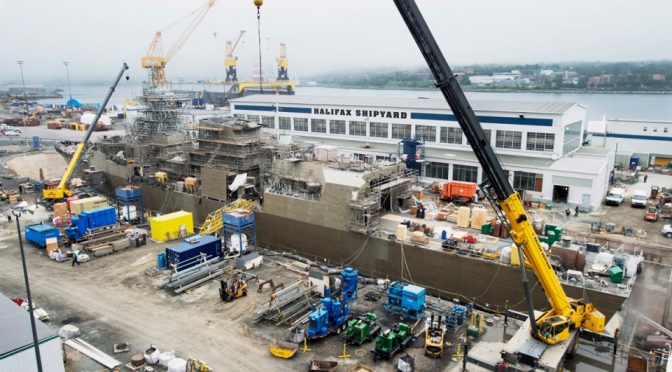
Tom Ring is a Senior Fellow at the Graduate School of Public and International Affairs at the University of Ottawa. He retired from the Public Service in January 2015 following a 39 year career, the last five of which were as the Assistant Deputy Minister of the Acquisitions Branch at Public Works and Government Services Canada. In that role he was responsible for the implementation of the selection process for the National Shipbuilding Procurement Strategy. (Image courtesy of The Canadian Press/Andrew Vaughan.)

Canadian Intelligence Accountability

This article originally featured at the Conference of Defense Associations Institute. It can be read in its original form here

CDA Institute guest contributor Kurt Jensen, retired as Deputy Director of Foreign Intelligence, explores the question of accountability in intelligence activities.

We have nothing to fear but fear itself,” said US President Franklin Roosevelt many years ago. This is no longer true. In the grip of an undefined terrorist threat, we should be very fearful about diminishing our freedoms through unlimited ‘security measures.’

Vague and statistically insignificant fears of terrorism have made us surrender privacy and other rights. But are we any safer? The recent ‘terrorist’ threats and incidents in Canada are unlikely to have been impeded by the enhanced intrusion in our lives to which we are all now subject. To ‘protect’ us, intrusive powers have been given to security agencies with little or no objective accountability. In this, Canadians are largely alone among developed nations. Canadian security and intelligence accountability has withered over the past decade, and is inadequate.

Intelligence staffs are honourable and scrupulous about adhering to the laws. But scrutiny of actions is a necessary tool of democracy. Great power and great secrecy make accountability reasonable and imperative in protecting the rights of citizens. The means employed are less important than how robust and uncompromising the instruments are. As it stands, Canada’s intelligence accountability régime is deficient.

Administrative oversight by bureaucrats and ministers is good – and necessary. But it is not a solution. Remember the old adage of ‘Who will watch the watchers.’ In Canada the answer is no one. The response to public concerns can no longer be ‘Trust us, we’re the good guys.’

We are at a democratic cross-​roads. We cannot rationalize intrusive acts which are against the basic principles of what this country stands for by accepting that the actions taken are legal and sanctioned by Parliament. Nor should we assume that intelligence accountability, which is not at arms-​length, is a solution to concerns about transgressions. Many of the intelligence intrusions into our democratic entitlements are likely here to stay but nothing precludes that citizens be protected by a robust accountability infrastructure.

The new Canadian government has announced that it will review the egregious Bill C-​51 and has proposed the creation of a parliamentary oversight body under MP David McGuinty. This is a good first step but it is not enough.

Parliamentary accountability of intelligence is vital, and now seems inevitable. Canada may follow the British model which has, itself, evolved over time. The British model began as a Committee of Parliamentarians reporting to the Prime Minister. This changed in 2013 when it evolved into the Intelligence and Security Committee of Parliament (ISC), with members appointed by Parliament after considerations of nominations from the Prime Minister. A parliamentary accountability architecture would not conflict with the existing mandates of either the Security Intelligence Review Committee (SIRC) or the Communications Security Establishment Canada (CSEC) Commissioner.

A parliamentary committee should include an active mandate to oversee all authority warranted to infringe the rights of individuals or involve potentially aggressive collection strategies beyond our borders. We cannot afford unwarranted transgressions of the rights of potentially innocent individuals. But we need more than tinkering at the edges to protect rights and freedoms.

Canada does not have adequate accountability of its intelligence activities. The Office of the Canadian Security Intelligence Service (CSIS) Inspector General, a modest but important part of the oversight architecture, was disbanded by the previous government to save a budgetary pittance. Only two organizations, CSIS and CSEC, are subject to any form of arms-​length accountability. While these are Canada’s two major intelligence organizations, quite a few other smaller departments and agencies have niche responsibilities (Global Affairs Canada, National Defence, Canadian Border Security Agency, Transport, Finance, etc.). These are not subject to any arms-​length accountability. A more robust accountability architecture would contribute to public trust.

Equally important is the need for accountability structures to have resources adequate to address realistic challenges. Neither SIRC (for CSIS) nor the small staff of the CSEC Inspector General are adequately resourced. Arms-​length accountability must be credible if public confidence is to exist.

A Super-​SIRC has been discussed to oversee the entire intelligence community. This is not the answer. The intelligence units employ different tradecraft, different operational spheres (domestic and foreign), and face a host of other challenges. However, a Super-​SIRC administrative structure or secretariat might work if it contained separate entities tasked with looking at different intelligence units since the necessary skills to carry out oversight functions would not easily shift from Transport Intelligence to FINTRAC (Financial Transactions and Reports Analysis Centre of Canada), for example. A Super-​SIRC secretariat could oversee common functions such as the protocols involved when review agencies had to connect, share, or consult with each other when appropriate – in a sense, to ‘follow the investigate thread’ when it flows from one agency to another, as has happened between CSIS and CSEC. A second area of commonality would be for a Super-​SIRC secretariat to oversee what data is provided to Canada’s intelligence partners.

An intelligence ombudsman, possibly a sitting or retired federal judge, is required to act as a court of last resort for those perceiving themselves to be penalized by the negative, illegal, or incorrect application of intelligence to their situations. People falling between the ‘intelligence cracks’ have no recourse to justice now. The media regularly reports on violations and injustices, but the media is no solution to insufficient intelligence oversight architecture.

Protecting sources and methods is imperative in the intelligence world but has become an excuse for unnecessary secrecy. Many historical intelligence files can and should be released to Library and Archives Canada for objective and arms-​length evaluation by the public (i.e., mostly academics and the media). Most historical material now being held under restricted access would not compromise security. Indeed, many intelligence files are already available in Library and Archives Canada – including World War II ENIGMA material released decades ago. Releasing historical files is a confidence building measure.

Bad things happen to people who surrender freedoms without accountability. This can’t be sanctioned in a Canadian democracy. Accountability is not to be feared by those engaged in intelligence matters. Its architecture must be balanced, objective and at arms-​length, and must provide an equilibrium between the rights and entitlements of citizens and the needs of national security. We’re not there now.

Dr. Kurt F. Jensen spent his career in the Canadian diplomatic service. He retired as Deputy Director of Foreign Intelligence. He is now an Adjunct Professor at Carleton University teaching courses relating to intelligence matters. (Image courtesy of Jeremy Board/​Flickr.)