Rotary-Wing Aviation in the Royal Canadian Navy

By Matthew Gamble

A key part of any modern navy is its rotary-wing component. The capabilities that helicopters bring to naval operations are essential in the context of modern warfare, and many large navies around the world boast impressive fleets of shipborne rotary-wing aircraft. Smaller navies, however, need to make due with much less, and there is perhaps no better example of a small navy employing its limited rotary-wing assets to the fullest extent as the Royal Canadian Navy (RCN).

Serving with the RCN for over 50 years, the Sikorsky CH-124 Sea King has been the backbone of the navy’s deck based rotary-wing aviation. Based on the American-designed Sikorsky SH-3, the CH-124 was introduced in 1963 to augment the anti-submarine warfare (ASW) abilities of RCN vessels in response to the growing threat of increasingly capable Soviet nuclear submarines. Since then, the aircraft has proven its versatility by filling capability gaps in the sometimes cash-strapped Royal Canadian Navy by conducting search and rescue operations, disaster relief missions, and even patrols to monitor water pollution. Given the smaller size of Canadian naval vassals, the RCN found the Sea King’s fold-up rotor and tail to be particularly useful as this allowed the aircraft to be carried on the Iroquois-class destroyers and Halifax-class frigates. Likewise, the aircraft’s amphibious hull proved to be popular among its pilots, as it enabled the aircraft to conduct emergency “waterbird landings” if the need arises. Overall the Sea King became a jack-of-all-trades for the RCN, with the aircraft being one of the busiest in the whole of the Canadian Forces.
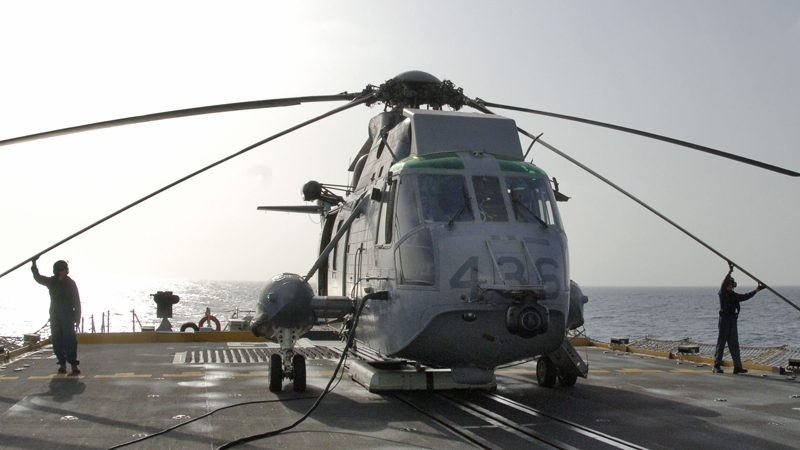
IS2005-2137a 31 July, 2005 Persian Gulf (Arabian Gulf) region Crewmembers from HMCS Winnipeg's helicopter detachment prepare a CH-124 Sea King for flight operations in the Gulf of Oman. The Canadian frigate is part of Operation ALTAIR, Canada's maritime contibution to the U.S.-led coalition campaign against terrorism mission known as Operation ENDURING FREEDOM. Photo: Sgt Frank Hudec, Canadian Forces Combat Camera Le 31 juillet 2005 Région Arabo-Persique Des membres de l’équipage du détachement d’hélicoptères du NCSM Winnipeg préparent un hélicoptère dans le but de participer à des opérations aériennes dans le golfe d’Oman. La frégate canadienne participe à l’opération Altair, la contribution maritime du Canada à la campagne dirigée par les É. U., menée par la coalition contre le terrorisme et connue sous le nom d’opération Enduring Freedom. Photo : Sgt Frank Hudec, Caméra de combat des Forces canadiennes. Image size = 9.86" x 5.34" 300 DPI 2960 x 1604 pixels
31 July, 2005 Persian Gulf (Arabian Gulf) region Crewmembers from HMCS Winnipeg’s helicopter detachment prepare a CH-124 Sea King for flight operations in the Gulf of Oman. (Photo: Sgt Frank Hudec, Canadian Forces Combat Camera)

Landing the Sea King on the deck of a small vessel in rough seas, however, still proved to be a significant challenge for the RCN. Nonetheless, an ingenious solution was devised in the early 1960’s by Canadian pilots of Experimental Squadron 10 (VX 10) based in Shearwater, Nova Scotia, with assistance from Fairey Aviation. What they developed was the world’s first Helicopter Hauldown and Rapid Securing Device (HHRSD), sometimes referred to as “beartrap.” To employ the retrieval device, a probe-tipped cable is lowered from the Sea King to the deck of the vessel upon which the aircraft is attempting to land. The ship’s crew then attaches the probe to a heavier cable and runs the assembly through the HHRSD. The cable is then winched back up and attached to the helicopter. Once secure, the pilot increases power and the cable synchronizes the helicopter’s movements with those of the ship. The pilot gradually decreases power and the frame of the beartrap steadily ‘reels in’ the helicopter until it touches down safely on the deck. In essence, the beartrap has allowed the RCN to conduct flight operations under even the most hostile weather conditions, and Sea Kings gained a respected reputation for continuing to fly during exercises and on joint-operations even when other NATO allies had suspended flight operations. To this day the beartrap stands as a significant Canadian contribution to deck-based rotary-wing operations, and the device was subsequently adopted by various navies around the world.

https://youtu.be/eoQC2hE_iU0

ASE Systems Off Helo Hauldown Landing of CH-124 Sea King aboard HMCS Charlottetown in July 2012 during OP ARTEMIS in the Gulf of Oman. (Steve Barnes via Youtube)

By 1986, the Canadian Department of National Defence (DND) began to seek a replacement for the now aging Sea Kings. Problems with the aircraft’s transmission raised concerns about its safety and continued viability among DND staff in Ottawa. Nevertheless, the aging Sea Kings remained in service and were even pressed into action in the Persian Gulf in 1990. Shortly after this successful deployment, the Canadian Progressive Conservative government led by Prime Minister Brian Mulroney signed a $4.4-billion-dollar contract with European Helicopter to replace the aging Sea Kings with a version of the AgustaWestland AW101 to be designated the CH-149 Cormorant in Canadian service. However, a year later, the newly elected Liberal government led by Jean Chretien cancelled the order and only a few Cormorants were accepted into service. It would be another ten years before the Liberal government would sign a contract procuring a new helicopter for deck-based operations. 

Following a competition to find a suitable replacement for the Sea King held by the DND in 2004, the Sikorsky H-92 Superhawk emerged victorious. Shortly thereafter, the Canadian Government announced plans to acquire 28 new Superhawks under the designation CH-148 Cyclone. The price tag of the deal was a whopping $1.8 billion, a very significant sum for a Canadian defence expenditure. Deliveries were scheduled to start in 2009, but repeated delays due to development problems with the aircraft pushed the initial delivery of six helicopters back to June 2015. These delays caused significant political fallout as a number of government ministers publically criticized the program because of the setbacks. Nevertheless, the Canadian Government announced it was moving forward with the deal. Currently, a total of nine Cyclones have been delivered, finally allowing for the gradual retirement of the long-serving Sea Kings.

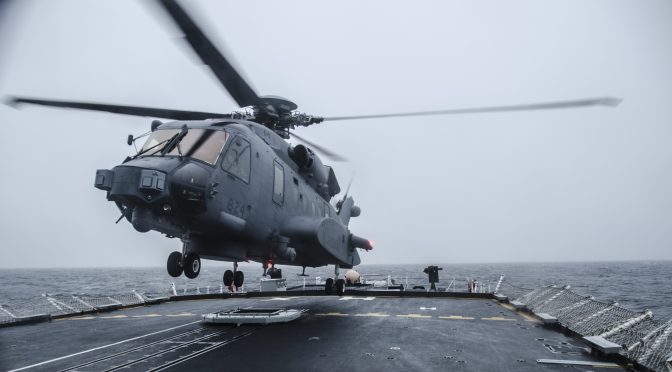
Although it lacks the amphibious capability of the Sea King, the Cyclone’s performance characteristics are vastly superior, and the new aircraft will greatly enhance the rotary-wing capabilities of RCN vessels. In addition to the latest avionics, the Cyclone is equipped with Integrated Mission and Sonobuoy Acoustic Processing Systems developed by General Dynamics Canada. Furthermore, the helicopter’s armament consists of two Mark-46 Mod V torpedoes mounted on BRU14 electro-mechanical ejector racks and door-mounted machine guns. The Cyclone’s airframe also incorporates protection from both lightning strikes and high-intensity radio frequency pulses. These characteristics make the CH-148 a very capable machine comparable to other modern deck-based rotorcrafts, such as the Eurocopter Panther and the NHIndustries NH90 NFH.
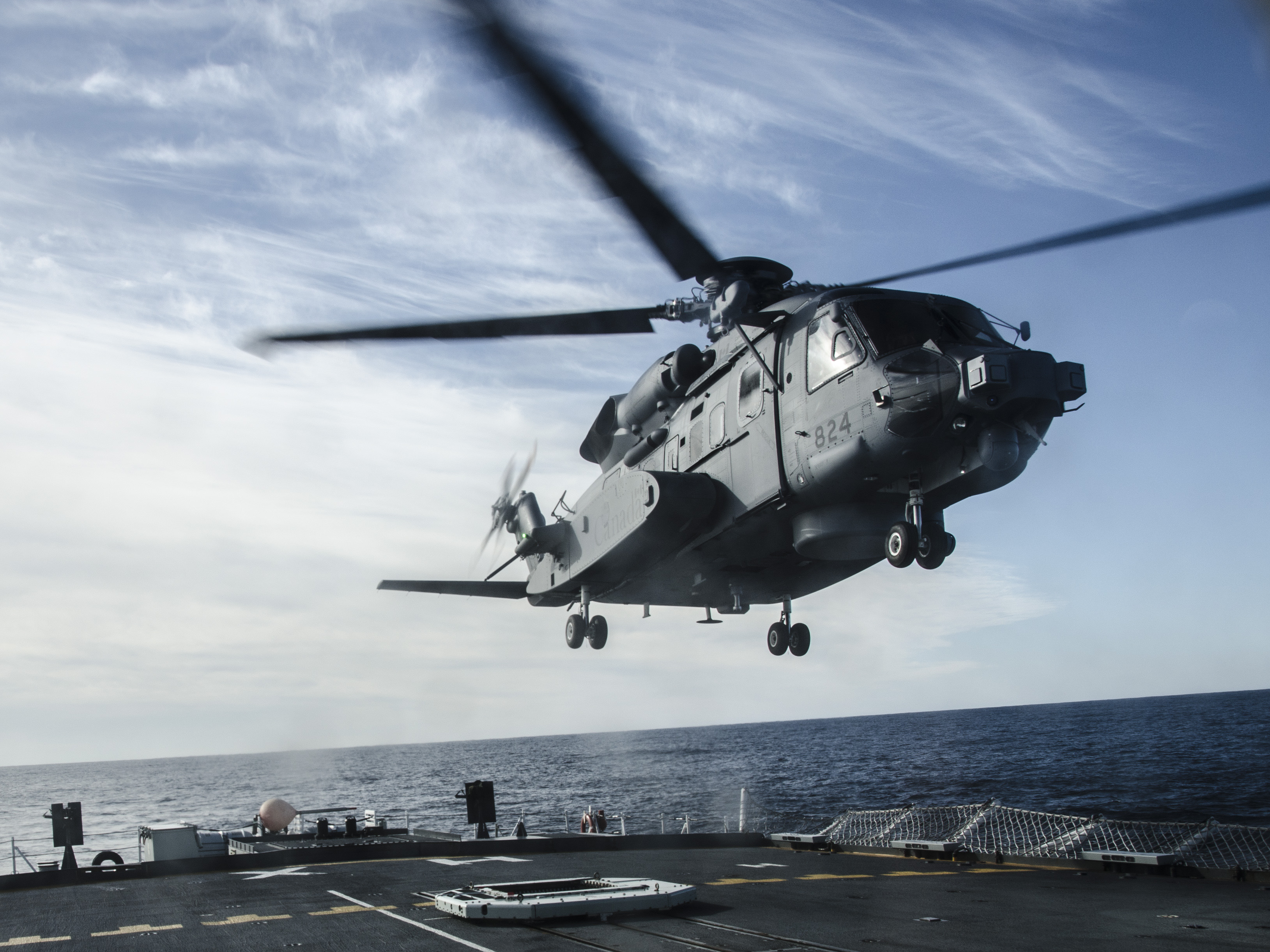
HS28-2016-0001-011 One of Canada's newly acquired CH-148 Cyclone helicopters practices landing procedures on HMCS Halifax off the coast of Nova Scotia on 27 January 2016. Photo: Ordinary Seaman Raymond Kwan, Formation Imaging Services, Halifax. HS28-2016-0001-011 Le nouvel hŽlicoptre CH-148 Cyclone, acquis rŽcemment par le Canada, pratique des manÏuvres dÕatterrissages sur le Navire canadien de Sa MajestŽ (NCSM) Halifax prs des c™tes de la Nouvelle ƒcosse le 27 janvier 2016. Photo : Matelot de 3e classe Raymond Kwan, Services dÕimagerie de la formation, Halifax.
One of Canada’s newly acquired CH-148 Cyclone helicopters practices landing procedures on HMCS Halifax off the coast of Nova Scotia on 27 January 2016.(Photo: Ordinary Seaman Raymond Kwan, Formation Imaging Services, Halifax)

In the future, rotary-wing aircraft stationed on Canadian vessels will face a variety of challenges. Chief among these is the evolving threat posed by increasingly sophisticated Chinese submarines. Therefore, the ASW capabilities of the Cyclone could ultimately prove indispensable to the RCN in future operations, especially in contested waters or in Canada’s vulnerable Pacific littoral areas. Similarly, as Canada pivots to take a more active role in the Arctic, the Cyclone will play a key role in that theater of operations as a countermeasure to the potential threat posed by surface or undersea incursions. In addition, the RCN is also increasingly called upon to assist in disaster relief operations where reliable helicopters often prove to be highly valuable. The Cyclone will certainly be called upon for search and rescue, as well as tactical transport.

Perhaps the greatest test the new helicopter will face will be to operate effectively in a low budget environment.Nevertheless, the Cyclone’s introduction into service signals a new era of enhanced safety and capabilities for rotary-wing operations in the Royal Canadian Navy, and the new aircraft will undoubtedly form the mainstay of this vital component for many years to come.

Matthew Gamble is an International Relations student at St. Thomas University, Fredericton, New Brunswick, Canada. His interests primarily focus on the foreign policy of Eurasian states, and new developments in warfighting capability.

Management and Process Improvement: The Navy of the 1990s and Today

By Jason Chuma

On December 25, 1991, following a year and a half breakup of Soviet states, the flag of the Soviet Union was lowered at the Kremlin for the last time and the flag of the Russian Federation was raised. The next day, the Supreme Soviet voted the Soviet Union out of existence. It was a great victory for the United States and what was dubbed the “First World.” They were victorious in the Cold War, a different kind of war, but a war nonetheless. A war between east and west; a war between communism and capitalism; a war fought using all elements of national power – diplomatic, intelligence, military, and economic – which never erupted into combat between the major powers of NATO and the Warsaw Pact.

The End of an Era
(Oleg Nikishin/Getty Images)

Though the war did not involve combat, discussions of conflicts such as Korea and Vietnam aside, the U.S. military was in a near constant state of preparing for the Soviets to push through the Fulda Gap and for a great naval battle in the Norwegian Sea.

But suddenly, the adversary was gone. For nearly five decades the Soviet Union provided focus and direction for what to buy, how to train, and what to study. What now? In 1991, China was not the military power of today and the idea of a Global War on Terrorism couldn’t have been further from mainstream military thought. A look at the 1991 U.S. National Military Strategy makes only generic mentioning of terrorism and shows an isolationist view of China:

“China, like the Soviet Union, poses a complex challenge as it proceeds inexorably toward major systemic change. China’s inward focus and struggle to achieve stability will not preclude increasing interaction with its neighbors as trade and technology advance. Consultations and contact with China will be central features of our policy, lest we intensify the isolation that shields repression.”

The potential threat of China and the actual threat of terrorism did not reveal themselves in force until the early 2000s. The 1990s were a sort of rudderless decade for the U.S. military. With no major perceived enemy to fight, budget cuts commenced. Military spending in the 1990s quickly dropped by a third of its Cold War levels. Intervention in failing or failed states was the name of the game, and American technological superiority, specifically airpower, was the weapon of choice in places such as Iraq, Bosnia, and Serbia.

The Navy found itself without an enemy to confront at sea and with a rapidly shrinking budget. Control of sea lines of communication became assumed and the Navy gradually disarmed itself for fighting a major sea battle in the 1990s through decisions like discontinuing the UGM-84A submarine launched Harpoon anti-ship missile and converting remaining R/UGM-109B Tomahawk anti-ship missiles (TASM) into the Tomahawk land-attack missile (TLAM) R/UGM-109C. The last combatant commissioned equipped with anti-ship missiles was the USS PORTER (DDG 78) in1999.

Idle hands may be the devil’s workshop, but an idle Navy surely is the bureaucrat’s and the administrator’s. Without war or the real risk of war, Navy culture shifted. Instead of warriors patrolling the oceans and maintaining freedom of the seas from the Soviet Navy, it became about management and process improvement. The MBA became the graduate degree of choice and process improvement models such as Deming’s Total Quality Management – rebranded as Total Quality Leadership of course – became the norm.

Admiral James Stavridis had command of the USS BARRY (DDG 52) from 1993 to 1995. He maintained a diary while in command which was published as Destroyer Captain: Lessons of a First Command. Within it he makes some very astute observations of the Navy of the 1990s:

“[W]e have become a navy that specializes in safety, communicating, inspecting, engineering, administering, retaining, and counseling. There is too little emphasis on shiphandling, warfighting, battle repairing, and leading…As an example of how we are a bit out of whack is that if I charted my personal time, I suspect I spend virtually my entire day working the first list and precious little devoted to the latter…If I completely reversed my priorities – and focused exclusively on shiphandling and warfighting, I would be in some danger of being relieved for cause within ninety days…But in some not-too-far-distant decade, I think ships will be hit by cruise missiles, they will sink, men and women will die bad deaths. And hard questions will be asked about the Navy of the 1990s and its priorities and beliefs.”

Admiral Stavridis tells a grim but honest tale of the culture of the Navy in the 1990s, but is it a really a story of the past or is it a story of what has continued to this day? If you compared the Navy of 1995 and the one of today, what cultural differences would you see? Have we turned the tide and placed a focus back on mastering our trade of warfighting? The recent establishment of the Naval Surface and Mine Warfighting Development Center (NWMWDC) and Undersea Warfighting Development Center (UWDC) in 2015 is a positive start. Is attending the War College viewed as career enhancing? Recent discussions with officers indicate it may be currently viewed as not career hindering at the least. What is truly viewed as more important today: understanding tactical employment of a ship, fleet, or nation, or efficiently managing a major maintenance availability and developing and executing a shipboard training plan?

Yes, management of programs is a skill needed in any organization, especially in one as complex as the Navy and as unforgiving as life onboard a ship. But does it define that organization, is it what that organization’s culture is centered around, and can someone survive and even succeed in that organization simply being a manager and administrator instead of a leader and a warfighter? These are simple yet hard questions which must be asked in order to heed Admiral Stavridis’s warning of the Navy’s priorities and beliefs from the 1990s which have continued to today.

Harkening back to another famous admiral, Arleigh Burke, may help with some simple guidance from his Destroyer Squadron 23 Doctrine in World War II. These tenets (paraphrased for modernity) were the most basic guidance to his Commanding Officers while he was Commodore:

“If it will help kill [the enemy] it’s important. If it will not help kill [the enemy] it’s not important. Keep your ship trained for battle! Keep your material ready for battle! Keep your boss informed concerning your readiness for battle!”

Simple yet powerful tenets which serve to maintain the focus where it belongs, ensuring our ships and sailors are ready to sail into harm’s way to take the fight to the enemy. It becomes easy to be distracted by inspections, paperwork, and watchbill management. Items which are easier to audit and assess tend to get the energy and attention over warfighting effectiveness and combat readiness. Potentially at great peril during the next war at sea.

LT Jason H. Chuma is a U.S. Navy submarine officer currently serving as Navigator and Operations Officer onboard USS SPRINGFIELD (SSN 761). He is a graduate of the Citadel, holds a master’s degree from Old Dominion University, and has completed the Intermediate Command and Staff Course from the U.S. Naval War College. He can be followed on Twitter @Jason_Chuma.

The opinions and views expressed in this post are his alone and are presented in his personal capacity. They do not necessarily represent the views of U.S. Department of Defense or the U.S. Navy.

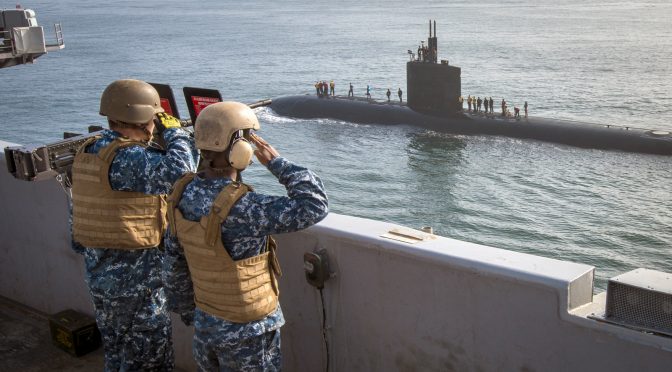
Featured Image: PACIFIC OCEAN (Aug. 30, 2016) Sailors on board the aircraft carrier USS Carl Vinson (CVN 70) render passing honors to the fast-attack submarine USS Pasadena (SSN 752) as it transits the San Diego Bay. Carl Vinson is currently underway in preparation for an upcoming deployment. (U.S. Navy photo by Mass Communication Specialist 3rd Class Sean M. Castellano/Released)

Lessons and Activities of the Maritime Expeditionary Operations Conference 2016

By Clarissa Butler

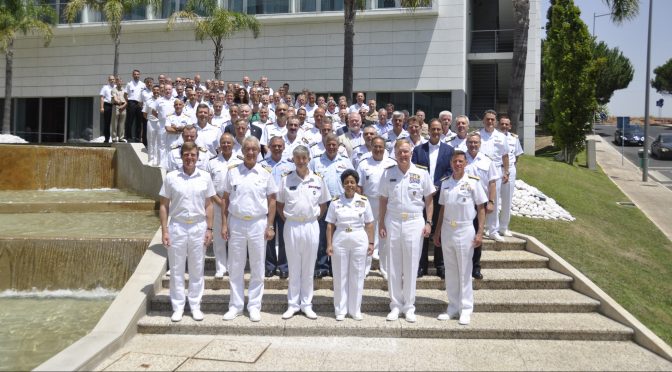
During the third week of July, Naval Striking and Support Forces NATO (STRIKFORNATO), together with Combined Joint Operations from the Sea, Centre of Excellence (CJOS COE), hosted the bi-annual Maritime Expeditionary Operations Conference (MEOC) in Oeiras, Portugal. The timing of the conference was opportune – the Warsaw Summit was held the week before, reaffirming the Alliance’s three core tasks: collective defense, crisis management, and cooperative security. The MEOC was able to capitalize on a maritime theme and contribute to the Summit’s two key pillars: protecting citizens through modern deterrence and defense, and projecting stability beyond borders. 

The conference brought together over 170 representatives from NATO Command and Force structures, academia, and national military commands from Allied and Partner Nations. Over the two days, attendees listened to five panels evolving from current threat, application of maritime expeditionary warfare, exercises and training, and the role of maritime partnerships.

Each panel featured four distinguished Officers and/or Senior Executives and the highlight of the conference were three Keynote Speakers [i]: General Petr Pavel, CZE-A, Chairman of the Military Committee (MC), Admiral Michele Howard, USA-N, COM Allied Joint Forces Command Naples (JFCNP), and Admiral Manfred Nielson, DEU-N, Dep Supreme Allied Command Transformation (SACT).

The goals of MEOC 16 were to define the future role of Maritime Expeditionary Operations (MEO) and how the capability can best be delivered to contribute to assurance and adaption measures in the evolving geopolitical sphere in light of emerging security challenges faced by the Alliance. During the five panel discussions, three themes came to the forefront: sources of instability, importance of joint and combined training, and partnership inside and outside the Alliance.

Sources of Instability in the East

Day 1 was largely dedicated to the maritime element of NATO’s adaptation to the surrounding borders of the Alliance. Arguably, Russia maintains a competitive advantage over the Alliance through rapid decision-making, strong public support of military actions, and the use of operations in the perceived grey space below the threshold of war. Recent moves by Russia have tested NATO’s unity and the Alliance should pay particular attention to the Baltic and Black Sea regions. 

To counter this aggressive posture, the first panel recommended the Alliance adapt a posture of constraint and engagement while maintaining the moral high ground through transparency. Credible and visible deterrence can be achieved through intensified Maritime Expeditionary Operational exercises such as the recent BALTOPS exercise, in which 14 NATO nations participated along with partners Finland and Sweden. 

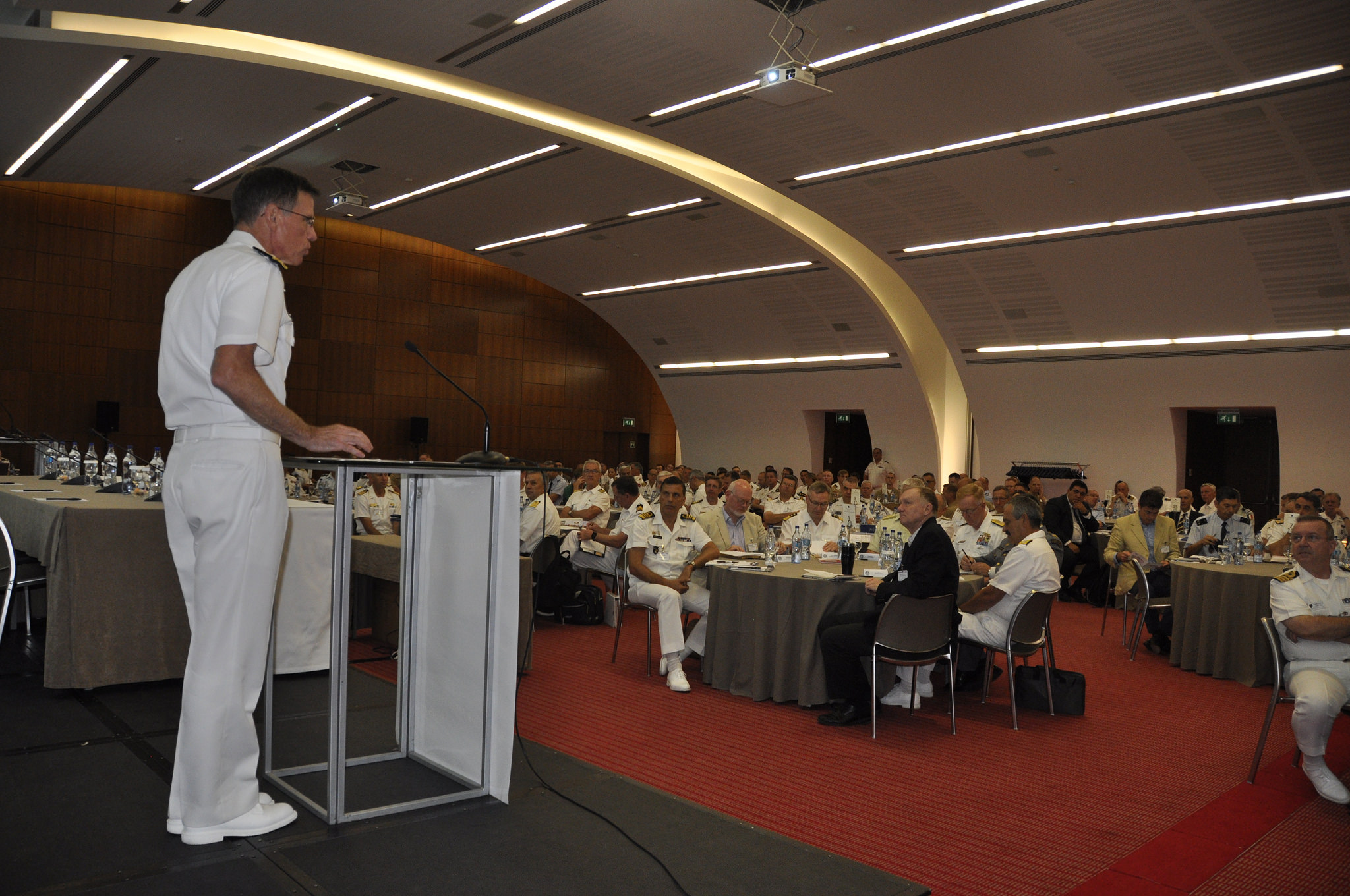
A presenter speaks before gathered leaders. (STRIKFORNATO)

Both the Baltic and Black Sea regions require a tailored solution that takes into account regional diversity while providing a cooperative and inclusive approach. In particular, the Black Sea’s importance as a strategic crossroads and cradle of Russian aggression requires cooperation with as many nations as possible including partners Ukraine and Georgia. 

Sources of Instability in the South

Socioeconomic instability along the southern peripheries of the Alliance has caused mass migration and terrorist attacks to rise to an unprecedented level. The second panel focused on the effects of the deteriorating security situation in the Middle East and Africa and how the impact on NATO members will necessitate a review of NATO’s Area of Responsibility.

As evolving threats continue to put new pressures on resources and priorities, NATO cannot act unilaterally in the region; it must cooperate with regional partners such as the African Union and Arab League to provide support. In the context of Maritime Expeditionary Operations, NATO can best provide a supporting role in functions such as maritime domain awareness, freedom of navigation, and port security. However, in a relatively new strategic direction for the Alliance, NATO must commit to understanding the complex environment to the south prior to proposing specific means of engagement. 

Importance of Training

Day 2 focused on maritime exercises, training, and the role of maritime partnerships. NATO’s two primary maritime objectives are to deny use of the sea by adversaries and to deliver effects ashore. The former is an easily understood mission, but the latter includes multiple missions to include power projection, humanitarian assistance, noncombatant evacuation, and newer effects such as cyber warfare. In the event of invoking Article V, the most difficult situation for the Alliance at sea is operating Carrier Strike and Amphibious Tasking simultaneously with an appropriately agile and interoperable Command and Control Structure.

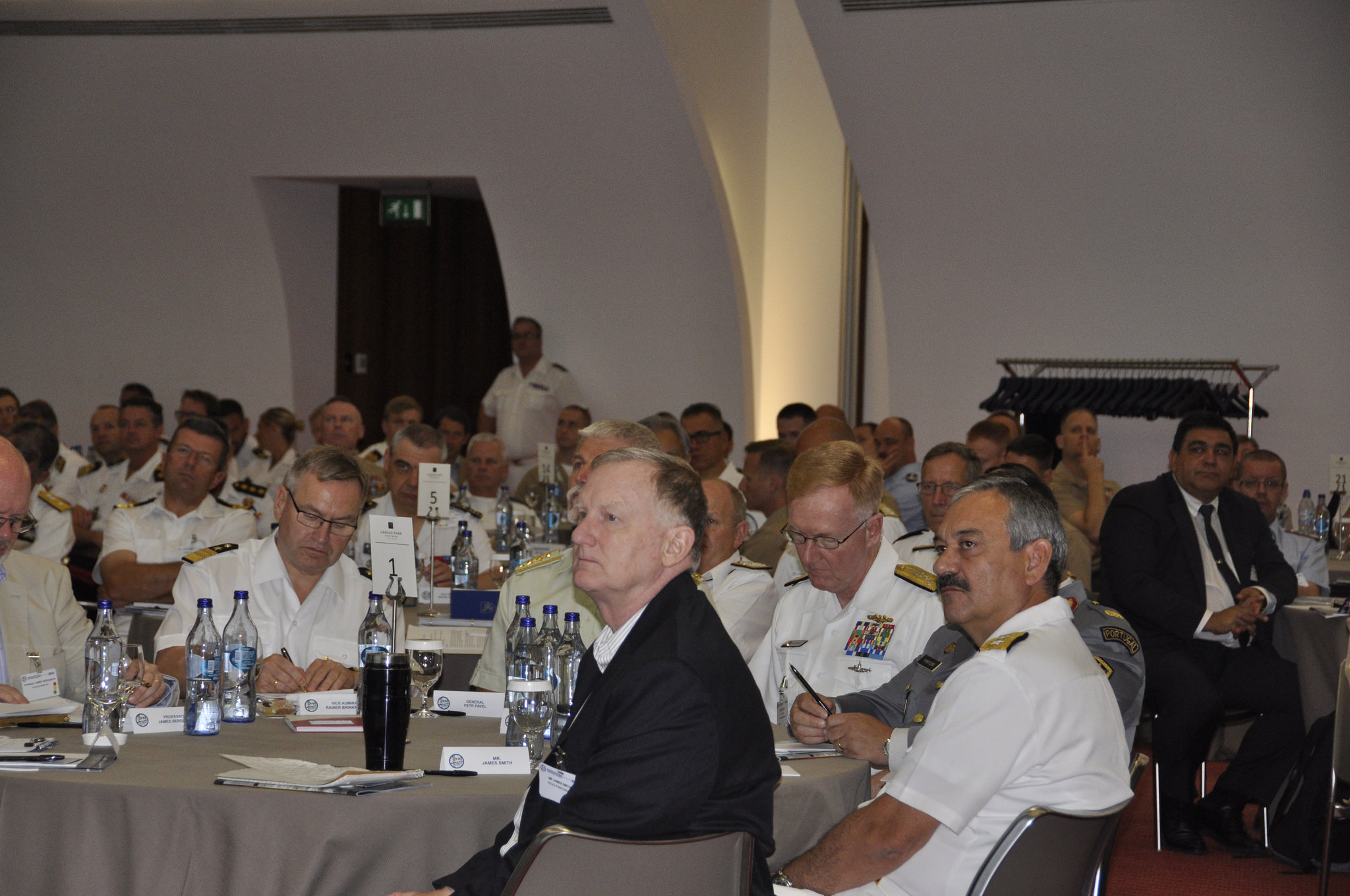
Attendants listen to a presenter. (STRIKFORNATO)

Without the historical context of a past Article V mission at sea, the Alliance is left to develop trust and interoperability through training and exercises. One senior official was quoted, “trust cannot be surged,” it must be developed over time with quality training opportunities. All but 10 out of the 25 Alliance navies have fewer days at sea than planned per year. Allied navies must increase the number of large scale, unscripted combined and joint exercises while maximizing return on investment for the time and money spent by individual nations. Integrating the maritime and land forces of allied countries will allow the Alliance to train how it will fight.

Partnership

Partners offer regional expertise and experience that NATO can leverage to execute the Alliance Maritime Strategy. For example, Sweden’s in depth understanding of operations in the littoral environment or Japan’s grasp of the shifting military balance in East Asia can benefit Alliance security. Each potential maritime partner will have a unique relationship with the Alliance, each with its own political guidance and tailored cooperative engagements.

Potential areas of cooperation with partners in the maritime domain include supporting rule of law, joint exercises, deeper intelligence sharing, capacity building, defense of sea lines of communications, joint capability development, and participation and training in NATO’s Centres of Excellence.

Ultimately, partnering with other nations will drive the Alliance to be globally aware, agile, and enable NATO Maritime Expeditionary Operations to face emerging threats within and beyond  the traditional NATO Area of Responsibility.

LT Clarissa Butler is an E-2C Naval Flight Officer who has deployed in support of Operation ENDURING FREEDOM. She is currently working at Combined Joint Operations from the Sea, Centre of Excellence.

[i] Key note speakers and panelists

  • General Petr Pavel, Chairman of the Military Committee
  • Admiral Michelle Howard, Commander, Joint Force Command Naples
  • Admiral Manfred Nielson, Deputy Commander, Allied Command Transformation
  • Ambassador Masafumi Ishii, Ambassador of Japan to Belgium and NATO
  • Ambassador Stefano Stefanini, Atlantic Council
  • Vice Admiral James Foggo, Commander, SFN
  • Vice Admiral Rainer Brinkmann, Vice Chief of German Navy
  • Vice Admiral Clive Johnstone CB CBE, Commander, NATO Allied Maritime Command
  • Vice Admiral Eric Chaperon, Commander of French Reaction Force
  • Vice Admiral Richard Breckenridge, DCOM USFFC & Director, CJOS COE
  • Major General Rob Magowan CBE, Commandant General, Royal Marines
  • Brigadier General Patrick Hermesmann, Commanding General, 4th Marine Logistics Group
  • Rear Admiral Alexandru Mirsu, Commander, Romanian Navy
  • Rear Admiral John Clink OBE, Commander, Flag Officer Sea Training
  • Rear Admiral Luis Carlos de Sousa Pereira, Commandant, Portuguese Marines
  • Rear Admiral Jens Nykvist, Chief of Staff of Royal Swedish Navy
  • Rear Admiral Peter Gumataotao, Deputy Chief of Staff, Allied Command Transformation
  • Rear Admiral Paddy McAlpine CBE, Deputy Commander, SFN
  • Commodore Kees-Boelema Robertus, Commander, Netherlands Maritime Forces
  • Commodore Phil Titterton OBE, Deputy Director, CJOS COE
  • Assis Malaquias, Africa Center for Strategic Studies
  • Professor Spyridon Litsas, University of Macedonia
  • James Bergeron, Chief Political Advisor, NATO Allied Maritime Command

Featured Image: Gathered leaders at MEOC 2016. (STRIKFORNATO)

CIMSEC UK Meet-Up – September 28th

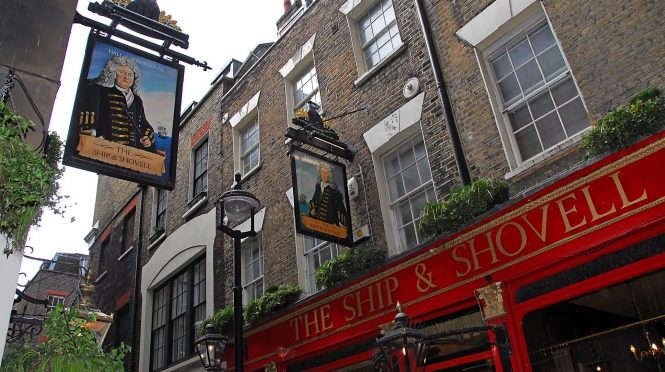
Join CIMSEC’s UK Chapter at The Ship & Shovell Pub for a pint and discourse on all things maritime. CIMSEC founder and board chairman, Scott Cheney-Peters, will drop in as well.

Location: The Ship & Shovell Pub, between Charing Cross and Embankment stations, 1-3 Craven Passage, London. Inside the pub look for the CIMSEC logo.
Time: 6-8pm, Wednesday, September, 28th.

RSVPs not required but helpful: director@cimsec.org

Fostering the Discussion on Securing the Seas.