The Bad Day Scenario Pt. 3: Developing a Dynamic, Distributed, and Lethal Global Force

By Jimmy Drennan

“In the midst of chaos, there is also opportunity.” –Sun Tzu

Parts One and Two of the Bad Day Scenario series posited a worst case-style scenario for the U.S. Navy, discussed ways the Navy might respond with current capacity and capability, and introduced emerging concepts that could help the Navy address similar scenarios in the future as a more globally responsive force. Dynamic Force Employment (DFE), the U.S. military’s latest concept for employing the joint force with agility and unpredictability, will have a significant impact on how the Navy is used as an instrument of national power. Meanwhile, Distributed Maritime Operations (DMO) is the Navy’s emergent concept for force development and maritime operations that will be capable of generating combat power across a broad range of platforms, domains, geographical area, and potential adversaries. The rest of the Bad Day Scenario series aims to reconcile the DFE and DMO concepts into an overall model for developing a dynamic, distributed, and lethal global force by 2020.

There currently exists no satisfactory integration of DFE and DMO. Chief of Naval Operations Admiral John Richardson addresses both concepts independently in his Design for Maintaining Maritime Superiority 2.0. Essentially, he suggests the Navy will use DFE at the lower end of the range of military operations, and DMO at the high end. Design 2.0 recognizes the unsustainability of business-as-usual global maritime operations, but fails to acknowledge that DFE and DMO will simultaneously impact steady state operations and must account for each other to be effective. They are not two conceptual “buttons” which the Navy can press depending on the situation.

Proposing a new concept – Global Force 2020 – can provide the necessary integration of DFE and DMO to enable the Navy to operate efficiently on a daily basis, while remaining postured to respond to global crises and contingencies. Global Force 2020 is based on a six-factor model – Operational, Technological, Human, Partnership, Cultural, and Logistical – that highlights the unique challenges and opportunities that arise from the integration of DFE and DMO. The first three factors will be discussed in this part, and the remaining three will be discussed in Part Four.

Operational Factor

Global Force 2020 will fundamentally change naval operations, along with tactics and training, in a variety of ways. Most notably, the model will necessarily reduce the primacy of the Carrier Strike Group (CSG) as the Navy balances a variety of force organizational constructs. Admiral Richardson seemed to acknowledge this shift when he said “our fundamental force element right now in many instances is the carrier strike group. We’re going to scale up so our fundamental force element for fighting is at the fleet level, and the strike groups plug into those numbered fleets. And they will be, the strike groups and the fleet together, will be operating in a distributed maritime operations way.”

Upscaling to the fleet as the basic fighting unit, however, could unintentionally hamper distributed execution by centralizing C2 at the three-star level, and would not incentivize the Navy to evolve its default CSG deployment model. Under Global Force 2020, existing constructs, such as Amphibious Readiness Groups (ARG) and Surface Action Groups (SAG), would see more emphasis, while emerging constructs, such as influence squadrons, war-at-sea flotillas, littoral combat groups, and unmanned or autonomous swarm formations, would be incorporated.

For decades, operations, tactics, and training in the surface force have focused too heavily on supporting the aircraft carrier. CSGs became the default force element. In the era of the Global War on Terror, carrier-based tactical air sorties became the naval force du jour for projecting American military might onto enemies in Iraq, Afghanistan, and elsewhere. The Navy even re-designated Carrier Battle Groups to CSGs in 2004 to reflect the emphasis on power projection ashore. The demand signal from operational commanders ashore was so immense that the Navy deployed CSGs constantly to generate sorties in an almost industrial fashion. On a typical radar screen in the North Arabian Sea, ingressing and egressing carrier aircraft resembled widgets on a conveyor belt. To support this pace of sorties, nearly all surface combatant deployments were as part of CSGs.

Even before the wars in Iraq and Afghanistan, the Navy was already structured to operate with the CSG as its basic building block. The modern CSG was conceived of during the Cold War to defeat Russian battle groups in blue water, force-on-force, high end conflict. The concept hinged on the CSG’s ability to defend the aircraft carrier and preserve its ability to generate combat sorties. The Aegis Combat System was designed for this purpose, specifically targeting sea-skimming anti-ship cruise missiles (ASCM). Eventually, “Aegis” became synonymous with “high end surface combatant.” Even the Command and Control (C2) concept, Composite Warfare Command (CWC), which was designed to enable CSGs to defend aircraft carriers against multi-domain threats, came to be applied almost universally in surface force operations.

CWC is based primarily upon two key principles: functional warfare commanders, and command-by-negation. Functional warfare commanders have command of the fighting function of CSG assets, not necessarily the assets themselves, within their individual warfare area or domain (i.e. Air and Missile Defense (AMD), surface warfare (SUW), anti-submarine warfare (ASW)). The warfare commanders are empowered to engage threats to the CSG without asking for permission. They are only required to notify the CSG Commander, who can then negate the order if he or she does not concur. This is the principle of command-by-negation.

Functionally arrayed warfare commanders and command-by-negation work well for the point defense of an aircraft carrier by her surrounding escorts. Multi-domain threats along multiple axes afford little reaction time, and decentralized C2 among concentrated forces offers the best chance for successful defense. As maritime operations become more distributed, however, the efficiency and efficacy of CWC diminish significantly. The individual ships of a CSG already operate disaggregated across entire theaters, well outside of organic weapons and high data-rate communications ranges. Ships can communicate via satellite relay but at a certain distance the ships will be part of different communication architectures which complicates tactical communication. Lower data-rate methods such as high frequency (HF) radio also do not support tactical communication. Functional warfare commanders cannot effectively defend assets when they cannot communicate rapidly, build shared awareness, or cover with their own armament. Global Force 2020 will not be able to rely on CWC as an effective method of tactical maritime C2. DFE and DMO are bringing about a sea change in naval C2 that will require commanders to operate effectively both independently, and as part of a larger networked force.

Future fights will require naval force elements to interface with joint and coalition constructs more frequently and more dynamically. Today, for example, a CSG or an ARG may be required to detach from a scheduled mission on short notice to join a Joint Task Force or multinational operation. In the future, this could become commonplace for ad hoc force elements to “plug in” to joint or international constructs. CWC, while highly effective for defending an aircraft carrier, does not translate well to the widely-used Prussian general staff structure, which is comprised of functional directorates (e.g. administration, intelligence, operations, logistics, plans, communications, etc.). The friction is evident even within Navy commands. Fleets are often broken into task forces, but task forces often employ CWC instead of further subdividing into task group and units. When a ship shifts from one task force to another, she sometimes retains her warfare commander duties to the former, creating a conflict for the fleet staff to manage.

Along with C2, the Navy must also adapt training to account for the reduced emphasis on CSG operations under Global Force 2020. Surface ships will no longer deploy with CSGs by default, and therefore will not be able to rely on a training curriculum tailor-made for CSG operations. Training should be geared toward each ship’s unique capabilities, not necessarily her expected role within a group, and should include practice integrating into joint and coalition force elements under a wide range of circumstances. Likewise, threat recognition and study of enemy tactics cannot be exclusive to a single geographic region. Ships may be asked to respond to any number of contingencies around the globe while potential adversaries are increasing their own out-of-area deployments.

Finally, an important element of Global Force 2020 operations will be deception. Inherent in the DFE concept is an element of unpredictability, which can be supported by military deception, both operational and tactical. As DFE seeks to keep potential adversaries on their heels by making the location and timing of naval deployments less routine, the Navy can further confuse their operational picture and frustrate efforts to understand U.S. intent through the use of information operations. Tactically, the Navy can employ Electromagnetic Maneuver Warfare to make the enemy think the fleet is concentrated where it is not, and vice versa.

Technological Factor

A variety of emerging technologies, and some long-established but neglected by the U.S. Navy, now enable the U.S. to deliver decisive effects without the need for concentrating forces on the objective. Naval warfare has come a long way since the Battle of the Coral Sea in 1942, the first naval engagement in which opposing warships did not sight each other. Today’s weapons, sensors, and communication systems enable friendly forces to coordinate fires outside visual range of each other and the enemy. In the future, some key technologies will enable naval forces to engage targets when not even in the same theater. Global Force 2020 will utilize long range hypersonic missiles and aircraft, next-generation cruise and ballistic missiles, next-generation unmanned systems, artificial intelligence, and cyber to name a few.

Much has been written on the advent of hypersonic weapons, airborne projectiles that travel faster than Mach 5. Some have even suggested a new hypersonic arms race is underway. On the other hand, some argue there is nothing transformational about these weapons, and they do not alter strategic fundamentals. This perspective fails to recognize the second and third order effects that the resultant force disposition and commander’s decision time will have on naval warfare. Hypersonic attacks, sometimes described as Conventional Prompt Global Strike (CPGS), would be a core maritime mission instead of just a strategic one. Hypersonic manned or unmanned aircraft could also transform naval operations in unforeseen ways, but the Navy should exercise caution in investing too heavily in them, potentially sacrificing lower cost, higher quantity missiles for an exquisite technological solution just to fit the current operational paradigm of naval aviation.

Anti-ship missile technology has advanced in a number of ways aside from velocity. Since the U.S. Navy first fielded the Harpoon missile in 1977, technology for propulsion, maneuver, and homing have all revolutionized the way in which missiles can be employed against ships. Anti-ship ballistic missiles (ASBM), such as China’s DF-26 with a range of 3400 miles, pose a significant challenge to legacy fleet air defense systems. Modern anti-ship cruise missiles (ASCM), such as Russia’s 3M22 Zircon, can perform terminal maneuvers even at hypersonic speeds and employ stealth technologies to significantly reduce their radar signature. Meanwhile, terminal homing technology is constantly improved to counter defensive electronic warfare systems. Today, the U.S. Navy still only employs four to eight Harpoon missiles on its surface combatants. While lagging far behind other naval powers in anti-ship missiles, the U.S. is now making significant gains in terms of funding, acquisition, and research and development.

Apart from missiles, the railgun is a popular weapon often discussed as the future of naval gunnery. China purportedly fielded a prototype on one of its warships in 2017; however, the U.S. Navy recently admitted the weapon’s limitations and signaled its intent to pursue alternatives. With a theoretical range of over 100 nautical miles, the railgun certainly would have a place in Global Force 2020, but the verdict is still out on its viability in naval warfare. Interestingly, in 2018 the U.S. Navy did test fire hypervelocity projectiles, the railgun’s munition, from a conventional 5” deck gun.

Meanwhile, unmanned systems are proliferating rapidly and giving the world’s navies the operational reach that was once reserved for superpowers. Unmanned aerial systems (UAS) can provide surveillance, extending the over-the-horizon targeting range of individual combatants, and communication relays, allowing force elements to operate disaggregated without relying on satellite networks or more conventional communications, which may be denied in future conflicts. Future UAS will also conduct strike and aerial refueling missions. On the surface, the U.S. Navy is also pursuing Medium Diameter Unmanned Surface Vessels (MDUSV) to hunt mines and submarines, and to serve as a communications node to network a larger force. Similarly, unmanned underwater vehicles (UUV) will become an integral part of advanced undersea warfare systems to detect, identify, and counter enemy ships and submarines.

Another emerging technology, artificial intelligence (AI), could make it possible for unmanned systems to operate autonomously when range or environment prohibit communication links for tactical control. Fielding autonomous weapons invokes substantial legal and ethical debate, but the technology can certainly benefit dynamic and distributed operations. Global Force 2020 will employ force elements comprising a mix of manned assets and autonomous systems. Beyond vehicles, AI will also be used in communication systems such as cognitive radio to dynamically access the electromagnetic spectrum and make it more difficult for adversaries to deny friendly use of the spectrum. In the cyber domain, payloads could be programmed with AI and deposited into enemy networks to conduct its mission autonomously without reach back.

A key aspect of cyber warfare as it relates to Global Force 2020 is that it permits engagement of the enemy irrespective of range. As long as friendly cyber forces can connect to adversary computer networks, cyber warfare can be conducted from anywhere in the world. By maintaining presence around the world, the Navy brings the capability of connecting to certain networks that would otherwise be inaccessible. A Littoral Combat Ship in the Caribbean Sea could connect to a local Wi-Fi network to deliver a cyber payload to an adversary’s power grid halfway around the world.

Human Factor

As technology inevitably increases in complexity and permeates every aspect of naval operations, the U.S. Navy will need to embrace the benefits of specialization in human capital management. In July 2018, Rear Admiral William Galinis, the Navy’s Program Executive Officer for Ships, remarked that the new Flight IIIs of the Arleigh Burke-class guided missile destroyer (DDG-51) have been maxed out with technological capabilities. This critical loading of the ship’s combat systems happened gradually, as the Navy rolled out new DDG Flights and Aegis baselines to accommodate ever more lethal, and complex, warfighting technology. While the Navy appears aware of the effect of this technological evolution on its ships, it may have underestimated its effect on the officers who lead and manage them. Global Force 2020 will give rise to a new level of complexity in the warfighting capabilities that Surface Warfare Officers (SWOs) will be expected to employ, and missions they will be expected to execute. It is prudent to ask whether the surface force has maxed out the cognitive capacity of generalists, and whether it is time for SWOs to be trained as specialists to become experts in a single mission or warfare domain.

The idea of dividing officers into subspecialties, such as engineering, operations, and combat systems, is not new to the world’s navies. The British Navy, and many others, employ this model. The U.S. Navy, however, develops ship and submarine officers as generalists, for the most part. They are trained and educated in all aspects of naval affairs, serving in assignments that cover as many subject areas as possible. Usually, this means they are not afforded the time or resources to gain subject matter expertise in any one area. The phrase “an inch deep and a mile wide” is commonly used to describe SWOs. Naval aviators, however, are treated as specialists for the aircraft that they fly, since the technical and tactical differences can be significant. The U.S. Navy needs surface tactical action officers who are as proficient with their ship’s combat systems as an aviator is with his or her aircraft.

The U.S. House Armed Services Committee approved language in the draft 2019 National Defense Authorization Act that would have required surface warfare officers commissioned after 2021 to specialize into either an engineering, operations, or combat systems career path. Ultimately, this language was stricken from the approved NDAA, but not before sparking much debate among navy pundits. Opponents argued this was an overreaction to the USS McCain and Fitzgerald collisions, as indicated by Rep. Rob Wittman’s comments in January 2019, and that it would degrade the quality of command at sea in the U.S. Navy. On the other hand, proponents argue that the Navy’s current way of managing officer careers contributed to the 2017 tragedies and should embrace specialization as a potential solution.

In any case, specialization for officer career progression should be considered not only in response to preventable tragedies at sea, but also as a necessary adaptation to technological trends. In addition to proliferation and increasing complexity, modern technology has largely removed ship maneuvering from the kill chain. Naval officers have always needed to be proficient shiphandlers because a ship’s ability to deliver combat power depended heavily on maneuver, from ramming triremes to naval gunnery to submarine prosecution in multi-ship formations. Today, much of the naval kill chain resides far beyond the immediate space around the ship. Naval weapons such as missiles travel so far and so fast that ship speed and maneuvering have become almost irrelevant tactical factors. Cyber and electronic warfare also have almost nothing to do with maneuvering. It is true that attack and countermeasure effectiveness are affected by the physical, acoustic, and electromagnetic environment, but these can all be accounted for in tactical aids. Any moderately proficient mariner can take advice from tacticians to steer into the wind or minimize light and sound signature. The U.S. Navy already contracts substantial maintenance activities onboard deployed ships. Similarly, all Navies employ harbor pilots to guide them in and out of ports and certain chokepoints. The time may come when the surface force is compelled to consider contracting its maneuvering function, which will be increasingly irrelevant to combat, while SWOs specialize in areas that contribute directly to lethality.


Part Four will address the Partnership, Cultural, and Logistical factors of Global Force 2020.


Jimmy Drennan is the President of CIMSEC. These views are the author’s alone and do not necessarily reflect the position of any government agency.

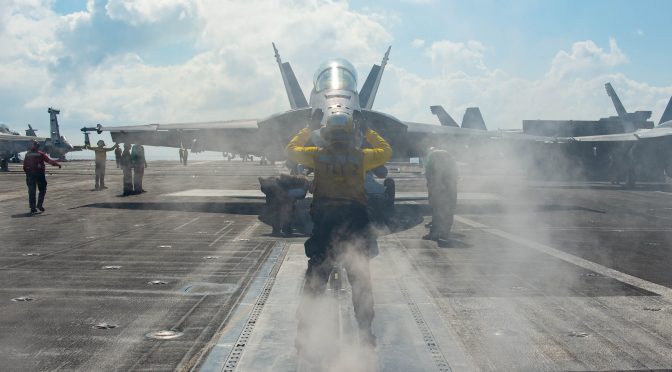
Featured Image: U.S. Navy Aviation Boatswain’s Mate (Handling) 3rd Class Chelsea Mortimer, center, from Kent, Washington, directs an F/A-18F Super Hornet, assigned to Strike Fighter Squadron (VFA) 41, toward a steam-powered catapult on the flight deck of the aircraft carrier USS John C. Stennis (CVN 74) in the Pacific Ocean, Feb. 8, 2019. (U.S. Navy photo by Mass Communication Specialist 3rd Class Skyler Okerman)
The Future of Information Combat Power: Winning the Information War

By VADM T.J. White, RDML Danelle Barrett, and LCDR Robert “Jake” Bebber

Imagine you are the Information Warfare Commander (IWC) of a coalition naval task force in the South China Sea in 2033. The task force’s mission is to deliver combat power in support of the Commander’s campaign objectives. As the IWC, you are simultaneously a “supporting” and “supported” commander. You execute multiple lines of operations across the full-spectrum of influence, information, and cyberspace. The other warfare commanders – strike, air defense, and sea combat – rely on you to understand their fight and fuel their decision-making with precision information, while simultaneously conducting an integrated high-end fight in and through the information domain leading to warfighting outcomes. The information domain is vast, it can be both localized and completely global, interweaving through all other domains of war.

Cyberspace and the Electromagnetic Spectrum are material realizations of the information domain, whether midpoint or endpoint, Internet Protocol or radio frequency, defense or attack, this is where you fight, for there is only one network separated in time. The arsenal of interoperable weapons and systems, manned and unmanned platforms, at the Commander’s disposal to execute and sustain a campaign requires all that you can bring to bear from across your composeable force to achieve unmatched distributed lethality. You have the authorities to execute full-spectrum information warfare to:

  • Reach intended audiences and decision-makers to alter adversary courses of action to our advantage;
  • Protect coalition decision-making;
  • Seize and hold at risk adversary cyberspace;
  • Defend our interests in and through cyberspace;
  • Compete and Win.

Technological capabilities are advancing at an exponential rate while also converging with each other, creating new capabilities for both you and your adversary. When those are combined with people and processes, they provide significant operational advantages, enabling us to simultaneously contest adversary actions in cyberspace, land, sea, air, and space. Future warfighting, enabled by these emerging technologies, is necessary to adapt, develop, and execute new, more lethal operational methods. The future IWC must foster an intuitive ability in themselves and across their force to recognize these emergent opportunities, seize them with deliberate intent, and be comfortable with a battlespace changing at an unprecedented rate. As “maestro” of the Information Warfare afloat symphony, you understand the potential power of full-spectrum, integrated information warfare. You guide your force to realize that potential by opportunities seized and effects achieved.

This requires serious forethought and planning to make certain the force – human and platform –  is prepared to orchestrate effects in this type of environment. It demands a certain mentality and type of thinker – agile, adaptive, innovative, willing to take calculated risks with speed; an aggressive change agent. Thinking like a futurist and being comfortable with being uncomfortable should be part of the IWC job description. As the IWC, you see the convergence of people, information, and machines as your domain and how the Navy makes that our warfighting gain.

The complex interactions within the information environment and ecosystem expose new vulnerabilities to pre-emptively close or seize. Space, cyberspace, and the electromagnetic spectrum must be protected from disruption by sophisticated and increasingly aggressive adversaries. These domains are contested ecosystems in which you as the IWC must align kinetic and non-kinetic fires, synchronized alongside other operations. At your disposal are surface, subsurface, air, and space autonomous vehicles that can reason, recommend actions, and execute within prescribed rules of engagement. Autonomous information warfare platforms are hyper-connected with manned units using both laser and radio frequency communications links, complicating an already congested spectrum. The ability to tie all these elements together into the fleet tactical grid, coupled with advanced data analytics and machine learning, are required to prevail in our highly contested battlespace.

Additionally, platforms are equipped with quantum computers networked across 24 time-zones. Secure cloud-networked afloat “information warfare vaults” at the tactical edge project combat power and provide the bandwidth, security, and resiliency needed to fight through information disruption and denial. Our peer adversaries have rapidly advanced their capabilities in parallel. Inexpensive and ubiquitous technology has eroded the qualitative operational advantages we once enjoyed. Our force must be postured to deny the information space to adversaries who wish to hold our national interests at risk. Resilience in your operations presents both sides of the coin; challenge and opportunity.

We observed a sea change in operational focus, due to the vastly different threat outlook outlined 17 years earlier in the 2018 National Defense Strategy (NDS). In 2033 we face new and emerging threats that were not imagined then. For example, miniaturized computing coupled with advanced robotics on autonomous Artificial Intelligence (AI) vehicles have fundamentally changed maritime warfare. The rules of engagement are different and include means for AI in those autonomous vehicles to even make ethical decisions about warfare. Our adversaries no longer conform to Geneva Convention rules having judged them anachronistic for the current fight. As IWC you have a keen sense of how these factors govern our own warfighting actions, how the adversaries don’t behave in accordance with traditionally accepted rules of warfare, and how to incorporate all of these factors for an information advantage that ensures our lethality.

Since 2000, the U.S. and China have been engaged in a fierce technological arms race, with AI at the forefront beginning 2018. Each amassed complicated autonomous combat platforms that can reason, recommend, and make decisions depending on their programming and their ability to learn. China made significant investments in people, processes, and technology (not always their own) to ensure dominance in AI and quantum computing. They have long held a strategic national objective to be the world leader in AI, working tirelessly to shape information interactions globally. What started in the early stages of Chinese and American research companies developing AI programming that defeated the world’s greatest chess and Go masters, has progressed to unprecedented computing capability far exceeding the capacity of the human brain.

Physical devices such as automobiles, appliances, phones, and homes were embedded with sensors, software, and actuators connected to share data and control actions across an “Internet of Things.” This similarly transformed maritime operations. Strategic competitors like Russia and China added disruptive tools to their information arsenal to achieve warfighting maritime effects like operational technology disruption in navigation, propulsion. and other control systems. As the IWC, you understand how to stay one step ahead of potential adversaries by leveraging those same technologies and capabilities, integrating them into the fight, and denying enemy use.  

Your superior AI is a game changer enabling you to stay ahead. It correlates thousands of factors in real time yielding a tactical picture not disconnected from operational significance. Advanced modeling and simulation of possible enemy courses of action at the tactical edge provides you with recommended countermeasures. Real-time assessment of network conditions yields the means to communicate securely over vast distances to execute distributed operations. Because it processes vast quantities of data in fractions of a second, AI quickly learns, grows, and adapts within a rules framework such as command relationships, rules of engagement, campaign phasing, weight, level of effort, all covering multiple branches and sequels to operational plans. Your team provides the necessary “man in the loop” understanding and maintaining of Commander’s intent and strategic guidance. AI supports your maritime forces by providing courses of action based on analysis of massive amounts of sensor data and information from ashore and organic afloat sources. The key to this operator extended reality (clearer sight picture, farther reach, faster decision) is data veracity – a combination of data trustworthiness and core common data standards across and within the information kill chain. Warfighting decisions are made more quickly and reliably, even factoring ethical and moral elements into the calculus. Only in the most sensitive warfighting scenarios are humans used as the last deciding factor for weapons employment.

The Navy moved boldly to get here by 2033. The information race was not an easy lift. There were practical modernization, structural, and cultural challenges for the Navy to quickly integrate and adapt processes to leverage new technology on aging platforms, new ideas by old warriors, and to build the new platforms with the flexibility to insert emerging technology at a significantly accelerated rate. In 2018, the Navy’s acquisition and programmatic processes were slow, built for the industrial era. The Navy recognized this and changed. It forced creative solutions in how it imagined, researched, built, fielded, and sustained new technology. An example of this was their move to commercial cloud to more quickly deliver lethal technologies and advanced data analytics to the tactical edge of fleet operations. Continued reforms streamlined the traditional acquisition processes so that by 2033 new capabilities are continuously delivered in increments vice in their entirety over decades, ultimately yielding the agility we require for the fight.

More important than improved acquisition processes is flexibility in how our most important treasure – our people – are missioned. To protect platform networks and exploit information advantages in 2018, the Navy began deploying cyber development units, Sailors specially trained who came with their own “cyber kit,” able to build tools “on the fly” to meet emerging priorities. By 2033, training, education, and organic platform capability have resulted in full spectrum cyber and information operations from sea. As the IWC, you recognize processes and people are just as critical to excellence in the information domain as the technology. You deliberately combine these three elements for warfighting supremacy.

In 2033 you also have the authority to execute influence operations to shape the maritime and littoral battlespace. History from prior to 2018 demonstrated that peer adversaries like Russia and China quickly organized social media and public demonstrations around the world in support of their strategic objectives in the Ukraine, Southeast Asia, and America. In 2033, influence actions at the tactical and operational level are designed and executed by you and aligned to strategic objectives including targeted messaging on social media; suppressing, changing, or interfering with adversary maritime messaging to their audiences; or targeting dual-use entities that support adversary maritime sustainment.

So how is this all playing out operationally in the total fight in 2033? Back in the South China Sea, as IWC you are coordinating with our coalition partners as a task force quietly slips out of San Diego. Under the guise of a planned international naval exercise, this force would include a Japanese “helicopter-destroyer” with a mix of Japanese F-35s and older V-22s, as well as a French frigate. To keep the Chinese unaware, the carrier fleet remains in port. The command ship, a Zumwalt-class guided missile destroyer, and two of the newest unmanned guided missile frigates lead the force. An American cruise missile submarine, which departed two weeks prior from the U.S. mainland, avoids the extensive Chinese underwater sensor networks that stretch to Hawaii.

A key component to this lethal task force are those virtually undetectable unmanned surface and subsurface “sensor/shooter” vessels. These platforms use secure and resilient quantum-encrypted relays to massively powerful shipboard data clouds. This cloud ecosystem leverages advanced heuristics and machine-language algorithms correlating sensor production and dissemination of information in the context needed for action to humans and weapons systems. Task Force vessels spread across the Pacific, link land-and-space-based intelligence and surveillance collection and long-range ballistic missiles with Air Force B-52 “arsenal” planes loaded with hypersonic, anti-ship, and anti-air missiles. This powerful manned and unmanned naval force is part of a larger coalition response, sent as a bulwark between Vietnamese islands and the oncoming Chinese amphibious fleets. The Task Force Commander relies on you to execute denial and deception to confound the adversary and maintain tactical situational awareness (EMCON, counter-ISR and counter-targeting systems). You deftly impact adversary behavior through advanced influence operations executed against their maritime forces, partners, and logistics lines of communication. You and the converged human and machine team leverage the entire electromagnetic spectrum, from space to undersea and linked to assessment and intelligence nodes via tactical and operational level “cloud”-based quantum computing systems to proactively analyze, disseminate and act on information. Synchronized human-AI teams dynamically model, wargame, and execute pre-planned and improvised tactical actions and operational movements to prevent detection. Commander confidence is high in the human-augmented teams to quickly and accurately identify potential second and third order effects across an integrated battle space. You provide the Commander with the information warfare options needed to deter, and if necessary, defeat adversary forces. Your Commander has the highest levels of force readiness and uses technology to help maintain that state. The symbiotic relationship between machine and human extends down to the individual Sailor and platform as Sailor health and readiness are continuously monitored via implants and sensors, enabling your Commander to immediately recalibrate force distribution should you begin to take casualties.

Before a shot is fired, the Commander knows she will win the information war, enabling success in the overall campaign. You as the IWC will give her that tactical and operational win as the conductor orchestrating the elements together for mission success.

In a data-rich and knowledge-poor circumstance, challenged with sophisticated competitors, as IWC you will be more than just the conductor of this information orchestra; you will be the instrument builder and tuner, the composer, and the producer. You will rely on advanced technologies and computers to perform the heavy lifting so our forces can act dynamically with precision and purpose. Modern information warfare requires this nimble shift from orchestra to jazz, or to the raw power and disruption of punk rock.

If you are interested in joining, contact the iBoss.

Vice Adm. Timothy “T.J.” White currently serves as the Commander, U.S. Fleet Cyber Command and Commander, U.S. 10th Fleet at Fort Meade, MD. A leader in the Navy’s Information Warfare Community, White originally served as a surface warfare officer before being designated as a cryptologic warfare officer. He is a graduate of the U.S. Naval Academy and has postgraduate degrees from the Naval Postgraduate School and the National Defense University-Industrial College of the Armed Forces. He is also a Massachusetts Institute of Technology Seminar XXI fellow. He is a native of Spring, TX. 

Rear Adm. Danelle Barrett is serving as the Navy Cyber Security Division Director on the staff of the Deputy Chief of Naval Operations for Information Warfare (N2N6) in the Pentagon. An Information Professional, she graduated from Boston University where she received her commission via the Naval Reserve Officers Training Corps program. She holds Masters of Arts degrees in Management, National Security/Strategic Studies, and Human Resources Development and a Master’s of Science in Information management. Barrett has published more than 29 professional articles. 

Lieutenant Commander Robert “Jake” Bebber was commissioned through the Officer Candidate School program. An Information Warfare professional, Bebber holds a Ph.D. in Public Policy, a Master’s in Public Administration and a Master’s In National Security and Strategic Studies, as well as a BA in Political Science from Stetson University. He currently is assigned to the staff of Commander, Carrier Strike Group 12 on board USS Abraham Lincoln as the Cryptologic Resource Coordinator.

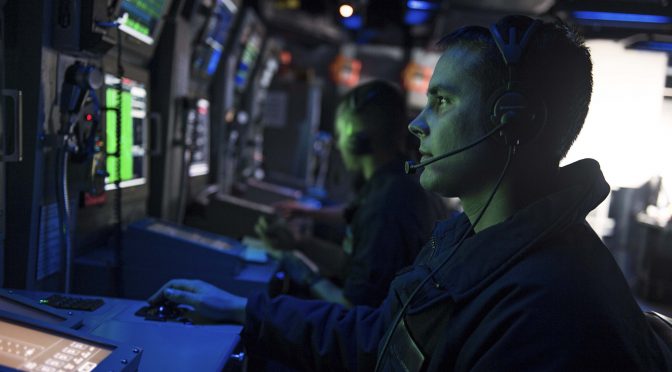
Featured Image: PHILIPPINE SEA (JUNE 21, 2016) Sonar Technician (Surface) 3rd Class Michael E. Dysthe stands watch in the combat information center during a anti-submarine warfare exercise aboard the Ticonderoga-class guided-missile cruiser USS Chancellorsville (CG 62). (U.S. Navy photo by Mass Communication Specialist 2nd Class Andrew Schneider/Released)

Breaking the Mold: How to Build a 355-Ship Navy Today, Pt. 2

Read Part One here.

“It shall be the policy of the United States to have available, as soon as practicable, not fewer than 355 battle force ships.”

-Section 1025, Para (A) of the National Defense Authorization Act for FY2018 (FY18 NDAA)

“Battle force ships are commissioned United States Ship (USS) warships capable of contributing to combat operations, or a United States Naval Ship that contributes directly to Navy warfighting or support missions, and shall be maintained in the Naval Vessel Register” –SECNAVINST 5030.8C

By Keith Patton

Flotillas and Ants Versus the Elephant

Current shipbuilding plans expand the fleet, but no consideration is given to mass producing a warship smaller than the “small surface combatant” role filled by the LCS and new frigates, which are larger than World War II destroyers. The Navy could consider even smaller vessels, less than 100m. These would be of a few different designs, or perhaps one design that can be optimized when constructed for different mission areas. One variant could be an armed replacement for the T-AGOs as they age out of service and to expand their numbers. Another could be a close-in ASW escort for ships. A third would be a surface strike platform with either or both land-attack and anti-ship missiles. The main goals would be ship designs that are compact, can be built in additional shipyards besides the current ones supporting the U.S. fleet, and provide needed niche capabilities. A flotilla of smaller vessels can be in more places at once to show the flag, be part of the deterrence force suggested as an alternative operating concept, and any losses in combat are more easily tolerated compared to large, multi-role vessels. Training would be streamlined as each crew would only have a few missions to focus on. Being able to use more shipyards to produce them would also allow reaching a 355 ship force sooner. However, this would break the mold of building most U.S. surface combatants as multi-mission platforms.

A more radical idea to save costs and accomplish the above is to stop carrier production after the last Ford on order. The existing carrier fleet would still exist, in dwindling numbers, for decades to come and still outnumber any projected rival carrier fleet in size and capability. The Navy has already floated the idea of cancelling the refueling of the carrier Truman as a cost savings measure. By block buying the last two Fords and retiring Truman early, a significant savings is achieved. SECDEF Mattis wanted the savings rolled into unmanned systems (discussed below) and other new capabilities. Additionally, the USN does not have sufficient air wings to equip all its carriers today. For the cost of a Ford class, including crew, multiple DDGs or perhaps a score of small combatants could be procured. They would likely also be produced much faster. However, while this idea would help expand the size of the U.S. fleet quickly, it would not do it within the next decade because the existing Fords are already on the way within that timeframe. This would simply allow a bigger fleet, more economically, in future decades. As such, it might be a pressure release against decisions that expand the fleet sooner but less economically. However, considering  the House Armed Services Seapower Subcomitteee Chairman announced the idea of retiring a carrier early is a non-starter, the political obstacles to early retirement or cancelling future carrier production are enormous.

The Ghost Fleet

The critical first step in a naval war is locating targets – the battle of Intelligence, Surveillance and Reconnaissance (ISR) and Counter-ISR (C-ISR). You cannot hit what you can’t find. The submarine is the pinnacle of this concept, but modern combatants are becoming stealthier in an attempt to reduce the ranges they can be detected from. An example is the Zumwalt destroyers, which reportedly have such a small radar cross-section they are likely to be seen visually before being detected on radar.

However, there is another and perhaps cheaper approach to not being detected – flooding the adversaries ISR network. While jamming systems can deny an adversary information, they also provide it by making it clear that something is producing the jamming. Since high power jamming systems are located on warships and aircraft, the source of the jamming is a worthwhile target, and jamming is itself an active emission. Decoy systems, however, produce a false target. If there are ten contacts, and only one is a warship worthy of expending weapons against, the adversary must sort through all of the decoys to ensure they target the correct contact. This takes time and energy, allowing the warship to gain the upper hand. Alternatively, the adversary could attack all ten contacts. However, they might not have the resources available to attack all of them effectively, and may be expending great effort for low returns.

Does a battle force ship need to be manned? It is not listed in the definition as a requirement. Since a battle force ship must contribute “directly to Navy warfighting,” small, minimally manned or unmanned decoy and jamming vessels would count. DARPA’s Sea Hunter anti-submarine warfare continuous trail unmanned vessel (ACTUV) cold serve as a prototype example. Instead of following an adversary submarine, it could have signal arrays and deployable decoy payloads that could produce radar or radio emissions to mimic a warship. If sufficient power was available, it could also produce high power radar or jamming signals to attract an adversary’s attention. If the Sea Hunter is not cost effective enough, basic merchant hulls could be procured for the same purpose. They could be visually altered to resemble Navy logistics vessels, have noisemakers to better mimic high-value targets, and even periodically launch a drone helicopter to simulate manned flight operations. If not completely unmanned due to feasibility issues of command and control, they could be minimally manned with crew mostly living and working in an armored citadel-like structure, and if the decoy ship succeeds in its mission and draws fire, they are at reduced risk. In some ways this is like the Q-ships that were designed to lure in a submarine and survive torpedo damage to fight back. Procuring 50-100 civilian construction “Ghost Ships” to stretch an adversary’s ISR network with numerous false or less valuable contacts would raise the battle force count, increase fleet resilience, and help protect traditional warships.

Armed Merchantmen

The idea of armed merchant ships is not new. While the 1856 Treaty of Paris continued a prohibition on privateering (privately owned ships permitted by its government to wage war), as noted above military crews were placed in command of armed merchants (Q-ships) designed to lure in U-boats and the U.S. placed the U.S. Navy Armed Guard detachments on civilian ships to operate defensive weapons. During the Cold War, the United States armed its supply and auxiliary vessels with defensive weapons. This practice was stopped as a cost savings measure. Transferring auxiliaries from regular Navy to Maritime Sealift Command and civilian mariners saved hundreds of millions of dollars annually, never mind the cost savings of not having to equip them with expensive weapons and train personnel in their use. Such policy decisions could be reversed and the auxiliaries placed under military command, and then armed again to provide basic self-defense capability. However, this does not increase the count of battle force ships.

Mass-produced commercial hulls could provide a way to quickly increase battle force ship numbers, particularly as escorts or strike platforms. Container ships can carry thousands of twenty-foot equivalent unit (TEU) standardized cargo containers. 100 TEUs could contain the combat system and power requirements equivalent to a modern frigate. Israel has demonstrated a containerized ballistic missile launched from a cargo vessel, and Russia has advertised containerized versions of its Club-K missile family. Containerized U.S. missiles have been suggested by a former Dean of the U.S. Naval War College. It has also been suggested that commercial ships could form the basis of a naval surface fire support platform. Another way of looking at this is that the combat system would be independent of the hull. The cargo vessel would be carrying a capability akin to AEGIS ashore, manned by NAVY personnel or a modern equivalent of the U.S. Navy Armed Guard. These would not be true “arsenal ships” as conceived of in the 90s. They might only carry 32-64 missiles (standard Mk.41 VLS configurations) rather than 500. However, a mix of defensive or long-range strike weapons would free traditional warships of some missions. The slower design speed of commercial vessels would not make them valuable carrier escorts, and they may not be as capable and certainly not as stealthy as modern U.S. surface combatants, but a number of these vessels could augment capabilities like long-range strike, ballistic missile defense, or act as escorts for similarly large and slow logistics vessels. Also, these hulls could be produced very quickly and probably would require lower manning than traditional warships. The 2018 GAO Shipbuilding report showed that the T-EPF and T-ESD designs, largely commercial in nature, were the only Navy shipbuilding programs of the last decade to come in under budget.1

Warship Equivalents

Another line of thought is considering when a Battle Force Ship is not a ship. Can the Navy “break the mold” in the definition of a ship and provide a 355-battle force ship equivalent fleet without 355 actual vessels?

Coastal Artillery Corps

The U.S. Army used to have a prestigious coastal artillery corps. The coasts of the United States have many examples of old, fixed fortifications operated by the U.S. Army for harbor defense. As airpower developed, these defenses became casemented to protect against air attack, or mobile to complicate an adversary’s ability to locate and target them. A modern Army (or USMC) Coastal Defense Corps would have to employ mobile systems. This would not just be to increase their survivability but to allow them to be forward deployed or surged in a crisis or war. The anti-ship capability of the land-based HIMARs rocket was tested during RIMPAC 2018 and future ATACMs rounds are planned to have much longer range and an anti-ship seeker capability. The venerable Harpoon anti-ship missile is already used as a coastal defense cruise missile (CDCM) by many nations and is being considered for U.S. Army and USMC use. The Norwegian Strike Missile or LRASM missile are also potential contenders for a CDCM, as would be the planned Maritime Strike Tomahawk now that the U.S. announced plans to withdraw from the Intermediate Range Nuclear Forces Treaty. Tomahawk had a land-based variant until that treaty was signed, and the 2017 NDA authorized funds to study a new long-range ground-launched cruise missile. Could a battery of mobile CDCM’s be a “warship equivalent”?

The advantage of these land-based weapons is they could be deployed to allied territory and dispersed to avoid targeting. Their range rings could cover a significant amount of water space, and a camouflaged and mobile land-based weapon would be more survivable than a ship, as well as being more cost effective overall and faster to transport to a theater by air should speed be needed. Batteries of land based CDCM, possibly with their own SAM capabilities as well, could provide a ship equivalent asset for sea denial missions.

Patrol Bombers

The U.S. Navy’s shipbuilding plan to reach a 355 ship Navy (or 335 by FY48), doesn’t address naval aviation specifically. It can be assumed sufficient helicopters and air wings are acquired to support the aviation capable ships in the fleet. However, can the return of a Navy bomber force act as a ship equivalent?  The Navy did field bombers for patrol and strike in WWII – VB squadrons.

This move would both break the mold of a 355-ship navy being composed of ships, and infringe somewhat on the U.S. Air Force mission area. However, USAF bombers are generally optimized for strike against land targets and tasked for such a long-range power projection missions. While USAF bombers can employ anti-ship missiles and drop sea mines, these capabilities were allowed to atrophy for decades and such missions would pull USAF bomber resources away from other traditional USAF missions. A naval bomber would not need deep penetration capability. A naval bomber would be a simpler missile truck to get into position to launch long-range anti-ship missiles or mine a chokepoint that was not protected by adversary air defenses. While the P-8 is capable of these missions, it is more a reconnaissance, sub hunting and patrol aircraft with a relatively limited weapons load compared to a true bomber.

Dedicated VB squadrons, either manned or perhaps as a large armed drone, could provide a long-range maritime strike capability similar to Russia or Chinese maritime bomber squadrons. They could greatly augment the firepower of a surface action group or even a carrier air wing. Their long-range would allow them to rapidly shift missions across an AOR in a way surface vessels cannot. Additionally, unlike surface vessels, they can quickly rearm. While warships provide presence, sustained ISR, and other critical naval capabilities, VB (or VUB) squadrons would provide maritime strike capabilities and deterrent capabilities when actual ship hulls are not available. While USAF bombers could also do this, aircraft directly manned, trained, and equipped by the Navy and optimized for the maritime domain would seem more efficient and in keeping with increasing fleet power to a 355-ship equivalent on a quicker timeline.

License or Purchase Foreign Designs

If current United State battle force shipbuilding cannot produce the required quantity of vessels, could foreign designs be licensed or outright purchased to meet the needs of a 355 ship Navy?  Some options would require a rethinking of U.S. procurement policy and laws. 41 USC 8302, amended most recently by H.R.904, is a U.S. law, more commonly called the “Buy American Act” that requires anything the U.S. government buys be made in the United States. The Presidential Executive Order of 18 April 2017 directed government agencies to minimize exemptions to 41 USC 8302. The law does have two exceptions that could allow purchase of foreign battle force ships. One is that items procured for use outside the United States are exempt. It can be argued warships, and indeed most of the U.S. military, is intended for use outside the United States. Under the concept of regionally designed ships, covered earlier, these warships could be procured from the countries they are forward based in and intended for the defense of. The second is when there is insufficient U.S. production capacity. Since U.S. shipbuilding cannot ramp up to produce a 355 ship navy in a few years, this criteria is met.

The Royal Navy’s Queen Elizabeth-class carrier, while not as capable as a U.S. nuclear-powered carrier, still provides a significant aviation capability at a significant cost savings compared to U.S. nuclear carriers. Procurement of a third hull, before the line goes completely cold, would allow an increase in the Navy carrier fleet faster than if domestic carrier building was the sole source. For a time, the Queen Elizabeth class was planned to have catapults and arresting gear like U.S. carriers, a capability which would make them significantly more capable, at increased cost. In either short take off, vertical landing (STOVL) or Catapult Assisted Takeoff and Barrier Arrested Recover (CATOBAR) configuration, a Queen Elizabeth-class would add to Navy capabilities and battle force ships count.

While an additional aircraft carrier would increase the battle force ship count, it would require appropriate escort and supporting vessels. Additionally, as noted above, the Navy seems to have a greater need for escorts and smaller combatants that can be geographically dispersed for presence, shadowing, or ISR missions, or used in surface action groups (SAG). The new Navy frigate program will eventually produce some ships of this nature, but to rapidly achieve a 355 ship navy, already available foreign designs should be considered. The Israeli Sa’ar V and VI corvettes are 1,000-2,000 thousand tons, have small crew sizes, deck guns, and 32 defensive VLS missiles as well as deck-mounted anti-ship missiles. The Sa’ar V ships were even built in the United States by Huntington Ingalls. A U.S. corvette built to these designs would be well-suited for operations in the 5th Fleet or 6th Fleet AORs and possibly as part of an offensive SAG in PACOM. Both Korea and Japan produce Arleigh-Burke-like warships, and there are multiple solid frigate designs available in allied countries. Using foreign builders would allow a rapid buildup and shield U.S. industry from a boom-bust impact. However, it would be politically challenging. There are also fewer options for nuclear submarines.

Diesel AIP

Accelerated U.S. shipbuilding plans do not reach the requested number of SSNs in the fleet until 2042. Indeed, under current shipbuilding plans, the Navy is looking at a valley in attack submarine strength between FY25 and FY36, reaching a low of 41 SSNs in FY30.2 This is a 20 percent decrease in SSN strength as the Navy attempts to reach a congressionally-mandated goal for a 20 percent increase. There appears to be no way for the U.S. to achieve desired submarine numbers for a 355 ship fleet, with current levels of U.S. production.

Several allies produce extremely effective conventional submarines, or conventional diesel submarines (SSP) augmented with Air Independent Propulsion (AIP). These submarines are significantly smaller and cheaper than U.S. nuclear powered submarines. The U.S. has long preferred nuclear submarines due to their higher sustained speeds for transit to a theater, on station times only limited by consumables, and no need to raise a snorkel above the water for a period every few days. However, if forward deployed and perhaps built in the countries they are deployed in, some of these limitations can be mitigated. Soryu-class AIP subs built and operated from Japan would be able to arrive rapidly on station in Asian waters and contribute to the battle force. German Type 212 could provide a similar option in Europe. Both provide critical capabilities in their respective areas, and multiple SSPs can be built and manned for cost of a single U.S. SSN while also being available far sooner than any potential acceleration of U.S. submarine shipbuilding.

The Truly Radical

A final, truly radical idea, is the establishment of a U.S. Navy Foreign Legion. Two different options could be considered. One would be a mercenary, small boat operations force akin to Chinese Maritime Militia, but more overtly armed and associated with the U.S. military. These could be locals recruited into service, or contractors from the United States. Like the French Foreign Legion, they would have to be an official part of the U.S. military despite their foreign status. This would allow them to operate ships counted as battle force ships and under the laws of armed conflict. The small craft, while perhaps useful for some lower end missions, would not count as battle force ships. This idea seems to help more with the manning requirements of a 355 ship navy than with actually achieving the ship count sooner.

An alternate method would to procure foreign warships, as discussed above, and crew them with the US Navy Foreign Legion crews. These would take the form of non-citizens, but under U.S. command and control. In some ways it would be like the Japanese building a submarine or warship, crewing it, and then seconding it to the U.S. Navy. This would both raise battle force ship count and solve the man power problem simultaneously. However, it would also be very “mold breaking” in that the U.S. hasn’t done such a thing with its Navy before, and use of foreign citizens as full crews would be controversial aside from the controversy of non-U.S. built warships. Foreign nationals already serve in the U.S. military, but not a dedicated formations.

Conclusion

This has been an attempt to capture some of the interesting thoughts, from two separate working groups, on how the U.S. Navy could achieve a 355 battle force ship Navy sooner than current plans predict. Several of the ideas above could increase the battle force size, but come at significant economic or political risk to achieving them, like using older or reactivated ships or buying foreign warships possibly with foreign crews. Others challenge Navy established practices by phasing out carriers, giving up SSBNs, or focusing on smaller combatants. Some challenge the idea of what a warship is, what can be counted and what should count as a warship. Is 355 correct? Or is the equivalent capability of 355 ships desired? 

Right now, the Navy has presented a plan to Congress. There may be no need for the above. But the global political situation is rapidly changing, especially with worsening relations with increasingly assertive great power rivals, and the urgent need for a 355-ship Navy could very well come sooner rather than later.

CDR Patton is deputy chairman for the U.S. Naval War College’s Strategic and Operational Research (SORD) Department.  SORD produces innovative strategic research and analysis for the U.S. Navy, the Department of Defense, and the broader national security community.  CDR Patton was commissioned in 1995 from Tufts University NROTC, with degrees in history and political science and has served four tours conducting airborne nuclear command and control missions aboard the US Navy E-6B Mercury aircraft, and two tours as Tactical Action Officer (TAO) and Combat Direction Center Officer (CDCO) aboard the carriers USS KITTY HAWK and USS NIMITZ. 

The opinions and ideas above do not necessarily represent those of the Department of Defense, U.S. Navy, or the Naval War College. The ideas expressed here do not necessarily reflect those of the principal author either. They were drawn from the Breaking the Mold II workshop held at the U.S. Naval War College with invited participants from military, industry, government and academic institutions. The workshop was held under the Chatham House Rule, so these ideas will not be attributed to their originator. Some ideas were specific enough that they are not included here because the idea itself might identify the originator and violate the Chatham House rule.

References

1. “Navy Shipbuilding,” June 2018, pg. 8

2. Ronald O’Rourke, “Options and Considerations for Achieving a 355-Ship Navy” July 25, 2017. Pg. 6

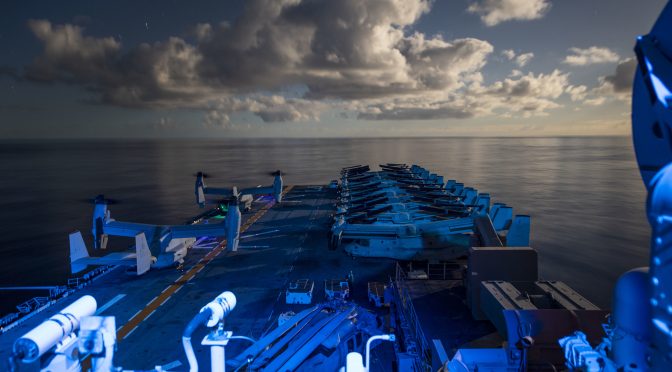
Featured Image: ATLANTIC OCEAN (Dec. 23, 2018) MV-22 Ospreys assigned to Marine Medium Tiltrotor Squadron (VMM) 264 (Reinforced) prepare to launch from the flight deck of the Wasp-class amphibious assault ship USS Kearsarge (LHD 3) during night flight operations. (U.S. Navy photo by Mass Communication Specialist 1st Class Mike DiMestico/Released) 181223-N-UP035-0011

Andrew S. Erickson and Ryan D. Martinson Discuss China’s Maritime Gray Zone Operations

By Dmitry Filipoff

On March 15th, the Naval Institute Press will publish China’s Maritime Gray Zone Operations, a volume edited by professors Andrew S. Erickson and Ryan D. Martinson from the Naval War College’s China Maritime Studies Institute. CIMSEC recently reached out to Erickson and Martinson about their latest work.

Q: What was the genesis of your book?

Erickson: In the last decade or so, China has dramatically expanded its control and influence over strategically important parts of maritime East Asia. It has done so despite opposition from regional states, including the United States, and without firing a shot. Others have examined this topic, but we found that much of the public analysis and discussion was not grounded in solid mastery of the available Chinese sources—even though China tends to be much more transparent in Chinese. We also recognized a general lack of understanding about the two organizations on the front lines of Beijing’s seaward expansion: the China Coast Guard (CCG) and the People’s Armed Forces Maritime Militia (PAFMM). This volume grew out of a conference we held in Newport in May 2017 to address some of these issues. It contains contributions from world-leading subject matter experts, with a wide range of commercial, technical, government, and scholarly experience and expertise. We’re honored to receive endorsements from top leaders in sea power, strategy, and policy: former Chief of Naval Operations Admiral Gary Roughead, former Secretary of the Navy J. William Middendorf, Harvard Professor Stephen Rosen, former Japan Maritime Self-Defense Force Fleet Commander-in-Chief Vice Admiral Yoji Koda, Dr. James Carafano of the Heritage Foundation, and former Pentagon Director of Net Assessment Andrew Marshall.

Q: The title of your book is China’s Maritime Gray Zone Operations. How does the term “gray zone” apply here?

Martinson: We usually prefer to use Chinese concepts when talking about Chinese behavior, and Chinese strategist do not generally use the term “gray zone.” But we think that the concept nicely captures the essence of the Chinese approach. We were inspired by the important work done by RAND analyst Michael Mazarr, who contributed a chapter to the volume. In his view, gray zone strategies have three primary characteristics. They seek to alter the status quo. They do so gradually. And they employ “unconventional” elements of state power. Today, a large proportion of Chinese-claimed maritime space is controlled or contested by other countries. This is the status quo that Beijing seeks to alter. Its campaign to assert control over these areas has progressed over a number of years. Clearly, then, Chinese leaders are in no rush to achieve their objectives. And while China’s Navy plays a very important role in this strategy, it is not the chief protagonist. 

Q: Who, then, are the chief actors?

Martinson: The CCG and the PAFMM perform the vast majority of Chinese maritime gray zone operations. Chinese strategists and spokespeople frame their actions as righteous efforts to protect China’s “maritime rights and interests.” The CCG uses law enforcement as a pretext for activities to assert Beijing’s prerogatives in disputed maritime space. PAFMM personnel are often disguised as civilian mariners, especially fishermen. Most do fish, at least some of the time. But they can be activated to conduct rights protection operations. And a new elite subcomponent is paid handsomely to engage in sovereignty promotion missions fulltime without fishing at all. Meanwhile, the PLA Navy also plays a role in disputed waters, serving what Chinese strategists call a “backstop” function. It discourages foreign countries from pushing back too forcefully and stands ready over the horizon to come to the aid of China’s gray zone forces should the situation escalate.

Q: Most readers will have heard about the China Coast Guard, but fewer may be familiar with the PAFMM. How is the PAFMM organized?

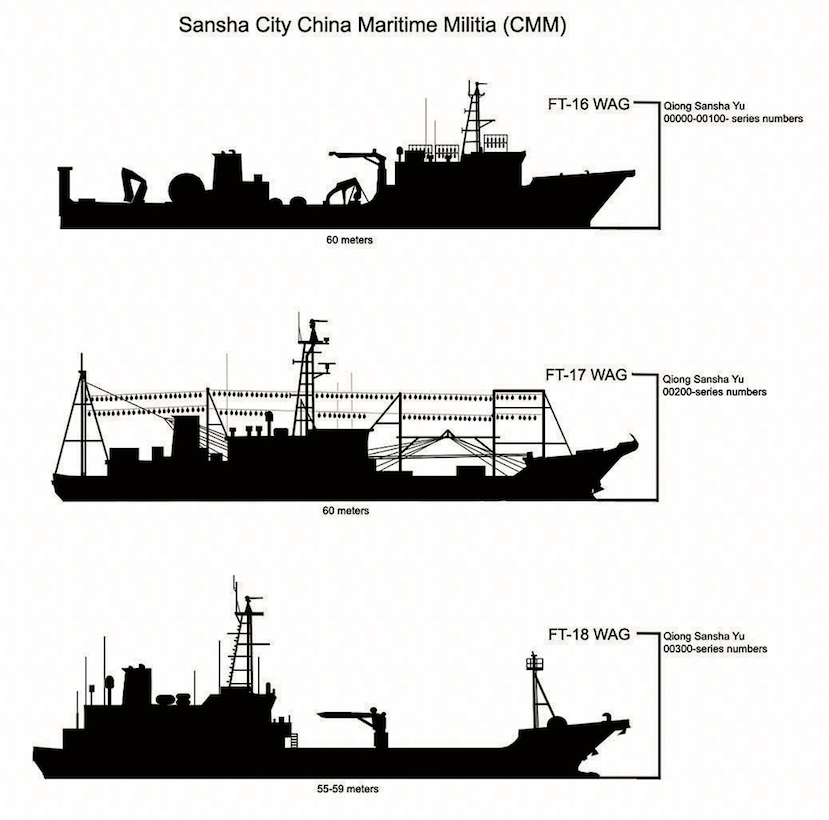
Erickson: The PAFMM is a state-organized, developed, and controlled force operating under a direct military chain of command. This component of China’s armed forces is locally supported, but answers to China’s centralized military bureaucracy, headed by Commander-in-Chief Xi Jinping himself. While most retain day jobs, militiamen are organized into military units and receive military training, sometimes from China’s Navy. In recent years, there has been a push to professionalize the PAFMM. The Sansha City Maritime Militia, headquartered on Woody Island in the Paracels, is the model for a professional militia force. It is outfitted with seven dozen large new ships that resemble fishing trawlers but are actually purpose-built for gray zone operations. Lacking fishing responsibilities, personnel train for manifold peacetime and wartime contingencies, including with light arms, and deploy regularly to disputed South China Sea areas, even during fishing moratoriums.

Three types of maritime militia vessels depicted in the Office of Naval Intelligence’s China’s People’s Liberation Army Navy (PLAN), Coast Guard, and Government Maritime Forces 2018 Recognition and Identification Guide. (Office of Naval Intelligence)

There are no solid numbers publicly available on the size of China’s maritime militia, but it is clearly the world’s largest. In fact, it is virtually the only one charged with involvement in sovereignty disputes: only Vietnam, one of the very last countries politically and bureaucratically similar to China, is known to have a similar force with a similar mission. China’s maritime militia draws on the world’s largest fishing fleet, incorporating through formal registration a portion of its thousands of fishing vessels, and the thousands of people who work aboard them as well as in other marine industries. The PAFMM thus recruits from the world’s largest fishing industry. According to China’s 2016 Fisheries Yearbook, China’s fishing industry employs 20,169,600 workers, mostly in traditional fishing practices, industry processing, and coastal aquaculture. Those who actually fish “on the water” number 1,753,618. They operate 187,200 “marine fishing vessels.” An unknown portion of these are militia boats. To give a sense of the size and distribution of PAFMM forces, our volume includes figures showing the location of leading militia units in two major maritime provinces: Hainan and Zhejiang.

Q: How is the CCG organized for gray zone operations?

Martinson: When we held the conference in 2017, the CCG was in the midst of a major organizational reform. It was only set up in 2013, the result of a decision to combine four different maritime law enforcement agencies. Before 2013, most rights protection operations were conducted by two civilian agencies: China Marine Surveillance and Fisheries Law Enforcement. They did not cooperate well with each other. Moreover, neither had any real policing powers. After the CCG was created, it became clear that Beijing intended to transform it into a military organization. In early 2018, Beijing announced a decision to transfer the CCG from the State Oceanic Administration to the People’s Armed Police. At about the same time, the People’s Armed Police was placed under the control of the Central Military Commission. So, like the PAFMM, it is now a component of China’s armed forces. Moreover, CCG officers now have the authority to detain and charge foreign mariners for criminal offenses simply for being present in disputed areas of the East China Sea and South China Sea (although they have yet to use this authority in practice).

Q: How is the CCG equipped to assert China’s maritime claims?

Martinson: When Beijing’s gray zone campaign began in earnest in 2006, China’s maritime law enforcement forces were fairly weak. They owned few oceangoing cutters, and many of those that they did own were elderly vessels handed down from the PLA Navy or the country’s oceanographic research fleet. They were not purpose-built for “rights protection” missions. In recent years, however, Beijing has invested heavily in new platforms for the CCG. Today, China has by far the world’s largest coast guard, operating more maritime law enforcement vessels than the coast guards of all its regional neighbors combined. As the chapter by Joshua Hickey, Andrew Erickson, and Henry Holst points out, the CCG owns more than 220 ships over 500 tons, far surpassing Japan (with around 80 coast guard hulls over 500 tons), the United States (with around 50), and South Korea (with around 45). At over 10,000 tons full load, the CCG’s two Zhaotou-class patrol ships are the world’s largest coast guard vessels. The authors project that in 2020 China’s coast guard could have 260 ships capable of operating offshore (i.e., larger than 500 tons). Drawing from lessons learned while operating in disputed areas in the East and South China Seas, recent classes of Chinese coast guard vessels have seen major qualitative improvements. They are larger, faster, more maneuverable, and have enhanced firepower. Many CCG vessels are now armed with 30 mm and 76 mm cannons.

Q: It appears that these gray zone forces and operations are heavily focused on sovereignty disputes such as in the East and South China Seas. Are they also pursuing other goals and lines of effort?

Erickson: That is correct. The vast majority of maritime gray zone activities involve efforts to assert Chinese control and influence over disputed maritime space in what Chinese strategists term the “Near Seas.” When conducting rights protection operations, these forces help Beijing enforce its policies regarding which kinds of activities can and cannot take place in Chinese-claimed areas. The CCG and PAFMM intimidate and harass foreign civilians attempting to use the ocean for economic purposes, such as fishing and oil/gas development. Since at least 2011, for instance, China’s coast guard and militia forces have been charged with preventing Vietnam from developing offshore hydrocarbon reserves in its own Exclusive Economic Zone (EEZ), part of which overlaps with China’s sweeping nine-dash line claim. China’s gray zone forces also protect Chinese civilians operating “legally” in Chinese-claimed maritime space. The 2014 defense of Chinese drilling rig HYSY-981, discussed in detail in our volume, is a classic case of this type of gray zone operation. By controlling maritime space, China’s gray zone forces can also determine who can and cannot access disputed features. Since 2012, for instance, Chinese coast guard and militia forces have upheld Chinese control over Scarborough Reef. Today, Filipino fishermen can only operate there with China’s permission.

Q: What are some of the tactics employed by China’s gray zone forces?

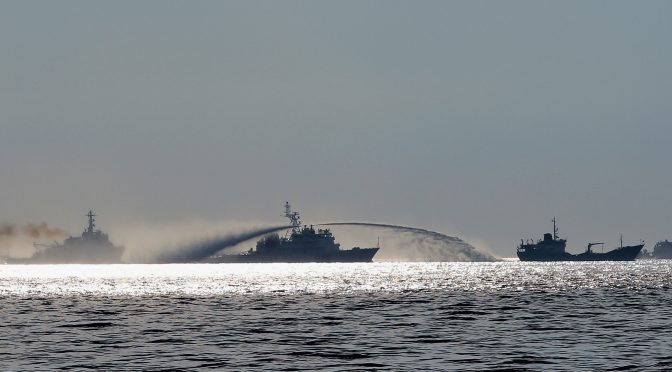
Erickson: Most CCG cutters are unarmed, and PAFMM vessels are minimally armed at most. They assert Chinese prerogatives through employment of a range of nonlethal tactics. In many cases, Chinese gray zone ships are themselves the weapon: they bump, ram, and physically obstruct the moments of other vessels. They also employ powerful water cannons to damage sensitive equipment aboard foreign ships and flood their power plants. Foreign states are often helpless to respond because China has the region’s most powerful navy, which gives it escalation dominance.

Q: How have regional states reacted to Chinese maritime gray zone operations? Have some had more effective responses than others?

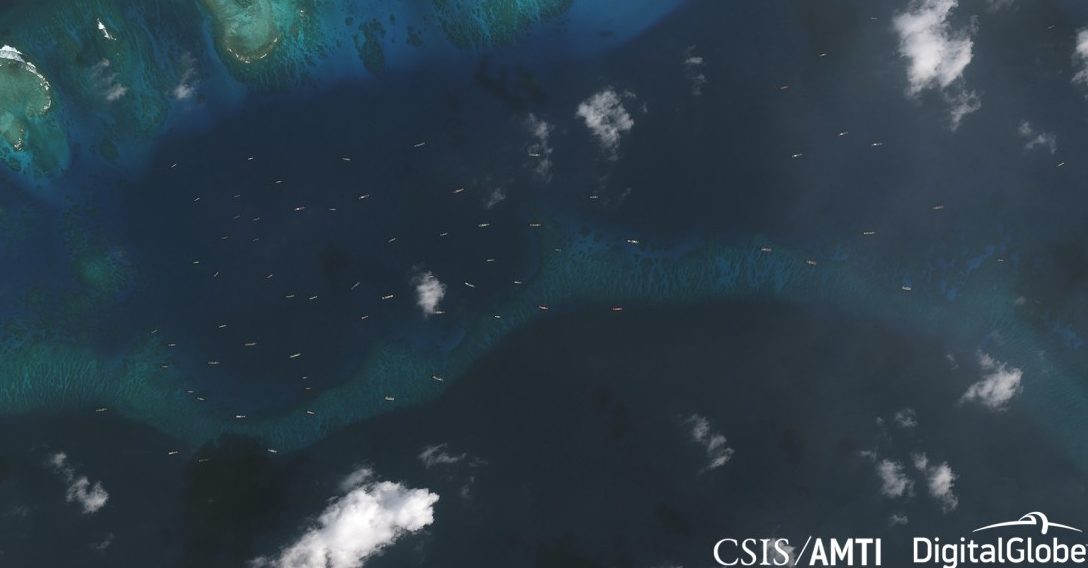
Martinson: Regional states have not presented China with a united front. They have each handled Chinese encroachments differently. China’s strongest neighboring sea power, Japan has taken the most vigorous actions. As Adam Liff outlines in his chapter, it has bolstered its naval and coast guard forces along its southern islands. It has also taken bold steps to publicize China’s gray zone actions. Vietnam has been a model of pushback against Beijing’s maritime expansion, as Bernard Moreland recounts in his chapter. But even its resistance has limits. In July 2017, Beijing likely used gray zone forces to compel Hanoi to cancel plans to develop oil and gas in its own EEZ, in cooperation with a Spanish company. Other states have taken a much more conciliatory approach to China’s incursions in the South China Sea. The Philippines, for example, is apparently acquiescing to Beijing’s desire to jointly develop disputed parts of the South China Sea—areas that a 2016 arbitration ruling clearly place under Philippine jurisdiction. Meanwhile, China continues to push Manila in other ways. Philippine supply shipments to Second Thomas Shoal are still subject to harassment. China has recently concentrated a fleet of gray zone forces just off the coast of Philippine-occupied Thitu Island, in an apparent effort to pressure Manila to discontinue long-planned repairs and updates to its facilities there.

Chinese fishing vessels massed off Philippine-occupied Thitu Island in January 2019. (CSIS/AMTI, DigitalGlobe)

At the same time, China itself continues to develop reclaimed land at Mischief Reef, a mostly submerged feature which because of its location clearly belongs to the Philippines. For its part, Malaysia has not publicly opposed Chinese incursions in its jurisdictional waters. But it is apparently proceeding with plans to develop seabed resources near the Chinese-claimed Luconia Shoals. Chinese coast guard vessels patrol the area, but have not forced a cessation of exploratory drilling operations—including those conducted by the Japanese-owned drilling rig Hakuryu 5 in February 2018. This story will be worth following, as Malaysia makes decisions about next steps. In 2016, Indonesia took robust actions to crack down on Chinese fishing activities near the southern part of the nine-dash line, northeast of its Natuna Islands. Things have been fairly quiet in the years since, perhaps because CCG vessels are escorting the fishing fleet to the area.

Q: It seems like China’s gray zone strategy is more often directed at other countries. Why is this topic important for U.S. national security?

Erickson: The U.S. Navy has also been targeted by China’s gray zone forces. U.S. Navy special mission ships such as the USNS Bowditch, USNS Impeccable, USNS Effective, USNS Victorious, and USNS Howard O. Lorenzen have been shadowed and harassed, victims of China’s erratically-enforced opposition to foreign naval activities within its claimed EEZ. To be sure, China’s gray zone campaign is largely targeted at other territorial claimants, but two of these countries—Japan and the Philippines—are U.S. allies. Washington’s robust alliance with Tokyo, in particular, is critical to American presence and peace preservation in a vital but vulnerable region. Chinese bullying behavior threatens to undermine these alliances and could trigger direct American military intervention if China’s gray zone operations were to escalate into armed attack. Moreover, as Jonathan Odom points out in his chapter, China’s activities violate important international conventions and norms. This means they are weakening key pillars of the international maritime order, and with it the global system on which peace and prosperity depend. In many cases China’s gray zone forces are used to assert maritime claims that have no basis in international law.

Q: And how can the U.S. Navy, as a more high-end force, better handle these sorts of Chinese paramilitary forces without risking escalation?

Martinson: If the United States wants to be effectual, it must do more to expose China’s gray zone activities, and it must accept a degree of risk in opposing them more strongly. China’s gray zone activities cannot be easily deterred, because each individual act is calculated to fall below American red lines. If Washington wants to get serious about countering China’s gray zone expansion, it must do more than conduct “presence” and “freedom of navigation” operations—which appear to sit at the heart of the current approach. The former cannot deter Beijing from taking tactical actions in the gray zone. The latter does little to defend the interests of allies and partners. In our concluding chapter, we suggest ways that the U.S. Navy can do more to help them protect their legitimate interests and defend the legal norms and conventions that China’s behavior threatens to erode. In short, the United States should be out there with them, operating on the front lines of China’s seaward expansion. To that end, it must develop a range of nonlethal tactics that it can use to achieve local effects without resorting to use of force.

Dr. Andrew S. Erickson is a Professor of Strategy in the China Maritime Studies Institute and the recipient of the inaugural Civilian Faculty Research Excellence Award at the Naval War College. He is an Associate in Research at Harvard University’s John King Fairbank Center for Chinese Studies and a member of the Council on Foreign Relations. In 2013, while deployed in the Pacific as a Regional Security Education Program scholar aboard USS Nimitz, he delivered twenty-five hours of presentations. Erickson is the author of Chinese Anti-Ship Ballistic Missile Development (Jamestown Foundation/Brookings Institution Press, 2013). He received his Ph.D. from Princeton University. Erickson blogs at www.andrewerickson.com.

Ryan D. Martinson is a researcher in the China Maritime Studies Institute at the U.S. Naval War College. He holds a master’s degree from the Fletcher School of Law and Diplomacy at Tufts University and a bachelor’s of science from Union College. Martinson has also studied at Fudan University, the Beijing Language and Culture University, and the Hopkins-Nanjing Center. The views expressed are those of the authors and do not reflect the official policy or position of the U.S. Navy, the Department of Defense, or the U.S. Government.

Dmitry Filipoff is CIMSEC’s Director of Online Content. Contact him at Content@cimsec.org.

Featured Image: A China Coast Guard ship uses a water cannon to harass a Vietnamese law enforcement vessel near the disputed Paracel Islands on May 27, 2014. (Photo by The Asahi Shimbun)

Fostering the Discussion on Securing the Seas.