Category Archives: Strategic Outlook

Predictions and forecasting.

Distant Corner Lab

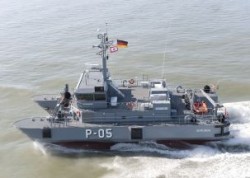
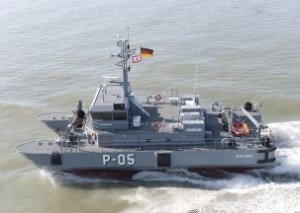
The Latvian-built Skrunda

Crossing the Baltic Sea recently from Gdynia to Karlskrona, both major naval bases, I had the opportunity to observe ships of both the Polish and Swedish navies. By coincidence, I had just finished reading Tom Kristiansen and Rolf Hobson book Navies in Northern Waters. I began to wonder how a big navy could benefit by observing these small fleets. Smaller navies commonly  look at their big partners in efforts to predict future trends and developments.

Small navies should be aware that they operate on the edges of major naval war theories like those developed by Mahan or Corbett. Such theories were based on the historical experience of leading navies at their times. Although it is possible to imagine a “decisive battle” between offshore patrol vessels (OPVs) or fast-attack craft (FACs) (see Israeli-Arab wars), most probably small powers and their navies will balance between global or regional powers, allied with one of them against another or left alone against superior power. From a cooperative naval power point of view they could nicely fulfil diplomatic or constabulary roles. But there are also other areas worth mentioning, where small navies’ views, development, and operational experience could be of interest to leading navies. Studying small navies provides:

  • The potential to turn knowledge of small navies into a theoretical framework would enhance our understanding of special cases in major naval theories:  This could be of some interest in narrow seas and littoral areas, for example. In this year’s BaltOps exercises, the U.S. Navy was represented by an Aegis cruiser USS Normandy, but in coming years a more frequent participant will probably be an LCS. Participation in such exercises would offer the opportunity to observe how LCS works together with mine hunters, FACs and corvettes from regional, coastal fleets in scenarios similar to Northern Coast, perhaps somewhere in Finnish archipelagos. Such scenarios much more closely resembles Capt. Wayne Hughes’ works and would offer expertise applicable elsewhere.


  • Insight into the political decisions related to small navies’ development, roles, and applications:  Not a direct benefit for the U.S. Navy, but helpful in arranging and maintaining networks of alliances, if and when needed. In literature the PLAN navy is often described as proficient in anti-access/area-denial (A2/AD) capabilities. Is this a view smaller navies in the South China Sea region share? Even regional powers like India or Japan could hardly fear the PLAN’s current A2/AD capabilities. Unhindered access of the U.S. Navy to some specific waters doesn’t translate directly to feelings of strengthened security among smaller allies. The relation is more complex and understanding their, sometimes hidden motives, should give better results.


  • The opportunity to foster innovation: Small navies act under pressure of constraints not unknown to big navies, but the constraints can be even greater. In a small navy, a proposal to build a well-armed corvette can trigger hot discussions not only about the budget but even also about national policy. Everything is condensed. Links between strategy, tactics, budgeting, and force structure are more visible. Maybe this is the reason why small navies have to be both pragmatic and innovative at the same time. A good example of the pragmatic approach I found in Navies in Northern Waters is the fact that in the 18th-century both Swedish and Russian navies still used oared galleys. Examples of innovation are not limited to modularity or ships like Visby. Take a look at the Latvian navy, non-existant some 20 years ago. It acquired used ships from different navies and created the core of mine warfare and patrol capabilities. This was very pragmatic, and the first new construction, the economic SWATH designSkrunda, shows great attention to versatility.


  • Educational value: Let’s use an example. Say the task is to propose a force structure for a navy that’s been neglected in recent years. Historically, the military conflicts in this country have been decided on land. The adjacent narrow sea has an average depth of around 170 feet. The navy has no independent budget, but is instead centralized in the DoD’s. The yearly shipbuilding budget is forecasted at $200 million and the navy is given the time span 20 years to build the fleet. Although there is a shipbuilding industry, it has never built sophisticated warships. Anyone attempting to solve this kind of problem gains a much greater understanding of decisions faced by and made by senior staffs in the real world. 

Przemek Krajewski alias Viribus Unitis is a blogger In Poland. His area of interest is broad context of purpose and structure of Navy and promoting discussions on these subjects In his country

China’s Maritime Policies: An Opportunity for Canada

China now regards some of the disputed Senkaku/Diaoyu Islands as part of its “core interests.”

By Joelle Westlund

In some ways overshadowed by events elsewhere in its maritime claims, China added fuel the regional fire that has characterized its relations with neighbouring states for the last several decades on July 10th. This time it did so by launching a naval exercise in the waters near the Zhoushan islands in the East China Sea. The maneuver comes as the Chinese Communist Party (CCP) placed a ban on shipping and fishing vessels entering the designated exercise area. The CCP have chosen a heated time to send the Chinese People’s Liberation Army and Navy to practice its ability to operate in contested waters. But the timing of this maneuver was far from fortuitous.

The exercise in the Zhoushan has been interpreted as a demonstration of China’s ability to specifically counter the claims on another set of islands in the East China Sea – Diaoyu in Chinese and Senkaku in Japanese – that have been at the center of an ongoing row between China, Taiwan, and Japan. The territorial dispute over the islands recently resurfaced when Japanese Prime Minister Yoshihiko Noda offered to purchase the chain of islands from their private owners. University of Tokyo professor Akio Takahara pointed out that the offer was submitted in an attempt to “stabilize the situation […] not to escalate the situation.” Logistically, Japan’s acquisition of the island makes sense, given that its central government rents the three islands and keeps them protected through landing restrictions and access to nearby waters. Beijing’s Foreign Ministry spokesman Liu Weimin responded curtly to the proposition by stating, “China’s holy territory is not ‘up for sale’ to anyone.” State-owned news agency, China Daily called for “more aggressive measures to safeguard its territorial integrity […] Should Japan continue to make provocative moves.”

The disputed islands are not the only quarrel in which China finds itself. The Asian superpower is currently locked in a wrangle with Vietnam and the Philippines over the Scarborough Shoal in the South China Sea. Sovereignty claims to the islands are touchy since the islands are believed to provide rich fishing grounds and potentially huge oil and gas reserves. The situation has escalated since the beginning of April when Chinese civilian vessels found themselves in a standoff with the Philippines Coast Guard. Chinese embassy spokesman Zhang Hua stated, “The Chinese side has been urging the Philippine side to take measures to de-escalate the situation.” In response Philippine President Benigno Aquino ordered the withdrawal of its government vessels in “hope[s] this action will help ease the tension.” China, however, has yet to do the same as it still has seven maritime vessels encircling the Shoal and has rejected attempts to resolve the tiff through the employment of the International Tribunal for the Law of the Sea, as recommended by officials of Vietnam and the Philippines.

China is well versed in threatening navigational freedom in territorial waters, making countries such as Malaysia, Singapore, and Indonesia weary, since China appears to have set its sights on the Malacca Strait. The Strait is one of the most critical maritime choke points as over 1,000 ships a day pass through its channels that link the Pacific to the Indian Ocean. At the 10th Shangri-La Dialogue in Singapore, China’s Minister of Defence Liang Guanglie called for China to take a more active role over the management of the Strait of Malacca. For China, which relies on nearly 80 percent of its crude oil imports from the Middle East and Africa, security of the passage is crucial and military involvement offers the opportunity to mitigate terrorist and insurgency risks in the lanes.

But given China’s aggressive posture adopted towards its neighbours, expansion into the Strait warrants concern and suspicion from regional powers. Exactly how states should tackle China’s multiple squabbles dominated discussion among senior diplomats at ASEAN’s latest meeting in Phnom Penh, Cambodia. The 10-member Association of Southeast Asian Nations has continued to look to the United States to increase its role in the area to minimize tension and this year’s gathering echoed a similar appeal. China however, has expressed its distaste for U.S. involvement and “hyping” of the dispute, arguing, “This South China Sea issue is not an issue between China and the U.S. because the U.S. doesn’t have claims over the South China Sea.”

A Role for Canada

To many Asian states, Canada represents an affluent and pluralistic country ripe with opportunity. Its diplomatic engagement in the region has predominately played a supportive and capacity-building role in maritime security initiatives. Canada has sought to expand its role in the area militarily and economically, and has done so most recently with Canadian Defence Minister Peter MacKay’s trip to Singapore. MacKay spent the weekend in talks with Asian defence ministers regarding the enlargement of a Canadian presence and toured potential sites for a ‘hub’ for Canadian military operations. 1,400 Canadian sailors, soldiers, and air force personnel will also be taking part in the biannual ‘Rim of the Pacific’ military exercises held from June 29 to August 3.

This involvement represents an important opportunity for Canada to demonstrate its commitment to the region, but even still, there needs to be a more concrete diplomatic engagement to secure relations. With announcements like U.S. Defence Secretary Leon Panetta’s latest statement that 60 percent of the U.S. Navy fleet will be stationed in the Pacific by 2020, Canada must to buff up its presences before it loses out.

The disputes over the South China Sea, the Scarborough Shoal and the potential strain over the Malacca Strait, opens the door for Canada’s involvement. James Manicom of The Globe and Mailargues that Canada can use its status as an impartial dialogue partner to engage in regional track-two diplomacy. If Canada hopes to expand its economic relations in the region, such engagement outlined by Manicom is necessary. Canada currently stands as the ASEAN’s ninth largest investor and 13th largest trading partner, totaling over $1.6 and $9.8 billion, respectively. The Harper government needs to ditch the reluctance that has defined Canada-Asia relations and push for a peaceful resolution of the current disputes with China. Doing so would allow Canada to gain credibility in the region and supplement U.S.-Japanese-Philippine calls for stability. Further, as China continues its somewhat predacious behavior towards its neighbours, Canada can reassert itself as an agent of peace and diplomacy in the region.

Joelle Westlund is an Asia-Pacific Policy Analyst at The Atlantic Council of Canada. She is currently working towards a Master’s Degree in Political Science at the University of Toronto. Joelle holds a Bachelor’s Degree in International Relations from the University of Toronto and has studied at Masaryk University in the Czech Republic as well as the Hebrew University in Jerusalem. 

Any views or opinions expressed in this article are solely those of the authors and the news agencies and do not necessarily represent those of the Atlantic Council of Canada. This article is published for information purposes only.

Blog cross-posted with our partners at the Atlantic Council of Canada

Crimea River – Will the Syrian Conflict spread into the Black Sea?

20120721-221535.jpg
Potentially the first time anyone’s been told to stay ON someone’s lawn.

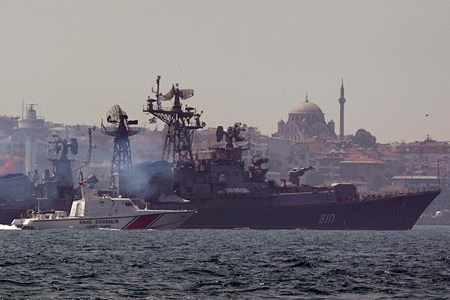
As Russia continues to conduct port visits and provide weapons to Syria amidst the violence, it does so with a preponderance of transits through the Turkish Straits.

The Montreux Convention of 1937 set forth guidelines for warship transit in the Dardanelles Straits, for which, Turkey was established as gatekeeper. Black Sea littoral nations are permitted uncontested warship transit (with a few caveats), yet Turkey is the initial authority in both restricting access to foreign warships and disputing local (riparian) warship transits during times of war.

For thousands of years, both the limits of anti-access and the role of gatekeeper have been contested by the Black Sea littoral nations (primarily Russia and the Ottomans). The authority granted by the Montreux Convetion has, for the most part, gone uncontested as global powers acknowledge the strength in stability that anti-access regulations provide to the region, but the recent conflict in Syria poses a dilemma for regional powers, primarily Turkey. Should Turkey restrict the transit of Russian warships through the Straits that are providing military support and weapons to Syria? With Russia’s only warm-water port based in Syria at Tartus, Russian diplomats would (on the surface) contest any such restriction and claim that any and all transits from the Black Sea to Syria are part of ongoing alliances and in support of established naval facility agreements.

Yet in this situation Turkey has the upper hand thanks to the Montreux Convention, specifically in Article 20:

“In time of war, Turkey being belligerent …the passage of warships shall be left entirely to the discretion of the Turkish Government.”

With the recent downing of a Turkish warplane and various conflicts on the Syrian border, a “time of war” is a reasonable description for Turkey. Any future Turkish political decisions to employ military operations in Syria should solidify Turkey as a “belligerent.” If these events were to unfold and Turkey enacted Article 20 on the Russian Navy, the question remains as to which, if any, international body would attempt to stop Turkey. Although many might assume that the U.N. is the appropriate governing body for such discussions, it is important to recognize that the Montreux Convention has gone virtually unchallenged since inception and still includes outdated references to things such as the League of Nations. This small loophole may be enough for Turkey to disregard any public or diplomatic outrage from Russia and its allies and deny Mediterranean access to the Russian Black Sea Navy.

A.J. “Squared-Away” is a husband, father, and U.S. Navy Surface Warfare Officer.He has deployed on patrol boats, destroyers, and aircraft carriers to the Mediterranean, Persian Gulf, and aboard Iraqi oil terminals. He is currently a student at an advanced military planner course. The opinions and views expressed in this post are his alone and are presented in his personal capacity. They do not necessarily represent the views of U.S. Department of Defense or the U.S. Navy.

Indonesia: Great Power on Australia’s Doorstep?

The following is the first cross-post of an article that originally ran on the site of our new partners at Security Scholar, an Australia-based security blog. First published last month, the relation of Indonesia’s future to Australian maritime security issues was reiterated with three recent hi-profile incidents of Australia-bound refugee vessels in distress in Indonesian waters. We look forward to learning more about the Australian maritime security outlook from our friends down under:

By Natalie Sambhi

Last month at the Australian National University (ANU) Professor Hugh White delivered a solid speech that lucidly and methodically explained why we, Australia, should be considering Indonesia with more care.
Projected to be the world’s fourth largest economy in a matter of decades and increasing in clout as a regional power, if not great power, Indonesia will be a force to reckon with, according to White. As such, many Australians will be forced to overturn their assumptions about Indonesia as a poor and weak country. White implored the audience to consider ways of redefining the bilateral relationship with Indonesia beyond third order issues like drug smuggling, people trafficking, border protection, and counter terrorism. Pointing to further evidence that the relationship was not as robust as Government would have us believe, White pointed to “fault lines” in the relationship caused by Australia’s involvement in East Timor’s independence which, for some time, severed diplomatic relations completely.

Against the backdrop of a shift in the strategic balance in Asia, and as Australia aligns itself towards the so-called “Asian Century”, White invited us to consider whether Indonesia would be an asset or an ally. In his view, Indonesia holds great potential to shield Australia from the threat of major powers in the region, if we get our bilateral relationship right. If we do, then we may start to think about the kinds of Defence capability that would complement the armed forces of Indonesia so that both countries could work towards a kind of “forward defence”.  White wrapped up his speech with five points to improve the relationship: 1) improve DFAT political reporting, 2) focus less on third order issues and more on China, 3) de-emphasise the role of aid in relating to Indonesia, 4) abolish travel advisories (as negative ones have tended to upset Indonesia), and 5) increase the importance of the bilateral relationship in Australian politics.

There are, however, a few extra elements in relation to Australia-Indonesia ties White might have explored in his speech (and I’m sure he would have, given more time), and I would like to take up three of his points to develop these further.

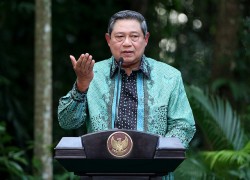
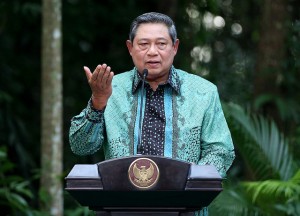
First, perceptions matter. In building his case for cultivating better relations with Indonesia, White used excerpts from Indonesian President Yudhoyono’s 2010 address to the Australian Parliament. In the address, the President underscored mistrust and misperceptions that beleaguered the bilateral relationship in the past. White referred to several parts of the address, but here I have selected the one I think is most salient:

I was taken aback when I learned that in a recent Lowy Institute survey 54 per cent of Australian respondents doubted that Indonesia would act responsibly in its international relations. Indeed, the most persistent problem in our relations is the persistence of age-old stereo-types—misleading, simplistic mental caricature that depicts the other side in a bad light. Even in the age of cable television and internet, there are Australians who still see Indonesia as an authoritarian country, as a military dictatorship, as a hotbed of Islamic extremism or even as an expansionist power. On the other hand, in Indonesia there are people who remain afflicted with Australiaphobia—those who believe that the notion of White Australia still persists, that Australia harbours ill intention toward Indonesia and is either sympathetic to or supports separatist elements in our country.”

It will take some time for these perceptions to erode. But it is equally important that we do not replace them with those that may mischaracterise Indonesia. Let’s take Indonesia’s democracy, for example. Lowy’s poll also states that “62% of Indonesians say democracy is preferable to any other kind of government and there is near universal agreement on three core democratic values – the rights to a fair trial, freely express yourself and vote in national elections.” How this is practiced, however, may be a different story.

A New York Times article warned that Indonesia is no model for a Muslim democracy, citing its mixed human rights record and lack of religious freedom as evidence. Admittedly, the case by the Human Rights Watch author comprises a quick grab of examples presented in highly emotional terms, but the take-home message is clear: Indonesia’s democracy is different. Sure it’s a no-brainer, but it may surprise us to learn the extent to which ethnic and religious criteria shape Indonesia’s elections. That is, Javanese Muslims have, historically, dominated politics and are perceived to be more viable candidates than their non-Javanese, non-Muslim counterparts. Given our Prime Minister is a non-religious, unmarried, Welsh-born woman, that a potential leader is discriminated against in ethno-religious terms is anathema to our political system should give us a moment’s pause for thought.

While we, and others like the US, are turning to enthusiastically embrace the democratic character of our northern neighbour, it would serve us well to carefully appraise the challenges of Indonesia’s ongoing democratic development. This is not to say this is a bar to good relations; quite the contrary. Australia must make an effort to understand these challenges and know how to engage with them without being paternalistic. If Australia and Indonesia are to work closely together in the Asian century, a deep understanding of each other’s political systems and working with them is necessary.

Second, Indonesia will be more than a middle power, and even perhaps a great power. There has been much discussion on whether Indonesia, given current growth rates, could outstrip India’s position in the BRICS grouping. Despite this optimism, according to one commentator (and it’s worth reading Grenville’s post), there are still significant political challenges holding Indonesia back. For one, there appears to be no clear successor to President SBY, with current candidates ranging from former generals like Prabowo Subianto, to Megawati Sukarnoputri, to tycoons like Aburizal Bakrie. Building on the discussion above on Indonesia’s democratic practices, with speculation abound about the nomination of Ani Yudhoyono, wife of the Indonesian President and sister of the Indonesian Army’s Chief of Staff, one wonders about the state of nepotism there. I hope I’m wrong.

This threepart series in last week’s Jakarta Globe exposes the lack of military business reform in the country. Without robust systems of accountability and practices that encourage transparency and due diligence, Indonesia risks undermining its own developments. Reliable maintenance of the rule of law remains problematic. While Indonesia has made attempts to grapple with military reform and eradicate corruption, these articles show that the country still has a long way to go.

As Indonesia grows in wealth and in confidence, it will head down the road of becoming a middle power. But its ability to transform into a great power will be hindered by domestic political challenges, and thus an inability to translate its wealth into military capability commensurate with great power status.

The right kind of President—he/she who can best cultivate the country’s wealth from natural resources, maintain high economic growth rates, reduce poverty, spur reform, maintain Indonesia’s clout within ASEAN, consolidate territorial integrity and domestic security, among other wishlist items—will no doubt help Indonesia comfortably secure a place in the upper bracket of middle power status. But what happens when Indonesia’s future President comes from a cadre of military officers who served in East Timor and who might be Australiaphobic?

Earlier this week, Australia’s Ambassador to Indonesia, Greg Moriarty, warned of growing economic nationalism in the country resulting in investment conditions that are not necessarily in Australia’s interests. Let’s hope this trend does not continue.

Third, White stressed the de-emphasis of aid in the relationship. He stated that there is a particular psychology attached to the receipt of aid. While there are many people in Indonesia who live in poverty and need our help, it was no basis for the bilateral relationship or the lens through which we should see Indonesia. As White underscored in an interview last month, it leads Australians to treat Indonesians in a patronising manner. White’s suggestion that we redirect aid money towards sending 10,000 Australian students each year to learn about Indonesia is well-intentioned, but we’d be hard-pressed getting even a third of that number across the education system. But again, I hope I’m wrong.

As one blogger pointed out this week, language study comes from an interest in culture. But it also comes from repeated exposure to the other culture and repeated contact with people. That Indonesia features obliquely in popular soap operas is not indicative that it is part of our thinking. The solution to piquing interest in Indonesian culture will come with the sense that Asia is part of Australia. That is, as continental European faces are as commonly featured in mainstream media alongside Anglo-Celtic ones, familiarity with Asia will come with increased exposure: particularly newsreaders, politicians, business and community leaders, the actors in advertising campaigns, performers, and athletes. Exchanges are useful but they are usually led by travellers and students who are already willing to engage beyond Bali’s beaches. Perhaps Indonesian-Australians could lead the charge, perhaps change will come with time.

It has been 14 years after the fall of Suharto and despite the challenges that are still abound, Indonesia has transformed remarkably. I want to be optimistic about the future of the relationship between Australia and Indonesia, and I am in furious agreement with White about strategic and cultural imperatives that should drive this, but we must be wide-eyed about the challenges that lay ahead.

Natalie Sambhi is a Hedley Bull Scholar in International Relations and a Masters graduate of the Asia-Pacific College of Diplomacy at the Australian National University. She currently researches and edits on a freelance basis, and is a contributor and co-editor of Security Scholar