Category Archives: Strategic Outlook

Predictions and forecasting.

Prospects and Pitfalls for National Defence: Turning the Liberal Party Election Platform into Policy

The following piece is cross-posted from our partners at the CDA Institute. You can read the article in its original form here

CDA Institute Research Fellow Chuck Davies examines some of the challenges facing the new Canadian Liberal government in turning its election platform on defence into government policy.

The Liberal Party election platform outlines a number of policy intents that will clearly shape the new government’s approach over the coming four years. In the section called “Renewing Canada’s Place in the World and Strengthening our Security,” the Liberal platform contains a mix of defence policy, foreign policy, and, to a lesser degree, national security policy promises. It’s an eclectic offering spanning what are actually three very different policy areas that require different approaches to formulating a way ahead.

Defence Policy

Defence policy has a long-​term horizon and defines what defence capabilities the nation intends to acquire, maintain, or divest, and aligns these ends with the necessary ways and means. Decisions taken by past governments have already largely delimited the military options of the new Liberal government, and its decisions will in turn define the military options available to future governments. Consequently, maintaining reasonable stability in defence policy through successive administrations is very much in the nation’s interest.

How a government uses Canada’s military capabilities is not a question of defence policy but rather foreign or national security policy. It is not evident from the Liberal platform that its framers fully understand the differences between them, given the degree of intermixing of commitments across all three policy areas. This illuminates the new government’s first challenge: avoiding policy incoherence, or even contradiction, that may hinder its ability to act confidently and competently on the international stage, or to establish durable national policy directions.

The most obvious example is the commitment to undertake “an open and transparent review process of existing defence capabilities, with the goal of delivering a more effective, better-​equipped military.” While a very laudable and welcome commitment to strategic defence policy renewal, it is unfortunately undermined by other commitments that effectively set arbitrary boundaries, which could make it much less “open and transparent” and may render it un-​strategic.

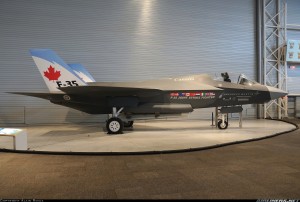
A mock up of he Canadian variant of Lockheed Martin's F-35 Lightning II.
A mock up of he Canadian variant of Lockheed Martin’s F-35 Lightning II.

Issues include a funding envelope that is predetermined (and unchanged from the previous government’s plan) alongside promises of substantive improvements to the Canadian Armed Forces (CAF). These are to be achieved by freeing up resources through, among other measures, efficiency improvements inside the Department of National Defence and exiting the F-​35 program. However, the chances that adequate financial flexibility can be created in this way are very low. Expectations for substantial savings from an alternative fighter platform are unrealistic, as noted by Richard Shimooka and Jeff Collins – a conclusion supported by Auditor General and Parliamentary Budget Office reviews. It is unfortunate that the Liberal Party did not apply the same costing discipline underpinning these studies when developing its cost-​savings estimate.

Similarly, as I have previously shown, digging measurable savings from the defence budget through internal transformation is a difficult, long-​term, dollar-​by-​dollar process. It won’t generate large sums quickly. Savings can be extracted by the more usual expedient of fiat, but only at the cost of further eroding the ability of National Defence to do its job of generating and sustaining military forces.

A viable answer to the funding-​capability gap does not lie in picking a different fighter aircraft or lopping perceived “tail” off National Defence. It can only be found in a combination of: (a) improving the efficiency with which the government translates “bucks” into “bang” and (b) bringing the government’s appetite for maintaining CAF capabilities into line with the level of stable funding it is prepared to commit.

To the Party’s credit, the Liberal platform does recognize the need to make strategic changes in both areas by committing to a defence policy review and improving defence procurement, but it pins too much hope on quickly finding economies within the existing defence budget to resource new investments. A more realistic approach would involve examining and reforming the Government of Canada’s business model for managing defence capabilities over their full life cycles, including the procurement function,
File Photo Credit: Department of National Defence.

faster” and to have “vigorous Parliamentary oversight” needs a much more concrete action plan if measurable improvements are to be made in defence capability and resource management. Real change will require serious reform of the business fundamentals within the Government of Canada, which can only be done within a sustained, non-​partisan effort by Parliament and, probably, several successive governments.

Conclusion

The Liberal Party platform is, naturally, a political document aimed at marketing the Party to the electorate. It is not a policy document, so it would be unrealistic to expect it to present a clear, well-​defined, strategic framework on these key issues. Nevertheless, it does tell us a lot about how the new government is likely to proceed, and suggests where it may run into some of the same pitfalls its predecessors have encountered.

The platform presumes what are likely unrealistic prospects for quickly finding substantive savings from defence transformation and exiting the F-​35 program. The government will soon run into this reality, and its response promises to reveal a great deal. If it simply extracts savings from other areas of National Defence by fiat, it will be following the traditional practices of most previous governments and Canada’s defence capabilities will continue their steady, slow, largely hidden erosion. If they face the realities and launch a serious defence policy review that results in a more sustainable alignment between defence funding and CAF defence capabilities, they will place the nation on a much improved footing for the future.

A refocus from “hard power” to “soft power” will also need to be carefully watched over time in order to gauge whether it enhances, diminishes, or simply changes Canada’s ability to influence global events. The impact on the CAF will also need to be observed. Mounting and sustaining a larger range of very diverse but smaller non-​combat missions could be either good or bad, or perhaps both or neither, from the point of view of preserving the core capabilities of the nation’s force of last resort.

Finally, the commitment to be better than the Conservatives at managing defence procurement and the wider defence business are unlikely to be realized without a major renewal of key parts of the basic machinery of government. There are no indications that the new Liberal government understands this fact any better than its predecessors. Also, any such renewal is unlikely to be implemented within the mandate of any one government, leaving little incentive to undertake it. Perhaps the best that can be hoped for is that new government starts to set the conditions for Parliament to finally work on the problem.

Colonel Charles Davies (Ret’d) is a CDA Institute Research Fellow and a former Logistics officer who served for four years as the strategic planning director for the Material Group of the Department of National Defence and three years as the senior director responsible for material acquisition and support policy in the department.
Maritime Security: Fact or Fallacy? The View from Gibraltar

By Michael Sanchez

The recent global maritime security scenario has been deeply affected by several factors that have by necessity, changed the way of approaching and dealing with individual problems at sea. Piracy, drugs smuggling, weapon trafficking and the repugnant trade in human lives have reemerged with particular virulence but of paramount concern and indeed priority is the ominous threat of seaborne terrorism. Most of us witnessed to our horror the murder of innocent tourists in a beach at Tunisia. The execution of this attack came from what appears to be a well coordinated plan that took everyone by surprise. The proliferation of fast RHIBs (Rigid Hull Inflatable Boats) and jet ski type vessels have given terrorists flexibility of speed and the ability of evasion that gives them a distinct advantage as they are able to mix and mingle with other craft and raise less suspicion when choosing their targets Not only are these fast vessels in the inventory of terrorists but they are the preferred method of transport by drug smuggling gangs

In the case of Gibraltar it can be said with  concern that by the nature of our geographical position we are exposed to the threats of terrorism. It’s no use hiding behind the fact that North Africa lies 14 miles across the Strait of Gibraltar (STROG) and pretending it will not affect us sooner or later, directly or indirectly. Morocco has been subjected to attacks within its territory but has been successful in thwarting seaborne assaults against shipping in the strait including warships but they cannot do it all on their own. The Spanish enclave of Ceuta has been the recruiting ground for potential jihadist recruits that consequently find their way to Syria and/or Iraq. The North African coastline opposite Gibraltar can be considered a launch pad for vessels that trade in drugs, humans and other illicit activities. All stakeholders in the vicinity, Gibraltar, Morocco, and Spain have a duty to ensure that the malignant barbarity of present day terrorism does not cross the Strait of Gibraltar into Europe via this vulnerable route. To repulse any sort of seaborne attacks everyone must be prepared and not fall into one of mankind’s many weakness Complacency

As far as Gibraltar is concerned the responsibility for the maritime security of Gibraltar Territorial Waters falls under very awkward operational procedures and tasking. The MOD through the Royal Navy Gibraltar Squadron is tasked with, according to its mission statement “To contribute to the maritime defence and security of Gibraltar and when necessary, the prosecution of offensive maritime operations in order to allow BFG to support military ops as directed by HMG.” Quite a mouthful and perhaps ambiguous but it’s not the intention to assess the political ramifications of such a broad statement. Bearing all this in mind, the security of HM Naval Base Gibraltar falls into question. Every time a naval vessel is berthed alongside South Mole or “The Tower” a boom is placed across the harbour from South Mole to the old Gun wharf site. It consists of small orange buoys held in position by floaters and strung across with rope. This is to prevent unauthorised craft from entering the security cordon. The security boom is totally inadequate and useless. Any determine driver of a jet ski or RHIB can “jump” this boom and instantly find itself within a restricted area.

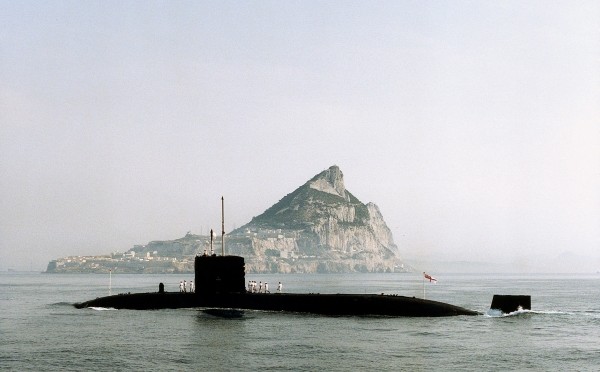
The MOD should invest in purpose built security booms that protect warships, particularly submarines in naval bases around the world. It has not gone unnoticed that since 2013 there has been an increase of RN nuclear power submarines visiting the naval base. Various operational tasks have been carried out including transfer of weaponry that demand the highest levels of security. This cannot be guaranteed with a weak protective boom that can be easily penetrated. On the fifth of July a drug smuggling jet ski entered the harbour through the southern entrance whilst HMS Ambush was alongside South Mole. Luckily, the intruder turned left and not right. The inadequacy of this security boom is a glaring capability gap that can be exploited by the enemy. Within this boom the task of protecting these warships is carried out efficiently by the GDP (Gibraltar Defence Police). Despite being equipped with 2 slow and aging ex Range Safety craft that are not fit for purpose they stick to their duty of affording port force protection but their response time to a fast intruder is minimal. GDP were to be equipped with modern patrol craft some time ago but it was decided otherwise to renege on it, another UK base benefitting from these new craft. For years there has been a succession of UK politicians and high ranking military officers trumpeting and touting the importance of Gibraltar as a base for UK ops. It’s time they put their money where their mouths are and transmit their thoughts into deeds.

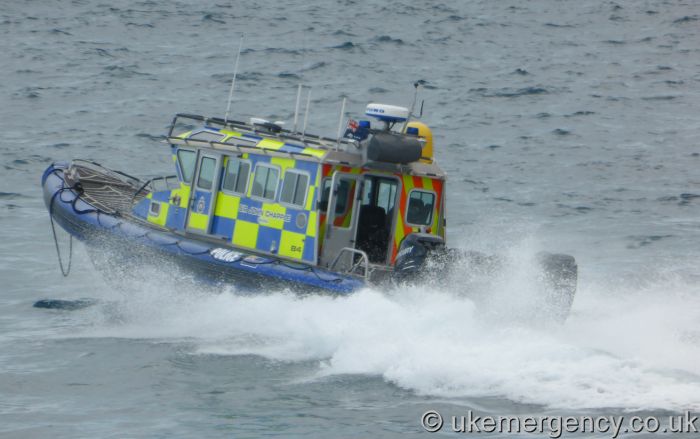
Leaving aside the MOD estates we come to the protection of the civilian population which is by and large entrusted to the marine section of the Royal Gibraltar Police. This service boasts the most modern and fast craft to carry out their duties. There is a certain overlapping of responsibilities with the RN that due to constitutional obligations muddies the waters as to who is responsible for what when and how. This is rather unhelpful when it comes to tackling a potential terrorist threat. We are led to believe that there is coordination when it comes to security matters at sea but to a plain simple observer it does not appear to be so. A more robust communication environment should be encouraged to interchange ideas thoughts and indeed intelligence on a regular basis, not on ad hoc terms. To use a well worn phase everyone should be “singing from the same hymn sheet” instead of tearing out pages so that the other sings out of tune.

Gibraltar-body

Gibraltar’s important maritime security infrastructure requires overhauling and redesigning. Our hugely important cruise liner industry can sometimes walk a tight rope when it comes to passenger and owner satisfaction. Cruise liners are vulnerable and a tempting target. On very few occasions are cruise ships escorted to and from the liner terminal by law enforcement craft and there is no seaward protection whilst alongside North Mole. This would prevent any unwanted or inquisitive boats from getting too close for comfort. We must bear in mind that although Cruise liners companies might be satisfied with ashore security arrangements any incident no matter how small or insignificant at sea could cause them to leave and this would destroy an important pillar of our economy. Why not go the extra mile and provide seaside security to such an important gem in our crown? It will enhance our reputation amongst cruise line companies as a serious port of call in which to do business with.

What cannot be allowed to happen again is a situation similar to that of the theft of one our reef blocks from under our noses. This was a highly embarrassing event that exposed a certain lack of supervision of Gibraltar Territorial Waters. It highlighted the absence of coordination in patrolling our waters. Each to their own without knowing who was doing what and where. Naturally there were local law enforcement craft swarming over the area next day but the horse had bolted and the stable was empty

These are but a few of the more noticeable flaws in the protection of our little country. I accept the fact that security cannot be 100% guaranteed but it can be made extremely difficult for anyone attempting to threaten our peace and stability. It serves no purpose to find faults and criticize without offering suggestions and ideas in which to improve the protection of our waters from dynamic situations that confront our day to day lives. With the expansion of yachting facilities at Ocean Village and the proposed reclamation at the Eastside there will be an increase in the load factor for law enforcement agencies in maintaining a safe maritime picture. A maritime surveillance system similar to the Spanish SIVE (Systema Integrado de Vigilancia Exterior) should be considered as an aid to combating illegal activities close to our shores This system comprises of radars, infrared cameras and other surveillance equipment placed at strategic sites and controlled by an operations room. Any information gathered by this system can be transmitted to civilian law enforcement vessels (RGP HM Customs Port Authority) in real time via video link. It will make the task of intercepting suspect vessels easier and with ample time. The introduction of a joint maritime control centre is  of vital importance. It is of huge value that all incidents be controlled “under one roof” thereby improving response times and rapid interventions. Everyone working together instead of pulling away from each should be encouraged. Pooling of resource can be an effective method of dealing with certain events/actions whilst each law enforcement agency maintaining their independence and freedom of movement in their particular field of responsibilities. Joint training exercises whether live or in tabletop format can be useful in honing particular skills and at the same time exchanging operational experiences. Of course the major stumbling block is finance as all these suggestions do not come cheaply, but in the long term it is an investment that will pay dividends by ensuring the adequate protection of life and property.

I am by no means advocating a “Fortress Gibraltar” bristling with guns missiles and military hardware. Life must go on as normal. In the present climate of economic prosperity and physical expansion it has to be top priority that to accommodate a thriving yacht industry, the protection of bunkering facilities, the secure operations of cruise liners and importantly the safety of local seafarers fishermen and pleasure boat owners the necessary infrastructure to enable Gibraltar to maintain its reputation as a competitive serious and reliable player in the maritime industry must be in place so that we hopefully never become an easy target for our foes whoever they may be

Michael Sanchez is a naval observer and commentator for Gibraltar & STROG. He is the founder of OpWest and the promoter of Gibraltar Coast Watchers, and explained the former’s operation in an interview with CIMSEC. Born in the Rock, he served as a police officer for 33 years before retiring. He tweets at @key2med

Call for Articles – Russia Resurgent Week

Week Dates:  Nov 23-29 2015
Articles Due:  Nov 20 2015
Article Length: 500-1500 Words
Submit to: nextwar(at)cimsec(dot)org

Amidst headline-grabbing activities on land in Ukraine and Syria, Russia is steadily pursuing new strategies at sea. From assuring Black Sea access with the annexation of Crimea to joint Pacific exercises with China, recent Russian activities represent a level of commitment to sea power unseen since the dissolution of the Soviet Union.

During the first week of November, CIMSEC will host a series exploring the maritime implications of Russia’s strategic goals, Russia’s capacity to execute its strategy at sea, and the implications of Russian strategy and policy for its neighbors, partners and adversaries. Potential topics, in order of broadest to most focused, could include: Is Russia a natural sea power, land power, or somehow both? What ends does Russia hope to achieve through sea power? What relationships is Russia looking to enhance or destabilize through stepped-up maritime activity? What asymmetries with the maritime strategies of NATO, the U.S., China, and others does Russian strategy hope to exploit? What policies should Russia pursue in the Arctic, and why? Does Russia have the economic and industrial strength to recapitalize its seagoing fleet? How much does the Russian economy depend on seaborne trade, legal and illicit? Does Russia possess an expeditionary capability? How does the concept of hybrid war, as practiced in Ukraine, extend to the maritime sphere? What role, if any, does or should Russia have in the humanitarian crisis in the Mediterranean? And, to all of these questions, how should other countries adjust their strategies to react?

Contributions should be between 500 and 1500 words in length and submitted no later than 20 November 2015. Publication reviews will also be accepted. CIMSEC will re-post selected older entries about Russian maritime activity, as well.

Matt McLaughlin is a U.S. Navy Surface Warfare Officer. His opinions do not represent the Department of the Navy.

Tuning into Tunisia: An Assessment of Tunisia’s Naval Forces

CIMSEC content is and always will be free; consider a voluntary monthly donation to offset our operational costs. As always, it is your support and patronage that have allowed us to build this community – and we are incredibly grateful.

Select a Donation Option (USD)

Enter Donation Amount (USD)

While much international attention is directed toward the flow of refugees from Syria and Iraq to Europe, which has prompted the partial suspension of the European Union’s Dublin Regulation by the German and Czech governments and even sent shockwaves through Canada’s ongoing federal election, hundreds of Libyans continue to make the perilous journey across the Mediterranean Sea. Kos Island has become famous around the world as the front line of the migrant crisis,

Migrants wait at a Lampedusa holding center. (Click image for source)

yet Italy’s Lampedusa continues to face an overwhelming number of both political refugees and economic migrants fleeing Libya in the wake of that country’s civil war and resulting unrest.

The Libyan Navy is in no position to be of assistance in managing the crisis. While it has a single Soviet-built Natya-class minesweeper still in operation, the remaining vessels of the Libyan Navy, comprised of a Soviet-built Koni-class anti-submarine warfare frigate and two Polish-built Polnocy-C-class landing ships, are reportedly undergoing refits in Malta and France. Though the Libyans doubtless possess some collection of small patrol craft, the force has thus far been unable to effectively police Libyan waters. In March 2014, an oil tanker from the rebel-held port of Sidra successfully evaded a Libyan Navy blockade, leaving a team of United States Navy SEALs to intervene and seize the tanker.

Fortunately, the Tunisian National Navy has proved itself to be a reliable partner in securing the Mediterranean and averting humanitarian disaster. In August 2015, Tunisia commissioned its first locally built patrol boat, Al Istiklal (Independence). This development made Tunisia the first country in the Arab world to develop a shipbuilding industry of its own and only the second in Africa, following South Africa’s lead. Reportedly, Al Istiklal is an 80-ton patrol boat that measures 26.5 meters in length and is 5.8 meters wide, enjoys a top speed of 25 knots and a range of 600 nautical miles, all while equipped with a 20mm cannon, two machine guns, and a thermal imaging camera. This expansion of  Tunisian maritime capabilities was bolstered by four patrol boats of unidentified classification from the United States Navy (USN) earlier in 2015, with a further three boats expected for delivery by the end of 2016.

It is difficult to accurately assess the size of the Tunisian National Navy, but best estimates place the total number of vessels operated by Tunisia at 40 gunboats or patrol

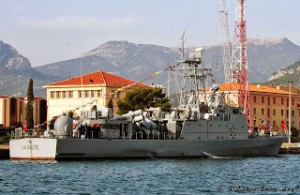
One of Tunisia's Combattante IIIM Class Fast Patrol Boats with MM-40 Exocet missiles. (La Galite 501 pictured)
One of Tunisia’s Combattante IIIM Class Fast Patrol Boats with MM-40 Exocet missiles. (La Galite 501 pictured). (Source: World Military Intel)

boats, one landing craft, and six other non-combat vessels. The largest vessel operated by Tunisia’s maritime forces, President Bourgiba, was a decommissioned Edsall-class destroyer escort, USS Thomas J. Gary, which was transferred to Tunisia in 1973 and rendered no longer operational by a severe fire in 1992, having served at sea for almost 50 years in total. Since then, the largest vessels operated by the Tunisian National Navy are its six Albatross-class fast attack craft manufactured in Germany by Lurssen, with a displacement of almost 400 tons each. In short, Tunisia’s maritime forces are non-expeditionary and have been focused entirely on coastal defense for more than two decades.

It is unclear whether the US sees the transfer of defense equipment like the aforementioned patrol boats as part of a broader effort to counter al-Qaeda in the Islamic Maghreb (AQIM) or other militant Islamist groups. But it certainly has paid dividends in rescue efforts. As recently as June 2015, Tunisian patrol boats saved some 650 migrants and refugees bound for Lampedusa on unsafe rafts. A June 2015 attack on a Tunisian beach resort by Libya-based terrorists, in which 38 people were killed, demonstrated how closely connected Tunisia’s security is with that of its neighbors, Libya and Algeria. As such, Tunisia is bound to continue to play a significant role in securing the North African coast. Nonetheless, it would be prudent for European members of NATO to press for a formalization of this relationship, similar in many respects to the Tactical Memorandum of Understanding struck with the Kingdom of Morocco in 2009 to secure Moroccan participation in Operation ACTIVE ENDEAVOR, NATO’s ongoing maritime mission to monitor traffic and combat terrorism in the Mediterranean. With or without European recognition, Tunisia appears set to be a maritime leader in its own right.

Paul Pryce is the Research Analyst for the Atlantic Council of Canada’s Maritime Nation Program and a long-time member of the Center for International Maritime Security (CIMSEC).