Louis Martin-Vézian is the co-president of the French chapter at CIMSEC.org, and the founder of CIGeography, where he post his maps and infographics on various security and defense topics. He is currently studying Geography and Political Science in Lyon, France.
The Russian Federation intends to restore prestige and territory lost with the fall of Soviet Union. The key military objectives associated with this geopolitical thrust are confronting the eastward expansion of the North Atlantic Treaty Organization (NATO) over the European continent and denying the United States free access and power projection in the global commons, specifically in the maritime domain. Vladimir Putin personally announced a new Russian maritime doctrine reflecting these objectives. In this process, the Russian Navy is showcasing characteristics reminiscent of Sun Tzu’s Art of War.
[otw_shortcode_button href=”https://cimsec.org/buying-cimsec-war-bonds/18115″ size=”medium” icon_position=”right” shape=”round” color_class=”otw-blue”]Donate to CIMSEC![/otw_shortcode_button]
Referring to Sun Tzu is not a new phenomenon for traditionally Western navies. Germany’s emperor Wilhelm II wished he could have read Sun Tzu before World War I and General Douglas MacArthur was known to have referred to his teachings. An analysis of Russia’s way of warfighting in Ukraine, especially across Crimea, revealed the application of Gerasimov Doctrine that advocated targeting an adversary’s weaknesses while avoiding direct confrontations. This is one of the significant principles of asymmetric warfare preached by Sun Tzu.
Sun Tzu’s famous dictum is that all warfare is based on deception. He counselled that one should appear weak when strong and strong when weak. He advised showing presence at places where not expected by the adversary and striking at weak points. Denial and deception were the key tactics employed by Russia when annexing Crimea and gaining the warm water port of Sevastopol permanently. The Russian Navy played phantom games within the territorial waters of Baltic countries and buzzed US warships in the Black Sea and the Pacific Ocean.
By showcasing presence and performing unsafe activities in the maritime zones flanking its territory and other areas of interest, the Russian Navy intends to deter its adversaries from concentrating their resources on its current maritime zones of interest – Europe and the Middle East. For Putin, Ukraine and Syria are the proving grounds for Russia’s re-emergence in the international order. It is imperative to deny other navies from gaining an upper hand in these zones either for military strikes or for reinforcing diplomatic manoeuvring.
However, the negligence on the part of Russian administration towards the navy weakened its strength and technological sophistication to directly confront the navies of the US and NATO. This makes it imperative for the Russian Navy to adopt the asymmetric means of warfighting. Therefore, the Russian Navy is enumerating the art of sea denial by constructing an ‘arc of steel’ between the Arctic and the Mediterranean via the Baltic and Black Seas. This resembles, at least in conceptual terms, China’s Anti-Access/Area Denial (A2AD) strategy in the Western Pacific, which is itself influenced by Sun Tzu’s teachings.
The students of Mahan know that the raison d’être of a navy is to keep open the sea lines of communication and protect the trade passing through them. A strong navy is especially critical for the US, concerned as it is with its relative decline in the global order after the wars in Iraq and Afghanistan and concentrating on economic rebuilding. By operationalizing a local but strong sea denial construct, the Russian Navy is setting a limit on its competitors’ power projection capabilities.
Lacking unimpeded access to the maritime domain also curtails free movement of trade and affects the economy of the US as well as of its allies and partners in Europe. This is what primarily concerned the US Chief of Naval Operations, Admiral John Richardson, as he spoke about the adverse impact of Russian maritime activity on the trade transiting the Mediterranean. In essence, the Russian Navy is practicing a prominent dictum of Sun Tzu – winning without fighting.
Apart from securing trade, the US Navy also performs global power projection for deterring and defeating aggression against American interests. Such a task involves providing sufficient numbers of warships fitted with advanced sensors and weapons. The political administration directs these assets to be deployed in certain areas of responsibility, protecting interests and responding to threats. The Obama administration ordered deployment of sixty percent of US naval assets to the Asia-Pacific for maintaining peace and stability in this region, upon which the US economic build-up is dependent.
A significant portion of these assets are appropriated as a response to China’s naval build-up and its assertive maritime activities. The US Navy is expected to handle any military aggression in this region without serious operational concerns arising in other areas of responsibility. However, it would be hard-pressed to contain the rise of a serious threat in another region with the backdrop of the US’ declining capability to fight and win two major regional contingencies simultaneously.
To relieve this situation, the US Navy and its patrons in the US Congress have vehemently opposed imposition of “sequestration” on the force’s budget, but constraints remain. A fierce battle erupted in Congress regarding funds for new ballistic-missile submarines (the Ohio Replacement Program). The construction of Ford-class carriers and Littoral Combat Ships is advancing but with criticism and budget shortfalls.
On the operational front, the US Marines are contemplating plans to hitchhike on private vessels to reach forward positions. And the US Navy is now operating in the Middle East without a carrier for the first time in recent years while the region is experiencing renewed conflicts. These issues point to the fact that the US Navy is indeed overstretched and short-funded.
This is the weak point Sun Tzu would strike at. Thus the Russian Navy has opened another contested maritime zone. To confront destabilizing Russian naval activity, the chief of the US Sixth Fleet is pressing for deployment of additional warships in his area of responsibility while Admiral Richardson contemplates enhanced presence in Europe.
If carried out, it might require transferring a few platforms intended for the Asia-Pacific before the US shipbuilding activity reaches a level to satisfy the emerging requirements. Attempting to convince the present White House administration of such a transfer would be in vain. Therefore the dilemma persists within the US Navy and the White House which maritime zone should be accorded primary focus.
By aggressively parading the navy and establishing its sea denial construct, Russia is aiming to incapacitate the navies of the US and NATO from performing their fundamental roles of protecting trade, safeguarding global commons and power projection. The Russian naval threat has driven the logic of numbers and maritime strategy of the US Navy to ground, forcing an overhaul. Without the American naval support, the NATO forces would also experience serious constraints. Thus the navy is emerging the spearhead of Russia’s re-emergence and offence against its adversaries by simply referring to Sun Tzu.
Vidya Sagar Reddy is a Research Assistant at the Observer Research Foundation, New Delhi.
Introduction. The Philippines’ South China Sea strategy brings together rearmament, rapprochement with the US, tighter security and defense links with Japan, and an international arbitration case under UNCLOS, whose fate is still pending, with oral hearings on jurisdiction having taken place over the summer. Manila’s narrative and legal arguments concerning Bajo de Masinloc (Scarborough Shoal) are grounded on post-World War II developments. On 18 April 2012 the Philippines’ Department of Foreign Affairs stated that “The Philippines considers Bajo de Masinloc an integral part of Philippine territory on the basis of continuous, peaceful and exclusive exercise of effective occupation and effective jurisdiction over the shoal”, stressing this was not based on UNCLOS but “anchored on other principles of public international law”, and also underlining that it “is not premised on the cession by Spain of the Philippine archipelago to the United States under the Treaty of Paris”. While, alternatively, the Philippines may seek to resort to historical arguments from earlier eras, this may play into China’s hands, as noted by some observers. The offer to Malaysia to downgrade Filipino claims on Sabah in exchange for moves reinforcing Manila’s position in the international arbitration case under UNCLOS seems to confirm that the Philippines have indeed decided to focus on post-WWII arguments.
Alternatively, Manila may have sought to follow one of three routes to prove the past exercise of sovereign powers as the foundation for her territorial claims in the South China Sea. The first possible line of argument would involve proving that the Spratly were part of the Spanish Philippines, and were transferred to the US after the 1898 war. The second would be to claim that they were incorporated into the Philippines following their transfer to American sovereignty. Finally, a third approach would be to argue that they were part of the Sultanate of Sulu, thus linking the two claims.
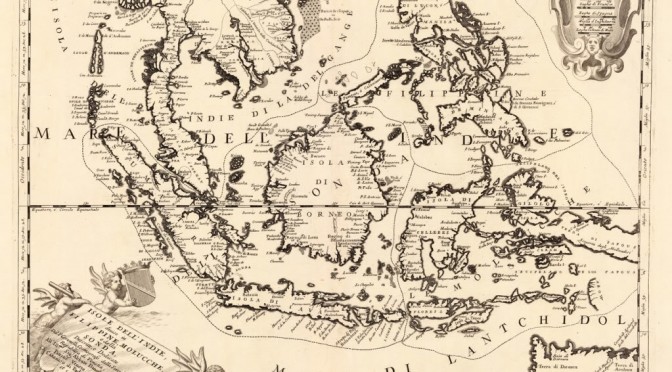
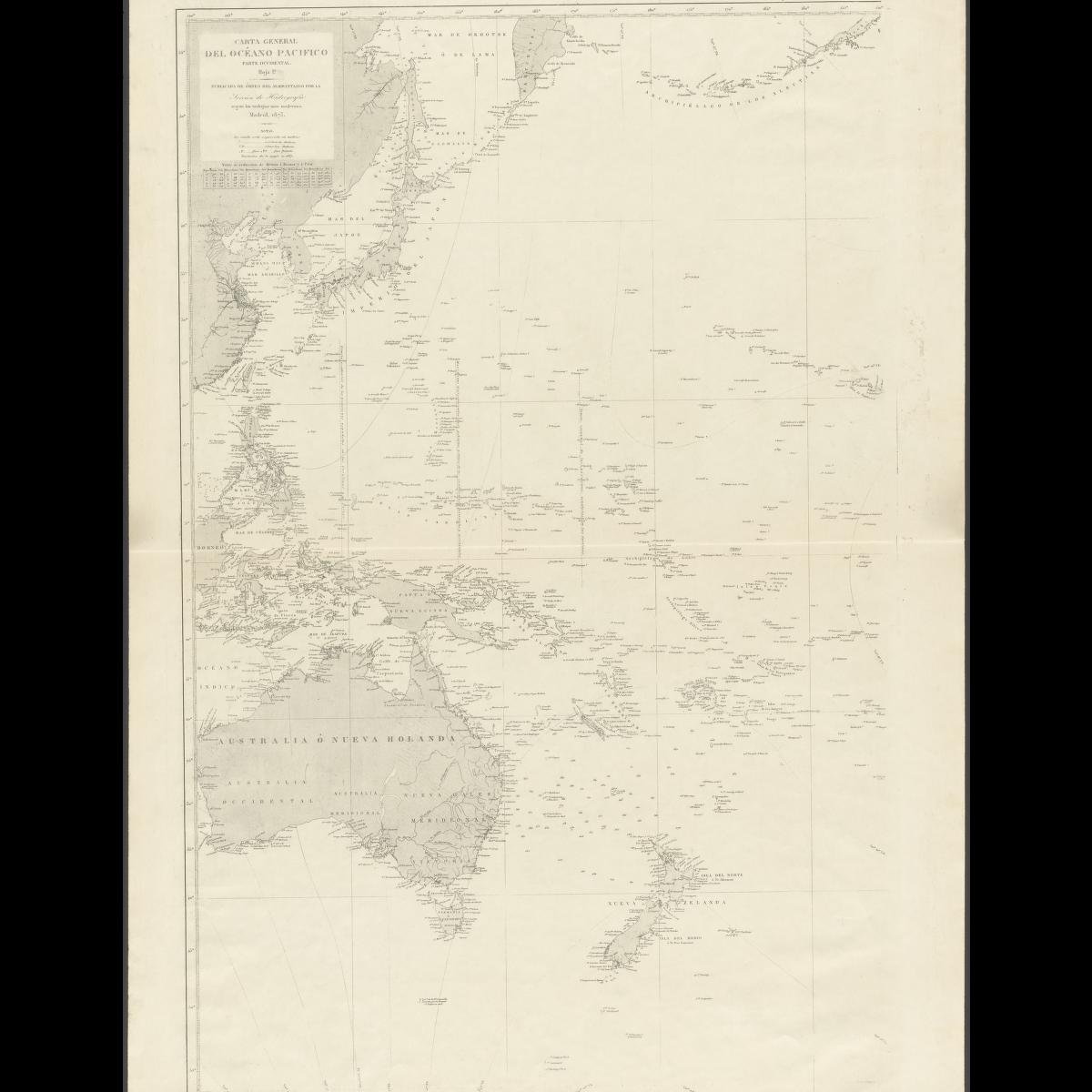
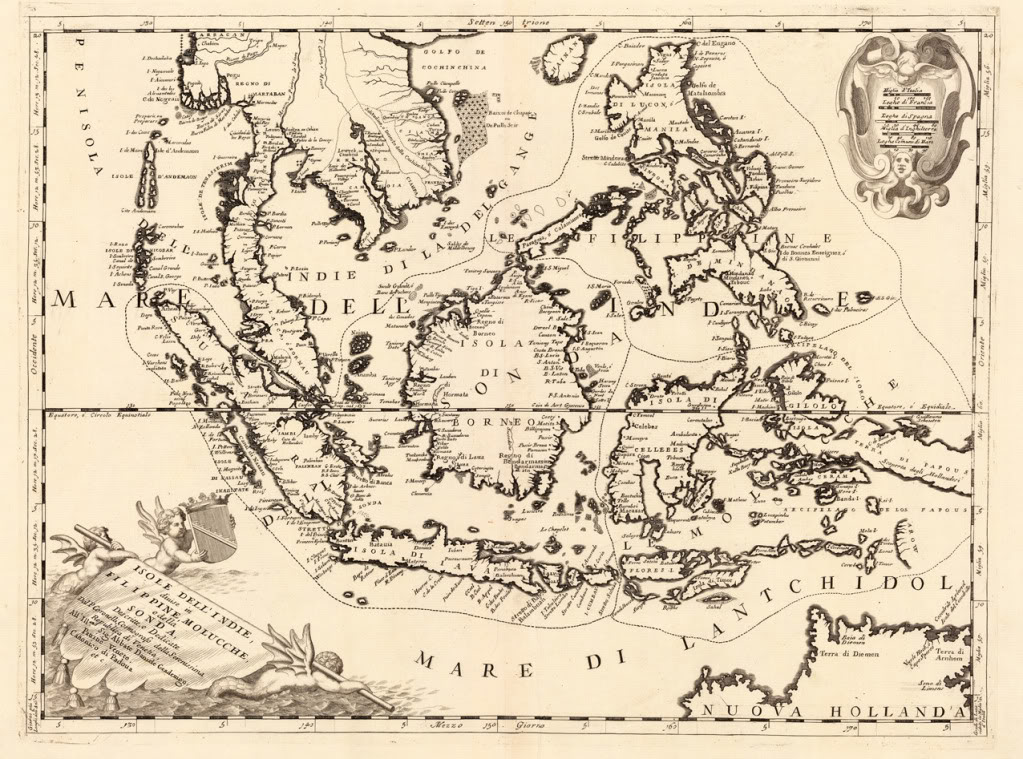
The Spanish colonial era. Three international conventions regulate the geographical extent of the territorial transfer following the 1898 war: the Treaties of Paris and Washington between the US and Spain, and that concluded between the United States and Great Britain on 2 January 1930. A range of potential problems would loom large if Manila tried to resort to the geographical extent of this territory. First of all, the mentioned treaties do not provide a fully detailed picture of the resulting borders. Second, the actual reach of the colonial administration was not always clear, with widespread resistance to Spanish rule and insurgency in a number of areas. In line with many other colonies, actual control was often a measure of distance from the capital, and went from long-standing exercise of sovereign powers, resulting in widespread cultural, linguistic, legal, economic, and social, influence, to little more than nominal sovereignty (or suzerainty when indirect rule was favored) on paper. Third, geographical knowledge was not always accurate, with some territories imperfectly mapped or chartered, and confusion sometimes arising out of conflicting accounts. Having said that, some maps, like the one below, do explicitly include features currently under dispute, such as Bajo de Masinloc (Scarborough Shoal).
“This map, from present-day Italy, included the Spratly in the Philippines’ territory”
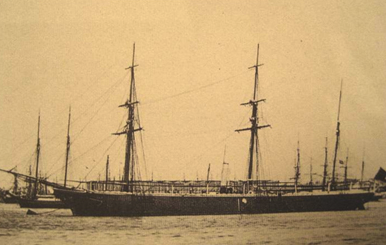
Furthermore, some expeditions and other activities took place featuring Bajo de Masinloc (Scarborough Shoal). After a long history of uncertainty over its existence and location, the grounding of HMS Scarborough, chartered by the East India Company to transport tea, on 12 September 1748 led not only to its modern English-language name, but to its precise chartering. Navigation charts published after the incident reflected it, but uncertainty still meant some debate on exactly where the ship had run aground, and some decades would pass until this was dispelled. It was the Malaspina Expedition which in May 1792 finally ascertained the exact location of Scarborough Shoal, and confirmed that some reefs appearing on maps actually referred to this feature. This was followed, in 1800, by the first detailed Spanish survey, conducted by the frigate Santa Lucia, part of the Cavite-based naval squadron. Commanded by Captain Francisco Riquelme, she was one of the first steam-powered warships deployed in the Philippine Islands to take part in the campaigns against the Sultan of Sulu and the Moro slave-raiding pirate bands. Thus, this ship illustrates two aspects of Spanish colonial rule which to some extent are contradictory, supporting and weakening potential historical arguments in line with Philippine claims. On the one hand, it illustrates the connection between the Philippines and Scarborough Shoal, with activities from Luzon-based ships. On the other, it reflects how conflict with insurgents and pirates were a constant of the period, with sovereignty on paper extending further than on the ground (and the waters).
Frigate Santa Lucia, which commanded by Captain Francisco Riquelme conducted the first Spanish survey of Scarborough Shoal (Bajo de Masinloc) in 1800
“This low-lying reef, per Riquelme, extends more than 8 2/3 miles from North to South, and 9 1/2 miles from East to West from one end to the middle part, but from there narrowing until it ends in a tip. It is surrounded by horrible dangers that may appear without warning or other markings to serve notice of their proximity. Some rocks can be seen slightly above water only by close observation on a clear day, and only by having careful look-outs can one see the reef at a distance of 7 miles”Capitan Riquelme’s findings were incorporated into the “Dorroteo del Archipielago Filipino”, the Spanish pilot’s guide. An 1879 edition reads:
Spanish colonial authorities did not only incorporate details of Scarborough Shoal into their charts, but also began to exercise search and rescue jurisdiction over the shoal, sending ships from Manila to assist vessels in distress. Since this is one of the activities traditionally considered to fall under the umbrella of exercise of sovereign powers, it is worth noting.
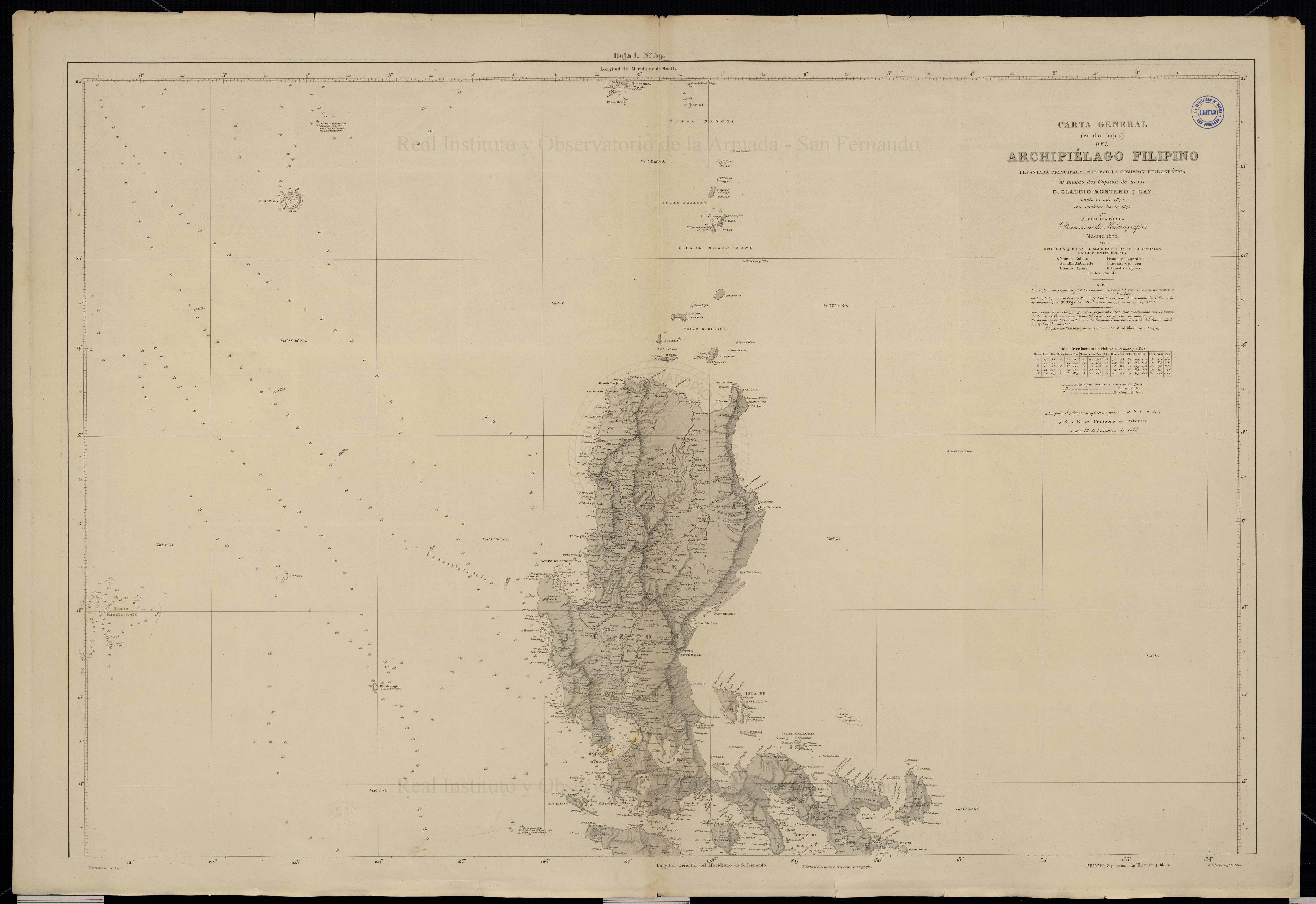
Eastern half of the General Chart of the Pacific Ocean, published in 1897 by the Hydrography Section of the Spanish Navy.Spanish colonial era map of the Philippines, including Bajo de Masinloc / Scarborough Shoal. Kindly provided by Dr David Manzano Cosano, Escuela de Estudios Hispano-Americanos (CSIC; Spanish National Research Council)
The Philippines under American sovereignty. A second possibility would be to argue that once under American sovereignty, currently disputed features clearly came to be officially considered part of Filipino territory. A significant obstacle to any such assertion is Washington’s long-held position that it takes no position on territorial disputes in the South China Sea, restricting its policy to how disputes are solved (insistence on peaceful solutions in accordance with international law) and the extent of any resulting settlement, with particular emphasis on freedom of navigation and overflight, and compliance with US views on the extent of coastal states powers in their EEZs. In December 2014 The Department of State published No 143 in its “Limits in the Seas” series, titled “China: Maritime Claims in the South China Sea”, which again emphasized that “The United States has repeatedly reaffirmed that it takes no position as to which country has sovereignty over the land features of the South China Sea”.
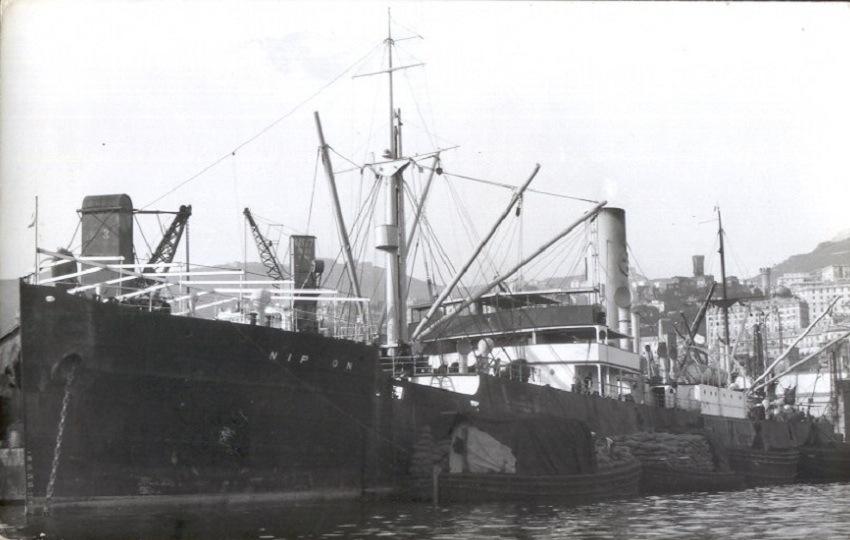
However, this view does not reflect the fact that the activities described earlier under Spanish colonial rule continued to take place after 1898. The most famous, and a well-documented, incident took place in 1913. A typhoon hit the S.S. Nippon, a Swedish steamer carrying copra, and she was wrecked on Scarborough shoal. This prompted Philippine authorities to intervene, together with private ships, in the rescue of the crew, investigate the accident, and carry out a scientific study on the effects of the sea on her cargo. In addition, the ship came under the salvage laws of the Philippines, and the resulting legal case was appealed all the way up to the Supreme Court of the Philippines, leaving behind an extensive paper trail documenting the exercise of a wide range of powers by the Philippine authorities in connection with Bajo de Masinloc (Scarborough Shoal).
The SS Nippon, owned by the Swedish East Asiatic Co., which shipwreck on Scarborough Shoal in 1913 led to a civil case that ended up before the Supreme Court of the Philippines
In the 1930s, the Commonwealth Government sought an explicit assertion of sovereignty over Scarborough Shoal, going beyond the exercise of administrative powers, including search and rescue. On December 6, 1937, Mr. Wayne Coy (Office of the US High Commissioner for the Philippines) asked Captain Thomas Maher (head of the US Coast and Geodetic Survey) whether any country had claimed Scarborough Shoal. The reply, dated 10 December 1937, was that no information was available on whether any nation had. Concerning the Santa Lucia 1800 survey, Captain Maher said “If this survey would confer title on Spain or be a recognition of sovereignty, or claim for same without protest, the reef would apparently be considered as part of Spanish territory the transfer of which would be governed by the treaty of November 7, 1900”. He also suggested that a new survey take place, and a navigational light be installed.
The next year saw Mr. Jorge B. Vargas (secretary to the president) write to Mr. Coy, asking about the status of Scarborough Shoal and saying that “The Commonwealth Government may desire to claim title thereto should there be no objection on the part of the United States Government to such action”. This prompted Mr Coy to forward this correspondence to the US War Department, which in turn sent them to the State Department, resulting in an interesting exchange. For example in a letter dated 27 July 1938 Secretary of State Cordell Hull told Secretary of War Harry Woodring that his department “has no information in regard to the ownership of the shoal”, which “appears outside the limits of the Philippine archipelago as described in Article III of the American-Spanish Treaty of Paris of December 10, 1898”. However, Hull wrote, “in the absence of a valid claim by any other government, the shoal should be regarded as included among the islands ceded to the United States by the American-Spanish treaty of November 7, 1900” and therefore the State Department would not object to the Commonwealth Government’s proposal to study the possible setting up of air and ocean navigation aids, as long as “the Navy Department and the Department of Commerce, which are interested in air and ocean navigation in the Far East, are informed and have expressed no objection”. The reply from Acting Secretary of the Navy W.R. Furlong to Acting Secretary of War Louis Johnson was positive, both concerning navigation aids and “the possibility of later claiming title”. The secretary of commerce also said his department had no objections.
We can observe a measure of ambiguity, though, with the US Government having no objections to the Commonwealth Government claiming Scarborough, and even considering it to be included in the second treaty with Spain following the 1898 War, but not actually claiming the features itself. Manila also expressed an interest in the Spratly, but despite this prompting Washington chose to keep a “low profile” concerning the archipelago, with non-recognition of claims by others and a close eye on Japanese interests and activities going hand in hand with a failure to officially claim the islands. The same applied could be said about Scarborough Shoal. In the words of François-Xavier Bonnet (IRASEC; Research Institute on Contemporary Southeast Asia), “the geographical proximity spoke in favor of the Philippines (rescue operations). In a way, Bajo de Masinloc could be seen as integrated in the sphere of influence of the Philippines, but outside the main archipelago. Political and symbolic acts, like naming the shoal, surveying, mapmaking, and organizing rescue operations, were the only appropriate activities that the Spanish and American authorities could do on an isolated shoal, which was, for the most part, underwater during high tide”.
The Sultanate of Sulu. A third possibility for Manila would be to claim sovereignty over Bajo de Masinloc as having historically been under the Sultanate of Sulu, that is merging the claim with that over Sabah. However the Philippines seem to be leaning towards focusing on Scarborough, going as far as offering Malysia to downgrade her claim to Sabah in exchange for support on the former conflict. This was clear in one of the Filipino moves this year connected to the international arbitration case, namely the offer to Malaysia, in a Note Verbale, to review its protest against the 6 May 2009 joint Vietnamese-Malaysian submission to the UN Commission on the Limits of the Continental Shelf (CLCS), containing a claim by Kuala Lampur of an extended continental shelf (350 nautical miles from the baselines) projected from Sabah. In exchange for this, Manila is requesting two actions that she believes would reinforce her case against China: First, to “confirm” that the Malay claim of an extended continental shelf is “entirely from the mainland coast of Malaysia, and not from any of the maritime features in the Spratly islands”. Second, to confirm that Malaysia “does not claim entitlement to maritime areas beyond 12 nautical miles from any of the maritime features in the Spratly islands it claims”.
The impact on Manila’s Sabah claims has not been lost on observers, with former Philippine permanent representative to the United Nations Lauro Baja Jr., if Malaysia explaining that if the deal is accepted the Philippines’ claim to Sabah will be “prejudiced”, adding that “We are in effect withdrawing our objection to Malaysia’s claim of ownership to Sabah”. Some voices argue that the Philippines need to stop claiming Sabah, since otherwise they are favoring Chinese claims to South China Sea features. William M. Esposo has criticized the “charlatans and overnight Sabah claim experts” who “thought they were patriots fighting for Philippine national interest” but “didn’t even realize that the arguments they were mouthing were supporting China’s very claims to our territory in the South China Sea”. Esposo cites Renato de Castro (De La Salle University International Studies Department), to stress that “historic claims, such as the one we have with Sabah, are the weakest cases when international courts decide territorial dispute”.
Conclusions. The Philippines are basing their South China Sea narrative on post-Second World War developments, and going as far as appearing ready to sacrifice their claim to Sabah in order to reinforce the arguments put forward in their international arbitration case against Beijing. This fits with Washington’s agnostic view of territorial claims, even when they involve areas formerly under US sovereignty. However, it is still interesting from a historical perspective to examine other possible arguments of this nature that could support Filipino claims on Bajo de Masinloc (Scarborough Shoal).
Alex Calvo is a guest professor at Nagoya University (Japan) focusing on security and defence policy, international law, and military history in the Indian-Pacific Ocean. Region. A member of the Center for International Maritime Security (CIMSEC) and Taiwan’s South China Sea Think-Tank, he is currently writing a book about Asia’s role and contribution to the Allied victory in the Great War. He tweets @Alex__Calvo and his work can be foundhere.
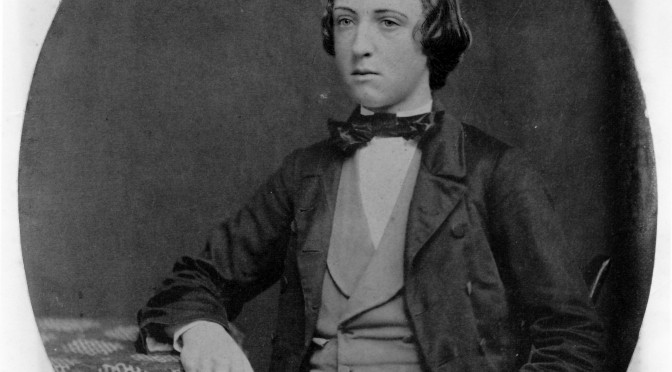
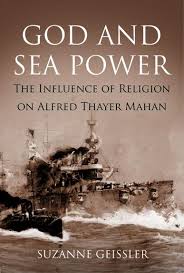
For many of us, Alfred Thayer Mahanis certainly no stranger. His theories and writings have been talked about and analyzed for years. They have been savored by everyone from the President of the United States, the lowly Naval War College graduate, and many others around the world. Thus, it is always refreshing to read something new and interesting about this well-known and often talked about historical figure. Suzanne Geissler has done just that. Professor Geissler has delivered some fresh insights and probably stirred some debate with her new book, God and Seapower. The bookis a fascinating look into Mahan’s life by focusing on his religious beliefs. At 280 pages this book is a nice size; something that can be read in a week and yet she still manages to cover ATM’s life, from childhood to wise naval theorist, quite nicely. Recently I had the opportunity to interview Professor Geissler about her new book. What follows is the transcript of our interview which was conducted over e-mail.
Why Mahan and Religion? Why did you want to write this book?
My specialty is American religious history, but I have always been interested in military and naval history, more as a hobby than a professional specialization.Many years ago – I don’t remember why or in what context – I read that Mahan was an Episcopalian.I’m an Episcopalian, too, so I just filed that away as an interesting factoid, but didn’t think much more about it.Then some years later I read Robert Seager II’s biography of Mahan and came away disappointed in the book, but intrigued further about Mahan’s religious involvement.I did a little digging and discovered that he wrote extensively about religion and church issues.There was tons of stuff out there that no one had ever looked at in a serious way.I thought there had to be a significant story here.
The book, in part, is a counter argument to one of Mahan’s most well-known biographers, Robert Seager II. Readers will quickly realize that you disagree with many of Seager’s opinions. Who was Seager and why do you disagree with him so strongly?
Seager was a former merchant mariner who had become an academic historian.A few years prior to his biography coming out he, along with Doris Maguire, had co-edited Mahan’s papers.He used that as the raw material for his biography of him.The problem with the book, as I think is readily apparent after only reading a few pages, is that Seager thoroughly disliked Mahan.Now I’m not saying that a biographer has to like his subject, but there needs to be at least an attempt to be fair and look at the sources in an impartial manner.But Seager so disliked Mahan – as though he knew him personally and couldn’t stand the guy – that it colored the entire book.Everything Mahan did throughout his whole life, from the trivial to the monumental, is presented in the worst possible light.Also, the whole book is written in a sarcastic tone – what today we would call snarky – that becomes really tiresome after a while.My biggest beef with Seager is that he loathes – and I don’t think that’s too strong a word – Mahan’s religious devotion and piety and thinks it is the root of all that makes Mahan so – and these are Seager’s words – arrogant, egotistical, racist, to name a few.Seager is entitled to his own opinion, of course, but the more I got into the sources, Mahan’s own letters and writings, the more I saw that Seager had no interest in being fair or even attempting to understand Mahan in the context of his own time.My other complaint about Seager is that on numerous occasions he either disregarded what a source clearly said or twisted it out of context in order to present Mahan in a bad light.
On what points do you agree with Seager on Mahan?
The only thing I agree with Seager on is his statement that Mahan wrote the most influential book by an American in the nineteenth century.
You mention Mahan’s father and uncle were two of the biggest religious influences in his life. How so?
Mahan’s father, Dennis Hart Mahan, was a former Army officer and professor of engineering at West Point for almost fifty years.He was a monumental figure at West Point and in the Army officer corps.In those days the field of military engineering included strategy, tactics, and military history.So Alfred had a role model of exceptional brilliance whom Army officers – including people such as Grant and Sherman – held in awe.Alfred got his introduction to military history through his father.But Dennis was also a devout Christian and Episcopalian who modeled those attributes to his son.Dennis epitomized the 19th– century ideal of a “Christian gentleman” but in a way that was genuine, not superficial.Milo Mahan, Dennis’s younger half-brother, was an Episcopal priest and professor of church history at General Theological Seminary, the Episcopal seminary in New York City.Alfred lived with him for two years (when Alfred was fourteen – fifteen and attending Columbia University), a period which imbued him with Milo’s High Church piety.For the next fourteen years or so, Milo was Alfred’s main theological mentor.They had an extensive correspondence and Milo provided Alfred with reading lists of theological works which Alfred read on long sea voyages.As Alfred told his fiancée, Milo was the man he went to with any biblical or theological questions.All that reading, under Milo’s guidance, in effect gave Alfred the equivalent of a seminary education.
Mahan’s father, I didn’t realize, was well-known in political and military circles in the 19th century. When did Mahan step out of his father’s shadow?
One of my favorite anecdotes occurs in the waning days of the Civil War.Alfred is on Admiral Dahlgren’s staff stationed off Savannah when the victorious General William Tecumseh Sherman arrives in the city.Alfred goes ashore to see Sherman bearing a congratulatory telegram from his father.Sherman greets him by saying “What, the son of old Dennis?”Certainly, for more than half of his active duty career Alfred was best known for being Dennis’s son.He doesn’t really emerge from his father’s shadow until the publication of his first book TheGulf and Inland Waters in 1883 when he’s forty-three.This book leads to his appointment at the Naval War College which in turn leads to the publication of his lectures as The Influence of Sea Power Upon History.
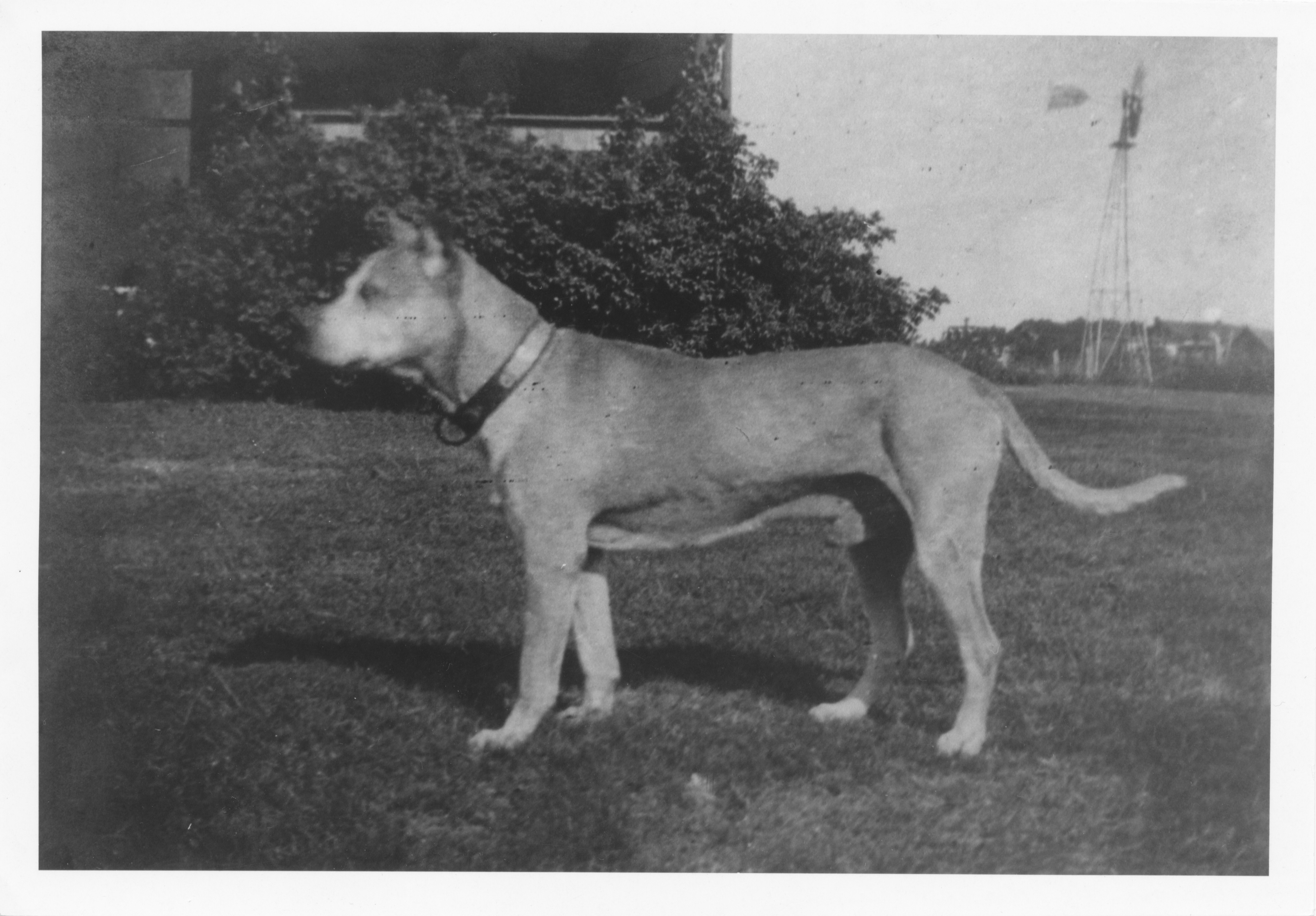
Mahan loved his dog, Jomini. And as you quote, Mahan believed his dog would go to heaven when he died. Was this belief, that a dog’s soul goes to heaven, abnormal for an Episcopalian at this time?
Mahan never expounds on the reasons that he believes his dogs, Jomini and Rovie, went to heaven, so I have to extrapolate based on what I know about this issue and Mahan’s own beliefs.
Alfred Thayer Mahan’s dog, Jomini. Courtesy of USNI Press.
As I understand it, the Roman Catholic Church teaches that animals don’t go to heaven because they don’t have souls.Most Protestants, though, considered the “soul” issue irrelevant and based their view – that we will see our beloved pets in heaven – on the fact that animals clearly are part of creation and God has promised that all creation will be redeemed (Romans 8:21).Mahan knew his Bible thoroughly so I’m willing to bet that he would have based his view on this scripture rather than abstract speculation on whether animals have souls or not.
One of your more, shall we say, contentious statements, is that Mahan’s The Influence of Sea Power Upon History was inspired by God. Could you expand on this?
Well, I don’t claim that, but Mahan certainly did.In his autobiography, From Sail to Steam, he made reference to his “special call” to be a naval historian, or, more specifically, to be the expositor of the importance of sea power on the course of history.He never claimed that he discovered the concept.He was always generous in crediting previous historians whose thought influenced his.But he claimed that “in the fullness of time” – a biblical expression — the call was given to him to be the one who explained it and drew the correct implications from it.
What did Mahan think of Catholics? Other Christians? Other religions?
I’m simplifying a lot here, but, basically, Mahan had a kind of layered view of religious categories.Christianity was better than other, i.e. non-Christian, religions (though Judaism was in a special category as Christianity’s older brother, so to speak).Within Christianity, Protestantism was best, and within Protestantism, Anglicanism was best.Having said that, I should point out that the groupings within Christianity related mainly to polity (types of church governance), liturgy (forms of worship), and history.Mahan clearly had his preferences, but he never claimed that, for example, there was only one true church.For him the most important thing was to be a Christian.If you loved Jesus and accepted him as Lord and Savior, it did not matter what denomination you belonged to.In a similar vein, Mahan once stated that he would cooperate with any Christian group in evangelistic or missions work as long as such a group did not include Unitarians.He did not consider them Christians since they did not recognize the divinity of Jesus.One of the things that makes Mahan so fascinating to me is that he’s not easily pigeon-holed into conventional religious categories.On the one hand he’s very much a High Church Episcopalian, but he’s also very much a born-again evangelical.
Was Mahan able to separate his writing? That is, did he keep naval theory separate from his religious writing? It seems like he was able to live in two different worlds on the page, yet his religious life infused everything he did.
Mahan was actually quite sophisticated in his historical methodology.He understood that history and theology were two different fields, each with its own ways of interpreting events.As a Christian he believed that God was the sovereign creator and ruler of the universe and God’s decrees always came to pass.However, he understood that God operated through what theologians called “secondary causes,” that is the choices made by human beings and their resultant actions.A historian deals with secondary causes.It was extremely rare for Mahan to speculate on God’s purposes in his naval history writings.
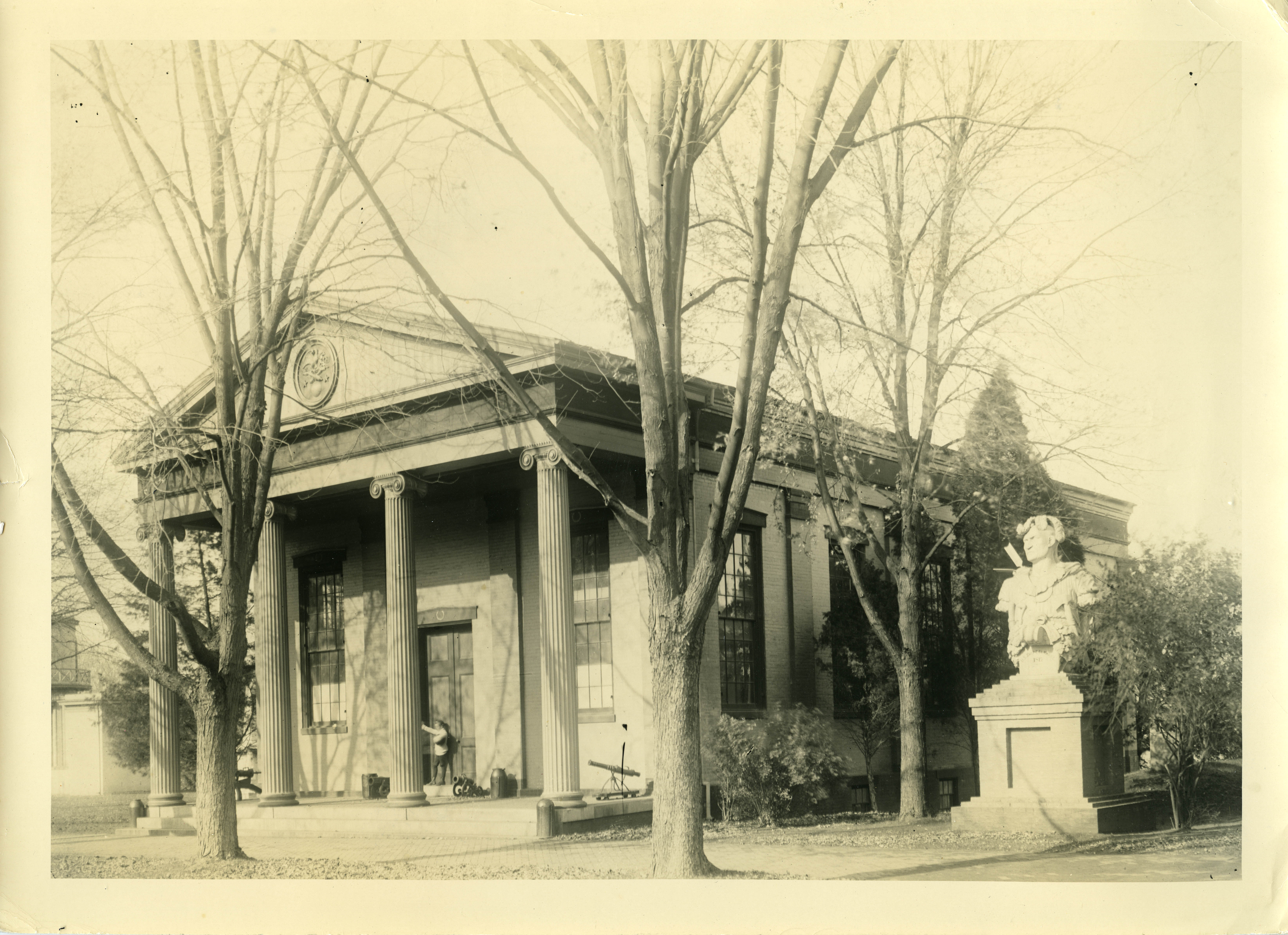
US Naval Academy Chapel circa 1850s. Courtesy of USNI Press.
For those readers that wish to read a book on Mahan after they read your book, what do you recommend?
I recommend Jon T. Sumida’s Inventing Grand Strategy and Teaching Command: The Classic Works of Alfred Thayer Mahan Reconsidered.This is a fascinating book full of original insights on Mahan.
Are there other historians working today that do not have a theology background, yet pay serious consideration to their subject’s religious belief? Specifically, military biographies?
This is difficult for me to answer since I don’t really know who is working on what topics, especially in military biography.But the two naval historians who were most helpful and encouraging to me when I undertook this project, Jon Sumida and John Hattendorf, are both very interested in religion and the role it plays in people’s lives.And they both have a positive view of it rather than a negative one.Hattendorf, particularly, is very knowledgeable about the Episcopal Church.In his editing of the writings of Admiral Stephen B. Luce he does incorporate a discussion of Luce’s piety.
Why do you think religion so often takes a back seat when we discuss historical figures — past or present? Or does it?
As I mentioned, my field is religious history, so for most of the people I read and study about, by definition, religion is important.However, you’re right, in other historical sub-fields religion is usually ignored or misunderstood.For example, Martin Luther King, Jr. comes to mind.Even in a case such as that, where you would think the religious angle would be obvious – his being a clergyman and pastor — there are some writers who have downplayed that and made his story one of “social justice” and politics, completely ignoring the biblical roots of his thought, not to mention his dramatic conversion experience.I don’t like to generalize about historians, but in order to answer your question, I’ll do it anyway!Most present day historians are either indifferent or hostile to religion, especially the notion of an individual having a personal encounter with God, or believing that God has called that person to a specific task in life.Some writers see this sort of thing as just an eccentricity, not necessarily bad, but of no real significance.Others take a more negative view and see religious faith as a personality defect that could have pernicious consequences.One thinks of all the historians who have blamed the defects of the Versailles Treaty on Woodrow Wilson’s Presbyterian piety.
Suzanne Geissler received her Ph.D. in history from Syracuse University’s Maxwell School of Citizenship and Public Affairs.She also holds a Master of Theological Studies degree in church history from Drew University.She is professor of history at William Paterson University in Wayne, NJ.Her previous books include Jonathan Edwards to Aaron Burr Jr., Lutheranism and Anglicanism in Colonial New Jersey, and “A Widening Sphere of Usefulness”: Newark Academy 1774-1993.
Lieutenant Commander Christopher Nelson is a US naval intelligence officer and recent graduate of the US Naval War College and the Maritime Advanced Warfighting School in Newport, Rhode Island. The opinions above do not necessarily reflect those of the US Department of Defense or the US Navy.