Category Archives: History

Naval and maritime history section.

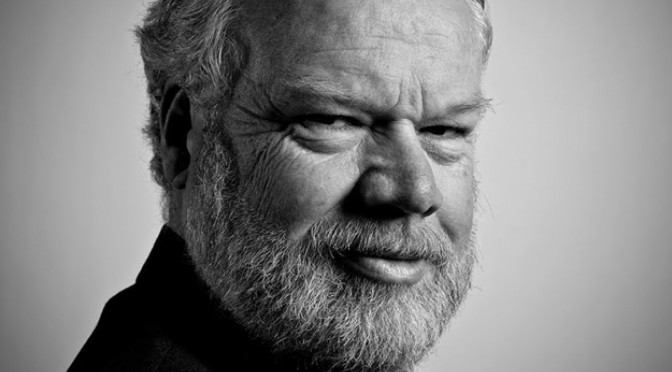
Tom Ricks on Writing, Reading, and Military Innovation

By Christopher Nelson

Tom Ricks is no stranger.  If you follow the US military, then you’ve probably stopped by his blog “The Best Defense” over at Foreign Policy magazine on more than one occasion.  

Sometimes provocative, always interesting, Ricks has provided a voice for civilians, officers, and enlisted, to raise issues, debate defense policies, or often recommend a good book.  In fact, Ricks’ comments on books and reading lists have fed my intellectual curiosity these past few years.  

Tom Ricks joined me to talk about everything from the craft of writing, the size of his library, to one of his favorite books at the moment, a book on military innovation.  

What got you started in journalism and why cover the military?  

What got me started in journalism was I was living in Hong Kong and teaching English and English literature.  I always expected to be a teacher. And I saw, when I was about twenty-two years old in Hong Kong, the people that were enjoying themselves were journalists  the young American, British, and Chinese journalists.  I couldn’t believe that some adult would give them a credit card and just allow them to go around and ask people questions. It seemed like a good gig to me. Also, once I began in journalism, I found that the military really interested me. It was a interesting institution in of itself.  You could write about everything from politics to international relations to technology the basic human stories.  And then I found in about 1995 when I was working on what became Making the Corps, it was also a very good way of looking at America; and looking at where our country is by talking to young recruits and so on. So I found out that I really enjoyed covering the military as well.

What were your favorite books of 2015?  Your top three?  And why?

It’s funny, I don’t really read books as they come out.  I read books as they happen to provoke my interest. I think my favorite nonfiction book that I read last year was about the Comanches. It’s called The Comanche Empire, by Pekka Hämäläinen.  In fiction, I really like Elizabeth Strout. I’d read her book Olive Kitteridge, so recently I went back and read an earlier novel of hers called Abide With Me. I read it in particular because it is about winter in Maine, which is six months long, and which I am living through, so her bringing a novelist’s eye to it really intrigued me. So those are sort of the two books that really struck me lately.  

One other: I also finally got around to reading The Liar’s Club by Mary Karr.  It’s just a wonderfully written memoir about growing up in Southeast Texas near Port Arthur, near Houston in the 1960s. Her style reminds me of Mark Twain, one of my favorite authors.

Professionally, oddly enough, the book that has struck me is one that I read twenty years ago and I picked it up again recently. I liked it then—and re-reading it, I loved it. I wrote about it in the blog, it is by Stephen Peter Rosen, and its called Winning the Next War. It’s about military innovation, what works and what doesn’t. A lot of it is counter intuitive. Money is not important to innovation, in fact it may hurt it; technology is not that important to innovation; what is really important to innovation is organizational change during peacetime. It really is a very different take, and I find it intriguing because I think it is a crucial issue.  

I worry that we have a big late Industrial Age military, which is a problem because we are on the cusp of Information Age. We confuse the ability to throw firepower with the ability to subdue an enemy. In that way today’s US military reminds me of the Royal Navy of 1939. The Royal Navy then was the biggest in the world, it had the most battleships and the ability to throw more firepower, but was almost entirely irrelevant in World War II. They neglected changes; they didn’t understand the submarine; they didn’t understand how to use the aircraft carrier; and they didn’t have enough destroyers.  They won the Battle of the Atlantic but that was with us giving them a lot of destroyers and other help, like providing submarine support.  

Is there a book that is coming out that you are looking forward to? 

The new book that struck me most recently was a graphic novel and I am not a big fan of those. It is by the guy who does Terminal Lance.  It’s called The White Donkey.  It is a graphic novel about his time in Iraq.  It was self-published but now it is coming out by Little Brown, the big publisher, in April. I am looking forward to see how well it does when it comes out.
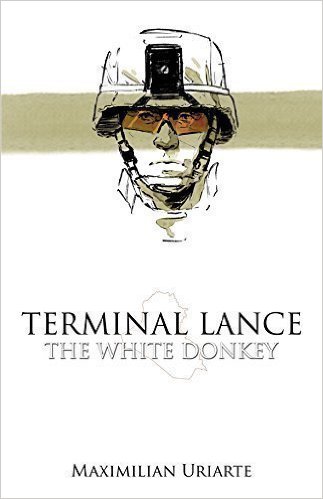
Terminal Lance: The White Donkey by Maximilian Uriarte/Amazon

What is your daily routine?  As a writer, do you block off time each day to write? 

I’m definitely a morning writer. I like to get up, make a cup of coffee, and sit down and start writing.  I get the blog out pretty quickly, and then I turn to whatever book I am writing at the time. I usually try to do about four hours a day, stopping around lunchtime.  I’ll have lunch with my wife, and then in the afternoon do some errands, maybe take a walk, and then sit down to read or do some research.  I find that when I am too tired to write I like turn to research.  And for me, the lesson in book writing is to stop when you start feeling tired.  It really takes your full energy and full attention the way research doesn’t.  

That sounds like pretty good advice to anyone who wants to write.

My advice is to establish a routine—that is, do not wait for inspiration. Writing is a lot more like carpentry than it is like poetry. It’s a craft.  You have to get up and saw and sand and screw things together, and then stand back and look at it. Sometimes you’ll say, “OK, that didn’t quite work, let me rework it.” Sometimes it does work.  But the people who tell me, “I’m writing a book on the weekends”—when they say that, well,  I think to myself, no, you’re enjoying yourself and pretending to write a book on the weekends. The only way a book gets written if you really work on it every day. Every morning, for me. 

Do you read with a pencil in hand? Is a notebook close by? Do you do a lot of marginalia when reading?

Totally.  To me that is intellectual capital the marginalia in any book. I remember a professor of mine in college who said, “If you are not reading with a pen in your hand then you are not reading.” I find that is especially true for nonfiction. I’m constantly taking notes. In fact, one measure for me is that how much I’ve learned from a book is the number of pages I’ve marked up. In Winning the Next War by Peter Rosen, which I just re-read, I probably took ten pages of notes the second time I read it even more notes than I did the first time.  Filling up the front and the back of the book with notes and thoughts and connections. And for me that will often become the grist for a blog item or even for something that I’m writing about in a book.

If you had the chance to invite three authors over to your house for dinner living or dead who is coming to your house, and why?  

My favorite historian is David Hackett Fisher. I think I’ve read all his books. I love Washington’s Crossing. I read his Albion’s Seed twice, and Paul Revere’s Ride, also by him, which is just lovely. I’ve never met him. I would enjoy meeting him and asking him what he thinks about books. I would love to see him write about the Civil War.  He’s written about almost every other aspect of American History. I think he is my favorite American historian, and it seems to me that the Civil War is the essential event of our history. I would love to see him tackle that.  

Another favorite writer of mine is actually a friend of mine, Eliot Cohen, who has written several terrific books. My favorite book by him is called Supreme Command.  It’s how really good civilian leaders lead their militaries.  One of the themes of this book is that they are not hands off, and they are not looking for consensus. Instead, they are constantly probing and asking questions, pushing their military leaders. They are especially looking to surface differences. To say, “now you guys disagreed on this, now tell me about this disagreement.” You see this in leaders like Churchill and Franklin Roosevelt, and actually Dwight Eisenhower as well.  

For a third one, let’s see, I’ve read almost all the novels by Jonathan Franzen. I think he is a lovely writer. But I also think he is a crank and curmudgeon. I’m not sure I would enjoy dinner with him, but it would sure be interesting to have dinner with him.

How many books do you have in your library?

It’s funny you should ask, because where we live in Maine, we finally have a really good basement, big and dry. So for the first time in my life I have been able to get all of my books in one spot, and I really like that. They’re on long boards and cinderblocks. 

I measure it by the foot. I actually wrote about this in the blog once. The biggest section is World War II, which I think is thirty-two feet. And there probably are seven and a bit shelves of Iraq, which going by the boards I used makes about 31 feet. And then there is 27 feet of Vietnam, 9  of the Korean War. Unfortunately the basement is filling up fast. 

So you’ve been covering the US military for over twenty years.  I’m curious about your readers.  You’ve been blogging over at Foreign Policy for some time. Yet you don’t talk about your readers much.  I’m curious about how many people stop by “Best Defense”?  What types of readers are reading ‘Best Defense’?

I don’t know on the numbers, partly because Foreign Policy’s editors keep the numbers close hold. When I ask them about the numbers I get gobbledygook about unique hits, and you know, “push only visitors” and “unique visitors,” and all that stuff.  It doesn’t tell me anything.  

A few years ago, I believe I was told I was getting 30,000 to 40,000 readers a month. But that could be wildly wrong. I never really pushed the issue with my editors. Maybe they are afraid that if they tell me how many visitors I have, that I’ll ask for a raise.

Now, the types of readers I have, I’m better on. Start with a big military audience.  I’d have to say concentrated on middle NCO’s and junior and middle officers with a smattering of younger enlisted and a smattering of O6 and above. That’s in the military. 

The second big group is academics. And military history is a pretty lonely field, so academics seem to like a place that welcomes military historians.  

The third group is defense journalists, think tank people, guys at corporations in northern Virginia, things like that. It kind of amuses my wife—she says that within three miles of the Pentagon, I’m a minor celebrity. Beyond that I’m totally anonymous and very happy with that.

You’ve probably been to more than a few archives.  What is the most interesting thing you’ve read or discovered?

There are a lot of exciting things in the archives. It just amazes me that you can sit there and if you ask for the right files and explain what you are looking for, and the people in the archives that work there tend to be very helpful, you can sit and hold maps that guys held on the beaches on D-Day. The original maps that have their markings on them, the markings they are making in pencil as they figure out where a German machine gun nest is, or where the lines of communications are.  

But I gotta say, the single most moving thing I ever found were some letters by a general, Terry de la Mesa Allen, who was commander of the 1st Infantry Division in Sicily in August, 1943; a very good division commander, a very tough fighter. Terry Allen was relived of division command by Omar Bradley. It was very public and he didn’t know why. He had just won the key battle of the campaign in central Sicily and then he got fired, along with his assistant division commander, who was Teddy Roosevelt, Jr., the son of the President. He writes back to his wife a series of letters in pencil on blue lined school notebook paper.  And one day he writes to his wife, “Patton dropped by, Patton thinks I’m being promoted to something.” Which is totally BS.  And I think Patton knew it.  Eventually Allen gets sent back to America without a job. George Marshall, the Army chief, admired Allen even though Allen was a very heavy drinker. When Marshall found out that Allen had been fired by Bradley, I found in the archives a note Marshall wrote to an aide that said: “Give Allen another division that is going overseas. Give him the 82nd if that is next to go over.”  And when Marshall was told the 82nd was not the next, Marshall said: “Give him the next division that comes up.” So a year later Marshall has Terry Allen back in Europe commanding the 104th Infantry Division. 

To hold that series of letters where Allen is trying to figure out what is going on, in the midst of just having played a central role in the first American campaign against the Germans on European soil, is just amazing to me. That really was a heart stopping thing for me when doing research.  

Still, I have to mention that one of the hazards I didn’t know about when doing research, is that I’ll be sitting there in the Army archives, reading these things in Carlisle, Pennsylvania, and frequently I’ll go back to my hotel room and at night I’d begin hacking, and I’d realize that I’d ingested a lot of dust looking at files that people that hadn’t looked at for years and years. If I go again I think I will wear a mask next time.

What books would you recommend to the next US President?  The next Secretary of Defense?  The next Joint Chiefs of Staff?

I would recommend to all of them Cohen’s Supreme Command. For my money it is the best book about how the civilian leadership should run his military, and how military leaders should deal with their civilian overseers.  It’s also about strategy. Strategy is not easy. If you are not crying than you are not making strategy. If you are not asking hard questions you are not making strategy. If you are not prioritizing between the important and the essential, you are not making strategy. Eliot Cohen’s book brings those points home and does it very well by examining a series of leaders and their decisions. 

You are very good about not pushing your favorite articles on your blog.  And at the end of the year you often run a top 20 most read articles.  But I’m curious what are some of your favorite articles from guest authors?

You’re right, I try not push things, because I often run things I disagree with. Frequently an article will come out and I will make a comment, and then somebody reads it and writes me and says: “Sir, I am a big fan of your blog, but let me tell you why you are dead wrong.”And frequently I will write back and say, “that sounds interesting, why don’t you write it up into an article.” So a lot of articles come out of disagreements with me, or perhaps email exchanges.  

As to favorite, I have two types. There is a special place in my heart for the pieces by the enlisted military personnel. I think officers have too large a voice in policy formulation, and that the enlisted have too small a voice, especially given their numbers.  We have a very well educated, professional enlisted military these days.  I don’t think we take sufficient notice of that or make sufficient use of it. So one of the things I try to do in the blog is I have this group called the “Council of Former Enlisted.” These are people who have been in the military but are now out, so they can speak freely. They are thinking about their experience.  Many of them are in college, some of them are in grad school.  And that council of the former enlisted I have really enjoyed. One of them in particular, Sebastian Bae, a former Marine sergeant has written a bunch of really good articles that I like.  

I also want to mention another guy, Ryan Blum, who wrote a good article about living in Paris the past year.  He said he went to Paris to get away from the war, but he found out with the terror attacks there in November that it followed him there.  

Another article that is a favorite of mine is one that was published recently. It’s by a ninety-one-year-old Marine veteran of World War II. He writes about the country he knew as a child, the country he fought for during World War II. He ends up with a very gloomy conclusion.  He says because of the income inequalities in this country these days, he thinks this country is not living up to the sacrifices he and his buddies made in World War II.  We were fighting for a country of fairness and sharing, relative equality and income, he says, and now we don’t have that. The rich are much too rich in this country nowadays. A lot of people are struggling to get by, even with two incomes. He said that’s not the country I knew, that’s not the country I fought for. By having that country now, he concludes, we are not honoring the sacrifice of people who fought in World War II.

I understand you are working on a book on Orwell and Churchill?  Can you tell us about your next project?  What fascinates you about Orwell and Churchill?

Orwell and Churchill came to me oddly. The commonality is that in their youth they were both war correspondents. And so I came to them as a war correspondent myself. I actually did a staff ride in Spain with Eliot Cohen which I played the character of George Orwell.  

And I’ve always enjoyed reading Churchill. So the interesting thing about these two are that they are so different, but they played such a key role in our understanding of totalitarianism, of fascism, of Communism — through Churchill’s speeches and Orwell’s essays and novels. It’s kind of parallel appreciation of the two. They never met each other, they admired each other, in fact, the hero in Orwell’s novel 1984 is named “Winston.”

At times you’ve been critical about military periodicals, and at other times you’ve praised some of the pieces in these periodicals.  What would you do if you were the editor to make some of these periodicals better?

I look back to certain periodicals have good spells times they should emulate. They shouldn’t do what Tom Ricks says, they should just do their best to be at their best. For example, Army Magazine I think is going through a very good spell and has for the last couple of years, and that’s changed—I mean, it used to be the dullest of military periodicals.  Marine Corps Gazette in the 1980s and early 1990s was very powerful it stood head and shoulders above the other military publications.  And then I think it has been whipped around by the Commandants too much and kind of lost a lot of its bite that it used to have; it used to have really serious intellectual discussions you just don’t really see that so much anymore. Likewise, Proceedings used to be very strong but really seems to me to be too focused on what’s going through Admirals’ minds these days.  It’s run some absolutely fatuous pieces by admirals that just do not do it credit.  So I think Proceedings has fallen down in recent years. And the Air Force, well, I see very little good writing coming out of it. 

Decision time. Would you rather have Orwell’s Why I Write or Zinsser’s On Writing Well on your desk?

Here are the two things I recommend to anybody trying to write: One is Orwell’s essay “Politics and the English Language.” It’s one of the best things written about the writing and about thinking.  

The other is E.B. White’s book The Elements of Style. I actually tried to propose a rule policy at think tanks that I have worked at, which is that every intern must read this book and take a quiz on it before they start working here. I spent a lot of time working at think tanks, editing interns and translating their writing into English.  And it’s not just interns, it’s also a lot of officers.  Everybody who is trying to write for other people should read E.B. White’s Elements of Style.  It’s short enough that you can read it in one night.  

Tom Ricks, thank you so much for you joining us.  All the best to you.

You are welcome. I enjoyed it. 

Thomas Ricks is senior advisor for national security at the New America Foundation. He also is a contributing editor of Foreign Policy magazine, for which he writes the blog “The Best Defense,” which was named the best blog of the year by the American Society of Magazine Editors in 2010, as well as the best military blog by Military Reporters & Editors. He is currently writing a study of the roles Winston Churchill and George Orwell played in shaping politics and culture of the 20th century.     

Ricks covered the U.S. military for the Washington Post from 2000 through 2008. Until the end of 1999 he had the same beat at the Wall Street Journal, where he was a reporter for 17 years. He reported on U.S. military activities in Somalia, Haiti, Korea, Bosnia, Kosovo, Macedonia, Kuwait, Turkey, Afghanistan and Iraq. He was part of a Wall Street Journal  team that won the Pulitzer Prize for national reporting in 2000 for a series of articles on how the U.S. military might change to meet the new demands of the 21st century. The series is posted at:

http://www.pulitzer.org/winners/6908

Ricks also was part of a Washington Post team that won the 2002 Pulitzer prize for reporting about the beginning of the U.S. counteroffensive against terrorism.  Those articles are posted at:

http://www.pulitzer.org/prize-winners-by-year/2002

He is the author of Fiasco: The American Military Adventure in Iraq, 2003-05, which was a no. 1 New York Times bestseller and a finalist for the Pulitzer Prize in 2007. His second book on that war, The Gamble: General Petraeus and the American Military Adventure in Iraq, 2006-08, was published in 2009.   He also wrote Making the Corps, which won the Washington Monthly’s “Political Book of the Year” award. His first novel, A Soldier’s Duty, about the U.S. military intervening in Afghanistan, was published by Random House in June 2001–some four months before the U.S. actually did intervene there. He also has written on defense matters for the Atlantic Monthly and other publications. His most recent book is The Generals: American Military Command from World War II to Today. 

Born in Massachusetts in 1955, he grew up in New York and Afghanistan and graduated from Yale in 1977. He is married to Mary Catherine Ricks, author of Escape on the Pearl, a history of one of the biggest slave escapes in American history. They have two grown children. For recreation he enjoys sailing, hiking, sea kayaking, downhill skiing and reading military history. 

Lieutenant Commander Christopher Nelson, USN, is an intelligence officer stationed at the US Pacific Fleet Headquarters in Honolulu, Hawaii.  Lieutenant Commander Nelson is a graduate of the US Naval War College and the navy’s operational planning school, the Maritime Advanced Warfighting School in Newport, Rhode Island.  The comments and questions above are the author’s own and do not necessarily reflect those of the US Department of Defense or the US Navy.
Distributed Lethality, Non-traditional Fleets, and the Law of War

Distributed Lethality Topic Week

By Chris Rawley

In simplest terms, the U.S. Navy’s distributed lethality concept complicates the enemy’s targeting problem by dispersing larger numbers of platforms capable of offensive action over a wide geographic area.  With no significant increases in fleet size anticipated for the foreseeable future, it is incumbent that all avenues be pursued that will optimize the use of scarce ships.

[otw_shortcode_button href=”https://cimsec.org/buying-cimsec-war-bonds/18115″ size=”medium” icon_position=”right” shape=”round” color_class=”otw-blue”]Donate to CIMSEC![/otw_shortcode_button]

A video recently released by the Surface Force U.S. Pacific Fleet shows a variety of ships besides surface combatants equipped with anti-ship missiles and unmanned aircraft capable of targeting these weapons.  In addition to amphibious vessels, a Lewis and Clark Dry Cargo/Ammunition ship is depicted (minute 1:21) with a drop-in missile module. This ship, and 29 others in the U.S. Navy’s Combat Logistics Force (CLF), are controlled by the Military Sealift Command (MSC) and manned by professional civilian mariners (CIVMARS).  The introduction of armed naval auxiliaries in the U.S. fleet would raise a number of important operational and legal questions.

https://www.youtube.com/watch?v=21dFaIIeXpU

In what sort of tactical situations might an offensively-armed replenishment ship be worthwhile?  Distributed lethality requires distributed logistics. Meaning, surface combatants operating alone or in small groups will require fuel, food, ammunition, and parts. In a major theater war, traditional replenishment ports will be placed at risk by mines, theater ballistic missiles, terrorist surrogates, and other area-denial capabilities. To mitigate these risks, underway replenishment has been a mainstay of U.S. naval surface ship operations for nearly a century. A CLF ship armed with self-defense weapons and a small number of medium ranged surface-to-surface missiles operating in tandem with a group of cruisers and destroyers (CRUDES) provides additional magazine capacity for the surface combatants.

Conversely, oilers operating solo while transiting to or from underway replenishment stations are an appetizing target for would-be adversaries. In some cases, these ships would require a dedicated “shotgun” surface combatant to protect their precious cargoes. But these escorts would take scarce CRUDES ships away from other offensive duties. CLF ships equipped with additional self-defense weapons, be they remotely-operated crew served machine guns or short-ranged surface-to-air missiles (like the SeaRAM), will enable defense against a variety of potential attackers. However, the possibility that CLF ships are capable of not just defending themselves, but of fighting back, will challenge indirect enemy strategies that rely on attrition of our logistic forces.  A CLF ship would target its over-the-horizon weapons by either cueing off another platform’s sensors or using organic manned or unmanned aircraft.  These ships sometimes deploy with MH-60s, which can carry their own weapons, but can also assist in targeting a ship’s missiles.  For longer ranges, future unmanned air vehicles such as DARPA’s TERN prototype could support CLF-launched missile engagements over hundreds of miles. Besides the aforementioned weapons, CLF ships providing replenishment operations within adversary threat envelopes will need to employ counter-targeting techniques and some will carry Surface Ship Torpedo Defense Systems.

Non-traditional or Normal?

I’ve been guilty of using the phrase “non-traditional” naval vessels when referring to auxiliaries engaged in naval operations other than logistics. A recent example would be MSC’s Expeditionary Fast Transports serving as Partnership Station platforms. Historically, however, civilian-run shipping has been integral to naval warfare for as long as humankind has fought on the seas. Lincoln Paine discusses a number of non-traditional fleets in The Sea and Civilization, an amazingly comprehensive chronology of all aspects of maritime trade and warfare. In lieu of a powerful navy, the early Roman Empire established coloniae maritimae (maritime colonies), which exempted their men from service in the legions in exchange for their promise to destroy invading enemy vessels. A millennium later, Byzantium held off Muslim invaders at sea with a largely provisional force of merchants and fishermen. In the 19th Century, pirates turned privateers were engaged as naval commerce raiders by various states including Spain, Mexico, and the Republic of Texas.

In World War I, the British Admiralty encouraged merchant vessels to arm themselves with deck guns, ostensibly for the purposes of defense. Some of these merchants took it upon themselves to actively attack German shipping, often using false flags. The German Empire, as one might expect, grew to view these vessels as belligerents, rather than as neutral shipping, a role they were initially accorded by international law. Then in World War II, thousands of American merchant ships were protected by Naval Armed Guards, who manned anti-aircraft weapons and up to 3″ deck guns. Merchant mariners supported these gun crews by passing ammunition, but were also trained to employ the weapons when necessary, and many did so, distinguishing themselves in battle.

WNUS_6-50_mk8_Mongolia_stern_pic
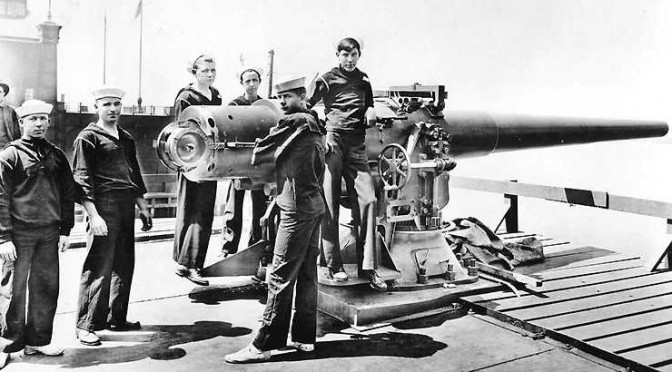
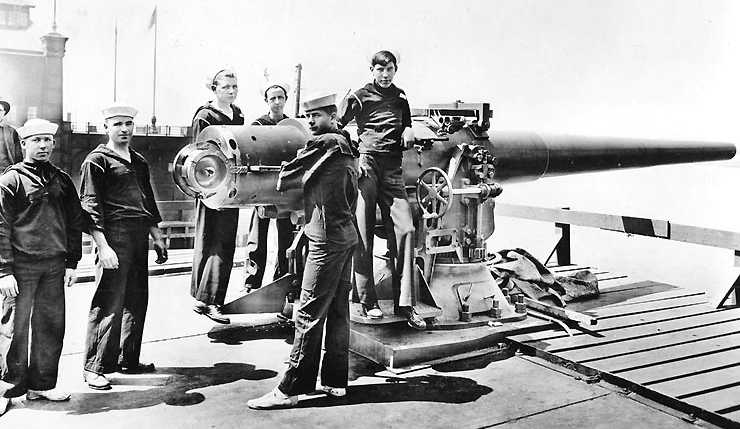
Historical Precedence: Naval Armed Guard Sailors Man the stern 6″ (15.2 cm) gun on S.S. Mongolia in May 1917 (U.S. Naval Historical Center Photograph # NH 41710) .

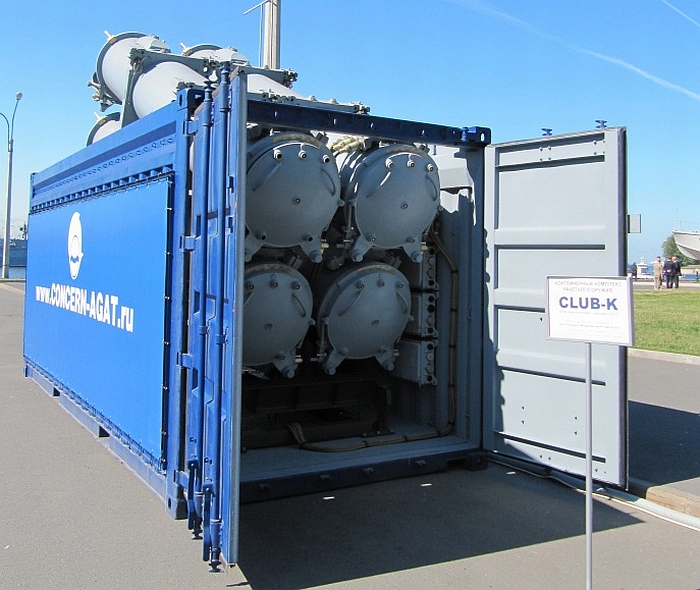
More recently, we’ve watched the emergence of China’s rather sizable maritime militias, which are a key aspect of the PLAN’s expansion strategy in the South China Sea. These sorts of maritime surrogates have kept up with changing naval technology. Today, instantaneous data communications have made over-the-horizon networked targeting by civilian craft a distinct possibility. Additionally, concealable anti-ship weapons, such as Russia’s Club-K containerized missile system, could raise the threat posed by merchant shipping. These non-traditional fleets are not anomalies, but rather mainstays of offensive naval warfare.  How does this historical reality reconcile with modern legal norms of international armed conflict?

Nuances Riding on a Single Letter

Traditional prohibitions against civilians taking a direct part in hostilities are based on a duty to discriminate between combatants who may be lawfully targeted and non-combatants who may not be intentionally targeted. International humanitarian law is also designed to protect duly-recognized combatants from prosecution and provide for status as prisoners of war. In modern times, these distinctions have been interpreted to prohibit civilians aboard a warship from serving as a weapons release authority or standing tactical watches.  Besides CIVMARS, a host of civilians routinely ride naval ships, including maintenance contractors, college instructors, and Morale, Welfare, and Recreation planners; all of course, in non-tactical roles.

img23_700px
The hidden shipping threat: Russian Club-K containerized missile system.

To understand the legal nuances behind arguments for and against non-traditional naval vessels undertaking offensive operations, it’s worth examining the distinction the U.S. Navy makes between warships and naval auxiliary vessels.[1] In accordance with Navy Regulations, Article 1259, a commissioned warship – designated USS – requires “a personal flag or command pennant of an officer of the Navy, or a commission pennant.” U.S. Naval Ships (USNS) operate under the control of civilian mariners, and therefore do not technically qualify as warships. Under the same regulations, in some circumstances, a USNS ship can be reclassified as a USS hull, but this requires approval by the Secretary of the Navy.  These conventions are supported by Article 29 of the United Nations Convention on the Law of the Sea (UNCLOS), which states a warship is “a ship belonging to the armed forces of a State bearing the external marks distinguishing such ships of its nationality, under the command of an officer duly commissioned by the government of the State and whose name appears in the appropriate service list or its equivalent, and manned by a crew which is under regular armed forces discipline.” The 1994 San Remo Manual on International Law Applicable to Armed Conflicts at Sea also provides a non-binding, but widely-accepted view of naval auxiliaries in warfare.

Auxiliaries are vessels, other than warships, that are under the exclusive control of the armed forces of a state. Some interpretations of international law infer that naval auxiliaries (non-warships) may defend themselves and other friendly forces in the vicinity, but may not be used to conduct offensive belligerent acts. Under the strictest legal interpretations, MSC ships would be prohibited from a range of activities to include launching anti-ship weapons, but also to missions as innocuous and defensive as clearing a channel of mines for the safe passage of commercial shipping. International agreements are important, but we should not ignore historical precedence and operational necessity that may force auxiliaries into combat roles. As further precedence, not every vessel conducting offensive missions in the U.S. Navy meets the criterion required for warship. For example, combatant craft of the Navy’s Special Boat Teams and Coastal Riverine Squadrons are not commissioned warships, but may carry out offensive operations. Of course, these boats are run by Navy crews, and a commissioned officer resides at some point in their chain of command (though not always embarked).

150214-N-RB579-018-e1424780150356
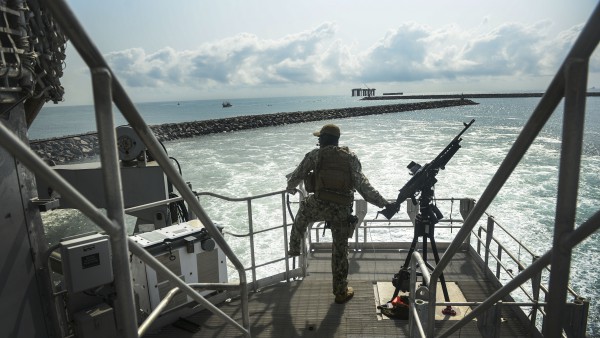
Embarked Security Team (EST) watchstander on the Military Sealift Command’s Expeditionary Fast Transport (T-EPF-1) in Sekondi, Ghana, Feb. 14, 2015 (US Navy photo).

Given generally-accepted views of international law, what are the alternatives available to include naval auxiliaries as offensives nodes in a distributed lethality regime? A handful of warships in the U.S. Navy, including USS Ponce (AFSB(I) 15), two flagships, and submarine tenders, feature a hybrid crewing model. These ships are commanded by a commissioned naval officer, though their navigation and engineering functions are primarily conducted by CIVMARs. This hybrid crewing approach enables them to conduct or command offensive operations in accordance with international law. Implementing this approach on a wider scale would require the reclassification of armed CLF ships to USS and the introduction of permanent Navy crews, an option not necessarily supported by today’s manpower budgets.

Embarking military detachments to operate defensive and offensive weapons might be another acceptable alternative. Over the past few decades, the combat logistics force has transitioned from USS ships, to USNS ships embarking military detachments (MILDETS) run by a junior surface warfare officer, and now to primarily USNS ships with no MILDETS. When embarked, MILDETS mostly handled command and control (C2) functions. Many of these roles have been absorbed by CIVMARS, but others, like operating self-defense weapons, are still supported by embarked Navy security teams. It’s possible that arming a CLF ship and operating its weapons systems with a MILDET, without reclassifying it as USS could put a ship’s status as naval auxiliary in jeopardy during hostilities. However, like merchant shipping that was targeted during the World Wars, that becomes largely an irrelevant academic argument once ordnance starts flying and logistics ships become primary targets themselves.

In an era of declining Navy end strength and increasing personnel costs, it is no longer fiscally prudent to assign full time military detachments to every ship that might require one in wartime.  The Navy’s reserve component (RC) provides a feasible C2 alternative which can be surged forward during contingency operations, while meeting legal and operational requirements for offensive operations. In recent years, military detachments for theater security cooperation missions onboard MSC ships have been created ad hoc from cross-decked active duty Sailors or sourced from existing staffs such as Destroyer Squadrons. In the event of a major contingency, it is likely that these staffs will be tied up with their primary missions and unable to dedicate manpower to supporting auxiliary C2 requirements. In recognition of these demands, the Military Sealift Command recently established a dedicated Navy Reserve unit designed to provide C2 elements for MSC ships involved in non-logistics missions. This nascent capability has been demonstrated with embarked detachments onboard various MSC ships during fleet exercises and security cooperation missions.

The expansion of additional RC military detachments should be explored that support not only theater security missions, but future offensively-armed combat logistics force ships. The advantages of this capability residing in the reserve force are several: The first relates to cost.  On average, a part-time reservist costs the navy approximately one fifth of an active duty Sailor. In peace-time, reservists would train for the mission by embarking CLF ships to support weapons testing and fleet exercises, and surge forward if required for contingency missions.  Additionally, reserve Sailors, some of them with licensed merchant credentials themselves, have a strong knowledge of MSC ship unique operating procedures and understand how to integrate well with CIVMARs. The habitual relationships dedicated reserve units build with CIVMAR crews have proven valuable in other missions.

Regardless of whether the decision is made to increase the weapons capabilities of our Military Sealift Command ships, additional RC detachments would provide the legal and operational top-cover necessary to perform other traditional naval operations on these vessels in peace and war to include maritime security operations, mine-countermeasures, special operations direct action support, and amphibious raids.

Chris Rawley is a Captain in the U.S. Navy Reserve and serves as Commanding Officer for the Navy’s sole unit dedicated to providing command and control detachments aboard Military Sealift Command vessels. The opinions and views expressed in this article are those of the author alone and are presented in his personal capacity. They do not necessarily represent the views of U.S. Department of Defense, the U.S. Navy, or any other agency. 

[otw_shortcode_button href=”https://cimsec.org/buying-cimsec-war-bonds/18115″ size=”medium” icon_position=”right” shape=”round” color_class=”otw-blue”]Donate to CIMSEC![/otw_shortcode_button]

[1] The author is not an operational law attorney.  The reader is encouraged to seek out other legal interpretations.

Enabling Distributed Lethality: The Role of Naval Cryptology

Distributed Lethality Topic Week

By LCDR Chuck Hall and LCDR David T. Spalding

The U.S. Navy’s Surface Force is undergoing a cultural shift.  Known as “Distributed Lethality,” this strategy calls for our naval combatants to seize the initiative, operate in dispersed formations known as “hunter-killer” surface action groups (SAG), and employ naval combat power in a more offensive manner. After years of enjoying maritime dominance and focusing on power projection ashore, the U.S. Navy is now planning to face a peer competitor in an Anti-Access/Area Denial (A2AD) environment. Long overdue, Distributed Lethality shifts the focus to one priority – warfighting.  Far from a surface warfare problem alone, achieving victory against a peer enemy in an A2AD environment will require leveraging all aspects of naval warfare, including naval cryptology.

[otw_shortcode_button href=”https://cimsec.org/buying-cimsec-war-bonds/18115″ size=”medium” icon_position=”right” shape=”round” color_class=”otw-blue”]Donate to CIMSEC![/otw_shortcode_button]

Naval Cryptology has a long, proud history of supporting and enabling the Fleet. From the Battle of Midway in 1942, to leading the Navy’s current efforts in cyberspace, the community’s expertise in SIGINT, Cyber Operations, and Electronic Warfare is increasingly relevant in an A2AD environment. Led by Commander, U.S. Fleet Cyber Command/U.S. TENTH Fleet, the community is comprised of officers and enlisted personnel serving afloat and ashore and who are well integrated with the Fleet, intelligence community, and U.S. Cyber Command. Given its past history and current mission sets, naval cryptology is poised to enable distributed lethality by providing battlespace awareness, targeting support, and effects, in and through the electromagnetic spectrum and cyberspace.   

Battlespace Awareness

Battlespace Awareness, as defined in the Information Dominance Roadmap, 2013-2028, is “the ability to understand the disposition and intentions of potential adversaries as well as the characteristics and conditions of the operational environment.”  It also includes the “capacity, capability, and status” of friendly and neutral forces and is most typically displayed as a Common Operating Picture (COP).  To be effective, however, battlespace awareness must seek to provide much more than just a COP. It must also include a penetrating knowledge and understanding of the enemy and environment — the end-user of which is the operational commander. The operational commander must be able to rely on predictive analysis of enemy action in the operational domain to successfully employ naval combat power in an A2AD environment.  

Naval Cryptology has historically provided battlespace awareness through the execution of Signals Intelligence (SIGINT) operations.  During World War II, Station HYPO, located in Pearl Harbor and headed by Commander Joseph Rochefort, collected and decrypted the Japanese naval code, known as JN-25. Station HYPO’s exploitation of Japanese naval communications was sufficient to provide daily intelligence reports and assessments of Japanese force dispositions and intentions. These reports were provided to naval operational commanders, to include Admiral Chester W. Nimitz, Commander in Chief, U.S. Pacific Fleet and Commander in Chief, Pacific Ocean Areas. On May 13, 1942, navy operators intercepted a Japanese message directing a logistics ship to load cargo and join an operation headed to “Affirm Fox” or “AF.”  Linguists from Station HYPO had equated “AF” to Midway in March after the Japanese seaplane attack on Hawaii (Carlson, 308) and was thus able to confirm Midway as the objective of the upcoming Japanese naval operation.  Station HYPO was also able to give Nimitz the time and location of the Japanese attack point: 315 degrees, 50 nm from Midway, commencing at 7:00AM (Carlson, 352). This allowed Nimitz to position his forces at the right place, designated Point Luck, northeast of Midway, placing the U.S. fleet on the flank of the Japanese (Carlson, 354). Had Station HYPO’s efforts failed to provide this battlespace awareness, Admiral Nimitz would not have had enough time to thwart what might have been a surprise Japanese attack.  

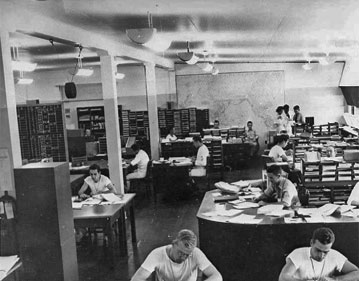
Photo shows work being done on the Japanese Naval code J-25 by Station HYPO in Hawaii. The Japanese order to prepare for war was sent in J-25 prior to the attack on Pearl Harbor, but decoders had been ordered to suspend work on the Naval code and focus efforts on the diplomatic code. Later, enough of J-25 was broken to be used as an advanced warning to the Japanese attack on Midway. NSA photo.

Victory at Midway was founded on the operational commander’s knowledge of the enemy’s force construct and disposition. Currently the product of both active and passive, organic and non-organic sensors, achieving battlespace awareness in an A2AD environment will require more emphasis on passive and non-organic sensors, and increased national-tactical integration in order to prevent detection and maintain the initiative.  The “hunter-killer” SAGs will be entirely dependent upon an accurate and timely COP – not just of enemy forces, but of dispersed friendly forces as well.  Just as battlespace awareness enabled triumph against the Imperial Japanese Navy, so too will it be the very foundation upon which the success of distributed lethality rests. Without it, the operational commander cannot effectively, and lethally, disperse his forces over time and space.    

Targeting Support

Another key enabler of the Surface Navy’s shift to the offensive will be accurate and timely targeting support.  Though support to targeting can come in many forms, as used here it refers to the triangulation and precision geolocation of adversary targets via communications intelligence and radio direction finding (RDF).  In an environment in which options to “fix” the enemy via radar or other active means introduces more risk than gain, RDF presents itself as a more viable option.  Indeed, the passive nature of direction finding/precision geolocation makes it particularly well suited for stealthy, offensive operations in an A2AD environment.  Leveraging both organic and non-organic sensors in a fully integrated manner — RDF will provide “hunter-killer” SAG commanders with passive, real-time, targeting data.     

Perhaps one of the best historical examples of Naval Cryptology’s support to targeting can be seen in the Battle of the Atlantic. The Third Reich had threatened the very lifeline of the war in Europe as Admiral Donitz’ U-boats were wreaking havoc on Allied merchant vessels throughout the war. Though America had begun intercepting and mapping German naval communications and networks as early as 1938, it was not as critical then as it was upon entry into the war. By the time America entered the war, the U.S. Navy’s SIGINT and cryptanalysis group, OP-20-G, boasted near 100 percent coverage of German naval circuits. Many of these circuits were used for high frequency (HF), long range shore-ship, ship-shore, and ship-ship communications. The ability to both intercept these communications and to locate their source would be necessary to counter the Axis’ attack. That ability was realized in an ever growing high frequency direction finding (HFDF) network.

The HFDF network originally consisted of only a handful of shore stations along the Atlantic periphery. Throughout the course of the war it grew to a rather robust network comprised of U.S., British, and Canadian shore-based and shipborne systems. The first station to intercept a German naval transmission would alert all other stations simultaneously via an established “tip-off” system.  Each station would then generate a line of bearing, the aggregate of which formed an ellipse around the location of the target.  This rudimentary geolocation of German U-boats helped to vector offensive patrols and enable attack by Allied forces — thus taking the offensive in what had previously been a strictly defensive game.  The hunter had become the hunted.        

German U-boats threatened the very lifeline of the war in Europe by wreaking havoc on Allied merchant vessels throughout the war.

Enabling the effectiveness of increased offensive firepower will require more than battlespace awareness and indications and warning.  Going forward, Naval cryptologists must be agile in the support they provide — quickly shifting from exploiting and analyzing the enemy, at the operational level, to finding and fixing the enemy at the tactical level. Completing the “find” and “fix” steps in the targeting process will enable the “hunter-killer” SAGs to accomplish the “finish.”

Cyber Effects

Finally, cyber.  Receiving just a single mention, the original distributed lethality article in Proceedings Magazine refers to the cyber realm as, “the newest and, in many ways most dynamic and daunting, levels of the battlespace—one that the Surface Navy, not to mention the U.S. military at large—must get out in front of, as our potential adversaries are most certainly trying to do.” Indeed, the incredible connectivity that ships at sea enjoy today introduces a potentially lucrative vulnerability, for both friendly forces and the adversary. Similar to battlespace awareness and targeting, Naval Cryptology has history, albeit limited, in cyberspace. Cryptologic Technicians have long been involved in Computer Network Exploitation (CNE) and the Navy was the first service to designate an enlisted specialty (CTN) in the cyber field. According to the FCC/C10F strategy, not only do they, “operate and defend the Navy’s networks,” but they also, “plan and direct operations for a subset of USCYBERCOM’s Cyber Mission Forces.”  The combination of history and experience in cyberspace, coupled with the FCC/C10F designation as the Navy’s lead cyber element, clearly places the onus on naval cryptology. As the Navy seeks to protect its own cyber vulnerabilities, and exploit those of the adversary, the execution of effective cyber operations by the cryptologic community will be critical in enabling distributed lethality.

Going Forward

Today, through a wide array of networked, passive, non-organic sensors, and integration with national intelligence agencies and U.S. Cyber Command, naval cryptology is well-positioned to enable distributed lethality by providing battlespace awareness, targeting support, and effects, in and through the electromagnetic spectrum and cyberspace. Yet, similar to the surface force, a cultural shift in the cryptologic community will be required. First, we must optimize national-tactical integration and better leverage and integrate off-board sensors. The uniqueness of the A2AD environment demands the integration and optimization of passive, organic and non-organic sensors in order to prevent counter-targeting. Second, we must prioritize the employment of direction finding and geolocation systems, ensuring they are accurate and sufficiently integrated to provide timely targeting data for weapons systems. This will require a shift in mindset as well, from simple exploitation to a focus on “find, fix.” Third, we must continue to lead in cyberspace, ensuring cyber defense in depth to our ships at sea while developing effects that effectively exploit adversary cyber vulnerabilities. Finally, naval cryptology’s role in distributed lethality cannot occur in a vacuum — increased integration with the Fleet will be an absolute necessity.

Distributed lethality is the future of Naval Surface Warfare — a future in which the cryptologic community has a significant role. In order to ensure the Surface Force can seize the initiative, operate in dispersed formations known as “hunter-killer” SAGs, and employ naval combat power in a more offensive manner in an A2AD environment, Naval Cryptology must stand ready to provide battlespace awareness, targeting support, and effects, in and through the electromagnetic spectrum and cyberspace.

LCDR Chuck Hall is an active duty 1810 with more than 27 years of enlisted and commissioned service.  The opinions expressed here are his own.

LCDR David T. Spalding is a  former Cryptologic Technician Interpretive.  He was commissioned in 2004 as a Special Duty Officer Cryptology (Information Warfare/1810).  The opinions expressed here are his own.

[otw_shortcode_button href=”https://cimsec.org/buying-cimsec-war-bonds/18115″ size=”medium” icon_position=”right” shape=”round” color_class=”otw-blue”]Donate to CIMSEC![/otw_shortcode_button]

Works cited:

Ballard, Robert. Return to Midway. Washington, D.C: National Geographic, 1999.

Parshall, Jonathan. Shattered Sword : The Japanese Story of the Battle of Midway. Dulles, Va. Poole: Potomac Chris Lloyd distributor, 2007.

Carlson, Elliot. Joe Rochefort’s War: the Odyssey of the Codebreaker Who Outwitted Yamamoto at Midway. Annapolis, MD: Naval Institute, 2011. Print.

On Naval History, Books, and Coal: An Interview with Rear Admiral James Goldrick, RAN(ret.)

By Christopher Nelson

A little over a month ago, I had the opportunity to sit down and talk to Rear Admiral James Goldrick, RAN(ret.), over lunch.  It was a fascinating conversation that covered books, naval history, and yes, even coal.  Admiral Goldrick is, in my opinion, that rare naval officer that combines a deep understanding of history with operational naval experience.   I hope you all enjoy the interview as much as I enjoyed talking with him. 

Admiral, thank you for taking the time to sit down and talk.  Starting off, who is a historian writing today that you admire? And why?

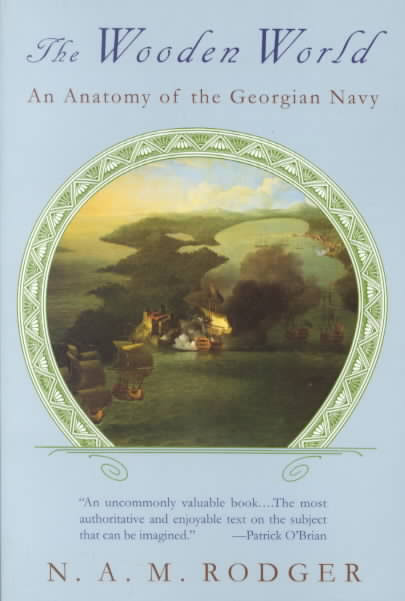
Nicholas Rodger.  Nicholas – apart from an extraordinary intellect, the ability to read in multiple languages, a wonderful literary style and a very strong work ethic – has the ability to look deeply, to look again, and to bring things together.  All that is combined with a deep understanding of how navies work.  He is currently writing a three volume history of the British Royal Navy.  The first two volumes (The Safeguard of the Sea and The Command of the Ocean) have already been published, and he is currently working on the third.  Now, it’s not in fact a history of the British Navy – it is a naval history of Britain.   I particularly admire Nicholas because he avoids the trap that naval historians often fall into, that is, of being too tunneled.  What he is trying to do is explain the role of the navy as a national institution and what its relationship was with the nation.  What is quite clear from his studies, for example, is that it can be strongly argued that the Royal Navy was a key trigger of the industrial revolution.  The things required for the Royal Navy – for example, long range distribution and preservation of food – helped with the ability to operate big industrial cities.  The mass production systems developed to run Nelson’s fleet – the manufacturing of blocks, and so on – were another contribution through the application of such ideas in the commercial sphere.  Like all the greatest historians, Nicholas can synthesize a great deal of information and bring it all together to tell a story.  What I can tell you, is that his third volume is late.  And the reason for that is that, while he always knew that he had to synthesize a massive amount of material for the nineteenth and twentieth centuries, he has also found that the canon of naval history in the modern era is superficial. When you start to dig into things, you often realize that is not the way it works, that is not the way it happened.

Talking earlier, you mentioned Rodger’s book The Wooden World, and strongly recommended it, and that the movie “Master and Commander” was in part based on that book, which is something I had not heard before.

One of the reasons I think it is really important, and a The Wooden Worldreally good book for naval officers to read, is because Master and Commander is slightly anachronistic.  What Nicholas is talking about in The Wooden World: An Anatomy of the Georgian Navy is the mid-18th  century Royal Navy, although Peter Weir and Russell Crane applied it to the service of the Napoleonic Wars as, arguably, did the author of the original series of Jack Aubrey novels, Patrick O’Brian.  Nicholas’ mid-18th century navy is one that is pre-ideological, and has a pre-rigid class organization. Some of this still applied in the first decade of the nineteenth century and this is where Master and Commander is right to show the legacy – even if the navy was changing.  There was in the navy of Nelson an officer who flew his flag at sea as, I think, a vice admiral, who had been flogged around the fleet as a naval seaman for desertion.  He was a real person and ended up as Knight Commander of the Bath – Sir William Mitchell.  Now, what I am getting at is the pre-ideological situation of circa 1760, in that you have a navy which is based on mutual confidence, mutual respect and professionalism.  We talk about patronage, and yes, if you were from the upper class and had good connections, it was much easier to get ahead.  But if you were incompetent, you generally didn’t get ahead, since if you are the First Lord of the Admiralty or a commander-in-chief, and you are promoting people who are idiots, your ships won’t last.  They’ll sink for a start just from the effects of weather, they won’t be able to capture the enemy, and so on.  However, late on in the eighteenth century, what you begin to get, and the American revolution marks the first rumblings of this (it really sets in after the French revolution), is that ideology and class and the fear of subversion become factors. In the navy that Nicholas Rodger talks about it was OK to mutiny in certain circumstances – if you haven’t been paid for instance.  If the food was bad.  And it is very interesting, in that navy, that if there were a mutiny for other reasons the Admiralty usually fired the captain, however harshly they dealt with the ringleaders.  Because, if there were a mutiny for other reasons than pay or food – or losing accustomed officers – the Admiralty’s assumption was it was resulted from a failure in leadership.  I hope you begin to see where I am coming from.  When we are in are a post-ideological, post-class system in 2016, what do we actually base our navy on?  We base it on mutual respect and professionalism and support for each other. And if there is a problem in a ship, how do the admiralties of the western navies now generally respond? They fire the captain.  In between, roughly from 1800 to 1990, when you have ideology, subversion and all the rest of it, there is always this idea that a mutiny will have external motivations.  In such circumstances, admiralties may have to support the command because they have to support the system. That’s not the case now. What I am seeing in The Wooden World that Nicholas Rodger is telling me about is a navy that I recognize, much more in certain ways than the navy of the centuries in between.
What advice would you give to a junior or senior officer on how to use history to think about our current challenges in the naval profession?

I like the aphorism “history doesn’t repeat itself, but it rhymes.”  You use history to identify the rhymes, to start identifying the questions that you should be asking.I’m particularly seeing rhymes when we look at the First World War and many of the challenges we face now.  And many of these challenges are caused by technological change, but the key shared issue is command and control. I think we are facing some real problems of a similar nature to 1914 at the moment.  We have got ourselves used to an uncontested electronic environment and a virtual reality which allows constant communication between commands and subordinates.  That creates two problems: the one that gets talked about most frequently is the “thousand mile screwdriver.”  But there is another problem that worries me even more and this is also a World War I problem – subordinates won’t make a decision; many would rather ask permission than seek forgiveness.  And that I think creates the prospect that if communications are cut off, operations will be paralyzed because people will wait and see if communications become reestablished rather than do anything themselves.  The direct parallel is the effect of radio on naval culture in 1914.  Before radio, it was inherently bipolar.  If you were in sight of the admiral you were doing exactly what the admiral directed.  But if you were not in sight of the admiral before radio, you knew what the intent was, and you went. As one British prime minister of the nineteenth century remarked, if he had a problem overseas, he’d send a naval officer. 

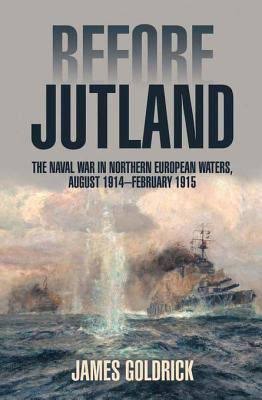
Your latest book is about The Battle of Jutland?

It predates Jutland; it’s about the opening months of the war and is called Before Jutland.  One of my argumentsBefore Jutland is that there were failures of leadership which were based on this “virtual unreality.” I can see why people are failing to exercise initiative which I am pretty sure wouldn’t have been the case to the same extent had there been no radio.  The problem was that, with the introduction of radio, when the practical problems and the associated concepts had still to be worked through – and the conceptual changes in particular were profound – detached commanders began to behave in the way that they would when they could actually see their boss. People acted as if they could see the admiral and get an immediate direction to go here or there, and they also assumed the admiral had the picture they have. 
To be fair, there was a whole raft of unrecognized problems of understanding on how people talked to each other remotely.  That was another art and another science that had to be learned, effectively from scratch.  For example, the first time the Royal Navy issued a format for radio reporting of an enemy contact there was no position.  Why?  Because when you are in a visual environment you are really only interested in two things: what the enemy bear and what they are steering. It is remote reports, with the much greater distances involved, that require much greater detail and precision. The fact was that the out-of-sight admiral did not have the full picture in 1914. Arguably, given transmission delays, deficiencies in reporting systems and the combined navigational errors both true and relative, he could never, at least in 1914-18, have that full picture.

You can also see in 1914 an essentially arithmetical approach to the correlation of forces.  What I mean by that: It is a simplistic approach, the idea that if someone has a long range and a longer gun, we can’t go for
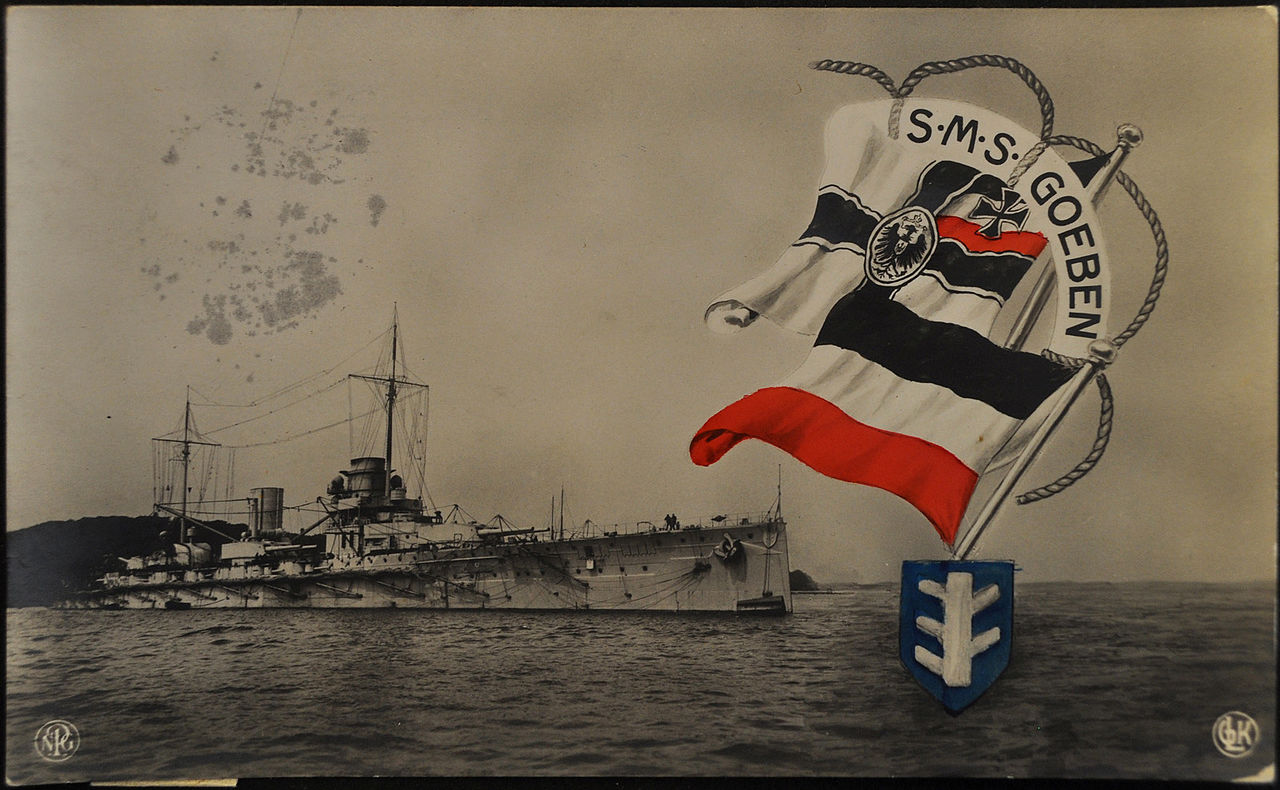
them. This happened during the chase of the German battlecruiser Goeben in the Mediterranean in August 1914 and it also happened more than once in the North Sea.  Sorry, but, as Nelson used to say, “something must be left to chance.” 

Großer_Kreuzer_SMS_Goeben
SMS Goeben on a postcard pre-World War I/Wikipedia

Another thing that is similar in 1914 to now, is how short of money the navies were at the time.  We talk about the great expansion, the arms race, and it’s absolutely true that enormous amounts of money were being spent. Both the Germans and the British had budgetary crises over such expenditure.  But the money is going to the battle fleets, not operations. The British are enforcing strict fuel economy.  Why?  Because they are building fifteen inch gun battleships which cost the earth, as does oil fuel.  There is a major cabinet crisis going on about the naval estimates and the Admiralty has to make economies where it can.  So you have limited time at sea and limited exercises in a period of very rapid technological change. You haven’t got the ability to exercise sufficiently, to experiment sufficiently, to become proficient enough to even understand the risks. Arguably, the Germans were even more constrained and thus even worse off.

Now to tie your earlier comments about the challenges of radio and command and control in World War I to today. Is flexibility, and the assumption that you are not going to have secure communications, those assurances, are those the going in conversation?

I’m old enough to remember having to navigate out of sight of land for extended periods of time with no artificial aids.  When people talk about the revolution in military affairs, I go, come on guys, the first naval combat data systems went operationally to sea about 1960.  The data links were running about 1961-1962.  The revolution in military affairs is not computer systems and it is not data links – it’s GPS.  Because GPS puts everybody in the same constant frame of reference.  Trust me.  Try doing a link picture before GPS.  Manually updating and watching your whole system slide sixty miles, and all of the other problems that occur if one ship fails in reporting or muddles its settings.  Same with joint fires; it’s all GPS.  OK.  So what happens if you are in a contested environment and your GPS doesn’t work?  I think we are coming to an era where we will be very vulnerable if we go on this way. The truth is that you won’t be able to do the things that you think you can.  

That similarity with the First World War – I mean – do you know what the most useful thing in navigation was in the First World War in the North Sea?  Depth soundings.  Bathymetry.  What did the British do?  What are they doing enormous amounts of from about 1908 on?  They are surveying the North Sea to get the depths and the currents. These are things we don’t think about anymore because we don’t have to.  But the trouble is I think we have to think about these things because the remote data sources will not necessarily be accessible in a contested electronic environment.  As I understand it, the United States Naval Academy is going back to teaching astro-navigation. 

What are the top three history books that you’ve read and that you would recommend to anyone?

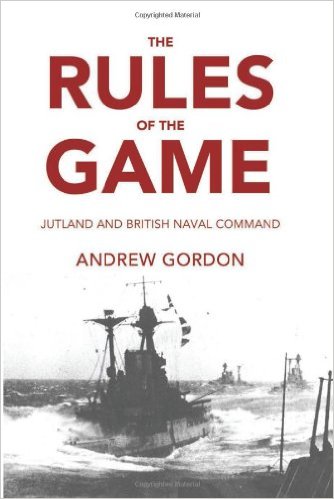
The Rules of the Game by Andrew Gordon is one of them.  IRules of the Game was really pleased to be sitting on one occasion with my chief of the navy and Vice Admiral Art Cebrowski. Both had read the book and were talking about the take-aways from The Rules of the Game.  Next, is Nicholas Rodger’s naval history of Britain that I’ve already mentioned.  My third book would probably be one of Norman Friedman’s works.  Which one would depend who you are.  For me personally, one of the highlights is his U.S. Destroyers book.  It encapsulates all the best that Norman does in terms of understanding how a design evolves, what the operational factors are, the financial factors, etc.  I would also say his book on interwar aircraft carrier development is really worth reading (American & British Aircraft Carrier Development 1919-1941).  See, one of the real problems is hindsight, and not understanding that things change and that they change in relation to each other.  What Norman conveys really well is that there are always changing variables.  He explains very well why the Brits got some things wrong in naval aviation, but often for very good reasons that were valid at the time.  

There is another wonderful history book, and it is sort of a joke about British cultural education.  It’s a book called 1066 and All That.  It is a satire of history.  It is written by two guys, who I think were middle and secondary school history teachers.  It’s called 1066 and All That 1066 And All Thatbecause the book is about the history that people remember, not what they were taught.  The authors called it that because they reckon that 1066 is the only date in British history that all Brits would remember from their school days.  And there is a great quote in the book about “The Irish Question.”  And it is worth thinking about: “The English never settled the Irish question because every time the English found the answer the Irish changed the question.” Naval policy and force structure development are a bit like that.

World War I produced some of the best poets in the English language.  Do you read poetry?

I do enjoy it.  I have a number of anthologies.  I particularly like Field Marshal Wavell’s anthology, Other Men’s Flowers.  If there is a poet of the navy, it’s actually FlowersRudyard Kipling.  Kipling wrote about the navy very sympathetically and very well.  Kipling is the poet of technology; he’s the poet of the engineers.  And he is also the poet of commanders – “The Song of Diego Valdez” and its examination of the “bondage of great deeds” is worth reading carefully.


Of course the naval experience was never the same as that of the army, and in many ways the education you needed in the navy was not the same in the army.  The navy didn’t get that sort of flower of a generation from liberal arts universities that the army did in 1914-18.  They didn’t get the Siegfried Sassoons, Robert Graves, and all the rest.  However, rather than poetry, when I lecture on leadership, particularly at the staff course to all three services, I suggest officers read these works: 

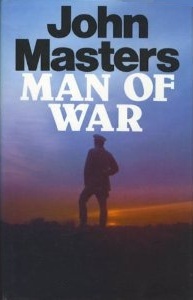
For the army, I suggest a book by John Masters.  He wrote Nightrunners of Bengal and other stuff.  Masters was an Indian Army lieutenant colonel at the age of thirty-two, and he earned a DSO and an OBE by the end of World War II, having been one of the leaders of Wingate’s Chindits in Burma.  I recommend his book called Man of War. It is set in pre-Dunkirk France.  It’s about a lieutenant colonel who ends up running a battalion group.  And it is based on history.  He faces off against Rommel.  Army officers like it because it is a great book on that level of command.

man of war

For the navy, I recommend The Cruel Sea by Nicholas Monsarrat.  He was a volunteer, a reservist, who started his war with complete inexperience as a sub-lieutenant and finished it commanding a frigate. So he understands his subject, leadership at sea in the Battle of the Atlantic. Another is Herman Wouk’s Caine Mutiny, which I would put in the same league.  It is the study of leadership in a slightly different context, but very valuable for all that.  Herman Wouk did the same as Monsarrat, he served in the Pacific War as a reserve officer.  I met him many years ago when he visited Australia and he told me that he had to write this book, but he was terrified how it would be received.  You know, that the US Navy (which he loved) would never talk to him. Instead what happened was that The Caine Mutiny was published and became a best seller very quickly.  And then for six weeks after it came out there was a deathly silence; none of his navy friends would talk to him.  Wouk was thinking “Oh God.”  Then someone asked the then-CNO publicly if he had read the book.  And the CNO said “It’s a great book!  I’ve met every one of the single people in that book, not on the same ship, but I’ve met all of them – it’s a great book.”  Herman Wouk told me he breathed a huge sigh of relief after hearing that.

Now, for air power, you should read the book Twelve O’clock High.  And actually, I recommend you watch the film as much as reading the book because the men who wrote the book wrote the film script.  And both of them had done full deployments in the US Army Air Corps in the bombing campaign over Europe.  In theory it is a high command novel, but in reality it isn’t, it’s about unit command in attrition warfare.

All these works convey a reality of the experience of command and war that in some ways expert fiction can do more easily than history.  If you read all of these books seriously, they’ll tell you the sort of things you should be thinking about. 

What is the best Nelson biography you would recommend? Other biographies you recommend?

Roger Knight’s The Pursuit of Victory: The Life and Achievement of Horatio Nelson.  Very good indeed; Head and shoulders above others.  I also think that Andrew Lambert’s Admirals book is very good – especially about his nineteenth century subjects.  I also recommend that every US naval officer read Admiral Elmo Zumwalt’s book On Watch.  Zumwalt made his mistakes as CNO from 1970 to 1974.  And of course he won’t admit many of them in his autobiography.  But, as the story of a genuine change effort as well as some interesting – and continuing – naval problems and how you deal with them, it is a very worthwhile read.  If you think of the subtext, and then you go and read other stuff, you can see he is sort of admitting that where he failed is engaging commissioned and noncommissioned leaders.  The US Navy was in a bad state in 1970 and something had to be done.  Navies can get disconnected from the culture of their nations.  This is not to do with standards or things like that.  It has more to do with cultural mores.  It’s the old thing about are you allowed to wear jeans as a liberty uniform?  If jeans are the accepted thing in society…well, then, yes, you should be.

What four people from history would you have at your dinner table?  And why?

If I start with Americans, William S. Sims. I suspect I would like to have dinner with Abraham Lincoln and Teddy Roosevelt.  And I admire Harry S. Truman – he and the other two presidents were all readers, too.  Next, I’d like to meet Nelson.  Whatever Nelson had, the really striking thing about him is that he had this extraordinary ability that if the enemy did anything wrong Nelson went straight at them.  Nelson led at all levels.  Everybody working for Nelson loved him.  And he was, by all accounts, a great host at dinner himself!

As a historian digging into the archives, and as you’ve studied history, what are those things that you’ve touched and read that reminded you why you love being a historian?

Yes, there is that moment when you find something that nobody else has looked at before.  When you find something, a particularly important piece of evidence…there is one I found about the Battle of the Dogger Bank in January 1915.  It was in Beatty’s flag commander’s recollections written within two days of the battle – and nobody had picked up on this.  They were written before they got back in harbor.   There is a key narrative there about one vital tactical decision in the battle.  And if you read this you understand very differently why and how everybody else reacted.  

Another thing I ended up getting heavily involved in when doing research for World War I, was coal.  Coal turns out to be fundamental.  I ended up writing an academic paper on it because it was so important (“Coal and the Advent of the First World War at Sea).  It’s all to do with the sort of coal you used.  First, it is about understanding how the ships worked.  You now we have this picture of it being the boilers and the stokers…well, that’s not the problem.  The problem is the bunkers, and what’s called trimming.  It’s getting the coal from the bunkers to the stoke hold, that’s the problem, not shoveling it into the boilers.  In fact, quite a lot of the deck crew had to support trimming operations.  And because of this, the British had to change their manning to support trimming.  In World War I, for all major units, the last 25% of the coal was inaccessible if they were doing any sort of reasonable speed.  They couldn’t get the coal from the bunkers to the stoke holds fast enough.  That problem started at 60% capacity with the battle cruisers.  

800px-British.coalfields.19th.century
British Coalfields in the 19th Century

Then you get into types of coal.  The right coal for a warship boiler is what’s called semi-bituminous coal.  There is one area which produces the best such coal in the world – and it’s a particular section of the Welsh coal fields.  There were 40 collieries which produced what was called “Admiralty coal.”  Now, outside of them, are what’s called “steam coal” areas.  It’s still pretty good coal, but the Admiralty coal burnt producing almost no smoke (and that’s really important for its effect on visibility in battle). Furthermore, the coal lumps were the right size, and they “cauliflowered” – as the Admiralty coal heats up the top breaks open which actually increases the surface area and increases the efficiency of combustion.  Admiralty coal is what the Royal Navy used.  Basically, the difference in coal performance was – and here I have the Australian figures – because for this purpose [powering warships] Australian coal was crap. When the battle cruiser Australia arrived in Australia in 1913, naturally enough, the Australian government wanted it provided with Australian coal rather than Welsh Admiralty coal because Welsh Admiralty coal was much more expensive.  Now, Australia, with 31 boilers on Admiralty coal alone, could do 26 knots.  Using Australian coal, with supplementary oil firing, on all boilers, she could barely do 15 knots and her range was reduced by 40%-50%; and in fact, even then she would start having incredible problems with the boilers choking…with ash and debris buildup. 

Circumstantial evidence supports my contention that the Imperial German Navy did their high-speed steam trials using Welsh admiralty coal.  Knowing the German Navy was a political institution and that its official history Der Krieg zur See was written with an eye to encouraging Germany to rearm, it is not surprising that this doesn’t get a mention. I think what happened is that they were embarrassed, because this is not something you can admit, you know, you did your power trials with your prospective enemy’s fuel source.  The German battle cruisers could do 28 knots during sea trials.  As far as I can figure in an operational environment, no German major unit never achieved more than 24 knots sustained.  And in every German operation the ships are complaining about the quality of coal, because they are using Westphalian coal.  So you have serious operational implications.  It’s actually when you look at this closely that it does matter.

Sir, thank you for your time.

Thank you.

Rear Admiral James Goldrick, RAN(ret.), AO,CSC joined the Royal Australian Navy in 1974 and retired in 2012 as a two star Rear Admiral. He is a graduate of the RAN College, the Harvard Business School Advanced Management Program, the University of New South Wales and the University of New England, and a Doctor of Letters honoris causa of UNSW. He commanded HMA Ships Cessnock and Sydney (twice),

Rear Admiral James Goldrick, RAN(ret.)

the RAN task group and the multinational maritime interception force in the Persian Gulf (2002) and the Australian Defence Force Academy (2003-2006 and 2011-12). He led Australia’s Border Protection Command (2006-2008) and the Australian Defence College (2008-2011). He is a Fellow of the RAN’s Sea Power Centre-Australia, a Non-Resident Fellow of the Lowy Institute for International Policy, Adjunct Professor of UNSW at ADFA and SDSC at The Australian National University and a Professorial Fellow of the Australian National Centre for Ocean Resources and Security. In the first half of 2015 he was a Visiting Fellow at All Souls College in the University of Oxford. James Goldrick’s books include: The King’s Ships Were at Sea: The War in the North Sea August 1914-February 1915 and No Easy Answers: The Development of the Navies of India, Pakistan, Bangladesh and Sri Lanka, and, with Jack McCaffrie, Navies of South-East Asia: A Comparative Study. His latest book is Before Jutland: The Naval War in Northern European Waters, August 1914 — February 1915. The comments above are the author’s own.

Lieutenant Commander Christopher Nelson, USN, is an intelligence officer stationed at the US Pacific Fleet Headquarters in Honolulu, Hawaii.  Lieutenant Commander Nelson is a graduate of the US Naval War College and the navy’s operational planning school, the Maritime Advanced Warfighting School in Newport, Rhode Island.  The comments above are the author’s own and do not necessarily reflect those of the US Department of Defense or the US Navy.