Category Archives: Global Analysis

A Geographical Breakdown of What’s Going on in the World

Dunsinane: Shattering the Vase

This article is part of a series hosted by The Strategy Bridge and CIMSEC, entitled #Shakespeare and Strategy. See all of the entries at the Asides blog of the Shakespeare Theatre Company. Thanks to the Young Professionals Consortium for setting up the series.

The Irish poet Thomas Moore wrote:

Like the vase, in which roses have once been distill’d — You may break, you may shatter the vase, if you will, But the scent of the roses will hang round it still.

So it is with David Greig’s masterful play Dunsinane, ostensibly a modern sequel to Shakespeare’s Macbeth, but in reality a morality play about the failures of a post-invasion military operation. The play lingers with you, not with the scent of roses, but with the putrid stench of a body decaying before your eyes, ears and nose. That is not a reflection of this stunningly brilliant play as written or acted. Rather, it is the grim reality of the catastrophic consequences when political and military leaders lack a vision prior to embarking on a major military operation.

While CIMSEC has elected to publish essays about the play within the context of military strategy, no essay should omit mention of the truly extraordinary performances of each cast member, especially Darrell D’Silva as Siward, Siobhan Redmond as Gruach (aka Lady Macbeth), and Tom Gill as the boy soldier aged by war. These actors and the entire cast brought an already superbly written play to life.

The opening scenes of Dunsinane  take place in the closing scenes of “Macbeth,” as Great Birnam Wood is marching toward the Scottish king’s castle.1 The English army is led by the English/Danish Earl of Northumbria, Siward. Joining his army are King Malcolm, who claims the Scottish throne himself, and Macduff, Thane of Fife, both of whom have been living in exile in England. Now they have persuaded a foreign army to seize power for them.

Dunsinane engages the audience to determine whether or not it might have been right to depose Macbeth. In the final act of the original play Siward repeatedly demonizes Macbeth as a tyrant – a word used by Siward’s son before he’s killed by Macbeth. In Dunsinane,  Macbeth is viewed by Gruach, admittedly the “fiend-like queen,” as a good king who ruled well for fifteen years. Siward’s victory already has a cost – the life of his son Osborn. The loss of his son is only Siward’s first lesson in what will be a costly and bloody war. The second is lost to him, and perhaps to anyone not paying close attention in Dunsinane.  The body of King Macbeth, the vanquished “tyrant,” is slowly carried on stage by a ceremonial guard with all the dignity of a ruler, his body cleanly covered by a flag. As it is carried off, the body of Osborn arrives covered in a cheap bloody shroud as Siward kneels over him. In death, Macbeth has been given legendary status among the Scots in their fight against the invading English; Osborn will quickly be forgotten by his contemporary English army and history.

Beyond the wars of lords and generals, the English footsoldiers also misunderstand their Scottish counterparts. Reaching the keep after losing twelve soldiers, more soldiers are injured by a single Scottish archer’s hopeless attack. “Why did he fight? Why did he not surrender?” one soldier asks the others. The playwright could have inserted the response, “Because some insurgents won’t quit or see reason,” but that would have been unnecessary.

Victorious in battle over Macbeth, the glory and the raison d’etre quickly evaporate. He is stymied almost as soon as the war is supposedly won. In one of the most demoralizing scenes, MacDuff tries to explain to the intelligent but ignorant Siward the map of Scotland, its factions, and to whom the factions are loyal (Malcolm or Gruach.) Siward has already failed in his mission as he has never seen them before. Why, one might ask, was this Earl not already familiar with the Scottish situation that is on his border. Siward, thinking only in terms of a short-term invasion, has failed to learn the geopolitical situation and plan for the potential consequences.

One might easily think of Iraq or Afghanistan as current examples, but there are micro-examples as well. Last summer I had a discussion with an individual about their pending posting on the other side of the world and started asking the questions Siward should have asked. Instead of thoughtful reflection, the individual’s response, that the study of history and politics had no value and that only tactical issues were important, further revealed how apathetic and unaware warfighters can be of the facets of war . The consequences of that particular posting have borne out the “Siwardness” of that individual’s abilities.

Dunsinane 2015 Press Image 9


Siward has no long-range plan to “win” though many in the play question how that might be defined. At first, he states that he has come to bring order. However, as Gruach argues, “We had peace until you came along.” Later, the Hamid Karzai-like Malcolm, draped in shimmering golden robes, and Gruach fight their civil war as Siward not only shifts his support from one to the other, but also the reason for the war. From bringing order, the insurgency begins to result in more and more English lives lost. Siward now proclaims the war is about justice. The soldiers, having prematurely cheered for their victory at the keep are now questioning why they are still there. With time on their hands, they begin taking local treasures or passing their time using a religious mural – and eventually a local girl – as target practice. This takes place below the permanently staged giant Celtic cross. Siward is oblivious to the activities of his soldiers and the local populace except for the mounting deaths, until he himself begins to take drastic and more costly measures against the Scots which, in turn, only results in a broader-based insurgency.

Eventually, Siward suggests that, “We will go to the clans and make a parliament,” an anachronism in age of Macbeth and Siward, but still foreign to the Scots in the play and one half-expects the term Loya Jirga to be used by the playwright. Although it appears a Siward-suggested agreement is reached, the factions quickly fall apart and the war is renewed. Both Gruach and Malcolm realize that the increasingly-fatigued Siward has no idea how to win or what “winning” is. They realize before he does that he must step aside for another leader. Eventually, Siward recognizes that the war is futile and hands over his sword to his successor, the pragmatic realist Lord Egham, as he personally delivers the bloody body parts that once were Gruach’s son and heir to the throne.

The ending of Dunsinane  begs for its own sequel. How would Egham continue the operations? With whom would he ally? How would he define victory? Would he bring the troops homes?

As this play demonstrates, wars aren’t won or lost by the bravery of soldiers; they’re won or lost by the political and military leaders who fail to understand history, politics, cultures, linguistics, and, with Dunisnane, plays. Dunsinane ought to be performed at every military academy and war college, the Pentagon, and for policymakers of any nation. But if history tells us anything, the audience would applaud loudly at the conclusion of the play, but the lessons of Dunsinane would soon be forgotten and the vases shattered once again.

Claude Berube teaches naval history at the United States Naval Academy and was an intelligence officer in the U.S. Navy Reserve serving twice overseas. He is the author of more than 50 articles and co-author three non-fiction books. He is the author of the Connor Stark novels published through Naval Institute Press (Syren’s Song, the sequel to The Aden Effect, will be published this fall.) The views expressed are his own and not those of the Department of the Navy.

1.  Thus fulfilling one of witch’s predictions foretelling of Macbeth’s eventual defeat.  . In  the only unfortunate scene, the audience laughs as the English army mobilizes in Great Birnam Wood, disguising themselves as trees and shrubs.  The way the scene is presented and the audience’s reaction undermine what is actually an effective means of military deception – how exactly do you hide an army just a few miles from the enemey’s keep?  It is a version of naval dazzle camouflage or of the efforts prior to D-Day to confuse the Nazis about the originating point of the real cross-channel invasion.
Members’ Roundup Part 15

Welcome back to another edition of the Members’ Roundup. This week we have a variety of topics covered by CIMSECians around the globe. From developments in anti-ship missiles to land reclamation in the South China Sea, here is a roundup of the must-read articles for the weekend.

Darshana Baruah returns this week with another post over at The Diplomat. As Darshana describes, ‘small islands dotting the Indian Ocean are emerging at the center stage of great power politics unfolding in the Indian Ocean Region.’ As China looks to expand its presence beyond the South China Sea, here is a list of islands that can support China support its aims. You can access the article here.

When Air-Sea Battle was publicly introduced into the nomenclature of strategic thinking there was a flurry of criticism, both from a diplomatic perspective as well as commentary on the effectiveness of the concept as a whole. With ASB’s redesignation as JAM-GC (Joint Concept for Access & Maneuvre in the Global Commons) Himanil Raina explains how the Army can contribute. You can access the article through the Centre for Land Warfare Studies.

China continues land reclamation in Johnson South Reef in the South China Sea, otherwise known as the Mabini Reef by the Philippines and Chigua Reef by China.

Mira Rapp-Hooper, Director of the Asia Maritime Transparency Initiative, continues to inform with an analysis of ‘before and after’ imagery of several reefs in the South China Sea. All of the land reclamation involved has not gone without notice and is publicly acknowledged by the Chinese. Confidence building measures (CBM) have been agreed to by the Chinese and the United States, aimed at reducing accidents and the risk of escalation. The goal of these measures, however, are wider reaching and are non-binding. As Mira explains, the best sign these CBMs are working may be if we don’t hear much about them at all. You can access her article here.

A Norwegian Coast Guard vessel patrols the Arctic.

James Stavridis, retired Admiral and Dean of the Fletcher Law School, recently returned from a voyage through the Drake Passage (between South America and Antarctica) and penned his thoughts about the state of the southern landmass. Antarctica continues with broad international consensus on its future and there is no conflict over the area. So what can be learned from this place and how can it be applied to the Arctic, where tensions are rising over claims and resources. You can access the article here at Foreign Policy.

Over at The National Interest Harry Kazianis begins a new series looking into the security competition that has been developing between the United States and China. With all the recent media attention on ISIS and the situation in Ukraine it is easy to miss the signs of the competition brewing between two of the world’s largest powers.

Lockheed Martin is currently working on a sub-launched variant of the LRASM

Over at The National Interest, Zachary Keck reports that the US Navy is seeking a submarine-launched stealth anti-ship missile. It is believed that the missile is based on Lockheed’s Long Range Anti-Ship Missile (LRASM). You can read more about this development here.

Finally, a quick plug for my own work for this week’s edition. Earlier this week the Australian Prime Minister, Tony Abbott released his National Security Statement. It certainly sets the tone for the current Government’s security agenda but it raises more questions, than answers, in the Australian Security debate. You can access my post here on the YAIIA Insights blog.

At CIMSEC we encourage members to continue writing, either here on the NextWar blog or through other means. You can assist us by emailing your works to dmp@cimsec.org.

An ASEAN Maritime Alliance?

The year 2014 brought new tensions to the South China Sea, particularly as Chinese authorities sought to establish a series of island-like structures in the midst of the disputed Spratly Islands. Such provocative actions, however, are unlikely to generate sufficient political will among the other countries of the region to establish a Political-Security Community under the auspices of the Association of South East Asian Nations (ASEAN) by the 2015 deadline. But were this collection of ten countries to pool their resources into a security community or even a security alliance, it would be an impressive force and a potential deterrent to aggression in the South China Sea.

In particular, it is worthwhile noting the relative strength of ASEAN coastal defence forces. Some member states, such as Indonesia, possess respectable ‘blue water’ navies, that is to say, they have larger vessels capable of operating in deep waters and engaging in long-range standing battles. Other ASEAN countries, such as the Philippines, have considerable ‘brown water’ navies,  forces consisting of small patrol boats which can cruise inland waterways and the shallow waters that weave between tight-knit island chains. But the varied nature of the waters disputed in the South China Sea particularly requires the flexibility offered by corvettes.

Generally, corvettes fall between the Royal Canadian Navy’s Halifax-class frigates and Kingston-class coastal defence vessels in size. But there is much debate as to what constitutes a contemporary corvette. For example, the Royal Omani Navy calls its Khareef-class vessels ‘corvettes’ even though the displacement of each vessel in the class is approximately 2,660 tons. Recent advancements in shipbuilding have also allowed the US Navy to introduce new vessels with substantial displacement but with shallower drafts, meaning the new USS Liberty can approach closer to coastlines than the similarly sized but older Oliver Hazard Perry-class frigates.

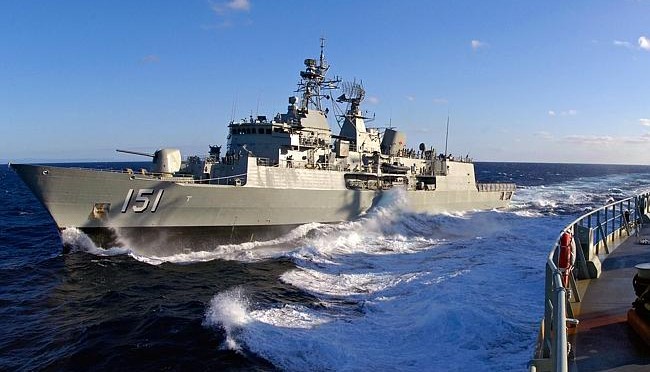
For the purposes of this analysis, only those vessels with a displacement greater than 100 tons but less than 1,700 tons will be considered corvettes. China’s maritime forces, the People’s Liberation Army Navy (PLAN),  has a substantial number of vessels in this range deployed to Hong Kong and a network of naval bases off the South China Sea. 12 Jiangdao-class corvettes (1,440 tons) are the workhorses of this maritime presence in the region and China may possibly add 3 more vessels of this class by the end of 2015. Beyond the Jiangdao-class corvettes, PLAN’s southern presence includes six Houjian-class missile boats (520 tons) and approximately 80 other missile boats and gunboats of various classes and ranging in displacement from 200 to 480 tons each. This vastly exceeds the quantity and quality of vessels any individual Southeast Asian country could bring to bear in a conflict. But ASEAN’s combined maritime forces could meet the challenge presented by a limited PLAN offensive.

Brunei in particular has emerged as a promising new maritime actor in the region, even actively participating in the 2014 edition of the Rim of the Pacific Exercise (RIMPAC). The Royal Brunei Navy acquired four specially built Darussalam-class offshore patrol ships (1,625 tonnes) from the German shipbuilder Luerssen-Werft, which replaced Brunei’s previous coastal defence workhorse, the Waspada-class fast attack craft (200 tonnes). The Waspada-class vessels have since been decommissioned and donated to Indonesia to be used for training purposes. The introduction of the Darussalam-class greatly upgrades Brunei’s defence capabilities and it will be of interest for Southeast Asian observers to see how Brunei further pursues the modernization of its forces.

The Republic of Singapore Navy has much in the way of heavier frigates and submarines to defend its unique position by the Strait of Malacca, one of the world’s most significant shipping routes. Its corvette-like vessels are also impressive, six Victory-class corvettes (600 tonnes) and 12 Fearless-class offshore patrol ships (500 tonnes), but they are certainly not as new as some of the vessels boasted by Singapore’s neighbours. The Victory-class was acquired in 1990-1991 while the Fearless-class was introduced between 1996 and 1998. Therefore, it will also be of interest to see whether Singapore seeks to obtain any newer vessels which can serve as a bridge in capabilities between the Victory-class corvettes and the heavier Formidable-class frigates.

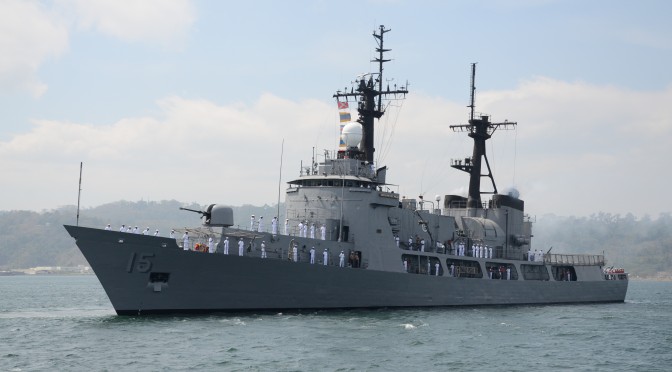
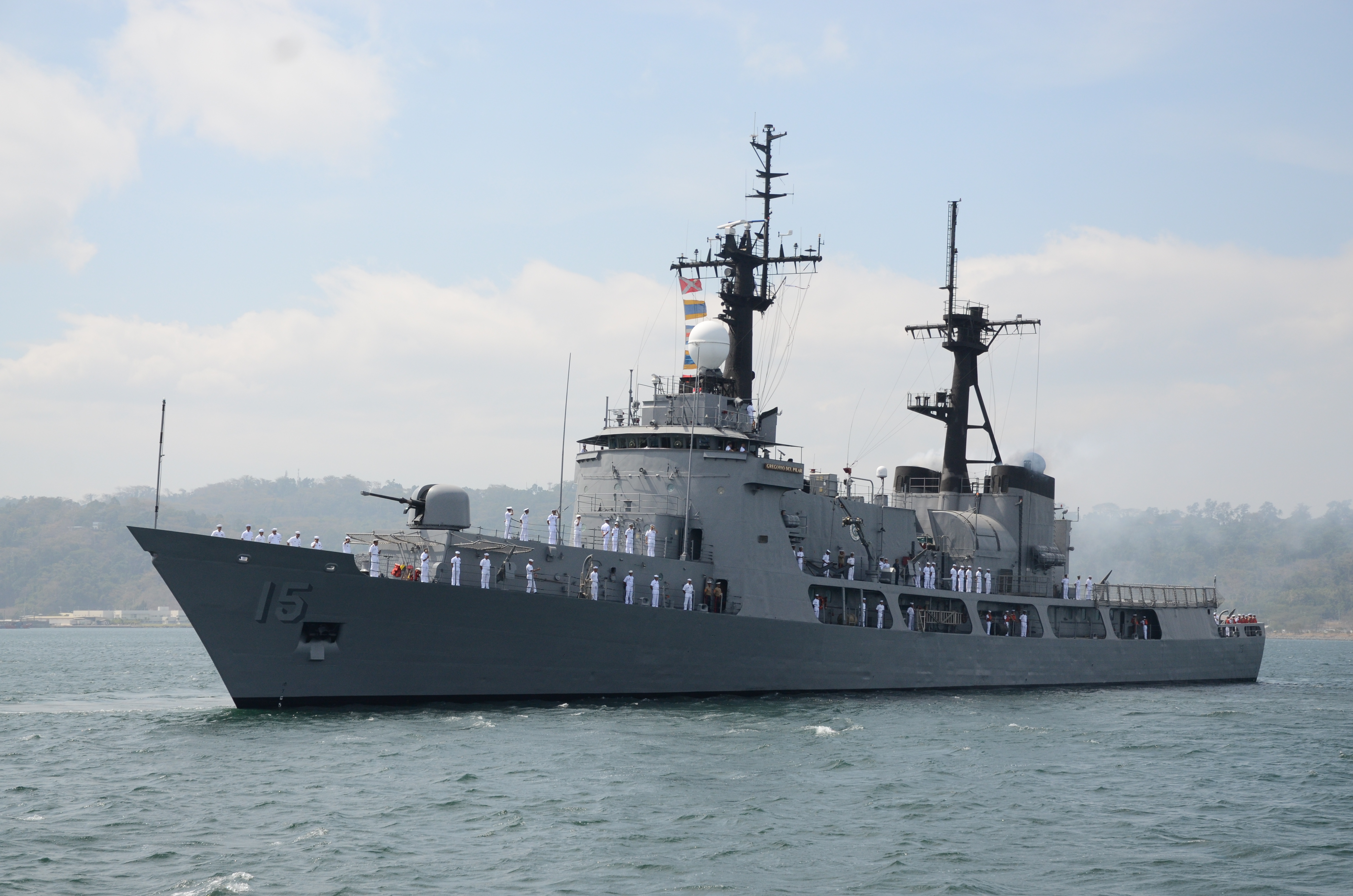
dsc_5220It is Thailand, the Philippines, and Indonesia that boast the largest complements of corvettes in the region, however. The Royal Thai Navy’s coastal defence is led by two Tapi-class corvettes (1,200 tons) and two Pattani-class offshore patrol ships (1,460 tons), which are joined by two Ratanakosin-class corvettes (960 tons), three Khamrosin-class corvettes (630 tons), three Hua Hin-class patrol boats (600 tons), six PSMM Mark 5-class patrol boats (300 tons), and 18 smaller patrol boats and fast attack boats of varying capabilities but all rather aged. The Philippines and Indonesia both have vast island chains within their respective territories, requiring corvettes and smaller patrol vessels just as much for counter-trafficking and counter-piracy operations as for countering conventional maritime forces. The Philippine Navy possesses one Pohang-class corvette (1,200 tons), two Rizal-class corvettes (1,250 tons), nine Miguel Malvar-class corvettes (900 tons), and three Emilio Jacinto-class corvettes (700 tons). Indonesia tops out ASEAN’s array of corvettes with three Fatahillah-class corvettes (1,450 tons), 16 Kapitan Patimura-class corvettes (950 tons), and 65 other missile boats and gunboats with a displacement of approximately 100-250 tons.

Yet it is unclear how much of their forces Indonesia or the Philippines would be able to deploy in the midst of a South China Sea conflict. As mentioned previously, many of these vessels have been used practically as inland patrol vessels. There are also some potential weak links in the chain should ASEAN establish some form of formalized maritime alliance. The Royal Malaysian Navy only offers four Laksamana-class corvettes (675 tons) and an array of 16 smaller missile boats and gun boats that could generally only be used to harass Chinese forces. Burma certainly has an impressive force in its own right – consisting of three domestically produced Anawratha-class corvettes (1,100 tons), six Houxin-class missile boats (500 tons), 10 5 Series-class missile boats (500 tons), and 15 Hainan-class gunboats (450 tons), but the military junta has already demonstrated that it will remain aloof from territorial disputes in the South China Sea and generally supports China’s policy toward Southeast Asia.

The Royal Cambodian Navy is in shambles, consisting solely of five outdated Turya-class torpedo boats (250 tons), five Stenka-class patrol boats (250 tons), and a lone Shershen-class fast attack boat (175 tons). But Cambodian authorities would be just as disinclined to engage in defence sharing as their Burmese counterparts. During Cambodia’s 2012 ASEAN chairmanship, Cambodian officials consistently interfered in efforts by other ASEAN member states to reach a common position on the South China Sea’s territorial disputes. Given the understanding on security issues shared between Cambodian and Chinese officials, as well as China’s status as Cambodia’s largest source of foreign investment and aid, it is apparent that Cambodia has relatively no need for the security guarantees ASEAN could provide as a regional counter-balance to China.

Vietnam is the unpredictable factor in the region. The Vietnam People’s Navy has a few corvettes of its own, including a Pauk-class corvette (580 tons), eight Tarantul-class corvettes (540 tons), and 23 patrol ships with displacements ranging from 200 to 375 tons. The Vietnamese government has also ordered two more TT-400TP gunboats (450 tons) from domestic shipbuilders with delivery expected in late 2015 or early 2016. This leaves Vietnam with a force perhaps not as sizable as that of Indonesia or the Philippines but with greater capacity to intervene should China seek to settle territorial disputes with Vietnam by force.

As Malaysia will hold the 2015 Chairmanship of ASEAN, the prospects for a maritime force in support of the bloc’s proposed Political-Security Community will depend to some degree on whether Malaysian officials will be willing to show leadership. If Malaysia looks to acquire new vessels and insists on placing maritime security on the agenda of upcoming ASEAN meetings, some arrangement could be struck by the end of the year. But this will require artful diplomacy, especially in the face of Burmese and Cambodian opposition. With Malaysian officials speaking predominantly about the need for a single market in the region and promoting a conclusion to negotiations regarding the Regional Comprehensive Economic Partnership, such a drive for maritime security may not be forthcoming.

Paul Pryce is a Research Analyst at the Atlantic Council of Canada. His research interests are diverse and include maritime security, NATO affairs, and African regional integration.

This article can be found in its original form at the  
NATO Council of Canada and was republished by permission.

A2AD Since Seventy-Three

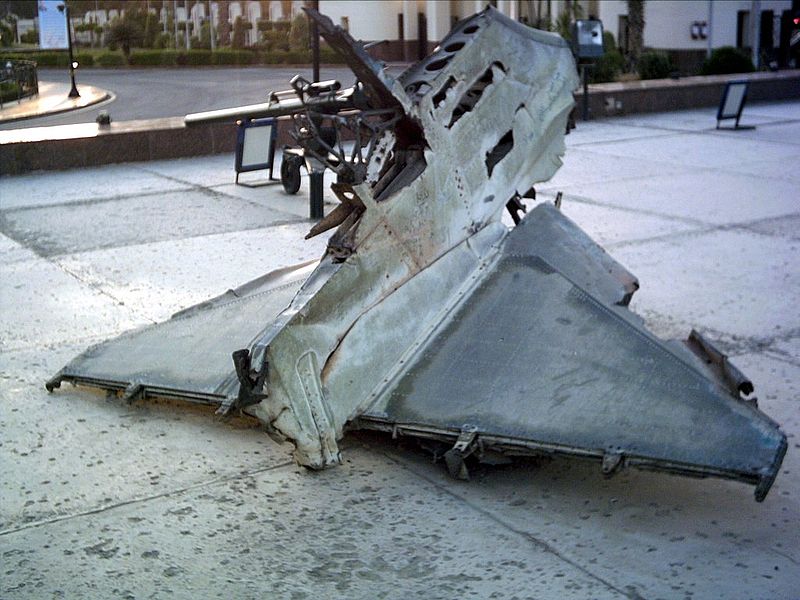
Wreckage of a Destroyed Israeli Plane (Wikimedia Commons)

As part of the run-up to #CFAR15 on Thursday, we asked those who received the most votes but are unable to attend to provide some thoughts and updates on their articles to share with our readers, along with the original, most-popular pieces of the past year:

LCDR Mark Munson: This piece was originally published as part of “Air-Sea Battle Week.”  I chose to not write directly about the Air-Sea Battle (ASB) Operational Concept (or China) because I had no particular interest in ASB.  I also was working at OPNAV at the time, and though I had no involvement or even any particular knowledge of ASB, I did not want to give the false impression that I had any insight into the U.S. Navy or Air Force efforts in support of that “Operational Concept.”

Of course since then the Air-Sea Battle office and concept is gone, recently subsumed into the larger Joint Concept for Access and Maneuver in the Global Commons (JAM-GC). JAM-GC may prove to be more successful than ASB in terms of facilitating the procurement of technologies that counter Anti-Access/Area-Denial (A2AD) capabilities. However, since I wrote this article the conventional wisdom regarding the pursuit of A2AD by China has also been challenged.  In the Winter 2015 issue of The Washington Quarterly, M. Taylor Fravel and Christopher Twomey argue that “counter-intervention” is not the cornerstone of Chinese military strategy and that any Chinese emphasis on  fielding A2AD capabilities are driven primarily to equip it  for “a potential conflict over Taiwan.” (Full disclosure: Twomey is a former professor of mine)  In fact, Fravel and Twomey argue that the focus on A2AD may the development of U.S. strategy and future weapons.

Regardless of whether and/or why China is developing the a significant A2AD capability, I think the thesis of my argument below is still sound. The notions behind A2AD or “Counter-Intervention” are not new, as militaries have attempted to develop stand-off weapons that deny maneuver to their enemies on the battlefield since the dawn of warfare. This article could just have easily been written about English and Welsh longbowmen  at Agincourt as the Egyptians in Sinai in 1973.  


The threat posed by Anti-Access/Area-Denial (A2AD) capabilities is at the core of the the U.S. Navy and Air Force’s Air Sea Battle (ASB) operational concept.  However, A2AD weapons are not new,  in particular playing an important role in the 1973 Yom Kippur War.

A2AD and the ASB Concept

The ASB operational concept defines A2AD capabilities as “those which challenge and threaten the ability of U.S. and allied forces to both get to the fight and to fight effectively once there.”  One of the main capabilities that ASB has been established to counteract and mitigate against is the “new generation of cruise, ballistic, air-to-air, and surface-to-air missiles with improved range, accuracy, and lethality” that are increasingly available to states around the world.  Figuring out ways to operate in a world in which missiles are easy to acquire and operate is extremely important to the U.S. military, since A2AD weapons “make U.S. power projection increasingly risky, and in some cases prohibitive,” threatening the very foundation upon which the ability of the U.S. military’s ability to operate at will across the globe rests upon.

Missile Warfare in the Middle East

Using A2AD weapons, particularly surface-to-air missiles (SAM), surface-to-surface missiles (SSM), and anti-ship cruise missiles (ASCM), to conduct a form of asymmetric warfare is not a new idea.   In particular, the use of missiles to counteract an enemy’s superiority in the air or on the ground was very much a part of Soviet doctrine by the 1960s.  To protect against the U.S. air campaign during the Vietnam War, Soviet missiles and personnel were extensively used by North Vietnam.  Perhaps the best example of A2AD in action, however, was the Soviet-enabled missile campaign waged by Egypt against the Israeli military during the 1973 Yom Kippur War (also known as the Ramadan War or October War).

The use of missiles formed an essential part of the plans of Egypt and Syria to win back the territories lost so precipitously during the 1967 Six Day War.  In his book the Arab-Israel Wars, historian and former Israeli President Chaim Herzog noted that:

“the Egyptians had meanwhile studied and absorbed the lessons of the Six Day War: with the Russians, they concluded they could answer the problem of the Israeli Air Force over the battlefield by the creation of a very dense “wall” of missiles along the canal, denser even that that used in North Vietnam.  The problem posed by Israeli armour was to be answered by the creation of a large concentration of anti-tank weapons at every level, from the RPG shoulder-operated missile at platoon level up to the Sagger missiles with a range of some 3000 yards and the BRDM armoured missile-carrying vehicles at battalion and brigade level.”

As part of Operation Caucasus, the Soviet Union “deployed an overstrength division” of air defense forces, with eighteen battalions each composed of SAM batteries, Anti-Aircraft Artillery (AAA), and teams equipped with Man-Portable Air Defense Systems (MANPADS).  Although technically identified as instructors, the Soviet troops actually “were dressed in Egyptian uniforms and provided full crewing for the deployed SAM systems.” Using lessons learned in Vietnam, the air defense forces along the Suez Canal were capable of  “relocating frequently and setting up ambushes for Israeli aircraft using multiple mutually supporting batteries.”  Syria also procured Soviet SAM batteries to support their part of the planned surprise attack.  In Herzog’s words, the overwhelming array of SAMs and AAA “would provide an effective umbrella over the planned area of operations along the Suez Canal” and “to a very considerable degree neutralize the effects of Israeli air superiority over the immediate field of battle.”

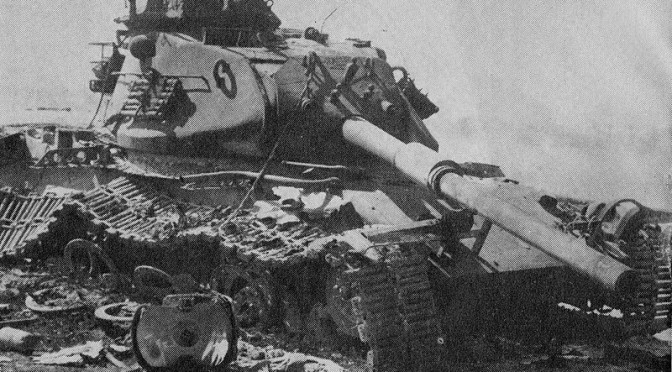
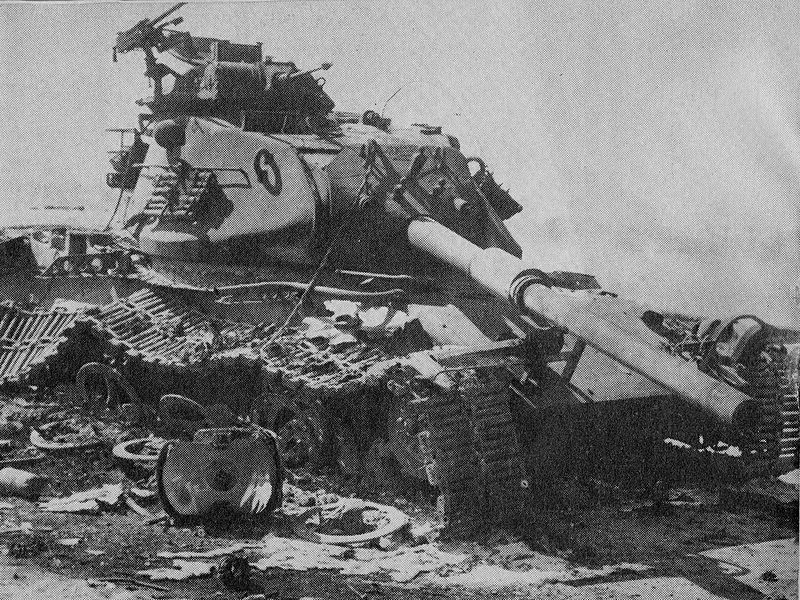
Destroyed Israeli Tank in the Sinai (Wikimedia Commons)


The Egyptians pursued a similar effort in their efforts to combat Israel’s ground forces.  Per Herzog, Israel’s “armoured philosophy” emphasizing “massive, rapidly deployed, armoured counterattack” would be faced by an Egyptian Army that had crossed the Suez Canal “equipped to the saturation point in anti-tank weapons and missiles in order to wear down the Israeli armour.” The Arab leaders were not just concerned with achieving missile dominance inside the expected battlefield along the canal, however, but also that Eyptian and Syrian aircraft could not match their Israeli counterparts “outside the range of missile surface-to-air defence systems.”  Therefore, the Soviets also provided surface-to-surface FROG and SCUD missiles capable of directly striking at Israel itself, with the hope that they could deter against Israel’s ability to attack their own capitals.

Egypt and Syria’s employment of A2AD weapons had a significant tactical impact on the war.  Estimates of the losses of Israeli aircraft vary.  Herzog stated that 102 Israeli planes were shot down (50 during the first three days), with half shot down by missiles and the other half shot down by AAA.  According to other articles, “Israeli public claims are that 303 aircraft were lost in combat,” crediting SAMs with shooting down 40 and “between four and 12 to Arab fighters.”  This means that although most Israeli aircraft may have been shot down by AAA, the “missile wall” can be credited with “denying the use of high and medium altitude airspace, driving aircraft down into the envelope of high-density AAA.”

One can argue that the lessons learned from employment of A2AD in 1973 can be overstated (after all, Israel eventually won the war, at great cost).  However, Herzog’s claim that it was “a war of great historic significance” is merited, as it “was the first war in which the various types of missiles – surface-to-surface, surface-to-air, air-to-surface, and sea-to-sea – were used on a major scale,” and that “the entire science of military strategy and technique has had to be re-evaluated in the light of” its lessons.  In particular, the Egyptians in 1973 executed what the Air-Sea Battle concept identifies as an important objective of A2AD, in which “an aggressor can slow deployment of U.S. and allied forces to a theater, prevent coalition operations from desired theater locations, or force friendly forces to operate from disadvantageous longer distances.”

Evolution of Air-Land Battle and the Influence of the 73 War

If the Army’s AirLand Battle doctrine of the 1970/1980s can be seen as an intellectual precursor to Air-Sea Battle in its emphasis on “degradation of rear echelon forces before they could engage allied forces,” then the link between the 1973 Yom Kippur War and Air-Sea Battle is clear.  General William DePuy was the first commander of the U.S. Army’s Training and Doctrine Command (TRADOC) upon its establishment in 1973.  In particular, “DePuy had taken an intense interest in the reform of tactics and training, in line with tactical lessons drawn from the 1973 Arab-Israeli War.”  During the tenure of DePuy’s successor, General Donn Starry, TRADOC formulated AirLand Battle and laid the doctrinal framework for the modernization of the U.S. Army and inter-service, joint operations.

What is the Answer?

How and why Israel won the war in 1973 entails a much longer discussion possible in this particular blog post.  The solution to A2AD that the Navy and Air Force  have proposed through Air-Sea Battle “is to develop networked, integrated forces capable of attack-in-depth to disrupt, destroy and defeat adversary forces.”  The reader can decide whether those are just buzzwords and whether the A2AD threat faced by the Israelis forty years ago was an easier challenge to  overcome than what could be faced by the U.S. military today and in the future  What is clear, however, is that the notion of A2AD is not new, and was very much an important part of Soviet-supported military operations during the Cold War.

Lieutenant Commander Mark Munson is a Naval Intelligence officer currently serving on the OPNAV staff. He has previously served at Naval Special Warfare Group FOUR, the Office of Naval Intelligence, and onboard USS ESSEX (LHD 2).  The views expressed are solely those of the author and do not reflect the official viewpoints or policies of the Department of Defense or the US Government.