Category Archives: Asia-Pacific

Analysis relating to USPACOM.

South China Sea arbitration: Beijing puts forward her own views: The Finale

By Alex Calvo

This is the final installment in a four-part series devoted to China’s 7 December 2014 document, putting forward her views on the Philippines’ international arbitration case on the South China Sea. Although Beijing is refusing to take part in the proceedings, as confirmed following the Court’s 29 October 2015 ruling on jurisdiction, by issuing this document, and communicating in other ways with the Court, the PRC has failed to completely stay aloof from the case. It is thus interesting to analyze China’s narrative as laid down in that document. Read Part One, Part Two, Part Three. 

[otw_shortcode_button href=”https://cimsec.org/buying-cimsec-war-bonds/18115″ size=”medium” icon_position=”right” shape=”round” color_class=”otw-blue”]Donate to CIMSEC![/otw_shortcode_button]

The South China Sea and the Arctic: contradictions in China’s posture? Beijing’s insistence on excluding non-littoral estates from the dispute furthermore clashes with Chinese policy in the Arctic, where the country seeks a voice, arguing that despite just being a (self-labeled) “quasi-Arctic state” it has a right to at the very least make its voice heard given that the region has an impact on its interests. Countries like India, Japan, and the United States, may well put forward similar views concerning the South China Sea, considering themselves to be “quasi-littoral” states given among others their dependence on Sea Lanes of Communication (SLOCs) going through it.

Incentives to delay negotiations. A number of contradictory arguments may be put forward concerning this. Those wishing to blame China may accuse Beijing of seeking to change facts on the ground first (by, for example, occupation of some features and the artificial expansion of others), before engaging in meaningful negotiations. They may also argue Beijing is waiting for the balance of naval power in the region to shift further in her favor, or for developments elsewhere in the world to weaken the resolve of non-regional actors to intervene. On the other hand, those seeking to blame the Philippines may put forward similar accusations, arguing that Manila wishes to rearm (with US and Japanese assistance) first before engaging in serious negotiations with China. These voices may also put forward the view that Manila first wishes to take the moral high ground (among other means by the international arbitration bid), secure stronger support by the United States, or draw in other interested parties like Japan. We can thus see how both sides have potential reasons not to seek a speedy start of bilateral negotiations.

China defends cooperation prior to delimitation, but it is Taiwan and Japan which have implemented the principle. Section IV is perhaps not so original, basically reiterating arguments already expounded in Section III. It still contains some paragraphs worthy of comment, though. In Paragraph 61 the text refers to the “Agreement for Joint Marine Seismic Undertaking in Certain Areas in the South China Sea” between China National Offshore Oil Corporation and Philippine National Oil Company, expanded in 2005 to “a tripartite agreement, with the participation of Vietnam Oil and Gas Corporation.” The text praises it as “a good example of the constructive efforts made by the States concerned to enhance cooperation and create conditions for a negotiated settlement of the disputes in the South China Sea,” stressing that the “maritime area covered by that agreement is within that covered in the present arbitration initiated by the Philippines.” Few would disagree that agreements like this do indeed offer an interesting path, allowing states party to a dispute to build trust while concentrating on the joint development and management of natural resources, leaving for later tricky questions of sovereignty. When we move from the realm of theory to that of practice, however, we find that such efforts involving China have not been successful. In the South China Sea, possible cooperation seems to have given way to violent competition, with oil rigs becoming “weapons” rather than symbols of cooperation. In the East China Sea, where a similar agreement was concluded with Japan, it later unraveled and has not been implemented. It is Taiwan, not China, that has actively pushed for joint management that could proceed while leaving sovereignty for later. This has resulted not only in President Ma’s East China Sea Peace Initiative, but in a fisheries agreement with Japan along these lines. Whatever the reasons, no similar agreement has been concluded and effectively implemented by the PRC.

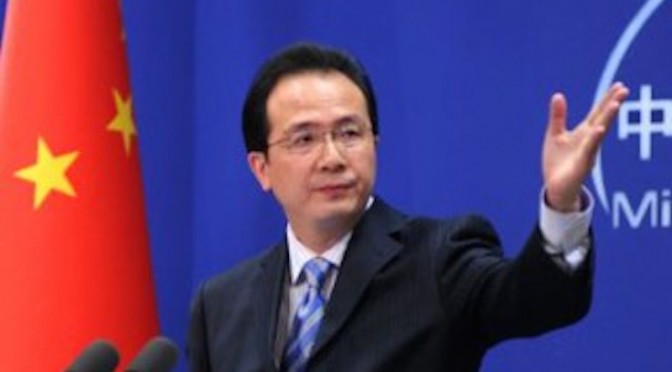
 8,- “Chinese Embassy to the Netherlands. While refusing to take part in the arbitration proceedings, China has regularly communicated with the Court, often through this Embassy.

Chinese Embassy to the Netherlands. While refusing to take part in the arbitration proceedings, China has regularly communicated with the Court, often through this Embassy.

Partial versus comprehensive solutions in territorial conflicts. It is interesting to note the position paper’s critique of Manila’s arbitration bid in Paragraph 68, which argues that “The issues presented by the Philippines for arbitration constitute an integral part of maritime delimitation between China and the Philippines” and that “The Philippines’ approach of splitting its maritime delimitation dispute with China and selecting some of the issues for arbitration, if permitted, will inevitably destroy the integrity and indivisibility of maritime delimitation and contravene the principle that maritime delimitation must be based on international law as referred to in Article 38 of the ICJ Statute and that ‘all relevant factors must be taken into account.’ This will adversely affect the future equitable solution of the dispute of maritime delimitation between China and the Philippines.” While the first sentence is just a reiteration, the second one touches upon a legitimate concern, given that any partial ruling runs the risk not only of being difficult to implement due to its non-comprehensive nature, but also of not being equitable for lack of consideration of certain factors concerning areas or aspects not included in the arbitration proceedings. This could be a reason to reject this approach. On the other hand, it could be said that history shows how countries often reach limited agreements, either because they are unable to successfully reach a comprehensive settlement, or because they prefer to start dealing with those issues where they either expect it to be easier to reach an understanding or which are more pressing. China is no stranger to this posture. The reference to equity though is important since an equitable settlement is often one involving tradeoffs, and such tradeoffs will often only be acceptable when covering a case’s full spectrum of issues.

The long shadow of history in China’s narrative against compulsory arbitration. In Section V the text demands full respect for China’s “right to freely choose the means of dispute settlement”, while defending the position that the “rejection of and non-participation in the present arbitration is solidly grounded in international law.” The stress on “consent” (76), while not amounting to any Chinese singularity, may also reflect the country’s experience with the so-called “unequal treaties.” Also important is the reference (76) to the “package deal” nature of UNCLOS, which is indeed the case, and as the text notes involved “extended and arduous negotiations” with regard to Part XV dealing with dispute settlement. The position paper insists (78) that the resulting “balance” in that Part was “a critical factor” prompting many countries to sign the convention, and again cites the Southern Bluefin Tuna Case, this time to reinforce the notion that compulsory arbitration should be restricted to cases where all parties agreed to it. The problem with this is that if all parties agree to arbitration, then there is no need for the procedure to be compulsory, and if compulsory proceedings are provided for, it is with a view to at least some cases where one or more countries may indeed oppose them. If “compulsory” arbitration could only move forward with the post-ratification consent of all parties involved, one could argue that there would be no need for UNCLOS to lay down areas where arbitration could be mandatory.

Abuse of right. Another legal principle that the text delves into (84) is that of “abuse of right”, in tandem with the above-mentioned “good faith.” These are general principles of law found, in some form or another, in most legal systems. The text cites Article 300 of UNCLOS, which lays down that “States Parties shall fulfill in good faith the obligations assumed under this Convention and shall exercise the rights, jurisdiction and freedoms recognized in this Convention in a manner which would not constitute an abuse of right,” adding that Manila has not done so by seeking to bypass Beijing’s refusal to engage in arbitration and existing agreements to settle the dispute by negotiations.

Conclusions. Beijing’s document, despite stressing that it is not a formal reply, systematically rejects all of Manila’s arguments, while summarizing China’s position. While China emphasizes the Philippines’ alleged promise to deal with the issue bilaterally, the text refers to treaties between other countries, mentions ASEAN, and touches upon the sensitive issue of Taiwan, in a reminder of how difficult it is to keep things bilateral in this corner of the world. Reading in between lines we can also see how history casts a long shadow over Beijing’s position, a position which is not always free from contradictions, for example when it defends the delay in opening up negotiations with Manila by stressing the complexities involved due to among others the large number of parties, while at the same time emphasizing her traditional stance that the dispute should be approached bilaterally. At the end of the day, it will be might (in a broad sense of the word, not necessarily limited to naval power, and in particular traditional lethal naval power), rather than right which will determine the fate of the South China Sea, but this does not mean that international law will not play a role, and hence the need to carefully follow developments in the international arbitration case initiated by the Philippines, together with rearmament and greater coordination among maritime democracies.

Alex Calvo is a guest professor at Nagoya University (Japan) focusing on security and defence policy, international law, and military history in the Indian-Pacific Ocean Region. A member of the Center for International Maritime Security (CIMSEC) and Taiwan’s South China Sea Think-Tank, he is currently writing a book about Asia’s role and contribution to the Allied victory in the Great War. He tweets @Alex__Calvo and his work can be found here.

[otw_shortcode_button href=”https://cimsec.org/buying-cimsec-war-bonds/18115″ size=”medium” icon_position=”right” shape=”round” color_class=”otw-blue”]Donate to CIMSEC![/otw_shortcode_button]

Common Public Good at Sea: Evolving Architecture in the Indo-Pacific Region

The following piece by guest author Captain Gurpreet S. Khurana, PhD, was originally posted by The National Maritime Foundation, and was republished with permission.  You can read it in its original form here. 

The concept of ‘Common Public Good(s) at Sea’ has lately gained much traction in the context of maritime safety and security in the Afro-Asian swath of the Indo-Pacific region.1 As the centre-of-gravity of world’s economic power shifts eastwards, the salience of this predominantly maritime-configured region is increasing, and the attendant emphasis on security and stability in its maritime domain.

[otw_shortcode_button href=”https://cimsec.org/buying-cimsec-war-bonds/18115″ size=”medium” icon_position=”right” shape=”round” color_class=”otw-blue”]Donate to CIMSEC![/otw_shortcode_button]
One does not recall coming across a precise definition of the phrase ‘Common Public Good(s) at Sea’ (CPGS). The closest one gets is to define it is through exemplification of a navy’s ‘constabulary’ and ‘benign’ tasks at sea, ranging from counter-piracy and counter-terrorism to search and rescue (SAR), and humanitarian assistance and disaster-relief (HADR). This essay attempts to understand CPGS as a concept, examine the regional trends, and extrapolate the emerging CGPS architecture in the Indo-Pacific region.

The Concept

Most of us are familiar to the term ‘public good(s)’ used in the economic context. It draws its genesis from the renowned economist Paul Samuelson, who defined it in his 1954 paper as:

“[goods] which all enjoy in common in the sense that each individual’s consumption of such a good leads to no subtractions from any other individual’s consumption of that good.”2

A ‘public good’ is, therefore, something that is a collective good sans exclusions. Furthelighthouser, it is not amount to a ‘zero-sum’ reckoning; in a sense that its consumption by one entity does not reduce its availability to other entities. In the maritime domain, a public good are best represented by ‘lighthouses’ that beacon weather-beaten seafarers to ports and safe waters.

Much of the world’s ocean realm wherein humans undertake multifarious maritime activities is ‘international medium’ not subject to the laws of any single country. The delivery of safety and security in such space of global commons thus becomes a logical extension of ‘public good’. Further, such ‘good’ could be extrapolated to the littoral. The watery medium provides transnational access to maritime security forces to undertake humanitarian missions during adverse contingencies on and off foreign shores. It is pertinent to note that while undertaking such benign tasks – whether at high seas or in the foreign littoral – the maritime forces perform a valuable function for their respective governments as ‘instruments of foreign policy.’ Given the above, in the contemporary context, CPGS may be defined as: ‘measures taken by the maritime security forces to meet their respective States’ international commitments towards facilitating good and lawful order in the maritime global commons, while also meeting their respective foreign policy objectives.’

It is necessary to note, however, that the maritime domain – represented by the seas and oceans of the world – constitutes the most unregulated and treacherous realm on Earth. To develop situational awareness in this domain, deliver safety and regulate activities therein presents a formidable challenge for maritime forces, including those belonging to major naval powers.

The Regional Context

In geographical terms, the Indo-Pacific region has a predominant maritime configuration. While geography has been a ‘constant’ in history, the so-called ‘rise of Asia’ and the attendant maritime-economic activity in the region has made the CPGS concept highly relevant to the regional countries and the extra-regional stakeholders. Traditionally – or at least in more recent times since the beginning of the post Cold War era – CPGS across the globe, and particularly in the Indo-Pacific region, has been provided by the maritime forces of the United States (US); at times, assisted by the forces of what the US calls, its “allies and partners.”

The regional countries, beset by the lack of adequate capacity – besides limited national objectives in terms of geographical scope – have been largely content with the arrangement, and have adopted a ‘free-rider’ approach to security. However, clearly, such a measure is not sustainable, neither for the regional countries, not for the global stakeholders. It is not easy – even for a superpower like the US – to deliver CPGS incessantly in the nearly ‘endless’ stretch of the world’s maritime realm. The military/ naval resources of the US have been increasingly stretched since the end of Cold War due to its increasing military-strategic commitments overseas. The geopolitical challenges added to the US resource ‘overstretch,’ best exemplified by the Proliferation Security Initiative (PSI) and the Regional Maritime Security Initiative (RMSI). This led the US Navy Chief of Naval Operations (CNO) to propound the concept of ‘Thousand-Ship Navy’ (TSN) in 2005.

Seeking support of allies and partners to partake the responsibility of CPGS, the TSN concept continued well into later years, though ‘TSN’ concept was later rephrased as the ‘Global Maritime Partnership’ (GMP) initiative, and the same was highlighted in the US Maritime Strategy document of 2007.

In the long run, the reliance of the Indo-Pacific region on a single power (or even on a group of ‘monolithic’ western powers) for providing CPGS may not be in the interest of the regional countries and global stakeholders alike, including the US. There are nascent indicators of a change, which augurs well for both categories of nations.

Emerging CPGS Architecture

Tier One

For the US, since the beginning of the current decade, delivery of CPGS in the Indo-Pacific has assumed greater salience than ever before in consonance with its national-strategic concept of ‘Re-balance to Asia.’   Strategy-2015 furthers the appeal for the partnership, with the ‘Global Maritime Partnership’ (GMP) – of the 2007 Maritime Strategy document – now rephrased as a “global network of navies” in the 2015 Maritime Strategy. The 2015 document effectively communicates to the potential partners the rationale for such “plug and play” cooperation with the US forces sans “commitment.”

While the US has been a ‘constant’ in terms of delivery of CPGS in the region, and it may continue to be the ‘lead actor’ for some time, it is unlikely to be the ‘only’ provider of ‘net security’8 in the longer run. The Indo-Pacific is witness to the emergence of new major and middle powers with increasing geopolitical, economic and military stakes in the entire Indo-Pacific region. For geopolitical and military-strategic reasons, China is likely to contest the primacy of the US in delivery of CPGS. Notably, however, the Chinese refer to CPGS differently, as ‘Military Operations Other than War’ (MOOTW), as indicated in China’s Defence White Papers since the 2012 document titled ‘The Diversified Employment of China’s Armed Forces.’

Tier Two

While the US-China dialectic may soon emerge as the first tier of the regional CPGS arrangement, other medium powers are likely supplement it and form the second tier. These include Australia, India and Japan: middle powers, all of whom have gained considerably from their alliance/ partnership with the US, but would like to form a concert to hedge against being entangled in the US-China tussle. Towards this end, analysts are increasingly promoting the idea of “middle power coalitions” to offset big-power rivalry in the Indo-Pacific.

Australia’s strategic focus has traditionally been on its eastern seaboard facing the Pacific. Lately, however, Canberra is increasingly looking westwards, akin to a “pivot to the Indian Ocean,” and reminiscent of events of the 1970s leading to Australia’s

Counter Piracy Operations

‘Two-Ocean Navy’ policy enunciated in 1986.12 Sam Bateman writes, “Australia’s approach to the Indian Ocean in recent decades might appear to have waxed and waned (but) it never withered away…I don’t see any prospect of the current ‘pivot’ withering away!”13

The second tier is likely to be reinforced by the European Union (EU). Through the EU Naval Force (EUNAVFOR) Operation Atalanta, the EU has already proved itself to be a reckonable actor in the Indian Ocean, and the EU Maritime Security Strategy (EUMSS) promulgated in June 2014 is likely synergise the role of EU navies to provide CPGS – and least in the IOR, if not further eastwards – through its “integrated approach to global maritime security.” The Strategy would support the role of France – the only major power besides the US that has maintained a continuous naval presence in the Indian Ocean – and would draw support from the re-establishment of the Royal Navy’s permanent presence east of the Suez after a hiatus of nearly 45 years.

 Tier Three

In due course, some other medium powers and other relevant countries are likely to share the stage by taking on the gauntlet of CPGS in the Indo-Pacific, forming the third tier of the regional CPGS architecture. The potential medium powers include Indonesia and Iran. Indonesia has enunciated for itself the sobriquet of “Porus Maritim Dunia” (global maritime axis) that envisions developing of the maritime power of the archipelagic nation to its full potential. Further, in consonance with its geo-strategic centrality, it seeks to shape events in the maritime space of the Indo-Pacific region. Although Jakarta has accorded priority to internal consolidation, it is likely to play a significant CPGS role in the region.

Iran could be an effective counter to the global threat posed by the Islamic State in Iraq and Syria (ISIS) and bears a high potential of contributing to stability in West Asia and maritime security in the western Indian Ocean. The international community needs to realize the potential of ISIS to disrupt the West Asian international shipping lanes (ISL) by targeting oil and gas tankers, particularly in the maritime choke-points. The Iranian Navy may be a bulwark against the ISIS in securing the global energy trade sourced from the Persian/ Arabian Gulf. The positive trends in P+1 negotiations with Iran over its nuclear programme represents an opportunity for the stakeholders to engage with Iran.

The other relevant powers that could potentially contribute to CPGS in the region are South Africa, Pakistan and a cohesive group of the Gulf Cooperation Council (GCC) countries. Their highly capable and professional maritime forces could contribute significantly to regional CPGS effort. However, the political leaderships in Islamabad and the GCC capitals need to realize the emerging imperative to look beyond their respective sub-regional rivalries.

Concluding Remarks

The postulated CPGS architecture for the Indo-Pacific region conforms to the so-called “inclusive approach to maritime security,” which has been the ‘mantra’ of all the multilateral security institutions of the region: the ASEAN Regional Forum (ARF), the ASEAN Defence Ministers Meeting – Plus (ADMM+), the Western Pacific Naval Symposium (WPNS), the Indian Ocean Rim Association (IORA) and the Indian Ocean Naval Symposium (IONS). However, in the longer term, a formulation of regional security and stability architecture on a select group of regional countries and non-resident powers does not auger well for regional and global security.

The CPGS effort would need to be pan-Indo Pacific and collective, and enmesh the IOR and Western Pacific spheres of multilateralism. While it may be too ambitious and unrealistic to expect ‘all’ regional countries to acquire ‘surplus’ capacity for CPGS, even if the smaller countries develop adequate capacity to police their respective maritime zones and areas of SAR responsibility, they could contribute significantly to the collective regional CPGS effort. The efforts of multilateral institutions, and major and middle powers would need to be directed towards such ‘capacity-building.’

Captain Gurpreet S Khurana, PhD is Executive Director, National Maritime Foundation (NMF), New Delhi. The views expressed are his own and do not reflect the official policy or position of the NMF, the Indian Navy, or the Government of India. He can be reached at gurpreet.bulbul@gmail.com

[otw_shortcode_button href=”https://cimsec.org/buying-cimsec-war-bonds/18115″ size=”medium” icon_position=”right” shape=”round” color_class=”otw-blue”]Donate to CIMSEC![/otw_shortcode_button]
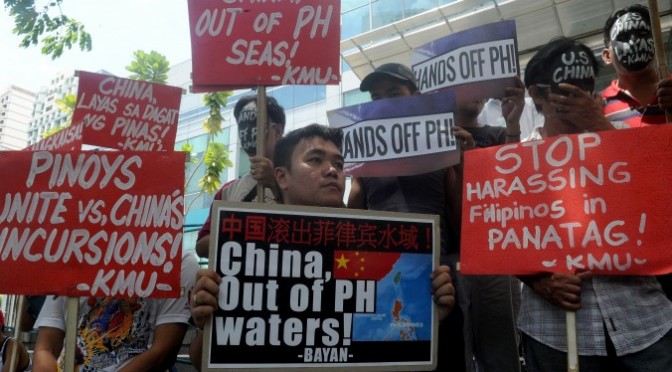
Notes:

1 The term ‘Indo-Pacific Region’ was first used in 2007 by the author. See ‘Security of Sea Lines: Prospects for India-Japan Cooperation’, Strategic Analysis, Vol 31(1), January 2007, pp.139-153.

[ii] Paul A. Samuelson , ‘The Pure Theory of Public Expenditure’, The Review of Economics and Statistics, Vol. 36, No. 4 (Nov., 1954), pp. 387-389

3 The Proliferation Security Initiative: Can Interdiction Stop Proliferation?’ Arms Control Association, June 2004, at https://www.armscontrol.org/act/2004_06/Joseph. Also see, Gurpreet S Khurana, ‘Proliferation Security Initiative: An Assessment’, Strategic Analysis, Vol. 28, No. 2, Apr-Jun 2004, p.237

[iv] Joshua Ho, ‘Operationalising the Regional Maritime Security Initiative’, IDSS Commentary (18/2004), 27 May 2004 at https://www.rsis.edu.sg/wp-content/uploads/2014/07/CO04018.pdf

[v] Address by the US Navy CNO Admiral Mike Mullen to the students and Faculty of the Naval War College, 31 August 2005 at the Naval War College Newport, R.I. See US Navy website at http://www.navy.mil/navydata/leadership/quotes.asp?q=11&c=2

[vi] ‘A Cooperative Strategy for 21st Century Seapower’, October 2007, at https://www.ise.gov/sites/default/files/Maritime_Strategy.pdf

[vii] ‘A Cooperative Strategy for 21st Century Seapower’, US Maritime Strategy, 2015. Also see, Gurpreet S Khurana, ‘Indo-Asia Pacific’ Explained: An Assessment of US Maritime Strategy 2015’, Web-publication of National Maritime Foundation (NMF), New Delhi, 21 August 2015, at http://www.maritimeindia.org/View%20Profile/635756366838030982.pdf

[viii] The concept of ‘net security’ is defined as “…the state of actual security available in an area, upon balancing prevailing threats, inherent risks and rising challenges in the maritime environment, against the ability to monitor, contain and counter all of these”. ‘Ensuring Secure Seas: Indian Maritime Security Strategy’, Integrated Headquarters, Ministry of Defence (Navy), 2015, New Delhi.

[ix] ‘The Diversified Employment of China’s Armed Forces’, Information Office of the State Council, The People’s Republic of China, April 2013, Beijing, at http://news.xinhuanet.com/english/china/2013-04/16/c_132312681.htm

[x] Rory Medcalf and C Raja Mohan, ‘Responding to Indo-Pacific rivalry: Australia, India and middle power coalitions’, Lowy Institute for International Policy, August 2014, at http://www.lowyinstitute.org/files/responding_to_indo-pacific_rivalry_0.pdf

[xi] Gurpreet S Khurana, ‘ AUSINDEX-2015: Australia ‘Pivots’ to the Indian Ocean’, Web-publication of National Maritime Foundation (NMF), New Delhi, 12 October 15, at http://www.maritimeindia.org/View%20Profile/635802023056774316.pdf

[xii] In the 1970s, Australia was wary of Soviet naval activity in the Indian Ocean, which led to the establishment of its lone naval base in west (HMAS Sterling)in 1978 and enunciation of ‘Two Ocean Policy’ in 1986, through which Canberra intended to relocate half of the Navy’s fleet to the Indian Ocean seaboard.

[xiii] E-mail communication with Commodore Sam Bateman (Retd.), Royal Australian Navy (RAN), 24 October 2015.

[xiv] ‘Mr. Modi’s Ocean View’, The Hindu, 17 March 2015, at http://www.thehindu.com/opinion/editorial/mr-modis-ocean-view/article7000182.ece

[xv] ‘Ensuring Secure Seas: Indian Maritime Security Strategy’, Integrated Headquarters, Ministry of Defence (Navy), 2015, New Delhi. For an analysis of the Strategy, see Gurpreet S Khurana, ‘Net Security Provider’ Defined: An Analysis of India’s New Maritime Strategy-2015’, Web-publication of National Maritime Foundation (NMF), New Delhi, 23 November, at http://www.maritimeindia.org/View%20Profile/635838396645834619.pdf

16 ‘Japan to reinforce SDF anti-piracy base in Djibouti for broader Middle East responses’, Asahi Shimbun, 19 January 2015, at http://ajw.asahi.com/article/behind_news/politics/AJ201501190036

17 ‘European Union Maritime Security Strategy’, Council of the European Union, Brussels, 24 June 2014, at http://register.consilium.europa.eu/doc/srv?l=EN&f=ST%2011205%202014%20INIT

[xviii] European Commission Press Release data base, Brussels, 6 March 2014, at http://europa.eu/rapid/press-release_IP-14-224_en.htm

[xix] In December 2015, Britain began construction of is new military base at Bahrain. ‘Work starts on new UK military base in Bahrain’, The Gulf News, 18 December 2015, at http://gulfnews.com/news/gulf/bahrain/work-starts-on-new-uk-military-base-in-bahrain-1.1610885

20 ‘Jokowi’s Inaugural Speech as Nation’s Seventh President’, The Jakarta Globe, 20 October 2014, at http://jakartaglobe.beritasatu.com/news/jokowis-inaugural-speech-nations-seventh-president/ Also see, Gurpreet S Khurana, ‘The Maritime ‘Rise’ of Indonesia: Indicators, Intentions and Inferences’, Web-publication of National Maritime Foundation (NMF), New Delhi, 16 Jan 2015, at http://www.maritimeindia.org/CommentryView.aspx?NMFCID=5381


South China Sea arbitration: Beijing puts forward her own views Part Three

By Alex Calvo

This is the third installment in a four-part series devoted to China’s 7 December 2014 document, putting forward her views on the Philippines’ international arbitration case on the South China Sea. Although Beijing is refusing to take part in the proceedings, as confirmed following the Court’s 29 October 2015 ruling on jurisdiction, by issuing this document, and communicating in other ways with the Court, the PRC has failed to completely stay aloof from the case. It is thus interesting to analyze China’s narrative as laid down in that document. Read Part One, Part Two. 

[otw_shortcode_button href=”https://cimsec.org/buying-cimsec-war-bonds/18115″ size=”medium” icon_position=”right” shape=”round” color_class=”otw-blue”]Donate to CIMSEC![/otw_shortcode_button]
Has Manila committed herself not to initiate compulsory arbitration proceedings? Section III largely consists of a long list of bilateral agreements and statements, and ASEAN documents, laying down commitments to settle disputes by negotiation and agreement, whose purpose is to prove that Manila is therefore “debarred from unilaterally initiating compulsory arbitration.” In the former category, the text cites among others (31) the “Joint Statement between the People’s Republic of China and the Republic of the Philippines concerning Consultations on the South China Sea and on Other Areas of Cooperation, issued on 10 August 1995” which contains “the principles that ‘[d]isputes shall be settled in a peaceful and friendly manner through consultations on the basis of equality and mutual respect’ (Point 1); that ‘a gradual and progressive process of cooperation shall be adopted with a view to eventually negotiating a settlement of the bilateral disputes’ (Point 3); and that ‘[d]isputes shall be settled by the countries directly concerned without prejudice to the freedom of navigation in the South China Sea’ (Point 8)” and (33) the “The Joint Statement” of 16 May 2000 whose Point 9 states that the two countries “agree to promote a peaceful settlement of disputes through bilateral friendly consultations and negotiations.”

Concerning China-ASEAN documents, the text stresses (35) the 2002 “Declaration on the Conduct of Parties in the South China Sea (‘DOC’),”whose Paragraph 4 reads “The Parties concerned undertake to resolve their territorial and jurisdictional disputes by peaceful means … through friendly consultations and negotiations by sovereign states directly concerned, in accordance with universally recognized principles of international law, including the 1982 UN Convention on the Law of the Sea.” The DOC is of particular interest, not only because it has also been signed by most coastal states in the South China Sea (although not by Taiwan), but because it has often been touted by observers and governments as proof that it was indeed possible to settle the status of the sea without resorting to war. Does this agreement close the doors to compulsory arbitration under UNCLOS? As often in the law, at least two different interpretations are possible. On the one hand, a literal reading of the quoted paragraph seems to restrict the avenues opened to coastal states, although the term “only” or words to that effect do not appear in that section (as China’s position paper openly acknowledges in its Section 40). On the other it could be argued that the reference to UNCLOS is in itself a door open to arbitration, since that treaty provides under certain conditions and limitations for this form of dispute settlement. An intermediate view could be that the DOS forces signatories to first resort to direct consultations and negotiations, with arbitration under UNCLOS as a last resort. Concerning this view, Manila argues that China has no intention to engage in meaningful negotiations, whereas Beijing says (45) that “the truth is that the two countries have never engaged in negotiations with regard to the subject-matter of the arbitration.” This is, at least to some degree, surprising, when we bear in mind the emphasis in the text on China’s commitment to negotiations. Given Beijing’s stress on bilateral negotiations, why have these have not even started with the Philippines? Not that they have not concluded, or progressed, but not even begun. Perhaps with such a question in mind, the position paper provides (47) some possible reasons, such as the fact that “the South China Sea issue involves a number of countries.” This is of course true, but by pointing it out as a reason not to have even begun negotiating with the Philippines, China is contradicting another pillar of its posture in the South China Sea: its insistence on bilateral, as opposed to multilateral, negotiations. One could thus argue that China cannot have its cake and eat it too. If the issue is complex because of the large number of actors involved, would a multilateral forum not be more appropriate? If so, why does Beijing insist on bilateral negotiations? And when someone like Manila argues these are leading nowhere, then the reply is that they have not even started because, among other reasons, of the large number of countries involved. There are of course powerful reasons why China may prefer a bilateral approach, but this illustrates how easy it is to fall into contradictions in the international arena, not something that affects just China of course.

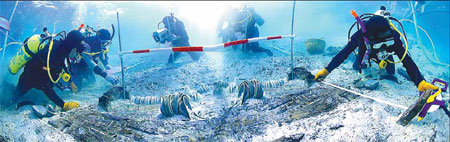
Chinese marine archaeologists working in the South China Sea in 2008. Archaelogy plays a key role in Beijing's narrative.
Chinese marine archaeologists working in the South China Sea in 2008. Archaelogy plays a key role in Beijing’s narrative.

With regard to the absence of an explicit exclusion of third-party settlement, which as pointed out the text acknowledges, China cites the “Southern Bluefin Tuna Case”where the arbitration tribunal stated that “the absence of an express exclusion of any procedure … is not decisive.” Two key words for China are to “agree”, which the text (38) explains often appears in bilateral communiques, and “to undertake”, which features (38) in Paragraph 4 of the DOC. China’s position paper stresses, citing the ICJ in Bosnia and Herzegovina v. Serbia and Montenegro, where the Court ruled that “[t]he ordinary meaning of the word ‘undertake’ is to give a formal promise, to bind or engage oneself, to give a pledge or promise, to agree, to accept an obligation. It is a word regularly used in treaties setting out the obligations of the Contracting Parties …. It is not merely hortatory or purposive.” For China, bilateral agreements and statements with the Philippines and the DOC are not separate realities, but (39) “mutually” reinforce “and form an agreement between China and the Philippines”, giving rise to “a mutual obligation to settle their relevant disputes through negotiations.”

The position paper underlines (50), as a further argument to prove that exchanges of views with the Philippines did not start in 1995, that it was not until 2009 that Manila abandoned claims in excess of UNCLOS. Concerning the doctrine of Estoppel, that is the ban on acting against one’s own acts, the paper rejects (51) Manila’s assertion that Beijing has incurred a “grave breach of the terms of the DOC,” preventing it from invoking Paragraph 4 “to exclude the jurisdiction of the Arbitral Tribunal”, dismissing it as “groundless.” The text considers this to be a “selective” resort to the DOC and a “self-contradictory tactic” amounting to a violation of “good faith.” It is true that a general principle of the law, also of international law, is that one cannot refer in isolation to a given excerpt from a rule or document. The problem is perhaps that the position paper overdoes this by next (55) referring to an alleged “current relationship of cooperation between China and the ASEAN member States in the South China Sea,” to which countries like Vietnam might not fully subscribe. The text (56) also argues that Manila’s resort to arbitration amounts to “running counter to the common wish and joint efforts of China and the ASEAN member States,” and here this is not something that can be so easily dismissed, since the Philippines has indeed been the only littoral state to try to resort to arbitration, although Vietnam and some other states, including non-littoral ones, seem to be at least providing a measure of support to Manila, although framed in terms designed not to overtly provoke China.

Lastly, the position paper argues (73) that when one state has issued a declaration in accordance with Article 298 of UNCLOS, excluding itself from compulsory arbitration in certain areas, another state cannot initiate proceedings arguing that they do not fall within the exemption, before first engaging in negotiations with the defendant state. The text says that otherwise Article 298 would be rendered “meaningless.” To reinforce this, the text adds (74) that this is the first such case, and that “Should the above approach be deemed acceptable, the question would then arise as to whether the provisions of Article 298 could still retain any value,” placing a question mark on “the declarations so far filed by 35 States Parties under Article 298.” Here we should distinguish the core of the matter from the procedural issues at stake. Even if it were to agree with Beijing on this point, the fact that the arbitration court will have to rule on the admissibility of the case and its own powers could be seen as a barrier to any attempt to institute compulsory arbitration in areas covered by an Article 298 exemption. Of course, the problem for the state sued is that in order to argue before the court that the latter should dismiss the case it would be necessary to appear before it, which is precisely what Beijing is bent on avoiding. Issuing this position paper is a way to make its views known, while avoiding this trap. As mentioned earlier, this can be interpreted in many ways. From the point of view of the rule of law and the progress of international law and tribunals, it can cut both ways. On the one hand, we could say that China’s (and Vietnam‘s) decision to address the PAC, despite not joining the proceedings, shows that these, and more generally international arbitration, cannot simply be ignored, whatever the protestations to the contrary. On the other hand, such moves may be seen as bypassing formal proceedings, and showing how imperfect the actual powers of international tribunals remain.

Read the next installment here. 

Alex Calvo is a guest professor at Nagoya University (Japan) focusing on security and defence policy, international law, and military history in the Indian-Pacific Ocean Region. A member of the Center for International Maritime Security (CIMSEC) and Taiwan’s South China Sea Think-Tank, he is currently writing a book about Asia’s role and contribution to the Allied victory in the Great War. He tweets @Alex__Calvo and his work can be found here.

[otw_shortcode_button href=”https://cimsec.org/buying-cimsec-war-bonds/18115″ size=”medium” icon_position=”right” shape=”round” color_class=”otw-blue”]Donate to CIMSEC![/otw_shortcode_button]
Communist China’s Approach to Force: 1962 Lessons for the Senkaku Islands?

By Alex Calvo

Given the continued tensions in the East and South China Seas, and the constant speculation on whether Beijing may choose to escalate, it can be useful to have a look at how the PRC has traditionally resorted to force, and in particular the 1962 Sino-Indian War.

[otw_shortcode_button href=”https://cimsec.org/buying-cimsec-war-bonds/18115″ size=”medium” icon_position=”right” shape=”round” color_class=”otw-blue”]Donate to CIMSEC![/otw_shortcode_button]

Professor Brahma Chellaney wrote an interesting summary of Communist China’s approach to war, based on that conflict, which saw the Chinese Army penetrate deeply into India for 32 days, after which “Beijing announced a unilateral ceasefire, and the war ended as abruptly as it had begun. Ten days later, the Chinese began withdrawing from the areas they had penetrated on India’s eastern flank, between Bhutan and Burma, but they kept their territorial gains in the West—part of the original princely state of Jammu and Kashmir. India had suffered a humiliating rout, and China’s international stature had grown substantially”. The six principles displayed were:

  • Surprise. As already advised by Sun Tzu, who wrote that all warfare was “based on deception”.

  • Concentration, “hitting as fast and as hard as possible”.

  • First Strike.

  • Waiting, and choosing the right moment.

  • Camouflaging offence as defence, engaging in “defensive counterattacks”.

  • Daring. A tendency to gamble and take risks.

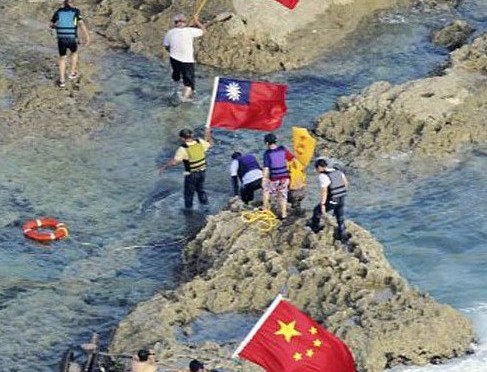
When it comes to the Senkaku Islands, a question is whether these principles may be employed, in the form of an airborne or seaborne landing of troops or a mixed force of military personnel and “activists”, bypassing the Coastguard units shielding them and taking advantage of the lack of land forces.

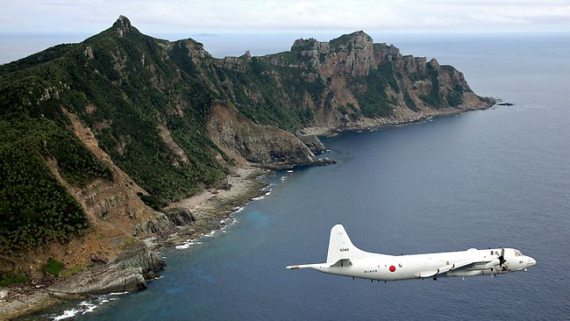
Aerial view of the Senkaku Islands

Concerning surprise, we can see a clear distinction between 1962 and this scenario in terms of strategic surprise. Beijing is announcing every day that she wants the Senkaku, and not making any effort at all to pretend that she is only ready to resort to non-violent means. No ambiguity here, therefore no strategic surprise is being sought. At the tactical level, on the other hand, there is no surprise either in the constant harassment at the hands of paramilitary assets or “civilian” expeditions, but this could be a cover behind which to prepare a landing by military or other government personnel. It is here that surprise may lie, since Beijing may try to take advantage of the presumption that it is only unarmed activists who try to land, inserting an armed force, maybe by air.

With regard to concentration, the nature of the islands means that this principle would not be applicable in exactly the same sense as it was in 1962. Rather than hitting “as fast and as hard as possible”, as Chellaney explains China did against India, the goal would be still be to do it as swiftly as possible but not as hard as possible, rather the contrary, since the idea would be to avoid a clash with the Japanese Coast Guard or other government agencies. Beijing’s goal would be to force Tokyo to take the always difficult decision in a democracy to fire the first shot.

When it comes to striking first, again we have to note an essential difference. Beijing would still be interested in surprise, as already noted, that is she would try to make the first move (and by definition she would, since the islands are already in Japanese hands) but not to shoot first. This would be a major difference with 1962 or with the 1979 “lesson” against Vietnam.

The idea that an attack should be launched at the right time, with a view to a favourable worldwide state of affairs, remains as relevant as ever. This is linked to one of Beijing’s imperatives, preventing the US from coming to Japan’s aid. It would also involve other, regional, powers however. China has a need to keep an eye on Russia, Vietnam, the Philippines, and India, among others. It must be said, concerning this, that while it is true that Beijing has usually been smart to launch its limited offensives at the right time (this includes the seizure of the Paracel Islands, occupation of Johnson Reef, and capture of Mischief Reef), when it comes to Japan she miscalculated in 2010. Beijing imposed an embargo on rare earths exports in reaction to the arrest of a trawler’s skipper, not only failing to secure any objective beyond his release but unleashing a major effort to implement alternative technologies, recycle, seek new suppliers, and even explore seabed deposits. The result is that Japan has significantly cut down her dependence on Chinese rare earths.

Japanese air patrol over the Senkaku Islands

The tendency to carry out “defensive counterattacks” seems to be a constant in Chinese behaviour, which Chellaney reminds his readers had already been noted by the Pentagon in its 2010 report on “Military and Security Developments Involving the People’s Republic of China” to Congress. This report lists a number of instances where Beijing chose to seize the initiative, while framing her actions in a “response” narrative. In a way this is already been happening in the Senkaku Islands, since after each incident Beijing not only rejects Japanese protests but actually issues her own, saying that they are part of her territory and that therefore it is Japanese units which are trespassing. The text also points out how Chinese doctrine calls for waiting for the enemy to strike first, while defining that first strike in political, not necessarily military, terms. Thus it is fine to be the first to resort to force in reaction to a political offensive. The report quotes from “the authoritative work, Science of Military Strategy,” to explain that “Striking only after the enemy has struck does not mean waiting for the enemy’s strike passively.… It doesn’t mean to give up the ‘advantageous chances’ in campaign or tactical operations, for the ‘first shot’ on the plane of politics must be differentiated from the ‘first shot’ on that of tactics… if any country or organization violates the other country’s sovereignty and territorial integrity, the other side will have the right to ‘fire the first shot’ on the plane of tactics.'”

Would this doctrine be compatible with a sneak landing on the Senkaku Islands? It could fit with it if we expanded it to comprise three, as opposed to two planes. The first one would still be the political, with Beijing claiming (as she does) that the islands are hers and that therefore the Japanese are invaders, a position made much easier to sustain by Tokyo’s reluctance to develop the islands, thus contradicting her claims that not only do they belong to the country but that there is no territorial dispute. The second one, where Beijing would be taking the initiative, would be the “tactical-cold” one, that is the employment of force (in the sense of deploying military or paramilitary personnel in violation of Japan’s borders but without inflicting casualties). Finally, the third would be the “tactical-hot,” that is the actual employment of weapons with live fire, where China would rather have Japan be the first to shoot, in the knowledge that it is difficult for democracies to take such decisions and thus in the hope that Tokyo would refrain from doing it or that, if she did, this could be used to Beijing’s advantage on the propaganda and diplomacy fronts.

Finally, with regard to China’s tendency to gamble and take risks, Chellaney notes that this could be furthered by her “second-strike nuclear capability and unprecedented economic and conventional military strength.” In addition to these two powerful factors, we could perhaps mention two additional ones, whose impact is less clear cut but which may nevertheless have some influence: a possible economic crisis and popular demand for the seizing of the Islands. Concerning a crisis, a growing number of voices are alerting about the possibility that the country’s uninterrupted economic growth may sooner or later be brought to a halt. Whether that would prompt a more cautious foreign policy or on the contrary whet Beijing’s appetite for adventures is open to debate. With regard to her domestic public opinion, Beijing is playing a dangerous game by pushing so hard for the Senkaku Islands and thus risking becoming a prisoner of her own narrative. This brings to mind Hugh Bicheno’s comment, in his unofficial history of the Falklands War, that territorial conflicts may be useful to “distract the masses,” but that this “creates an issue others will exploit to question the Nationalist credentials of whoever is refraining from recovering the lost lands.”

We can thus conclude that Communist China’s traditional approach to force, as exemplified by the 1962 War, means a clear danger that Beijing will try to seize the Senkaku Islands by inserting forces and daring Tokyo to be the first to open fire.

Alex Calvo is a guest professor at Nagoya University (Japan) focusing on security and defence policy, international law, and military history in the Indian-Pacific Ocean Region. A member of the Center for International Maritime Security (CIMSEC) and Taiwan’s South China Sea Think-Tank, he is currently writing a book about Asia’s role and contribution to the Allied victory in the Great War. He tweets @Alex__Calvo and his work can be found here.

[otw_shortcode_button href=”https://cimsec.org/buying-cimsec-war-bonds/18115″ size=”medium” icon_position=”right” shape=”round” color_class=”otw-blue”]Donate to CIMSEC![/otw_shortcode_button]