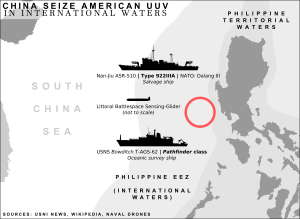
On December 15th 2016, the Chinese Navy seized an American unmanned underwater vehicle (UUV) operating in international waters off the Western coast of the Philippines. TheUSNS Bowditch, an unarmed T-AGS class hydro-graphic survey ship, was being shadowed by a People’s Liberation Army-Navy (PLAN) salvage vessel identified as a Dalang-III class (ASR-510).
The UUV had surfaced as part of a pre-programmed instruction, and sent a radio signal marking it’s position for pick-up. As the Bowditch was preparing to recover the drone from the water, a small boat crew from the Dalang III raced in and plucked the unmanned vessel. The incident occurred approximately 50 nautical miles northwest of Subic, Luzon.
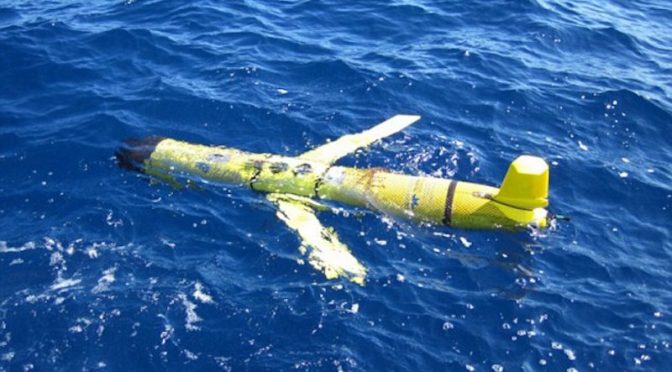
While the exact type of drone is unknown, there have been several instances of U.S. NavySlocum Gliderssnagged in local fishermens’ nets or washed ashore on beaches in the Philippines. This type of drone is not weaponized, and is used to collect a variety of environmental readings such as water temperature and salinity, to improve forecasting accuracy of extreme weather such as typhoons. The UUV uses wave movement to propel itself without any on-board engines, with an endurance time of months. The Department of Defense estimates the seized drone’s value to be around $150,000.
The crew of the Bowditch immediately contacted the PLAN vessel on bridge-to-bridge radio asking for the return of the drone. The PLAN vessel reportedly acknowledged the message, but then stopped responding and sailed away with the UUV. On Friday the 16th, the U.S. State Department issued a formal protest, or demarche, with the Chinese Department of Foreign Affairs, demanding an immediate return of the drone. At the time of this article’s publication, the Chinese government has not responded.
Purpose
Motivations behind the seizure are unclear, but tensions between the two nations have recently increased over President-Elect Donald Trump’sconversationwith Taiwan President Tsai Ing-wen in what Beijing considers a blatant disregard of the standing One-China Policy. It could also have been a quick riposte to undermine Head of Pacific Command U.S. Navy Admiral Harry Harris’recent commentsthat the US is “ready to confront [China] when we must.”
Notably, the Philippines has chosen to remain silent over the incident. While traditionally a U.S. ally, the election of President Rodrigo Duterte has brought a deterioration of relations between Manila and Washington. Thanks in no small part to Duterte’s bloody prosecution of an Anti-Drug war punctuated by high civilian casualties and accusations of extra-judicial killings, a large multi-million dollar U.S aid package was just withdrawn this week – prompting the volatile President to threatenabrogation of the Visiting Forces Agreement. The Philippine Department of National Defense indicates they had no idea that the incident was ongoing; highlighting the enormous capability gap the Philippines has regarding Maritime Domain Awareness. The Philippine government became aware via communications from the U.S. State Department to their embassy in Washington D.C.
Coupled with Duterte’s increasingly close orbit of China following last month’s visit to Beijing, the United States could potentially find itself without bases that would ease the mission of maintaining a robust presence in the South China Sea. Recent analysis shows China has expanded militarizationof their Spratly Island outposts by placing what appear to be defensive anti-aircraft and close-in weapon systems on Hughes and Gaven reefs, while fortifications have sprouted on Fiery Cross, Mischief and Subi reefs; the latter group are in close proximity to other claimant outposts in the region.
Taken together, China appears to be using it’s famous “Salami-slicing” techniques to slowly ratchet up its presence and capabilities within the region without crossing any significant “bright lines” leading to a military confrontation. The UUV seizure is consistent with opportunistic interference of U. .Navy operations while striking propoganda points with regional states. Notably, the unresponsiveness of Philippines to an international incident within their EEZ tells a tale that the U.S. cannot count upon its traditional ally going forward to assist in the presence mission.
Armando J. Heredia is a civilian observer of naval affairs. He is an IT Risk and Information Security practitioner, with a background in the defense and financial services industries. The views and opinions expressed in this article are those of the author, and do not necessarily represent the views of, and should not be attributed to, any particular nation’s government or related agency.
Featured Image: Slocum Ocean Glider. (University of South Florida)
The following article was originally featured by the National Maritime Foundation and is republished with permission. Read it in its original form here.
By Gurpreet S. Khurana
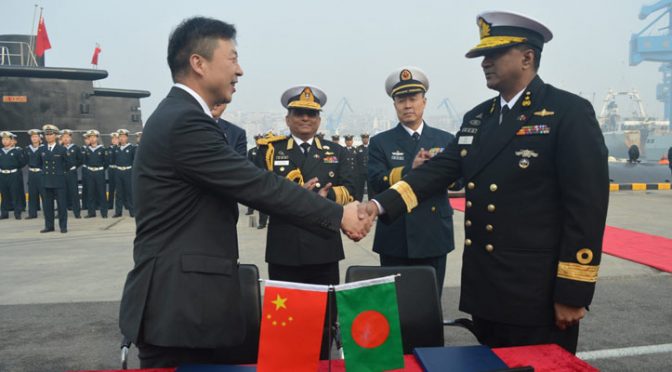
On 14 November 2016, the Bangladesh Navy (BN) took delivery of two old refurbished Chinese Type 035G Ming-class diesel-electric submarines. As part of the US$ 203 million contract signed in 2013, the submarines were handed over to the BN crew during a ceremony at the Liao Nan Shipyard in China’s Dalian city. The submarines are slated to be commissioned as Bangladesh Naval Ships (BNS) Nabajatra and Joyjatra and are expected to arrive in early 2017 at the new Bangladeshi submarine base being constructed near Kutubdia Island.
This may be a rather seminal development with strong ramifications not only for the littoral countries of the Bay of Bengal, but also for the wider Indo-Pacific region. This essay seeks to undertake an assessment of this development in the context of the likely imperatives of Bangladesh, the intentions of China, and its implications with specific reference to the Indian context.
Imperatives for Bangladesh
For any navy, the surface warships and their integral aircraft are capable of being used across the entire spectrum of conflict including for ‘constabulary’ and ‘benign’ missions ranging from counter-piracy to maritime search and rescue (M-SAR). In contrast, submarine forces – due to their inherent stealth characteristics – are optimized for sea-denial during war. Even in peacetime, these underwater platforms are used to undertake highly specialized missions against a military adversary like clandestine surveillance, intelligence-gathering, and Special Forces operations. Hence, it is difficult to fathom why Bangladesh – which does not encounter any conventional maritime-military threat – has inducted submarines into its navy. The maritime disputes between Bangladesh and two of its only maritime neighbors – Myanmar and India – were resolved through international arbitration in 2012 and 2014 respectively. Neither Naypyidaw nor New Delhi have indicated any reservations to the verdict of the international tribunals, nor have any other major outstanding contention with Dhaka.
It is nonetheless well known that the BN has since long aspired for a three-dimensional navy through inclusion of underwater warfare platforms. After Dhaka succeeded in settling its maritime boundary through the highly favorable decisions of the international tribunals, the apex political leadership showered much attention upon the BN as the guardian of the country’s newfound maritime interests. Notably, Bangladesh is seeking an increasing dependence upon sea-based resources for economic prosperity of its rather high density of population. The political nod to acquire submarines may therefore be seen as an incentive for the BN. Besides, it is a low-cost deal to reinforce strategic ties with China, including by taking forward Prime Minister Sheikh Hasina’s support to President Xi Jinping for its ‘One Belt One Road’ (OBOR) initiative. Hence, the development seems to have been driven by symbolism for Bangladesh, rather than being a result of the navy’s appreciation-based force-planning based on an objective assessment of the projected security environment.
China’s Intentions
As in case of other defense hardware exports, Beijing’s overarching intent behind the sale of submarines would be to go beyond strengthening political ties with Dhaka, to bring about its ‘strategic dependence’ upon China. The long-term submarine training and maintenance needs of the BN would also enable China’s military presence in the Bay of Bengal, and enable it to collate sensitive data for PLA Navy submarine operations in the future. This area is becoming increasingly important as the transit route for China’s strategic crude-oil and gas imports, and bears the origin of China’s oil pipeline across Myanmar. Strategic presence in the area is also critically necessary for Beijing to supplement the strategic and geopolitical dimension of its Maritime Silk Road (MSR) plans.
Further, by selling the two old (though upgraded) Ming-class submarines – which were commissioned in early 1990s and presently at the end of their service life with the PLA Navy – Beijing has assiduously generated useful revenue out of hardware, which would have only ‘scrap value’ in a few years. As per an established practice in China, a significant proportion of the revenue would go to PLA Navy since the submarines were sourced from its inventory.
Implications
The sale of Chinese submarines to Bangladesh bears significant ramifications for the Indo-Pacific region. Lately, apprehensions are being increasingly expressed over the rapidly increasing number of submarines being operated by regional countries. An addition of a submarine-operating country would not only multiply the complexity of water-space management – particularly due to the confidentiality associated with the deployments of such stealth platforms – but could also lead other countries to follow suit. The development also strengthens the imperative for Indian Ocean navies to institute a mechanism for de-conflicting unintended naval encounters at sea through the Indian Ocean Naval Symposium (IONS), which ironically, is presently being chaired by Bangladesh.
The submarine sale to Bangladesh has come at a rather inopportune time for the countries of the Bay of Bengal. With the two major maritime disputes having been resolved, the sub-region was looking forward to enhanced maritime cooperation in various sectors like trade connectivity, blue economy, and maritime safety and security, including through the revitalisation of the Bay of Bengal Initiative for Multi-Sectoral Technical and Economic Cooperation (BIMSTEC). The BN’s acquisition of submarines could lead to littoral countries reassessing their maritime security strategies and adopting a cautious approach to maritime cooperation.
In the Indian context, New Delhi has little reason to be threatened by Dhaka’s newly-acquired sea-denial capability. Nonetheless, Beijing’s likely intent needs to be factored in its national security calculus, particularly considering the imminence of China’s military-strategic presence in close proximity to India’s naval bases, including its nuclear submarine bastion. Evidently, India’s foreign policy vis-á-vis Bangladesh needs to be recalibrated. At the national-strategic level, India possesses insufficient financial and defence-industrial wherewithal to offset China’s overwhelming influence upon Bangladesh, but there is no dearth of other leverages. In such circumstances, New Delhi may need to graduate from its long-standing policy of ‘appeasing’ Dhaka to a ‘carrot and stick’ policy.
Captain Gurpreet S Khurana, PhD, is Executive Director at National Maritime Foundation (NMF), New Delhi. The views expressed are his own and do not reflect the official policy or position of the NMF, the Indian Navy, or the Government of India. He can be reached at gurpreet.bulbul@gmail.com.
Featured Image: Handover ceremony of two ex-PLA Navy Type 035 submarines to the Bangladesh Navy. (banglanews24.com)
The following article originally featured on The Bridge and is republished with permission. Read it in its original form here.
By Roger Misso
Once upon a time, there was a great and powerful nation. With booming trade, strong defense, and unparalleled pride, this land stood apart from all others as the finest in the world. As others struggled with disease, conflict, and stagnant economies, this country shone as a beacon in a storm. And importantly, its Navy was the envy of the world, protecting trade and sailing the high seas.
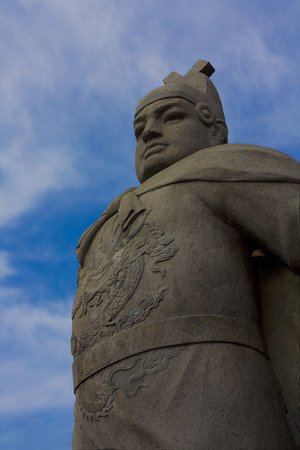
Monument to Admiral Zheng He in Melaka, Malaysia (Hasaan Saeed/Wikimedia)
This nation was China, during the Ming dynasty in the 14th Century. The leader of its Navy was the quasi-mythical Zheng He, a palace eunuch who rose to glorious power, but was eventually erased from the history books.The rise and fall of Zheng He has striking parallels to the rise and fall of the United States Navy today. To avoid repeating the unfortunate history of seafaring superpowers, the United States must embrace the role of its Navy as an essential instrument of a successful, enduring nation.
THE RISE
In the middle of the fourteenth century in China, at the end of a line of harsh Mongol rulers, the Ming dynasty rose to power. One of the first acts of the new emperor, Zhu Di, was to build a massive naval armada. Rather than rely only on overland routes, he intended to exercise trade, diplomacy, and prove the sheer awe of Chinese power through his navy.
He nominated a palace eunuch who had risen in favor with the new regime, a Chinese Muslim by the name of Zheng He, to lead this force. Zheng was rumored to have “stood seven feet tall,” and his ability to speak both Chinese and Arabic was seen as a prudent choice for an expedition that would sail the Indian Ocean and interact with other Arabic-speaking peoples.[1]
Zheng He’s fleet boasted more than 300 vessels. Unlike the typical European ships of the day, his were of enormous, complex construction and opulent adornment. Each ship housed more than sailors—doctors, soldiers, engineers, and statesmen made Zheng He’s fleet a floating arm of Chinese influence. Indeed, for more than 30 years, China dominated the sea lanes to its west, ensuring safe passage of its trading vessels and even engaging in limited conflict to secure favorable bases of support for its large fleet.[2]
THE CURSE
China’s dominance of the seas was short lived, however. New emperors came to power who viewed naval voyages as “extravagances.”[3] Rather than respect the value of a navy to a great power, rulers began to look inward. Political power was legitimized by building things Chinese subjects could physically see and attribute to the greatness of the emperor, as opposed to a Navy that operated far from China’s shores.
It is a historical irony that the Ming dynasty traded what was the world’s greatest naval power, and used their treasure to connect and finish the Great Wall into what it is recognized as today. Soon, internecine conflict and pride erased nearly any mention of Zheng He and the grand Chinese armada from the national memory.[4] For much of the next 600 years, China’s focus would remain within, even as their relative global power all but evaporated.[5]
THE PARALLELS
The lessons of Zheng He’s China teach a great deal about how a global superpower maintains its own geopolitical interests in the face of shifting domestic priorities. A strong Navy is a decisive component of the military instrument of national power, based on its unmatched ability to project power around the globe.
From John Paul Jones to The Great White Fleet to today’s Navy, it is easy to view the lens of America’s Navy as another incarnation of Zheng He’s: an awe-inspiring representation of the nation’s technological and economic might. The founders of the United States recognized the importance of a Navy to a prosperous nation, specifically enunciating in the Constitution that Congress must “provide and maintain a Navy.”
Yet, as in Zheng He’s time, competing policy choices and uncertainty as to America’s role in the world has eroded the commitment to maintain a naval force representative of the country’s geopolitical interests. Austerity and sequestration have slashed budgets with scant regard for shipbuilding, maintenance, and future fleet architecture. 650 years later, the United States Navy has fewer ships to its name than Zheng He’s armada.[6]
THE LESSON
The decline in quantity and quality of America’s ships-of-the-line will do great harm to the American people. The United States Navy is the bellwether of American power, protecting the nation from harm and safeguarding global commerce. The tragedy of both Zheng He and contemporary American navalists is their failure to adequately convince the population of the necessity of its Navy.
Thomas Jefferson once wrote that “industry, commerce, and security are the surest roads to the happiness and prosperity of people.”[7] The Navy has been the guarantor of American happiness and prosperity since the nation’s earliest days. Yet, as the visible vestiges of American commerce have transformed from small markets and shops to massive online storefronts with inventory shipped by robots from warehouses, the average citizen’s concept of how commerce is enabled may be declining.
To this citizen, the ubiquitous nature of the Internet and online commerce might seem to suggest that modern military forces are becoming obsolete in the face of digital citizenship. Few people think about the steps between pressing “purchase” and receiving a good at their doorstep. In a tumultuous political climate, this leads many to clamor for decreased military spending and a more insular focus on domestic affairs. Yet this sentiment erodes the very naval service that ensures massive online commerce can thrive in the first place.
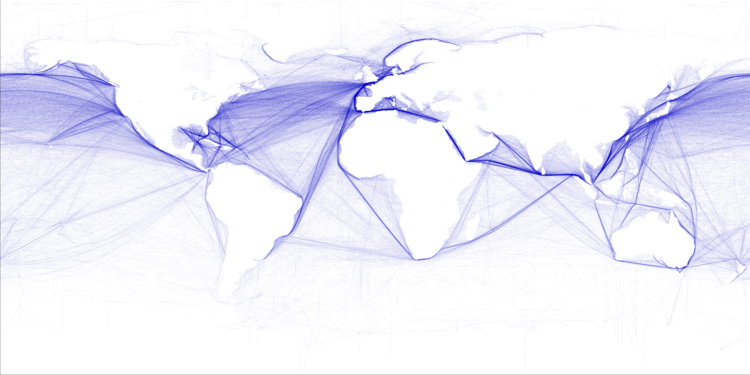
The percentage and volume of global trade by sea has shown no signs of slowing down. Whether iPhones, oil, or automobiles, most of the imported items belonging to a typical household have come to this country by sea. These items are carried on ships without guns or inherent self-defense measures. These ships transit through chokepoints controlled by nations with their own interests, who would rather leverage their own power at the expense of America’s supply of Apple devices.
World shipping routes (T. Hengel/Wikimedia)
The importance of a Navy is not a difficult concept. For example, if a saboteur has blocked both ends of the street on which you live, you may think of three potential responses: 1) stay home; 2) find another way out, though you are likely to leave the house less often and bring fewer things with you; 3) fight back. For businesses and nations who ship goods by sea, the first two options are unprofitable and untenable. It is only through a strong Navy that the third option is possible.
The consequences of a declining Navy are perceptible and stark. Though it took a few centuries, China’s inward focus eventually led to the crumbling of their sovereignty and, eventually, occupation by a foreign power. More contemporary examples, such as Great Britain and Spain, are instructive as they show nations on the declining slope of naval power dependent on a foreign power—the United States—to maintain freedom of the seas in accordance with its own interests.
If the United States abdicates its role as global naval power, either deliberately or through unchecked erosion of capability and credibility, she risks a radical plummeting of national and economic might. Nature and the sea both abhor a vacuum; in yet another irony, if the United States cannot maintain the global sea lanes, China may take its place as guarantor. An American economy and national security dependent on Chinese interests and the application of Chinese naval power would be weak and brittle, bringing extreme hardship to the American people.
THE MANDATE
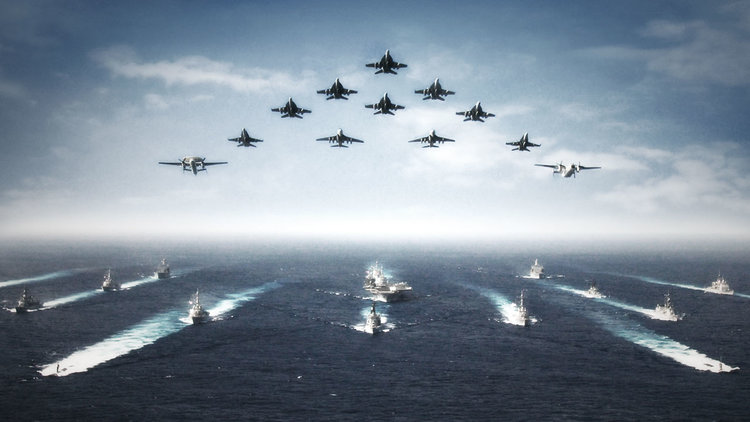
U.S. Navy ships and aircraft. (Navy.com)
More than ever, a strong Navy is required to protect the millions of tons of shipping that make possible American economy, infrastructure, and the basic political lives of her people. A citizenry may grow weary of land wars, but it cannot forsake trade and security. Nations that cannot protect open, unfettered access to the sea will fail. For these reasons, the United States Navy is not a nicety; it is a necessity.
History provides clear channel markers for decision makers today. The United States cannot repeat the curse of Zheng He; she must clearly articulate and re-prioritize a strong Navy that is present, capable, and credible.
Roger L. Misso is a naval officer, aviator, and speechwriter. He is currently a student at the John F. Kennedy School of Government at Harvard University and a featured contributor to The Strategy Bridge. The views expressed in this article are the authors and do not represent the views of the U.S. Navy, the Department of Defense, or the U.S. Government.
NOTES:
[1] Stockwell, Foster. Westerners in China: A History of Exploration and Trade, Ancient times through the Present. Jefferson, NC: McFarland & Publishers, 2003.
[2] Suryadinata, Leo. Admiral Zheng He and Southeast Asia. ISEAS-Yusof Ishak Institute, 2005.
[3] Ibid.
[4] Turturici, Armando Alessandro. “China Across Sea in Early Ming Dynasty – the Figure of Zheng He.” Quarterly Journal of Chinese Studies, no. 3 (Spring, 2016): 111-114.
[5] Ibid.
[6] “Status of the Navy.” Navy.mil. Accessed online 4 Nov 2016. http://www.navy.mil/navydata/nav_legacy.asp?id=146
[7] “From Thomas Jefferson to Francisco Chiappe, 9 September 1789.” National Archives Online. Accessed online 4 Nov 2016. http://founders.archives.gov/documents/Jefferson/01-15-02-0386
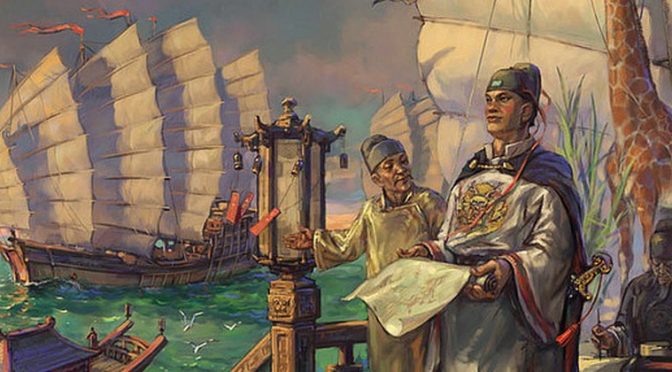
Featured Image: Treasure fleet of Admiral Zheng He (Caravan Daily)
U.S.-Philippine relations have started to encounter significant challenges since the inauguration of President Rodrigo Duterte on June 30, 2016. President Duterte has made contentious statements which have been supported and accepted by the Philippine general public in spite of the controversial nature of his comments.
Given the historically long-lasting relationship between the United States of America and the Republic of the Philippines, both nations still maintain positive interactions. Regardless of its national strength, the Philippines has always been a significant supporter of the United States in the Western Pacific region and a strategic non-NATO ally. America retains a positive image in the Philippines, gaining wide approval from its citizens for its influence and policies in the region.
Given the conflicting situation between the positive perception of the U.S. of the general public and the negative criticism from President Duterte on U.S. policies, how should we make a fair assessment about the future of interactions between the White House and the Malacanang Palace throug the rest of Duterte’s presidency? The author would like to provide several reference gauges for inspecting U.S.-Philippines relations.
Security
First, security and military cooperation is undeniably a vital dimension of U.S.-Philippines relations. The Mutual Defense Treaty between the Republic of the Philippines and the United States of America signed on August 30, 1951 in Washington, D.C. is the solid foundation defining the alliance relationship between these two security partners. It was an elevation from the 1947 Military Bases Agreement. During the Cold War era, the United States maintained operations from the Clark Air Base until November 1991. On the other hand, the Subic Bay Naval Complex and several other relatively insignificant and subsidiary establishments in the Philippines remained operational until the effort of extension for another ten-year lease offer was rejected by the Philippine Senate on September 16, 1991. Eventually, U.S. forces withdrew from Subic Bay on November 24, 1992.
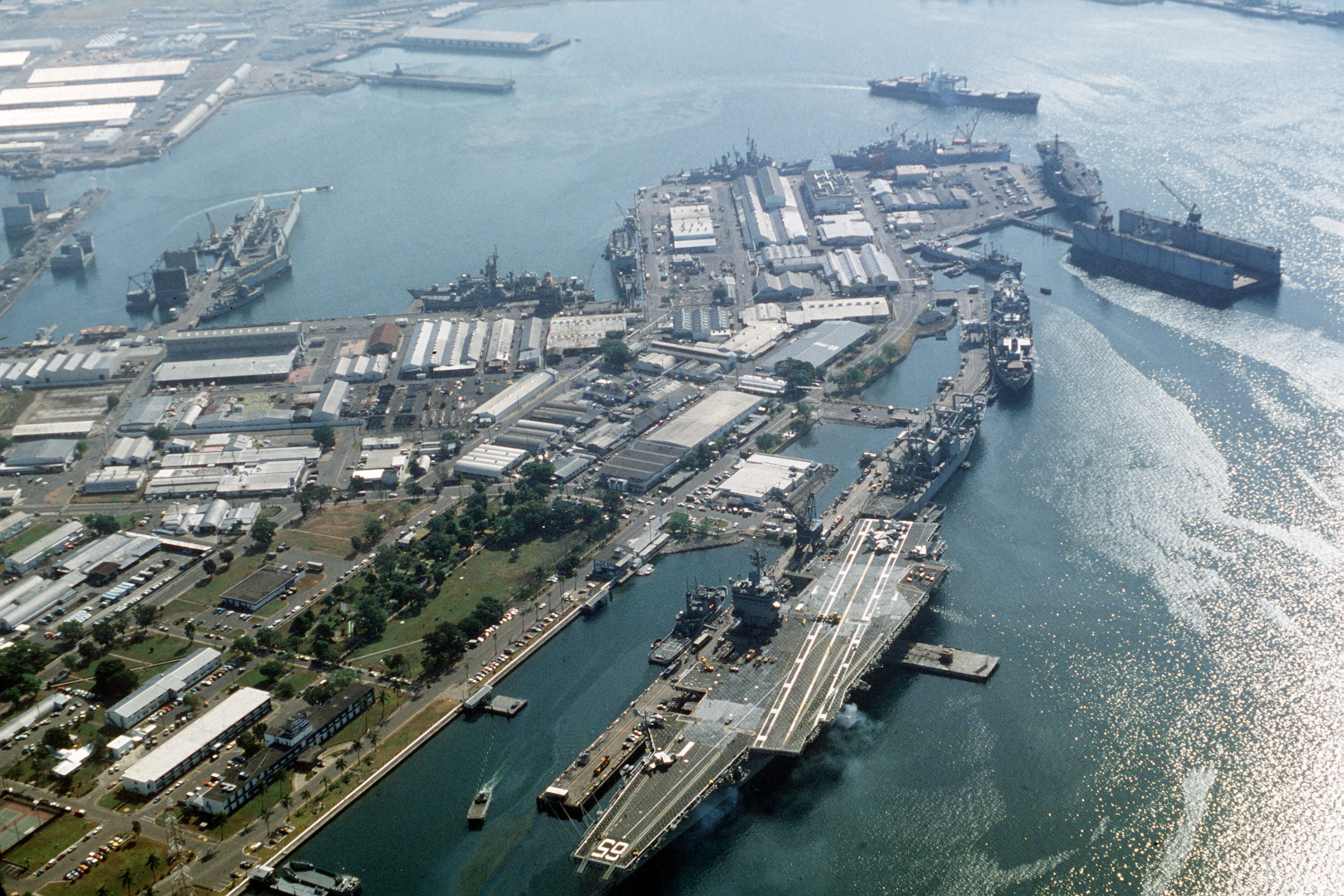
An aerial view of ships moored at the station. The nuclear-powered aircraft carrier USS ENTERPRISE (CVN-65) is in the foreground. (Vern Rowe)
As the regional security situation gradually changed after the Cold War, the United States and the Philippines have regained momentum to enhance their security cooperation. The Visiting Forces Agreement was settled in February 1998 and subsequently led to the arrangement of the routine U.S.-Philippines joint military exercises names Balikatan, a Tagalog term meaning “shoulder-to-shoulder” as part of the War on Terror. Alternatively, the Philippines government also benefited from counterterrorism support against the Abu Sayyaf and Jemaah Islamiyah groups in areas previously afflicted by insurgency movements such as Basilan and Jolo. Apart from the Visiting Force Agreement, another Mutual Logistics Support Agreement was also signed in November 2002. Finally, the Agreement on Enhanced Defense Cooperation settled on April 28, 2014 symbolized the peak of U.S.-Philippines security cooperation in recent years. This framework agreement indeed expanded the scope of the 1951 Mutual Defense Treaty.
Diplomacy
Therefore, we may identify the ceiling of U.S.-Philippines security cooperation for now as the 2014 Enhanced Defense Cooperation Agreement and the floor being the 1951 Mutual Defense Treaty. The possibility of returning to the scale and degree of defense cooperation during the Cold War era as U.S. forces retain overseas bases in the Philippines is relatively slim. The maneuvering space for President Duterte to play political games is well defined unless he would like to have a structural change, which he already firmly denied. Comparatively, cancelling the joint exercise could be a good bargaining chip. Nonetheless, it has not undermined the overall structure yet. Furthermore, the diplomatic game will not be played by President Duterte alone. The future development of U.S. Asia policy after the new administration will be more influential to the U.S.-Philippines security relations. Nonetheless, the fundamental truth that we should bear in mind is that a single dimension does not speak for all.
Second, as we try to observe U.S.-Philippines relations, we must understand that these actors do not interact alone. There are other regional players who may also influence the overall strategic equation or security formula. The responses from these regional players should be a concern as we examine the interactions between the United States and the Republic of Philippines. As in aforementioned situations, there are various considerations within the foreign policy formulation process. Accommodating animosities or inconsistencies occurring from various dimensions of the interactions among states should be a matter of reality that all parties should accept.
Unity of opposites is a general practice of diplomacy nowadays in the East Asia. To assure their economic prosperity, every state would enhance their relationship with the People’s Republic of China. On the other hand, a certain level of concern in the security dimension would force all parties in the region to keep a positive relationship with the United States. As President Duterte emphasizes his desire to improve the relationship between Beijing and Manila, it might be necessary to surrender elements of the U.S.-Philippines relations as the price. Certain statements condemning Washington seem to be political maneuvers to please Beijing. Nonetheless, all these improvised grumbles are magnified by the press. Their importance was overstated since no structural change had been attempted yet.
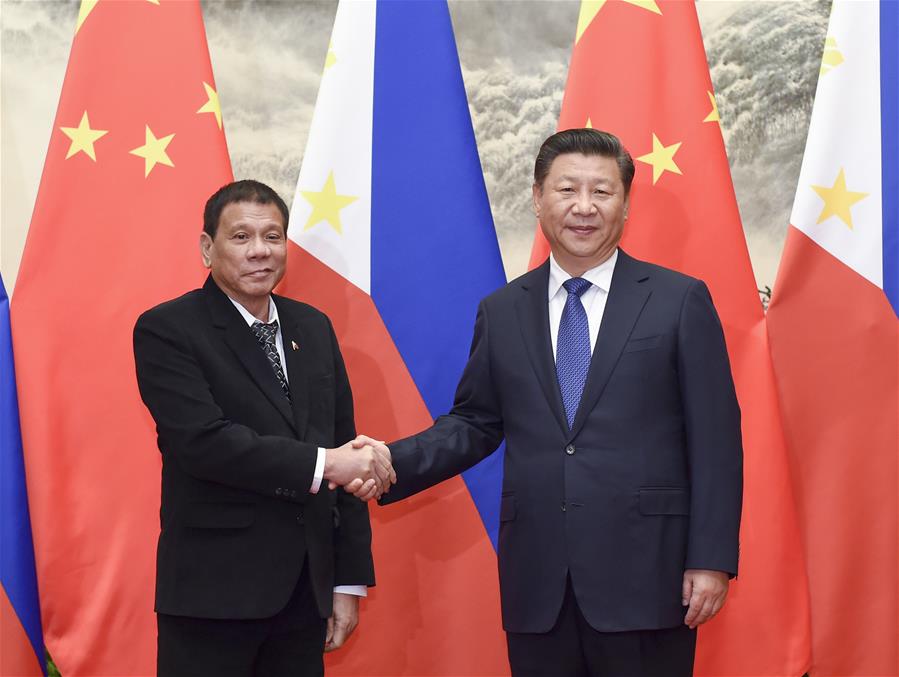
Chinese President Xi Jinping (R) holds talks with his Philippine counterpart Rodrigo Duterte in Beijing, capital of China, Oct. 20, 2016. (Xinhua/Li Xueren)
Though unpleasant to Washington and to the alliance states in the region, the value of delivering formal responses to Duterte’s spontaneous statements does not exist. Most of the regional players may not enthusiastically react to Manila’s provocations unless certain substantial maneuvers may actually undermine the balance of power or the security structure. The interactions between the White House and the Malacanang Palace do matter to other regional players. Their responses are the vital references and the essential driving forces for managing U.S.-Philippines relations. Policymakers should expand their scope of consideration by observing other regional players and expanding their calculation beyond Manila and Washington.
Third, we must never forget that President Duterte is only the head of the administrative arm of the Philippine government. The administration is unquestionably playing the center role in the diplomacy. Nonetheless, other branches such as the legislative and judicial institutions of the Philippine government may also be influential to U.S.-Philippines relations. We should never forget that the attempt to extend the lease of Subic naval bases was blocked by the Philippine Senate in 1991.
Moreover, if President Duterte tries to retract from the present position of the Philippine government claiming the sovereign rights to those land features and maritime jurisdictions in the South China Sea, the possibility of facing an impeachment could not be totally excluded though these islands and reefs were never specified by the Philippines Constitution like the rest of its legal territories. These unconstitutional land features are so closely associated with national esteem now that no one would have the courage to point out the flaws of their own argument in the Philippines. So, checks and balances on the diplomacy should be another appropriate reference to consider the future of Duterte’s adventurism and opportunistic ambition.
Last but not least, most diplomatic plots are slow-cook stews, not fast food. Beijing’s reactions towards Duterte’s political maneuvers of rapprochements are very cautious. Civilizations with long memories will not forget the situation that occurred during the visit of President Benigno Aquino III to China in August 2011. Many agreements containing financial support and cooperation were signed and a joint communique confirming that those disputes in the South China Sea would be solved through consultations and negotiation was publicized. However, President Aquino broke his promise almost right after the visit and submitted the arbitration case eight months later.
All surprise maneuvers in diplomacy are not trustworthy. This is especially true when those involved have a conviction of dialectic principle known as “from change in quantity to change in quality” who will never trust any unexpected turn about. When comparing the long existing basis of the U.S.-Philippines relations, it is very hard to believe that the term of “separation” with the United States as President Duterte said in Beijing can be a meaningful long-term policy. Many political statements will be eventually proven to be void promises. Duterte’s diplomacy at the moment is matched with good timing. As the United States is at the peak of its presidential campaign, few would be distracted by Duterte embracing of Beijing. No decisive policy change toward the Philippines can be decided before at best next spring, when the national security team of the new U.S. administration attends its positions and forges the consensus. In other words, President Duterte would have several months to alleviate the uneasiness of the new U.S. leadership. The political calendars separately existing in Washington and Beijing should also be good references to scrutinize the future of U.S.-Philippines relations.
Conclusion
Although there are many transitional phenomena with the capacity to attract our attentions, the ultimate principles securing the basic structure of the alliance should never be neglected. These gauges would provide a better lens for us to observe future interactions between Manila and Washington.
Dr. Ching Chang was a line officer in the Chinese Navy for more than thirty years. As a visiting faculty member of the China Military Studies masters degree program at the National Defense University, ROC, he is recognized as a leading expert of the People’s Liberation Army with unique insights into its military thinking.
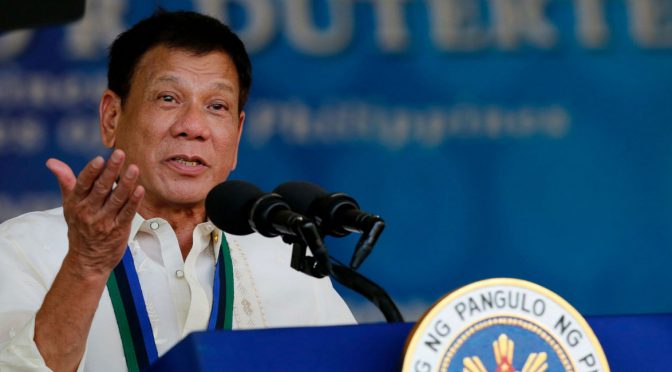
Featured Image: President Duterte speaks during a visit at a military camp in the Philippines. (Francis R. Malasig /EPA/Newscom)