Category Archives: Future Tech

What is coming down the pipe in naval and maritime technology?

A Cyber-Information Operations Offset Strategy for Countering the Surge of Chinese Power

The following is a two-part series on how the U.S. might better utilize cyberspace and information operations as a Third Offset. Part I will evaluate current offset proposals and explores the strategic context. Part II will provide specific cyber/IO operations and lines of effort.

By Jake Bebber 

“It is better by noble boldness to run the risk of being subject to half of the evils we anticipate than to remain in cowardly listlessness for fear of what might happen.”

-Herodotus, The Histories

Introduction

In 2014, then Secretary of Defense Hagel established the Defense Innovation Initiative, better known as the Third Offset, which is charged with recommending ways to sustain American military superiority in the face of growing capabilities fielded by powers such as Russia and China.[i] The purpose of the Third Offset is to “pursue innovative ways to sustain and advance our military superiority” and to “find new and creative ways to sustain, and in some cases expand, our advantages even as we deal with more limited resources.” He pointed to recent historical challenges posed by the Soviets in the 1970’s which led to the development of “networked precision strike, stealth and surveillance for conventional forces.” Centrally-controlled, inefficient Soviet industries could not match the U.S. technological advantage, and their efforts to do so weakened the Soviet economy, contributing to its collapse.

Today, China represents the most significant long-term threat to America and will be the focus here. A number of leading organizations, both within and outside government, have put forward recommendations for a Third Offset. However, these strategies have sought to maintain or widen perceived U.S. advantages in military capabilities rather than target China’s critical vulnerabilities. More importantly, these strategies are predicated on merely affecting China’s decision calculus on whether to use force to achieve its strategic aims – i.e., centered around avoiding war between the U.S. and China. This misunderstands China’s approach and strategy. China seeks to win without fighting, so the real danger is not that America will find itself in a war with China, but that America will find itself the loser without a shot being fired. This paper proposes a Cyberspace-IO Offset strategy directly attacking China’s critical vulnerability: its domestic information control system. By challenging and ultimately holding at risk China’s information control infrastructure, the U.S. can effectively offset China’s advantages and preserve America’s status as the regional security guarantor in Asia.

All effective strategies target the adversary’s center of gravity (COG), or basis of power. “Offset strategies” are those options that are especially efficient because they target an adversary’s critical vulnerabilities, while building on U.S. strengths, to “offset” the opponent’s advantages. Ideally, such strategies are difficult for an adversary to counter because they are constrained by their political system and economy. Today, China’s COG is the Chinese Communist Party (CCP). The stability of this system depends greatly on the ability of the Chinese regime to control information both within China, and between China and the outside. Without this control, opposition groups, minority groups, and factions within the CCP itself could organize more effectively and would have greater situational awareness for taking action. Thus, information control is potentially a critical Chinese vulnerability. If the United States can target the ability of the Chinese regime to control information, it could gain an efficient means to offset Chinese power. This offset strategy, using cyberspace and other information operations (IO) capabilities, should aim to counter China during the critical window in the next ten to twenty years when Chinese economic and military power will surge, and then subside as demographic, economic and social factors limit its growth.

Targeting the CCP’s ability to control information can be considered a long-term IO campaign with options to operate across the spectrum of conflict: peacetime diplomacy and battlespace preparation; limited conflict; and, if deterrence fails, full-scale military operations. The goal is to ensure that PRC leaders believe that, as conflict escalates, they will increasingly lose their ability to control information within China and from outside, in part because the U.S. would be prepared to use more drastic measures to impede it.

This strategy is most efficient because it serves as an organizing concept for cyber options targeted against China that would otherwise be developed piecemeal. It could serve as a means to prioritize research and development, and better link military planning for cyberspace operations to public diplomacy, strategic communication, and economic policy initiatives. The nature of cyberspace operations makes it difficult to attribute actions back to the United States with certainty, unless we wish it to be known that the U.S. is conducting this activity. Finally, it provides an alternative array of responses that policy makers can use to offset growing Chinese power without immediate direct military confrontation.

Demographic, economic and social factors will combine to create a ceiling on Chinese power, ultimately causing it to enter a period of decline much sooner than it expects.[ii] These factors will stress the Communist Party’s ability to exclude economic, social and political participation of dissenters, and create further reliance by the Party on information control systems.

The Strategic Environment

The United States is a status quo power. It seeks to retain its position of dominance while realizing that relative to other powers, its position may rise or fall given the circumstances. It supports the post-World War II international order – a mix of international legal and liberal economic arrangements that promote free trade and the resolution of disputes through international organizations or diplomatic engagement when possible. The United States recognizes the growth of China, and that it will soon achieve “great power” status, if not already. It is most advantageous to the United States if the “rise” (or more correctly, return to great power status) of China occurs peacefully, and within the already established framework of international rules, norms, and standards.

There are two important considerations. First is the “singularity” of China with respect to its self-understanding and its role in the world. China views the last two centuries – a time when China was weak internally and under influence from foreign powers – as an aberration in the natural world order. Most Chinese consider their several thousand year history as the story of China occupying the center of the world with “a host of lesser states that imbibed Chinese culture and paid tribute to China’s greatness …” This is the natural order of things. In the West, it was common to refer to China as a “rising power,” but again, this misreads China’s history. China was almost always the dominant power in the Asia-Pacific, punctuated by short periods of turmoil. It just so happened that the birth and growth of the United States took place during one of those periods of Chinese weakness.[iii]

The strategic approach of China is markedly different, based on its concept of shi, or the “strategic configuration of power.” The Chinese “way of war” sees little difference in diplomacy, economics and trade, psychological warfare (or in today’s understanding, “information warfare”) and violent military confrontation. To paraphrase the well-known saying, the acme of strategy is to preserve and protect the vital interests of the state without having to resort to direct conflict while still achieving your strategic purpose. The goal is to build up such a dominant political and psychological position that the outcome becomes a foregone conclusion. This is in contrast to Western thought which emphasizes superior power at a decisive point.[iv]

To the American leadership, the “most dangerous” outcome of a competition with China would seem to be one that leads to war; hence the near-desperate desire to not undertake any action which might lead China down that path. Yet a better understanding of China suggests that it believes it can (and is) achieving its strategic purpose without having to resort to force. Its military buildup, use of economic trade agreements, diplomacy, and domestic social stability are creating the very political and psychological conditions where the use of force becomes unnecessary. China is quite content to remain in “Phase 0” with the United States, because it  believes it is winning there. Thus, the question for America is not “How do we maintain the status quo in Phase 0?” but “How do we win in Phase 0?” The most dangerous course of action is not war with China, but losing to China without a shot being fired.

cyber 2
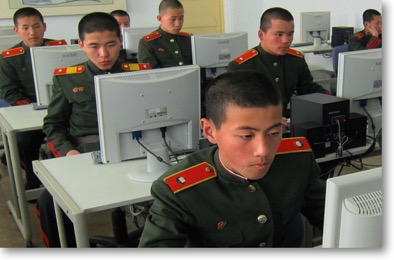
Figure 1. In 2015, China reorganized the PLA and created a new Cyber Warfare branch under its Strategic Support Force.

Current Offset Proposals

In response to the call for proposals, a number of initiatives and programs have been put forward by both the Department of Defense and leading national security think tanks. The underlying assumption of most of these proposals is that the United States has lost or is quickly losing its “first mover” advantage – such as that offered by the shift from unguided to guided munitions delivered from a position of stealth or sanctuary. In this regard, China represents a “pacing threat,” leading the way in developing its own guided weapons regime and the ability to deliver them asymmetrically against the United States.[v] In order to regain America’s military advantage, most recommendations follow along these lines:

  • Development and procurement of new platforms and technologies that leverage current perceived technological advantages over China in such areas as:
    • Unmanned autonomous systems;
    • Undersea warfare;
    • Extended-range and low-observable air operations;
    • Directed energy; and
    • Improved power systems and storage.
  • New approaches to forward basing, including hardening of infrastructure (both physical and communication networks), the use of denial and deception techniques and active defense;
  • Countering China’s threats to U.S. space-based surveillance and command and control systems;
  • Assisting allies and friends in the development of or exporting of new technologies that impose smaller-scale anti-access and area denial (A2/AD) costs on China; and
  • Reconstitute and reinvigorate Department of Defense “iterative, carefully adjudicated tabletop exercises and model-based campaign assessments.”[vi]

These approaches[vii] may have much to offer and are commendable, however they suffer from a glaring weakness: none target China’s center of gravity or critical vulnerabilities. They seek to leverage capabilities where the United States appears to enjoy an advantage, such as undersea warfare. For example, while it may be true that the People’s Liberation Army-Navy (PLAN) is not as proficient as the U.S. Navy (or some allies) in the undersea domain, it is also true that the Chinese regime is investing heavily to “close the gap” in these and other capabilities or is developing asymmetric alternatives. The United States will face a diminishing marginal utility as it attempts to maintain or widen the gap, especially in an era when China’s cyberspace-enabled information exploitation capabilities are extremely robust, and capable of transferring intellectual property back to China on a scale unimaginable in the Cold War.

More fundamentally, the offsets proposed are not guided by an overarching grand strategy that utilizes all elements of national power attacking key weaknesses and critical vulnerabilities in the Chinese regime, much in the same way that the Reagan Administration was able to do against the Soviets. Reagan’s policy and strategy represented a “sharp break from his predecessors,” eschewing containment in favor of attacking “the domestic sources of Soviet foreign behavior.”[viii] By recognizing the inherent weakness of the Soviet economic system, the new policy sought to leverage national military, political and economic tools to press the American advantage home, causing the Soviet system to collapse. This is not to suggest that the Chinese economic system suffers from the same malaise as their Soviet brethren did. Despite growing demographic, social and economic headwinds, it is unlikely that the United States can “bankrupt” the Chinese. However, China does have acute vulnerabilities – vulnerabilities which align with unique American advantages.

China’s Center of Gravity and Critical Vulnerabilities

None of the proposed previously mentioned offset lines of effort attempt to identify or target China’s COG. The center of gravity is defined by Milan Vego is “a source of massed strength – physical or moral – or a source of leverage whose serious degradation, dislocation, neutralization, or destruction would have the most decisive impact on the enemy’s or one’s own ability to accomplish a given political/military objective.”[ix] Joint military doctrine defines it as “The source of power that provides moral or physical strength, freedom of action, or will to act.”[x] The center of gravity concept is important to offset strategies because it enhances “the chance that one’s sources of power are used in the quickest and most effective way for accomplishing a given political/military objective.” It is the essence of “the proper application of the principles of objective, mass and economy of effort.”[xi]

Using an analytic construct designed by Vego, we note that any military situation encompasses a large number of both “physical and so-called abstract military and nonmilitary elements.” These are the “critical factors” that require attention and are deemed essential to the accomplishment of the objective, both of the adversary and ourselves. Not surprisingly, these factors encompass both critical strengths and critical weaknesses – both of which are essential. Critical vulnerabilities are “those elements of one’s military or nonmilitary sources of power open to enemy attack, control, leverage, or exploitation.” By attacking critical vulnerabilities, we ultimately attack the enemy center of gravity.[xii] The figure below shows notionally how China’s information control systems are a critical vulnerability (note that it is not all-encompassing).

Figure 2. Notional Center of Gravity Analysis[xiii].
According to Vego, it is generally agreed that for most authoritarian/totalitarian regimes, the dictator, central governing party or leadership committee is the strategic center of gravity. In the case of China, the CCP is the sole governing political party. The top leadership of the CCP is the Politburo Standing Committee (or Central Standing Committee), currently made up of seven members and led by General Secretary Xi Jinping. A number of factors permit the continued rule of the CCP, including a massive domestic security apparatus and the world’s largest military, a growing standard of living and state control over media and information available to its people. In many ways, the Chinese leadership have already conducted their own vulnerability analysis and concluded that the free flow of information represents the biggest threat to their power – we can see this in both their words and deeds. China spends more on domestic security than on its own military. The last officially reported figures from the PRC in 2013 show the military budget was approximately 740.6 billion yuan ($119 billion) while domestic security received 769.1 billion yuan ($121 billion).[xiv] Beginning in 2014, the PRC stopped reporting on domestic security spending.[xv] In 2015, the PRC announced an 11 percent increase in “public security” spending to 154.2 billion yuan, or $24.6 billion. However, the total amount spent on domestic security remains unreported, and is certainly much higher, since regional and provincial figures are not provided. The reported military spending was 886.9 billion yuan, approximately $139 billion.[xvi] Fourteen separate state ministries are charged with domestic censorship responsibilities, everything from traditional press and broadcast media to text messages on cell phones.[xvii] A form of self-censorship has been institutionalized with Chinese internet companies being required to sign a “Public Pledge on Self-Regulation and Professional Ethics for China Internet Industry.”[xviii] In short, China has already shown what it fears most and where it is most vulnerable – it has performed its own “COG analysis” and has identified information control as a critical requirement to maintain CCP dominance.

cyber 3
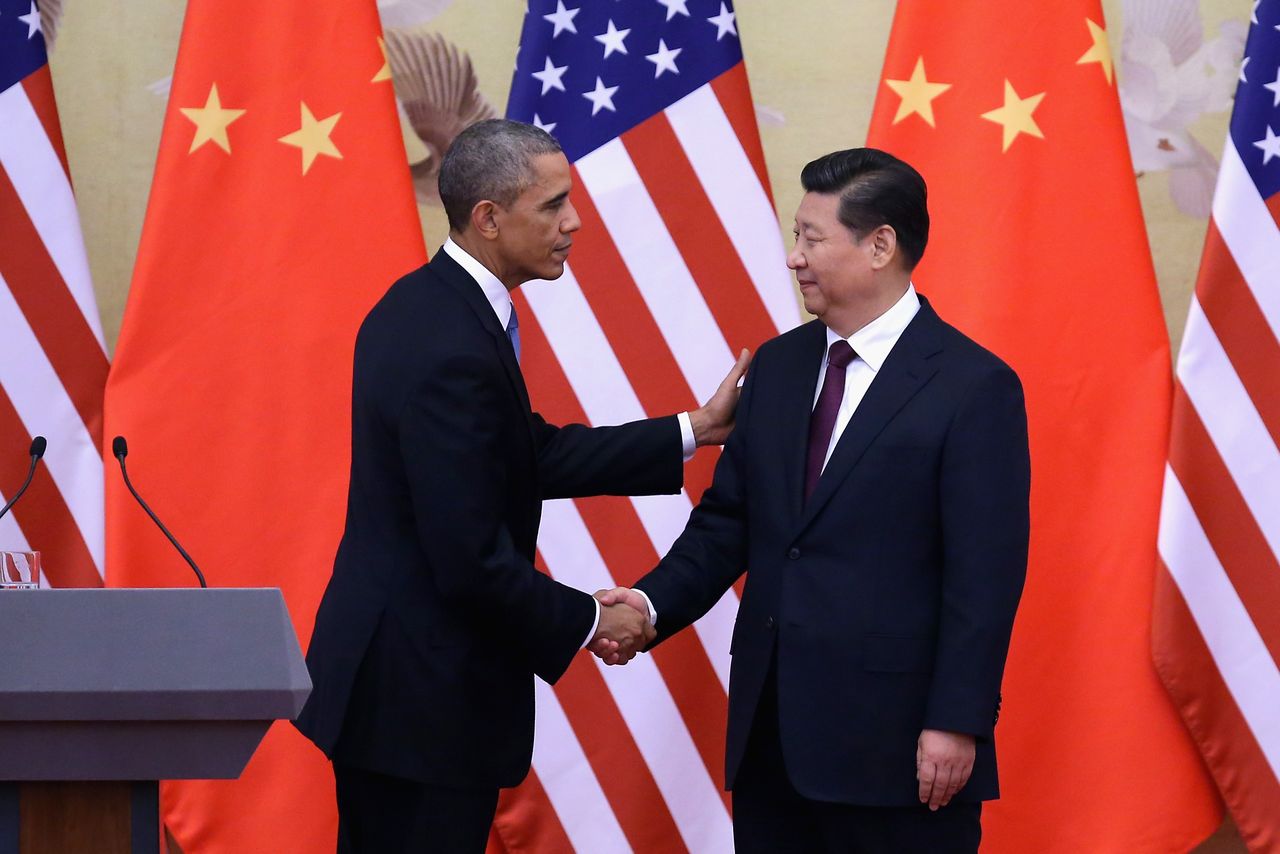
Figure 3. In 2015, the U.S. and China met to discuss recent cyberspace issues.

A Cyberspace – IO Strategy

China’s regime identifies the free flow of information as an existential threat, and has erected a massive bureaucratic complex to censor and restrict free access to the nearly 618 million (and growing) Chinese internet uses (and 270 million social network users).[xix] However, the very nature of the Internet as a networked system makes censorship and restricted access difficult to maintain. As has been shown, China’s information control systems represent a critical vulnerability to their center of gravity. China’s network security is managed by a fragmented, disjointed system of “frequently overlapping and conflicting administrative bodies and managing organizations.”[xx]

China’s cyberspace operations and strategy are driven primarily by domestic concerns, with its central imperative being the preservation of Communist Party rule. Domestic security, economic growth and modernization, territorial integrity and the potential use of cyberspace for military operations define China’s understanding. Even its diplomatic and international policies are built around giving China maneuvering room to interpret international norms, rules and standards to serve domestic needs, principally through the primacy of state sovereignty. This creates a natural tension, as China must seek to balance economic growth and globalization with maintaining the Party’s firm grip on power. Not only is Internet usage controlled and censored, but it is also a tool for state propaganda.[xxi]

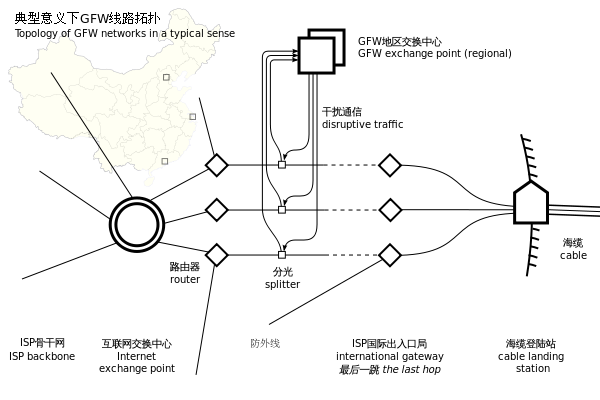
Chinese authorities use a number of techniques to control the flow of information. All internet traffic from the outside world must pass through one of three large computer centers in Beijing, Shanghai and Guangzhou – the so-called “Great Firewall of China.” Inbound traffic can be intercepted and compared to a regularly updated list of forbidden keywords and websites and the data blocked.[xxii] Common censorship tactics[xxiii] include:

  • Blocking access to specific Internet Protocol (IP) addresses;
  • Domain Name System (DNS) filtering and redirection, preventing the DNS from resolving or returning an incorrect IP address;
  • Uniform Resource Locator (URL) filtering, scanning the targeted website for keywords and blocking the site, regardless of the domain name;
  • Packet filtering, which terminates Transmission Control Protocol (TCP) transmission when a certain number of censored keywords are detected. This is especially useful against search engine requests.
  • “Man-in-the-Middle” attack, allowing a censor to monitor, alter or inject data into a communication channel;
  • TCP connection reset, disrupting the communication data link between two points;
  • Blocking of Virtual Private Network (VPN) connections; and
  • Network Enumeration, which initiates an unsolicited connection to computers (usually in the United States) for the purpose of blocking IP addresses. This is usually targeted against secure network systems or anonymity networks like “Tor.”

cyber 4
Figure 4. Simplified Chinese Firewall Topology[xxiv].
China also heavily regulates and monitors Internet service providers, Internet cafes, and university bulletin board systems. It requires registration of websites and blogs, and has conducted a number of high profile arrests and crackdowns on both dissidents and Internet service providers. This “selective targeting” has created an “undercurrent of fear and promoted self-censorship.” The government employs thousands who monitor and censor Internet activity as well as promote CCP propaganda.[xxv]

China’s information control regime is vulnerable on a number of levels to a coordinated strategy that seeks to hold it at risk. From a technical standpoint, the distributed nature of the internet makes it inherently vulnerable, the “Great Firewall” notwithstanding. The techniques used to filter and block content have a number of workarounds available to the average person. For example, IP addresses that have been blocked may be accessed utilizing a proxy server – an intermediary server that allows the user to bypass computer filters. DNS filtering and redirection can be overcome by modifying the Host file or directly typing in the IP address (64.233.160.99) instead of the domain name (www.google.com). These are simple examples that a novice government censor can easily outwit, but the point remains.

China has long been rightfully accused of being a state-sponsor of cybercrime and theft of intellectual property. One negative consequence of this from China’s perspective is the high level of cybercrime within China “due in large part to rampant use and distribution of pirated technology” which creates vulnerabilities. It is estimated that 54.9 percent of computers in China are infected with viruses, and that 1,367 out of 2,714 government portals examined in 2013 “reported security loopholes.”[xxvi] China’s networks themselves, by virtue of their size and scope, represent a gaping vulnerability.

At the same time, China’s information control bureaucracy is especially unwieldy. This is an ideal target to exploit the seams and gaps both horizontally and vertically in their notoriously byzantine structure. The fourteen agencies that conduct internet monitoring and censorship operations must all compete for resources and the attention of policy makers, leading to organizational conflict and competition. Any strategy should exploit these fissures, complicating China’s ability to control information.

Part 2 will outline several lines of effort the U.S. might pursue to attack China’s critical vulnerabilities in its information control system. It will advance the notion that the full range of American power – overt, covert, diplomatic, economic, information and military – must be coordinated and managed at the national level to wage a successful information operations campaign. Based on America’s past success, the future may be brighter than it first appears. Read Part 2 here.

LT Robert “Jake” Bebber USN is a Cryptologic Warfare Officer assigned to United States Cyber Command. His previous assignments have included serving as an Information Operations officer in Afghanistan, Submarine Direct Support Officer and the Fleet Information Warfare Officer for the U.S. Seventh Fleet. He holds a Ph.D. in Public Policy from the University of Central Florida. His writing has appeared in Proceedings, Parameters, Orbis and elsewhere. He lives in Millersville, Maryland and is supported by his wife, Dana and their two sons, Vincent and Zachary. The views expressed here are his own and do not reflect those of the Department of Defense, Department of the Navy or U.S. Cyber Command. He welcomes your comments at jbebber@gmail.com.

[i] Charles Hagel. “The Defense Innovation Initiative .” Memorandum for Deputy Secretary of Defense. Washington, D.C.: Department of Defense, November 15, 2014.

[ii] Robert Bebber. “Countersurge: A Better Understanding of the Rise of China and the Goals of U.S. Policy in East Asia.” Orbis 59 no. 1 (2015): 49-61.

[iii] Kissinger, Henry. On China. (New York, NY: Penguin Books, 2012).

[iv] David Lai. “Learning from the Stones: A Go Approach to Mastering China’s Strategic Concept, Shi.” U.S. Army War College Strategic Studies Institute. May 1, 2004, accessed Decmeber 26, 2014. http://www.strategicstudiesinstitute.army.mil/pubs/display.cfm?pubID=378

[v] Shawn W. Brimley. “The Third Offset Strategy: Security America’s Military-Technical Advantage.” Testimony Before the House Armed Services Committee Subcommittee on Seapower and Projection Forces. Washington, D.C., December 2, 2014.

[vi] David.Ochmanek. “The Role of Maritime and Air Power in the DoD’s Third Offset Strategy.” Testimoney Before the House Armed Services Committee Subcommittee on Seapower and Projection Forces. Washington, D.C., December 2, 2014.

[vii] This list is certainly not exhaustive. For a more thorough review of the ones mentioned, see:. Brimley, Shawn W. “The Third Offset Strategy: Security America’s Military-Technical Advantage.” Testimony Before the House Armed Services Committee Subcommittee on Seapower and Projection Forces. Washington, D.C., December 2, 2014. Martinage, Robert. “Statement Before the House Armed Services Subcommittee on Seapower and Projection Forces on the Role of Maritime and Air Power in DoD’s Third Offset Strategy.” Testimony Before the House Armed Services Committee Subcommittee on Seapower and Projection Forces. Washington, D.C., December 2, 2014. Ochmanek, David. “The Role of Maritime and Air Power in the DoD’s Third Offset Strategy.” Testimoney Before the House Armed Services Committee Subcommittee on Seapower and Projection Forces. Washington, D.C., December 2, 2014.

[viii] Thomas G. Mahnken.”The Reagan Administration’s Strategy Toward the Soviet Union.” In Successful Strategies: Triumphing in War and Peace from Antiquity to the Present, by Williamson Murray and Richard Hart Sinnreich. Cambridge: Cambridge University Press, 2014.

[ix] Milan N. Vego. Joint Operational Warfare – Theory and Practice. (Newport, RI: Government Printing Office, 2007) VII-13-29.

[x] Joint Chiefs of Staff. Joint Publication 5-0: Joint Operational Planning. (Washington, D.C.: Department of Defense, 2011).

[xi] Vego, Joint Operational Warfare – Theory and Practice, VII-15

[xii] Ibid, VII-15.

[xiii] Joint Publication 5.0 defines Critical Capability as “A means that is considered a crucial enabler for a center of gravity to function as such and is essential to the accomplishment of the specified or assumed objective(s);” Critical Requirement as “An essential condition, resource, and means for a critical capability to be fully operational;” and Critical Vulnerability as “An aspect of a critical requirement which is deficient or vulnerable to direct or indirect  attack that will create decisive or significant effects.”

[xiv] Ben Blanchard and John Ruwich. “China Hikes Defense Budget, To Spend More on Internal Security.” Reuters, March 5, 2013, accessed December 23, 2014.http://www.reuters.com/article/2013/03/05/us-china-parliament-defence-idUSBRE92403620130305  

[xv] Michael Martina. “China Withholds Full Domestic Security-Spending Figure.” Reuters, March 4, 2014, accessed September 25, 2015.  http://www.reuters.com/article/2014/03/05/us-china-parliament-security-idUSBREA240B720140305

[xvi] Ting Shi and Keith Zhai. “China To Boost Security Spending as Xi Fights Dissent, Terrorism.” Bloomberg News, March 5, 2015 accessed September 25, 2015. http://www.bloomberg.com/news/articles/2015-03-05/china-to-boost-security-spending-as-xi-fights-dissent-terrorism

[xvii] Michael Wines, Sharon LaFraniere, and Jonathan Ansfield. “China’s Censors Tackle and Trip Over the Internet.” The New York Times, April 7, 2010, accessed December 23, 2014.http://www.nytimes.com/2010/04/08/world/asia/08censor.html

[xviii] Biena Xu. Media Censorship in China. February 2014, accessed December 23, 2014. http://www.cfr.org/china/media-censorship-china/p11515

[xix] Ibid..

[xx] Amy Chang. Warring State: China’s Cybersecurity Strategy. (Washginton, D.C.: Center for a New American Security, 2014) 12.

[xxi] Rebecca MacKinnon. “Flatter World and Thicker Walls? Blogs, Censorship and Civic Discourse in China.” Public Choice 134 (2008): 31-46.

[xxii] Michael Wines, Sharon LaFraniere, and Jonathan Ansfield. “China’s Censors Tackle and Trip Over the Internet.”

[xxiii] Jonathan Zittrain, and Benjamin Edelman. “Empirical Analysis of Internet Filtering in China.” Harvard Law School Berkman Center for Internet and Society. March 20, 2003, accessed December 23, 2014. http://cyber.law.harvard.edu/filtering/china/

[xxiv] Available at: https://news.ycombinator.com/item?id=4931595

[xxv] Thomas Lum, Patricia Moloney Figliona, and Matthew C. Weed. China, Internet Freedom, and U.S. Policy. Report for Congress, (Washington, D.C.: Congressional Research Service, 2013).

[xxvi] Amy Chang. Warring State: China’s Cybersecurity Strategy. 15. 

Impacts of the Robotics Age on Naval Force Structure Planning

The following is adapted from an abstract for presentation at the Naval War College EMC Chair Symposium’s panel on Force Structure.

By Jeffrey E. Kline, CAPT, USN (ret)

This paper’s theme is that our overly platform-focused naval force structure planning and acquisition system is burdened with so many inhibitors to change that we are ill prepared to capitalize on the missile and robotics age of warfare. Refocusing our efforts to emphasize the “right side” of an offensive kill chain to deliver kinetic and non-kinetic effects will aid in overcoming these challenges and prioritize our efforts where cutting edge technology can best be applied in naval warfare. I will address traditional foundations for force structure planning, inhibitors to changing force structure, and how focusing on the packages delivered instead of the delivery platforms will allow us to better leverage new technologies in the 2020 timeframe.

Ideally, naval force structure grows from national strategy, national treasure, technological advancement, and potential adversary capabilities. National strategy provides the rationale, purpose, and priority of choices to be made in creating a fleet. National treasure provides both the resources, and constrains that force strategic choices. New technologies provide opportunities for increasing fleet effectiveness, and may also potentially expose vulnerabilities for fleet survival when adversary capabilities are considered. This is a complex problem with only these four factors. However, U.S. force structure acquisition is also challenged by other influences. These other pressures inhibit capitalization of new technologies and slow reaction in the face of new challenges.

The most powerful of these is the inertia caused by an existing fleet being a large national capital investment with long build and life times. Ships and aircraft cost billions to design, build, and maintain. They require a capital-intensive industry requiring heavy equipment, infrastructure, and a skilled workforce, all generations in the making. The consequence is annual programming and budgeting decisions marginal in nature. It is the nature of a large fleet to evolve slowly, in lieu of revolutionary changes to its composition. This is a reality each Chief of Naval Operation faces when considering change to naval forces. Their relatively short tenure restricts their ability to execute a maritime strategy which has a real effect on ship and aircraft procurement.

Since our first six frigates were authorized in 1794, internal political and economic factors have been another major influence on fleet composition. Illustrated well by Ian Toll in his Six Frigates: The Epic History of the Founding of the U.S. Navy, the potential windfalls on local economies when selected to provide force structure generate powerful political pressures on force generation decisions and create the desire for stabilization once those selections are made. The senators and congressman representing districts which build ships and aircraft rightfully defend existing programs for the benefit of their constituents.

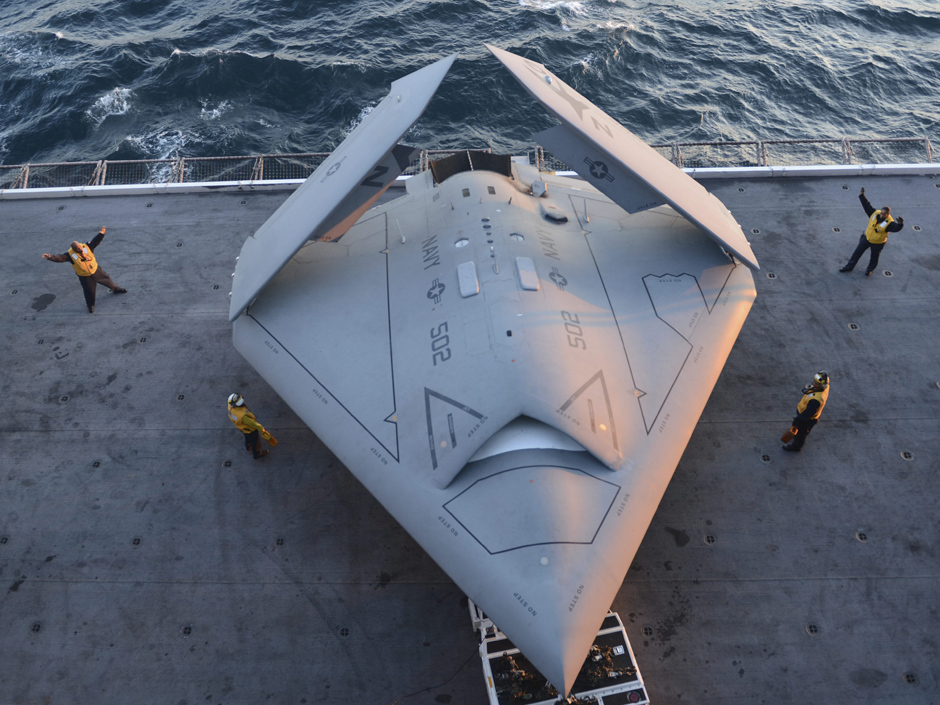
This image provided by the US navy shows sailors moving an X-47B Unmanned Combat Air System (UCAS) demonstrator onto an aircraft elevator aboard the aircraft carrier USS George H.W. Bush Tuesday, May 14, 2013. The drone was launched off the George H.W. Bush to be the first aircraft carrier to catapult launch an unmanned aircraft from its flight deck. (AP Phioto/U.S. Navy photo by Mass Communication Specialist 2nd Class Timothy Walter)
US navy sailors moving an X-47B Unmanned Combat Air System (UCAS) demonstrator onto an aircraft elevator aboard the aircraft carrier USS George H.W. Bush Tuesday, May 14, 2013. The drone was launched off the George H.W. Bush to be the first aircraft carrier to catapult launch an unmanned aircraft from its flight deck. (AP Phioto/U.S. Navy photo by Mass Communication Specialist 2nd Class Timothy Walter)

Next, the overly compartmentalized nature of fleet planning, budgeting, building, and maintenance due to large and resource-competing bureaucracies create a lethargic and inefficient environment for change. Multiple oversight agencies, including Congress, make any decision made by one program manager susceptible to overly zealous scrutiny which disincentivizes innovation. Our ability to implement rapid change is lost when stakeholders exceed the point where responsibility and authority can be clearly defined. This is not to argue that Congress should abandon their Constitutional authority to maintain a Navy, but the real change is needed inside the programming, acquisition, and maintenance system to return to a more efficient hierarchy of command to control fleet composition.  Many of these changes will require Congressional action to amend regulatory burden.

Finally, the very nature of a fleet’s strategic value engenders conservatism in senior naval leadership when faced with the options for change. This is not necessarily an unhealthy view as the loss of the fleet can mean the loss of sea lines of communication and therefore a war.  Nonetheless, overvaluing what worked in the last major maritime war at the expense of not recognizing technology that changes the conveyance of maritime power can mean a fleet unprepared to combat an enemy that is not so inhibited.   

None of these influences on force structure planning can be lightly dismissed. The danger is that collectively they result in a harmful escalation of commitment toward obsolete platforms and only marginal changes in force structure in the face of major technological changes. The result today is a brittle U.S. Fleet that is susceptible to capability surprise and slow to react to adversary’s threats.

ytmqholok2dpvwgrbkfw
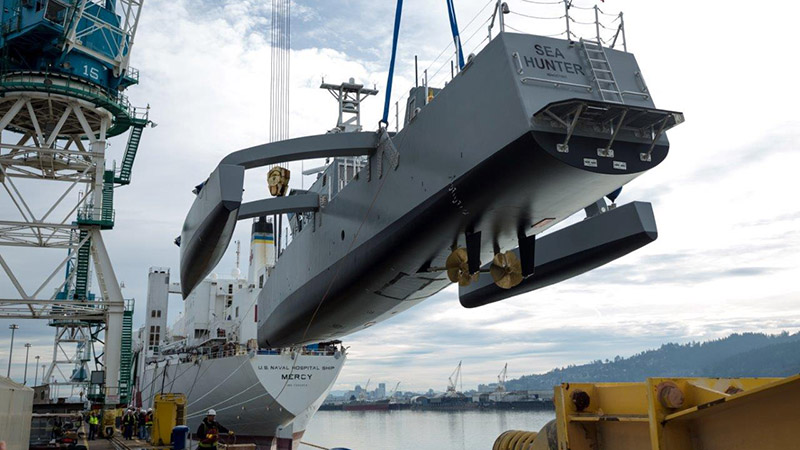
DARPAs Anti-Submarine Warfare Continuous Trail Unmanned Vessel (ACTUV).

The United States is not unique in facing these challenges. Historically, major changes to naval force structure have resulted from war and/or great technology leaps. Ramming, row, and boarding vessels gave way to the naval cannon and sail; sail to steam; rifled gun and armor to aircraft; aircraft to missiles; and now we are on the dawn of a robotics age. Missiles, robots, miniaturization, hypersonic technologies, and artificial intelligence give the advantage to smaller, many, faster, and more lethal offensive capabilities. Our challenge is to not allow the restraints on the current force structure planning process to cede these advantages to potential adversaries.

Meeting each of the 2015 maritime strategic capabilities like all domain access, deterrence, sea control, power projection, and maritime security while constrained by the budget and procurement process and contested by potential adversaries’ growing capabilities will require new thinking in platforms, weapons, and command and control. Advancement into the robotic age allows us to emphasize options to achieve a desired tactical end state which enables our operational and strategic goals. This is somewhat a reversal in the traditional hierarchy of the levels of war. Yet, it is historically accurate. Technology empowers a tactical edge in maritime warfare, providing new operational and strategic choices. For example, investing in a very “smart” long range autonomous offensive missile that can out-range those of our adversary may permit us to build less expensive, less well defended ships from which to launch them thereby making sea control more affordable.

150812-N-JQ696-002
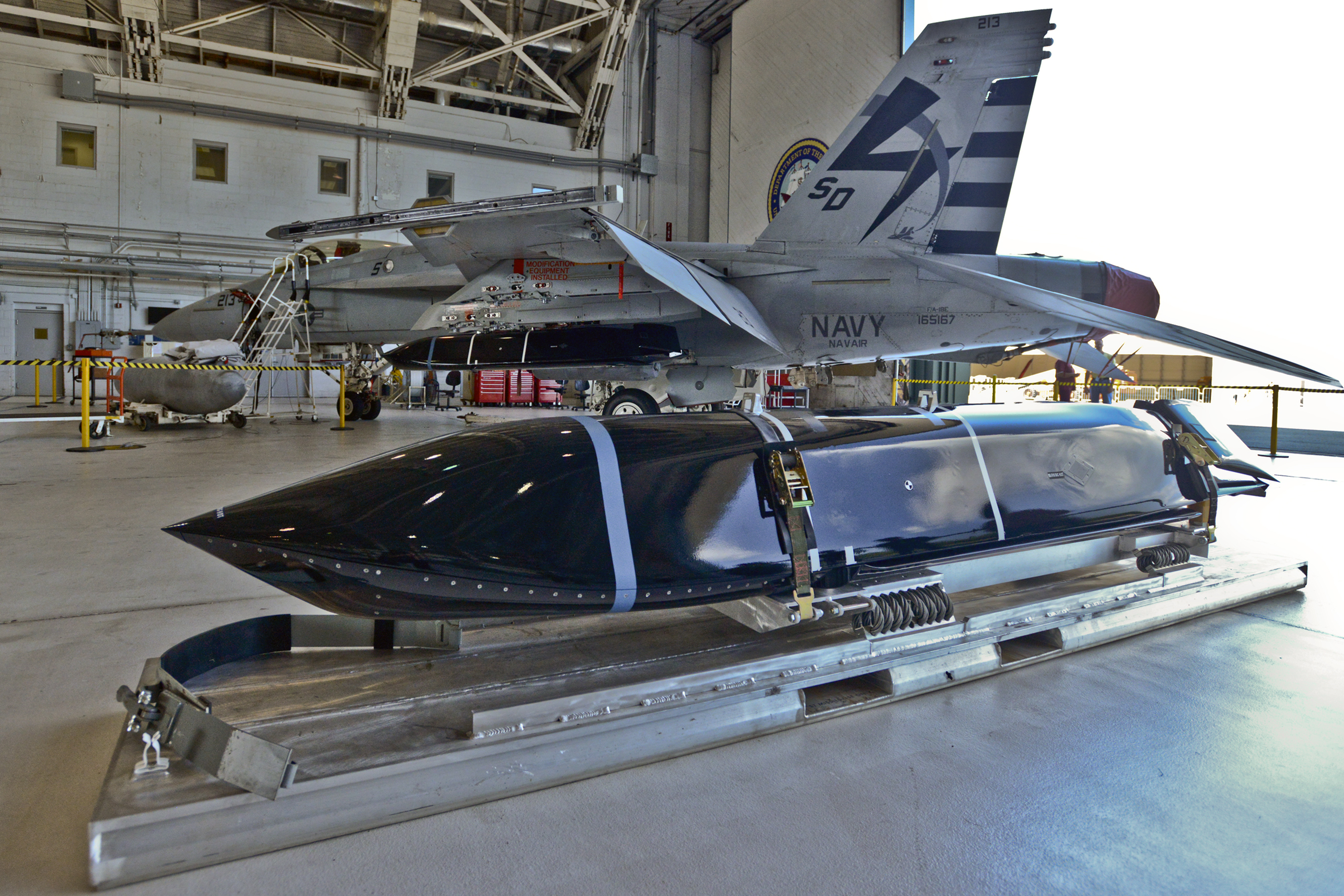
A Long Range Anti-Ship Missile (LRASM) integrated on F/A-18E/F Super Hornet. US Navy photo.

Consider a new frigate equipped with unmanned aerial vehicles to hunt, and long range missile to kill, against today’s DDG Flight III without a long range surface missile. Granted, better to have a DDG Flight III armed with the same long range missile, so long as we can afford sufficient DDGs with these capabilities to meet all the other requirements around the world, the most capacity-demanding being maritime security, but our budget constrains us. The message here is not necessarily to favor a frigate over a DDG, but to refocus our investments on less expensive “payloads” delivered, kinetic or cyber, not the more expensive delivery platforms. A stark example is a weapon that has huge maritime influence but no maritime platform, the DF-21. Focusing on offensive payloads also lessens many of the political, economic, and bureaucratic challenges associated with large capital investments associated with platform programs. 

This “package focus” first is particularly applicable in the electromagnetic and cyber realm. Inexpensive, disposable UAVs employing radar reflectors or chirp jamming may be better delivery platforms for EM “packages” than a F-18 Growler. In the defense, developing “Left of kill chain” effects against an adversary need not be expensive, but does require synchronization with the movement of actual forces. The desired effects may rely as much on adversary perception as on physical outcomes. The solutions here may be more organizational, training, and in the area of concept of employment than force structure additions. However, it again allows us new options in force structure alternatives.

When building a fleet for contested environments with real financial constraints, our investments should be focused on the right side of our offensive kill chain, and on the left side of an adversary’s kill chain. In addition to putting the focus of warfare close to the enemy and further from us, this enables us to capitalize on technologies provided by the missile and robotics age and constrains the inhibitors to change from a platform focused acquisition system. Seeing missiles and unmanned systems as entities themselves, and not just extensions of manned platforms, is a concept needing early adoption. Creating an unmanned system resource sponsor in OPNAV N99 is a good first step. Empowering them with sufficient resources will be the next.

We are not there yet.  In the FY17 DoD President’s budget, a bit over 40% is allocated for aircraft procurement and shipbuilding, only 9% for munitions. Real change will be required, involving Congress and the Department of the Navy.

A retired naval officer with 26 years of service, Jeff is currently a Professor of Practice in the Operations Research department and holds the Chair of Systems Engineering Analysis. He teaches Joint Campaign Analysis, executive risk assessment and coordinates maritime security education programs offered at NPS. Jeff supports applied analytical research in maritime operations and security, theater ballistic missile defense, and future force composition studies. He has served on several Naval Study Board Committees. His NPS faculty awards include the Superior Civilian Service Medal, 2011 Institute for Operations Research and Management Science (INFORMS) Award for Teaching of OR Practice, 2009 American Institute of Aeronautics and Astronautics Homeland Security Award, 2007 Hamming Award for interdisciplinary research, 2007 Wayne E. Meyers Award for Excellence in Systems Engineering Research, and the 2005 Northrop Grumman Award for Excellence in Systems Engineering. He is a member of the Military Operations Research Society and the Institute for Operations Research and Management Science.  

Could Robot Submarines Replace Australia’s Ageing Collins Class Submarines?

This article originally featured on The Conversation. It can be read in its original form here.

By Sean Welsh

The decision to replace Australia’s submarines has been stalled for too long by politicians afraid of the bad media about “dud subs” the Collins class got last century.

Collins class subs deserved criticism in the 1990s. They did not meet Royal Australian Navy (RAN) specifications. But in this century, after much effort, they came good. Though they are expensive, Collins class boats have “sunk” US Navy attack submarines, destroyers and aircraft carriers in exercises.

Now that the Collins class is up for replacement, we have an opportunity to reevaluate our requirements and see what technology might meet them. And just as drones are replacing crewed aircraft in many roles, some military thinkers assume the future of naval war will be increasingly autonomous.

The advantages of autonomy in submarines are similar to those of autonomy in aircraft. Taking the pilot out of the plane means you don’t have to provide oxygen, worry about g-forces or provide bathrooms and meals for long trips.

Taking 40 sailors and 20 torpedoes out of a submarine will do wonders for its range and stealth. Autonomous submarines could be a far cheaper option to meet the RAN’s intelligence, surveillance and reconnaissance (ISR) requirements than crewed submarines.

Submarines do more than sink ships. Naval war is rare but ISR never stops. Before sinking the enemy you must find them and know what they look like. ISR was the original role of drones and remains their primary role today.

Last month, Boeing unveiled a prototype autonomous submarine with long range and high endurance. It has a modular design and could perhaps be adapted to meet RAN ISR requirements.

Boeing is developing a long range autonomous submarine that could have military applications.

Thus, rather than buy 12 crewed submarines to replace the Collins class, perhaps the project could be split into meeting the ISR requirement with autonomous submarines that can interoperate with a smaller number of crewed submarines that sink the enemy.

Future submarines might even be “carriers” for autonomous and semi-autonomous UAVs (unmanned aerial vehicles) and UUVs (unmanned undersea vehicles).

Keeping People on Deck

However, while there may be a role for autonomous submarines in the future of naval warfare, there are some significant limitations to what they can achieve today and in the foreseeable future.

Most of today’s autonomous submarines have short ranges and are designed for very specific missions, such as mine sweeping. They are not designed to sail from Perth to Singapore or Hong Kong, sneak up on enemy ships and submarines, and sink them with torpedoes.

Also, while drone aircraft can be controlled from a remote location, telepiloting is not an option for a long range sub at depth.

The very low frequency radio transceivers in Western Australia used by the Pentagon to signal “boomers” (nuclear-powered, nuclear-armed submarines) in the Indian Ocean have very low transmission rates: only a few hundred bytes per second.

You cannot telepilot a submarine lying below a thermocline in Asian waters from Canberra like you can telepilot a drone flying in Afghanistan with high-bandwidth satellite links from Nevada.

Contemporary telepiloted semi-autonomous submarines are controlled by physical tethers, basically waterproof network cables, when they dive. This limits range to a few kilometers.

Who’s the Captain?

To consider autonomy in the role of sinking the enemy, the RAN would likely want an “ethical governor” to skipper the submarines. This involves a machine making life and death decisions: a “Terminator” as captain so to speak.

This would present a policy challenge for government and a trust issue for the RAN. It would certainly attract protest and raise accountability questions.

On the other hand, at periscope depth, you can telepilot a submarine. To help solve the chronic recruitment problems of the Collins class, the RAN connected them to the internet. If you have a satellite “dongle on the periscope” so the crew can email their loved ones, then theoretically you can telepilot the submarine as well.

That said, if you are sneaking up on an enemy sub and are deep below the waves, you can’t.

Even if you can telepilot, radio emissions directing the sub’s actions above the waves might give away its position to the enemy. Telepiloting is just not as stealthy as radio silence. And stealth is critical to a submarine in war.

Telepiloting also exposes the sub to the operational risks of cyberwarfare and jamming.

There is great technological and political risk in the Future Submarine Project. I don’t think robot submarines can replace crewed submarines but they can augment them and, for some missions, shift risk from vital human crews to more expendable machines.

Ordering nothing but crewed submarines in 2016 might be a bad naval investment.

Sean Welsh is a Doctoral Candidate in Robot Ethics at the University of Canterbury. The working title of his dissertation is Moral Code: Programming the Ethical Robot. He spent 17 years working in software engineering for organisations such as British Telecom, Telstra Australia, Fitch Ratings, James Cook University and Lumata. He has given several conference papers on programming ethics into robots, two of which are appearing in a forthcoming book, A World of Robots, to be published by Springer later in the year.

Sean Welsh does not work for, consult, own shares in or receive funding from any company or organization that would benefit from this article, and has disclosed no relevant affiliations beyond the academic appointment above.

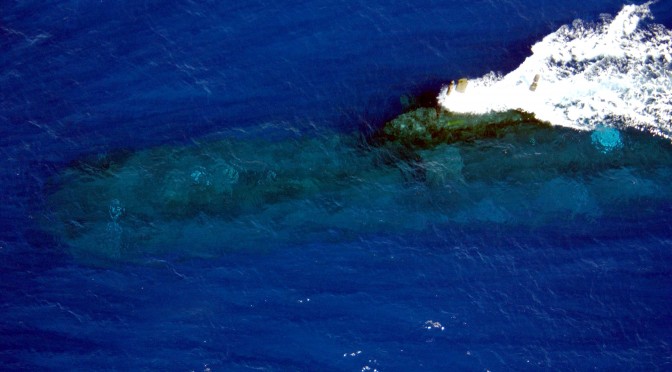
Featured Image: HMAS Rankin at periscope depth. United States Navy, Photographer’s Mate 1st Class David A. Levy


A Proactive Approach to Deploying Naval Assets in Support of HA/DR Missions

Naval HA/DR Topic Week

By Marjorie Greene

In our current information age, there appear to be many trends that are reshaping the naval approach to operations in support of HA/DR.  Among them are the following:

  • The  extremely broad availability of advanced information and communications technologies that place unprecedented powers of information creation, processing, and distribution in the hands of almost anyone who wants them – friend and foe alike;
  • The increasing complexity of missions as naval forces increasingly form partnerships with various civilian agencies and nongovernmental organizations;
  • The rising importance of decentralized operations;
  • The data deluge – the unprecedented volume of raw and processed information with which humans must contend.

All of these trends are reinforced by the rapid rise of social media.  Many naval analysts are conducting research that will give insight into how social networks can be exploited, especially during HA/DR operations.

Deeper Civil-Naval Integration Will Be Needed for HA/DR

To help frame and inform studies about the true value of “soft power” missions in the future, CSIS conducted a study in March, 2013 of “U.S. Navy Humanitarian Assistance in an Era of Austerity.” Chaired by Admiral Gary Roughead (USN Ret.), formerly Chief of Naval Operations, the study discusses the emergence of proactive humanitarian assistance and the need for deeper civil-military integration. This will be a challenge unless the military has the cultural knowledge to know whom to communicate with during these missions.

There are still major barriers to using social media for naval operations when warfighters respond to crises. For example, how can we use social networks for theater operations in such a way that the data can be combined with traditional command and control tools (usually classified) for naval operations? How can we overcome the considerable challenge posed by information overload? How can we reconcile the traditional decision-making of hierarchically oriented commanders with that of the civilian sector which is currently cooperative and collaborative?

Until recently, most basic research has focused on developing technical solutions to filter signals from noise in online social media. But this is starting to change.  There is less emphasis on techniques such as keywords to filter or classify social network data into meaningful elements and more emphasis on introducing new methodologies to come to a conclusion about the importance, utility, and meaning of the data.  

I have also been looking for alternative methodologies to evaluate the impact of incorporating information from social media streams in HA/DR operations. Analyses have shown that naval officers often lack the regional cultural knowledge to know whom to communicate with in HR/DR missions and must build working relationships with new groups of stakeholders and responders for each mission. Naval officers are required to develop the cultural connections to conduct the mission and the operational data shows that this process often takes too long. It may be that social media can facilitate these bonds and relationships.

Social media is changing the way information is diffused and decisions are made, especially for HA/DR missions when there is increased emphasis on commands to share critical information with government and nongovernmental organizations. As the community of interest grows during a crisis, it will be important to ensure that information is shared with appropriate organizations for different aspects of the mission such as evacuation procedures, hospital sites, location of seaports and airports, and other relevant topics. Social media can increase interoperability with non-military organizations and create a faster decision cycle. For example, studies have shown that even using traditional messaging, in the first 14 days of the U.S. Southern Command’s Haiti HA/DR mission, the community of interest grew to more than 1,900 users!

US Navy social media badge

Operational conditions vary considerably among incidents and coordination between different groups is often set up in an ad hoc manner. What is needed is a methodology that will help to find appropriate people with whom to share information for particular aspects of the mission during a wide range of events. A potential methodology might be to pro-actively establish relationships before a crisis occurs and a model for doing this is presented below. The model mimics the famous experiment of social psychologist Stanley Milgram, who provided the first empirical evidence of “six degrees of separation” when constructing paths from friend to friend as in a social network. 

The Stanley Milgram Experiments

In his famous series of experiments in the 1960’s, Stanley Milgram hypothesized that short paths can be found to quickly reach a target destination when an individual mails a letter to someone he or she knows on a first-name basis with the instructions to forward it on in this way toward the target as quickly as possible. The letter eventually moved from friend to friend, with the successful letters making the target in a median of six steps. This kind of experiment – constructing paths through social networks to distant target individuals – has been repeated by a number of other groups in subsequent decades.

The Model

In an approach similar to the Milgram experiments, I propose to use a unique message addressing rule which constructs social networks as events occur. It is an approach to intelligent agent-based computations that builds on behavioral models of animal colonies. These animal models show how colonies can detect and respond to unanticipated environmental changes without a centralized communications and control system. For example, the ant routing algorithm tells us that when an ant forages for food, it lays pheromones on a trail from source to destination.  When it arrives at its destination, it returns to the source following the same path it came from. If other ants have travelled the same path, the pheromone level is higher. Similarly, if other ants have not travelled along the path, the pheromone level is lower.  If every ant tries to choose the trail that has higher pheromone concentration, eventually the pheromones accumulate when multiple ants use the same path and evaporate when no ant passes.

Just as an ant leaves a chemical trace of its movement along a path, this simulated agent attaches traces of previous contacts by means of “digital pheromones” to each message that it sends. This is done by ensuring that all communicators along a path are kept aware of all previous communicators in the path. Suppose, for example, “A”, “B”, and “C” represent three naval warfighters using a social network. “A” starts a path on a particular topic by sending a message to “B”.  “B”, in turn, decides to send a message to “C” on the same topic.  Thus far, this is similar to the Milgram experiment, in which a “path” was created as a letter was forwarded from friend to friend until it reached a designated “target” in the network. However, in this case the target “emerges” from the interaction of A, B, and C. Another major difference is that a simple message addressing rule is used that asks each communicator to “copy” all previous communicators on a topic when it chooses to send a message on that topic.

The diagram below illustrates an analysis of an actual event in which A, B, C, D, and E (who are commands represented on the Y-axis) communicated using traditional messaging during a humanitarian assistance operation. The diagram shows that 7 messages were sent between the commands for this event. (An arrow from A to B means “A sent a message to B”.)  So, for example, message 1 is from command A to his subordinate Command B at 0021 and starts the message path asking for supplies to be sent to the area.  (Command A also sent this message to B’s subordinates “for information”.) In message 2, Command B addressed his own subordinate Command D, as well as Command E, a non-government organization, who ultimately sent the supplies. 

FireShot Capture 76 - (no subject) - dfi_ - https___mail.google.com_mail_u_0_#inbox_153c0e9961e8f7ed

In the event illustrated above, the third message from C to B asks the status of supplies. Because C was addressed in the first message, he knew of the request for supplies.  However, Command C was not copied in the 2nd message from B and did not know about this message. This is why I suggest that a message-addressing rule will be very important in the future use of social media.  It will achieve two major objectives:

  • It will guarantee that all warfighters along the path are automatically kept informed of previous communicators in the path on the topic. This provides the important feedback that socio-technologists have shown to be very important in the control of large-scale coordination during evolving operations;
  • It avoids keywords by defining a topic through communication that represents a path in a social network. This provides a way to deal with changing topics and an uncertain organizational structure in an evolving crisis.

Conclusion

I have developed an approach to coordinate activities during HA/DR missions as naval warfighters continue to see greater use of nonhierarchical communications for complex interactions. Collaboration with external partners is expected to grow when conducting HA/DR missions. If a social network of trusted coordinators were established before a crisis occurred, military and civilian commanders would already have working relationships with each other and could plan HA/DR missions in advance. Deeper integration could be achieved using social media to exchange information and the right group of trusted collaborators would be pro-actively defined.  Such an approach would assist in sustaining planned assistance in an era of global austerity.  

Marjorie Greene is a research analyst at CNA.  She has more than 25 years of management experience in both government and commercial organizations and has recently specialized in finding S&T solutions for the U.S. Marine Corps.  She is active in both the Military Operations Research Society and IEEE, where she serves on the Medical Technology Policy Committee and the Bioterrorism Working Group.

Featured Image Source: Open DNS Security Labs Visualization of Canada’s Internet Infrastructure