Category Archives: Current Operations

On-going Naval Ops or Maritime Current Events

Colombia’s Riverine Force

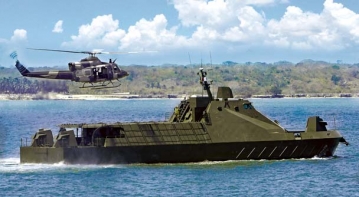
The Patrullera de Apoyo Fluvial Pesada (PAF-P, commonly referred to as the Nodriza-class
The Patrullera de Apoyo Fluvial Pesada (PAF-P, commonly referred to as the Nodriza-class)

By Mark Munson

Thanks to the @Cimsec Twitter feed, earlier this week I was alerted to an announcement that Colombia was creating a new “Naval Force of the East,” a new addition to its geographically-oriented naval commands in the Caribbean, Pacific, and South of the country.

The actual press release on the Colombian Navy’s (Armada Nacional de la República de Colombia) website stated that this new command would be responsible for security of the various rivers of the Orinoco basin along Colombia’s border with Venezuela.  Commanded by a naval officer, the new command will incorporate several Colombian Marine Corps units (COLMAR, Infantería de Marina Colombiana).  This development shines a light on the Colombian Marine Corps and one the world’s most robust riverine capabilities.

According to the 2013 edition of Jane’s World Navies, types of Colombian riverine units include River Infantry Brigades (Brigada Fluvial de Infantería de Marina, BRIFLIM), River Battalions (Batallón Fluvial de Infantería de Marina, BAFLIM) and River Assault Marine Battalions (Batallón de Asalto Fluvial de Infantería de Marina, BASFLIM).  Forces from the 1st River Marine Infantry Brigade (BRIFLIM1) are located near Colombia’s Caribbean coast.  The 2nd River Marine Brigade (BRIFILIM2) is located on the Pacific coast with its headquarters in Buenaventura.  The 3rd River Marine Brigade (BRIFLIM3) is headquartered in Puerto Leguizamo and is responsible for forces operating along the borders with Ecuador and Peru.  Forces from the 4th River Marine Brigade (BRIFLIM4) operate in regions near Colombia’s Pacific coast and border with Ecuador.  The Marine force assigned to the new Naval Force East is a regular Marine Infantry Brigade (BRIM5).
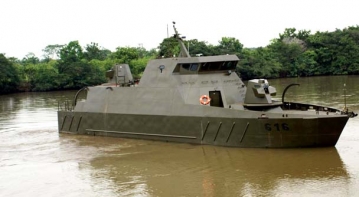
PAF-L
PAF-L


Colombia’s state-run shipbuilder COTECMAR has built a variety of modern command platforms and assault craft for use by COLMAR’s riverine forces.  COLMAR now has ten ships of the Patrullera de Apoyo Fluvial Pesada class (Riverine Support Patrol Craft or PAF, more commonly referred to as the Nodriza, the Spanish term for “wet nurse” or “nursemaid”).  These ships are jet-propelled, heavily armored, and can embark a helicopter and 72 Marines.  A newer mother-ship concept is the PAF-L (Riverine Support Patrol Craft-Light), about half the size of the Nodrizas and capable of operating in extremely low draft environments.  The motherships are supported by smaller LPR-class ships (Lanchas Patrulleras Rapidas or Fast Patrol Boats).

The precise reason for this announcement and the expansion of riverine combat power along Colombia’s border with Venezuela is unclear.  According to the Colombian Navy’s press release (translation courtesy of Google), “with this new National Navy the Navy affirms its commitment to the security of the country and will continue in a decisive offensive operations ahead in order to neutralize the illegal structures that offend in eastern Colombia.”  It is unclear whether this move represents signalling of Colombian strength to Venezuela’s post-Hugo Chavez leadership, although it should be noted that, according to Jane’s Sentinel Security Assessment, published in May 2013, BRIM5 was already in place in Puerto Carreno, along Colombia’s southeast border with Venezuela, well before this announcement.  The Presidents of Colombia and Venezuela met in nearby Puerto Ayacucho, across the river in Venezuela, on 22 July.

Lieutenant Commander Mark Munson is a Naval Intelligence officer currently serving on the OPNAV staff.  He has previously served at Naval Special Warfare Group FOUR, the Office of Naval Intelligence, and onboard USS Essex (LHD 2).  The views expressed are solely those of the author and do not reflect the official viewpoints or policies of the Department of Defense or the U.S. Government.  You can follow him on Twitter @markbmunson.
A New Writer on “New” Ships

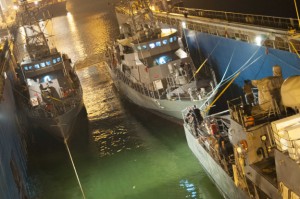
Special delivery
Special delivery

Greetings, and happy post-Independence Day to the CIMSEC crowd. I’m a new member here, having recently left Active Duty for the Navy Reserve and gone to work in the DC area. My active time consisted of a hull swap on two old ships and becoming a plankowner on a new ship, plus training recruits on shore duty. But nowadays I’ve returned to my journalism-major roots as a civilian, and my initial goal for CIMSEC was just to apply those skills with some editing and other behind-the-scenes support for NextWar. Of course, news broke during the holiday period that, naturally, drew attention.

Just before the Fourth of July, the heavy-lift ship Eide Transporter floated off three pieces of valuable cargo in Bahrain – the USS Tempest, Squall and Thunderbolt. The trio joins five PCs already stationed in Bahrain, with two more to come next year.

From the Navy Times: “They’re perfectly suited for what we do,” Capt. Joseph Naman, commander of Bahrain-based Destroyer Squadron 50 serving the 5th Fleet, said during the conference call. “There’s a lot of shallow water out here.”

This demand signal from U.S. Fifth Fleet (and, presumably, Central Command) could be considered a reflection of the actual operational needs of the Navy. Apparently those needs include a large number of shallow-draft yet heavily-armed vessels that match up well with the fleets of local allies. Add upgrades with gyro-stabilized Mark 38s and a Griffin missile system, and you’ve got a capable platform for visual-range engagements against other small combatants. Cost estimates are hard to find, but this one lists the PC class as $31 million apiece. Be generous and add 50 percent, so maybe now we’re talking $45 million.

A question then presents itself. In this time of supposed austerity and fiscal sobriety – in which our Navy is also looking to grow the Fleet – why can’t we build more of these, or something similar? Especially if they fit the mission so well that CENTCOM can’t get enough of them?

For the near term, part of the answer seems to be we’re already building a “small and nimble” craft. Except it brings a draft in excess of 12 feet and not much more weaponry than a PC – and all that for at least ten times the cost. The LCS flight deck is great, but I’m not convinced it’s worth the extra hundreds of millions of dollars. At least, not 55 of them.

Yes, unit costs will come down with further builds. Yes, each version brings a huge flight deck. But cut the cost in half and you can still put five or six PC-equivalents in the water at the same price, reach out and touch more Gulf partners (or allies in any littoral environment), and not incur such huge losses as will occur when the expensive LCS ends up overmatched in a contested environment. The LCS certainly will find some uses out in the Fleet – but when the very mission for which it was designed is already being performed by ships built for a tenth of the cost, can we really justify building more of one and not the other? And building that “other” must happen soon. All but one PC are in excess of their intended service life, and their age is starting to show.

Much credit in this discussion goes to many fine recent articles floating about the blogosphere concerning future Fleet composition. To paraphrase one such Proceedings article which I am not the first to reference, the Navy could do worse than to build some Fords instead of Ferraris.

Matt served as a division officer aboard USS Shiloh (CG-67), USS Chancellorsville (CG-62) and USS Makin Island (LHD-8), and at Recruit Training Command ashore. He is a strategic communications consultant in the Washington, DC, area and is a Navy Reservist.

ReCAAPing Japan’s Counter-Piracy Multilateralism

Given the recent tendency of many Japan watchers to focus on some of the more eyebrow-raising news from Japan – ranging from predictions of an ‘Abegeddon’ through possible constitutional changes to historical revisionism – it may be timely to shed light on one particular Japanese multilateral initiative that has seen increasing international interest. The Regional Cooperation Agreement on Combating Piracy and Armed Robbery against Ships in Asia (ReCAAP) is the world’s first regional intergovernmental body designed to combat piracy and armed robbery (PAR) against ships. ReCAAP was born out of the Asia Anti-Piracy Challenge Conference held in Tokyo in 2000, which followed in the wake of the 1997 Asian Financial Crisis and the resulting spike in PAR incidents.

A concrete initiative to establish such a body was made by Prime Minister Koizumi during an ASEAN+3 Summit in 2001, and the ReCAAP Agreement was drafted by 16 Asian countries in 2004. It entered into force in September 2006, followed in November by the establishment of an Information Sharing Centre (ISC). This Singapore-based ISC serves as a hub for information exchange on PAR incidents between all contracting states. At present, ReCAAP has 18 such contracting parties, including four from Europe (Denmark, the Netherlands, Norway and the UK). As the first framework of its kind, the ReCAAP model has enjoyed significant success and served as a model for the creation of the Djibouti Code of Conduct (DCoC), and is now in the early stages of forming the basis for a similar information sharing mechanism in the Gulf of Guinea.

Information sharing via decorative fountains
                                                              Information sharing via decorative fountains

According to the latest available figures, the number of reported piracy and armed robbery attacks against ships in Asia – most of which occur in the waters, ports and harbors of Southeast Asia – continued to decline over the course of the first five months of 2013. This year thus continues the positive trend from 2011 and 2012 when the number of incidents began to decrease for the first time since their surge in 2009. Although not the only factor to contribute to the decrease, facilitating information sharing has proven invaluable in a region crisscrossed with maritime boundaries, exclusive economic zones (EEZs) and ongoing territorial disputes. Detailing ReCAAP’s information sharing and incident reporting procedure would be beyond the scope of this post, although some of its intricacies may well be addressed in more detail in a separate piece in the future. Until then, a general overview of the reporting procedure can be found here (appendix, page 26).

Despite its relatively modest funding (all of ReCAAP’s funds are obtained through voluntary donations by contracting parties), which will amount to approximately 2.2 million USD in the fiscal year 2013, ReCAAP’s three principal tasks – information sharing, capacity building and cooperative arrangements between contracting parties – have made a tangible contribution towards reversing the rising trend in PAR incidents in the region.

After having authored a paper on PAR in Southeast Asia and the role of ReCAAP back in March, I was glad to have the opportunity to welcome a delegation from the ReCAAP ISC at a round table organized by the European Institute for Asian Studies (EIAS) in Brussels on 21 June. Their visit coincided with a period of increased international interest in the Agreement and its work, as Australia is set to become the 19th contracting party this August. France and the U.S. have also expressed an interest in joining, which would increase ReCAAP’s membership to 21 and expand the range of its information sharing network from Asia into the Pacific proper. Finally, as the EU contemplates becoming a partner organization over the coming years, the role of Europe within the framework will increase even further.

As its information-sharing model sees increasing adoption in other PAR ‘hotspots’ across the globe, ReCAAP will continue to attest to the capability of Japan to engage with its neighbors in multilateral fora (both China and South Korea are contracting parties) and shape pan-Asian initiatives. With some of the recent changes in the country’s political-security milieu putting its neighbors on edge, perhaps the time is right for Japan to reaffirm this capability. The 2001 ‘Koizumi initiative’ was a success; has the time come for an ‘Abe initiative’? It could build on ReCAAP’s success or outline a new multilateral framework that would help safeguard the global commons, be it in the maritime, cyber, air or space domain. Crucially, such an initiative could assure the participation of Japan’s neighbors while giving Tokyo’s soft power a welcome boost in the process.

Miha Hribernik is Research Coordinator at the European Institute for Asian Studies (EIAS) in Brussels and an analyst at the geopolitical consultancy Wikistrat. The views expressed here are entirely his own. This post appeared in its original form on the website of the Japan Foreign Policy Observatory.

How to Negotiate with Pirates

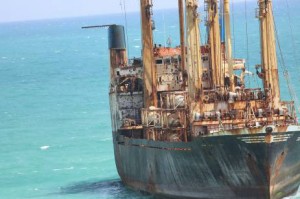
M/V Iceberg: Waiting is the hardest part.
        M/V Iceberg: Waiting when your ship’s come in.

Despite having declared a ‘comprehensive approach’ to Somalia, linking security with development, and launching the EUNAVFOR mission in December 2008, the European Union (EU) has neglected an important piece of the counter-piracy solution: negotiations for the release of European hostages held by pirates. The EU should adopt a consistent EU policy concerning the payment of ransom to pirates, set up an EU negotiation team, and identify and promulgate specific best practices in negotiation strategies.

The reduction of piracy in the Gulf of Aden is the consequence of many actions undertaken by several actors. The previous Force Commander of EUNAVFOR, Rear Admiral Philippe Coindreau, declared the “results are due to the combination of EUNAVFOR’s action, […] the use, by the maritime community, of systematic security measures on merchant vessels and high-quality cooperation with other naval forces and independent Navies”. According to Xavier Larreur, a NATO official, this is also partly due to Puntland’s efforts in arresting pirates.

However, while piracy in the Indian Ocean is on the wane, it is not yet beaten. The International Maritime Bureau (IMB) states that five boats and 77 hostages are still held by Somali pirates. In the beginning of June, a failed attack on the Indian ship Shaahi al Nuuri in the Indian Ocean led the head of operation of the EU Naval Force, Rear Admiral Bob Tarrant, to declare: “This latest attack once again shows that the threat of piracy is real. We must all remain vigilant. Earlier in the week – according to our information – several “suspicious approaches” in the Gulf of Aden were reported, but without shooting or boarding attempts.”Attacks will rise again if the naval presence is reduced or if vessels relax their vigilance.

Somali pirates are clearly organized: “Everything that you would need to run a cruise ship line, short of the entertainment, you need to run a piracy operation” says J. Peter Pham from James Madison University in Virginia. A pirate attack can cost as little as $15,000 dollars to set up and only 15 to 30 minutes to execute. But waiting for the ransom can last months.

Negotiations are the solution of last resort, taken only when preventive measures have failed to protect the ships from hijacking. Once hijacked, ransom should be paid only if it is too risky for the naval forces to attack the hijacked ship. This is typically the case, as most ships taken hostage by pirates are released by ransom rather than force, the actors involved preferring to avoid rescue missions because of the high risk of casualties. Fortunately, as pirates are not terrorists, there is not as strong a prohibition of negotiating with them for the release of hostages.

However, this solution of last resort can’t be handled individually. To avoid an increase in the amount of ransom and violence against hostages, it is necessary that Europeans better organize and coordinate the conduct of negotiations with pirates. The EU needs to create a crisis management team to provide a coordinated response to every ransom demand. By knowing how high the ransom was for each category of ship, and by understanding pirates’ negotiations styles, the EU could try to keep the price down. Indeed, countries that easily pay ransom such as Greece and Italy are paying sky-rocketing amounts. Pirates have now been securing equal or greater value for previously less-hijacked vessels. Therefore, a coordinated response could help reduce the business of piracy, or at least to not make it so attractive that new pirates get on the market, by setting a standard cap on the payment of ransoms.

A standing crisis management team would also gather and share intelligence on pirate groups to better fight them and facilitate any negotiations. Social networks, widely used by pirates, would improve knowledge of individuals and groups operating in the area. The EU’s effort must be modern – not left behind because of a heavy bureaucratic structure. Once hostages are freed, the crisis management team could systematically collect additional information on the organization of these criminal networks, working with EUROPOL and INTERPOL, who already trace criminal financial flows arising from payment of ransom.

This model can also be applied to other areas of pirate activity. The IMB again reports that the number of acts of piracy recorded off the West African coast in 2012 exceeded for the first time the attacks in the Gulf of Aden and the Indian Ocean, with 966 sailors attacked in the Gulf of Guinea, against 851 sailors off the coast of Somalia. The cost of goods stolen by West African pirates is estimated at between $34-101 million. On June 24th, the heads of state of Central and West African nations, gathered in Yaounde, Cameroon, for a summit on security in the Gulf of Guinea, requesting the deployment of an international naval force to fight piracy off their coasts.

Negotiations won’t work in every instance and they should not last long. Lengthier negotiations have not proven more successful in reducing the amount of the ransom, and their impact on the mental and physical health of hostages can be significant. In the case of the M/V Iceberg, the crew was abandoned by the owners, who did not have the requisite shipping insurance to pay a ransom. The crew was kept hostage and tortured for three years, which is the longest pirate hijacking in modern maritime history. Another tragic hijacking was the one of the Beluga Nomination, in which a sailor was killed during a failed bid to free the ship. It should be standard EU policy at some early point for the crisis team to determine whether the risk to the mariners of continued negotiations and unliklihood of an acceptable deal outweighs the risk of a rescue attempt. There is no certainty an EU crisis management team would have prevented these tragedies, but the lives of these sailors and the potential to reduce both the human and economic costs is worth it.

Alix is a political advisor in New Caledonia. She previously served as an officer in the French Navy, specialising in maritime law and maritime threats such as overfishing and piracy. Her masters thesis details the fight of the European Union against piracy.

To learn more about this subject, she suggests reading:
http://www.bruxelles2.eu/wp-content/uploads/2012/05/WILLEMEZ-A-little-guide-to-negotiations-with-Somali-pirates-for-European-negotiators-.pdf
http://www.chathamhouse.org/sites/default/files/public/Research/Africa/0812anyimadu_0.pdf
http://www.diw.de/documents/publikationen/73/diw_01.c.408689.de/diw_econsec0074.pdf