Update: U.S. officials say SEALs were involved in the strike against Barawe but have not released details on casualties or the success/target of the mission. Elsewhere, US forces have reportedly captured Anas al-Libi, a involved in the 1998 attack on the U.S. embassies in Kenya and Tanzania, and are holding him aboard a U.S. naval vessel.
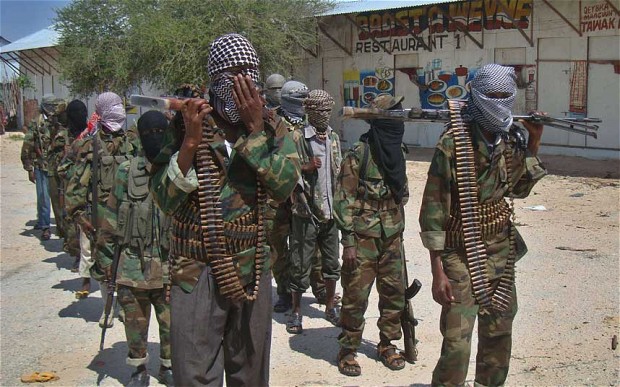
A developing story today: reports coming out of Somalia of a pre-dawn, seaborne raid at the al-Shabaab-held coastal town of Barawe. Al Shabaab at first stated U.S. forces may have been involved, then said the raid consisted of British SAS and Turkish forces.
“The commander of the British force, it said, was killed during the attack and four other SAS operatives were critically wounded. One Turkish soldier was also wounded, according to a statement by Sheikh Abdiasis Abu Musab, al Shabaab’s military operation spokesman.”
British and Turkish officials are publicly denying any involvement. France has similarly denied involvement despite one Somali official’s statement that the raid was carried about by French forces targeting a Chechen or Shabaab leader Ahmed Godane, aka Mukhtar Abu al-Zubayr, believed behind the attack on Nairobi’s Westgate mall.
Other accounts say with some troops also landed by helicopter, and that the focus of the raid was a two-story beach-side house used as a headquarters.
The only non-conflicting report at this point seems to be that residents awoke to the sounds of gunfire around 3am.
It’s a MULE, not a cow. It’s also composite metals, not gold… but technology may be a Golden Cow.
And when the people saw that Strategy delayed to come down from the mountain, the people gathered themselves together unto Convention, and said unto him, Up, make for us Purpose, which shall go before us. As for this Strategy, the man that brought us up out of the land of Defeat, we know not what is become of him.Convention said unto them, “Break off the golden epaulettes, which adorn the shoulders of your commanders, your assistants, and of your peers, and bring them unto me. And all the people brake off the golden epaulettes and brought them unto Convention. He received them and fashioned it with a graving tool, after he had made it a molten calf: and they said, These be thy Purpose, O People, which brought thee up out of the land of Defeat.
And it came to pass, as soon as Strategy returned from speaking to the true Purpose upon the mount, he came nigh unto the camp, that he saw the calf, and the dancing: and Strategy’s anger waxed hot, and he cast the mission objectives out of his hands, and broke them upon the rocks of the mountain. He took the calf which they had made, and burnt it in the fire, and ground it to powder, and strawed it upon the water, and made the people drink of it. It tasted like crow.
4-8 November is Sacred Cow week. Come down from the mountain and lay waste to the idols of convention you have seen that have been put before true purpose in strategy, military operations, tactics, or the broad diplomatic, legal, and financial processes necessary for maintaining maritime security!
Is the surface fleet standing in the way Submarines as a primary sea weapon? Are you an Army advocate unsure why the Marine Corps exists when the Army has more ships than the Navy? Are you a Marine who thinks, actually, no, why do YOU still exist, Army? Are you in the Navy wondering why those Army ships even exist? Are you in the Royal Navy and wishing you HAD some of those ships? Are you someone who wonders why some states even bother with separate branches? Do you think the global carrier building boom is misguided? Stealth Fighters, Dress Uniforms, Counter-Piracy, NATO, Electronic Charts, ASCM, basing… we are looking for corrections to what YOU think are our mistaken premises.
One of the definitions of Crisis as an Ideogram is “Danger, mixed with Opportunity.”
You’re well on your Wei.
Woe betide nation-states and actors unable to navigate this tricky path. For the government of the Philippines, China, and the Moro National Liberation Front (MNLF), recent events have been a poster child for this concept, as evidenced by the dual crises at Panatag (Scarborough) Shoal and ashore in Zamboanga City.
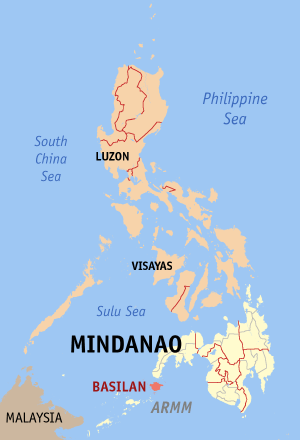
The Zamboanga Crisis shows how maritime power is very much an enabler for non-state actors (NSAs). The entire Sulu island chain is one very large ratline; porous and a challenging region to monitor. The Moro National Liberation Front, as do many other NSAs, takes good advantage of the geography and the lack of patrol enforcement and coordination between the Philippines and Malaysia – easily slipping across the borders uncontested. The absence of law and order, as well as numerous informal economies make it ubiquitous that inhabitants travel in large, and in most cases armed groups. As a result, Nur Misuari’s MNLF was not only able to thrive in Sulu following the 1996 peace talks, but he was also able to build a large, and by all reports, well-equipped following in Malaysia’s Sabah peninsula. Undoubtedly, the thin security situation on the water and coastlines helped facilitate unhampered movement of his personnel as well as transshipment of logistics and arms.
It’s been all opportunity and no danger for China. The PRC is using Panatag Shoals as an expansion of it’s Nine-Dash Line Plan to gain control over what is considered integral territory. Capitalizing upon ASEAN’s inability to reach consensus on security and cooperation over contested territory, China likely will remain in physical possession of the seized islands well inside the Philippine EEZ. Beijing also benefits through Manila’s struggles to build a Credible Defense in a time of economic challenges, and is counting upon the lack of clear focus on Pacific foreign policy by the Obama Administration. The mixed signals of the “Pivot to the Pacific” coupled with US Secretary of Defense Hagel’s reiteration about US neutrality on issues of sovereignty are all green lights as far as the Chinese are concerned.
For Nur Misuari and the MNLF, the Zamboanga City attack is a last gasp. A lot of peril, but with corresponding big stakes. Having been locked out of the ongoing OIC talks, the aging but defiant Islamist revolutionary has nothing to lose. The attack is an attempt to bring attention back to his organization’s unresolved demands and buy him a seat at the table. The attack would have been more successful had he not chosen to use the densely trafficked (and monitored) Basilan Strait to land part of his troops on mainland MIndanao.
Strait up the middle!
Even with a dearth of assets, Philippine Navy and National Police elements could not help but note a company-size movement on boats speedier and more well-equipped than local fishing traffic. This miscalculation apparently threw the rebels’ timetable off as the insurgents already ashore were forced into a series of skirmishes in barangays (neighborhoods), short of their ultimate goal of taking the entire city. Misuari’s trump card may still be played; over 4,000 fighters encamped in Malaysia’s Sabah peninsula. If the MNLF chooses to restart fighting amongst the Palm Plantations, the resulting refugee crisis alone could overwhelm what little control both nations have over the area.
For the Armed Forces of the Philippines and in particular, the Navy, it’s been a mixed outcome. On the one hand, the fortuitous success of detecting MNLF movements spoiled what could have been a prominent rebel victory in government-held areas. On the other, PN Flag Officer-in-Command Jose Luis Alvano is tasked with an impossible mission – to remove over eleven tons of concrete from Panatag with no assets or funding, AND keep the Shoals in Philippine hands. It’s the peak of Monsoon Season, and one of his only two platforms with enough range, speed and on-station endurance is in drydock until October. Confronting China Marine Surveillance with Navy ships brings it’s own set of concerns, and Defense Minister Voltaire Gazmin publicly admitted there’s no way to keep possession of the Shoals without occupying them – an intention that current capabilities cannot support.
Finally, for the Aquino Administration, there’s nothing like a rebel uprising as teachable moments:
Lesson 1: Infowars matter – the lack of maturity around how to handle Social Media coverage of the event is painfully evident – from broken boots, troops short of rations, to operational security and hobby-shop drones
Philippine Army Drone over Zamboanga – courtesy Yahoo! News
– the government is learning how to manage crisis communications effectively in a school of hard knocks. At least Zamboanga City’s Twitter account was warning residents to stand clear of impending air strikes.
Lesson 2: Your enemies could be next to you, not in front of you. Prior to the conflict, Representative Rudolfo Biazon, Chairman of the House Committee on Security and National Defense, had been questioning all the big-ticket Modernization items the Administration was obtaining. Biazon’s soapbox issue is ditching the conventional arms purchases and focus more on Counter-insurgency (COIN) assets that could double up in times of Humanitarian Assistance/Disaster Recovery (HADR). The crisis can only provide more fodder for his call. But that pales next to Vice-President Jejomar Binay’s trangression; unilaterally brokering a failed cease-fire with Misuari without Presidential authorization, all for the sake of grandstanding. Reputedly, Binay is seeking to distinguish himself from Aquino as part of a presidential election bid in 2016.
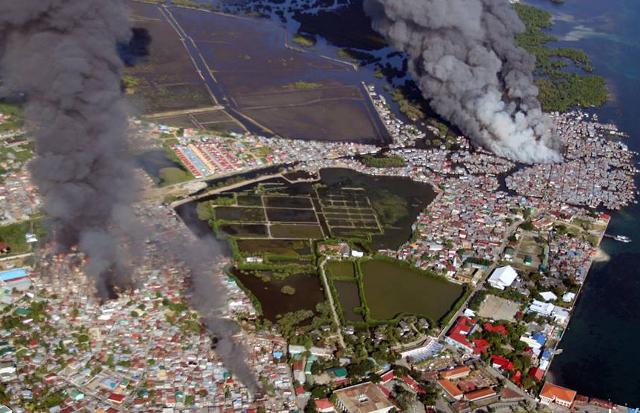
The bright light for the Administration is the quick and effective response to the MNLF attack – locking down a security cordon in Mindanao and preventing any escape, while balancing a difficult urban combat situation exacerbated by hostage-taking and literal town-burning.
Zamboanga City showing damage from the fighting. Courtesy GMA News/Samhyr
But Panatag Shoals beckons like the hazard that it is, both from a navigational as well as foreign policy viewpoint. Aquino has shown willingness to confront the Chinese in the past, but without capabilities, all he can do is present an inconvenience to Beijing’s aspirations. His most powerful option is to compel international condemnation through the UNCLOS tribunal and hopefully bring China to the table over a real and substantive Code of Conduct.
Juramentado is the pseudonym for Armando J. Heredia, a civilian observer of naval affairs. He is an IT Risk and Information Security practitioner, with a background in the defense and financial services industries. The views and opinions expressed in this article are those of the author, and do not necessarily represent the views of, and should not be attributed to, any particular nation’s government or related agency.
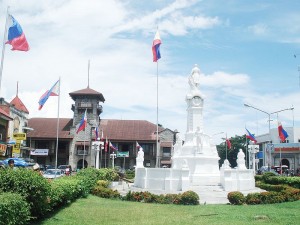
Despite regular coverage of ongoing events in Zamboanga City by both the Philippine and world press, there is still bafflingly little information available regarding the invasion and possible attempted takeover of the city on the southeastern tip of the island of Mindanao by fighters from a faction of the Moro National Liberation Front (MNLF). Recent reports from the Armed Forces of the Philippines on 16 September claimed that “70 percent of the coastal areas in Zamboanga City that were occupied by Muslim rebels” had been recaptured by Monday, with military “and special police forces” having “killed or arrested more than 100” rebels occupying “five coastal villages” after what has been described as a “foiled attempt” at occupying the city hall (or an attempt to raise the rebels’ flag) on 8 September. 82,000 of the approximately 1 million Zamboanga residents had been forced from their homes due to the fighting.
The Philippine Navy’s response
The Philippine military’s maritime forces have been very much involved in the response to the attacks in Zamboanga, with an afloat encounter between the rebels and AFP Navy Special Operations personnel at sea being described in most reports as the initial event of the standoff. The unit most likely involved in that incident was Naval Special Operations Unit Six (NAVSOU 6), the component of the Philippine Naval Special Operations Group (NAVSOG), based out of Naval Station Romulo Espaldon in ZamboangaCity and under the operational control of Naval Forces Western Mindanao (NFWM), the naval component of the AFP’s Western Mindanao Command (WESTMINCOM), the command responsible for military operations in the Sulu Archipelago and the western half of Mindanao. According to the AFP, ships and troops already based in Zamboanga have been augmented by “4 units provided by the Naval Special Operations Group” and 300 Marines.
Who is responsible?
A faction of the MNLF has been blamed for these events in most reports. The MNLF was originally founded in the 1960s and represented a variety of Muslim ethnic groups resident in the southern Philippines. Since its early years the group has been led by Nur Misuari, a native of Jolo Island (although Misuari is a Sama, not a Tausug like most Jolo residents). The Moro Islamic Liberation Front (MILF) separated from the MNLF in the late 1970s, with much of the split between the two groups being reflecting ethnic differences (the MILF is typically strongest in Maranao and Maguindanao area on Minadanao, with Tausugs from Jolo forming the backbone of the MNLF). The Al Qaeda-linked terrorist (and criminal) group Aby Sayyaf is itself an early-nineties splinter from the MNLF by natives of Jolo and Basilan.
In 1996 the Philippine government and the MNLF negotiated a peace that established the Autonomous Region of Muslim Mindanao (ARMM), composed of Muslim-majority provinces in the Sulu Archipelago (Basilan, Jolo, and Tawi Tawi) and on mainland Mindanao. Nur Misuari became the first governor of the ARMM and MNLF cadres were to be incorporated into the Philippine military. However, by 2001 he had been pushed out of his leadership role within the MNLF and, seeing the writing on the wall, led a an armed revolt on Jolo against both the remaining MNLF leadership and the Philippine government and military. After fleeing to Malaysia Misuari was arrested and deported back to the Philippines, remaining in custody until 2008. The forces of what has since been called the “Misuari Breakaway Group” (MBG) or “Misuari Renegade Group” (MRG) has been led by Habier Malik, who has also been identified as the leader of the Zamboanga attacks in much of the reporting.
Conflict between the MILF and MNLF has been sparked again in the last year due to the announcement last October that Manila and the MILF had reached their own peace agreement, the Framework Agreement on the Bangsamoro, which essentially replaces the MNLF-dominated ARMM by a new entity that will presumably be controlled by the MILF. Since the Framework was announced in 2012, there has been a variety of attempts to embarrass the government of Philippine President Benigno Aquino III. The most high profile, and bizarre, event was the February “stand-off” between followers of the Sultan of Sulu and Malaysian authorities in Sabah, on Borneo. Misuari “extended his support” to this venture and in August, “declared the independence of Mindanao and the establishment of the Bangsamoro Republik, which included Mindanao, Palawan in southwestern Philippines and Sabah in Malaysia.” Although Misuari has been widely blamed for the last week’s events in Zamboanga, his involvement is still unclear, with the Zamboanga City mayor stating that Misuari had “disowned” Habier Malik and the attack, while his lawyer has said that Misuari “was directing the MNLF fighters’ movements.”
A Violent History
Violence in Jolo and Zamboanga City has often been entwined. The 2010 bombing at the Zamboanga City airport that killed two people has generally been described as an attempted assassination against the governor of Jolo. In October 2002 a US Army soldier was killed in a bombing in Zamboanga City, and in 2009 two additional US soldiers were killed in an IED attack on Jolo that was attributed to the MNLF and the “Bangsamoro National Liberation Army.” Zamboanga City and the surrounding areas have been the site of numerous high-profile kidnappings against foreigners. An invasion on the scale of these most recent attacks, however, does seem like a significant escalation. It is likely an act of desperation by Misuari’s faction of the MNLF, but it is still unclear what they expected to achieve by taking the fight off Jolo, unlike in 2001.
What does this mean for the USA?
I attempted to weigh the relative success or failure of US counter-terrorism in the Philippines in an article in Small Wars Journal last year, with the predictable conclusion that the results were mixed. Of note, NAVSOU 6 is one of the units that has received training from US Special Operations Forces. Despite linkages between the various Muslim terrorist, nationalist, or rebel groups in the southern Philippines, however, the US has focused its activities to supporting the Philippine military in its fight against groups like Abu Sayyaf, not groups like the MNLF and MILF. With peace with the MILF and Abu Sayyaf on the decline, however, it seems that fallout from politics is more likely to be a source of discord in the Philippines than Al Qaeda-linked extremist groups.
Lieutenant Commander Mark Munson is a Naval Intelligence officer currently serving on the OPNAV staff. He has previously served at Naval Special Warfare Group FOUR, the Office of Naval Intelligence, and onboard USS ESSEX (LHD 2). In 2010 he deployed as the Intelligence Officer for Task Force Archipelago, the Naval Special Warfare component of Joint Special Operations Task Force-Philippines. The views expressed are solely those of the author and do not reflect the official viewpoints or policies of the Department of Defense or the US Government.