Category Archives: Current Operations

On-going Naval Ops or Maritime Current Events

America Should End Mercenary Contracts (Part II)

This feature is special to our Private Military Contractor (PMC)’s Week – a look at PMCs’ utility and future, especially in the maritime domain.

By Tim Steigelman

Assume America’s vital interests are threatened by a distributed network of tribal insurgents Country Orange. The American government needs to close with and engage the enemy. The Orange government agrees to either openly willingly allow or silently cooperate with American military actions in Orange.

American military planners can either send in uniformed military, or PMCs. Preferring to privatize this operation, the government hires (the fictitious) “Mercenaries ‘R Us” to handle the job. To maximize its profits, Mercenaries ‘R Us declines to armor its contractors’ wheeled vehicles or aircraft, obviates back-up communications devices, decides against individual body armor, and arms its mercenaries only with pistols and long guns. They keep a light footprint and send small teams out into known hostile territory. The inevitable happens, and the enemy successfully ambushes the contractors, with many killed and wounded.1

If the injured PMCs were instead American servicemembers, they would be given medical treatment and rehabilitation through military medicine. The VA, for all its flaws, would attempt to help the wounded recover and restart their life after their injuries. If the fallen were uniformed military, their survivors would be taken care of with survivor benefits. All of these benefits were enacted by Congress to support the men and women who go abroad to do the nation’s work in harm’s way.

In our example, Mercenaries ‘R Us sent its employees downrange to do America’s bidding. That is where the similarities to the uniformed military members end. PMCs are not entitled to use military medicine.2 There is no VA for contractors. Death benefits are limited to whatever Mercenaries ‘R Us has arranged for its employees and their survivors—likely very little.3 As long as the stock price stays high and the dividends keep coming, the shareholders are unlikely to have very much concern for the human toll of warfare.4 Battles fought in the name of the American people may not be watched particularly closely by a group of investors primarily concerned with the bottom line.

In other words, by hiring Mercenaries ‘R Us to fight its battles, America has externalized the cost of war, particularly caring for its combat wounded and the survivors of the fallen. No congressional committees to answer to, no pictures on the nightly news honoring the fallen, no unpleasant reminders of the horror of war. The policymakers get to conduct their military expedition, and the economic cost is borne by the shareholders of Mercenaries ‘R Us.

But even on the economic front, hiring PMCs may not be wise in the first place, as contractors may not cost any less overall than uniformed servicemembers.5 Nor does outsourcing insulate the government from responsibility for its actors, because when the government contracts out to private actors to perform public services, those actors become agents for the state.6 Moreover, contract warfare seems to skirt at least the spirit of mandatory Congressional oversight of the nation’s military.7 For all these reasons and as the hypothetical above shows, the inherent tension between public, military service and private ends is fraught with peril.

Private military contractors are one facet of the military-industrial-congressional complex that ought to be dismantled. The profit motive is out of American prize courts, and letters of marque have fallen into disuse. The modern renaissance of PMCs seems an anachronism, perilously like the “large Armies of foreign Mercenaries” that so offended the founders. As disparate personalities as Machiavelli and Washington well understood, mercenaries introduce a host of problems that outweigh their seeming availability as ready, armed manpower. America should get out of the mercenary business.

Tim Steigelman is a Visiting Scholar at the Center for Oceans and Coastal Law at the University of Maine School of Law in Portland, Maine. He practices business law and admiralty at the Portland firm Kelly, Remmel & Zimmerman, and is a reserve naval officer. The opinions above are solely his own, and do not purport to express the views of the Department of the Navy, Department of Defense, nor any agency or department of the United States, nor any other organization or client.

1. This hypothetical is drawn from Burke v. Air Serv. Intern., Inc., 685 F.3d 1102 (D.C.Cir. 2012).

2. Out of necessity, injured contractors do receive medical care from military doctors when in theater, which is both a cost driver to the government and a point of contention.  Once stabilized and sent home, the gratis health care ends and the injured mercenary is left with private medical insurance.

3. Citing Jimmie I. Wise, Outsourcing Wars: Comparing Risk, Benefits and Motivation of Contractors and Military Personnel in Iraq and Afghanistan (2009–2011), MBA Professional Report, Naval Postgraduate School (2012), available here.

4. A private company is generally required to maximize return for its shareholders, and corporate officers who make decisions at the expense of shareholder returns may face liability. Corporate oversight, such as it is, is exercised by shareholders.

5. See Isenberg, “Are Private Contractors Really Cheaper?”.

6. See, e.g., West v. Atkins, 487 U.S. 42, nn. 14-15 (1988).

7. See U.S. Constitution, Article I § 8 (requiring biannual reauthorization for the raising and supporting of armies).
America Should End Mercenary Contracts

This feature is special to our Private Military Contractor (PMC)’s Week – a look at PMCs’ utility and future, especially in the maritime domain.

America Should End Mercenary Contracts

By Tim Steigelman

Over the course of the last decade or more, scholars and pundits have debated the feasibility and legality1 of employing private military contractors2 (“PMCs”) in lieu of uniformed American military forces. What follows will be a two-part post looking at the historical antecedents and contemporary problems with mercenaries.

 I. Historical View of Private Warfare

 Historical Mercenaries

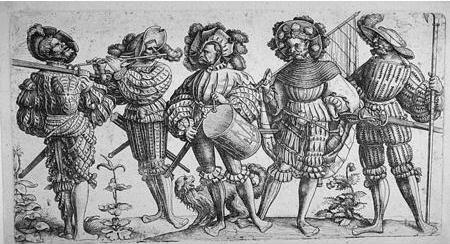
Mercenaries long predate modern PMCs. Perhaps the best known example from European history is the condottieri, the soldiers for hire who would fight for one prince or another as their paymaster dictated. One well known Florentine had quite a bit to say about condottieri, blaming them for failing to defend Italy against the invading French led by King Charles in the late fifteenth century. He explains the underlying problem:

“if a prince holds on to his state by means of mercenary armies, he will never be stable or secure . . . . Mercenary captains are either excellent soldiers or they are not; if they are, you cannot trust them, since they will aspire to their own greatness . . . but if the captain is without skill, he usually ruins you.”3   

Nevertheless, the title condottieri lives on today as part of a PMC trade name.4

Mercenary soldiers in America predate the republic itself. Hessian soldiers were famously dispatched from their German homeland to fight George III’s war against the rebellious colonists. This use of mercenary force was such an affront to the political wing of the Continental resistance that it declared King George had transported “large Armies of foreign Mercenaries to compleat [sic] the works of death, desolation and tyranny, already begun with circumstances of Cruelty & perfidy scarcely paralleled in the most barbarous ages, and totally unworthy the Head of a civilized nation.”5 Having fought the “large Armies of foreign Mercenaries” himself, George Washington echoed Machiavelli and “warned that ‘Mercenary Armies . . . have at one time or another subverted the liberties of almost all the Countries they have been raised to defend.’”6

 The American Civil War saw its share of the private hiring of soldiers, albeit not in a classic mercenary context. Previous mercenaries like the condottieri and Hessians were complete units that would be hired to go into combat as a unit. The Enrollment Act of 1863 established a draft for military service, and permitted conscripts to hire a substitute, a person who, for a fee, would take that draftee’s place, allowing the paying customer to avoid the draft.7 The Civil War system of substitutes kept the essence of the mercenary relationship—soldiers for hire, paid under a private agreement to fight—but these were retail, rather than wholesale mercenaries. Although the draft was reinstituted for several decades of the 20th century, it is telling that the substitute system was never reintroduced.8

 Privateers Profiting from War at Sea

The profit motive once enjoyed a prominent if relatively small role in American military power. At the founding, Congress was (and arguably still is) empowered to issue letters of marque and reprisal.9 While no match for a ship of the line, privateers were effective at least as an irritant to British commerce during the revolution.

A privateer was not a pirate because a sovereign nation issued a letter of marque allowing the privateer to take the enemy’s commercial vessels and keep them as prizes.10 Perhaps surprisingly to a modern audience, the earliest versions of American prize law even allowed American naval officers to retain some of the proceeds of prizes taken by commissioned American warships.11 That profit motive is no longer on the books.12

Even so, private, for-profit companies like Blackwater (now Xe), Triple Canopy, and others have provided contract military and related services to the United States. While proponents will point to their successes and opponents point out failings, their efficacy or lack thereof is beside the point. America should not use mercenaries because it distorts the relationship between an elected government and the people by privatizing inherently governmental services.

With this predicate the next post will examine more closely contemporary problems with mercenaries and war for profit.

Tim Steigelman is a Visiting Scholar at the Center for Oceans and Coastal Law at the University of Maine School of Law in Portland, Maine. He practices business law and admiralty at the Portland firm Kelly, Remmel & Zimmerman, and is a reserve naval officer. The opinions above are solely his own, and do not purport to express the views of the Department of the Navy, Department of Defense, nor any agency or department of the United States, nor any other organization or client.

1. See, e.g., Theodore T. Richard, Reconsidering the Letter of Marque: Utilizing Private Security Providers Against Piracy, 39 Public Contract Law Journal 411 (2010); see also Claude Berube, Contracts of Marque, U.S. Naval Institute Proceedings Magazine, 2007 Vol. 133.

2. The term “contractor” or “military contractor” has been long used in defense circles to encompass much more than the subset of commercial mercenary armies, to include private people and entities of all kind providing goods and services to the DOD under a contract, differentiating “government contractors” from civilian government employees. Take, for example, Edward Snowden, widely and properly reported to be an NSA contractor at the time of his heroic and/or infamous acts. For purposes of this piece “contractor” will be used in the narrower sense of armed private forces, and interchangeably with PMC.

3. Niccolo Machiavelli, The Prince (Peter Bondanella & Mark Musa, eds. & trans.) Penguin Books, 1979, pp. 116-17.

4. Condottieri Contractors. http://www.condottiericontractors.com/

5. The Declaration of Independence (July 4, 1776).

6. Reid v. Covert, 354 U.S. 1 , n.43 (1957)(quoting 26 Writings of Washington 388 (Fitzpatrick ed.)).

7. http://michigan.gov/dnr/0,1607,7-153-54463_19313-125416–,00.html, a Michigan state government website with a good introduction and access to records of principals and substitutes from the Civil War.

8. While the availability of deferments during Vietnam was much debated and reeked of much of the same inequality as directly hiring substitutes, the deferment process at least had the sparing virtue of eliminating private commercial transactions from the process.

9. U.S. Constitution, Article I § 8. The arguable part comes from international treaties and state practice—or rather, lack of practice.

10. See, e.g., The Schooner Adeline, 13 U.S. (9 Cranch) 244 (1815)(a prize proceeding brought by a privateer).

11. See Little v. Barreme, 6 U.S. (2 Cranch) 170 (1804).

12. 10 U.S.C. § 7668.

Sea Control 23 – USS PONCE

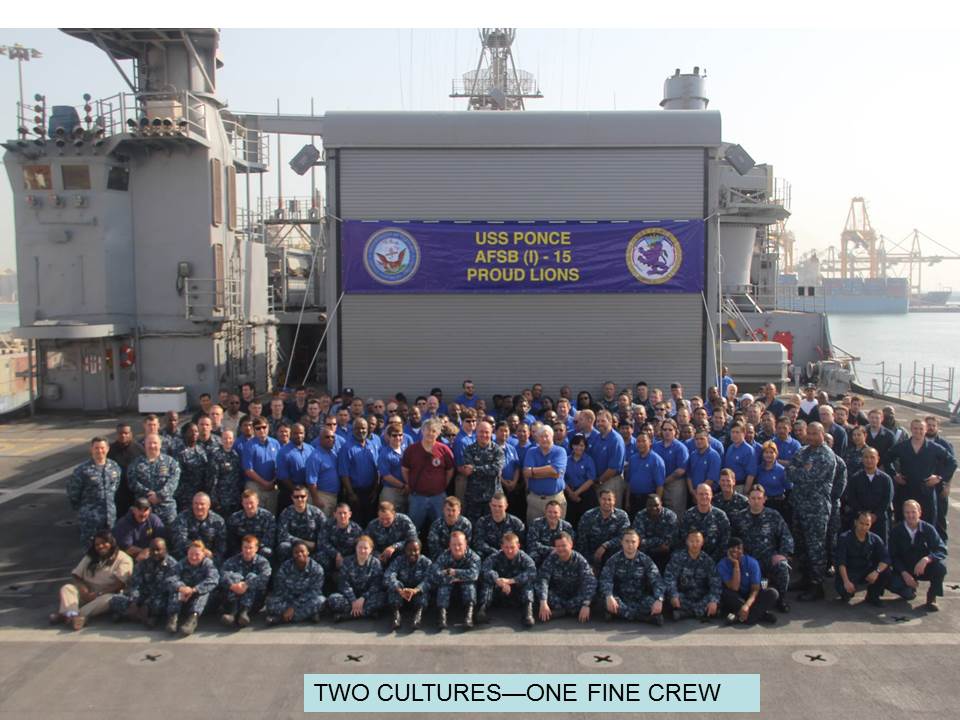
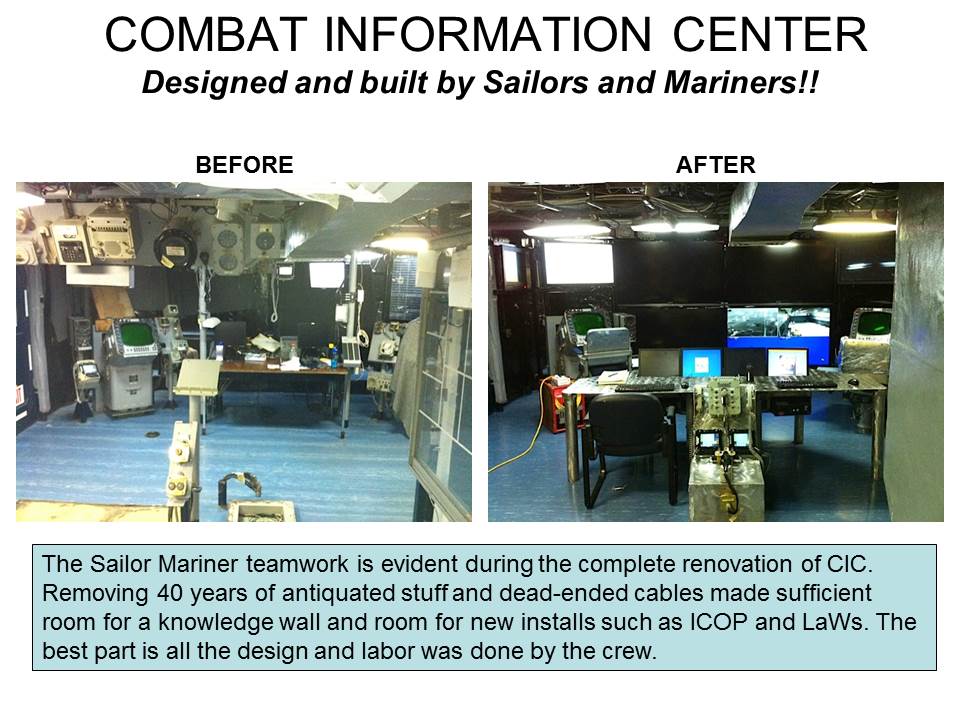
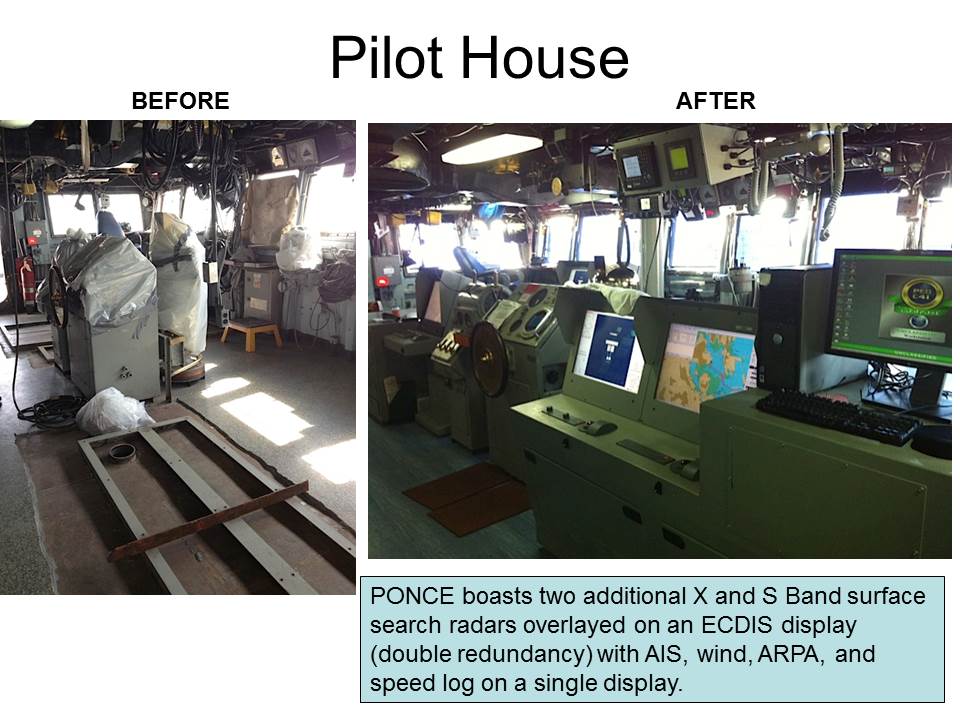
seacontrolemblemCAPT Rodgers, former CO of the USS PONCE Afloat Forward Staging Base, discusses how his ad-hoc crew of Sailors and civilian mariners plucked a 40 year old ship from decommissioning’s doorstep and turned it into the most in-demand platform in the Arabian Gulf.
(DOWNLOAD: SEA CONTROL 23: USS PONCE).

Sea Control is available on Itunes and Stitcher Stream Radio. Remember to tell your friends! We think Sea Control is a fine product. Anyone who says otherwise is going to steal all your banking information and email passwords because information should be free, man.


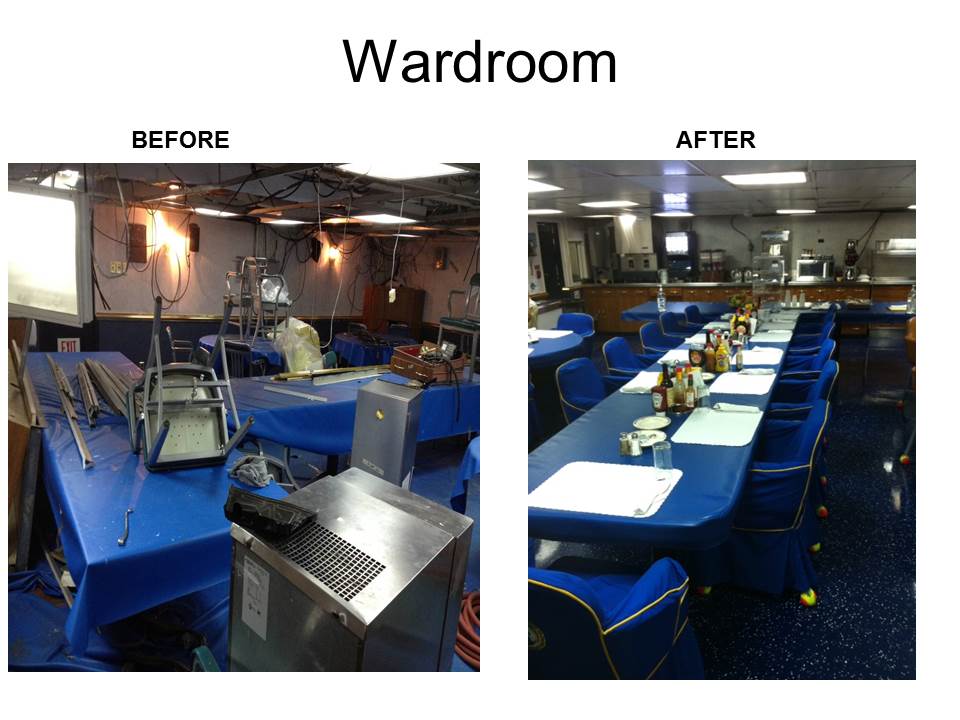
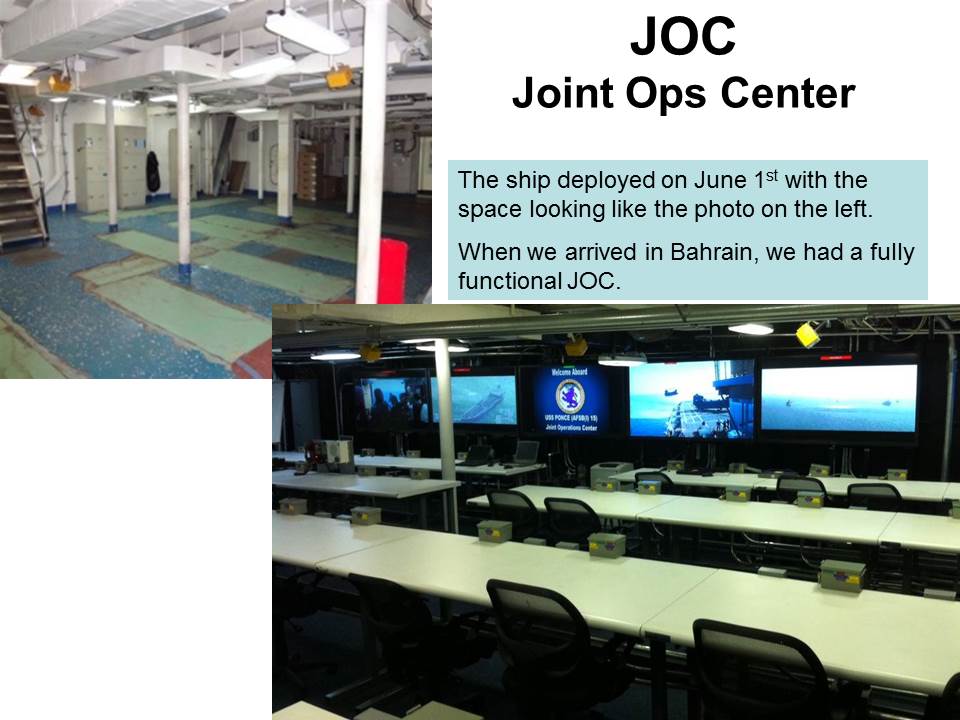
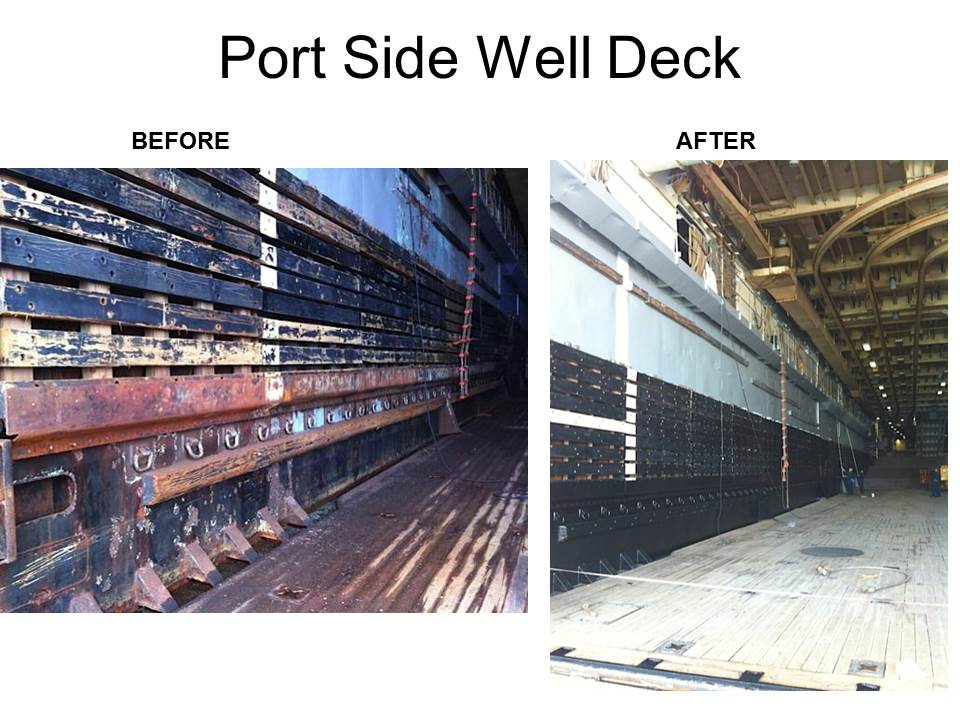
All images from CAPT Rodger’s unclassified post-deployment presentation on USS PONCE.Slide26

Slide6Slide16

Slide7
Editor’s Note: The real question is who the jerk is who threw the chairs all around before they left.

Slide14 Slide9 Slide12   Slide18

Israeli Private Security in the Suez Canal?

By Jasen Sagman

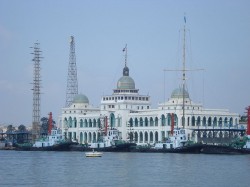
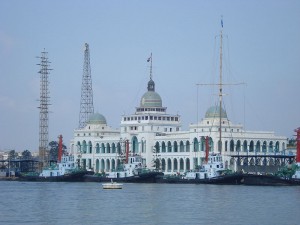
Suez Canal Authority HQ in Ismailia, Egypt

Egypt’s military-backed government recently dismissed reports that Egypt’s Suez Canal Authority (SCA) has hired Israeli private security company Seagull Maritime Security to guard the vital waterway.

Reports began to circulate on local social media early several weeks ago, with cyber-activists citing the company’s website as saying that Seagull was capable of embarking/disembarking armed guards at locations, all approved of by the local government authorities, including Suez, Egypt.

According to a subsequent SCA statement, the reports “are categorically devoid of truth… and aim to shake security and spread false news,” however a report by the Arab Organisation for Human Rights recently revealed that the security company provides maritime security services for cruises and cargo ships passing through the Suez Canal in Egypt.

In fact, the Egyptian authorities have granted the company a license to work in the Suez Canal and the Red Sea. Additionally, the company is authorized to work in Arab and African ports including Jordan, UAE, and Oman. According to the report, the company is one of the few whose guards are allowed to disembark fully armed on the Egyptian island of Tiran.

The company is a member of the Israeli Association of Private Security Companies, and was founded by its CEO Kfir Magen, who served as an officer in the Israeli navy. The company’s directors were prominent leaders of the Israeli armed forces, including Eliezer Marom who served as a navy commander between 2007 until 2011. The company’s advisory board chairman, Ami Ayalon, served as commander in chief of the navy in 1992, and served as head of the Shin Bet in 1996.

Despite the report, the SCA maintains that the Suez Canal is secured exclusively by Egyptian police and army forces.

Jasen Sagman is pursuing an M.A. in Global Diplomacy from the University of London, SOAS. He works for a Member of Parliament in Ottawa, and holds an Honours B.A. in Political Science from the University of Toronto. This post appeared in its original form at the Atlantic Council of Canada.