By J. Overton
The concept that a nation’s means to compel its will originates “from the sea” is a fallacy.
For history’s greatest maritime powers, greatest navies, and greatest naval actions, the sea is at best a temporary operating environment. Sea power has always been created, tended, and entirely dependent on land. This is true even for the world’s largest and most globally-active modern Navy. The U.S. Fleet, its Sailors, civilian workers, and Navy family members spend most of their time ashore, in the United States. But this fact is conspicuously absent from both the 2015 version of the maritime strategy, “A Cooperative Strategy for 21st Century Seapower: Forward, Engaged, Ready” (CS21R) and its 2007 predecessor. In these and other recent strategic documents, the Navy’s largest, oldest, most expensive, most resilient, and most complex operational platforms, shore installations in the United States, suffer almost total neglect. 1[*]
To understand the role of America’s Navy in this young century, however, requires understanding the role of Navy shore infrastructure in America. To that end, the following offers a reality check on CS21R, an examination of how the naval resources concentrated in Navy bases gives them a power all their own, and an exploration of the capabilities these bases really contribute.
Design, Organize and Employ the Sea Services
“This maritime strategy describes how we will design, organize, and employ the Sea Services in support of our national, defense, and homeland security strategies. It also sets maritime priorities in an era of constrained resources, while emphasizing warfighting capabilities and forward naval presence to advance national interests today and guide preparations for tomorrow’s challenges.”CS21R2
Defining the meaning of “strategy” is difficult, defining a strategy itself even more so. Joint Publication 1-02, Department of Defense Dictionary of Military and Associated Terms, as reliable a source as we have, tells us that strategy is “A prudent idea or set of ideas for employing the instruments of national power in a synchronized and integrated fashion to achieve theater, national, and/or multinational objectives.” 3 CS21R is indeed a set of ideas for employing instruments of national power to achieve objectives, with the employment ideas mostly involving warfighting capabilities and forward naval presence. Many of the instruments mentioned, such as the 300-plus ship fleet, various technological advances, and even some partnerships mentioned, are not currently in existence. They are on wish lists which may never be realized. Of those which do exist, most are not now employed primarily either for warfighting or in providing forward presence.
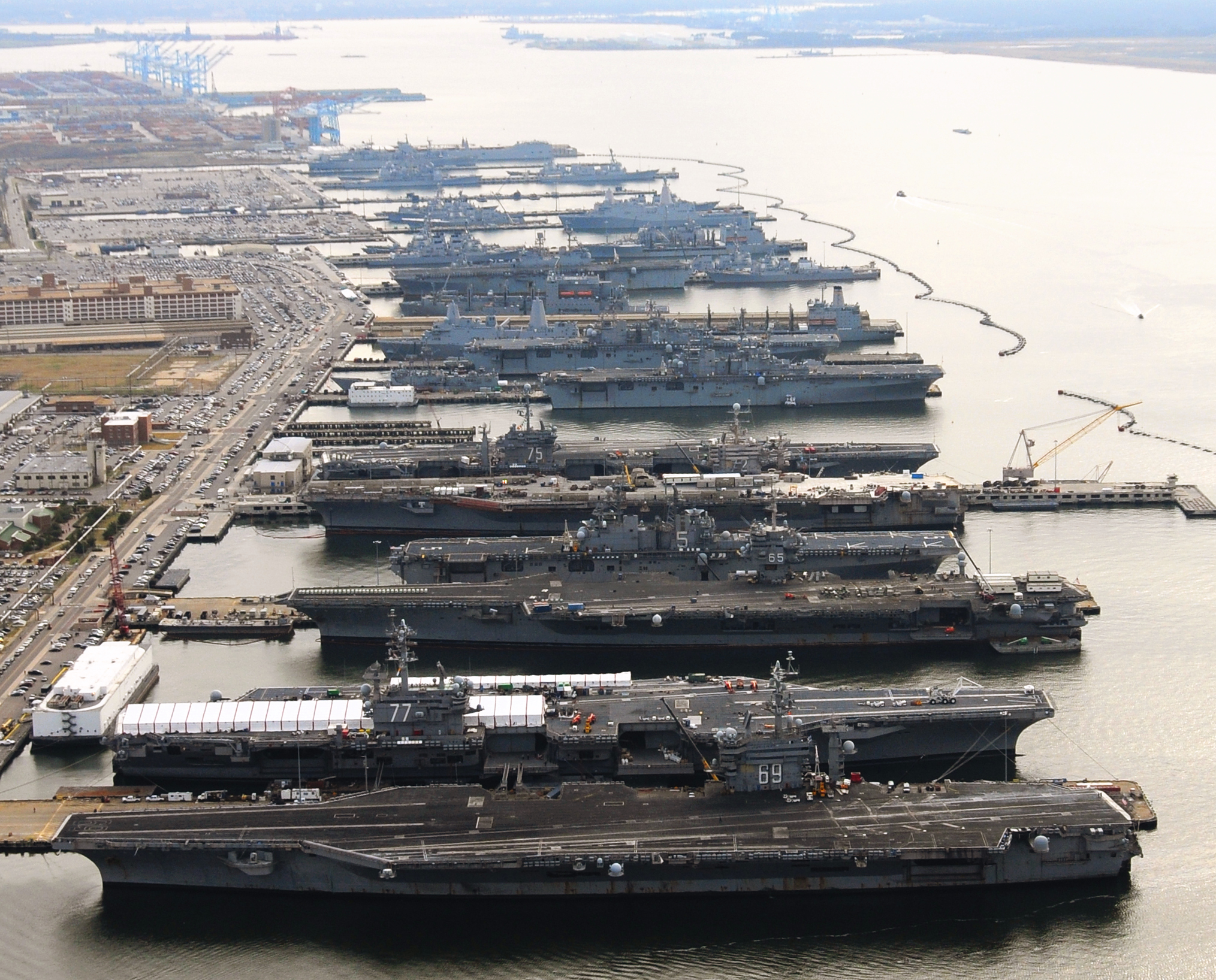
Another definition of strategy, perhaps more cynical if equally applicable, is “what you’re doing right now, intended or not.” 4 A snapshot “Status of the Navy,” taken in March 2016, shows that of the U.S. Navy’s 272 deployable battle force ships, about 49% are deployed either underway or overseas. Of the 326,046 active duty Sailors, it can be assumed that a similar percentage is deployed or underway. This leaves less than half of the U.S. Navy’s deployable battle force ships in port, about the same number of her Sailors, and almost all of the 107,115 reservists, 195, 258 civilian employees, and hundreds of thousands of Navy dependents berthed and working ashore in the United States 5
Strategic proclamations aside, shore installations are where, at any given moment in the year 2016 and the many years preceding it, one finds the majority of the U.S. Navy’s deployable platforms, people, and money.
Where it Matters, When it Matters
“The Navy’s current budget submission will provide for more than 300 ships and a forward presence of about 120 ships by 2020, up from an average of 97 in 2014, to be “where it matters, when it matters.” CS21R6
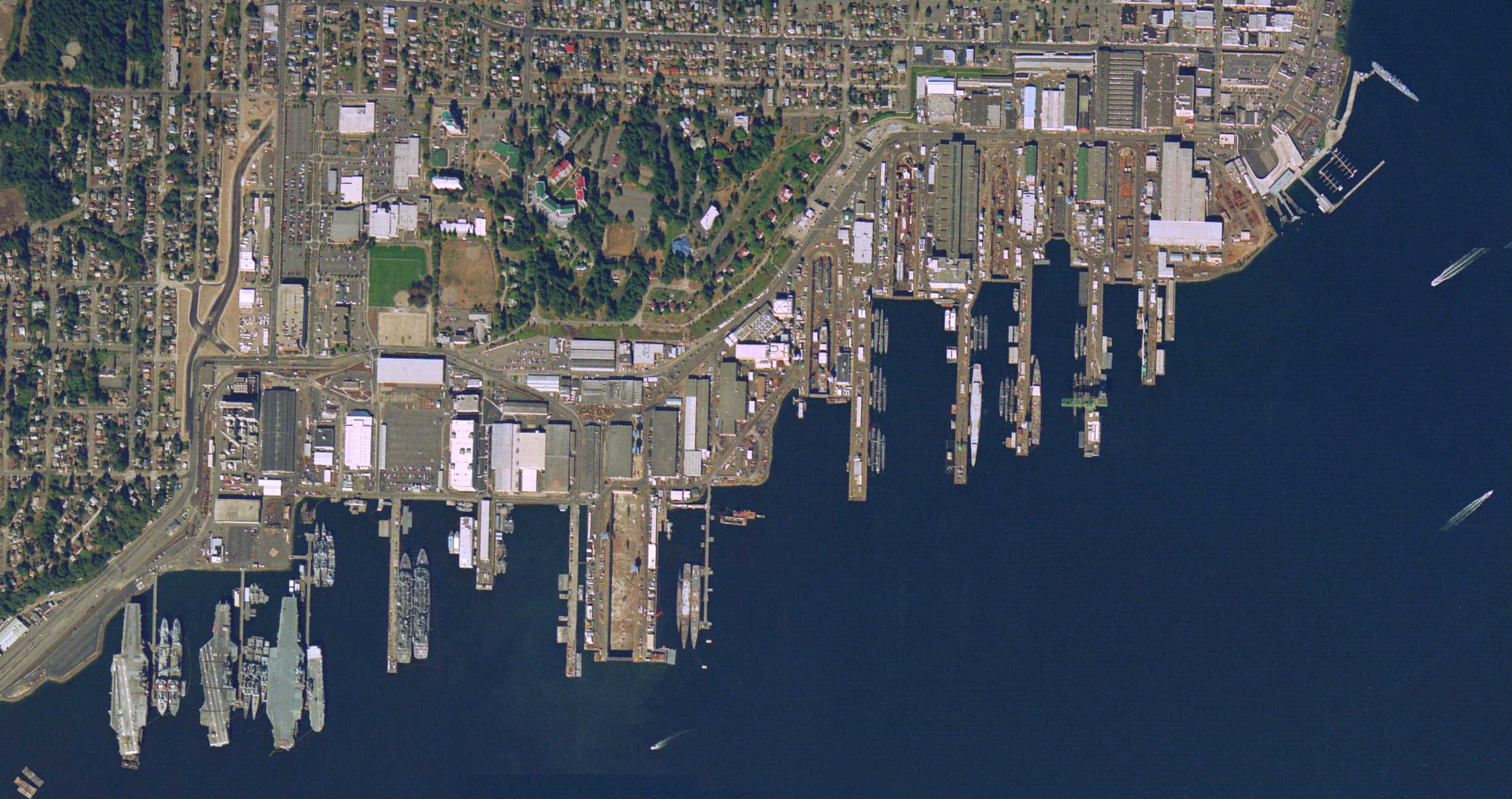
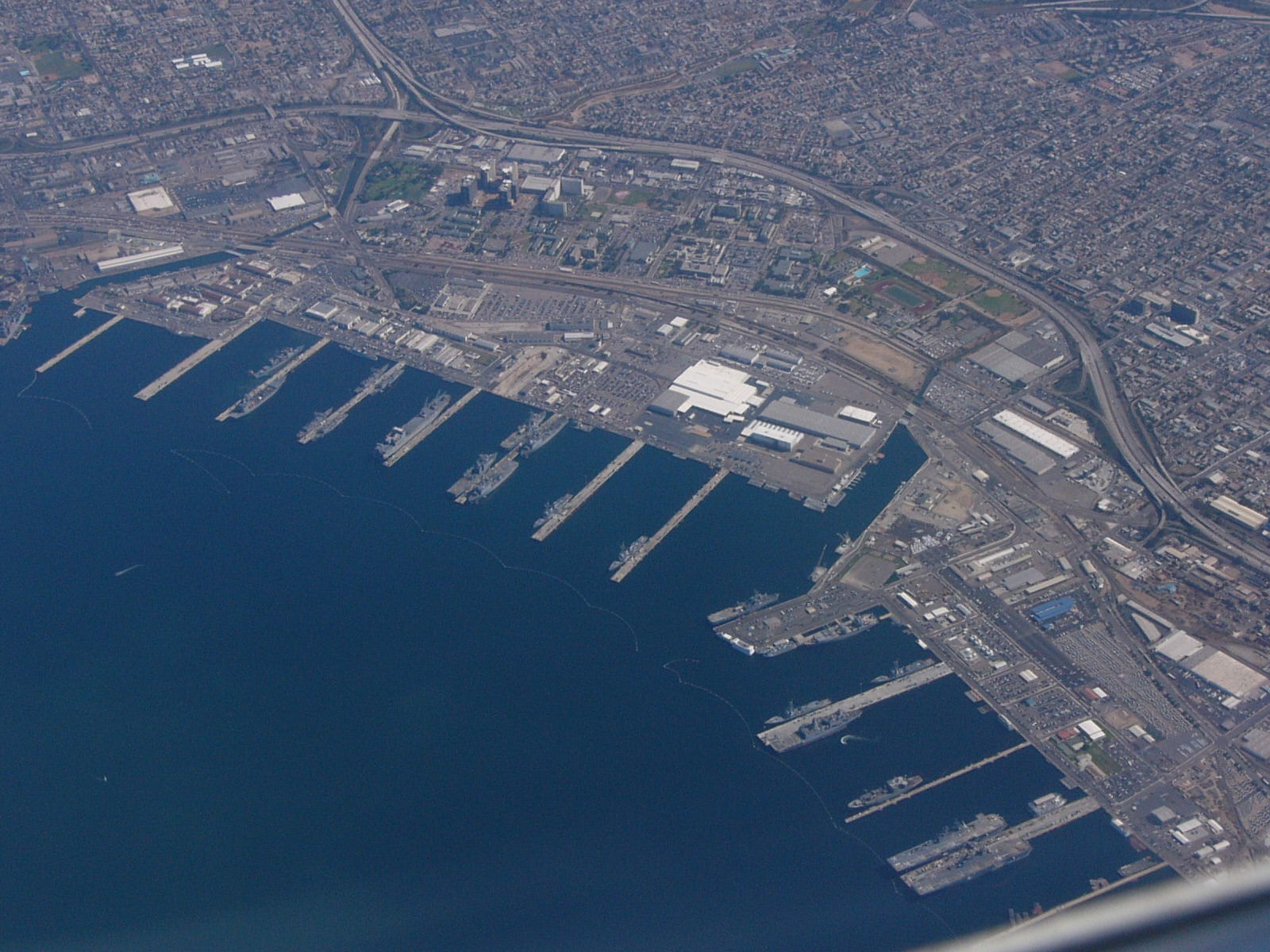
Although some Navy bases are inland, most are necessarily in the littoral, that narrow near-shore area where what happens on land influences the sea and what happens at sea influences the land. When applied to strategic thinking about foreign lands, the littoral realm is often considered a place inundated with both opportunities and threats. This is true when planning for combat or humanitarian operations in developing nations, but true for the continental United States as well. Our coastal areas tend to be the most populated, have the most desirable and expensive real estate, be the most environmentally sensitive, and be the most vulnerable to natural and man-made disasters.7 They are also, of course, where the majority of Navy installations must exist. Those bases, many consisting of more than one geographic installation separated physically but under a single Commanding Officer, are mostly clustered into a few fleet concentration areas: 8 Significant naval presence in these regions pre-dates World War II, the aircraft carrier, submarine, diesel-power, and in some places, even the formation of the United States as a nation.
For more than a decade Navy has stated its need for total fleet number somewhere in excess of 300 ships. Deployable force ships now stand at about 280, and haven’t been over 300 since 2003. 9 The extra 20 or 30 ships wished for may or may not arrive to fit themselves into CS21R. While there is much debate and handwringing over the optimal size and mission-set of the U.S. fleet and its overseas bases, ships can be built relatively quickly and cheaply compared to acquisition and maintenance of the real estate from which they’ll be based, and the long-term viability of bases not on U.S. soil is never assured.
Stateside shore installations are where it matters, when it matters: here, and now. And they’ve developed their own type of power to sustain them, without major course changes, for the foreseeable future.
Self-Sustaining Naval Forces
“Our self-sustaining naval forces, operating in the global commons, ensure the protection of the homeland far from our shores, while providing the President with decision space and options to deny an adversary’s objectives, preserve freedom of action, and assure access for follow-on forces.” CS21R 10
There is no robust discussion or controversy about the need for the current fleet concentration areas, or even for most individual Navy bases in the United States. Navy leadership implicitly recognizes the strategic value of their finite real-estate and unlike the Army and Air Force, is not currently calling for consolidation or closing of their shore infrastructure. 11 The decisions that usually matter about bases are those of policy makers, particularly Congress. Political leadership, generally of both parties and certainly going down from Capitol Hill to mayors and county commissioners of Navy base-dependent communities, has shown little desire to close bases, even if they do espouse curtailing some of the base’s more onerous operations. The smaller overall number of bases now in operation since previous rounds of Base Realignment and Closure, and their concentration into fewer Regions, means that most installations are a major source, if not the major source, of economic life for their immediate locale.
This economic power keeps Navy installations in the U.S. relatively safe from existential political threats. They have developed what journalist Walter Russell Mead refers to as “Sticky Power… [a power] based neither on military compulsion nor on simple coincidence of wills. Consider the carnivorous sundew plant, which attracts its prey with a kind of soft power, a pleasing scent that lures insects toward its sap. But once the victim has touched the sap, it is stuck; it can’t get away. That is sticky power…”12Mead was referring to the relationships between countries, such as that between China and the United States, but his theory is applicable for most major Navy bases and their local civilian communities. The two cannot extricate themselves from one another without mutually assured damage. Politicians, business leaders, education officials, and all manner of non-profits physically close to Navy bases are supporters of their local base, even if they disagree with overall U.S. military policy, or have an ignorance or contempt of traditional naval hard-power missions.
The effect of CONUS Naval installations’ power, rooted more in economics than grand strategy or traditional notions of Mahan or Corbett, leaves America a dispersed and networked range of Navy bases fairly secure from foreign attack, fairly secure from political infringement, and fairly secure from credible, capable local opposition. 13.
That Unique Capability: Presence
“Looking at how we support our people, build the right platforms, power them to achieve efficient global capability, and develop critical partnerships will be central to its successful execution and to providing that unique capability: presence.”CS21R 14
To paraphrase a dead Prussian General, the first, the supreme, the most far-reaching act of judgment that must be made is to establish what a Navy base actually does, neither mistaking it for, nor trying to turn it into, something that is alien to its nature. The disparate missions these bases perform go well beyond simply supporting the Navy’s families and deploying Fleets and fighters. They are not, in the parlance of our most recent strategies and Sailing Directions, fighting wars or operating forward. But they are engaged, and they are ready.
Perhaps the best analogy for the collective power and capability they provide America would be that of a “Fleet in Being,” a concept historically applied to a naval force which, though not deployed or concentrated for battle, provided a deterrence function or caused some reaction on the part of an opposing force.15 A “Fleet in Being” has a strategic value because, even if seemingly uninvolved in the most pressing contemporary operation, it has great potential.
Likewise, U.S. Navy bases are on American soil. They are dispersed around America, and nearly all share each of the following attributes: on Federal property; located in or near major commercial ports; located in areas prone to natural disasters; and having ample and diverse infrastructure, equipment, and personnel under Federal control.
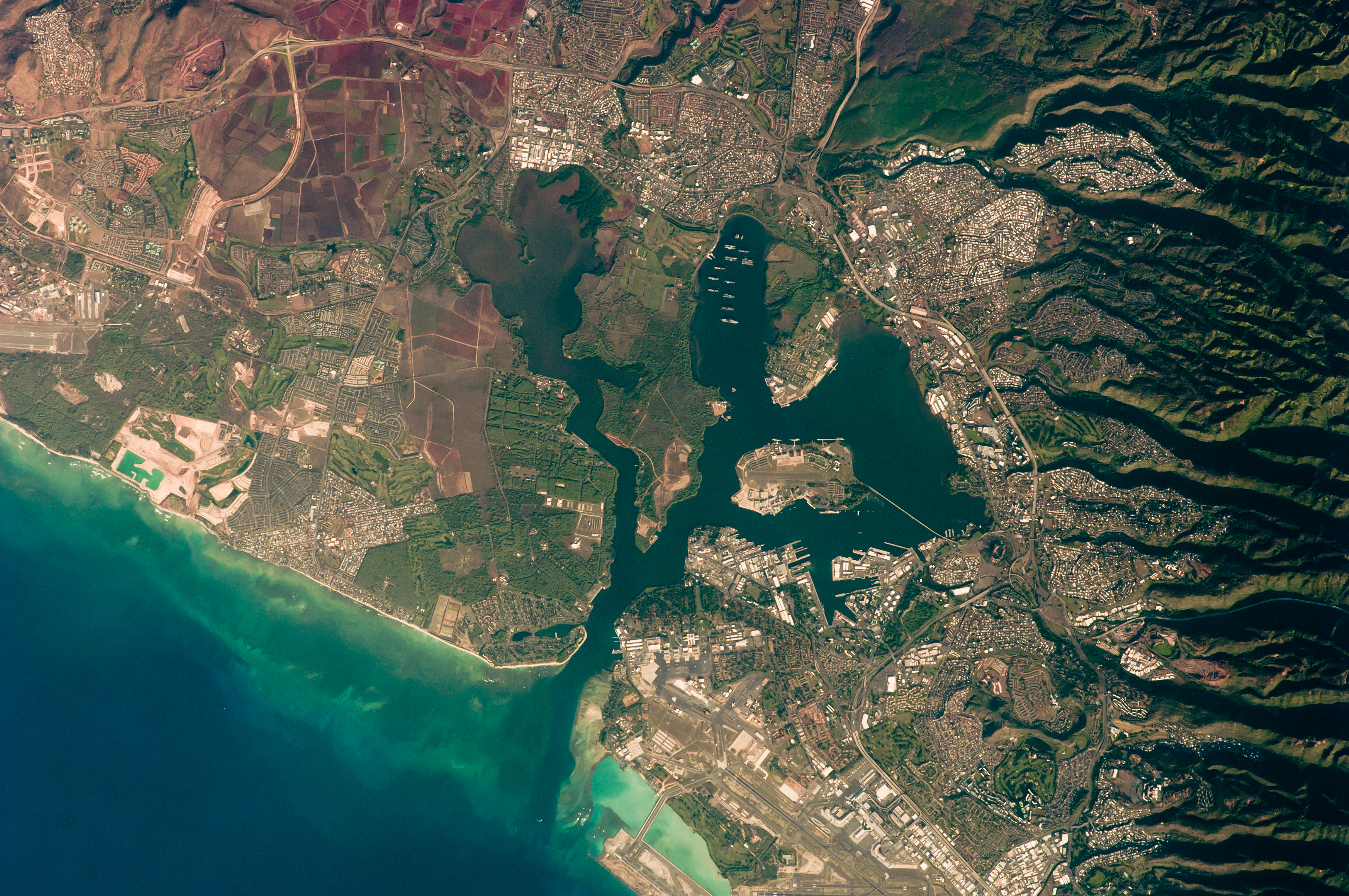
This simple but rare combination of characteristics gives the Navy base great flexibility and potential. In recent years they have done essentially whatever need they were able to do, when they were asked. Navy bases in the United States have been used as relief, staging, and command centers during floods, fires, and terrorist attacks. They’ve hosted educational and entertainment venues and events for their local communities. They’ve provided environmental restoration and mitigation functions to local and national organizations. They’ve been used as test cases for experimental energy initiatives. They were even on tap to house unaccompanied migrant children from Central America. 16 Navy bases are the best and only option for decision makers to use in so many situations that have no resemblance to traditional naval missions. Their presence, individually and when used in concert with multiple installations, makes them a unique element of U.S. power.
Building the Future Force
“In building the future force, we will make institutional changes and take prudent risk as we balance investment in readiness, capability, and capacity.” CS21R 17
None of this is to argue for or against a shift to shore power, be that defined as more bases, more funding for bases, or fewer deployable platforms. Nor is it to argue that such a shift is now underway. Rather, it’s a reminder of what could be described as the Navy’s real strategy, if your strategy is what you’re doing right now: Despite repeated emphasis on forward presence and warfighting, in 2016, the U.S. Navy spends the majority of its time and resources at shore installations in the United States. 18 These shore installations also have their own inherent strategy for self-sustainment, and provide an uncodified but vital national capability. They are the most enduring and most visible instruments of American sea power. Barring the most Stranglovian conflict scenario or a radical adjustment in the current course of budgets and funding, they will outlast the service life of today’s ships, sailors, and maritime strategies. The Navy’s future force has already been here for long time, and it’s not going anywhere anytime soon.
J. Overton is a civilian writer/editor for the U.S. Navy, and has been an adjunct professor for the Naval War College and Marine Corps Command and Staff College. The views and opinions expressed are those of the author and do not necessarily state or reflect those of the United States Government.
[*] CS21R encompasses the U.S. Navy, Marine Corps, and Coast Guard, but this essay focuses mainly on just the U.S. Navy. The other sea services have differing installation realities and requirements.
1 “A Cooperative Strategy for 21st Century Seapower: Forward, Engaged, Ready” available at http://www.navy.mil/local/maritime/150227-CS21R-Final.pdf. Commander, Navy Installation Command (CNIC) has issued various Shore Investment Strategies or Strategic Guidance documents which focus on “warfighter” support and saving money rather than the range of installation missions. See “CNIC Visit to NAF Atsugi Reveals Navy Shore Priorities” at http://www.navy.mil/submit/display.asp?story_id=87620 and “Chief of Naval Operations Shore Investment Guidance” at http://www.public.navy.mil/bupers-npc/reference/messages/Documents/NAVADMINS/NAV2015/NAV15128.txt
2 “A Cooperative Strategy for 21st Century Seapower: Forward, Engaged, Ready,” pg.iii
3 “The Joint Publication 1-02, Department of Defense Dictionary of Military and Associated Terms” available at http://www.dtic.mil/doctrine/new_pubs/jp1_02.pdf
4 Ron Ratcliff, “Strategy is Execution” (Newport: Naval War College, 2005), 1.
5 “Status of the Navy” accessed on March 25, 2016 , available at http://www.navy.mil/navydata/nav_legacy.asp?id=146
6 “A Cooperative Strategy for 21st Century Seapower: Forward, Engaged, Ready” and “Department of the Navy Releases Fiscal Year 2016 Budget Proposal” available at http://www.navy.mil/submit/display.asp?story_id=85430
7 J. Overton “Don’t Forget Seapower’s Dry Foundation”, The Northwest Navigator, August 19, 2011, pg. 4
8 Commander, Navy Installation’s Command web site – http://cnic.navy.mil/about.html
9 “US Ship Force Levels” Naval History and Heritage Command http://www.history.navy.mil/research/histories/ship-histories/us-ship-force-levels.html
10 “A Cooperative Strategy for 21st Century Seapower: Forward, Engaged, Ready” pg. 2
11 “CNO: Navy is not pushing for BRAC” available at http://archive.militarytimes.com/article/20140324/NEWS05/303240037/CNO-Navy-not-pushing-BRAC
12 Walter Russell Mead, “America’s Sticky Power,” available at http://foreignpolicy.com/2009/10/29/americas-sticky-power/
13 “The Battle Is On to Save Military Bases from Closure” available at http://www.thefiscaltimes.com/2015/04/10/Battle-Save-Military-Bases-Closure and “CNO: Navy is not pushing for BRAC”
14 A Cooperative Strategy for 21st Century Seapower: Forward, Engaged, Ready” pg. i
15 The Merriam-Websters Dictionary has a concise definition at http://www.merriam-webster.com/dictionary/fleet%20in%20being), and the following Naval War College Review article has a more in-depth and nuanced discussion “The Idea of a Fleet in Being in Historical Perspective” https://www.usnwc.edu/getattachment/b128b7e6-aa98-494e-be55-8000ba30db29/The-Idea-of-a–Fleet-in-Being–in-Historical-Persp.aspx
16 “Navy Supports Firefighting Efforts and Families” at http://www.navy.mil/submit/display.asp?story_id=32740, “NASNI Provides Makeshift Shelter Wildfire Victims” http://www.navy.mil/submit/display.asp?story_id=32776 and “California naval base becomes home to detained Central American children at http://www.cnn.com/2014/06/13/us/children-immigrant-crisis/
17 “A Cooperative Strategy for 21st Century Seapower: Forward, Engaged, Ready” pg. 26
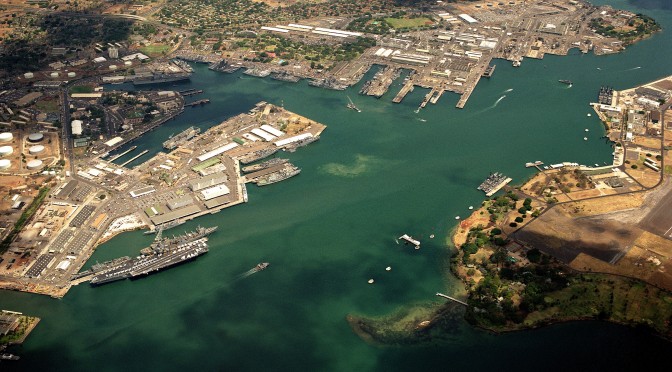
Featured Image: Naval Station Pearl Harbor.