We are excited to announce that the U.S. Naval Academy will be working with CIMSEC to promote the work presented at the 57th Naval Academy Foreign Affairs Conference (NAFAC). Taking place from April 11-13, NAFAC will bring together midshipmen and students from across the United States and around the world to discuss a theme of global importance. This year’s conference theme is “A New Era of Great Power Competition?”
During the week of the conference, CIMSEC will provide coverage of the event’s major proceedings with regular postings. The week after the conference CIMSEC will republish the top papers from each of the sixteen round tables facilitating debates on specific topics. Each round table involves three midshipmen on (one moderator, two delegates) as well as 8-10 external delegates (both domestic and international civilians and military delegates). Each round table will also have two senior advisers (one academic expert and one professional in the field covered). See the list of this year’s round table topics here.
Read on to learn more about this year’s conference and the purpose and history of NAFAC. From the U.S. Naval Academy website:
Despite the cost of being at war for over a decade, “America is still today the world’s foremost leader, partner, and underwriter of stability and security in every region across the globe.” However, a rising China and more belligerent Russia have moved to the forefront of American strategic thinking. Despite recent setbacks, India and Brazil will likely continue to rise. Key U.S. military and civilian leaders have acknowledged a return to great power politics. American global dominance may begin to expect competition from multiple powers around the world, a reality not seen since the Cold War. America’s current fiscal deficits continue to be high, while other economies are rivaling the United States. Rapid technological advances and the changing nature of warfare pose challenges to America’s military might. Given these trends, to what level should the U.S. strive to remain the world’s greatest power and security leader? Should great power status continue to be measured in traditional ways? NAFAC 2017 will examine the promise and constraints of the rising peer competitors. The conference will invite you to think not only about what these dynamics mean for the future of global power, but also what strategies America should take to effectively respond to this competition.
What is NAFAC
Each year since 1960, the U.S. Naval Academy has hosted a gathering of undergraduates from around the United States and the world who come together in the spring to discuss a theme from current global affairs.
The Naval Academy Foreign Affairs Conference (NAFAC) has grown to be the leading undergraduate conference in the country. It has welcomed delegates from thirty countries in each of the last five years and it has heard speakers as notable as President George Bush and Secretary of State Defense Robert Gates.
This conference provides an outstanding opportunity for the midshipmen to come to understand the global forces that may project them into duty in Afghanistan, the Middle East, Korea, North Africa or Latin America. Good officers need a sophisticated understanding of current affairs; this conference puts them together for a week with their civilian counterparts as well as with young officers and civilian delegates from about two dozen countries for conversations in which they can develop that understanding.
The Naval Academy Foreign Affairs Conference has grown in reputation but not in size. It is kept small – no more than one hundred fifty delegates–in order that the discussion groups which are at the heart of the conference retain a good seminar atmosphere. These round table discussions include ten university delegates, two or three foreign delegates, two midshipmen delegates, a midshipman moderator and two senior advisors.
NAFAC also offers an excellent occasion for the midshipmen to show off the Academy and the Navy at its best. Each year they produce an impressive event, handling without a visible hitch the many logistical difficulties of transporting, housing, feeding and entertaining scores of guests, some of them of flag rank or international reputation. As one former midshipman director said. “The Naval Academy aims to provide a laboratory where we can learn and practice the skills of leadership. Putting on this conference was the toughest leadership and logistical exercise I have faced here yet.
Dmitry Filipoff is CIMSEC’s Director of Online Content. Contact him at Nextwar@cimsec.org.
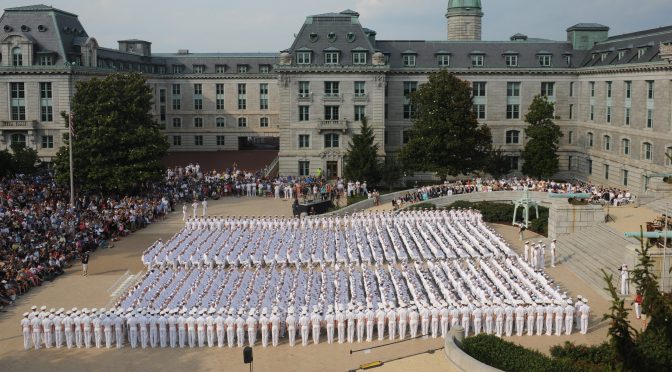
Featured Image:ANNAPOLIS, Md. (July 1, 2015) The 1,192 members of the U.S. Naval Academy’s incoming Class of 2019 gather in Tecumseh Court for the Induction Day Oath of Office Ceremony. Induction Day marks the beginning of Plebe Summer, the arduous six week indoctrination that transitions civilian students to military life. (U.S. Navy photo by Mass Communications Specialist 2nd Class Nathan Wilkes/RELEASED)
Since the Alliance Maritime Strategy (AMS) was published in 2011, the strategic context facing NATO has shifted. The drafters envisaged a world where the Alliance would continue to be an expeditionary one, employing its forces in counterterrorism, counterpiracy, and humanitarian roles in many locations around the world. Under the aegis of this strategy, Alliance maritime forces did precisely that. Operations Ocean Shield and Active Endeavor were conducted in these contexts. The former was a counterpiracy operation off the Horn of Africa and the latter a counterterrorism operation in the Mediterranean. Both ended in 2016, but Active Endeavor was replaced by Operation Sea Guardian, designed in much the same spirit. Its objectives are very similar: maritime situational awareness, protection of freedom of navigation, maritime interdiction against weapons of mass destruction, counterterrorism, and protection of critical infrastructure. This lone maritime operation does not, however, match the strategic realities that NATO faces.
Over the last six years, NATO’s strategic environment has changed significantly. The Arab Spring, beginning in 2011, led to instability on the Alliance’s southern flank, exacerbated perhaps by NATO’s own actions in Libya. One result has been massive cross-Mediterranean migrant flows that European states have been unable to halt. The civil war in Syria has slowly deteriorated to the point that the United States, its allies, and Russia have become involved in the air and on the ground. Naval activity in the Eastern Mediterranean is at levels not seen since the Cold War. Russian, American, and NATO warships continuously ply these seas and the Russian Navy’s only aircraft carrier recently completed its maiden combat deployment from the Eastern Mediterranean.
There and elsewhere, Russian forces regularly intercept NATO aircraft and ships in international airspace and waters, generating tension between East and West and demonstrating a renewed level of aggression epitomized by the Russian invasion of Ukraine. In 2014 Russia invaded its neighbor and annexed the Crimean Peninsula and the strategic naval base at Sevastopol in the process. Russia’s actions in Ukraine have destabilized Eastern Europe and the Black Sea region and caused concern amongst NATO and non-NATO states that Russia’s next moves may come in the Baltic. NATO was founded to deter and defend against Soviet aggression in Europe, and Russia’s recent actions have shown its enduring necessity after more than two decades of strategic drift. All told, the strategic environment predicted by the drafters of the AMS has evaporated.
Insufficient Measures
NATO has responded to its changing strategic environment almost exclusively through operations and initiatives ashore. To counter Russian aggression and reassure eastern Allies, NATO established two major programs. The first, Enhanced Forward Presence (eFP), installs NATO soldiers in Estonia, Latvia, and Lithuania on a permanent rotational basis. It will be fully established in 2018 and includes troop contributions from 19 member states. The second is Tailored Forward Presence in Romania. This consists of an expanded series of rotational exercises, with the result of near continual NATO presence on Romanian territory. The United States’ own European Reassurance Initiative (ERI), distinct from, but complementary to, NATO actions, is similarly land-focused. Over its three years of existence, from 2015 to today, the annual budget for the U.S. Navy’s participation in ERI has been three percent, four percent, and two and a half percent respectively. The response to Russian aggression has been clearly focused ashore.
The existing initiatives are a step in the right direction, but the lack of a coherent maritime response undermines those efforts and presents opportunities for Russia to exploit. NATO’s sole maritime operation, Operation Sea Guardian, does not support existing efforts to counter Russian aggression. And it is not designed to, as it is specifically not an Article 5 operation. Article 5 of the North Atlantic Treaty requires that treaty signatories come to the defense of one another in case of attack and is considered the bedrock of the Alliance. NATO is right to state that Operation Sea Guardian is not in response to an attack on any member, but by explicitly highlighting that the operation is non-Article 5 in focus, it sends a signal that day-to-day operations are not aimed at deterring NATO’s potential opponents. Operation Sea Guardian is also explicitly focused on Task Four of the AMS, consisting of maritime security operations. These are conceptually distinguished from the deterrence and defense roles of the Alliance delineated in Task One. This further demonstrates to Russia that NATO’s maritime focus is separate from its ground efforts. Even if aimed at deterring Russia, it is insufficiently resourced. One recent “Focused Security Patrol” under the mantra of Operation Sea Guardian comprised three aged frigates (Turkish, Greek, and Italian) conducting 600 combined hours of patrols, or 8 and 1/3 days each, in the Eastern Mediterranean. This level of effort, in both duration and capability, is inadequate in the face of the forces the Russian Navy has maintained in that theater.
Bolstering NATO Seapower
To their credit, Alliance leadership may have begun to recognize the insufficiency of NATO’s maritime posture. As part of Tailored Forward Presence, Alliance defense ministers agreed in February 2017 to increase NATO presence in the Black Sea to improve situational awareness and increase training and exercises. This may improve the situation in the Black Sea, but the problem of deterrence is broader. This ad hoc approach to maritime deterrence will not stop Russia’s pattern of aggressive actions in the seas around Europe.
NATO’s poor showing at sea has led some to argue that the AMS itself needs a total overhaul. Critics are correct in noting that the strategy’s discussion of the maritime security environment is out of date. They also rightly criticize the lack of any resource – i.e. force structure and development – discussion. The strategy is also insufficiently focused on the core collective defense and deterrence mission and therefore not aligned with NATO’s 2015 Political Guidance which reemphasized these core Alliance tasks. The AMS does require a refresh, and policymakers should begin discussions on this now, but without delaying maritime action by the Alliance.
The AMS itself provides the logical basis for conducting peacetime Article 5 operations. The first task the strategy assigns to maritime forces is deterrence and collective defense. By grouping these two concepts together, the AMS links collective defense and deterrence in a continuum of action between peace and war. It highlights that collective defense is the necessary action in response to failed deterrence. Article 5 requires that member states aid one another only in the event of armed attack, but given the defensive nature of the alliance, the terrible consequences of war between NATO and Russia, and the conceptual link between deterrence and collective defense, it is logical to draw explicit connections between peacetime NATO deterrent operations and Article 5 collective defense actions.
Such an explicit connection would improve the deterrent effect of the operation. The AMS notes that deterrence relies upon “proven capability, demonstrations of readiness, and effective strategic communications.” This is firmly based in existing theories of deterrence. An actor, be it a state or group of states, must possess not merely adequate defensive capabilities to either stop enemy aggression or inflict sufficient pain to make the aggression too costly. The actor must also be credibly committed to using this force in the event that deterrence fails. Communicating these two preceding facts to the potential enemy in such a way that their leaders perceive a sufficient threat is the final component. Establishing a new maritime operation would neither change NATO’s capabilities nor fully address the credibility problem inherent in the alliance, but by tying this new operation to Article 5 the alliance would better communicate the seriousness of its commitment to preventing further Russian aggression.
As written, the AMS is flexible enough to serve as the basis for a more coherent maritime response to Russia. As it declares, “the relative weight given to the Alliance’s engagement in each of these roles will depend on circumstances and the resources available.” NATO should rebalance its maritime efforts to increase the relative weight devoted to the deterrence and collective defense mission. This can be accomplished through a combination of three actions: launching a new maritime operation with collective defense and deterrence as its main objective, increasing the frequency and complexity of NATO maritime exercises, and better resourcing the existing Standing NATO Maritime Groups (SNMG) and Standing NATO Mine Countermeasure Groups (SNMCMG).
First, NATO should establish a new operation focused on deterring Russian aggression at sea and, if necessary, exercising collective defense. This operation should explicitly state that it rests upon the foundation of Article 5 of the North Atlantic Treaty. To date, the article has been activated only once, in response to the terrorist attacks of September 11, 2001. Operation Active Endeavor was established as the maritime component of the NATO response to this armed attack on a member state. While Russia has not attacked any members, this recent experience provides some precedent for establishing a maritime operation founded upon Article 5.
To achieve the desired effect, this operation should be wide in its geographic scope and mission to best demonstrate existing capability and readiness. It should be active in the Baltic, Black, Mediterranean, and Norwegian Seas to counter Russian efforts in each of these areas. Russia has increased its maritime presence in each sea to levels last seen during the Cold War and NATO must demonstrate the capability to respond simultaneously in each theater. The operation should also focus on the full-range of maritime missions. It should develop situational awareness of Russian actions, hold Russian maritime forces at risk any time they deploy, and enhance NATO interoperability and build expertise in combined operations at the unit and higher echelon command levels. These actions will better prepare NATO forces to defend against Russian attacks in the event of war and will demonstrate to Russian leaders that NATO stands ready to do so.
Invigorating Alliance Exercises
In addition to a new deterrent operation, NATO should significantly expand the number and scale of its maritime exercises. These exercises should focus on high-end warfighting skills against peer opponents to demonstrate effective combat capability and readiness. Existing maritime exercises are a step in the right direction. The Dynamic-series, consisting of Dynamic Guard, Dynamic Move, Dynamic Mantra, and Dynamic Mongoose in 2017, are focused on air defense and electronic warfare, MCM, and antisubmarine warfare respectively.
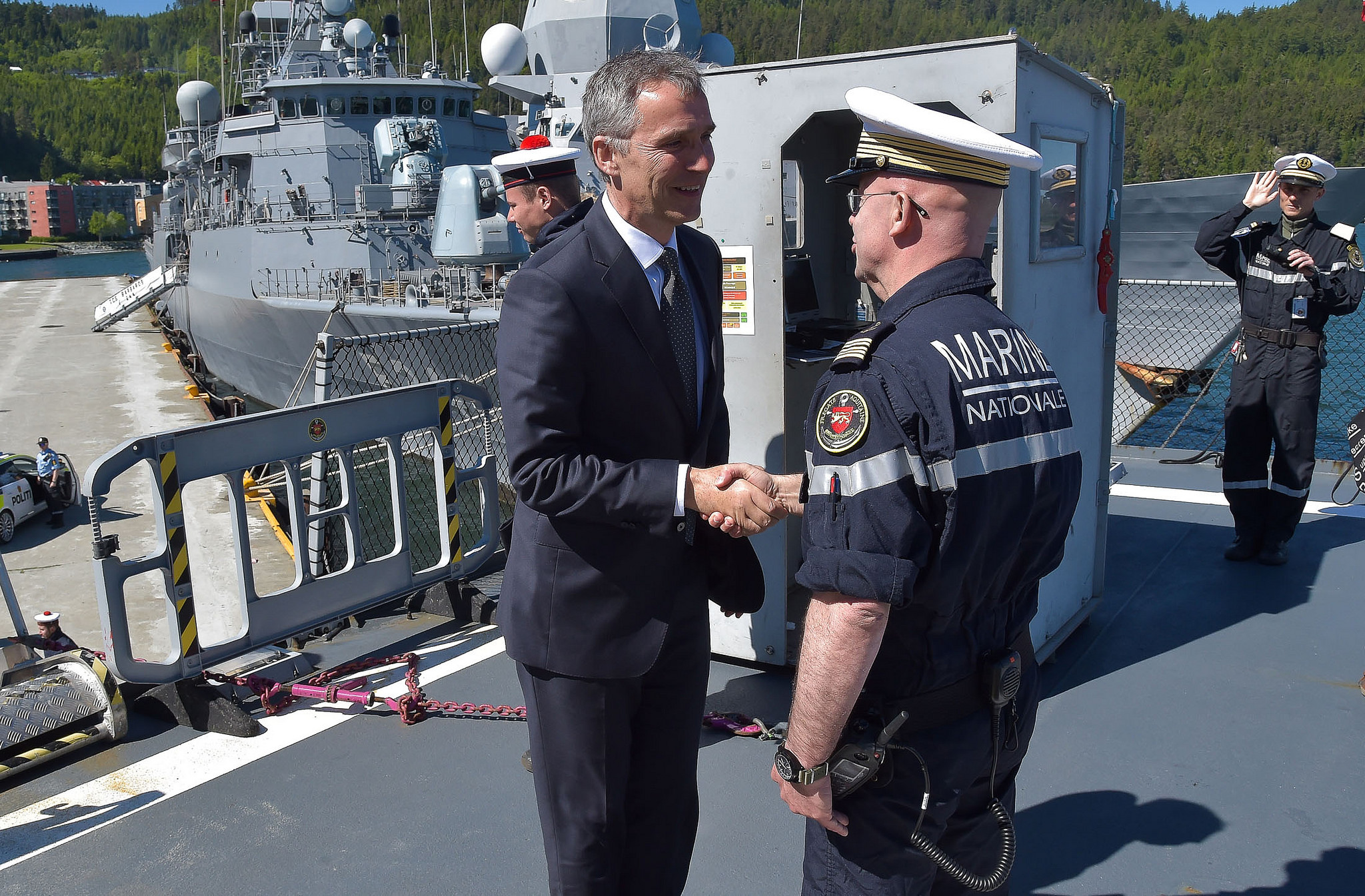
NATO Secretary General Jens Stoltenberg is welcomed by the Captain of the frigate Aquitaine, Emmanuel Sagorin. (NATO)
The current exercise schedule is focused on the appropriate warfare areas but it must be significantly expanded to develop the level of competence and interoperability that would be necessary in the event of war. Antisubmarine warfare exercises in particular require expansion and should be the highest priority. The Russian Navy sees submarines as its primary capital ships, unlike western navies which prioritize aircraft carriers. Russia has invested heavily in its submarine force, with new classes under development, old classes undergoing modernization, and new Kilo-class submarines destined for its Black Sea Fleet under construction. By focusing efforts on detecting and defeating submarines, NATO can demonstrate to Russia that, in the event of war, its primary naval forces will be defeated.
Air defense and electronic warfare should also be emphasized. Russia has invested heavily in new antiship missiles. NATO navies must demonstrate their ability to defeat these weapons to show Russia that it cannot count on keeping Allied maritime forces outside striking range of its shore. This will warn Russia’s leaders that they cannot initiate conflicts far from Russian shores and rest assured that the Russian mainland will be safe.
Finally, mine countermeasures remains a key enabler for Allied maritime missions and must be strengthened. In particular, the United States should participate in exercises with its own MCM ships to improve its capabilities and highlight the importance of the mission area. Increasing the frequency and complexity of exercises in these three areas would significantly increase alliance capabilities to counter Russian aggression.
Strengthening Standing Maritime Groups
The final component of an improved NATO maritime posture is better resourcing of the SNMGs and SNMCMGs by member states. Discussions of resourcing in the NATO context are often focused on the two percent policy, wherein member states pledge to contribute two percent of GDP towards defense. Total alliance resources are important, as each state’s total military capabilities are the source of NATO-assigned forces; however, they do not translate directly into forces available for Alliance use. Without increasing their defense budgets, each state could improve NATO’s deterrent posture by assigning more existing forces to NATO missions. A brief review of the maritime forces currently assigned to the Alliance will demonstrate the availability for growth.
As currently constituted, NATO’s standing maritime forces consist of two SNMGs and two SNMCMGs. These consist of the three warships and one tanker of SNMG1, ten warships (five of which are small patrol craft) and one oiler of SNMG2, four mine countermeasures (MCM) ships of SNMCMG1, and five further MCM ships of SNMCMG2, for a total of 23 vessels of all types. Looking deeper, one finds no U.S. ships, no French vessels, only one British minesweeper, and only three German ships, one of which is a tanker. The heaviest contributors are the Spanish, Greek, and Turkish navies, who together contribute almost half the ships. Ships rotate through these standing task groups, but the absence of the two largest NATO fleets and the poor showing from the Royal Navy and Bundesmarine indicate a lack of commitment to the Alliance’s maritime posture.
If each member state contributed an additional vessel, NATO’s maritime forces would more than double, sending a clear signal to Russia that the Alliance was ready to defend its maritime flanks. Barring that, if the United States, France, and the United Kingdom each contributed several ships it would vastly improve the capability of these forces. These navies are not only the largest, but their ships are the most capable against the threats posed by Russian forces.
Conclusion
NATO was founded as a means of defending Western Europe against Soviet aggression, but with the fall of the Soviet Union its raison d’être disappeared and the Alliance lost focus. It grew to incorporate many former foes in Eastern Europe and began participating in peacekeeping and expeditionary operations and envisaged a future where it would emphasize missions other than deterrence and collective defense. Recent Russian actions have reminded Alliance members of its original purpose. Through its invasions of Georgia and Ukraine, its intervention in Syria, and its continued bellicosity at sea and in the air, Russia has proven itself to be a threat to European security once again. NATO has taken actions to deter aggression against its members, but its efforts at sea have been inadequate. Implementing the initiatives above would go a long way toward integrating alliance maritime posture with existing plans ashore, improving the overall deterrent effect. The Alliance has all the necessary tools, its members need only act.
Ian Sundstrom is a surface warfare officer in the United States Navy. The views expressed here are his own and do not reflect those of the United States Department of Defense.
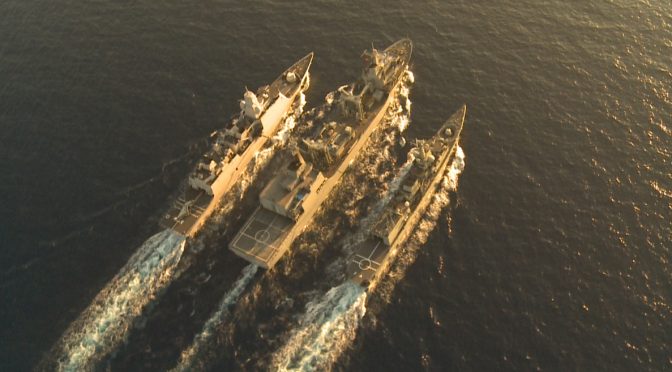
Featured Image: NATO Standing Maritime Groups operating in the Mediterranean (NATO)
In January 2016, the Chief of Naval Operations (CNO) issued A Design for Maintaining Maritime Superiority, which defined the current operational environment and laid out our Navy’s most pressing challenges within a framework of three interrelated global forces. These global forces—the classic maritime system, the global information system, and the increased rate of technological creation and adaptation—require the Navy’s Intelligence Community (IC) to adapt for the 21st Century.
Of the four Lines of Effort identified in the CNO’s Design, the Navy IC can directly affect three: Achieve High Velocity Learning at Every Level, Strengthen our Navy Team for the Future, and Expand and Strengthen Our Network of Partners. The fourth Line of Effort— Strengthen Naval Power at and From Sea — will derive direct advantages through Navy IC advancements in the other LOEs. Within this context, this paper identifies three challenges and proposes solutions to help the Navy IC effectively execute the CNO’s Design.
Challenge 1: Disseminate Ideas and Information Across the Intelligence Community
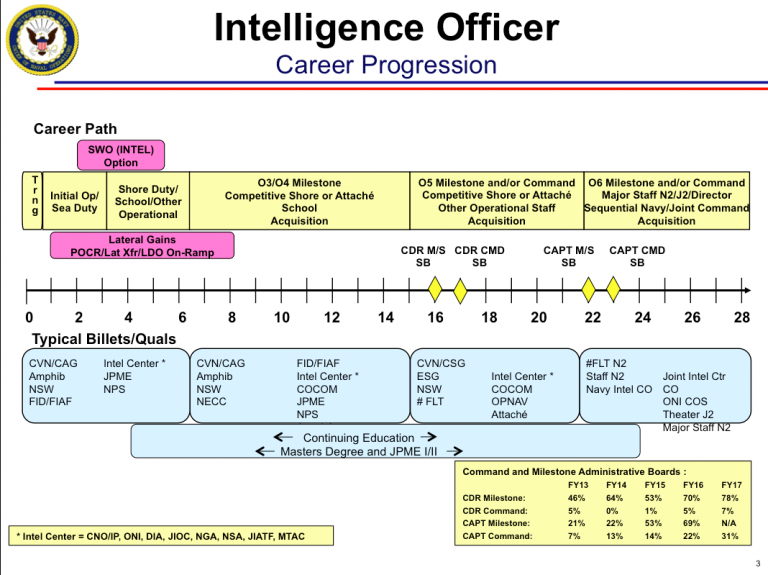
There is a contradiction inherent in the Navy IC’s professional development between generalization and subject matter expertise. On one hand, the Navy IC is a relatively stove-piped community, with little overlap between the disparate specialties and geographic commands that constitute the larger naval intelligence enterprise. At odds with this is a development paradigm for Intelligence Officers that prizes geographic diversity and job variety. In practice, this means that Intelligence Officers repeatedly find themselves at the bottom of the learning curve. Tour lengths and career progression permit only a modicum of regional or topical expertise before moving on to different problem sets.
The current career path for Naval Intelligence Officers. (US Navy Bureau of Personnel)
This creates an environment where the only Subject Matter Experts (SME) on a given target or region are often civilians at shore-side facilities where their expertise is directed (or constrained) to a select few leaders in the IC and greater DoD enterprise. Coupled with this situation is the current trend where most Intelligence Officer training resides at the unit level, allowing operational tempo and personality types to de-standardize the frequency, quality, and accuracy of the training.
The Navy lacks a consistent, IC-wide ability to ensure sustained familiarity with current intelligence, technology developments, and emerging challenges and threats. Aside from the baseline knowledge established in the Navy Intelligence Officer Basic Course (NIOBC), the majority of junior Intelligence Officers are defined by their assignments and therefore lack a strong grasp of the greater body of information in the IC. It is critical that Intelligence professionals provide warfighters and decision-makers context and probability; this paper contends that our current professional development does not develop this capability. In a future electromagnetic- (EM) degraded warfighting environment, relevant intelligence expertise needs to be available organically, across pay-grades and platforms. There will be no time for an Intelink hunt.
Solution: Use Modern Technology to Disseminate Practical Knowledge IC-Wide
To address these shortfalls, the Navy IC needs to use new technology to share ideas and information efficiently. The intent is not to turn generalists into SMEs, but to bridge knowledge gaps and prepare Intelligence Officers for the full array of jobs available. Using SMEs to develop the baseline knowledge of the community increases information flow and encourages innovation. To pass new information, the IC has traditionally relied on CDs and e-mails with uncertain distribution, messages with no mechanism to confirm readership, and ad-hoc training subject to the variations of trainers and the training environment.
An example of a periodic Navy audio series, the CNO’s podcast, Soundings. Click to listen to the February 15, 2017 episode on the core attribute of toughness.
The IC should augment these traditional methods with the creation of periodic video and/or audio lecture series to instruct the Navy IC on current information. Use the example of a podcast or TED Talks where an Office of Naval Intelligence (ONI) or Joint Intelligence Operations Center (JIOC) SME uses audio and visual aids to provide the ground truth on myriad topics to Navy Intelligence personnel worldwide.1 Instead of being constrained by the unbalanced knowledge that intelligence professionals develop individually, leverage SME knowledge to educate the broader community—effectively turning a weakness into strength. Underpinning this effort will be a central repository where the briefs reside, readily accessible to the fleet. These products will allow Intelligence Officers and enlisted Sailors to arrive on-station familiar with ongoing threats, trends, and maritime security challenges wherever they are assigned. This will enable high velocity learning by accelerating the dissemination of expertise and leveraging specialization to enhance the knowledge of the greater intelligence community.
We propose that these products be spearheaded and developed by ONI a minimum of once a month, no more than an hour in length, and hung in a low-bandwidth form on the Secret Internet Protocol Router (SIPR) Network; SIPR has to be the medium of choice to reach the greatest audience, afloat or ashore. Audio versions of the same briefs can be posted to the web for bandwidth constrained platforms and units, and the corresponding visual aids can be included in downloadable zip-files. Additionally, distributing an annual DVD compilation of the briefs to all Navy units would enable periodic training regardless of connectivity or bandwidth.
Challenge 2: Emphasis on Bridging the Operations and Intelligence Divide
There is a wealth of evidence—albeit mainly anecdotal—pointing to a persistent need to strengthen communication and trust between Unrestricted Line (URL) Officers and Intelligence Officers. To support operations effectively, the Navy IC must develop a better understanding of at-sea expeditionary warfare operations, operational terminology and practices, and the challenges that operators face. Similarly, to effectively consume and synthesize intelligence products, warfighters and planners must understand the cyclic relationship between intelligence and operations. Knowing what the Navy IC can provide, how missions and operations feed intelligence assessments, and how to frame questions effectively will ultimately improve productivity and the quality of naval intelligence professionals and operators alike. Ironically, the IC typically understands the capabilities and limitations of foreign forces well, but we can do a better job understanding those of our own fleet.
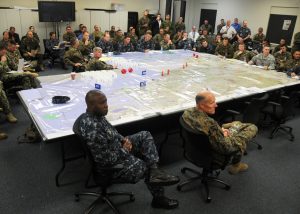
A strong relationship between intelligence and operational professionals is vital to successful mission execution, such as this photo of planning efforts leading up to Exercise BOLD ALLIGATOR 2011. (US Navy Photo by MC1 Phil Beaufort)
Junior URL Officers typically have limited cross-community learning and familiarization due to their respective warfare qualification processes and job requirements.2 These early years are exactly when junior officers need to begin learning about other communities, so they can foster the trust that is critical in the operations and intelligence relationship. The foundation of these relationships lies in an appreciation for one another’s work and an understanding of the interrelatedness of each community. The IC must accept responsibility for educating naval warfighters on our community while educating ourselves on theirs. Increased alignment will enable operators to understand the right questions to ask, thereby allowing intelligence professionals to provide improved time-sensitive, succinct, and relevant intelligence to our fleet.
Solution: Identify and Employ Cross Community Engagement Opportunities
A primary focus of an Intelligence Officer’s first tour is the completion of their professional qualifications—a process that can take up a majority of their time. Our first proposal is placing emphasis on getting our 1830s qualified as quickly as possible and then using the remaining time in their initial tour to embark a variety of ships and submarines; the benefits are three-fold.
Foremost, it will broaden the young officers’ knowledge of our fleet including the hardware, technology, and terminology associated with conducting at-sea operations. Second, it will allow them to receive valuable training from peers working across the operational spectrum. Lastly, it will foster side-by-side communication and cohesion with URL peers. Part of this initiative might include NIOBC students completing their initial Personnel Qualification Standards (PQS) before graduation, thus speeding their Information Warfare (IW) qualification process upon entering the fleet.
The second proposal is integrating intelligence familiarization into the training pipelines for URL Officers. This familiarization would occur primarily aboard big-deck amphibs and carriers, where officers can receive in-depth tours and briefs on the routine operations and capabilities of strike group intelligence centers. The training will demonstrate the value intelligence teams provide, how to communicate with them, their limitations, and how URL Officers contribute to Indications and Warning (I&W). In the case of Surface Warfare Officers (SWOs), this could become a small portion of the Basic Division Officer Course (BDOC) already being taught.3An alternative and complimentary approach to address existing apprehension between Operations and Intelligence is to increase the number of lateral transfer URL Officers in the 1830 accession model. A third prospect is expanding the SWO-Intel option at all accession sources so a larger number of future Intelligence Officers will have completed initial URL tours aboard surface warships, thus developing familiarization and relationships with other communities.
These suggestions alone will not break down all barriers and communication challenges between Ops and Intel. However, when coupled with frequent engagement opportunities, familiarization with new intelligence practices, and manning and accession changes, increased trust and cohesion amongst our Fleet’s cadre will flourish.
Challenge 3: Improve Awareness of International Maritime Security Organizations, Shared Lines of Effort, and Maritime Domain Awareness (MDA) Developments
The CNO has charged our Navy with expanding and strengthening our network of interagency and international partners. Maritime security organizations across the world possess valuable knowledge, tactics, techniques, and procedures (TTP), along with lessons learned regarding their experiences with MDA and maritime security threats. It is imperative that we expose our Intelligence Officers to these organizations, their practices, processes, and ideas. Collaboration and novel lines of communication with these agencies will help enable the global information-sharing network required for the coming decades. However, to get there, these partners must believe we understand their concerns, modi operandi, and capabilities, and they must trust their USN counterparts.
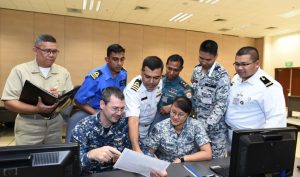
LT David Andre works with SEACAT exercise participants to share information for a common regional maritime picture and coordinate responses to maritime threats. (Government of Singapore)
Many partner navies align closely with U.S. Coast Guard (USCG) missions, an area where the U.S. Navy lacks proficiency. We can improve relationships with those navies by working together, understanding their challenges and perceived threats—even if they are atypical for our fleet. An example of this is Illegal, Unreported and Unregulated fishing (IUU), which is the scourge of developing maritime nations the world over, but garners little attention from the USN.
We can enhance our international relationships and improve information sharing by familiarizing ourselves with maritime threats like this, enabling more effective management of lines of communication. Understanding our international partners’ concerns will make us a more effective partner, paving the way for cooperation and trust across a range of issues.
Solution: Engage with Local and Foreign Maritime Security Organizations
Identify organizations that practice the key principles of MDA and information sharing, like major CONUS and OCONUS port operations control centers, USCG and Department of Homeland Security Interagency Operations Centers, and multi-national coordination centers like those in Singapore, Kuala Lumpur, Lisbon, Cameroon, and Northwood.4 Send groups of mid-career Intelligence Officers on periodic familiarization trips to these destinations for engagement and collaborative discussions on current trends, threats, and lessons learned from combating maritime security threats.
The USN target audience will be Lieutenant Commanders (O-4s); the goal would be to—at least once a year—send a small group of personnel from various commands to spend 2-4 weeks touring these sites. Their mission would be to receive briefs on their hosts’ missions and capabilities, and provide reciprocal briefs on information sharing and maintaining MDA. This would potentially look like a scaled-down version of the initial familiarization training that a Foreign Area Officer (FAO) receives.
The overall goal of this initiative is to broaden our connection to the greater MDA and maritime information sharing communities, establish and maintain relationships and working lines of communication. Participation in these visits can be tailored to inform the Navy IC through end-of-mission briefs to leadership at ONI, Combatant Command (COCOM) JIOCs, and numbered fleets. Longer-term opportunities exist in the form of International Liaison Officer posts at foreign maritime security centers. These liaison billets foster greater understanding of international and regional maritime security trends and the capabilities and limitations of global partners. Similar to the SECNAVs Tours with Industry program that affords military members an opportunity to work with large civilian corporations for a year; this international exchange program will expose officers to new ideas and organizations, fostering relationships, information sharing, and improving MDA.
Conclusion
The Navy Intelligence Community has played a vital role in our Fleet’s success from Midway through the Global War on Terrorism. To continue this effort, the Navy IC must demonstrate initiative and creativity to address the challenges identified by the CNO. Usable and timely intelligence must be communicated across the fleet to decision-makers and warfighters in all phases of operation. To effect these activities, new technologies will be used, new domestic and international relationships will be required, and an increased level of coordination and trust must be fostered amongst Intelligence and Operations professionals.
Cross-community trust and engagement will enable improvements in all parts of the intelligence cycle, better preparing our Fleet for the warfighting environments of the 21st century. Navy IC-led international partnerships and information sharing will provide new levels of access to intelligence, facilities, and new technology in this era of increased globalization. These changes will not happen immediately, they will require adaptation, ingenuity and a cultural shift. This is an opportunity and challenge we are ready to accept.
LT Millard Bowen is a former Surface Warfare Officer and was most recently the N2 for COMDESRON SEVEN in Singapore. He is currently serving as the Operations Officer for NCIS’s Multiple Threat Alert Center (MTAC). He can be reached at quintus77@hotmail.com.
LT David M. Andre is a former Intelligence Specialist, and has served as an Intelligence Officer and Liaison Officer assigned to AFRICOM. He is currently serving as N2 for COMDESRON SEVEN in Singapore. He can be reached at dma.usn@gmail.com.
The views expressed above are the authors’ alone and do not reflect the official views and are not endorsed by the United States Navy, the Department of the Navy, the Department of Defense, or any other body of the United States Government.
Endnotes
1. An additional benefit to this approach is the Navy’s younger generation of Officers and Enlisted will likely be more receptive to multi-media training tools like these.
2. This is more common in the Surface Warfare and Submarine communities. Aviation Squadrons and Naval Special Warfare units have assigned Intelligence teams, so there is more familiarity earlier in their careers with varying degrees of success.
3.There may be opportunities for similar Intelligence familiarization training in the initial training pipelines for Naval Special Warfare, Aviators and Submariners, but future collaboration with those communities will be required to identify when and how best to integrate these topics.
4. Singapore hosts the Information Fusion Centre (IFC), Kuala Lumpur hosts the International Maritime Bureau Piracy Reporting Centre (IMB PRC), Lisbon hosts the European Maritime Safety Agency (EMSA) and the Maritime Analysis and Operations Centre – Narcotic (MAOC-N), Cameroon hosts the Economic Community of West African States (ECOWAS) Inter-regional Coordinating Center (ICC), Northwood, England hosts the NATO Maritime Command HQ, the NATO Shipping Centre (NSC) and the Maritime Security Center – Horn of Africa (MSCHOA).
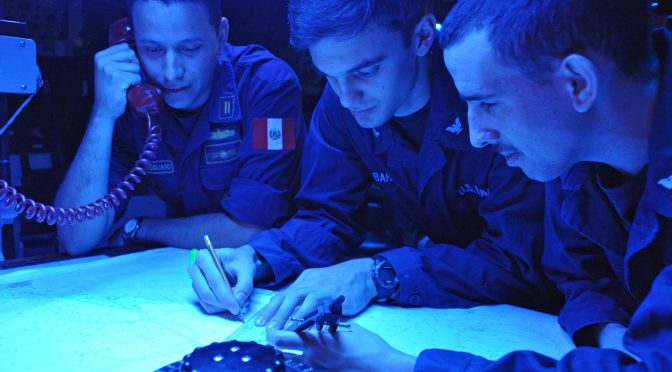
Featured Image: Two U.S. Navy Sailors and Peruvian sailor confirm position of simulated enemy destroyer in combat information center aboard guided-missile frigate USS Rentz during wargames as part of annual UNITAS multinational maritime exercise, off coast of Colombia, September 14, 2013 (U.S. Navy/Corey Barker)
Featured Image: Two U.S. Navy Sailors and Peruvian sailor confirm position of simulated enemy destroyer in combat information center aboard guided-missile frigate USS Rentz during wargames as part of annual UNITAS multinational maritime exercise, off coast of Colombia, September 14, 2013 (U.S. Navy/Corey Barker)
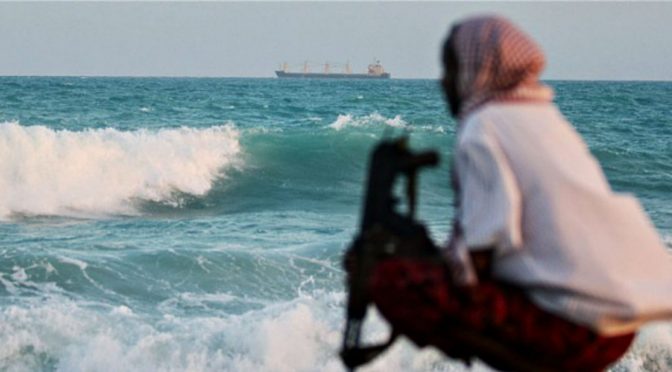
Late Monday, crew on the Emirati-owned oil tanker Aris13 activated a distress call indicating they were being pursued by pirates off the coast of Somalia. The subsequent hijacking, once confirmed, would mark the first successful Somali act of piracy since 2012. This of course begs the question: Is Somali piracy back?
The answer is probably yes; also probably no (forecasting is a bad business to be in these days). Credible arguments could be made in either camp. Here I’ve chosen to explore some of the key points on either side.
Is Piracy in Somalia is Making a Comeback?
When Somali piracy spiked in the late 2000s, the international community was fairly quick to respond. Somalia sits alongside some of the most important shipping lanes in global trade, and precipitously close to three maritime chokepoints: the Suez Canal, Bab el-Mandeb, and the Strait of Hormuz. Rising insurance premiums for shipped goods and the market-wide consequences of scares to the free flow of oil made addressing piracy off the horn of Africa an issue of importance for many navies. One of the largest such engagements was operation Ocean Shield, NATO’s contribution to counter-piracy. Ocean Shield and related efforts, like EU’s operation Atalanta, were heavily credited with the dramatic reduction in Somali piracy that followed. As Rear Admiral Terry McKnight (USN, Ret) notes, though after years of no successful attacks, Ocean Shield was suspended at the end of 2016. If the deterrent effect of NATO and other warships in the region was indeed primarily responsible for suppressing Somali piracy, the minimization of that deterrent could be credibly seen as providing an opening for resurgent piracy.
At the height of regional piracy, a CNA study warned that “the resilience of the pirate enterprise should not be understated.” Four years later, that cautionary note remains relevant. First, it should be noted that piracy rarely just disappears. Like any crime, eradication is an unlikely end state. That is the case off Somalia as well. Even though attacks were unsuccessful after 2012, a small number of attempted attacks were reported in the Gulf of Aden in 2013 (6) and 2014 (4). Attempts by Somali pirates in the Red Sea were also reported in 2013 (2) and 2014 (4), while attacks closer to Somali waters occurred in 2013 (7), 2014 (3) and 2016 (2). These numbers are orders of magnitude smaller than in previous years, and gaps in attacks in 2015 tell a remarkable story. For all those reasons we could look at those numbers and conclude this most recent alleged attack is an outlier (and in truth it likely is, I suspect). Nevertheless, as per the International Maritime Bureau(the organization that actually collects all this information), the attempted assaults in 2016 indicate that the “capacity and intent to attack merchant shipping still exists off Somalia.” Lingering institutional knowledge means that a resurgence is not impossible. Closely linked to this point is the idea that (like other types of crime) piracy may have a contagion effect. A successful hijacking now could produce copycat attempts, the success or failures of which would have significant consequences for the overall trajectory of regional piracy.
Of course, it is now almost a cliché to note that piracy is ultimately solved on land, not at sea. Suffice it to say that, despite apparent gains in power consolidation, Somalia remains quite clearly a country in search of greater stability (it was the top ranked state in the most recent Fragile States Index report). Like the pirate havens of lore, ungoverned spaces will always run the risk of attracting maritime criminality.
Is Piracy in Somalia is Gone for Good?
The numbers reflected above speak in large part for themselves. Piracy in Somalia, for several years now, has been as close to nonexistent as is practicable. One incident does not make a convincing trend.
Moreover, while a decline in anti-piracy-tasked warships is important to note, other deterrents continue to play an important role. In addition to a remaining naval presence, shippers also developed myriad means of combatting piracy. Embarked armed security is a very credible threat, while passive security measures (watch Captain Phillips), and best management practices (like better reporting standards) all likely contributed to declines in piracy rates and remain just as relevant today as in 2012.
Some systemic arguments are harder to make with certainty but are also worth noting. Unlike piracy in the Gulf of Guinea or parts of Southeast Asia (Indonesia, notably), Somali piracy was remarkably organized (i.e. not opportunistic). A wide-scale resurgence in Somali piracy, in the vein with which we are familiar with it, would mean a major retooling of operations for the regional transnational criminal organizations (TCOs) that provide a backbone for piracy’s infrastructure (bank accounts, negotiators, financiers). Like most TCOs, it is likely that Somali gangs have diversified to survive, perhaps branching into weapons smuggling or, as a report from 2012 suggests, kidnapping foreigners on land. Making the switch back to piracy is far from impossible, but could run into bureaucratic resistance (even criminals have bosses).
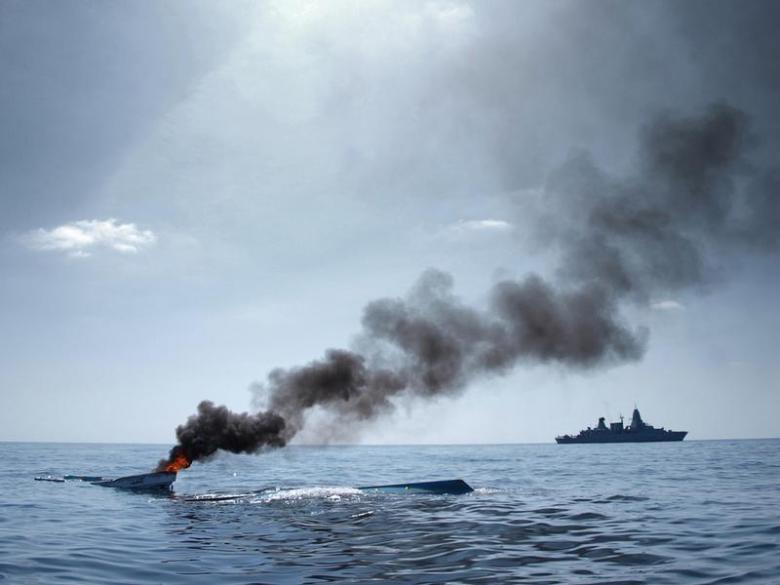
The German Frigate ‘Hamburg’ (R) patrols after destroying two fishing boats (L) which were discovered floating keel side up in open waters off the coast of Somalia, in this undated handout photo made available to Reuters August 15, 2011. (REUTERS/Bundeswehr/Christian Laudan/Handout)
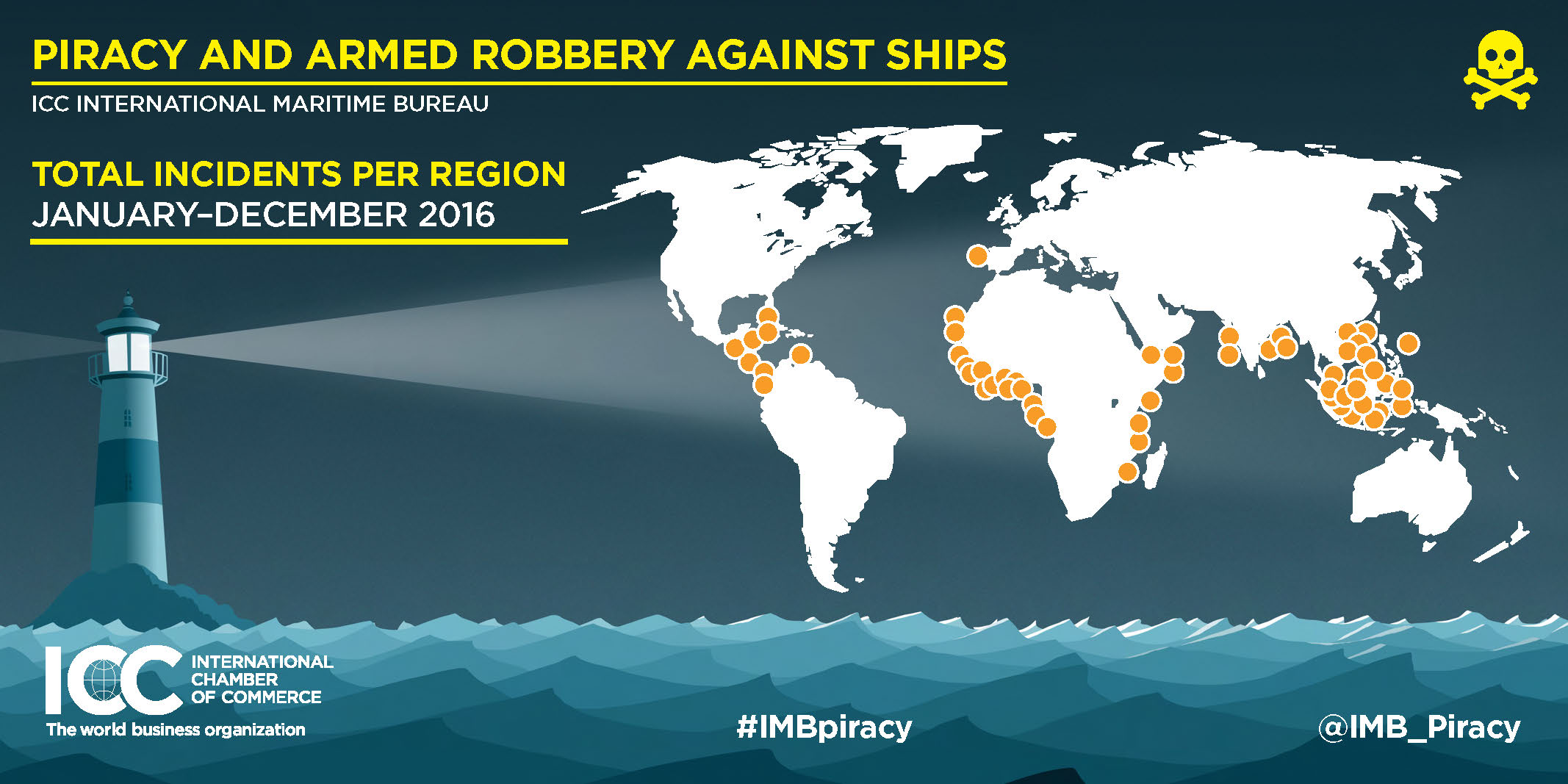
Globally, piracy has also just hit its lowest rates in 18 years. And when you get deeper into the details, the numbers don’t not look ripe for a Somali resurgence. Overall piracy attempts are down, including hijackings, which are the typical type of attack employed near the horn of Africa. What is up are kidnappings, seen increasingly in Nigerian piracy (which is still very active). Indonesia, meanwhile, saw a large decline in piracy, but still owns a substantial portion of total attacks, almost all of which are simple and opportunistic. If global numbers can say anything about a specific region (which is admittedly a big ‘if’), one potential takeaway is that opportunistic piracy and hit and run kidnappings are (for now) more viable tactics than those that Somali pirates usually employed.
Conclusion
There is more to this conversation to be sure. Historically, claims that Somali piracy was a response to toxic dumping and illegal, unreported, and unregulated (IUU) fishing (the Somali coast guard narrative) struck some experts as an inadequate explanation for the phenomenon. Fishing has not traditionally been a major part of Somali culture or economies, nor were most pirates former fishermen. (That does not excuse the devastation of toxic dumping and IUU fishing, only its ability to causally explain piracy.) In response to this latest incident, however, that claim has resurfaced as a direct cause of the Aris 13 hijacking. Should it prove that fishermen were indeed responding to predations in Somali waters, that could spark a much wider debate once again. Only time will tell whether Somali piracy will ebb or surge. For now, our thoughts are with the crewmembers and their families.
Joshua Tallis is a Research Analyst at CNA Corporation, a nonprofit research and analysis organization located in Arlington, VA. He completed his PhD in International Relations at the University of St Andrews’ Centre for the Study of Terrorism and Political Violence. The views and opinions in this article are his own and do not necessarily represent the position of his employer.