Category Archives: Capability Analysis

Analyzing Specific Naval and Maritime Platforms

A New DESRON Staff – Beyond the Composite Warfare Commander Concept

By Bill Shafley

A destroyer squadron (DESRON) staff’s employment as a Sea Combat Commander in the Composite Warfare Commander (CWC) construct is unnecessarily narrow and prevents a more lethal and agile strike group. Tomorrow’s fight requires multiple manned, trained, and certified command elements. These elements should be capable of maneuvering and employing combat power. This combat power is required to support area-denial operations, assure the defense of a high-value unit, or conduct domain-coordinated advance force operations to sanitize an operating area in advance of the main body. This ability to diffuse command and control, disperse combat power, and contribute to sea control operations is imperative to fully realize the Distributed Maritime Operations (DMO) concept.

The Fight

The carrier battle groups (CVBGs) of the Cold War evolved into the carrier strike groups (CSG) of today. The components of the CWC organization did as well. The CWC organization evolved into managed defense of a high-value unit to preserve the capability of the carrier air wing (CVW). A destroyer squadron staff embarked on a Spruance-class destroyer managed multiple surface action groups (SAGs) and search and attack units (SAUs). They managed a kill chain designed to prevent submarines and surface ships equipped with anti-ship cruise missiles from ever entering their weapons release lines. As the anti-submarine warfare commander, they also managed the up-close defense of the carrier through assigning screening units and maneuvering the force as necessary to defend the ship and the air wing.

As the CVBG evolved into the CSG of today, the offensive and defensive missions were merged into one. The DESRON Staff was employed as the sea combat commander. The staff left the ships and embarked on the carrier. As maritime forces operated in support of land campaigns with precision fires far afield in mostly benign waters, defense of the CVN as a sortie generation machine became a primary mission. The carrier defense problem could be managed with one or two multi-mission cruisers or destroyers because the mission was generally limited to confined strait transits, managing a layered defense against fast attack craft, and establishing airspace control. The remainder of cruiser and destroyer offensive capability was chopped about between in-theater task force commanders to meet additional missions of interest, namely maritime interdiction and critical maritime infrastructure defense, and support to security cooperation plans. Near the conclusion of deployment, the strike group elements rejoined and went home together. This evolution has been fit for purpose over the last 25 years, but no longer.

The fight of tomorrow looks more like the fight planned for during the Cold War, with one major difference. China’s blue water fleet is quickly becoming more capable than the Soviet fleet ever was. Consequently, the wartime employment of tomorrow’s CSG must focus more on offensive employment in sea control operations while also facing greater threats. These operations are uniquely maritime as they are focused on the destruction of an enemy fleet and its components that may impact the United States Navy’s ability to operate with superiority. Commanders in this environment manage scarce resources (see fig 1) to establish and maintain a kill chain while assuring adequate defense. A CSG must fight into an environment, survive, exploit sea control, and be prepared to move and establish it again; perhaps multiple times. Each CSG, with the CVN, its air wing, the fires resident in the VLS tubes of the DDGs, needs to be preserved as a fighting unit in order to generate the combat power necessary to achieve sea control while assuring its survivability through subsequent engagements.

The defense of the carrier must now be balanced with the work necessary to survive as a complete task-organized force. The greater the demand for sea control in time and space, and the greater the enemy force contesting sea control, the more offensive firepower will be required to neutralize the enemy and establish sea control. At the same time, this enemy force may also out-range many of the CSG’s weapons, might shoot first, and will shoot back. This threat environment increases the requirement for defensive firepower. This is a conundrum for the traditional approach. As the DMO concept suggests, disaggregation of the CSG is driven now by lethality and survivability.
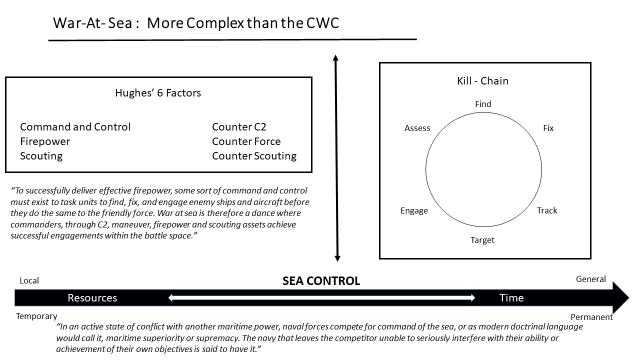
Fig. 1: Establishing and maintaining sea control is a balance between resources and time. Planning for and employing forces in this environment requires new thinking. See the author’s piece at: https://cimsec.org/new-forms-of-naval-operational-planning-for-earning-command-of-the-seas/

 As the above graphic notes, this tactical problem is far more complex than one of classic CVBG defense. Establishing sea control requires an optimized balance between offense and defense. This dilemma poses interesting questions. How much of the combat power of a CSG is left behind in defense? How much of it is committed to strike hard and win the war at sea? How is the offense commanded and controlled? Is there adequate command element (CE) depth to manage the CWC defense in one area and hunt/kill in another? What is the nature of the CE for these missions? Where should the CE be embarked for greatest effectiveness? How robust is it? What is the duration of the mission? The DMO concept requires command elements that, through the use of mission command can control all facets of sea control operations (to include logistics), in communications denied environments and at scale.

Today’s CSG commander lacks command and control options to address these questions. A differently manned, trained, and employed DESRON staff could provide this flexibility. This staff is at its core a command element. It could be ashore working for the numbered fleet commander as a combined task force (CTF) commander one week, embarked on a command platform the next week, and on the carrier the week after that. It might even be dispersed to all of those at once and with multiple units under tactical control (TACON). This flexibility gives higher echelon commanders multiple employment options as they consider how to delegate their command and control to meet mission needs. However, the DESRON of today is not manned, trained, or certified to be employed in this manner.

Manning Concept

The proposed command element would require watch standers and planners, including enough subject matter experts to plug into multiple battle rhythm events. The command element would have cells for current operations (COPS), future operations and plans (FOPS), information warfare (IW), and readiness. It would be manned to provide a six-section watchbill, a distinct and separate planning team, an IW cell and readiness monitoring team that would coordinate with fleet logistics and maintenance support for assigned ships. The six-section watchbill requirement would afford the staff enough personnel to split and establish command and control in two different locations for missions as assigned. This staff size is roughly equivalent to current DESRON manpower levels (40-45 personnel). Its makeup in terms of subject matter expertise is more tailored to the Sea Control mission set.

This new DESRON staff would be manned as follows:
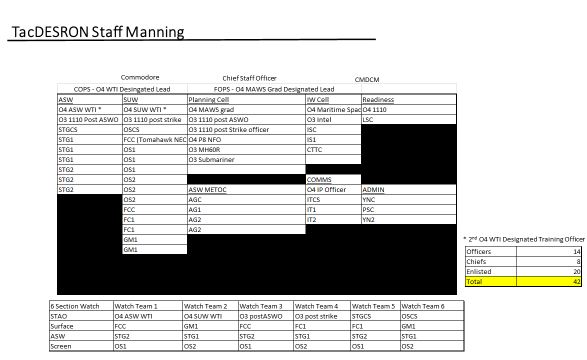
Fig. 2: Staff Manning Construct reflects subject matter expertise for planning and watchstanding functions

Training Concept

This command element should be educated and trained to apply joint warfighting functions with multi-domain maritime resources to establish, execute, and maintain a kill chain in an assigned geographic area. This is a robust capability that can be brought to bear in defense of high value units, in intelligence preparation of the battlefield, in surveillance and counter surveillance, or in direct action against enemy surface and subsurface units.

This organization is led by a major command selected captain (O6) surface warfare officer. This officer should have significant tactical experience in command as a commander (O5), have received a Warfare Tactics Instructor certification, and/or graduated from an advanced in-residence planner course (Maritime Advanced Warfighting School, School of Advanced Air and Space Studies, School of Advanced Warfighting, School of Advanced Military Studies). Experience on squadron, strike group, or fleet staffs would also be beneficial. The chief staff officer would be an O5, post-command officer of similar qualification. Service as the chief staff officer should be viewed as a career enhancing opportunity in the 5 years between O5 command and O6 major command. The leadership of this team would be rounded out by a billeted and selected command master chief.

Officers assigned to the staff should be proven shipboard operators in the all the major warfare areas. They should be qualified as ASW Evaluators and Shipboard Tactical Action Officers. Four post-department surface warfare officers would be assigned to the staff. They would serve as lead officers for current operation (COPs), future operations and plans (FOPs), training, and readiness, and serve staggered 24 month tours. Officers would follow an assignment track within these billets to afford experience in all four jobs, culminating as COPs or FOPs. These leaders should be post-department head officers eligible and competitive for command at sea.

There would be four post-division officer tour officers assigned to this staff structure. These would be qualified as surface warfare officers and served as an Anti-Submarine Warfare Officers/Evaluators, Tomahawk Engagement Control Officers, and/or hold Warfare Coordinator Qualification. These officers would be selected for department head and due course, that is, competitive for further advancement. All of these officers would attend the Staff Watch Officer, Joint Maritime Tactics Course, Maritime Staff Officer’s Course, and specialty schools as necessary. Officer who trained with foreign navies at their principal warfare officer courses and planning courses would also be sought after to bring Coalition Integration to bear.

There would be 3 senior chiefs and 8 chief petty officers permanently assigned to this staff. The senior chief petty officers (SCPOs) would be from the ratings of Sonar Technicians, Operations Specialists, and Information Systems Technicians each would have successfully completed shipboard leading chief petty officer (LCPO) tours. They should respectively hold advanced Navy Enlisted Classifications in the ASW field, achieved senior-level air controller qualifications, and hold Communication Watch Officer and associated computer network management credentials. Assigned LCPOs in rates depicted would provide technical and watchstanding expertise in their rate. All SCPO and CPOs would complete the STWO/JMTC course work and additional rate specific training. The remaining enlisted sailors would be first or second class petty officers (E6/E5), and trained as watchstanders to support the 6 section watchbill and planning cell.

This staff would include support from additional warfare communities. The IW cell would be comprised of a lieutenant commander (O4) maritime space officer and a lieutenant (O3) intelligence officer. The IW community would provide a lieutenant commander (O4) Information Professional officer to manage communications requirements for this rapidly-deployable team. The team would be rounded out with the addition of two aviators: an MH-60R pilot and a P-8A naval flight officer. Their experience would be crucial in planning and for watchstander assistance during training and operations.

Certification Process

The proposed DESRON staff would be assigned to the Carrier Strike Group commander for administrative purposes. The DESRON staff would follow the Carrier Strike Group’s optimized fleet response plan (OFRP) progression (i.e., maintenance phase, basic phase, advanced phase, integrated phase, deployment, and sustainment phase). The staff would be deployable from deployment through the end of sustainment phase, and its qualifications would lapse as the CSG entered the maintenance phase.

Over the course of the OFRP maintenance phase, the staff would go through a personnel turnover period, to include key leadership. The primary purpose of this phase would be to establish the staff’s training plan. The WTIs would tailor the staff training plan based upon lessons learned from previous employment and potential future assignments. This training plan would incorporate the latest in tactical developments and experimentation. Furthermore, participation in table top exercises, Naval Warfare Development Command wargames, and Fleet 360 programs would be included. This training plan would be approved by the Surface and Mine Warfighting Development Center (SMWDC) and enacted by the appropriate tactical training group (Atlantic or Pacific), the Naval War College, and various warfare development commands.

The staff’s basic phase would mirror a ship’s in length and complexity by field. Staff WTIs, along with the appropriate tactical training group, would craft scenarios that build in complexity and the amount of integration with the individual cells. The staff would benefit from staff rides to all of the warfare development centers, and significant time at the tactical training group to learn cutting edge tactics, techniques, and procedures and capabilities and limitations. Through the use of live, virtual, and constructive training tools, the staff would train to the Plan, Brief, Execute, De-brief (PBED) standard in stand-alone work before gradually integrating the staff. The DESRON commander would focus on crafting intent, planning guidance, and risk assessment. The IW Cell would conduct Intelligence Preparation of the Operating Environment, the planners learn the effective use of base plans, branches, and sequels, and the watch standers would execute these in scenario work. The basic phase would culminate with the entire staff certifying over a week long exercise where the team operates in a higher headquarters battle-rhythm driven environment and is certified to a basic standard by Tactical Training Group Atlantic or Pacific (TTGL/P).

The advanced phase would begin with the DESRON staff executing Surface Warfare Advanced Tactics and Training (SWATT) at-sea with SMWDC mentors with live ships, submarines, and aircraft. This exercise mimics the training conducted during the basic phase. In this program, the staff embarks a platform and integrates with the assigned ships and operates at-sea introducing frictions not seen in the live, virtual, or constructive environment. Watch sections and planning teams would be assessed again in-situ and performance assessed to assure continued development. The SMWDC senior mentor would then recommend advanced certification to the certifying authority. If practical, the staff should embark aboard the CVN with the CSG for Group Sail (GRUSL) for additional training opportunity prior to the pre-deployment Composite Training Unit Exercise (COMPTUEX, or C2X).

The COMPTUEX would remain the final hurdle in integrated training leading to deployment certification. Over the course of the 6 weeks at-sea, the staff would have to demonstrate its capability in integrating into the CSG battle rhythm and demonstrate watch stander acumen in increasingly complex live exercise (LIVEX) evolutions.

During the COMPTUEX, the DESRON Staff would have to demonstrate its capability to act as a CTF commander afloat, both on the CVN and embarked in a smaller unit with assigned units. It must demonstrate the capability to conduct “split-staff” operations at a remote site ashore. In each of these instances, the staff must demonstrate its capability to establish C2 of assigned units for mission effect, control operations effectively, and integrate into a higher headquarters battle-rhythm.

Satisfactorily assessed in these areas, the staff would be certified to deploy. During deployment, it would be employed flexibly and with optionality based upon the tactical situation and the desired effects from commanders at-echelon. As the CSG heads over the horizon, the DESRON staff could participate in fleet battle problems (FBP) and coalition-led exercises to test and validate a whole range of new tactics, techniques, procedures, doctrine, and interoperability. As FBPs continue to develop and live, virtual and constructive training tools come on line, the chance to “fail fast” in this space only increases.

Employment Concept

The proposed tactical DESRON could be employed across a wide range of operations supporting Carrier Strike Groups, Amphibious Ready Groups, and fleet commanders. Mission and associated tasks drive span of control in terms of assigned ships, aircraft, and additional resources. As a task organized, employed, and expeditionary staff, its main value prospect would be its flexibility.

Manned, trained, and certified during the intermediate and advance training phases, the command element’s normal mode of operation would be embarked aboard a command ship. Employed to protect a command ship, it would be capable of exercising warfare commander duties in a strike group/CWC environment with up to five assigned ships. While its primary missions would remain anti-surface and anti-submarine warfare, it could augment or establish additional warfare area support (Integrated Air and Missile Defense or Information Warfare) in any surface combatant. Employed as a scouting force further afield in the assigned operating areas, a portion of the staff may embark detached assets to afford command control and transition scouting missions into local maritime superiority missions. Employed as a task force commander, it may disperse further and move ashore with a local fleet commander to oversee operations over a broader area. Though this employment method would be more taxing on the staff, it might be required for short durations of high operational tempo. With basic manning and training levels achieved, the command element could be employed to C2 joint exercises or lead TSC missions ashore with partner nations as part of its further development.

The sustainment phase would be the most important of all for this staff because it would be key to force-wide improvement. Over the course of a deployment, the DESRON staff would have participated in various operations and exercises. Based on these experiences, the staff training officer would lead a robust program of lessons learned. The assigned WTIs would also compile and prepare various tactical notes and after action reports to share amongst other DESRON staffs and units alike. As the staff transitioned into its maintenance phase, it would go “on the road” to debrief its lessons learned, new tactical and doctrinal proposals with the goal of driving organizational learning for future operations. The habitual relationships with War College and its various research groups, the warfare development commands, and SMWDC WTI community makes for an amazing opportunity to share experiences, connect subject matter experts and further development efforts across the fleet.

Conclusion

This concept is aspirational and developed without respect to resources. There are numerous additional details necessary to bring a capability like this to fruition, but none of these details require new thinking to manage. Commitment, purposeful planning, and some smart staff work would be adequate to address each on in turn. A capability like this could be developed within the 5-year Future Year Defense Program/Program Objective Memorandum cycle. The staff’s full capability will be realized over time as new business rules for assignment are enacted. The certification criteria would be amended and in some cases completely developed. But much of this infrastructure, the school houses, the courseware, and training systems already exists.

This model makes no mention of permanently assigned surface ships to the DESRON. This work presupposes that ships assigned to the squadron arrive manned, trained, equipped and certified at the basic level. Ships change operational control to the DESRON for employment via formal tasking order. Readiness oversight functions of this staff are limited across the board. This staff retains a strong working relationship with the various type commands and local maintenance centers to assure in-situ readiness issues can be resolved.

The deployment and sustainment phases of the OFRP are vital to successful maintenance and basic phases for the next set of employment. The DESRON staff responsibility in this work is to assure that the events prescribed by the Surface Force Readiness Manual are scheduled, are thoroughly completed by assigned units, and that long-term readiness risks are endorsed. Once sustainment phase is complete, the assigned ships are returned via “chop” in the same official manner. Readiness oversight success in this environment means that ships have true and complete self-assessments with ample transparency of emergent and voyage work necessary to maintain assigned readiness conditions.

The proposal for a tactical DESRON represents an opportunity to leap ahead of the competition and bring the elements of speed, synchronization, and surprise to the employment of naval forces. The CSG and ARG as units of employment have been disaggregated for most of the last 20 years in an effort to get the most out of assigned theater maritime resources. Forces have been chopped up and moved about amongst standing fleet task forces, leaving the strike group staff in most instances over-billeted in terms of staff capability. This has left DESRON staffs as the under-employed adjuncts of CSG staffs and merely augmenting the battle-rhythm. This proposal to invest in the DESRON staff and reorient it towards looming challenges would correct these trends and yield a more lethal force for employment within the Distributed Maritime Operations concept.

Captain Bill Shafley is a career Surface Warfare Officer who has written extensively on strike group operations, mission command, and sea control in this forum and others. He has served on both coasts and overseas in Asia and Europe. He is a graduate of the Naval War College’s Advanced Strategy Program and a designated Naval Strategist. These views are presented in a personal capacity.

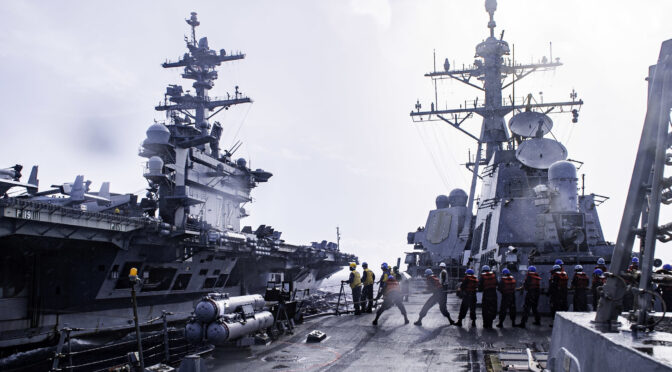
Featured Image: PHILIPPINE SEA (June 18, 2022) Sailors aboard Arleigh Burke-class guided-missile destroyer USS Spruance (DDG 111) handle lines during a replenishment-at-sea with Nimitz-class aircraft carrier USS Abraham Lincoln (CVN 72). Abraham Lincoln Strike Group is on a scheduled deployment in U.S. 7th Fleet to enhance interoperability through alliances and partnerships while serving as a ready-response force in support of a free and open Indo-Pacific region. (U.S. Navy photo by Mass Communication Specialist 3rd Class Taylor Crenshaw)
Naval Gunfire Liaisons and 21st Century Fires

By Alan Cummings

It’s no secret that a fight in the Pacific is atop the Pentagon’s list of concerns. The 2022 National Defense Strategy fact sheet explicitly states that China is “our most consequential strategic competitor and the pacing challenge for the Department.” A large part of the Pentagon’s effort to deter—and if necessary confront—China is investing in new technology to connect platforms and sensors. One of the most important initiatives is to improve joint fires as part of the Joint All-Domain Command and Control (JADC2) concept, often summarized as “any sensor, any shooter” and more recently as enabling “the Joint Force to ‘sense,’ ‘make sense,’ and ‘act’ on information across the battle-space. Speaking at the Hudson Institute in 2020, then-Vice Chairman of the Joint Chiefs General John Hyten credited JADC2 as the key to giving any element of the joint force “the ability to defend itself or the ability to strike deep into an adversary area of operations.”

While JADC2 is focused on technology, war is inherently human. This article will discuss the role of the Naval Gunfire Liaison Officer (NGLO) as one human in a  JADC2-enabled theater. Any conversation about fires, lethality, and the Pacific leads either implicitly or explicitly to considerations of how naval vessels can support maneuver forces ashore. However, this legacy — maritime fires directed against terrestrial objectives — is now only one part of the equation. As concepts evolve for potential wars in the Pacific, the NGLO can provide maritime expertise that improves the integration of joint, multi-domain fires at the tactical and operational levels of war.

The NGLO Origins, Briefly

The Pacific is the birthplace of naval gunfire as a coordinated contribution to combined arms. The Marine Corps’ forward observer handbook credits Lieutenant General Holland Smith with establishing a formal naval gunfire section at V Amphibious Corps in 1943 and a companion unit for close air support training in 1944. Citing work by the historian Allan Millet, it notes that codifying the training and employment of amphibious fire support “reflected the lessons from three years of intense combat across the Pacific and formed the basis for the Marine Corps’ current procedures for controlling supporting arms.”

This NGF Section gave rise to the Shore Fire Control Party (SFCP), a small team of four or five enlisted Marines led by the NGLO (a naval officer) who can be employed as naval gunfire spotters in the field, controllers in a fire support coordination center, or planners in a headquarters element (and often all three).

The specific size, task organization, and mission of a NGLO’s SFCP has varied based on the availability of personnel and the actual tasking of the unit they’re assigned to. However, the gist has remained the same over time: a small cadre of individuals who are particularly well-versed in sea-based fire support and deployed with Marine Corps maneuver elements. In this regard, the SFCP is distinct from Air and Naval Gunfire Liaison Companies (ANGLICOs) who have a greater emphasis on close air support and are doctrinally tasked to “conduct terminal control of fires in support of joint, allied, and multinational forces,” i.e., to work for non-Marine Corps units. This distinction — NGLOs and SFCPs for Marine units and ANGLICO elements for all others — may no longer be the most efficient or effective way to coordinate joint fires in a maritime-centric environment like the Pacific. New weapon capabilities and the JADC2 concept are driving deeper integration that requires more “connective tissue” across maneuver and fires elements. While communication and data transmission are a vital part of this, it will always be necessary to have the right people in the right places at the right time. That is where the NGLO comes into play.

A New Landscape for Maritime Fires

The traditional employment of an NGLO and the SFCP is coordinating gunfire from a ship at sea in support of an amphibious operation. The principal constraint on this since World War II has been the range of a ship’s gun, such as the Mark 45 workhorse aboard U.S. cruisers and destroyers which is rated to 13 nautical miles. This is no longer the case as weapon system capabilities improve and joint warfighting doctrine evolves. A 21st Century war in the Pacific now offers three distinct categories where NGLOs have a role to play.

Maritime Fires Against Terrestrial Targets: Naval fire support against targets ashore is no longer limited to guns aboard main combatants. For instance, ANGLICO Marines in the Pacific recently executed a Tomahawk call-for-fire as part of exercise Valiant Shield 2020 and options for firing HIMARS rockets from the decks of amphibious ships were demonstrated in 2017. Future integration of conventional prompt strike capabilities from Zumwalt-class destroyers presents further opportunities to rapidly apply maritime fire power against objectives ashore. Moreover, integration of missiles into naval fire support means submarines may now be viable shooters for near-real time fire missions. Of course, this is not wholly new for the Navy-Marine Corps team. This is the traditional integration of naval fires in support of amphibious maneuver as originally envisioned. It is, however, new — or at least a reinvigoration — of capabilities for the Army. The Marine Corps is a formidable force, but any large-scale conflict in the Pacific cannot be fought by them alone. This is why, as in World War II, the Army is getting back into the island-seizing business.

Terrestrial Fires Against Maritime Targets: Until recently, this category was largely concerned with coastal defense thanks to the range and targeting limitations of shore-based fires. This is also no longer the case. The confluence of the U.S. withdrawal from the INF Treaty with the possibility of conflict in the Pacific has led the Marine Corps and the Army to express their strong interests in operating land-based, anti-ship weapons. From their perspective, this capability gives them the means to counter adversary naval forces which may threaten their operations ashore without needing to have ships on station. From the Navy’s perspective, it means Army and Marine Corps firing batteries can be called upon as part of the maritime fight in a way that they have never been before. This versatility is a mutually reinforcing and beneficial development that exemplifies the joint warfighting concepts taking shape today, enabling elements of the joint force to use cross-domain capabilities to defend themselves or strike deep as circumstances require.

Maritime or Terrestrial Fires Against Littoral Targets: This hybrid category is a distinct situation where observers on shore or near shore are directing fire from any firing unit against targets in the littorals. These engagements can be prosecuted to support maritime objectives like chokepoint control, or terrestrial objectives like countering adversary amphibious assaults. This is especially relevant as tactical drone aircraft proliferate across the battlefield, greatly expanding the sensor envelope of forward observers and turning small islands and coastal enclaves into viable observation posts.

Okay, But Why The NGLO?

As it stands now, most NGLOs are drawn from the surface warfare community. Their greatest strength is their familiarity with the shipboard operations and the maritime environment. Just as artillery forward observers learn how the gunline works as part of their professional development, NGLOs come to the table as warfare-qualified naval officers who have already gained significant understanding of how a ship operates when providing fire support. This gives them a clear advantage in planning, supervising, and conducting fires that originate from naval platforms. Similarly, their broader experience at sea is valuable insight about how ships operate in the maritime environment and is uniquely relevant when terrestrial fires are being directed against naval and littoral targets.

One thing NGLOs are not: a substitute for ANGLICO Marines or other personnel with advanced fire support certifications like Joint Terminal Attack Controllers (JTACs) or Joint Fires Observers (JFOs). While these personnel can and should be versed in naval fires, and may also count NGLOs in their ranks, their mandate is often broader. This requires a greater investment in training and results in them becoming notoriously high-demand, low-density assets. A “grunt” NGLO specifically, and SFCPs more broadly, are a supplement that eases the burden on these high-demand personnel. This has typically been a consideration within the Navy-Marine Corps team, but it is shaping up to take on new urgency as Army units increase the demand signal for both receiving and providing naval fires.

Embedding NGLOs with ground units has obvious value for the Army and Marine Corps who benefit from improved planning and execution of naval fire support; but, sending NGLOs to these ground units also benefits the Navy. This is most apparent when terrestrial fires are directed against maritime and littoral targets: naval officers at the firing unit or higher headquarters can provide real-time context and nuance to commanders in a way that fire support requests, the joint target list, and operation orders cannot. In more deliberate scenarios, these NGLOs have professional networks and reach-back capabilities that are reciprocated as touch points for the fleet with ground force staff— all of which facilitates and improves the planning process. At a more fundamental level, officers returning from NGLO tours bring unique perspective to the fleet that, especially in wartime, can prove invaluable to every echelon from the individual warship to fleet staffs.

There are numerous opportunities to integrate NGLOs and NGLO-qualified officers with Army and Marine Corps units. The most straightforward billets are the traditional ones currently embedded with Marine Corps infantry and artillery units. Depending on task organization, this can be an NGLO and SFCP assigned to the Weapons Company in general support of a battalion or a distribution of naval gunfire observers across three to four company-level fire support teams. In time of war, this can and should be replicated with their Army counterparts at least at the battalion and brigade level if not lower. Short of war, the Navy and Army should cooperate to establish joint duty assignments for NGLO-qualified officers at the infantry division level, with the Army’s fire support training enterprise, and with the Navy’s Expeditionary Warfare Training Groups in order to begin building procedural and doctrinal familiarity.

Separately, if replacements for PCs and Mark VI patrol craft are fielded, those officers and Sailors should be given formal training on naval gunfire procedures. Ideally, the officers would be fully-qualified NGLOs; however, this may not be feasible under current peacetime requirements. Similar consideration should be given to training the crews of allied patrol craft as well as U.S. small and medium-sized Coast Guard cutters that may be deployed to the theater in time of war. As land-based anti-ship capabilities evolve in the Army and Marine Corps, patrol crews operating in the littorals may become some of those best positioned to call for and deliver indirect fires against maritime and littoral targets.

To do this well, the Navy’s surface officer community will have to put greater value on joint combat experience (as opposed to high-echelon staff tours) as part of its personnel management. The community’s number one goal is to prepare and select the best officers for command afloat while filling key operational billets. This is the driving force behind the ideal career path that is heavily centered on grey-hull, blue-water tours. This is a reasonable approach that has been largely sustainable (though arguably sub-optimal) in the post-Cold War era. In a wartime Pacific, the surface Navy will face a hostile environment that it has not truly wrestled with for nearly 80 years and, furthermore, will be depended upon for an unprecedented level of wide-spread fires integration. This is to say that the surface Navy will not be able to fight alone, a statement that is neither new nor surprising. But, in execution, the community will have to improve the way it values joint warfighting tours like NGLOs—similar to aviators in JTAC tours— because, even if they are not blue-water themselves, they provide a key linkage that enables the surface fight.

Conclusion

NGLOs are not a panacea to the enduring complexities of integrating multi-domain fires. They are, however, a uniquely valuable member of the fire support community. As the overarching JADC2 concept emphasizes, joint integration and cooperation is the name of the game. If war comes in the Pacific, NGLOs are a human advantage and an economy of force that the Navy can contribute to the joint fight. By leveraging a relatively small number of personnel placed in key positions, the Navy would improve the effective integration and delivery of naval fire support and increase the benefits it derives from new shore-based maritime fires.

Alan Cummings was an active duty Naval officer for ten years, including as an NGLO with 10th Marine Regiment and Battalion Landing Team 3/8. He continues to serve in the Navy Reserve. He is indebted to the Marines of his SFCP—Nick Ingmire, Mark Olsen, R.T. Fullam, and Richard Barcena­—for all they taught him. The views expressed here are solely his and do not reflect the official positions of any organization with which he is affiliated.

Send Skimmers to the Skirmish: A Case for a Wing-In-Ground Effect Attack Craft

By Michael Knickerbocker

The People’s Liberation Army – Navy, PLA(N), has rapidly modernized and grown their fleet with advanced warships and weapons. China’s fleet expansion and widening air defense system reach threaten the United States’ power projection capability in the Indo-Pacific.1 At the same time, Russian expansion in the Black Sea region has further expanded and entrenched area denial and forward basing capabilities.2 With the reality of flattening, or shrinking budgets, it is imperative that the United States Navy leave no stone unturned in looking for disruptive technologies that continue to tilt the balance of power in their favor.

Modern warships can bring considerable firepower for a mobile platform, but, along with advanced air defense radars, also possess system limitations and watchstander challenges when targeting smaller, more agile, and low to the surface targets.3 A sea-skimming platform in the role of a maritime attack craft could exploit vulnerabilities in system automation, low elevation detection capability, watchstander training, and radar system set-up.4 A wing-in-ground maritime attack craft (WMAC) would present an opportunity to field a cost-effective, survivable asset that can punch above its weight and cost. Such a platform would assist the United States naval battlegroups in attriting adversarial surface platforms and shore-based area denial systems to pursue maritime superiority in a contested environment. The United States Navy should pursue the acquisition, experimenting with, and eventual conversion of commercially produced wing-in-ground craft to fill an anti-surface warfare role until purpose-built designs can be developed, tested, and fielded. 

Potential Mission Roles and Tactics

Wing-in-ground effect craft (WIG) rely on the interaction of physical forces with the water’s surface to allow them to operate only a few meters above the water’s surface, or within one wing’s distance although some WIG craft can operate inside and outside of ground effect.5 They are wind and sea state limited for take-off and landing, but sea state is not as much of a factor once operating in ground-effect.6 WIGs offer a platform that can maneuver close to the surface of the water, exploiting limitations in modern radar systems at speeds over 250 knots and with ranges up to 1000 nautical miles.7 8 They are fast, maneuverable, and could be up to five times as fuel-efficient as aircraft that do not operate in ground effect.9 These characteristics have already sparked the United States Department of Defense’s interest in applying the technology.

The Defense Advanced Research Projects Agency (DARPA) has already called for potential designs to explore WIG feasibility and application for the role of strategic sealift.10 There is extreme value in such platforms in a significant conflict in the Indo-Pacific from the aspect of heavy lift and logistical support in a contested environment. But, the Department of the Defense, specifically the Department of the Navy, need not limit the application of WIG platforms to only one role. WIG design potential as a low-cost, shorter production timeline, anti-surface warfare platform should not be ignored. The application of WIG designs should not be about choosing one platform to fill a distinct role. It should be about adopting and applying a disruptive technology that can benefit multiple mission areas. A WMAC would provide a battle group with the ability to mitigate the threat of forward-deployed adversarial surface combatants that are currently able to outrange the United States Navy’s offensive weapon systems. This is a role like previous iterations of missile patrol boats that were removed from inventory in the 1990s. These smaller missile patrol boats had limited sea denial ability due to their smaller size limiting them to calmer seas and closer to shore. Modern systems and the location of the potential fight require a platform that can be taken into contested areas to take the fight to the adversary.

Sea-skimming missiles have long exploited the limited radar horizon of surface ships. Although the open ocean lacks micro-terrain and other means to block line of sight that exist overland for a drone to exploit, the phenomenon of surface scatter coupled with pre-set radar track filters to disregard presumed ‘false tracks’ create an exploitable opportunity. A wing-in-ground craft can take advantage of this sensing gap. By creating unusual track behavior patterns by utilizing combinations of indirect approaches, speed, and altitude outside the normal parameters of current known surface, air (rotary or fixed wing), or missile platforms, stressing radar operators’ proficiency and system track logics. Although systems and trainings will adapt, the initial introduction and novel nature of track behavior control will initially exploit existing detection gaps and stress the capabilities of systems and their operators. With the ability to take off and land within roughly 500 meters, a WMAC could combine its unique track characteristics with indirect, sprint and drift approaches to a target or waypoint.11 This approach would present unique challenges to radar system design, operational set-up, and watchstander training while mitigating the risk of operating within probable surface ducting effects of the adversary’s radar. By starting and stopping ground-effect legs of travel at speeds near predicted system track-filter speed settings, and then altering course while in the water, a WMAC could appear to be a series of false tracks, ostensibly referred to as ‘zoomers’ by watchstanders, while conducting a recon patrol or a maritime strike mission against an identified target. The ability to take off and land within short distances would also increase the survivability of a WMAC when engaged by adversarial missile systems or aircraft when coupled with electronic or physical countermeasures. These countermeasures could include a combination of towed or rocket-launched decoys, camouflage paint schemes, radar absorbent materials, electronic signal repeaters, and avoidance maneuvers. WIG craft would also only need to close targets as much to be within maximum range of their weapons, often on the outer limits of the adversary’s own weapons range increasing their survivability and need to avoid detection.

A WMAC could scout ahead of a battle group to loiter until it detects a signal correlating to a specified target, relay targeting data, engage the target with a combination of anti-ship cruise missiles (ASCM) or high-speed anti-radiation missiles (HARM), and then evade by maneuvering or attempting to blend in with the ocean surface until it can return to the battlegroup to refuel and re-arm. This application is like that of diesel-electric submarines that use their ability to bottom to position themselves to attack a transiting force or to evade counter-detection and engagement after firing at their target. Include. The ability to launch munitions in support of a battle group and a landing force from off-axis, or forward deployed, adds another dimension to exploit by operational planners. The outfitting of a WMAC should be to degrade or destroy radar equipment on surface combatants. Degrading or destroying combatants is known as “mission kill” which is more than sufficient to meet many potential tactical objectives, especially in a battle waged on the sea in the Indo-Pacific or Black Sea regions. Such objectives, when met, can provide the conditions necessary to flow in larger capital ships to close the enemy force and bring their full combat power to bear in a more permissive environment by attriting adversarial surface combatants in their ability to detect, track, and engage United States naval forces.

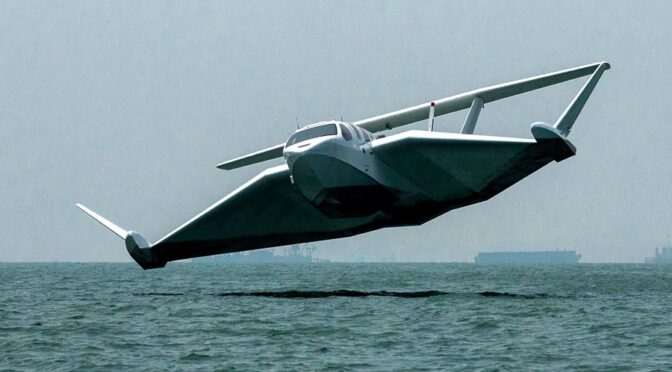
Initial WMACs would likely need to embark on amphibious ships to launch utilizing well-decks or crane systems. A potential commercial design for WMAC conversion would be the Wigetworks Airfish-8, roughly 50 feet wide and 60 feet long without modifications to fold-and-stow the wings or tail section. As a frame of reference, a Landing Craft Air Cushioned (LCAC) is 48 feet wide and 91 feet long.12 Three WMACs to be loaded in place of two LCACs into a compatible well-deck as found on the San Antonio Class (LPD-17), Harpers Ferry Class (LSD-49), and America Class Flight IIs (LHA-6).13 14 15 A Wasp Class (LHD-1) would be able to embark four WMACs.16 While still utilizing current USS ships, a crane-based option would be the Lewis B Puller Class Expeditionary Sea Bases (ESB).17 ESBs are designed for moving cargo to forward operating areas with a configurable main-loading deck. These ships could potentially embark and deploy between four to six WMACs. Initial designs would implicitly guide tactical employment and embarkation limitations.

Design Considerations for Initial WMAC Conversions

The threat in the Indo-Pacific could require action within the next three years.18 Contractor bids to design, build, and test new platforms typically take much longer than that possible timeframe – not to include placing the design into production, training personnel. To accelerate the acquisition timeline, the Navy should expeditiously acquire existing commercially produced craft. For this theoretical exercise, we will build out a modified Wigetworks Airfish-8.

Singapore-based Wigetworks, produces the Airfish-8, a WIG that can support a two-person crew with six to eight passengers and a total cargo of 1.1 tons. The craft is 56 feet (17.2 meters) long and has a wingspan of just over 49 feet (15 meters), just slightly smaller than an F/A-18 E/F Super Hornet.19 20 The Airfish-8 is limited in speed and range with maximum speed of 106 knots and only 300 nautical mile range while operating at a max above-surface height of just under 23 feet (7 meters) making it suitable for fleet experimentation but not combat operations. Although not in full-scale production yet, Wigetworks indicated that each unit will likely cost around $500,000. Even if this price point is doubled to $1 million, it still provides a low-cost experimental platform.

Operating a WMAC based on the Airfish-8 could be limited to only a pilot and a weapon systems operator. The pilot and weapon systems operator, however, would not require traditional naval flight school since the classification of WIGs as boats. This would allow for these billets to be opened to Chief Warrant Officers or even enlisted ranks like how the Navy currently crews LCACs. This would allow for potential options to include additional fuel, bunks, or equipment racks in the cabin in lieu of passenger seating installed on the commercial use variant. Crew space and bunks would depend upon the decision for operational employment and whether a WMAC would pre-position and drift for extended periods. The current engine design of a gasoline-powered V-8 would likely need to be swapped out with a JP-5 fueled turboprop, which is more powerful and fuel-efficient.

A converted Airfish-8 would likely have one weapon hardpoint per wing considering wing space, weight limitations, and drag calculations for impact to speed and range. The load out would consist of ASCM or HARM. Engineering considerations would have to be considered for potential issues to include weapon weight and minimum launch airspeed requirements to include potential booster modifications depending on the weapons selected for use by a WMAC. Missile options should also not be limited to weapons currently in the United States’ inventory. Partner and allied nations such as France and Norway, among other Western countries, produce ASCMs that are in many ways superior to the limited United States Navy offerings.

A first-generation Airfish-8 WMAC test platform, as described, might cost roughly $5 to $15 million per unit, although cost estimation for prototypes is notoriously difficult. This price-point pales compared to the estimated $81 million per aircraft of the F-35 program.21 Aside from cost, is the reality that more expensive, and thus more complex, platforms usually come with significant lead times for production. Less complex and less expensive platforms would likely come with the advantage of being able to produce at a higher rate which would help with initial fleet inventory numbers as well as replacements for units lost due to accidents or combat.

Conclusion

In obtaining and fielding maritime platforms for use in a potential conflict with China or Russia, cost-effectiveness and speed to fleet are vital to the United States’ security concerns and strategy. The Indo-Pacific theater is a predominantly maritime theater governed by the tyranny of distance and the threat of a rapidly growing, modern Chinese Navy. The Black Sea region saw Russia annex the Crimean Peninsula and built up standing naval forces in the area following by the widely publicized and condemned Russian invasion of Ukraine. If conflict with these peer adversaries come to fruition, we must account for the grim reality of modern combat with equally advanced opposition – the United States will suffer losses. As modern weapons get faster and more lethal, the old belief of United States’ fast and advanced platforms being superior to the opponent will no longer hold true. While WMACs possesses inherent weaknesses when faced with SAM or fighter threats, their ability to scout ahead of a battle group and degrade or destroy the systems on adversarial surface platforms needed to target the battlegroup will justify the risk. A small crew, small price tag, and shorter production timeline for a replacement represent a significantly lower risk than losing a major surface combatant such as a destroyer, cruiser, or even worse, an aircraft carrier.

The reality of the theater and threat has stoked discussions surrounding the applications of wing-in-ground-effect platforms and seaplanes in recent years. But discussion is not enough. The United States Departments of Defense and the Navy need to pursue and field platforms before they are required. Near-term acquisition and modification of commercially produced, proven WIG designs provide a stop-gap measure to field capability to these, and potentially other, key regions until purpose-built military platforms can be designed and tested. This second generation of WMACs should explore hull-form shapes to reduce radar-cross-section, a vertical or catapult launch capability to expand the number of platforms they can embark on, and power plant options to increase range and speed for evasion.

The plausibility and timelines of potential conflict in the Pacific and Eastern Europe involving the United States are tenuous and fluid. The rapid development and deployment of a WMAC would allow the United States Navy to directly counter the growing size and capability of Chinese and Russian forces by exploiting the inherent weaknesses of modern systems. This capability provides additional conventional deterrence to Chinese military aggression vis-à-vis Taiwan and the South China Sea and towards Russian aggression in the Black Sea and Baltic regions.

Wing-in-ground-effect craft provide tremendous potential for strategic lift and other vital mission sets. However, in examining the applicability and effectiveness of the technology, the United States Departments of Defense and the Navy must not overlook the viability and role of smaller, shorter-range platforms. Now is the time to take decisive action that can potentially turn the tide of a future conflict in the Indo-Pacific or the Black Sea regions. To neutralize or deter rising adversaries, the United States Navy must send skimmers to the skirmish.

Commander Michael Knickerbocker is a United States Navy Surface Warfare Officer with previous experience as an AEGIS Combat Systems Officer and Integrated Air Missile Defense Planner. He is currently a Federal Executive Fellow at the Clements Center for National Security at the University of Texas at Austin conducting independent research into naval equities impacting current national security situations. His research focuses on technology adaptation into maritime strategy as well as maritime trade security assessments and risk identification. The views expressed are those of the individual writing them and do not reflect the official positions of the U.S. Department of Defense, Department of the Navy, or the University of Texas at Austin.

Endnotes

[1] O’Rourke, Ronald. 2022. China Naval Modernization: Implications for U.S. Navy Capabilities- Background and Issues for Congress. Washington DC: Congressional Research Service.

[2] Gressel, Gustav. 2021. “Waves of Ambition: Russia’s Military Build-up in Crimea and the Black Sea.” European Council for Foreign Relations. September 21. Accessed January 24, 2022. https://ecfr.eu/publication/waves-of-ambition-russias-military-build-up-in-crimea-and-the-black-sea/.

[3]Oyvind Overrein, Andreas Birkeli. 2021. Radar Detection Evaluation Method for Sea Skimming Targets Including Effective Flight Altitude Simulations as Seen by Radar. NATO paper, Brussels: NATO.

[4] White, Ryan. 2021. “What is Sea Skimming? How Effective Sea-Skimmer Missiles?” Naval Post. April 3. Accessed January 24, 2022. https://navalpost.com/anti-ship-missiles-what-is-sea-skimming/.

[5] International Maritime Organization. 2022. “Wing-in-Ground (WIG) Craft.” International Maritime Organization. Accessed January 24, 2022. https://www.imo.org/en/OurWork/Safety/Pages/WIG.aspx.

[6] WigetWorks. 2020. Airfish-8 FAQ. Accessed January 24, 2022. https://www.wigetworks.com/faq#:~:text=It%20has%20a%20higher%20operational,15%20knots%20of%20cross%20wind.

[7] Michael Halloran, Sean O’Meara. 1999. Wing-in-Ground Effect Craft Review. Melbourne: Australia Department of Defence. https://apps.dtic.mil/sti/pdfs/ADA361836.pdf.

[8] Walker Mills, Dylan Phillips-Levine, Joshua Taylor. 2020. “Modern Sea Monsters: Revisiting Wing-in-Ground Effect Craft for the Next Fight.” Proceedings. https://www.usni.org/magazines/proceedings/2020/september/modern-sea-monsters.

[9] Ingels-Thompson, David. 2021. “Rethinking SEAD for A2/AD.” Proceedings. https://www.usni.org/magazines/proceedings/2021/april/rethinking-sead-a2ad

[10] Katz, Justin. 2021. “DARPA Hopes A Plane Boat Hybrid Can Solve the Pentagon’s Sealift Challenge.” Breaking Defense. August 30. Accessed January 24, 2022.
https://breakingdefense.com/2021/08/darpa-hopes-a-plane-boat-hybrid-can-the-pentagons-sealift-challenge/.

[11] Department of the Navy. 2020. Airfish-8. Accessed January 24, 2022. https://www.wigetworks.com/airfish-8.

[12] Department of the Navy. 2021. “Landing Craft, Air Cushioned Fact File.” Navy.com. October 14. Accessed January 24, 2022. https://www.navy.mil/Resources/Fact-Files/Display-FactFiles/Article/2170004/landing-craft-air-cushion-lcac/

[13] Department of the Navy. 2021. “Amphibious Transport Dock – LPD.” Navy.com. January 21. Accessed January 24, 2022. https://www.navy.mil/DesktopModules/ArticleCS/Print.aspx?PortalId=1&ModuleId=724&Article=2222713.

[14] Department of the Navy. 2019. “Dock Landing Ship – LSD.” Navy.com. July 19. Accessed January 24, 2022. https://www.navy.mil/DesktopModules/ArticleCS/Print.aspx?PortalId=1&ModuleId=724&Article=2222713.

[15] Department of the Navy. 2021. “Amphibious Assault Ships – LHA(R).” Navy.com. April 15. Accessed January 24, 2022. https://www.navy.mil/DesktopModules/ArticleCS/Print.aspx?PortalId=1&ModuleId=724&Article=2169814.

[16] Department of the Navy. 2021. “Amphibious Assault Ships – LHD.” Navy.com. April 15. Accessed January 24, 2022. https://www.navy.mil/DesktopModules/ArticleCS/Print.aspx?PortalId=1&ModuleId=724&Article=2169814

[17] Department of the Navy. 2021. “Expeditionary Sea Base – ESB.” Navy.com. January 21. Accessed January 24, 2022. https://www.navy.mil/Resources/Fact-Files/Display-FactFiles/Article/2169994/expeditionary-sea-base-esb

[18] Quinn, Jimmy. 2021. “Beijing’s Taiwan Invasion Timeline: Two Predictions.” National Review. November 8. Accessed January 24, 2022. https://www.nationalreview.com/corner/beijings-taiwan-invasion-timeline-two-predictions/.

[19] WigetWorks. 2020. Airfish-8. Accessed January 24, 2022. https://www.wigetworks.com/airfish-8.

[20] Department of the Navy. 2021. “F/A-18 A-D Hornet and F/A-18 E/F Super Hornet Strike Fighter.” Navy.com. February 4. Accessed January 24, 2022. https://www.navy.mil/Resources/Fact-Files/Display-FactFiles/Article/2383479/fa-18a-d-hornet-and-fa-18ef-super-hornet-strike-fighter/.

[21] Grazier, Dan. 2020. “Selective Arithmetic to Hide the F-35s True Costs.” Project on Government Oversight. October 21. Accessed January 24, 2022. https://www.pogo.org/analysis/2020/10/selective-arithmetic-to-hide-the-f-35s-true-costs/.

Featured Image: The Wigetworks Airfish 8 aircraft, (Photo via Wigetworks PTE LTD.)

Employing Unmanned Surface Vehicles To Guard Ports and Harbors

By George Galdorisi

“Globalization” instantly brings to mind the flow of international trade that has both lifted hundreds of millions out of poverty and delivered abundant choices to consumers. Almost all of this thrumming trade moves on the high seas, which is where I thought of it throughout my career as an active-duty U.S. naval officer. That blue-water framing changed in August 2020, when deadly explosions rocked the harbor in Beirut, Lebanon. Lost among the headlines that dominated the international news for weeks was the importance of ports and harbors to global commerce.

I live in an American city astride a major U.S. port, and now see it for what it is: a critical node for global trade. While many people focus on the importance of ships in carrying this seaborne trade, they often forget that the critical nodes that support globalization and world trade are the world’s ports and harbors. From Shanghai, to Antwerp, to Rotterdam, to Shenzhen, to Los Angeles, to other mega-ports, as well as hundreds of smaller ports, these ports are critical to world prosperity.

A disaster in one of these ports similar to what happened in the harbor in Beirut—an explosion in port, a fire on a large oil tanker, or any of a host of other events—could close one of these ports indefinitely, with catastrophic economic and ecological effects. More recently, the supply-chain backups at the U.S. ports of Los Angeles and Long Beach demonstrate the ripple effects of even a slowdown at a major port. A complete closure of one of these ports for even a few days would have dire consequences that would be difficult to mitigate without extraordinary effort.

The repercussions of slowdowns and stoppages justify wide-reaching preventative measures, but the magnitude of providing comprehensive security for an average size port—let alone some of the world’s mega-ports—can lure port authorities into wishing away the challenge. Ports present an all-too-inviting target for terrorists, other non-state actors, and even state-backed sabotage, and so ports must be vigilantly defended.

Faced with this challenge, port authorities must ensure security twenty-four hours a day, every day. This task includes continuous inspection of port assets, threat detection and security response, as well as on-demand inspections after storms or other disasters, ongoing surveys to ensure navigable waterways, hull inspections, and a wide-range of other missions.

Unmanned surface vessels can fill this gap better than legacy approaches.

The Current State of Port and Harbor Security

Port and harbor security has changed little in a generation. Most large ports rely on cameras placed at strategic locations and monitored by watch-standers to spot trouble. Port officials also provide security with a variety of manned surface vessels on regular patrols. This traditional approach is good, but it stresses the ability of port authorities to provide around-the-clock security and can lead to gaps in coverage, rendering ports less secure than they could be. 

Cameras seem to offer a cheap and effective solution, but someone — often several people —must monitor the video feeds. A port maintaining scores of cameras requires a command center and enough watch-standers, in rotating shifts, to monitor the video in real-time, twenty-four hours a day.

Similar issues accompany the use of manned craft to patrol a harbor of any size—let alone mega-ports. Manned vessel operations are increasingly expensive, are often limited by weather and water conditions. These small craft must be manned, typically by two or more people at a time, who must cope with the physical toll of riding a small vessel for hours on end. Unlike watch-standers on land who might be able to work shifts as long as eight or even twelve hours, pounding through an often-choppy harbor in a RHIB or other small craft means that a watch rotation of three to four hours is about all most people can endure.

With such short watch rotations, providing round-the-clock security is a costly endeavor under ideal conditions. Add rain, wind, waves, fog and other natural phenomena that often reduce visibility and slow patrol speeds, the need for more craft and more people can multiply significantly, often without warning, thereby further driving the need for standby crews. All-in-all, this is an expensive undertaking.

Additionally, there are many shallow areas throughout ports that are beyond the reach of typical manned vessels. Even limited draft craft like RHIBs draw some water when they are loaded with people, communications equipment, weapons and the like. A manned vessel pushing too close to shore also runs the risk of impaling itself—as well as its crew—against visible or invisible hazards. This risk is compounded at night and during dense fog and other adverse weather conditions.

Given the manifest challenges of providing adequate—let alone comprehensive—security for ports with current state-of-the-art systems and capabilities, it is little wonder that port officials are searching for technology solutions that will enable them to provide better security, at lower costs, and importantly, without putting humans at risk.

The Port of Los Angeles: A Mega-Port with a Mega-Challenge

The Port of Los Angeles (POLA) is the busiest port in the United States. This mega-port comprises 3,200 acres (42 square miles) of water, 43 miles of waterfront, 26 passenger and cargo terminals and 86 ship-to-shore container cranes. POLA handled over 9.3 million twenty-foot equivalent units (TEUs) of cargo last year (up from 8.8 million TEUs the previous year and predicted to increase year-over-year).

Current capabilities to secure the Port of Los Angeles’ 42 square miles of water involve monitoring the video provided by 500 cameras throughout the port, as well as patrolling the ports’ expanse of water with a fleet of manned vessels. This methodology stresses the ability of POLA authorities to provide the necessary 24/7/365 security. Additionally, POLA has a large number of shallow areas throughout its 43 miles of waterfront that are beyond the reach of any of the manned vessels.

For these reasons, Port of Los Angeles officials decided to explore the use of unmanned surface vehicles to enhance the security of the port. To that end, port officials invited Maritime Tactical Systems Inc. (MARTAC) to visit and demonstrate the capabilities of their MANTAS USV. MANTAS is a high-performance, commercial off-the-shelf USV built on a catamaran-style hull, and comes in a number of variants ranging in size from six-foot to 50-foot. A demonstration was conducted using a 12-foot MANTAS.

The 12-foot MANTAS (otherwise known as the T12) has a length of twelve feet and a width of three feet. It is fourteen inches high and draws only seven inches of water. The MANTAS can be equipped with a wide variety of above-surface sensors (EO/IR/thermal video) and below-surface sensors (sonars and echo-sounders), as well as other devices such as chem/bio/nuclear sensors, water quality monitors, and above/below surface environmental sensors.

Leveraging Previous Successful Demonstrations

POLA authorities requested the MANTAS demonstration principally because the system had performed so well in an earlier port security demonstration, the Mobile Ocean Terminal Concept Demonstration in Concord, CA, conducted by the U.S. Army’s Physical Security Enterprise & Analysis Group.

For these missions, three MANTAS vessels, T6, T8 and T12, were used to perform different operations. The MANTAS T6 was utilized as an intercept vessel to quickly address potential threats at high-speeds of up to 55 knots. This T6 was equipped with a standard electro/optical camera focused on rapid interdiction and threat identification. The second vessel was a MANTAS T8 equipped with a FLIR M232 thermal camera. Its role was as a forward-looking harbor vessel situational awareness asset. The final vessel was a MANTAS T12 tasked with prosecuting above and below surveillance operations to detect and identify intruder vessels, or other threats to harbor assets. The sensor kit included a SeaFlir 230 for above surface ISR capabilities and a Teledyne M900 for subsurface diver/swimmer detection.

The Port of Los Angeles Unique Requirements

During the visit to the Port of Los Angeles, MARTAC representatives provided a comprehensive briefing on MANTAS capabilities, took a three-hour boat tour to observe the entirety of POLA authorities’ span of operations, and then provided a remote demonstration where port officials controlled and observed a MANTAS T12 operating off the eastern coast of Florida. The demonstration validated the going-in assumption that employing a thoroughly tested and proven USV is a viable solution that POLA is keen to pursue.

The Devil Ray USV (Photo by Jack Rowley)

After observing the MANTAS remote demonstration, officials from the Port of Los Angeles determined that the capabilities of this USV met the requirements for the port’s wide variety of missions. That said, port officials asked MARTAC to scale-up the MANTAS to a 24-foot and 38-foot version, reflecting a concert that the 12-foot MANTAS was so stealthy that ships in transit would not see it. Additionally, the larger T24 and T38 could operate for longer periods and carry additional sensors. The T38 MANTAS has now been demonstrated in several U.S. Navy exercises, and conducted another port security demonstration in the Port of Tampa with similar results.

MANTAS has an open architecture and modular design, which facilities the rapid changing of payload and sensor components to provide day-to-day port security as well as on-demand inspections. Additionally, if a longer endurance or an increased mission payload sensor profile was desired by the port, the modularity of the MANTAS system will easily allow for increasing the size of the craft from the battery powered electric motor 12-foot T12 to a marine diesel fueled 24-foot T24 or 38-foot T38. This transition would eliminate the necessity for battery replacement/recharging on the T12 after each of the shorter missions.

This demonstration certified that commercial-off-the-shelf unmanned surface vehicles can ably conduct a comprehensive harbor security inspection of a mega-port such as the Port of Los Angeles. As a facility with a longstanding need to augment its manned vessel patrol activities with emergent technology in the form of unmanned surface vehicles, the Port of Los Angeles demonstration provided a best practices example of the art-of-the-possible for augmenting port security.


Enhancing the Effectiveness of Port and Harbor Security

The reliable, adaptable and affordable USV support to port security as described in this article has only been evaluated recently because the technology simply did not exist just a few years ago. 

In an article in the January 2020 issue of U.S. Naval Institute Proceedings, Commander Rob Brodie noted: “When the Navy and Marine Corps consider innovation, they usually focus on technology they do not possess and not on how to make better use of the technology they already have.” Extrapolating his assertion to the multiple entities responsible for port and harbor security at mega-ports such as the Port of Los Angeles, one must ask if maritime professionals are to slow to leverage an innovative solution that can be grasped immediately.

This technology is available today with commercial off-the-shelf unmanned surface vessels, and these can be employed to increase the effectiveness of port protection if we do as Commander Brodie suggests and “make better use of the technology we already have.” And given the enormous personnel costs associated with monitoring cameras and patrolling with manned vehicles, this innovative solution designed to supplement current capabilities will drive down acquisition and life cycle costs while resulting in shorter times for a return on investment (ROI).

This Port of Los Angeles demonstration and subsequent Port of Tampa validation certified that commercial-off-the-shelf unmanned surface vehicles can ably conduct a comprehensive security inspection of a mega-port. As a facility with a longstanding need to augment its manned vessel patrol activities with emergent technology in the form of unmanned surface vehicles, the Port of Los Angeles demonstration provided a best practices example of the art-of-the-possible for enhancing port security.

As the world continues to come to grips with the human and economic impact of the Beirut harbor disaster, all nations would be well-served to leverage emerging technology to enhance the security of the ports and harbors that make the global economy hum. To fail to do so would be inviting a disaster that is eminently preventable.

Captain George Galdorisi (USN – retired) is a career naval aviator whose thirty years of active duty service included four command tours and five years as a carrier strike group chief of staff. He began his writing career in 1978 with an article in U.S. Naval Institute Proceedings. He is the Director of Strategic Assessments and Technical Futures at the Navy’s Command and Control Center of Excellence in San Diego, California. The views presented are those of the author, and do not reflect the views of the Department of the Navy or Department of Defense.

Featured Image: The Devil Ray USV (Photo by Jack Rowley)