Category Archives: Capability Analysis

Analyzing Specific Naval and Maritime Platforms

Tankers For The Pacific Fight: A Crisis in Capability

By Stephen M. Carmel

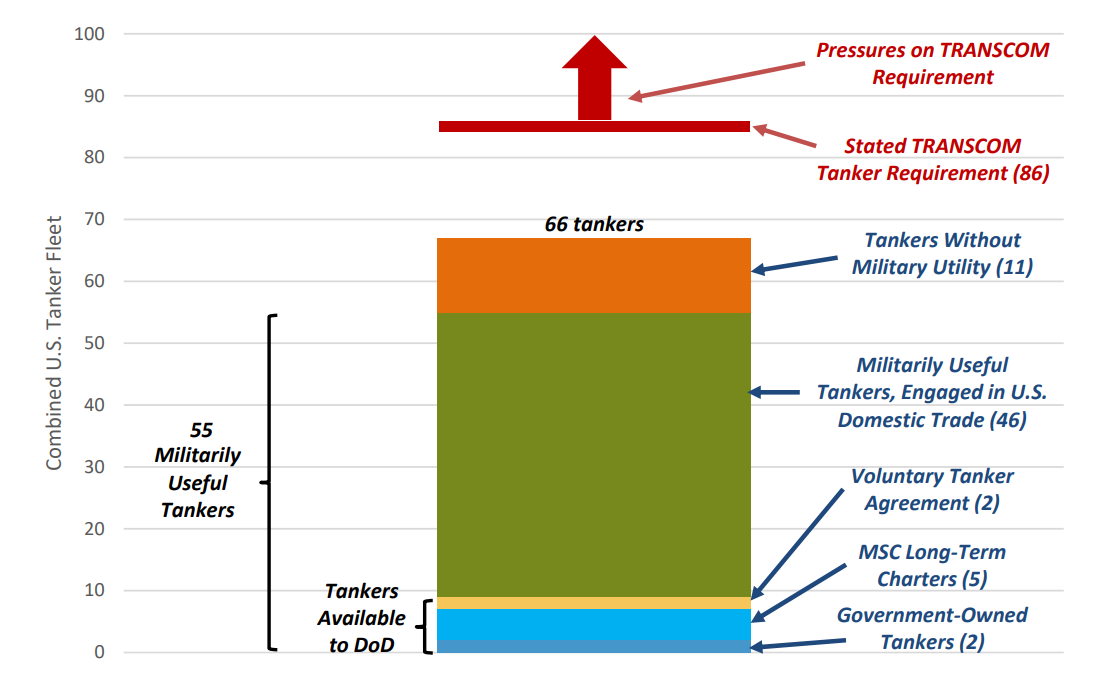
The Department of Defense is projected to need on the order of one hundred tankers of various sizes in the event of a serious conflict in the Pacific.1 The DoD currently has access it can count on – assured access – to less than ten. Not only does the U.S. lack the tonnage required to support a major conflict in the Pacific, it has no identifiable roadmap to obtain it. Without enough fuel, the most advanced capabilities and ships – even nuclear-powered aircraft carriers – will hardly be available for use. This is a crisis in capability that requires urgent and effective action. There is little time to get a solution in place if speculation that conflict with China could happen this decade proves true. Thankfully, this is a problem that can have a timely and affordable solution. However, the U.S. needs to move past conventional thinking and long-established policies that brought us to this current state.

To Win the Fight Requires Fuel

In the event of a broad conflict with China in the Pacific theater, the U.S. will likely lose reliable access to the currently relied-upon sources of oil within the region. The U.S. will then need to manage exceedingly long lines of supply to ensure oil flows to the forces in the greatly increased quantities demanded by a wartime operational tempo. But it must be remembered that there will be many other consumers of oil competing for those same barrels in a highly disrupted oil market. The cascading effects on the totality of the oil system, from production to distribution across all users, must be hedged against. The Defense Production Act does not apply to foreign refineries and the U.S. government cannot compel where these foreign-produced barrels go. Refiners must not only have the oil to sell, but be willing to sell it to the U.S. military in the midst of what may be a politically controversial war. This access should not be taken for granted, especially given China’s deep reach and increasing influence over the international oil market, the developing world, and the associated energy infrastructure.

The long supply chains for delivering wartime energy from North American sources to the Pacific theater of operations would require a large number of tanker ships. In thinking through the tanker requirement, one must also factor in some level of attrition in lost ships and crews due to combat action, especially when a prudent adversary would prioritize attacking these critical enablers of U.S. power projection. Attrition and escort requirements must be accounted for in planning. Balancing operational logistical demands in the face of attrition and the evolving availability of tankers is a dynamic planning challenge. It requires steady effort throughout the duration of a conflict that features rapidly changing oil supply points and platform availability.

Militarily useful tankers for U.S. operations and TRANSCOM requirements. Click to expand. (Graphic via 2019 CSBA study “Sustaining the Fight: Resilient Maritime Logistics for a New Era.“)

The U.S. would need several different types of tankers to address these challenging scenarios. Larger tankers are needed to do the long-haul parts of the distribution process. These would be principally MR, or “Medium Range” tankers which are the ideal size for the Defense Department and would be needed in large numbers. These are ships that carry roughly 330,000 bbls of multiple types of refined product. They can be fitted with consolidated cargo replenishment (CONSOL) gear to conduct at-sea refueling of oilers which will then refuel the fleet. This capability is currently available on a few MR tankers on charter with the Military Sealift Command. But current CONSOL operations are short-duration exercises and have not been done under contingency conditions in many years. The other type of tanker needed would be smaller, shallow-draft ships in the 40,000 bbl range for intra-theater lift. These smaller tankers would be used to provide fuel to distributed forces across the Pacific.

The current crisis in tanker capability, combined with a high optempo conflict, could result in the distinct possibility that U.S. forces run out of fuel. Sufficient tanker capacity is indispensable to wartime success and must form a central consideration in planning. Current Defense Department planning embodies inherent assumptions about assured access versus assumed access of supply. As the National Defense Transportation Association describes it:

“If the U.S. adopted an assured access approach, it would be comprised of U.S. Flagged ships owned by U.S. companies and crewed by U.S. citizen mariners—somewhat similar to the Chinese strategy (which applies to the entire nation of China, not just their military).The assumed access approach relies on the outsourcing delivery of fuel to the military in times of conflict—with limited description regarding the private parties involved and the extent which access to product would be guaranteed. Working out these details will come at the start of conflict, when demand signals surface for fuel requirements. The assumed access approach relies on the concept that the international tanker market is large compared to the U.S. military demand in a peer to peer full scale conflict.”

Military logistics planners lean toward assumed access, that tankers will be available from foreign-flagged tonnage. This assumption betrays a lack of understanding of the international tanker market and the significant influence China now has over it, including the often-overlooked issue of actual ownership, which is not the same as flag or company. In fact, a substantial portion of European tanker fleets, flying flags normally considered non-hostile to U.S. interests, are actually owned by Chinese financial houses through sale lease back-arrangements.

Assumed access also does not address the very dynamic aspects of the tanker market and the dramatic effects current events can have on availability. The current situation affecting the global tanker markets – tight supply accompanied by high charter rates – is driven by the conflict between Russia and Ukraine. But this is but one example. A conflict with China may have even more dramatic consequences for the markets. There will be significant but unpredictable impacts on oil markets, tanker markets, and trade flows upon which to base assumptions on tanker availability. Assumed access also means assuming tanker companies and their stockholders will value the U.S. military, with whom they may have no relationship, over their commercial interests with whom they have longstanding relationships.

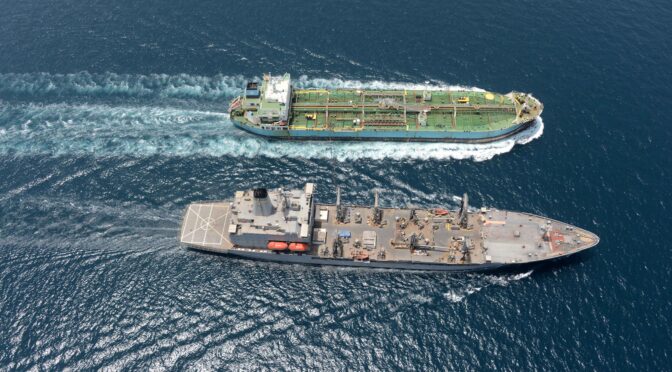
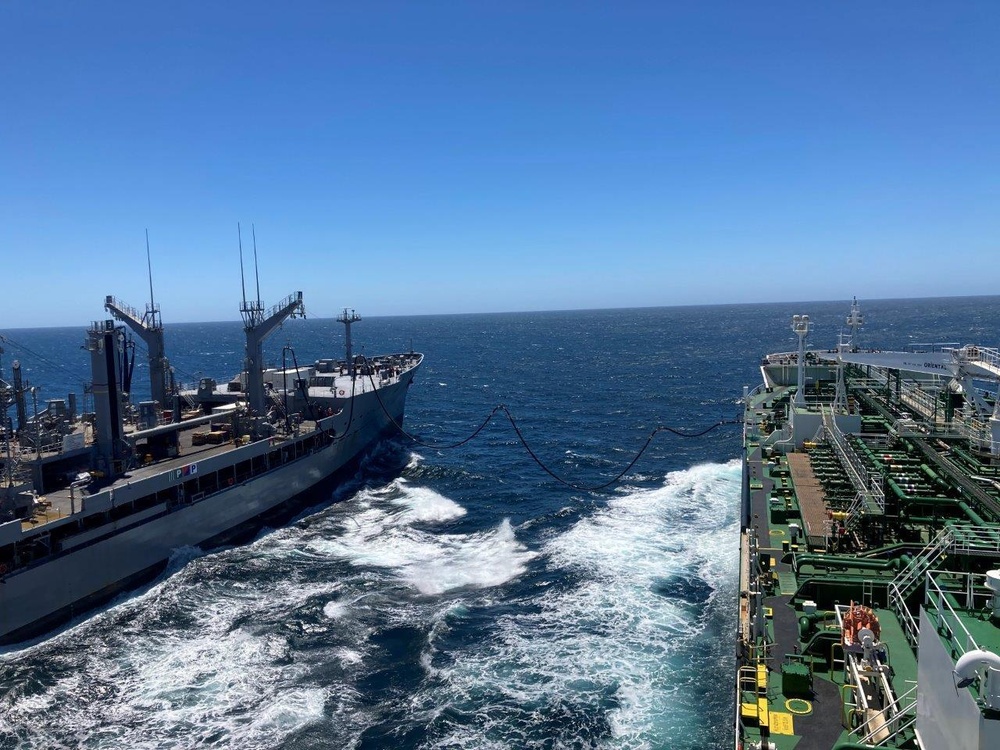
July 11-14 2020 – Off the coast of Southern California Military Sealift Command’s long-term chartered motor tanker ship Empire State (T-AOT 5193) conducted connected at-sea refueling operations (CONSOL) with three MSC Combat Logistics Fleet ships. (Photo by Sara Burford/Military Sealift Command Pacific)

Tanker companies, not countries, ultimately own the ships and it is commercial companies that must choose a side. Part of that decision will be based on their assessment on who will “win” in the conflict. Picking the U.S. is currently far from a safe bet, at least in the eyes of international companies that will still want to preserve their commercial relationships, largely oriented toward Asia, when the conflict is over.

Assured Access Solutions

Assured assess means the U.S. Navy or U.S. flag shipping companies own and control the ships outright. Availability is not premised on assumptions or expectations about external actors and their assets.

Assured access still comes with challenges to tanker availability. The tanker problem must be solved as a system that considers labor requirements and the demands for sustaining economies amidst a systemically disruptive conflict. Tankers require different credentials from dry cargo vessels and a container-ship officer is only qualified to sail tankers if they have the requisite endorsements which can only come from sailing on tankers. In addition, the domestic oil markets which fuel the U.S. economy must remain functional. There will also be heavy demand for tonnage to service allied economies impacted by the distortions in energy flows.

A current legislative effort to address this problem is the proposed Tanker Security Program (TSP), which provides a stipend to firms that flag tankers into U.S. flag for international trade. The program is limited to ten ships due to the amount of annual funding authorized and appropriated for stipends. This program is flawed however, in that the stipend is too small for enrolled vessels to remain commercially viable for trading in normal markets. (The current tanker market, with historically high charter rates, is not considered “normal.”) Instead, the program allows double dipping so ships can be on short-term charter to the U.S. government carrying preference cargo while still collecting a stipend. Because there are already ships under U.S. flag on short-term charter to the government, the TSP vessels will simply replace these existing vessels, collecting a windfall but adding no new capacity. The program is also not scalable, and even if all other elements work as intended, it could not produce anywhere near the needed number of ships for a major wartime contingency. The program has also yet to address other issues, such as ensuring the vessels have the necessary capability and compatibility with their intended use by the U.S. military in time of conflict. As an example, the program has not determined whether CONSOL equipment and CONSOL-trained crews will be required on these ships, creating uncertainty on funding for this capability, which then creates uncertainty within industry on the financial aspects of the decision to bid for TSP slots.

It is clear that the TSP will not solve the overall tanker shortage. A comprehensive tanker solution that is affordable and can grow the fleet at scale would necessarily consist of a combination of several different programs. First, the TSP must be revised to provide a stipend large enough to allow for commercial trading of U.S. flag tankers in the international market with no reliance on U.S. flag military (preference) cargo. In fact, carriage of preference cargo for TSP ships should only be allowed during times of national emergency. Otherwise, participating ships should be restricted to commercial work. This will produce a fleet of incremental U.S. flag tankers the Navy does not already have access to, with the scale of the program determined by the total amount of funding.

Legislation should be enacted requiring cargo preference on refined oil products being exported from the U.S. For reference, the U.S. currently exports 1.4 million bbls of refined product, principally to South America, every day, all on foreign flag tankers. The U.S. also exports a considerable amount of crude oil. While crude tankers are hardly militarily useful, their crews are useful by virtue of possessing the required documents and skills to sail tankers of any type. Therefore crude oil should also be a consideration. If cargo preference – the requirement that U.S.-flagged tankers carry a significant portion of this cargo – were in place, a substantial fleet of commercially viable but militarily useful tankers would be available as “assured access.” A significant benefit of this program would be that the cost of having that capacity available for wartime use is not borne by the U.S. taxpayer until it is actually needed. It is borne by the oil companies and the foreign buyers of the oil.

U.S. domestic sourcing of DoD fuel should also be put in place. The requirements of “Buy American” do not apply to fuel, and the Defense Logistics Agency Energy (DLA Energy) currently buys fuel wherever it is cheapest, normally meaning the closest source to the point of use. This is of course vastly different from the sourcing for so much else the DoD uses or procures, where “Buy American” applies. But those “point of use” sources of fuel for ships in the Pacific may be at risk in the event of conflict with China, assuming they are not owned or controlled by Chinese companies, which should not be overlooked.

As mentioned, the U.S. currently exports a large amount of refined product. Some of these exports could easily be diverted to DoD as a customer without heavily distorting the domestic oil market. It is highly likely some level of domestic sourcing would need to be done in a time of conflict. As a result, this program would put in place an oil supply chain that will be needed regardless, but in a phased approach that does not distort markets as opposed to an emergency program implemented in a time of crisis that is highly disruptive. Sourcing DoD oil domestically now will result in increased ton-mile demand, hence immediately increasing the need for tankers to carry it.

Lastly, the program run by the Military Sealift Command (MSC) for prepositioning refined product on tankers fitted for CONSOL should be put back in place. At one time, MSC had a large number of tankers under charter loaded with the types of fuel that would be needed in a conflict. These tankers were outfitted with all the required equipment for their military mission, were fully-crewed, and ready to respond immediately. This program, if revived, could be done quickly and supply immediate capability of the required type. 

There are several points to consider when reviewing this menu of potential solutions. First, while some, such as adjusting the TSP, require congressional action which will take time, others can be done by DoD quickly. Prepositioning programs or DLA-E sourcing do not require congressional action and could be accomplished in shorter timeframes. Cargo preference for exports could potentially be done by executive order in the short term, but would certainly require congressional action in the longer term. But a central theme is that cargo must be at the center of any viable solution, not government stipends.

The above solutions must also be implemented in a phased approach to give labor and tanker markets time to adjust. The fact that we are presented with a mix of solutions, with some that can be implemented right away and others that require more time, is not necessarily a bad thing. The key point is that this must be implemented as a phased solution to a systemic problem. Stovepiped programs that do not mesh will not work. Given the very short overall timeframe available to implement a solution due to acute national security concerns with China, action must start now.

While the proper mix of the above will produce the required capability at an affordable price, it will not produce capability for free. All capability, from aircraft carriers to missiles, comes at a cost, as does the fuel that enables these capabilities. Fuel, and the capacity to deliver it when and where needed, must be placed on the same level of priority as other essential warfighting capabilities. These must be viewed as interim steps to ensure the tanker capability crisis is solved in a timeframe relevant to the near-term threat of a potential conflict with China.

Conclusion

The very fact that these types of programs need to be considered is indicative of decades of neglect in U.S. maritime strategy. The long-term solution must flow from a coherent national maritime strategy that addresses all elements of maritime power, not just naval power, and treats the maritime domain as an ecosystem that must be addressed holistically. The Chinese clearly have such a comprehensive maritime strategy, which is why China dominates the maritime domain when it is properly understood as encompassing all elements of maritime power. While the U.S. has what it terms a maritime strategy, it is in fact only a naval strategy that does not address the broader dimensions of maritime power. This needs to change, otherwise the U.S. may run the severe risk of neglecting critical elements of maritime power that China has been carefully cultivating.

Steve Carmel is Senior VP at Maersk Line Limited. He is a past member of the Naval Studies Board, the CNO Executive Panel, and Marine Board. 

References 

1. Timothy Walton, Ryan Boone, Harrison Schramm, “Sustaining the Fight: Resilient Maritime Logistics for a New Era,” Center for Strategic and Budgetary Assessments, pg. 78, 2019, https://csbaonline.org/research/publications/sustaining-the-fight-resilient-maritime-logistics-for-a-new-era/publication/1.  

Featured Image: ARABIAN GULF (May 5, 2016) – Fleet replenishment oiler USNS John Lenthall (T-AO-189) refuels the tanker Maersk Peary during a replenishment-at-sea. (U.S. Navy Combat Camera photo by Mass Communication Specialist 1st Class Joshua Scott/Released)

Evolving Marines and Aerial ASW for the Undersea Fight

By Jason Lancaster

Introduction

The Marine Corps is an expeditionary crisis response force designed to project power globally from the sea. For the first time in a generation the shape of the Corps is changing and returning to its maritime roots. Closer integration with the Navy means that as in the Second World War, the Marine Corps will be a force provider for the maritime fight, potentially extending to the undersea domain. General Berger stated, “the undersea fight will be so critical in the High North and in the western Pacific that the Marine Corps must be part of it.”1 During World War II, Marine aviation units flew anti-submarine patrols from escort carriers and island bases in the Pacific defending the sea lanes from Japanese submarines.2 Today, the Marine Corps needs to invest in ASW-capable aircraft to support the ASW fight from the sea and ashore.

Today, the Navy has a major capability gap in anti-submarine warfare. In the 1980s, the Navy relied on land-based long-range maritime patrol planes, an ASW screen consisting of surface combatants, carrier-based medium-range ASW aircraft like the S-3B Viking, and short-range helicopters for localization and engagement. The Navy eliminated the S-3B Viking in 2009 with no replacement. This elimination removed medium-range ASW aircraft from the carrier strike group, and in a modern conflict with Russia or China, this gap could have catastrophic results. Both nations are increasing the number and capabilities of their submarines. Many of those submarines can engage surface ships with missiles from beyond 200 nautical miles, beyond the capability of organic carrier strike group ASW assets. The Navy has not taken enough steps to address the vulnerability of its major formations to submarines. The lack of organic ASW capabilities in amphibious ready groups (ARGs) makes them even more vulnerable than a CSG. ASW is a role the Marines have not conducted since World War II, but it is a vital role they must fill in the future.

Anti-Submarine Warfare 

In its most simple form, ASW is placing sensors in positions to find submarines and kill them. The Navy uses surface ships, submarines, and aircraft to place sensors in positions to detect, classify, and engage submarines. The U.S. Navy uses two main frameworks for ASW: Theater ASW (TASW) and Strike Group ASW (SGASW). The role of TASW is to detect, track, classify, and engage submarines throughout an entire theater. In conflict the primary objective is to sink as many submarines as possible. SGASW is concerned with protecting the high value unit (HVU) from submarines. Success for SGASW is never being shot at. With good intelligence and communications with the TASW Commander, speed and maneuver may enable a strike group to avoid slow-moving diesel submarines.

The current concept to defend an ARG from submarines relies completely on non-organic aircraft and surface escorts assigned to the ARG as required. Unfortunately, the Navy’s ability to provide sufficient escorts for aircraft carriers and ARGs is decreasing. Despite NDAA 2017 requirements for a fleet of 350 ships, the number of surface ships in the Navy is decreasing. The 2023 proposed Navy budget included the decommissioning of 22 cruisers, 9 littoral combat ships, and the elimination of the LCS ASW mission package. The P-8 Poseidon maritime patrol planes are excellent ASW platforms, but are limited in quantity, and primarily work for the TASW Commander. Although an important mission, protecting the ARG is only one of many tasks for the TASW Commander. During a period with multiple submarine prosecutions occurring across a theater, the P-8 inventory may not enable 24-hour coverage of the ARG.

The Navy and Marine Corps should combine assets to create an organic air ASW squadron. The Navy can contribute existing MH-60Rs and the Marine Corps should contribute a new medium endurance Marine ASW aircraft. These platforms will fill the gaps in ASW coverage and protect the ARG’s main battery, its Marine Expeditionary Unit.

These assets can also operate from expeditionary advanced bases, which can be well-positioned to interdict submarines in chokepoints. In the Pacific, expeditionary bases positioned along the first island chain can cover the key chokepoints Chinese submarines must navigate to break out into larger oceans and seas. These chokepoints greatly simplify the challenge of locating and interdicting submarines, and Marine aerial ASW assets could be poised to pounce on contacts and maintain layers of sensors.

Marine ASW assets positioned in the High North, especially along the Norwegian coast, could make significant contributions to undersea capability and awareness by virtue of proximity to the Russian Northern Fleet’s main base at Severomorsk. With the accession of Finland and Sweden to NATO, Marines can help bolster undersea capability throughout the Baltic Sea.

A medium-range ASW aircraft should be able to conduct ASW patrols 200-300 nautical miles away from the ARG or expeditionary base for at least 4-6 hours, while carrying sufficient sonobuoys and torpedoes to detect, classify, and engage a hostile submarine. In order to save time and money on sensor development, the radar, sonobuoy processing system, EW suite, and sonobuoy launchers from an MH-60R can be utilized aboard a different aircraft. The Marine Corps has several options for developing a new medium endurance ASW aircraft. Two options are the MV-22 and the MQ-9B.

Multiple reconfigurations of the ARG and MEU make the present the perfect time to eliminate the ARG ASW gap by introducing Marine ASW assets. The introduction of the F-35B into the Air Combat Element (ACE) is changing the composition of the ACE. The Marines are experimenting with 8-10 F-35Bs instead of 6 AV-8s, which reduces space available on the LHD for MV-22s. The planned decommissioning of the Dock Landing Ship (LSD) is also shifting the composition of the ARG. The LSD had a large flight deck but no hangar and no permanent flight deck crew, limiting the LSD to flight deck or well deck operations.

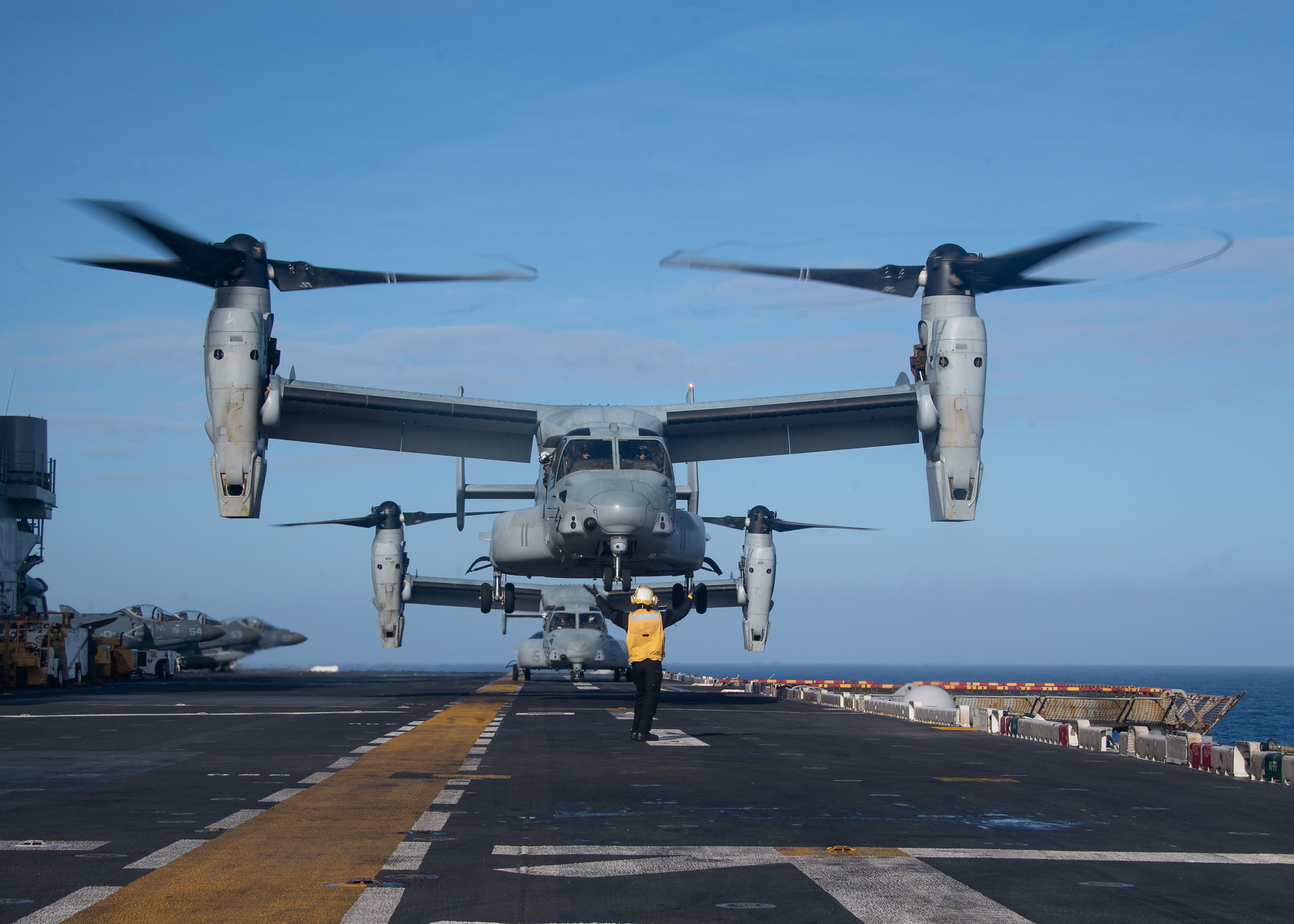
PHILIPPINE SEA (Jan. 24, 2022) Aviation Boatswain’s Mate (Handling) Airman Juliet Collazo signals to an MV-22B Osprey attached to Marine Medium Tiltrotor Squadron (VMM) 165 (Reinforced), 11th Marine Expeditionary Unit (MEU), as it takes off from the flight deck of USS Essex. (U.S. Navy photo by Mass Communication Specialist 2nd Class Wesley Richardson)

The LPD-17 class has a large flight deck capable of operating two MV-22s simultaneously and a hangar designed to conduct maintenance on an MV-22, or holding two MH-60s. The LPD’s air department enables simultaneous well deck and flight deck operations. The elimination of the LSD and its replacement with an ARG composed of an LHD/LHA and two LPDs drastically increases the aviation capabilities inherent in the ARG. The Navy-Marine Corps team should take advantage of that shift to develop an organic ASW capability.

Option 1: Existing Airframes

Force Design 2030 planned to divest three MV-22 squadrons. The FD2030 2022 update stated that instead the Marines will shift from 14 squadrons composed of 12 aircraft to 16 squadrons of 10 aircraft.3 Instead of eliminating those eight aircraft, the Marine Corps should instead make a 17th squadron of 10 aircraft that is equipped for ASW. This squadron should be collocated at NAS North Island with the Navy’s MH-60R squadrons or at NAS Jacksonville with the P-8 and MH-60R squadrons so that Marine ASW aviators can train with their Navy counterparts.

Marine Corps experiments with more F-35Bs and fewer MV-22s aboard the LHD suggest that instead of eliminating surplus MV-22s, they could be converted into ASW aircraft. These reconfigured aircraft would utilize the MH-60Rs electronics/ASW suite to save time on fielding and development as well as saving resources on spare parts and training. NAVAIR would need to determine whether the airframe has sufficient electrical power generation to support the additional sensors. The Navy has sent MH-60R detachments on ARG deployments before, and their sensor suite is useful for ASW and surface warfare.

Another ASW MV-22 option is to utilize the multi-static active coherent (MAC) buoys. NAVAIR would have to determine whether the buoy processing system would fit into an MV-22, but MAC buoys are the most capable sonobuoys in the U.S. Navy’s inventory and their utilization by a medium-range ASW aircraft would dramatically increase the lethality of the ARG’s ASW capability. Foreign military sales could make this platform a force multiplier and reduce overall program cost. Spain, Turkey, Australia, and South Korea all operate LHDs and MH-60Rs. An MV-22 equipped with MH-60R sensors would increase allied ASW capabilities without adding additional sensor training and logistics pipelines for their forces. France, Britain, Italy, and Japan also operate aircraft carriers or LHDs and might be interested in a medium-range ASW platform. A successful platform could even be bought by the Navy for integration into the carrier air wing and used to eliminate the CSG’s ASW gap.

Option 2: UAVs

An alternative medium-range ASW aircraft is the MQ-9B Sea Guardian. The Marine Corps is already purchasing 18 MQ-9s from General Atomics, with the desire to acquire more. The Air Force is looking to transfer 100+ MQ-9s to another service. General Atomics has developed an ASW and ISR sensor kit for the MQ-9 Reaper, and states an ASW mission radius of 1,613NM or 25 hours aloft. In 2021, General Atomics signed a $980 million contract with Australia to buy 12 MQ-9Bs which was canceled in 2022.4 They carry sonobuoys and radar for detection and classification of submarines, but currently lack torpedoes to prosecute engagements. The lack of antisubmarine armament is a major drawback for these aircraft, but these aircraft have participated in fleet exercises and are available today.5

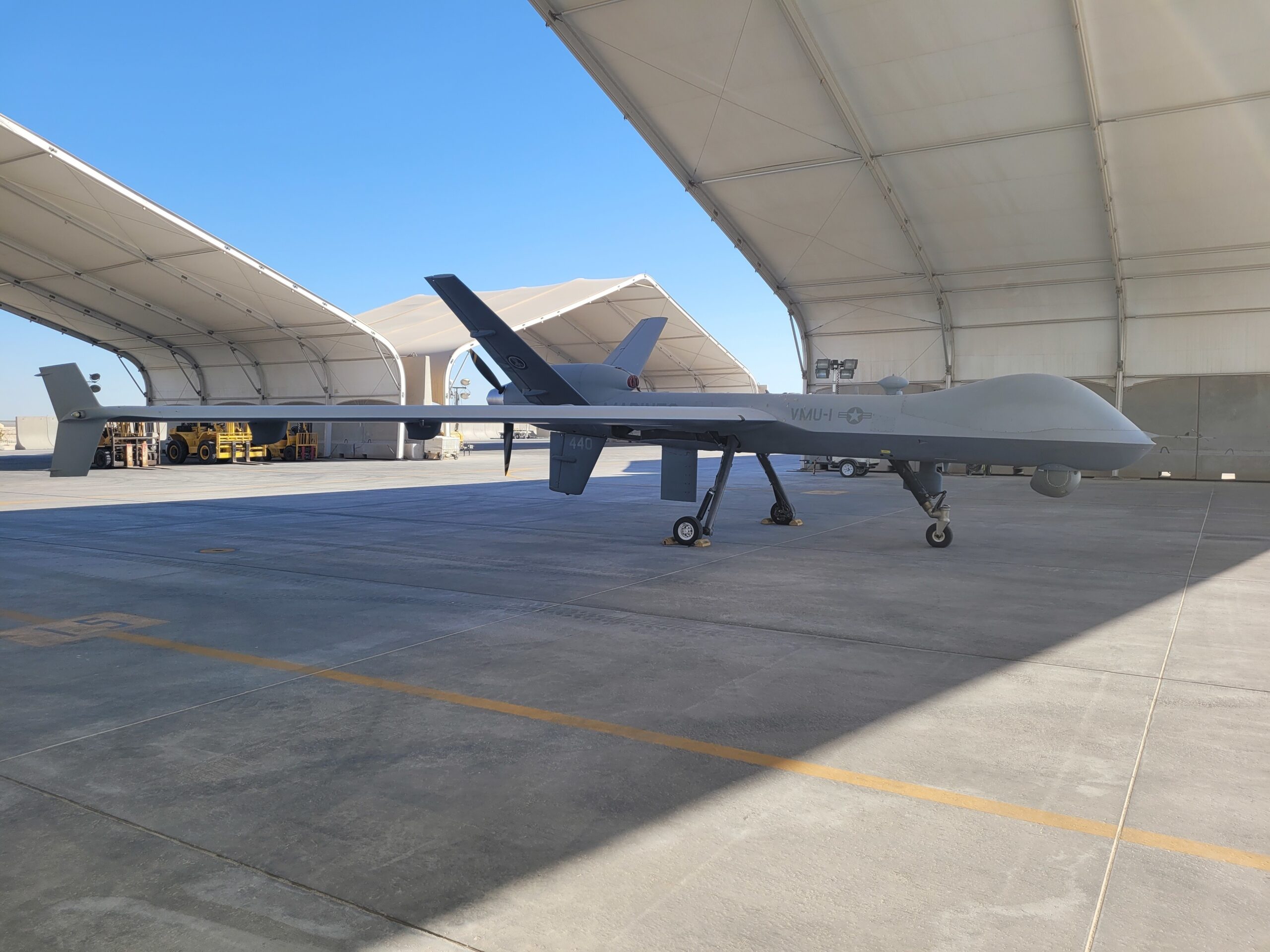
April 16, 2021 – The Marine Corps’ first MQ-9A at an undisclosed location in the Central Command area of responsibility. (U.S. Marine Corps photo by 1st Lt. John Coppola/Released)

General Atomics has also developed a kit that converts existing MQ-9s into short takeoff and landing (STOL) platforms without diminishing the range. This capability would enable MQ-9Bs to operate extended ASW patrols from the LHD and expeditionary bases. In April 2021, the MQ-9B participated with other unmanned systems during the Unmanned Integrated Battle Problem Exercise.6 This exercise demonstrated the ability of unmanned systems to effectively integrate into the navy’s fleet architecture. The USMC and USN should experiment with the STOL MQ-9B Sea Guardian during exercises like Talisman Saber 23.

Conclusion

In World War II, Marine aircraft operating from islands and escort carriers provided ASW aircraft to the fight. The Marines have not been required to conduct ASW operations since. The Navy will have significant difficulty resourcing all of the escort requirements for carrier strike groups, amphibious ready groups, and TASW missions. Without organic ASW aircraft the ARG is vulnerable to submarines, especially sub-launched long-range missiles.

The Marine Corps has two rapid options for establishing an ASW capability – a modified MV-22 or the MQ-9B Sea Guardian. Although the Corps has not planned to acquire ASW aircraft, the Commandant’s thoughts on the importance of ASW in the High North and the western Pacific combined with the ARG’s vulnerability means that consideration for a platform must be considered. The Commandant is divesting of legacy equipment and end strength to invest in future equipment. With the Navy’s shortage of ASW assets, it makes sense for the Marine Corps to support the maritime fight not just with land-based anti-surface fires and sensing, but also with its own ASW aircraft.

LCDR Jason Lancaster is a Surface Warfare Officer. He has served at sea aboard amphibious ships, destroyers, and a destroyer squadron. Ashore, he has worked on various N5 planning staffs. He is an alumnus of Mary Washington College and holds an MA in History from the University of Tulsa. His views are his own and do not reflect the official position of the U.S. Navy or Department of Defense.

References

1. Berger, David (2020, November). Marines Will Help Fight Submarines. Proceedings.

2. Marine Scout Bombing Squadron Three Four Three. (1945). VMSB-343 – War Diary, 4/1-30/45. US Marine Corps.

3. United States Marine Corps. (2022). Force Design 2030 Annual Update May 2022. Washington DC: United States Marine Corps.

4. Clark, C. (2022, April 1). Aussies ‘secretly cancel’ $1.3B AUD drone deal; Nixing French subs may cost $5B . Breaking Defense.

5. General Atomics. (2022, April 5). Versatile multi-domain MQ-9B SeaGuardian has revolutionized anti-submarine warfare . Breaking Defense.

6. Office of Naval Research Strategic Communications. (2021, April 22). Unmanned Capabilities Front and Center During Naval Exercise. US Navy Press Release.

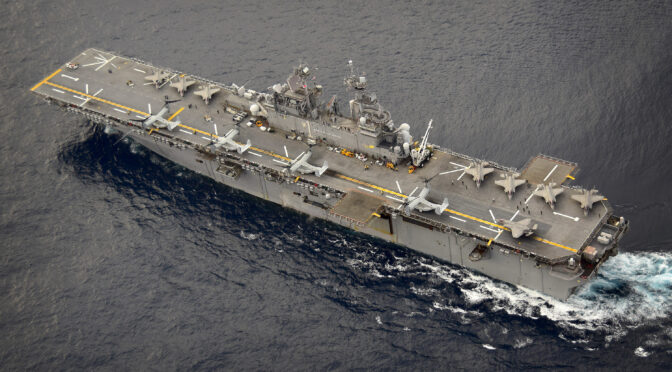
Featured Image: PHILIPPINE SEA (March 27, 2019) F-35B Lightning II aircraft, assigned to Marine Fighter Attack Squadron (VMFA) 121, and MV-22 Ospreys, assigned to Marine Medium Tiltrotor Squadron (VMM) 268, are secured to the flight deck of the amphibious assault ship USS Wasp (LHD 1). (U.S. Navy photo by Mass Communication Specialist 1st Class Daniel Barker)

Depth from Above: Reinventing Carrier ASW

By Ben DiDonato

With the return of great power competition, the threat posed by hostile submarines has garnered renewed attention. Russia’s submarine fleet in particular has been regarded as a serious threat for decades and its latest SSNs are reportedly nearly as quiet as their American counterparts. Similarly, while China’s nuclear submarines have yet to reach this level, China’s access to Russian technology, rapid improvements in other areas, and capacity for mass production suggest it is likely to become a serious threat in the relatively near future. Furthermore, while SSNs are obviously the most serious threat due to their range and speed, diesel submarines cannot be overlooked, with many highly lethal designs widely distributed across the globe. In order to compete effectively against near-peer states armed with these submarines, the United States Navy must have the ability to find, track, and sink them.

As in the Cold War, anti-submarine warfare (ASW) is a challenging area of operations, requiring close cooperation between a wide variety of assets to win what would inevitably be a worldwide campaign. This problem was thoroughly studied and, at least in broad strokes, solved by the end of the Cold War, so this strategy provides a useful guide. That review immediately reveals a critical weakness in current American force structure. Submarines and maritime patrol aircraft are still available for independent hunting, surface combatants for close screening, and helicopters for prosecuting targets, but since the retirement of the S-3 Viking, the U.S. Navy has lacked an organic aircraft for initial detection of submarines approaching the aircraft carrier.

The current stopgap solution is pressing the land-based P-8 Poseidon into this role, but that is far from ideal. Tying P-8s to carriers largely squanders their capabilities, preventing the limited supply of these aircraft from doing their real job of patrolling broad stretches of ocean and protecting other ships. Furthermore, relying on land-based support imposes serious constraints on the carrier strike group, which must operate within range of the P-8 and would almost certainly suffer from periods of vulnerability.

This means the current lack of fixed-wing carrier-based ASW capability should be addressed to provide the required coverage without distracting the P-8 force. While there has been some discussion of reactivating the S-3 Viking to restore this capability, that can only ever be a stopgap measure due to the age of the airframes. A long-term solution is needed to restore fixed-wing ASW capability, and fiscal reality demands this solution be flexible and affordable. Rather than build a new dedicated ASW aircraft, it may be better to instead develop a series of ASW pods and a more flexible aircraft suitable for both ground attack and ASW since either type of store can be carried on the pylons with equal ease.

Podded ASW Systems

A minimum of four specialized systems are required to support fixed-wing ASW: a Magnetic Anomaly Detector (MAD), a sonobuoy dispenser, a sonobuoy receiver, and an air-droppable lightweight torpedo. The Mk 54 torpedo already meets the offensive needs on other aircraft, so it should not require substantial modification to fill this role. Similarly, a sonobuoy dispenser is such a simple system that it does not require explanation beyond pointing out that it would ideally come in a variety of sizes for different aircraft/pylons and have variants which incorporate a sonobuoy receiver to minimize pylon consumption.

Therefore, the only system which requires major development is the MAD pod. To enable normal aircraft operation, particularly safe takeoff and landing, this pod would almost certainly need to use a towed MAD rather than the more common boom-mounted system. This would allow the sensor to be trailed a sufficient distance behind the aircraft when needed and retracted when not in use.

Of course, this podded approach is also ideally suited to incorporating future systems as they become available. A wide variety of unmanned systems and new weapons are in development or have been proposed, and all of them could easily be integrated as additional pods. Whether new payloads for sonobuoy dispensers, a single large UAV/UUV on a pylon, some new cluster system, or a novel idea not yet conceived, stuffing it in a pod and hanging it from an existing aircraft will always be faster and cheaper than trying to cram it into an existing airframe, assuming that is even possible. Therefore, while this approach provides an easy path for incorporating future technologies, the four proven systems discussed above can be immediately developed into an effective ASW capability and should be the short-term priority.

In order to provide an affordable near-term capability and maximize long-term utility, both the MAD and sonobuoy pods should be compatible with the new MQ-25 Stingray UAV. In conjunction with the current MH-60R, this would provide a limited standoff detection, prosecution, and engagement capability to the carrier which could be further supplemented by F/A-18s carrying torpedoes, MAD pods, and additional sonobuoys to engage submarines if needed. While this combination is certainly suboptimal, especially considering the problems caused by using F/A-18s as tankers, the MQ-25 would truly come into its own as an ASW platform once the new fixed-wing aircraft proposed below enters service and can use it as a loyal wingman to greatly improve coverage or direct MQ-25 wolfpacks to aggressively prosecute contacts.

A Pod-Carrying Aircraft

Unfortunately, this pod-based approach to ASW is fundamentally incompatible with the S-3 airframe. It cannot carry the number and variety of pods or ground attack weapons required on its two underwing hardpoints, especially when we consider future podded systems. Although its weapons bays contain another four hardpoints, their internal placement would likely interfere with the operation of most pods. Remediating this deficiency by adding new pylons in a major refit is likely impractical due to interference from the under-wing engines. The integrated nature of the S-3’s ASW systems also prevents it from using much of its payload capacity for non-ASW missions. It is simply not possible to replace these fixed systems with ground attack or anti-ship weapons when using the aircraft in other roles, leaving it limited to only six weapons hardpoints for these missions.

Shifting to the budgetary side, integrated systems are generally more expensive to maintain and upgrade than podded systems. Furthermore, the Navy presumably lacks the resources to operate both integrated and podded systems, likely costing the carrier air wing the flexibility to task non-ASW aircraft with ASW missions. Budgetary pressures also make this alternate role critical because the S-3 probably would have survived the global war on terror if it doubled as a low-cost ground attack platform. Therefore, long-term use of the S-3 would be costly and inflexible, so a new solution is needed.

The obvious solution is a completely new aircraft. While this is certainly an option and would presumably produce an excellent aircraft with plenty of capacity, numerous pylons, and a low operating cost, there are two major problems with it. The first is that going through the full development and adoption cycle would take a very long time, likely more than could realistically be covered by a stopgap S-3 reactivation. The second is that major projects like this are politically challenging, with a serious risk of cancelation – assuming they get started at all. While it may be possible to overcome these issues, they are serious enough to merit an examination of alternative options.

The most obvious alternative is to adapt an existing carrier aircraft to take on the role. Within the current carrier air wing, there are two possible airframes, the E-2/C-2, and the V-22.

The E-2/C-2 would obviously make an excellent mono-mission platform since it is already configured to carry a large support crew. However, that same large crew would limit its payload and make risking it in other roles like ground attack unappealing. The only other role it could realistically take on is general airborne drone control, but this can already be performed by the E-2 and fighters so there seems to be little value here, especially since these aircraft can also relay drone datalinks to surface ships. While none of this detracts from an E-2/C-2 derivative’s ability to take on the mission, it does mean it fails to realize the additional flexibility promised by this podded approach, so a different platform is preferable.

The V-22, or more accurately the CMV-22B, may be a better candidate. The ability to transition to helicopter mode would be useful for prosecuting targets, and its unsuitability to ground attack is less of an issue since it is already a cargo aircraft, although the flipside of that is that is that there is less leeway to retask between these two missions than between ASW and ground attack. Unfortunately, payload integration may be an issue, both due to questions about retrofitting pylons on the rotating wing assembly and its more limited digital backbone, and overall external stores capacity would likely be limited after the necessary upgrades based on published payload and range figures. Therefore, while it is certainly worth performing a more detailed study to better understand the true costs, capabilities, and limitations of an ASW V-22 variant, it also seems suboptimal for this pod-based approach.

The final alternative is adapting a land-based aircraft for naval service. While there have certainly been serious problems adapting aircraft in the past, there have also been notable successes like the YF-17’s evolution into the F/A-18 family and the SH-60 family’s decent from the Army’s UH-60. Furthermore, the C-130 famously proved able to operate from the USS Forrestal without modification, and based on a recent interview with the pilot, the flying seems to have been fairly straightforward. While the C-130 itself is obviously too big for regular deck handling, this success strongly implies any aircraft designed to operate from short/rough airfields would be an excellent candidate for marinization, especially with a Super Hornet-style redesign.

There are too many aircraft to go through individually, but desired capabilities narrow the field to a smaller slate. The ideal aircraft would be small enough to operate from a carrier, have short/rough field capability, good payload, plenty of pylons, good fuel efficiency, low maintenance requirements, and excellent handling at low speed and altitude. While most aircraft cannot meet this challenging set of desires, there is one candidate suitable for adaptation into a pod-based multirole ASW aircraft. Not only does this aircraft meet all these desires, but it also has an exceptional ground attack record, proven flexibility in other roles like counter-Fast Attack Craft/Fast Inshore Attack Craft (counter-FAC/FIAC) and combat search and rescue support, and, most importantly, very strong political support to carry the program through budget battles. This aircraft is, of course, the A-10.

The SA-10D Seahog

With an A-10 variant identified as the best option for carrying ASW pods, considering both capability and timeline, we now turn our attention to a brief discussion of what that would look like. The most likely approach is a redesign comparable to the Hornet’s “upgrade” to the Super Hornet because that allows any necessary changes to be incorporated relatively easily. That said, the A-10’s unusually simple airframe may allow boneyard aircraft to be modified for service, even if only as prototypes or a wartime contingency, so that possibility will be discussed here as well. Of course, the program office is not obligated to pick just one option. They could develop both a modification package and a new-build design to improve the competition and provide maximum value to the taxpayer.

Since this aircraft will be largely optimized for affordably hauling underwing stores as a byproduct of this pod-based approach to ASW, that payload can be used in a variety of other roles beyond the obvious close air support. This could entail utility duties like backup tanking, combat support roles like standoff missile carrier, and majority Air Force missions like laying Quickstrike sea mines to further support the rest of the air wing, increase the carrier’s flexibility, and improve the lethality of the joint force.

One other intriguing advantage of using the A-10 as a baseline for the ASW pod carrier is that its short/rough field performance suggests it may be possible to fly it from smaller, simpler ships like amphibs, especially if thrust reversers are added. This would give the joint force the ability to rapidly build new ASW hunter-killer groups if needed and could give the Marines an alternate air support option for amphibious operations if desired. Similarly, this would allow commercial ships to be converted into useful escort carriers in wartime, freeing purpose-built carriers for frontline duties. Finally, this would open up the ability to fly from smaller dedicated aircraft carriers and, while it seems unlikely the United States would build any, a number of its allies operate CVLs and may be interested in acquiring these SA-10Ds to provide organic ASW capability and additional strike capacity to their own carriers.

From a programmatic standpoint, using a few minimally modified A-10A’s from the boneyard could serve to reduce risk and accelerate introduction by entering flight testing prior to delivery of the first full prototype, although this is obviously not required. Most usefully, up to three aircraft could be modified to add a second seat for the ASW systems operator and at least simulated electronics to demonstrate operational effectiveness and begin developing tactics and procedures for the fleet ahead of delivery. The other, less important, conversion would validate performance and carrier suitability by adding a new launch bar and a strengthened arresting hook to a single aircraft.

Naturally, the subject of airframe modification entices interest, so we will now move into a brief exploration of the most interesting changes and options, although basics like more modern engines will be omitted. That said, it is critical to bear in mind that this SA-10D concept is fully dependent on the previously discussed podded systems for ASW operations, so those systems are more important than anything discussed here even though this section will likely generate more discussion.

First and most importantly, the aircraft must have a second seat like the old YA-10B prototype. Modern computers should allow a single person to manage all the ASW equipment instead of the multiple operators required on the S-3, as well as direct any supporting drones, but there is no way the pilot would be able to handle that workload on top of flying the aircraft. It should also be noted that this second crewmember can be swapped for another specialist such as a forward air controller when required for the mission at hand, further improving the air wing’s flexibility. Therefore, whether this is a conversion of old airframes or a new build, a single seat is simply unworkable for the mission.

Closely related to this is electronics. To reduce development costs and streamline maintenance, it is strongly recommended that the F-35’s electronics be reused as close to wholesale as possible. The A-10’s simple airframe should make it relatively easy to integrate these systems, especially if it is a new-build variant, and the commonality would bring new capability and simplify future upgrades. Beyond providing a digital backbone to host the ASW systems, this would make the SA-10D a potent networked shooter by hauling large numbers of long-range missiles and seamlessly communicating with F-35Cs further forwards. This could be further exploited by a new-build aircraft which would likely be larger to further increase capacity and could add dedicated AIM-9X sidewinder rails to provide defensive fire against hostile aircraft.

Folding wings would not ordinarily merit separate discussion because it is obvious a new-build aircraft would include them and that the A-10’s straight wings will allow a dramatic width reduction, but the modification of existing airframes is unusual enough to merit special attention. Unlike most aircraft, the A-10 only carries fuel in its inner wing and is designed with very simple, robust structures with extensive left/right interchangeability. This means the A-10 is in the unusual situation of being able to easily accept folding wings in an upgrade, so modified boneyard aircraft are a feasible option even though they were never intended to operate from carriers.

Of course, any time the A-10 comes up, its gun is a major discussion point so it must be addressed here even if it is not relevant to ASW. Unfortunately, while the GAU-8 has given excellent service, it would almost certainly have to be abandoned for marinization in favor of the F-35’s 25mm GAU-22. While the resulting commonality would streamline shipboard logistics, this change is primarily driven by the fact that the GAU-8’s mounting forces the nose wheel off-center on the A-10, which is unacceptable for catapult launch and results in asymmetric turning circles which may complicate deck handling. One potential upside to this change is that it allows an increase in total stowed ammunition and possibly even the installation of a second gun if desired. This could extend the effective range of the weapon by firing enough explosive rounds to effectively saturate the larger dispersion area, potentially allowing the gun(s) to be effective in the counter-FAC/FIAC role from beyond the range of any man-portable air defense systems they may carry.

The A-10’s armor is similarly a regular point of discussion, although in this case there is no clear answer to be had. If old -A models were to be modified for this new role, it would likely prove more practical to simply leave the armor in place even if it is not particularly useful for the aircraft’s new role since it is integrated into the load-bearing structure. Of course, a new build would not face this restriction, so the armor would almost certainly be omitted to save weight. However, modern materials could allow some level of protection to be retained without much of a weight penalty if desired. Ultimately, the details would have to be worked out between the contractors and the program office, so a definitive answer cannot be given here.

One final exotic option for a new-build aircraft is to integrate a laser weapon to shoot down incoming missiles, or at least provide room for one to be added in the future. The technical risks and costs of this are obvious, but with laser weapons entering service and rapidly maturing, it should at least be considered.

Conclusion

As has been shown, the critical vulnerability left by the retirement of the S-3 can be rapidly and affordably filled to ensure the carrier’s survivability against submarines, and by extension its relevance in great power competition or war. A series of podded sensors would allow the MQ-25 and current aircraft to provide some ASW capacity, while a new SA-10D Seahog can be rapidly developed to fully fill the ASW gap using those podded systems and improve the flexibility of the carrier air wing.

Ben DiDonato is a volunteer member of the NRP-funded LMACC team lead by Dr. Shelley Gallup. He originally created what would become the armament for LMACC’s baseline Shrike variant in collaboration with the Naval Postgraduate School in a prior role as a contract engineer for Lockheed Martin Missiles and Fire Control. He has provided systems and mechanical engineering support to organizations across the defense industry from the U.S. Army Communications-Electronics Research, Development and Engineering Center (CERDEC) to Spirit Aerosystems, working on projects for all branches of the armed forces.

Featured Image: An air-to-air front view of three S-3A Viking aircraft from Air Anti-submarine Squadron 31 (VS-31) as they pass over the USS DWIGHT D. EISENHOWER (CVN-69) (Photo by PH3 Houser, via U.S. National Archives)

EABO Degraded Logistics in the WEZ: Self Propelled Semi-Submersible Solutions

By LtCol Brent Stricker

The Marine Corps is faced with an intensified challenge of contested logistics as it employs its novel concept of Expeditionary Advanced Base Operations (EABO). EABO calls for Marines to act as Stand-in Forces using low profile, highly mobile Expeditionary Advance Bases (EAB) that will likely be within an enemy’s Weapons Engagement Zone (WEZ). Supplying these bases will be difficult since their location is expected to frequently shift, and reliance on the conventional global logistics chain may not be responsive in a contested environment. A possible solution is the use of unmanned or autonomous Self Propelled Semi-Submersibles (SPSS) to provide logistics support. It is important to consider how SPSS will be classified under domestic and international law, and what rights and obligations will be imposed on them during peacetime and armed conflict.

SPSS Capabilities

Smuggling provided the impetus for SPSS. During Prohibition, bootleggers used SPSS to transport alcohol along the Mississippi river. Colombian narco traffickers embraced this technology to facilitate cocaine smuggling. Employing naval architects, they built a variety of models. The SPSS or Low Profile Vehicle (LPV) proved especially useful since it has only a small profile above the water making it difficult to detect visually or with radar. More recent versions of narco subs have proven to feature significant range and seaworthiness as exemplified by a recent transatlantic voyage from Brazil to Spain. Similar vessels have appeared in the Russian-Ukraine conflict.

These cheap vessels and their unmanned variants may provide an effective solution for mitigating degraded logistics for EABO within the WEZ. They are difficult to locate, and if found, easily replaced from a fleet built by commercial shipyards. They can be built to a desired size and in large numbers, controlled remotely or autonomously, and unloaded after beaching before being sent back to a logistics hub to be reloaded. They could be carried into forward areas by amphibious assault ships and landing platform docks and be deployed from well decks.

Combining efforts with the U.S. Coast Guard as a Red Cell could yield lessons learned as they continuously hunt for similar semi-submersible vessels. This collaboration could lead to improved vessel designs to avoid detection and solve the problem of degraded logistics in the WEZ. These vessels could provide a resilient and risk-worthy method of distributed resupply that would help stand-in forces endure in the fight.

Legal Implications

If the U.S. Navy or the U.S. Marine Corps chooses to adopt an SSPS, it is important to determine how the vessel will be classified. U.S. forces would assert sovereign immunity over the vessel consistent with NAVADMIN 165/21 preventing it from being subject to “arrest, search, and inspection by foreign authorities.” The U.S. Navy recognizes several types of sovereign immune vessels: warships bearing the United States Ship (USS) designation, auxiliary vessels known as United States Naval Ship (USNS), United States Coast Guard cutters (USCGCs), DoD time-chartered U.S.-flagged vessels used exclusive for non-commercial service, and small craft (e.g., air-cushioned landing craft (LCAC)). In the case of voyage-chartered vessels, the United States “ordinarily claims only limited immunity from arrest or taxation.”

A U.S. Navy SPSS that are used solely for logistics support can be classified as either an auxiliary vessel or small craft. The Commander’s Handbook on the Law of Naval Operations (Commander’s Handbook) defines an auxiliary vessel as “vessels, other than warships, that are owned or under the exclusive control of the armed forces” used “only on government noncommercial service.” The exclusive state ownership or control for noncommercial use bestows sovereign immunity consistent with UNCLOS Article 32 and High Seas Convention Article 9. Small Craft, such as motor whale boats, air-cushioned landing craft, and all other small boats, craft, and vehicles deployed from larger Navy vessels or from land, are also sovereign immune U.S. property.

In 2022, the U.S. Navy deployed four unmanned surface vessels to RIMPAC 2022. Task Force 59 has also used unmanned vessels for experimentation with distributed maritime operations in the Fifth Fleet area of operations. Both NAVADMIN 165/21 and the Commander’s Handbook recognize the sovereignty of unmanned vessels that are commanded and crewed by remote means.

As nations compete in the gray zone below actual armed conflict, SPSS will have to operate consistent with the international law of sea. If designated a ship, vessel, or craft, SPSS will have to comply with the Collision Regulations (COLREGS) designed to ensure safe navigation during peacetime. The word “vessel” includes “every description of water craft, including nondisplacement craft, [Wing in Ground] WIG craft and seaplanes, used or capable of being used as a means of transportation on water.” These regulations, also known as the 1972 COLREGS have been adopted as U.S. Law (See 28 U.S.T 3459, 33 U.S.C. § 1601–1608, and 33 CFR part 81). Article 1139, U.S. Navy Regulations, 1990 requires the Collision Regulations be observed by U.S. Navy ships. The U.S. Coast Guard implements the Collision Regulations as part of its Navigation Rules for International and Inland waters (COMDTM16672.2D). SPSS will not be exempted from these requirements on vessels.

The Collision Regulations are intended to maximize safe navigation. They require a constant lookout (Rule 5), operation at safe speeds (Rule 6), and the use of a series of lights and signals clearly marking vessels (Rules 20-37). The lights and signals rules clearly pose a challenge to the stealth operation of an SPSS during armed conflict. The lighting requirements for an SPSS pose a problem in how the vehicle is defined. Rule 22 of the Collision Regulations sets the lighting requirements on a vessel by its size. Vessels 50 meters or more in length must use a masthead light visible for six miles and sidelights, stern light, towing light, and an all-around light visible up to three miles away. Smaller vessels have similar lighting requirements with visibility limited to as little as one mile. Rule 22(d) allows an exception for “inconspicuous, partially submerged vessel or object being towed” requiring only one white all-around light visible at three miles. Regardless of how an SPSS is classified, a light visible up to three miles will defeat the stealth approach to logistics.

If there is an armed conflict, there is an argument that the peacetime Collision Regulations no longer apply. The principal of lex specialis states that specialized law will supersede general law. If one views the COLREGS as a law of general application governing safe navigation during peacetime, it no longer applies once armed conflict begins as between the belligerents. It is supplanted by the Law of Naval Warfare. Neutral vessels are still entitled to the protections of the Collision Regulations as well as other obligations belligerents have toward neutral vessels.

Neutral vessels and aircraft can be excluded from an area of operations based on a belligerent’s right to control the immediate area around naval operations. Immediate area refers to “that area within which hostilities are taking place or belligerent forces are operating.” The Commander’s Handbook notes how this ability to control access or exclude neutral vessels and aircraft from operational areas ensures safety for both neutrals and belligerents. It allows the belligerent to operate without interference from a neutral vessel or aircraft. This right allows total exclusion of neutral vessels or aircraft so long as “another route of similar convenience remains open.” It should be noted that neutral vessels would also likely avoid any belligerent area due to soaring insurance rates as seen most recently in the Black Sea due to the Russia-Ukraine conflict.

Conclusion

The U.S. Marine Corps and Navy could benefit from experimenting with the use of SPSS for resupply in contested environments. Employing sufficient numbers of these low-observable vessels will help enable distributed logistics to expeditionary advanced bases. It can also help the U.S. supply allies and partners under blockade, such as Taiwan in a crisis, without having to risk considerably more expensive undersea assets. While certain legal implications and platform design questions remain, the potential of the capability is tangible.

LtCol Brent Stricker, U.S. Marine Corps, serves as the Director for Expeditionary Operations and as a military professor of international law at the Stockton Center for International Law, U.S. Naval War College. The views presented are those of the author and do not necessarily reflect the policy or position of the U.S. Marine Corps, the U.S. Navy, the Naval War College, or the Department of Defense.

Featured Image: U.S. Coast Guard Cutter Hamilton (WMSL 753) on scene with a Low-Profile Vessel (LPV) in the Pacific Ocean, Nov. 15, 2021. The Hamilton is homeported in Charleston, South Carolina. (U.S. Coast Guard photo)