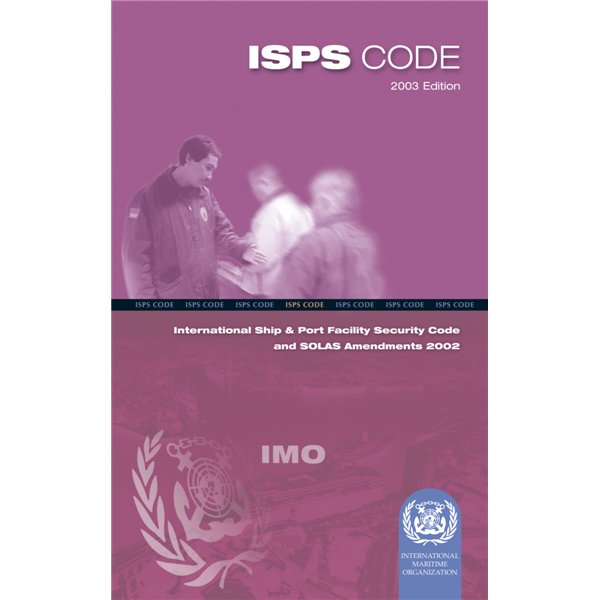
Every initiative has positive and negative sides. This applies equally to the International Ship and Port Facility Security (ISPS) Code. Whilst it may be true that the ISPS Code introduced a new burden by way of the volume of paperwork it generates, its benefits outweigh the burdens. The reasons for this are as follows:
Violence against vessels will remain so long as maritime transport exists. Apart from piracy and armed robbery, we now have the threat of maritime terrorism, which poses real danger to the industry. Some of the world’s major sea lanes pass through narrow waterways, such as the Straits of Malacca and Gibraltar as well as the Panama Canal and Suez Canal, any of which could be an ideal target for terrorist attack on ships.
We cannot think of all the potential targets for maritime terrorists. A good example is the hijacking of the Italian flagged cruise ship, Achille Lauro, by four terrorists who were members of the Palestinian Liberation Front (PLF) on 7th October 1985 in Egyptian territorial waters near the seaport port of Alexandria, which had about 800 passengers on board, excluding the crew. The PLF terrorists had demanded the release of fifty Palestinians held in Israeli prisons as the reason for their action, killed a disabled passenger in a wheelchair and threw his body overboard in the course of the stalemate. If such an incident were to take place today, it may involve more lives because cruise ships these days may be better described as floating ‘townships’ with capacity to carry thousands of passengers. For instance, the Italian flagged cruise ship, Costa Concordia, which grounded on January 13th 2012 was 114,137 gross tons with 13 decks and was known to have had passengers and crew in excess of 3,200 and 1000 respectively on board.
Genesis of the ISPS Code
A chronology of the events which led to adoption of the ISPS Code may shed light on the theme of this article. The Achille Lauro incident mentioned above led to an outcry by the international community. The International Maritime Organisation (IMO) being the United Nations specialised Agency with responsibility for safety and security of shipping acted accordingly by adopting Resolution A.584(14) on 20th November 1985 on Measures to Prevent Unlawful Acts Which Threaten the Safety of Ships and the Security of their Passengers and Crews. Some countries, namely Austria, Egypt and Italy, as well as the International Transport Workers Federation (ITF), urged the IMO in 1986, to prepare a convention to tackle unlawful acts against the safety of maritime navigation on the basis that there was a gap that needed to be filled by having a new convention to deal with maritime terrorism because the international law for unlawful acts against ships was far behind, compared to the civil aviation sector which had adopted the Convention for the Suppression of Unlawful Acts against the Safety of Civil Aviation in 1973, otherwise commonly known as the Montreal Convention. Thus a conference was held in the early part of March 1988 in Rome, and with support from more States, on 10th March 1988 the conference adopted the Convention for the Suppression of Unlawful Acts against the Safety of Maritime Navigation (SUA Convention) 1988. The SUA Convention 1988 was to ensure that appropriate action is taken against persons committing unlawful acts against ships and requires governments to extradite or prosecute offenders.
At the time of the 11th September 2001 (9/11) terrorist attacks in the United States, the SUA Convention which came into force on 1st March 1992 had been ratified by only 67 countries, worldwide. However, after the 9/11 attacks, the number of ratifications for the SUA Convention skyrocketed significantly to 146 States by spring of 2008, which reflects how serious the international community now regard the issue of terrorism and its potential threat to the maritime sector. Unfortunately the SUA Convention 1988 was seen as a toothless bulldog as it had no law enforcement provisions to deal with impending offences and failed to address the growing trend of global terrorism with proliferation of weapons of mass destruction. Thus after the 9/11 attacks, in November 2001 the IMO adopted Resolution A.924(22) to review existing measures to prevent and suppress terrorist acts against ships at sea and in ports, to improve security aboard and ashore so as to reduce risk to passengers and crew, as well as port workers on board ships and ashore, and to ships and their cargoes.
Consequently, a diplomatic conference took place at the IMO Secretariat in London from 9th to 13th December 2002 for measures to be taken to strengthen maritime security and to prevent and suppress acts of terrorism against shipping. That conference adopted a number of amendments to the International Convention for the Safety of Life at Sea (SOLAS) 1974, the most important of which introduced the ISPS Code as chapter XI-2 of SOLAS. The ISPS Code came into force on 1st July 2004. As we know, Part ‘A’ of the ISPS Code contains detailed security-related requirements for Governments, Port Authorities and Shipping Companies which are mandatory, and Part ‘B’ contain guidelines on how the mandatory requirements are to be met.
At about the same time while the ISPS Code was in the making, there was preparatory work to toughen the SUA Convention. With backing of the United Nations General Assembly through Resolution 59/24 of 17th November 2004, the SUA Convention 1988 and the accompanying Protocol on Fixed Platforms were amended on 14th October 2005 with the adoption of The 2005 Protocol to the SUA Convention and The 2005 SUA Fixed Platforms Protocol. Both Protocols created a new criminal offence for any person who unlawfully and intentionally attempts to intimidate a population or compel a Government or an international organisation. The 2005 SUA Protocols now cover modern day terrorist threats, including use of Biological, Chemical and Nuclear (BCN) weapons and materials, and to allow officials to board foreign flagged ships on the high seas to search for potential terrorists and their weapons, or to assist a vessel suspected to be under attack in similar circumstances.
A preventive instrument
The main aim of the ISPS Code is to serve as a preventive, rather than curative instrument. No instrument will eradicate terrorism and other unlawful acts completely, just as the 1973 Montreal Convention in civil aviation did not prevent the 9/11 attacks. The paperwork generated by the ISPS Code may be a burden, but it serves as a constant reminder of the potential threat we all face, which may help to minimise potential atrocities against vessels, including crew, passengers, cargoes and port facilities.
I wish we knew, but we may never know how many potential terrorist attacks or other unlawful acts which have been prevented by the ISPS Code. The intangible benefit may be seen from the fact that at least we have not had any terrorist attacks on the scale of the 9/11 attacks in the maritime sector (which is not impossible). Surely, no seafarer would like to witness something like the 9/11 attacks.
Conclusion
As we mark the 10th anniversary of the ISPS Code this month (July 2014), we need to reflect on its intangible benefits. The additional paperwork created by the ISPS Code is a constant reminder of the need for everyone in the maritime industry to be vigilant, which in turn keeps us on the alert that the maritime sector may be a potential target for a terrorist attack or other unlawful acts, any day, anytime, anywhere. No international instrument, whether labelled as a Convention, Treaty, Code, Protocol, Pact, Accord, Memorandum of Understanding (MoU) or by any other designation, will stop a determined suicide bomber or criminal from carrying out an atrocious act, but vigilance may help to minimise, if not prevent it.
Herbert is the CEO of Global Maritime Bureau, an international maritime consultancy firm in the UK. He is a dual qualified lawyer in England & Wales and Nigeria and a member of the Chartered Institute of Arbitrators. He is an expert in international maritime and admiralty law, international dispute resolution services and multi-jurisdictional disputes. He is a Supporting member of London Maritime Arbitrators Association (LMAA), member of the International Maritime Statistics Forum (IMSF) and a member of International Maritime Organisation (IMO) Roster of Expert Consultants.
This is an article in our first “Non Navies” Series, written by Byron Ramirez and Dr. Robert J. Bunker
Drug cartels today are much more organized, adaptive, and strategic. Over time, they have acquired vast financial resources that allow them to invest in technologies geared towards providing them with a strategic edge. Drug cartels have learned to adapt to a changing environment where law enforcement authorities and militaries are also seeking to find their own effective ways of disrupting the flow of illicit drugs. Technology has become a source of competitive advantage and both drug cartels and militaries have been investing in engineering and technological tools that will allow them to counteract one another.
[otw_shortcode_button href=”https://cimsec.org/buying-cimsec-war-bonds/18115″ size=”medium” icon_position=”right” shape=”round” color_class=”otw-blue”]Donate to CIMSEC![/otw_shortcode_button]
On one side, drug cartels attempt to optimize their operational efficiency while mitigating the risk of detection, seizure, and capture. On the other side, we have law enforcement and militaries’ efforts to improve their surveillance and detection capabilities. This race to out-flank and counteract one another has led to the development of narco-submarines.
During the past twenty years, Colombia’s various drug cartels have engaged in investing in and developing narco-submarine technology that will yield a competitive edge. Over time, their increasing need to evade capture and confiscation of narcotics led drug cartels to move away from using go-fast boats and planes, and instead turn towards developing in-house, homemade, custom built narco-submarines.
A narco-submarine (also called narco-sub) is a custom-made, self-propelled vessel built by drug traffickers to smuggle their goods. Over the years, their engineering, design and technology have improved, thus making them more difficult to detect and capture. Moreover, from a cost-benefit perspective, the yielded benefits are far superior to the associated costs of building these vessels.
Although militaries and law enforcement agencies have become progressively collaborative in their efforts to reduce the flows of narcotics, the use of narco-submarines enables narcotics to continue to reach their destinations while reducing the probability of detection. Albeit, there have been some confiscations of narco-submarine vessels over the last several years. These appropriations in turn have led to our understanding of how narco-submarines are designed, engineered, and used to deploy narcotics.
Cocaine smuggling from the Andean region of South America to the United States generates yearly revenues in the high tens of billions of dollars (e.g. 2008 UN estimate of USD $88 billion retail) and over the last thirty-five years has produced in the low trillions of dollars in retail sales. The use of narco-subs and related vessels represents one component of a broader illicit distribution strategy that also relies upon go-fast boats, airplanes, the hiding of narcotics inside bulk containers and smaller commodities, drug mules, and other techniques to covertly get this high value product into the U.S.
In fact, as of June 2012, maritime drug smuggling accounts for 80% of the total illicit flow from the Andean region into Honduras, Mexico and other mid-way transportation regions prior to entry into the U.S. About 30% of the maritime flow is estimated by the Drug Enforcement Administration (DEA) to utilize narco submarines. Overall, however, maritime interdiction rates are very low. In March 2014, the commander of the U.S. Southern Command testified to Congress that:
“Last year, we had to cancel more than 200 very effective engagement activities and numerous multilateral exercises, Marine Corps Gen. John F. Kelly told members of the Senate Armed Services Committee. And because of asset shortfalls, Southcom is unable to pursue 74 percent of suspected maritime drug trafficking, the general said.
“I simply sit and watch it go by,” he continued. “And because of service cuts, I don’t expect to get any immediate relief, in terms of assets, to work with in this region of the world.”
As a result, it can be seen that narco-submarines and related maritime drug trafficking methods are being carried out with relative impunity, with only about 1 in 4 craft presently being interdicted.
Per the testimony of Rear Admiral Charles Michel, JIATF-South Director, in June 2012, the following statistics pertaining maritime contact numbers and interdictions are provided:
JIATF-South detected an SPSS [Self-Propelled Semi-Submersibles] at sea for the first time in 2006. By 2009, the interagency detected as many as 60 SPSS events were moving as much as 330 metric tons per year. Prior to 2011, SPSS had only been employed by traffickers in the Eastern Pacific. However, since July 2011, JIATF-South has supported the disruption of five SPSS vessels in the Western Caribbean, each carrying more than 6.5 metric tons of cocaine.
There have been a total of 214 documented SPSS events, but only 45 were disrupted due largely to the difficulty of detecting such low-profile vessels.
The numbers of these vessels which now exist is also highly debatable with potentially dozens of them being produced every year by criminal organizations in Colombia such as the FARC (Fuerzas Armadas Revolucionarias de Colombia), Rastrojos, and Urabeños. One point greatly influencing the numbers of these vessels which exist at any specific time is if they are utilized once and then scuttled after their delivery (the traditional U.S. military viewpoint) or if they are utilized multiple times (the traditional Colombian military viewpoint). Depending on the perspective held, greater or lesser numbers of narco subs would be required to be produced each year to replenish the vessels lost due to capture, accidental sinking, intentional-scuttling to avoid capture, and, potentially most importantly, at the end of a delivery run.
What is known is that the capability of these vessels has grown over the last two decades with their evolution and, if the Colombian cartels’ dream of making the journey (using fully submersible narco-subs) to West Africa and Europe is realized, such subs would very well represent a valuable cross Atlantic trafficking resource that would not likely be scuttled at the end of such a profitable illicit trade route.
Given this context concerning the immense values associated with the cocaine trade to the U.S. and the large amount of these illicit drugs not being interdicted during the initial leg in their journey to the United States, we have written a paper, “Narco-Submarines – Specially Fabricated Vessels Used For Drug Smuggling Purposes”, soon to be released by the Foreign Military Studies Office (FMSO) and intended to be an initial primer on the subject of narco-submarines, that is, those specially fabricated vessels utilized principally by Colombian narco traffickers and developed to smuggle cocaine into the U.S. illicit drug market.
This work is anticipated to appear in the Foreign Military Studies Office (FMSO) website as unclassified research conducted on defense and security issues that are understudied or under-considered. The work contains a preface written by Dr. James G. Stavridis, and a number of essays written by U.S. Navy Captain Mark F. Morris, Adam Elkus, Hannah Stone, Javier Guerrero Castro, and Byron Ramirez discussing and analyzing narco-submarines. The paper also comprises a comprehensive photo gallery, arranged in chronological order, which allows the reader to observe the evolution of narco-submarine technologies. It also contains a cost benefit analysis of using narco-submarines, as well as a map and a table that highlights where these distinct narco subs were interdicted. The data that we came across seems to propose that cartels have been using different types of narco-submarines concurrently; hence, they seem to be employing a mixed strategy.
This study is important and relevant to the present challenges faced by law enforcement authorities and militaries. This effort seeks to add value to the existing literature on the subject as it contains several essays which describe the complexity of the challenges that narco-submarines present. The document also provides the background and context behind the emergence of these vessels. Furthermore, the work illustrates the evolution of narco-submarine technology and the advances in their design, features, and technical capabilities.
Finally, it is important that we collectively consider the potential of these types of vessels to transport more than just narcotics: the movement of cash, weapons, violent extremists, or, at the darkest end of the spectrum, weapons of mass destruction.
While this is a volume that will be of general interest to anyone with an interest in global security, the intended readers are military, homeland security, and law enforcement personnel who wish to learn more about these vessels and their respective capabilities. Policymakers and analysts may also find the work useful for understanding the detection and interdiction challenges that these vessels generate. Increasing the area of knowledge about narco-submarines should enrich and deepen our understanding of the threat they pose to our domestic security, and indeed to the global commons.
[otw_shortcode_button href=”https://cimsec.org/buying-cimsec-war-bonds/18115″ size=”medium” icon_position=”right” shape=”round” color_class=”otw-blue”]Donate to CIMSEC![/otw_shortcode_button]
Buried under the grabbing headlines of epidemics, border disputes, and weapons procurement – the daily grind of basic maritime border control and enforcement is lost. The world has a total 372,000 miles of coastline and the sea’s traffic is both diverse and voluminous. Welcome to the machine – the day-to-day of cargo screening, customs enforcement, coastal traffic monitoring, visa & entry procedures, verifying vessel registries, keeping out ne’er-do-wells, preventing North Korea from sneaking weapons through your country, etc… Monitoring these comings and goings on even an elementary level is a massive undertaking.
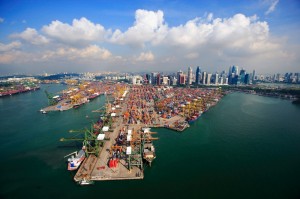
The Port of Singapore – a leviathan ballet of ships, paperwork, CONEX boxes, computers, and caution lights.
Different entities handle these issues in different ways, from hand-scrawled schedules and security documents to the precision of computerized megaports or just the varied law enforcement options deployed by coastal states. While we often touch on these issues in part – CIMSEC will be dedicating an entire week to the subject.
CIMSEC is putting out a call for articles on everything maritime border control related: customs enforcement, cargo checks, disease and biological material screenings, interdiction, monitoring coastal traffic, etc… – DUE 15 August to nextwar(at)cimsec.org
Air-Sea Battle is described as a limited objective concept by the Department of Defense.[1] Some critics have argued that Air-Sea Battle must be more than a limited objective concept, possibly a war plan or a strategy. Others have argued that it is less than a concept and is just a meaningless set of buzzwords. From a military planner’s perspective, Air-Sea Battle is a piece of art – operational art that describes the “broad actions the force must take to achieve the desired military end state.”[2]
[otw_shortcode_button href=”https://cimsec.org/buying-cimsec-war-bonds/18115″ size=”medium” icon_position=”right” shape=”round” color_class=”otw-blue”]Donate to CIMSEC![/otw_shortcode_button]
Joint doctrine uses operational art to begin the military planning process by developing an “operational approach.” An operational approach is based on an understanding of the military environment and the problem facing the commander.[3] Air-Sea Battle describes an operational approach to address the anti-access/area denial (A2/AD) problem and is “limited” in objective to the access required to conduct concurrent or follow-on actions, not decisive defeat of an adversary. If faced with an operational A2/AD challenge, a combatant commander may build on the operational approach described by Air-Sea Battle to design a war plan suited to the specific region and situation. This is an important distinction, especially for those who believe Air-Sea Battle is focused on a specific country. No matter what specific operational plan is used, Air-Sea Battle’s operational approaches can be applied if access and freedom of action in the global commons is at risk.
Why Air-Sea Battle is Important: The A2/AD Mission. Understanding strategic goals and the military missions that support them is an important first step in developing an operational approach.[4] The 2012 Defense Strategic Guidance assigned the ability to project power despite anti-access/area denial challenges as a distinct mission for the U.S. armed forces.[5] Countering A2/AD challenges is separate from and in addition to the traditional, conventional mission to deter and defeat aggression because of the complexity and paradigm-breaking challenge created by A2/AD capabilities. The Defense Strategic Guidance directs the implementation of the Joint Operational Access Concept as one of the ways to address A2/AD challenges. Joint Operational Access Concept begins to describe the A2/AD environment and then refers to the Air-Sea Battle Concept to address specific aspects of A2/AD.
The Air-Sea Battle Concept in turn applies military operational art to A2/AD: an understanding of the A2/AD operational environment, the specific problems posed by A2/AD, and an operational approach that envisions how a commander can mitigate the risks of the A2/AD environment and continue to operate in the global commons. The name “Air-Sea Battle” is derived from the air and maritime domains traditionally associated with the global commons and the new assumption that U.S. forces must fight to achieve and maintain access in those domains.[6] This simple etymology of the Air-Sea Battle Concept in Department of Defense writings clearly defines the intent of Air-Sea Battle and should not be confused with think tank and other commentator “sources.”
Envisioning the A2/AD Operating Environment. Air-Sea Battle was directed by Secretary of Defense Robert Gates to shake-up the institutional inertia generated by uncontested access.[7] The A2/AD operating environment will be one where U.S. forces will not only fight to get to the fight but also fight to sustain access and the ability to maneuver in all domains. A2/AD presents a layered, multi-domain, integrated system-of-systems that gives potential adversaries a new dimension of strategic depth. While U.S. forces have always expected to be contested in theater when they maneuver within the operating range of adversary organic capabilities, the ability to merely move and sustain forces from homeports and bases to and across distant theaters will now be contested as well.
In addition to the increased technological sophistication of military capabilities on land, at sea, and in the air, the nascent development of potentially hostile space and cyberspace capabilities expands the access challenge across all five warfighting domains. Friendly forces in the air, sea, land, space and cyberspace domains are now threatened not only physically but also through the electromagnetic spectrum and cyberspace. The expectation that command and control structures will be attacked through the disruption of friendly communications and decision-making architectures is probably the most-significant change from today’s warfighting paradigm. In short, our traditional understanding of the phases of conflict, the definition of battlespace, our access to and ability to maneuver within domains, and our expected operational tempo will all be challenged.
Maintaining freedom of action in the global commons requires overcoming the physical threats of long-range missiles, torpedoes, mines, and other threats as well as maintaining our ability to command, control, and communicate with the forces from the strategic to the tactical levels. Initial analysis led some to conclude that only through striking the land-based hosts of these threat capabilities would the U.S. be able to maintain access.[8] The Joint Operational Access Concept acknowledges the risks associated with that approach.[9] To provide national leadership and military commanders with an array of viable options, Air-Sea Battle promotes operational art, not prescriptive solutions and advocates the innovative use of existing technology and potential future developments as the means to maintain U.S. qualitative superiority in the global commons.
Defining the A2/AD Problem. The Air-Sea Battle Concept defines the A2/AD problem and desired end-state as “capabilities (that) challenge U.S. freedom of action by causing U.S. forces to operate with higher levels of risk and at greater distance from areas of interest. U.S. forces must maintain freedom of action by shaping the A2/AD environment to enable concurrent or follow-on operations.”[10] In short, the A2/AD environment consists of threats to movement, threats to maneuver, and threats to command and control.
For example, capabilities in space and cyberspace as well as terrorist tactics may threaten the movement of deploying forces, logistics forces and follow-on forces from home bases to theater. These threats will challenge our understanding of the phasing of conflict. In addition, increased area denial capabilities are directly and indirectly challenging the long-range air and missile capabilities of U.S. forces, specifically to negate U.S. stand-off capability and driving a change to our understanding of battlespace and operating areas by making our current frames of reference obsolete. Finally, adversaries are preparing to contest the domains of space and cyberspace, and the electromagnetic spectrum in order to create a degraded or denied communications environment that directly challenges U.S. reliance on ”reach back” communications and theater level command and control. This will greatly impact our ability to dictate the tempo of battle. The effect of these A2/AD capabilities is summarized in the Concept: “(t)he range and scale of possible effects from these capabilities presents a military problem that threatens the U.S. and allied expeditionary warfare model of power projection and maneuver.”[11]
An Operational Approach to A2/AD. An operational approach is a “commander’s description of the broad actions the force must take to achieve the desired military end state.”[12] It is a “visualization of how the operation should transform current conditions into the desired conditions at end state.”[13] The Joint force uses operational approaches to provide the foundation for planning guidance, to provide a model for execution and assessment and to enable a better understanding of the operational environment and of the problem.[14] Air-Sea Battle provides an operational approach to A2/AD.
Air-Sea Battle’s operational approach to the A2/AD challenge in the global commons is a networked, integrated force capable of attack-in-depth to disrupt, destroy and defeat adversary forces (NIA/D3).[15] As defined above, the A2/AD problem at its core is about sophisticated threats to movement, maneuver and command and control. Readers of the Concept document will find the broad framework of Air-Sea Battle as it addresses A2/AD threats. The individual parts of Air-Sea Battle are briefly summarized as follows, but the reader is cautioned to view them not as individual lines of effort but as strands woven together when a commander is designing a plan:
Networked. “Networked” describes not only the communications pathways but also the authorities and relationships needed to enable commanders faced with threats to their decision-making process. Cross-domain operations are conducted by integrating capabilities from multiple interdependent warfighting domains to support, shape, or achieve objectives in other domains. The Joint Operational Access Concept advocates for cross-domain synergy, which goes beyond the merely additive, de-conflicted capabilities of today where commander’s must “reach back” for space, cyber and long-range fires.[16] Cross-domain operations will go a step further to exploit asymmetric advantages in specific domains to create positive and potentially cascading effects in other domains, as commanded at the operational level.
Integrated. “Integrated” reflects three emerging trends that will challenge the current U.S. understanding of the opening phase of war with A2/AD adversaries. First, an adversary can initiate military activities with little or no indications or warning. Second, forward deployed friendly forces will likely be in the A2/AD environment at the commencement of hostilities and, third, adversaries will likely attack U.S. and allied territory supporting operations against adversary forces. In other words, the U.S. will no longer have the luxury to build up combat power in an area, perform detailed rehearsals and integration activities, and then conduct operations as desired.[17] To overcome this, forces must train against A2/AD capabilities together, as an integrated Joint and combined force, for cross-domain operations prior to deploying to theater. This pre-deployment Joint and combined training is called pre-integration.
Attack-in-depth. “Attack-in-depth” includes offensive and defensive fires and includes both kinetic and non-kinetic means to attack an adversary’s critical vulnerabilities without requiring systematic destruction of the enemy’s defenses. This is a significant departure from today’s rollback methodology that relies on uncontested communications and the ability to establish air superiority, or dominance in any other domain. The attack-in-depth methodology seeks to create and exploit corridors and windows of control that are temporal in nature and limited in geography. At the tactical level, Air-Sea Battle’s attack-in-depth methodology provides a unique lens to consider the A2/AD threat. Air-Sea Battle analyzes adversary effects chains, or an adversary’s process of finding, fixing, tracking, targeting, engaging and assessing an attack on U.S. forces. The insight from this analysis contributes to the operational approach of Air-Sea Battle.
Disrupt C4ISR. “Disrupting” adversary effects chains focuses on impacting an adversary’s decision-making ability, referred to as Command, Control, Communications, Computers, Intelligence, Surveillance, and Reconnaissance (C4ISR). Ideally, friendly efforts to disrupt an adversary’s decision-making will preclude attacks on friendly forces. For example, commanders faced with threats to planned “movement” into theater should consider disruptive offensive operations to combat the adversary’s ability to track and locate forces in transit using all five domains.
Destroy and Defeat. The “Destroy and Defeat” operational tasks focus the commander on adversary A2/AD platforms and weapons systems that threaten forces in theater as they maneuver.[18] Destroying or neutralizing adversary weapons systems enhances friendly survivability and provides freedom of action. In terms of access, destroying adversary platforms regains access and defeating employed weapons sustains it.
The Air-Sea Battle Concept document, and not the blogosphere, should be read in detail for a deeper understanding of how the operational art of Air-Sea Battle addresses the A2/AD problem. As stated in the unclassified version of the concept, for those with appropriate clearances and need to know, there a growing body of work that explores subordinate tactical concepts and mission essential tasks that will be required for Air-Sea Battle to evolve from operational art, to operational design, to concepts of operations and operational plans.
Historical Analogy: War Plan Orange. Air-Sea Battle is not a strategy or a war plan; however, there is a particularly appropriate analogy to Air-Sea Battle in the development of War Plan Orange during the interwar years. There are striking similarities in the institutional changes driven by the changing operational environment as well as the specific time-distance-resistance military problem confronted by planners in the Pacific then and in the global commons today.
First, the era of uncontested power projection for U.S. forces may well be over – Air-Sea Battle assumes U.S. forces will have to fight to get to the fight – an assumption also made by the planners of War Plan Orange. Similar to the historical evolution of War Plan Orange, Air-Sea Battle’s development is driving institutional changes to better understand the challenges of potential future fights. Edward Miller’s book, War Plan Orange, explores what he called “the American way of planning” in detail and perhaps future historians will compare the “color” planning efforts of the pre-World War II era and the overall effort to explore the anti-access and area denial challenge through the Air-Sea Battle Concept, the Joint Operational Access Concept, and others.[19] War Plan Orange’s many iterations included the Through Ticket and the Royal Road, evolutions in the plans that accounted for better understanding and new insights between the Services. Air-Sea Battle represents a similar evolution in 21st century warfare.
Second, the defining military problem faced by Army and Navy planners working on War Plan Orange in the decades preceding World War II was largely one of geography, where access to the high seas and international airspace was defined by the air and maritime distance between bases and the Pacific islands. The same geographic considerations bound Air-Sea Battle in the global commons, but with the added complexity of access to non-sovereign cyberspace, space, and the electromagnetic spectrum. Air-Sea Battle is in the vanguard of a likely long-term effort to address a similar problem of time, distance and resistance associated with A2/AD.
In conclusion, Air-Sea Battle describes an operational approach that, for military planners, helps make sense of the A2/AD operating environment, defines the military problem of A2/AD, and describes the characteristics needed in the future force and the broad actions U.S. and allied forces must take to achieve access in the global commons. For every complaint about Air-Sea Battle generated inside the Beltway, there are numerous requests for support from the Fleets and Forces in how to approach the growing challenge of advanced A2/AD capabilities. Further, the operational approach of Air-Sea Battle promotes mutual understanding and unity of effort not just forward in the Fleets and Forces but among the Services in their Title 10 force development roles. Air-Sea Battle’s operational framework is being used to find the solutions necessary for the U.S. military to continue to operate forward and project power wherever an A2/AD challenge emerges.[20]
CDR John Callaway, U.S. Navy, is a strategic planner assigned to the Air-Sea Battle Office. He is a graduate of Georgetown University, Harvard’s Kennedy School, and the National War College. The opinions expressed here are his own.
[otw_shortcode_button href=”https://cimsec.org/buying-cimsec-war-bonds/18115″ size=”medium” icon_position=”right” shape=”round” color_class=”otw-blue”]Donate to CIMSEC![/otw_shortcode_button]
[1] Air-Sea Battle: Service Collaboration to Address Anti-Access & Area Denial Challenges, May 2013, p.4
[5] Sustaining U.S. Global Leadership: Priorities for 21st Century Defense, January 2012, pp.4-5
[6] The “Air-Sea Battle” name is attributed to various sources, including former Secretary of Defense Bob Gates, Andrew Marshall, Andrew Krepinevich’s “AirSea Battle” or to Admiral James Stavridis’ 1992 war college paper. While it does not take much imagination to jump from AirLand Battle to Air-Sea Battle, perhaps the credit really belongs with the Atari Corporation which launched a video game called Air-Sea Battle in 1977.
[7] Air-Sea Battle, p.1
[8] See reports authored by the Center for Strategic and Budgetary Assessments on this topic. These reports preceded and are often confused with the actual Department of Defense Air-Sea Battle Concept.
[9] Joint Operational Access Concept, Department of Defense, 17 Jan 2012, p.24 (footnote) and p.38
[10] Air-Sea Battle, p.3
[11] Air-Sea Battle, p.2
[12] Joint Pub 5-0, p.III-5
[13] Joint Pub 5-0, p.III-5-III-6
[14] Joint Pub 5-0, p.III-13
[15] Air-Sea Battle, p.4
[16] Air-Sea Battle, p.5
[17] Air-Sea Battle, p.2
[18] Air-Sea Battle, pp.7-8
[19] Miller, Edward S., War Plan Orange: The U.S. Strategy to Defeat Japan 1897-1945, (Naval Institute Press, Annapolis, MD: 1991.) As an interesting aside, and potentially a strategic message about the willingness of the United States to work with those formerly considered competitors and adversaries, planners from more than one country targeted by a “color plan” are included in the Air-Sea Battle implementation effort.


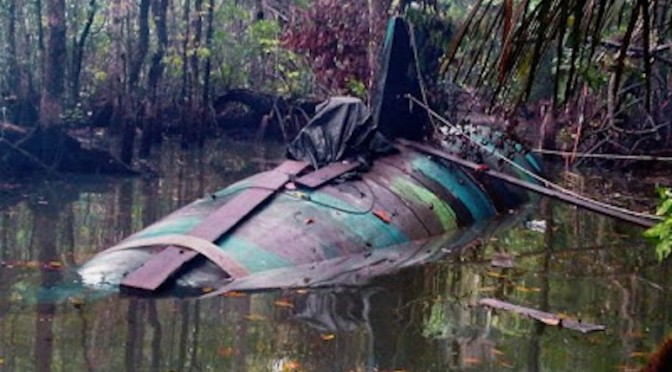
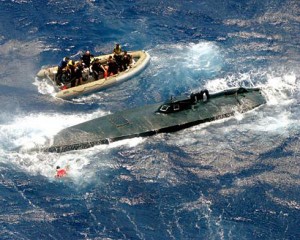 On one side, drug cartels attempt to optimize their operational efficiency while mitigating the risk of detection, seizure, and capture. On the other side, we have law enforcement and militaries’ efforts to improve their surveillance and detection capabilities. This race to out-flank and counteract one another has led to the development of narco-submarines.
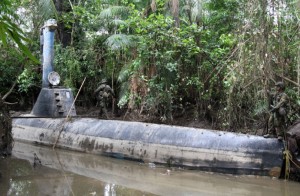 This work is anticipated to appear in the Foreign Military Studies Office (FMSO) website as unclassified research conducted on defense and security issues that are understudied or under-considered. The work contains a preface written by Dr. James G. Stavridis, and a number of essays written by U.S. Navy Captain Mark F. Morris, Adam Elkus, Hannah Stone, Javier Guerrero Castro, and Byron Ramirez discussing and analyzing narco-submarines. The paper also comprises a comprehensive photo gallery, arranged in chronological order, which allows the reader to observe the evolution of narco-submarine technologies. It also contains a cost benefit analysis of using narco-submarines, as well as a map and a table that highlights where these distinct narco subs were interdicted. The data that we came across seems to propose that cartels have been using different types of narco-submarines concurrently; hence, they seem to be employing a mixed strategy.