All posts by Dmitry Filipoff

Future Capital Ship Topic Week Kicks Off on CIMSEC

By Dmitry Filipoff

This week CIMSEC will be featuring articles that discuss future capital ship concepts in response to a Call for Articles from the U.S. Naval War College’s Institute for Future Warfare Studies. Below is a list of articles featuring during the topic week that will be updated as the topic week rolls out and as prospective authors finalize additional publications.

The Network as the Capital Ship by Robert Rubel
Swarming Sea Mines: Capital Capability? by Zachary Kallenborn
Return of the Sea Control Ship by Pete Pagano
An Information Dominance Carrier for Distributed War at Sea by Dmitry Filipoff
Capital Ship 2035: The Mission Command Vessel (MCV) by Harry Bennett
Pitfalls in New Capital Ship Creation by Steve Wills
Capital Uncertainty by J. Overton

Dmitry Filipoff is CIMSEC’s Director of Online Content. Contact him at Nextwar@cimsec.org.

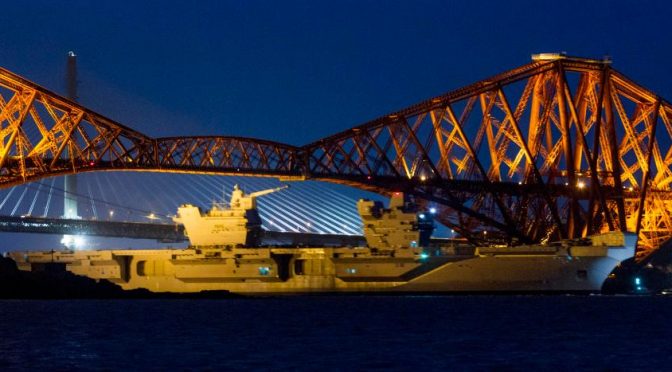
Featured Image: British aircraft carrier HMS Queen Elizabeth II sails under the Forth Bridge. (Katielee Arrowsmith/SWNS.com)

Future Surface Combatant Week Wraps up on CIMSEC

By Dmitry Filipoff 

This past week CIMSEC featured a topic week offering ideas for the U.S. Navy’s Future Surface Combatant Program. In response to our call for articles authors shared insightful writings on potential new warships and how history should inform ship design. We thank the authors for their excellent contributions, listed below.  

Black Swan: An Option for the Navy’s Future Surface Combatant by Brett Friedman

“The most compelling concept is the Black Swan Concept, proposed by the United Kingdom Ministry of Defense in 2012. It’s a modernized idea that traces its roots back to the Royal Navy and Royal Indian Navy Black Swan ships that served as convoy escorts in World War II.”

Strategy and Ship Design – History’s Lessons For Future Warship Concepts by Harry Halem

“History demonstrates the need to understand strategy, and a service’s role in that strategy, when modernizing a military force. In particular, a comparison of Britain’s largely successful naval modernization before the First World War can be compared to the less successful naval modernization and construction attempts in the U.S. from 1991 to the present. Comparing the underlying clarity of strategy in both modernization attempts offers major lessons to the modern policymaker that should be applied to the FSC’s development.”

Forging a Closer Maritime Alliance: The Case for U.S.-Japan Joint Frigate Development by Jason Osuga

“The joint development of frigates would deepen the U.S.-Japan security alliance and enhance the regional balance of power to offset China. Operationally, co-development of frigates will increase interoperability, reduce seams in existing naval strategy, and increase fleet size and presence.”

Dmitry Filipoff is CIMSEC’s Director of Online Content. Contact him at Nextwar@cimsec.org. 

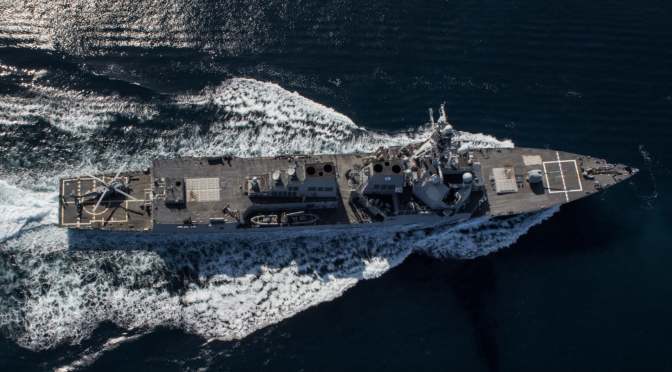
Featured Image: PACIFIC OCEAN (May 11, 2017) The guided-missile destroyer USS Halsey (DDG 97) participates in a simulated strait transit during a group sail training exercise with the Theodore Roosevelt Carrier Strike Group (U.S. Navy Photo by Mass Communication Specialist 2nd Class Paul L. Archer/Released). 

Future Surface Combatant Week Kicks Off on CIMSEC

By Dmitry Filipoff

This week CIMSEC will be publishing articles offering ideas on the U.S. Navy’s Future Surface Combatant program in response to our call for articles. What opportunities can be seized with this new family of warships? Below is a list of articles featuring during the week that will be updated as the topic week rolls out and as prospective authors finalize additional publications.

Black Swan: An Option for the Navy’s Future Surface Combatant by Brett Friedman
Strategy and Ship Design – History’s Lessons For Future Warship Concepts by Harry Halem
Forging a Closer Maritime Alliance: The Case for U.S.-Japan Joint Frigate Development by Jason Osuga

Dmitry Filipoff is CIMSEC’s Director of Online Content. Contact him at Nextwar@cimsec.org. 

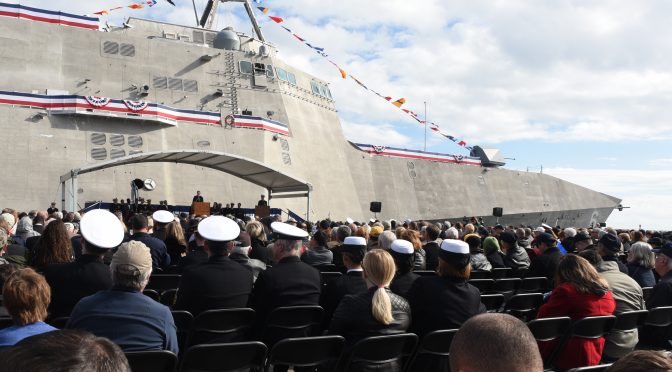
Featured Image: GULFPORT, Miss. (Dec 5 , 2015) Secretary of the Navy (SECNAV) Ray Mabus delivers remarks during the christening ceremony for the Navy’s newest Independence-variant littoral combat ship, USS Jackson (LCS 6), in Gulfport, Miss. (U.S. Navy photo by Chief Mass Communication Specialist Sam Shavers/Released)

Call for Articles: What Should the U.S. Navy’s Next Future Surface Combatant Be?

By Dmitry Filipoff

Articles Due: July 5, 2017
Week Dates: July 10-July 14, 2017

Article Length: 1000-3000 words 
Submit to: Nextwar@cimsec.org

The U.S. Navy is in the conceptual phases of determining what the next Future Surface Combatant (FSC) family of warships could be. The FSC will include “a large, small and unmanned surface combatant that will go through the acquisition process with each other and an ‘integrated combat system’ to tie them together.” These ship classes will provide an opportunity to field systems that reflect a vision of future war at sea and decide what the surface force will contribute to the fight.

The challenges are myriad and complex. Emerging technology has opened up numerous avenues of latent capability, from unmanned systems to directed energy, from integrated power to adaptive electronic warfare. New technology could result in evolving tactics and concepts of operation that change the way ships fight individually and within the joint force. Additionally, ships expected to serve for decades must have attributes that facilitate the iterative fielding of greater lethality over the course of their service life. All of these factors lend competing pressures toward defining requirements. 

These ships are critical to the surface Navy’s future, especially because of the challenges and setbacks faced by the two major surface combatant programs of the current generation. The Littoral Combat Ships and Zumwalt-class destroyers are now poised to shape the conversation of what tomorrow’s warships will and will not be and how to go about procuring them. Authors are encouraged to not only envision future roles and capabilities for the FSC family of warships, but to also contemplate the major lessons learned from recent ship design challenges and how to better field the next generation of surface combatants. 

Dmitry Filipoff is CIMSEC’s Director of Online Content. Contact him at Nextwar@cimsec.org. 

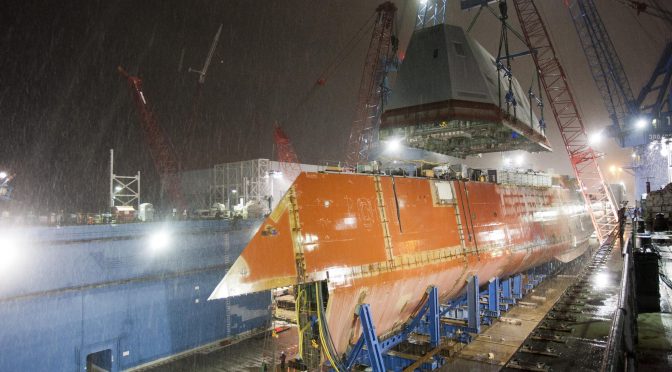
Featured Image: Deck house lifted onto USS Michael Monsoor , trhe 2nd Zumwalt class destroyer, on November 14, 2014. (General Dynamics Bath Iron Works)