All posts by Guest Author

The Royal Thai Navy: Where to Post-Coup?

Guest Post by Paul Pryce 

With a coup d’état in May 2014 and the appointment of General Prayut Chan-o-cha as Prime Minister, 2014 proved to be a tumultuous year in Thai politics. Still faced with a deeply divided society, it is difficult for the Thai authorities to articulate foreign policy priorities or a grand strategy for the country. Even so, the Royal Thai Navy may soon have important tools available with which Thailand can make its presence felt internationally

Although often overlooked by most reports in favor of the contributions made by the Chinese and the Russians in years since, Thailand was an important player in counter-piracy efforts in the Gulf of Aden. In response to an increase in Somali-based piracy, Combined Task Force (CTF) 151 was established in January 2009 to secure freedom of navigation along international shipping routes in the Gulf of Aden and Indian Ocean. Although comprised largely of vessels and crews from NATO member states, Thailand deployed a Pattani-class off-shore patrol vessel and a supply ship to join the force in 2010-2011.

This was an unprecedented move. For the first time, Thailand deployed military assets abroad to defend its interests. HTMS Pattani and HTMS Similan, the supply ship, did not simply serve in token roles: Thai forces engaged in combat against pirates in two separate incidents on October 23rd, 2010. Beyond hosting ASEAN-related events, such as the 8th ASEAN Navy Chiefs’ Meeting in 2014, the Royal Thai Navy has since adopted a much more subdued posture, however. This can in part be attributed to the political dominance of the Royal Thai Army through last year’s coup.

Were there to be need for Thai participation in a similar multinational operation in Southeast Asia or elsewhere in the world, it is doubtful that the Thai authorities would find the political will to deploy any assets in the near future. But the Royal Thai Navy will soon see its capabilities bolstered. If national unity can be preserved in some way, Thailand could see its international image raised considerably. It has commissioned two stealth-capable corvettes based on the design of the Republic of Korea Navy (ROKN) Gwanggaeto the Great-class destroyers. With a displacement of approximately 3,900 tons, these would be among the largest vessels in Thailand’s arsenal, second only in size to the Royal Thai Navy’s two American-made Knox-class frigates.

Although it is currently unclear when Thailand expects delivery of its two Gawnggaeto the Great variants, the eventual addition of these vessels to the fleet will greatly enhance its capacity to project power in the Gulf of Thailand, South China Sea, and beyond. Thailand has no maritime disputes with China; tensions over territory exist only in relation to the land borders with Cambodia and Laos. As such, it is a reasonable assumption that the previous government intended to employ the new vessels not to exert Thai sovereignty, but to appease military elites and to attain international prestige through contributions to future multinational maritime operations. That the current junta has not cancelled this procurement suggests that it too shares these goals.

Of course, achieving the political stability necessary to engage in expeditionary missions will be a tall order, especially as legal action against Yingluck Shinawatra, Thailand’s former Prime Minister who was ousted in the May 2014 coup, is ongoing. Until such issues can be resolved and civilian oversight of the military is adequately restored, HTMS Chakri Naruebet, pictured below, may represent the future of the Royal Thai Navy.
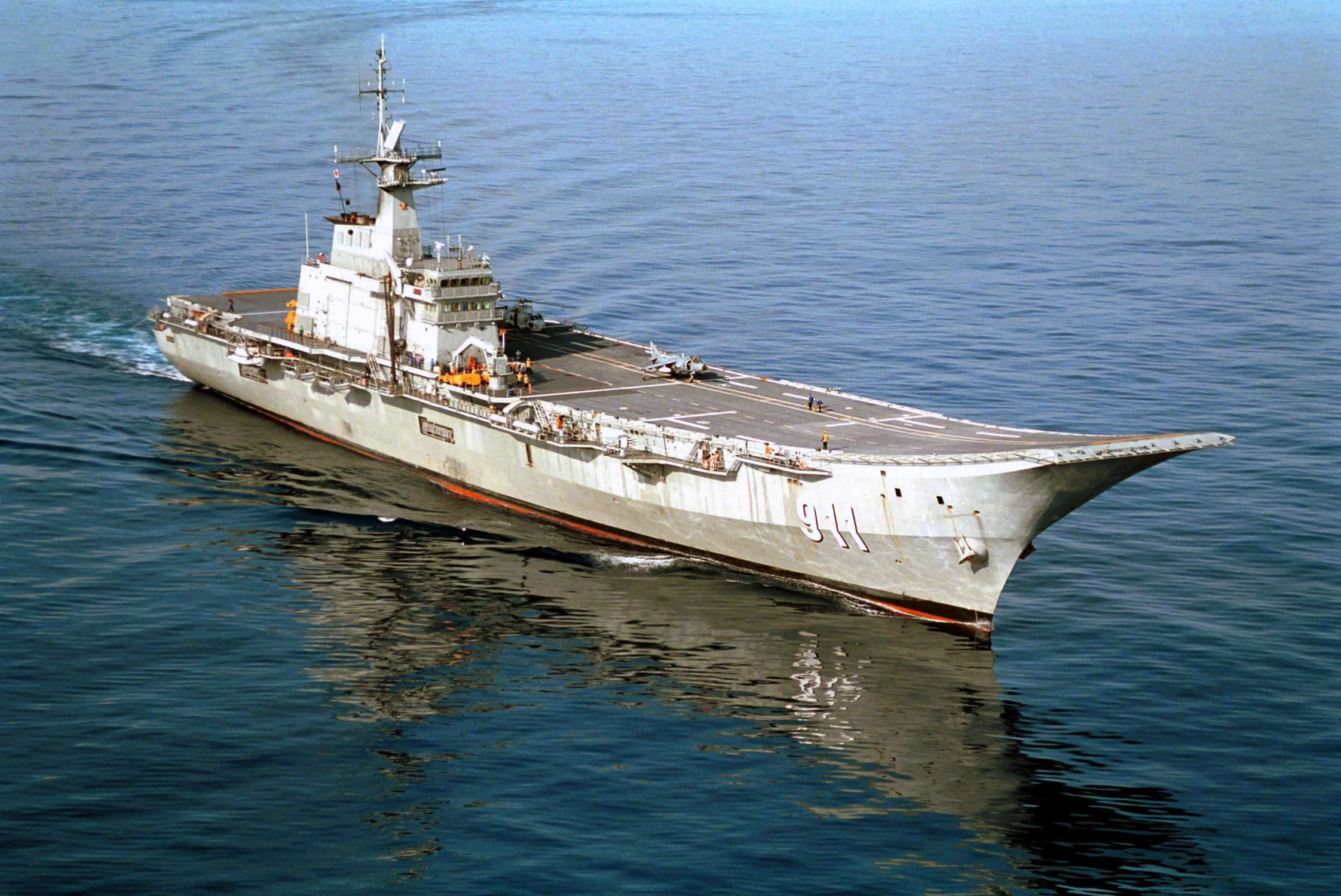
The Royal Thai Naval vessel HTMS CHAKRINARUEBET (CVH 911) in the South China Sea.
HTMS CHAKRINARUEBET  in the South China Sea.

This vessel, which serves as Thailand’s flagship and is based on the design of the Spanish aircraft carrier Principe de Asturias, spends much of its time docked at Sattahip naval base. No longer able to accommodate Harrier airframes, the Chakri Naruebet can now carry a small complement of helicopters and occasionally serves as a royal yacht. The two stealth corvettes may suffer a similar fate if Bangkok’s palace politics persist.

Paul Pryce is a Research Analyst at the Atlantic Council of Canada. With degrees in political science from universities in both Canada and Estonia, he has previously worked as a Research Fellow at the OSCE Parliamentary Assembly and an Associate Fellow at the Latvian Institute of International Affairs. His research interests are diverse and include maritime security, NATO affairs, and African regional integration.
From Words to Action in the South China Sea – Updated 5/22

Update 5/22:

– China’s Foreign Ministry spokesman says U.S. actions in the South China Sea “‘irresponsible, dangerous” and that China’s military drove away the U.S. military aircraft.

– A Pentagon spokesman says the P-8 and naval vessels have not yet gone within 12nm of the islands, but said “that would be the next step.”

– The Washington Free Beacon also reports US officials as saying “China tried to electronically jam U.S. drone flights over the South China Sea in a bid to thwart spying on disputed island military construction.”

———————————————————————

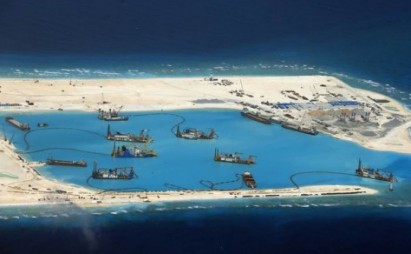
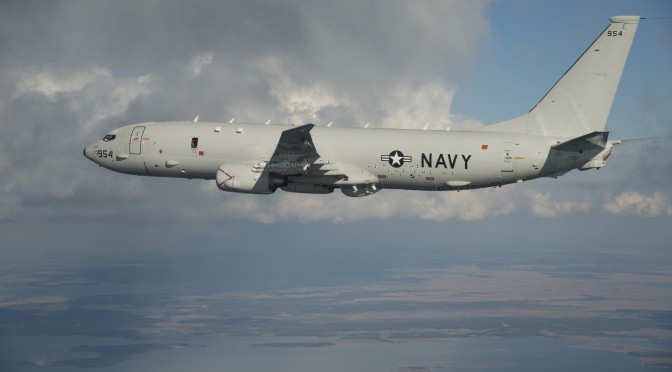
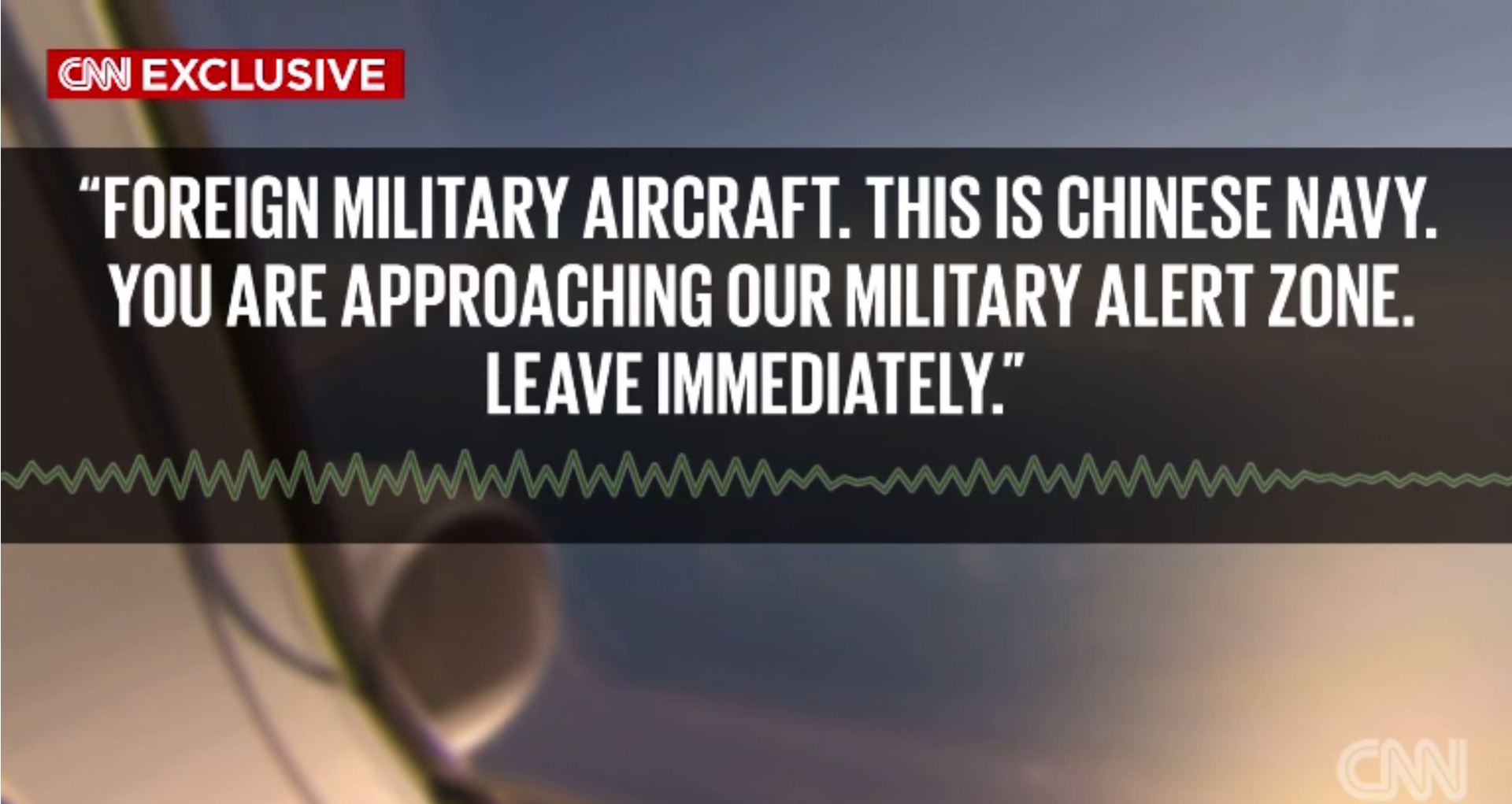
InterceptLast week the Wall Street Journal reported that the United States was considering sending U.S. air and naval assets to conduct freedom of navigation (FoN) transits around China’s artificial islands in the South China Sea, specifically the Spratlys – claimed in part or in whole by six nations. Today, CNN released exclusive footage from just such a flight, as a P-8 may have flown within the claimed 12nm of territorial airspace of three of the islands (more on that below), including Fiery Cross Reef and Mischief Reef. I highly recommend watching the video to gain a greater appreciation of the sort of interaction that is likely to occur with increasing regularity, and to see the dredging in action that CSIS’ Asia Maritime Transparency Initiative has so ably documented through overhead satellite imagery [full disclosure: I’ve contributed to the site in the past].

interphoto_1428568832One of the questions bedeviling the maritime security community over the past several years has been how to respond to China’s “salami slicing” actions – a question that took on new urgency with the previous year’s massive surge in reclamation efforts in the South China Sea. Among others, the Center for a New American Security (CNAS)’s excellent Maritime Strategy Series included several reports devoted to developing options to provide answers for policy makers. Unfortunately, much of the analysis more broadly has struggled to move from generalities of the need to “impose costs” or, conversely, to “develop cooperative strategies” to the specifics of application. And, for those that did, there had until now been little evidence of words being translated into action.

Spratly_Islands-CIA_WFB_MapNot everyone is happy. Over at our partners’ site – ASPI’s The Strategist – Sam Bateman questions whether the “US knows what it’s doing” and rightly points out that FoN operations have to be “conducted with ‘due regard’ to the rights of coastal States.” But he also asserts that U.S. action is an indication that the United States has “taken a position on the sovereignty of the claims.” If true, (and that’s not official policy) it belies the first qualm since the United States presumably would not therefore need to take claimed but invalid rights into account. Bateman is on stronger ground in noting that if the Navy is sailing through the territorial waters or flying through the islands’ territorial airspace (it is not clear in the video whether this is the case) – water/airspace granted due to the small fractions of at least Fiery Cross Reef’s natural features that remain above water during high tide – it would do so at risk of violating the “innocent” condition of innocent passage if the vessels were conducting military missions such as intelligence gathering. This is not the case if the island is entirely man-made, if a military vessel refrained from action prejudicial to the coastal state, or if the vessel stayed in an island’s EEZ – outside the 12nm of the territorial waters.

Of course this is all moot if, as Bateman suggests, the United States by these actions is declaring it holds specific island sovereignty claims invalid, rather than waiting any longer for China to explain upon what basis its claims are made. Perhaps the best course of action is for the United States to declare that until China has explained the basis for the nine-dash line claim in a manner in accordance with international law and so adjudicated it will not honor any of China’s South China Seas sovereignty claims or the rights derived thereof. This would cut through some of the legal complexity in providing a basis for the ongoing FoN activities and point to a way for China to take action to resolve the situation. While it is unlikely China will be persuaded to prematurely end its reclamation efforts, the actions undertaken by the Navy may at least demonstrate the likelihood that a declared South China Sea Air Defense Identification Zone (ADIZ) without resolution of outstanding claims will result in a frequent high-profile acts of indifference.

Scott Cheney-Peters is a surface warfare officer in the U.S. Navy Reserve and founder and president of the Center for International Maritime Security (CIMSEC). He is a graduate of Georgetown University and the U.S. Naval War College, a member of the Truman National Security Project, and a CNAS Next-Generation National Security Fellow. 

CIMSEC DC Memorial Day Meet-Up: May 25th

downloadJoin our DC chapter for a special Memorial Day edition DC-area informal meet-up/happy hour. Capt. Brett Friedman will present a short preview of his new book, 21st Century Ellis: Operational Art and Strategic Prophecy for the Modern Era. We hope you’ll drop by for drinks and discussions with friends old and new.

Time: Monday, 25 May 6:00-8:30pm
Place: District Chophouse
509 7th St NW
Washington DC
(Upstairs)

All are welcome – RSVPs not required, but appreciated: director@cimsec.org

CIMSEC 2015 Elections Nominations Now Open

nominateIn order to submit a nomination, you must be a CIMSEC member at the time of nomination. The nominee must be a CIMSEC member as well. Members can be nominated and run for more than one position but may only hold one voting office. Officers may also be members of the Board of Directors.

To read more about the positions and the scope of responsibilities, click here. As an all-volunteer group, we rely on our officers to carry out the important day-to-day functions and mission of CIMSEC. Expected workload is a minimum of 5 hours per week, although we believe as in most things in life the more you put in to the effort the more you will get out of it – there are plenty of opportunities to make a real difference in moving our mission forward if you want to put in the time.

It is important to stress the premium we place on communication.  If you make the commitment to become an officer, you are expected to stay in a minimum of weekly contact.

After You’re Nominated:

For those stepping up to compete as candidate for an elected position, once you have been nominated you will be contacted and asked whether you accept the nomination. If you do, you will also be asked to submit answers to the following two questions to secretary@cimsec.org before the election begins. It is therefore recommended that you also prepare and submit your answers as soon as possible.

1. What are your qualifications?
2. What are your goals?

You will also be asked to sign our conflict of interest policy.

Nominate Today by Clicking Here!