All posts by Guest Author

Maintaining Maritime Superiority: Real Lessons from a Quasi-War

By Dave Andre

In the spring of 1798, the United States found itself in an undeclared naval war with France. Known as the Quasi-War, this eighteenth century “half-war” holds valuable lessons for maintaining maritime superiority in the twenty-first century. This tumultuous period is the origin of the modern United States Navy, Marine Corps, and Coast Guard. During this time, the geopolitical situation in Europe was altering the maritime landscape worldwide just as the United States was developing its foreign policy. Europe’s upheaval and the United States’ first forays into international politics resulted in the Quasi-War. The conflict and the politics that surrounded it present three timely lessons for the United States as it focuses on maintaining maritime superiority in an evolving maritime domain. Foremost among these lessons is the notion that maritime superiority is temporal: the maritime security environment is perpetually evolving; a superior navy today may be inferior tomorrow. Secondly, the dynamic maritime environment requires broad strategic foresight from politicians, military planners, and civilians. Lastly, the conflict illustrates the need for an integrative maritime strategy, which incorporates all the elements of maritime power at a nation’s disposal. These lessons have applicability across a wide spectrum of maritime issues, from shipbuilding and operational art to budgeting and politics.

Preface

While the U.S. Navy traces its origins to 13 October 1775, that beginning was fleeting. Upon the conclusion of the War of Independence, the United States disbanded the Continental Navy and the ships, seamen, and officers returned to civilian life. Despite the ratification of the Constitution of the United States in 1789, which empowered Congress “to provide and maintain a Navy,” it was not until five years later — in 1794 — that Congress authorized the procurement of six frigates, and yet another four years before those frigates were commissioned.1 Through authorizing the procurement and staffing of six frigates,  Congress set in motion the origins of the modern U.S. Navy we know today. Distinct from the Continental Navy by virtue of its mission — defending the sovereignty of the United States—the modern U.S. Navy’s origins in the Quasi-War defined many of the relationships and procedures used today.   

Prologue to War: “Millions for defense, but not one cent for tribute…”

 In 1789, the United States was looking inward with early American foreign policy focused on isolationism and neutrality. Two documents—the Proclamation of Neutrality and the Naval Act of 1794 – would come to define relations with the two nations most important to the initial development of the United States  – France and Great Britain. The Proclamation of Neutrality issued by George Washington in 1793, declared that the United States would be neutral in the dispute between Britain and revolutionary France. Believing that involvement in a war between France and Great Britain would be an economic and diplomatic disaster, the proclamation stated, “the duty and interest of the United States require, that they should with sincerity and good faith adopt and pursue a conduct friendly and impartial.”2 Shortly after, in response to the threat posed by Barbary Pirates, the United States Congress reluctantly passed the Naval Act of 1794, authorizing the building and equipping of six frigates.3 Rectifying foreign policy ideals of neutrality with worldwide threats required concessions.

As the United States developed its foreign policy, balancing ideology against practical security concerns, war broke out between Great Britain and Revolutionary France. The Proclamation of Neutrality did not prevent British harassment of American merchant vessels and the United States and Britain drifted close to war.4 Therefore, eighteen months after proclaiming neutrality, the United States and Great Britain signed the Jay Treaty, which attempted to resolve unsettled issues from the War of Independence and put an end to British harassment of American merchantmen (impressment was the biggest gripe).

Rectifying isolationist foreign policy ideals with a world at war required concessions. The French and British had been at war since 1793 and the French viewed the Jay Treaty as siding with Britain.6 Therefore, securing peace with the British meant angering the French, who felt betrayed. However, in 1795, resolution with the British took precedence. Feeling threatened and betrayed by this Anglo-American relationship, France retaliated. This retaliation took many forms, most notably French privateers began to attack and harass American merchant ships. Thus, United States merchants felt little relief  – in essence trading British attackers for French.

Using an article from the Treaty of Commerce and Amity between the United States and France, which required that during wartime merchant ships provide detailed certificates (something American vessels rarely possessed) for the crew and cargo, the French boarded, seized, and sold more than 300 American vessels in 1795.7 Increasing the provocations, in 1796, France issued orders to attack American ships. Escalations continued, and by August 1796, French agents in the West Indies were issuing directions to attack American merchant ships.8 Over the course of the following nine months the French captured 316 American merchant vessels  – more than six percent of the nation’s merchant ships. 9 The economic toll on American merchants was severe.10 Despite receiving authorization in 1794 to construct six frigates, the United States remained incapable of countering the French transgressions.

These maritime provocations were the tinder of war, but the XYZ Affair  in July 1797 lit the fuse. President Adams dispatched three U.S. envoys to France as part of diplomatic efforts to avert war. Upon the U.S. envoys’ arrival, three French agents, working on behalf of French Foreign Minister Talleyrand, attempted to negotiate a bribe and a loan before negotiations even began.11 The U.S. envoys, outraged, sent word of the attempted demands back to President Adams, who in turn sent the report to Congress (substituting the agents names with the letters X, Y, and Z). As news of the scandal broke, the slogan “millions for defense, but not one cent for tribute” became the rallying cry of an offended citizenry.12 President John Adams and the Federalists seized upon this national anger to bring the U.S. Navy into being.13 Recognizing the unique nature of the maritime domain and the importance of a navy, Congress established the Department of the Navy on 30 April 1798 with Benjamin Stoddert in the lead.14 A month later, the Congress authorized the capture of any armed French vessels located off the coast of the United States.15 However, the ConstellationConstitution and United States were not yet fit for duty. Undeterred, the Navy set about engaging the French with the sloop USS Ganges, dispatching it to guard the coast between Long Island and Chesapeake.16 Six weeks later, Congress appropriated the necessary funds   to complete the frigates USS Congress, USS Chesapeake and USS President.17

In June, the USS Constellation and the USS United States joined the USS Ganges. Moreover, on July 7, 1798, Congress rescinded all treaties with France.18 The same day, the USS Delaware captured the French privateer La Croyable off the shores of New Jersey.19 Two days later, President Adams signedAn Act Further to Protect the Commerce of the United States,” thereby authorizing military force against France.20 Besides public armed vessels, this Act authorized the president to “grant commissions to private armed vessels, which shall have the same authority to capture, as public armed vessels.”21 Foremost, this act illustrated that the United States was not going to have its sovereignty questioned  – even by a former ally such as the French who just a few years before had helped the United States secure their sovereignty in the Revolutionary War. Less explicitly, the President and some congressional leaders began to see the United States’ prosperity as inextricably tied to its maritime security and acquiring and maintaining that maritime security required a navy.22 While the debate over a permanent navy continued, the events of the preceding five years went a long way towards securing its permanence.

Auspicious Beginnings: “We are not afraid…”

Despite being outgunned and relatively inexperienced, the U.S. Navy performed well during the Quasi-War. Considering its limited naval assets at that time, engaging with the much more powerful French Navy was audacious. This audacity, backed up by the nerve and grit of civilian mariners and buoyed by a political infrastructure that appreciated the maritime domain, proved fruitful. While these characteristics account for much of the success that the United States enjoyed, they are not the whole story. Political events in Europe aided the United States’ cause in no small part. The French Navy, depleted by years of war with the British and purges from the French Revolution, was not as formidable a foe as it could have been. In addition, the Royal Navy, eager to dispatch the French, willingly assisted their former colony’s fledgling navy. These factors, coupled with an underestimation of the United States’ willpower, explain why the French Navy struggled to counter the United States’ limited naval power.

American naval vessels had early successes, seizing nineteen vessels from French privateers in the winter of 1798–99.23 In February 1799, the first major battle of the Quasi-War occurred between the USS Constellation (38-guns) and the French frigate L’Insurgente (36-guns) with the Constellation emerging victorious.24 A year later, the Constellation engaged in battle against the superior La Vengeance, a 52-gun Frigate.25 While the battle ended in a draw, the aggressive American naval response sent a clear message to their French adversaries that echoed John Adam sentiments – “We are not afraid.” By the time the Treaty of Mortefontaine ended the hostilities in September 1800, the United States had captured 85 French vessels and the French lost approximately 2,000 merchant vessels to U.S. privateers.26 Meanwhile, the United States lost only one ship – the USS Retaliation – during an engagement in November 1798 with two French frigates.27 Though these battles are indicative of the course of the Quasi-War, the U.S. Navy’s actions are only a part of a larger story.
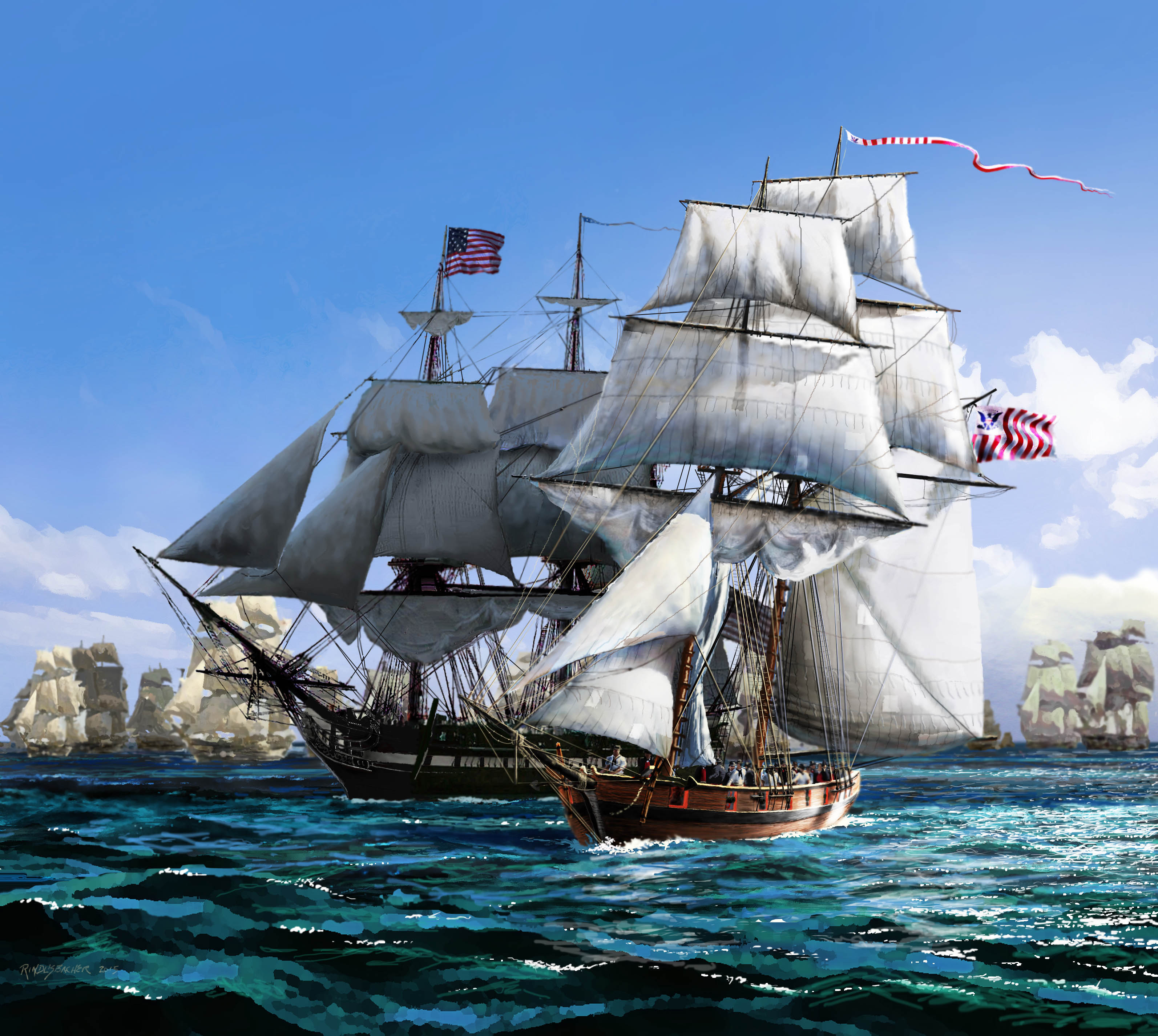
Illustration of Revenue Cutter Eagle. (Picture by marine artist Peter Rindlisbacher)

American successes during the Quasi-War were due, in no small part, to the successful employment of private mariners, the Revenue Cutters (the precursor to the U.S. Coast Guard), and some assistance from the Royal Navy.28 Throughout the course of the conflict, eight Revenue Cutters were at sea in support of naval operations along the southern coast and throughout the West Indies.29 These Cutters had a significant impact, taking eighteen of the twenty-two prizes captured by the United States between 1798 and 1799.30 Meanwhile, Letters of Marque authorized civilian mariners to act as surrogates to the Navy.31 Again, the impact was significant and immediate. In 1798 there were 452 civilian mariners armed in defense of the United States; that number rose to 933 the following year.32 The cooperation among these various maritime entities buoyed a fledgling U.S. Navy, setting the tone for a pattern of future successful engagements. The successful campaign waged by these maritime forces laid the groundwork for the peaceful resolution in 1800 of the Quasi-War.

Maintaining Maritime Superiority: Lessons from the Quasi-War

Though not explicitly mentioned, a variety of recent strategic documents on maritime superiority draw upon French and U.S. experiences during the Quasi-War. Three broad lessons from this period in early-American naval history become apparent: maritime superiority is not a permanent condition; maritime superiority requires broad strategic foresight across political, military, and civilian channels to prepare and design; and interoperability across the sea services is critical to the establishment and maintenance of maritime dominance – a powerful navy alone is not enough. These lessons, learned during the United States’ first military engagement with a foreign power, offer relevant guidance for military planners designing a maritime strategy for maintaining superiority. 

First Lesson: Maritime Superiority is not a Permanent Condition

French experiences in the Quasi-War illustrate that maritime superiority is perishable. The CNO’s paper, A Design for Maintaining Maritime Superiority, implicitly acknowledges a specific lesson the French learned during the Quasi-War – without a proactive approach and strategic foresight, maritime superiority fades.33 The French Navy, stretched thin by years of fighting with the British, faced a United States that had awoken to the reality that its maritime superiority was as critical to its national security as its land borders. In addition, the turbulence of revolutionary France was not kind to the French Navy. Besides the financial hardships resulting from the chaos of revolution, purges, and resignations had deprived the French Navy of many of its best officers. The cardinal defect, therefore, was not the French ships, but manning and morale. Moreover, the Royal Navy, adept at keeping the French Navy bottled up in port, allowed little opportunity for training beyond port.34

By 1798, the French Navy was undisciplined and poorly trained, with estimates suggesting they were over 8,000 men short by 1799.35 Therefore, the over-tasked French Navy faltered and despite the French enjoying a numerical advantage and better-outfitted ships, the U.S. Navy –  a few years old and with less than a dozen ships to its name – was able to repulse the French until they turned back to European matters. These manning and training shortfalls limited the French Navy’s ability to effectively prosecute the Quasi-War and the continued expansion of their engagements only served to exacerbate these underlying issues. The decline in capabilities, when combined with an expansive geographic footprint and steady operational tempo, degraded the French Navy’s ability to maintain maritime superiority. These limitations would continue into the Napoleonic Wars and cost the French Navy dearly.36

Currently, there is a surge in maritime power across the world. In the Asia-Pacific, China’s increasingly powerful and capable maritime capability allows for an aggressive policy in the region.37 In part a reaction to China’s maritime polices, the remaining countries of the Asia-Pacific region are upgrading, re-aligning, and expanding their maritime domain capabilities.38 The Indian Ocean Region and the Middle East are experiencing similar transformations in the maritime domain, led by India and Iran respectively.39 Meanwhile, the Russian Navy is flexing its might throughout the aforementioned regions, as well as the seas of Eurasia and the Pacific and Atlantic Oceans. The United States would do well to look at the French Navy’s experiences during the Quasi-War and realize that capacity is not the only factor in maintaining maritime superiority, and without the proper manning, training, and equipping that maritime superiority will be short-lived.

To echo Admiral Richardson, if the U.S. Navy fails to recognize and adapt to the evolving maritime security environment it risks falling behind competitors.40 Today, there are more competitors than ever before and the United States would do well to look back to the waning years of the 18th century for guidance. As the French fleet stretched itself thin across numerous theaters and campaigns, the Americans were re-establishing theirs with a very specific objective – defending their maritime domain. Conversely, the French, depleting their resources in an extended war with Britain and dealing with domestic turmoil, were stretched thin and unable to marshal the strength necessary to dominate the United States Navy in the Western Atlantic. Therefore, while the French Navy of the 1790s was superior to the U.S. Navy, the events of the Quasi-War illustrated that maritime superiority is a perishable advantage, even more so when not given the proper attention.

Second Lesson: Maritime Superiority Requires Broad Strategic Foresight

 The Quasi-War illustrated that achieving and maintaining maritime superiority takes a composite of political willpower, military planning, and civilian ingenuity. Despite the United States Navy’s successes during the Quasi-War, it took years for the United States to commission the six frigates authorized by the Naval Act of 1794, which put victory in jeopardy. Even with the commissioning of the six frigates, the U.S. Navy was still a limited naval power compared to France. These limitations were only overcome by the integration of Revenue Cutters and privateers. Without these developed maritime services, the United States would have had little recourse against French transgressions. In The Future Navy, the CNO stresses the importance of having the right navy in the right place for our decision makers. Although a perceptive understanding of geopolitics can allow for some preventative measures, a navy being in the right place is primarily a reactive measure. Having the right navy though, is a proactive process – there exists a critical distinction between acting now versus then. As the CNO notes, to remain competitive, “we must start today and we must improve faster.”41 This strategic foresight needs to be broad and encompass political, military, and civilian dimensions; it needs to account for the time and effort it takes to fund, design, commission, and deploy new ships; it must account for the geopolitical situation and the status of enemies and allies alike; and it must acknowledge the time and funding necessary to sustain the material condition and readiness of the existing fleet.

When post-revolutionary America began construction of the original six frigates, there was intense debate surrounding the need for a standing navy. While provocations from Barbary pirates set in motion the re-constituting of the U.S. Navy, it took intense French harassment of merchants to rally enough support to actually build, train, and equip that navy. Four years later, those frigates would form the backbone of the maritime campaign against French provocations. Had it not been for the prescience and practical leadership of Presidents Washington and Adams, civilian leaders like Secretary of the Navy Benjamin Stoddert, and shipbuilders like Joshua Humphreys, the United States would have been unable to counter French provocations. Conversely, the French engagement of the United States during the Quasi-War was a sideshow that the French Navy was not prepared to effectively prosecute. The French government (known as the Directory during the Quasi-War) was engaged with the British at sea and revolutionaries at home and thus was unable to mount an effective strategy across political, military, and civilian lines. 

In a time of continued budget restraints and political divisiveness, leaders must take a holistic approach when assessing the cost-benefit analysis of maintaining a large Navy. As historian William Fowler writes about the Quasi-War, “[it is estimated] that cost savings to the American merchant marine exceeded the U.S. Navy’s costs during the war.”42 In short, doing nothing can cost more than doing something. Leaders must realize that maintaining maritime superiority requires funding, design innovation, and a well-equipped workforce in addition to an operational strategy that effectively allocates naval resources.43 Anything less risks ceding the maritime superiority that the United States has enjoyed for decades. 

Third Lesson: The U.S. Navy Needs to Work Closely with the Other Maritime Services

Borne of the first two, the last lesson concerns the need for cooperation across the sea services. The U.S. Navy performed admirably during the Quasi-War, but it was their effort combined with those of the privateers and Revenue Cutters that lead to victory.44 These entities – though transformed over the intervening years – still represent the formal elements of the United States’ maritime security infrastructure and their ability to work together proved critical during the Quasi-War. Across the spectrum of maritime operations, the increased integration of these maritime entities would enhance the nation’s ability to maintain maritime superiority.

The sheer diversity of forces working at play in the contemporary maritime security environment necessitates that the U.S. Navy, Marine Corps, and Coast Guard continue working toward a cooperative and integrated effort to support national objectives. Such interoperability proved critical during the Quasi-War and will prove useful again. As noted in the National Strategy for Maritime Security, “maritime security is best achieved by blending public and private maritime security activities on a global scale into an integrated effort that addresses all maritime threats.”45 There is promise in this increased integration. A Cooperative Strategy for 21st Century Sea Powera joint U.S. Navy, Marine Corps, and Coast Guard strategy – details how to “design, organize, and employ the Sea Services in support of our national, defense, and homeland security strategies.”46 Shortly afterwards, the U.S. Navy and Coast Guard expanded on the guidance, delivering The National Fleet Plan: A Joint United States Navy and United States Coast Guard, which details steps taken to identify opportunity for interoperability in areas of logistics, warfighting, and strategy.47 Likewise, the Marine Corps after years of fighting land wars, is re-engaging with its amphibious roots.48 The interlocking relationships these documents envision are critical for maintaining maritime superiority.
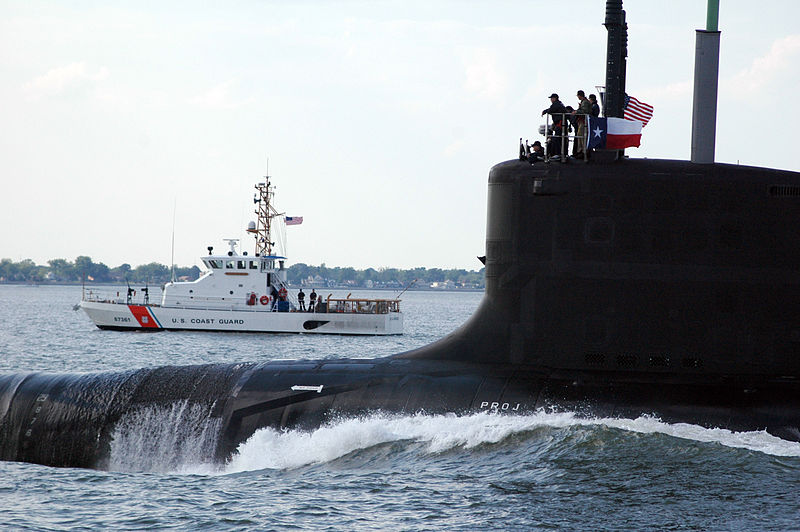
Newport News, Va. (May 17, 2006) – The Pre-Commissioning Unit Texas (SSN 775) sails past the Coast Guard cutter Sea Horse (WPB-87361). (U.S. Navy photo by Photographer’s Mate Airman Apprentice Patrick Gearhiser)

The relationship between the U.S. Navy, Coast Guard, and civilian mariners would do well to get “back to basics” by becoming acquainted with the lessons from the days of the Quasi-War. Then, like now, there is a shared mission that transcends the boundaries between civilian and military and between the various services. In the run up to the Quasi-War, the complexities of domestic politics and the global order made interoperability necessary and practical. Today, the same situation exists. Focusing on the strengths and limitations of the individual entities allows for better planning and efficient use of limited resources.

Conclusion

The world for all its changes bears a number of similarities to the late 18th century. Maritime shipping still represents the backbone of the U.S. economy  and by extension – its power and influence; contested waters still abound despite centuries of legal and practical solutions to remedy ambiguity; and the United States is again searching for that balance between neutrality and strength. As Seth Cropsey, former undersecretary of the Navy wrote, “Wide-ranging sea power is not so much an instrument of force although that it is as a condition of stable commerce, effective diplomacy.”49 It is this understanding that underpinned the establishment of the modern U.S. Navy and Marine Corps during the waning years of the 18th century as the United States faced a conflict that it was ill prepared to fight. Then, as now, geopolitics rarely waits for nations to get ready. You go to war with the forces you have. 

LT David M. Andre is a former Intelligence Specialist, and has served as an Intelligence Officer and Liaison Officer assigned to AFRICOM. He is currently serving as N2 for COMDESRON SEVEN in Singapore. He can be reached at dma.usn@gmail.com.

The views expressed above are the authors’ alone and do not reflect the official views and are not endorsed by the United States Navy, the Department of the Navy, the Department of Defense, or any other body of the United States Government.

References

[1] U.S. Constitution, Article I, Section 8, Clause 1.

[2] Yale University. “The Proclamation of Neutrality 1793.” Accessed 01 June 2017. http://avalon.law.yale.edu/18th_century/neutra93.asp.

[3] George Washington’s Mount Vernon. “The Naval Act of 1794.” Accessed June 15, 2017.  http://www.mountvernon.org/education/primary-sources-2/article/the-naval-act-of-1794/.

[4] United States Department of State. “John Jay’s Treaty, 1794-95.” Accessed June 4, 2017. https://history.state.gov/milestones/1784-1800/jay-treaty.

[5] Mariners Museum. “The Quasi-War with France 1798-1800: The Jay Treaty.” Accessed June 12, 2017. https://www.marinersmuseum.org/sites/micro/usnavy/05/05b.htm; https://history.state.gov/milestones/1784-1800/jay-treaty.

[6] United States Senate. “Uproar of Senate Approval of Jay Treaty.” Accessed June 12, 2017. https://www.senate.gov/artandhistory/history/minute/Uproar_Over_Senate_Treaty_Approval.htm.

[7]Treaty of Amity and Commerce Between The United States and France; February 6, 1778, http://avalon.law.yale.edu/18th_century/fr1788-1.asp.

[8] Donald R. Hickey, “The Quasi-War: America’s First Limited War, 1798-1801,” The Northern Mariner/le marin du nord, XVIII Nos. 3-4, (July-October 2008): 69.

[9] Larry J. Sechrest, “Privately Funded and Built U.S. Warships in the Quasi-War of 1797–1801,” The Independent Review, v. XII, n. 1, Summer 2007, ISSN 1086–1653, 2007, pp. 101–113.

[10] Ibid.

[11] United States Department of State. “The XYY Affair and the Quasi-War with France, 1798-1800.” Accessed June 13, 2017, https://history.state.gov/milestones/1784-1800/xyz.

[12] Carol Berkin, A Sovereign People: The Crises of the 1790s and the Birth of American Nationalism (New York: Basic Books, 2017), 204.

[13] Ibid.

[14] Naval History and Heritage Command. “United States Navy.”  Accessed June 10, 2017, https://www.history.navy.mil/research/library/online-reading-room/title-list-alphabetically/e/founding-of-department-of-the-navy.html.

[15] Alchetron. “Original Six Frigates of the United States.” Accessed June 14, 2017.  https://alchetron.com/Original-six-frigates-of-the-United-States-Navy-3900375-W.

[16] Leonard Guttridge and Jay Smith, The Commodores (New York: Harper and Row, 1969), 22; Papers of the War Department: 1784 to 1800. “War Office orders for the pilot charged with delivery of dispatches for the Ship of War Ganges.” Accessed June 15, 2017. http://wardepartmentpapers.org/document.php?id=26708.

[17] James J. Farley. To Commit Ourselves to our Own Ingenuity: Joshua Humphreys Early Philadelphia Shipbuilding. https://earlyphiladelphiashipbuilding.wordpress.com/chapter-5-from-high-tide-to-low-tide-1798-1801/. 

[18] Carol Berkin, Christopher Miller, Robert Cherny, James Gormly, Douglas Egerton,Making America: A History of the United States, Volume 1: To 1877, (Cengage Learning, 2007), 178.

[19] David Petriello. Military History of New Jersey. (South Carolina: the History Press, 2014), 97.

[20] Benjamin Brown French, John B. Colvin. Laws of the United States of America: From the 4th of March, 1789, to the [3rd of March, 1845] : Including the Constitution of the United States, the Old Act of Confederation, Treaties, and Many Other Valuable Ordinances and Documents; with Copious Notes and References, Volume 5.

[21] Ibid.

[22] James A. Wombwell. “The Long War Against Piracy: Historical Trends,” Occasional Paper, Combat Studies Institute Department (2010): 67. http://www.dtic.mil/dtic/tr/fulltext/u2/a522959.pdf. 

[23] Ken Hudnall, The Northwoods Conspiracy, (Grave Distractions Publication, 2011).

[24]Hampton Roads Naval Museum. “Pirates and Privateering in the New World.” Accessed June 18, 2017, http://hamptonroadsnavalmuseum.blogspot.sg/2016/07/pirates-and-privateering-in-new-world.html.

[25] United States Office of Naval Records. “Naval Documents Related to the Quasi War between the United States and France.” (GPO: 1935), 198.

[26] Yale University. “France—Convention of 1800: Text of the Treaty.” Accessed June 22, 2017.  http://avalon.law.yale.edu/19th_century/fr1800.asp.

[27] American History Central. “Quasi War.” Accessed June 20, 2017.   http://www.americanhistorycentral.com/entries/quasi-war/.

[28] James C. Bradford. America, Sea Power, and the World (United Kingdom: John Wiley & Sons, 2015): 31.

[29] United States Coast Guard. “The Coast Guard at War.” Accessed June 22, 2017. https://www.uscg.mil/history/articles/h_cgatwar.asp. 

[30] Ibid.  

[31] Gregory J. Sidak, “The Quasi War Cases and Their Relevance to Whether Letters of Marque and Reprisal Constrain Presidential War Powers,” 28 Harv.J.L.& Pub. Policy 465 (Spring 2005) 471- 473.

[32] American Armed Merchantmen, 1798, and American Armed Merchantmen, 1799-1801, in Knox, Quasi-War, 2: 147-97, and 7: 376-438.

[33] John Richardson, Adm. A Design for Maintaining Maritime Superiority (January 2016).  http://www.navy.mil/cno/docs/cno_stg.pdf.

[34] Niklas Frykman . Seamen on Late Eighteenth-Century European Warships.  (2009), 84. Internationaal Instituut voor Sociale Geschiedenis.

[35] Ibid.

[36] David Gates, The Napoleonic Wars 1803-1815, (New York: Random House, 2011)

[37] Jeremy Page, “ The Rapid Expansion of China’s Navy in Five Charts,” Wall Street Journal, April 10, 2015,  https://blogs.wsj.com/chinarealtime/2015/04/10/five-charts-that-show-the-rapid-expansion-of-chinas-navy/.

[38] Geoffrey Till and Jane Chan, Naval Modernisation in South-East Asia: Nature, Causes and Consequences, (United Kingdom, Routledge, 2013): 113-116.

[39] Anit Mukherjee, C. Raja Mohan, ed., India’s Naval Strategy and Asian Security (Routledge, 2015); Shaurya Karanbir Gurung, “China’s Naval Efforts May Prove Wanting in Front of Indian Navy’s Experience,” India Times. http://economictimes.indiatimes.com/news/defence/chinas-naval-efforts-may-prove-wanting-in-front-of-indian-navys-experience/articleshow/57575868.cms.

[40] Yasmin Tadjdeh, “Navy Focuses on Maritime Superiority in Complex World,” National Defense, February 1, 2016.  http://www.nationaldefensemagazine.org/articles/2016/1/31/2016february-navy-focuses-on-maritime-superiority-in-complex-world.

[41] John Richardson, Adm., The Future Navy White Paper, 2017. http://www.navy.mil/navydata/people/cno/Richardson/Resource/TheFutureNavy.pdf.

[42] William M. Fowler Jr.,  Jack Tars and Commodores: The American Navy, 1783–1815 (Boston: Houghton Mifflin, 1984): 41–42.

[43] Jessie Riposo, Michael E. McMahon, James G. Kallimani, and Daniel Tremblay, “Current and Future Challenges to Resourcing U.S. Navy Public Shipyards,” RAND Corporation (2017): Xviii. http://www.rand.org/content/dam/rand/pubs/research_reports/RR1500/RR1552/RAND_RR1552.pdf.

[44] United States Coast Guard. “Cutters, Craft & U.S. Coast Guard Manned Army & Navy Vessels.” Accessed June 23, 2017, https://www.uscg.mil/history/webcutters/cutterlist.asp.

[45] United States Department of State, The National Strategy for Maritime Security. September 2005, 13. https://www.state.gov/t/pm/rls/othr/misc/255321.htm.

[46] A Cooperative Strategy for 21st Century Sea Power. March 2015,  https://www.uscg.mil/SENIORLEADERSHIP/DOCS/CS21R_Final.pdf. 

[47] The National Fleet Plan: A Joint United States Navy and United States Coast Guard http://www.navy.mil/strategic/Fleet_Plan_Final.pdf.

[48] Otto Kreisher, “US Marine Coprs is Getting Back to its Amphibious Roots,” Defense Media Network, November 8, 2012, http://www.defensemedianetwork.com/stories/return-to-the-sea/2/.

[49] Seth Cropsey, MAYDAY: The Decline of American Naval Supremacy (New York: The Overlook Press, 2014).

Featured Image: CHARLESTOWN, Mass. (April 5, 2012) USS Constitution is moored to her pier at night in the Charlestown Navy Yard. Constitution is the oldest commissioned warship afloat and welcomes more than 500,000 visitors per year. (U.S. Navy photo by Sonar Technician (Submarine) 2nd Class Thomas Rooney/Released)

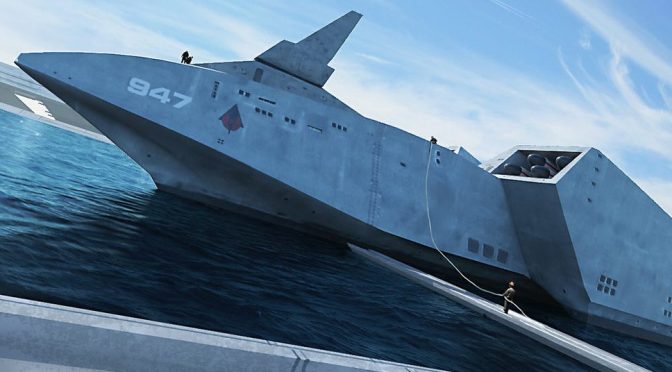
Xiangliu

Fiction Topic Week

By Evan D’Alessandro

The task force was transiting a lightly-used shipping lane, moving to an exercise in response to the tensions that always seemed to pop up. Due to the collisions between Navy and civilian ships in recent years, Navy policy mandated the task force turn on their AIS transponders, broadcasting their location for all to see. For those aboard the ships it was a bright sunny day for the exercise to begin, the Pacific weather lovely as always seen in movies.

Lurking close by in the shipping lane were two innocuous cargo ships, with their containers stacked high, like the traffic one sees going though the Straits of Malacca. But these were no ordinary cargo ships. Their crews had been specially embarked days before, and had anyone noticed, they had military men on them. If any of the dockyard workers had cared to say anything, their better judgment stopped them. Onboard the special crews noted the turning on of the AIS transponders. Within several minutes they had the Club-N’s in their shipping container launchers prepped and ready, the data from the AIS being fed into the targeting chips of the missiles. The order to fire was given, and the peaceful day was shattered with the roar of the sea skimming missiles leaping out of their launchers.

The first missile launched at that time, unlike its compatriots, rent the sky in two. Within the first few seconds of its life free of its launcher its trajectory threw it upward to make it visible to radar. The radars onboard the task force immediately recognized the missile as a Club-N, its body a clear contrast to the blue sky surrounding it.

Onboard each ship in the task force, smuggled in by contractors by flash drives, was a virus waiting for this moment. In the first few milliseconds all the task force’s early warning alarms were shut off by the virus, so fast that the crewmen standing watch on the bridge wouldn’t have noticed even if they had been paying attention. At the same time, hours of previous uneventful sensor data was fed back to the task force’s radars by the virus. The watch was still blissfully unaware of what was to happen. Outside the weather was still clear and beautiful.

While in port a spy had planted modified aircraft engine repair micro drones onto the ships in the task force. This type of drone was commonly used to fix miniature scrapes and dings in an aircraft engine, but these instead had been adapted to destroy. They carried tiny files, and their bodies contained explosive. They slowly worked away at the Phalanx CIWS’s onboard, their tiny files chipping away at their wiring and electronics. Their task done the drones hid and waited, their tiny explosives standing ready to disable the Phalanx CIWS’s had they not done their work properly.

Two days previously the task force had transited though an area that was being prospected for magnesium nodules. The task force’s sonars picked up several prospecting drones and their mother ship in the area, but they saw no drones come close to the task force. Another set of drones they had failed to pick up had been converted. Taking off the shelf magnesium prospecting drones, and utilizing a new stealth anechoic coating developed in Singapore, these drones were almost invisible. Armed with torpedo warheads, these drones had sidled up to the ships and latched on like a remora, unnoticeable unless one was to dive below the ship.   

The task force’s first warning of the Club-N’s was right before they hit. The Phalanx’s CIWS’s that hadn’t already been totally disabled tried to move into action, but at best spit out a thin blanket of misdirected fire before the micro drones detonated, and finished it off. Undaunted by the minimal fire put out by the task force, the Club-N’s closed to contact. Their explosions ripped through hulls and lifted ships out of the sea. The water turned a frothing brown and ships succumbed to the onslaught. The commanders still alive were unable to grasp the situation as it had happened so fast. The crewmen on deck could see their task force dying around them.

As the explosions rocked the ships, the converted magnesium prospecting drones felt the tremors and activated. They had spent the past two days aurally locating the engine room of their respective ships. They silently detached and started their motors, matching speed with their ships, moving into position right beneath the sounds of working machinery. Then they detonated. The gas bubble expanded faster than the speed of sound, ripping apart hulls. From above it looked like Charybdis was trying to consume each ship.  Then just as sudden as the bubble arrived, it collapsed, driving water into the broken hulks of what had once been ships.

The task force’s submarine commanders below had only seconds more to react. The magnesium prospecting drones had been too noticeable to use against the submarines in the task force, but another type of drone did the trick. The aircraft engine repair micro drones that had been introduced to the ships had also been inserted into the submarines by a turncoat. Slowly some disabled the torpedoes, abrading away what they needed to with their small files over the course of days. Others sat near the nuclear reactor, biding their time. As they felt the submarine rock from the explosions above, they moved into their final positions and they too detonated. Their tiny bodies contained not enough explosive to damage the nuclear reactor itself, for that was not their target, but more than enough to cause a chaos of burst pipes and destroyed machinery. Onboard fluid rushed from pipes as alarms rang. Had it happed in peacetime it would have been a catastrophe, but what was to come was worse.

For the two Chinese submarines trailing the task force, the explosions were the signal. Both Type 93’s launched several torpedos that rushed through the water like sleek fish. The torpedoes had no problem homing in on the cacophony of noises coming from the task force’s subs, for they sounded like a band in an empty auditorium. The sonar operators onboard each boat watched the torpedoes converge, and then hit. The horrible sounds of the hulls rupturing were heard, the pressure of the sea claiming the submarines as its own. As the horrible shrieks subsided, the fight below the sea finished. 

One of the attack submarines that had been trailing the task force surfaced amid the carnage. The submarine had been specially modified for this mission and released a swarm of drones that lazily skimmed over the wave tops. Each drone was equipped with a high-resolution camera capturing footage of the victory. For the government back home the footage was worth its weight in gold. Wars were no longer only matters of weapons, but also of information.

In Hawaii it was yet another beautiful day in paradise. Far away the cyber attack continued, feeding falsified data into the Navy’s systems. For the sailors in Pearl Harbor, the task force was still steaming along and was soon to be clear of the shipping lane. To the rest of the world, the war wouldn’t begin for another six hours…

Evan D’Alessandro is a student at Luther College studying astrobiology, data science, and international relations. He enjoys military history and policy debate, and aspires to become a naval intelligence officer in the future. He can be contacted at  evan.dalessandro@gmail.com.

Featured Image: A New Beginning by P C (via Art Station)

North of Norfolk

Fiction Topic Week

By Hal Wilson

“Is Jim in?” he asked, red-faced and dripping rain.

The front door underlined his question, slamming shut as abruptly as he had arrived.

“Hello Carl!” the kindly, old receptionist beamed. The question was redundant, but politeness demanded it; they both knew Carl was on-site. He was one of their few staff not already called up for the front. “What’s the matter?”

“Call him up, will you? There’s something urgent.”

She frowned – picked up her phone and dialled Jim’s line. He could hear the internal line bleep patiently, once, twice, three times… It ceased as the connection was made.

“Got a visitor,” she explained, “it’s Carl, something urgent for you… OK.”

She set the phone down.

“He’ll be up in a moment,”

Carl paced by the door, as if that could make time pass more swiftly.

He was an ageing man; hiding a modest paunch and greying hair. But he had an ex-rugby prop’s broad frame, and energy enough that people mistook him for greater youth. The receptionist, watching him, knew what was on his mind: the new arrival to town. Everyone was talking about it.

“Carl!” boomed a voice from the back of the room.

It was Jim, smiling as he heaved open a back door. Machine-sound and solvent smells followed; the essence of grinding metal and chemical cleaners; the natural home for maritime engineers like Jim. Brushing strips of swarf from his coverall, Jim shook Carl’s meaty paw.

“How’s it been in the sales team? Keeping busy?”

“How do you like the idea of some war work?” Carl replied.

“We already have contracts with…” Jim paused. “Wait. You mean they need…”

“They do,” Carl interrupted, taking Jim by the arm, “come on.”

Outside, the rain assaulted in thick drifts from the leaden sky. They hurried past the storage yard, where coffee-coloured steel tubes were stacked like so much timber. Soaked to the skin, they bundled into Carl’s car.    

“Any details about the job?” Jim asked, checking for his old-style pen and paper. The car sputtered alive, and they set off down the rain-slick road, heedless of the speed limit.

“Nothing yet,” was the answer, “I’m no good with technicalities anyway.”

“True enough,” Jim agreed.

They crossed the Great Ouse River on the back of a Victorian bridge, crenellated with iron gargoyles weeping in the deluge. The broad, brown waters of the river blurred by, giving way to the town along its banks. Here huddled lengths of terraced homes, lights burning in their windows as they waited out the storm. Much like the rest of these isles.

“How’s it been, anyway?” Jim asked, fumbling for small-talk with some engineers, his social skills left something to be desired.

“What? I only saw you last week.”  

“Well, just asking…”

“I’m fine,” Carl sighed, relenting, “just worried about the boys.”

“Still no word?” Jim ventured cautiously. The news from the east was grim. Estonia: gone, and with it some thousand British soldiers. Germany: ‘de-escalating’ – a betrayal, garbed in Teutonic politeness. All the while, Kaliningrad still held out.

Carl said nothing.

They drove on, through the heart of the old hanseatic town.

Here, they passed the Elizabethan gates of ochre ashlar, which once resisted Cromwell. There, they passed the town hall, built in the days of Drake. It had the aspect of a cathedral and a skin of chequered flint, declaring SEMPER EADEM above its door. Cobblestones rumbled beneath their wheels, and the narrow streets narrowed yet more until, at last, the river reappeared before them.

Carl pulled up in the lee of the old Customs House, sandstone-chiselled with all Wren’s hallmarks. Alabaster-capped by its Roman cupola, it watched them anxiously.

“Let’s go,” Carl directed, braving the rain once more.

The downpour took them eagerly, hungrily, like a lusting lover; they could only shiver as sharp winds embraced them also, sweeping in off the Wash. Together they hustled to a nearby quay, frantic as they rushed down its length. At the far end, they scrambled aboard a waiting boat.

“Glad you boys could make it.”

It was Steve, the town ferryman, cocooned in waterproofs and greeting them at the rail.

Steve shook them by the hand (for they were each old friends), and they felt the warmth in his ever-calloused palms; saw the glint of eagerness in his hooded eyes. His craft was an open-sided, flat-bottomed thing, ideal for these tidal flats. Without another word, Steve got them underway. His two passengers could only shudder and stamp their feet – the wind was even fiercer down on the water.

And they had a fight on their hands. The ferry would normally glide to its landing stages on the easy tides of a river that – as befitting its name – often simply oozed. But now it braved the face of the afternoon tide. The waters were racing in with express-train ferocity, while miniature whitecaps frothed and broke amid the tawny waters. At the wheel, Steve simply stood like a statue, sharp eyes peering for detail. Stamping their feet, Carl and Jim could only curse the north wind, grabbing stanchions as the ferry bellied against every wave.

Suddenly, from starboard, motion drew their eyes. A pair of black-winged Cormorants cruised carelessly by, skimming scant centimetres above the rushing waters. The two passengers followed them with their gaze, taking in the town as the birds flew upstream: rain-slick roofs gleamed like gemstones as the sun struggled through low clouds above. Under each patch of shining slate peered the ivory-white outlines of windowpanes, each one tracking them with bated breath. Farther upstream, the port’s grain silo was half-swallowed by the concrete cloud, leaving a corrugated stump to the eye.

The town was a good place for the soul, by all accounts. But it was also scared.

Anyone looking upriver could understand why. Garbed in rusting blue, moored alongside the port, was the SCOTS KESTREL. It was just one of the grain bulkers marooned at the town over the last weeks. Beyond the port’s entrance lock were another two docks. Hidden behind the agribulk sheds, both were filled to capacity with millions upon millions in lost revenue.

There were steel-carriers, timber-ships and coal-haulers. All languished immobile. Each was waiting. Waiting – either for the order to convoy or for their insurers to resume trading. Whichever came first; as their old Baltic routes were best avoided for now.

Just as concerning was the newest arrival. It was anchored mid-river for lack of harbour berths.

Its flanks were gunmetal grey, with a bladelike bow and squat bridge amidships. Immediately aft was the ship’s mast, complete with swirling radar and hedgehog-spine aerials. Farther aft were crane assemblies dangling fast boats – and, behind them, a vacant helicopter pad. It flew the White Ensign, to be sure, but the ship gave no confidence. Not for Carl, at any rate.

It was shot through with rust. It was small. And it was alone. Carl could spot only one weapon aboard. It was some trifling pop-gun cannon, mounted on an open platform.

Insane, he decided. Who would sail in that thing?

“Almost there now,” Steve announced, rousing Carl from his frigid musings. Ahead, he noticed, the port-side crane was stirring at their approach, lowering one of the ship’s boats into the river. A member of the ship’s company stood astride, waving for them to approach. Steve angled his ferry until it was close alongside, gesturing with a flick for Jim and Carl to go.


Lieutenant Commander Hart breathed deep, closing his eyes for a brief moment.

The Russian had made it far too close.

He could still see the torpedo track in his mind, still hear the collective gasp of his bridge crew as it detonated late – on the far side of their helpless ship. Perhaps some Russian technician got sloppy. Perhaps some electronics failed at that one critical moment. Either way, terror had laid a dread hand on Hart’s shoulder, only to pull away. He exhaled, trying to harness this emotion. He would have to inspire some terror of his own in the P8 sub-hunters who dropped the ball. The useless pricks.

And then there was Keegan, the poor bastard. But that was something else entirely.

The bridge deckhead felt somehow oppressively low; the air itself seemed lifeless, as if robbed of its oxygen. He had the LED lighting off for now – its glare brought on headaches after enough hours – leaving the space with the half-dead ambience of the cloudy sky outside. But with the ship lying at anchor, its engines were still. Their comms, for now, had ceased their babble. It was quiet, at last. Praise God, it was quiet.

In the momentary peace, tea mug in hand, Hart idly pursued some mental mathematics.

Five day patrol – five times twenty-four: one hundred and twenty.

Deduct sleep – five times two, or three? Call it two-point-five… twelve-point-five.

And the shakeup at Pompey? Let’s say two times twenty four, minus six… forty-two.

One hundred twenty plus forty-two… minus, what was it? Twelve point five? Bloody hell… 

Hart rubbed at his eyes, despairing. Try as he might, he simply couldn’t finish his mental gymnastics. Even so, it confirmed what he already knew: this endurance was a young man’s game.

But then, if not him to command this ship, then who?

All his friends in the fleet, men and women he had known since the early days at Dartmouth, were already committed. Each and every one.  Every colleague he knew, through almost two decades in the Service, was either deployed or holding down countless shore jobs in the absence of the rest. There were too few hulls, and not enough crews for those they had anyhow. The last Hart saw, one of the old Type 23s was still by Portsmouth’s No. 1 Basin, just waiting for hands to sail her.

“Sir,” came a voice, stirring him back to life. It was Lieutenant Asher, his second-in-command.

“Number One.” He hoped she had missed his moment of weakness.

“The civilians are on the water,” she reported, “we should have them on board shortly.”

“Good. Ensure they only see the engineering spaces. And avoid talking about Keegan, if you can.”

“Of course, sir.” Asher understood the subtext. Don’t let them realise how strung out we are.

“And when you’re done with them, report back to me. We need to discuss magazine access.”

Asher saluted and exited onto the bridge wing. Heading aft, she drew her weatherproof smock close against the rain. Hart was tired – she had seen through his façade at once.

It was no surprise. The older generations avoided the EverReady stim-pills that kept her going longer. She spat in despair. She needed Hart at 100 percent: her own seagoing experience was nowhere close to his, and she knew it. It was down to him that they survived the last patrol – barely – but his reserves were spent.

Just like Keegan.

“Keep taking the bloody pills,” she muttered.


As soon as Carl and Jim were aboard the ship’s fast boat, the sailor waved for the crane operator to hoist them back up. Unsteady, the two bent their knees and hoped to save themselves embarrassment. The sailor regarded them as if they were drunk.

“You the engineer?” he asked, raising his voice above the wind. Carl noticed the sailor was young: incredibly young. There was no hiding the boyish face, despite his easy pose and deep voice.

Almost the age of my boys, he realised. Jim nodded in reply to the sailor.

“Lieutenant Asher will take you in,” the boy replied.

He pointed to a figure waiting at the ship’s rail, wrapped in a foul-weather smock. Carl and Jim looked sidelong at each other as the hoist thunked their boat back into place.

“Gents,” the figure called, “follow me.”

Jim started as he realized the figure was a woman. She regarded them with disdainful black eyes, almost as severe as the bun tying back her auburn hair.

“Are you Lieutenant Asher?” Carl asked, pretending to ignore his friend’s awkwardness.

“Come on,” she sighed, “time is a factor.”

They hurried along the waterlogged upper decks, ducking through an awkward doorway. Mercifully, the wind remained outside. But the ship’s narrow passageways were bathed in the clinical glare of LEDs, as though they were entering a surgeon’s operation. Ahead, Asher was already racing down the ship’s vertiginous ladder. Unsure of themselves, the two men lingered at the top. The treads were narrow, slickened by the raindrops from Asher’s passage. The climb was slow and treacherous; more than once, Carl felt he was about to slip.

Together below, Asher led them deeper into the ship’s guts. The engine room, lined with silvery heat-cladding, was deserted; its single gangway was flanked by two van-sized diesel blocks. Carl looked about himself, confused by light-studded consoles; looming extractor vents; labyrinthine pipes swirling around the engines.

“Here,” Asher pointed, “this is what we need you checking out.”

Looking over Jim’s shoulder, Carl understood little of what he saw.

“What, the shaft generator?” Jim asked, peering closer.

“No, that. That thing – there.”

Carl looked across at Asher, confused. How can she not understand her own machinery?

“Excuse me, Lieutenant, are you not the onboard engineer?”

Asher paused, hesitant. Crouched on his haunches, Jim looked up at her in curiosity.

“No. Keegan, our MEO – Marine Engineering Officer… he fell. Broke his neck where we came down earlier.”

“Good god,” Carl gasped, thinking back to his own unsteady climb, “I’m so sorry to hear.”

Asher nodded thanks.

“We suffered some damage in our last patrol,” she explained, “a shockwave from close in on the port side. It’s caused some damage to our propulsion. But Keegan’s deputy had to stay ashore with some kind of duodenal, and we don’t have our usual complement of senior technical rates. So, without Keegan, we don’t know how to fix it. At this rate, we’ll be doing bare steerageway all the way home.”

“Where’s the Machinery Control Room? Have you checked the switchboards, the DC links?” Jim asked, looking around.

“Yes, our artificers did thorough tests. No wider system faults.”

Producing his pen and paper, Jim scribbled urgent notes.

Carl, no engineer himself, only loosely understood what was being discussed. He watched as Jim rolled his sleeves and made closer, painstaking observations. Minutes passed as he gave running commentary to Asher – as if she could understand, either.

“The shaft pedestal is OK, by the looks of things… Maybe it’s the flanges… No, no, it’s misalignment! Maybe from the shockwave you mentioned.” He span around, locking eyes with Asher.

“Look, I’m eyeballing it here, but I reckon the jacking screws are misaligned. That’s going to overload your bearings. But we may have caught it before they need replacing.”

Asher glanced at Carl, out of her depth.

“What are our next steps?”

“I want a second opinion,” Jim said, “let me go talk to my guys and we’ll get you a proposal in a few hours. I reckon we can replace the jacking screws for a temporary fix. Then it’s over to your guys in Pompey for a deeper look. The shockwave may have caused all sorts. Hull flexing, you name it.”   

“How long?”

“Hard to say. But we’ve got stocks on hand, what with all those docked ships deferring MRO work.”

Carl smiled, proud for his friend. Jim was in his element.

And, better yet, it was another sale to boost Carl’s own quarterly numbers.

“Lieutenant Asher,” he beamed, “sounds to me like you’re in luck.”


Lingering at the bridge windows, Lieutenant Commander Hart watched the local ferry leaving. The two passengers looked pleased with themselves. Hart gave silent thanks for the luck of reaching this place – they might yet make it to Portsmouth after all.

“How long?” he asked, glancing over his shoulder as Asher returned to the bridge.

“They’ll have a proposal for us soon. Beyond that he wouldn’t say. But he was confident.”

“What did you tell them about Keegan? They must have asked about our own engineer team.”

“I said he fell, sir. Broke his neck.”

“Hmmm. Better than the truth.”

“You said you wanted to discuss small arms magazine access?”

“Just so,” Hart said, knocking back the last of his tea. “Keegan should never have gotten access to that pistol. And how did we not see how he was headed for a breakdown?”

“We all are, sir.”

Hart set down his mug, as if it had grown suddenly too heavy. Asher watched him, hesitant.

“A friend of ours just shot himself, Asher. Without him, we were almost disabled. Don’t be flippant.”

“Sir, I’m deadly serious. We’re not going to last another patrol like this. Sooner or later, the P8 fliers will miss another contact. And then we won’t be submarine bait. We’ll be dead.”

Hart shot her a frosty glance. It softened almost at once. She was right, after all. He reached into a pocket, pulled free a signal message – fresh off the printer.

“I can’t argue with that. But I can give you good news. Read this.”

Asher looked across the message in front of her.

“From COMUKMARFOR,” she read, “return to HMNB Portsmouth for emergency refit and installation of Battle AI. Report ETA and LOGREQ!” Asher looked up, grinning for the first time in a long time. Hart was smiling right back at her.

“Number One, chase up our Navigating Officer, then have a word with the logistics rates. Tell them HMS KENNET is headed home.”

Hal Wilson explores future warfare challenges through narrative and fiction, and has been published by the Small Wars Journal. He has written finalist entries for fiction contests held by the Atlantic Council’s Art of the Future Project, as well as the U.S. Army Training and Doctrine Command. Hal lives in the United Kingdom, where he works in the aerospace industry. 

He graduated in 2013, with first-class honours in War Studies and History from King’s College, London, and is now studying a masters degree in the History of Britain in the First World War.

Featured Image: Maintenance by khesm (via Deviant Art)

The Battle of Locust Point: An Oral History of the First Autonomous Combat Engagement

Fiction Topic Week

By David R. Strachan


TOP SECRET/NOFORN

The following classified interview is being conducted per the joint NHHC/USNI Oral History Project on Autonomous Warfare. This is the first of an eight-part series with Admiral Jeremy B. Lacy, USN (Ret), considered by many to be the father of autonomous undersea warfare, where we discuss the development of the Atom-class microsubmarine, and its role in the first combat engagement of the autonomous era, the Battle of Locust Point.

November 17, 2033

Annapolis, Maryland

Interviewer: Lt. Cmdr. Hailey J. Dowd, USN


The last twenty-five years have witnessed extraordinary developments in naval warfare. Ever smaller, smarter, more lethal vehicles have revolutionized the way navies fight, and the way nations project power beyond their borders. Historians agree that the genesis of this “micronaval revolution” can be traced to the year 2016, when a disabled Russian Istina-class microsubmarine was recovered off the coast of Cape Charles, Virginia. The Chesapeake Bay Incident, as it became known, was a harbinger of things to come, for just ten weeks later, as crowds descended on Baltimore Harbor for Fleet Week and the commissioning of the U.S. Navy’s newest destroyer, USS Zumwalt (DDG 1000), Russian and U.S. microsubmarines would square off just beneath the surface in what would be the first combat engagement of the autonomous era, the Battle of Locust Point.

Historians also agree that the micronaval revolution can be traced to a single individual, an individual whose name, like Hyman Rickover, is virtually synonymous with the bold thinking that has come to define the modern U.S. Navy.

Admiral Jeremy Baynes Lacy, USN (ret.) graduated from the United States Naval Academy in 1989, earning a Bachelor of Science in Mechanical Engineering. He served at sea aboard the USS Pennsylvania (SSBN 735), USS Henry M. Jackson (SSBN 730), USS Springfield (SSN 761), and the USS Pogy (SSN 647), deploying to the North Atlantic, Arctic, and Western Pacific, as well as conducting numerous strategic patrols. Ashore, Lacy earned a Masters Degree from the Naval Postgraduate School in Naval/Mechanical Engineering, and served as Major Program Manager for Undersea Project 7, the Atom-class microsubmarine program. Following his work on the Atom-class, he established and commanded Strikepod Group (COMPODGRU) 1, eventually serving as Commander, Strikepod Forces, Atlantic (COMPODLANT). His personal decorations include the Distinguished Service Medal, the Legion of Merit (three awards), the Meritorious Service Medal (two awards), the Joint Service Commendation Medal, the Navy and Marine Corps Commendation Medal (five awards), and Navy and Marine Corps Achievement Medal (two awards), in addition to numerous unit and campaign awards.

Admiral Lacy is currently enjoying his “retirement” as the Corbin A. McNeill Endowed Chair in Naval Engineering at the United States Naval Academy. He was interviewed at his home in Annapolis, Maryland.

Would you tell us a little of your background? How did you end up in the Navy?

I was born and raised in the rural New Jersey hamlet of Port Murray, nestled among cornfields and cow pastures many people can’t believe exist the Garden State. My mother was a secretary at the local elementary school, and my father managed a printing plant just outside New York City. He grew up dirt poor on a farm in New Hampshire without a whole lot of options, so he enlisted in the Navy the day after he graduated from high school. After basic, he ended up in crypto school in California, then a Naval Security Group detachment in Turkey where he eavesdropped on Soviet communications. When I was little he used to make these veiled references here and there to his time in the service, but he never elaborated on anything. He took his secrecy oath very seriously, and it wasn’t until the mid 80s, when I was a curious teenager, that he felt comfortable opening up about what he did. I was totally captivated by the stories he would tell, and the meaning that the work gave him. As luck would have it, I was a pretty good student, and managed to get accepted to the Academy. Fast forward four years and I’ve got a degree in mechanical engineering, and five years of submarine service waiting for me.

Why did you choose submarines?

Never in a million years did I expect to end up choosing submarines. It was the time of Top Gun, and boy I was gonna fly jets! But during my summer service orientation I went for a cruise on the Nebraska, and that was it. I was hooked, and fifteen months later I’m on the Pennsylvania for my junior tour.

Would you say it was the submarine service that spurred your interest in unmanned vehicles?

Oh, definitely. When I was on the Pogy we worked with some very early prototypes sent up from [Naval Undersea Warfare Center] Newport for arctic testing. Nothing too sexy – ocean survey, bathymetry. But I guess at that time I was intrigued with the idea, and started imagining the possibilities, the implications. What if these things could think for themselves? What if they were weaponized?  And what if the bad guys had them? After my tour on Pogy, I ended up at the Naval Postgraduate School working on my masters, and actually wrote my thesis on UUVs – a survey of current architecture, an examination of future technologies and how these could be leveraged for unmanned systems, and how UUVs could be integrated into fleet operations.

Legend has it DOD wanted to classify it.

[Laughs] Well, not really. It was nothing more than a skillful integration of open sources, some analysis, and extrapolation. It did manage to attract some interest, though.

From ONR? DARPA?

Well, actually it was the folks at Newport who reached out to me initially. My advisor at NPS was friendly with the CO there, and at the time – around early 1999 – they were working with APL, SPAWAR, and some other folks on crafting the Navy’s UUV master plan. So they called me up, asked if I’d like to come aboard, and next thing I know I’m on a plane to Rhode Island.

What was your contribution to the 2000 UUV Master Plan?

Well, by the time I entered on duty, the bulk of the heavy lifting was pretty much complete. But I did manage to contribute some perspective on the vision, CONOPS (especially in ASW), as well as technology and engineering issues. But where I think I added the most value was regarding the feasibility of the SWARM [Shallow Water Autonomous Reconnaissance Modules] concept – the idea of utilizing large numbers of small AUVs to create a dynamic, autonomous sensor grid for wide area mine countermeasures.

Was the SWARM concept a precursor to the Strikepod?

Conceptually, yes. It was an early articulation of an undersea battle group, the idea of numerous autonomous vehicles cooperating together to complete a mission. But while the idea was entirely feasible, I felt that SWARM was rather narrow in its scope. As an MCM platform, I suppose it made sense, with scores of small, relatively inexpensive nodes spread across hundreds of square miles, air dropped from B-2s or Hornets. But what we needed was an entirely new class of vehicle that was flexible, adaptive, and capable of carrying out multiple missions, whether in networks of two or two thousand. So, then, I guess you could say that SWARM inspired both Strikepods and the Atom-class submarine, but for different reasons.

Can you talk about how the Atom-class program originated, and how the Strikepod concept evolved?

I’d been having discussions with some of the Newport and MIT folks while working on the Master Plan, and we were all pretty much in agreement on the core elements of a UUV pod structure – connectivity, redundancy and expendability. We were also in agreement that small is beautiful, if you will, but all of the work on miniaturization was being done in the universities. Long story short, not only did ONR find the funding, but agreed to bring the university people on board, and next thing we have a lovely, windowless compartment in the basement of the Navy Lab. And we had a nice, nondescript name: Undersea Project 7.

It was an exciting time, and it was a genuine privilege working with some of the brightest minds around, people who could have easily been making five times their salaries at Google, or JP Morgan. 

The technology was complex, and the work could be pretty tedious. Lots of highs and lows – two steps forward one step back. For some of the top brass it was hard to justify the expense, pouring all that money into a system that seemed unnecessarily complicated, and, for them, pure science fiction. Do we really need roaming schools of killer fish? Don’t forget, these were guys who came from the era of SOSUS. But that’s what we were offering – and more. A smart SOSUS that could be deployed anywhere, at any time.

We envisioned three variants – one for command & control, or what we called the Rogue, one for navigation and communications, which we called the Relay, and a third that could physically attach itself to vessels, mines, infrastructure. This we called the Remora. Together they could be organized in networks of any size, undersea strike groups capable of communicating with each other and, via the Relay, surface assets and ashore bases.

The Atom-class was under development for nearly fifteen years. Were you at all aware of what was happening with adversary developments, and did that play a role in the design?

Absolutely, and somewhat.  Over time, I became increasingly involved with the intelligence side of things – collection guidance, and analysis. There came a point where I was ping-ponging pretty regularly between Carderock and Suitland, especially by the late 2000s when we were really stepping up our efforts. We were well aware of Chinese interest in unmanned systems, and around 2010 we started receiving reports about the Shāyú program. We were also keeping close tabs on some tech transfer between North Korea and Iran, something reminiscent of their Yono and Ghadir cooperation. There was a real sense of urgency, that we needed to be out-innovating and out-classing our adversaries if we were going to stay ahead of the curve. But we believed strongly in the Atom and Strikepods, and while it was important to know what the other guys were up to, we didn’t let it distract us from our own vision.

The most intriguing stuff was the HUMINT coming out of Rubin [Central Design Bureau for Marine Engineering] – concerning a Project S3, or “Istina” – references to unmanned systems, miniaturization, and a breakthrough in energy production. And then there were reports of Russian vessels showing up unexpectedly during our boomer patrols. They seemed to just know where we were. The counterintelligence guys were in overdrive – this was eerily familiar to the red flag that plagued Richard Haver before the Walker ring was exposed. So we couldn’t just stand there and scratch our heads. But everything checked out internally. So, if there was no security breach, then, how could they know?

So, I started compiling data, and mapped it all out. CIA and DIA both believed it could be evidence of a non-acoustic sensor of some kind, and while this was certainly plausible, the evidence was mostly hearsay. We had imagery of SOKS sensors, and journal articles, and public statements by high ranking officials, but no hard data to substantiate the existence of a viable, working platform. We were, however, receiving quality product on the Istina program that suggested the Russians had developed some kind of miniaturized naval platform capable of lurking silently off Groton or King’s Bay, then trailing our boats to expose their positions to the Russian Fleet.

But you couldn’t sell it?

[Laughs] Well, no, which, admittedly, was pretty frustrating. But something that gets lost in all the scandals and the slanted reporting is the commitment to analytic rigor that permeates the intelligence community. These folks understand that their work has a direct impact not only on U.S. policy, but ultimately on human lives. The difference between right and wrong can mean the difference between life and death, and they carry that burden every day. So, no, I couldn’t sell it. And it was back to the drawing board.

And then Cape Charles happened.

And then Cape Charles happened.

Can you tell us about that day?

I remember it like it was yesterday. It was a Saturday morning, one of those heavy, dewy August mornings in D.C. I was out getting in my run before the heat of the day, when I get a call from Chandra [Reddy, the ONI liaison for Undersea Project 7]. He tells me I need to come in to the office. We were working weekends pretty regularly, but I’d blocked out that day for a round of golf with my dad. I kindly remind him of this, and all he says is, “Jay – we’ve got something.” An hour later I’m on an SH-60 out of Andrews with Chandra and four engineers from S&T, tracking the Potomac out to the Bay. 

They briefed me enroute. Apparently the Coast Guard in Cape Charles, Virginia got a call around 7:30 that morning from a fisherman about a mile off the coast who said he came across something that “looked military.” They send out an RB-M, and bring back what they believe is a U.S. Navy prototype submersible. They phone it in, and ninety minutes later we’re putting down on a grassy airfield in the middle of nowhere, where we’re greeted by an earnest seaman recruit who proceeds to leadfoot it all the way to the station.

It was being kept in a back room, sitting on a table under a blue tarp. When I first saw it, I thought it was just a radio-controlled sub, like someone’s weekend garage project had gone astray. It was basically a miniaturized Oscar II, maybe six or seven feet long, which I suppose shouldn’t be surprising, since the Oscar was built for capacity, and why go to the trouble of designing and developing a whole new hull form when you can just miniaturize one that’s already in the inventory? 

We didn’t know how long it had been disabled, or if the Russians were even aware. We did know that the [Vishnya-class intelligence ship] Leonov had been lurking offshore, and there were a couple of fishing boats we were keeping an eye on near Norfolk, but for all we knew the handlers were right nearby, somewhere on shore. We had to assume they would come looking, so we had to act quickly.

We cracked it open and took a look right there on the table. The guys from S&T were like pathologists, very careful and thorough. One of them had a video camera, which I eventually realized was patched in to the White House Situation Room. 

I don’t think I need to tell you that the intelligence value was immeasurable, a holy grail. It confirmed, of course, what I’d been speculating all along, but it also showed us just how far along the Russians were. The propulsion system alone was a quantum leap for them, and was very similar to what we had been developing for the Atom.

Too similar?

I’d say strikingly similar. Maybe alarmingly so. But there was so much information floating around in the public domain – academia, scientific journals – so much private sector R&D going on, the design could have originated anywhere. For sure there was plenty for the counterintelligence guys to lose sleep over, but at that moment we had bigger fish to fry.

Did you bring it back to Washington for further analysis?

Well, actually, no.

You see, during the autopsy, one of the tech guys notices something – a small explosive charge right against the hull, wired to the CPU. The damn thing had an autodestruct! It was right out of Mission Impossible, but it obviously had failed to activate. We’d been toying with just such an idea for the Atom-class – a small blast to punch a hole in the hull and allow it to disappear into the depths, then ping like a black box for eventual retrieval.

Chandra’s on the secure phone, presumably with the Situation Room, when he turns to me, pointing at the Istina. “They want us to blow it,” he says. “They want us to put it back.” Immediately I think – are they crazy? This is the biggest intelligence haul since K-129, and they want to just dump it?  But then I realize – of course!  The Bay is shallow enough that if the Russians come calling, they will expect to find it, and if they can’t, they’ll have to assume we did. We needed them to believe we were clueless, so we had to let them find it. That way they’d never know what we knew.

So we closed it up, drove it back out into the Bay, and scuttled it.

Was it then that the President authorized Operation Robust Probe?

The biggest question on everyone’s mind was: Is this an isolated penetration, or is it part of a larger operation? Prudence required that we take action to sanitize the Bay, so yes, Robust Probe was ordered, and the Navy immediately mobilized.

But as urgent as the situation was, there was also a need for discretion. We couldn’t exactly fill the Chesapeake Bay with destroyers. Even an increased presence of Coast Guard or small patrol craft would likely not go unnoticed, at least by the Russians. So, within hours the Navy had cobbled together a flotilla of private watercraft manned by cleared contractors and sailors in civies. They fanned out across the Bay, banging away with dipping sonar, fish finders, and whatever they could use.

Fortunately, we’d been putting Alpha, the first operational Strikepod, through its paces, and had been having a lot of success. So we fast-tracked sea trials, put a crew together, rigged up a mobile command post – the very first Strikepod Command – in what looks like a plain T.V. news van, and we’re in business. 

Within twenty-four hours Alpha had detected another Istina lurking just off Thomas Point Light. It was an odd mixture jubilation – knowing that the Atom-class was a success – and dread, the weight of knowing of what was at hand, that the Russians had not only designed, developed and deployed a sophisticated micro AUV, but they were using it to brazenly violate our territorial waters.

Was there any other reaction from the White House?

The President immediately convened the National Security Council, and, yes, yours truly was ordered to attend and provide the briefing. He was not happy. How did we not see this coming? I explained how we were aware of Russian efforts, but that our coverage had been spotty. And there were no indications that the Russians were on the brink of deploying a new vehicle to the fleet, much less inserting it into U.S. territorial waters. 

I remember how surreal it felt, sitting there in the Situation Room, the looks on the faces around me. 

Fear?

Not fear. More like a mixture of deep concern and disbelief as if no one could wrap his head around the fact that this was actually happening. And I think everyone in that room knew that things were about to change, that all of our theorizing, prognosticating, and preparing for the future of naval warfare was coming to a head. The future had arrived, right in our back yard. 

The prevailing opinion in the room was that we should move immediately to destroy it and contact the Russian government. The guys from CIA made a compelling argument for restraint – one with which I concurred – that this was more an opportunity than a threat. There was no reason to believe this was Russia’s opening move against the United States, and that if anything it was the latest example of resurgent Russian bravado and Putin’s longing for the Cold War days. This was an opportunity to gather as much intelligence as possible on a new foreign weapons platform. But there was also concern that, if weaponized, the Istinas could be used to stage a terror attack and sow further insecurity and political unrest in the United States. In the end, though, we managed to convince the President to hold off, but if at any point it was determined that there existed a threat to life or property, we would have to destroy it.

Did you personally have any theories as to its intentions?

Not many. There was Aberdeen [Proving Ground]. Theoretically an Istina could get in close enough to extract some SIGINT or MASINT, depending on the vehicle’s sensor capabilities. But who really knew? Maybe the Russians were just interested in ship spotting, or counting crabs.

And then it just kind of hit me. It was September – the following month was Fleet Week in Baltimore. The Navy would be showcasing its wares –warships, the Blues – which normally wouldn’t be such a big deal, except there was something else that year.

Zumwalt? 

Exactly. Zumwalt was on the agenda that year for commissioning. She’d be sailing up the Bay, and then docked for several days at Locust Point. We weren’t concerned with an Istina attacking Zumwalt, per se, but we knew that there was much to be had intelligence-wise. And while we had no desire to enable a Russian intelligence operation, we also wanted to collect as much as possible of our own.

When we examined the Istina in Cape Charles, we didn’t discover a warhead of any kind, so we assumed any others wouldn’t be weaponized either. And even if they were, it was unlikely that a single Istina could inflict any meaningful damage on an armored warship, unless the Russians had managed to develop a super compact, high yielding explosive, but there was no intelligence indicating such. Perhaps a group of Istinas detonating simultaneously could cause a problem, enough to raise some eyebrows or even provoke a crisis, but it would take dozens to equal the yield of even a single torpedo.

It was a delicate, rapidly unfolding situation that was unlike anything we’d ever experienced in the modern era. Of course, we’d ventured into Soviet waters in manned submarines during the Cold War, at great risk to both human life and the delicate balance that defined the Cold War. But had Parche or Halibut been detected or attacked and sunk during Ivy Bells, it would have provoked a political crisis that may well have triggered World War III. Were the stakes just as high now? It was anyone’s guess.

Were you able to deploy additional Strikepods?

Yes. Alpha had been working like a charm, but then abruptly it loses contact with the Istina as it moves under a passing tanker, which was of course disappointing, but not entirely unexpected. In the meantime, we’d deployed two more six-ship Strikepods – Beta to cover the central Bay, and Gamma the southern region. It was a lot of territory to cover, but that constituted the sum total of our Atom-class fleet at the time. There were eight currently in various stages of production, but it would be at least a day or two before we could deploy them.

Pretty soon we get word that Gamma has detected something down near Bloodworth Island.  At first we figured we’d reacquired the original, but an analysis of the acoustic data revealed that it was actually a new vehicle. It was alarming, for sure, knowing that there were now at least two Russian microsubmarines lurking in the Chesapeake Bay.

We tracked it for about two days, and then Beta manages to reacquire Istina number one. About twelve hours later, Alpha detects not one, but two more right at the mouth of the Patapsco River. That’s when everyone’s hackles went up. This was no longer a counterintelligence operation. 

Operation Robust Probe becomes Robust Purge?

Correct. Once we realized that we were dealing with at least four Istinas in the Bay, and they were lingering in Zumwalt’s path, the time for just being sneaky was over. We needed to at the very least disrupt, if not outright destroy them. 

By now the eight new Atoms have come off the line, so we fit them each with a makeshift warhead of C4, designate them Remoras, and deploy them immediately – four for Alpha, which was now tracking two separate targets, and two each for Beta and Gamma. They would only be employed if we felt that there was an immediate threat to life or property.

In the meantime, Zumwalt, Leyte Gulf, and Jason Dunham, and the other ships arrive, and as they transit the Bay, the Istinas take up position about 500 meters astern. Once the ships turn into the Patapsco, though, they back off and assume a position just outside the mouth of the river. They linger there for about twelve hours, until we get a burst from Alpha: One of the Istinas is headed up river.

So now we have a decision to make. Alpha is tracking two separate vehicles. Do we order Alpha to pursue, and break off contact with one of them? Turns out Sea Rays and Boston Whalers aren’t particularly effective ASW platforms, and Strikepods Beta and Gamma were both busy with their own tracks, well to the south, too far away to assist Alpha in time.

Then one of our brilliant engineers suggests splitting Alpha pod. We could repurpose one of the Remoras as a Rogue, and assign it an armed Remora and a Relay for coms. The engineers get on it, and in about fifteen minutes a small splinter pod breaks off and starts trailing the Istina up the Patapsco.  Things get increasingly tense as it nears the Key Bridge, and we decide that if the Istina begins moving toward the bridge supports, we would have no choice but to destroy it.

After a few anxious moments it passes under the bridge without incident, and continues on a path toward Locust Point, where the warships are docked. Word comes down from the Sit Room: The Istinas now present a clear and present danger, so immediately we order the splinter pod to attack. A minute later a Remora detonates about five meters below the surface, and we watch as it and the Istina disappear from the tactical display. Beta and Gamma attack as well, sending their respective contacts, as well as two Remoras, to the bottom of the Bay.

And just like that it was over?

It was over.

The Strikepods and surface vessels continued to prosecute Robust Purge until Zumwalt and the other ships made it safely to the Atlantic. By all accounts, Baltimore Fleet Week, including the commissioning of the Navy’s newest destroyer, came off without a hitch. No one had any idea that the first decisive battle of a new era in naval warfare had just occurred within throwing distance of Fort McHenry.

What were the takeaways?

Well, we had terabytes of data to analyze, of course, but perhaps even more importantly, there were myriad political, security, and even philosophical questions to consider. What exactly were AUVs? Were they vessels? Weapons? In a way they were like spies, but rather than round them up and expel them, or put them in jail, we’d have to disrupt them, or even kill them.

Perhaps the biggest takeaway, though, was the realization that a new form of conflict was dawning. Submarines had of course always been characterized by stealth and secrecy, and had engaged in high risk cat-and-mouse games in order to stay ahead of the adversary. But now that submarines were unmanned, and, like their stealthy manned cousins, operated far from the prying eyes of the public, a kind of limited war was now possible, a war with little or no risk of escalation, or political fallout, and most importantly, no loss of human life. A war characterized by secrecy, anonymity, and non-attribution.

In other words, as we sit here today in my living room, in the year 2033, with the benefit of hindsight, our vision of AUVs as merely an extension of the Fleet’s eyes and ears was really rather primitive.

And only the beginning of the story.

[End Part I]

David R. Strachan is a writer living in Silver Spring, MD. His website, Strikepod Systems, explores the emergence of unmanned undersea warfare via real-time speculative fiction. Contact him at strikepod.systems@gmail.com.

Featured Image: Arctic Sub Base by Jon Gibbons (via Deviant Art)