
By Vince Vanterpool
In support of developing a new Navy Deterrence Concept, the U.S. Navy needs to develop and train to new tactics and techniques in how to operate just below the threshold of armed conflict. The PRC and PLAN are very comfortable in this realm under the doctrine of their “Three Warfares” and have only grown bolder in their day-to-day operations in the Pacific. The recent collision between PLAN and CCG vessels provided the world a reminder of how dynamic and volatile the situation has become, but it will not dissuade the PLAN from further attempts to exert sea control and sea denial through non-lethal means.
In recent years, the strategy of Integrated Deterrence has taken the form of increased multilateral partnerships, exercises, and patrols to include ASEAN nations, Japan, Australia, and even European powers such as England and France. Additionally, the Pentagon has implemented VIPER (VI personnel) as a means to better broadcast accurate narratives for incidents and interactions at sea. The services have developed operational concepts for countering future maritime threats through Distributed Maritime Operations (DMO), Expeditionary Advanced Base Operations (EABO), and the Multi-Domain Task Force (MDTF). However, these initiatives are falling short of truly deterring the PLAN and are not providing tactical-level personnel with the training necessary to win in situations that remain just below hostile acts of war.
In training events and schoolhouses, students often find themselves stuck between the two extremes of routine peacetime operations and preparing for the high-end fight, neglecting the nuance of what comes between those stages. Commanding Officers, Officers in Charge, and Mission Commanders, as well as the personnel under their command, need to be better prepared to interact with a more aggressive and competent PRC that will exploit the seams in our current policies to either force our hand as the aggressor or erode our influence in peacetime. This preparation can only come from practice, but not always at the console or in the cockpit, but in discussions and forums, guided and mediated by JAGs, warfare commanders, and personnel familiar with PRC coercion tactics. The tactical and operational commanders need to have earnest discussions and wargames or tabletop discussions to experiment and refine policies, processes, and tactics.
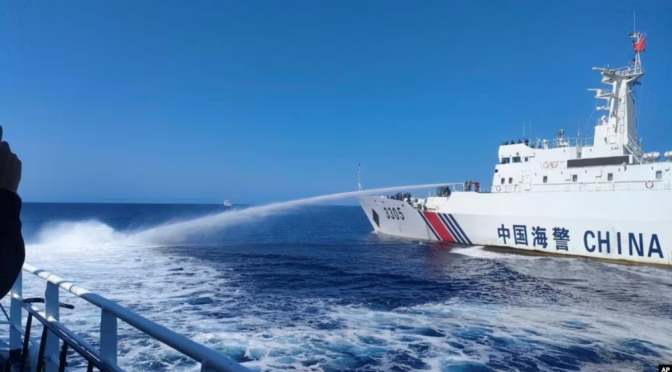
The actions seen against the Filipinos by the PRC is only the beginning. There may be similar actions against U.S. assets in the future. In order to adequately deter and defeat these future attempts, the Navy Deterrence Concept needs robust tactics and techniques for naval units operating at the tactical level just below the threshold of armed conflict.
LT Vince Vanterpool is currently serving as Chief Engineer onboard USS Preble (DDG-88). Vince completed his Division Officer tours onboard USS McCampbell (DDG-85) and USS Shiloh (CG-67), and earned his Master’s in Operations Research from the Naval Postgraduate School during his shore tour.
Featured Image: A Chinese Coast Guard ship, right, uses its water cannons on a Philippine vessel as it approaches Scarborough Shoal in the disputed South China Sea on Dec. 9, 2023. (Philippine Coast Guard photo)
Discover more from Center for International Maritime Security
Subscribe to get the latest posts sent to your email.