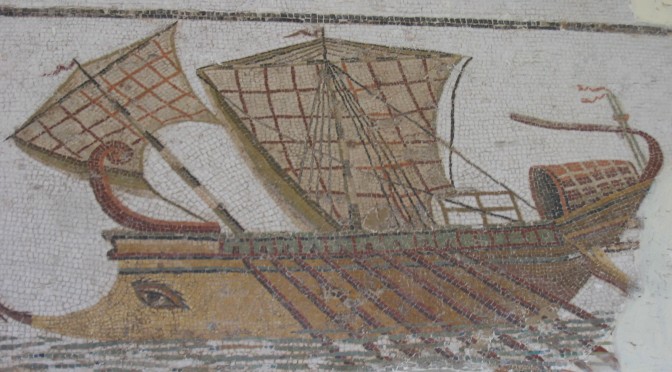
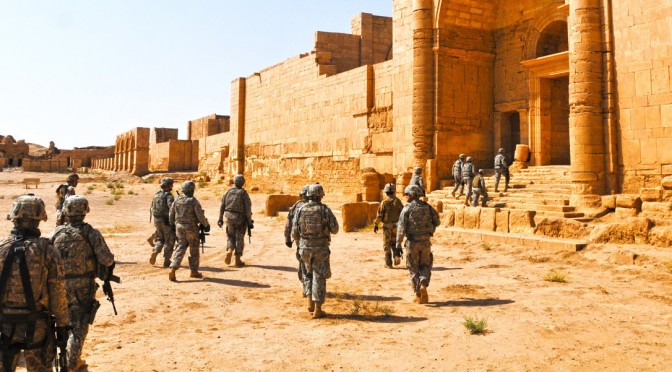
The role of the United States in contingency operations is changing. In all of the large-scale international interventions of the past few years, namely Libya, Mali, and the Central African Republic, the United States’ contributions consisted primarily of transport capacity in both the seas and the skies to bring foreign ground forces to the conflict. This trend appears unprecedented for a global power to pursue its interests but, as the saying goes, there is nothing new under the sun. The ancient maritime power of Carthage utilized the same strategy effectively in the fourth century B.C
For those who are unfamiliar, Carthage was a preeminent maritime power for hundreds of years in the Mediterranean. Pre-saging Alfred Thayer Mahan and 19th century European colonial powers, Carthage embraced an empire not built by massive land holdings but by a disparate collection of trading spheres, ranging from Spain to Sicily, connected by the era’s most powerful navy. There were very few powers that could challenge them on the open seas, making the Western Mediterranean a Carthaginian lake by which it could generate wealth.
Most people know the Carthaginians as the enemies of Rome in the era of Hannibal but that was not always the case. Up until their first dramatic clash in the thirdcentury B.C., the Romans and Carthaginians were allies were allies of convenience. The Carthaginians faced consistent incursions from Numidians in North Africa and colonial wars with the Greeks in Sicily while the Romans had to contend with Greek colonies and restive Samnites to their south. This culminated in the early fourth century B.C. when the Carthaginians used their navy to transport Roman legions to the south to fight their common Greek enemies. Carthage did not have to sacrifice any men to achieve their foreign policy objectives and the Romans, without naval lift, would have spent a much longer time marching their army south through dangerous territory. The Carthaginians were thus able to find manpower to handle operations they could not undertake and the Romans gained rapid mobility. Both sides profited from the arrangement.
The United States is in a similar position in the modern as Carthage was in the ancient world. The United States has unmatched transport capacity in both the maritime and air domains, evidenced in all possible measures: numbers of sea/air transport vehicles, total cargo capacity, and experience in deployment logistics. Many other nations have tactical transports but very few others have either the numbers of strategic-level transports or the financial resources necessary to support long deployments. This situation gives the United States a unique position to influence global deployment of forces; it offers a quasi-veto to undesirable deployments and a force-multiplier for operations that it wants to see conducted.
While the United States has unmatched transport capacity, there are a host of reasons why the United States cannot project its power simultaneously to tackle every global crisis: ongoing operations in Afghanistan, a lack of popular support for committing troops overseas, and tightening budgets restrict the United States. Carthage had similar limitations, due primarily to budgets and the mercenary make-up of their armed forces, which they circumvented in their wars against the Greeks by leveraging Roman manpower. The United States is already doing the same for France in Mali and the United Nations in the Central African Republic.
The story of transport supremacy did not end well for Carthage. In the First Punic War, fought a scant few years after the common war against the Greeks, the Romans raised a substantial navy and challenged Carthage’s dominance on the seas. Defeat in that war, combined with the defeats in the Second and Third Punic wars, would spell the end of Carthage’s empire. While the Carthaginians ushered in their doom by providing transport supremacy to their eventual conquerors, the United States is in no such risk of the same, allowing it to leverage the policy without stoking an existential threat to its existence.
The future looks bright for those with transport supremacy.
Matthew Merighi is a civilian employee with the United States Air Force. His views do not reflect those of the United States Government, Department of Defense, or Air Force.
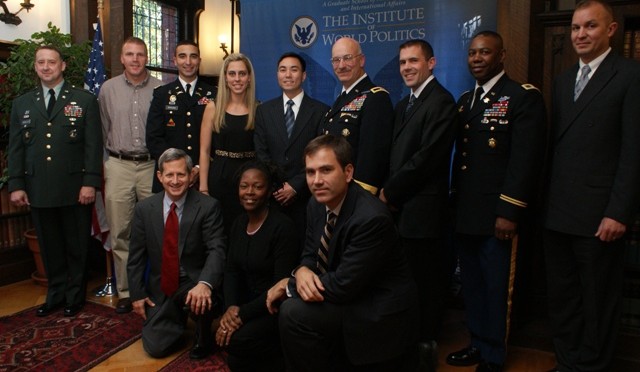
In May 2013, Chief of the Army, General Ray Odierno stood in a small DC area ballroom in front of a few dozen graduates and their families. Central to the crowd were several Army Captains and recently minted Majors as well as the 2013 Class of the Institute for World Politics. General Odierno and the US Army were both familiar friends with IWP, having participated in speaking engagements and sending dozens of students through the tiny graduate school nestled in an old mansion on the outskirts of Dupont Circle in Washington, DC. IWP’s faculty of approximately 30 instructor-practitioners are all leaders in their diverse field of expertise. At no other institute of learning is such a small group constituted of Generals, Ambassadors, and former Intelligence Operatives. The high caliber of experience brought together by the instructors drives the school to focus in a few key areas. IWP’s majors are limited to Master’s Programs is the fields of Statecraft and National Security Affairs, Statecraft and International Affairs, and Strategic Intelligence Studies with an additional Executive M.A. in National Security Affairs.
In a city filled with storied centers of learning such as Georgetown University, George Washington University, and countless military and intelligence centers of excellence, why has the Army invested their time and money in a school of less than 150 students? The Army has simply adopted IWP as a vehicle for training their Officer Corps in a way that no other military or civilian institution can currently supply. Beyond the ever present push for inter-service “jointness” IWP takes the Army’s mid-level leaders to a new level of inter-agency understanding and cooperation. The broad array of government leaders is seen not only in the staff, but also the student body of IWP. A typical class, consisting of only a handful of students could contain of a Captain from the US Army, an analyst from the CIA, and a Foreign Service officer from the State Department, all instructed by a retired Air Force General, Intelligence Community Professional, or former member of the National Security Council to learn the lessons of the past and together share ideas using every facet of the United States Government’s foreign policy resources. In an environment where fiscal resources are being stretched ever thinner among all government agencies, the Army has used IWP as a planning lab for learning how to better achieve mission goals by employing the resources and expertise of all government agencies. Following their time at IWP, many Army graduates are able to take their newfound understanding of inter-agency capabilities and jointness to forge the future of a more integrated and more capable US Army and US Government. It is clear that the Army has found a unique and invaluable resource in a government focused melting pot of higher education. However, the US Army is currently the only branch of the US Military that sends active duty officers to be among the ranks of the student body of this particular school. If the Army has found value from this program, why have the other services not followed the Army’s lead?
The US Army has recognized the importance of strategically focused professionals since the creation of the Functional Area (FA) 59 designation for Strategic Planning and Policy Officers. The Navy is starting to realize a need for a similar expertise to the Army’s FA 59 program. Making strides to create a new US Navy skill set, the Naval War College has recently begun its inaugural year of a Naval Strategy program. While the program is a first step in creating a corps of strategically thinking Naval Officers, it appears to be limited in scope and lacks a “full government” approach. To be prepared for the future of warfare, US Navy military planners will need to be familiar with the realms of conflict that reach far beyond naval engagements and sea power to remain effective.
It is my belief that the US Navy faces an additional hurdle in its pursuit of a strategic level expertise: the stigma that in order to remain relevant an officer must remain tactical. As a junior officer, I have seen my role as a tactical asset in the aviation community quickly diminished by the ever present budget cuts and the ever expanding age of unmanned aerial vehicles fulfilling every role from air-to-air combat to airborne vertical replenishment. However, when I attempted to look to the future and the Navy’s need to focus strategically, I quickly discovered that even inquiring how to shape the next generation of war fighter was frowned upon by the operational environment.
While the US Navy will always have a need to build young officers to sharpen the “pointy end of the spear”, an equal value must be placed on sharpening the young ingenious minds which will shape the strategic picture needed to effectively employ the Navy’s spear alongside the CIA’s arrows and the State Department’s shield in order to maintain America’s role as the preeminent foreign policy leader.
This is the second article of our “Sacking of Rome” week: red-teaming the global order and learning from history.
This is not a prediction for the future, simply a thought experiment to tell a story of what might be. Thinking about how American power and influence might decline is not a slight to the United States. It is a strength. We are not a people blinded by American hubris, but instead are willing to honestly analyze the negative what-ifs while working toward the positive ones.
When discussing the fall of the United States, the initial reaction is to think of a dramatic collapse. Things such as losing World War III in an enormous battle or an economic collapse making the Great Depression look like a little setback could make for an engaging movie, but reality does not have to entertain – it simply has to be.
This is fiction, not a prediction, but hopefully it makes us think.
And Now for our Story…
The United States is powerless. Though our economy is still intact for the moment, our ability to influence events on the world stage and protect our national interests is gone. We try to turn to our allies for help, but even our oldest friends recognize that the balance of power has shifted and begin to reshape their alliances to look out for their best interests. We are alone, afraid, and powerless in a very complicated world. How did we get here?
The Age of Austerity
As the War on Terror wound down, the Department of Defense entered what has now become known as “the age of austerity.” We began to heed the warnings of Admiral Mike Mullen that our national debt is the biggest threat to our national security. It started with sequestration in 2013. The writing was on the wall that we were no longer the post-Cold War hegemon of the 1990s and once again simply a strong player within a multipolar world.
Before we knew it, China was no longer just a developing power. Profits from energy exports enabled Russia to regain its seat as a major player on the global stage. If there was a time for more guns and less butter it was then. But America was tired and mostly broke from over a decade of war, so the Department of Defense was forced to confront more diverse global challenges with fewer resources.
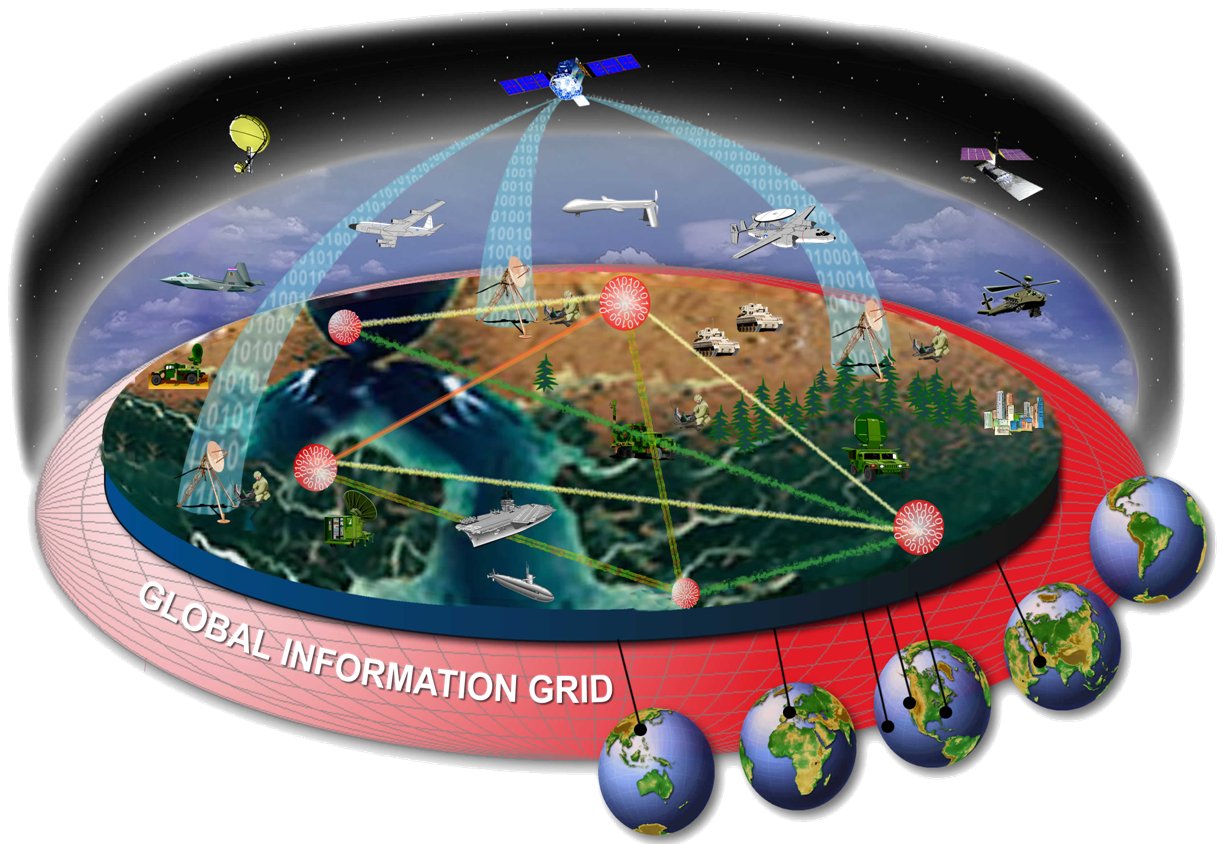
The future emerged amongst a sea of buzzwords and lightning bolts connecting nodes on countless PowerPoint slides within the Pentagon. It was impossible to attend a Department of Defense brief without network-centric warfare, cross-domain synergy, asymmetric advantages, and autonomous unmanned systems being heralded as the solution to all problems.
In an effort to preserve America’s military advantage while reducing long-term spending, we invested in unmanned technologies and the ability to network unmanned and highly advanced manned systems together. The network enabled coordinated operations across all domains almost simultaneously. This would provide the quick and overwhelming response necessary to defeat any adversary, and the best part was it required minimal personnel. Unmanned systems might have a high upfront cost, but they do not require a salary, medical care for dependents, or a retirement plan. The extra savings from eliminating as many people as possible enabled the establishment of a network of unmanned undersea, surface, air, and even space systems providing continuous intelligence, surveillance, and reconnaissance on a global scale and immediate coordinated response in the event of hostilities. The global influence of the United States was secured at a fraction of the long-term costs.
The Unmanned Network Watches All
The Bubble Bursts
The American drone network continuously patrols the Air Defense Identification Zones (ADIZs) which China has established encompassing the East and South China Seas. China has made repeated complaints to the United States and the United Nations, and there have been many close calls between American assets and the People’s Liberation Army (PLA) Navy and PLA Air Force resulting in the loss of some drones, but without loss of life. Relations are tense, but the global status quo is maintained. The strategic goal of the United States is to keep economic relations with China how they currently are.
Suddenly the handful of operators within the Joint Force Drone Operations Center necessary to monitor and operate the global unmanned network find themselves staring at blank screens. What happened? An unannounced drill? A power outage? A loss this extensive has never happened before. They wonder and begin to troubleshoot.
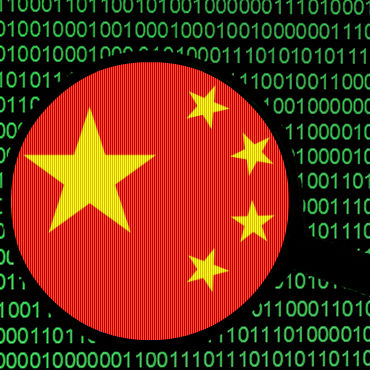
While the casualty to the network is being reported up the chain of command, drones begin disappearing from radar screens at monitoring stations around the world. A flight of drones scheduled to land at Kadena Air Base in Okinawa for routine maintenance and refueling never arrives. Reports even begin to arrive of flights taking off and immediately crash landing. U.S. Cyber Command is alerted and begins to investigate. Once they know what to look for, it does not take long to find the malicious code responsible and it is glaringly obvious where it originated. The PLA. Not only did they not try to cover their tracks, but it looks like they wanted us to know who was responsible.
The Overwhelming Opening Salvo of the Cyber War
The few remaining manned platforms – a mere shadow of the previous numbers during the Cold War – are ordered to sortie toward the western Pacific in a show of force. Everyone quickly makes a devastating discovery. They are receiving no signal from the Global Positioning System. Once they are out of sight from land, ships and aircraft have no idea where they are. The Fleet attempts to adapt. They pull out the old paper charts – which they luckily retained onboard. Utilizing their mechanical compass and dead-reckoning for navigation, they set sail and attempt to find the Chinese coast.
They might not be at 100% capability, but they can at least make a show of American power with presence. Luckily, satellite communications are still functioning so they can coordinate between each other and with their operational commander. As they cross the Pacific, one by one they drop out of communications. The failures are first noticed in the radio room, but they quickly spread to ship control, combat systems, and to engineering. Every U.S. platform is now blind, impotent, and dead in the water. Within a few short days the once-feared military power of the United States is defeated without any bloodshed. Not with a bang, but a whimper.
Jason H. Chuma is a U.S. Navy submarine officer who has deployed to the U.S. 4th Fleet and U.S. 6th Fleet areas of responsibility. He is a graduate of the Citadel, holds a master’s degree from Old Dominion University, and has completed the Intermediate Command and Staff Course from the U.S. Naval War College. He can be followed on Twitter @Jason_Chuma.
The opinions and views expressed in this post are his alone and are presented in his personal capacity. They do not necessarily represent the views of U.S. Department of Defense or the U.S. Navy.
This is the first article of our “Sacking of Rome” week: red-teaming the global order and learning from history. It is also the first of Merighi’s independent “Lessons from History” regular series for CIMSEC.
They poured gold down his throat, cut off his head, and sent it back as a warning to others.
No, this is not a scene from the latest episode of Game of Thrones; this was the passing of Marcus Licinuis Crassus in 53 BC.[1] Rome’s richest man, a member of the First Triumvirate with Julius Caesar, and the man responsible for putting down the pirates that menaced the Mediterranean, met his ignoble end fighting the greatest challenge the Romans ever faced in the east: Parthia.
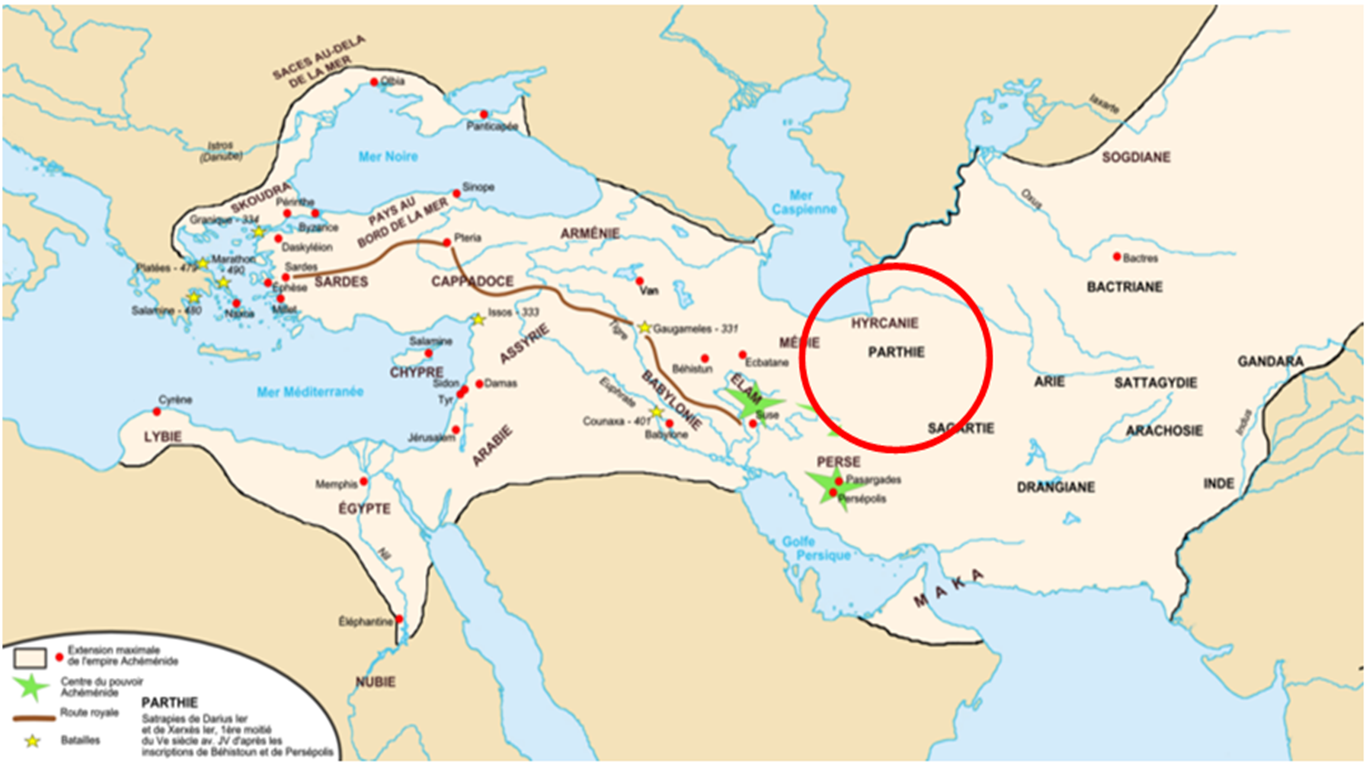
Map of the Achaemenid Persian Empire at its height with the region of Parthia marked in a red circle (Wikimedia Commons)
Persia was the preeminent military, political, and cultural power in the ancient world from 550 B.C. to 330 B.C. With its heartland in modern day Iran, its empire spanned from Afghanistan to Turkey at its apex. It all came crashing down in spectacular fashion when Alexander of Macedon rose to power and led a ruthlessly efficient military machine on a path of conquest that brought him all the way to the Indus River. He tried his hardest to unify the Persian state with his own but, when he died at the age of 33 in 323 B.C., his empire immediately collapsed into a host of warring factions. Three of his Greek generals went on to found the three largest states in the Eastern Mediterranean by the time Rome rose: the Seleucids in Turkey and Syria, the Antripatrids (later the Antigonids) in Greece, and the Ptolemians in Egypt. In the Persian heartland, however, ethnic Persians waging a proto-nationalist campaign kicked out the remnants of the Greek invaders. Known as Parthians due to the origins from the titular province in north-eastern Iran, they established a small state that expanded outward as the Alexandrian generals quarreled with one another.
For centuries after his death, every Greek warlord in the Western World claimed their legitimacy through Alexander and the desire to rebirth his Empire. Rome, too, took up this mantle as it expanded eastward into the Greek mainland. Beginning first in Greece and Macedonia, they waged a brutal war with the beleaguered Seleucids and conquered all the territory they possessed in the modern Middle East. This brought Rome’s borders right onto those of Parthia. Both were rising states with expansionist ambitions and a border that sat on porous, easily invadable territory. The stage was set for an epic confrontation between the two great powers.
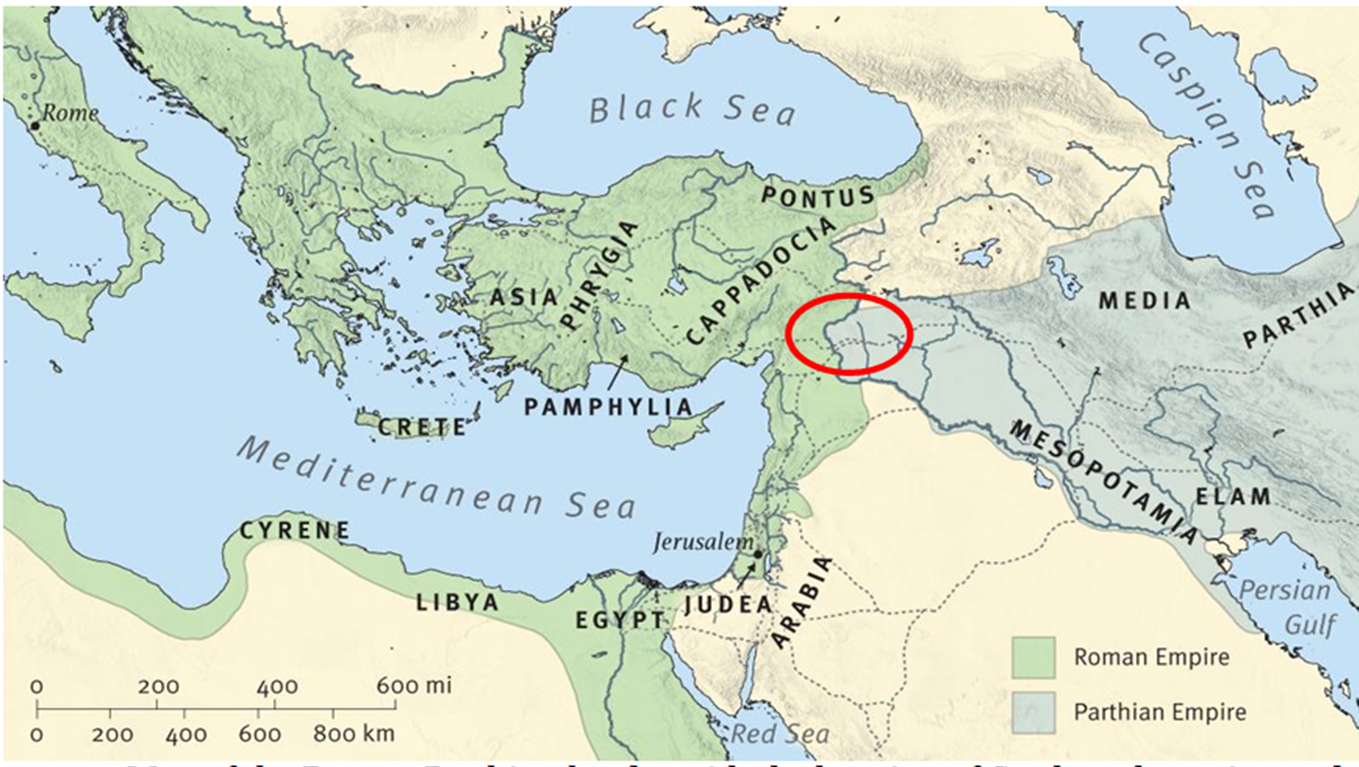
Map of the Roman-Parthian border with the location of Carrhae shown in a red circle (University of Guelph)
Unfortunately for Rome, this manifested in the ill-fated expedition of the afore-mentioned Crassus in 54 BC. The expedition met its unfortunate end on the plains of Carrhae in south-eastern Turkey along the Syrian border.
How did the Parthians manage to resist Rome for so long? Their success rested on three key disparities between them and their Roman opponents:
1) Assymmetric Military Advantage
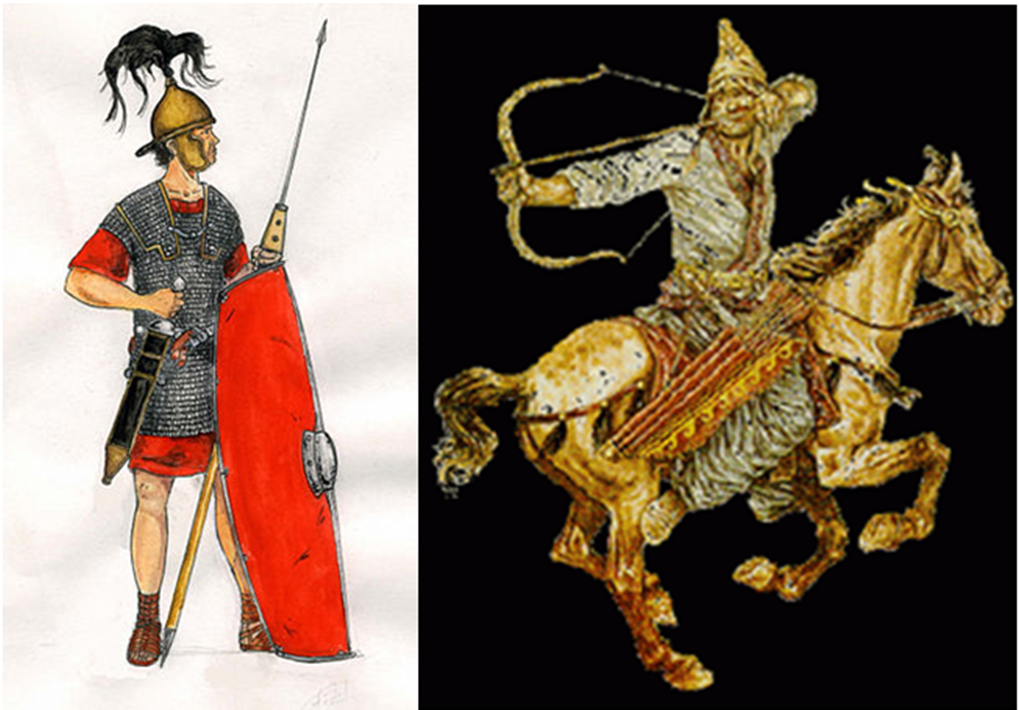
A Roman Legionnaire (left) facing his greatest threat since Hannibal: Parthian horse archers using the Parthian Shot (Wikimedia Commons)
The Roman legion was the paragon of military efficiency in its day. The strict discipline, advanced military technology, and sheer numbers were widely feared even before they began leaving the Italian peninsula. It was by no means a perfect force, as its travails against Hannibal in preceding centuries demonstrated, but the system itself was markedly better than any other fielded even with bad generalship. How then was it so ineffective against Parthia?
Unlike the other opponents the Romans fought in the preceding six centuries, the great bulk of the Parthian army were horse archers rather infantry or melee cavalry. Noted for the infamous “Parthian Shot,” their horsemen would rush forward to engage Roman infantry, retreat, then abruptly turn in their saddles to fire a shot directly behind them. The slow, methodical legionnaires were then rendered ineffective since they could not physically reach their assailants. The horse archer can be equated with modern fears about Medium-Range Ballistic Missiles (MRBMs); they were mobile, highly survivable, and could take out slower assets with near impunity.
These techniques were perfect for the open terrain on the Roman-Parthian border. If the topography had been less open, such as the forests of Gaul or Germania, Parthian tactics would have been less effective. The Parthians, though, did not need an army that could fight on different terrain because that is not where they needed to fight nor chose to fight. This brings us to the second advantage Parthia held over the Romans.
2) Strategic Focus
The Parthians never harbored ambitions to conquer Rome; their strategy consisted of resisting Roman incursions and making their own when Rome was politically weak (see discussion below). Since the Parthians did not commit their resources into futile all-or-nothing fights with Rome or engage them on disadvantageous terrain, they always maintained a strong conventional deterrent that altered Rome’s calculus away from intervention.
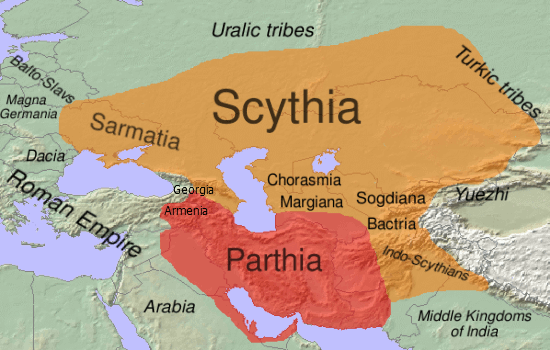
Map showing the Parthian Empire in relation to the territory of the Scythian nomads. Without a central government, the Scythian tribes could only pose occasional threats in Parthia’s east (Wikimedia Commons)
The Parthians also had the strategic benefit of having fewer serious external competition; its western border was solely with Rome and the neutral kingdom of Armenia (the site of many proxy wars between Rome and Parthia). To their east were far weaker and divided opponents, namely the Scythians and Bactrians. Rome, on the other hand, was beset by strong enemies on all sides. These included: restive tribes in Gaul and the Danube region, lingering discontent in Numidians North Africa, a still-unitary Egypt, and a vascillating client state in northern Turkey. These challenges both demanded military resources and political attention to effectively control. Even if Rome had more money and soldiers than the Parthians, only so many of them could be dedicated toward fighting the Parthians.
3) Stronger Political Core
(From the Left) Marcus Licinuis Crassus, Julius Caesar, and Marc Antony. All of the men tried to invade Parthia. The first one actually crossed the border and was killed. The other two were killed by Romans before even getting there (Wikimedia Commons and the Musee Des Augustins)
Parthian politics were cold and brutal. Succession crises were common and factions killed one another as they vied for the Parthian crown. There were even instances of Parthian claimants to the throne finding refuge in Rome, like exiled dictators, waiting for the opportune moment to return.
Roman politics during the late Republic and early Empire made Parthia look like Switzerland. The invasion of Parthia planned by Julius Caesar in 44 BC to avenge the death of Crassus (and punish the Parthians for their support of his rival, Pompey) was cancelled when Caesar fell to assassins’ blades on the Ides of March. The resulting civil war claimed thousands of Roman lives both on the battlefield and during the infamous proscriptions during which whatever faction happened to hold power would murder people and then “nationalize” their assets. After years of civil war, Rome finally found its footing under the Second Triumvirate. Marc Antony amassed his own army to take on the Parthians and managed to expel them from Syria in 33 BC only to have to turn around to fight his political partner Octavian in yet another civil war.
Octavian eventually succeeded in unifying the Roman state under his autocratic rule but, by then, he was in no position to challenge any external power. Crippling debts were poised to ruin the state. Opposing factions, though cowed by Augustus’ power, still opposed him behind the scenes. Octavian was forced to reduce to total number of legions to consolidate his hold on the Empire and reduce the risk of another civil war. Rather than risking another Parthian encounter in his weakened state, Octavian instead signed a landmark peace agreement that designated permanent borders in exchange for the legionary standards lost during Crassus’ expedition 33 years earlier. The Roman-Parthian drama would continue in fits and starts over the remainder of their very existences but, after that fateful treaty signed by Augustus, Rome finally admitted that it would fully never replicate Alexander’s conquest of Persia.
The cruel lesson for the United States to take from the Roman experience with Parthia is that an adversary with technology designed specifically to defeats its army, combined with stronger political will, is bound to come out on top of any conflict. Defeat does not just come on the battlefield. Just like Rome, the United States has a great number of serious threats: a bellicose Russia, an increasingly-assertive China, a still-problematic Iran, and trans-national terrorism. Unlike many of these antagonists (and the Parthians before them), the United States does not have the luxury of dedicating its resources to countering just one of these threats. The United States’ political system, after years of war and deep partisanship that conjures images of Caesar’s Rome, is brittle and unable to tackle any of these challenges. The lesson from Parthia is that to defeat the United States is merely to outlast it and negotiate for what you truly want.
Fortunately, for the United States, the peace under Augustus is not the end of the story. Over the following two centuries, the tables would turn and the Parthians’ political structure collapsed. Years of dynastic feuds and rival claimants to the throne made Parthia vulnerable to strong Roman Emperors such as Trajan (115 A.D.) and Septimus Severus (198 A.D.). The Parthian state was overthrown by internal revolution and a new Persian dynasty took its place. The final lesson for the United States is this: it is never too late to recalibrate and nothing is over until it is over.
Matthew Merighi is a civilian employee with the United States Air Force’s Office of International Affairs (SAF/IA) currently transitioning to pursue a Masters’ Degree at the Fletcher School. His views do not reflect those of the United States Government, Department of Defense, or Air Force but hopes his country can stand up to the Parthians.
[1] There is no concrete proof that the gold-pouring incident is true apart from the reports of the Roman historian Cassius Dio but it definitely gets the point across.