
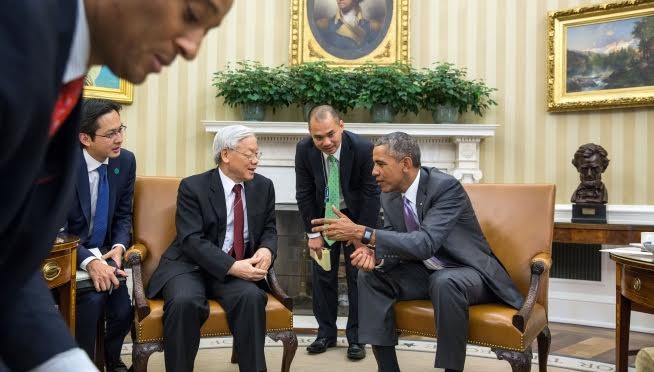
 Coming to you from Washington DC, Natalie Sambhi, Analyst at the Australian Strategic Policy Institute interviews Phuong Nguyen, Associate Fellow with the Southeast Asia Chair, Center for Strategic and International Studies on Vietnam’s evolving foreign policy and strategic posture. Natalie and Phuong discuss the 2014 Haiyang Shiyou 981 oil-rig incident between Vietnam and China and the complex ties between both countries, Vietnam’s new strategy in resolving maritime disputes, the limits of expanding security cooperation with the United States, and the increasingly salient role of the Association of Southeast Asian nations. Phuong also highlights major developments in Southeast Asia to look out for in 2016.
Tag Archives: South China Sea
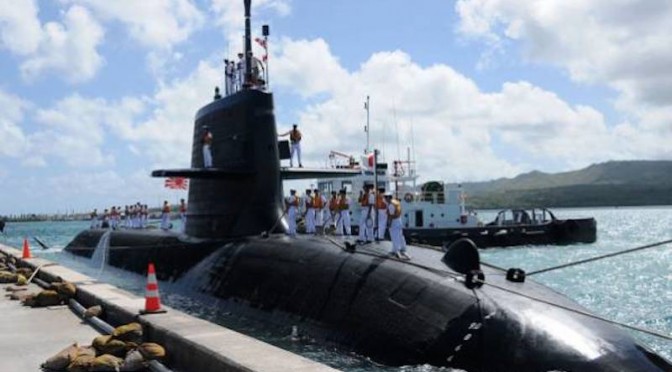
The Cabbage and the Submarine: Why Fears of Chinese Control of the Seas are Overstated
The following piece is cross-posted from our partners at the CDA Institute as part of an ongoing content sharing relationship. You can read the article in its original form here.
CDA Institute Analyst Ariel Shapiro comments on the proliferation of submarines and issue of sea denial in the Asia-Pacific.
In 2013, Major General Zhang Zhaozhong, an outspoken senior official in the Chinese People’s Liberation Army, described China’s strategy in the South China Sea by referring to a cabbage. In regards to the Scarborough Shoal, a group of rocks disputed by China and the Philippines, the Chinese strategy is to inundate the area with a large fleet of military and commercial ships of all sizes, to surround the contested rocks like the layers of a cabbage. What essentially amounts to a blockade, disguised by friendly vegetarian metaphors, is a manifestation of the more assertive Chinese foreign policy undertaken by President Xi Jinping. In this post, I will discuss how the recent build-up of regional naval fleets in Asia is a response to China’s increasingly assertive policy – and why this is cause for concern for China.
In recent years, there has been a buildup of military submarines in the Asia-Pacific, which Michael Wesley at the Australian National University refers to as a “bonanza.” Despite multiple changes in leadership over the past few years in Australia, the massive project to replace the Royal Australian Navy’s six aging Collins-class submarines with 12 new state of the art diesel submarines is still well underway (as a point of comparison, Canada currently has four Victoria-class submarines, three of which are operational, and all of them several years older than the submarines Australia is replacing).
The Australian submarine procurement process brings to the forefront the changes that are happening in another key player in the Asia Pacific region: Japan. For the first time since the 1960s, new legislation in Japan permits the country’s world-renowned industry to export military technology. The top contender for the contract to replace the Australian submarines is the Soryu-class, developed by Japanese giant Mitsubishi. The Soryu-class diesel submarine is notable for its air-independent propulsion technology, which allows the vessel to remain underwater without surfacing for significant periods of time compared to other diesel submarines. Japan, of course, is not only developing the submarine for export; it is in the midst of increasing its total submarine fleet form 16 to 22.
Australia is not the only country in the region increasing its submarine fleet. In September 2015, the Indonesian House of Representatives announced a plan to purchase two Kilo-class submarines from Russia; the nation comprises 17,000 islands, and senior military planners estimate that the country needs at least 12 submarines to adequately patrol its territorial seas. Across the Strait, Lieutenant-Colonel Aaron Beng of the Singapore Armed Forces analyzes submarine procurement in Asia from his country’s perspective. He notes Singapore’s recent acquisition of two Vastergotland-class submarines from Sweden, bringing the fleet’s total to six; the refurbishment of two French Scorpèné-class submarines by Malaysia; and the ongoing purchase by Vietnam of six Kilo-class submarines from Russia. One can also include the new Thai ruling military junta decision to purchase submarines from China. Not to be outdone, the first of India’s six new Kalvari-class diesel electric attack submarines, based on the French Scorpèné, are currently undergoing sea-trials.
What is the motivation for this submarine acquisition? The submarine is, in terms of dollar-per-value, the best tool for sea denial. This maritime strategy is an asymmetric one. Instead of great powers building up fleets to fight for control of the seas, as was the case in the lead up to the First World War, sea denial is a strategy used by weaker powers to deny access to their coastal areas by larger powers; the maritime equivalent of guerilla warfare. Essentially, a small, stealthy, relatively inexpensive submarine can pose a serious threat to an advanced aircraft carrier or major surface combatant.
For example, Singapore’s submarines will add to its defence posture of the “poison shrimp”; while the Republic has neither the ambition nor the capacity to control the seas, it does indeed have the capacity to cause significant damage to a larger power that would attempt to threaten its vital interests (which, due to its small size and the global nature of its economy, include shipping), much like eating a poisoned shrimp can make a much larger animal very ill. As Peter Briggs at the Australian Strategic Policy Institute notes, navies have submarines not only to serve in a potential war, but for “situations short of conflict” – their mobility, endurance, stealth, and payload make them an essential tool in preventing conflict through deterrence.
This brings us back to China and the cabbage strategy. In the South China Sea, despite the unresolved nature of competing claims over various small islands, China is continuing with its policy of reclaiming land and building infrastructure. Last week, tensions flared as the USS Lassen, an American destroyer, sailed in what Washington claims are international waters but which China considers within its territorial sea. While the US Navy (USN) remains the most advanced and important navy force in the Pacific Ocean, China’s growing fleet of advanced surface and undersea ships gives it a sea denial capability against America’s more formidable force – especially when combined with its on-shore anti-access and area denial (A2/AD) assets.
Smaller countries in the region are eager to build up their own deterrence and sea denial capacity to protect their shipping lanes and vital interests in an era where the United States can no longer underwrite global maritime security, and submarines are perhaps the best way to do so. While this strategy is aimed primarily against China, Beijing, in turn, is building up its own fleet towards a strategy of sea denial against the more powerful USN. However, China has also increased the responsibilities placed on its forces and has turned otherwise uninvolved actors into maritime rivals. In addition to asserting its primacy over its coasts and capacity to dominate Taiwan, which remains at the core of China’s security policy, it now also actively seeks to assert Chinese freedom of maneuver over the South China Sea and eventually rival American control of wider areas of the Pacific Ocean.
While much has been written about the Sino-American rivalry in the Pacific, the role of smaller Southeast Asian countries is too often forgotten. The USN is still far superior, for the time being, to the Chinese People’s Liberation Army Navy. Yet any assessment of the strategic balance must take into account other important players in the region, such as Australia, Japan, Singapore, India and Vietnam, all of which are showing a tendency to bandwagon with the United States – making any potential Chinese dominance even less foreseeable.
At a recent conference at the University of Ottawa, Professor Jean-Pierre Cabestan, one of the foremost French experts on China, noted how Chinese President Xi Jinping’s success in making China more assertive on the world stage has only provoked a “rebalancing” of the United States and its allies towards China. Indeed, if the cabbage strategy continues to cause horizontal proliferation (the number of countries building up military capacity) as well as vertical proliferation (pre-existing powers increasing their capacity, such as the development of new missile systems on littoral combat ships in the United States), China’s aggressiveness may have caused it to lose more influence than it has gained.
Ariel Shapiro recently graduated from McGill University in political science and economics and is currently an Analyst at the CDA Institute.
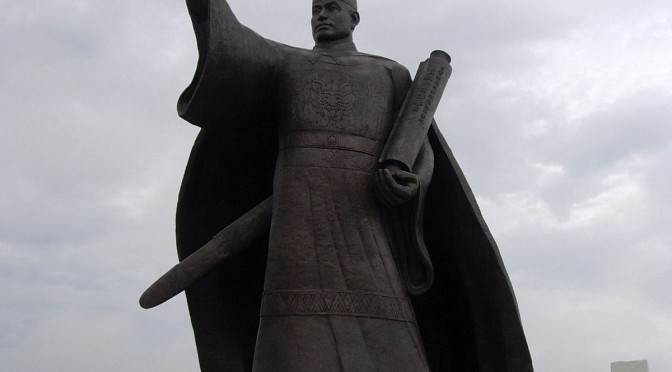
South China Sea arbitration: Beijing puts forward her own views Part One
By Alex Calvo
Introduction: restatement or small Filipino victory? Manila’s international arbitration bid has been repeatedly rejected by Beijing, which argues that it does not fall under the compulsory arbitration provisions of UNCLOS. Even after the Court ruled on jurisdiction, on 29 October 2015, China stuck to this position, as clear from an official statement the following day. However, despite repeatedly refusing to appear before the court, last year Beijing chose to issue a formal document stating her posture. For some this may simply be a restatement of China’s position, confirming that it will not take part in the proceedings. For others, it amounts to a small victory for the Philippines and the rule of law at sea, since China has finally been unable to completely ignore the proceedings. Whatever one thinks about it, it is useful to examine the document, dated 7 December 2014 (unclear whether any pun intended), while we wait for the Permanent Court of Arbitration to hold the first oral hearings on the substantive aspects of the case, scheduled for late November 2015. We shall be doing so in this four-part series.
[otw_shortcode_button href=”https://cimsec.org/buying-cimsec-war-bonds/18115″ size=”medium” icon_position=”right” shape=”round” color_class=”otw-blue”]Donate to CIMSEC![/otw_shortcode_button]
Chinese attitudes towards international law. Post-Mao China has followed a somewhat contradictory approach to international law. To a large extent, this mirrors the country’s complex domestic relationship with the concept of the rule of law. On the one hand, China’s reopening of her law schools after the Cultural Revolution and huge expansion of the legal profession and the practical, day to day, presence of the law, has led to a similar move in the international arena. However, this greatly expanded role of the law both domestically and internationally has been accompanied, in the internal domain, by a persistent rejection of the concept of “rule of law”, authorities rather leaning towards “rule by law.” In Chinese foreign relations, international law has had to contend with two obstacles. First, there is a mistrust of international tribunals, and the fear that they may impinge on Chinese sovereignty. Moreover, the South China Sea has been defined as a “core national interest,” although the exact meaning of this term may not be completely clear. Second, with the notion that public international law is a creature of Western nations and thus inextricably linked to a historical period of foreign domination that only began to be reversed after the 1949 Communist victory, or now that Chiang Kai-shek seems to be enjoying some sort of rehabilitation in China the 1943 Cairo conference. This applies particularly to the law of the sea, seen as unfairly constraining the legitimate aspirations of a nation that has grown increasingly dependent on maritime trade and which feels surrounded by a chain of islands in hostile hands.
The paper’s purposes, according to Beijing. After an introduction, making it clear that issuing the paper does not amount to taking part in the arbitral proceedings, the text lists in Paragraph 3 the main purposes of the paper, each such purpose covered in sections II to V. These goals are first of all (Section II, Paragraphs 4-29) to stress that the case concerns “the territorial sovereignty over several maritime features in the South China Sea,” which, contrary to Filipino assertions, “is beyond the scope of the Convention and does not concern the interpretation or application of the Convention.” Section III, Paragraphs 30-56 explains that “China and the Philippines have agreed, through bilateral instruments and the Declaration on the Conduct of Parties in the South China Sea, to settle their relevant disputes through negotiations” and that the arbitration proceedings are thus a breach by Manila of “its obligation under international law.” Section IV, Paragraphs 57-75 explains Beijing’s position that, “assuming, arguendo, that the subject-matter of the arbitration” was interpreting or applying UNCLOS, this would still be “an integral part of maritime delimitation” thus falling squarely within China’s derogation from compulsory arbitration. Section V, Paragraphs 76-85 underlines that “the Arbitral Tribunal manifestly has no jurisdiction over the present arbitration” and defends the view that China’s refusal to take part in the proceedings stands “on solid ground in international law.” These sections are followed by a set of Conclusions (Section VI, Paragraphs 86-93).
The 1898 Treaty of Paris in the PRC’s narrative of the conflict. In Section II, the document (5) explains that “Prior to the 1970s, Philippine law had set clear limits for the territory of the Philippines, which did not involve any of China’s maritime features in the South China Sea,” citing Article 1 of the 1935 Constitution, which reads “The Philippines comprises all the territory ceded to the United States by the Treaty of Paris concluded between the United States and Spain on the tenth day of December, eighteen hundred and ninety-eight, the limits of which are set forth in Article III of said treaty, together with all the islands embraced in the treaty concluded at Washington between the United States and Spain on the seventh day of November, nineteen hundred, and the treaty concluded between the United States and Great Britain on the second day of January, nineteen hundred and thirty, and all territory over which the present Government of the Philippine Islands exercises jurisdiction.” It added that the 1961 Philippine Republic Act No. 3046, titled “An Act to Define the Baselines of the Territorial Sea of the Philippines,” confirmed such territorial limits.
Setting aside for a moment whether Manila has indeed redefined the limits to her national territory, this is potentially very significant because as reiterated in last year’s US Department of State “Limits on the Sea” No 143 paper, devoted to China, Washington has persistently stressed that it was taking no sides concerning the ultimate issue of sovereignty. Yet, while this may be sustainable in the case of other territorial disputes in the region, the case of the Philippines is rather different, given that the country was under US sovereignty for more than half a century. Thus, whatever one makes of Beijing’s case, it is difficult not to agree that past treaties signed by the United States may be relevant to the issue at hand. A question may be what, if any, may be Beijing’s motivation in bringing up such treaties, in addition to providing arguments in favor of its posture concerning the extent of Filipino territorial claims. Is Beijing perhaps hoping to prompt Washington to publicly comment on the matter in a way that may be detrimental to Manila? Or to quietly lean on the Philippines not to go too far? These may be speculative questions, yet ones difficult to avoid given the complex nature of the South China Sea dispute, with not only different immediate players, that is the coastal states, but plenty of other interested contenders, including the United States, Japan, India, and Russia. China’s document also refers to a UK-US Treaty, and while London has traditionally chosen a low profile posture in the region, it has recently been upgrading defense cooperation with Japan. Going back to Washington, the possible impact of past treaties and other diplomatic practice has already been considered important by observers in the case of Taiwan and the Senkaku/Diaoyu/Diaoyutai Islands, given Formosa’s change of status following the end of the Second World War and the American occupation of the Ryukyu Archipelago for three decades after its conclusion. However, the connection with the United States is much closer in the case of the Philippines, and Washington’s non-committal posture on sovereignty may come under increased pressure, although as mentioned this could result from different, even opposed motivations.
Read the next installment here.
Alex Calvo is a guest professor at Nagoya University (Japan) focusing on security and defence policy, international law, and military history in the Indian-Pacific Ocean Region. A member of the Center for International Maritime Security (CIMSEC) and Taiwan’s South China Sea Think-Tank, he is currently writing a book about Asia’s role and contribution to the Allied victory in the Great War. He tweets @Alex__Calvo and his work can be found here.
[otw_shortcode_button href=”https://cimsec.org/buying-cimsec-war-bonds/18115″ size=”medium” icon_position=”right” shape=”round” color_class=”otw-blue”]Donate to CIMSEC![/otw_shortcode_button]

South China Sea: FONOPS Not Enough, Time for Boots on the Ground, Active Neutrality
By Alex Calvo
After a long wait, the US Navy resumed FON (Freedom of Navigation) operations in the South China Sea (last carried out in 2012) on 27 October, with USS Lassen sailing within 12 nautical miles of Subi and Mischief Reefs, and conducting actions incompatible with innocent passage, in order to make it clear Washington does not recognize any territorial waters arising from the artificial islands built by Beijing through reclamation on low-tide elevations. On the other hand, in line with long-standing American policy, the US also emphasized that it was not taking sides concerning the underlying territorial disputes, and that freedom of navigation operations were aimed at any excessive maritime claims, underlining this by also sailing through waters around features claimed by Vietnam and the Philippines. Commentary has focused on the need for further FON cruises, and on China’s response, including the possibility of Beijing declaring an ADIZ (Air Defense Identification Zone).
Freedom of Navigation is indeed one of the pillars of both the post-war open economic system drawn up during the Second World War, and of the traditional American reliance on the ability to move troops by sea (in line with the British Empire, and its tandem Royal Navy – Indian Army). Therefore, contesting Chinese maritime claims is indeed an important policy goal, and furthermore one that should be shared by other maritime democracies. However, we must ask ourselves whether this is all. Furthermore, the time may have come to consider whether agnosticism on territorial claims is a sustainable policy, and whether the US can afford to see allies like the Philippines lose further territory to the PRC.
Even if FON operations become a regular feature and China’s extensive reclamation work turns out to pose no obstacle to peace-time navigation by merchantmen and warships, we would be fooling ourselves if we thought that there is no price to pay for failing to confront Beijing. First of all, an extensive network of man-made islands could make it much more difficult to operate in the region in the event of hostilities. Second, by condoning the violent taking of contested territories, the principles enshrined in the UN charter and in UNSC Resolution 502 would risk becoming irrelevant.
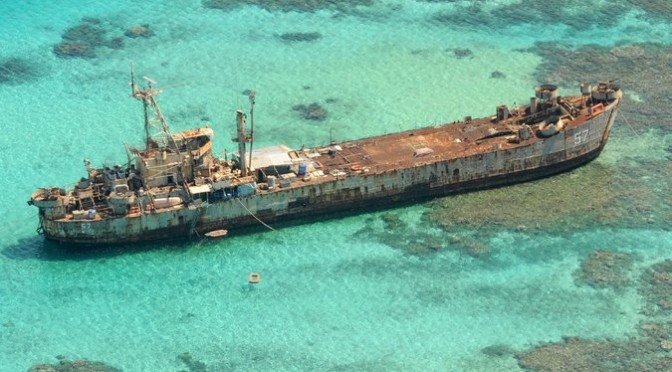
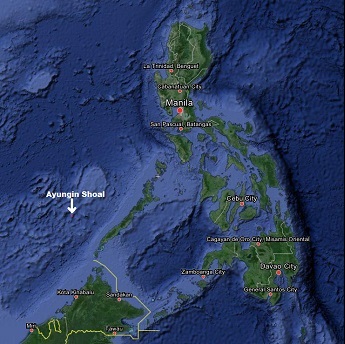
Concerning the latter, being neutral concerning territorial disputes can be interpreted in two ways. Up to now in the South China Sea it has meant Washington not supporting any competing claims. However, this is no longer enough. The Philippines’ marines have been making a heroic stand at BRP Sierra Madre, guarding Second Thomas Shoal (Ayungin Shoal / Ren’Ai Jiao) while surrounded by hostile ships bent on preventing their resupply. However, given the much larger forces available to China, this strategy may not be sustainable. Furthermore, despite an existing mutual defense treaty and growing capacity building assistance (also provided by Japan), Washington has de facto been signaling Beijing that the occupation of the Second Thomas Shoal would not be considered an attack on Filipino territory. This increases the risk of a miscalculation, should China come to believe that the US will stand on the sidelines in such an scenario. Mutual defense treaties are not of much use if restricted in their geographical scope.
An alternative policy would be to embed USMC personnel in their Filipino counterparts, while explicitly announcing that despite still not taking sides on the ultimate issue of sovereignty, the US considered the Second Thomas Shoal (and other disputed territories currently under actual control by Manila) to fall within the purview of the US-Philippines Mutual Defense Treaty. American policy would then be to actively seek to prevent changes on the ground, including expelling Filipino military personnel from the Second Thomas Shoal, while still pressing for a mediated (or arbitrated) solution, in line with US support for the international arbitration bid currently under consideration by the Permanent Court of Arbitration. Preserving the status quo requires extensive work on the BRP Sierra Madre, or its replacement by another ship or structure. In other words, America would be moving from passive neutrality to active neutrality. From merely declaring that differences must be settled peacefully in accordance to international law, to helping freeze the status quo so that revisionist powers are not tempted to gain in the field of battle what they should only be claiming in the diplomatic table or the courtroom.
A precedent for this are Japan’s Senkaku Islands, also claimed by China and Taiwan. After some doubts and conflicting reports on whether the US-Japan Security Treaty extended to them, Washington explicitly announced that they did, while remaining non-committal about ultimate sovereignty. Japan, having greater maritime and naval capabilities than the Philippines, employs a different strategy to protects the islands, shielded by the country’s coastguard without any permanent ground deployment. Should Tokyo decide, or be forced, to permanently deploy some ground troops, it would also be positive to see USMC personnel embedded in them. We could also mention the occupation of Iceland during the Second World War, before Pearl Harbor.
Being neutral in a territorial dispute does not just mean supporting its peaceful resolution in accordance with international law. That is only the case when all sides involved renounce the use of force. When one refuses to take this step, and regularly resorts to it, notwithstanding the fact it is mostly of the non-lethal kind, the only alternative to appeasement is active neutrality, meaning a deployment designed to provide a tripwire, lessening the risks of miscalculation and signaling that aggression will not be condoned. Only this can provide the necessary incentives for a future peaceful resolution of the conflict, where Washington would indeed be neutral concerning its outcome, yet having avoided neutrality regarding how it came about.
Alex Calvo is a guest professor at Nagoya University (Japan) focusing on security and defence policy, international law, and military history in the Indian-Pacific Ocean. Region. A member of the Center for International Maritime Security (CIMSEC) and Taiwan’s South China Sea Think-Tank, he is currently writing a book about Asia’s role and contribution to the Allied victory in the Great War. He tweets @Alex__Calvo and his work can be found here.